Category Archives: Notes from the Cellar

A Glass Half Full

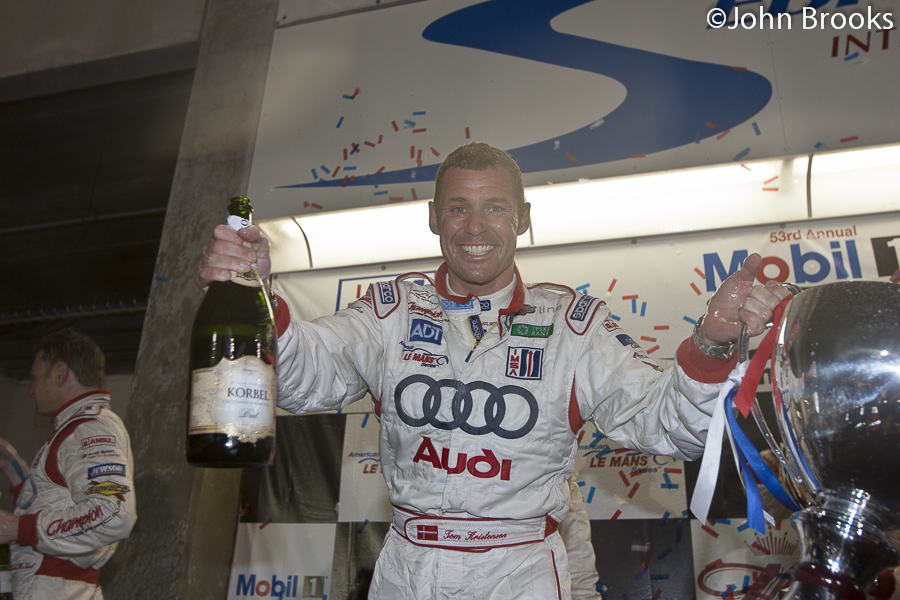
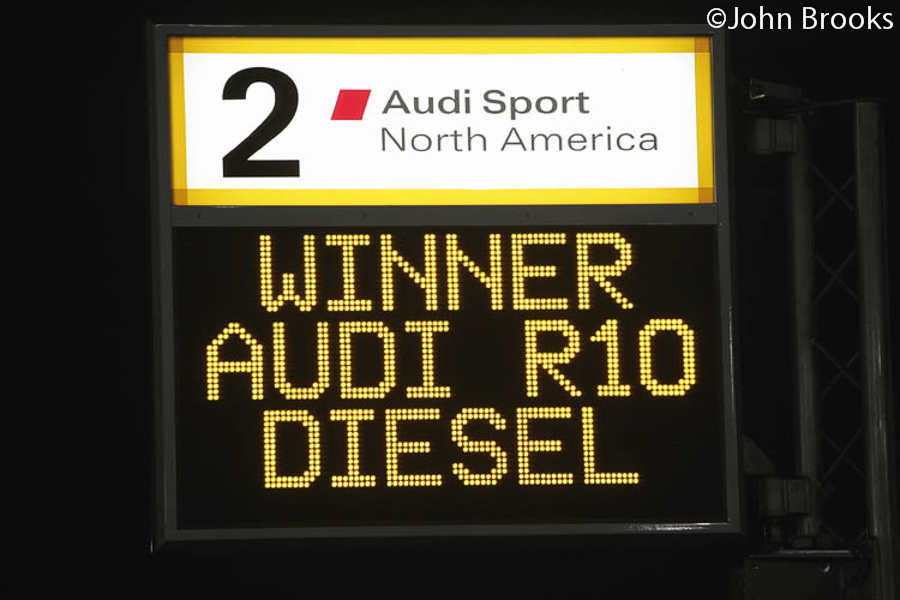
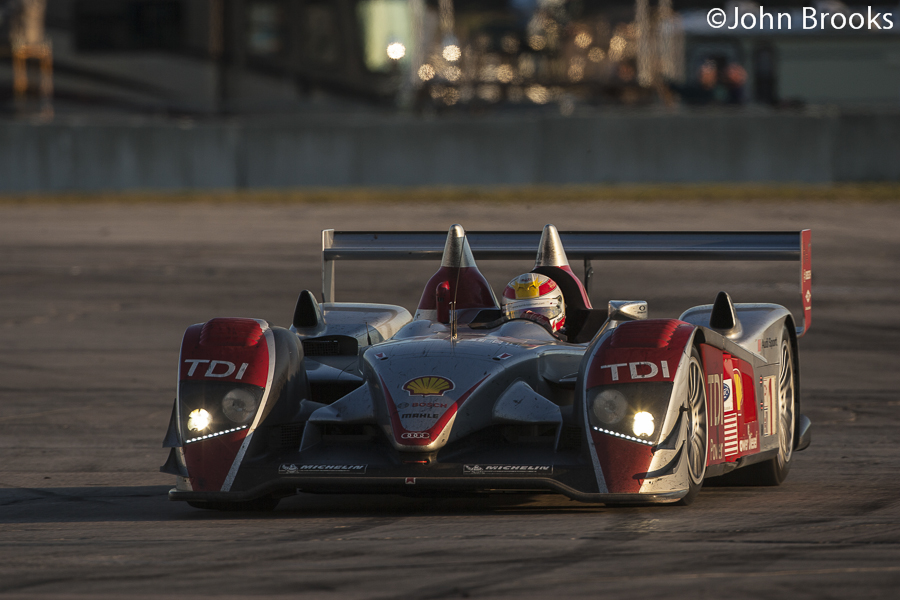
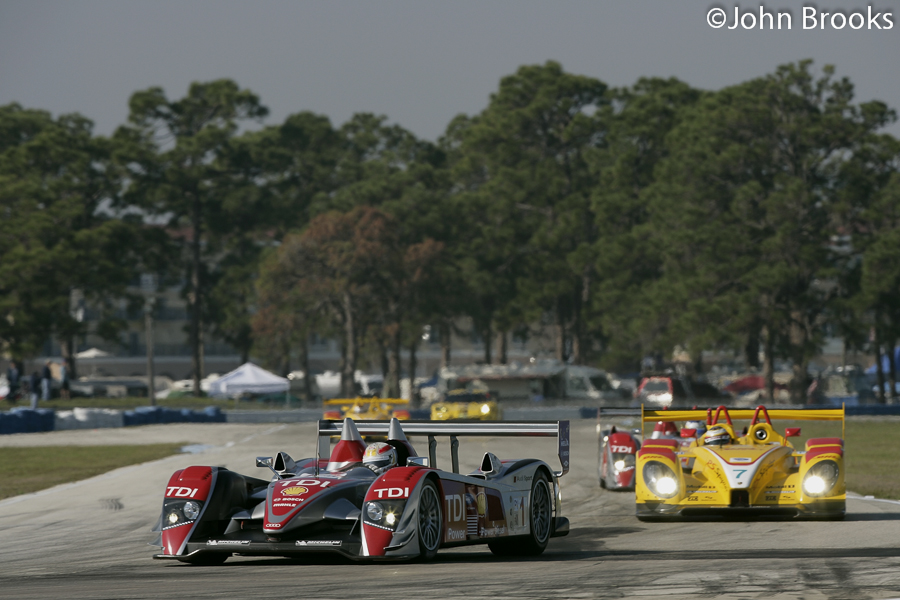
2013 Sebring 12 Hours

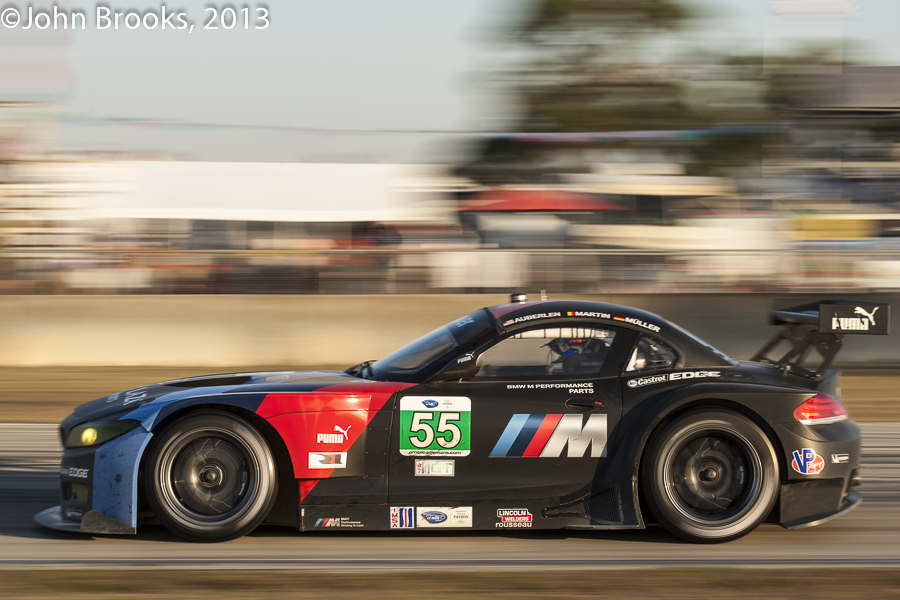
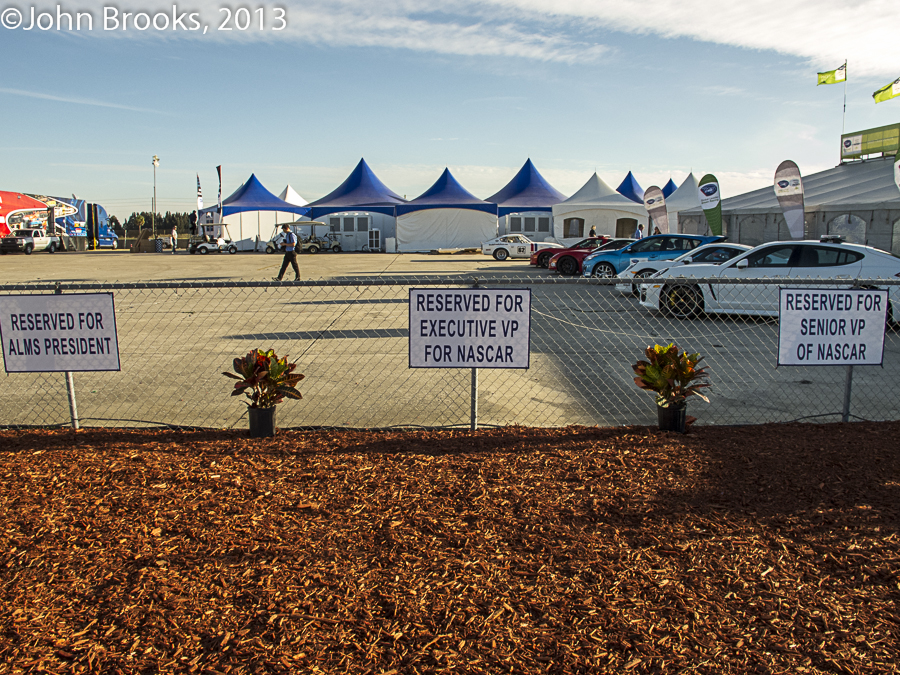
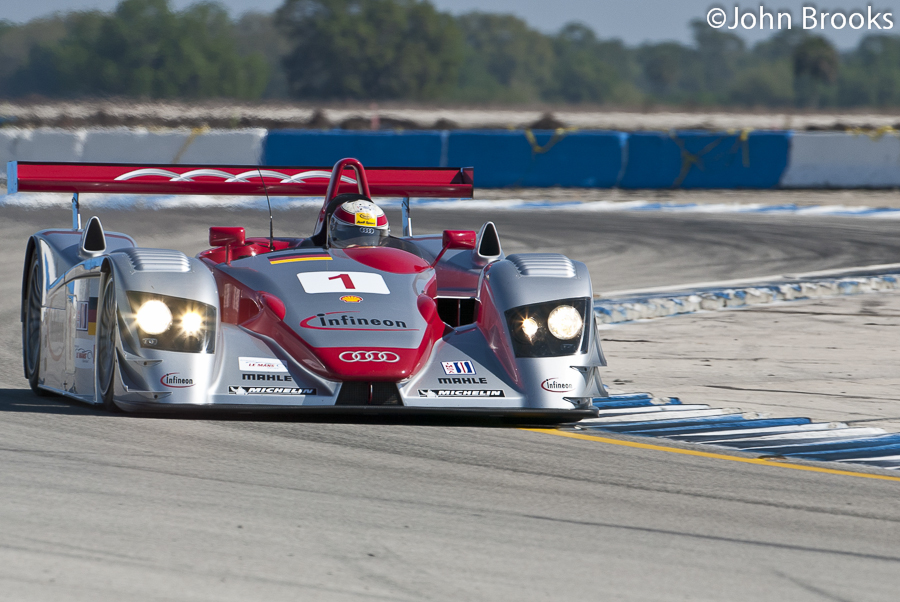
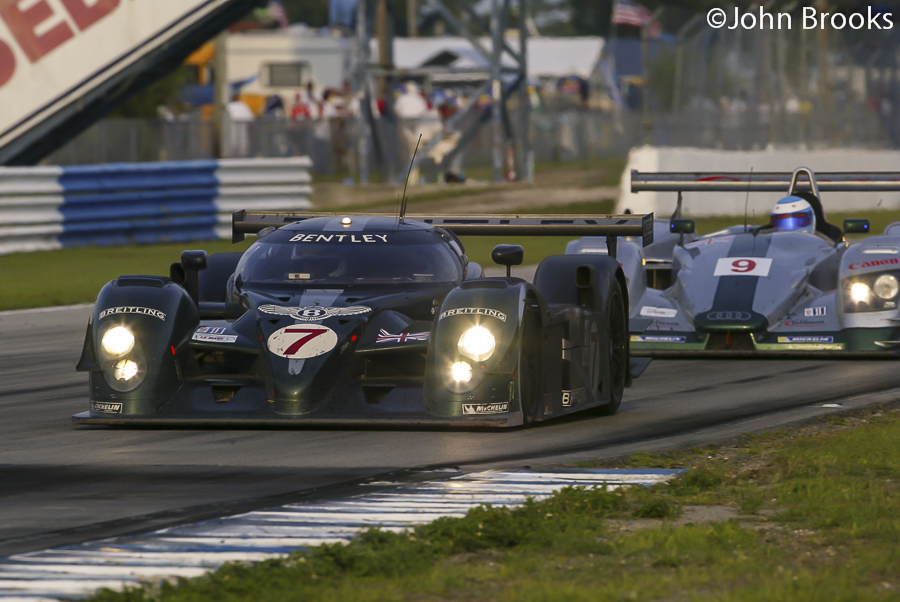
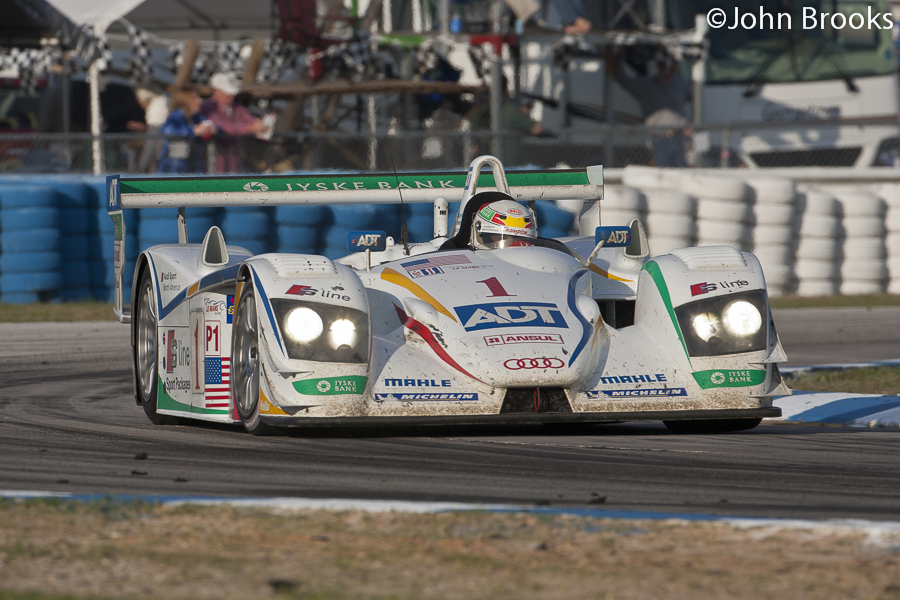
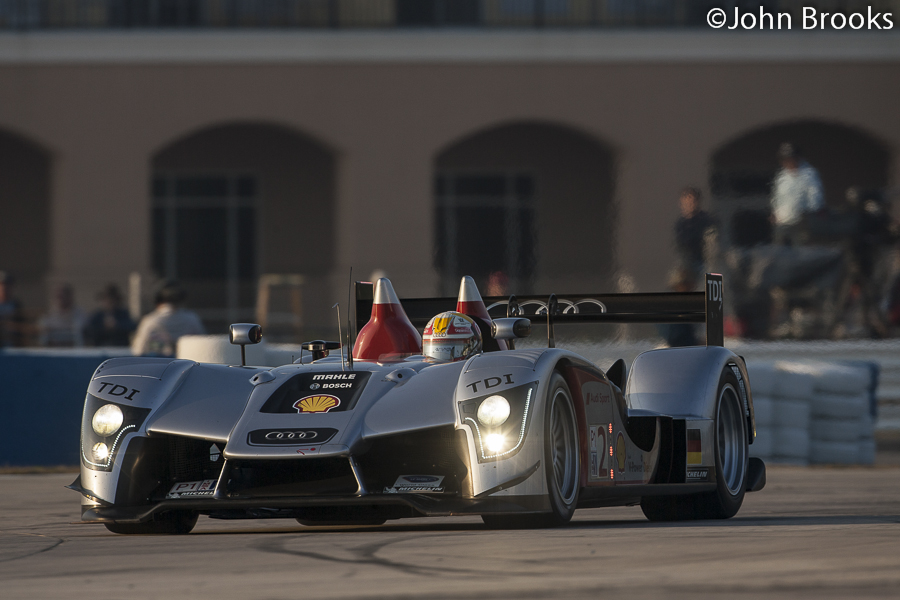
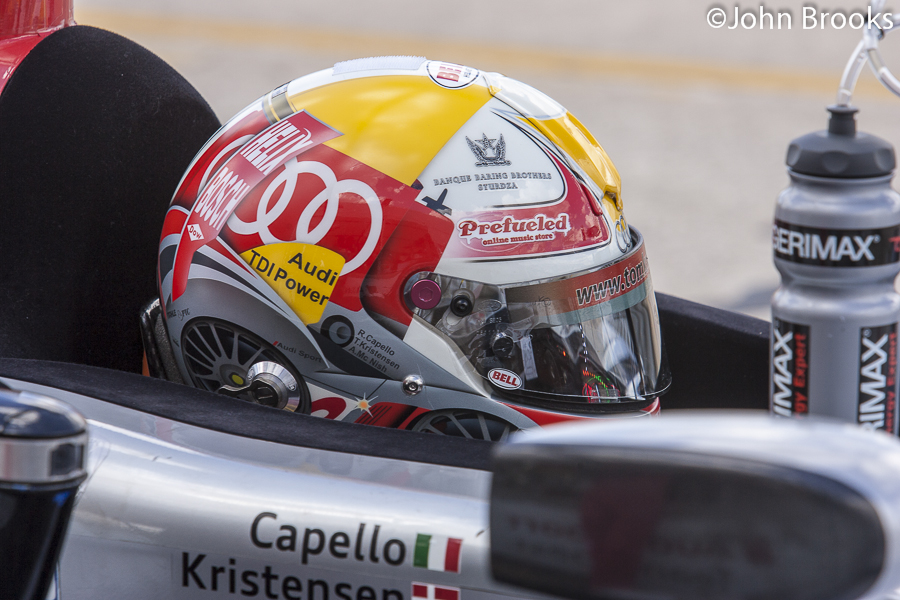
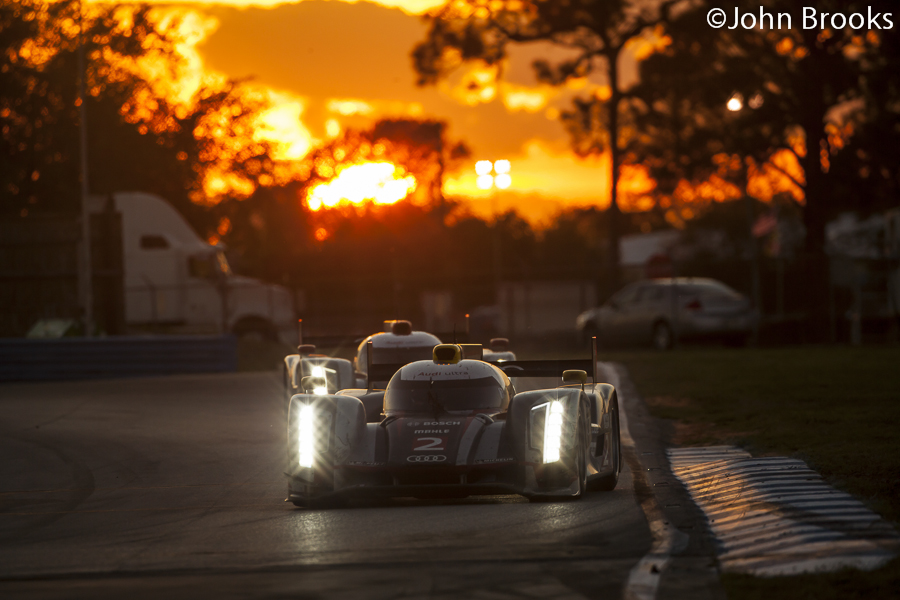
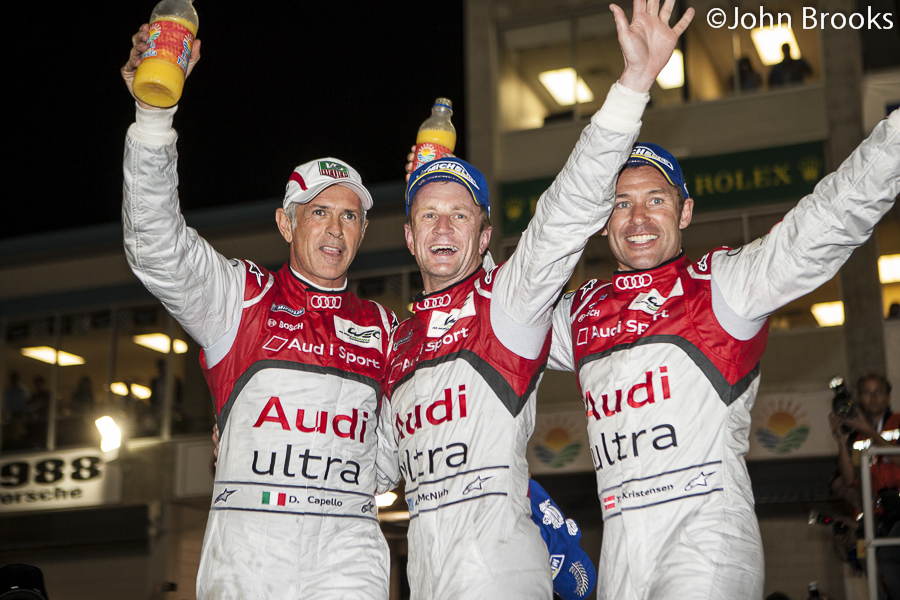
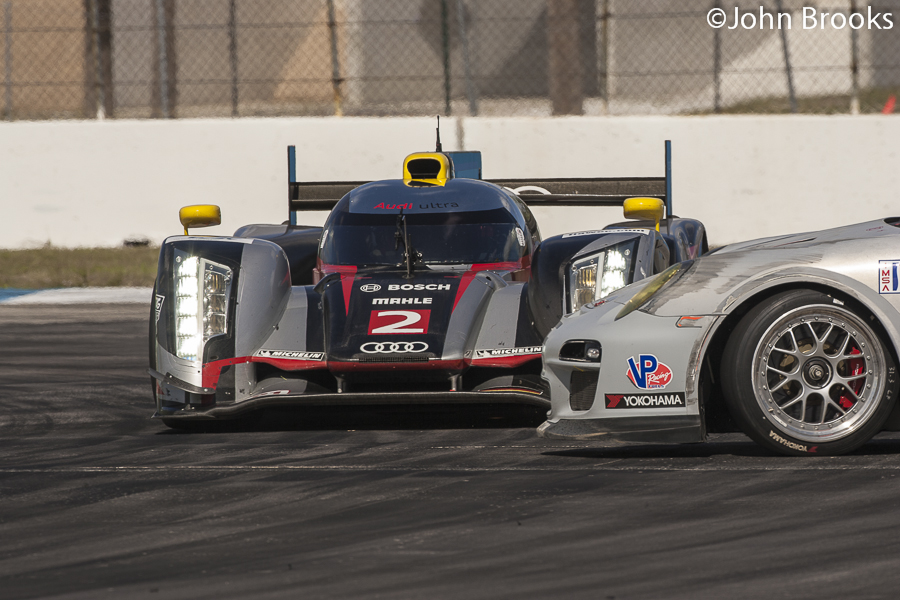
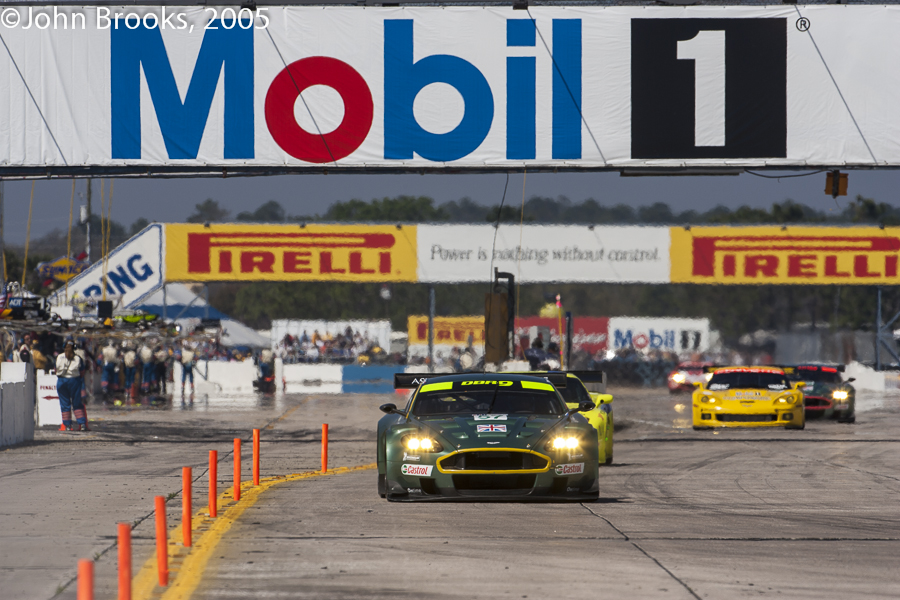
Sebring and its warm weather seems but a distant memory as the Ice Age gets a rerun here in England. One of the positives that could be drawn from the Floridian Endurance Classic was the arrival of the BMW Z4 GTE into the already hyper competitive GTE class. Whatever the future brings, the North American sportscar fans are going be treated to the spectacle of BMW taking on Corvette, Ferrari, Porsche and Viper for the rest of the season. This could well be a contender for the best racing on the planet this year, enjoy it while you can and celebrate the American Le Mans Series for all it has given us along the way.

John Brooks, March 2013

They call me MISTER Sebring

2001 12 Hours of Sebring

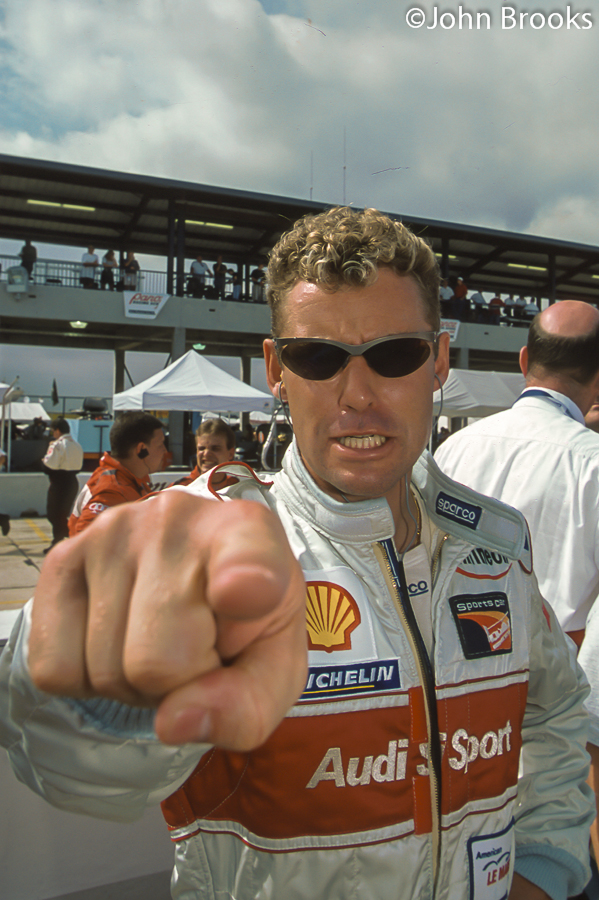
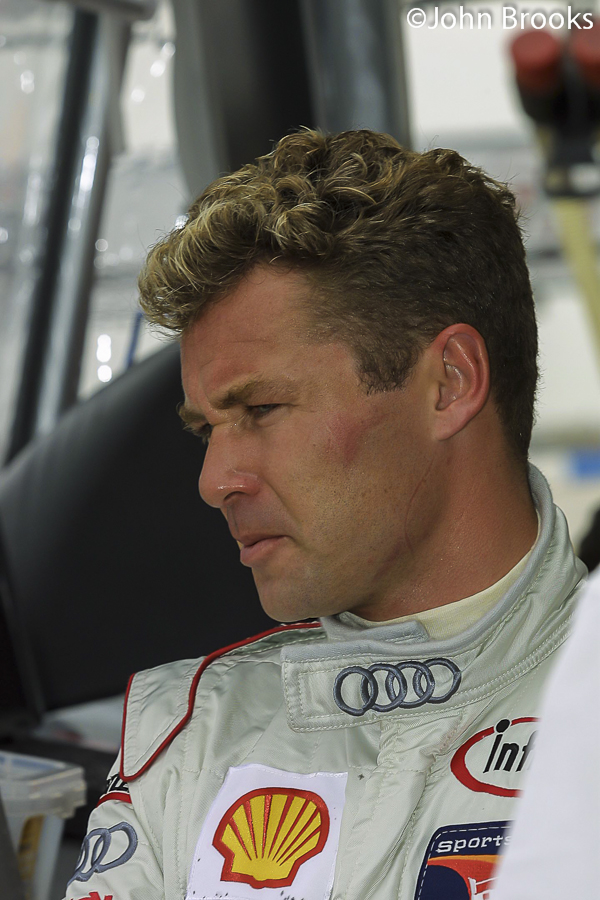
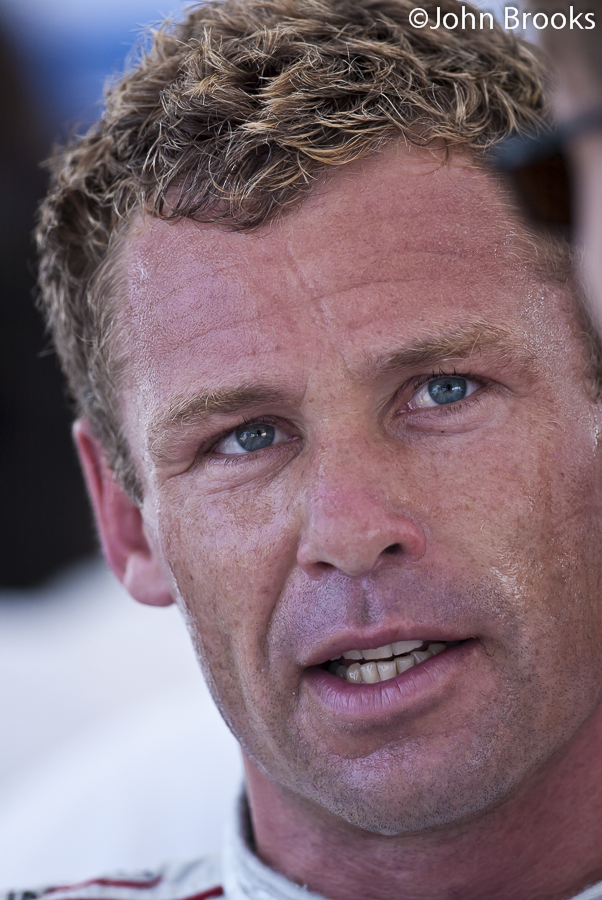
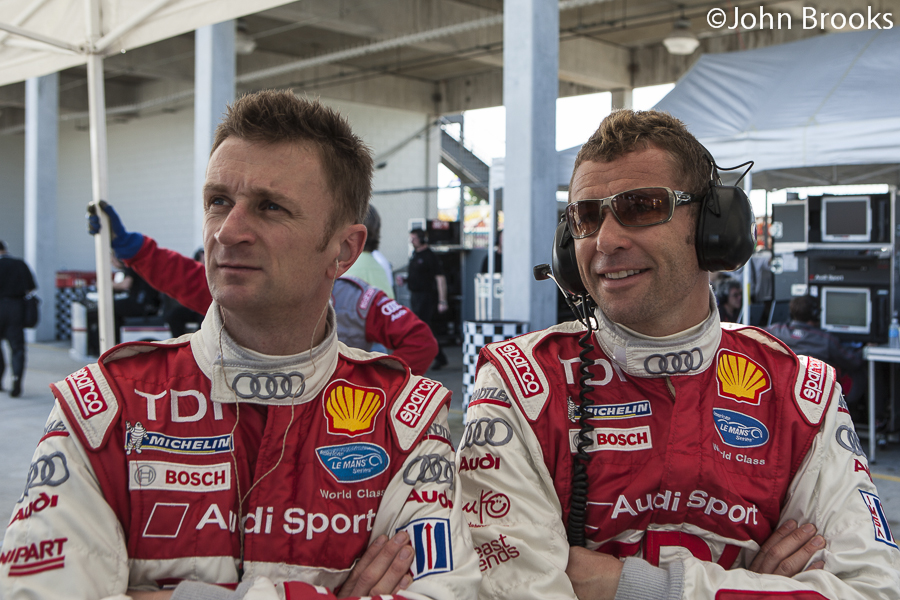
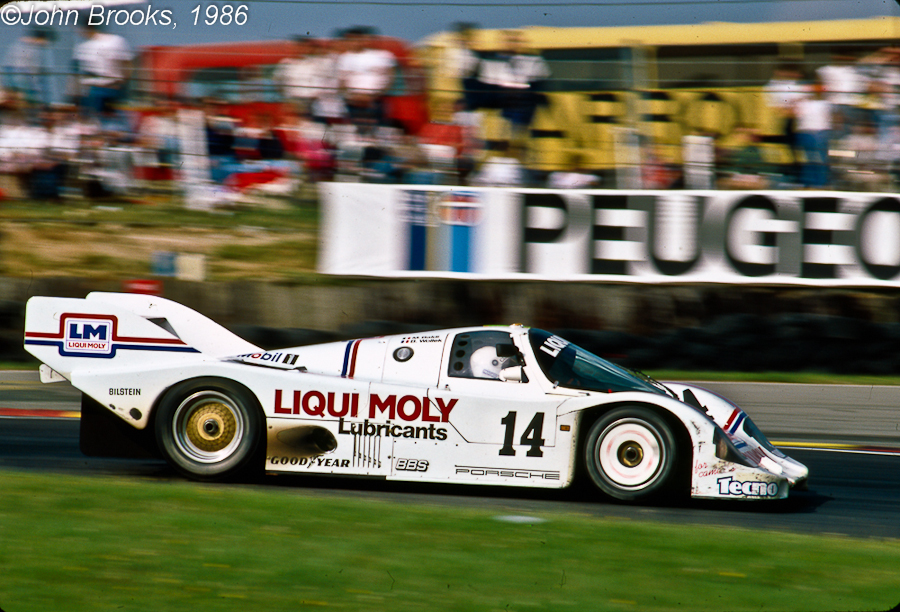
Tom Kristensen has been at the head of the endurance racing grid for the past 15 years, since he burst on to the scene by winning the Le Mans 24 Hours at his first attempt in 1997. That famous victory in the Joest Porsche led to a factory drive with BMW the following year and that led the Dane to Sebring in 1999. Tom has gone on to score a record further seven wins at La Sarthe and to many he is known as ‘Mister Le Mans’. However a good proportion of the temporary population of Highlands County each March would claim that another nickname would be more appropriate, Mister Sebring. So why is that so? Let’s find out what Tom thinks himself.

Recently I caught up with Tom and discussed with him his experiences at America’s greatest sportscar race.

1999 12 Hours of Sebring

JB: 1999, your first time at the 12 Hours of Sebring what do you recall?

1999 12 Hours of Sebring

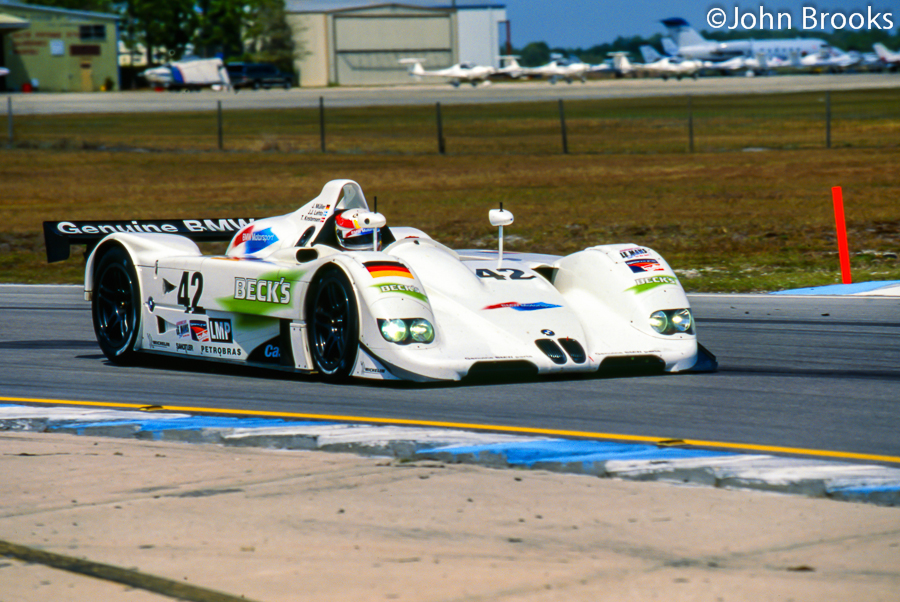
TK: My first race was with BMW in 1999, with Jörg and JJ. We had tested at Homestead the week before to prepare our new car, primarily for Le Mans but also for Sebring. We had a problem with differentials, we did not have enough spares, and I know that BMW were not very keen to race at Sebring. However the team at Williams Grand Prix, who had designed and built the car, particularly John Russell, pushed very hard to go on as planned. In fact we had some new differentials flown in as late as Thursday as all we had were the units that were actually in the cars.

1999 12 Hours of Sebring

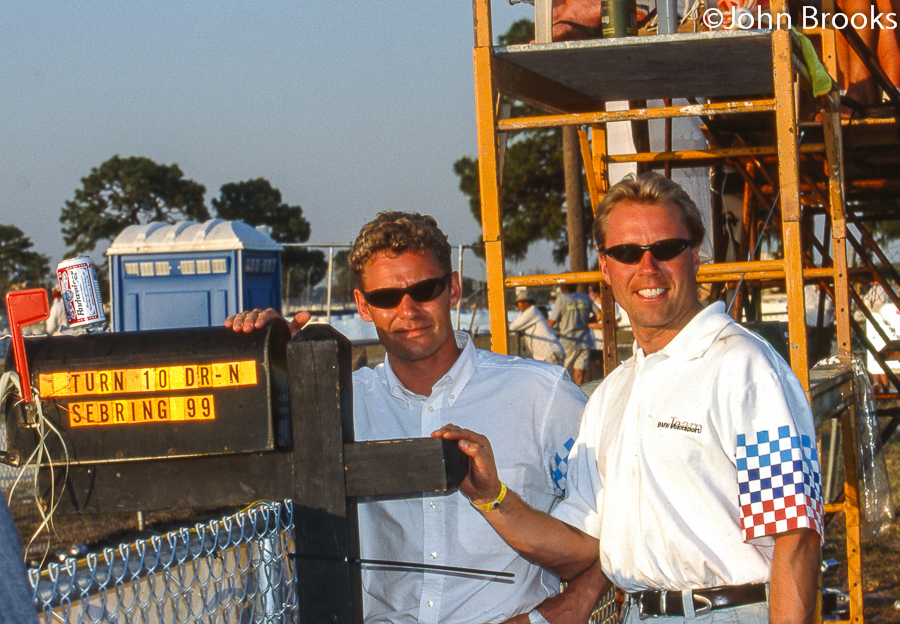
Then we got to the race and it was certainly an eye opener for me to drive on the historic circuit. I remember that there were quite a lot of Yellow Flags, a lot of cars had problems and went off. I recall that the whole section of the track from Turn Ten to Turn Fourteen was full of sand towards the end of the race. Of course James Weaver was pushing very hard, he is a guy who never gives up and really put pressure on me. I drove the last stint to finish the race and we scored the début win of the BMW V12 LMR, which was a big step forward from the previous car. So that then became a trend for the manufacturers to go to Sebring both to race and test in preparation for Le Mans. One thing I do remember about 1999, we were waiting I think for the arrival of the spare differentials and we went with a certain photographer, I guess it was Regis, I’m not sure*, out to meet the fans and especially to Turn 10. They are true fans of life and true fans of Sebring, it was nice to receive such a fantastic welcome. I always try to wave to the crowd there, either under a yellow flag period or on my in lap, to show my appreciation of Turn 10.

JB: Then we move on to 2000, and your first race with Audi…………….

2000 12 Hours of Sebring

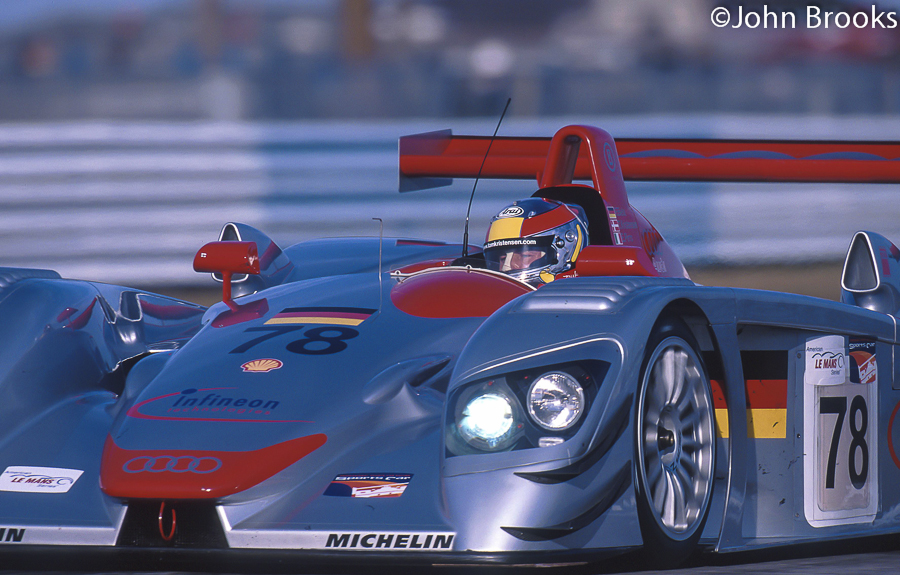
TK: In December 1999 I was at Sebring again driving an Audi, it was an interim car between the ‘99 car, the R8R and the R8, which went on to be so successful. The interim car had the rear end of the R8.

JB: One thing that I remember from 2000 was during one of the practice sessions you burying the R8 into the tyres at Turn Three, do you recall that?

2000 12 Hours of Sebring

No, that happened in Qualifying. It was the first lap in Qualifying and I locked up avoiding another car that had just come out of the pits and I went in heavily to the barriers under the foam sacks. Of course Dr. Ullrich was standing at that corner, he saw everything and jumped over the fence to help shift the sacks off the car. At that time I was on the radio to the pits to say that I have just had a small off, and of course Dr. Ullrich had the headset on and could hear this while pulling the foam away. It is not the perfect situation when it is your boss trying to dig you out and you are trying explain that it was only a small off…………

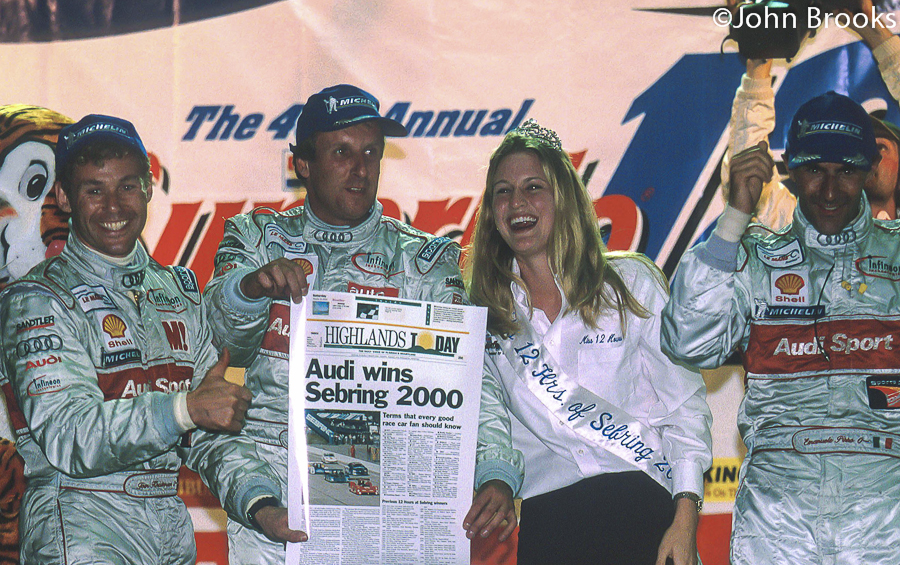
JB: Still despite the red face the race turned out OK and it was a great win for Audi, their first at Sebring and the first for the R8.

2000 12 Hours of Sebring

TK: Audi had learnt a lot from their first race there the year before, Sebring nails down any challenges or issues that you have with the car. Of course Joest and Audi are particularly good at dealing with such issues and the information and feedback that you get from Sebring is so valuable, there are five or six different types of tarmac around the track and that gives car and driver a rough time.

2001 12 Hours of Sebring

JB: In 2001 there was a rain affected race, and your team mates Dindo, Laurent and Michele just managed to beat you in a close finish.

2001 12 Hours of Sebring

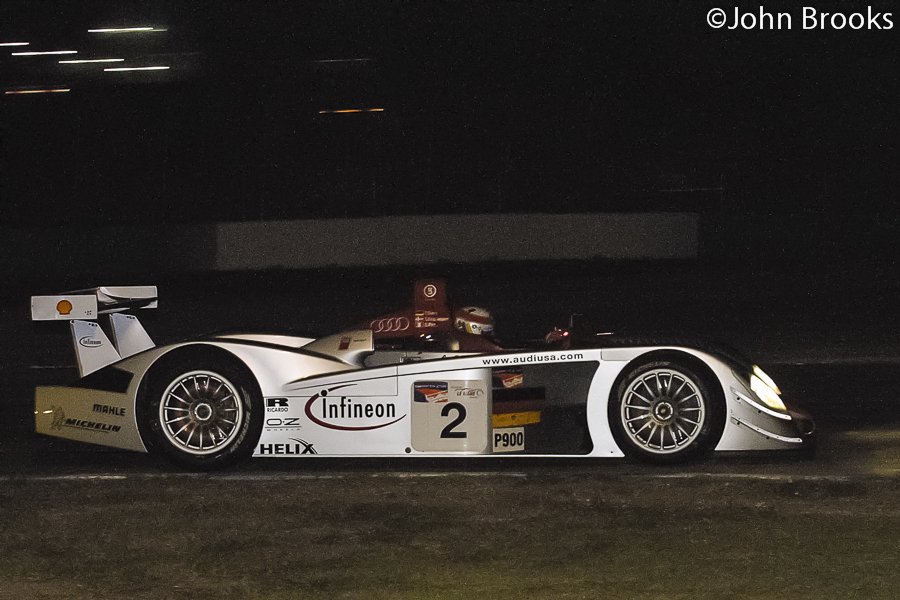
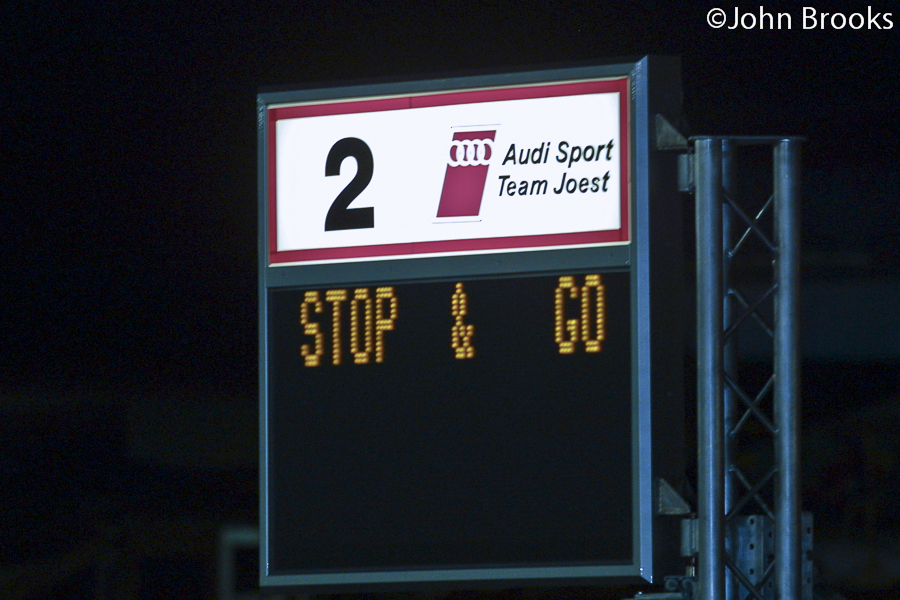
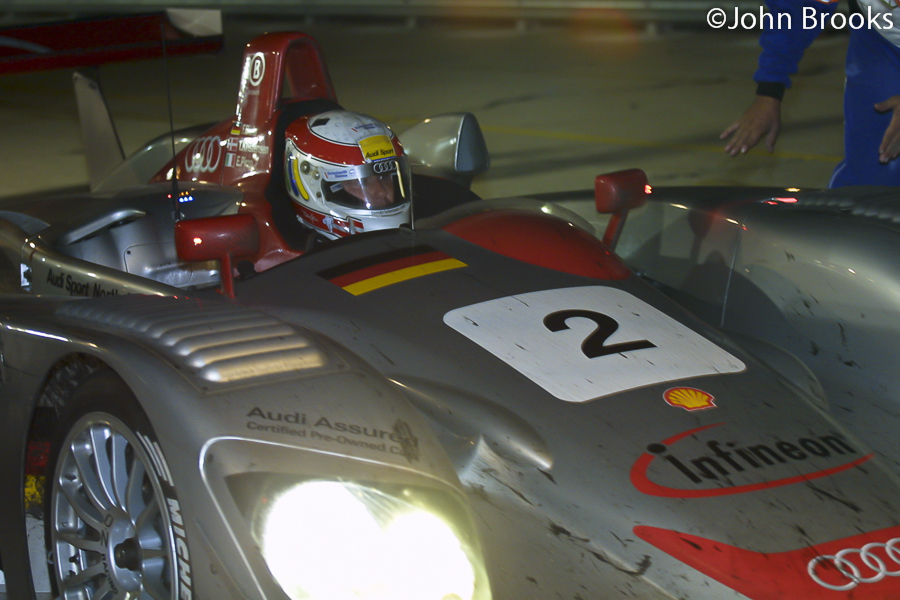
TK: Actually I was very disappointed that time, we had a great race and it seemed that Dindo and I were often on track against each other. I remember that we were actually leading but in the crucial time of the race, I came into the pits too fast so got a Stop and Go Penalty which dropped me behind Dindo and, despite pushing very hard, I could not catch him before the end of the race. Yes it was a disappointment because it was solely down to me.

2001 12 Hours of Sebring

JB: It was Michele’s last victory.

2001 12 Hours of Sebring

TK: Yes, and it was certainly deserved and in that sense it is much better to look back at the race with that fact in mind.

JB: 2002 was a completely different race because the heat was extreme there was a problem with the car and the steering rack needed changing during the race. Of course once you lose a chunk of time in the pits your race is effectively done, especially competing against another R8.

2002 12 Hours of Sebring

TK: No you cannot come back from that much lost time, we had the issue with the steering which I had never experienced before or since and when you need to change something like that all your plans are out the window. We had a fast car however it was not to be but Audi scored a hat trick so the race was not completely lost.

2003 12 Hours of Sebring

JB: In 2003 you joined the ranks of the Bentley Boys.

TK: Yes, I remember that the Bentley was a hot car, certainly after the R8. The car ran really well but we had the issue of being put to the back of the grid after Qualifying and this definitely compromised our race. I think we had only one problem and that was with the brakes, we had to be very careful towards the end of the race. We were very focused on winning Le Mans, and Sebring was an important part of that. We had a very good debrief after the race. The Bentley was very different to the philosophy of the Audi R8. We had an Audi engine so we were safe on that side, and for the guys working on the car the Sebring race helped the team to gel. Racing at Sebring was crucial to our Le Mans’ victory. Getting both cars to the finish at the 12 Hours was really important to us in the context of our whole programme.

JB: 2004, how could they do this to us? No Tom Kristensen at Sebring?

2002 12 Hours of Sebring

TK: Well 2004 was the year I started in DTM as that was the only factory programme for Audi that year. Dr. Ullrich offered me the opportunity to join the Audi DTM effort and I then raced in that for several years, really enjoying it. In all the years I was in DTM I just joined the endurance races like Sebring and Le Mans, keeping in touch with that side of the sport.

2005 12 Hours of Sebring

JB: 2005 you joined Champion Racing for Sebring, and Le Mans. You shared the driving with JJ Lehto and Marco Werner. You had a big fight with Allan in the other Champion car in the last stint, you always seem to get the last stint at Sebring.

TK: It was a good race between the Champion cars, all the way to the flag it was very close, the result all depended on how we played our cards. We were out of sync in terms of tyres and fuel strategies and I remember that when I was on new tyres I had to make a gap to make sure that when Allan had new tyres that he did not get too close. So the gap moved around a little especially in the last three stints. It was vital that when you left the pits on cold tyres, in particular on the penultimate stop, there was just enough grip to keep Allan back and he did not pass me. I was then on new tyres and could keep him behind and created just enough margin that when he got his last set of new tyres he was still just behind. I think it was the closest ever finish at Sebring.

2005 12 Hours of Sebring

I still have the video from Speed TV and on the last lap Allan and I were still racing hard, so as we get to the back (Ulmann) straight, I got on the radio and asked if they wanted to stage a photo finish. Brad Kettler who was engineering our car, started yelling back, “No, No, No! Keep the pedal down. Keep the pedal down” Of course I did not realise that this was going out live, and the Speed TV commentators were really laughing at this exchange. I still have the recording.

12h-Rennen Sebring (USA) 2006

JB: So then the 2006 race, the début of the diesel powered R10.

TK: Yes, that was amazing, it was a big step forward for both Audi and motorsport, very important. It made the front page of the newspapers in many places. The day after the race I had Ulrich Baretzky the engine designer, as one of my passengers on the way to Miami, he was a very proud man that day and rightly so. The R10 TDI had a big engine, which meant that there were compromises in how the car was configured and also in the way that you drove it. Now we have a very lightweight engine in the car but back then the V12 was much bigger and heavier. The R10 TDI was a very sophisticated car, with the very latest technology and it won its first race and that was at Sebring.

2007 Sebring 12 Hours

JB: On to 2007 and there were a couple of things that went wrong as I recall. The rear suspension needed changing……………

TK: I’m not sure I completely remember, I think we had to go behind the wall, so we lost time and that was that. It was one of those times that Sebring gets the better of you.

ALMS 01 - Sebring (USA) 2008

JB: 2008 and another difficult race, as Dr. Ullrich said at the time, the team had more problems in this one race than they would normally encounter in a whole season. Brake disks were a particular problem.

TK: Well we were trying very hard, racing against the Peugeots and maybe we went a little bit in the wrong direction. That being said, the problems that we had at Sebring and how we fixed them were the basis of our win at Le Mans that year. The performance in Florida really hurt us and made us really push to the maximum to get our pride back in France. Some people consider the 2008 Le Mans to have been the best or one of the best ever, perhaps, but the determination after Sebring, in Joest, in Audi, in the drivers, everyone, was really strong. We knew that Peugeot had a faster car, but we had a car that we could race, and we thought that if we performed to the maximum we could beat them. We believed in winning when others did not, the Truth in 24 movie shows that pretty well.

2009 Sebring 12 Hours

JB: 2009 another new car, the R15 TDI, and another début victory, now win number five, up against Peugeot again.

TK: The R15 TDI right on the limit was delicate, so to keep it in the performance window was always interesting at a circuit like Sebring, a real challenge for engineers and drivers, so I feel that our victory was hard earned and well deserved. It was certainly not an easy win.

2009 Sebring 12 Hours

JB: The following year the updated car, the R15+ was not ready in time for the race itself though you did go testing later.

TK: I would not have been in the race, as I had injured my Achilles tendon and was in recovery mode.

2007 Sebring 12 Hours

JB: 2011, things were going well in the race, a big battle with the Peugeots and then Dindo was hit by Gene while racing.

TK: That was in Turn 17, which is very fast and that was our race done. It was a shame because we looking in good shape. But if I recall all the factory cars hit problems and the Oreca car took the win.

2012 12 Hours of Sebring

JB: In 2012 the Peugeots had gone as a result of financial problems, but on the positive side Sebring was the first round of the new FIA World Endurance Championship and it was Sebring’s 60th birthday and you managed to add to your list of wins.

2012 12 Hours of Sebring

TK: Last year was another great race and an important one, being the first round of the FIA World Endurance Championship. It brought together, the ACO, IMSA and the FIA. It was an honour to have won the 60th race, and it was a really big battle with our two other Audis. It made up in a way for my mistake on the 50th anniversary race. I said to Dindo on the podium, “Congratulations on your fifth victory, now you have caught me”…………then the penny dropped and he called me something rude. Of course now Dindo is retired but he will be in Sebring, as Allan and I always get him to pay for the espressos in the morning at Starbucks………………..

2012 12 Hours of Sebring

JB: If someone says to you “Sebring 12 Hours”, what do you think of? Why do you think the race is so special?

TK: It is unique, even the journey from Miami through small towns of central Florida is very different from Europe, you are approaching the tradition and history that is this 12 Hour race. Famous names like Fangio and Moss were part of this rich history and then later Andretti and Ickx, all the great names of the sport have been to Sebring. So if I speak to any of these guys I can relate to their career as the track is basically the same layout as when it started. That is really cool, it is the Paris-Roubaix of motorsport, the famous traditional cycle race. To get the best set up for the track is difficult and you really need to get on it as a driver, you have to conquer the corners every lap. You have to be aggressive but at the same time be very aware, alert for traffic. 2012 was the hardest race in terms of traffic that I have experienced, as there were more than 60 cars on the grid. So you feel like you are overtaking cars every 50 metres, you are constantly overtaking. There is not much space and if you put the car even a few centimetres off line you can hit a bump which is much harder than you expect and then you are in trouble.

JB: You have mentioned the Sebring fans…………..

2009 Sebring 12 Hours

TK: The Sebring fans are fantastic, the enthusiasm they show is just like Le Mans but it is also different. Sebring has the American way and that is really cool. Another place where the fans are on the same level is the Goodwood Revival. The fans at all these events are genuine and they are there to watch the race but most importantly they are there to have a good time. They wake up in the morning and say to themselves “Hey I’m going to have a good time today” and the atmosphere where everyone feels like that is fantastic. You are in the right place at the right time. Sebring makes me feel that it is THE place to go to every March and I am very happy that Audi asked me to go again as it looks like it might be the last time that Audi and LM P1 will compete there.

JB: Briefly what would you say your best and worst moments at Sebring were?

TK: It is difficult to choose but I suppose that my first race which showed me that the 12 Hours of Sebring is very different from any other race. Then the victory last year was very special. The second place in 2002 was difficult because I knew right after the Chequered Flag that the defeat was down to me, I was the one who was speeding in the pit lane and that was a very hard defeat to take. But on the other hand it was Michele’s last win and that makes it easy to get over.

* It was me………………..

John Brooks, March 2013

Happy Birthday, Art!

merzario, arturo_2

It cannot be much fun these days being a writer in Formula One, blandtastic interviews with athletes  who for the most part, you would not want to spend time with away from the office. OK, there is one exception and perhaps that explains Kimi’s enduring appeal, at least to the fans. The level of control exercised by the PR hacks is stifling and could explain partly why the motorsport press is in a steady decline, no one wants to read a steady diet of vanilla soundbites.

Back in the 70’s it was all very different.

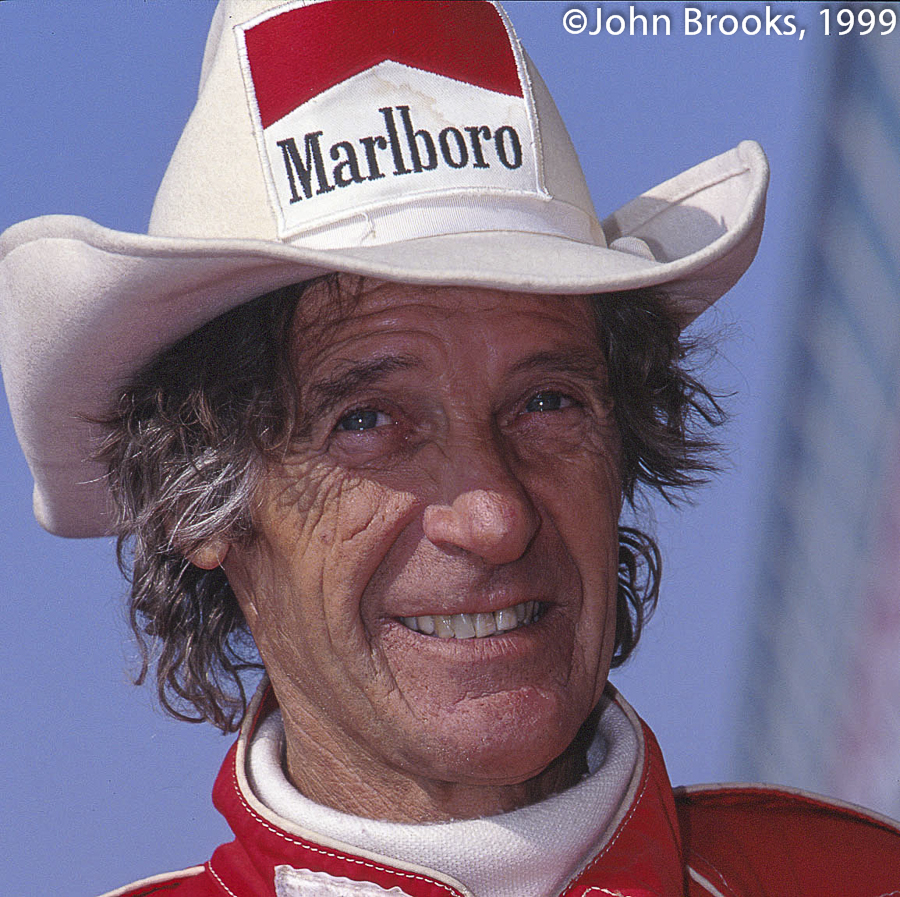
Speaking of 70’s it is the 70th birthday today of one Arturo Francesco Merzario and that is a cause for celebration. If one man symbolises the free spirit attitude of that era, it could be said to be Little Art. He drove 27 Grand Prix for Ferrari, an Italian’s dream, but it was not a good time to be with the Scuderia in Formula One. Sportscars, however, was another matter. As a factory pilot for both Ferrari and Alfa Romeo he scored victories in the classics at Nürburgring, Targa Florio, Spa, Imola, Kyalami and Monza. The hat and the cigarette, and the elegant lady on his arm were all part of the image.

I last saw Art a couple of years back at the Nürburgring 24 Hours, he was racing with a few mates from Italy, just enjoying an opportunity to drive on one the greatest tracks of them all. It explains his popularity, the money meant nothing, it was always about the racing, and those of us outside of the Paddock Club could sense that, he was one of us.

So salut Arturo and many more to come!

John Brooks, March 2013

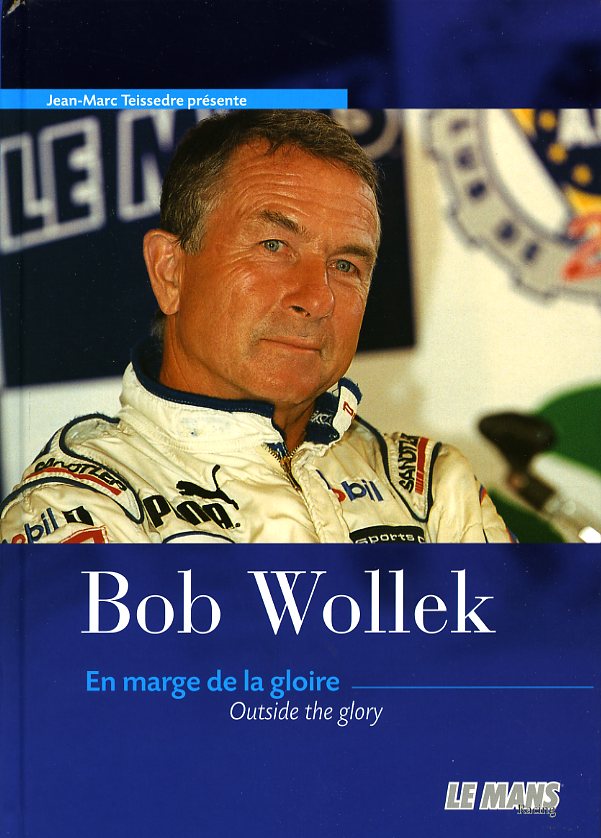
Bob Wollek – En marge de la gloire

BobWollek318

Ten years or more has passed since Bob Wollek was killed in an accident on Highway 98, near Lorida, Florida. Last summer has seen the publication of a biography of the great French endurance driver, written, appropriately, enough by his close friend, Jean-Marc Teissedre.

Jean-Marc is now unquestioningly the leader of the journalistic pack in the endurance sportscar racing media circles. The proud Frenchman has been covering that aspect of the sport since the ’70s and now, since the retirement of Mike Cotton, is probably the only one, other than Mark Cole, who can remember witnessing the glory days of Group C. Jean-Marc was a confidant of Bob Wollek and there can be no more appropriate author of a book celebrating the life and times of a very successful racing driver.

83BrandsH1000_jb_0001

However the book is far from a hagiography, it is a warts and all account of a man who spent nearly 30 years at the top of the sport. A indication of the honest tone of the book is found right from the start as Jean-Marc gives an account of his first encounter with Mr. Wollek.
“Can you imagine a worse introduction to a guy who had a reputation for being pretty unsociable than having to ask him for money? This is what happened to me in the paddock of the old Nürburgring on Friday evening before the final round of the 1977 German Circuits Championship. Auto Hebdo sent me to Germany to cover the event, and I got the exchange rate between the  French Franc and the Deutschmark a bit mixed up. The only solution was to find a Frenchman who would get me out of this mess. And they were thin on the ground in that era. So it looked like my only hope was Wollek! I didn’t know him, but the magazine asked me to follow him closely as his reputation was just beginning  to expand beyond the banks of the Rhine. But at this particular point in time I had to introduce myself to him not as a journalist but as a beggar! So after a very careful approach I had to come clean. I told him who I was and asked for what I wanted almost in the same breath in a barely audible voice. 
“Who the hell do you think you are asking me for money? We don’t know each other- do you think I’m the Bank of France, or what?” he shot back. A long silence followed our first contact. By the time I’d got round to thinking up an answer, Bob had already gone to the rear of the car and was talking to the Porsche Kremer Racing mechanics in German.
I walked a little further away and tried to think. I didn’t know anybody, the future was looking grim. But now it was time for practice so I said to myself that I’d see about it later. After things had calmed down I went into the press room, and as luck would have it I found myself face to face with Bob. “Have you got your one hundred marks?”
“Well, er .. . no. I don’t know anybody here……”
“It’s not bloody possible…”
I couldn’t  make out the rest  of the sentence, but  it was probably a sarcastic comment about the level of intelligence of  the journalistic profession. But I didn’t have to be asked twice when Bob told me to follow him. He flipped open his wallet and gave me fifty marks. But now there was another problem- how was I going to repay him? At best we’d meet up again in the same spot in March of the following year for the first round of the 1978 DRM. This is what I said to him. He rubbed his hand across his forehead asking himself what kind of half-wit  he was dealing with. “And a cheque, you don’t know what that is? It’s a little piece of paper you take to your bank and get money in exchange!”
Mumbling vague excuses for not having thought of this solution I promised  to send him a cheque on the Monday following our meeting.”

Not an auspicious start.

86BrandsHatch1000_jb_0002

And the book continues in a similar vein, the story of Bob’s career as a skier, then a rally driver and finally to the circuits. Interwoven into the tale are pieces from his contemporaries and also artifacts from his estate. One that caught my eye is the invoice from Motor Racing Developments for a Brabham BT28 the weapon of choice for a Formula Three campaign in 1970, all for the princely sum of £1,860-0-0.

It was in the Brabham that Bob’s career nearly ended before it began. Contact with none other than James Hunt sent Wollek into the trees of Rouen, bouncing from one trunk to another, the car was destroyed and the final destination for Bob was the local hospital for a couple of weeks. Racing at the time was a blood sport, for two others (Jean-Luc Salmon and Denis Dayan) were killed in that race, the drivers adding their impetuosity to the fragile nature of the cars. Bob’s friend of the time and 1980 Le Mans winner, Jean-Pierre Jaussaud, recalled the race in the book, “They tried to pass four abreast in a place where there was only room for two.” What can one add to that?

Tribute

Tribute

The story continues on with Bob soon ascending to Formula Two, and ultimately more significant in the long run he found his way into endurance racing with Lola and Matra. It is all here in chronological order, the privateer Porsche years, his successes in IMSA, the titles and the race wins, culminating with factory drives for Lancia and Porsche.

The book is spiced with comments from his contemporaries, not always complimentary, as evidenced by this passage from his 1995 Le Mans co-driver, Eric Helary. “In my life I’ve only had problems with two drivers: Christophe Bouchut and Bob Wollek. I respect everything that Bob did but he made our 1995 Le Mans 24 Hours sheer hell. Right from the start he behaved despicably. He didn’t want Mario or me to get in the car. He wanted to do the start, the finish, practice, qualifying, the lot.”

And then, “At the finish Mario and I were in the motorhome and we asked each other what the hell was going on in Bob’s head? And it didn’t stop there. After the race he wrote me a letter telling me I was an arsehole!”

a0119ma05

Eric concludes, “Maybe I’m not a good example as I drove with him in only one race and I never came across him again. I have the impression that I didn’t see the real Bob Wollek. I never knew the other side to him.”

Mario, in diplomatic mode, was less critical. “I always had good relations with Bob who I’d known for a long time as we’d done tests in the open WSC Porsche at Charlotte which had gone off without a hitch. I respected him as he had an exceptional set of results.” Team Owner, Yves Courage, also found Wollek to something of a Jekyll and Hyde personality but I will let you buy the book to read the full story. For every negative there is also a positive view from those not easily fooled, like Klaus Ludwig and Norbert Singer.

87LeMans_jb_0010

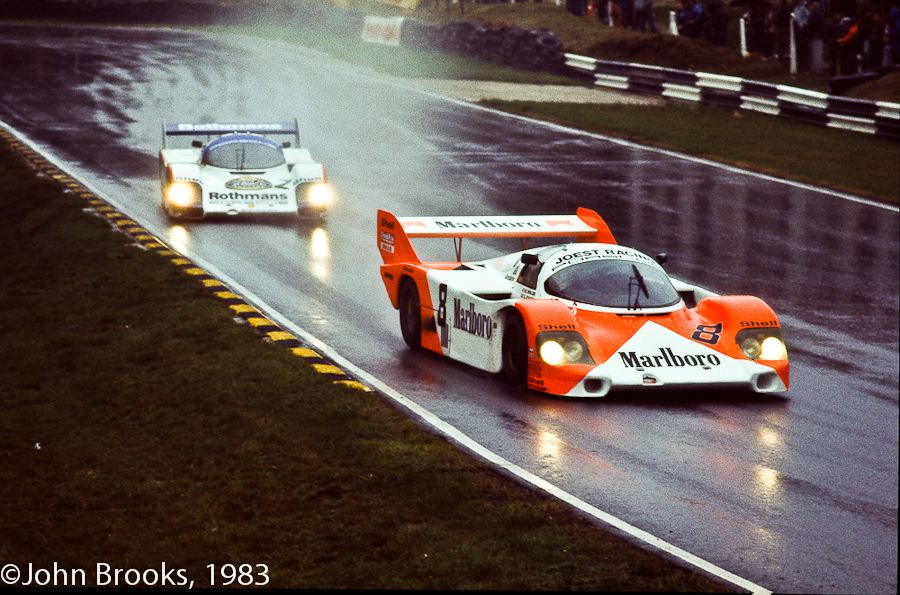
When I sat down to write this review I was inclined to include some personal experiences and I have to say that my own somewhat limited dealings with Bob were, at best, mixed. At the time I started out in motorsport he was one of the stars of the scene and I was another anonymous face in the mob of photographers, so there was no call for any form of interaction. I witnessed Wollek win races, join teams at the wrong moment and endure all manner of indignities at Le Mans. He grabbed pole position in 1987 and then in the race did not even get to drive as the engine went bang. Bob was driving a werks-Porsche, the ones with Rothmans’ signage, they were not supposed to fail, after all excellence was expected. However a rash of top line Porsches retired early in the race, all victims of a batch of fuel supplied by the ACO that was found to have a lower octane level than it should have, which played havoc with the turbocharged cars. Typically the sister car did not blow a piston and went on to win the race against all odds.

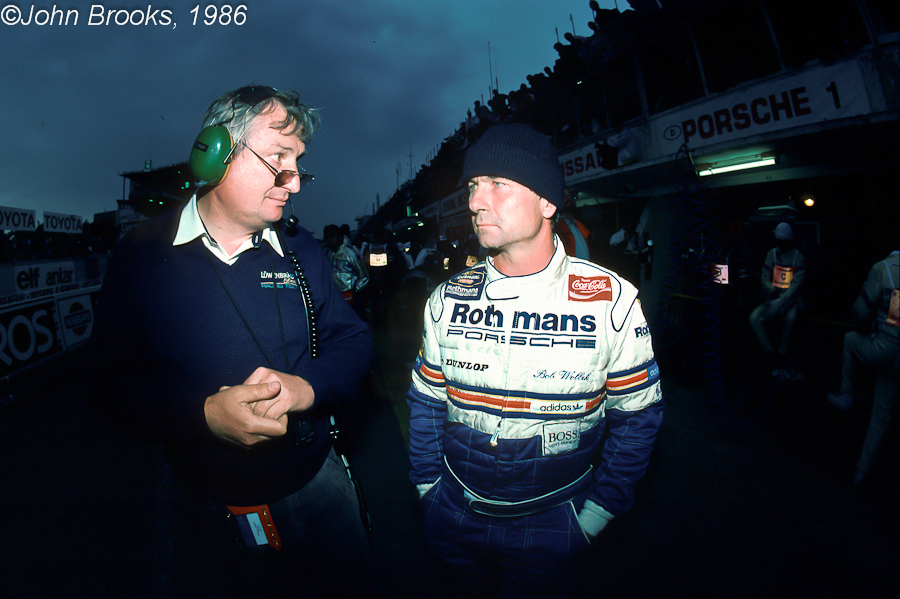
27 May-01 June, 1986, Le Mans 24 Hours. Norbert Singer and Bob Wollek.

The 1987 edition of Le Mans was perhaps the first time I really saw how forceful Wollek could be. The ACO would have a Friday afternoon press conference which in theory was to champion the great race. However the President of FISA, Jean-Marie Balestre, would also manage to be present and would always take to the stage. Balestre was prone to giving the assembled hacks a stern lecture on whatever topic was troubling him at that moment, so although we were at Le Mans we would usually receive a rant about Formula 1. This was delivered in the theatrical style of a proper tinpot dictator, thumping the desk and getting red in the face all the while bellowing about FOCA or the drivers, or some other iniquity.

88Jerez800_jb_0001

Craven cowards that we in the media were, we would endure these bizarre performances without protest, partly because we wanted a pass the following year, and partly because there was usually some form of gift or bribe to encourage our attendance. For instance in 1986 it had been a Magnum of vintage Moët & Chandon Champagne, I can certainly remember that high point of dubious incentives. Well I still have the bottle in my office though it is sadly empty, the bottle that is.

84BrandsH1000_jb_0003

There was the usual matinée idol performance from J-MB and then as the floor was opened to questions Bob stood up and gave Monsieur le Président a full blast. My French comprehension is poor at the best of times but I was no doubt that this was about safety standards at Le Mans and the irrelevance of the Formula One blather. The drivers were very concerned about the speeds down the Mulsanne Straight, which pushed to the limits of the tyres’ performance, a year earlier Jo Gartner had been killed during the race in an unexplained accident. Klaus Ludwig, a three time winner, had refused to race at La Sarthe unless changes were made. Balestre was shaken by the direct line that Wollek took as he was more accustomed to dealing with a tame bunch of scribblers. Bob made his point quietly but he left the Président in no doubt. The message was clear, force the ACO to do something before someone else is killed. As if to underline this point there were several accidents in that race week culminating in the monumental crash of Win Percy’s Jaguar, after a puncture at around 230 mph. Win survived but it was a lottery, the next victim might not be so fortunate. Within a year or two the Chicanes on the Mulsanne would appear. Bob had made his point.

a0119ma06-2

I continued to see Bob at the tracks but the next time we had any real interaction was less enjoyable. His final race as a Porsche driver in the top class was in 1998 at the Suzuka 1000kms, a round of the 1998 FIA GT Championship. Porsche had endured a horrible season being beaten at almost every turn by AMG Mercedes Benz. The exception, of course, was Le Mans but Bob had only managed yet another second place, once again the glory went to his team mates. Looking through the viewfinder at the podium ceremonies, it would taken a heart of stone not to be moved by Bob’s tears as the realisation set in that the dream was over, there would be no triumph at La Sarthe.

2000 Le Mans 24 Hours

For the race in Japan he was paired with Uwe Alzen and Jörg Müller but the trio could not match the pace of the other factory Porsche, let alone the Mercedes duo. During Bob’s mid-race stint he had contact with a GT2 in the final chicane and recovered to dive into the pits to check for damage, unfortunately to do so meant driving against the traffic and he received a three minute stop-and-go penalty for his pains. I reported this in a Swiss magazine that I was working for but something in the translated report incurred Bob’s ire and he threatened to sue us all! The Editor assured me that he would sort it out and I got the impression that this was not the first time that he had Angry of Strasbourg on the phone.

00ALMSPLM1_jb_0120-2

The next encounter with Bob was much more convivial. At the Le Mans Test weekend for the 2000 race I was filling the hire car up at the petrol station near to the Parc des Expositions next to the track. A Porsche pulled in at the next pump and out got Bob, who nodded hello and gave me a smile, it made my day, maybe I had stopped travelling, perhaps I had arrived. Like Porsche AG itself, Wollek was confined to the supporting ranks of the GT class. He continued to go flat out, frequently surprising the Young Guns like Lucas Luhr and Dirk Müller with his turn of speed. He certainly seemed more at peace, reconciled to the fact that he would never take the great prize.

2000 Le Mans 24 Hours

The following March I was at the Sebring 12 Hours. Arriving at the track on race morning before the sun rose, there is always a photo briefing to look forward to, a great assembly of grumbling, groaning snappers. I understand that the collective noun for motorsport photographers is a Moan. 2001’s race-day photo meeting  was an unexpectedly solemn occasion though.  First to arrive, and in those pre-digital days, first to leave, the vast majority of us snappers had not heard the news, Bob Wollek was dead. It was unbelievable, Wollek had survived during a truly dangerous period in motorsport and now, as he contemplated retirement, he was killed in a pointless traffic incident. There would be no more chance encounters.

WX5Y3223

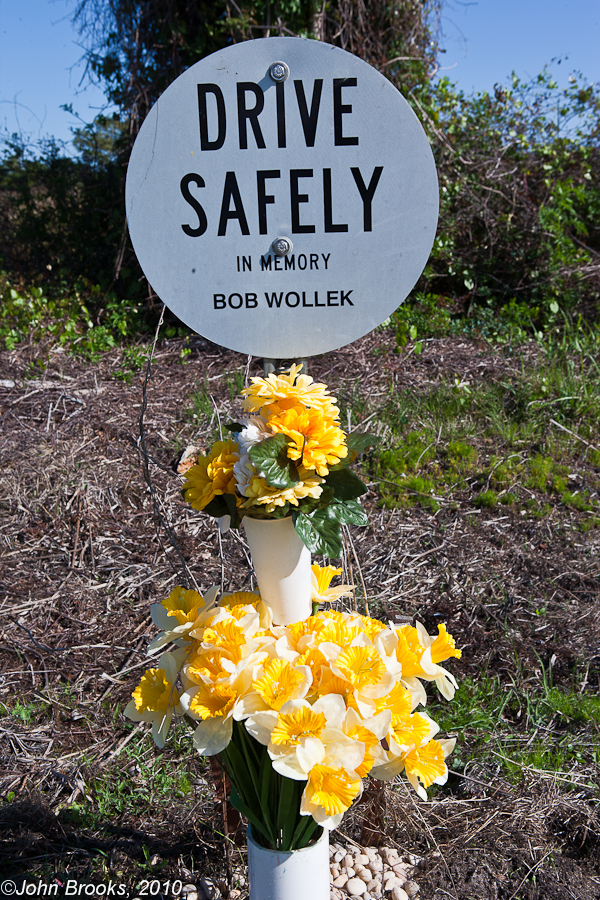
Every year that I make the trek to Sebring for the 12 Hours I try and get out to the marker post near Lorida where Bob Wollek was knocked off his bike and killed. Others also make the same pilgrimage, evidence such as fresh flowers and wine bottles attest to that.

Bob Wollek was a complex, contradictory character, much loved by those who he allowed to get close, less so by those who were not. This book is a fascinating account of a man who lived by his own terms, well researched, written and translated. It lacks an index but that is about all, buy it, treat yourself, especially if you are in Sebring this week

John Brooks, March 2013

Doing a Ton

percy

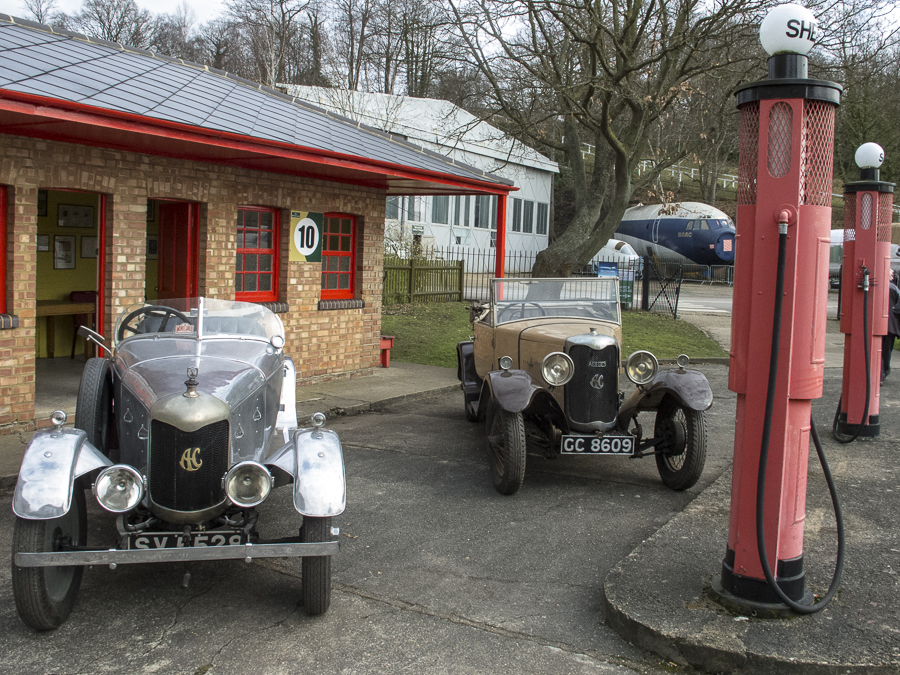
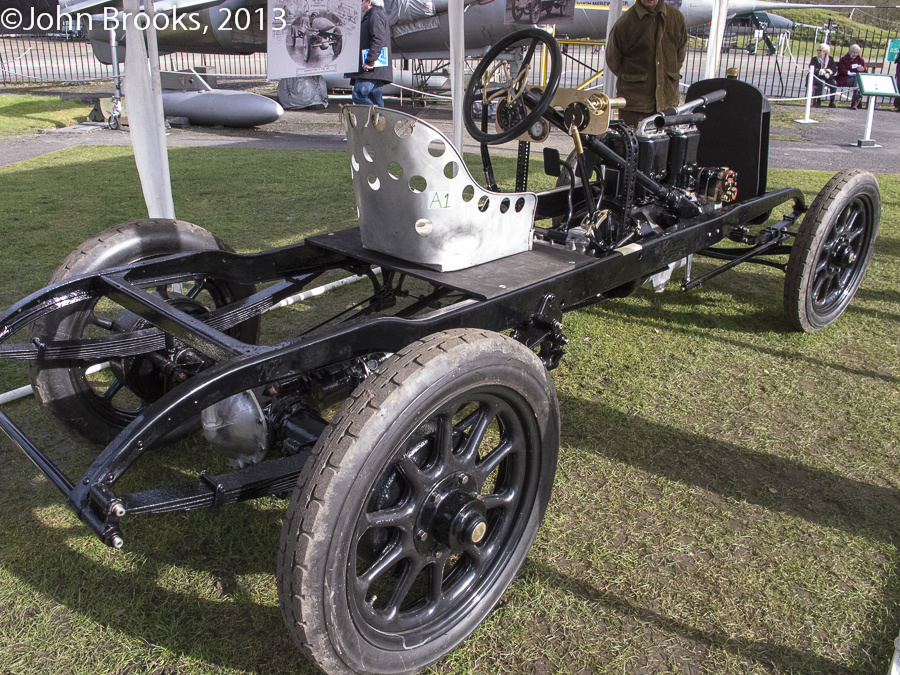
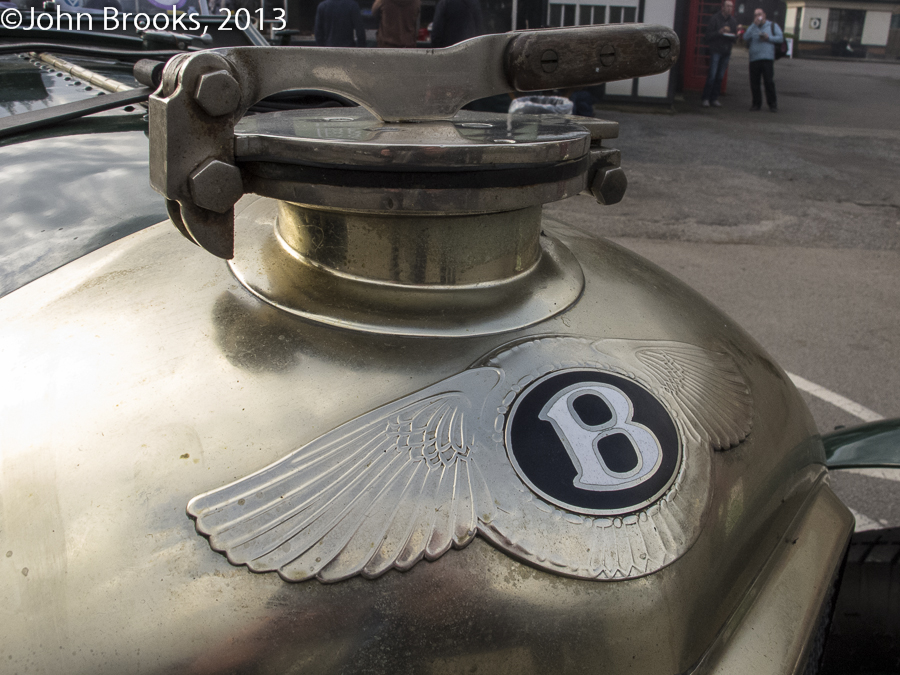
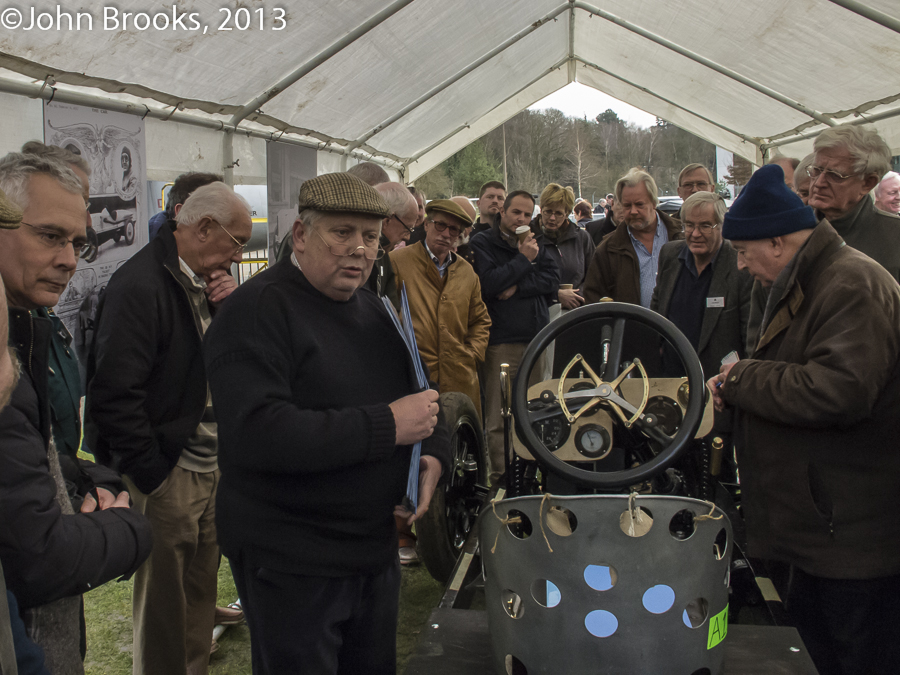
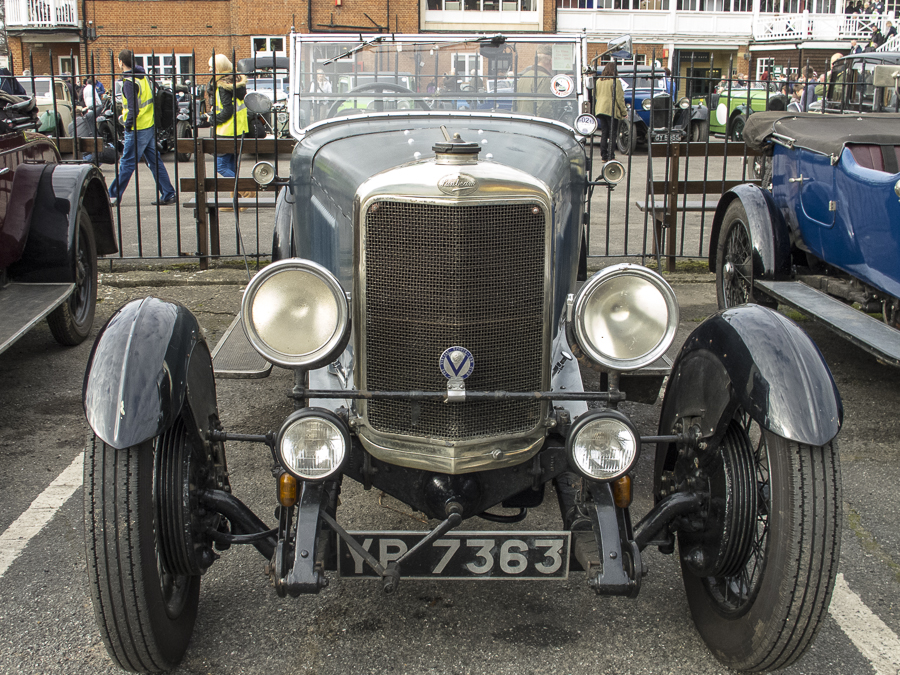
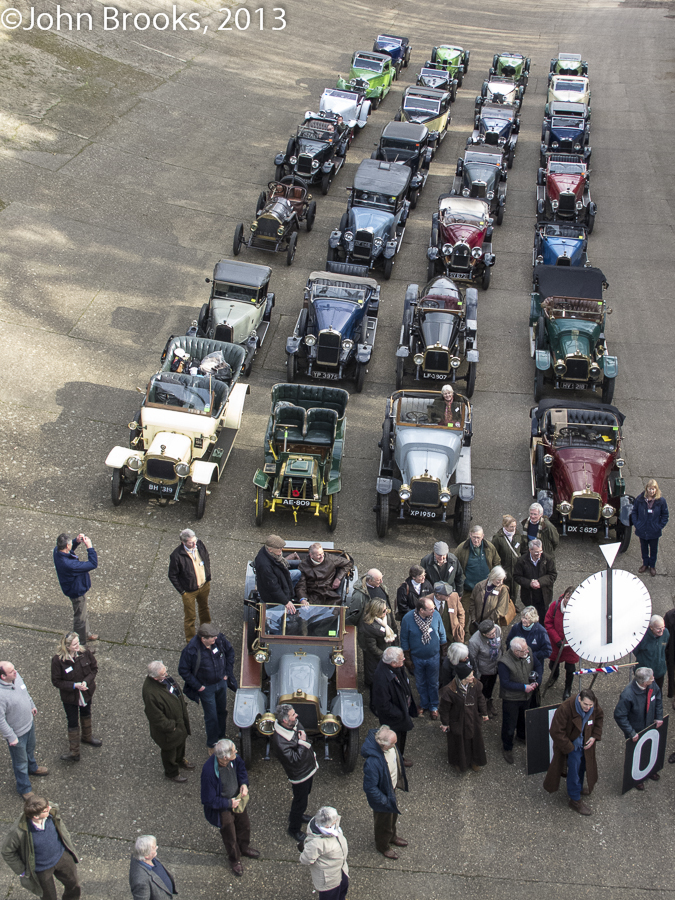
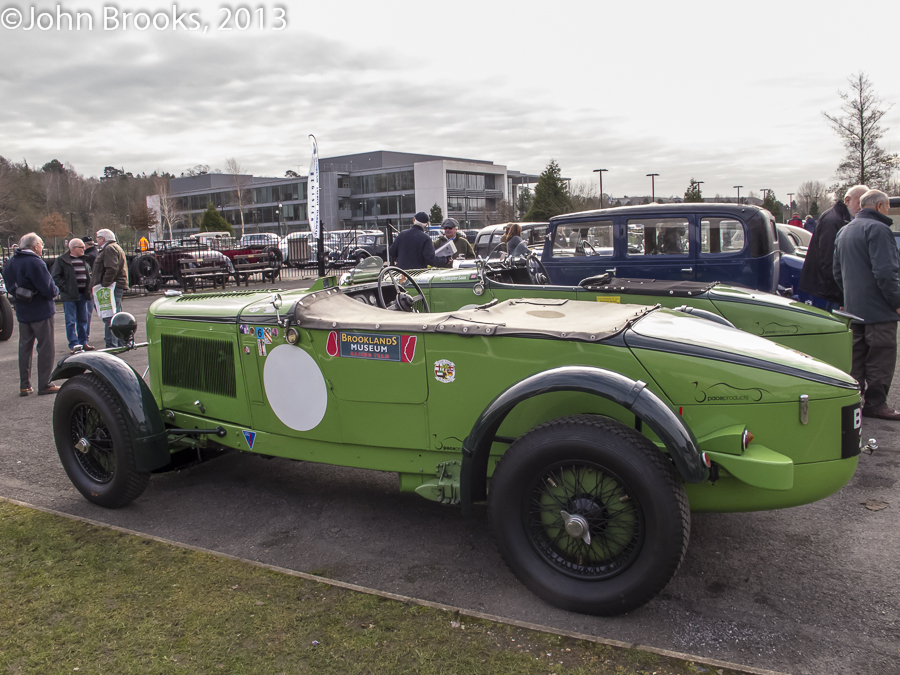
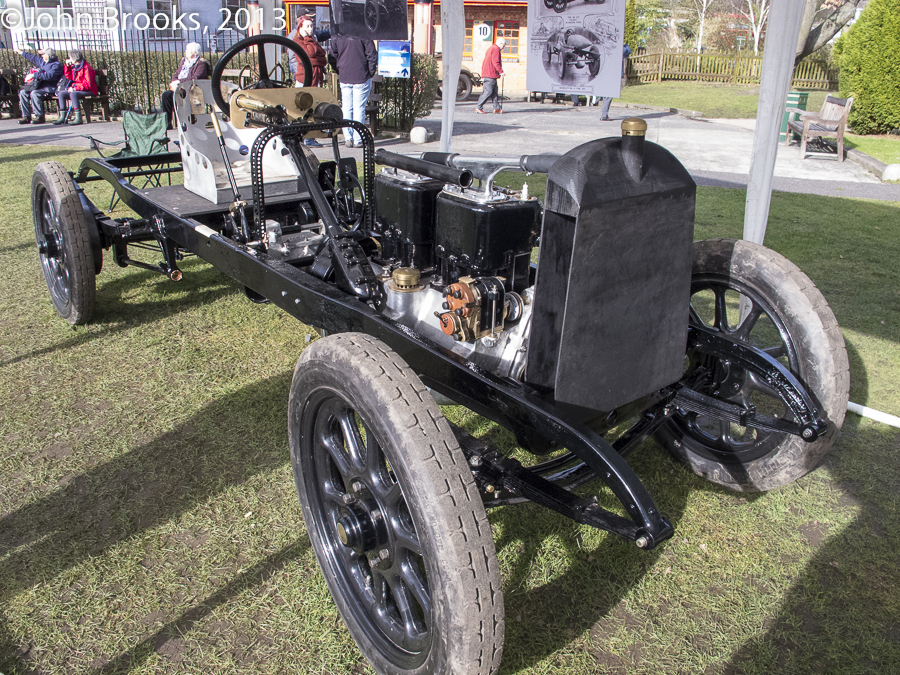
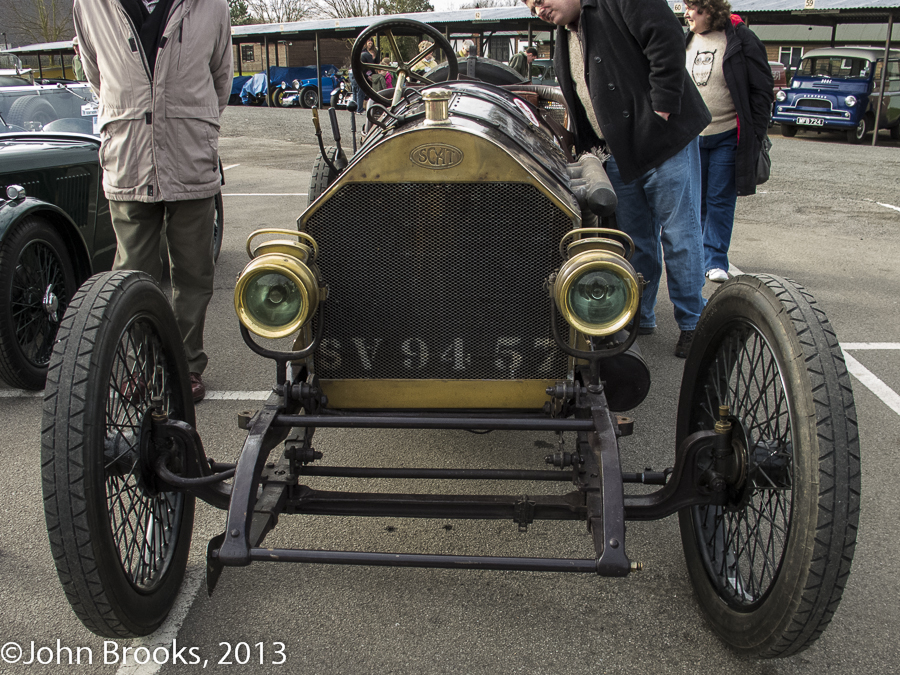
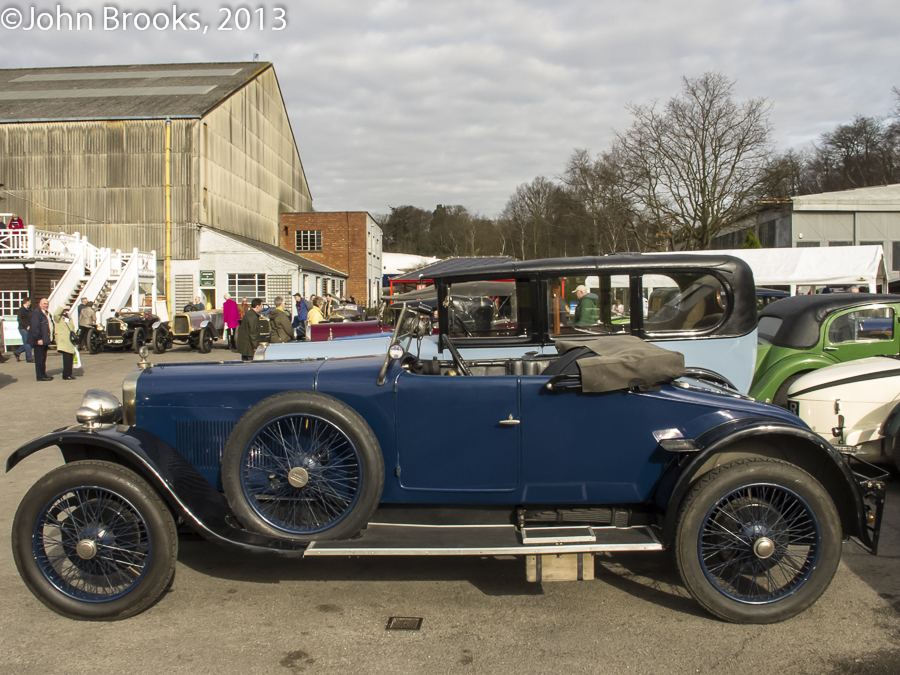
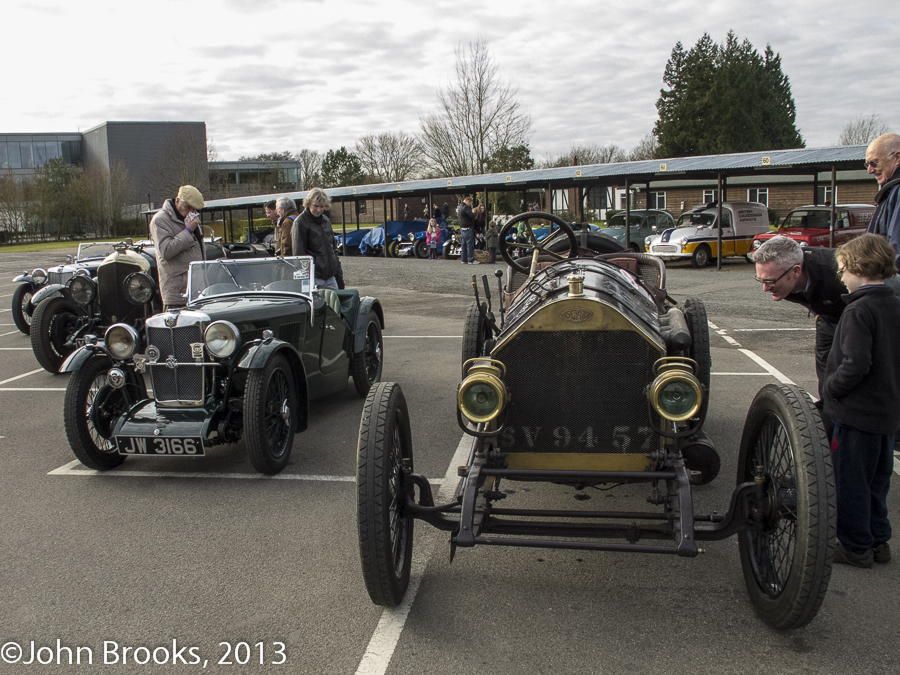
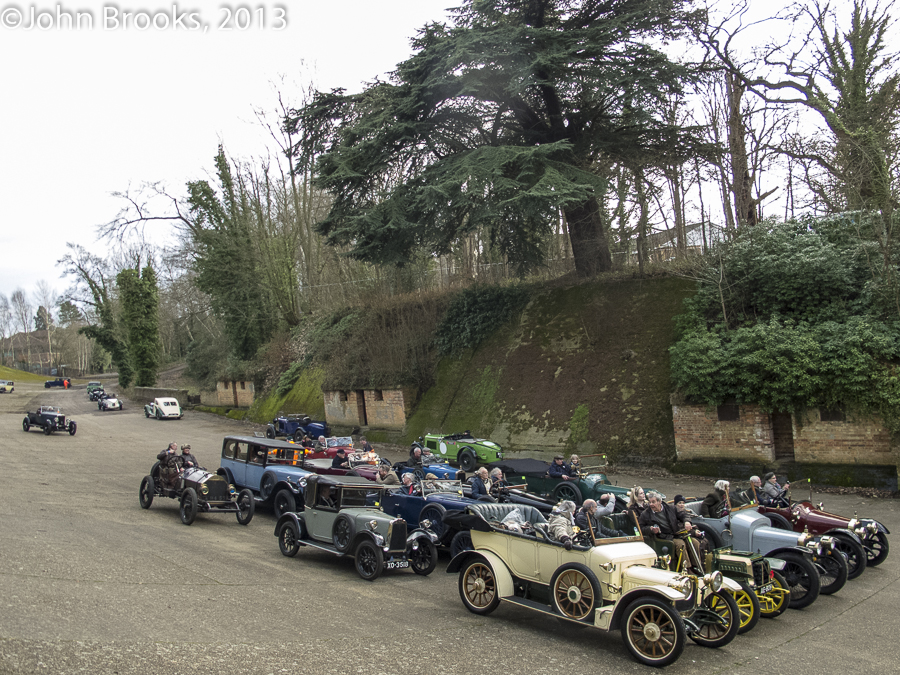
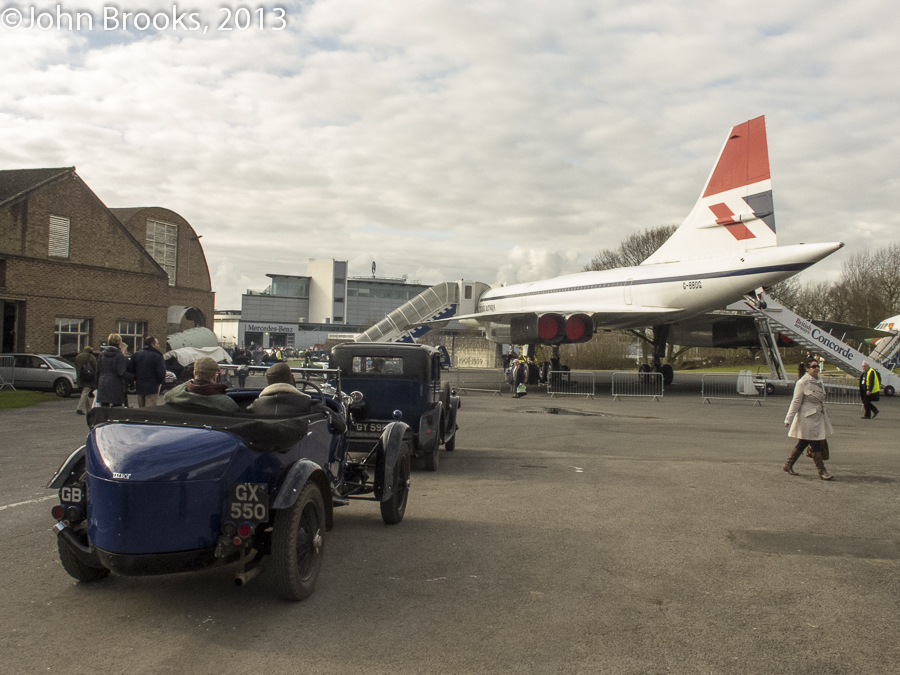
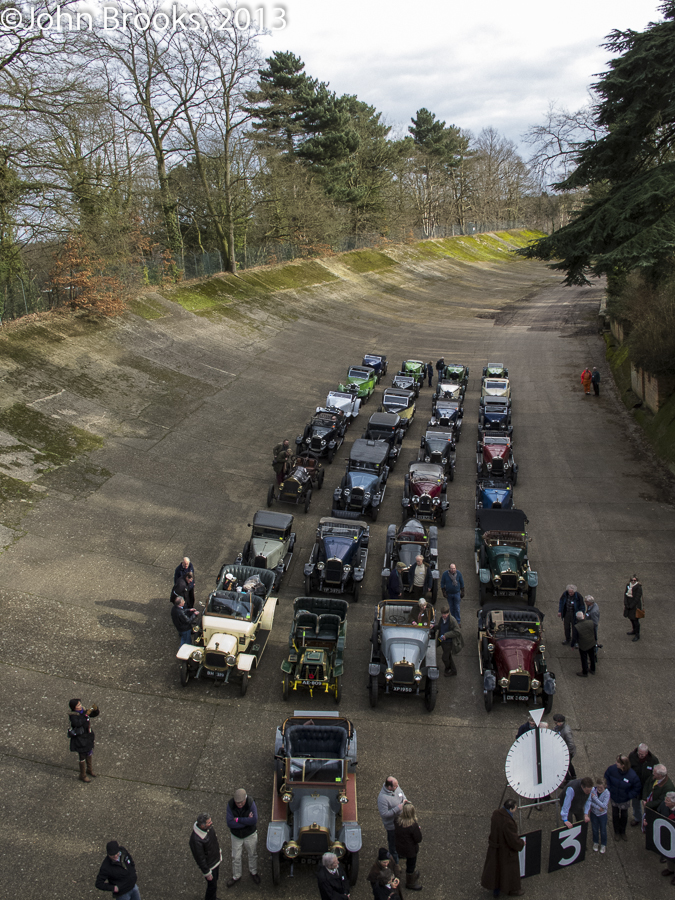
Back in the last century when I was growing up ‘Doing the Ton’ (100 miles per hour for my American reader) was considered something a bit tasty. So last weekend at the venerable Brooklands circuit there was a gathering of enthusiasts to celebrate the centenary of the first time that one hundred miles had been completed in an hour.

2013 Brooklands Percy Lambert


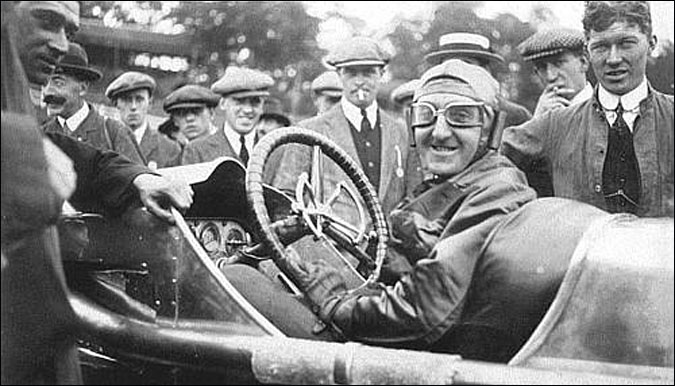
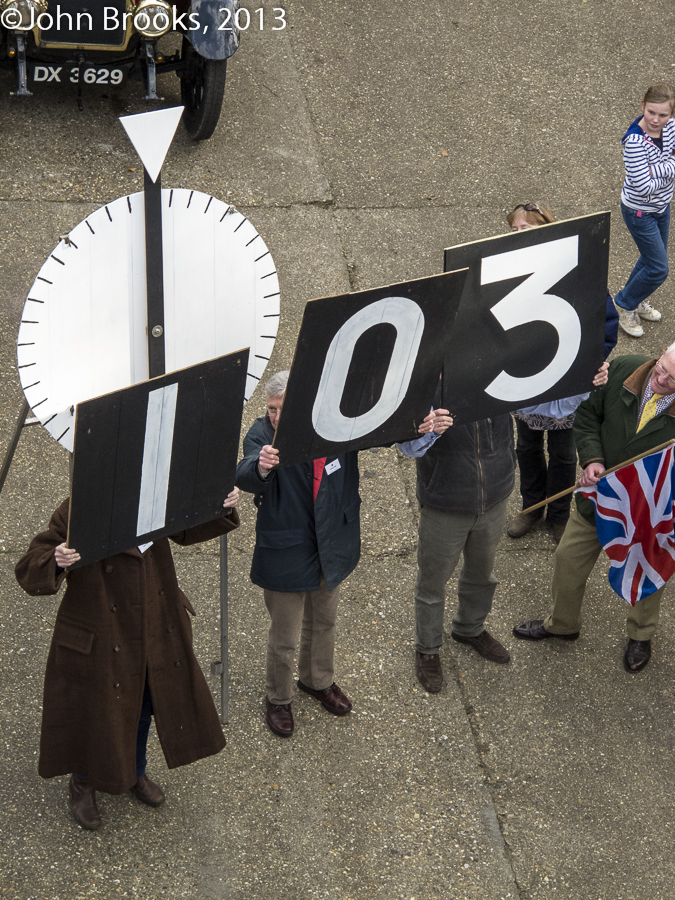
The man who achieved that feat was Percy Lambert who managed to cover 103 miles in an hour on 15th February 1913. The full story can be found HERE on the Lambert family website, take time to look at the film containing original footage of the record attempt, courtesy of the Brooklands Museum.

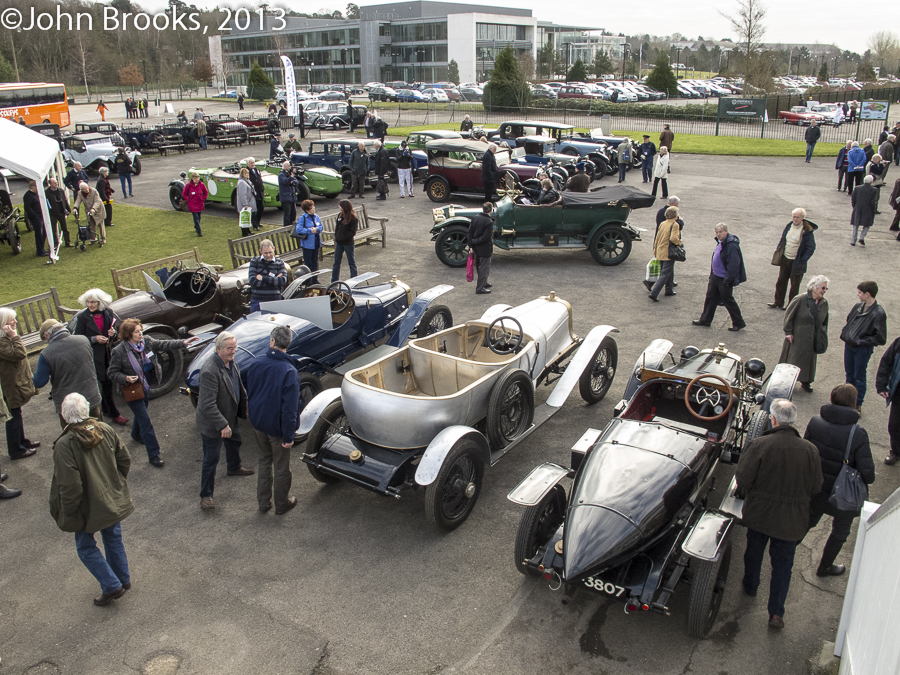
So I took the camera along and as always at Brooklands there was plenty to see, a fantastic place.

John Brooks, February 2013


85 and Rising

736197R7058

It is rare that a racing driver is the subject of a press release from a major manufacturer, to have two of the giants writing about you is almost unprecedented. However perhaps in Hans Herrmann’s case it is less surprising. He hits 85 today, so Happy Birthday, Hans.

10Sebring_jb_0477

I had the pleasure of meeting Hans back in 2010 at Sebring where he triumphed in the 12 Hours some 50 years before. Somewhere in the confusion that is my office is an interview with the great man, most of the recording was drowned out by a crappy Trans-Am race that was unfolding outside so my masterpiece makes little sense, lesson one learned.

60-1st

His career was an extensive one with spells at Porsche, Mercedes-Benz, Arbarth, Maserati and Borgward. His crowning achievement was winning the Le Mans 24 Hours in 1970 with Richard Attwood in a Porsche 917. He could also point to having competed at long gone events like the Mille Miglia, Targa Florio and Carrera Panamericana. It is said that you are judged by the company you keep, so you could think yourself just slightly special if among your team mates you could list Juan Manuel Fangio and Stirling Moss. I could go on and on, there were many others.

1970_LeMans24_Sutton_051

But I will have to make do with the releases from Porsche and Mercedes-Benz and some evocative photos. Once again Happy Birthday Hans.

Porsche787F1DutchGP61

Porsche congratulates Hans Herrmann

Stuttgart. Hans Herrmann, one of the most successful and best known works racing drivers at Dr. Ing. h.c. F. Porsche AG, will celebrate his 85th birthday on 23 February 2013. Born in Stuttgart in 1928, this long-distance specialist was considered one of the most successful and dependable racing drivers of his era. His motorsports career lasted from 1952 to 1970, during which Hans Herrmann won over 80 overall and class victories.

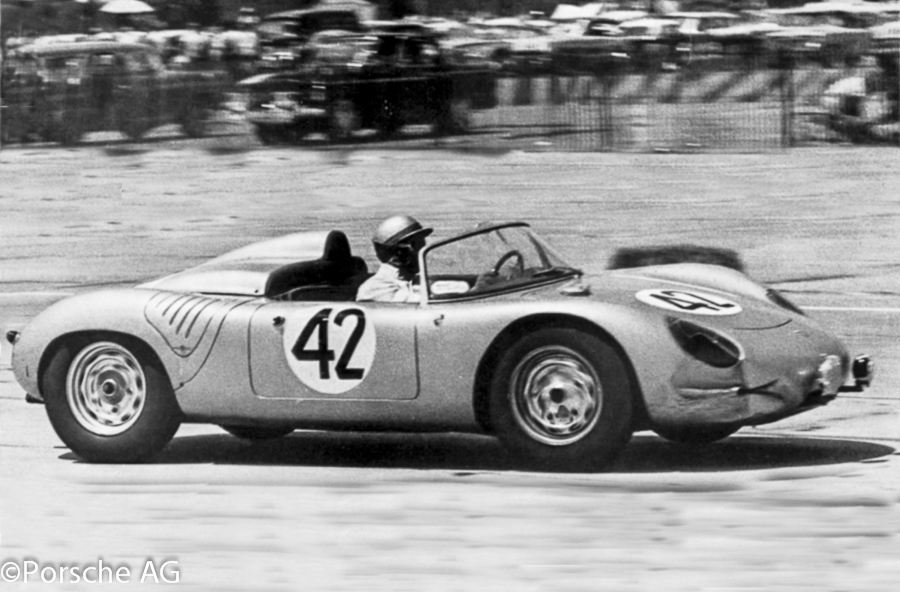
Hans Herrmann started his racing career in early 1952, piloting a privately-owned Porsche 356 1500 in mountain races, rallies, and endurance races. A year later he and Richard von Frankenberg took overall fifth place in the Lyon-Charbonnieres rally. Porsche racing chief Huschke von Hanstein thereupon hired him for the Porsche Works team. Herrmann drove the 550 Spyder at the 1953 24 Hours of Le Mans, and together with Helmut Glöckler came in first in the 1.5 litre displacement category right off the bat.

In 1953, at the age of 26 Herrmann won the title of German Sportscar Champion and got the attention of legendary Mercedes-Benz racing chief Alfred Neubauer, who hired him for his works team. Hans Herrmann piloted the Mercedes W 196 Silver Arrow in the premier category of motorsports, teaming with top drivers like Juan Manuel Fangio and Karl Kling. Parallel to that, in 1954 he continued to drive for Porsche in the smaller displacement categories. In the 550 Spyder he won widely noted class victories in the Mille Miglia and Carrera Panamericana.

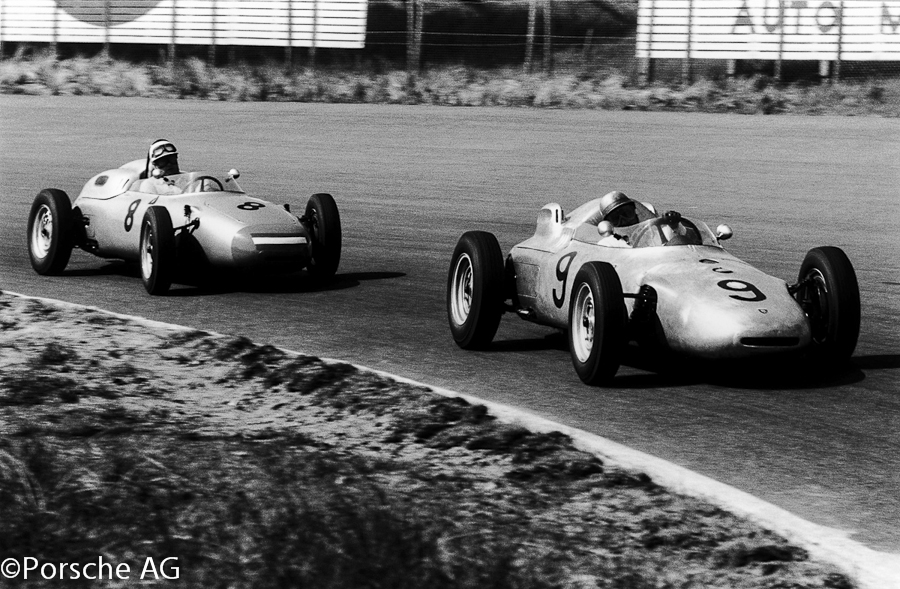
When Daimler-Benz pulled out of racing in 1955, Herrmann went on to drive Formula 1 races for Maserati and BRM, as well as other races as a Borgward works driver. In 1957 he became European Vice “Bergmeister” – Mountan Champion – before returning to the Porsche works team in 1959. Together with Joakim Bonnier, in 1960 Herrmann took the overall victory at the Targa Florio in a Porsche 718 RS60 Spyder, and the Formula 2 championship in a Porsche 718/2. He also won the 12 Hours of Sebring with Olivier Gendebien. In 1963 he left Porsche KG and joined Carlo Abarth’s racing team.

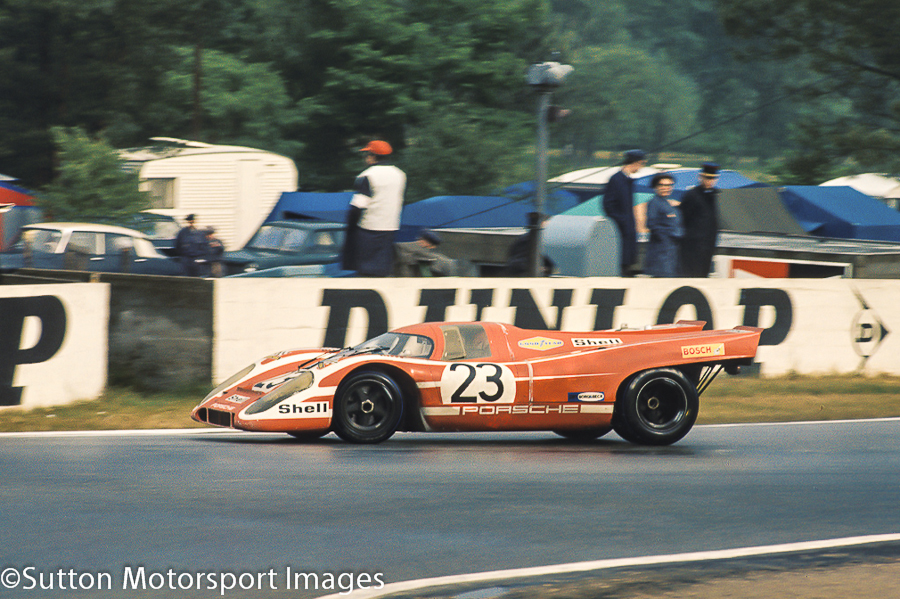
In 1966 Herrmann returned to the Porsche works team, not only driving in all the major long-distance races and European Mountain Championship races, but also doing countless test drives in Weissach. With pilots Hans Herrmann, Jo Siffert, Vic Elford and Rolf Stommelen, in 1969 the team took the World Sports Prototype Championship for the first time. In 1970, at his eleventh Le Mans race Herrmann capped off his career with a bang, winning the first overall victory for Zuffenhausen in a Porsche 917 KH. He took this motorsports achievement as a suitable time to retire from active racing, after 42 years on the track. Since then Hans Herrmann has lived with his wife Magdalena near Stuttgart, successfully operating his company “Hans Herrmann Autotechnik.” As a pilot of historic racecars, he also takes part in many vintage car events for the Porsche Museum.

C31519

Hans Herrmann celebrates 85th birthday

Legendary racing driver Hans Herrmann celebrates his 85th birthday on 23 February 2013. Born in Stuttgart, Herrmann gained international recognition during his time as a works driver for Mercedes-Benz in the years 1954 and 1955. The cars he drove for the brand back then were the post-war “Silver Arrows”, the W 196 R Grand Prix racing car and the 300 SLR (W 196 S) racing sports car.


These days Hans Herrmann is regularly to be found behind the wheel of historical Mercedes-Benz competition vehicles, as a guest at any one of a variety of classic events, where he is able to convey to visitors the fascination of an important period in motor racing. “Our congratulations to our brand ambassador Hans Herrmann, who has been a good friend of Mercedes-Benz for almost 60 years now,” commented Michael Bock, Head of Mercedes-Benz Classic, expressing his thanks to Herrmann for his contribution to keeping the brand’s heritage alive.
The legendary Alfred Neubauer, Head of the Mercedes-Benz racing department in the 1930s and again in the 1950s, discovered Herrmann as an up-and-coming talent and brought him into the works team, alongside Juan Manuel Fangio and Karl Kling, for Mercedes-Benz’s re-entry to Grand Prix racing after the Second World War. For the 1955 season, the team was then joined by Stirling Moss.
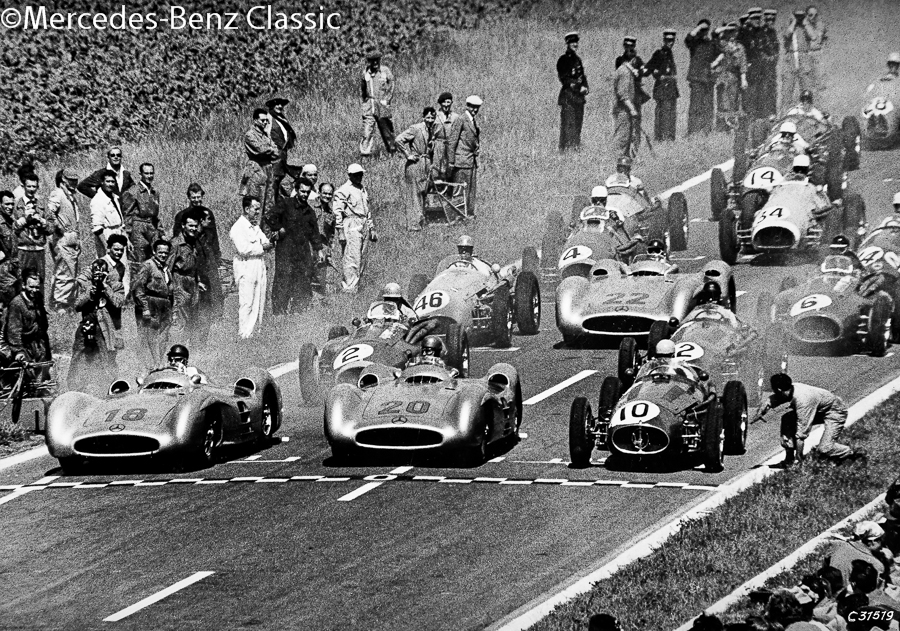
In the very first race of the new Silver Arrows at the French Grand Prix of 1954 in Reims, Herrmann drove the fastest lap time, 2:32.9 minutes – corresponding to an average speed of 195.463 km/h. Over the course of the season he took two Grand Prix podium places, in the 1954 Swiss Grand Prix and the 1954 Avus race, in each case coming 3rd. In 1955, Herrmann was seriously injured in an accident during practice in Monaco and was no longer able to start during that season.
Even after his Grand Prix racing career with Mercedes-Benz had come to an end, “Lucky Hans”, as his friends know him, retained close links with the brand. In 1961, for example, he entered the “Gran Premio Argentina” road race in a Mercedes-Benz 220 SE (W 111), finishing in 2nd place behind Walter Schock, also in a 220 SE, to deliver a double victory.

After training originally as a pastry chef, Hans Herrmann began his career in motor racing in the Hessen Winter Rally of 1952 in a private Porsche 356. That same year he took a class win in the “Deutschlandfahrt” (Tour of Germany). In both 1953 and 1954, Herrmann then took class victory for Porsche in the legendary 1000-mile “Mille Miglia” race in Italy.
Through his participation in Formula 1 as well as Formula 2 Grand Prix races, sports car races and rallies, Stuttgart-born Herrmann proved himself to be an exceptionally versatile motor racing driver. Apart from the cars he drove for Mercedes-Benz, he competed above all in Porsche racing and sports cars. He also took the wheel at various times for B.R.M., Cooper, Maserati and Veritas.
Hermann achieved his greatest successes in sports car endurance racing. Among his wins were overall victories in the Targa Florio (1960), the 24 Hours of Daytona (1968), and the 24 Hours of Le Mans (1970). In honour of the grand total of eight Targa Florio races in which he had driven, Hans Herrmann was presented with a special award by the Sicilian town of Collesano in October 2012. “Noblesse oblige”: the one-time works driver arrived at the award ceremony in a Mercedes-Benz 300 SLR.
After capping his success in motor racing with the Le Mans victory of 1970, Herrmann withdrew from active motor racing that same year, at the height of his career. From then on he would devote himself above all to his automotive accessories business. But our “birthday boy” has retained close links with the world of motor sport to this day – above all as a brand ambassador for Mercedes-Benz Classic.

Vettes in the Wild

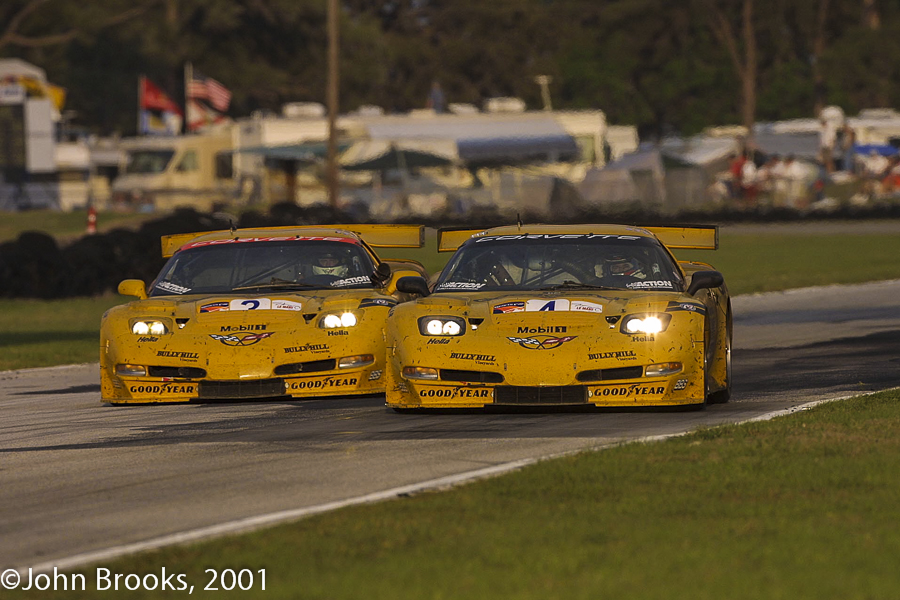
2001 12 Hours of Sebring

Sebring 2001 and a pair of Corvettes with Andy Pilgrim and Chris Kneifel are scrapping, not just with each other, but also with the Saleen of Franz Konrad, Terry Borcheller and Oliver Gavin, who hang on to take a famous victory. The Saleen is history now but the Vettes will again be on the prowl soon down the runways of Hendricks Field.

John Brooks, February 2013

Retro Retro

2013 Retromobile

It is safe to say that the Classic Car Season really kicks off when the Retromobile comes round.
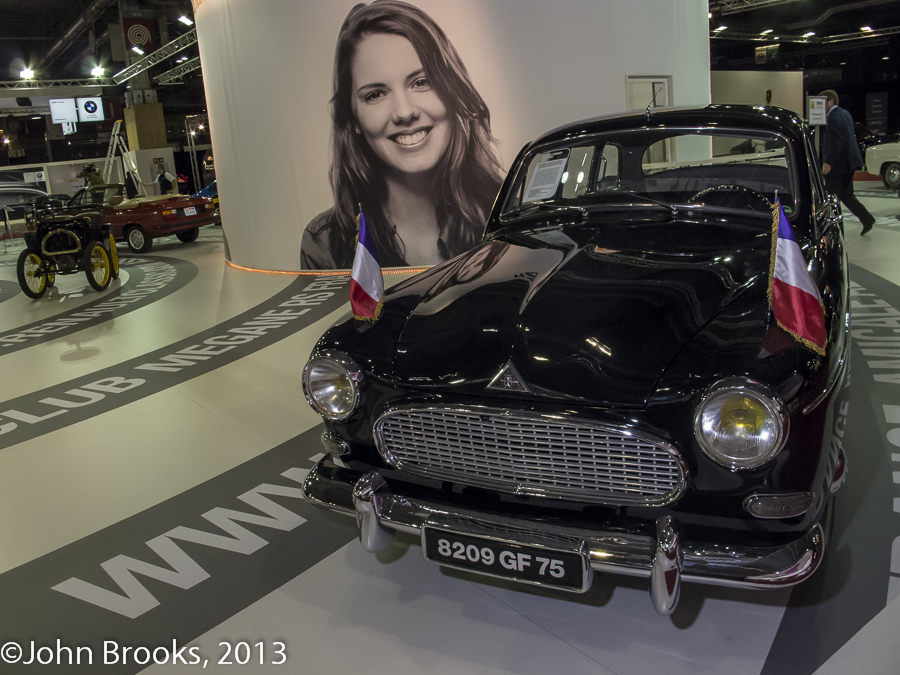
2013 Retromobile

Held at Pavilions 2 and 3 at the Parc des expositions, Porte de Versailles, Paris, the Retromobile has grown in stature and importance, as well as size, reflecting, perhaps, the general rising level of interest in automotive heritage.
2013 Retromobile

The Show is a cocktail of many ingredients, from the flea market to the top dealers, car manufacturers to the car clubs, enthusiasm abounds and there is much to see for even the casual visitor, let alone the dyed in the wool enthusiast.
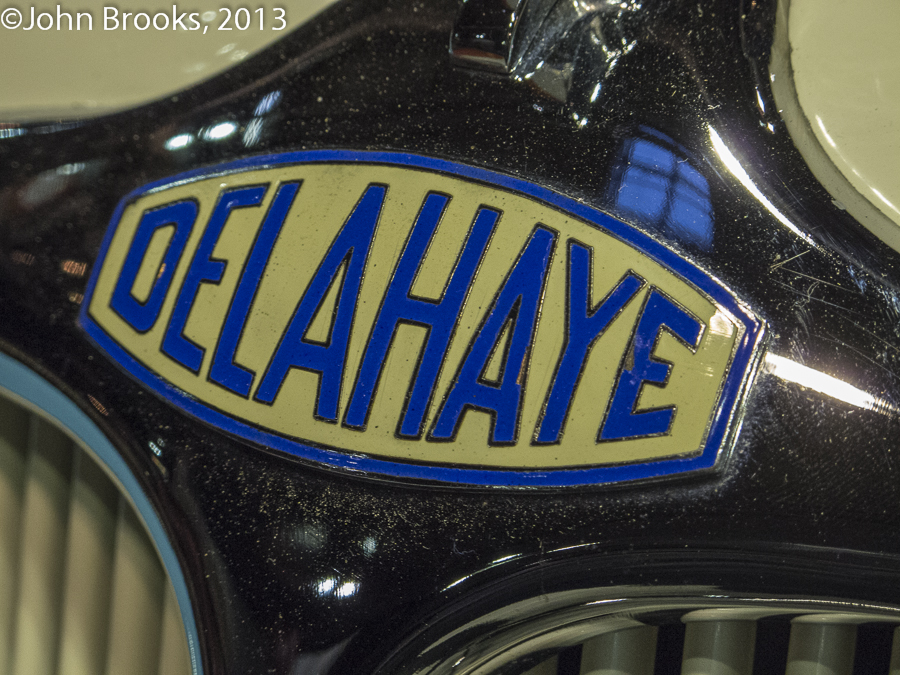
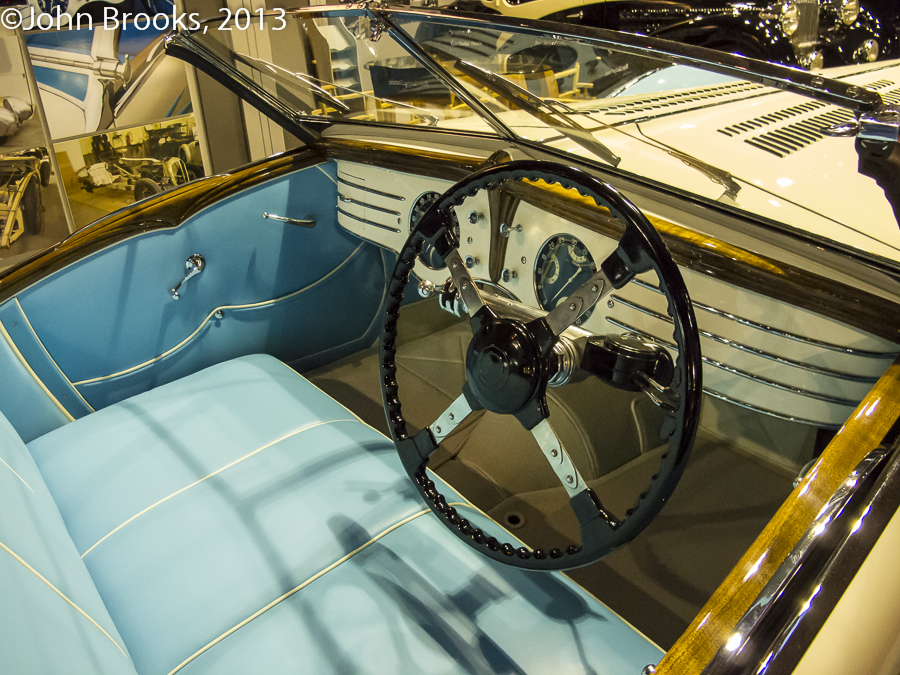
2013 Retromobile

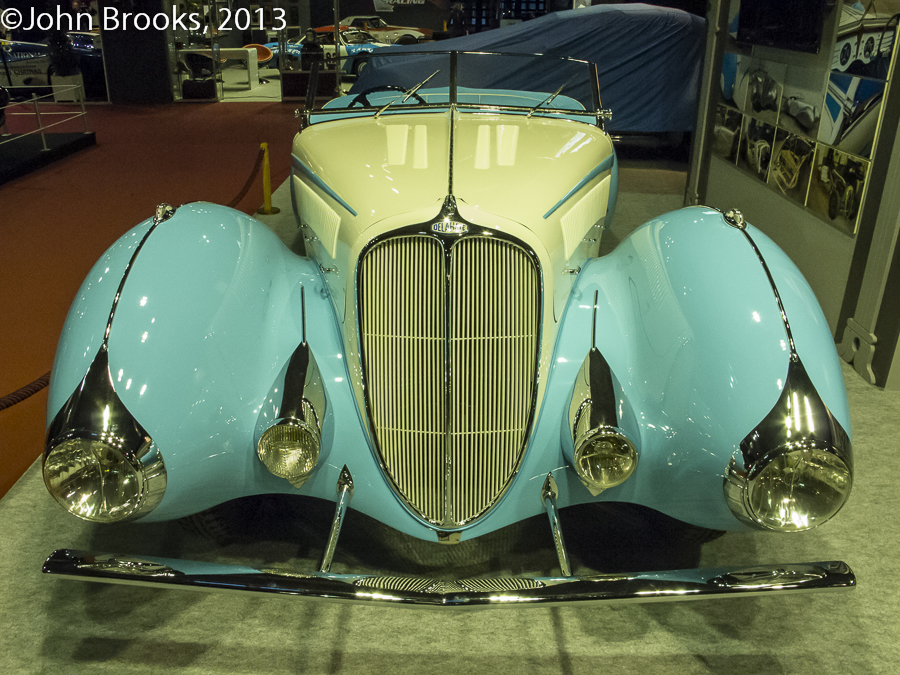
This Delahaye is typical of the quality that was found throughout the Retromobile.
2013 Retromobile

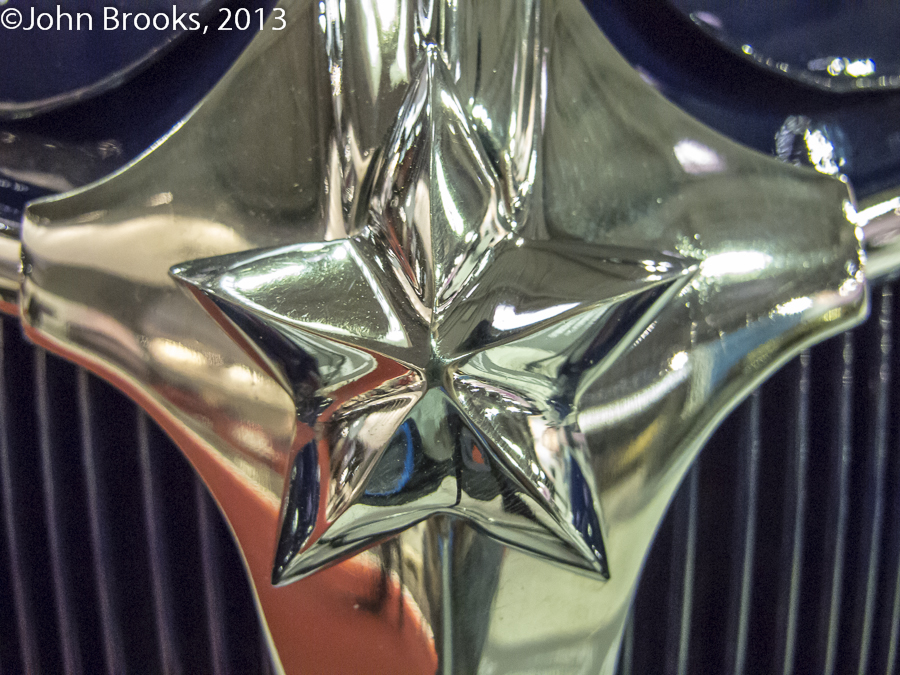
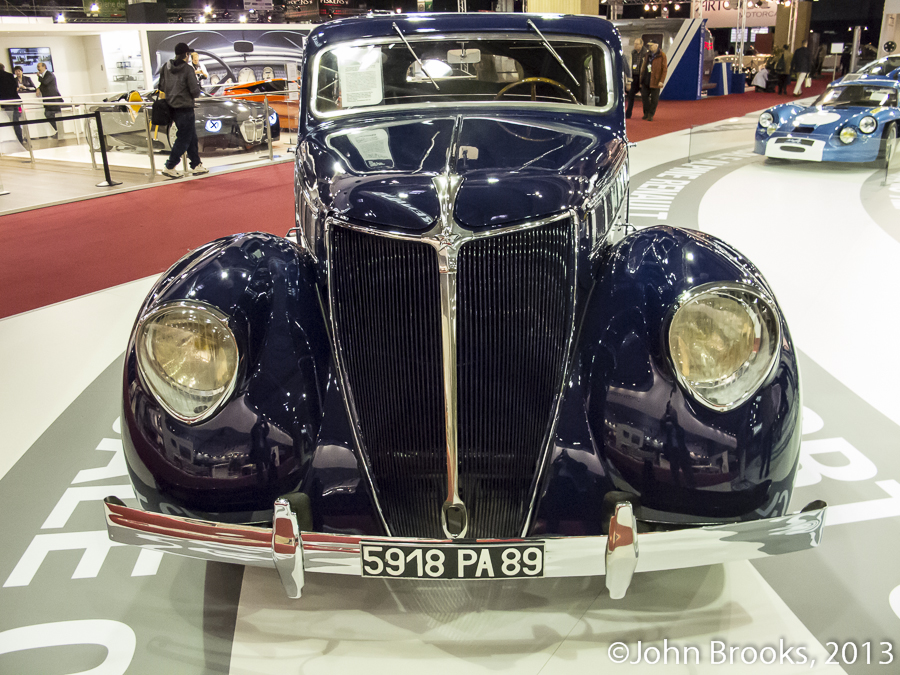
Despite the difficult trading conditions that prevail in Europe’s car market, especially for the French, there were prominent stands from Peugeot, Citroën and Renault, the latter having a well designed circular effort with the stars being
2013 Retromobile

a 1937 Renault Nerva Grand Sport

2013 Retromobile

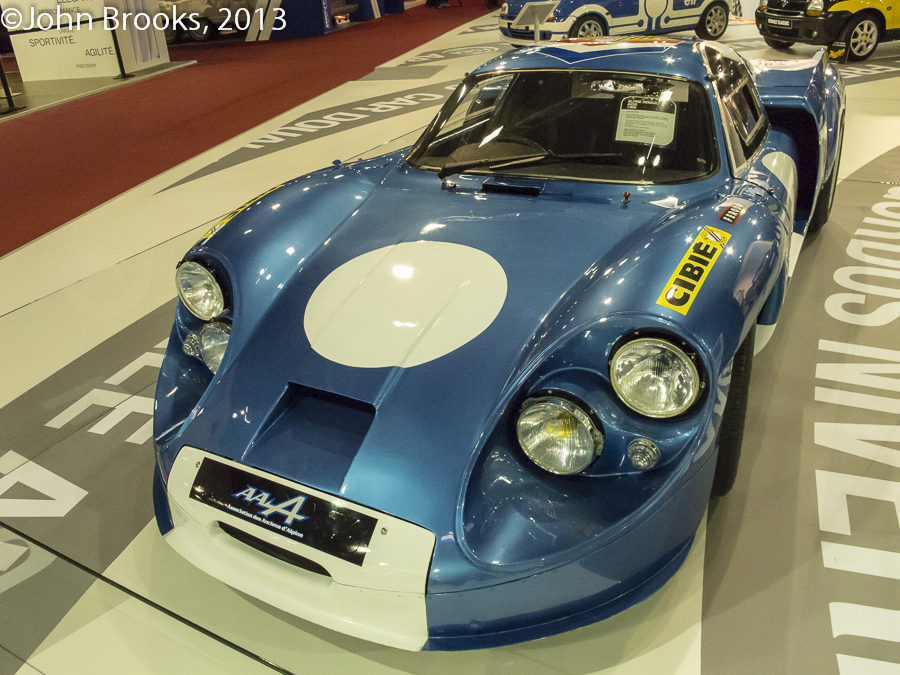
and, from 1968/69, an Alpine Renault A220 that ran at the Le Mans 24 Hours.
2013 Retromobile

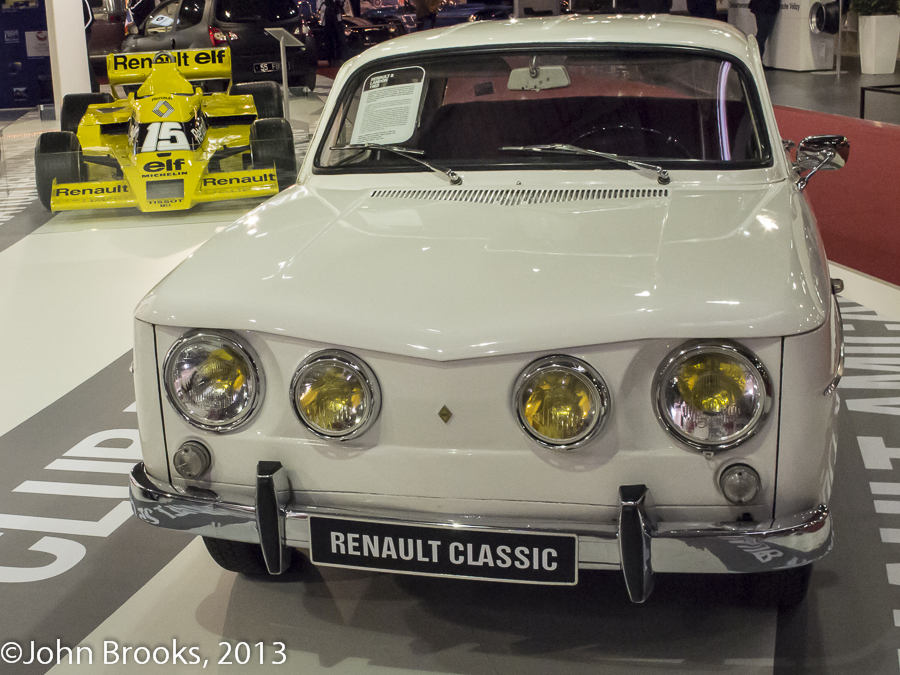
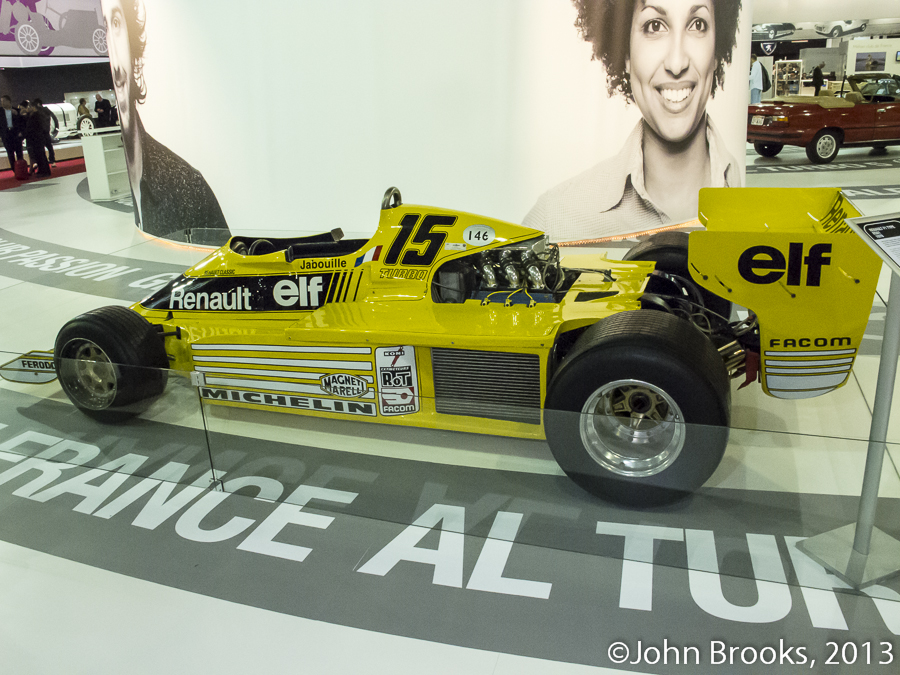
I also liked the contrast between the Renault 8 and Renault’s first modern day F1 car.
2013 Retromobile

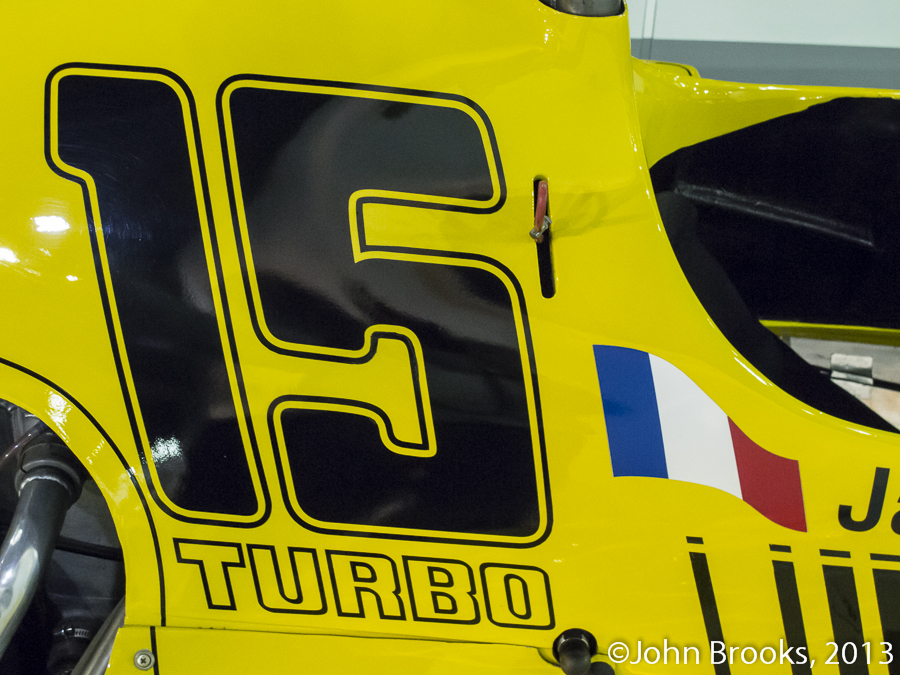
The 70’s graphics are still striking.
2013 Retromobile

I witnessed the Renault RS01’s first race at Silverstone in 1977, the turbo era had arrived, though we did not appreciate it that day. We were more concerned with James Hunt and John Watson, and some crazy Canadian, Gilles Villeneuve making his debut.
2013 Retromobile

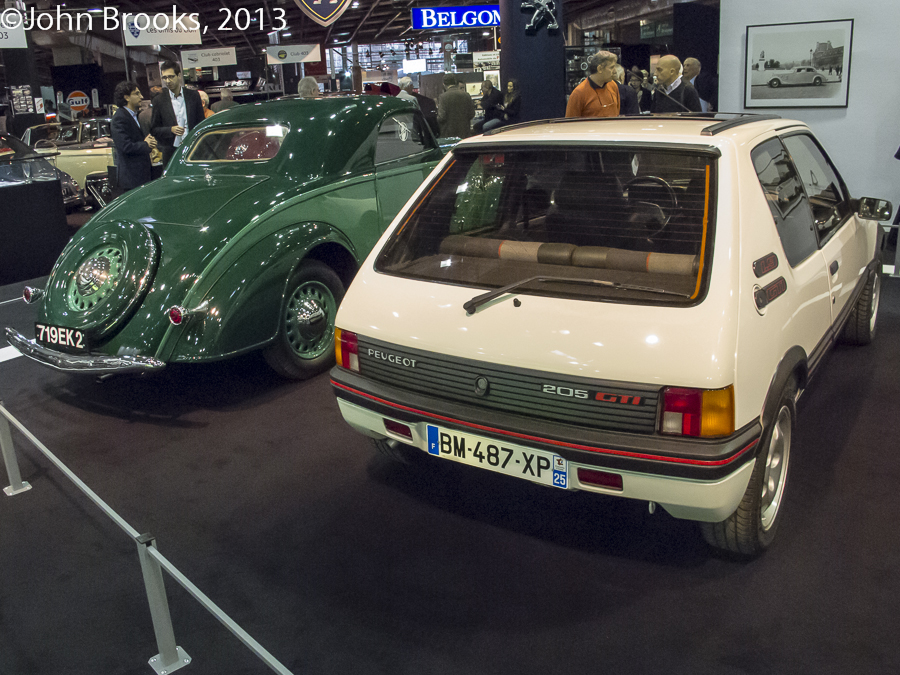
As with every show, anniversaries and birthdays are celebrated, any excuse and the Retromobile was no exception. So 30 years of the 205, one the quintessential hot hatches, was a focus on the Peugeot stand.
2013 Retromobile

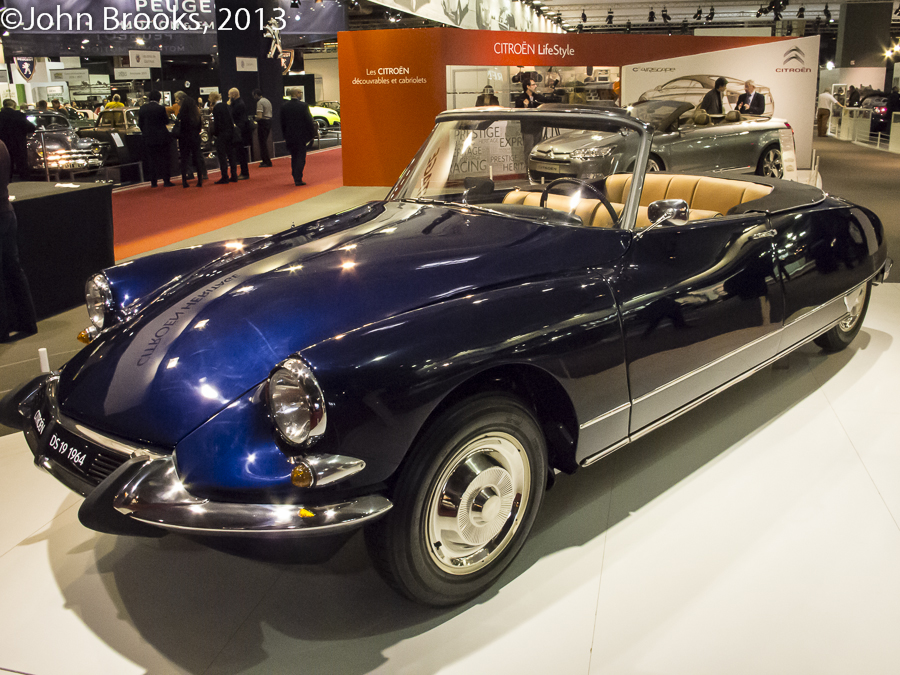
Citroën’s DS19 did not have any obvious celebration to make, except being about as Gallic as is possible for a car. There were many fine examples of this ground breaker to be seen.
2013 Retromobile

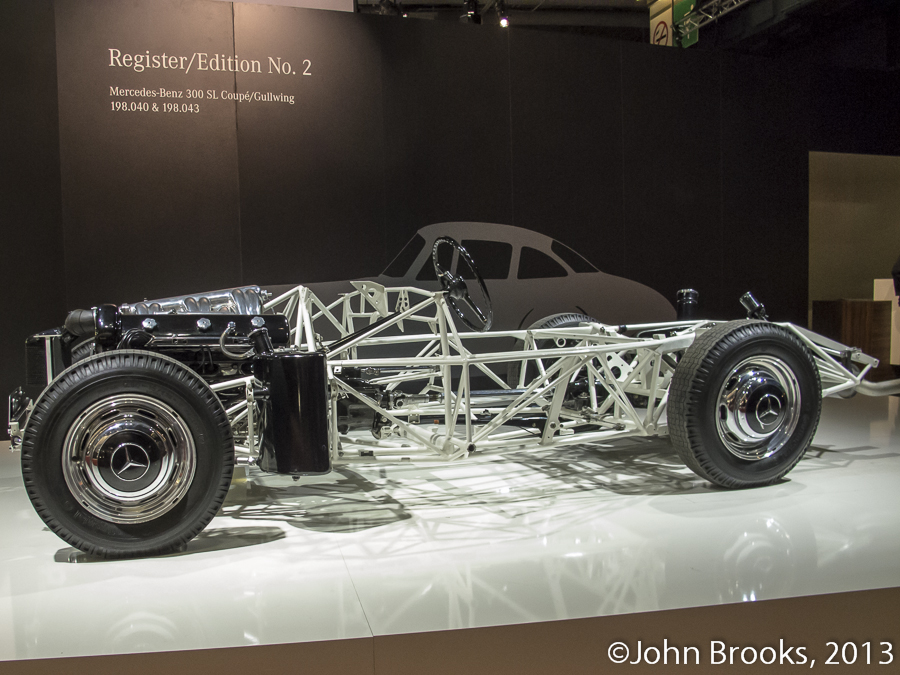
The Germans occupied a big slice of Parisian territory with one of the show’s highlights being the Mercedes-Benz stand.
2013 Retromobile

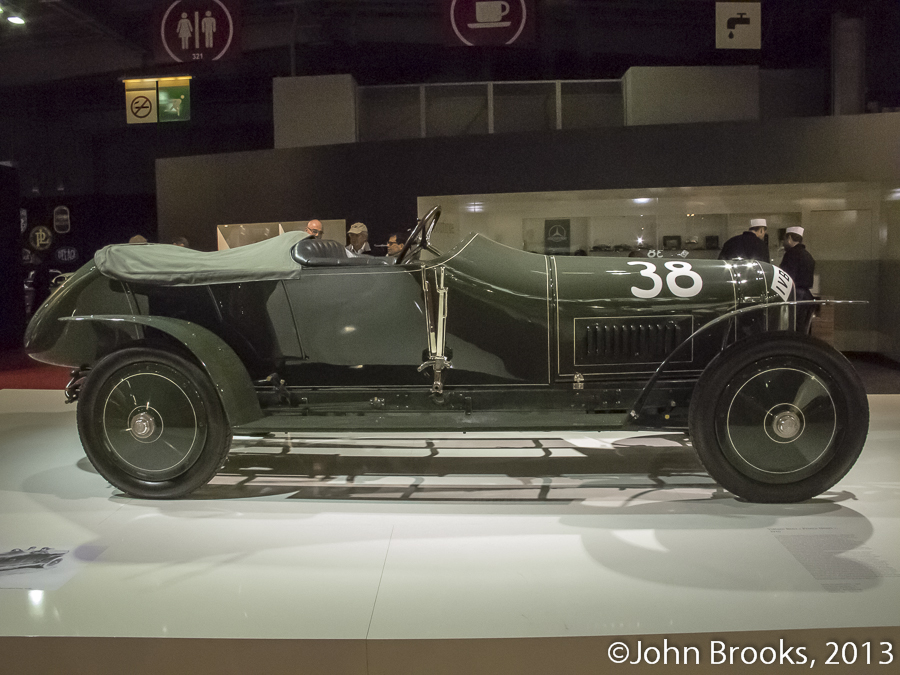
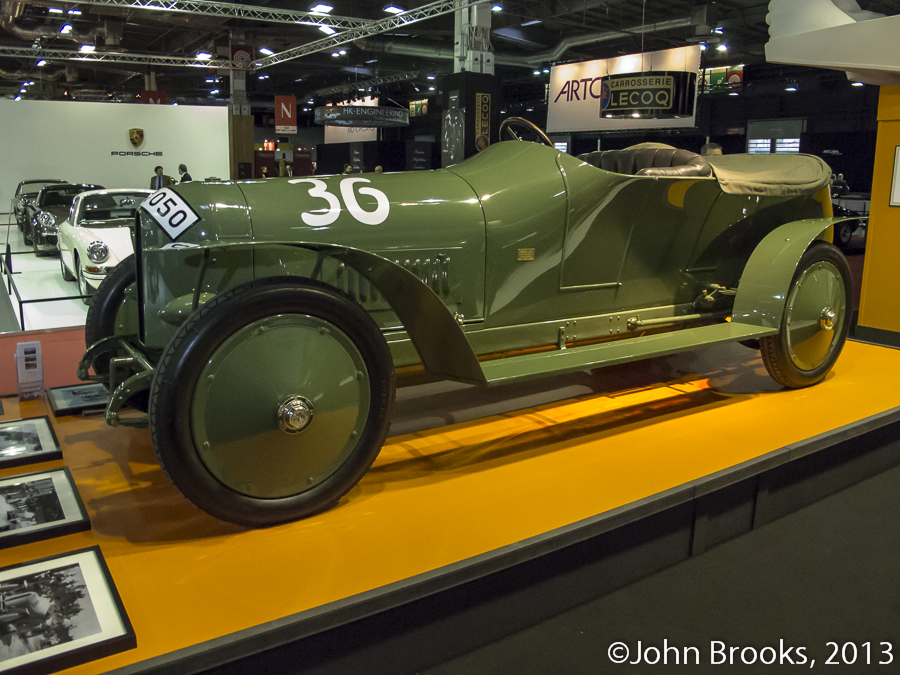
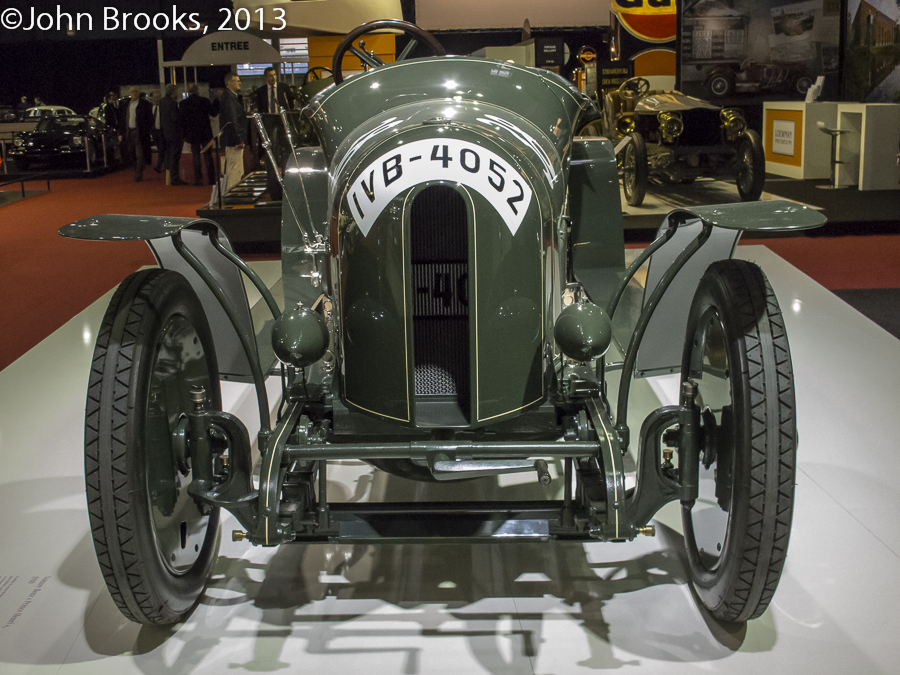
Leading the fine selection of Mercedes rarities was  a joint exhibition with the Louwman Museum of the pair of recently restored Prince Heinrich 1910 Benz. The pair of cars had left in store room for decades, and recognising the importance of these cars, the two organisations decided to pool their efforts at restoration.
2013 Retromobile

“Since the beginning of the twentieth century, a large number of car races have taken place in Europe. Sons of wealthy families and rich sportsmen were the main competitors. One of these races was the Prince Heinrich, named after a keen sportsman who was the brother of Kaiser Wilhelm II. It was restricted to four-seater touring cars.”
2013 Retromobile

“On 10 June 1910 no less than 10 Benz cars took part in a 1,900 kilometer race across Germany and part of France. They had 80HP and 100HP engines with lubrication pumps, drive shaft transmission replacing the old chain system, and elegant ‘tulip’ bodywork. A month later, some of these cars took part in the ‘Kaiser Nicolas’ race in Russia covering 2,800 kilometres in eight days.”
2013 Retromobile

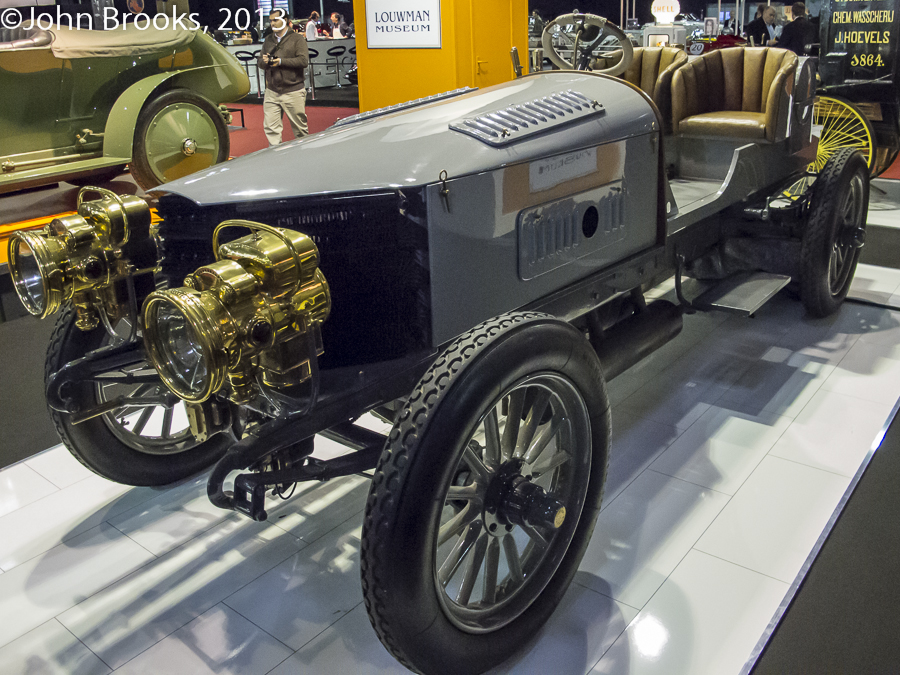
Speaking of the Louwman Museum, they had as a companion to the Benz a 1903 Spyker as they describe it. “This was the first car in the world to be equipped with a six-cylinder engine, and the first petrol-driven car with four-wheel drive and all-wheel brakes. This Spyker 60-HP is therefore one of the most significant cars in motoring history.”
2013 Retromobile

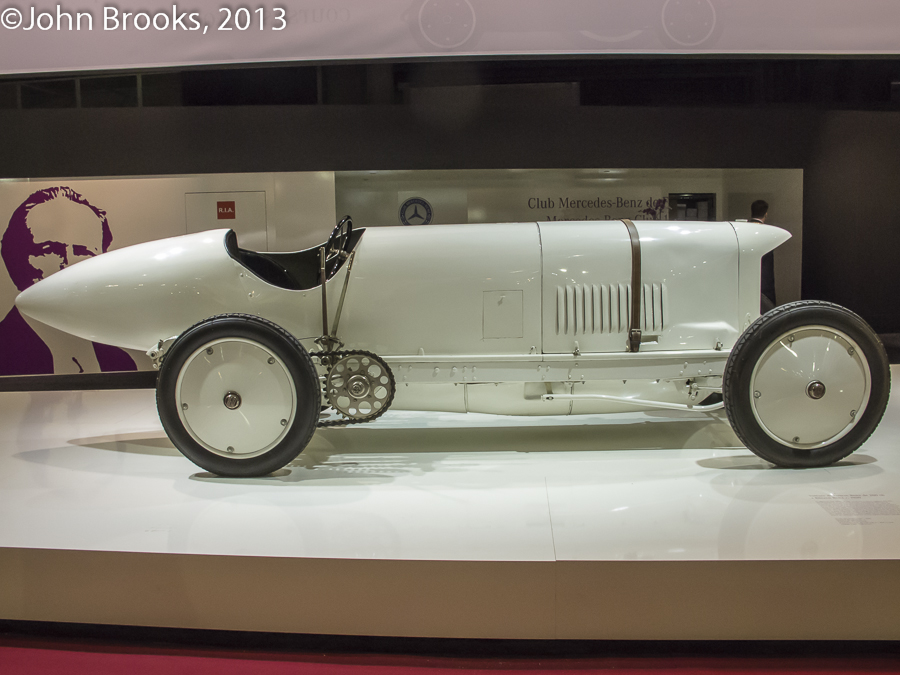
Rounding off the display of Mercedes Benz’ rich heritage was the “Blitzen Benz”.

One of the key goals in those early years of the 20th century was to break the then magic speed barrier of 200 km/h. Benz was the first company to do so, with a petrol-engine automobile: the 200 hp racing car took to the track at the Brooklands circuit in England in 1909, achieving an average speed of 202.7 km/h. This record-breaking racing car, with its massive four-cylinder engine, would however go on to achieve its greatest successes in Florida, USA. In 1911, Bob Burman reached the amazing speed of 228.1 km/h on the sand track at Daytona Beach, so making the “Lightning Benz”, as the model became known in the US, the fastest vehicle in the world – faster even than any aeroplane or train. It was a record that would remain unbeaten for eight years.”
2013 Retromobile

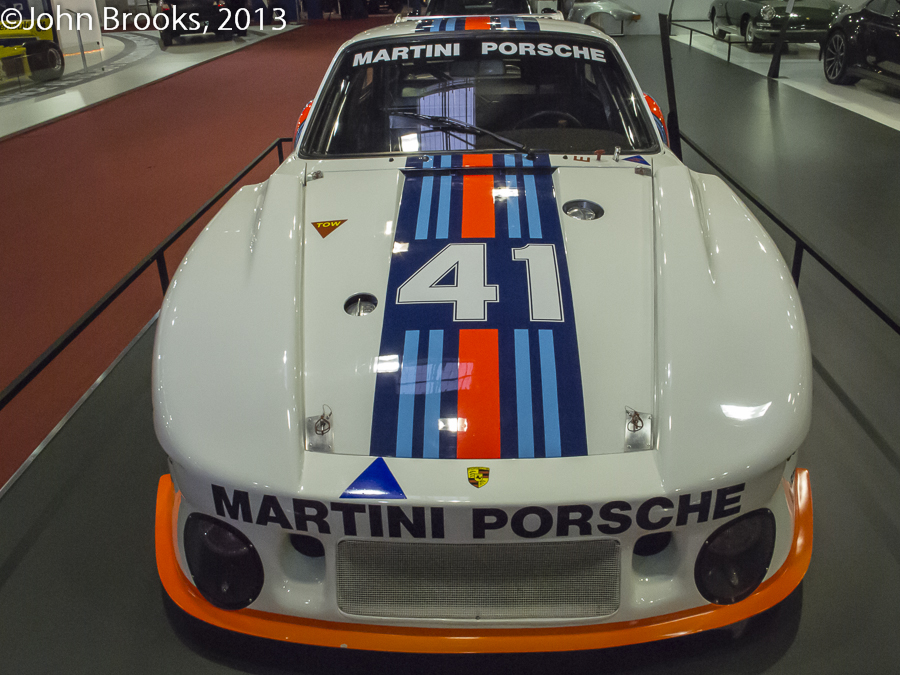
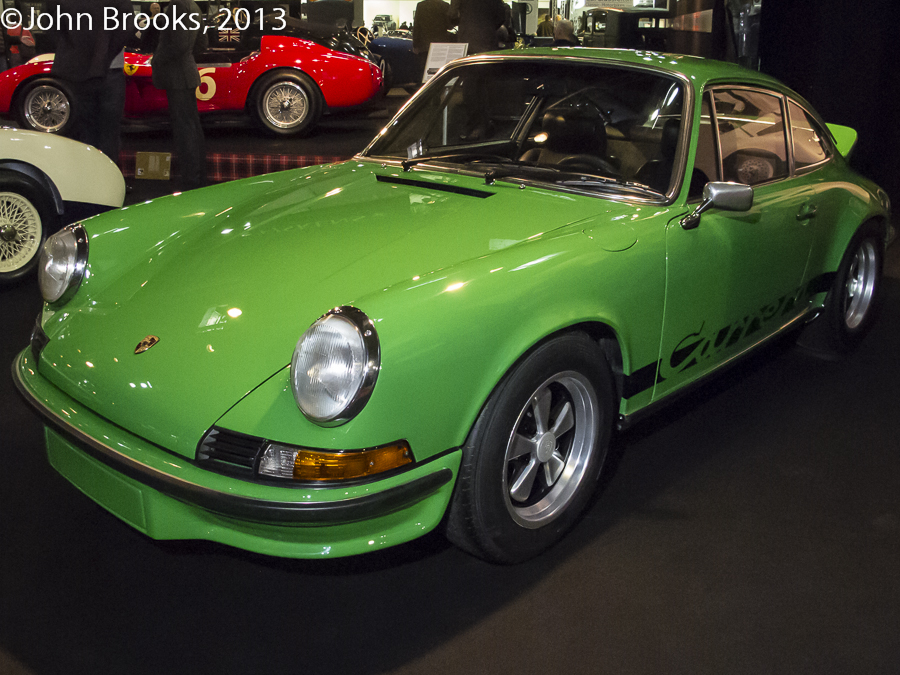
Porsche began the first of many celebrations of the 50th anniversary of the 911 with a fine selection of examples of the model through the years. Yes I know it’s a 935…………….
2013 Retromobile

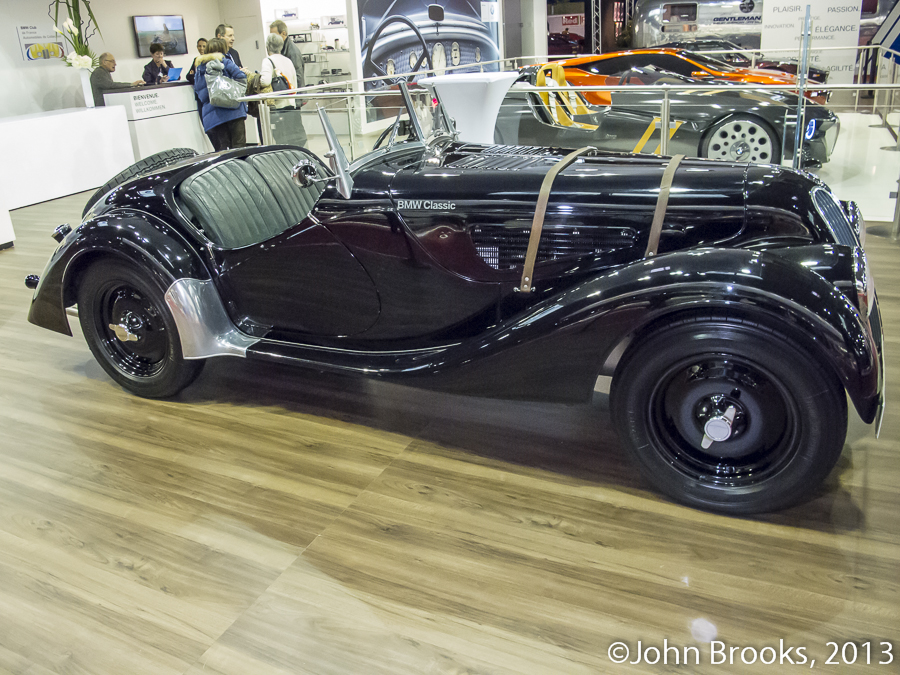
BMW’s stand was frankly disappointing with some strange concept cars paying homage to the 328 and the M1, must have sounded better on paper than it looked in reality.
2013 Retromobile

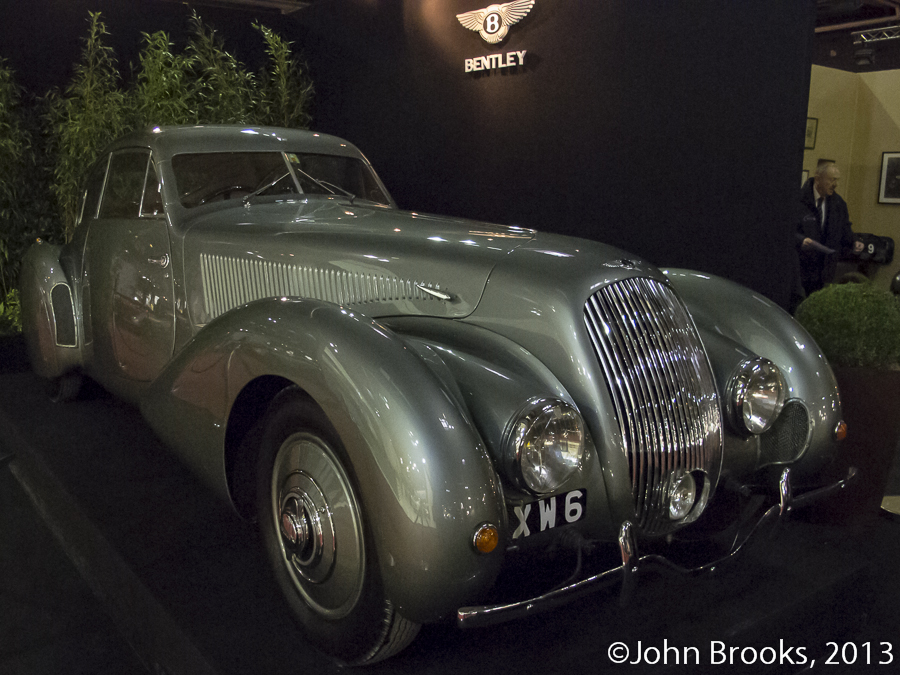
Bentley had a small stand with the amazing Embiricos 4¼ Litre Pourtout Coupé on display, the impact of this important car only slightly diminished by obscure location and lighting of the stand. This will be the last appearance of this Le Mans’ veteran on this side of the Atlantic for a while.
2013 Retromobile

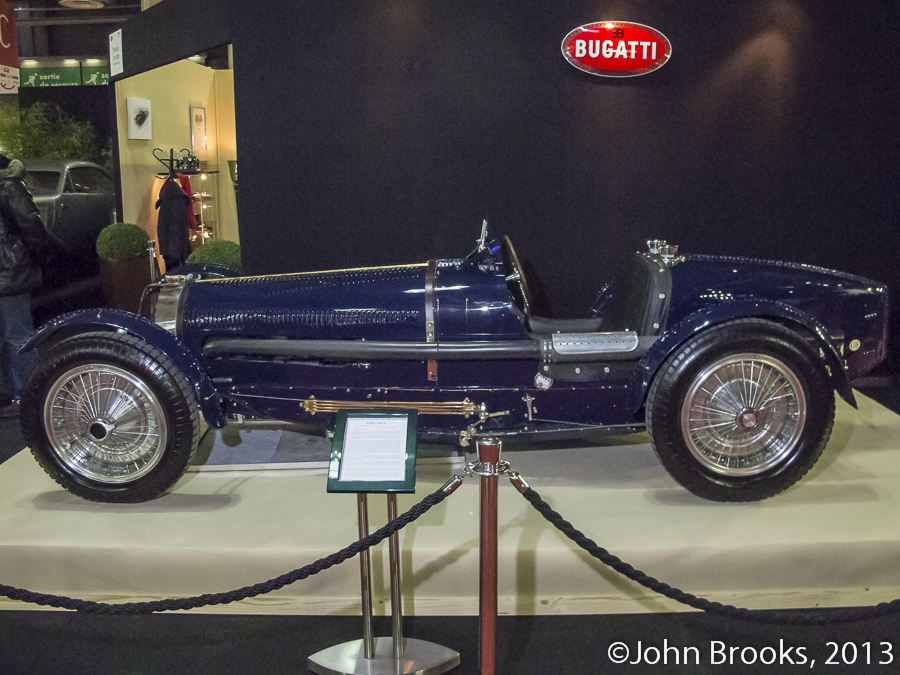
Sharing with the men from Crewe were fellow VW Group members, Bugatti, who brought out a Type 59 Grand Prix racer from 1934. I drew encouragement from the fact that it sported a tax disk, meaning that someone drives it on the UK roads.
2013 Retromobile

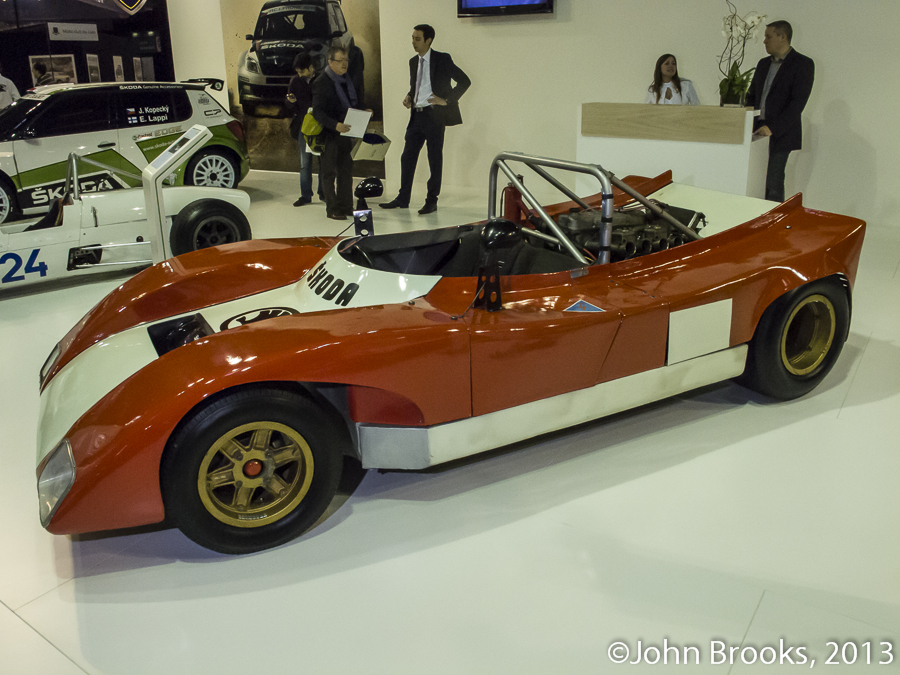
Skoda displayed an interesting array of rarely seen competition cars dating back to the 60’s including this sports prototype, the 720.
2013 Retromobile

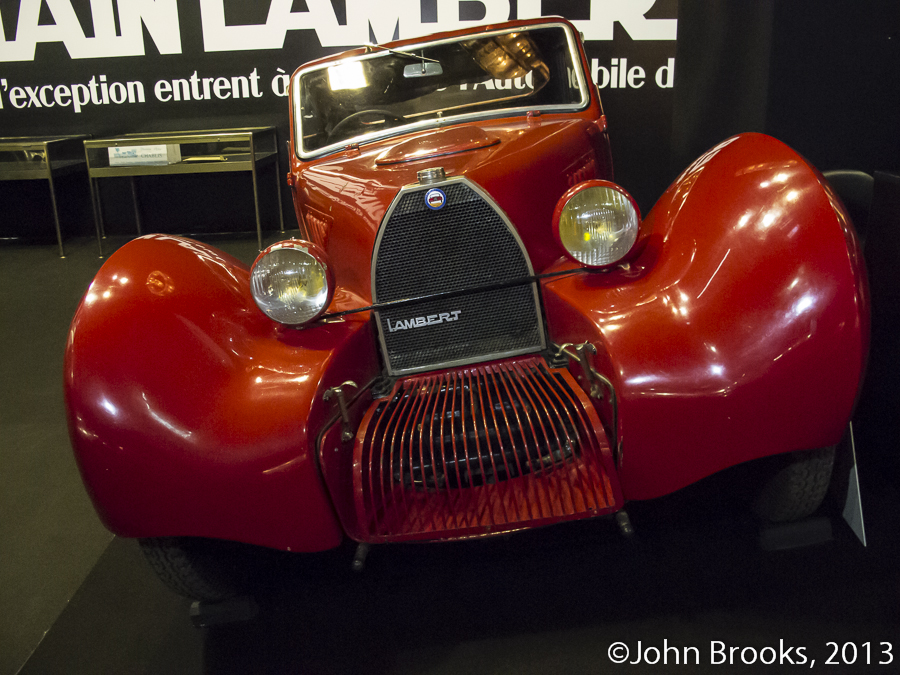
There are always a selection of quite obscure vehicles at the top shows, tucked away in a corner was a stand celebrating Germain Lambert, an enterprising engineer who ran Automobiles Lambert from the 20’s through to 1953. This is the Lambert 6CV.
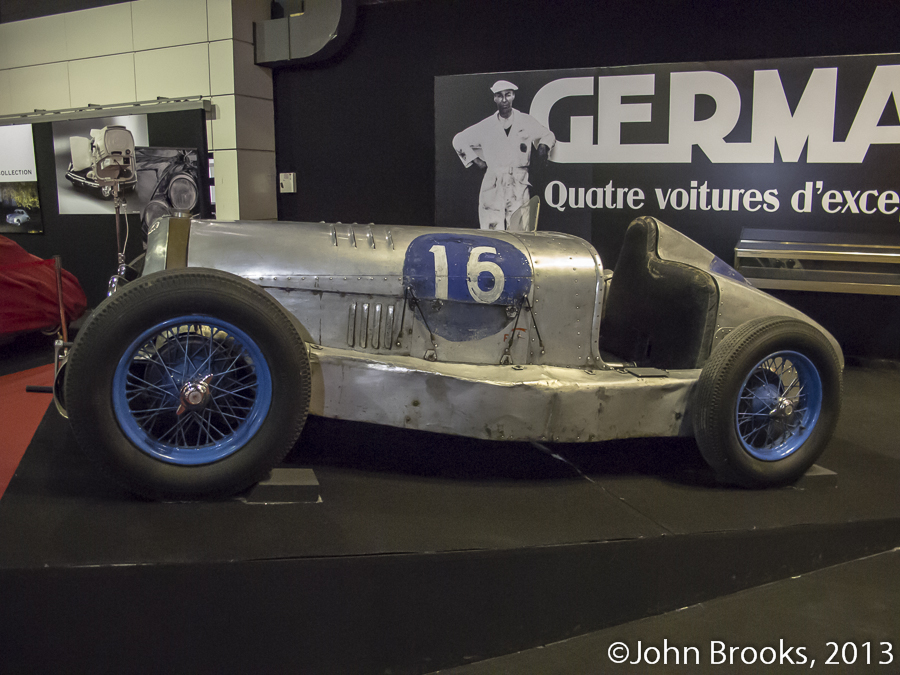
2013 Retromobile

Lambert was also an enthusiast, who raced his own creations, this is the CS Cabriolet Sport
2013 Retromobile

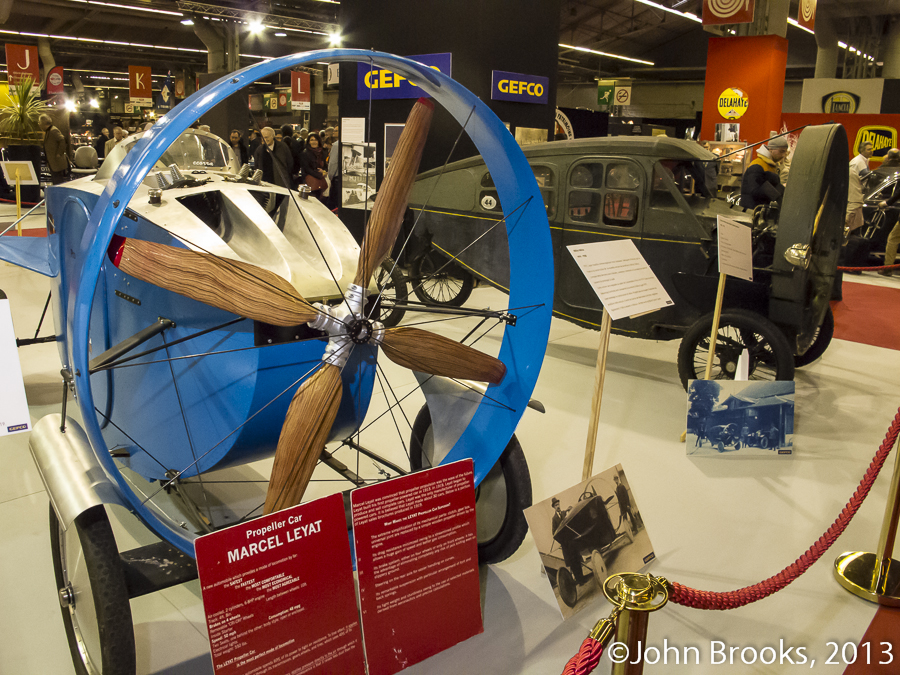
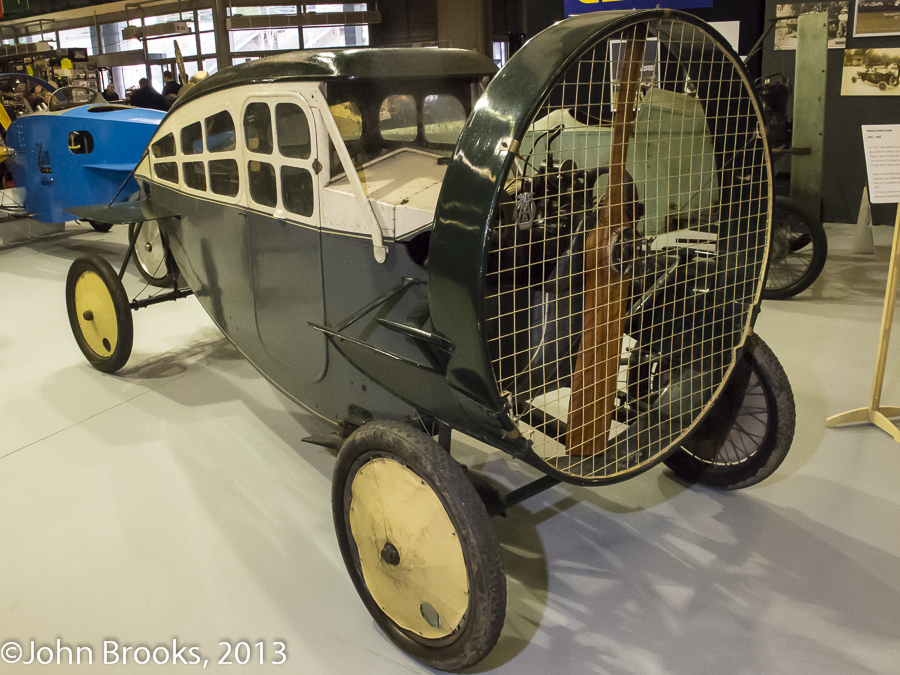
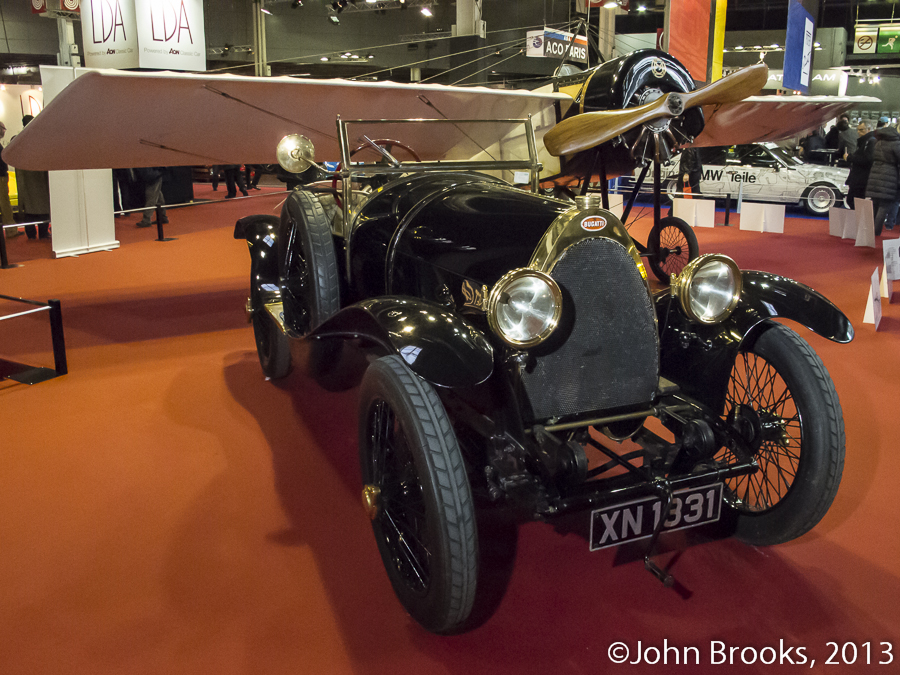
The output of another French engineer, Marcel Leyat, was also exhibited at the Show. His idea was to have a lightweight wooden chassis powered by a propeller, a plane without wings.
2013 Retromobile

During the 20’s he managed to sell around 30 of these strange contraptions but the concept never really caught on.
2013 Retromobile

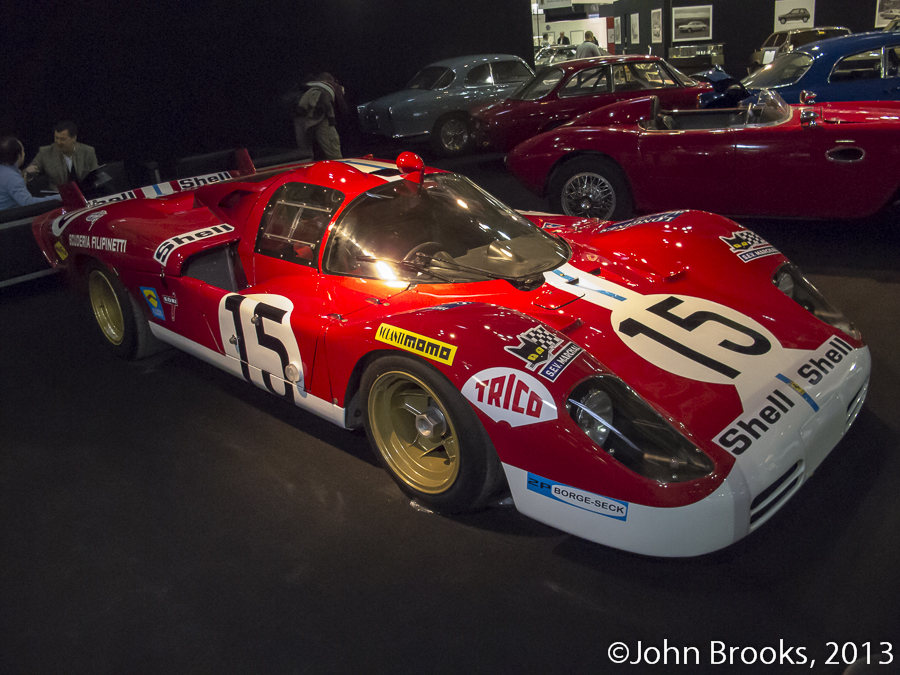
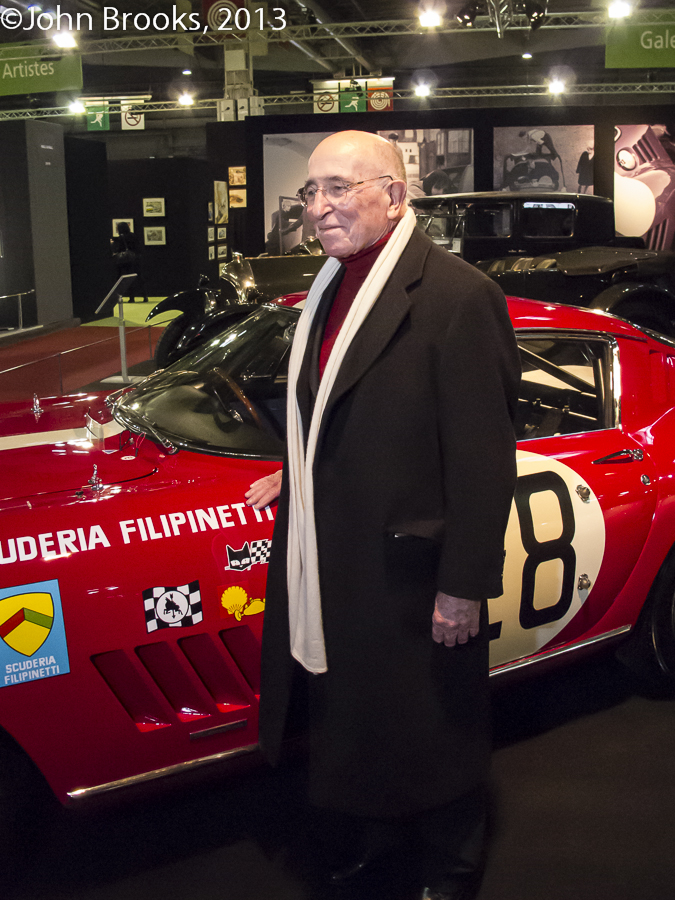
One of the delights of shows such as the Retromobile  is finding the unexpected, here I encountered the Scuderia Filipinetti Ferrari 512S as driven at Le Mans in 1970 by Mike Parkes and Herbert Müller. They were eliminated in the notorious accident early in the race that took out the three 512s of Regazzoni and Wisell, as well as Parkes, I am sure it made for an interesting debrief.
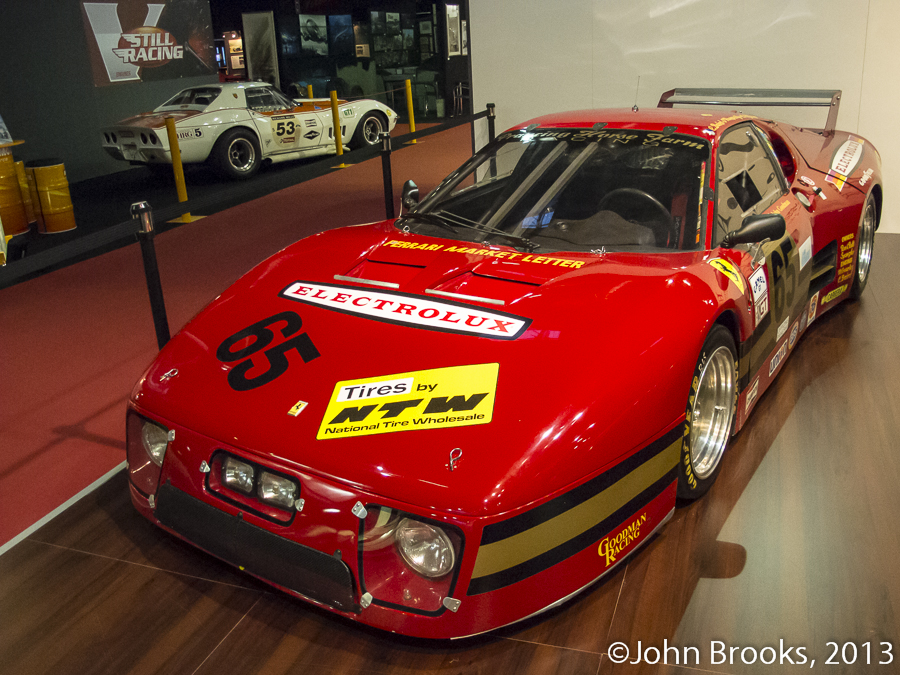
2013 Retromobile

Another 70’s Ferrari present was this immaculate 512 BB LM
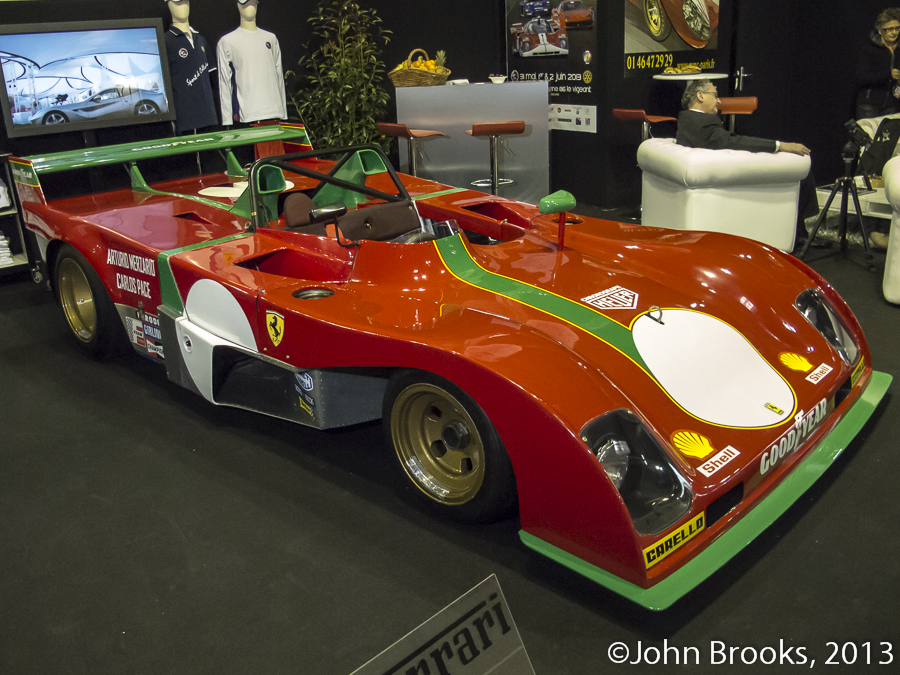
2013 Retromobile

And Paul Knapfield’s 312PB, with extra air intake to cool the F1 spec engine.
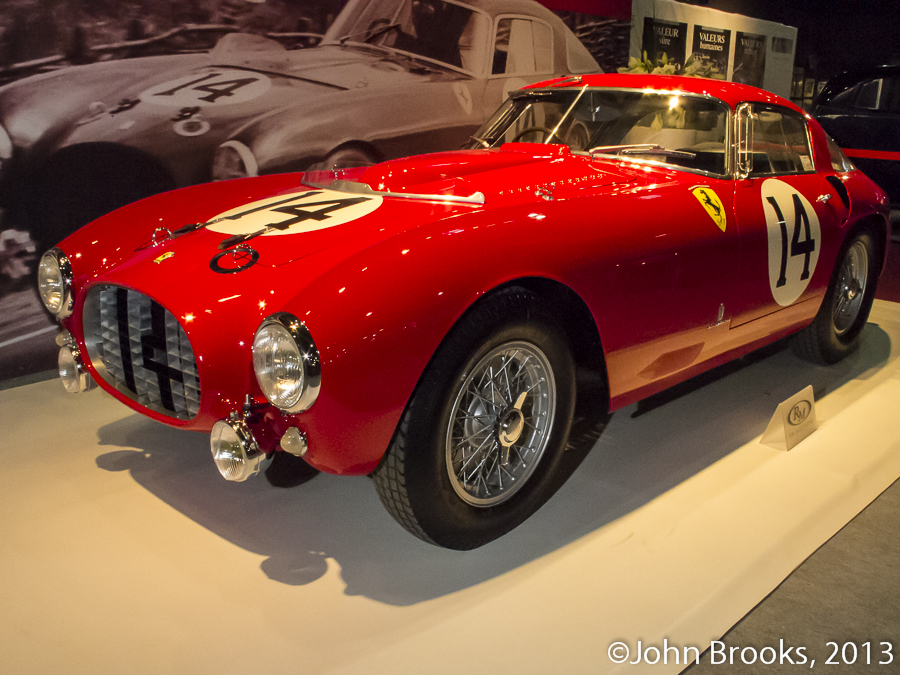
2013 Retromobile

And one last Prancing Horse, from the early days, a Ferrari 340/375 MM Berlinetta Competizione, promoting the Villa d’Este Concours.
2013 Retromobile

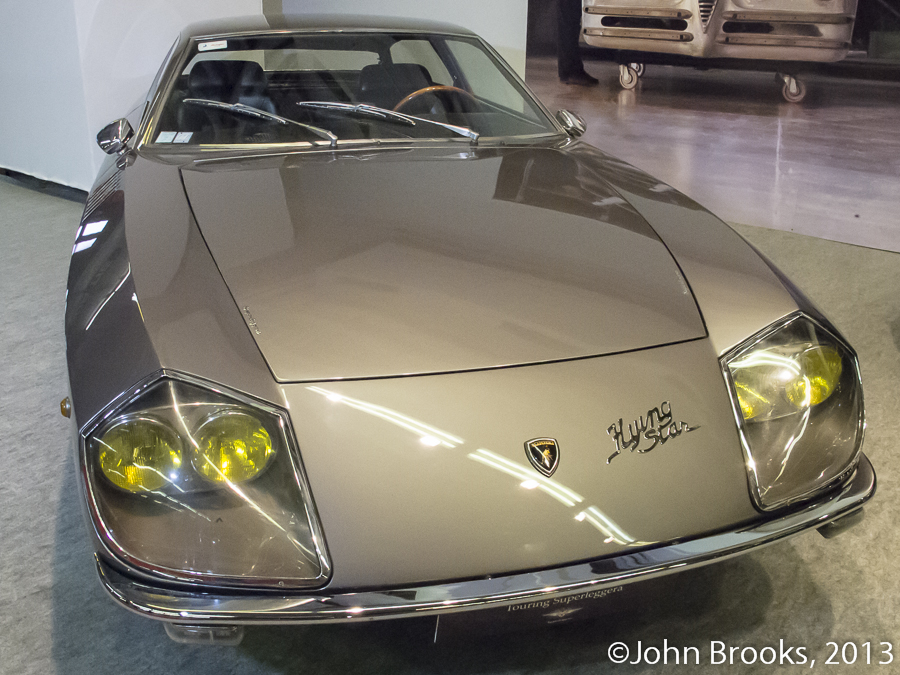
Carrozzeria Touring Superleggera had a stand to show off their skills and it contained a rarity from Lamborghini, dating back to 1966, the Flying Star II prototype. This was a collaboration with the factory and based on a Lamborghini chassis.
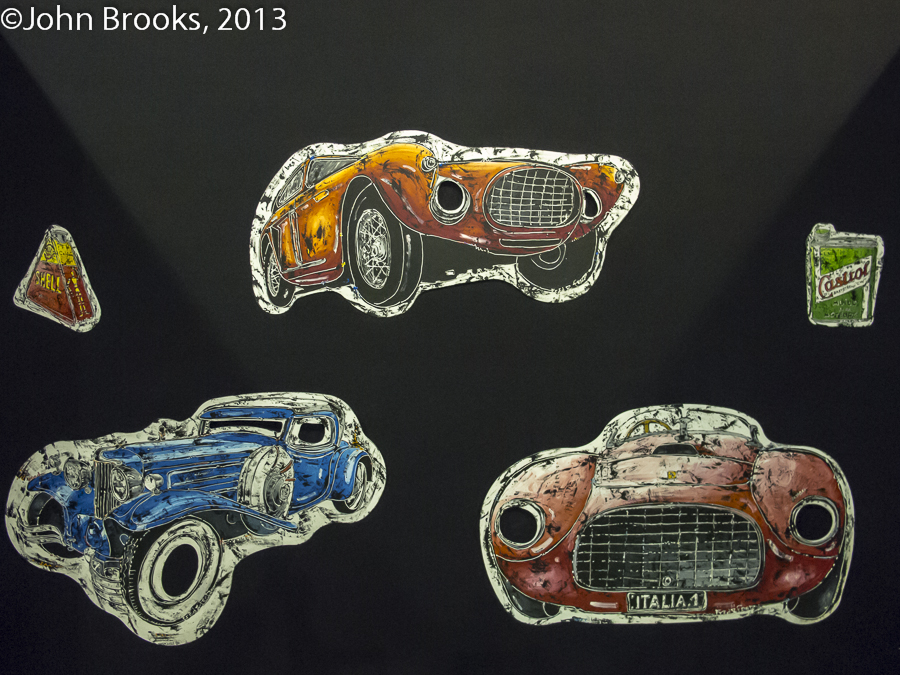
2013 Retromobile

The Retromobile had a wide range of automobilia for sale, from the likes of Hortons Books to several stands offering fine wines, and of course there are the ART stalls.
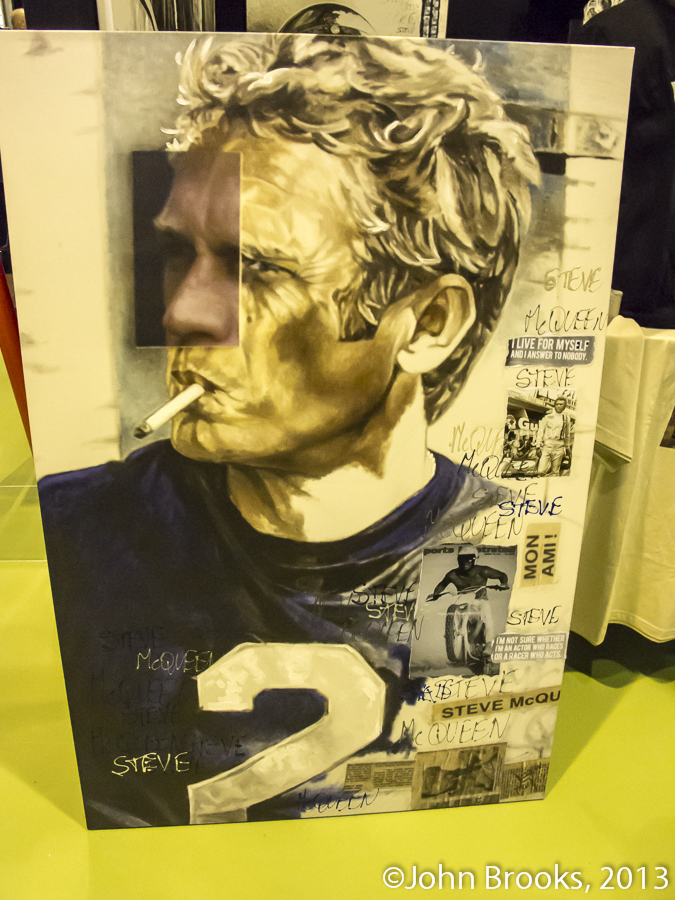
2013 Retromobile

Steve McQueen still has a power to fascinate……………..
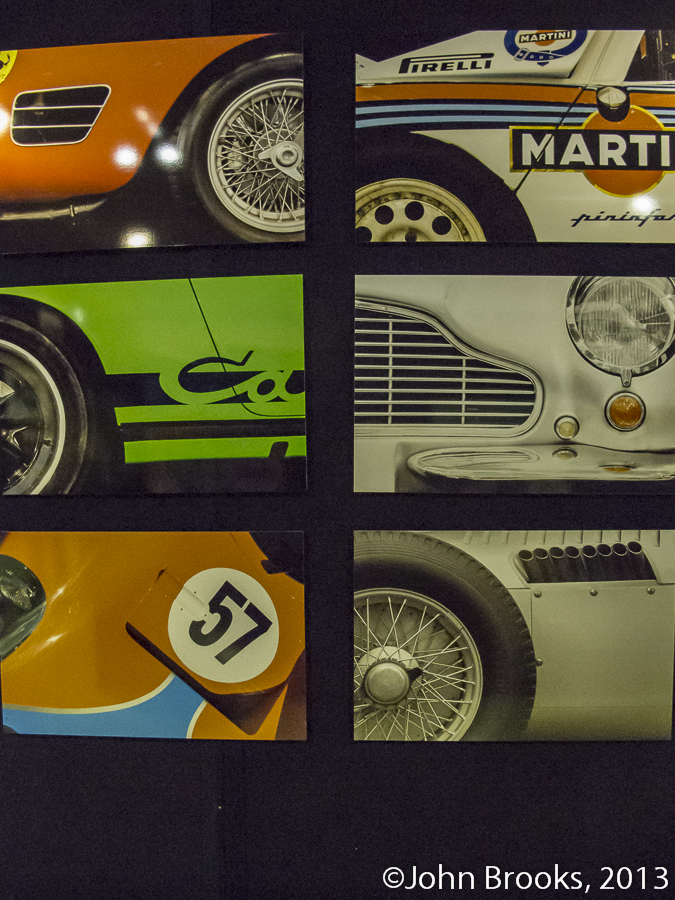
2013 Retromobile

Someone’s wall is incomplete without this
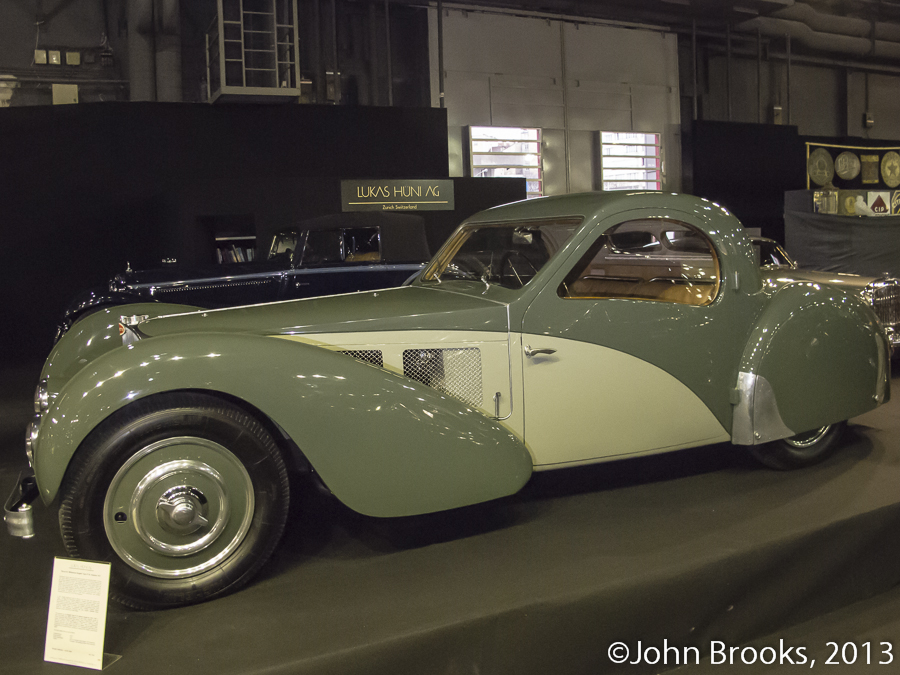
2013 Retromobile

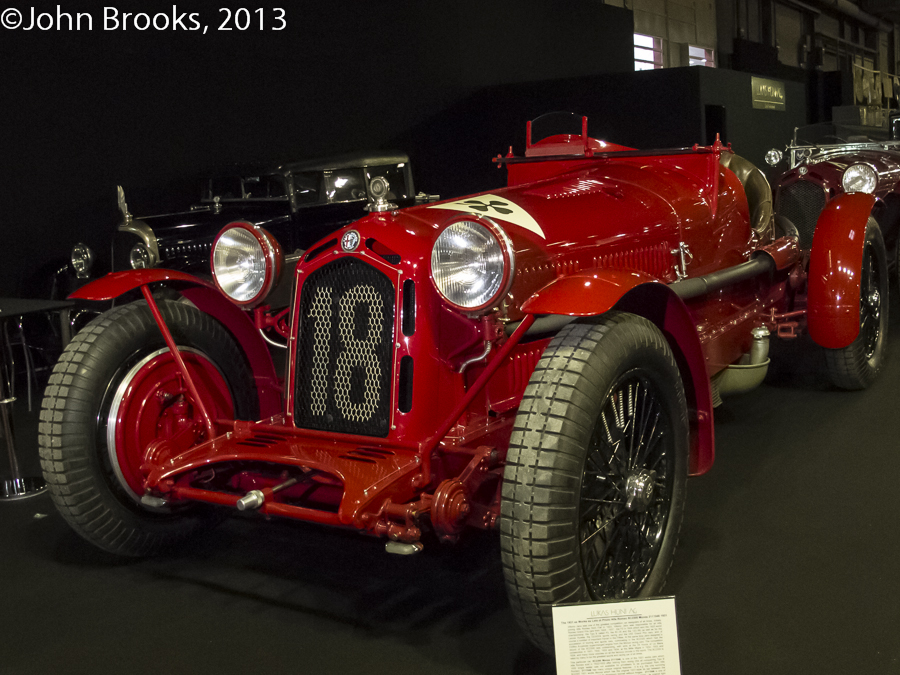
The Lukas Huni stand had several outstanding cars, the pick of which was this Type 57 Bugatti
2013 Retromobile

And this Alfa Romeo 8C 2300 Monza

2013 Retromobile

I might be a bit biased but to my mind the two stands that were head and shoulders above the others came from across the English Channel.
2013 Retromobile

The sheer quality of the cars on Hall & Hall and Fiskens, or Fiskens and Hall & Hall, depending on whose stand you were on, was staggering.
2013 Retromobile

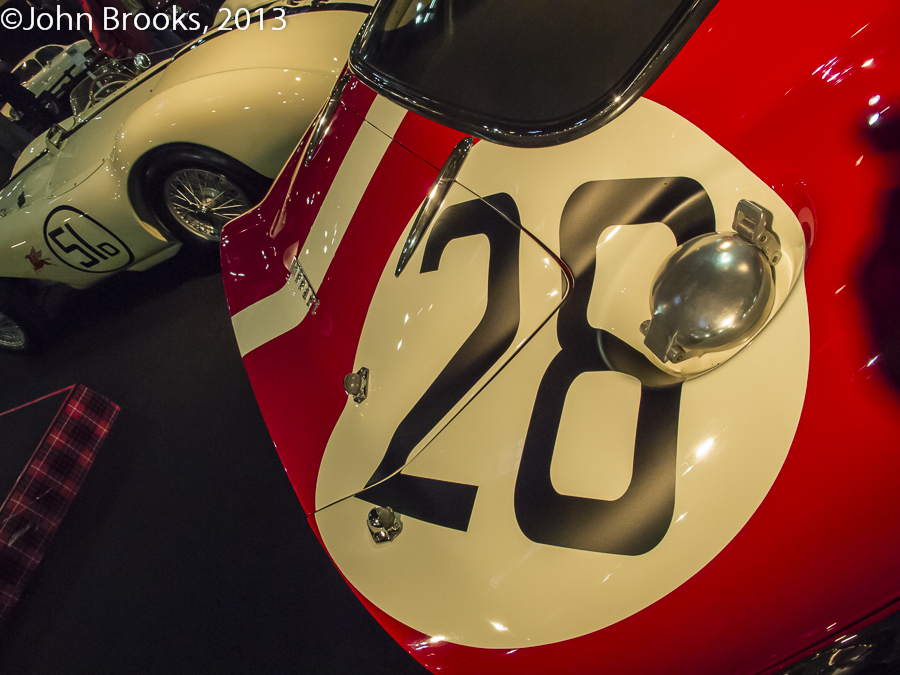
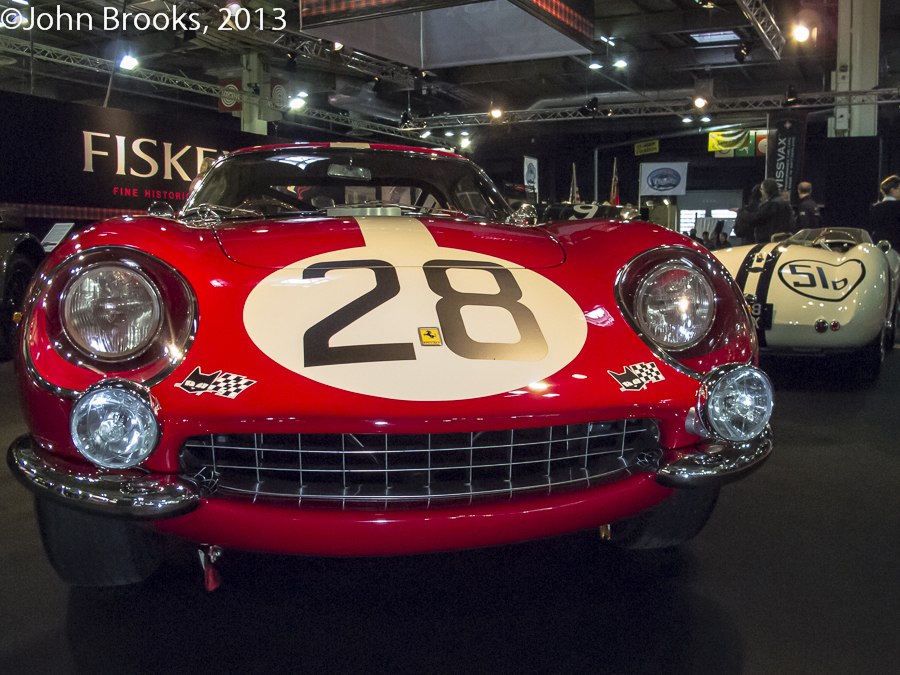
Highlights at Fiskens were two Le Mans’ veterans, the 1926 Bentley 3L Le Mans and Scuderia Filipinetti Ferrari 275 GTB/C that was a class winner in 1967, these endurance classics were just part of a fantastic set of cars that the well known London based dealer had in Paris.
2013 Retromobile

I caught up with Gregor Fisken who gave his thoughts on the 2013 Retromobile.
2013 Retromobile

“Every year it gets a little bit bigger, a little bit better, I think the show has really found the right balance. It is important that it still has elements of a flea market, it is important that the modern manufacturers can come in and embrace their heritage as well. It is important that there is wonderful art, models, parts but it is also important that it is Europe’s pre-eminent début event of the year. It kicks off the year and everyone leaves here motivated, they see old friends, they make new friends, they plan for the season and they have the opportunity to review what they are going to use in the future.”
2013 Retromobile

“What we have here on the stand today, I think, is a little bit of something for everyone. We have arguably one of the most important Le Mans’ Bentley team cars to come on the market in recent years and we have a Bugatti T37A that has had 50 years of one family ownership, so that is a special opportunity. Of course with the Ferrari 275 GTB/C there is an opportunity to purchase a car that raced in Les Vingt-Quatre Heures du Mans three times and it won its class. We had Claude Sage on the stand, from Scuderia Filipinetti, who ran the car in period. He remembered driving the car from Geneva to Le Mans, the car running in the race and then being driven back afterwards, absolutely fantastic.”
2013 Retromobile

I think cars from this period, the 60’s GT era, were the last that could be genuinely driven from the factory to Le Mans, win their class and be driven home. I think for a lot of new people that are coming into the market they find the opportunity to use such a car on the road and on rallies, events and races is very attractive. They can go to the Le Mans Classic and have a pretty prestigious way to travel down the Mulsanne.”
2013 Retromobile

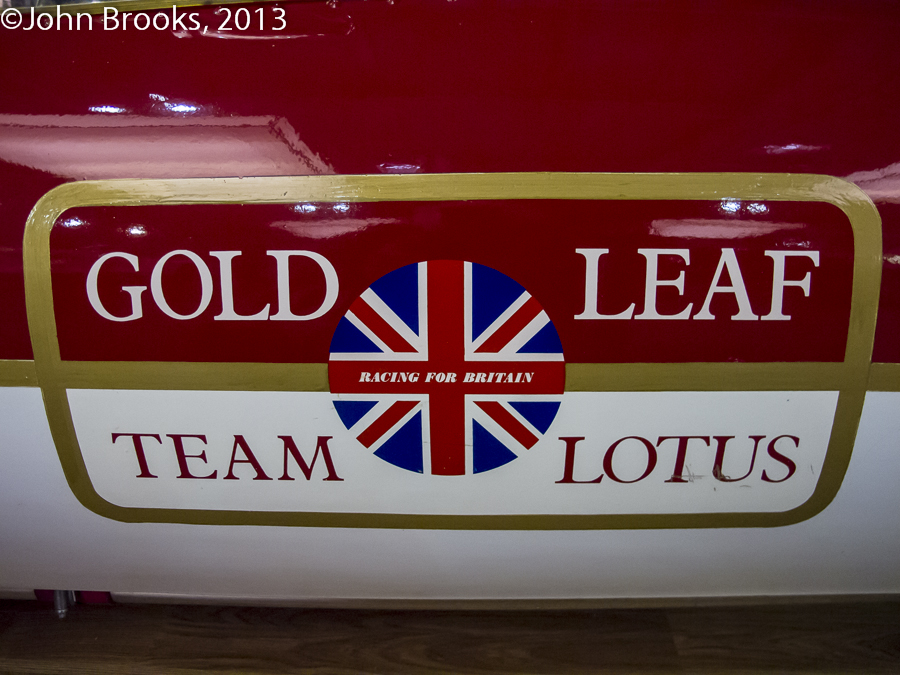
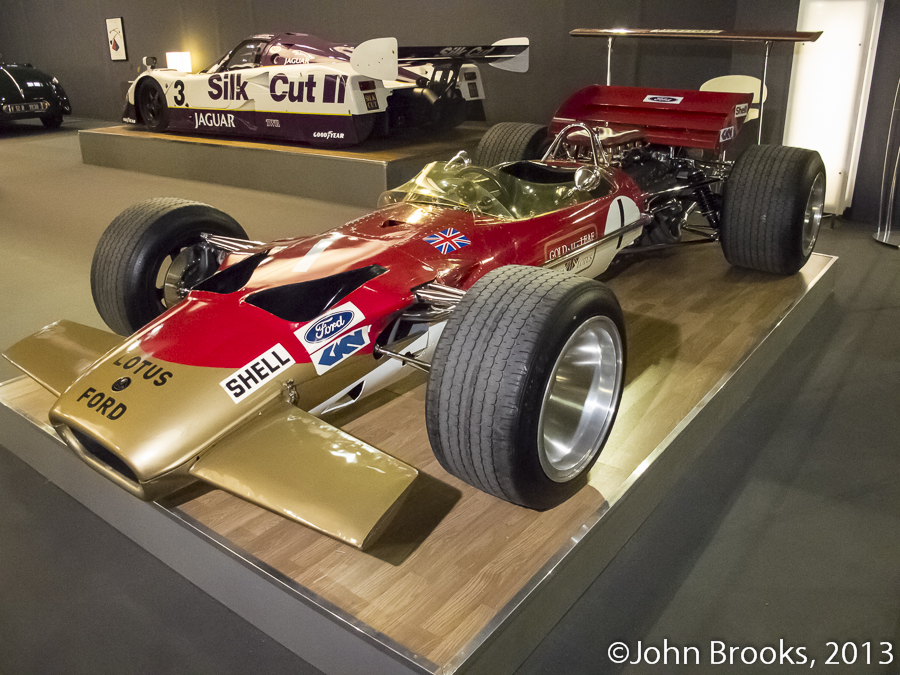
It is hard to imagine but this impressive array of classics were matched by the Hall & Hall display. Endurance Racing was again well represented with Porsche 956/001 supporting Jaguar XJR-12 chassis 288, with the unique record of a victory in both the Le Mans and Daytona 24 Hours. Another flash from my misspent youth was a Lotus 49C in Gold Leaf Team Lotus livery, this being an unraced spare built for Ford.
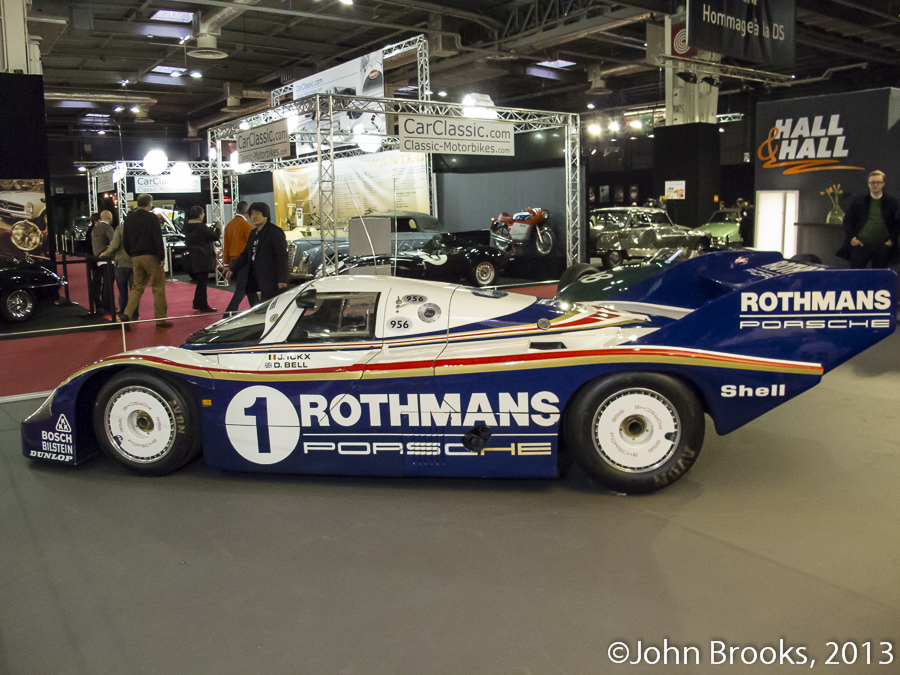
2013 Retromobile

Rob Hall gave me his views on the Retromobile. “We have been attending the Retromobile for seven years now, it starts the season off for us really, it is a good shop window for the selling side of the business, a few of the cars here are not for sale but they add to interest to the exhibit and it gets our name noticed. It costs us certainly but during the rest of the year we recoup the outlay, either through picking up work or picking up sales.”
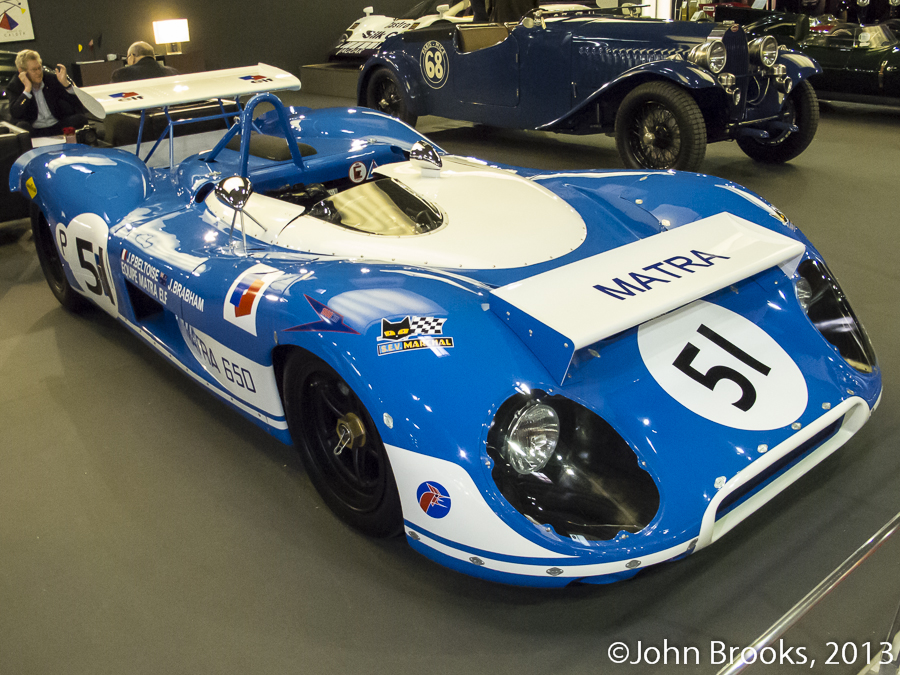
2013 Retromobile

“I had a quick look round the Show early today before things got busy and it is clearly a great event. There is something for everyone, whether it is old, new or something to help you work on your car.”
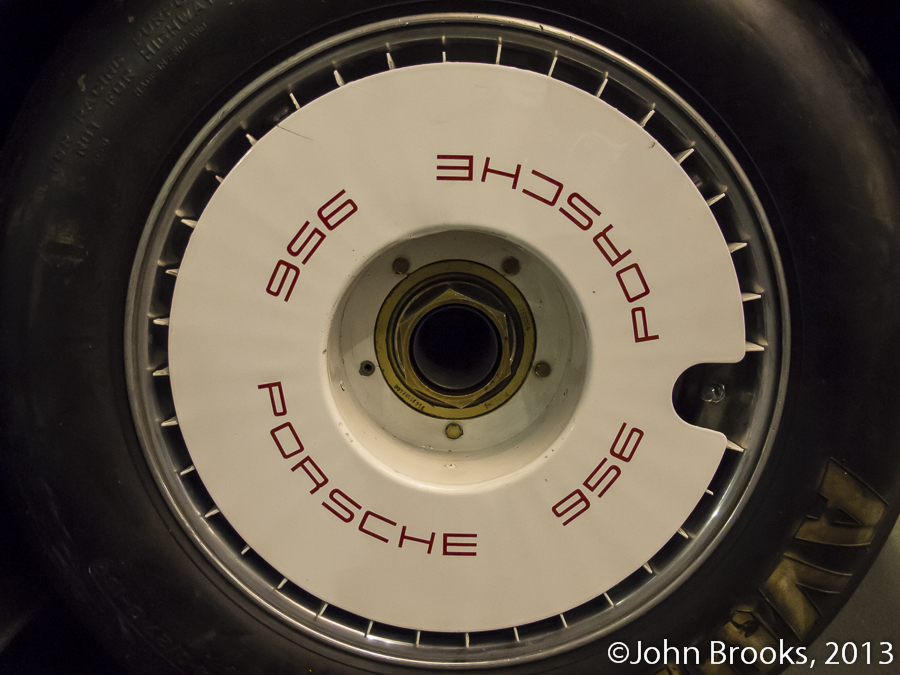
2013 Retromobile

“The Show is quite a big commitment but what has made it a lot easier is that it is now condensed into one weekend and a few days as opposed running over two weekends as it did in the past. The cost of hotels and travel and having staff on site has been reduced and that acts as an incentive for us to come to Paris. So both parties benefit.”
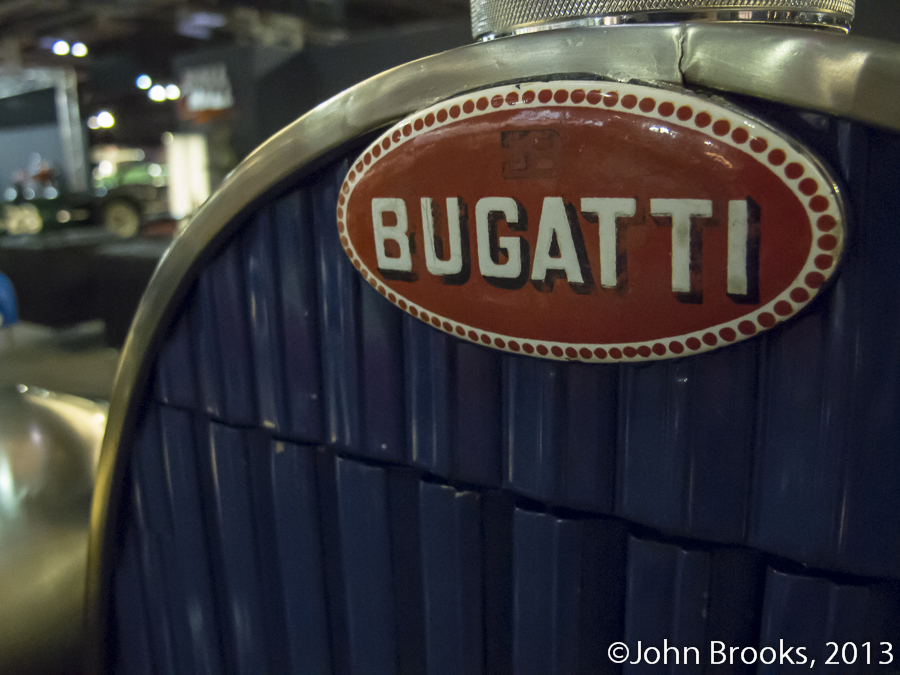
2013 Retromobile

A show would not be a show without an auction taking place and Artcurial provided the necessary ingredients, with many fine lots. The hammer came down the loudest when a 1936 Talbot Lago T150C Roadster went to a new owner for just under €1,500,000, despite the financial storms that rage in Europe there is still some money about for a classic car.
2013 Retromobile
The 2013 season is now underway having been launched at the Retromobile, it is worth a visit and especially as Paris is but a short train ride away, it can be done in a day and enthusiasts should be making their plans for February 2014.
John Brooks, February 2013