Category Archives: Nostalgia

Double Dutch

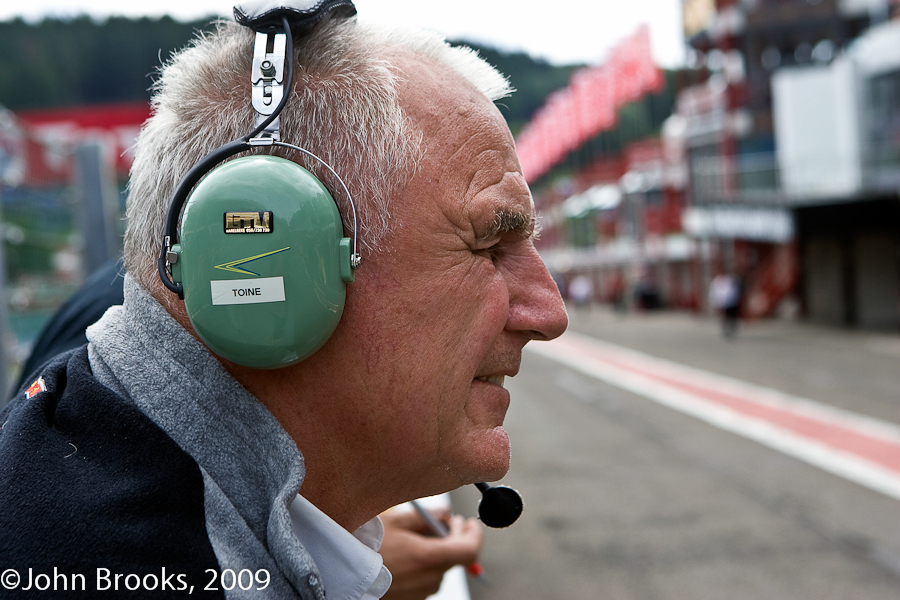
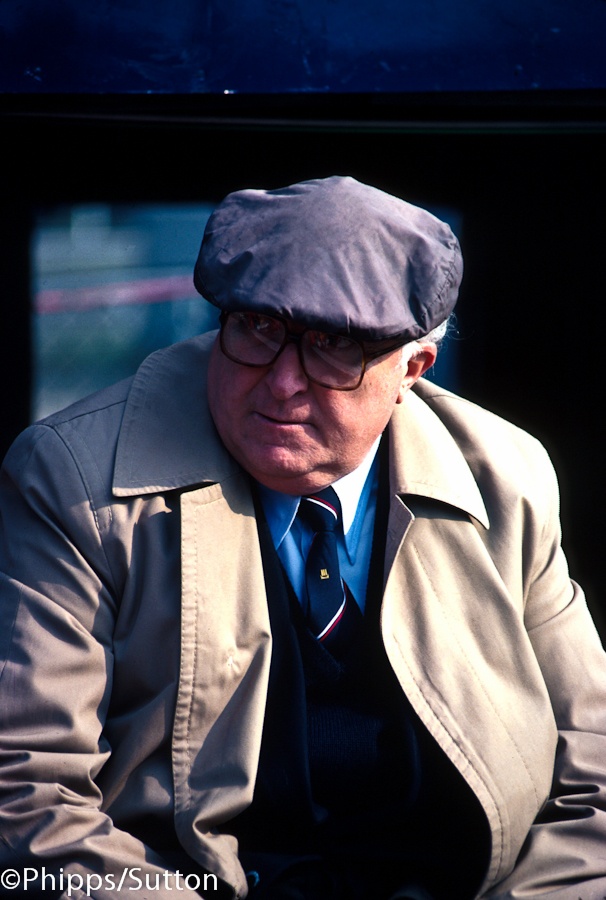
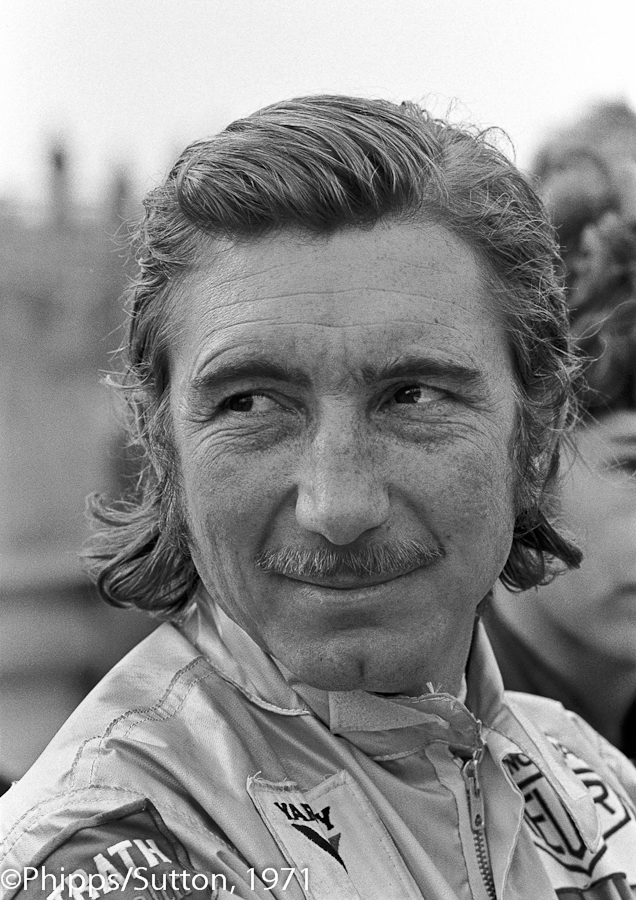
Toine

Some stories are worth repeating, so this tale of laughter is certainly qualified in that respect. Over 8 years ago I ended up in a hotel bar with Toine and Mike Hezemans…………….

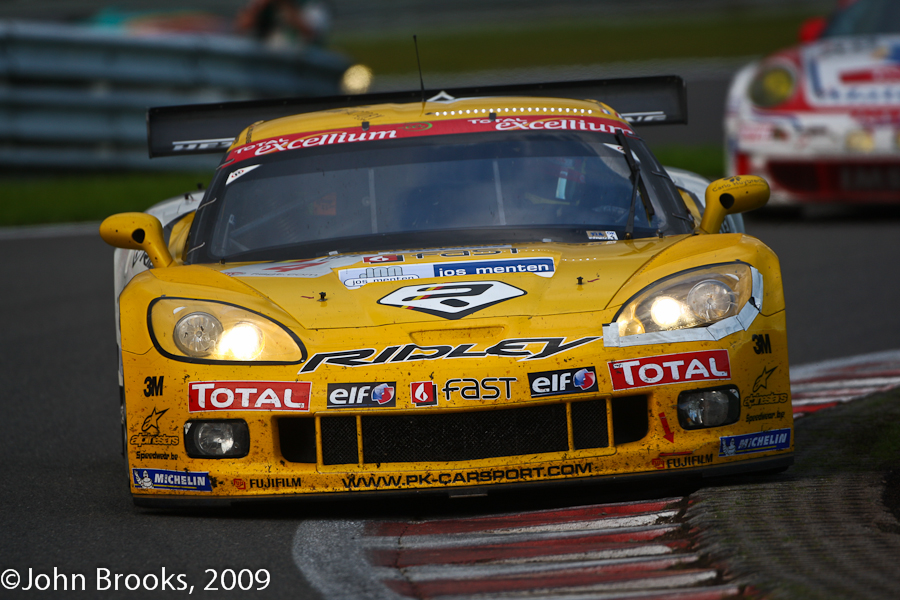
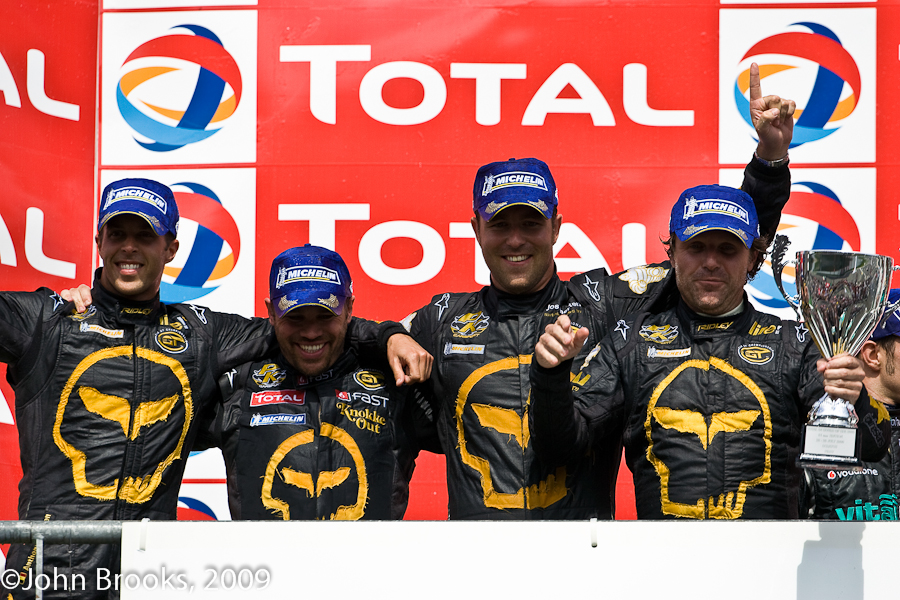
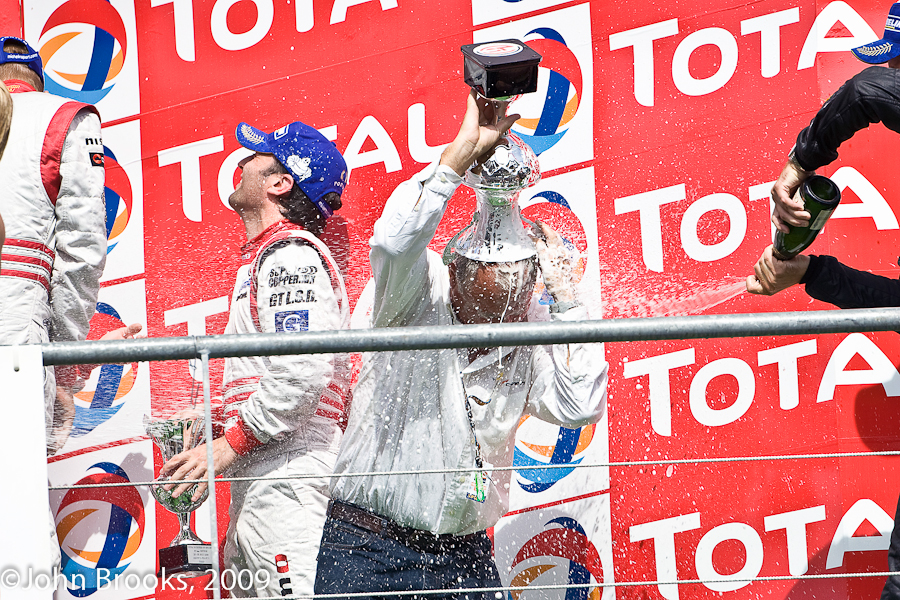
Spa 24 Winner

After another lashing of Schwien-something or other at the dining table, Cotton, Lister and I drifted past, and then back into, the hotel bar.  We stumbled upon Mike and Toine Hezemans.  Mike is one of the ballsiest drivers in the FIA GT championship, brave to the point of lunacy, commitment being his middle name and also bloody quick.


None of that should come as a surprise to anyone lucky enough to find themselves enjoying a convivial beer or three with his father, Toine. That particular strain of DNA is rare indeed, probably just as well, too much of this concentrated brew would be dangerous………but what the hell?  You only live once.

950 Kilometres of Brands Hatch?
Toine is a larger than life figure in every respect…….as a driver he competed at the highest levels, a multiple champion in sportscars and touring cars. These days as a team owner and manager, he has a reputation for an uncompromising approach. I recalled the first time we had met several years back, oddly enough in another hotel bar in Germany.

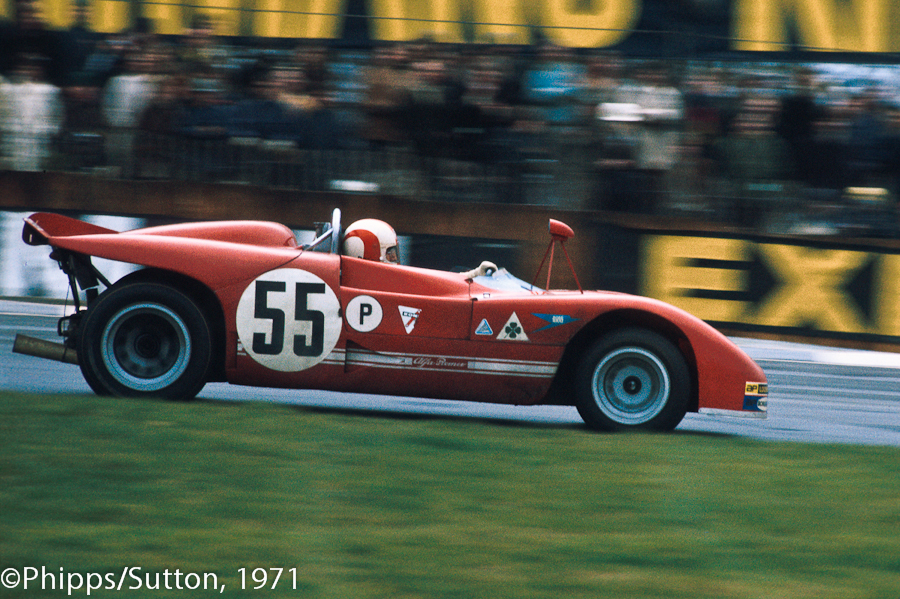
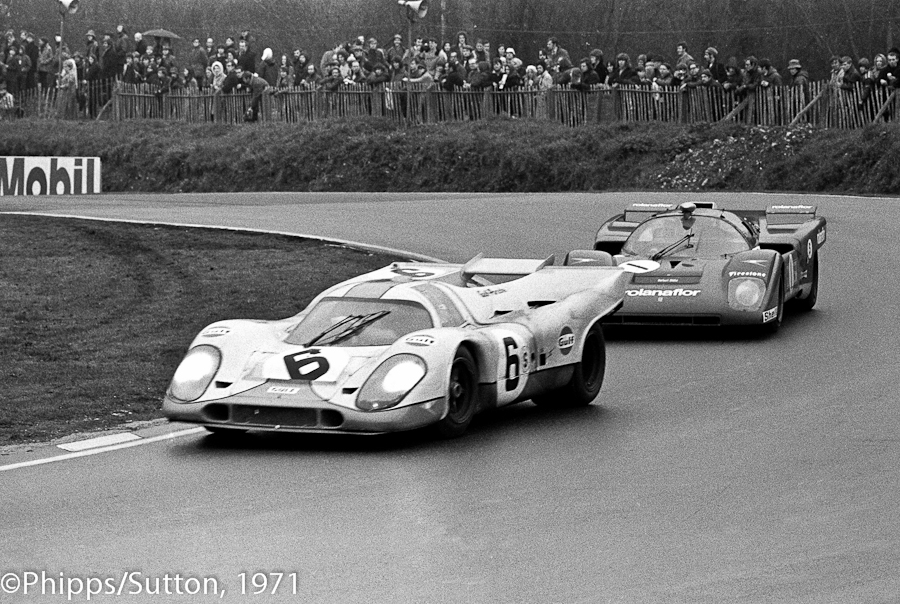
My first sportscar race was the 1971 1000Kms of Brands Hatch…….I reminded him of this big moment in my life and his reaction was the same that night as it was at this weekend………
”F##king race, two laps up in the lead and 50kms to go the f**king engine let go”.
Nice to get a consistent view of history. Time certainly is a healer.

Carlo Chiti

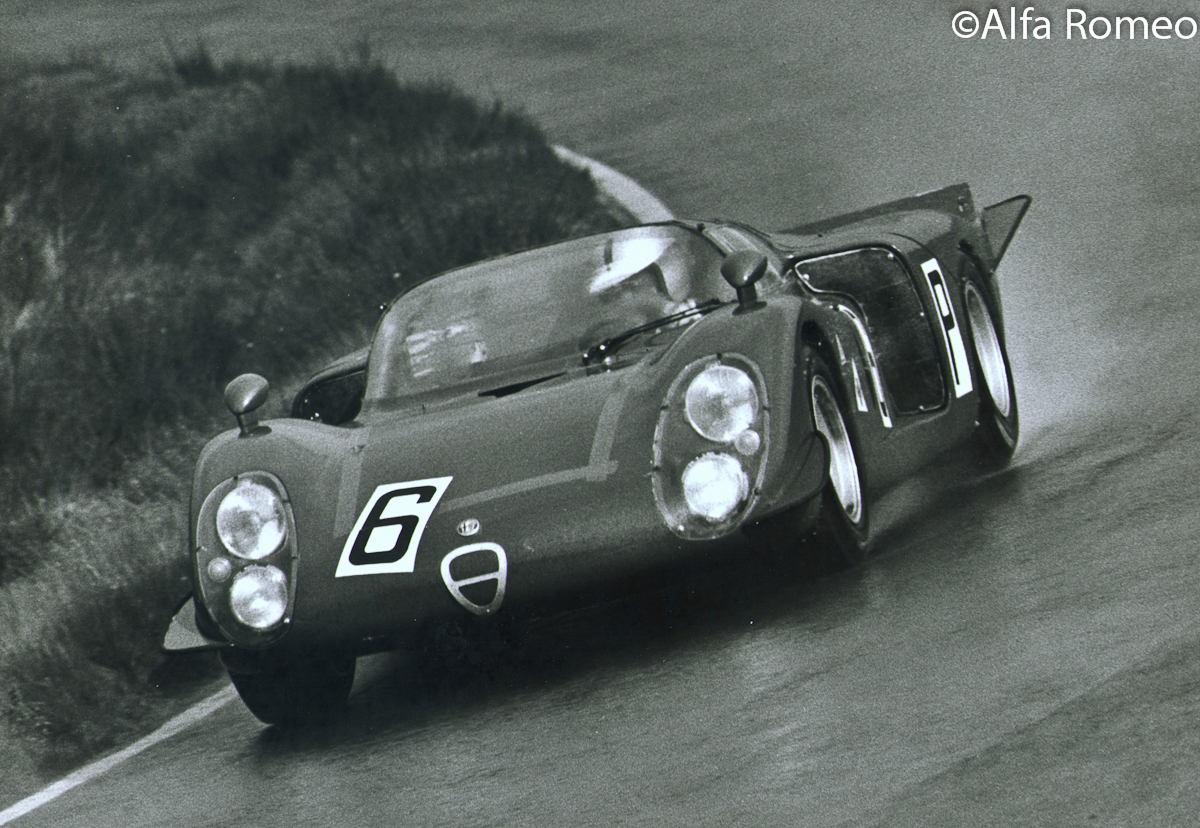
Toine was a driver with the Alfa Romeo factory in the late 60’s and early 70’s, a time he recalls with great affection. Although Alfa had a reputation for being a touch chaotic, their approach to testing the touring car programme was more akin to F1 in the modern era, than those freewheeling times.
”We spent a month at Balocco with ten cars, when one broke it would be taken away and another sent out……that way we discovered all the problems and fixed them before the racing began. The title was easy then.”

Alfa Romeo’s competitions department, Autodelta, was run then by the imposing figure of Carlo Chiti…….a man of constant invention and tinkering.
”Chiti was always coming up with something new……sometimes copying shamelessly from others………I was at the factory with Masten Gregory and the boss was very keen to show his new design for a tyre jack…………..very similar to Jim Hall’s Chaparral jack……….but this of course was made of titanium as Alfa had a special forge that had been put in at great expense, so it had to be used at every opportunity.”
”So Chiti was showing off in front of us drivers and put the jack under one of the racecars for a demonstration…….gave a mighty pull and promptly broke the lightweight handle in two and ended up flat on his back. He did not see the funny side, so us roaring our heads off and crying with tears of laughter did not go down well.”


”It was sometimes fantastic to be a works Alfa driver. I was leading the Targa Florio in 1971 (with local hero Nino Vaccarella) and somehow fell off the road on the last lap, within a minute two hundred locals had carried the car back to the tarmac and off I went again.”

Don’t Try This At Home, Kids

”Vic Elford in the leading Porsche had a puncture during the race and while he was round the front of the car some of our fans stole the jack and wheel nuts from the back of the vehicle. They really wanted us to win.”
Nonsense, I said, that just shows the native cunning and good sense of the Sicilians, Porsche spares were always worth more then Alfa bits.

Always good value too is Toine.

John Brooks, November 2011

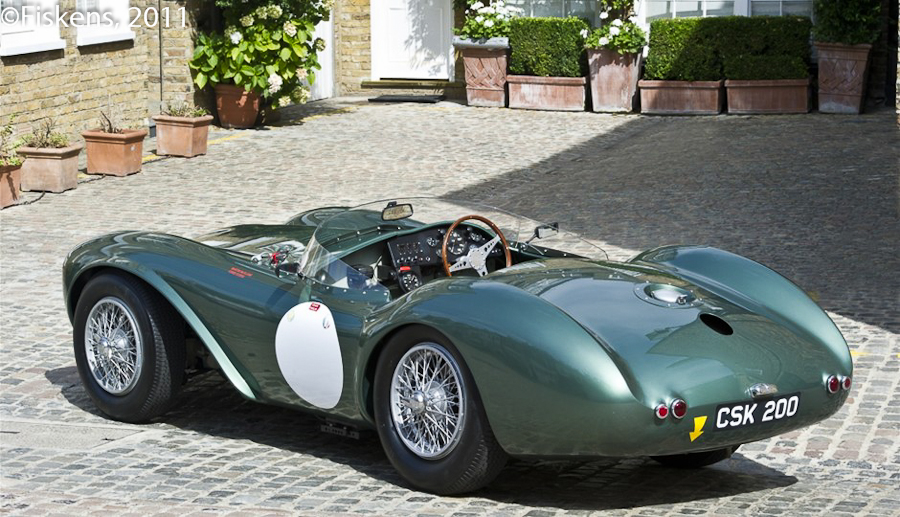
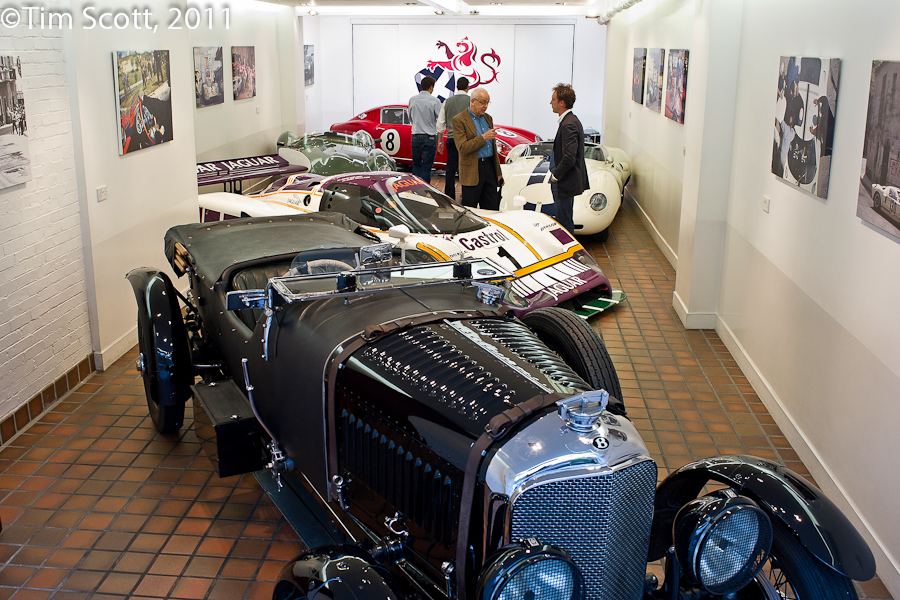
Open Day at Fiskens – Fine Historic Automobiles


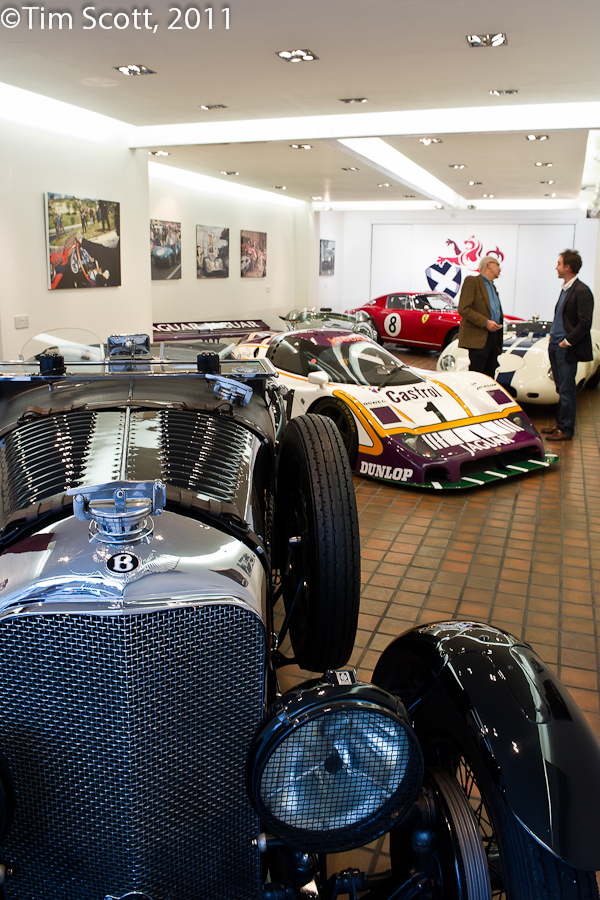
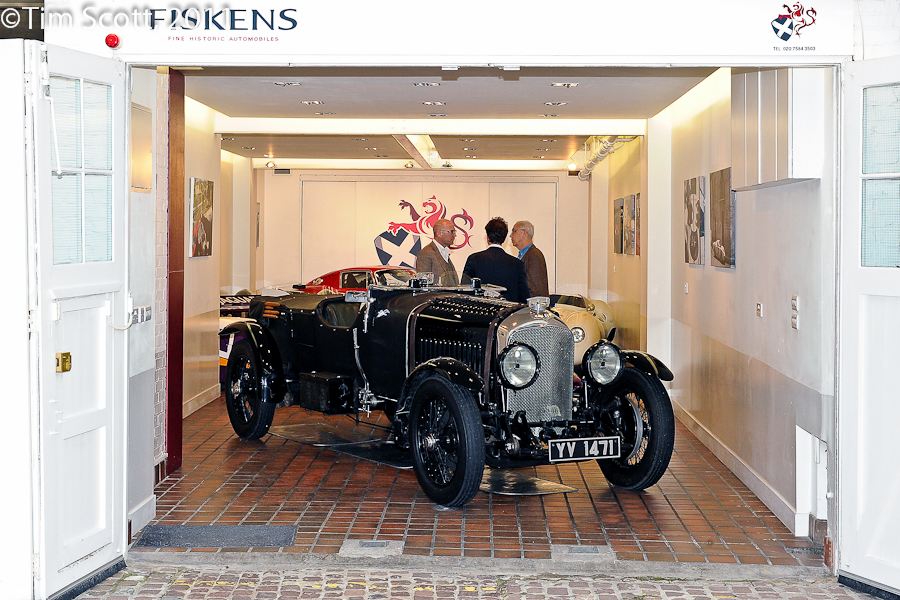
Central London to the West of Hyde Park is place of museums and mews. Tucked into one such development, just around the corner from Gloucester Road Tube, is Fiskens, well known, and well respected, dealers in classic cars. Actually they are the antithesis of “car  dealers”; I am old enough to have worked in London when Warren Street was the centre of rough and ready car dealing, Fiskens is nothing like that, nor is their stock. Gregor Fisken, Le Patron, is well known in motorsport circles, whether for his British GT campaigns or his results at Le Mans. He is also known as a “goto” guy when it comes to acquiring rare and classic automobiles.

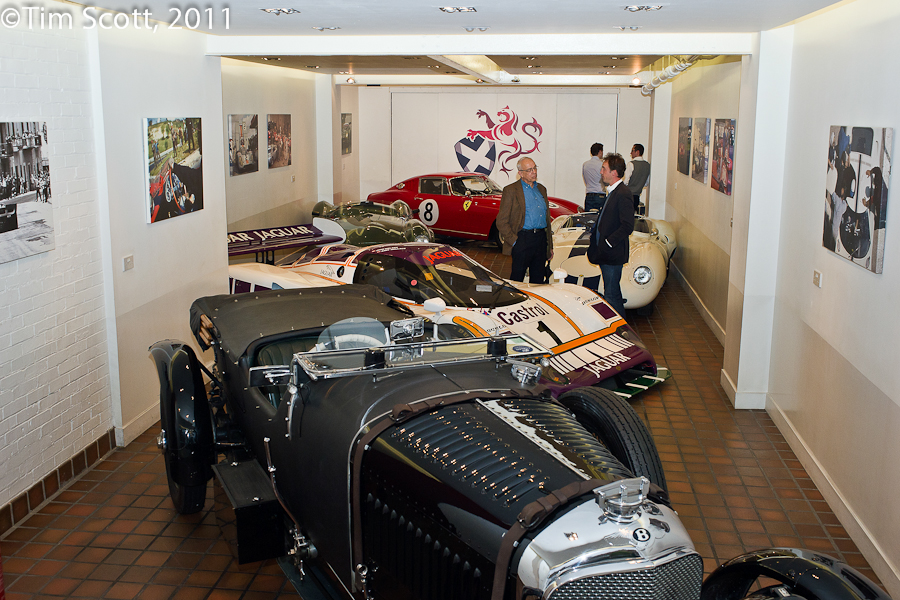
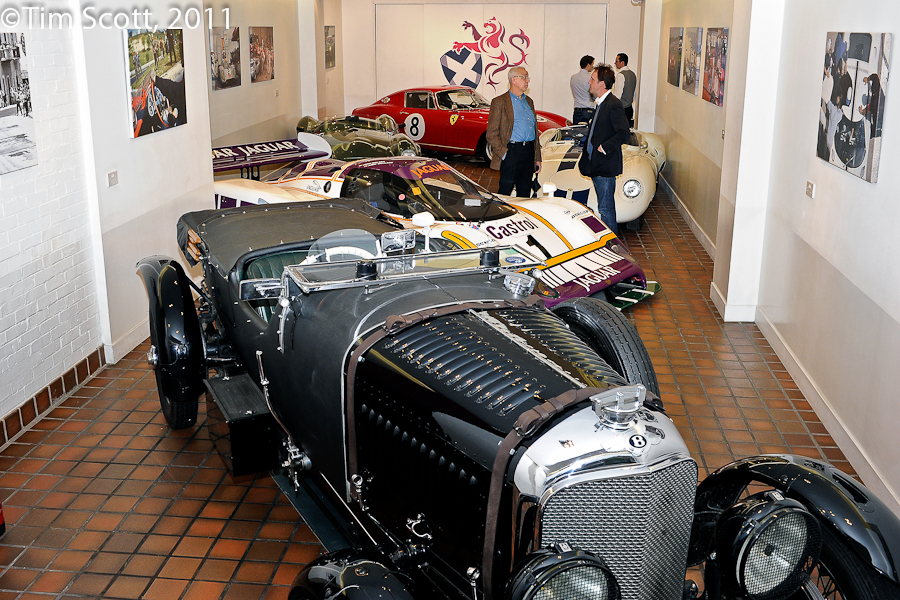
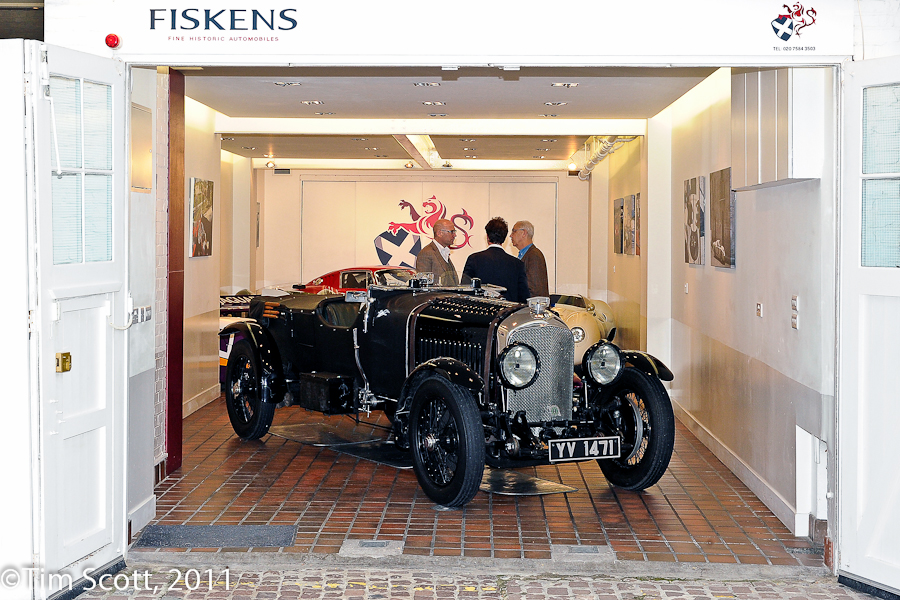
So when the invite to pop into Town have a look around their small, but select, showrooms at an Open Day hit the mailbox, it seemed a good excuse to have a look at some great cars. I accepted with alacrity. The cars did not disappoint, there was even an old friend on display but more of that in a minute.
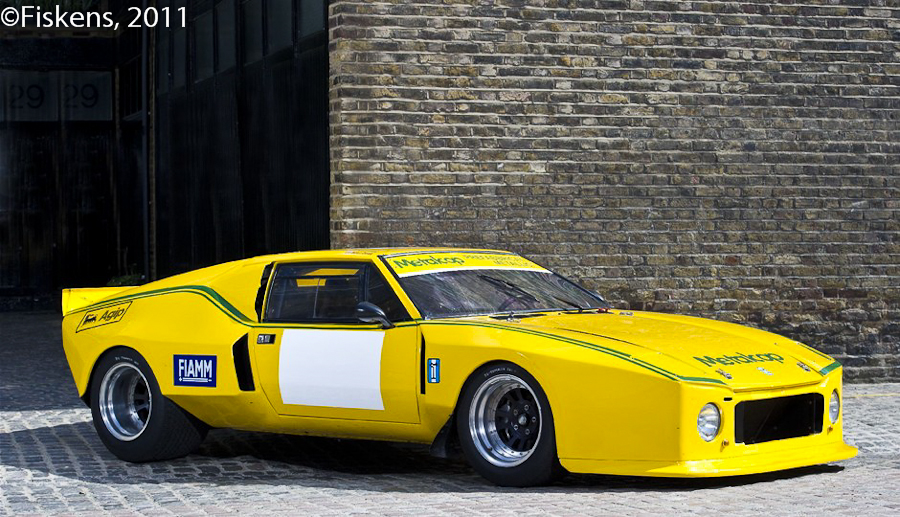

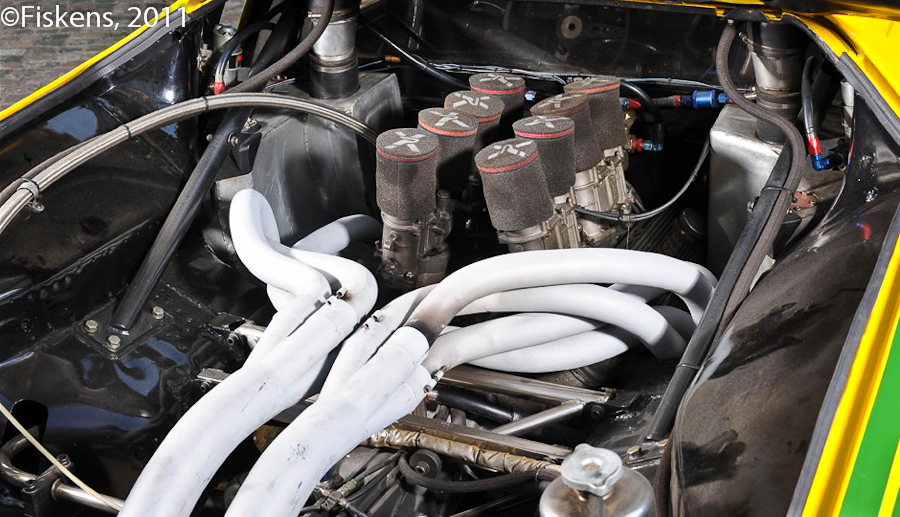
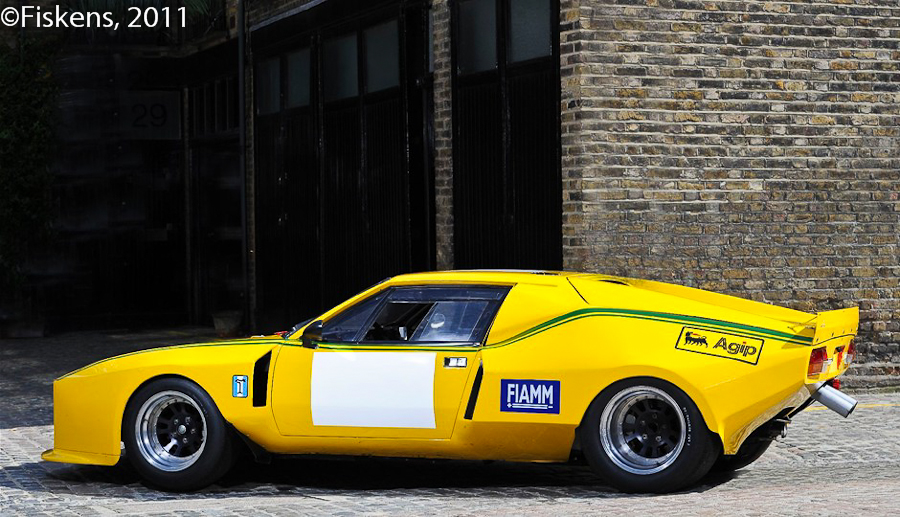
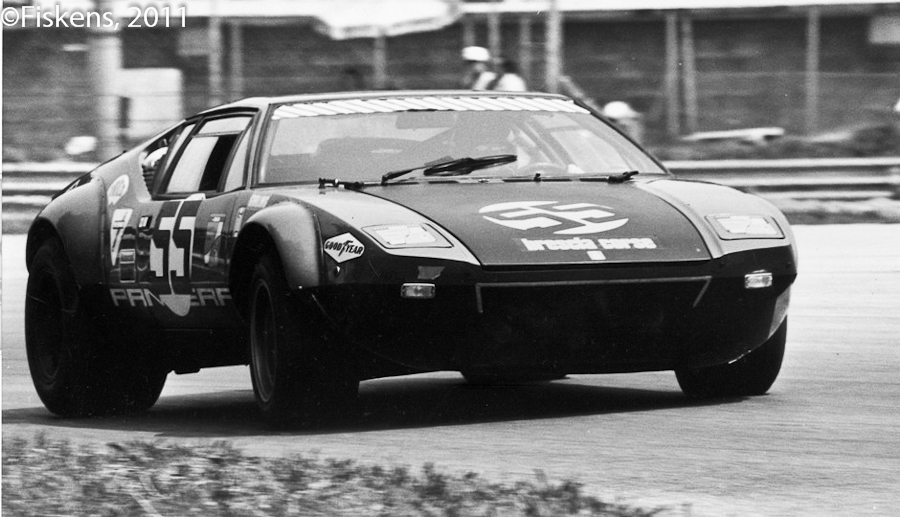
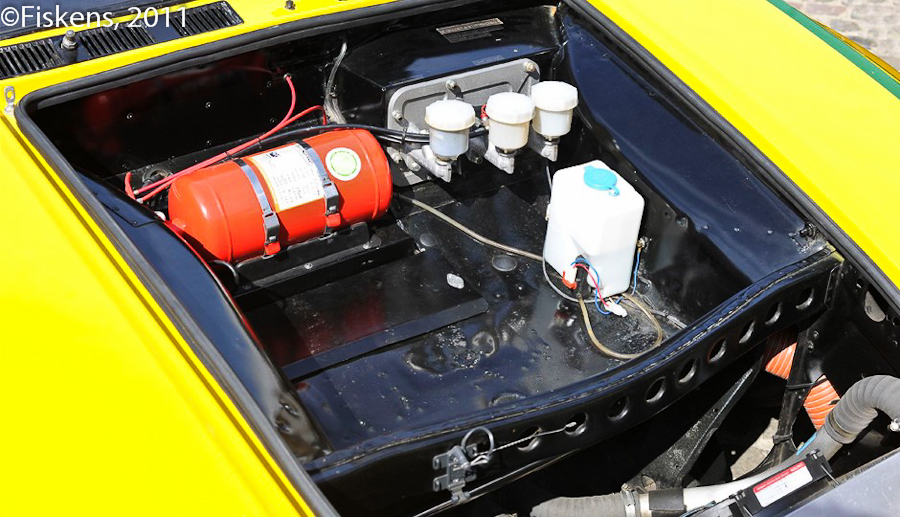
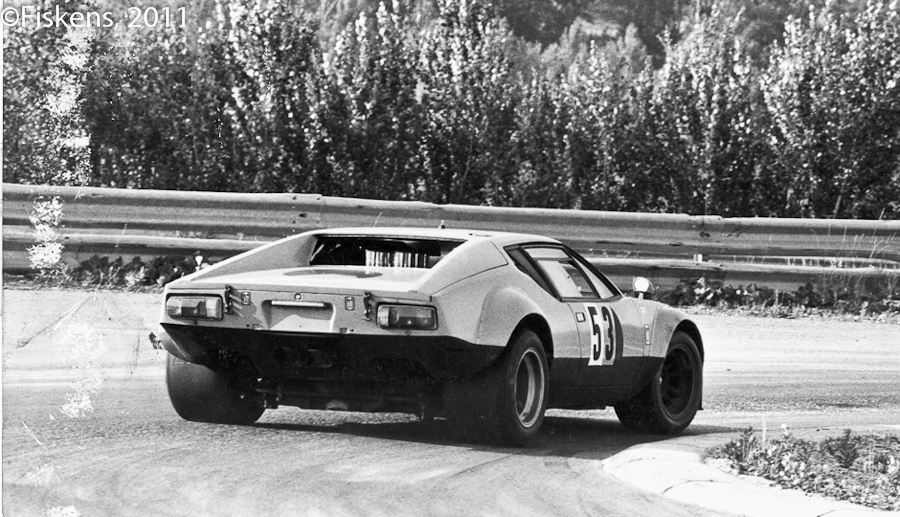
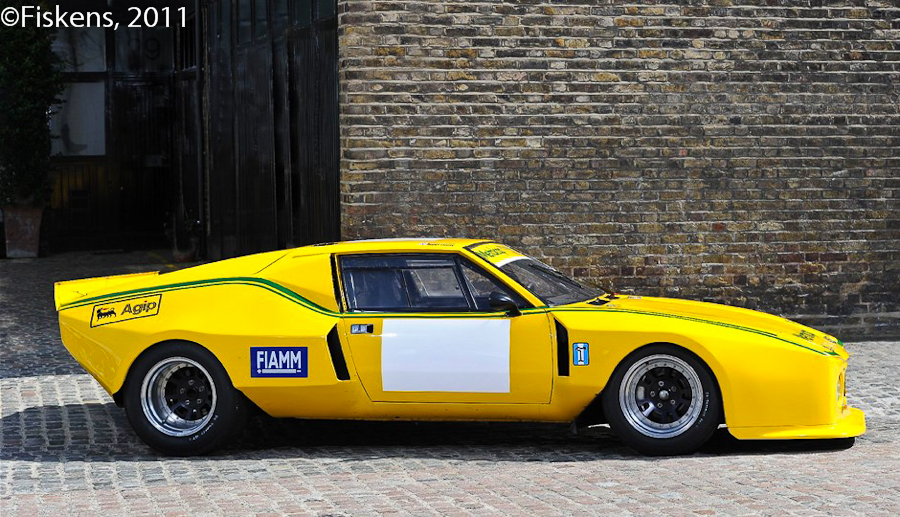
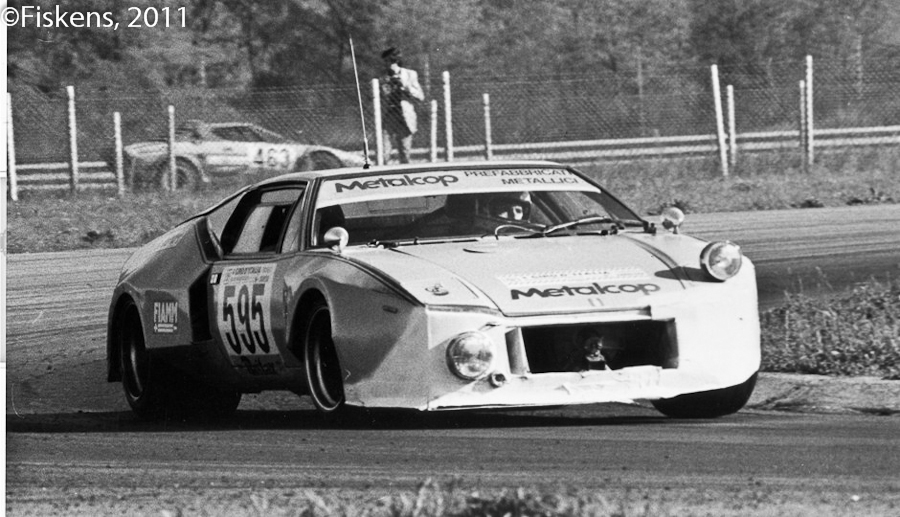
The mid 70’s Group 4 & 5 regulations produced some crazy concepts, none more so the Porsche 935-78 aka Moby Dick. The Italians were not going to be left out of the party and lurking near the back of one of the rooms was a bright yellow De Thomaso Pantera in full Group 5 spec.
As the description goes:
Chassis 02343 was sold new to the Italian Vincenzo ‘Pooky’ Cazzago, Italy who had it prepared by Scuderia Brescia Corse. Under his name, the Pantera was then entered at the following races:
April 1972 – Montlhéry – Cazzago – 13th overall

April 1972 – Monza 1000km – Cazzago/Casoni – 5th overall, 1st in class

June 1972 – 24 hours of Le Mans – Cazzago/Casoni/Pasolini/Moretti – DNQ

June 1972 – Monza Coppa Gran Turismo Speciale – Cazzago – 1st overall

Sept 1972 – Monza Coppa Intereuropa – Cazzago – 6th overall
After the 1972 season 02343 was sold to Gianpiero Moretti for the Momo Racing Team to use. Moretti raced 02343 throughout the 1973 and 1974 seasons, mainly at Italian races.
In 1975, the Pantera was acquired by Ruggero Parpinelli who at the end of the season had it converted to Group 5 specification by Achilli. In this new specification Parpinelli raced at the 1976 Giro d’Italia, where he retired with technical problems.

A really nice car, might be fun to take on the Tour Auto.
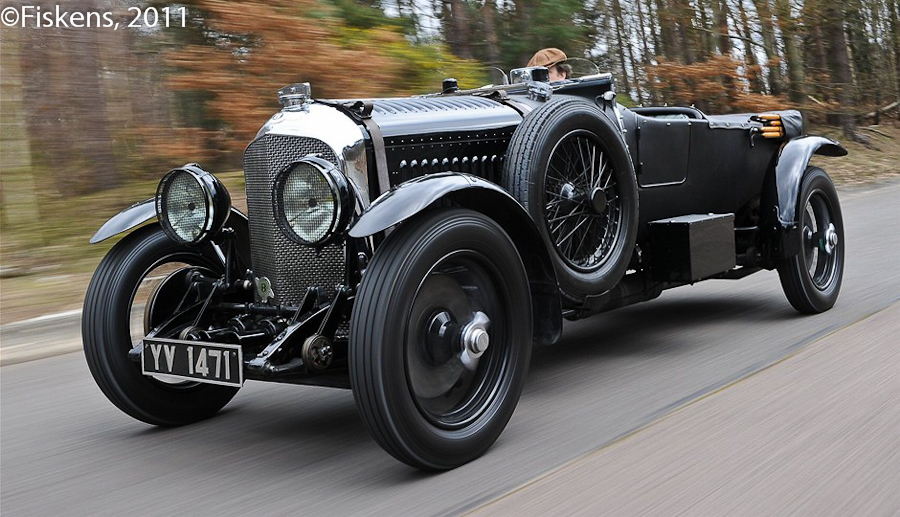

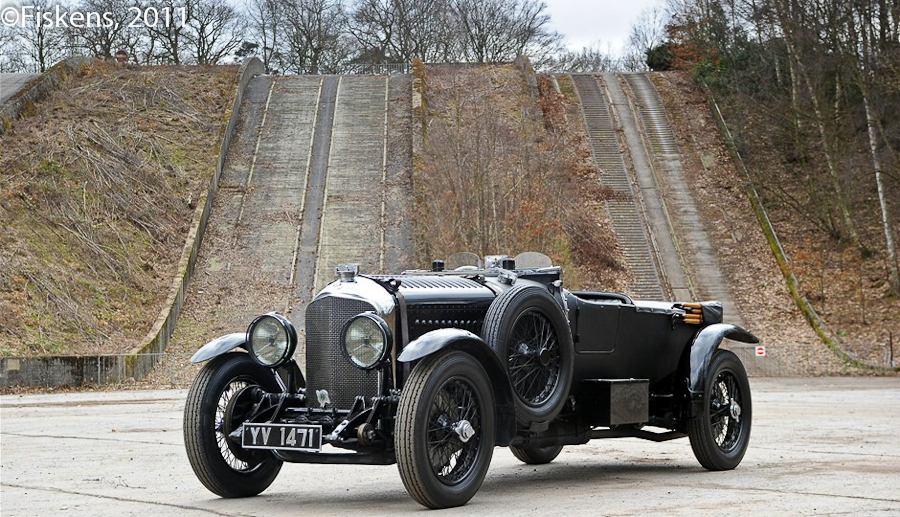
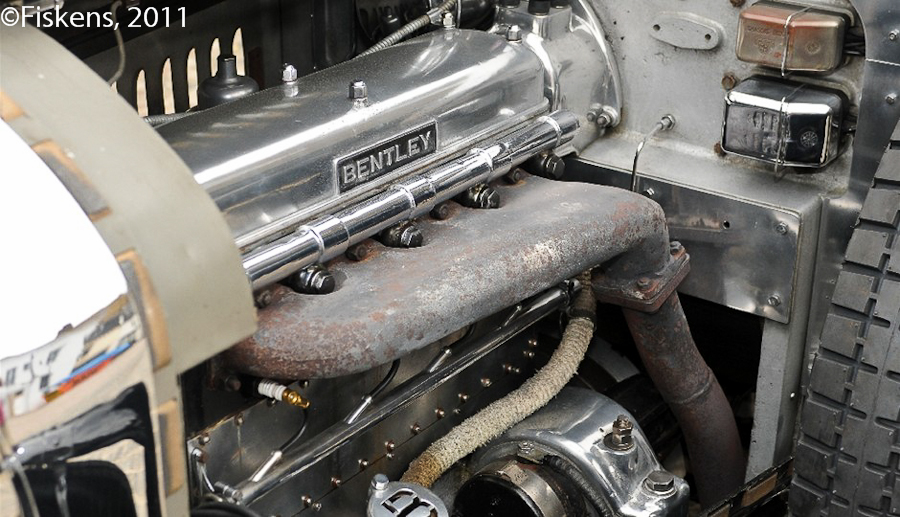
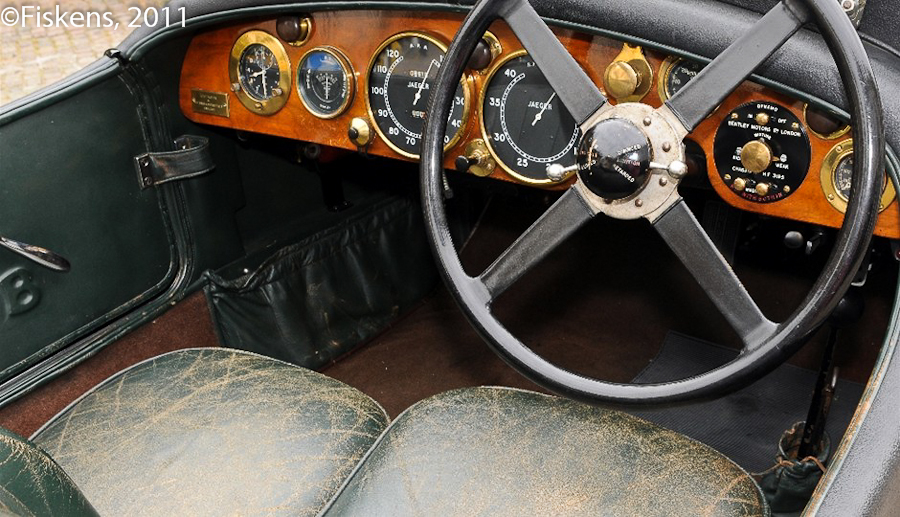
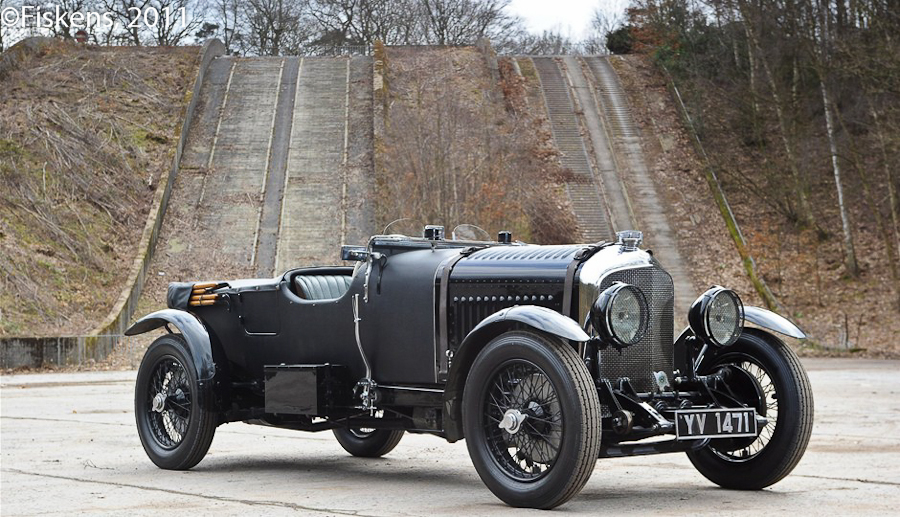
A world away from the boxy Pantera was a 1928 Bentley 4.5 litre but in its day it was an even more effective (and successful) racer.  Woolf Bernato and Bernard Rubin won the Le Mans 24 Hours in 1928 driving a Bentley 4,5 litre and the following year examples finished 2-3-4. So purchasing this car would have been the equivalent of nipping down to the Audi showroom and picking up an R18, perhaps the Bentley would be a better bet for a trip to Waitrose to shop for a few essentials.

The cachet of the “Bentley Boys” still exists today and this elegant tourer is physical manifestation of that.

This example was ordered through Jack Barclays by first owner John Mavrogordato, chassis HF 3195 passed its final factory test on 14th March 1928. Originally supplied with a long bonnet and staggered screen, Bentley records show that the radiator was chromed and Lucas P100 headlights fitted in late 1929. It is largely unchanged since its return to the factory in 1929.
A beautiful example of a pre-war classic that still look just right some 80 years on.
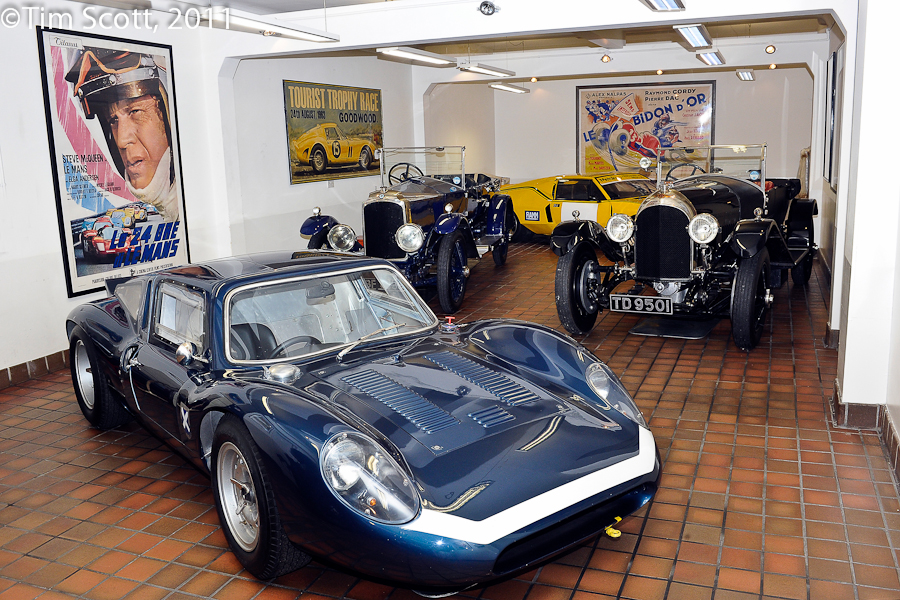

Another very interesting car was the Ecurie Ecosse Tojeiro Ford, one of the first mid-engined GTs, our Special Correspondent will be having a look at this in more detail tomorrow.
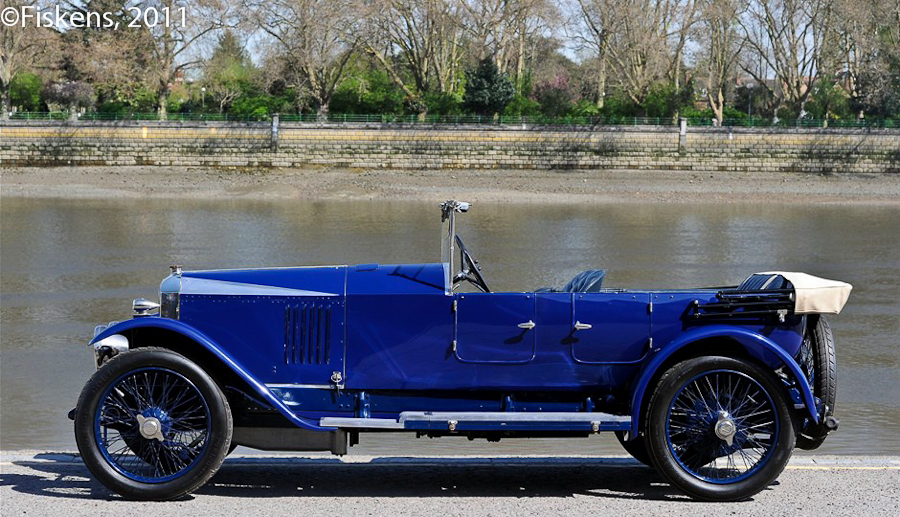

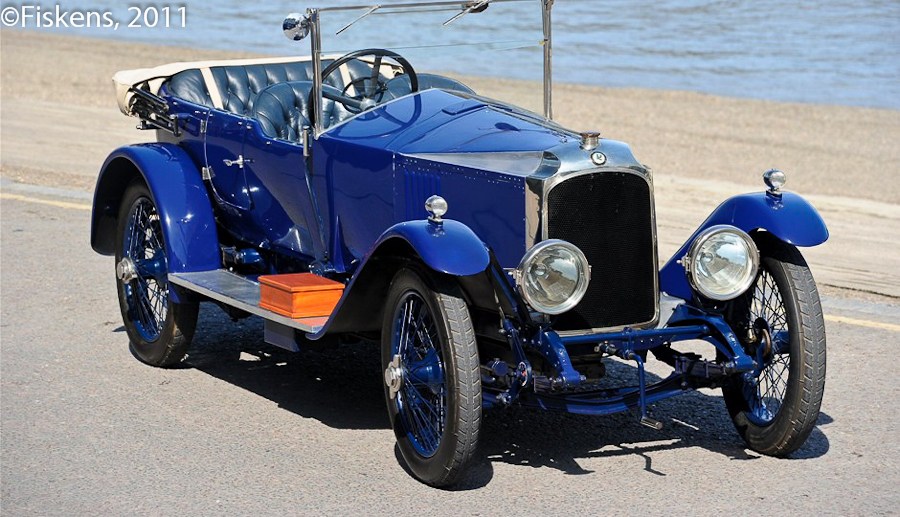
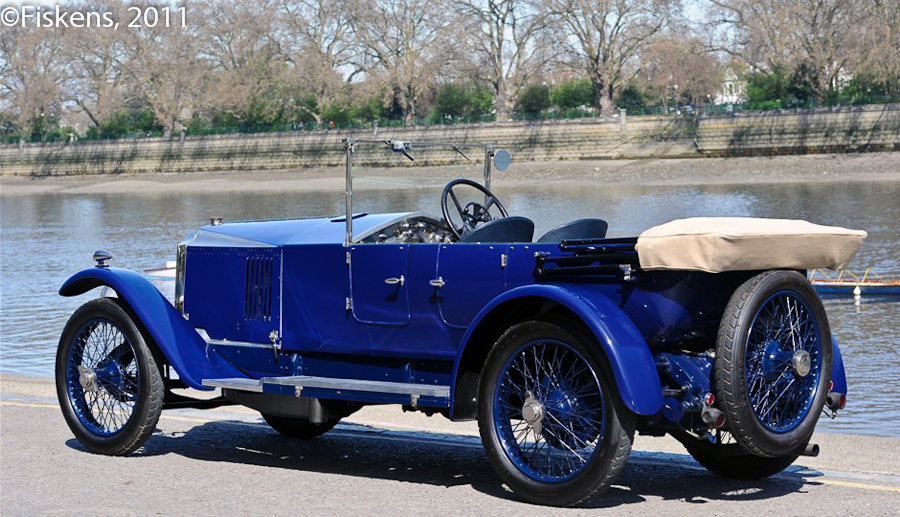
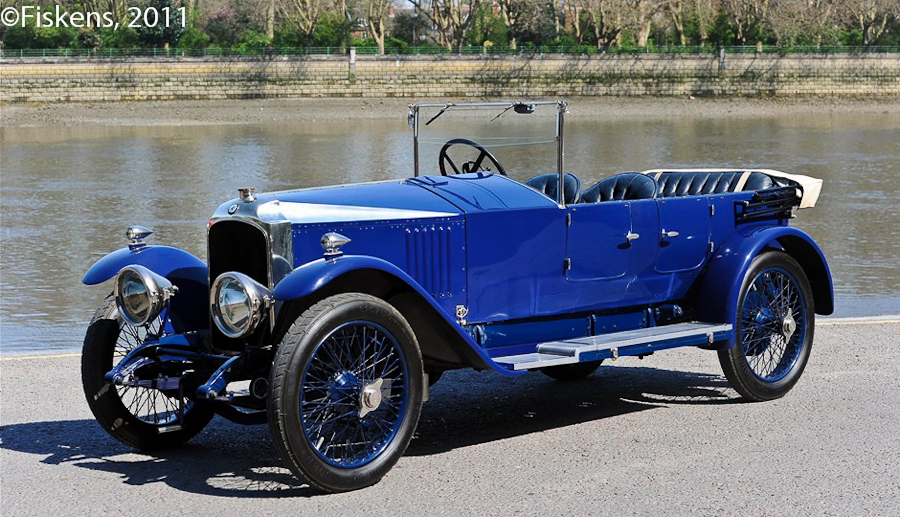
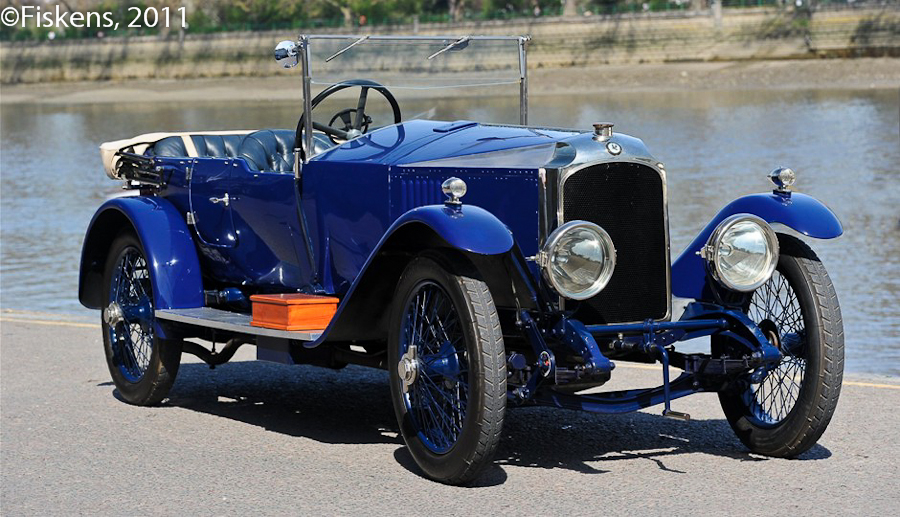
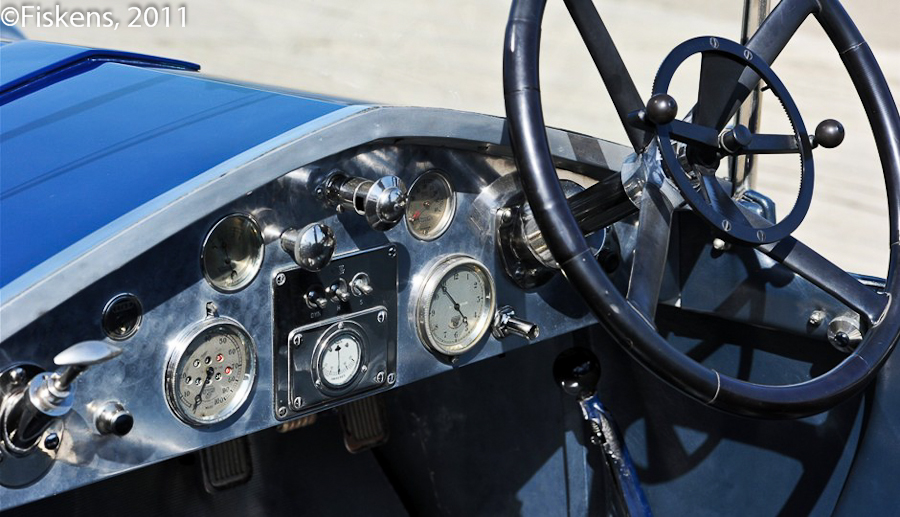
A truly British classic of the early 1920s is this Vauxhall 30/98.


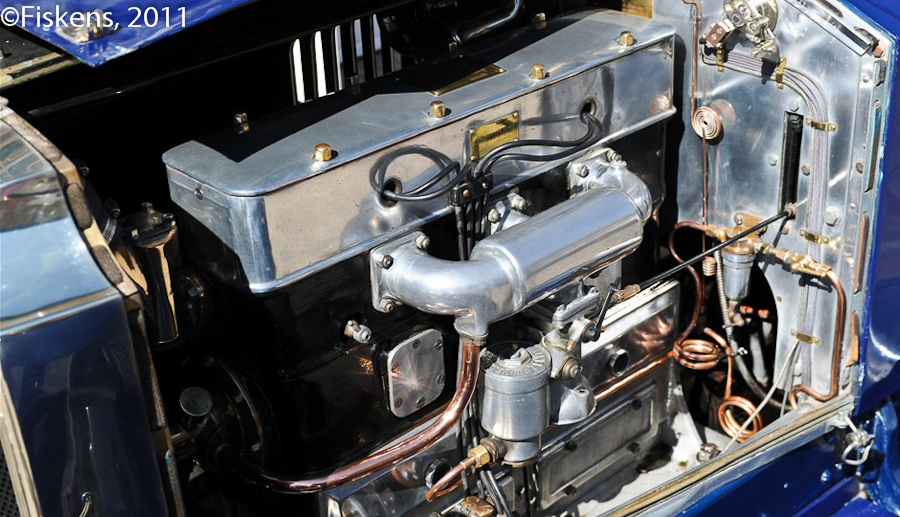
The Laurence Pomeroy designed Vauxhall 30/98, considered by many to be one of the finest engineered  British sporting cars of the Vintage period, had its heart in the 4.5 litre, four-cylinder side-valve engine that was mounted in a conventional but lightweight chassis. As with ‘OE56’, many were fitted with factory built four-seat Velox tourer coachwork which was relatively light, giving a formidable power to weight ratio for its time. A fully road-equipped 30/98 was capable of around 85mph, and when stripped for racing the company guaranteed a top-speed in excess of 100mph for the later overhead valve models, a capability that was often demonstrated in period at Brooklands.

Of the total production numbered at 312 cars, a large proportion were exported to Australia, and we understand ‘OE56’ to be one these. The earliest known owners of ‘OE56’ were the McSweeney family of Canowindra New South Wales, who owned it from 1945 to 1955 when it passed to Barry Ford. Its next owner, Norm Joseph, sold the Vauxhall to Jim Cuthbert in 1958 and Jim in turn passed it on to Barry Burnett in 1961. The Rainsford family acquired the car from Barry in 1968 and retained it until earlier this year.
Having spent all of its life in Australia under the ownership of true enthusiasts, this splendid early ‘OE’ has retained all of its original features. Finished in Royal Blue with matching leather interior, ‘OE56’ represents a wonderful opportunity to acquire a handsome example of what is considered by many knowledgeable enthusiasts to be one of the finest British sporting cars of the Vintage period.
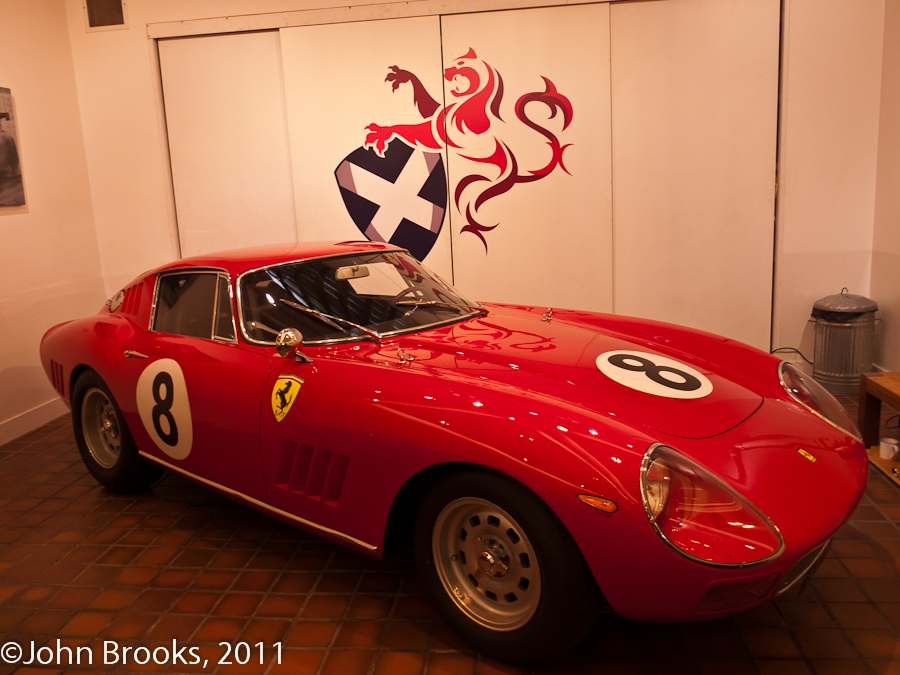

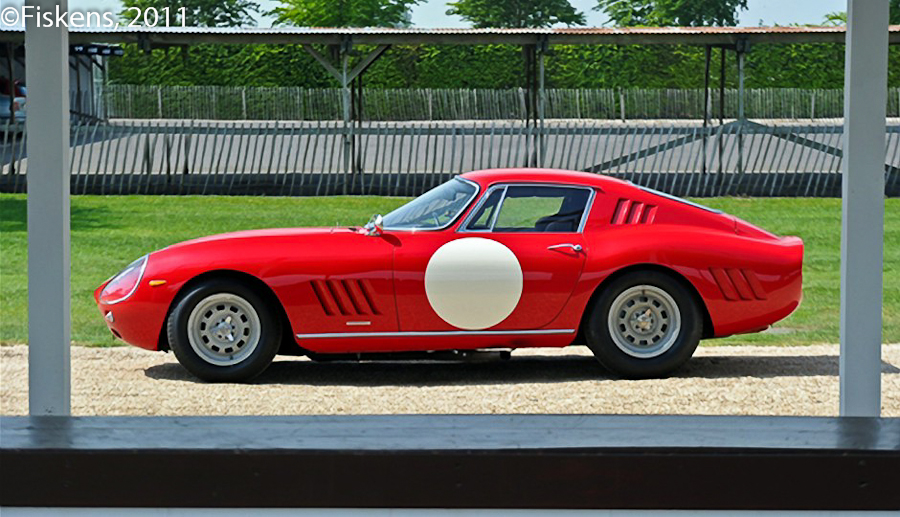
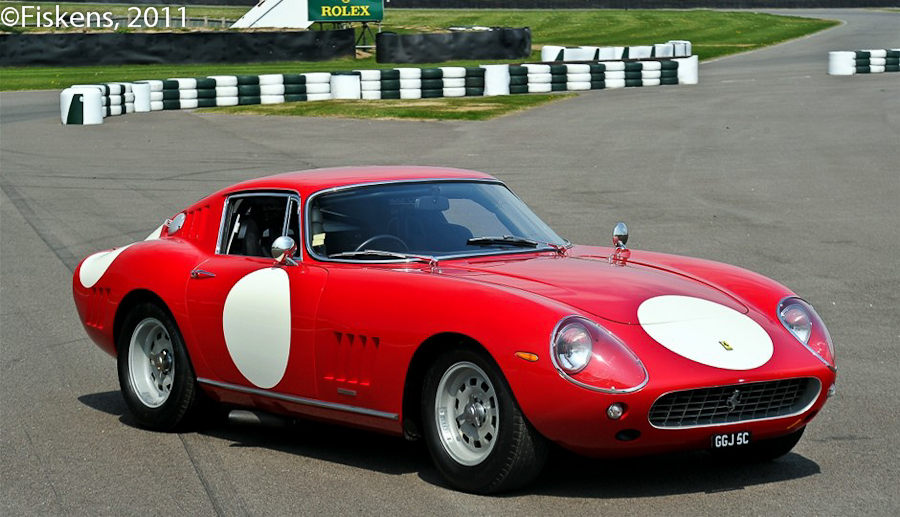
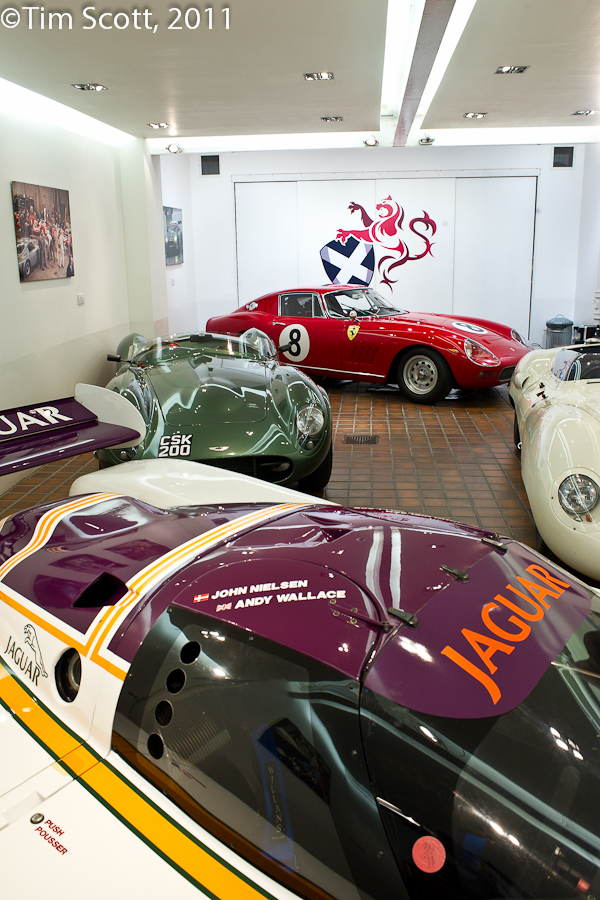
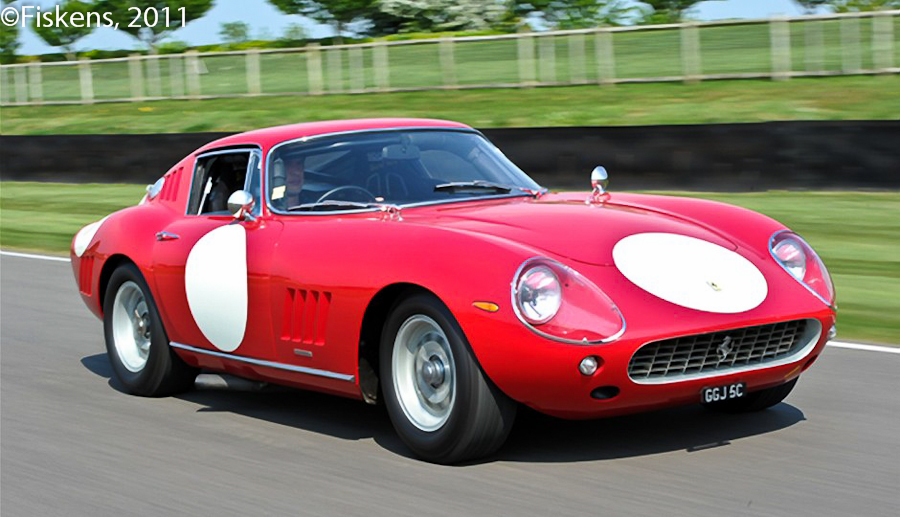
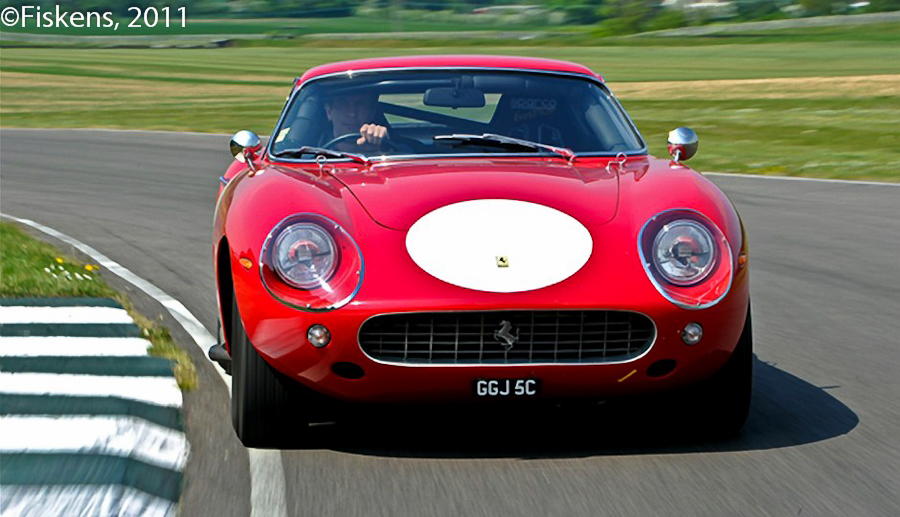
What collection of classic cars would be complete without a Ferrari? So the bright red example of a 1965 Ferrari 275 GTB/C Competition sitting under the Fiskens’ logo was most appropriate.


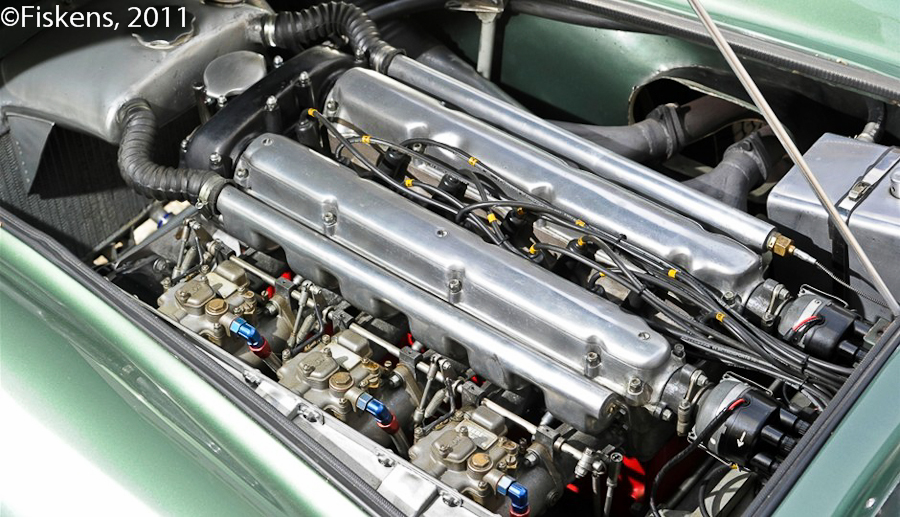
The latest arrival in our London showrooms is one of the rare and highly sought after 275 GTB/C Competition models built by the Ferrari factory for the 1965 season. Although these competition cars looked similar to the road cars, from nose to tail, the differences were significant. They featured ultra lightweight aluminium bodies, six carburettors on a full competition engine along with other details such as outside fuel fillers as well as extra body louvers. Beautifully presented in Rosso Corsa and prepared, regardless of cost, to be a front running circuit racer that is still at home on the road, this 275 GTB/C has successfully participated in all the major events including Goodwood and Le Mans Classic.
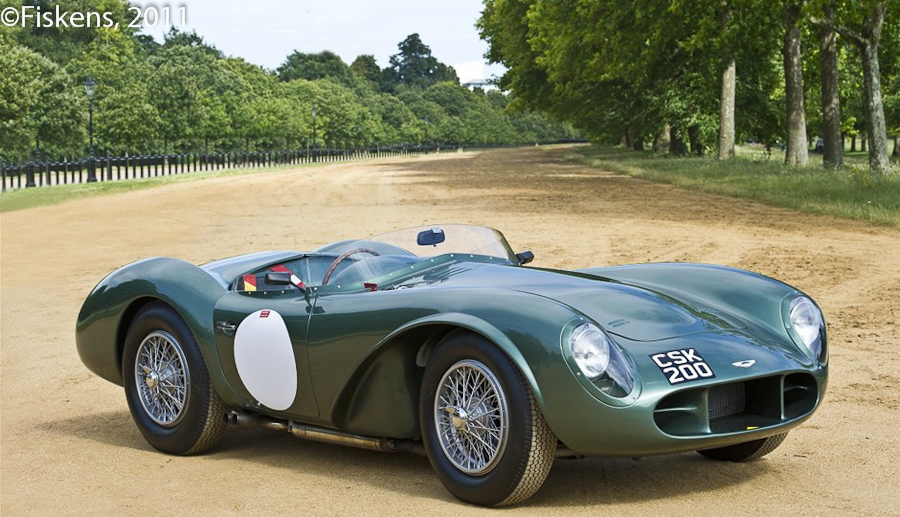

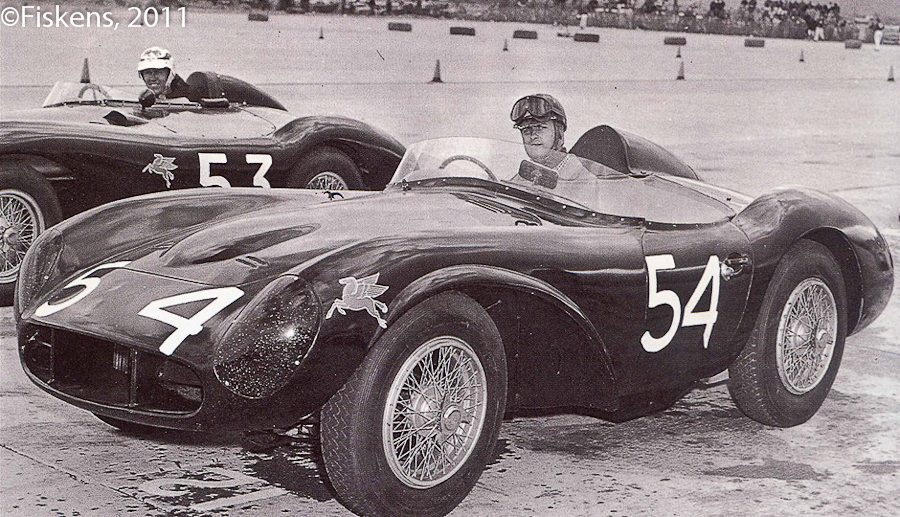
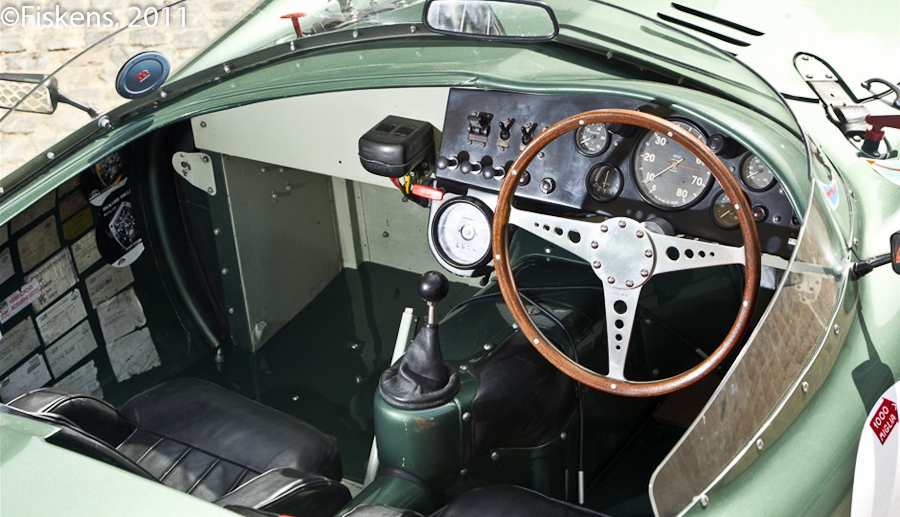
From an Italian classic to a British one, arguably one of the most elegant cars ever built, a 1956 Aston Martin DB3S, utterly desirable and, for me, totally unaffordable, still we can all dream………..


Only 11 factory team cars were built for competition use with chassis 11 being the last built by the competition department. Not content with racing a production DB3S and desperate to acquire a works car, it was supplied to the up and coming young American Rod Carveth, who used his friendship with the legendary team manager John Wyer to secure chassis 11. Carveth himself flew to England and stayed at the works in Feltham for two weeks to ‘help’ with the assembly of his new race car. It was painted black and delivered to him in California in mid-August 1957 with his first event at Elkhart Lake in September, sharing the driving with previous Watkins Glen winner George Constantine.

Carveth raced extensively throughout the rest of the season at Watkins Glen, Bridgehampton, Palm Springs and Laguna Seca before sustaining an accident at Nassau when 3S/11 was sent back to the factory for repair.
He continued to race in 1958 and in the Autumn of 1959 took the car to Australia, competing at Bathurst, Orange, Fisherman’s Bend and Mount Panorama scoring an outright victory and four class wins! On his return to California, the Aston was sold to Ed Leslie and Rod purchased the ex-works Ferrari 250 Testa Rossa, chassis 0666 TR to continue his racing exploits.
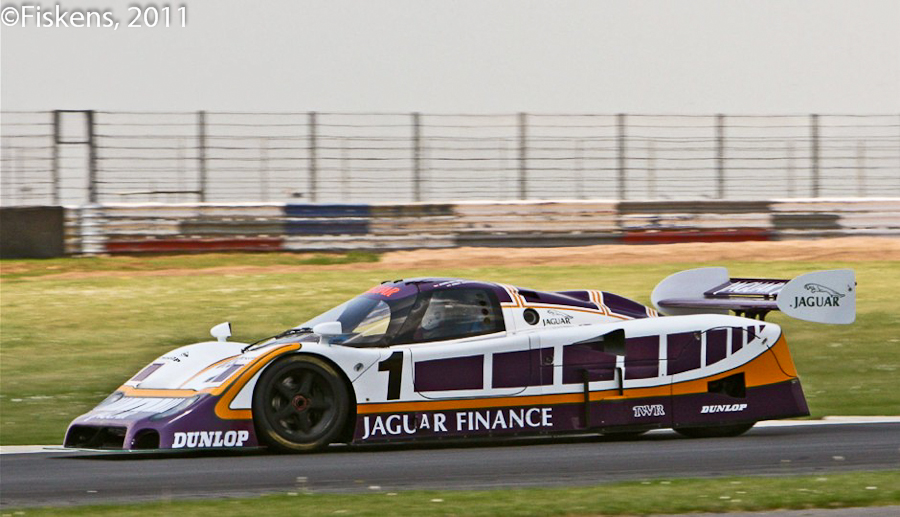
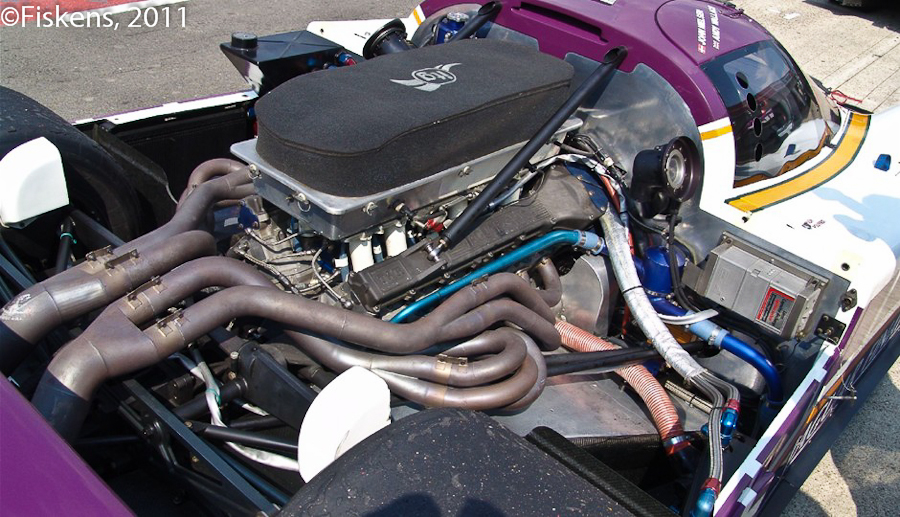
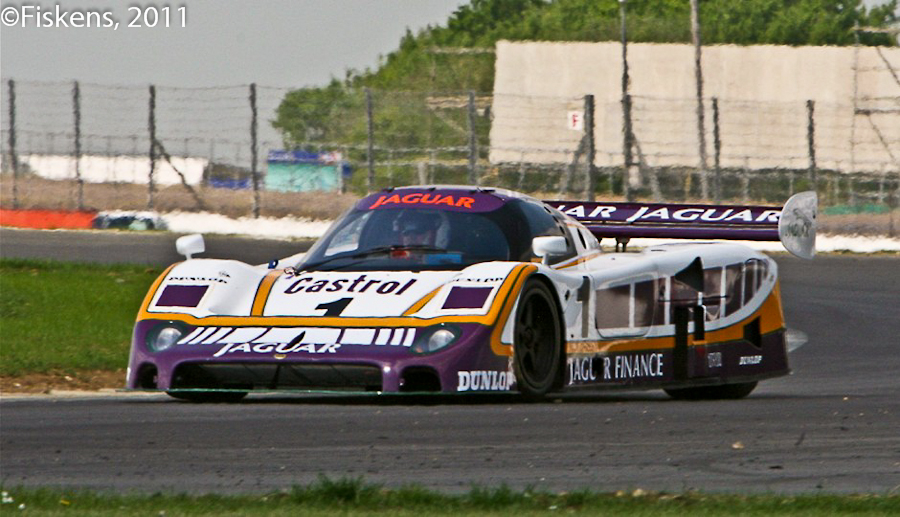
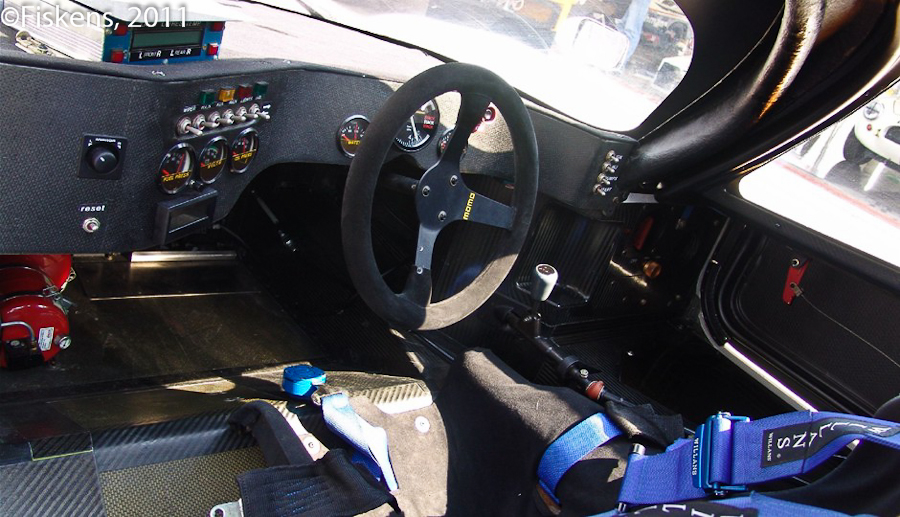
All of which sportscar magic leavesto the last my personal favourite and old acquaintance, a Jaguar XJR-9. My first major sponsor photo contract was with Castrol in 1988, so I would have followed this example, chassis 688, around in those years.
Chassis J12-C-688 was one of the famous Silk Cut Group C Jaguar XJR 9’s of the 1988 season, the sixth and final XJR 9 built by TWR. It was raced in all but one of its six races during that 1988 season by the impressive paring of ex-Formula One ace Jan Lammers and the talented young Scottish driver Johnny Dumfries. The best result of the season came when Martin Brundle joined Lammers to come second overall  at the Spa 1000 Km’s. J12-C-688 competed in a further four races in the 1989 season, most notably at Le Mans with drivers John Nielsen, Andy Wallace and Price Cobb, who qualified it 8th, sadly retiring due to a failed head gasket.

One of the most recognisable and iconic racing cars of the 1980s, this Silk Cut Group C Jaguar  XJR 9 formed part of a racing programme that took Jaguar back to the forefront of motor racing. Chassis J12-C-688, especially with its 2nd place finish at Spa, was an instrumental part of Jaguar’s World Sportscar Championship victories of 1988 and played a central role in reinstating Jaguar as a motorsport leading manufacturer.

10/07/88 – Bruno 360 Kilometres – 3rd – Jan Lammers, Johnny Dumfries

24/07/88 – Brands Hatch 1000 Kilometres – DNF – Jan Lammers, Johnny Dumfries

04/09/88 – Nürburgring  1000 Kilometres – 8th – Jan Lammers, Johnny Dumfries

19/09/88 – Spa 1000 Kilometres – 2nd – Jan Lammers, Martin Brundle

09/10/88 – Fuji 1000 Kilometres – DNF – Jan Lammers, Johnny Dumfries

20/11/88 – Sandown 360 Kilometres – 4th – Jan Lammers, Johnny Dumfries

21/05/89 –Dijon – DNF – John Nielsen, Andy Wallace

11/06/89 – Le Mans – DNF – John Nielsen, Andy Wallace, Price Cobb

25/06/89 – Jarama – 6th – John Nielsen, Andy Wallace

23/07/89 – Brands Hatch – DNF – John Nielsen, Andy Wallace

An excellent way to spend a few hours, considering what amounts to automotive art of the highest level, so thanks, Gregor, for the opportunity.

John Brooks, November 2011

Taming Porsche’s 917

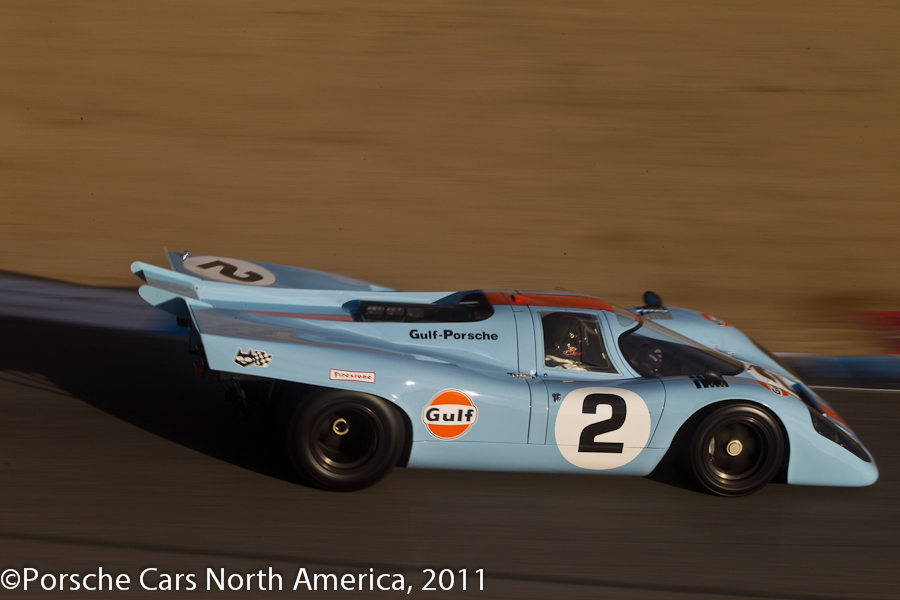
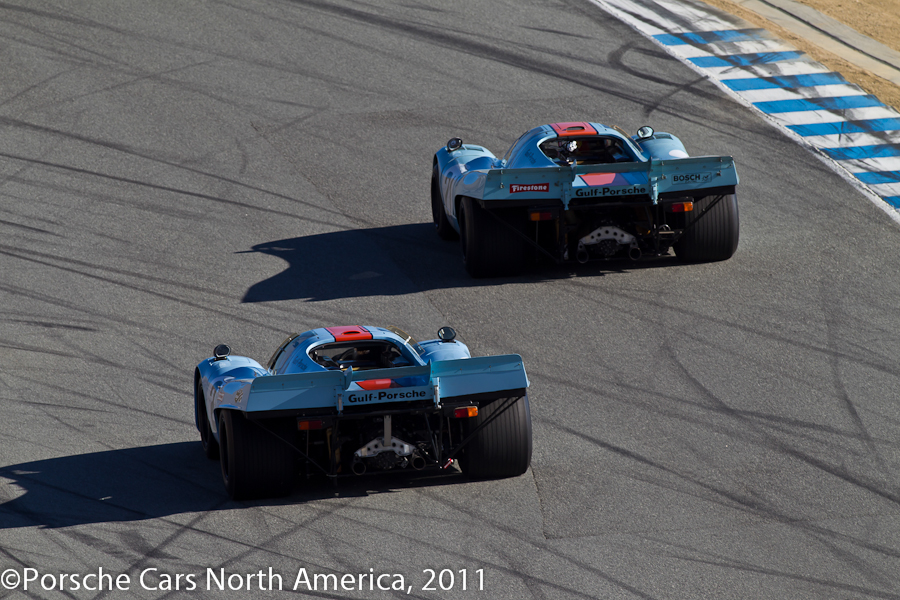
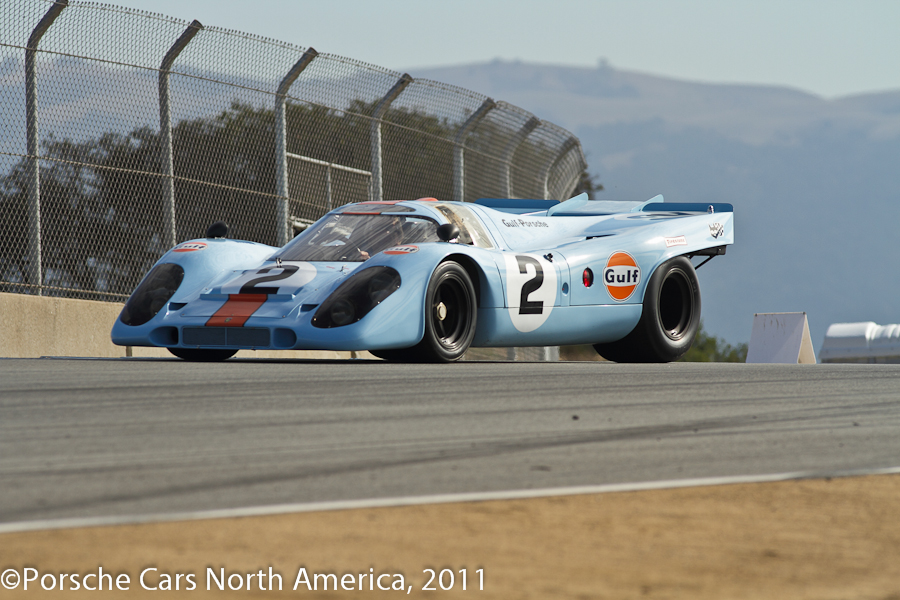
Time, circumstances and money often are the mother of compromise. Such was the case of Porsche’s iconic 917, a 12-cylinder, 230 plus mile-an-hour monster that transformed the German manufacturer from a supporting cast member to the star of the sportscar racing in the first years of the 1970s.

In sum, the 917 was a car that shouldn’t have existed, but it did; that it did so was because the men of Porsche exploited the unintended consequences of a rules loophole made by the Federation International de L’Automobile, the overall governing body of the sport to revamp its prototype arena.

At the heart of the matter was the FIA’s overriding desire to rid itself of the American interlopers from Ford and Chevrolet, which trounced their European opposition at Le Mans and elsewhere during the mid 1960’s. After Ford’s second straight Sarthe triumph in 1967 with its seven-liter V-8 Mark IV GT40, the FIA, with less than six months’ notice, summarily slapped a three-liter displacement cap on the sports racers running in the World Manufacturers Championship.

This may have made the governing body happy, but not its promoters, who feared the wouldn’t be enough of the topflight entries to attract the public. To alleviate those fears, the FIA added a second tier prototype division which permitted engines of up to five liters, the caveat being that at least 50 examples of any particular car had to have been built.

What the FIA had in mind were the older, original Ford GT40s which used Dearborn’s small block V-8, and there Lola T70 coupe counterparts, likewise with small block Detroit power. The plan would have worked if Porsche, which was producing between 40 and 50 racers per year, hadn’t taken a closer look at the regulations and decided it wanted in.

As with anything, though, the devil here was in the details, as Hans Mezger, the head of Race Car Design at Porsche then, explains. “There were two choices for us: to build a three-liter car, or a five-liter car. With the minimum set at 50, we decided it was too costly, and therefore pursued the three-liter option which resulted in the 908 that won our first World Manufacturers’ title in 1969. However, after the FIA cut the requirement to 25 in the late winter of 1968, we changed our minds and went to work on developing what became the 917.”

Like all of its predecessors, the new 917 was evolutionary, not revolutionary, building on what had gone before. Indeed, in terms of its body shape, and tubular frame structure, it was nearly identical to the three liter 908, with the exception of having the driver’s compartment moved slightly more forward in order to accommodate the extra length of the new 180 degree V-12, with its unique central power pick up arrangement.

With nearly 600 horsepower on tap almost from the day it first went on the dyno, Mezger’s engine was a huge success. Indeed, such was its output, that the initial version had a displacement of four and a half, not five liters. Unfortunately, if the 12-cylinder was an award winning piece, the same could not be said for the rest of the pumpkin seed shaped car.

The basic problem was the aerodynamics of its low drag body which produced high speed instability, an issue which had likewise plagued the longtail streamliner versions of the 908, and the earlier 907. Using spoilers and winglets as Band-Aids, Porsche had cured much of the problems, making them competitive at Le Mans, which was the one race Porsche so desperately wanted to win.

However, those two latter prototypes were 190 mile an hour vehicles, while the new 917 could push past 230 mph with ease. At that speed, the Band-Aids didn’t work. In fact, about the only factory driver who liked the 917 was Vic Elford, who, as he put it, “knew from the moment I first saw it that I wanted to run it at Le Mans because, in my mind, it truly had the potential to win.”

Even so, Elford was not unaware of the 917’s aero issues. “Going through the ‘kink’ on the Mulsanne straight at Le Mans where you were doing well over 230, you had to be very careful getting off the throttle and onto the brake, lest the back start steering the front.” And, make no mistake about it: Porsche’s primary intention for the 917, like Elford’s, was to claim the company’s first outright victory in the 24 Hour classic.

Again Mezger:
”The most important thing for us was to win Le Mans. We believed that the longtail was the correct way to go if we were to accomplish that. And I think the fact that Elford and (Richard) Attwood had a commanding lead when they retired after 22 hours in 1969 proved we were correct in maintaining the same basic shape of the earlier cars.”

That was the good side of the equation. The bad was that unlike the 907s and 908s which came in a distinctly different short tail body for the lower speed circuits found on the World Manufacturer’s schedule, the 917 would enjoy no such luxury, a fact vividly remembered by the Porsche engineer.

“Because we were concerned that if we did what we had done with the 907 and 908 using separate long and short tail bodies the FIA might make us build 25 of each, something that was too costly for us to do, we made the longtail a detachable. Section that bolted onto the 917’s short tail decklid. Because of that the decklid had to slope down towards the rear, which we knew was not the optimum for the speeds it could attain on the slower tracks. But, we had to live with it that way even so.”

Moreover, Mezger’s boss, Ferdinand Piech, who was trained as an aeronautical engineer, wanted to keep the 917’s drag as low as possible, despite the fact that its horsepower, unlike that of the 907 and 908, made this unnecessary in its case. In fact the solution was simple: raise the rear portion of the short tail to form a downforce producing wedge. This curative measure had been demonstrated in July, 1969 when Jo Siffert had tested his new 917 Can-Am Spyder at Weissach.

Featuring a slightly raised, open rear tail, similar to the ones found on the McLarens and Lolas then competing in the North American championship, Siffert’s Spyder proved far easier to drive than the short tail coupes with their sloping rear decks. The problem for Mezger and his engineers was that Piech didn’t want to hear any of this.

What the Porsche men needed was for someone else to “discover” the solution and act on it. That someone turned out to be John Horsman, the chief engineer of John Wyer’s Gulf team that was contracted to race the 917 for the factory in 1970 and ’71.

In October, 1969, Horsman and company were introduced to their new car at a test session at the Austrian Zeltwig circuit where, ironically, a 917 coupe had scored the 12 cylinder’s debut triumph the previous August. Led by Mezger’s deputies, Peter Falk and Helmut Flegl, the Porsche delegation arrived with its Can-Am spyder and a truck filled to the brim with all the materials needed to revise the tails of the two coupes Zuffenhausen had brought for the session.

Horsman, who claims he ignored the Spyder completely, discovered that while the noses of the coupes and their windscreens were covered in bugs, their tails were mint, carwash fresh, with no bugs at all on the surfaces. This led to the obvious conclusion that the tails and their spoilers were not in the air stream, and that the only way to correct the problem was to raise their profile.

When the Englishman approached Mess Falk and Flegl, they were only too happy to “accept” his conclusion, opening the doors of the truck to reveal all the materials he and his mechanics would need to transform the tails. The rest is history, the revised coupes whose lap times had been several seconds down to those of the Spyder, now becoming its equal.

The next day the Porsche camp received the brass from Zuffenhausen, who may not have liked the fact that the 917’s drag had been increased, but who accepted the fact that its road holding qualities had been considerably improved. The beast had been tamed, and in the process was to become the dominant car on the Makes tour for the next two years before the FIA banned it at the end of 1971 much to the detriment of sports car racing itself.

Born amidst politics, the 917 thus became a winner through deviousness and intrigue, not to mention the curiosity that has led mankind to improve its lot in life.

Bill Oursler, October 2011
The Veritas – A Noble Effort


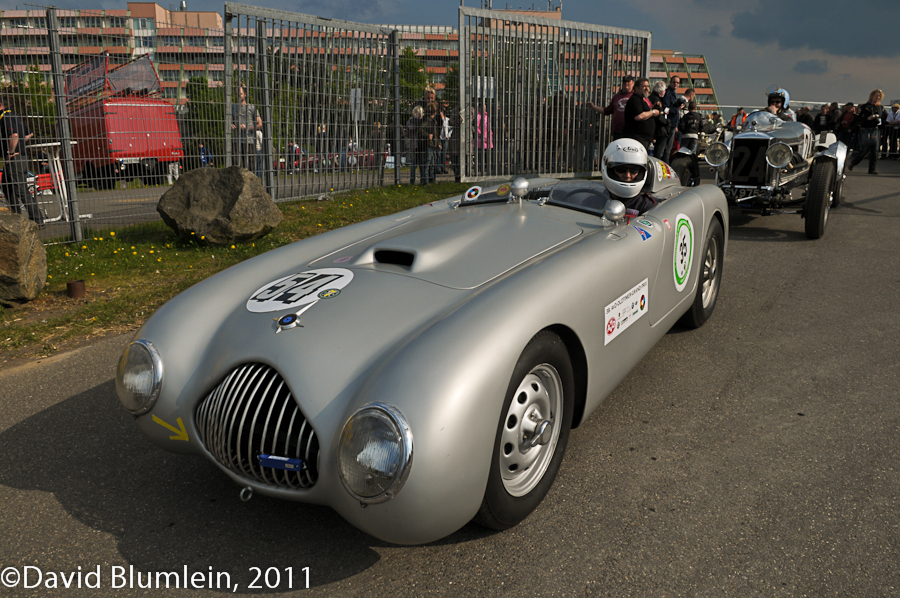
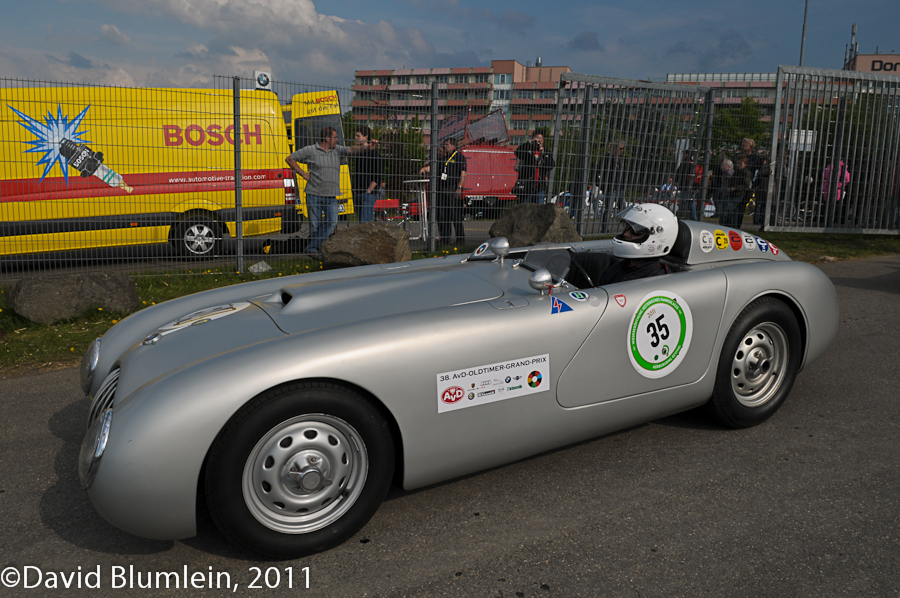
At a VLN race in April this beautiful Veritas RS was seen in the paddock at the Nϋrburgring.

At the end of the Second World War Germany’s industries lay in ruins. There was very little to support an immediate revival in motor sport except for some pre-war surviving racers, such as Bugattis, and mostly BMW 328 sports cars. But by August 1946 enthusiasts had made a re-start with a five mile hillclimb at Ruhestein in the Black Forest – it was won by the pre-war Mercédès Grand Prix star Herrman Lang in the 1940 Mille Miglia BMW Coupé.

Then in March 1947 three former BMW employees, Ernst Loof, Georg Meier (racing motorcyclist and ex- Auto-Union driver) and Lorenz Dietrich formed a company to build sports racers using the familiar BMW 328 mechanicals. They called the car a Veritas (Latin for “truth”) and basically customers would have to supply their 328s which would be stripped and re-built using a space –frame chassis based on two oval tubes, all clothed in a streamlined body; the finished product became known as the Veritas RS (Rennsport). Rising star Karl  Kling had already won the 1947 Hockenheim race in the Mille Miglia BMW Coupé when he gave the Veritas its competition début in the Eggberg hill climb – he retired with oil pump failure. But he went on to win the 2-litre German championships with Veritas, scoring five victories in national events in 1948 and seven in 1949.

It is interesting to note that German drivers were not allowed to race abroad before 1950, Germany having only joined the FIA in October 1949. So some Veritas cars found foreign owners, two for example coming to Britain for Dennis Poore and Ken Hutchison; 1938 Le Mans winner Eugène Chaboud drove one to finish a very creditable third in the Coupe des Petites Cylindrées behind two Ferraris at Reims in 1948 and Emile Cornet scored a win at the Grand Prix des Frontières at Chimay in Belgium in 1949.

There were of course only so many BMW 328 cars still  available (just 462 made at Eisenach originally) and these were now being gradually outpaced as the opposition grew. Loof therefore decided to make his own engine, a straight-six with single overhead camshaft which was designed by Erich Zipprich and manufactured by the aircraft firm Heinkel. Lack of development and consequent unreliability meant that Veritas, with limited resources anyway, struggled to survive. The company had also constructed some single-seaters to compete in the Formula 2 category and were making a series of road cars, the Komet coupé, Scorpion 2-seater cabriolet and the Saturn luxury 3-seater coupé; there was even the Dyna-Veritas with the famous Panhard flat-twin but when the company started to fall back on Ford and Opel engines the marque began to fade. Sadly Ernst Loof himself died of a brain tumour in 1956.


Veritas

David Blumlein, October 2011
Remembering Seppi…………..

Seppi

Forty years ago today I got on a couple of trains, then caught a bus on a journey to Brands Hatch. The Rothmans World Championships Victory Race was due to take place, a non-Championship Formula One event celebrating the World Titles of Jackie Stewart and Tyrrell. There was an Indian Summer back then, much like this year. So 40,000 or so flocked to the fabulous track on Kent’s border with London, all anticipating a grand finale to the 1971 season.

A Champion’s performance

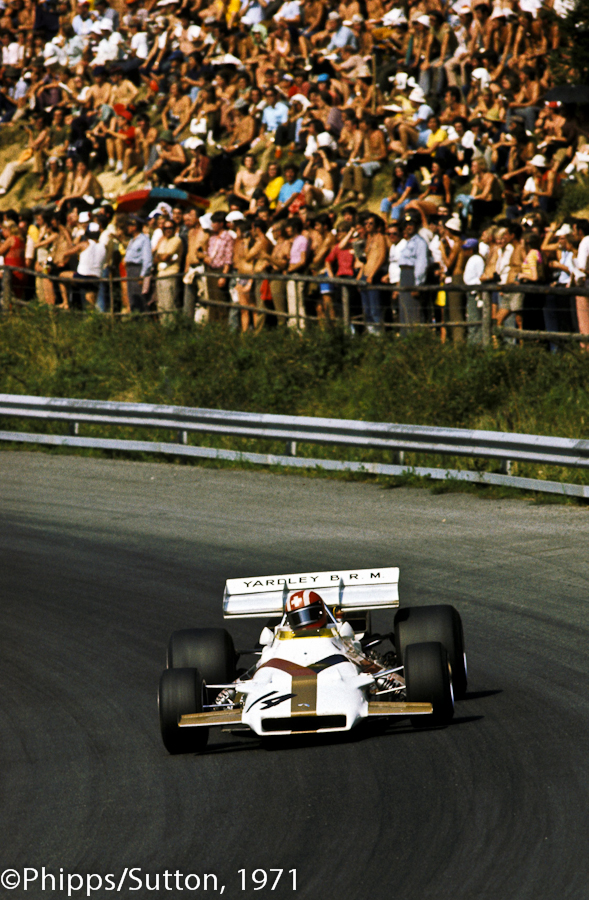
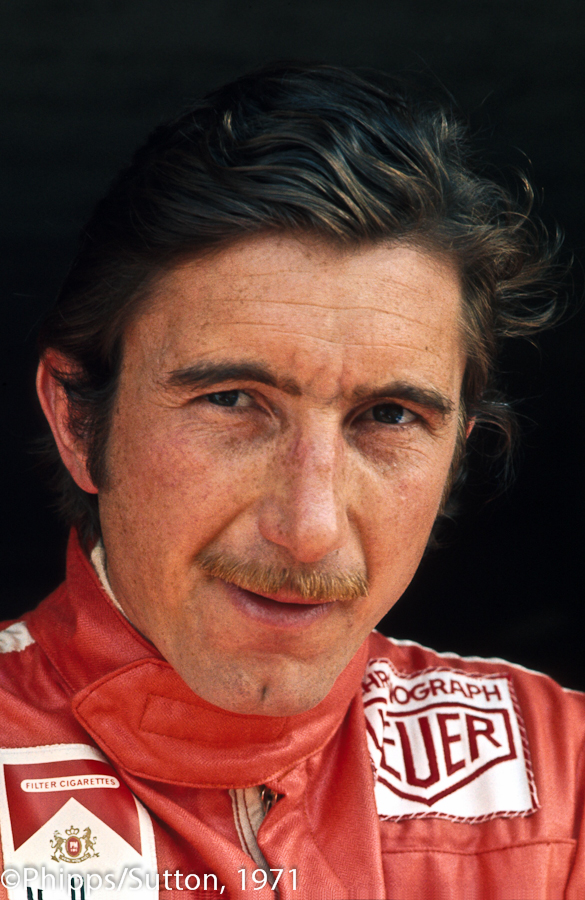
After the death of Pedro Rodriguez in July, Jo Siffert had assumed the mantle of team leader at BRM. Their Tony Southgate designed P160 was running at the sharp end by the end of the year. Siffert’s dominant victory in Austria was followed by Peter Gethin outfumbling the rest of the pack at Monza, perhaps BRM would repeat their glory days of the 60’s. It was no surprise to see the Swiss ace on pole position, maybe he could round off the year with another win. Siffert made a poor start but was recovering well till on lap 15 his BRM left the road suddenly at Dingle Dell, one of the fastest parts of the track. The impact and consequent fire were severe, Siffert was asphyxiated in the delayed rescue, his only other injury was a broken ankle.

Immortals

I had managed to see both Jo and Pedro race the awesome Gulf Porsche 917 earlier that year, though that day belonged to Alfa Romeo. Now both were gone.

RIP Jo Siffert

Today at 3.00pm there will be a memorial ceremony at Fribourg Cemetery, as there has been for many years. Friends and family will join his son Philippe in remembering one of the purest racers ever.

God Speed, Jo.

John Brooks, October 2011
All Downhill From Here

Master James

As a snapper of sorts, I am only too well aware that most of what we shoot is inconsequencial. Often the subjects do not lend themselves to greatness, sometimes we do not live up to our potential as photographers.

So when we encounter an image that has subject and execution in harmony, that catches a moment of the human condition in perfection, those of us with eyes to see salute such a photograph.

The great Henri Cartier-Bresson expressed this quality in far more eloquent terms that I ever could.

“There is a creative fraction of a second when you are taking a picture. Your eye must see a composition or an expression that life itself offers you, and you must know with intuition when to click the camera. That is the moment the photographer is creative, Oop! The Moment! Once you miss it, it is gone forever.”

Photographers are guardians of the present and the past. Through our work, those who come after us can see how we lived, how we thought and what we did. It is, perhaps, the most powerful element of the photographer’s art. Until photography and film making arrived all we had to rely on was the written and spoken word and we all know how that can be manipulated or mistaken with the passage of time.

So on a morning when there is memorial service to Dan Wheldon scheduled at Indianapolis and the news over the mojo wire is of the death of Marco Simoncelli in Malaysia, it is good to remember the pleasures of life.

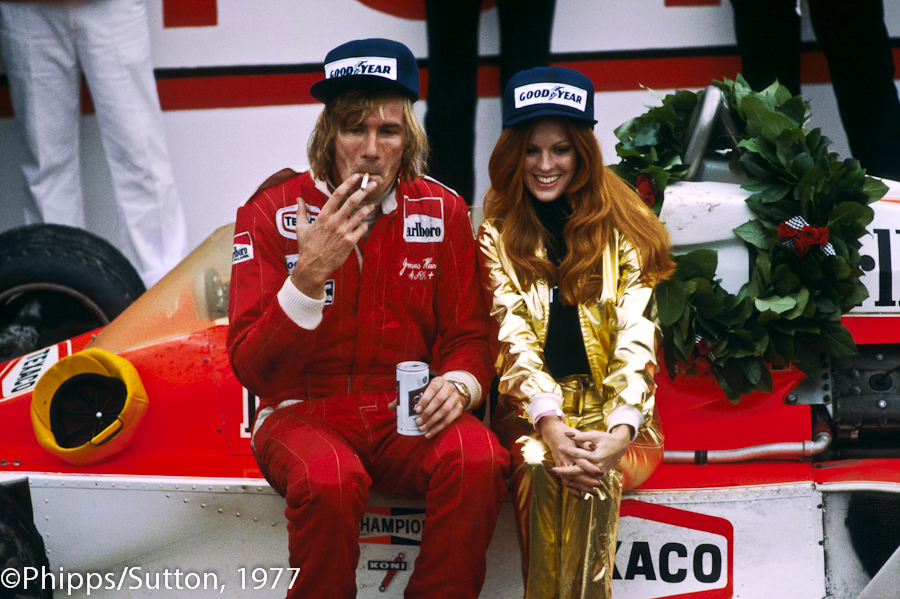
Here we see James Hunt in his full pomp having just won the 1977 United States Grand Prix. He is captured puffing on a tab, can of beer in hand, excitable Penthouse Pet at his side, it was the stuff of my dreams. And I could only dream about making images as powerful as this.

John Brooks, October 2011


The Old Meets The New

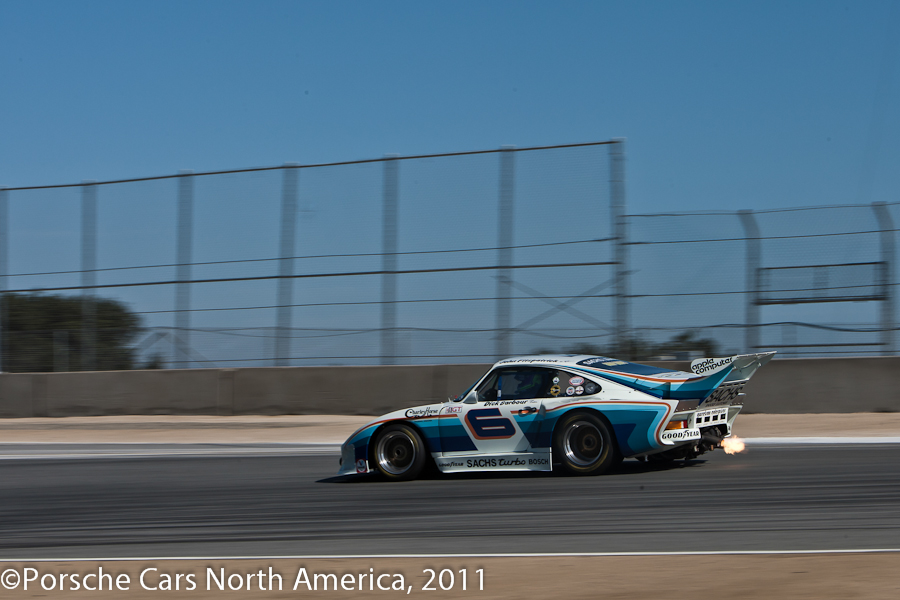
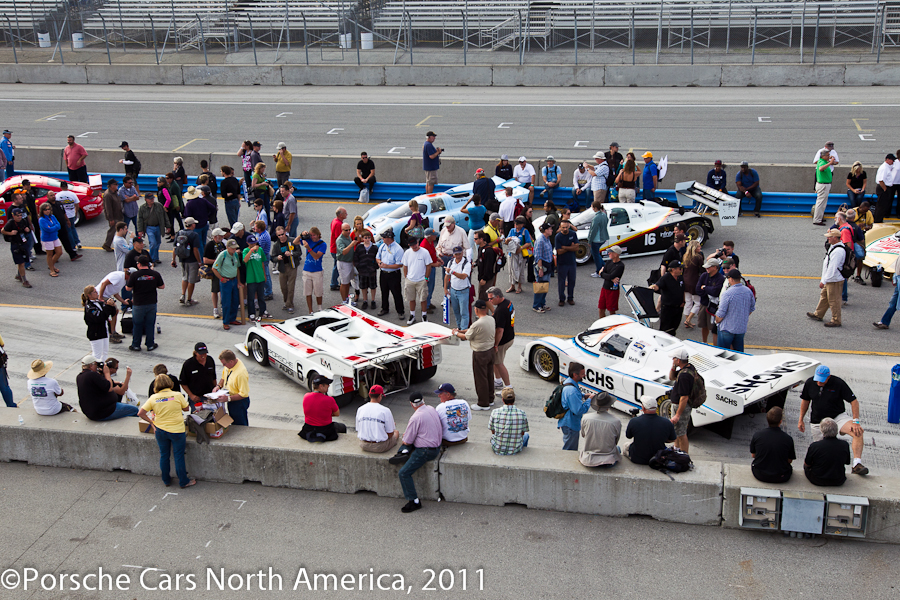
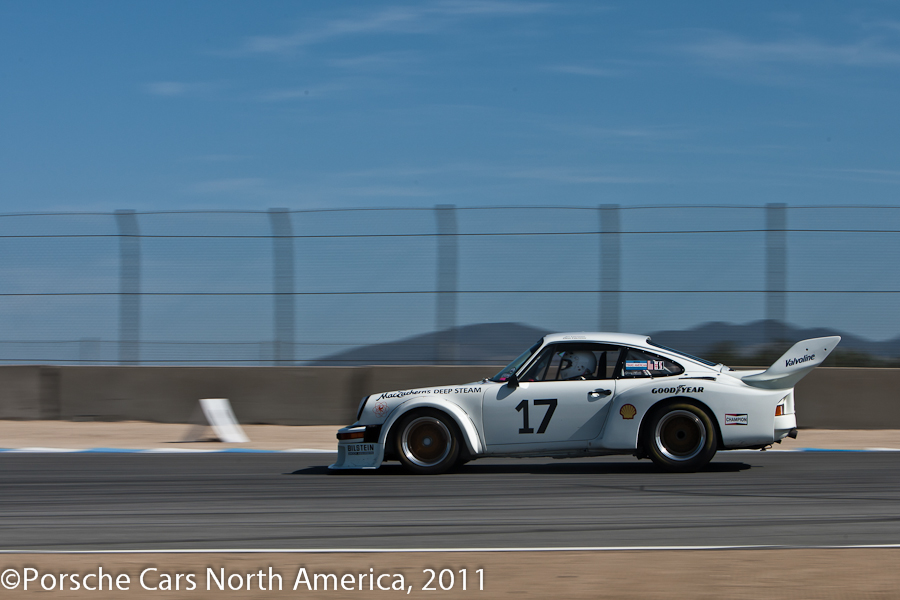
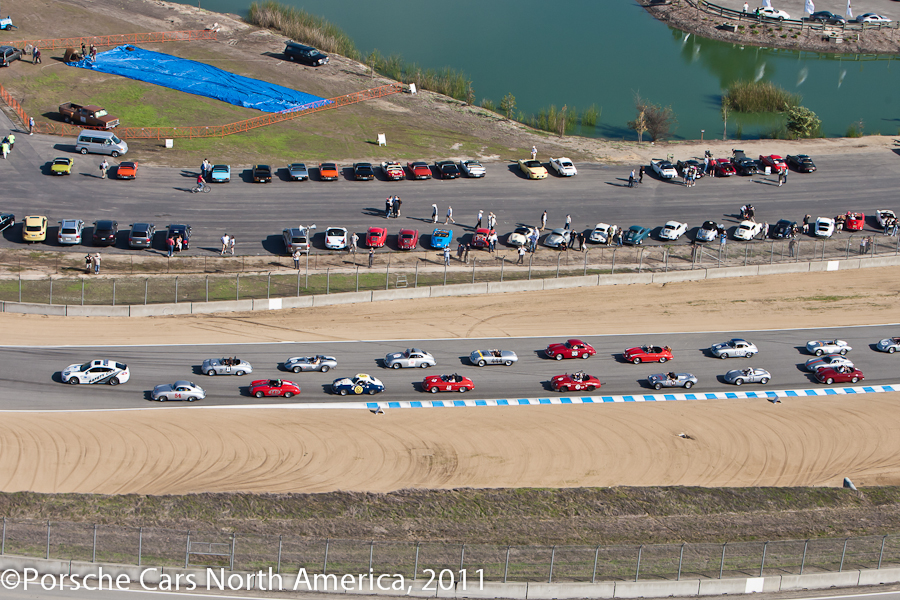
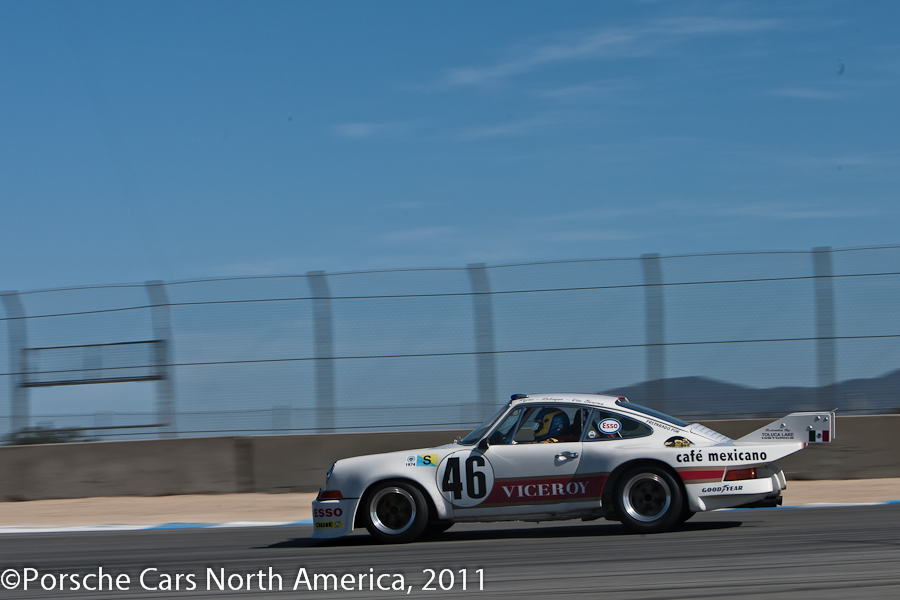
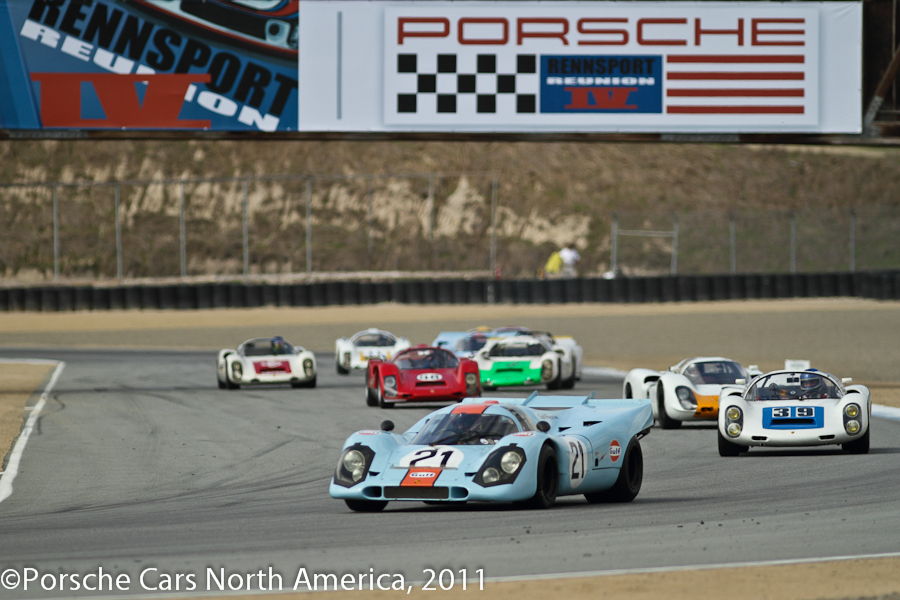
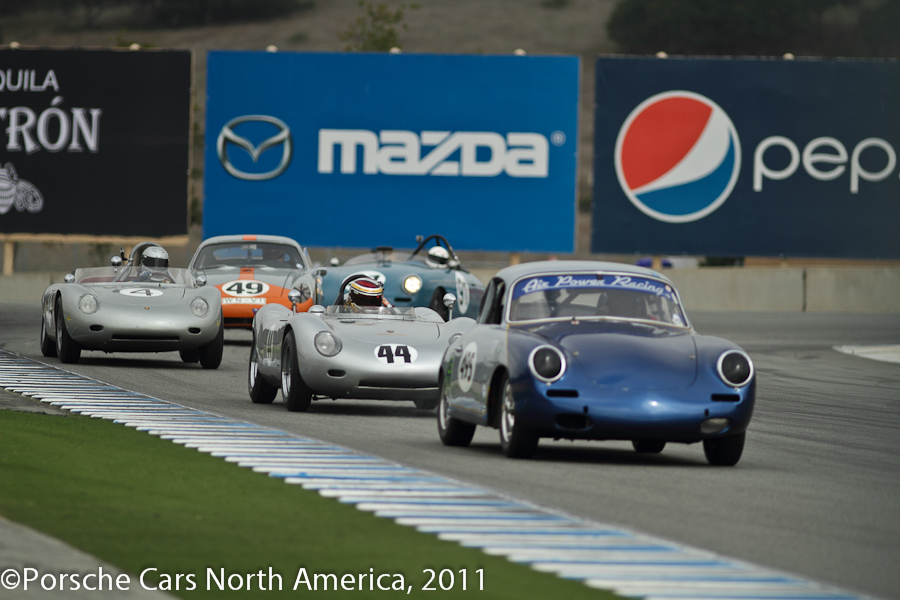
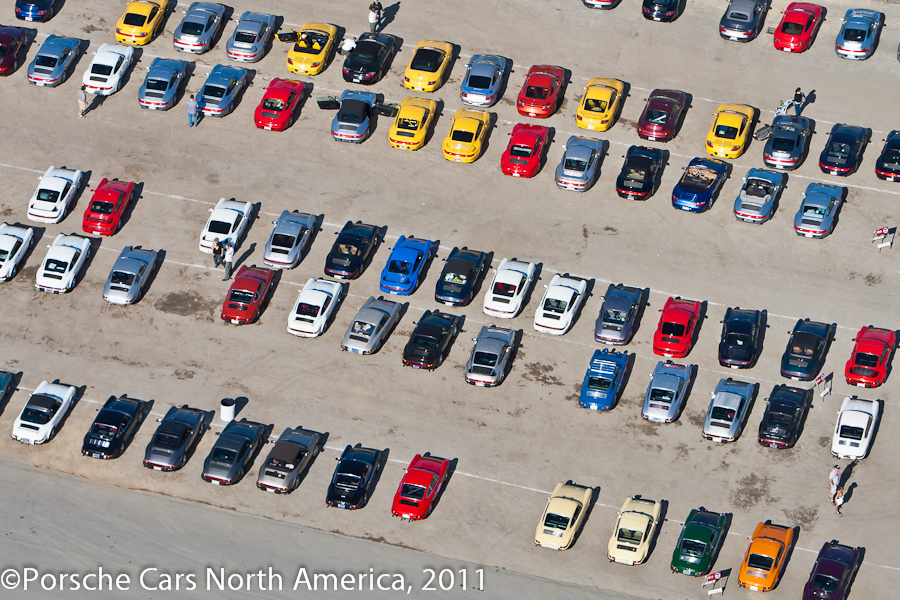
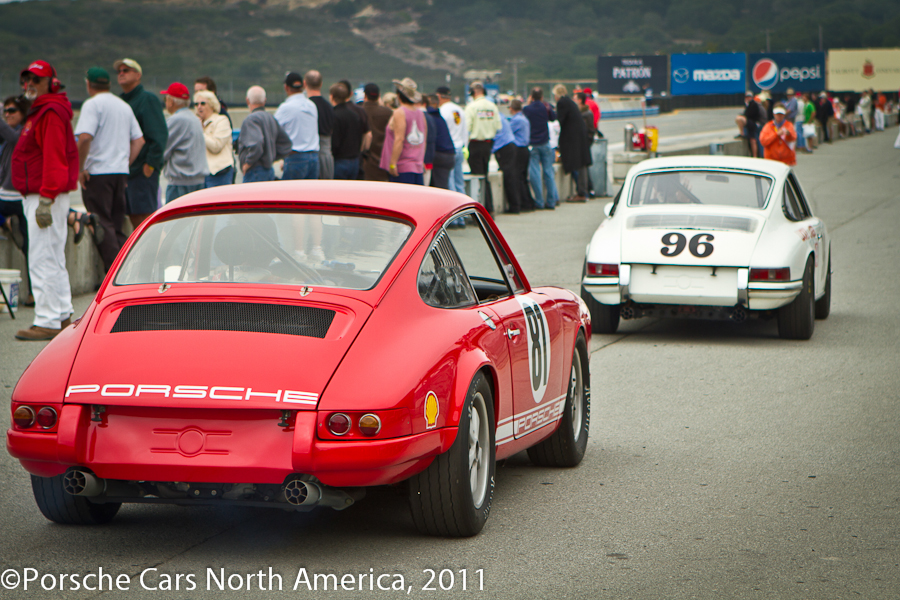
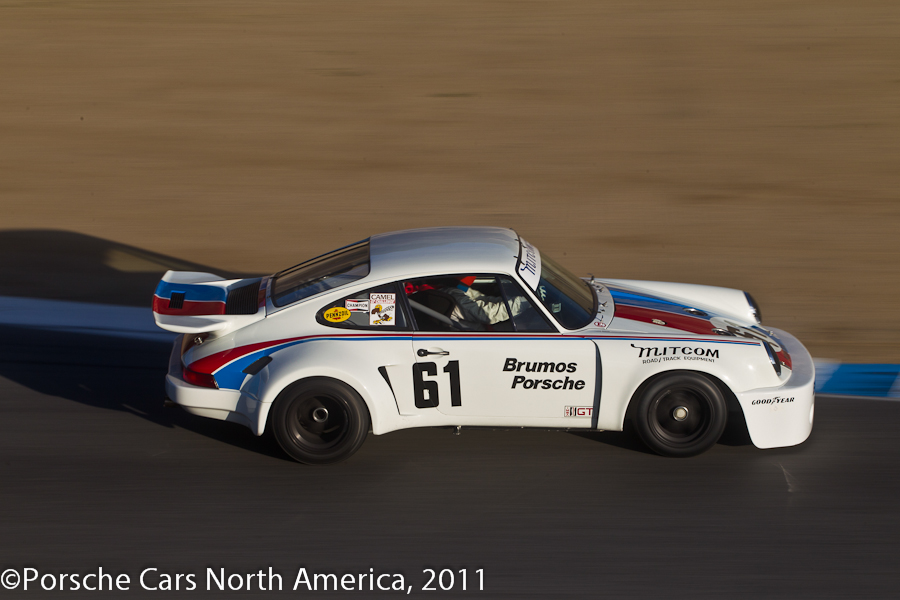
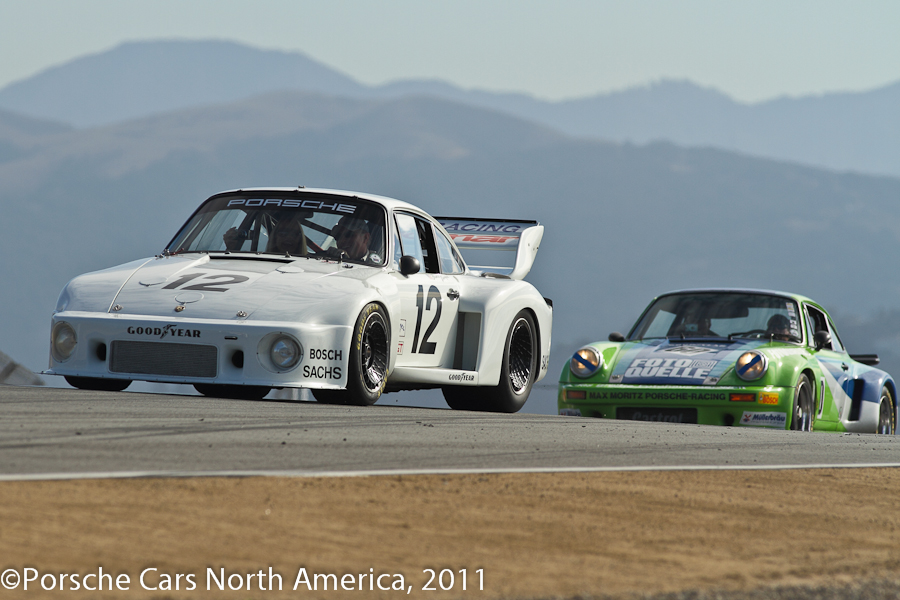
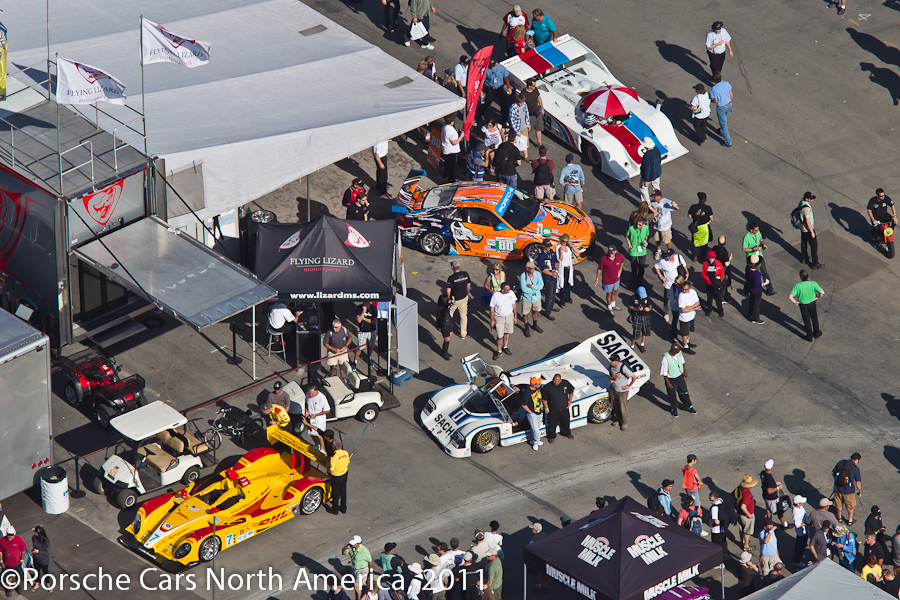
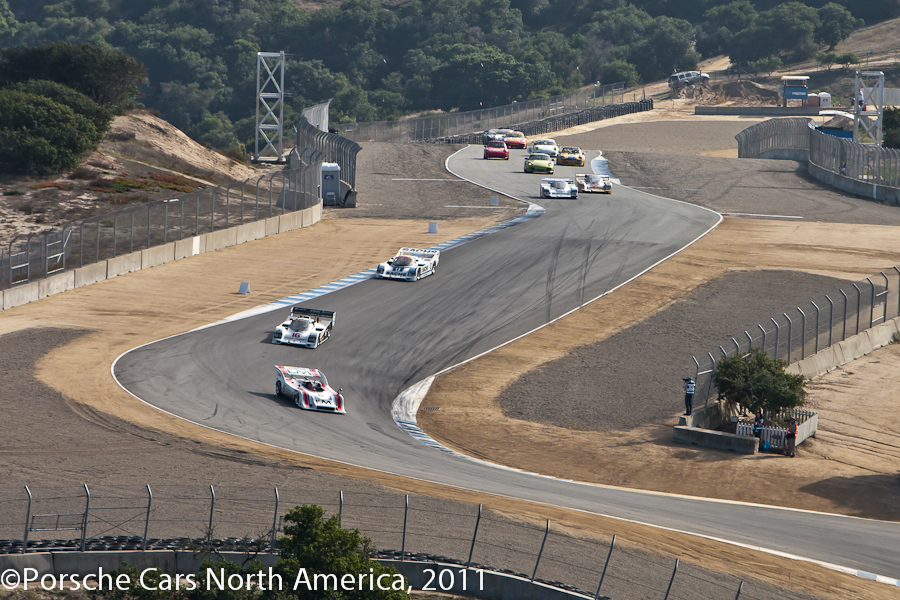
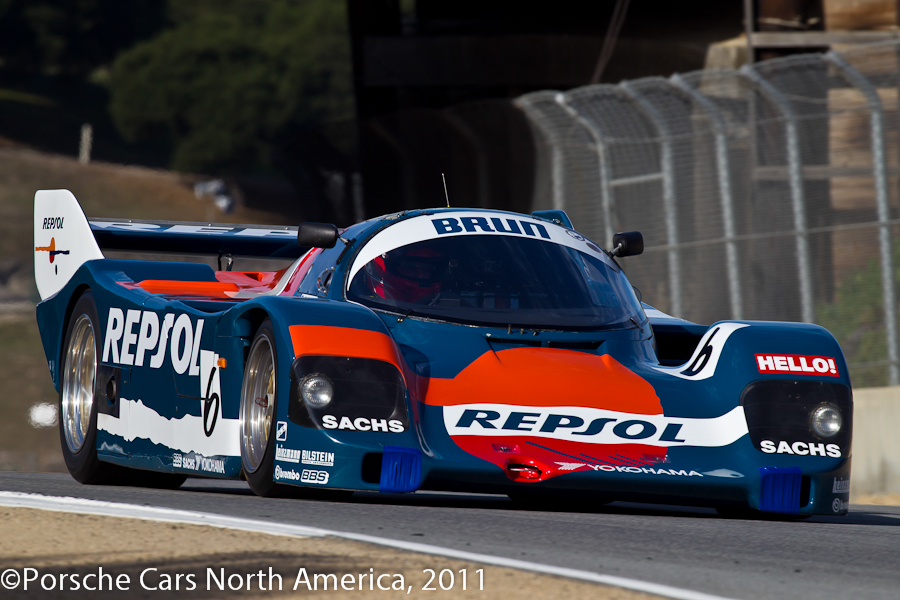
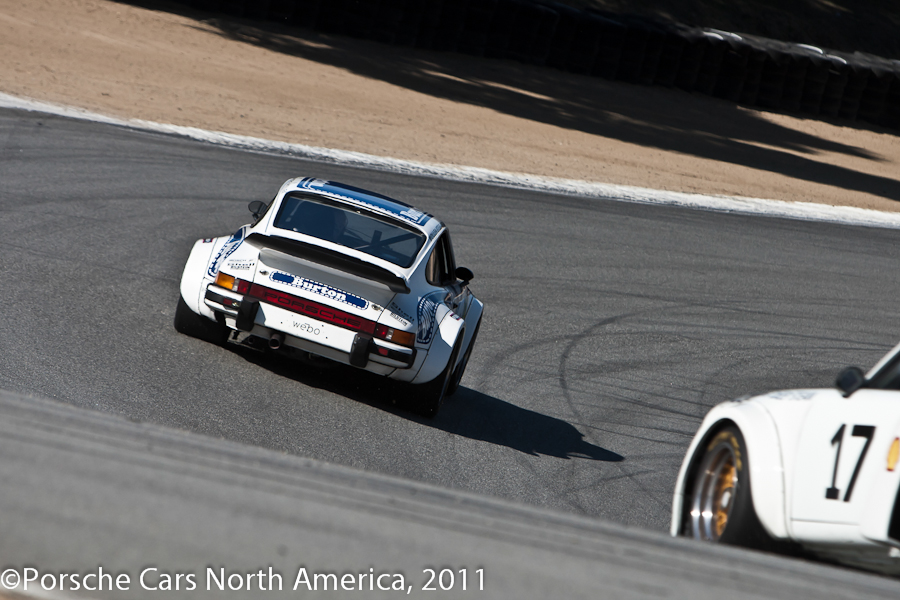
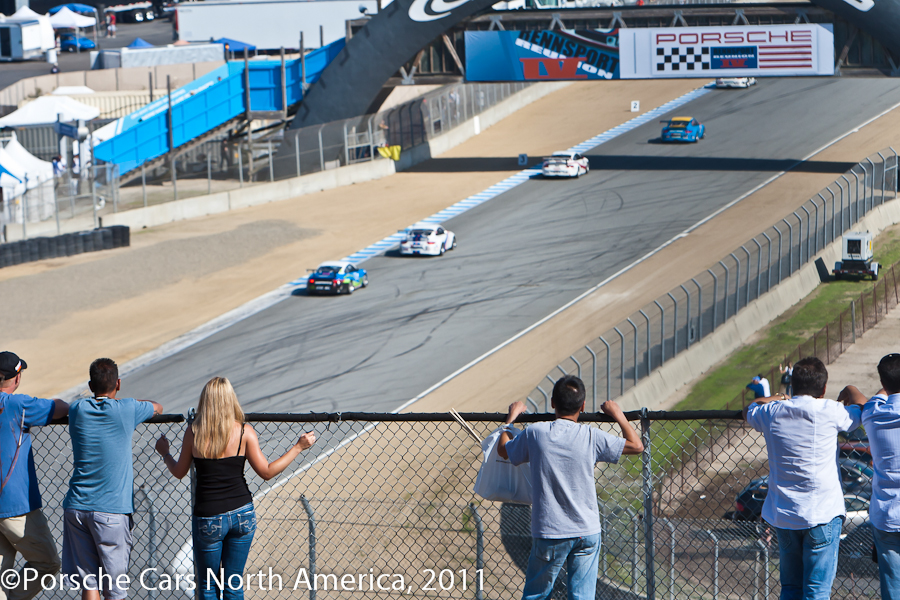
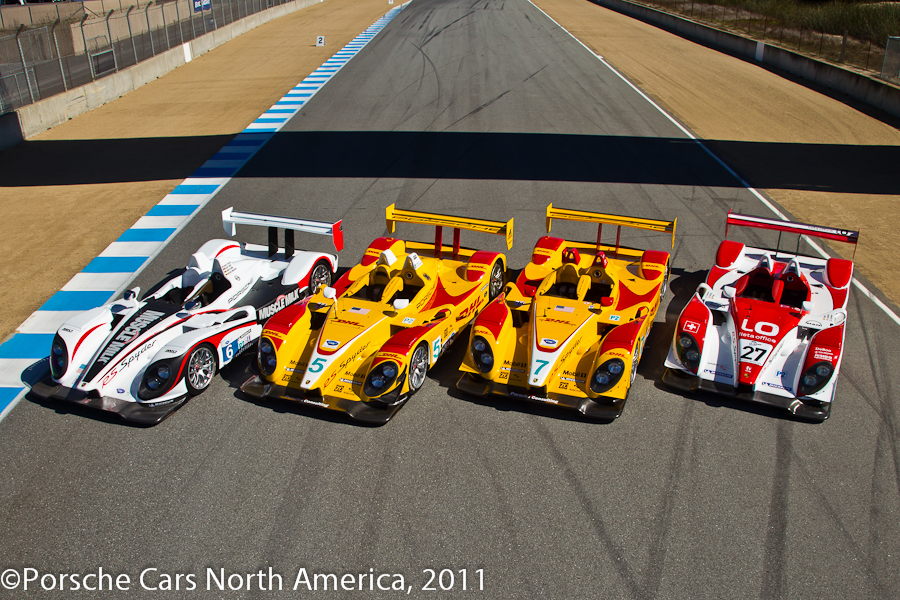
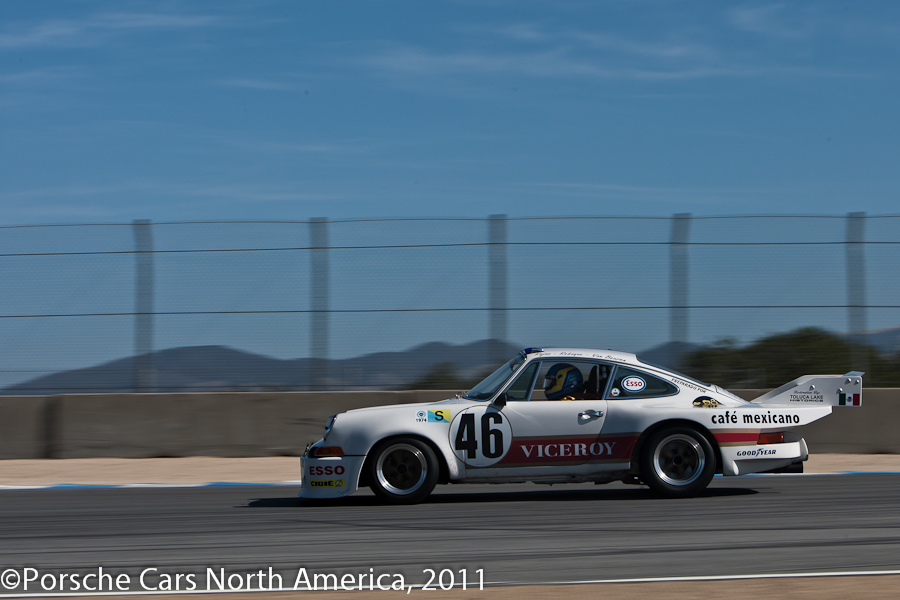
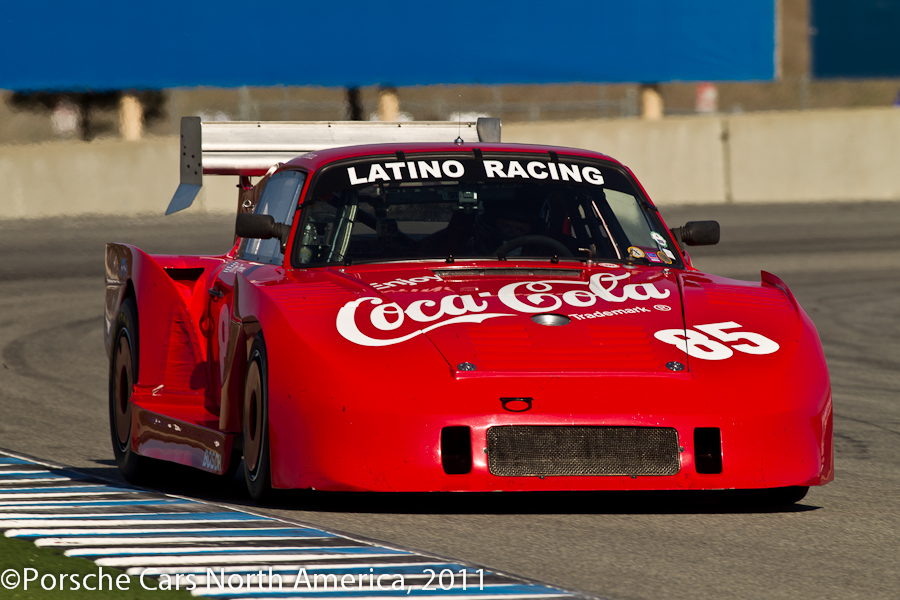
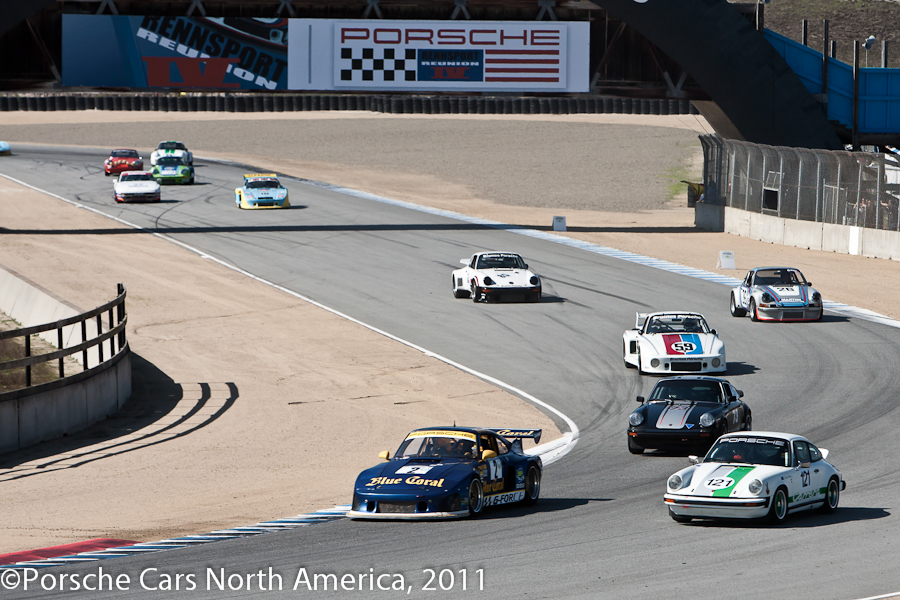
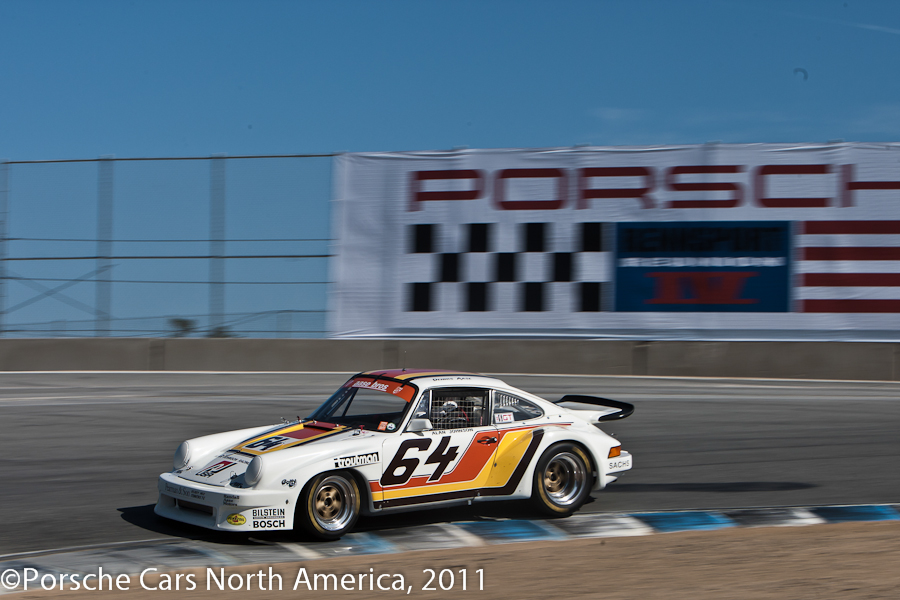
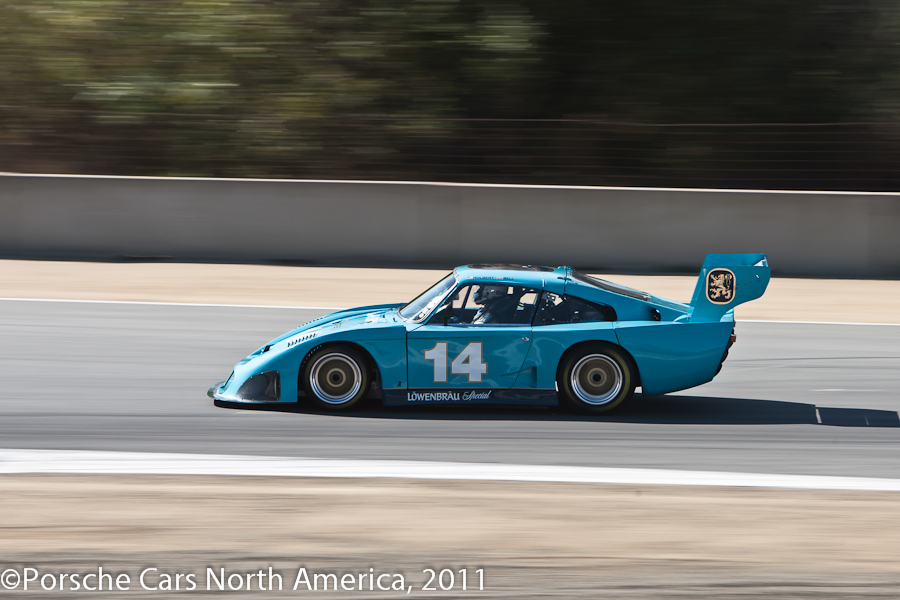
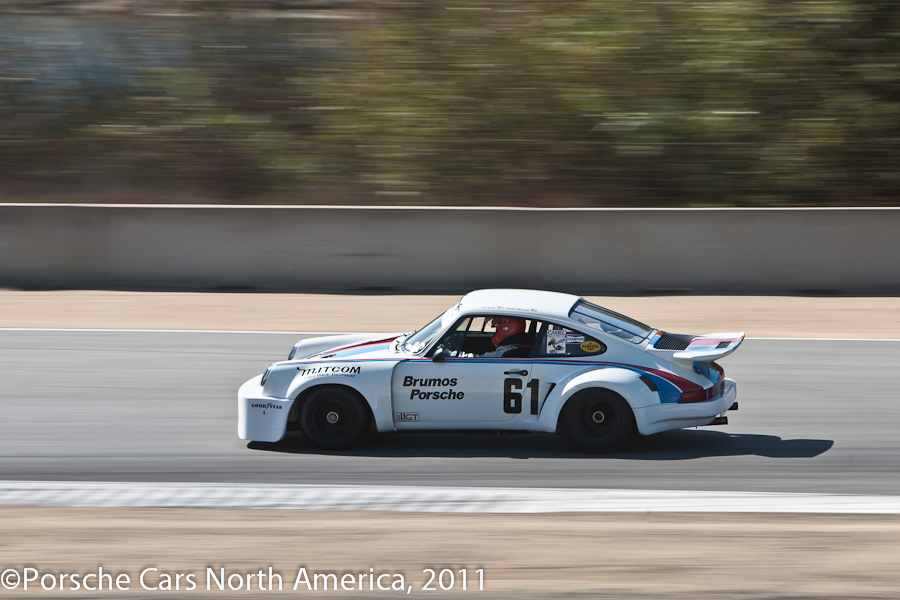
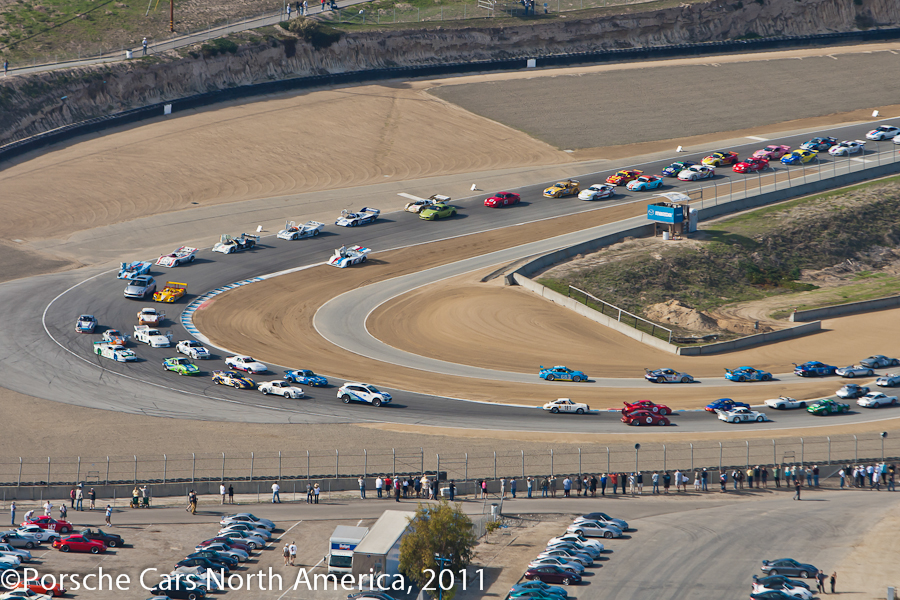
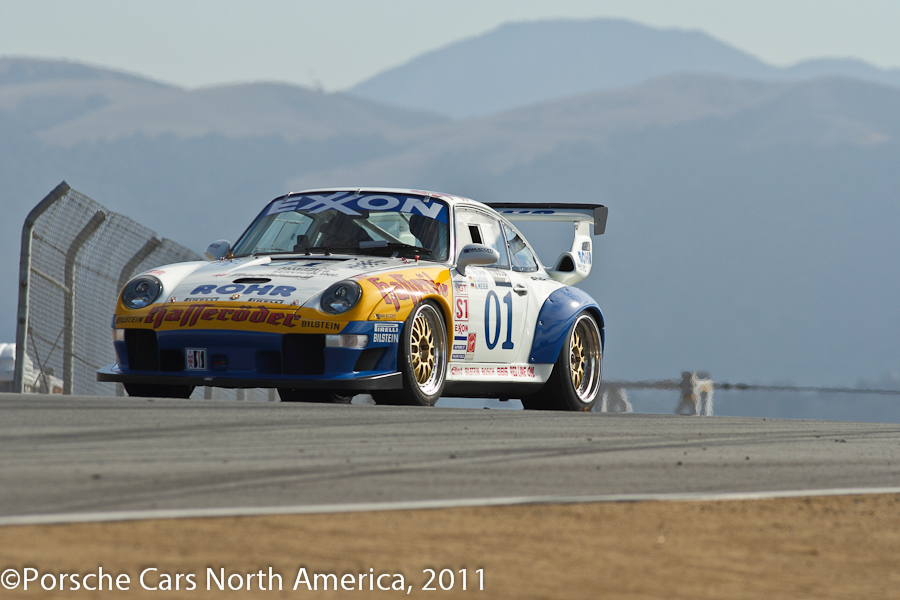
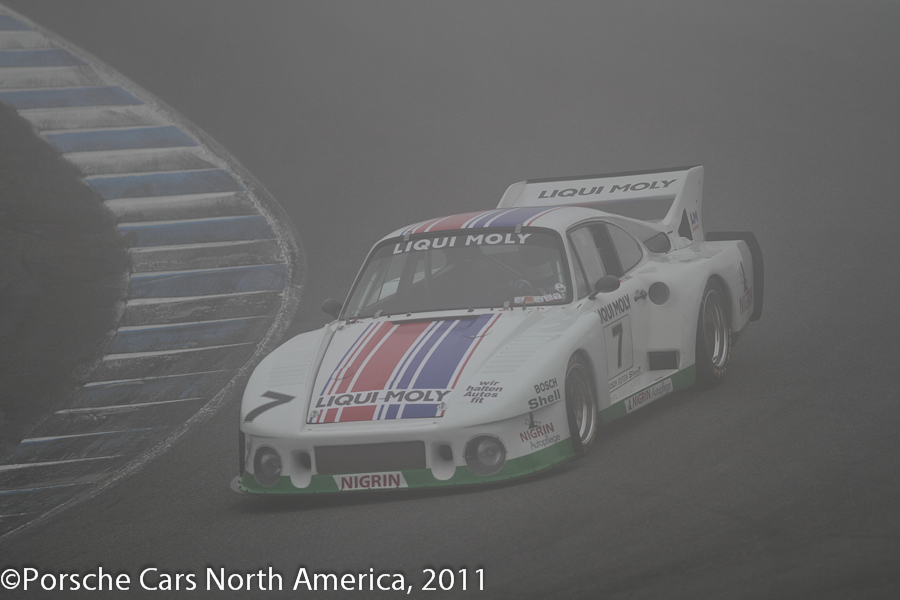
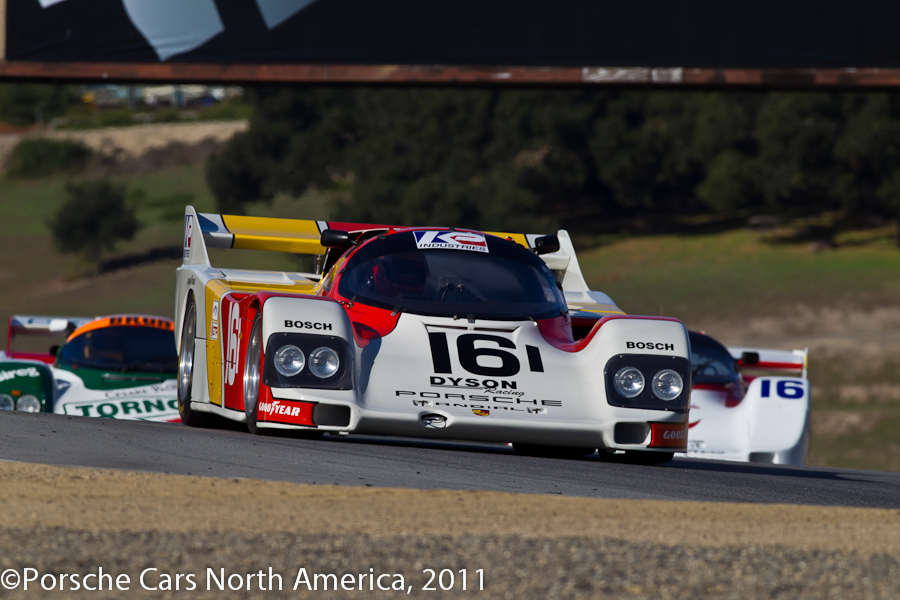
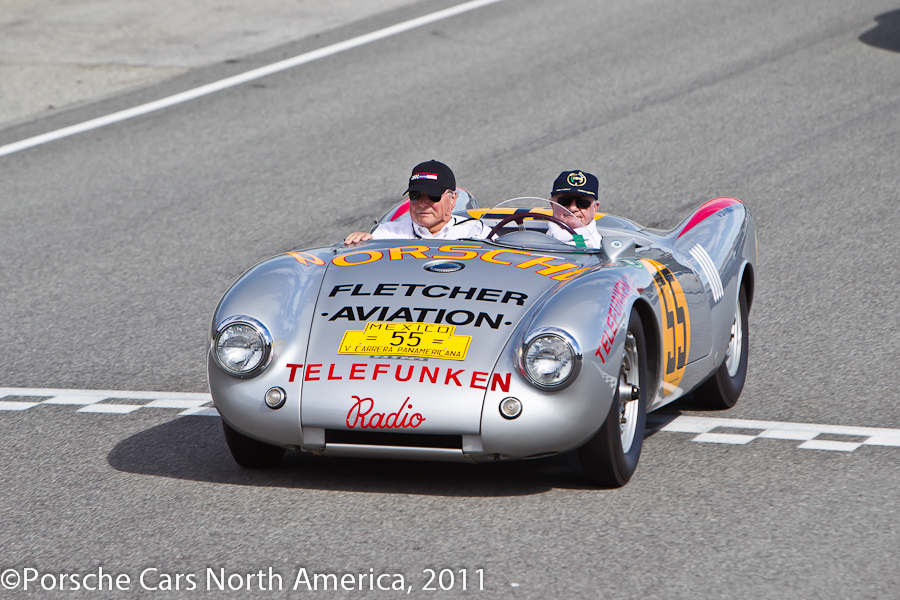
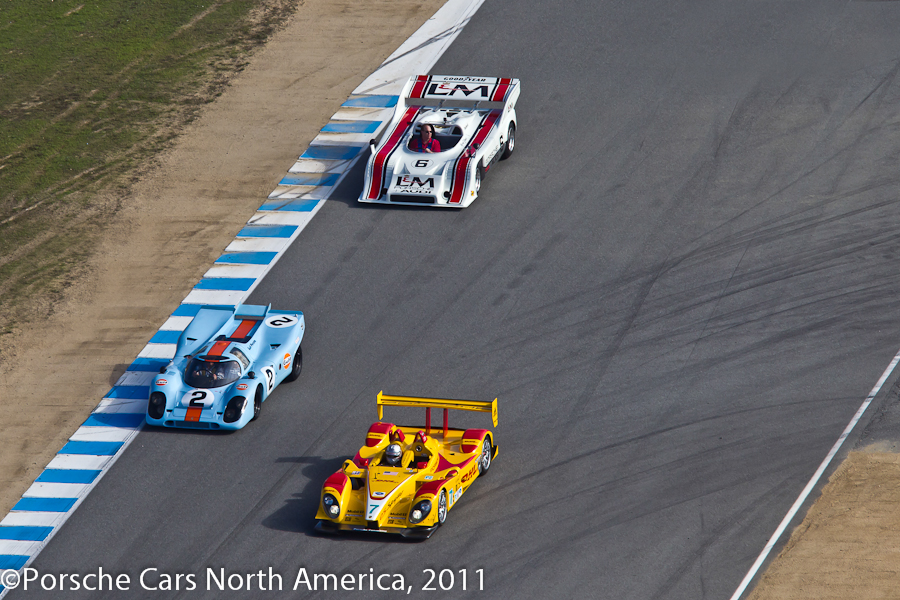
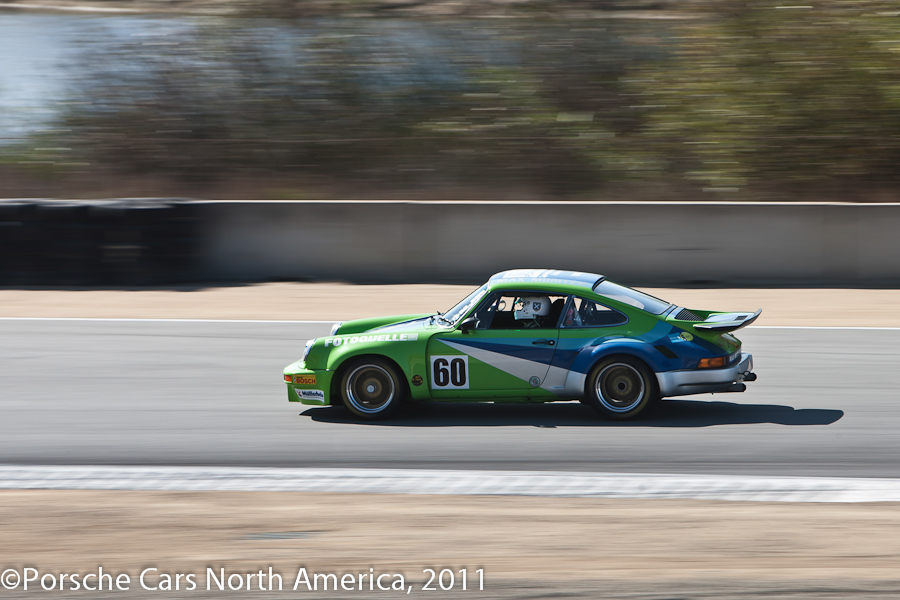
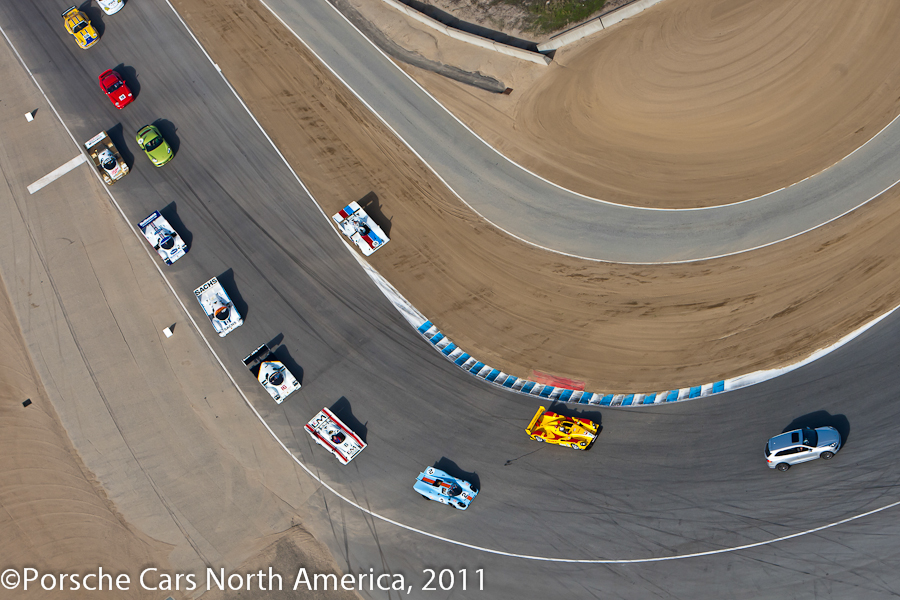
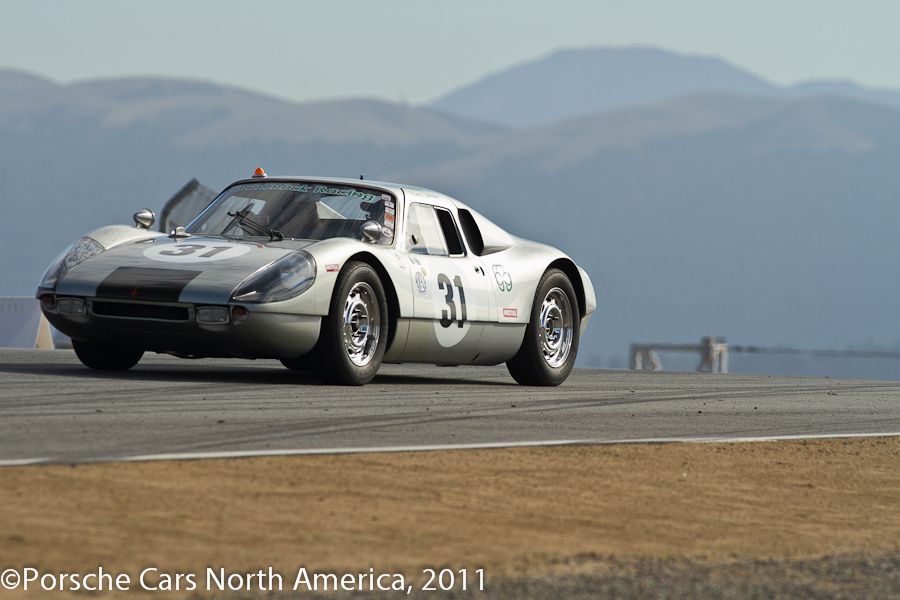
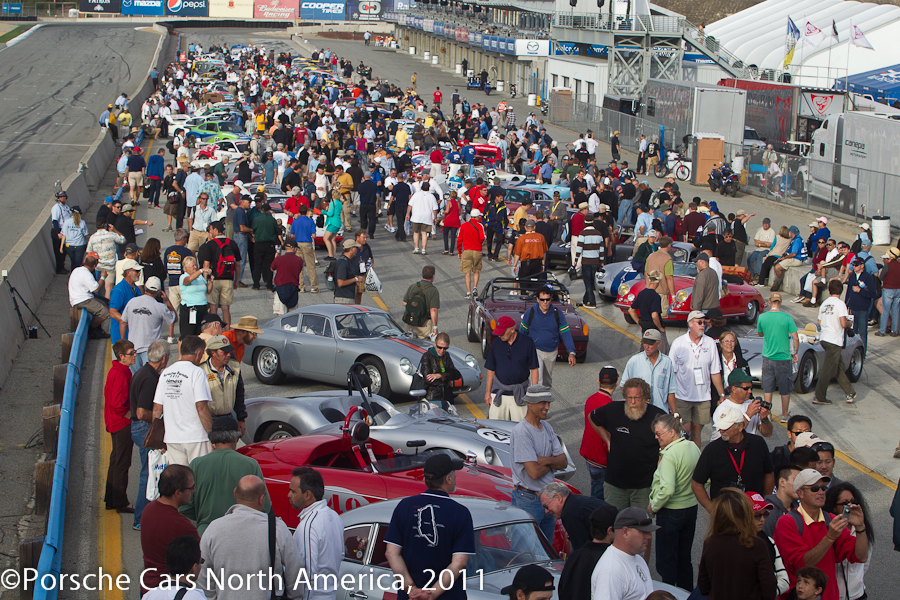
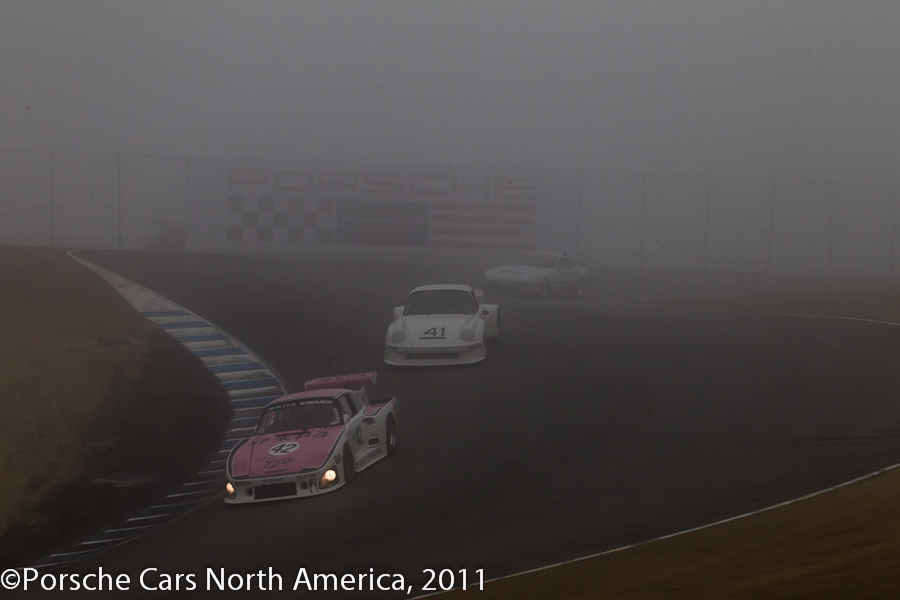
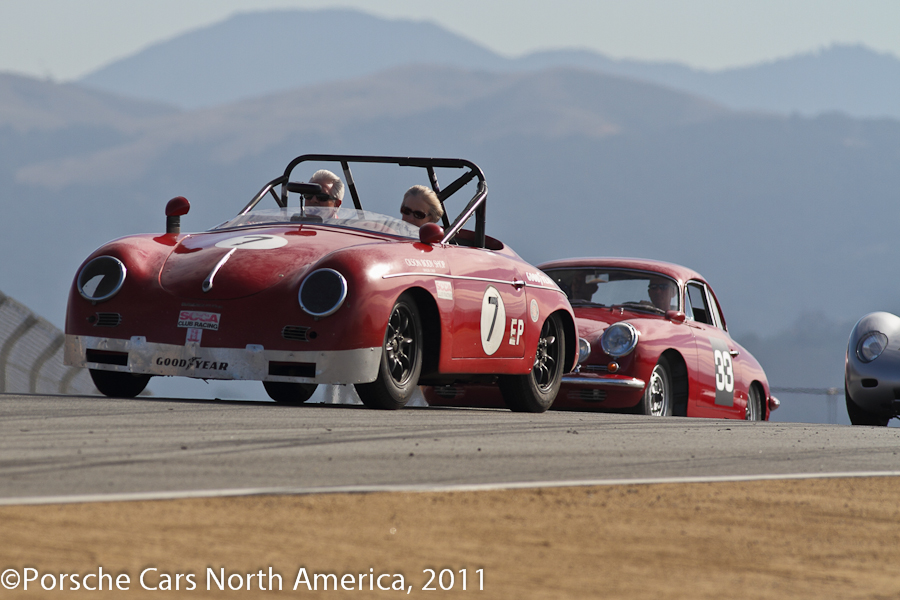
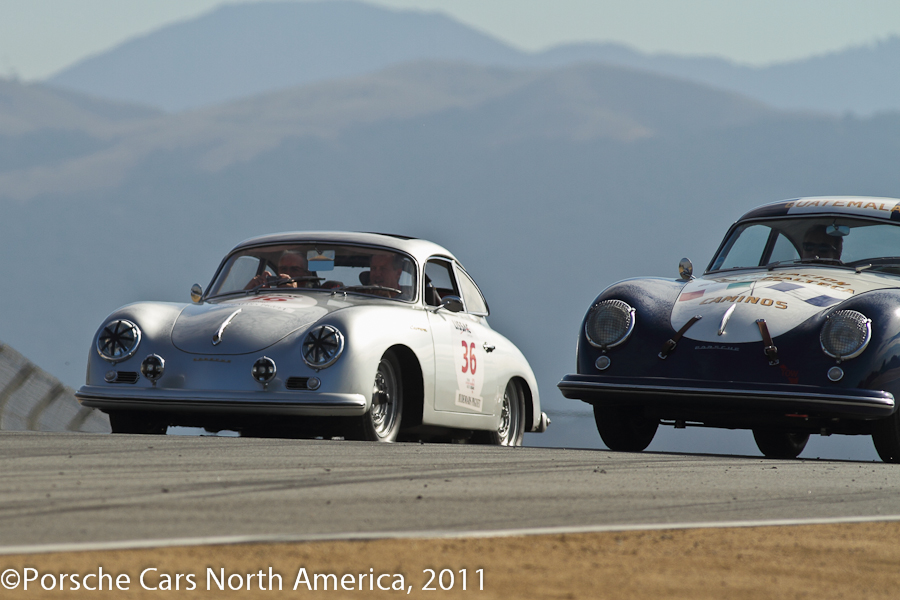
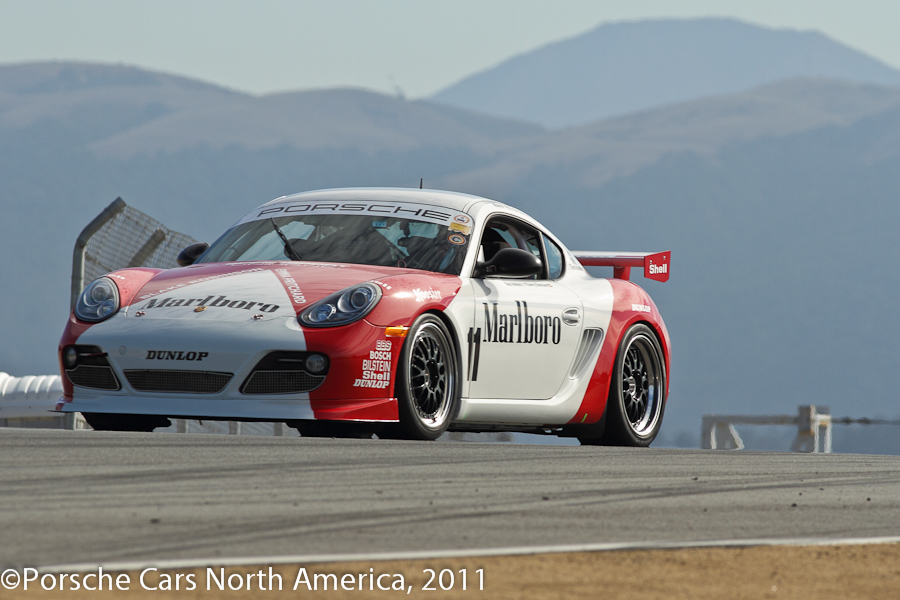
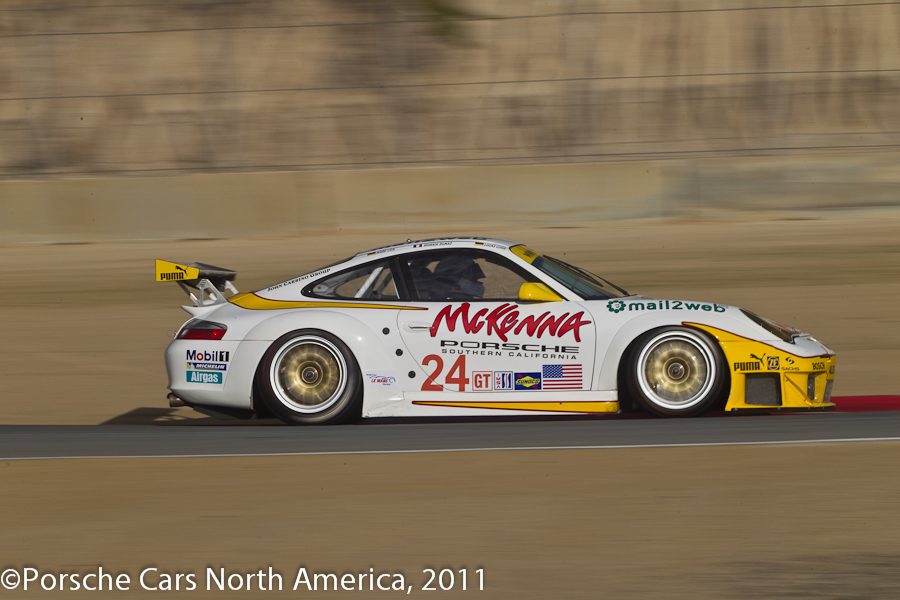
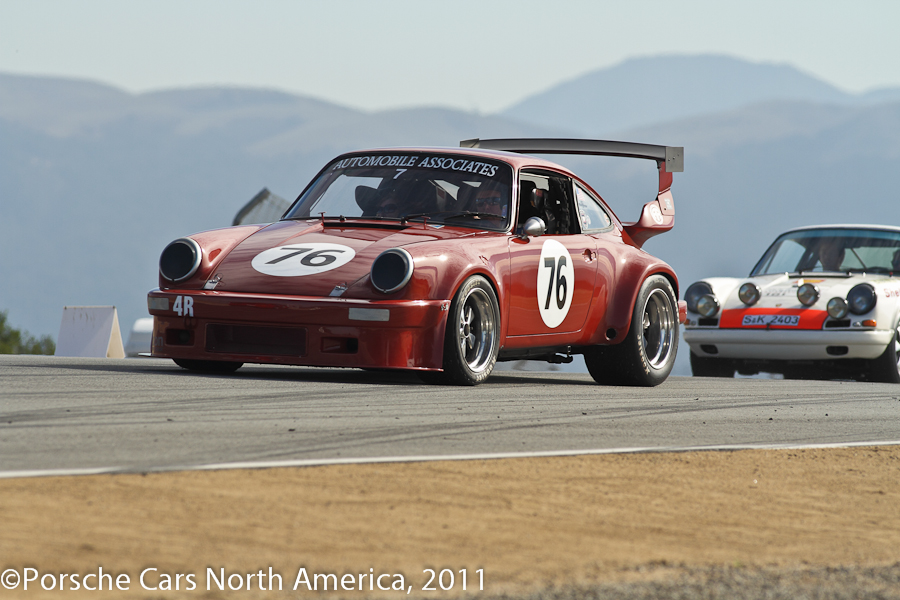
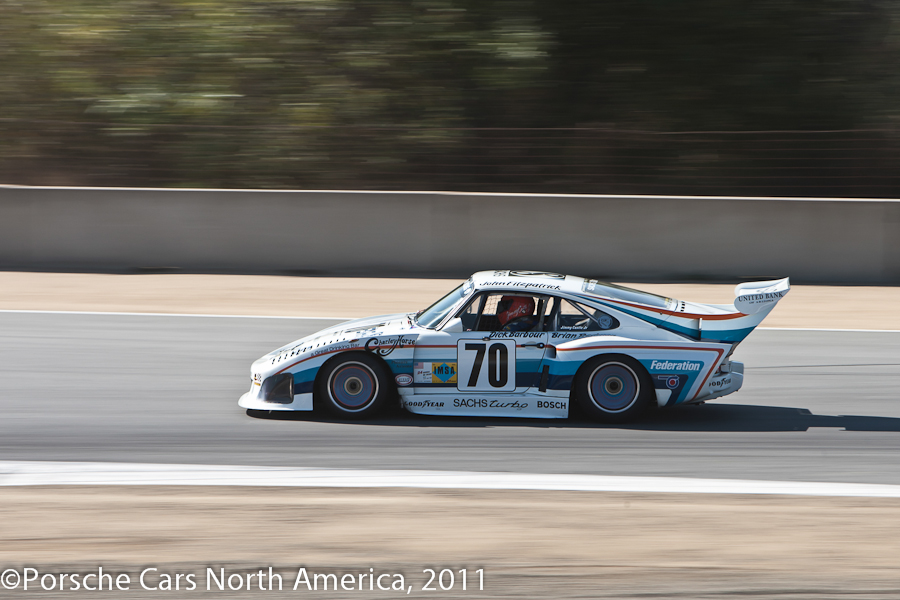
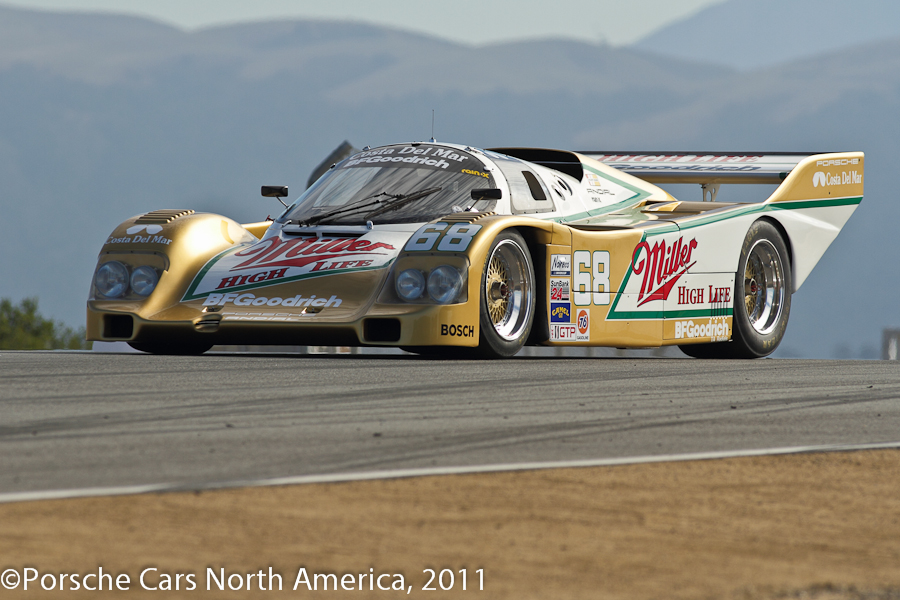
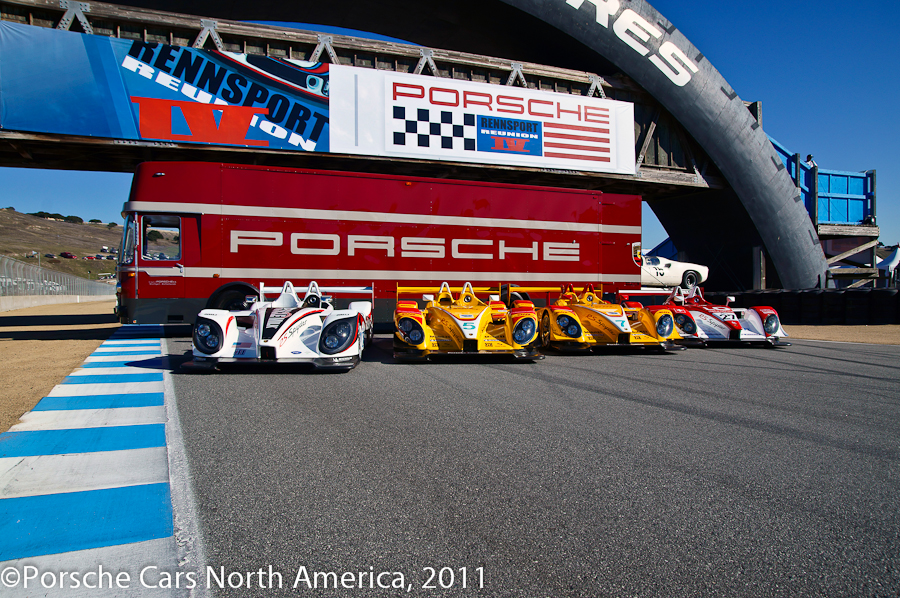
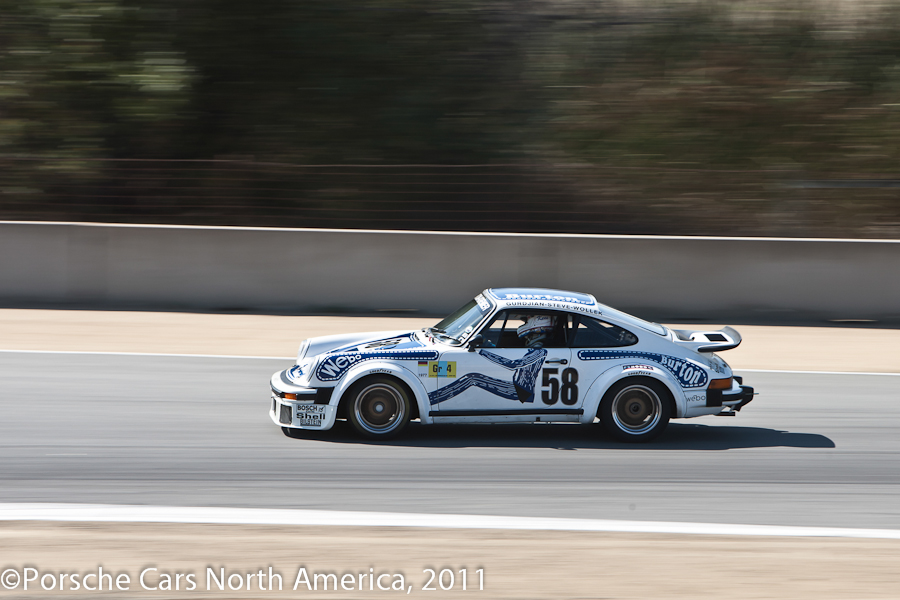
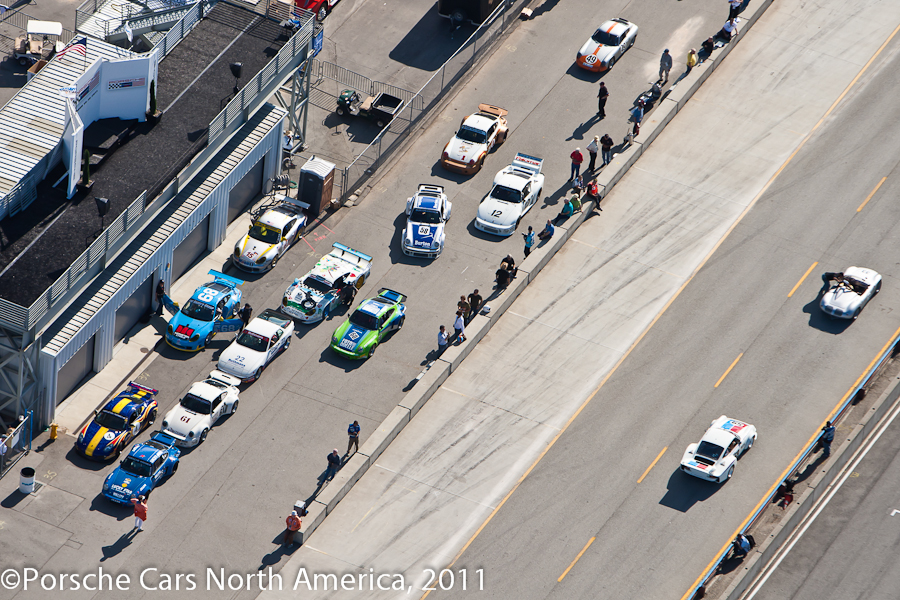
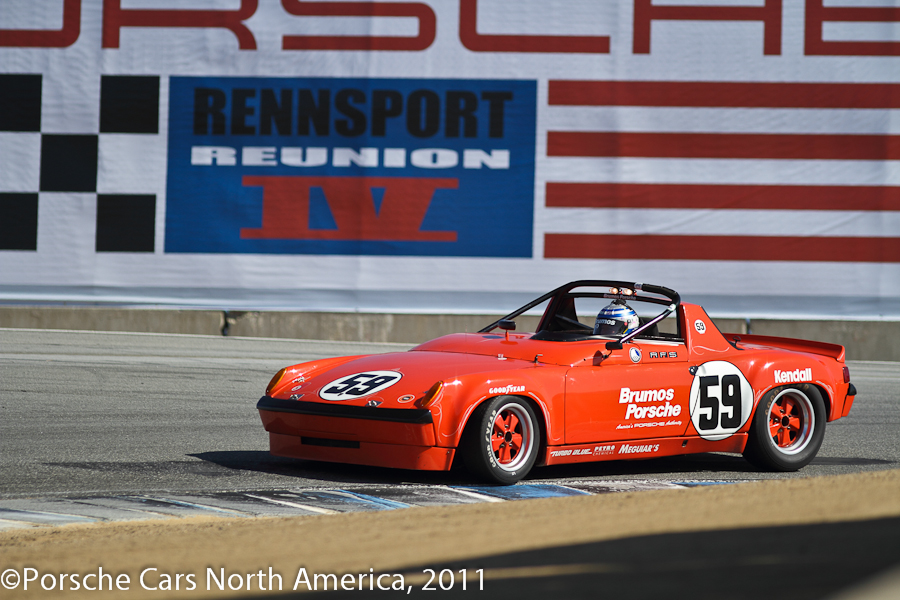
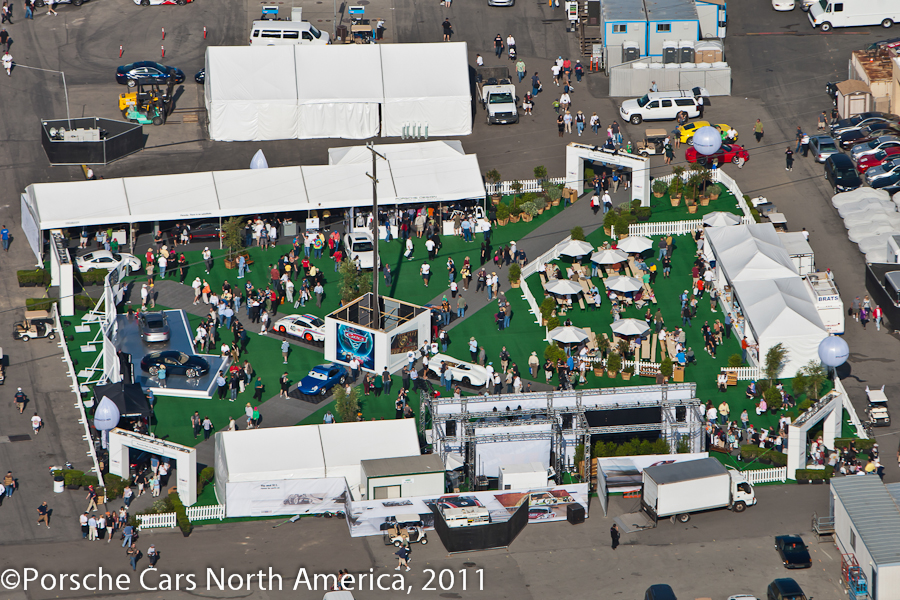
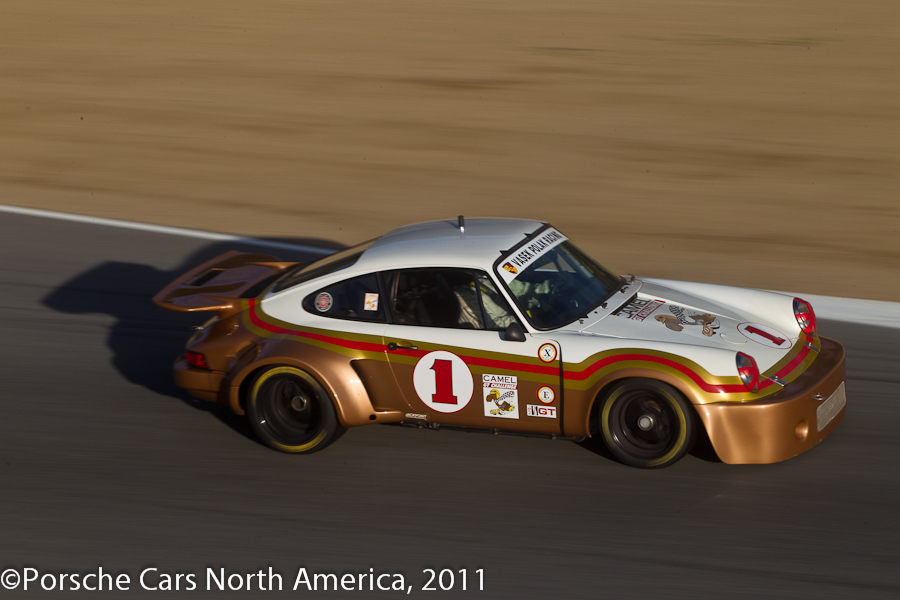
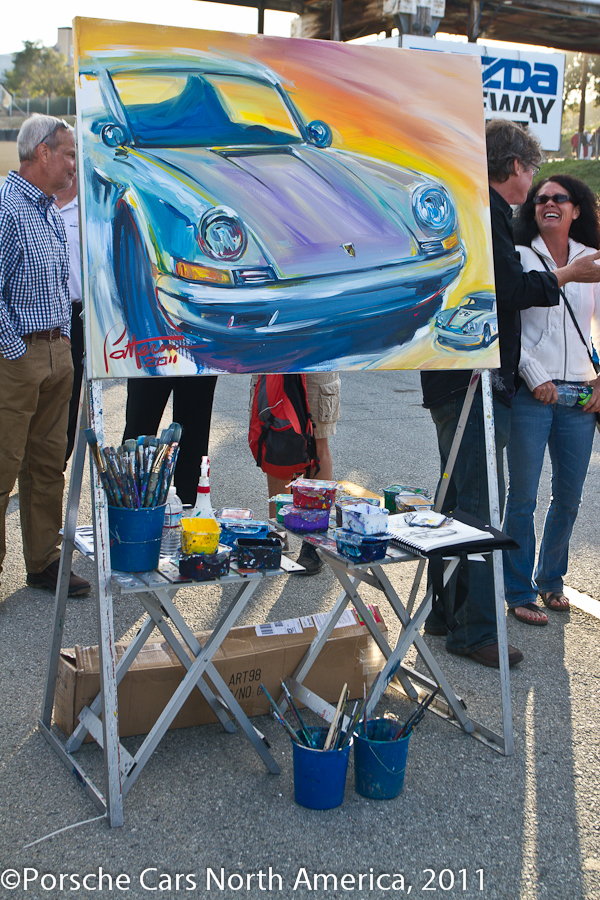
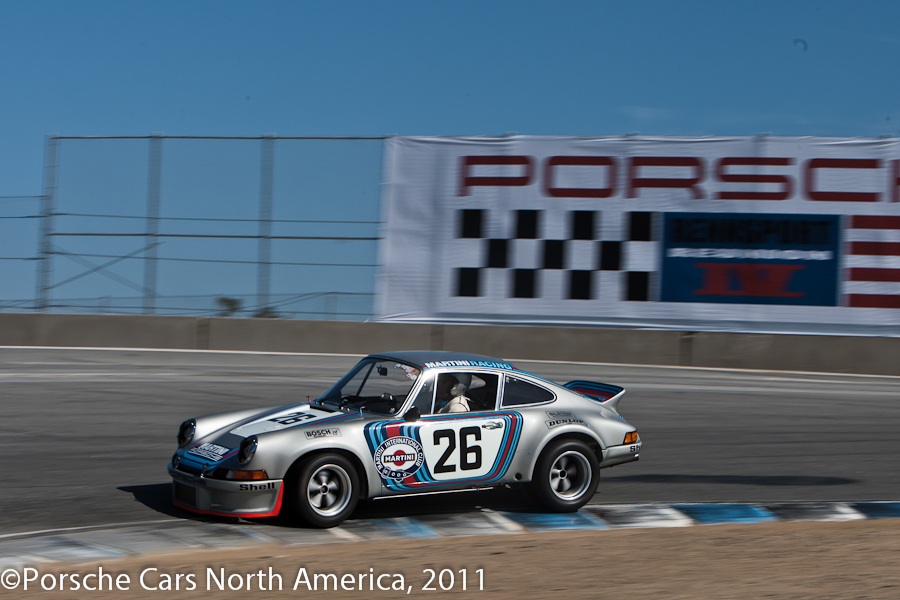
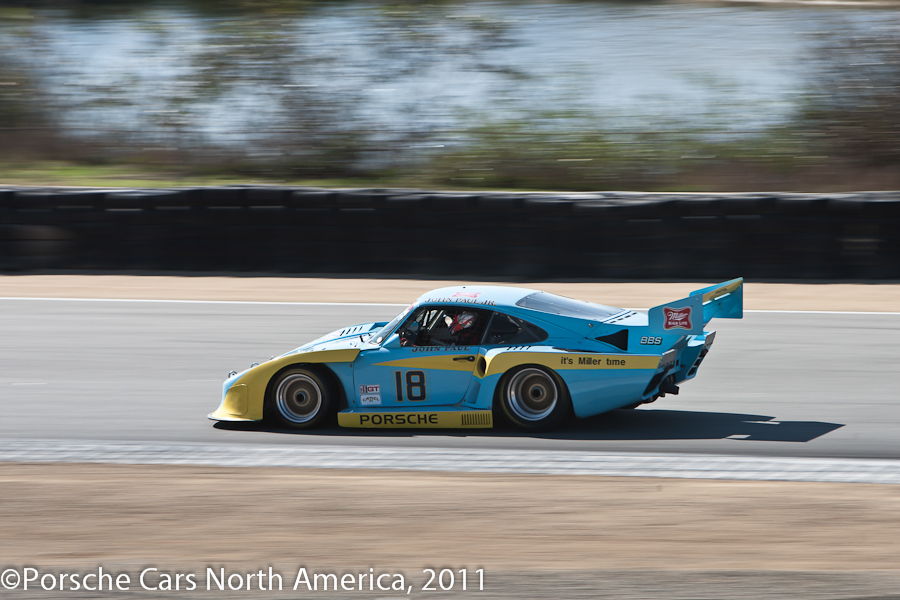
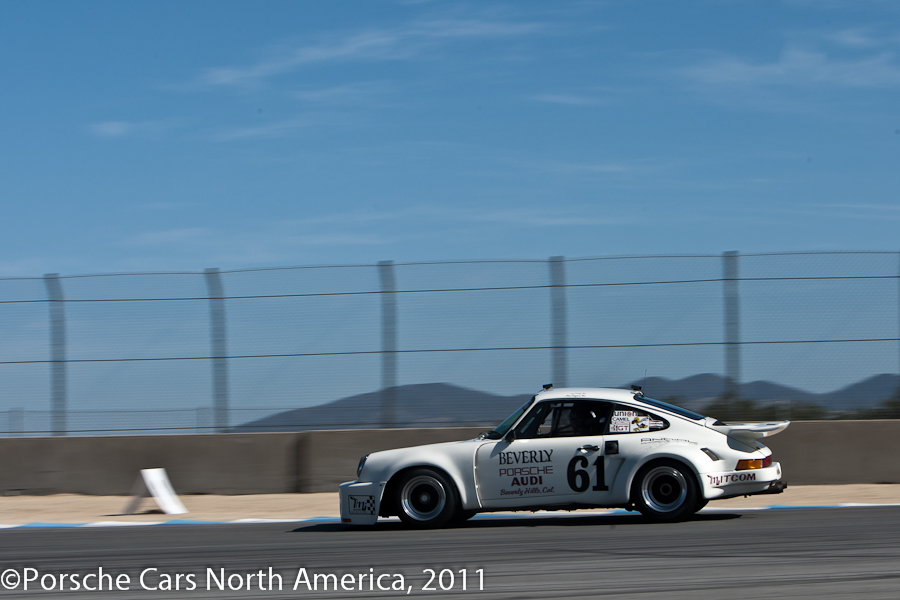
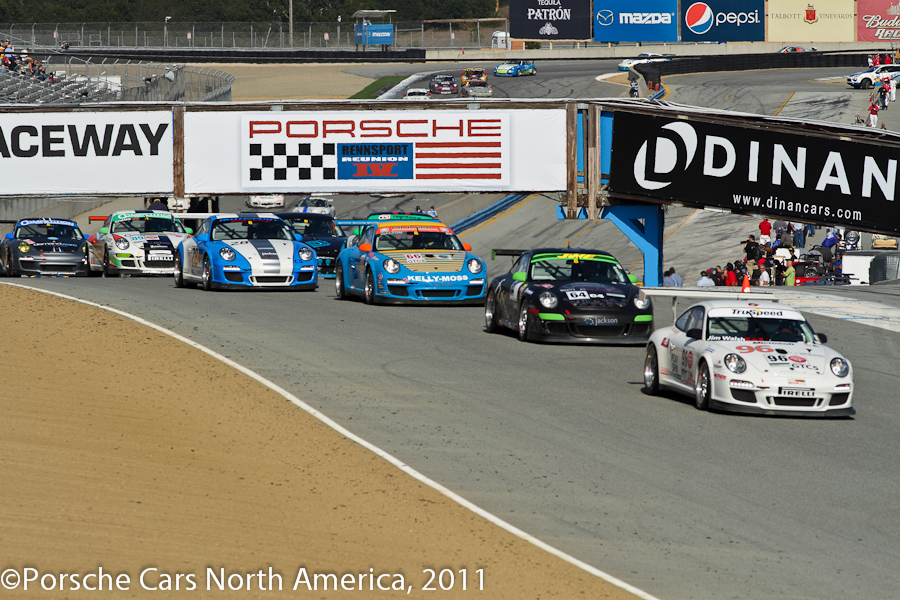
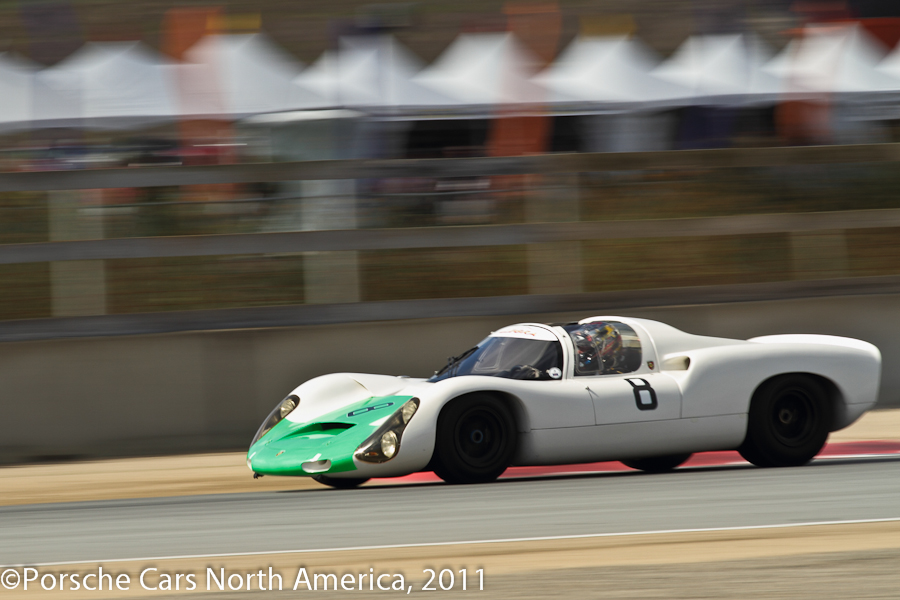
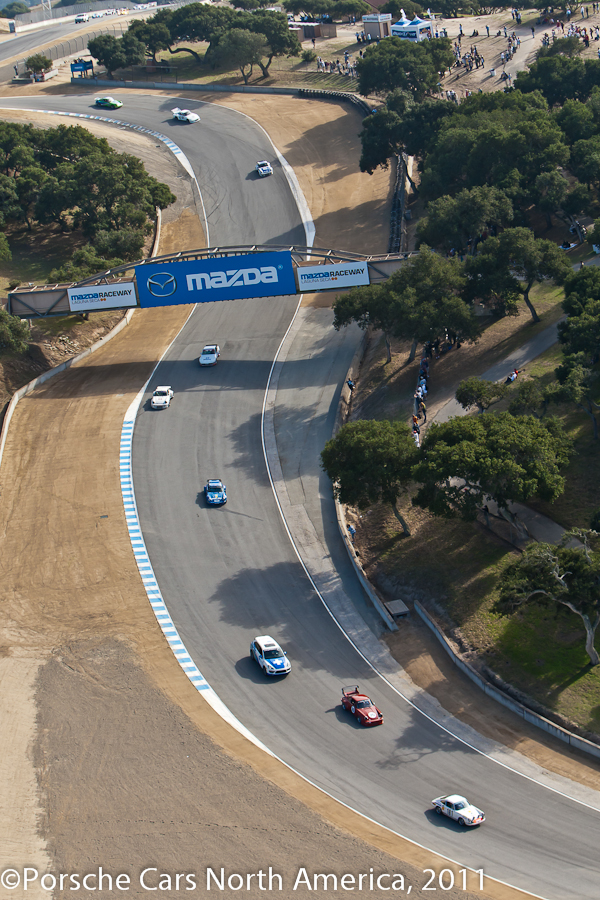
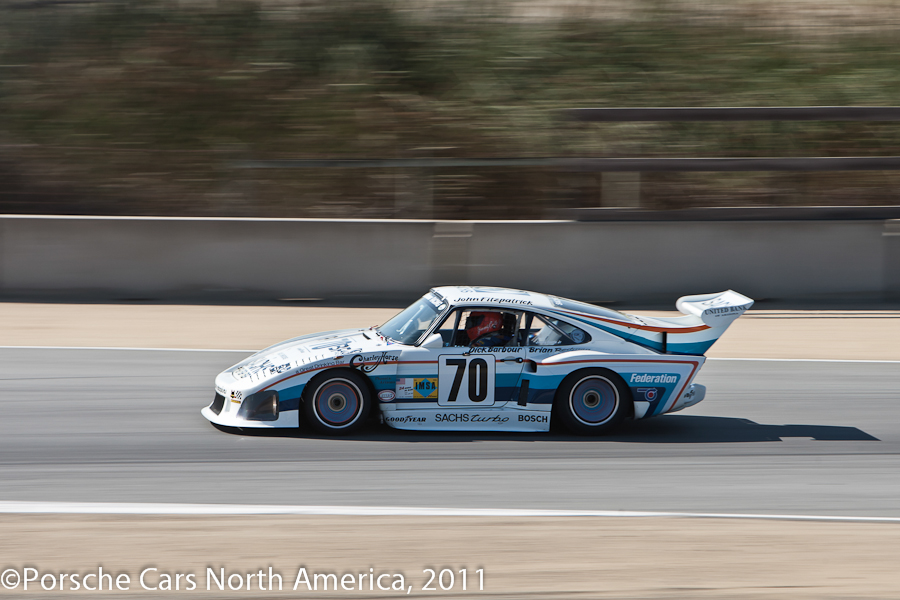
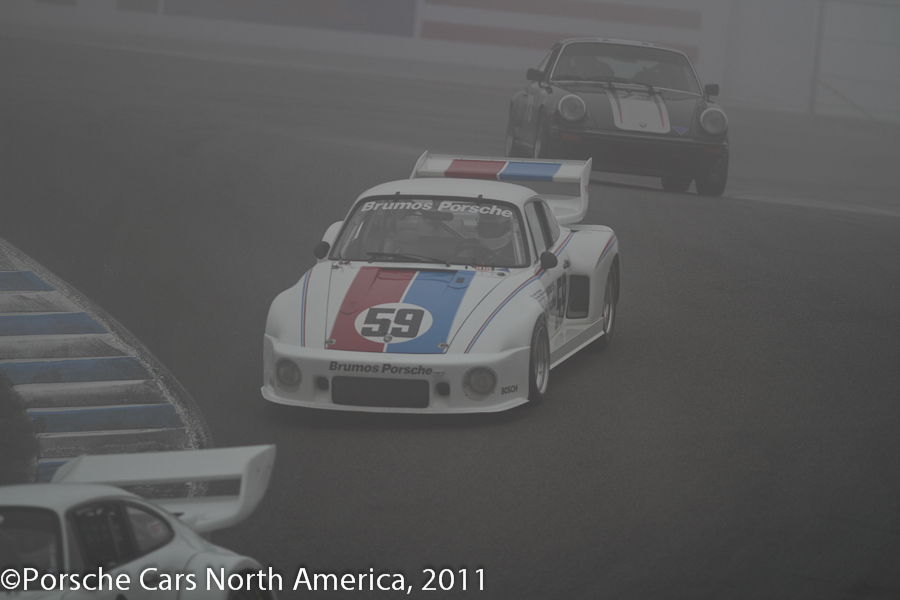
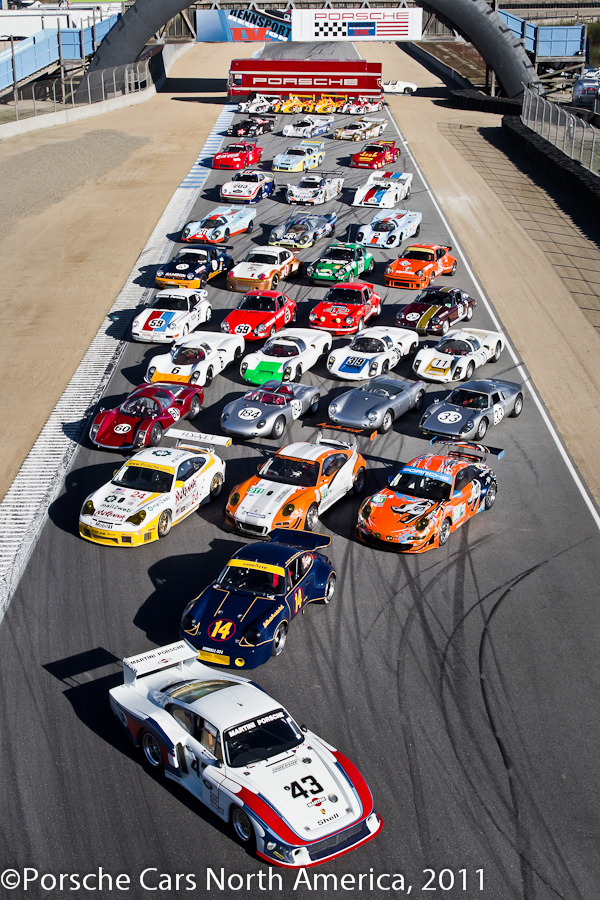
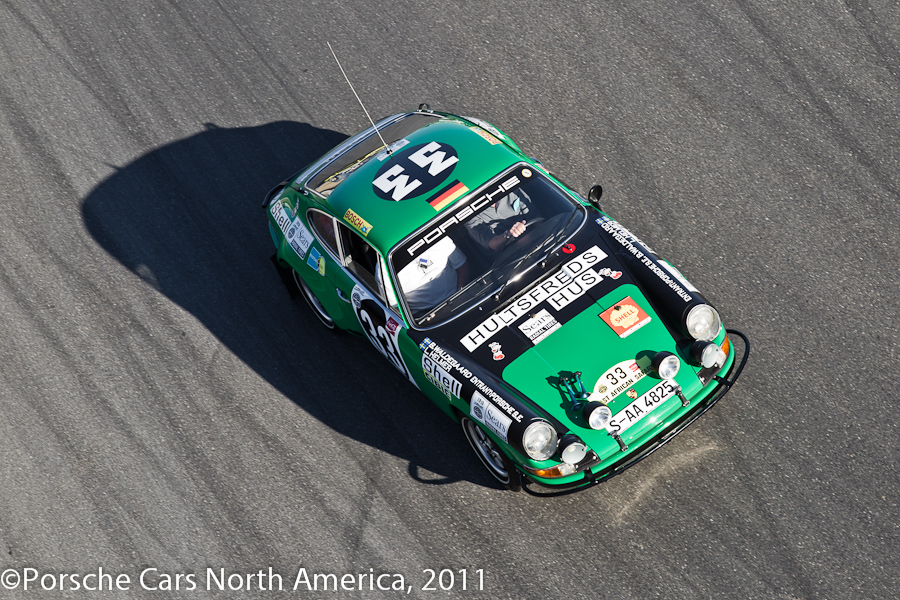
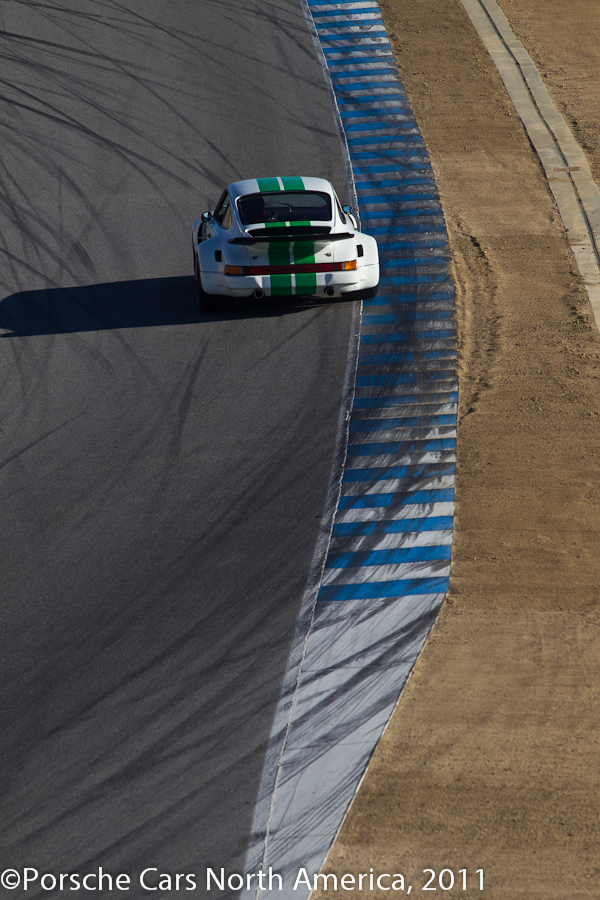
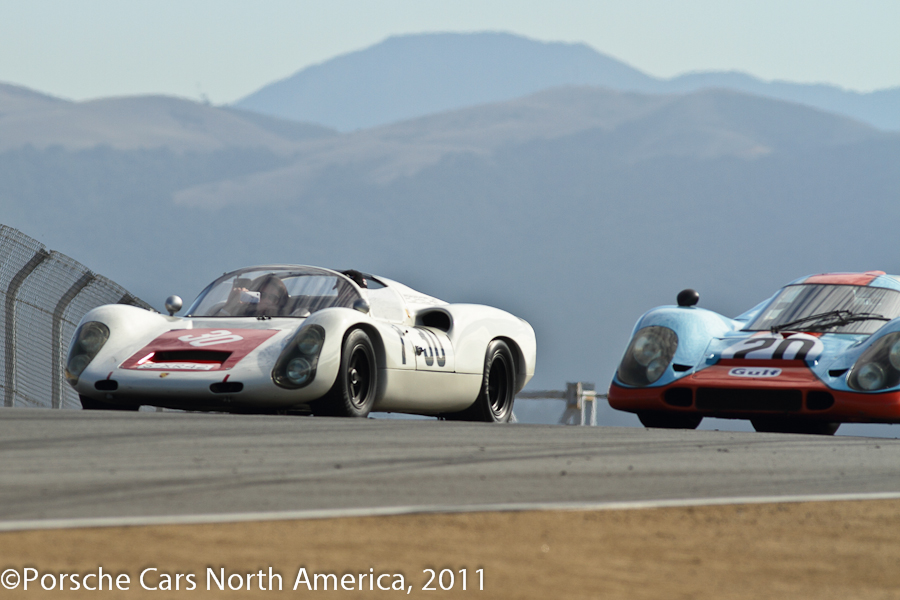
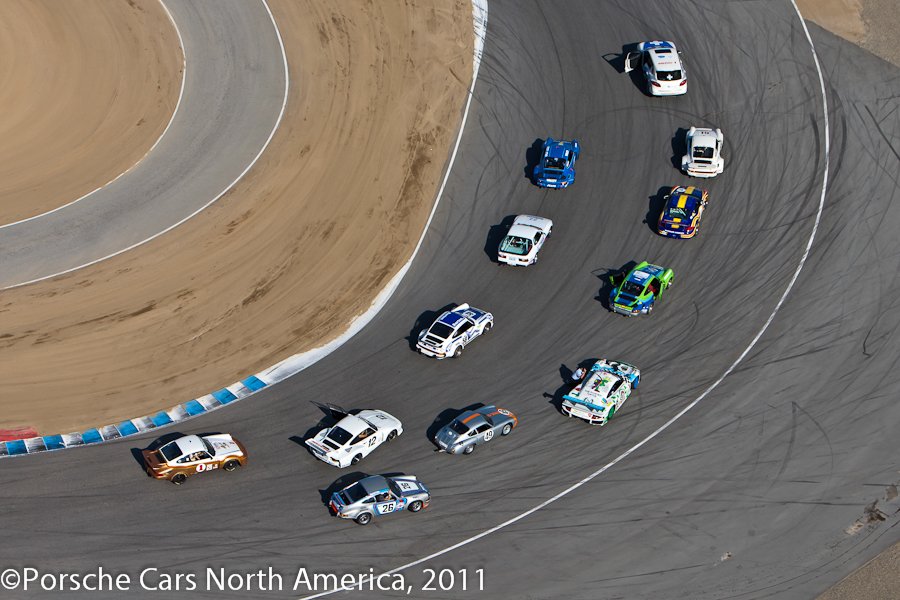
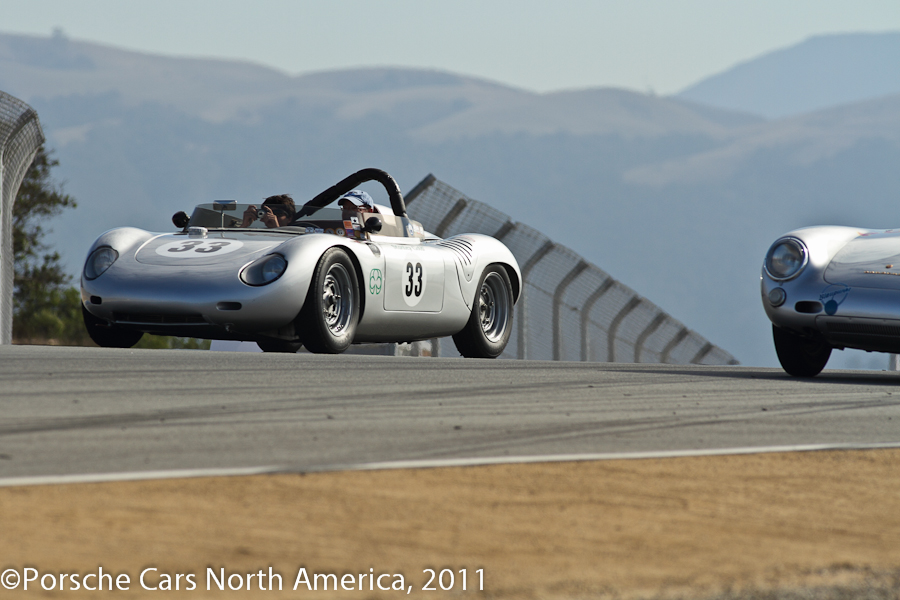
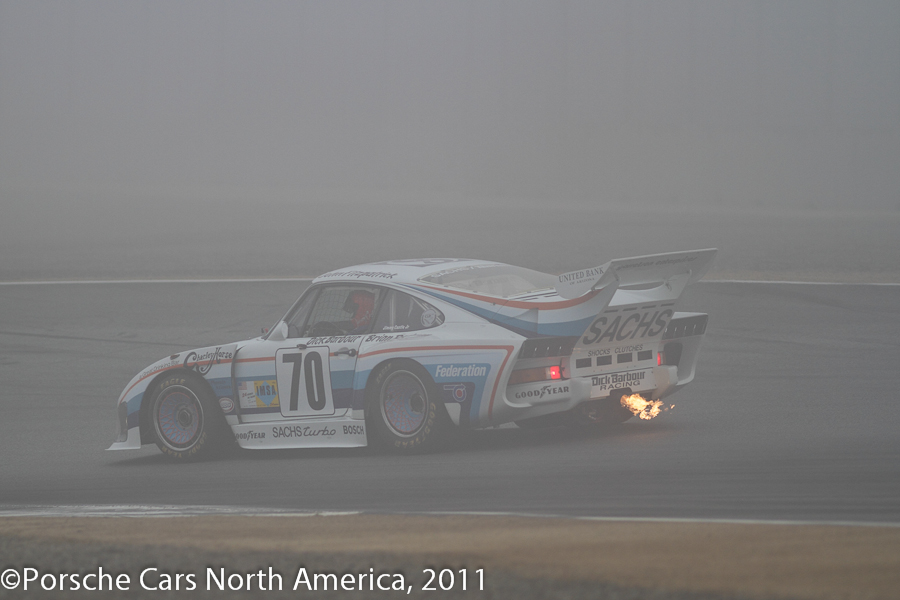
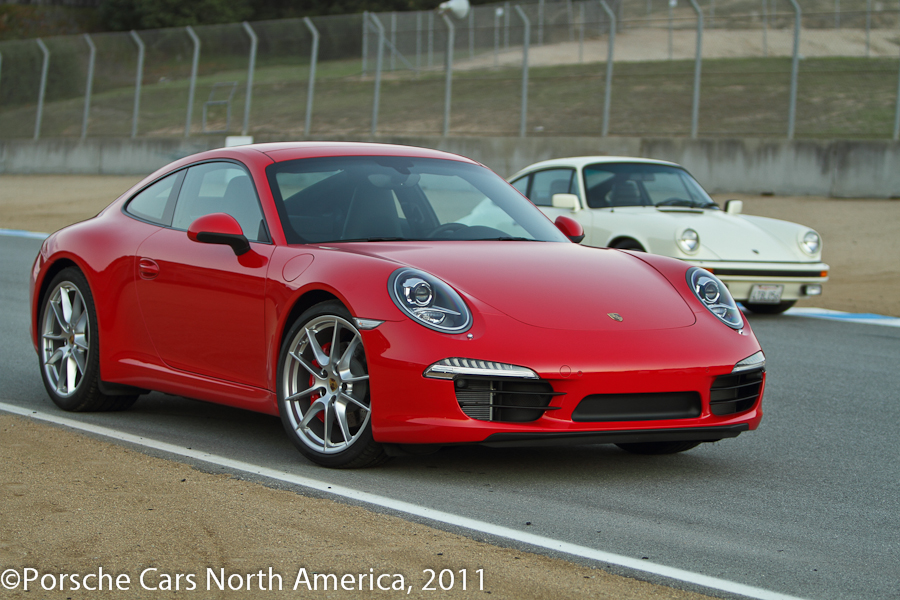
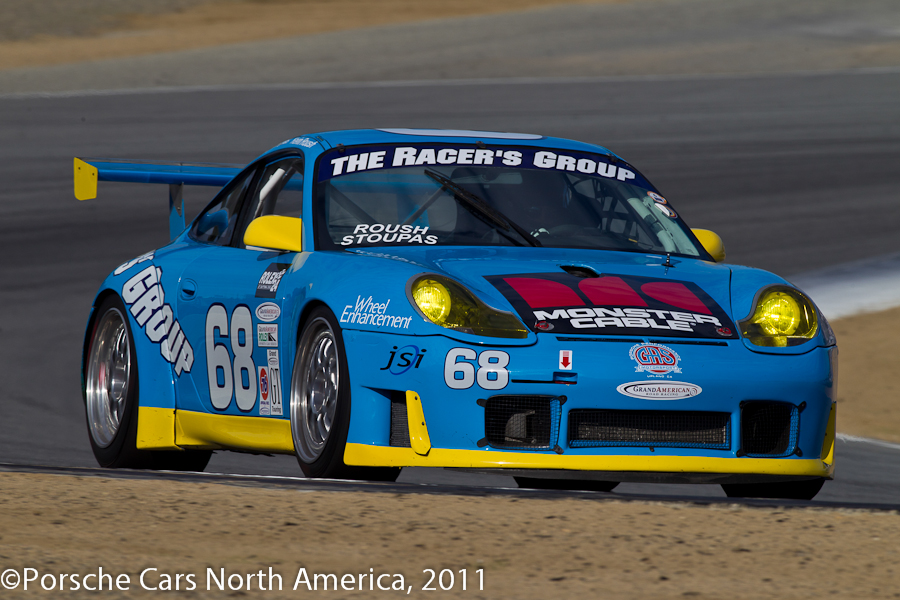
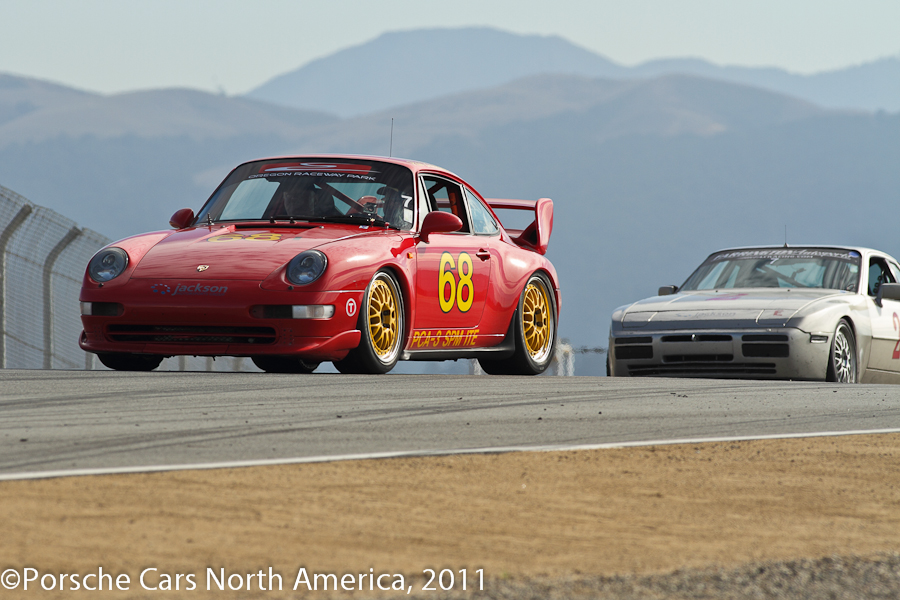
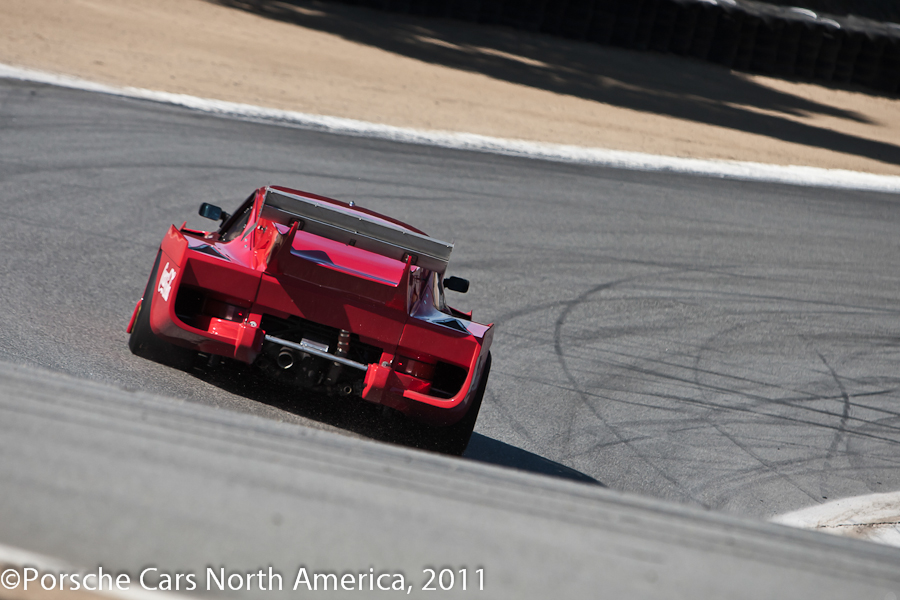
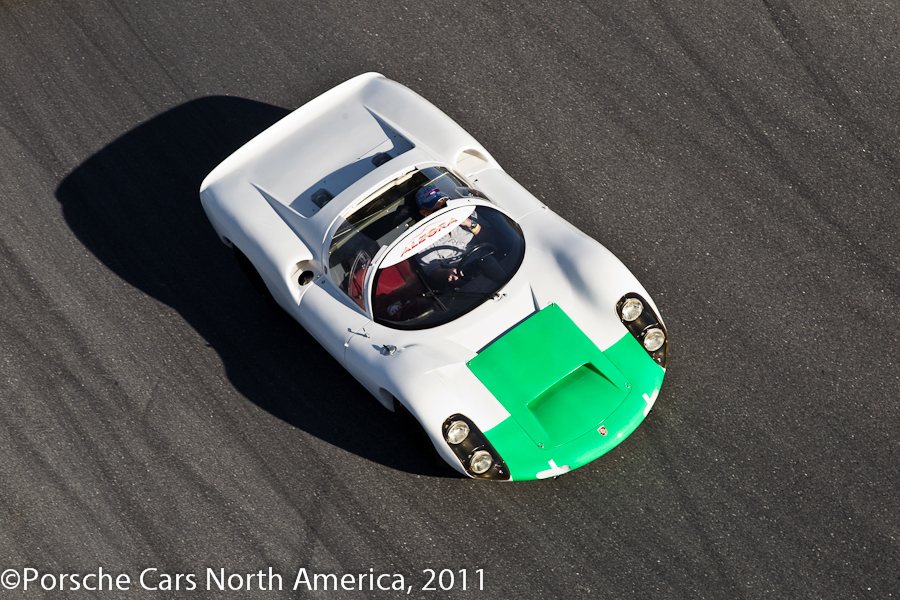
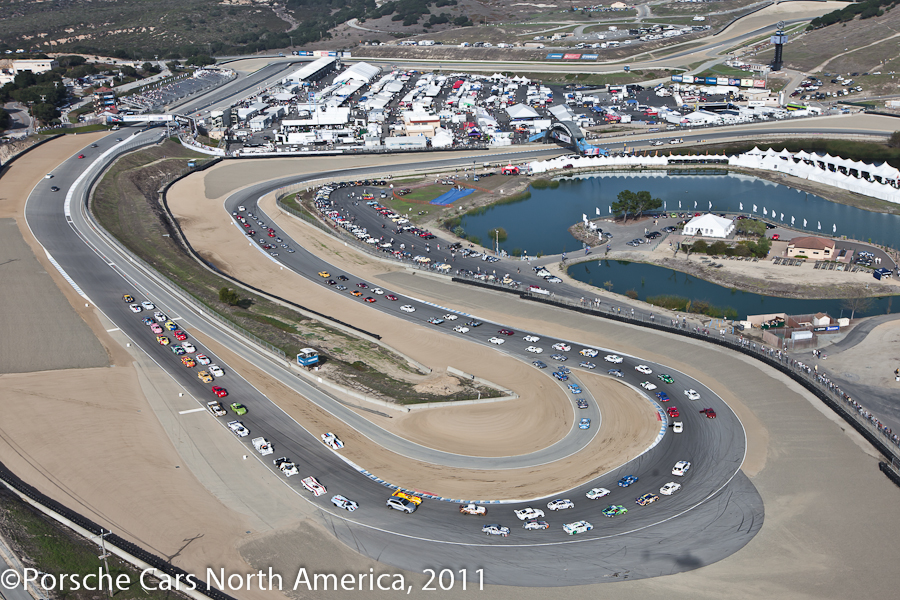
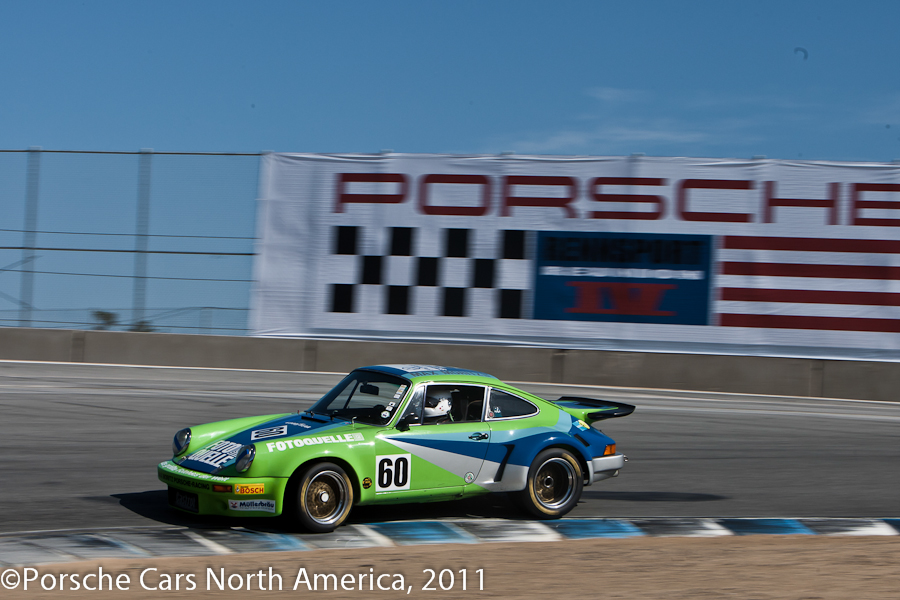
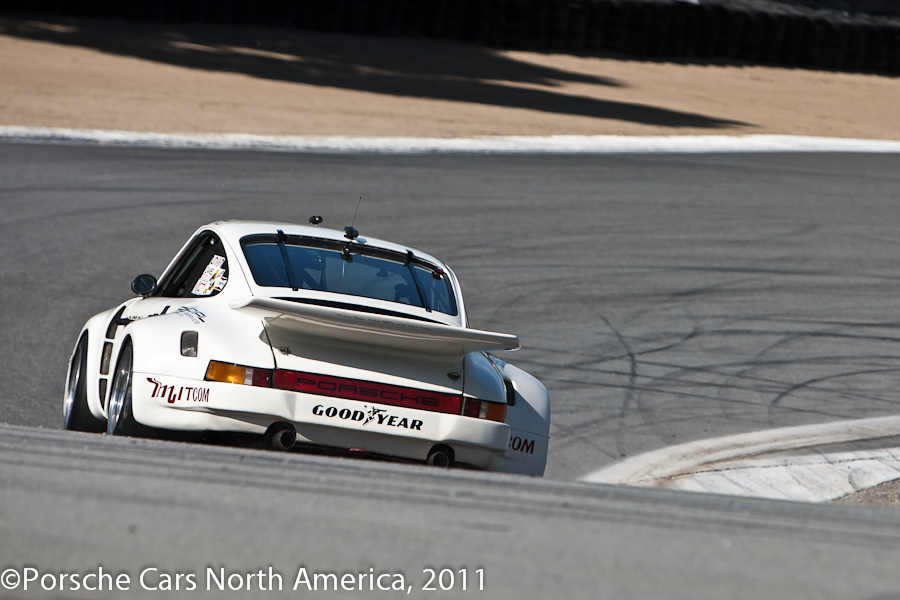
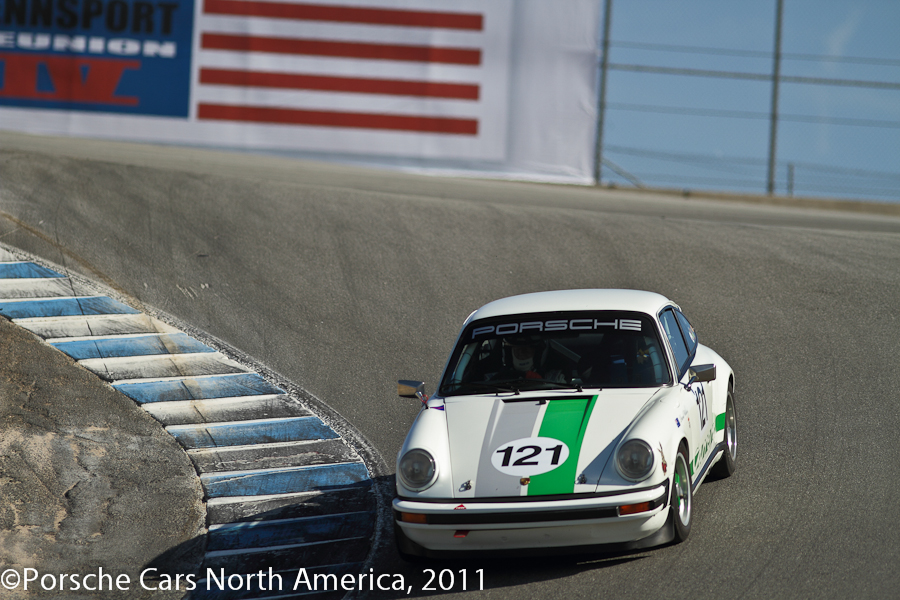
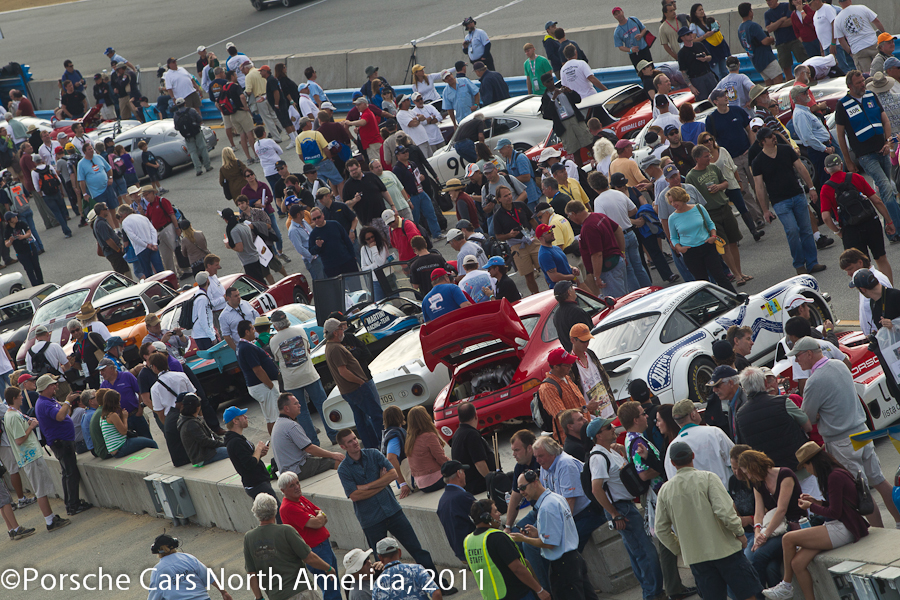
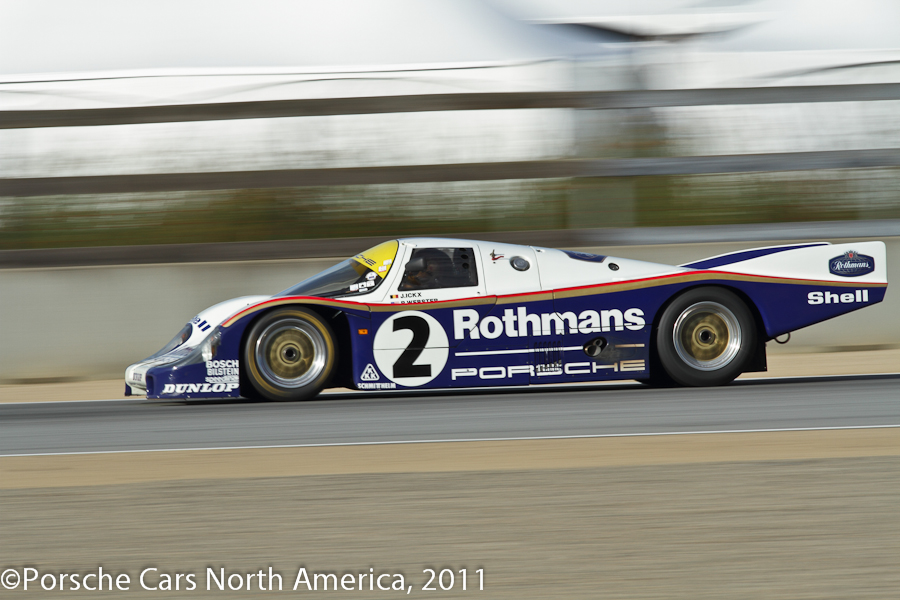
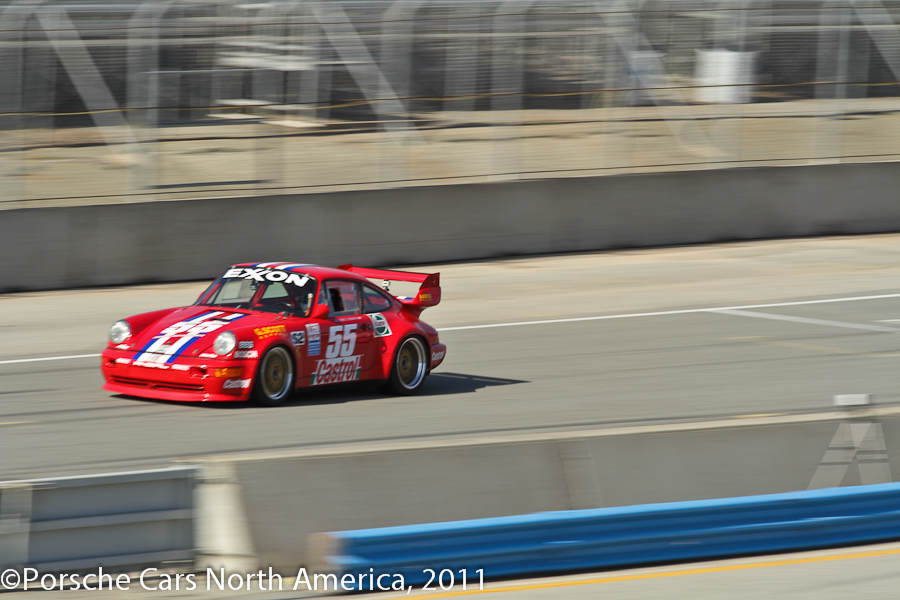
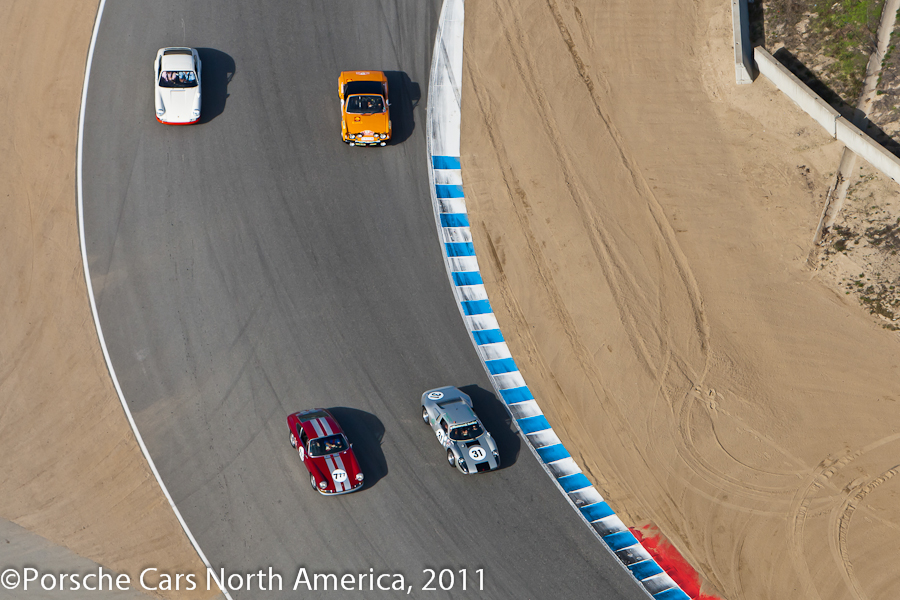
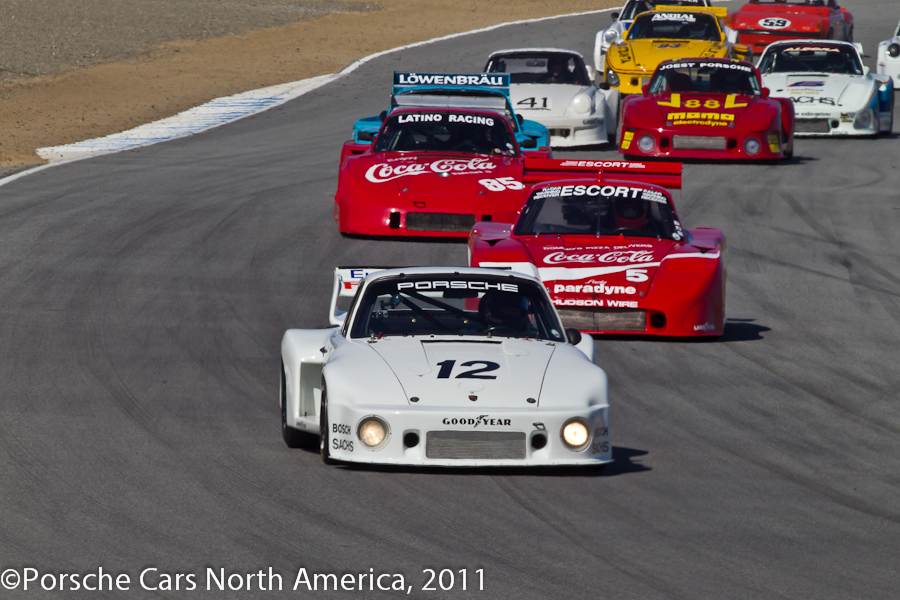
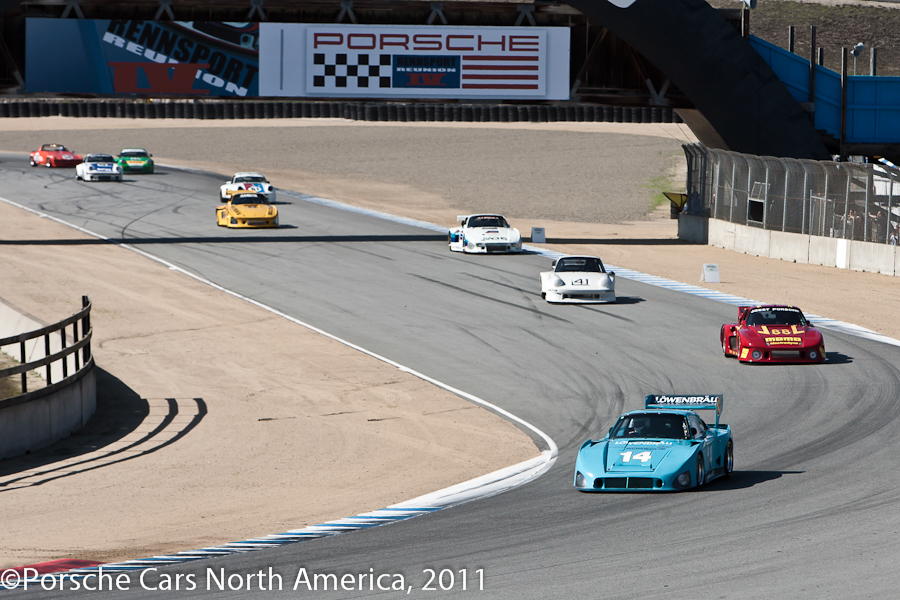
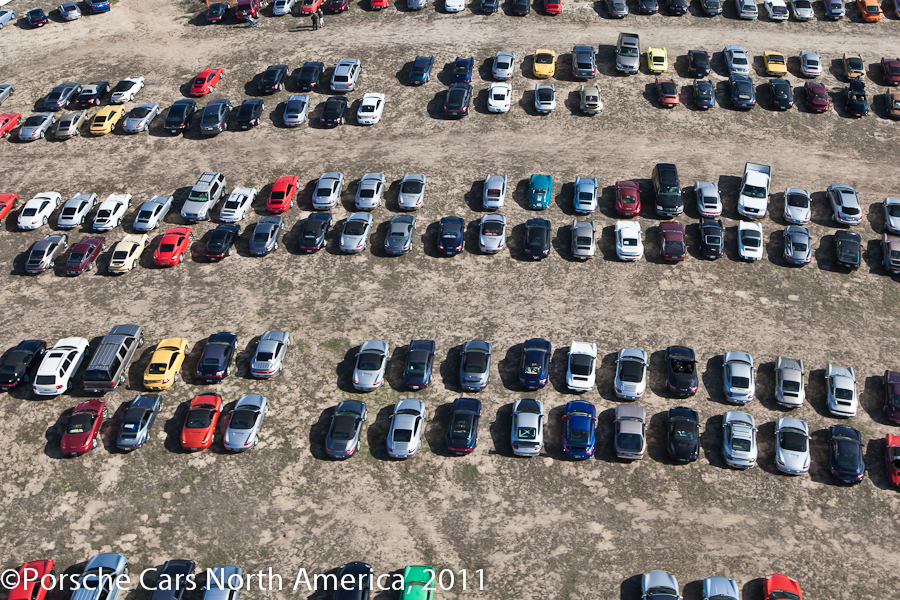
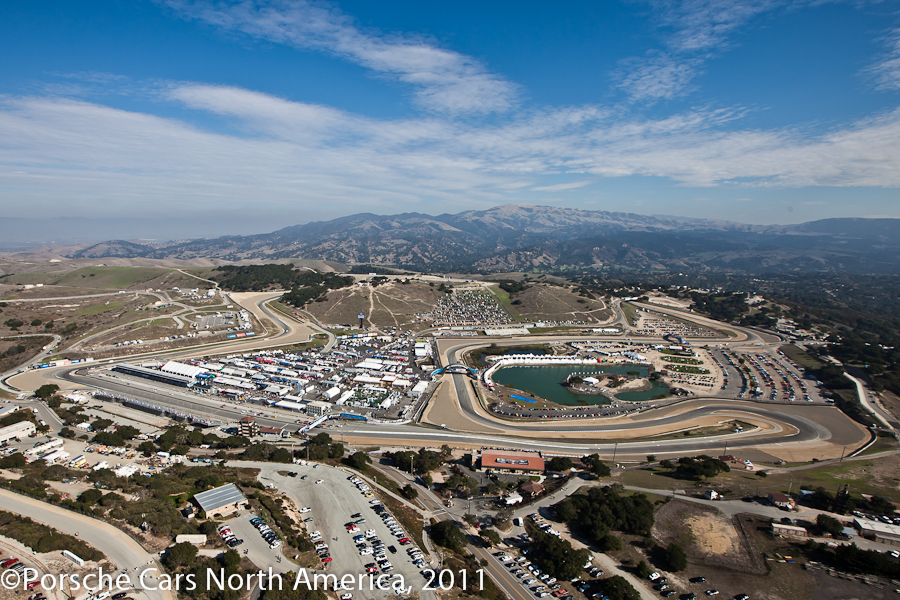
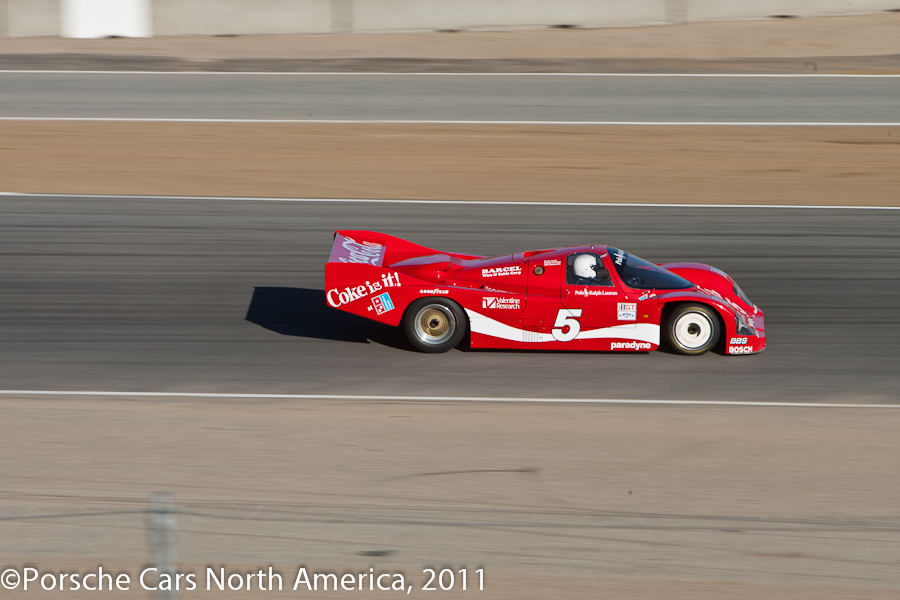
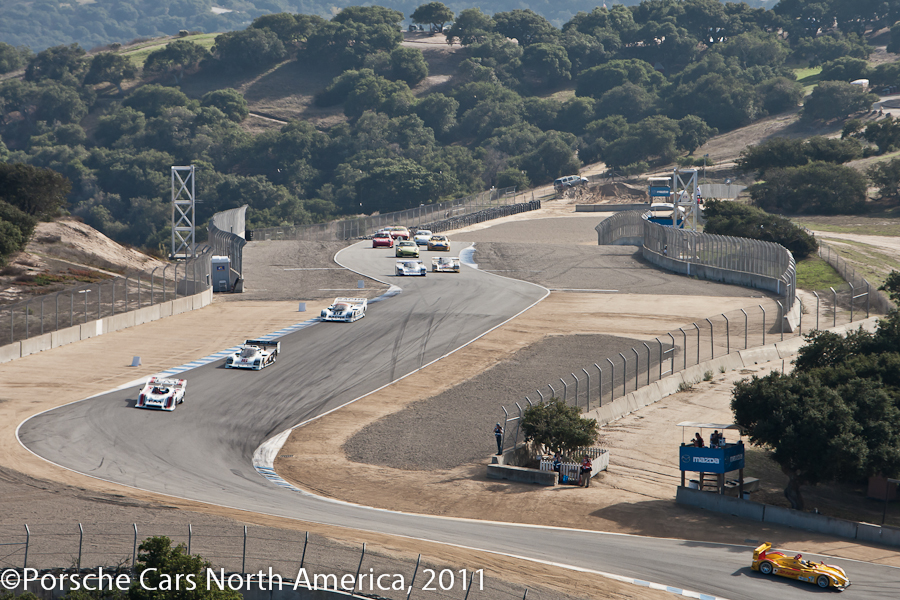
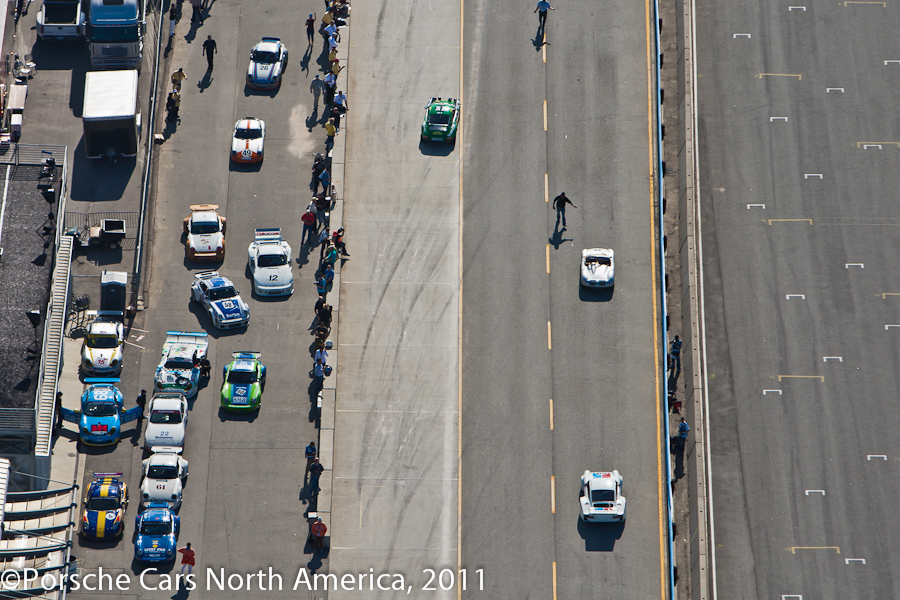
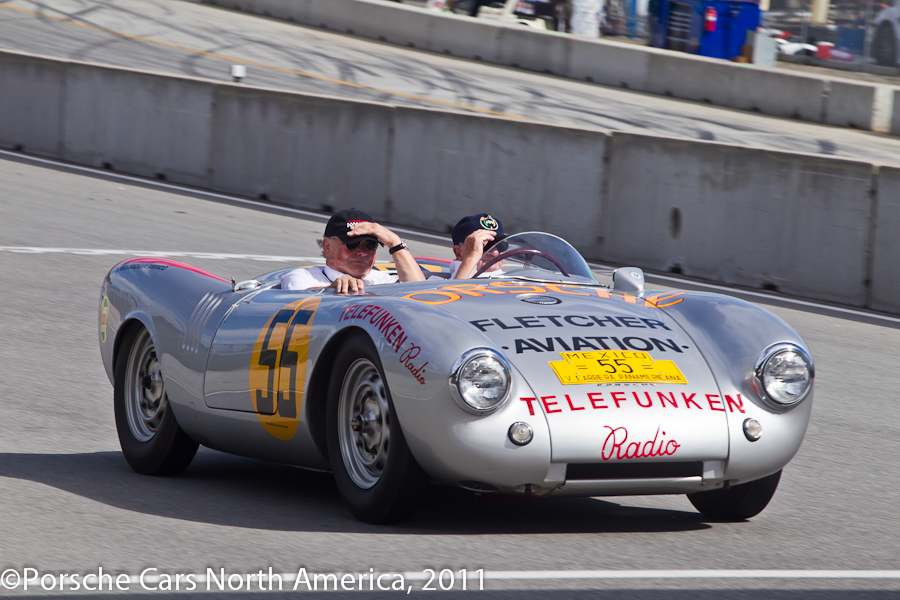
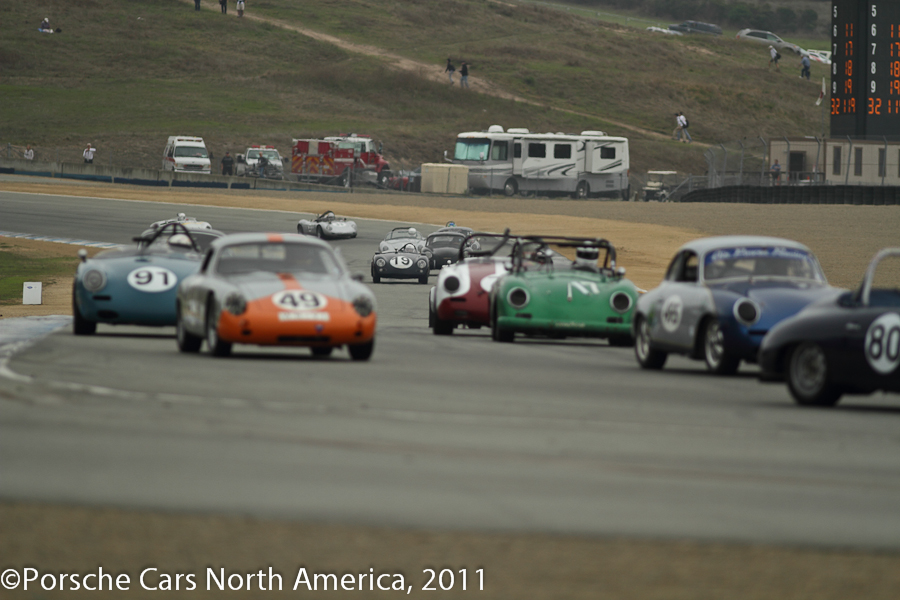
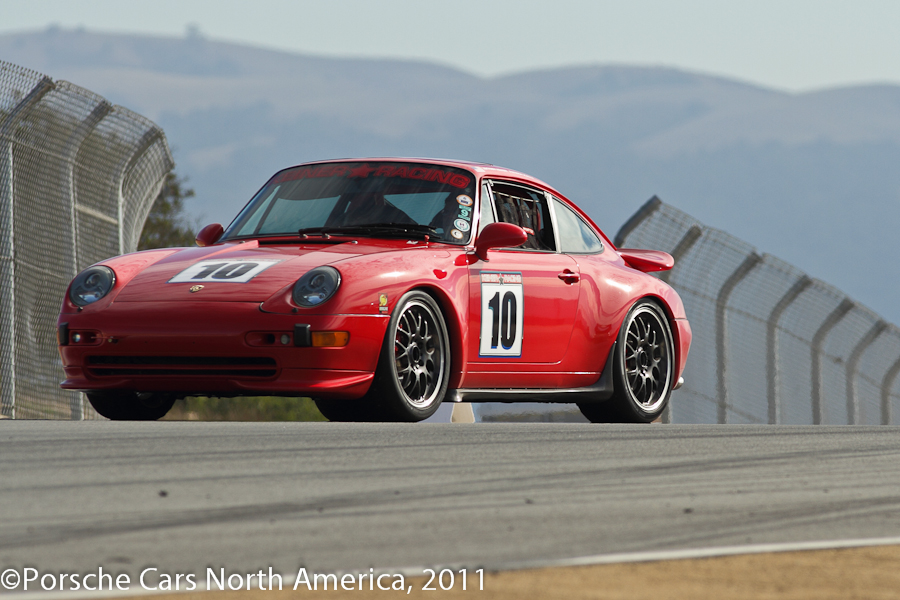
It has become a tradition.  Every three or so years, since the start of the new century, the Porsche faithful gather to celebrate Porsche’s legendary competition record with a one-marque version of Goodwood’s Festival of Speed. This time around Rennsport IV was staged at the famous mountain top Laguna Seca course overlooking the Monterey Peninsula on the Central California coast, where no less than 400 racing Porsches turned up; many of them truly historic, and some of them from Porsche’s own museum.
And, while an undertaking such as Rennsport is the product of many people, its birth was due to the passion of a single man; the late Bob Carlson. Porsche Cars North America’s longtime PR representative, he had a vision of encapsulating Zuffenhausen’s motorsport history through an event that was nothing less than a living museum, where the cars could not only be seen, but could be seen being driven hard on a race track, they way they were intended to be.
In a way, Rennsport was, for the American historic and vintage community, an intellectual departure from the norm, in that it didn’t so much revere the Porsche racers as “works of art,” but rather celebrated their careers as “tools” intended to boost Zuffenhausen’s image (and that of their owners) at the tracks, in hillclimbing and on the rally stages of the world.  Put another way, what Bob Carlson did was to remind us of their true purpose, something all too often forgotten in the bidding wars found at auction houses today, where these vehicles have become trophies of a rich and successful life.
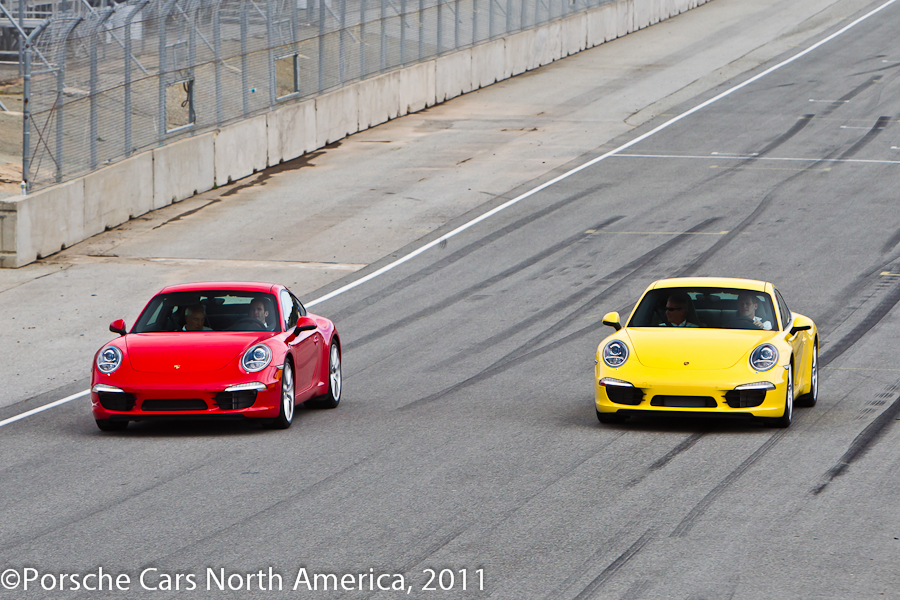
After Carlson’s death, there were fears that Rennsport would die with him. However, the movers and shakers at Porsche Cars North America kept the faith, and in the process produced the most successful yet rendition of his dream, for which they are to be congratulated. Even so, there very existence of the Rennsport tradition is a reminder that manufacturer participation in motorsport is not an altruistic excise, but one driven by commercial corporate goals, a fact evidenced by the ties between the 911 theme and the introduction of the Type 991, the latest version of the venerable and iconic Porsche bestseller.
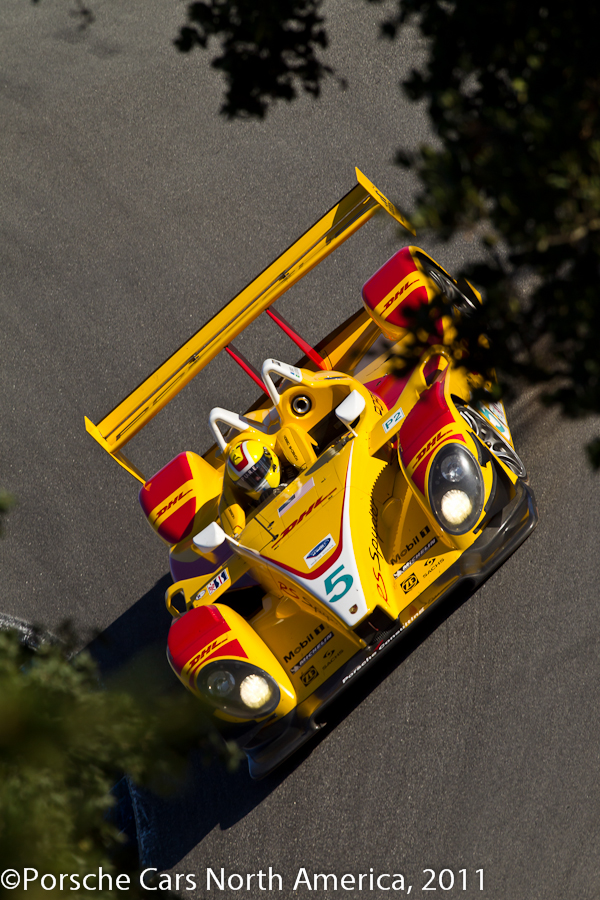
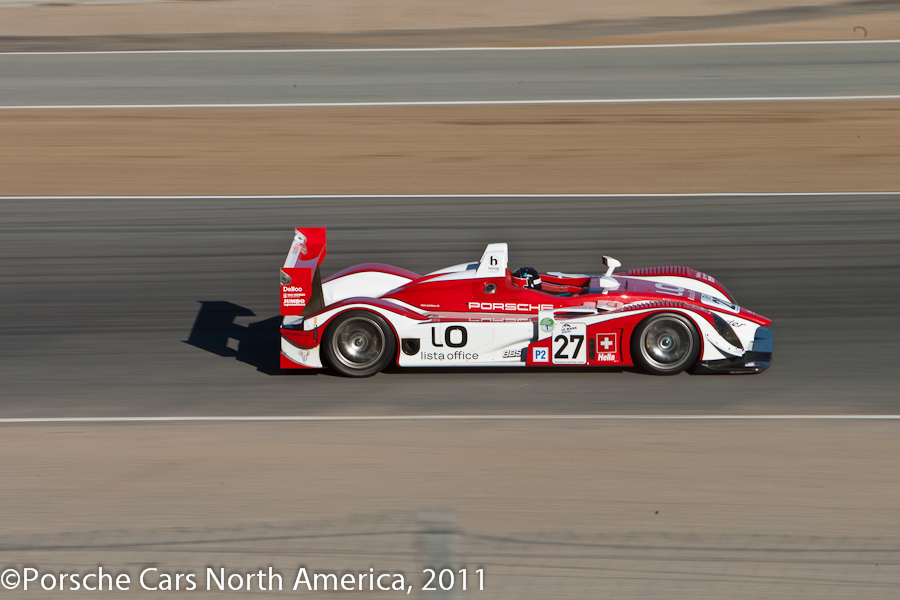
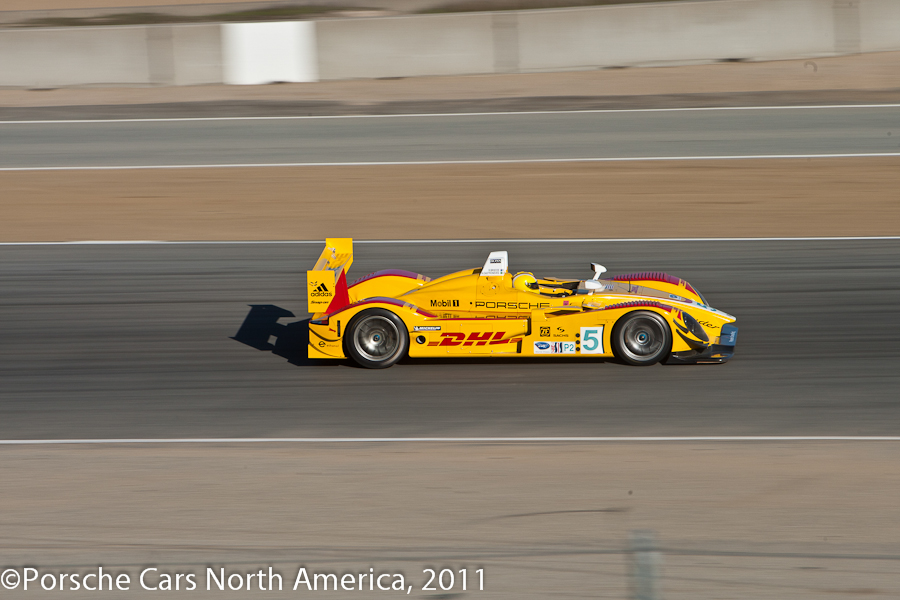
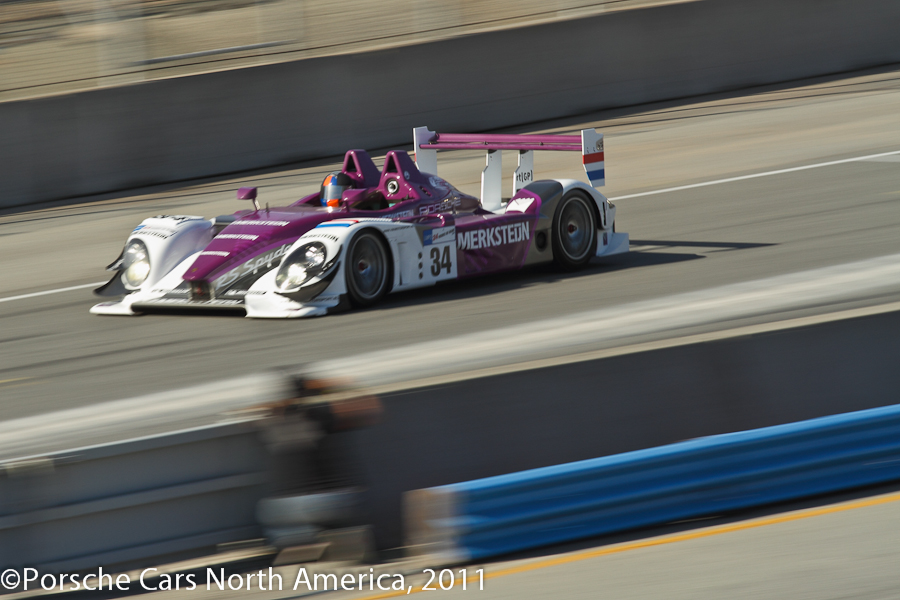
It is this latter fact which leads us to look forward and not backward to the future of Porsche’s competition fortunes. Ever since 1998, when Norbert Singer’s 911GT1 98LM won Le Mans outright, Zuffenhausen has focused its motorsport efforts on the customer-driven production car arena with its 911GT3 program; the only exception being, the RS Spyder project which flourished for three years in the American Le Mans Series under Roger Penske, and which subsequently showed the way at La Sarthe in the LMP2 division.
Now, however, it has been decided to return Porsche to the forefront of sportscar racing in 2014, through a new prototype project stressing alternative energy sources as mandated by the rules package which will go into effect that year. The only problem with all of this is the effect this will having on the racing future of Porsche’s Volkswagen Group partner Audi, whose record as a winner in the prototype sandbox has made it a sales leader in the road going universe.
At one point earlier this year it seemed that Audi might abandon the sportscar scene for Formula One, leaving the way clear for Porsche to “its thing.”  With the decision to scrap that tentative plan, the VAG board is facing the possibility of having to fund two multi hundred million Euro projects to have two of its brands compete against each other on a highly visible stage where defeat could compromise reputations at a time of economic distress.
Many within the sport see no problem with this, noting that the two potential combatants will be demonstrating different approaches to energy conservation and therefore will not be affected by the dictum that there can only be one winner in a race. In a world where the decision to purchase or not to purchase is largely the function of favorable impression, pitting Audi against Porsche is at best a hugely expensive gamble that those responsible for VAG’s financial well being might not want to take.
Fortunately for those of us on the sidelines where we have to make no such choices we can take refuge celebrating the past in grand style thanks to Bob Carlson and Rennsport –may there be many more.

Bill Oursler, October 2011
Images Copyright and Courtesy of Porsche Cars North America


Time Machine

It is held that the past is a foreign land, once visited, but one that we are destined never to return to. Well, that may be true but sometimes, in special circumstances, we can bring the past to us in the here and now.

“He was the craziest devil I ever came across in Formula 1” Niki Lauda on Gilles Villeneuve

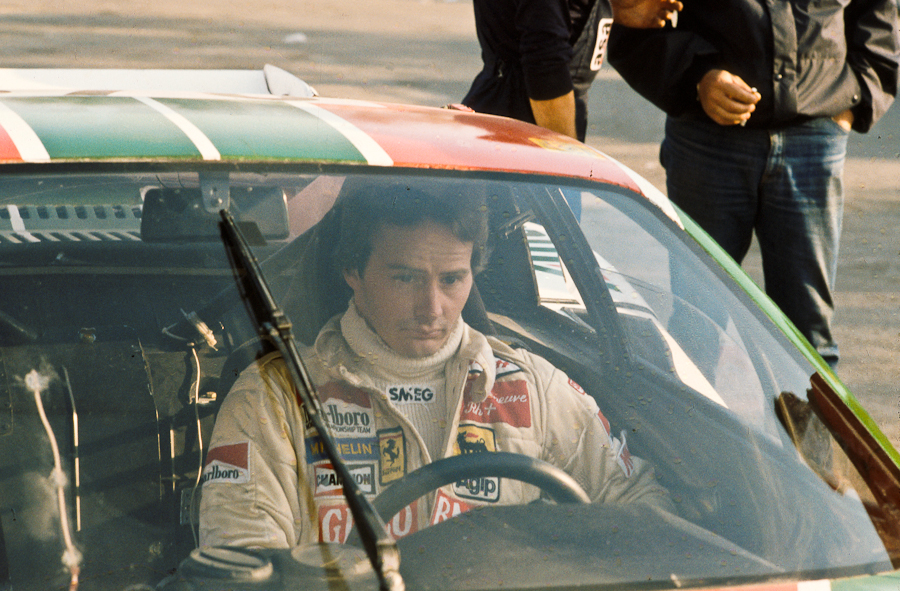
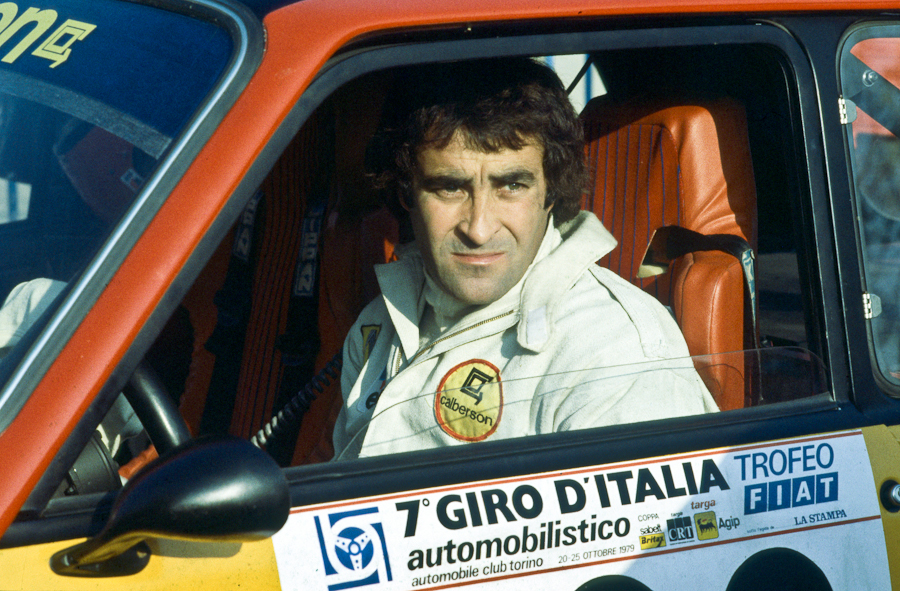
It is hard to imagine that Fernando Alonso or Lewis Hamilton will be racing on Italy’s roads in late October but some 30 years ago that is what happened. Gilles Villeneuve, Ferrari’s Grand Prix star and runner up to Jody Scheckter in the 1979 F1 World Championship took part in the Giro d’Italia that autumn.

Gilles…………..

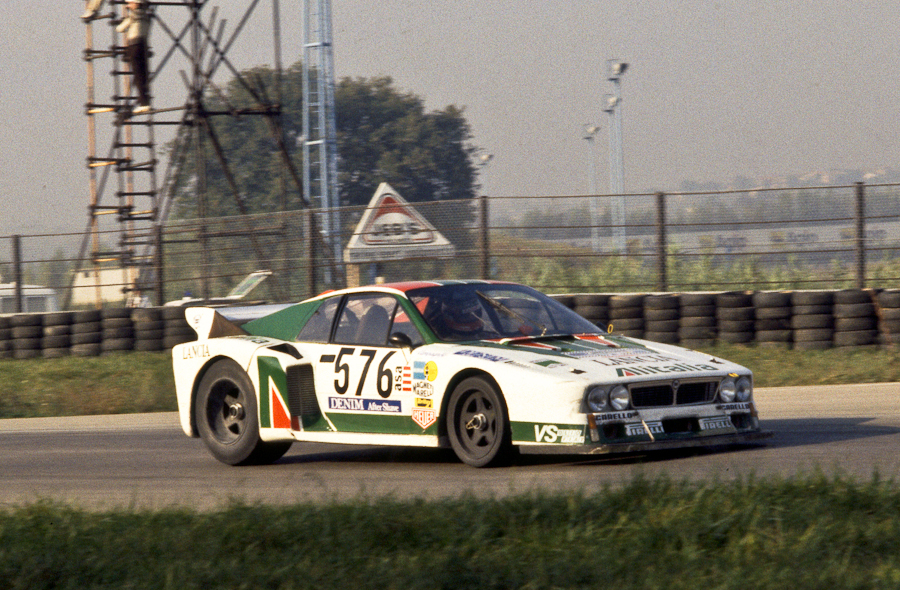
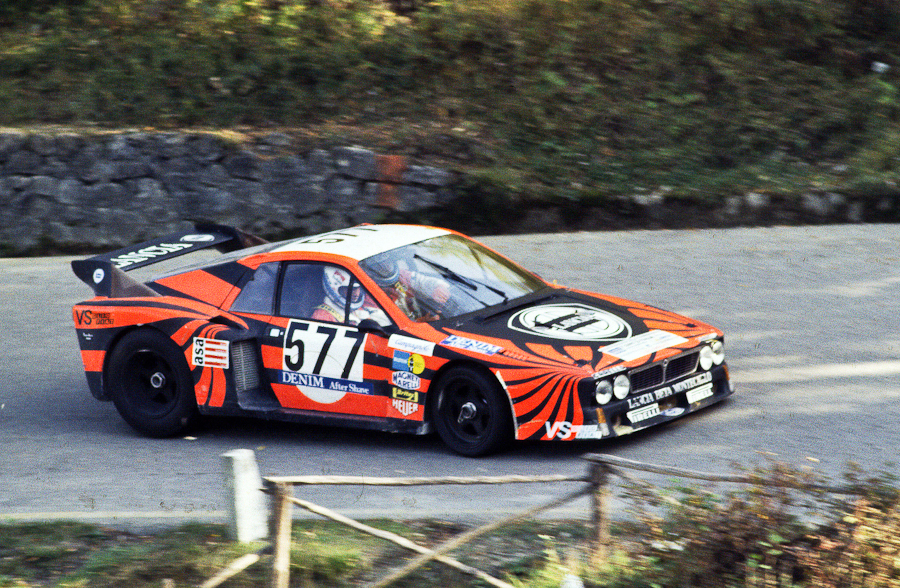
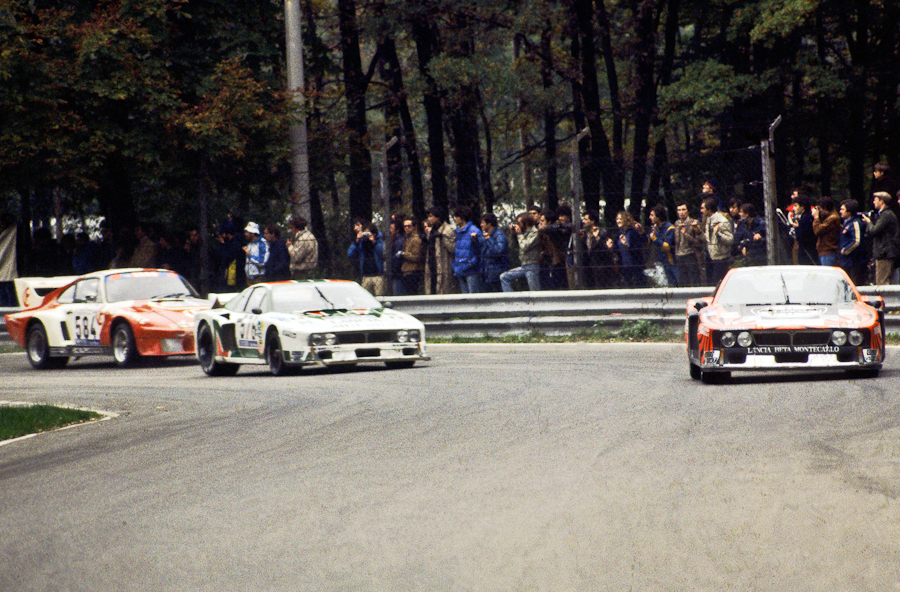
The Giro d’Italia was a madhouse event, part rally, part race held on the roads and tracks of Italy from 1973 to 1980.

I’ll have mustard with that………

Italy will be celebrating 150 years of unification  in 2011, so some bright spark had the idea of reviving the Giro to add to the nation’s gaiety. How inspired. I am planning  to cover the event when it happens in late October.

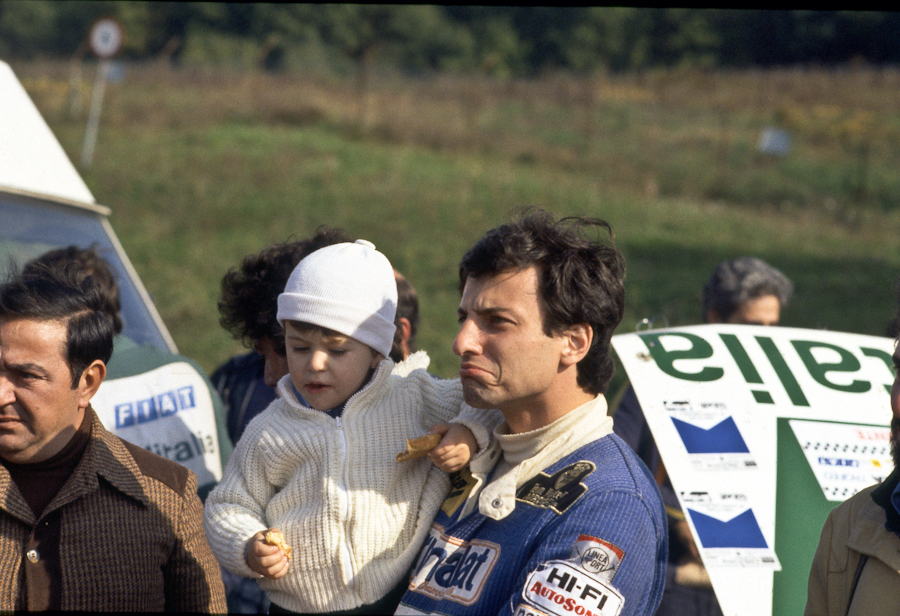
So when the organisers of the 2011 event put out a series of photos from the 1979 and 1980 events it seemed a good excuse to run some Group 5 goodness.
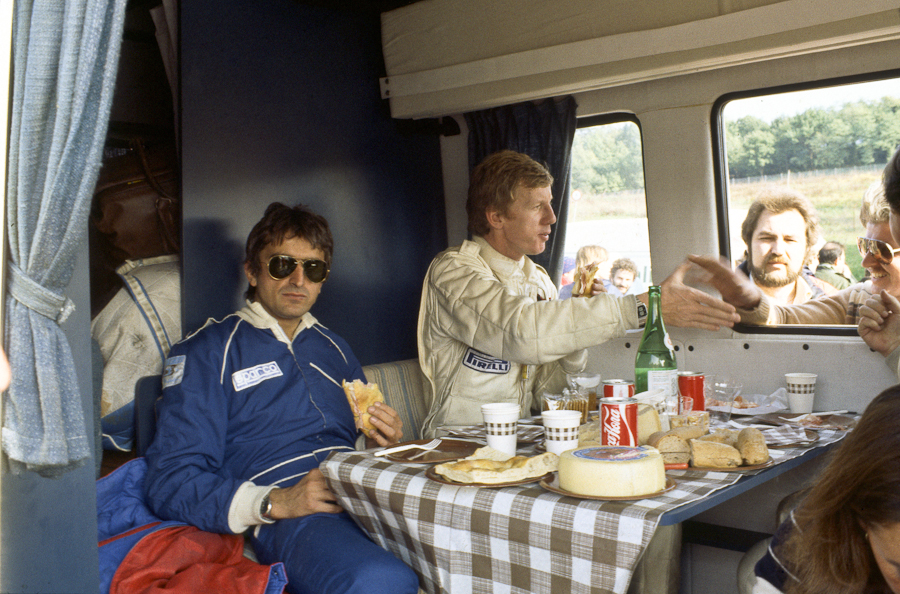
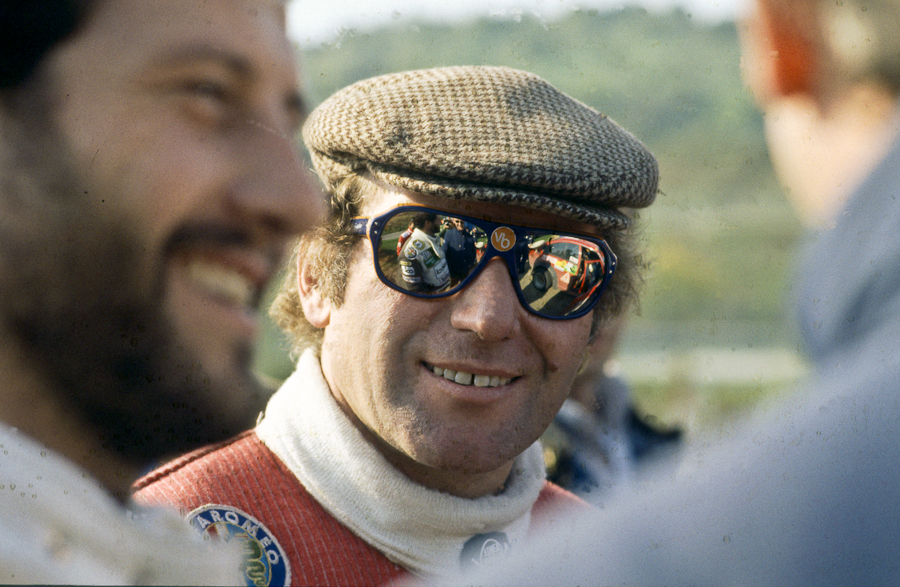
Villeneuve’s co-drivers on the 1979 event were  Walter Röhrl and Christian Geistdöfer, here enjoying 70’s style hospitality.

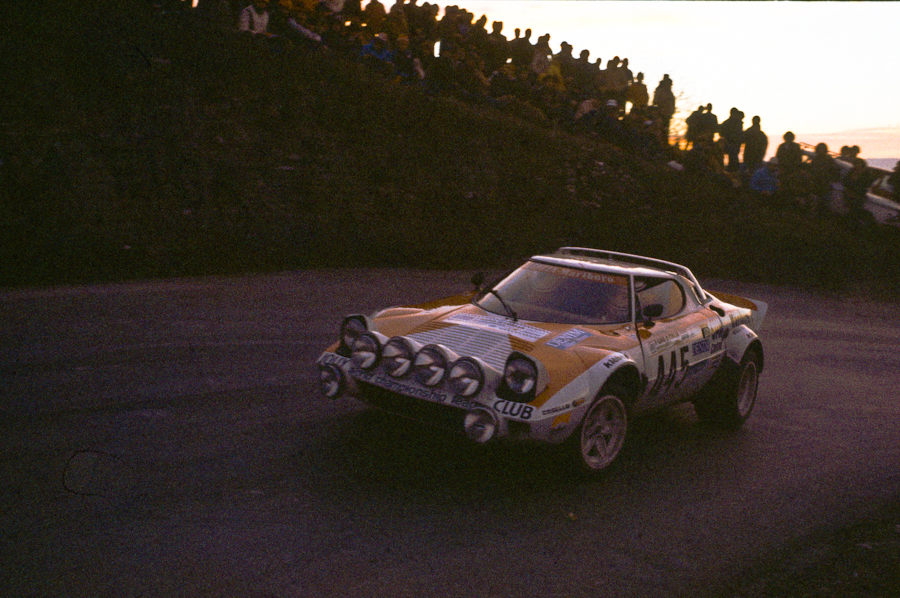
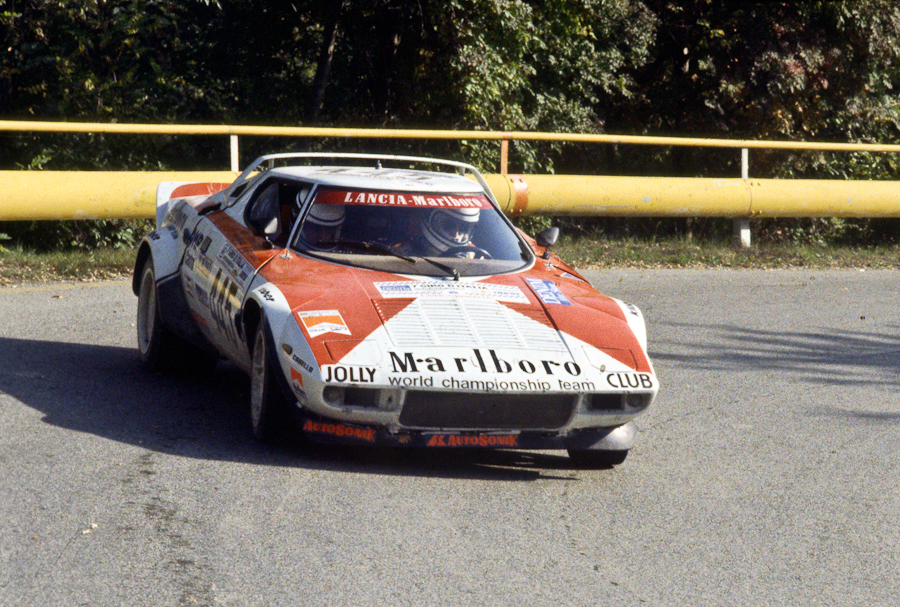
Stratos

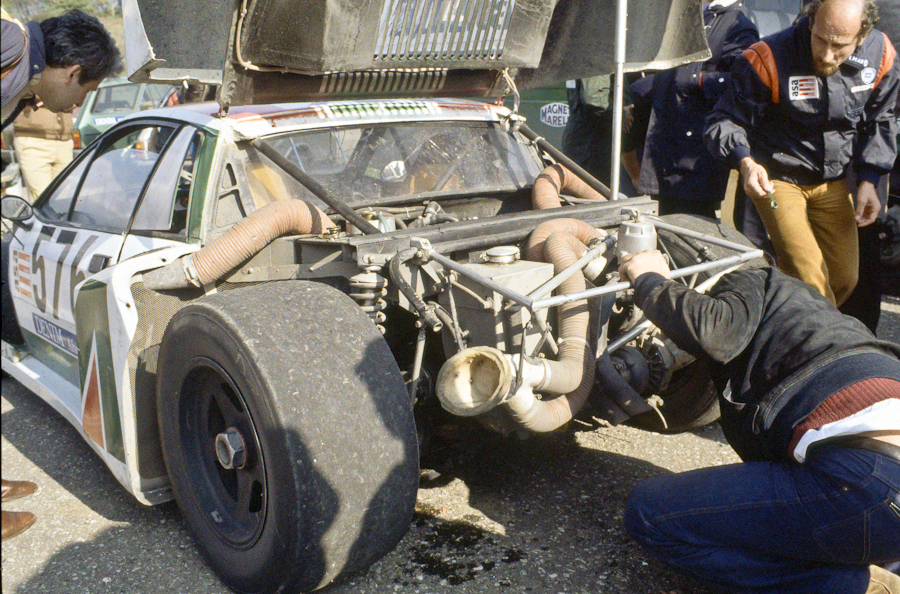
The star trio finished top of the pile in their Lancia  but were later disqualified, the reason I am informed, is driving on a motorway!

Group 5 Madness

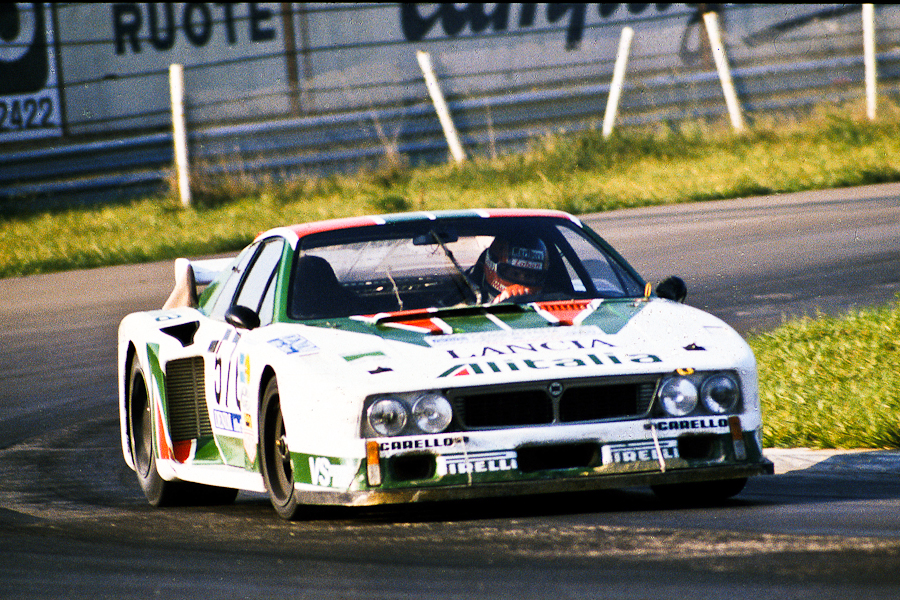
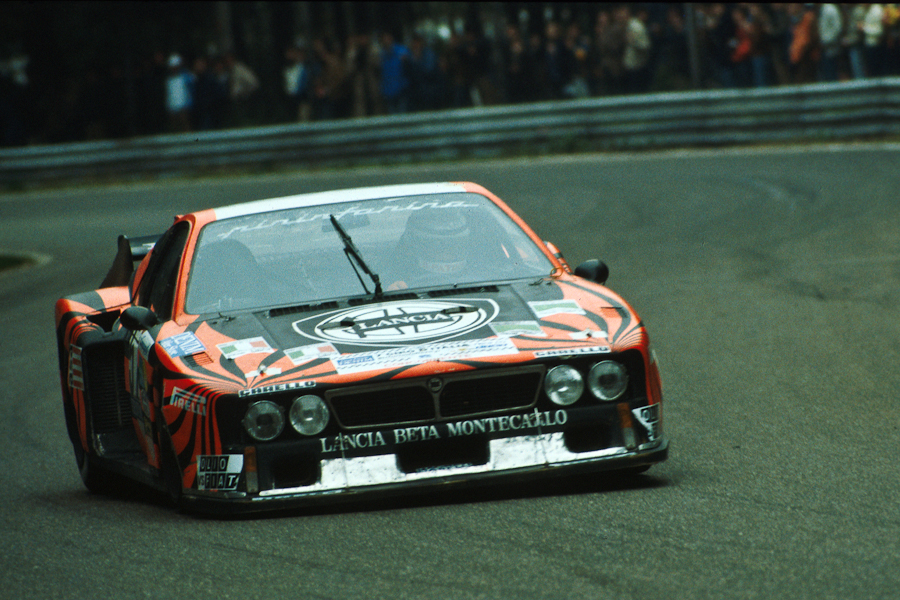
Also disqualified was the other factory Lancia, which finished second on the road.

Lancia Battle

Here is the Lancia on one of the circuits.

Patrese and Son

The second car was driven by Riccardo Patrese.

Patrese was driving for Arrows in F1 that year.

Now Maximum Attack

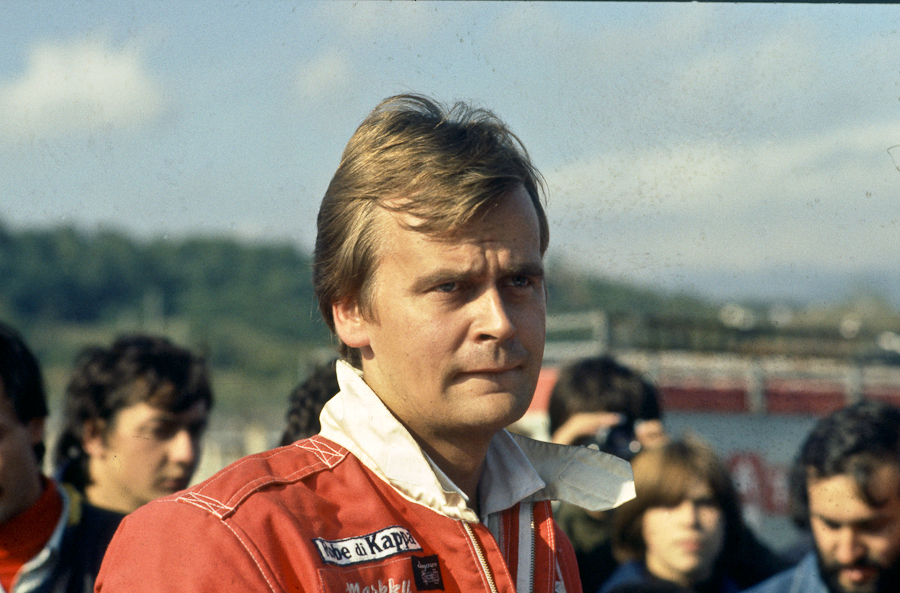
His co-drivers were Markku Alén and Ilkka Kivimäki, the reigning World Rally Drivers Champion.

The Serious Bit

The Lancias were the class of the field.

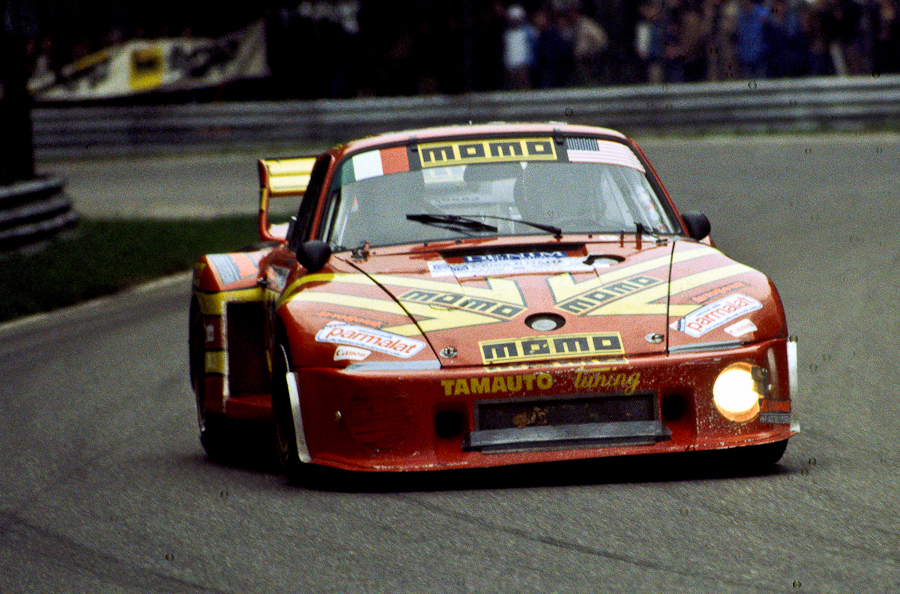
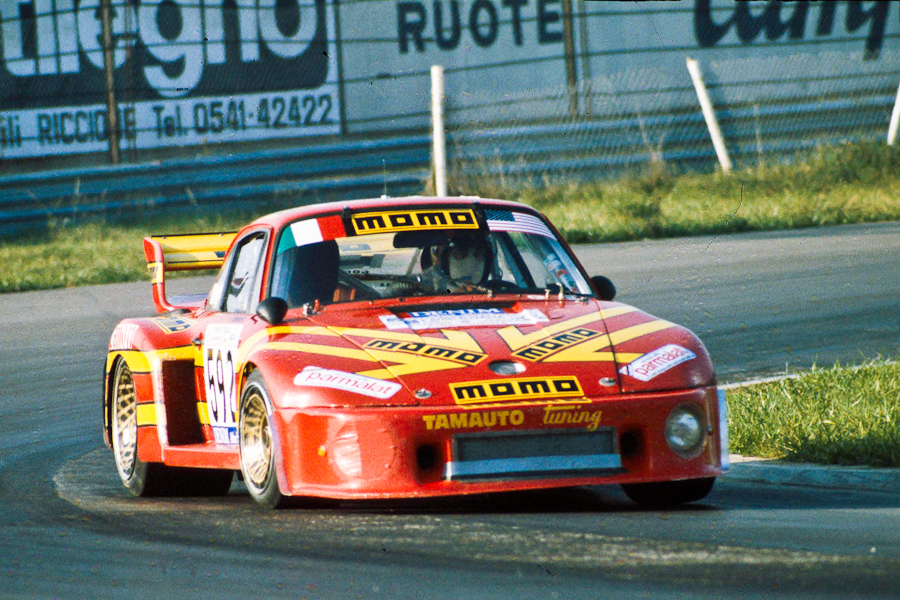
Momo

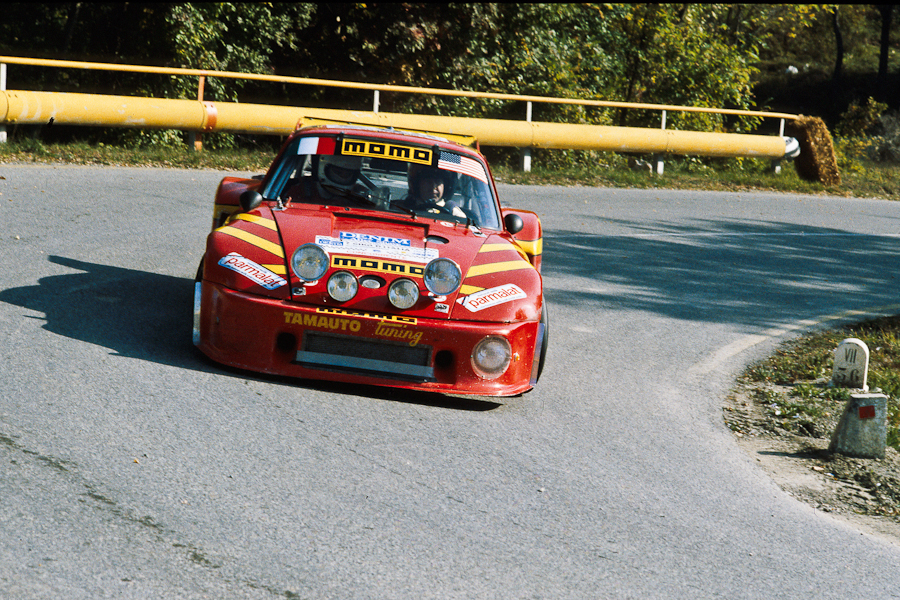
After the exclusion of the Italian pair, victory fell to that great expat Italian in US Sportscar racing, Giampiero Moretti.

935 K3

Moretti was accompanied in Italy by Giorgio Schon and Emilio Radaelli (ITA) in his Porsche 935 TT biturbo. He is famous for winning the 1998 Daytona 24 Hours and, of course, was founder of the Momo brand of racing accessories.

Porsche Power

The 935 would have been a handful of the roads.

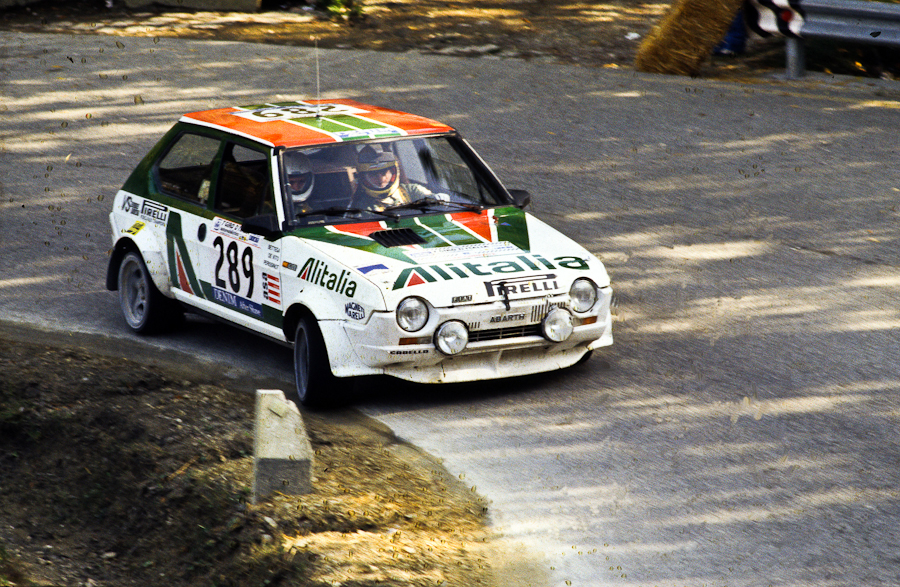
Attilio Bettega

Factory Fiat/Lancia rally driver Attilio Bettega along with Maurizio Perissinot and Enzo De Vito in the Fiat Abarth Ritmo 75 Alitalia.

Tour de France?

Another rally star, Guy Frequelin ran in a Renault 5 turbo

Simian?

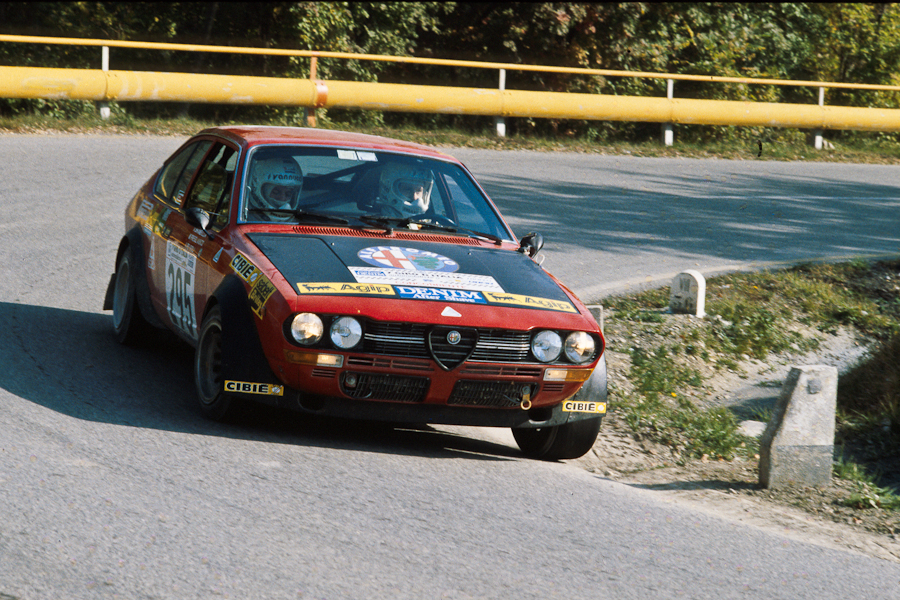
F1 star, Vittorio Brambilla, also known as The Monza Gorilla,  raced in an Alfa Romeo Alfetta GTV 2000.

GTV

His co-drivers were Mauro Pregliasco and Vittorio Reisoli.

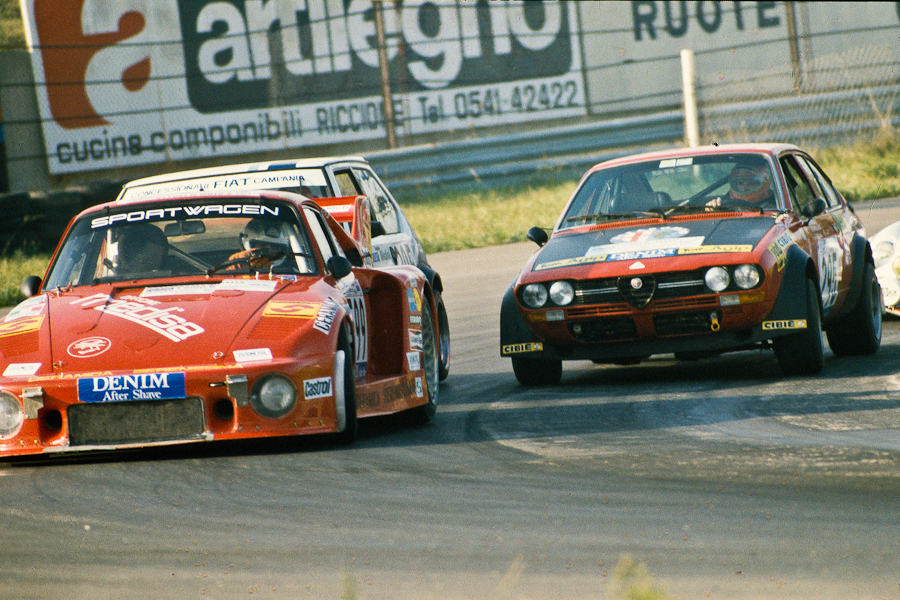
Porsche v Alfa

Here the Alfa encounters another 935.

Andrea de Cesaris

A 70’s classic Italian super car, the Lancia Stratos HF, entered by The Jolly Club.

Jolly Japes

Top Italian rally pair, Tony Carello and Renato Meiohas were joined by Grand Prix aspirant, Andrea De Cesaris, in the Stratos.

That is it for 1979. 1980 will be along some time soon.

John Brooks, September 2011. Photos courtesy of and copyright Giro d’Italia/Photo 4


The Land of Lost Content

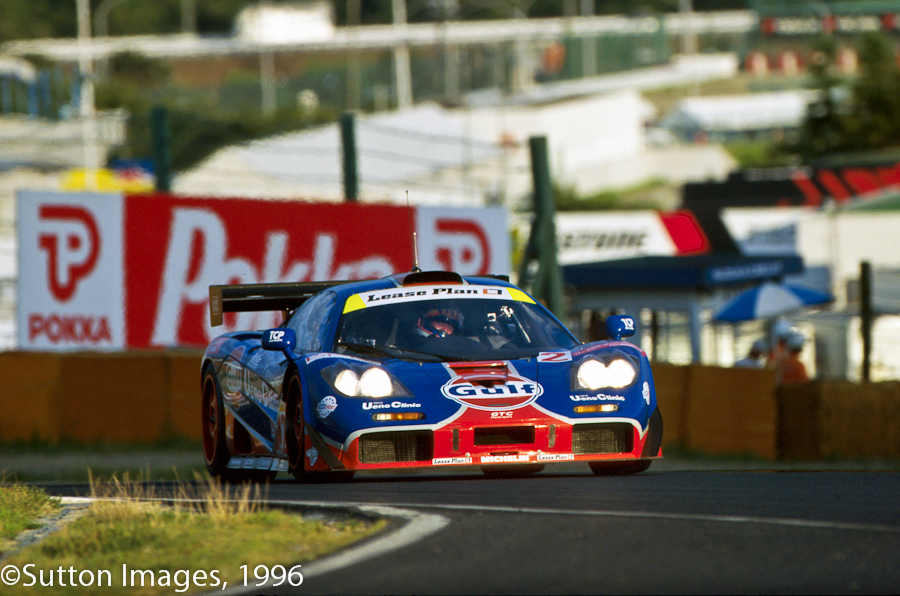
Fifteen years ago today I was in Japan, covering the Pokka 1000 kilometers at a baking hot Suzuka circuit.

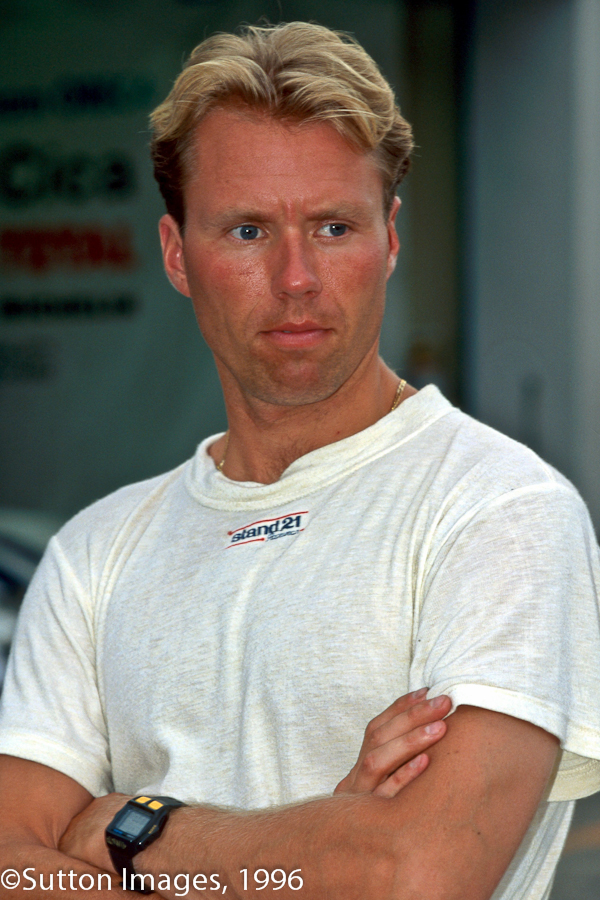
Jan da Man

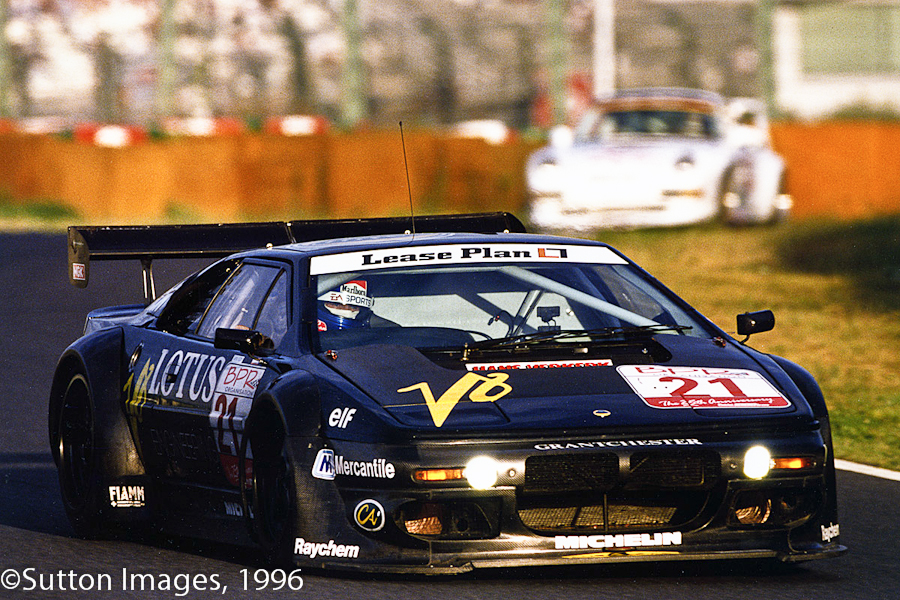
1996 was the time of the BPR Global Endurance Series, McLaren F1 GTR against Ferrari F40 against Lotus Esprit with an armada of Porsche 911s to make up the numbers. It was also the end of that era, as the Porsche 911 GT1 would appear at the next round and the game would be over for the cars mentioned………a gun to a knife fight.
JJ

Ray Bellm was chasing the driver’s title with his regular partner, James Weaver, but for the long distance Japanese event they were joined by Finnish ace, JJ Lehto. The 1995 Le Mans winner had raced with the Gulf McLaren outfit earlier at Le Mans and was widely regarded as one of the fastest drivers in the endurance arena.

I See it Shining Plain

Although in the long term it means little in an endurance race, competitive instincts rise to the surface during Qualifying, Suzuka 1996 was no exception.  Jan Lammers, Pierre-Henri Raphanel and especially JJ Lehto had designs on pole position. I was shooting the session out on the inside of the exit of turn seven, behind the pits. The cars would pop into view having climbed up from the lowest point of the track, with little ground effect the GT1 machines were more than a little wayward. Naturally JJ was a bit wilder than most and on his last lap I was convinced that I had caught him mid corner. Back then, no autofocus, no digital, just rolls of Provia. Somehow that shot came out and that moment stayed with me. Strange to say that I was looking through the archives for something this morning, there it was. A bit of research in Time and Two Seats and there is was 24th August 1996, exactly fifteen years ago.

Of course I did not realise it at the time but it truly was The Land of Lost Content. Ask JJ.

John Brooks, August 2011


Past Time

Just One Cornetto……………………

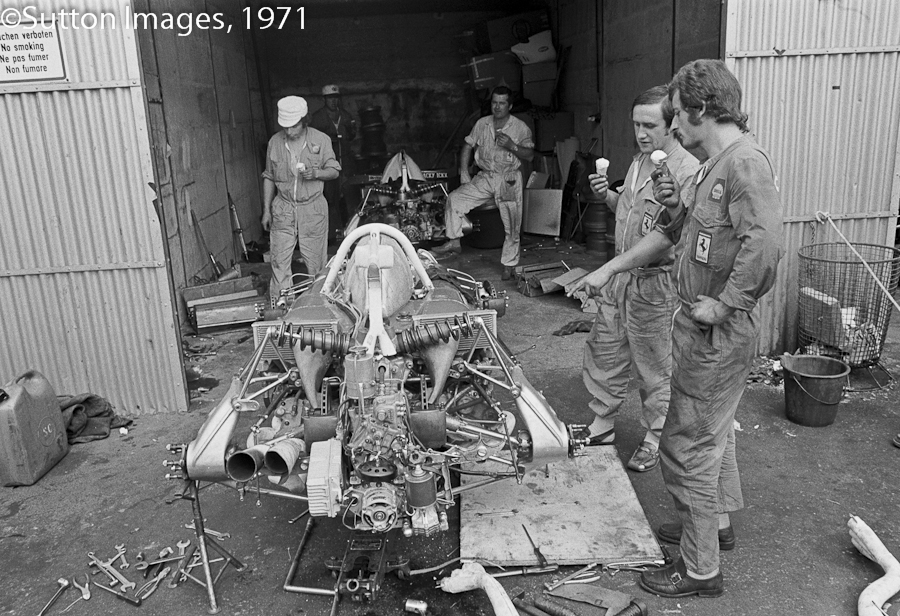
Looking through the excellent archives at www.sutton-images.com for another project, I stumbled upon this. Forty years ago this week, Ferrari mechanics are pictured at the Nurburgring, enjoying a post lunch ice cream whilst contemplating the guts of a 312B/2.

They got the Meccano set back together in good order and were able to see their drivers Clay Regazzoni and Mario Andretti finish 3rd and 4th. Team leader Jacky Ickx, starting from the front row, speared off the Nordschleife on lap 2, while chasing eventual winner, Jackie Stewart.

Not sure what Alonso would make of it all……………………………………..

John Brooks, July 2011