Category Archives: Rare and Interesting

Show Time

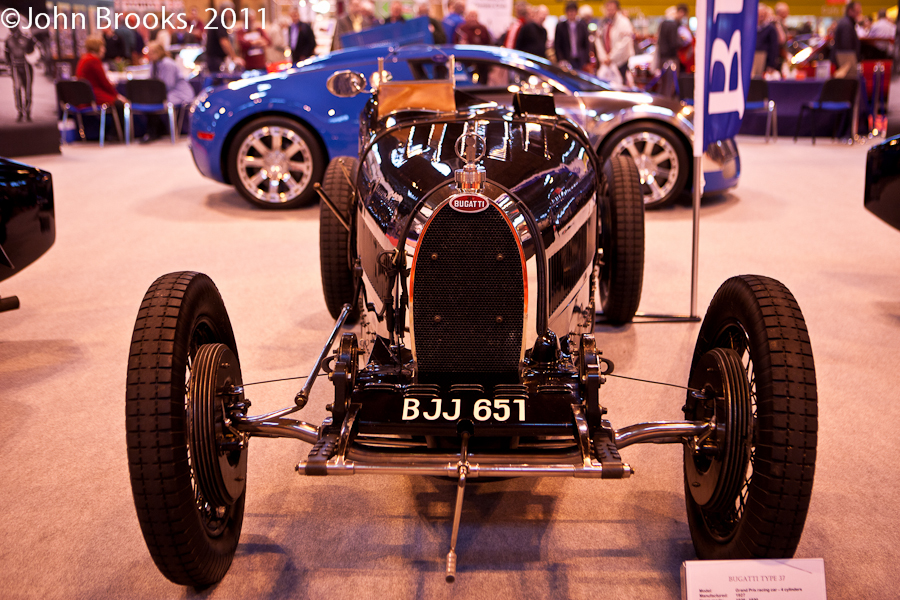
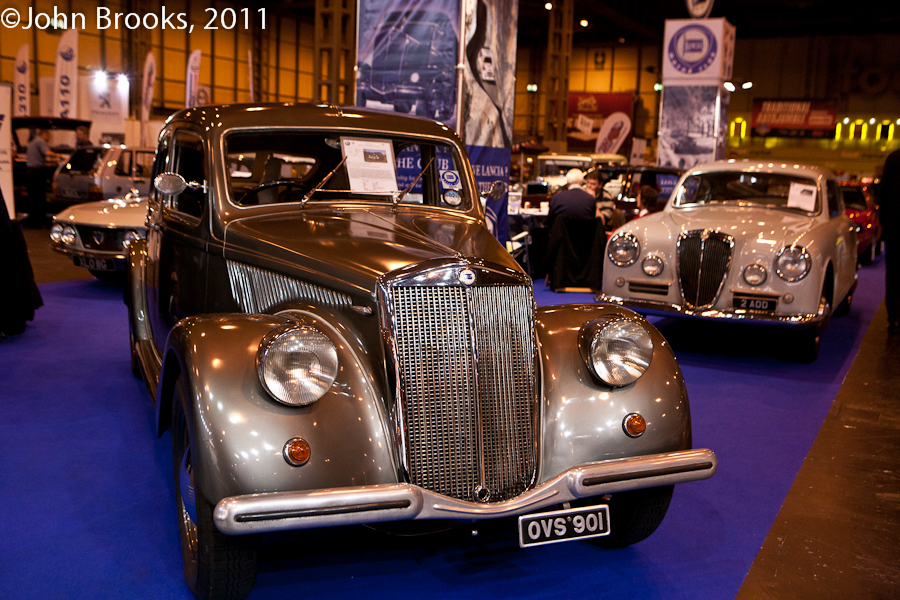
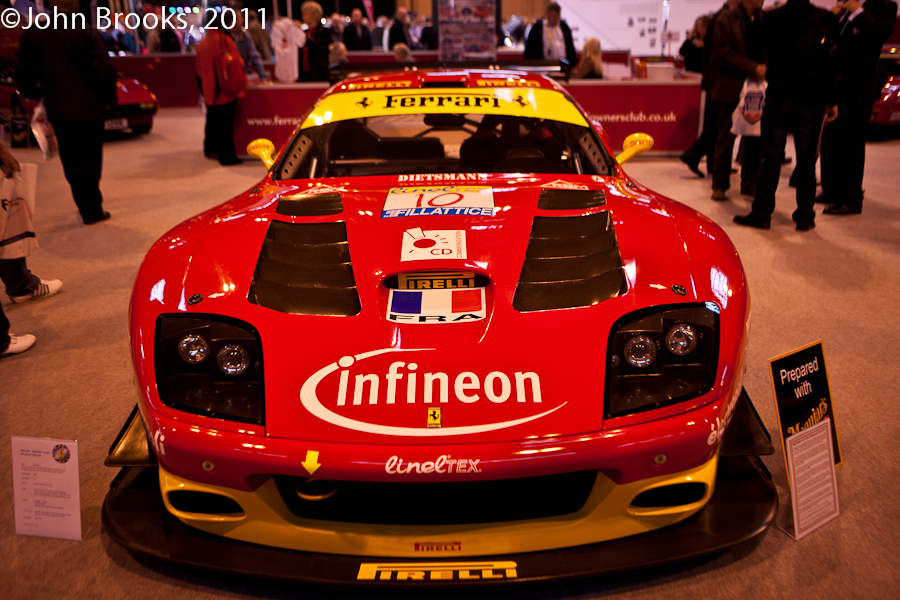
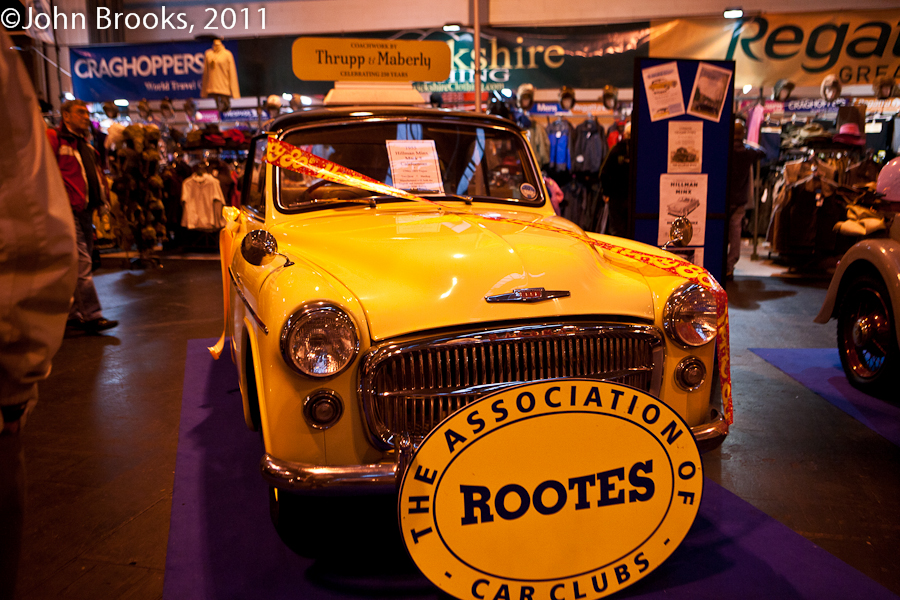
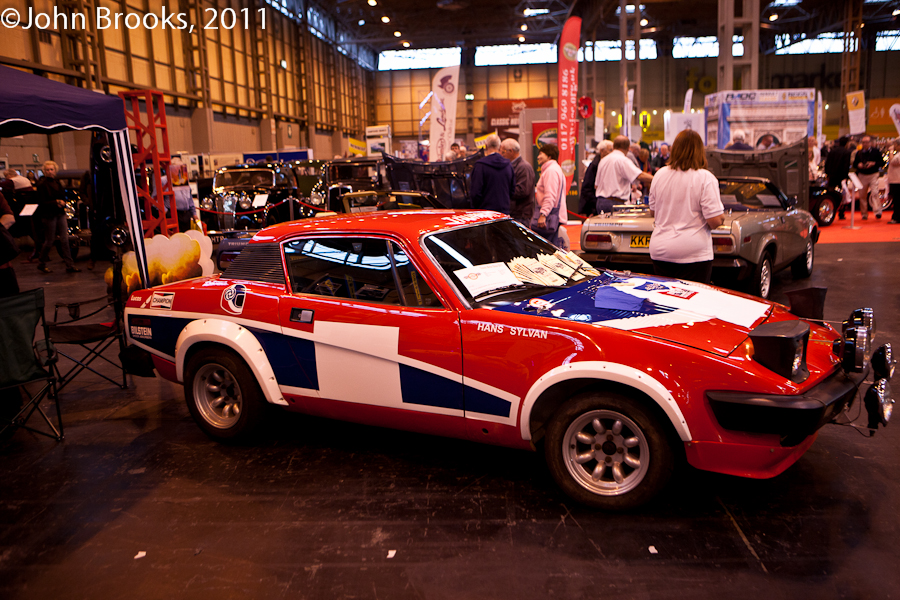
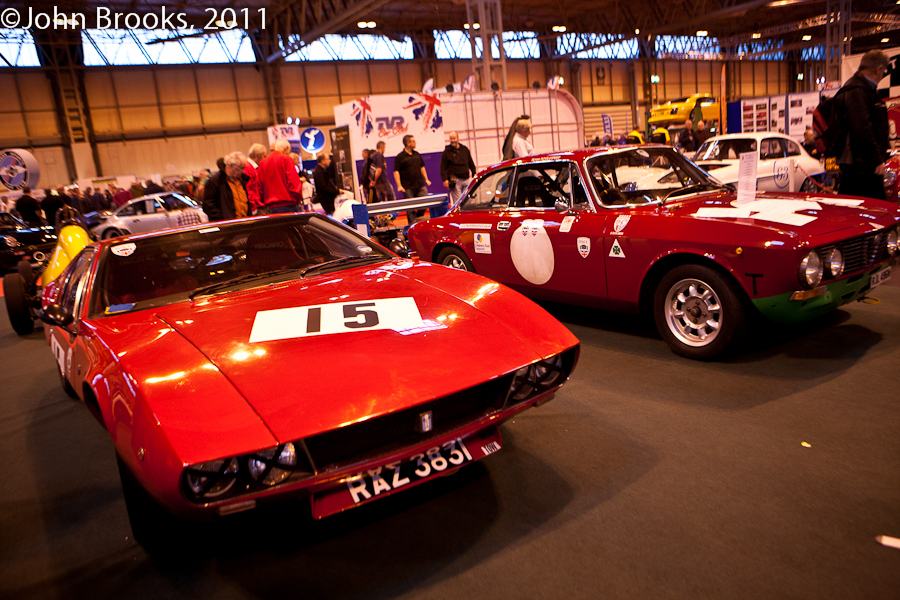
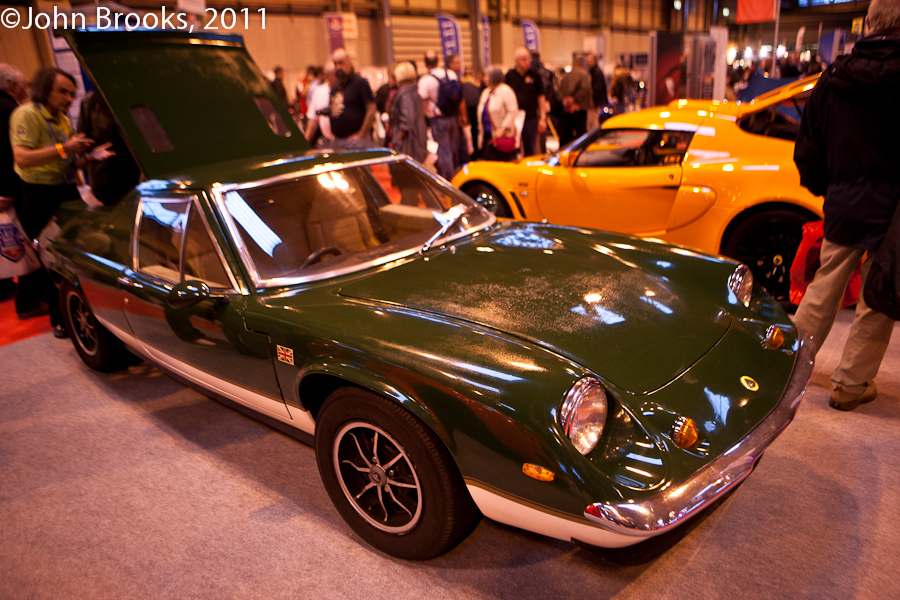
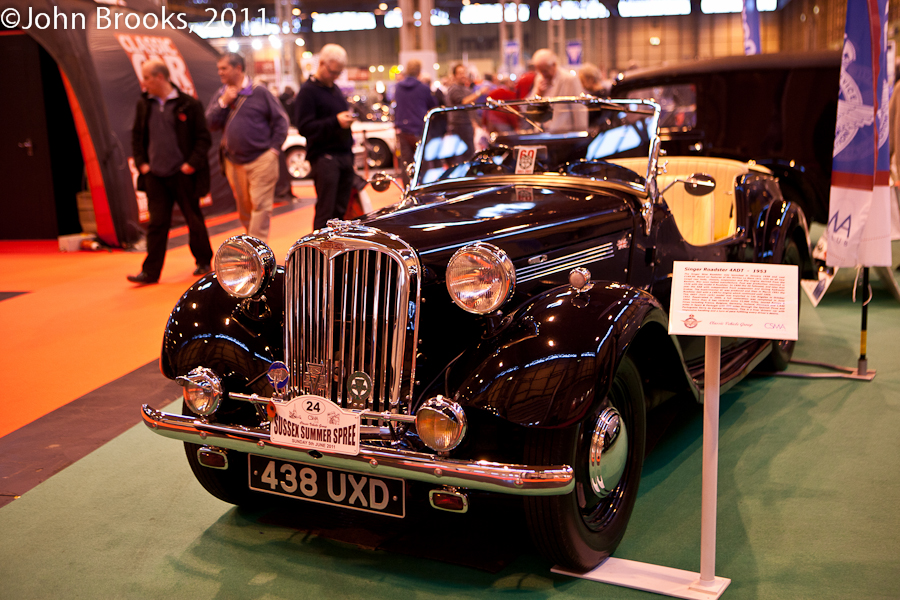
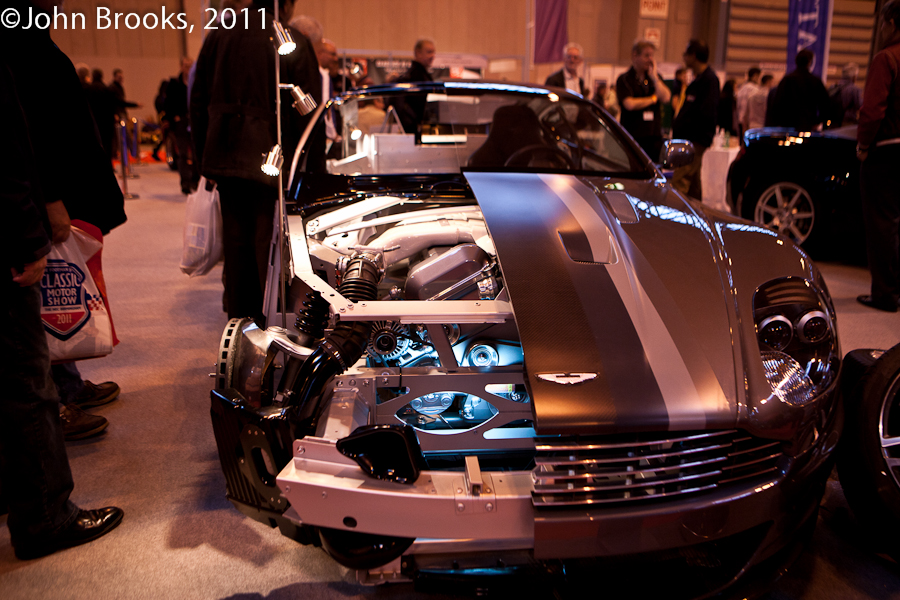
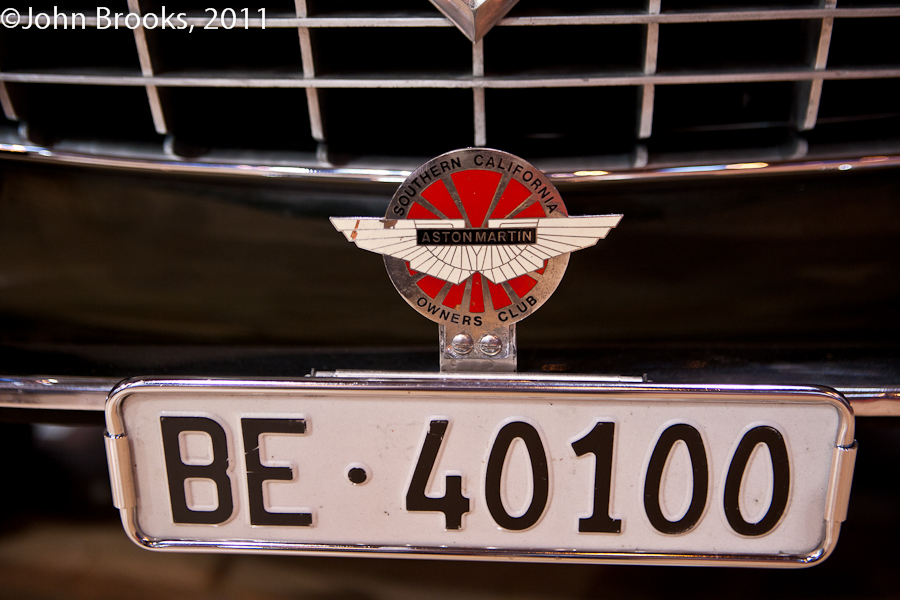
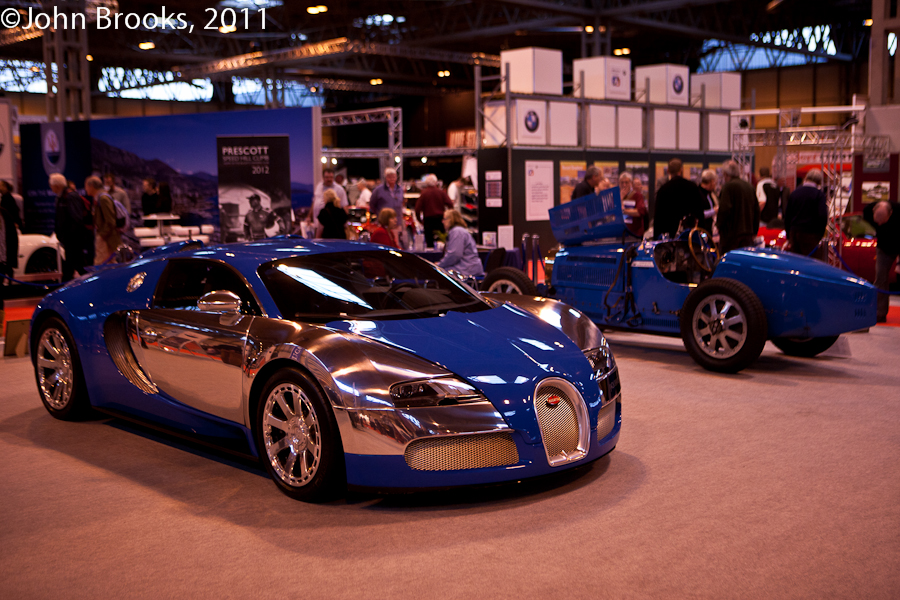
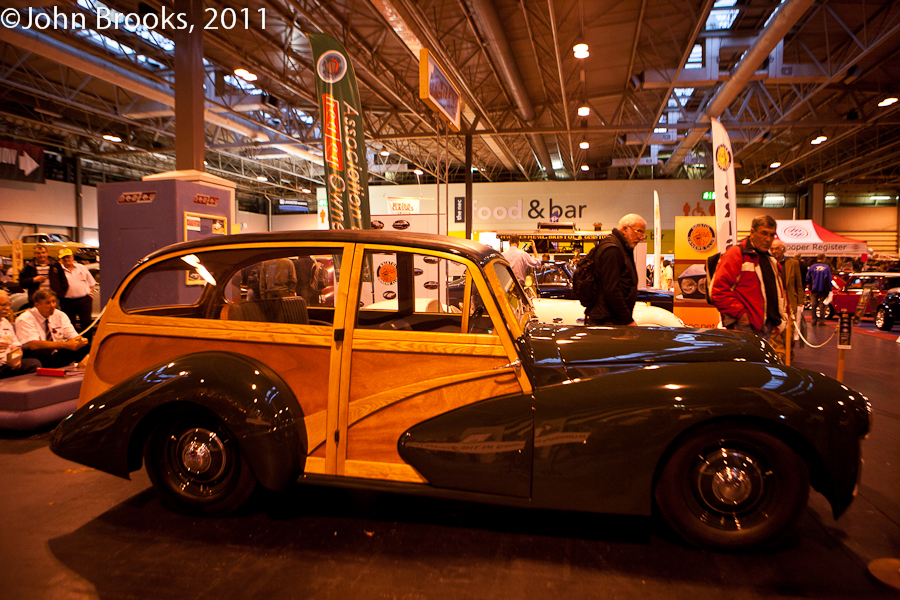
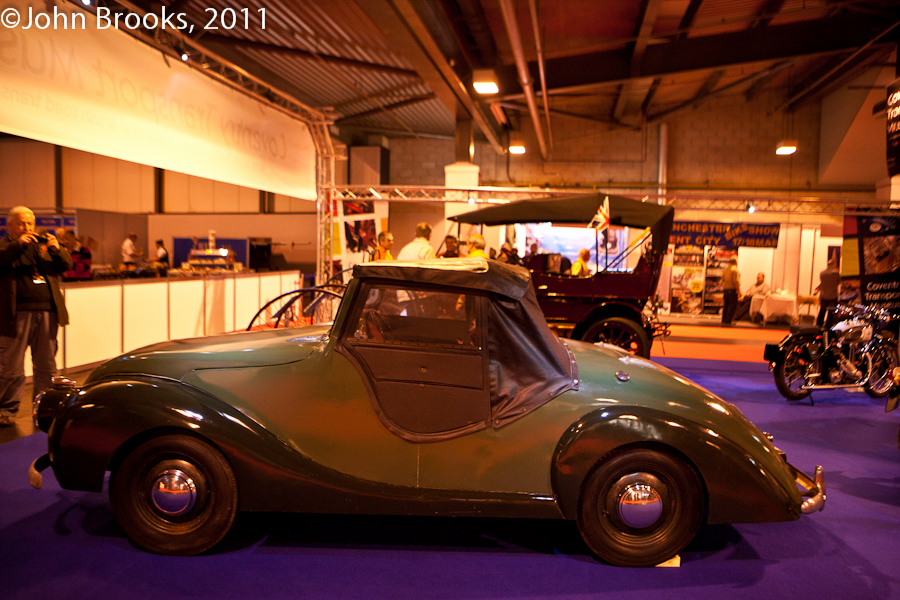
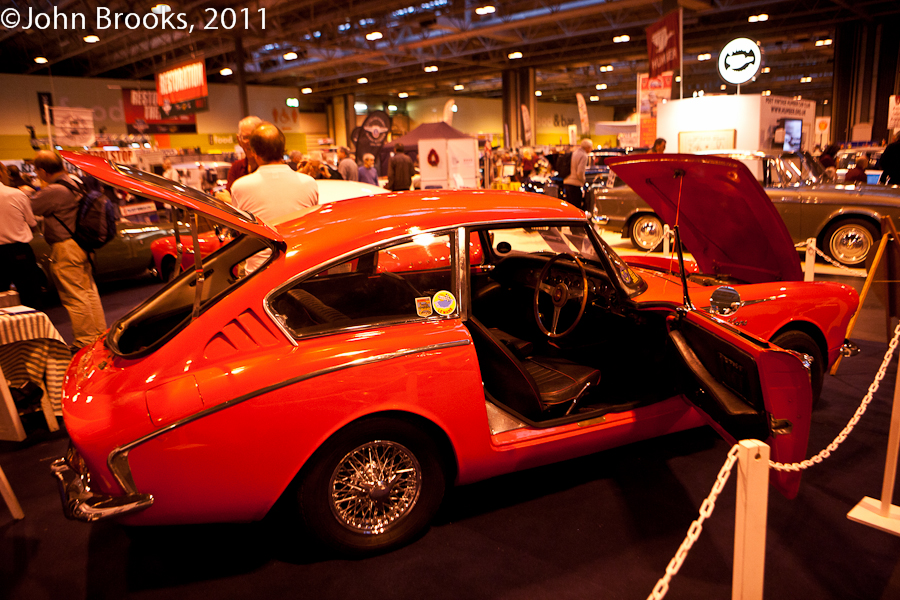
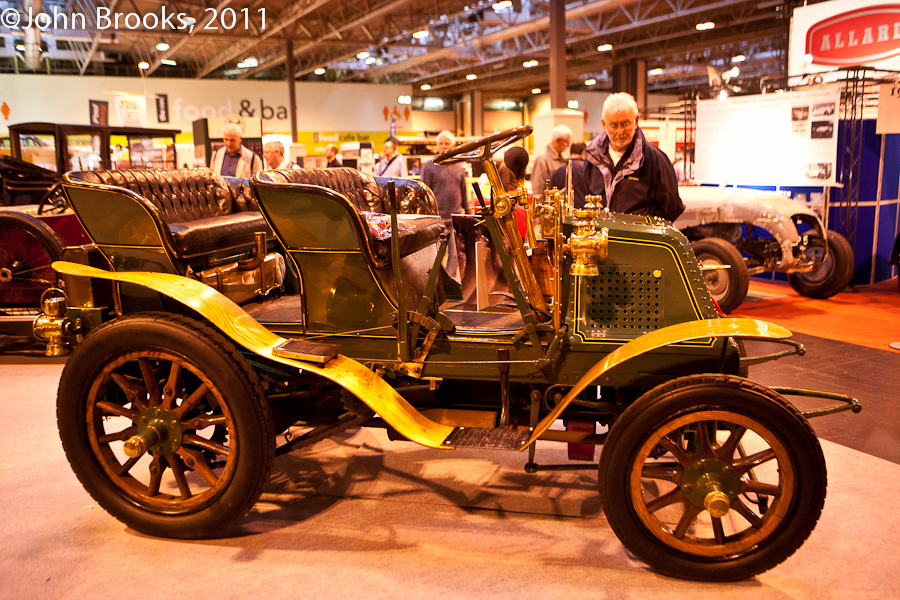
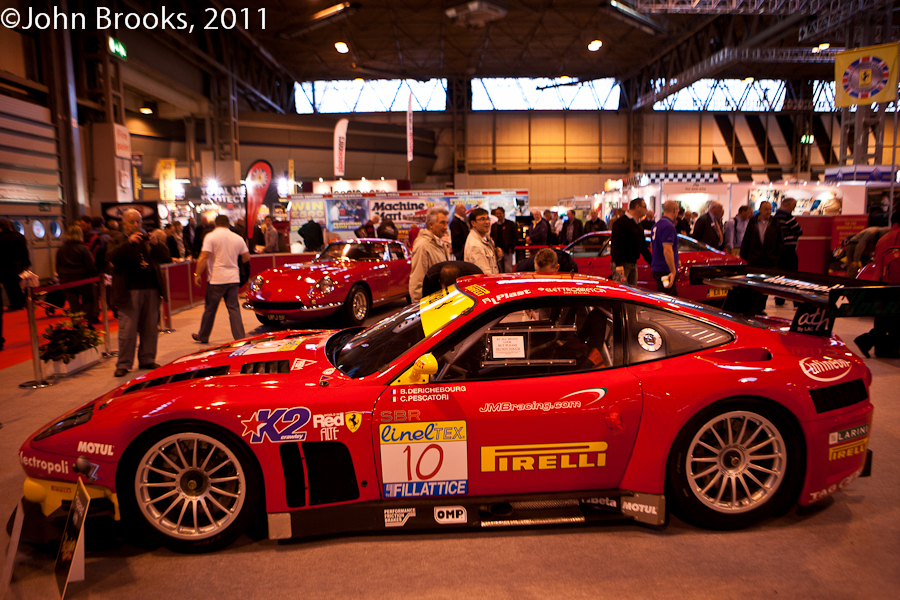
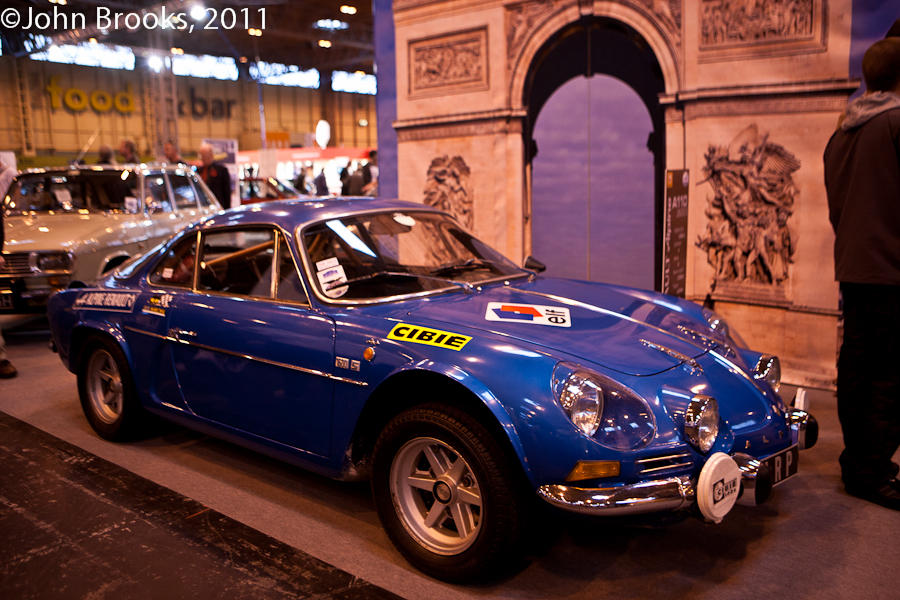
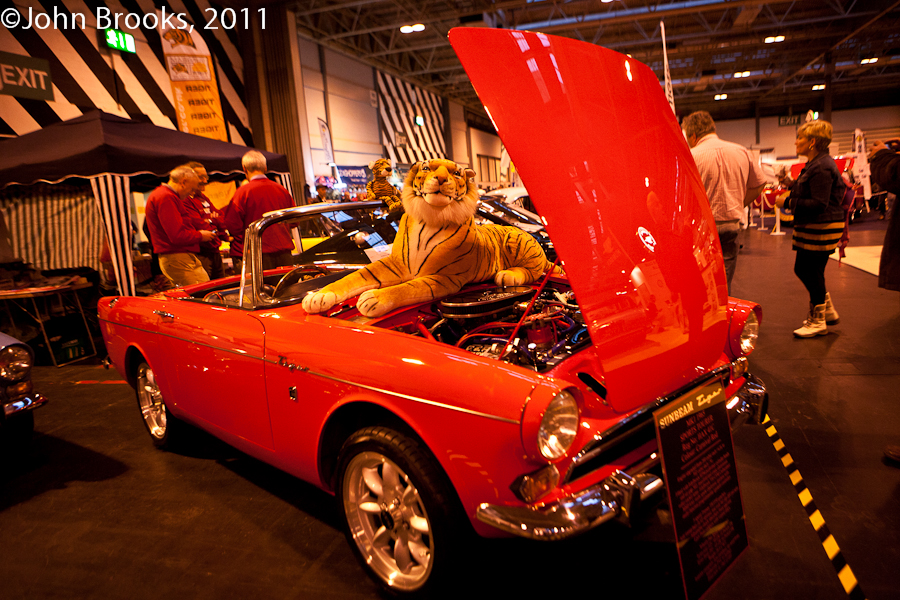
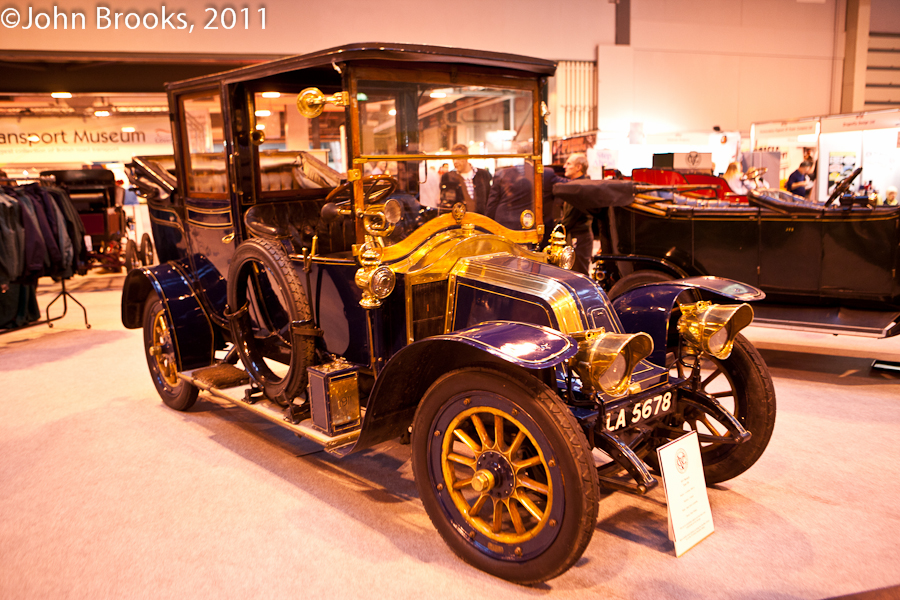
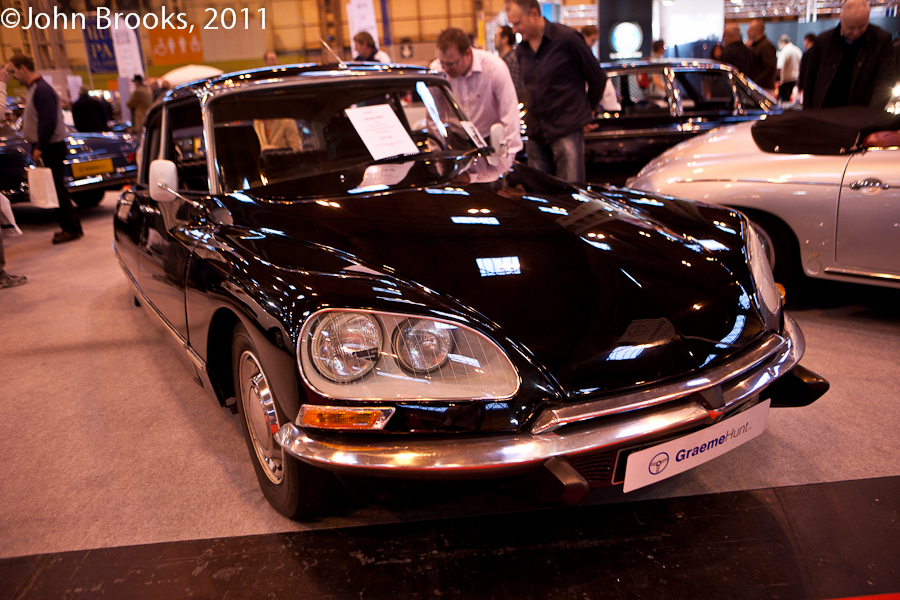
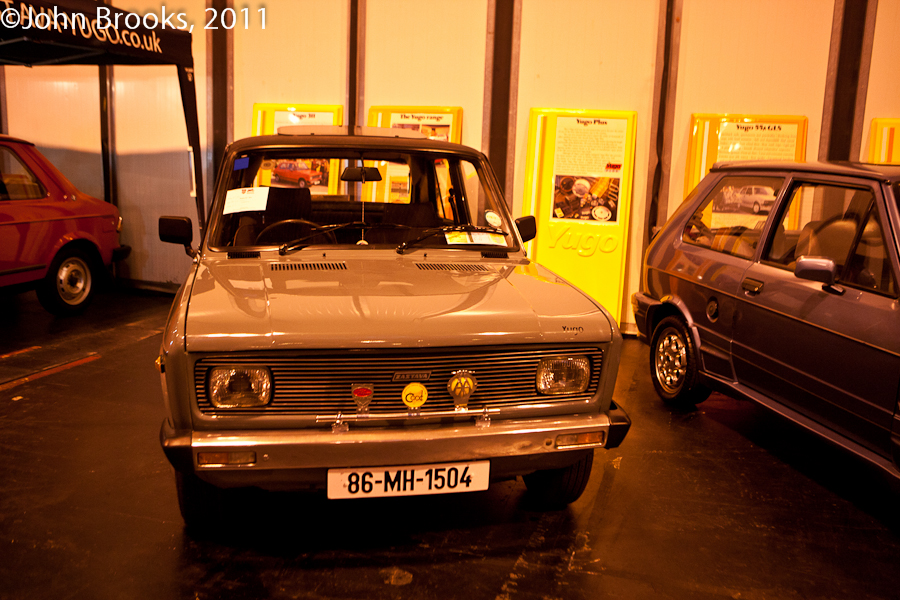
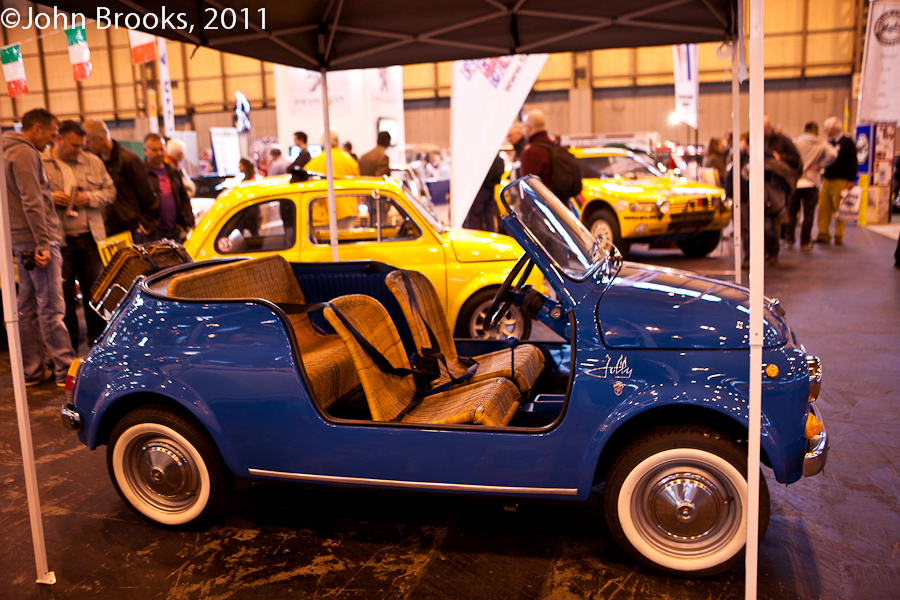
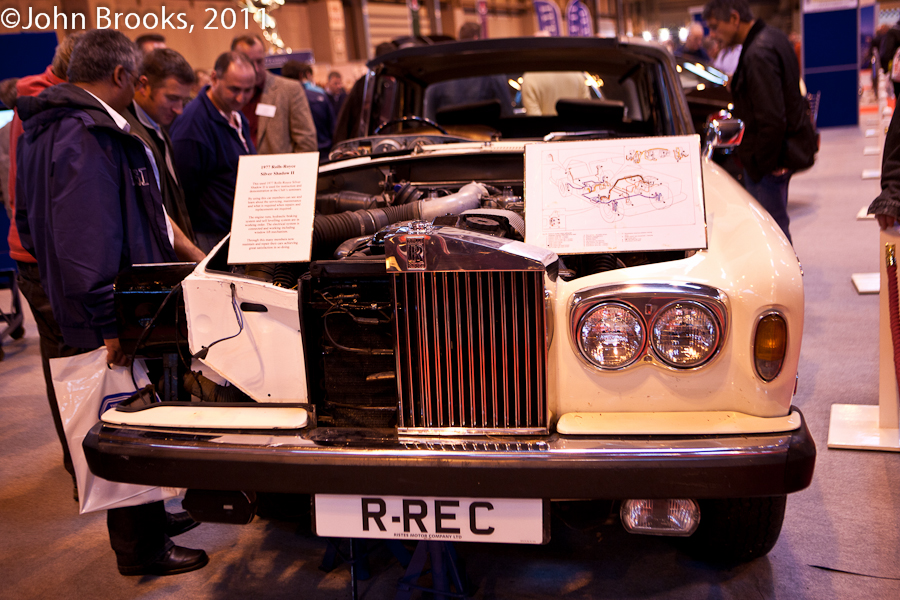
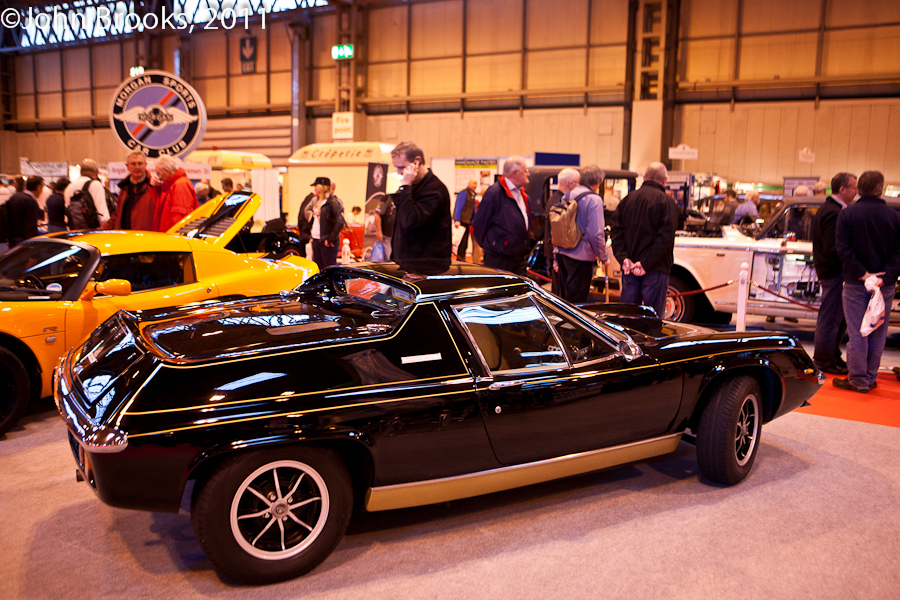
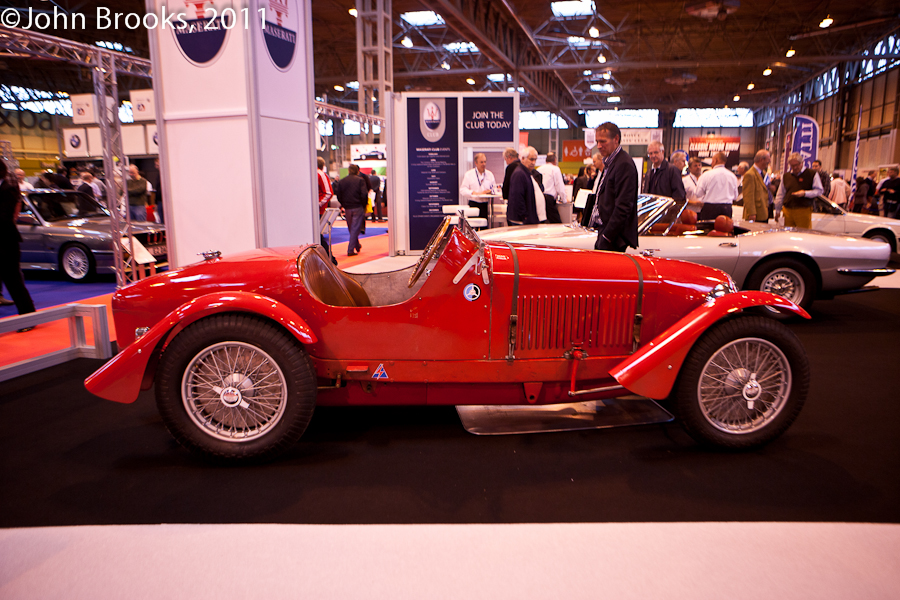
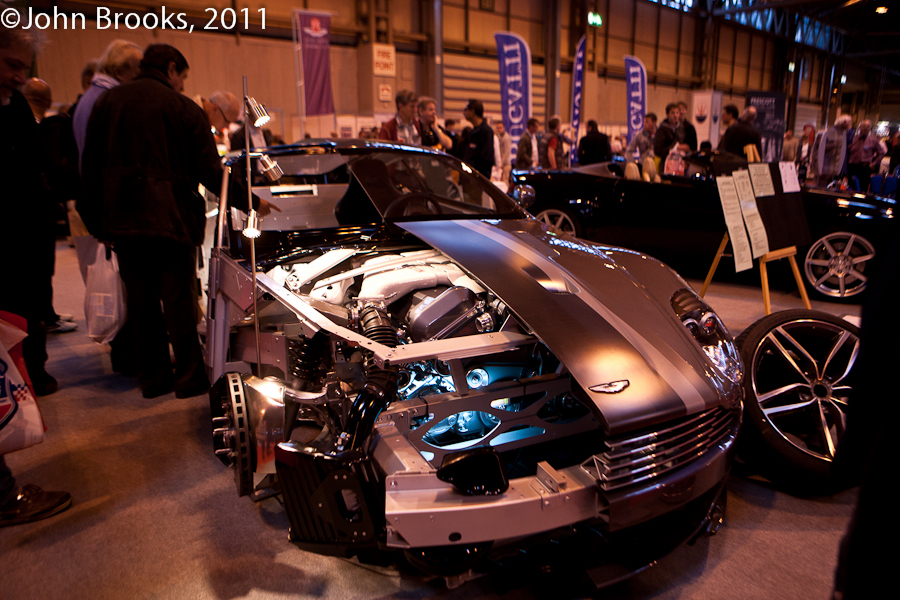
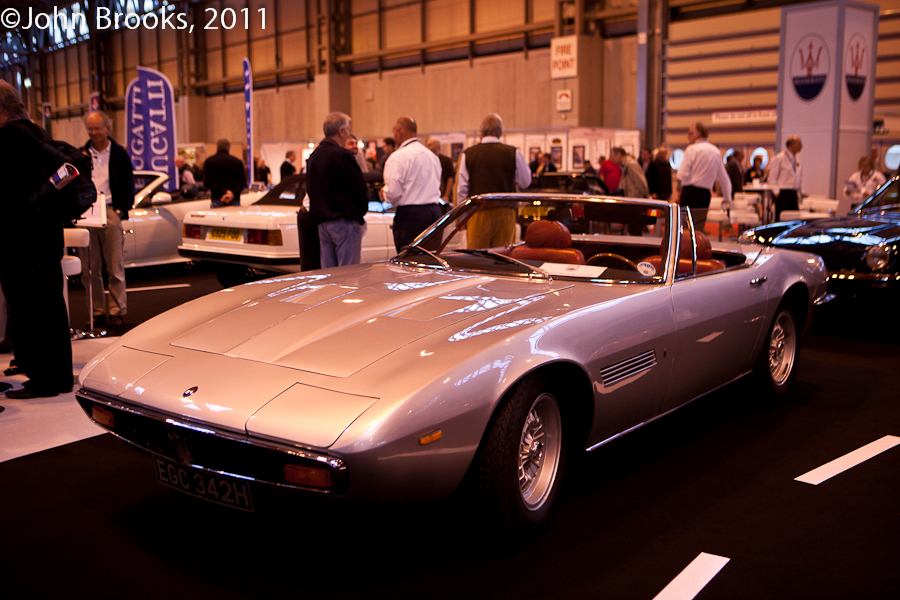
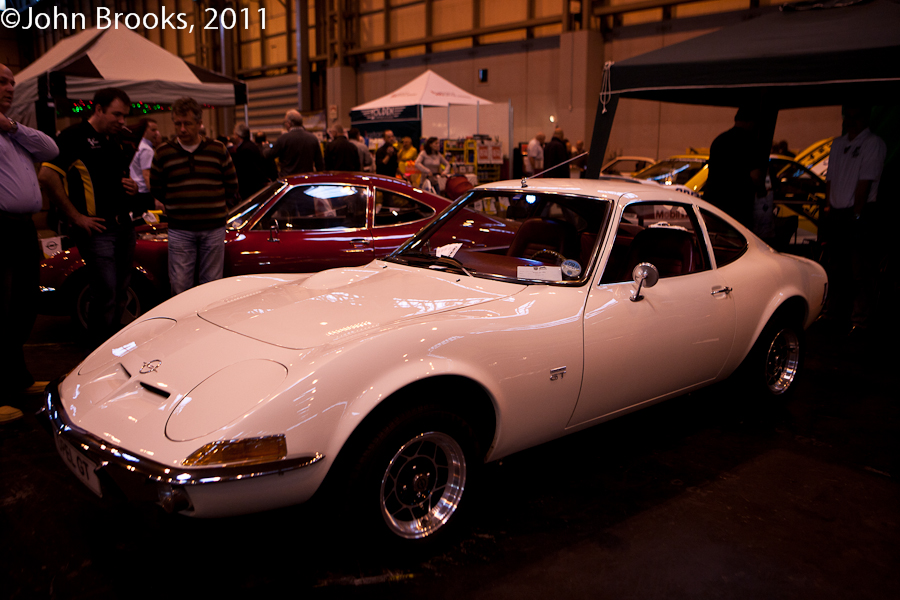
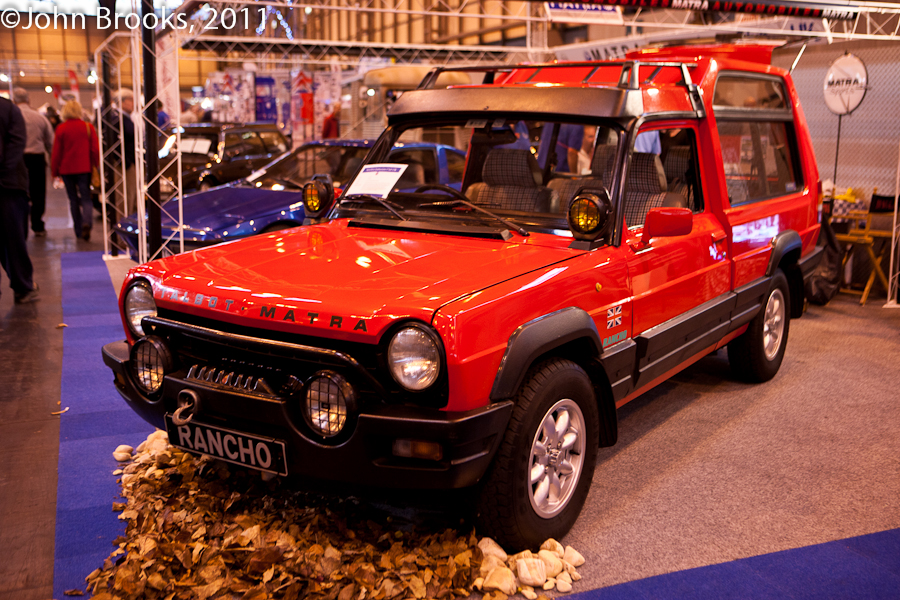
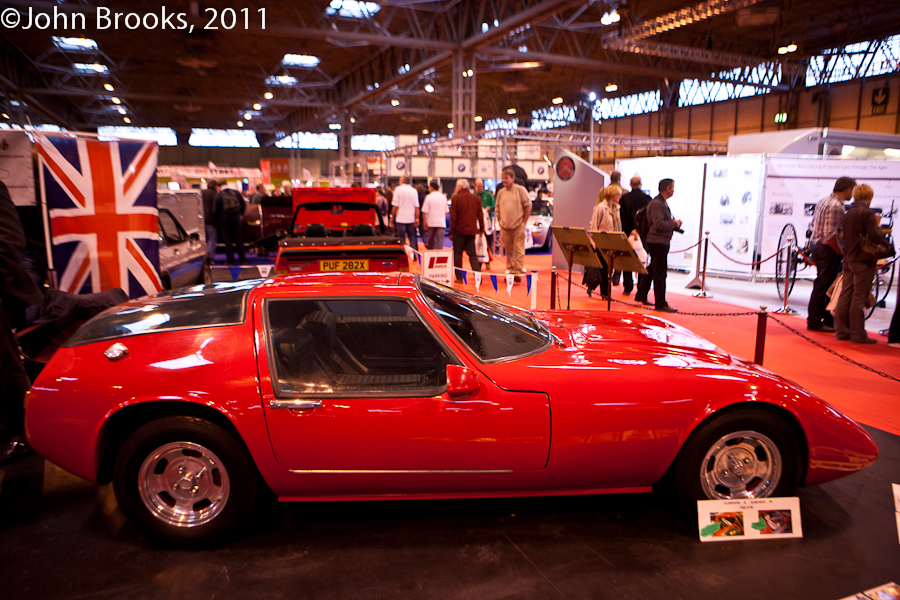
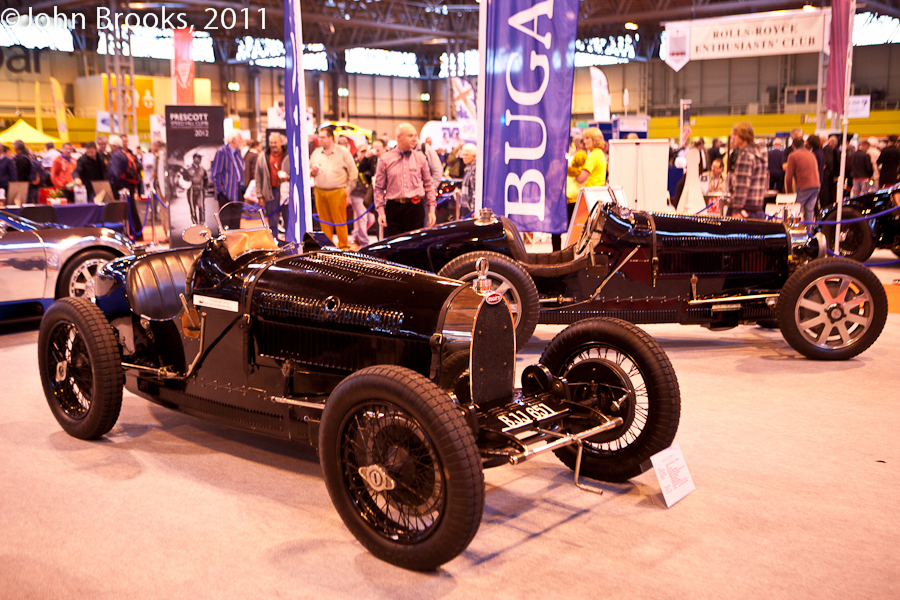
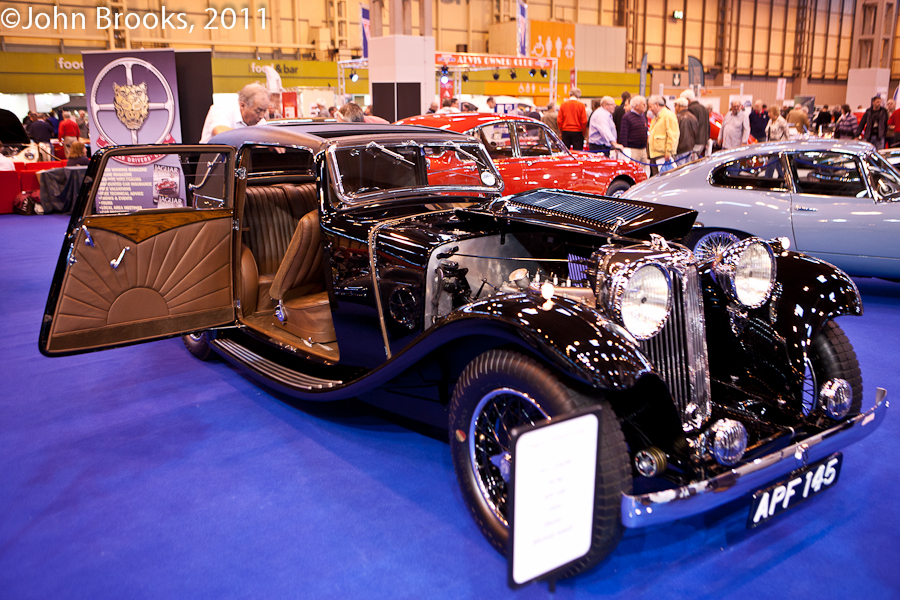
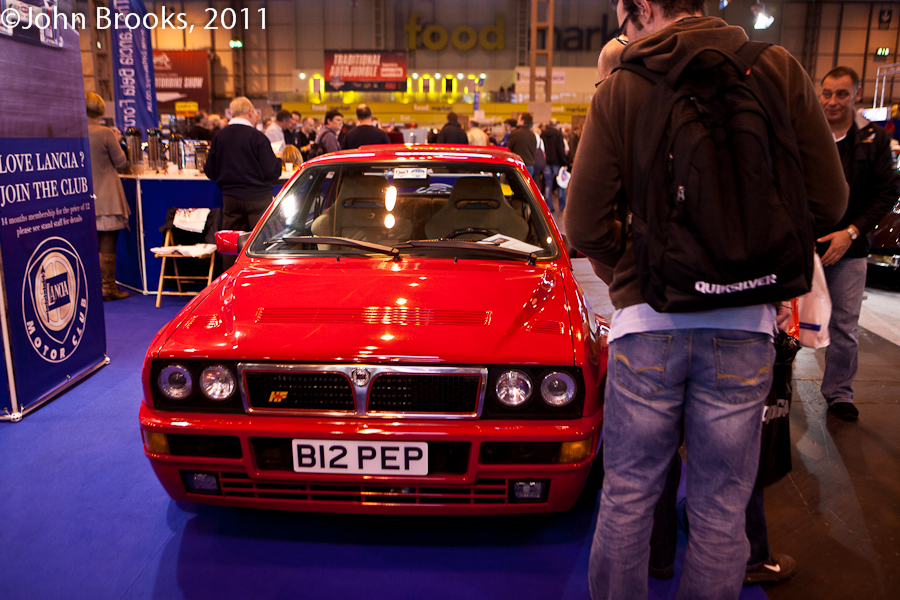
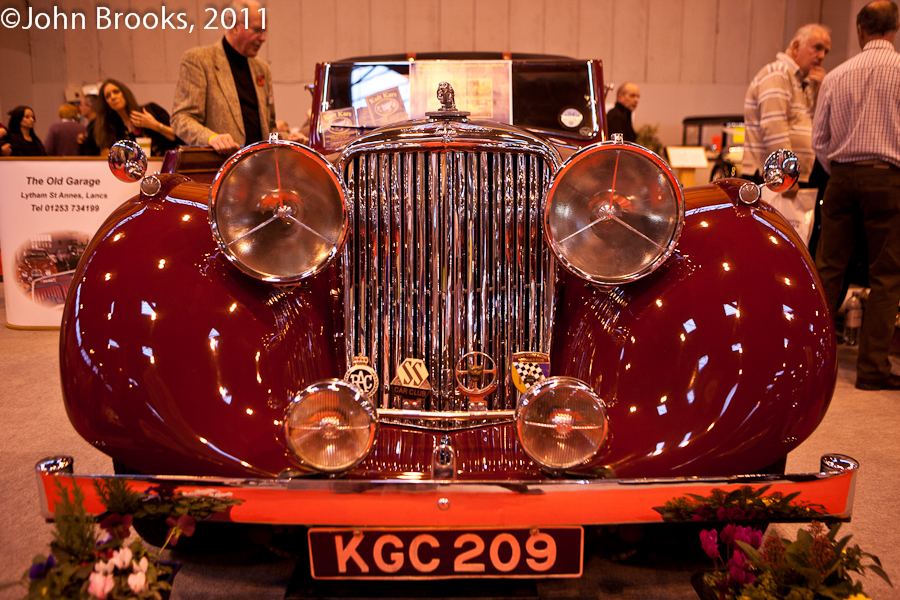
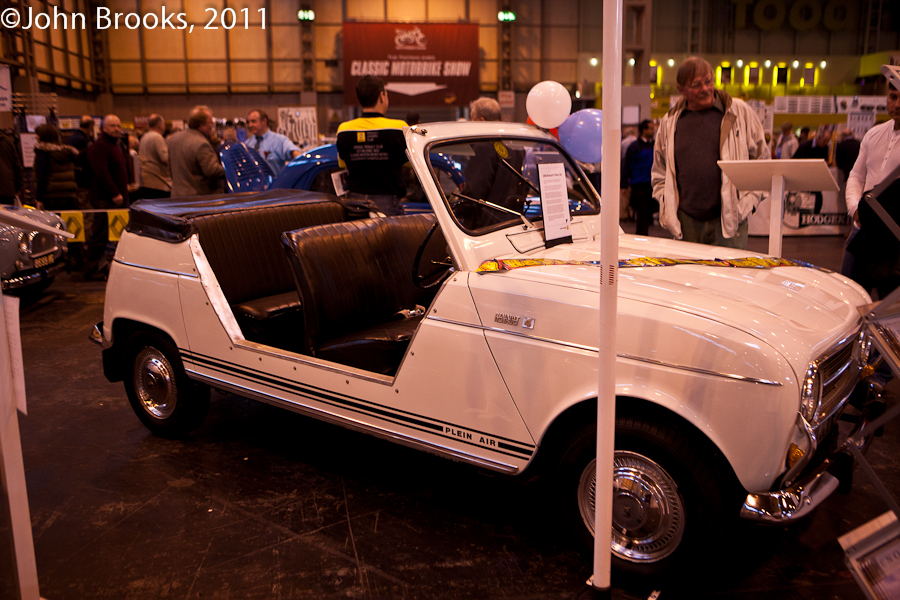
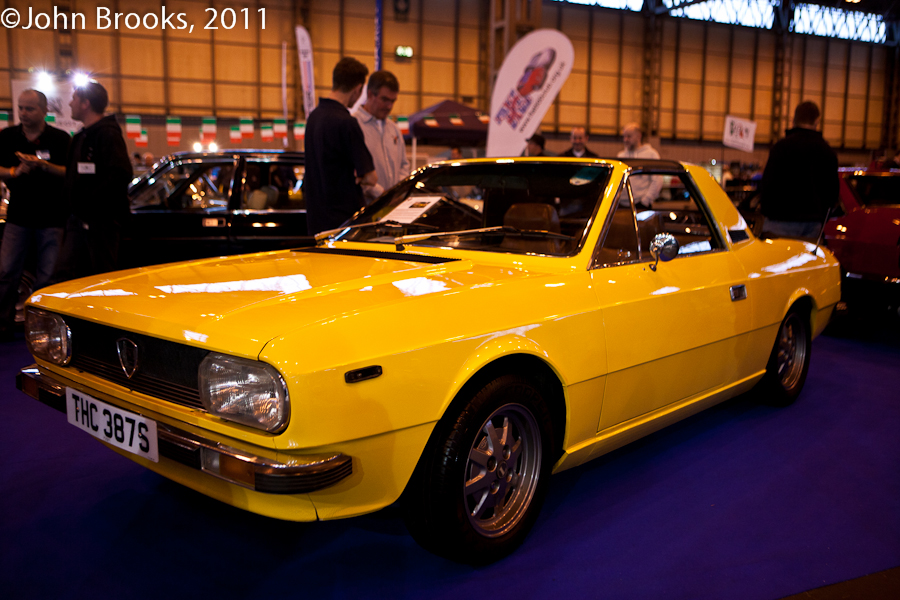
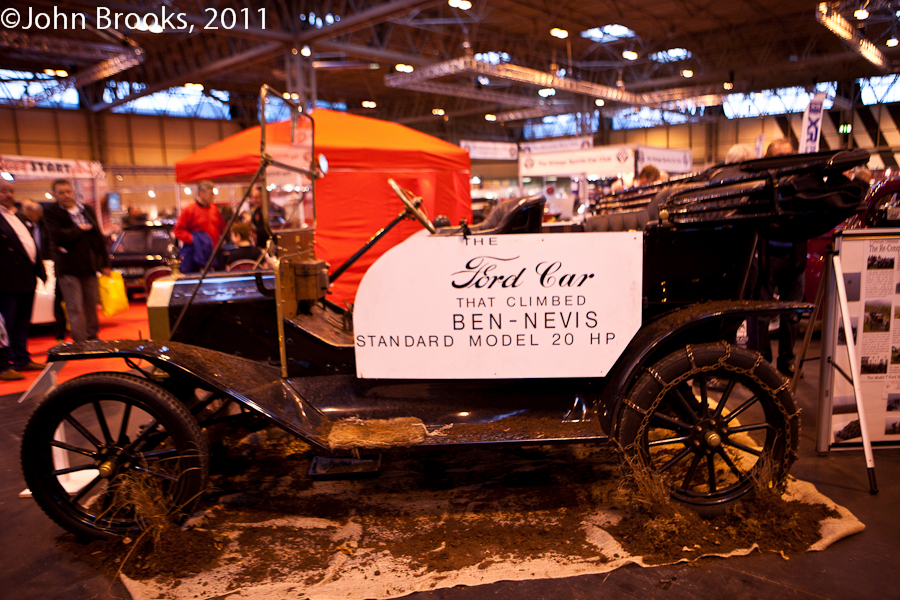
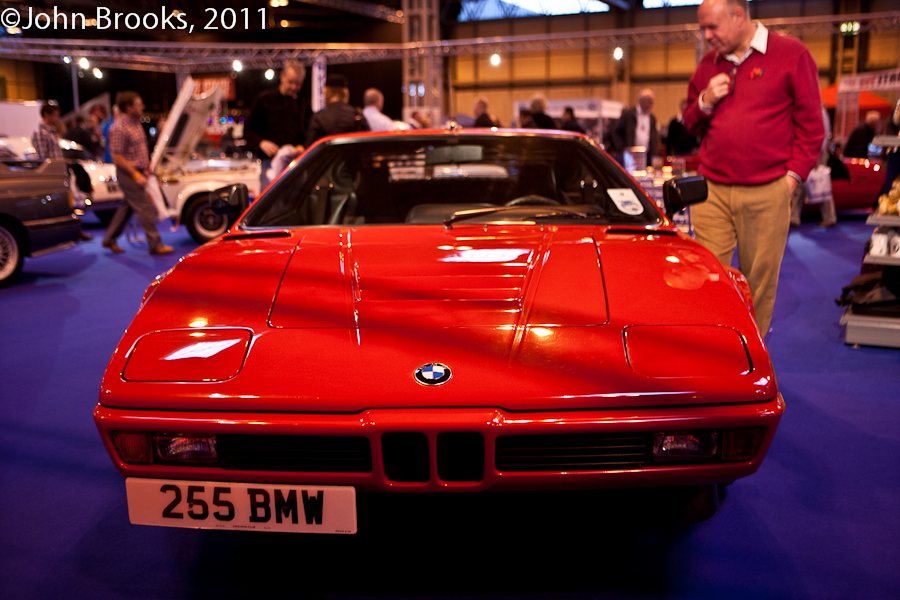
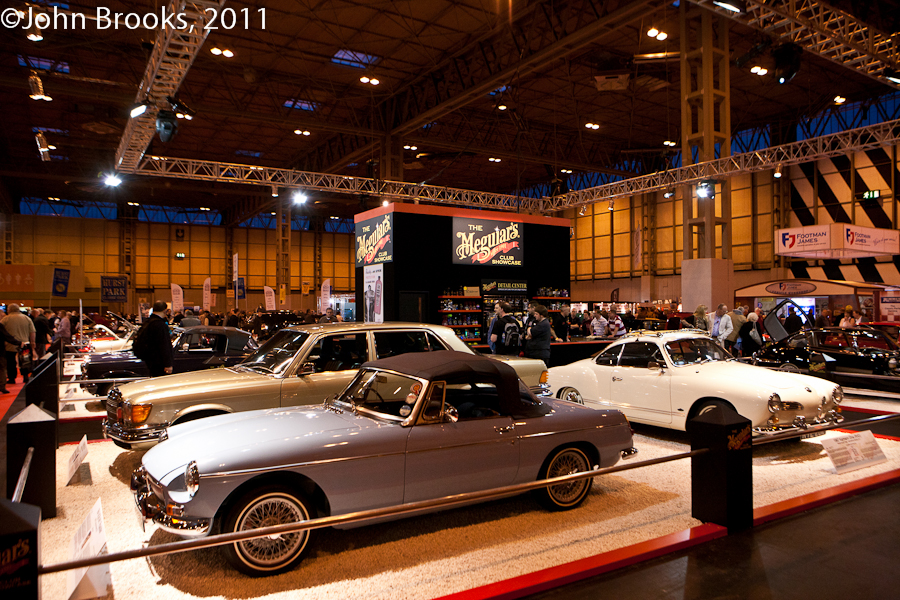
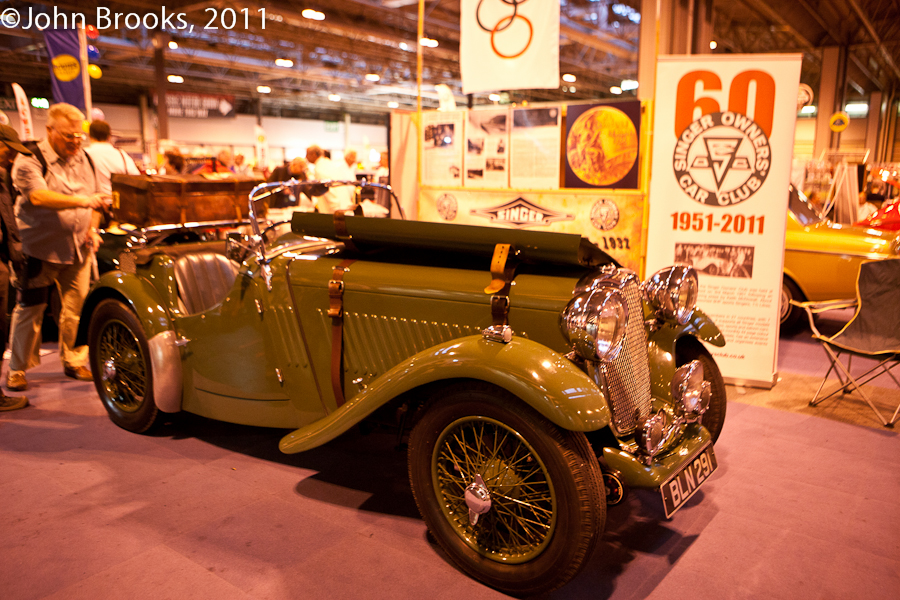
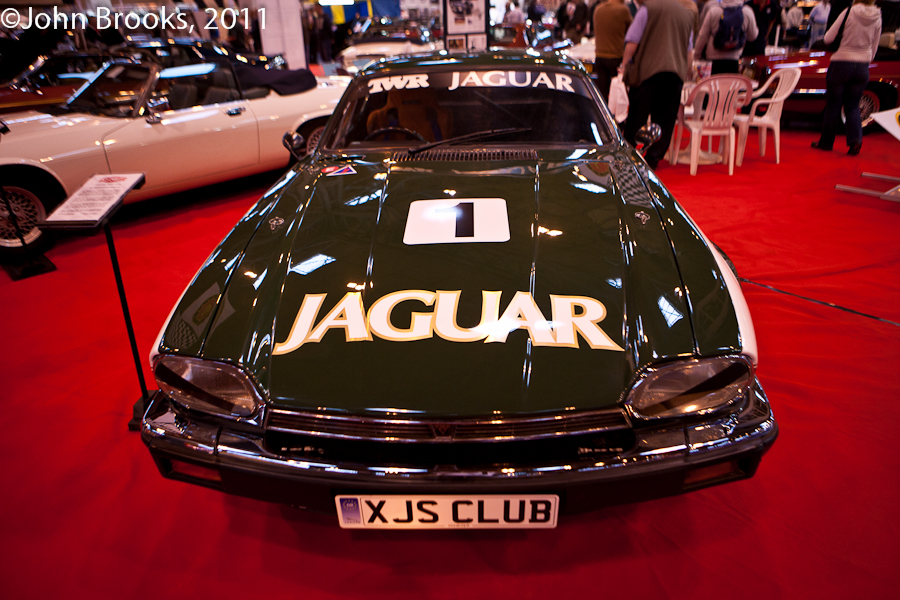
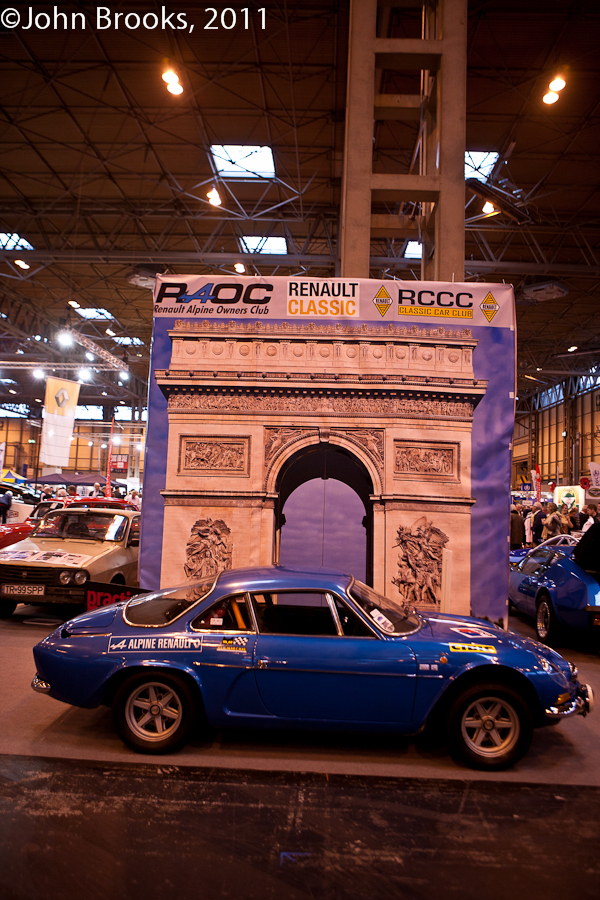
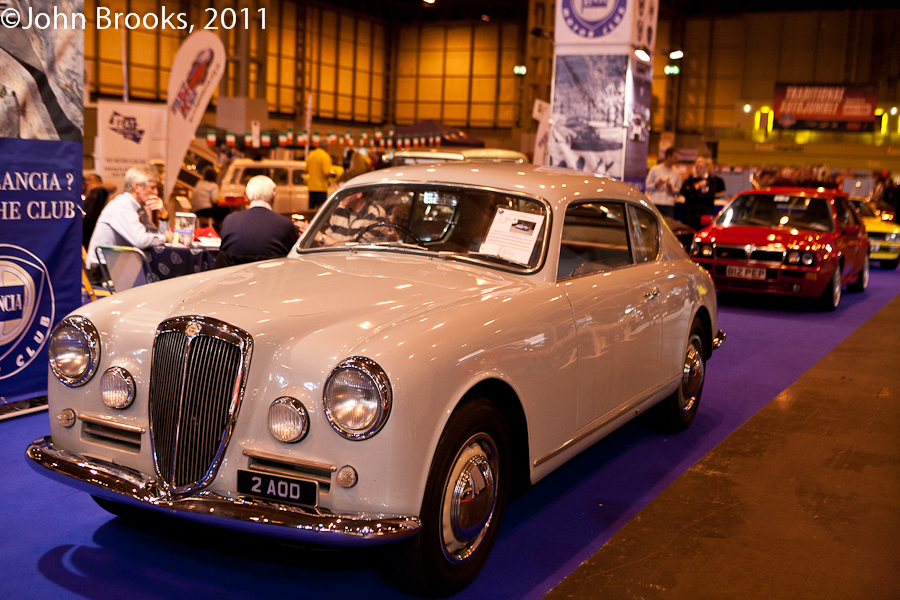
The 2011 Footman James Classic Motor Show is taking place this weekend. Unfortunately it is at the NEC, Birmingham. But more on that in a minute.

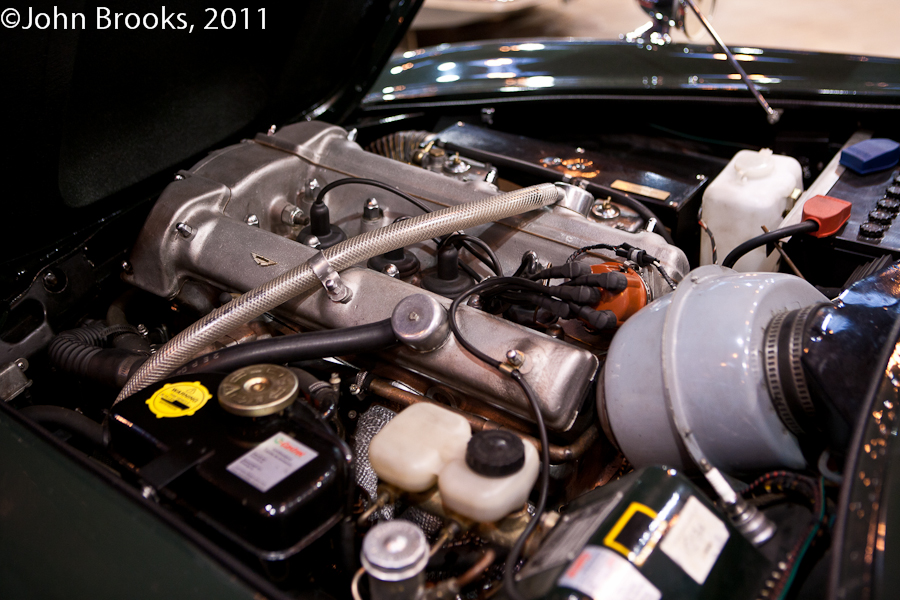
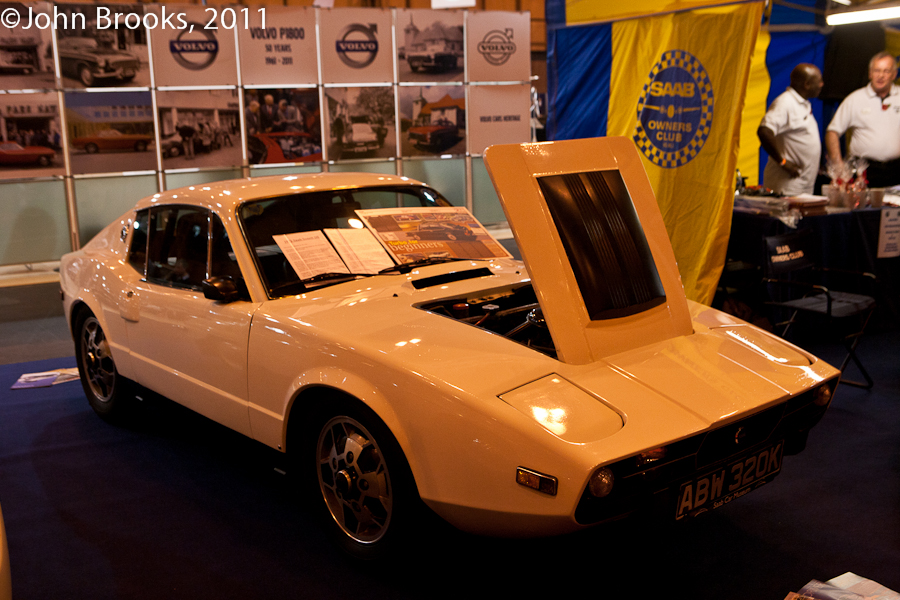
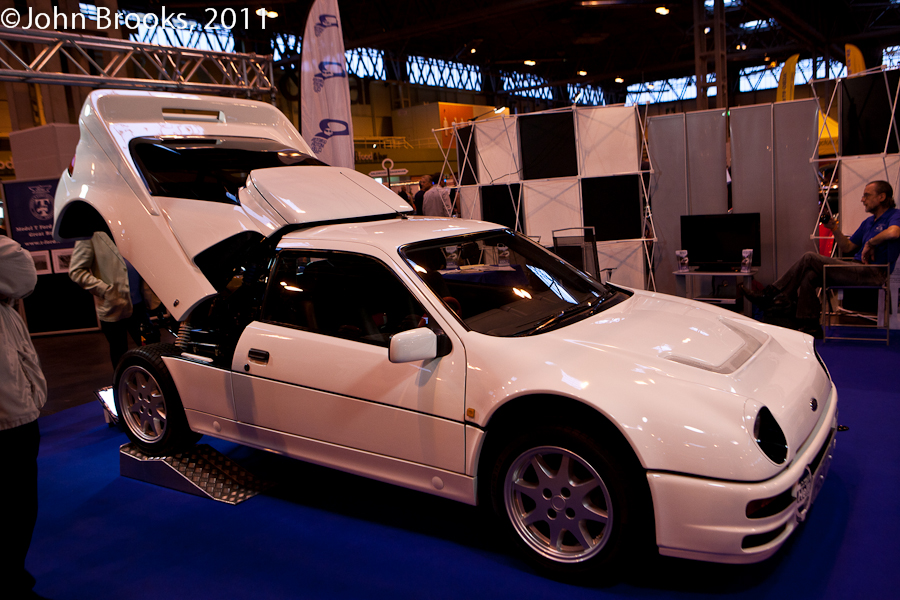
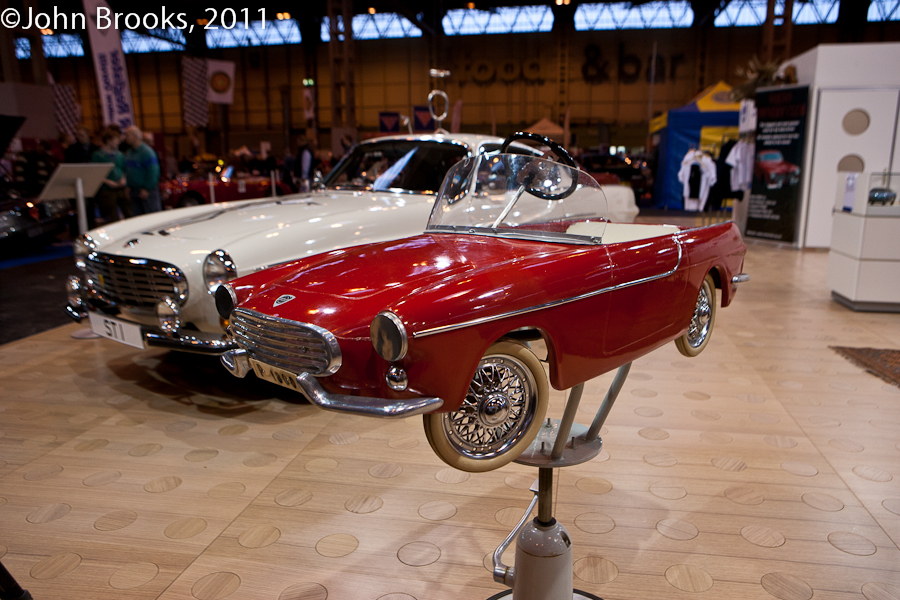
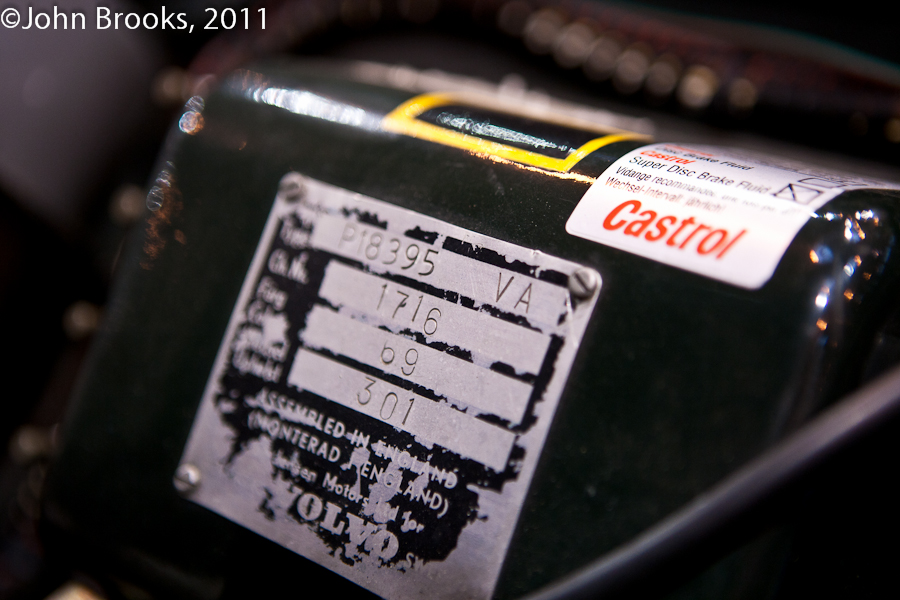
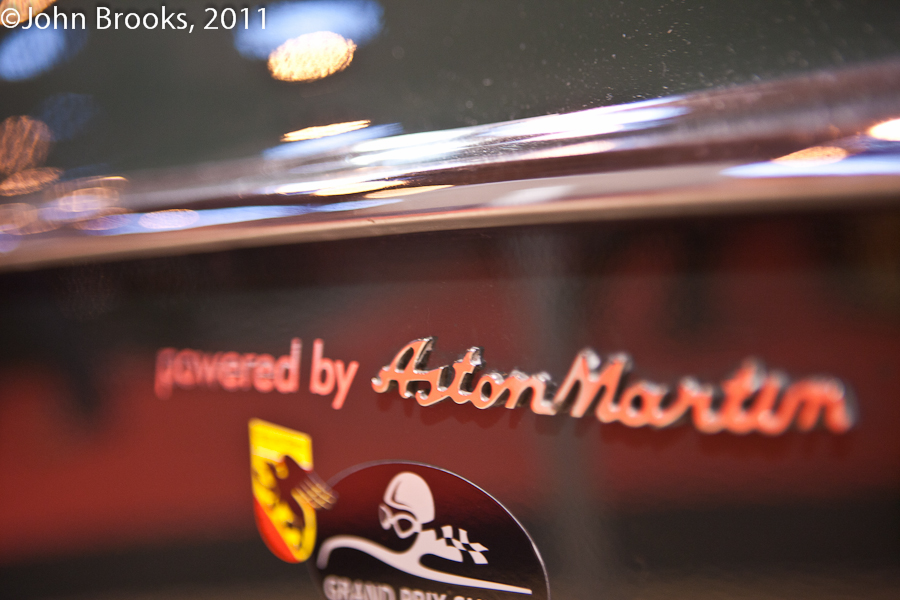
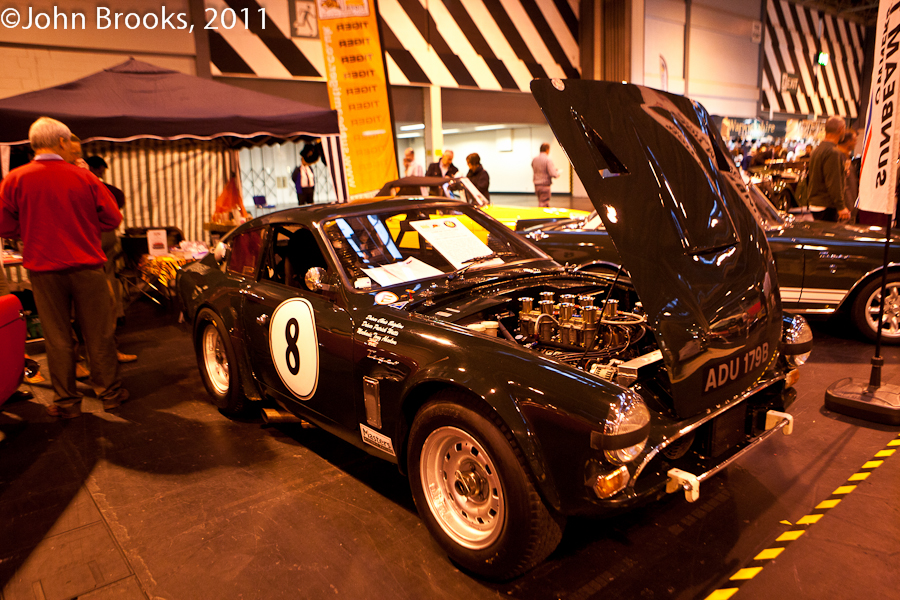
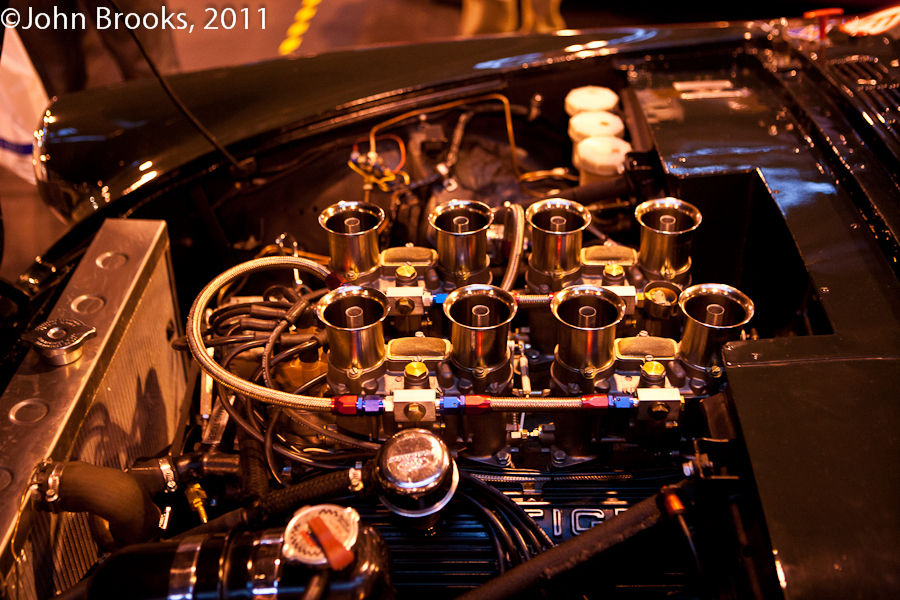
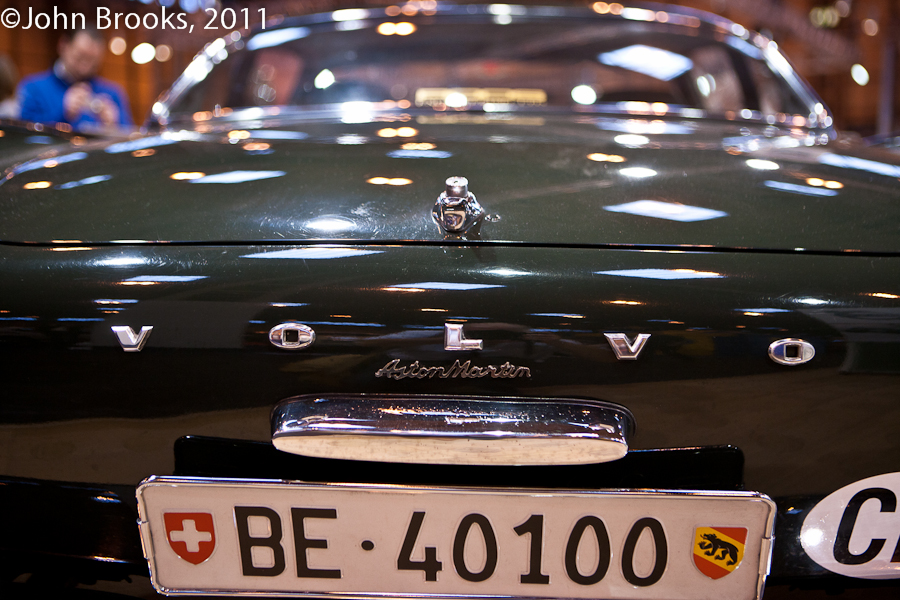
The show has expanded since last year and features many interesting, and in some cases, unique cars. This Volvo P1800 with a 2.5 litre, 4 cylinder Aston Martin engine is a good example of the gems on display.

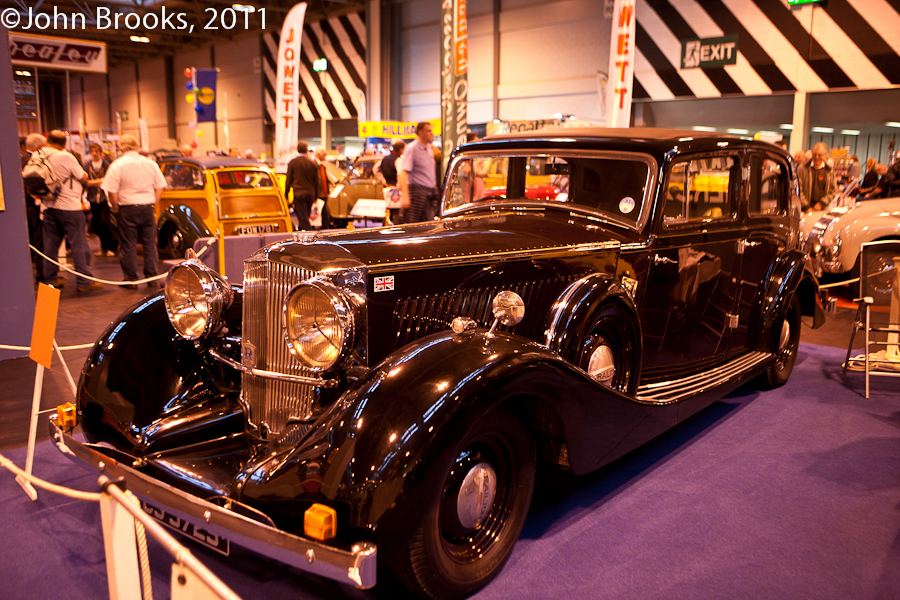
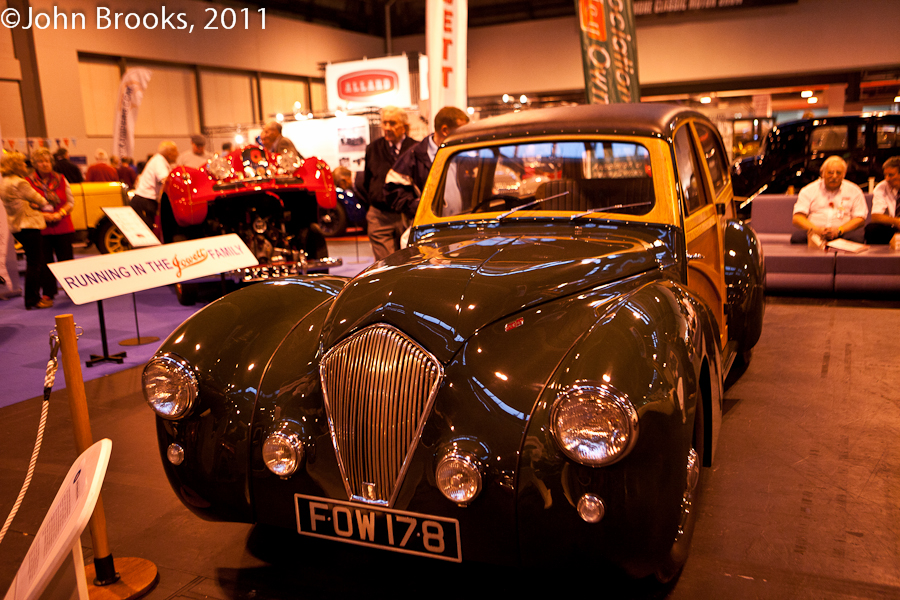
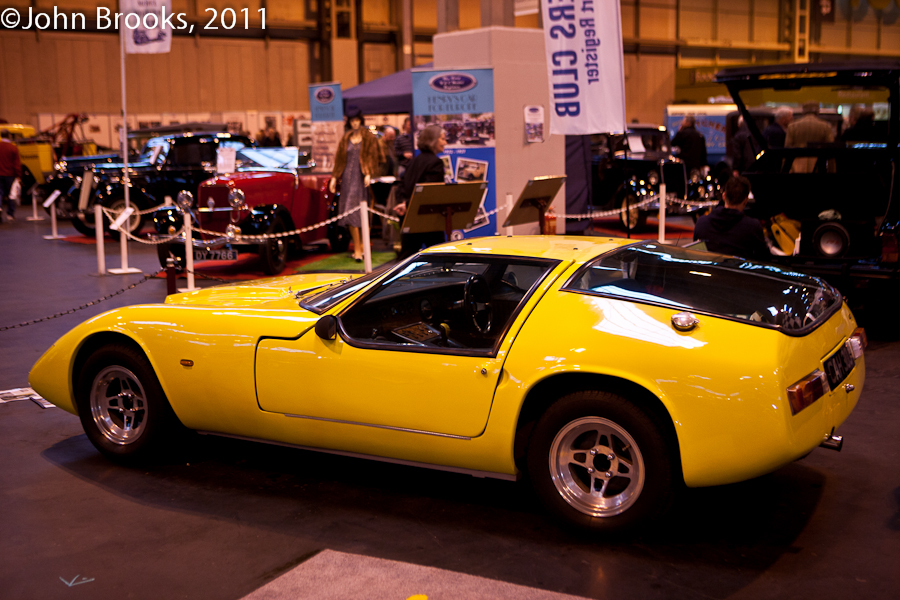
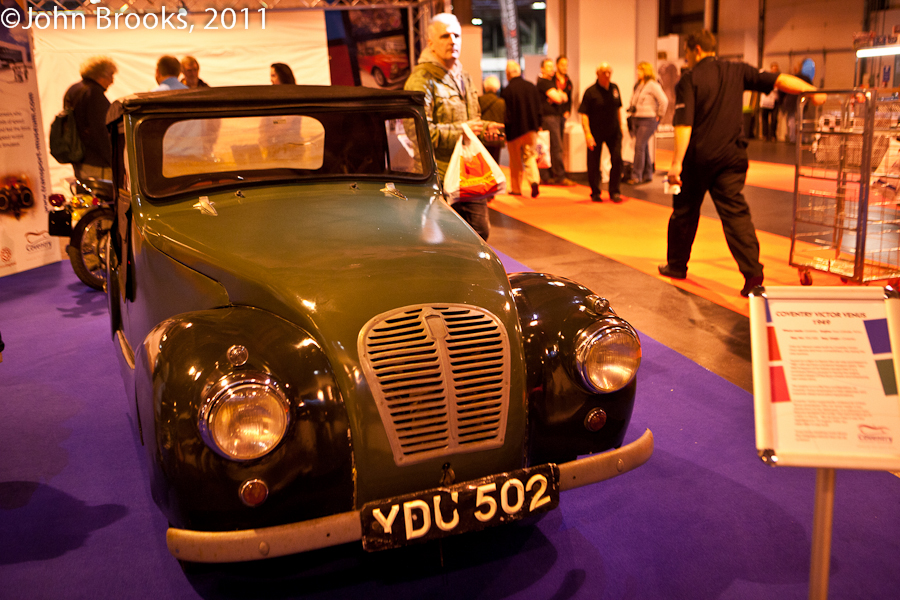
Another one off is the only surviving Coventry Victor Venus dating back to 1949. It is a mystery as to how it is still around, given that the factory ordered all 6 prototypes to be destroyed.

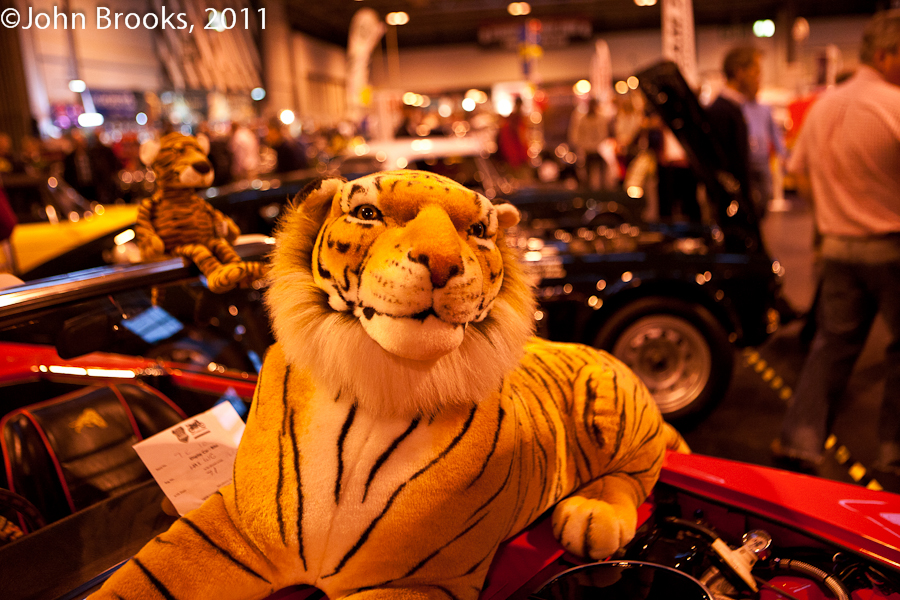
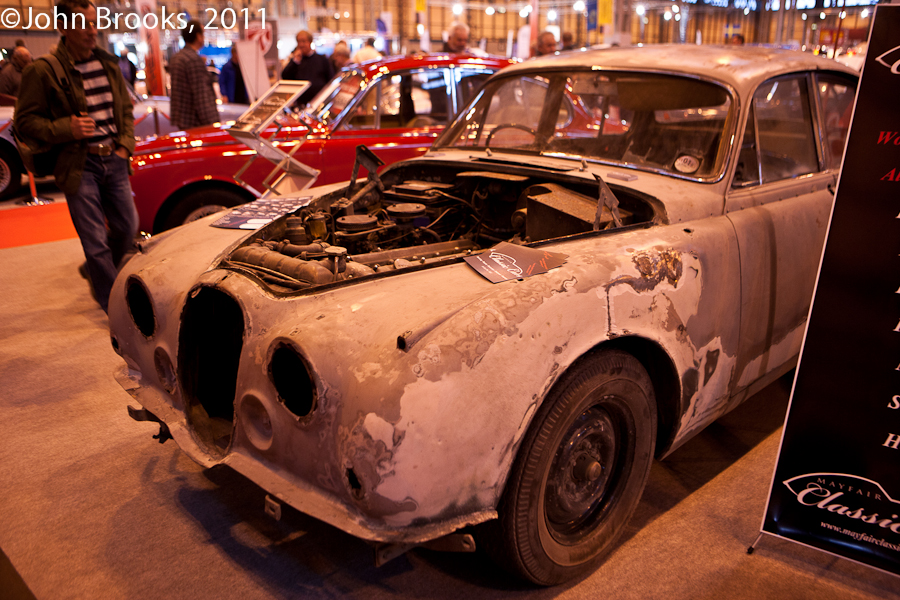
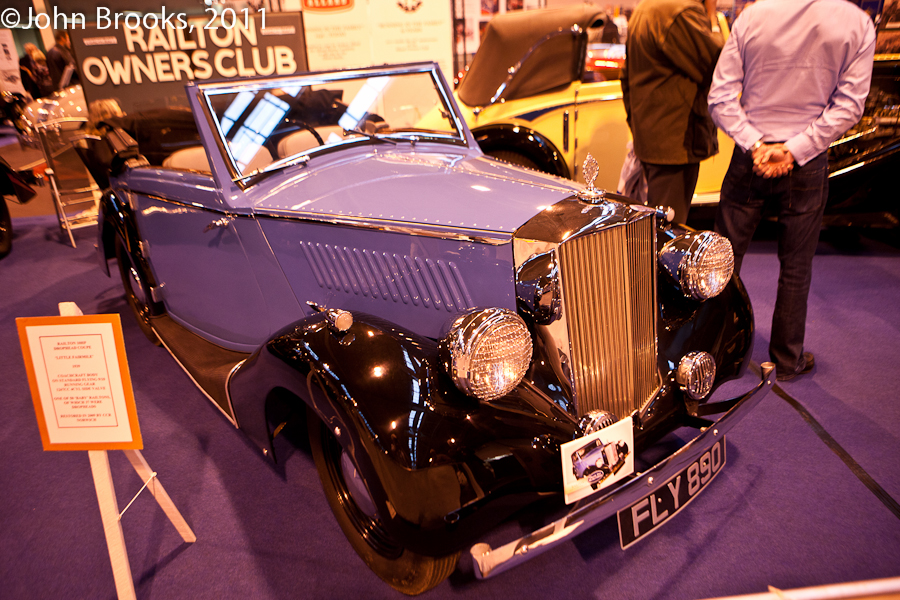
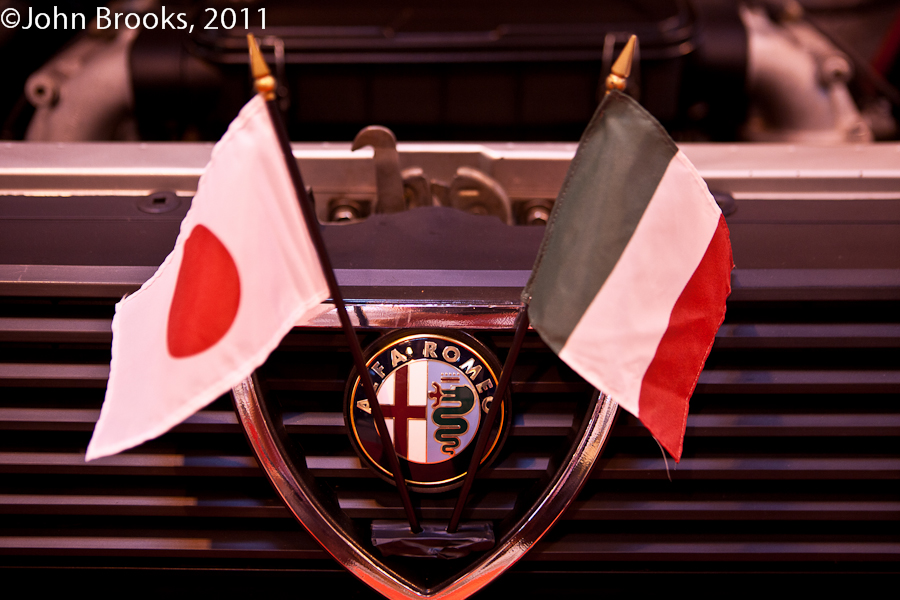
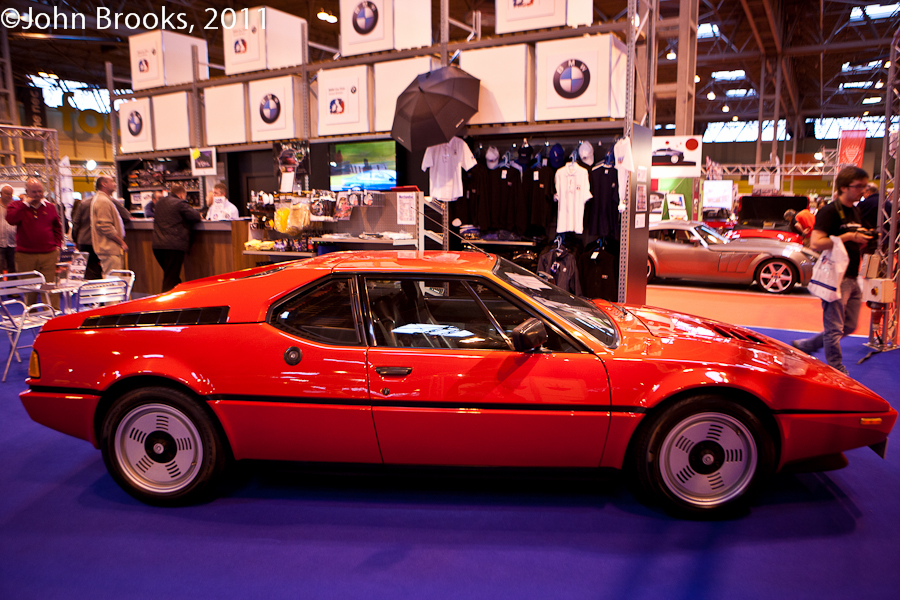
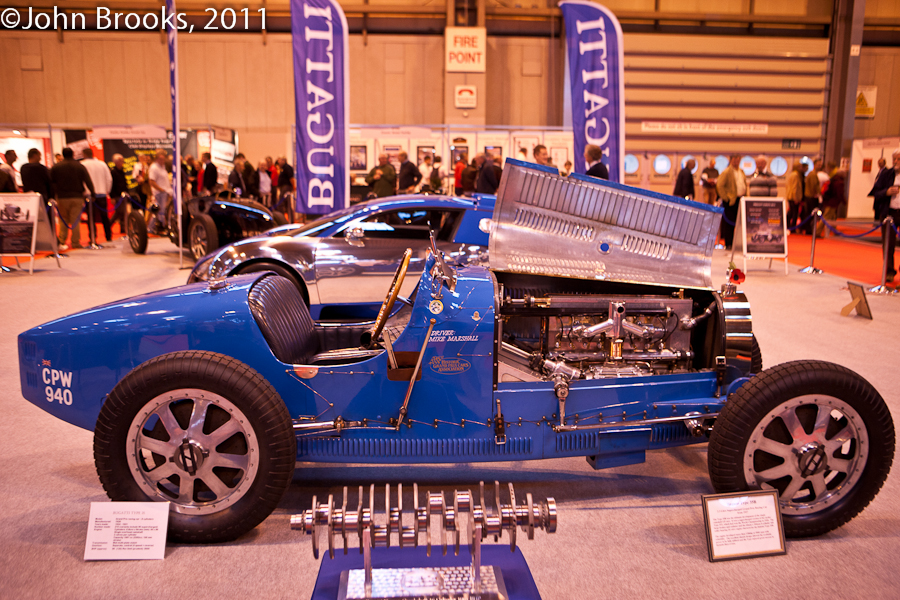
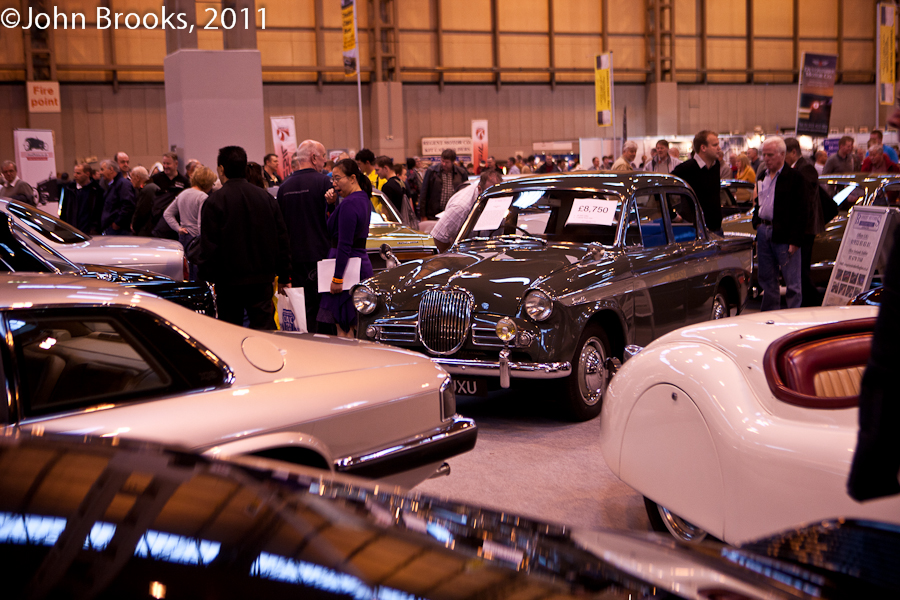
Sometime in the near future our Special Correspondent will have a detailed look at a few of these gems, till then you will have to live with this gallery.

One thing that really does need to be done is for the Health & Safety Executive to prosecute the management of the NEC for the appalling lighting in the halls. Those condemned to labour on the stands for three days are in severe danger of getting Seasonal Affective Disorder. I cannot imagine that the hire of the NEC is cheap, so why proper illumination is not provided is beyond me.

One bright light at the Show is the enthusiasm and deep knowledge of the members of the various car clubs. Their dedication keeps long departed brands like Hillman and Humber alive. Long may that continue.

So, if you get a chance in 2012, go to the show, it is full of treasures and rarities.

John Brooks, November 2011


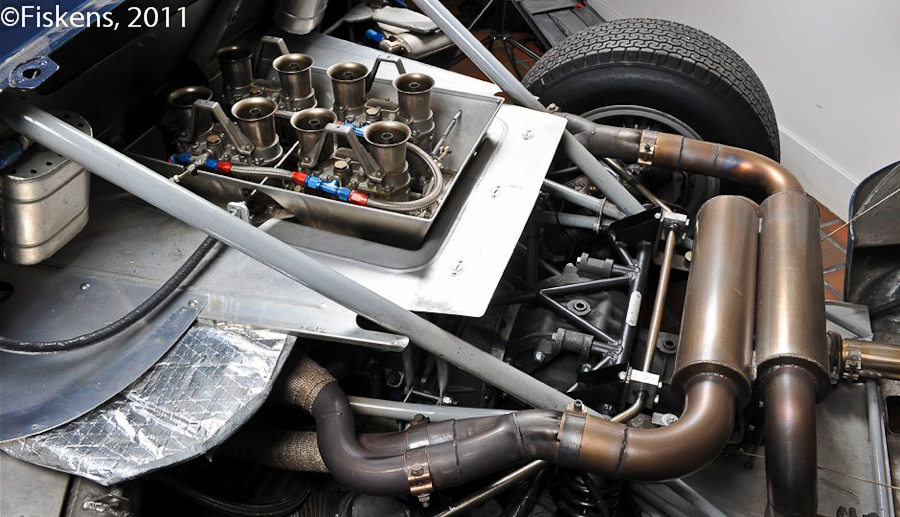
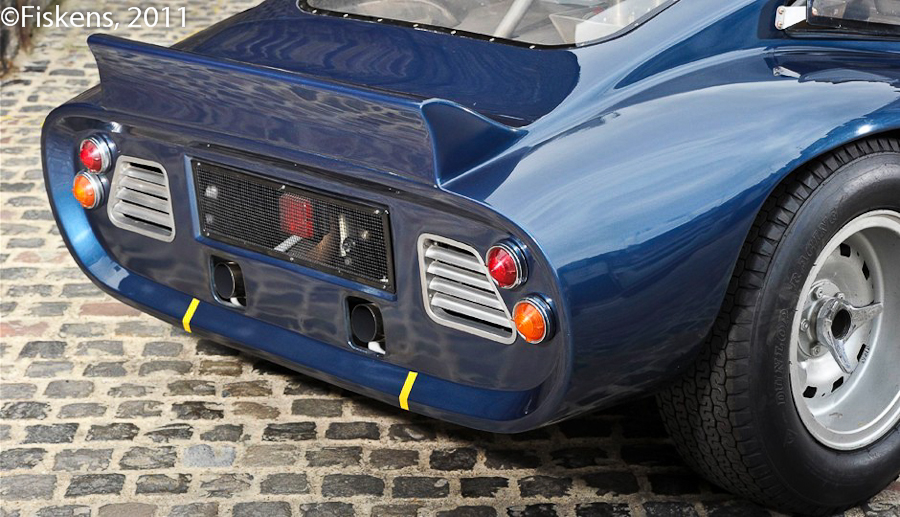
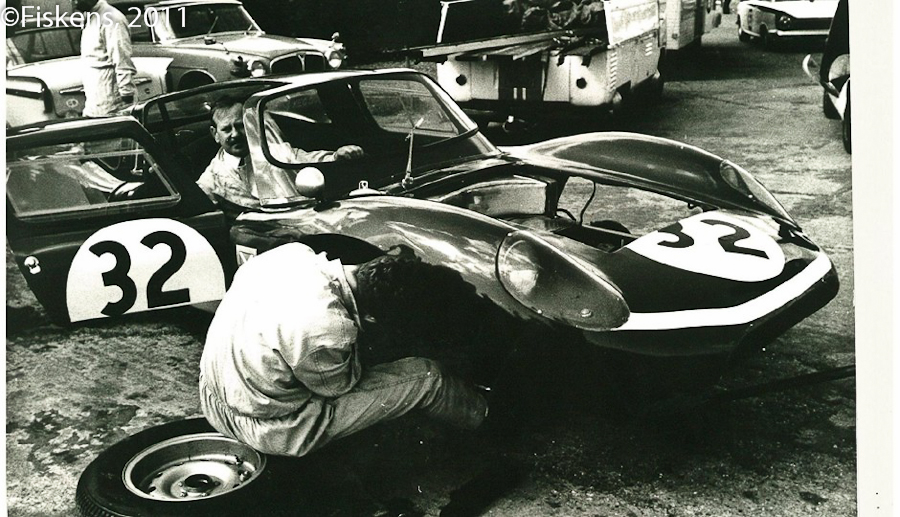
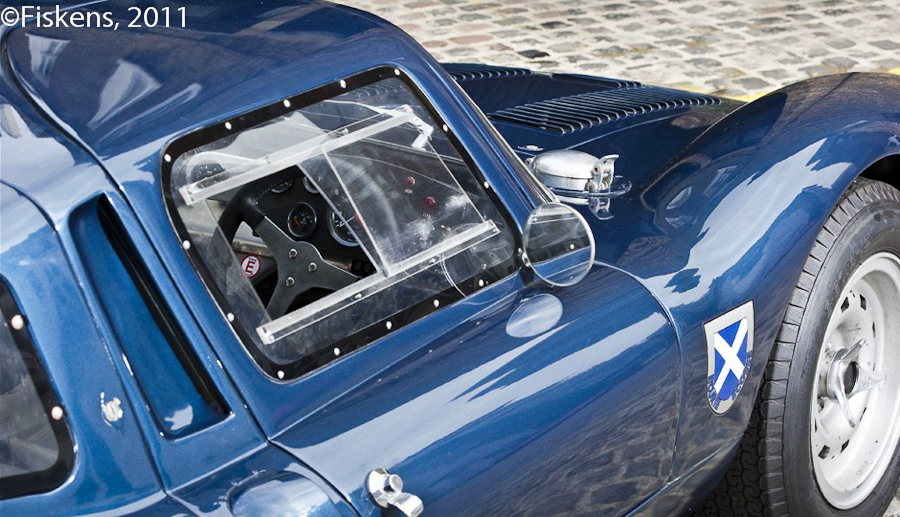
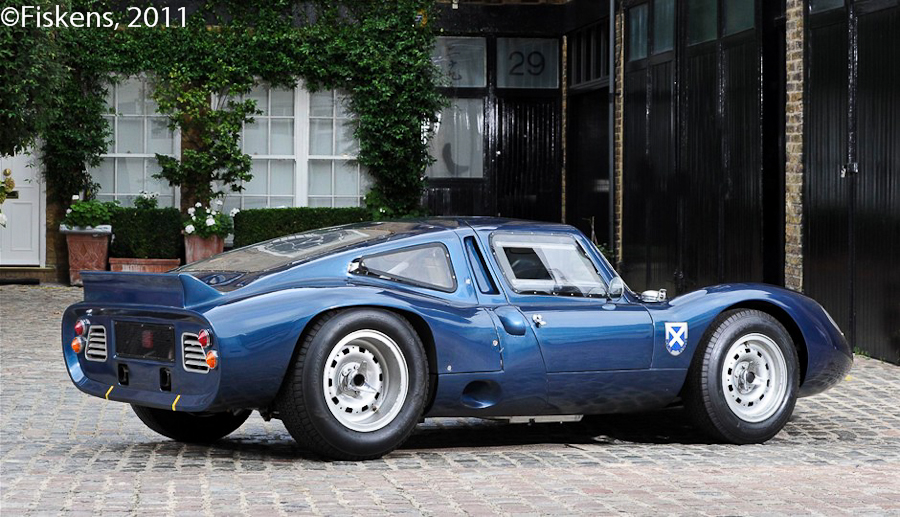
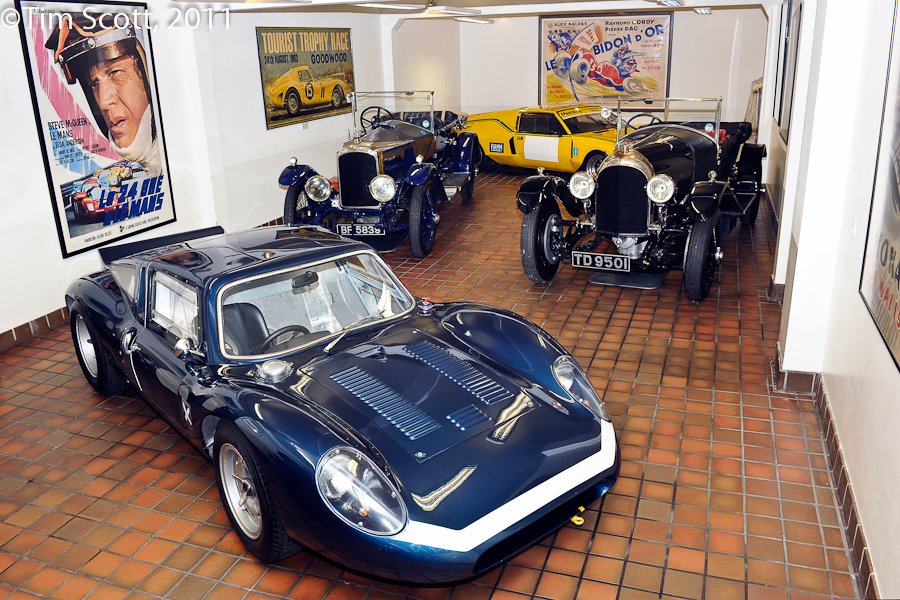
1962 Tojeiro-Ecosse Coupé


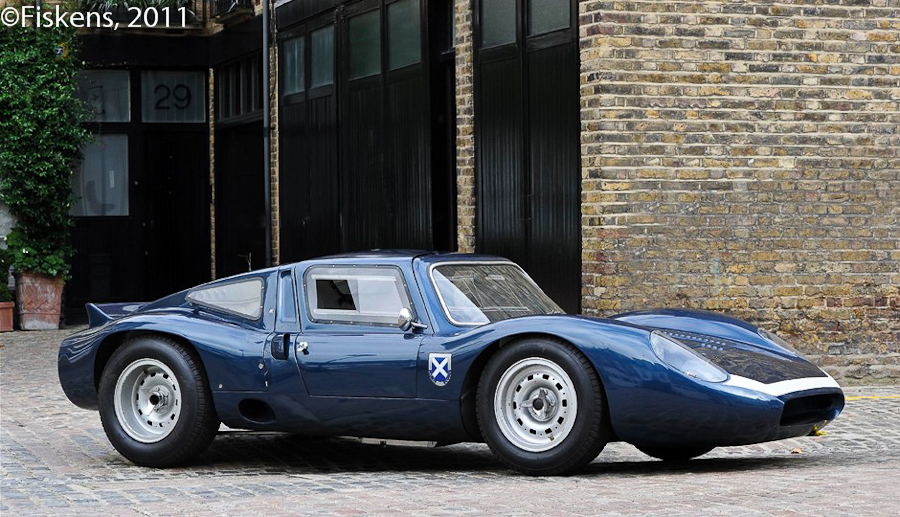
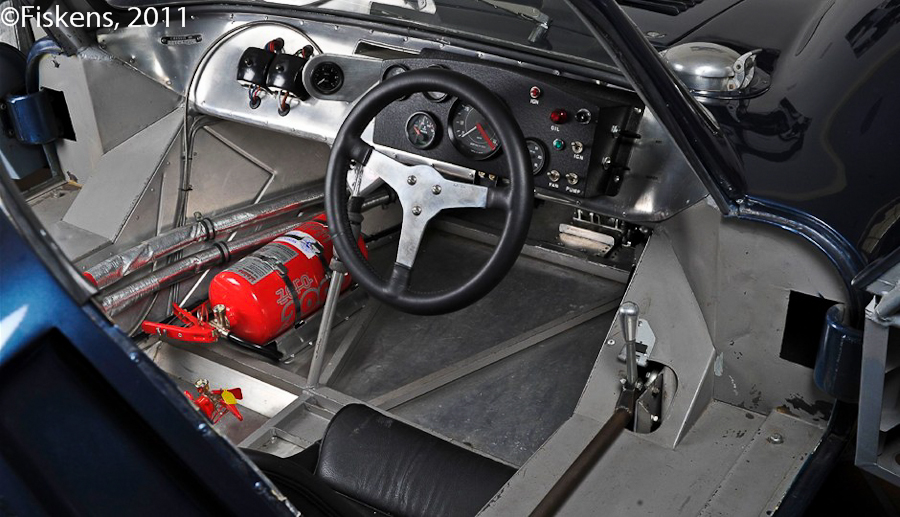
In 1962 Ecurie Ecosse commissioned John Tojeiro to design and construct two Prototype GT cars for the team to race at that year’s Le Mans. The cars had multi-tubular space frames, independent coil suspension and bodies designed by the artist Cavendish Morton who had already done some work for Tojeiro, particularly the special A.C. Tojeiro for Le Mans in 1958.
These Ecosse cars became the first British mid-engined GT coupés, pre-dating the Lola GT. The first car just made it to the start of the Le Mans race with a 2.5-litre Coventry Climax engine but it retired after eight hours with the Cooper-Knight gearbox locked in two gears at once.

This is the second car, chassis TAD-5-62, which went to Le Mans purely as a source of spares and for the 1963 season was equipped with one of the lightweight aluminium Buick V8 3.5-litre engines that were just ceasing production for the Buick Special; this was coupled to a Chevrolet Corvair gearbox.
It had a “Kamm” tail and smoother roof-line and was re-numbered TAD-1-63. Its first appearance was at Silverstone in May where Douglas Graham practised but non-started owing to an oil-pipe breaking on the grid. However it took its first win at the end of June in Jackie Stewart’s hands at Charterhall. In the meantime the first car also acquired a Buick engine.
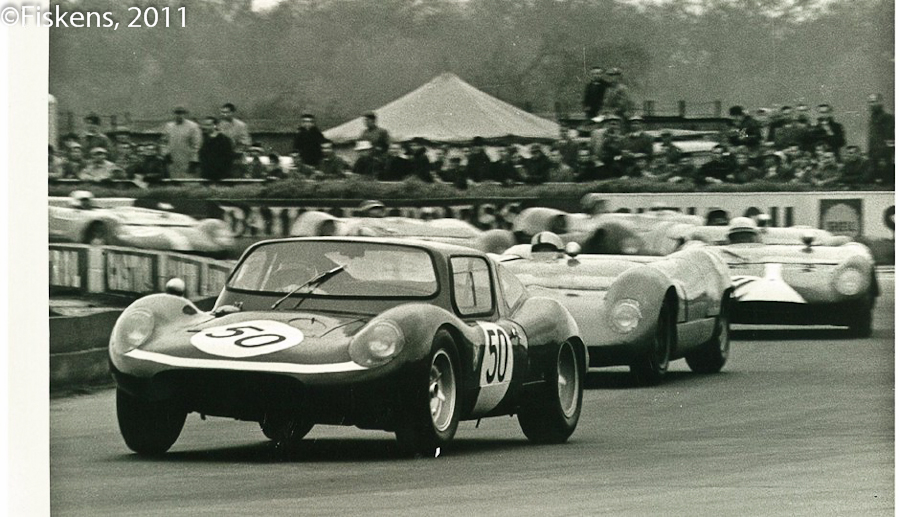
In 1964 the second car was re-engined, this time with a Shelby Cobra Ford V8 and was now numbered TAD-1-64. It was ready for Silverstone in May and Stewart finished sixth in the sports car race (race no. 50). He also finished eighth in the sports car race supporting the Grand Prix meeting at Brands Hatch and John Coundley had a win with it at the end of September at the Kentish circuit. However, the cars were not fast enough to compete in the sprint races and not reliable enough for endurance races.

In 1965 they continued to run in suitable national events – for example ,rally driver Andrew Cowan had a win with the Ford-engined second car at the B.A.R.C. Silverstone GT race at the end of June.

In 1966 the first car was sold off to Canada and the spare Buick race engine went to Rover as that company was developing its own production version which became the famous Rover V8. The second car was retained and converted into an open sports car although the roof section was preserved. Unfortunately Bill Stein had a most horrific accident at the Grand Prix meeting at Brands Hatch – he came off at high speed at Paddock Bend and hit the earth bank whereupon the car jack-knifed itself into total destruction; Stein was very lucky to survive despite multiple injuries.
Eventually this second car was re-built by Jim Tester using a new chassis which was fitted with the original roof; it later became the property of Tom McWhirter.


David Blumlein, November 2011

Taming Porsche’s 917

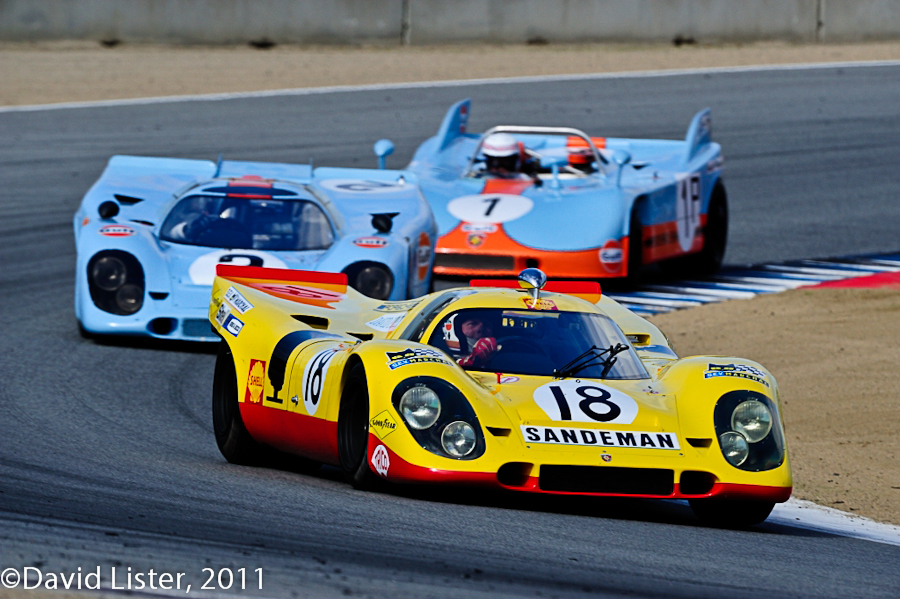
Time, circumstances and money often are the mother of compromise. Such was the case of Porsche’s iconic 917, a 12-cylinder, 230 plus mile-an-hour monster that transformed the German manufacturer from a supporting cast member to the star of the sportscar racing in the first years of the 1970s.

In sum, the 917 was a car that shouldn’t have existed, but it did; that it did so was because the men of Porsche exploited the unintended consequences of a rules loophole made by the Federation International de L’Automobile, the overall governing body of the sport to revamp its prototype arena.

At the heart of the matter was the FIA’s overriding desire to rid itself of the American interlopers from Ford and Chevrolet, which trounced their European opposition at Le Mans and elsewhere during the mid 1960’s. After Ford’s second straight Sarthe triumph in 1967 with its seven-liter V-8 Mark IV GT40, the FIA, with less than six months’ notice, summarily slapped a three-liter displacement cap on the sports racers running in the World Manufacturers Championship.

This may have made the governing body happy, but not its promoters, who feared the wouldn’t be enough of the topflight entries to attract the public. To alleviate those fears, the FIA added a second tier prototype division which permitted engines of up to five liters, the caveat being that at least 50 examples of any particular car had to have been built.

What the FIA had in mind were the older, original Ford GT40s which used Dearborn’s small block V-8, and there Lola T70 coupe counterparts, likewise with small block Detroit power. The plan would have worked if Porsche, which was producing between 40 and 50 racers per year, hadn’t taken a closer look at the regulations and decided it wanted in.

As with anything, though, the devil here was in the details, as Hans Mezger, the head of Race Car Design at Porsche then, explains. “There were two choices for us: to build a three-liter car, or a five-liter car. With the minimum set at 50, we decided it was too costly, and therefore pursued the three-liter option which resulted in the 908 that won our first World Manufacturers’ title in 1969. However, after the FIA cut the requirement to 25 in the late winter of 1968, we changed our minds and went to work on developing what became the 917.”

Like all of its predecessors, the new 917 was evolutionary, not revolutionary, building on what had gone before. Indeed, in terms of its body shape, and tubular frame structure, it was nearly identical to the three liter 908, with the exception of having the driver’s compartment moved slightly more forward in order to accommodate the extra length of the new 180 degree V-12, with its unique central power pick up arrangement.

With nearly 600 horsepower on tap almost from the day it first went on the dyno, Mezger’s engine was a huge success. Indeed, such was its output, that the initial version had a displacement of four and a half, not five liters. Unfortunately, if the 12-cylinder was an award winning piece, the same could not be said for the rest of the pumpkin seed shaped car.

The basic problem was the aerodynamics of its low drag body which produced high speed instability, an issue which had likewise plagued the longtail streamliner versions of the 908, and the earlier 907. Using spoilers and winglets as Band-Aids, Porsche had cured much of the problems, making them competitive at Le Mans, which was the one race Porsche so desperately wanted to win.

However, those two latter prototypes were 190 mile an hour vehicles, while the new 917 could push past 230 mph with ease. At that speed, the Band-Aids didn’t work. In fact, about the only factory driver who liked the 917 was Vic Elford, who, as he put it, “knew from the moment I first saw it that I wanted to run it at Le Mans because, in my mind, it truly had the potential to win.”

Even so, Elford was not unaware of the 917’s aero issues. “Going through the ‘kink’ on the Mulsanne straight at Le Mans where you were doing well over 230, you had to be very careful getting off the throttle and onto the brake, lest the back start steering the front.” And, make no mistake about it: Porsche’s primary intention for the 917, like Elford’s, was to claim the company’s first outright victory in the 24 Hour classic.

Again Mezger:
”The most important thing for us was to win Le Mans. We believed that the longtail was the correct way to go if we were to accomplish that. And I think the fact that Elford and (Richard) Attwood had a commanding lead when they retired after 22 hours in 1969 proved we were correct in maintaining the same basic shape of the earlier cars.”

That was the good side of the equation. The bad was that unlike the 907s and 908s which came in a distinctly different short tail body for the lower speed circuits found on the World Manufacturer’s schedule, the 917 would enjoy no such luxury, a fact vividly remembered by the Porsche engineer.

“Because we were concerned that if we did what we had done with the 907 and 908 using separate long and short tail bodies the FIA might make us build 25 of each, something that was too costly for us to do, we made the longtail a detachable. Section that bolted onto the 917’s short tail decklid. Because of that the decklid had to slope down towards the rear, which we knew was not the optimum for the speeds it could attain on the slower tracks. But, we had to live with it that way even so.”

Moreover, Mezger’s boss, Ferdinand Piech, who was trained as an aeronautical engineer, wanted to keep the 917’s drag as low as possible, despite the fact that its horsepower, unlike that of the 907 and 908, made this unnecessary in its case. In fact the solution was simple: raise the rear portion of the short tail to form a downforce producing wedge. This curative measure had been demonstrated in July, 1969 when Jo Siffert had tested his new 917 Can-Am Spyder at Weissach.

Featuring a slightly raised, open rear tail, similar to the ones found on the McLarens and Lolas then competing in the North American championship, Siffert’s Spyder proved far easier to drive than the short tail coupes with their sloping rear decks. The problem for Mezger and his engineers was that Piech didn’t want to hear any of this.

What the Porsche men needed was for someone else to “discover” the solution and act on it. That someone turned out to be John Horsman, the chief engineer of John Wyer’s Gulf team that was contracted to race the 917 for the factory in 1970 and ’71.

In October, 1969, Horsman and company were introduced to their new car at a test session at the Austrian Zeltwig circuit where, ironically, a 917 coupe had scored the 12 cylinder’s debut triumph the previous August. Led by Mezger’s deputies, Peter Falk and Helmut Flegl, the Porsche delegation arrived with its Can-Am spyder and a truck filled to the brim with all the materials needed to revise the tails of the two coupes Zuffenhausen had brought for the session.

Horsman, who claims he ignored the Spyder completely, discovered that while the noses of the coupes and their windscreens were covered in bugs, their tails were mint, carwash fresh, with no bugs at all on the surfaces. This led to the obvious conclusion that the tails and their spoilers were not in the air stream, and that the only way to correct the problem was to raise their profile.

When the Englishman approached Mess Falk and Flegl, they were only too happy to “accept” his conclusion, opening the doors of the truck to reveal all the materials he and his mechanics would need to transform the tails. The rest is history, the revised coupes whose lap times had been several seconds down to those of the Spyder, now becoming its equal.

The next day the Porsche camp received the brass from Zuffenhausen, who may not have liked the fact that the 917’s drag had been increased, but who accepted the fact that its road holding qualities had been considerably improved. The beast had been tamed, and in the process was to become the dominant car on the Makes tour for the next two years before the FIA banned it at the end of 1971 much to the detriment of sports car racing itself.

Born amidst politics, the 917 thus became a winner through deviousness and intrigue, not to mention the curiosity that has led mankind to improve its lot in life.

Bill Oursler, October 2011
The Veritas – A Noble Effort


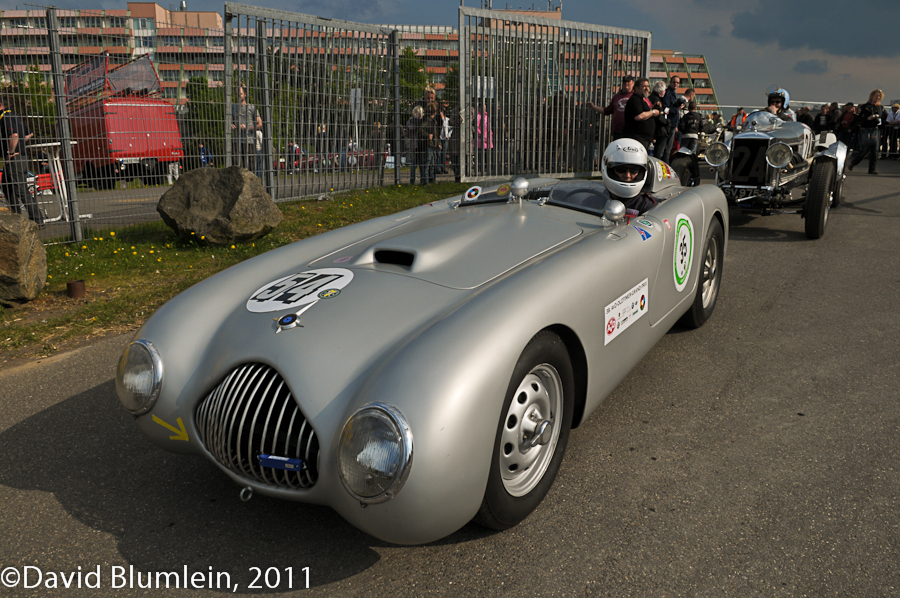
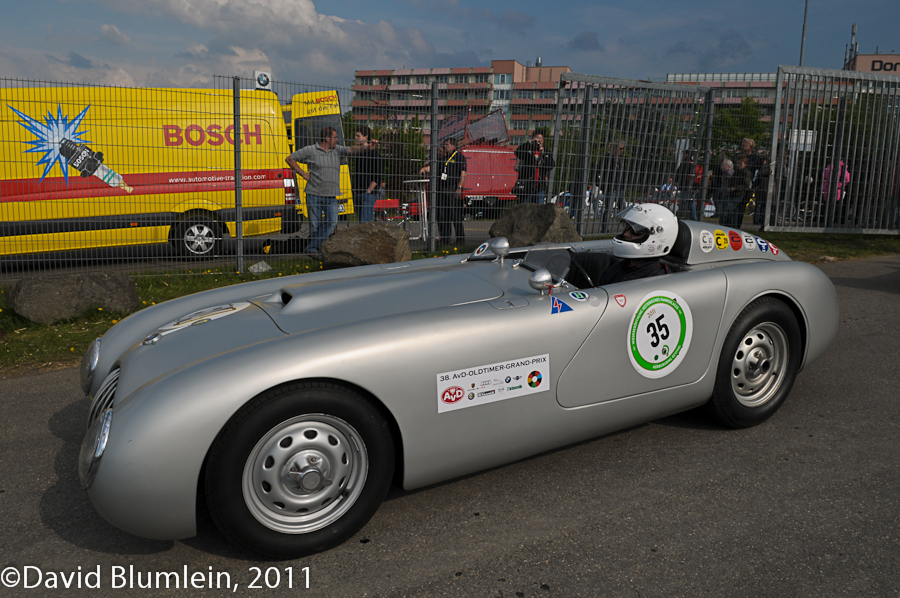
At a VLN race in April this beautiful Veritas RS was seen in the paddock at the Nϋrburgring.

At the end of the Second World War Germany’s industries lay in ruins. There was very little to support an immediate revival in motor sport except for some pre-war surviving racers, such as Bugattis, and mostly BMW 328 sports cars. But by August 1946 enthusiasts had made a re-start with a five mile hillclimb at Ruhestein in the Black Forest – it was won by the pre-war Mercédès Grand Prix star Herrman Lang in the 1940 Mille Miglia BMW Coupé.

Then in March 1947 three former BMW employees, Ernst Loof, Georg Meier (racing motorcyclist and ex- Auto-Union driver) and Lorenz Dietrich formed a company to build sports racers using the familiar BMW 328 mechanicals. They called the car a Veritas (Latin for “truth”) and basically customers would have to supply their 328s which would be stripped and re-built using a space –frame chassis based on two oval tubes, all clothed in a streamlined body; the finished product became known as the Veritas RS (Rennsport). Rising star Karl  Kling had already won the 1947 Hockenheim race in the Mille Miglia BMW Coupé when he gave the Veritas its competition début in the Eggberg hill climb – he retired with oil pump failure. But he went on to win the 2-litre German championships with Veritas, scoring five victories in national events in 1948 and seven in 1949.

It is interesting to note that German drivers were not allowed to race abroad before 1950, Germany having only joined the FIA in October 1949. So some Veritas cars found foreign owners, two for example coming to Britain for Dennis Poore and Ken Hutchison; 1938 Le Mans winner Eugène Chaboud drove one to finish a very creditable third in the Coupe des Petites Cylindrées behind two Ferraris at Reims in 1948 and Emile Cornet scored a win at the Grand Prix des Frontières at Chimay in Belgium in 1949.

There were of course only so many BMW 328 cars still  available (just 462 made at Eisenach originally) and these were now being gradually outpaced as the opposition grew. Loof therefore decided to make his own engine, a straight-six with single overhead camshaft which was designed by Erich Zipprich and manufactured by the aircraft firm Heinkel. Lack of development and consequent unreliability meant that Veritas, with limited resources anyway, struggled to survive. The company had also constructed some single-seaters to compete in the Formula 2 category and were making a series of road cars, the Komet coupé, Scorpion 2-seater cabriolet and the Saturn luxury 3-seater coupé; there was even the Dyna-Veritas with the famous Panhard flat-twin but when the company started to fall back on Ford and Opel engines the marque began to fade. Sadly Ernst Loof himself died of a brain tumour in 1956.


Veritas

David Blumlein, October 2011
Imola Investigata

The Imola circuit, the Autodromo Enzo e Dino Ferrari, is best known for the Formula 1 races that have been held in the past, particularly the San Marino Grands Prix, world championship events named after the local republic which gave Italy the chance to have two grands prix each season on her soil. But Imola is not a stranger to sports car races, the very first four-wheeled race held there being for cars with two seats.

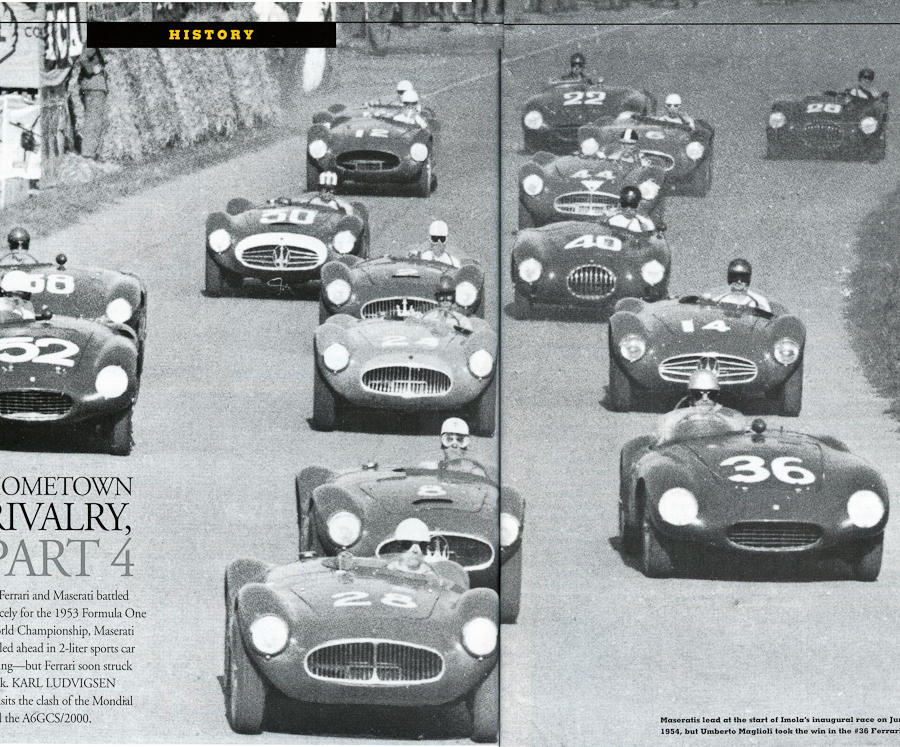
In fact the first three Imola Grands Prix were for sports cars. It was in June 1954 that Imola hosted a race for two-litre sports racers. This was at the time when there was intense rivalry between Maserati and Ferrari, be it in the world of Formula 1 or even in the 2000 c.c. sports category. In the latter Maserati had been gaining the upper hand with its attractive A6GCS 2000, having already succeeded in the Giro di Sicilia, the 6-Hours of Bari, at Naples and in the Targa Florio. But Ferrari had hit back in the all-important Mille Miglia when one of its new Mondial models came second overall in the hands of Vittorio, the oldest of the racing Marzotto brothers, beaten only by Ascari’s D24 Lancia. The Mondial was Ferrari’s contender for the hotly contested two-litre class and was based on the Type 500 Formula 2 double championship winning Grand Prix four-cylinder car of 1952/53.

The Ferrari factory sent two Mondials to Imola for that first car race, both having Scaglietti bodies based on some ideas of Dino Ferrari with unusually small front grilles. That competent and versatile Italian Umberto Maglioli drove one to victory and Robert Manzon took fastest lap in the other before retiring; Luigi Musso could only manage third for Maserati that day.

Forza


Cesare Perdisa took revenge for Maserati in the following year while in 1956 the chief race at Imola was for sports cars up to 1500 c.c. This resulted in a win for Eugenio Castellotti in an OSCA despite strong competition from three Team Lotus Elevens.

We jump ahead some sixteen years and find the beautiful Ferrari 312P sports racer winning a non-championship race at Imola – Merzario obliged with team-mate Ickx in second place.

By 1974 Ferrari had abandoned sports car racing officially to devote all its racing energies to the world of Formula One and Maserati, suffering changes of ownership, had long since ceased to be a force in sports car racing. Into this breach stepped temporarily the V12 Matras and for the first time we find the French blue displacing Italian red with the Matra MS670C winning in the hands of Pescarolo and Larrousse.

Imola went on to hold further World Sports Car rounds and Italian honour was upheld with Brambilla’s win in 1977 with the Alfa Romeo T33SC/12 and Fabi and Heyer’s success in the Lancia LC2/83 six years later. But we had to wait until 2004 before the old protagonists set to again on this circuit.

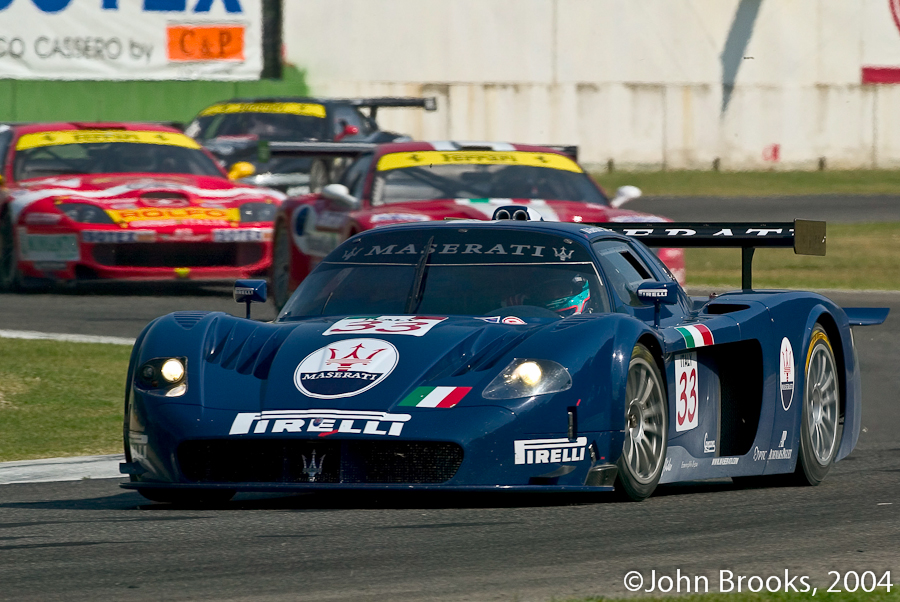
The context was the FIA GT Championship and it was at Imola that Maserati gave its new MC12 its racing début. Although the new cars from Modena were not yet eligible for points, they nevertheless finished on the road in second and third positions leading home three Ferrari 550 Maranellos – it was quite like former times! Yet to be fair to Ferrari their cars scooped enough points (technically 2nd, 3rd and 4th) to give the BMS Scuderia Italia squad the GT Teams title.

Trident Returns


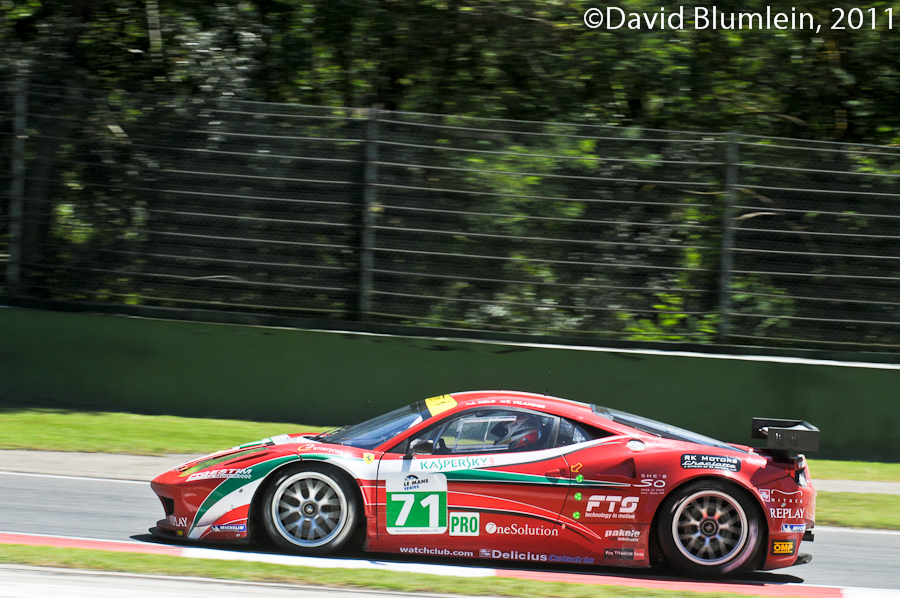
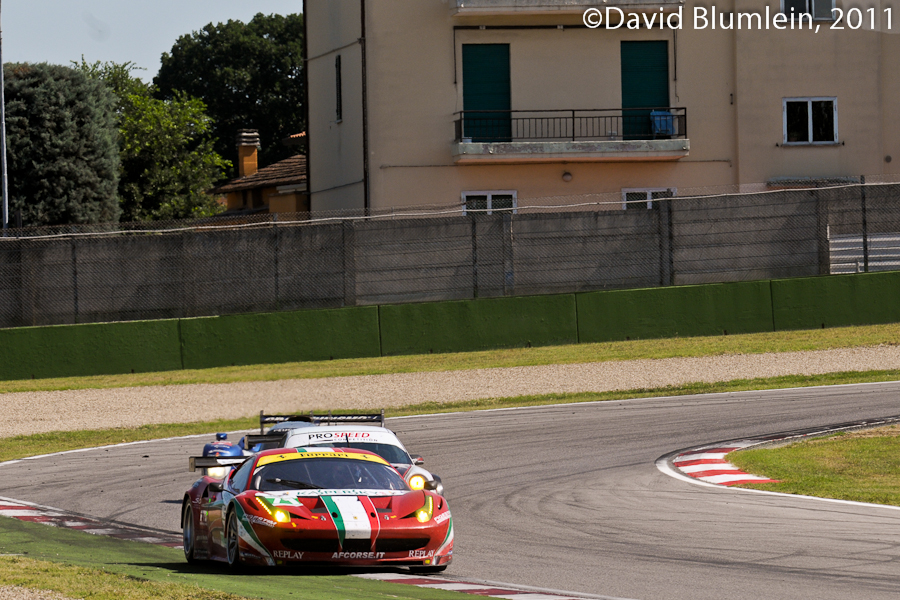
And so to 2011 and the Bleu France invades again, Peugeot fending off Audi. No more of the big Maseratis but the red of Maranello is happily at Imola once more in the GT section and the pace-setting 458 Italia winning the Pro GT category. And there were works blessed Lotuses there again.
Red Line Moment


There's a Red House over yonder......


David Blumlein, August 2011
 

Everything Must Go!

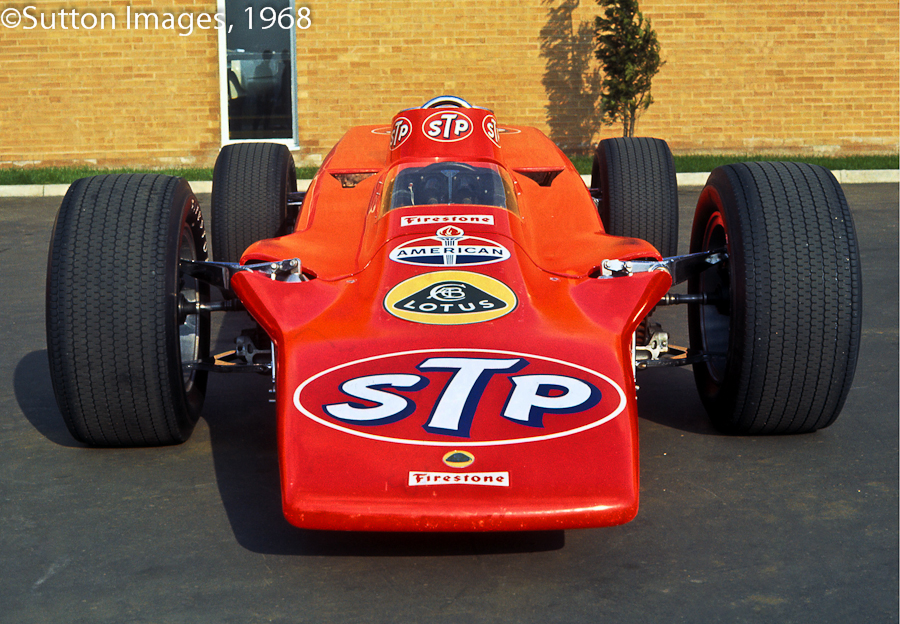
The internet site Ebay has many strange things for sale but I spotted this today and it just made me shake my head. Not really what you would expect to find.

http://cgi.ebay.com/ebaymotors/1968-Lotus-56-STP-Indy-wedge-car-/150646273609?pt=US_Cars_Trucks&hash=item231337b649#ht_2208wt_958

Lotus 56

The bit I most liked was the transport costs……Will deliver for $2 a mile round trip.

$1,500,000 asking price and they expect a delivery charge………………

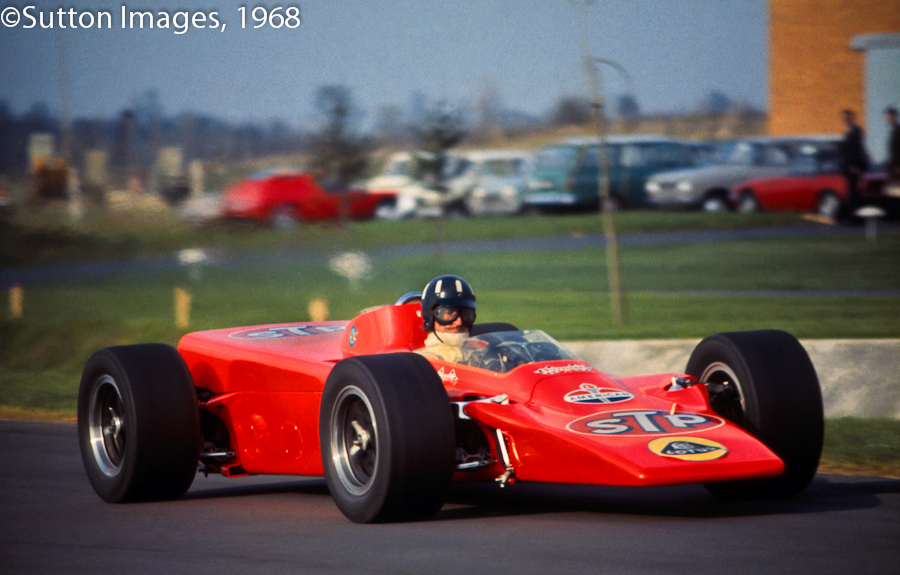
Hill at Hethel

It is a very cool car though.

John Brooks, August 2011


Gentleman’s Relish

As the dog days of summer and scandals drag on, there is little to cheer us. However today I am pleased to announce that my old friend, John Elwin, has agreed to contribute to DoubleDeClutch. Here is his first post, with his reflections on the recent Salon Privé.

SALON PRIVÉ

The 6th Luxury Super Car Event & Concours de’Elegance

22-24 June 2011, Syon Park, London


After five years at the Hurlingham Club, Salon Privé moved out to Syon Park, home to the Duke of Northumberland, where 200 acres of parkland – remarkably less than 10 miles from central London – afforded rather more space for this expanding show.

Arrive in Style

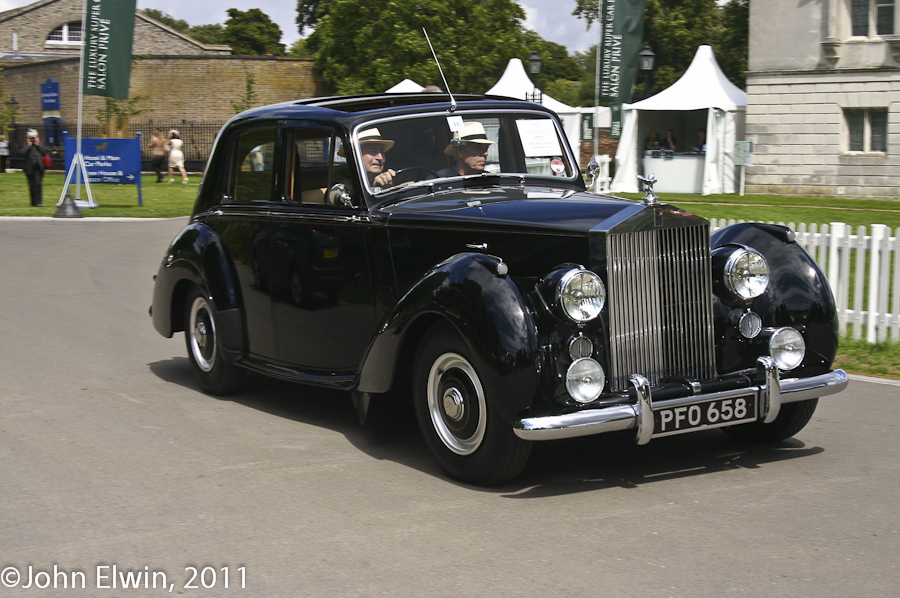
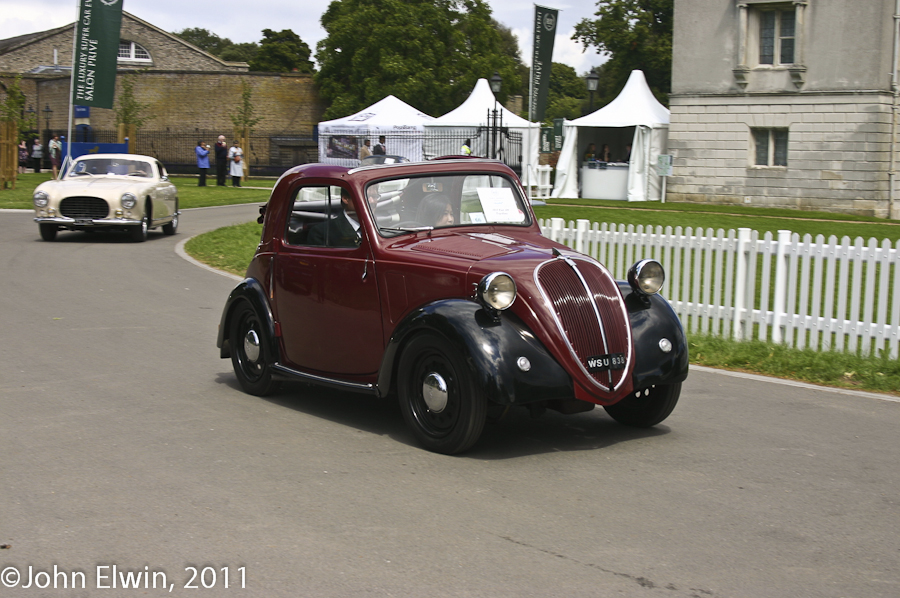
The rather exclusive event caters for those who want to inspect the latest in upmarket machinery whilst downing a glass or two of Pommery Champagne before enjoying an excellent lunch.

Italian Jobs

And some of the bolides on offer might well have looked more attractive after a glass or two of bubbly! A Bentley with yellow wheels, anyone?

Aston Extremes

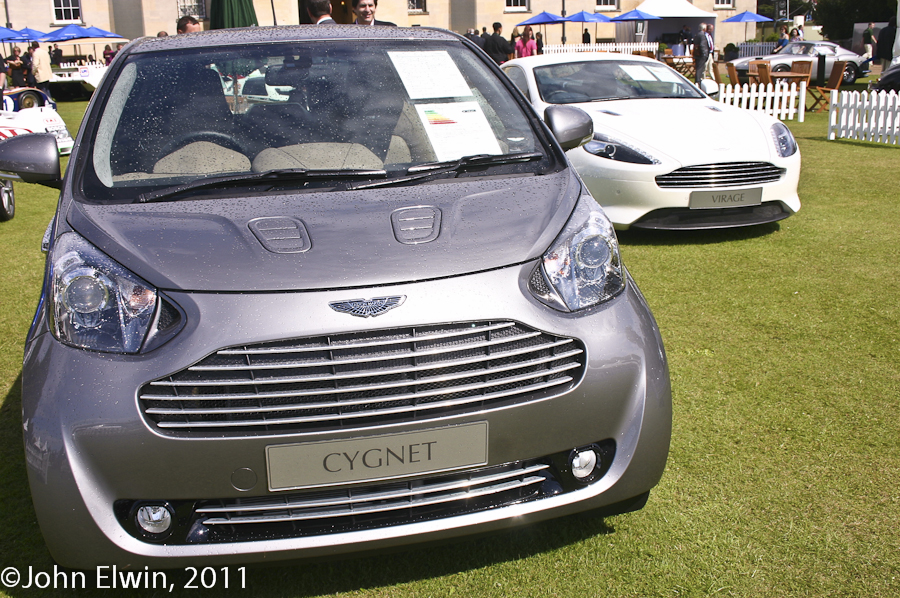
Aston Martin brought along the latest Mirage and their new city car, the Cygnet. Sir Stirling Moss has apparently ordered one, so it’s sure to catch on.

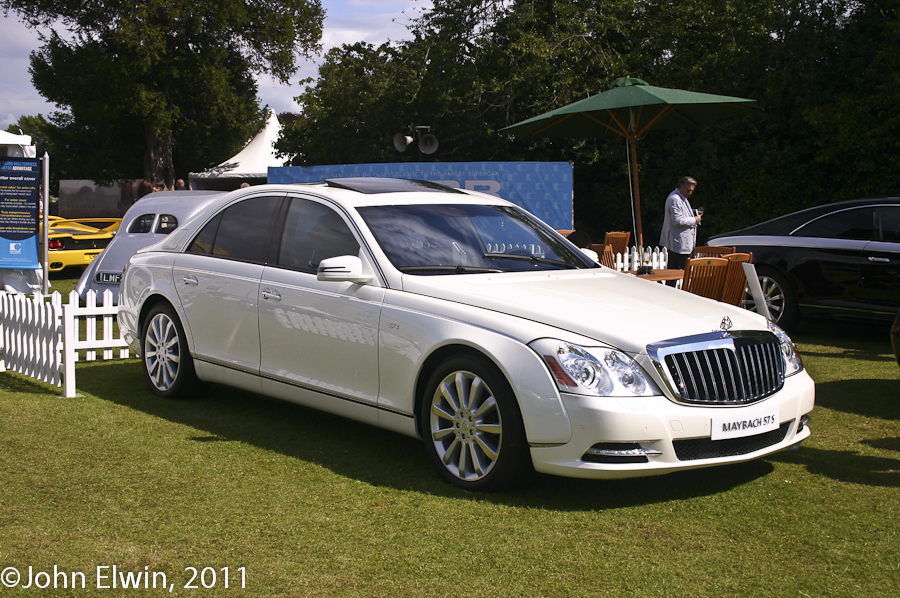
A Maybach, allegedly

Rolls Royce showed a bespoke Phantom, but the behemoth from Goodwood is a relatively common sight in comparison with the Maybach – now that does have rarity appeal.

The New Old Jensen Interceptor

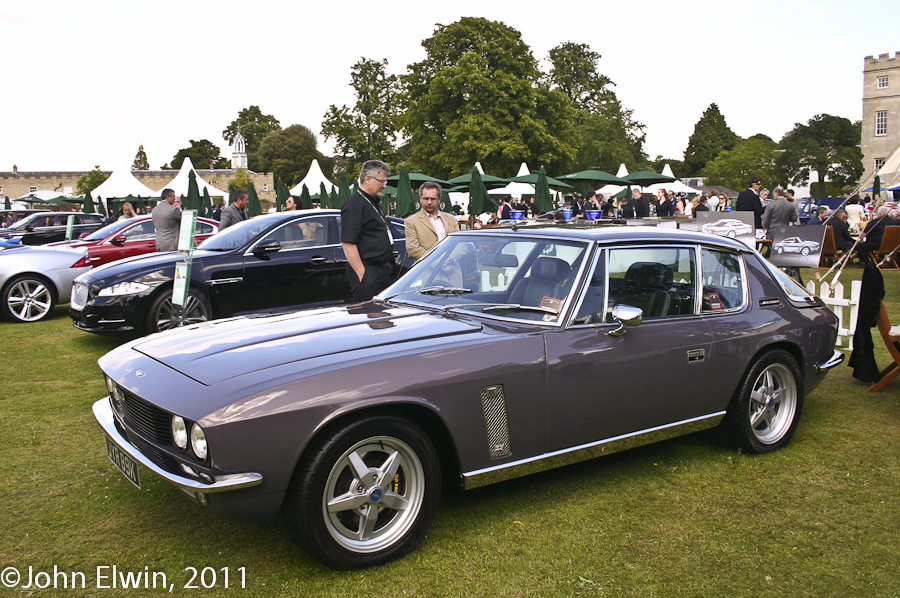
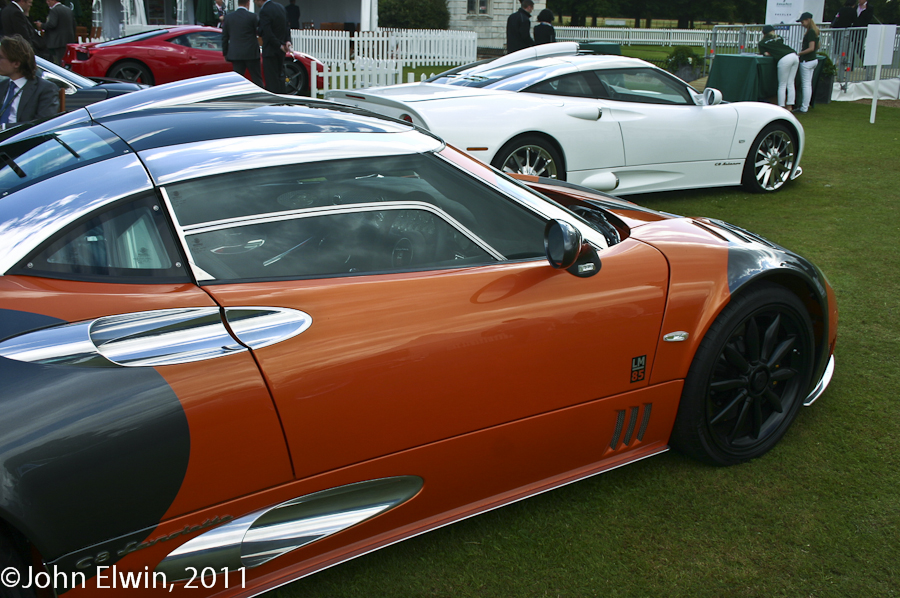
It was good to see some of Britain’s smallest of artisan manufacturers holding their own against the established names. Eagle E-Types were capturing a lot of attention with their E-Type Speedster, a discretely different take on the British icon which is celebrating it’s 50th birthday this year (in case you hadn’t heard…). Making a return to the scene is the Jensen Interceptor, Steve Bannister’s company now remanufacturing this 1970’s superstar. Starting with a tired original Jensen International Automotive restore and re-engineer to a bespoke specification – the car on show, painted in a Lamborghini lavender colour was powered by a 492bhp Chevy V8. There are plans for a GT Coupe based on the drop-top Interceptor. Drawings have been found for what would have been Jensen’s next model before the original company went out of business.

Hennessey Venom GT – not an eco car

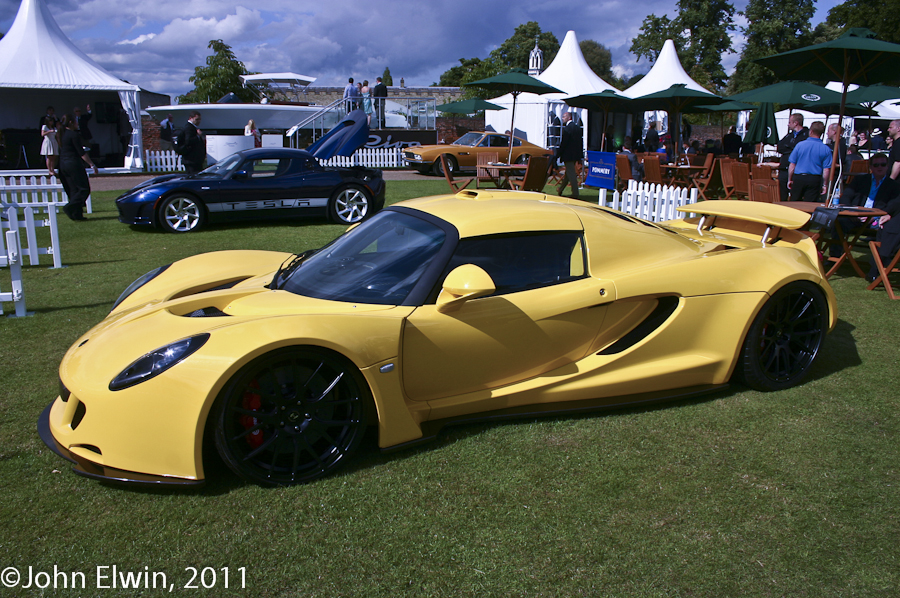
Bearing little or no allegiance to the past is the Hennessey Venom GT. Loosely based on the Lotus Exige but clothed in full carbon composite bodywork it too is V8 powered but this one pumps out 1200bhp and reputedly can do the 0-60mph dash in 2.5-seconds before hurtling on to 275 mph, that should be enough to upset the eco-fascists! It’s in marked contrast to the similarly Lotus-based but very different Tesla.

House Guests

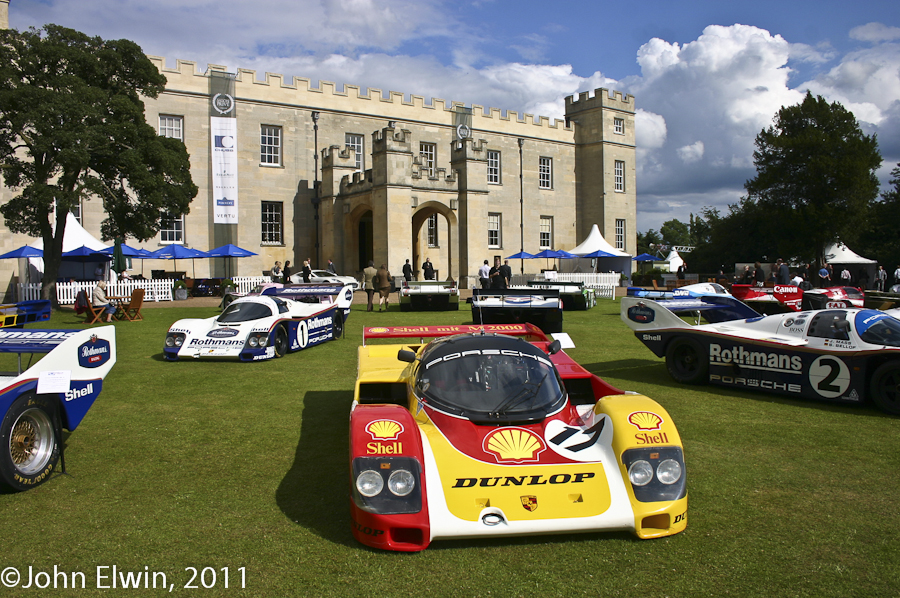
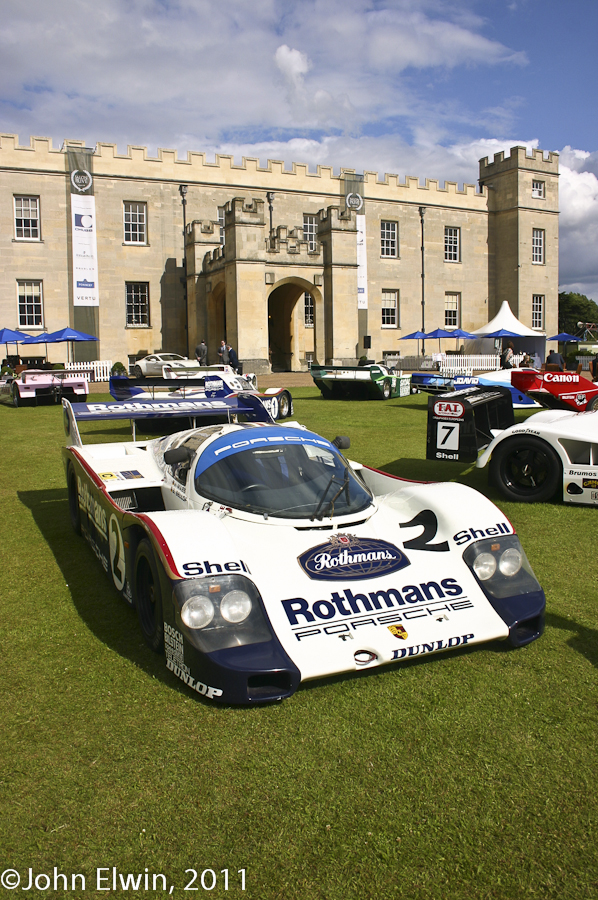
Almost ignored, but taking up the prime position in front of the house, was an incredible collection of Porsche Group C cars, no less than seven 956’s and eight 962’s.  This represents the full spectrum, from the original Rothmans 956 that debuted at Silverstone in 1982 and won that years’ Le Mans 24 hours in the hands of Derek Bell and Jacky Ickx, through to the ultimate interpretation, Jim Busby’s specially commissioned Miller car that scored the last Daytona 24-hour race win for Stuttgart’s finest in 1989. Derek Bell once again was one of the drivers, joined this time by Bob Wollek and John Andretti. (Editor’s note: Porsche fetishists, of which there are many, will surely remind us that the Kremer K8 Spyder that won the race in 1995 was based on a Porsche 962. Is it a Porsche? Debate and discuss. Then there is the small matter of The Racer’s Group triumph at the 2003 race in a 911………finest? Not a 911?)

Brun Porsche

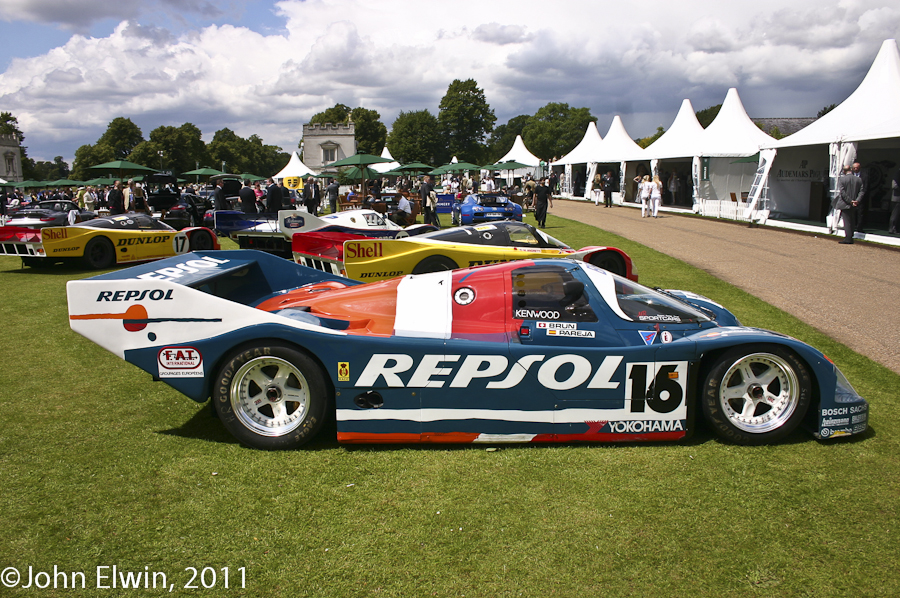
The rest of the collection, pulled together over a ten-year period, included other works cars such as the Shell Dunlop versions, Walter Brun’s Repsol liveried machine, the last-ever factory built 962 which came within 15 minutes of stealing a Le Mans win away from the TWR Jaguar oufit. (Editor’s Note: The Brun car was in second place when it retired, the Brundle/Cobb/Nielsen Jaguar had led the race for 13 hours. It was no less heart breaking to see Jesus Pareja stopping at Mulsanne Corner and no less unjust.) Also represented were successful privateer British teams such as Richard Lloyd Racing and John Fitzpatrick, the former in particular highly modifying its cars in an effort to find an advantage.

Taxi for Il Duce?

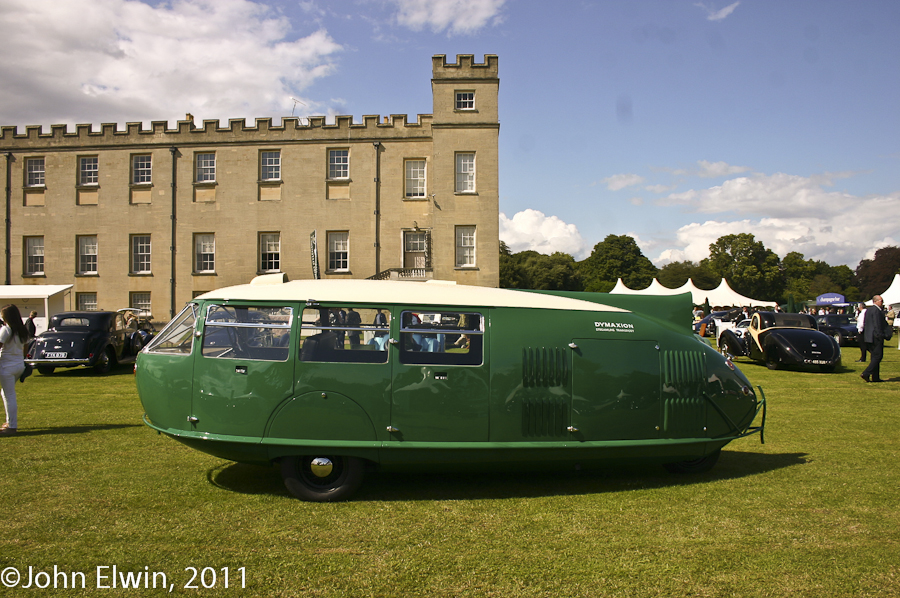
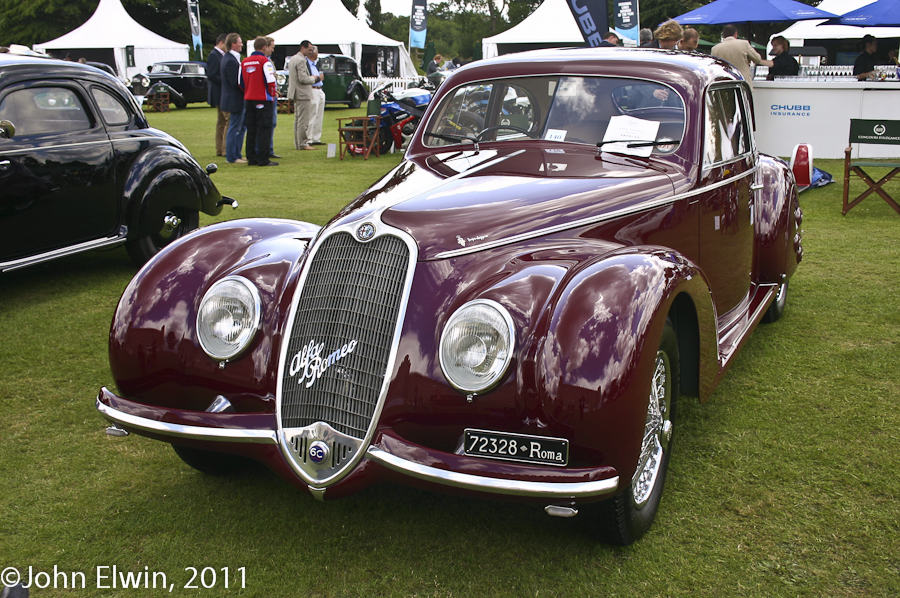
A walk around the side of the house revealed the concours where everything from Mussolini’s Mille Miglia Alfa Romeo (it took top prize) to the Sir Norman Fowler’s 1934 Dymaxion 4 were to be found, the latter put together by the ever versatile Crosthwaite & Gardiner.

Nicely patinated Don Lee Special

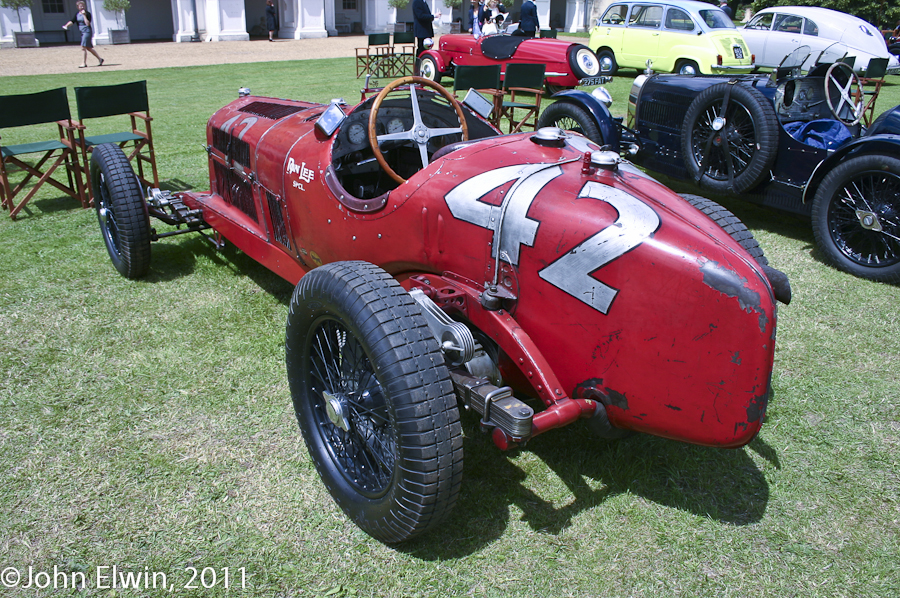
Attracting almost as much attention but in totally unrestored condition was the Alfa Tipo ‘Don Lee Special’.

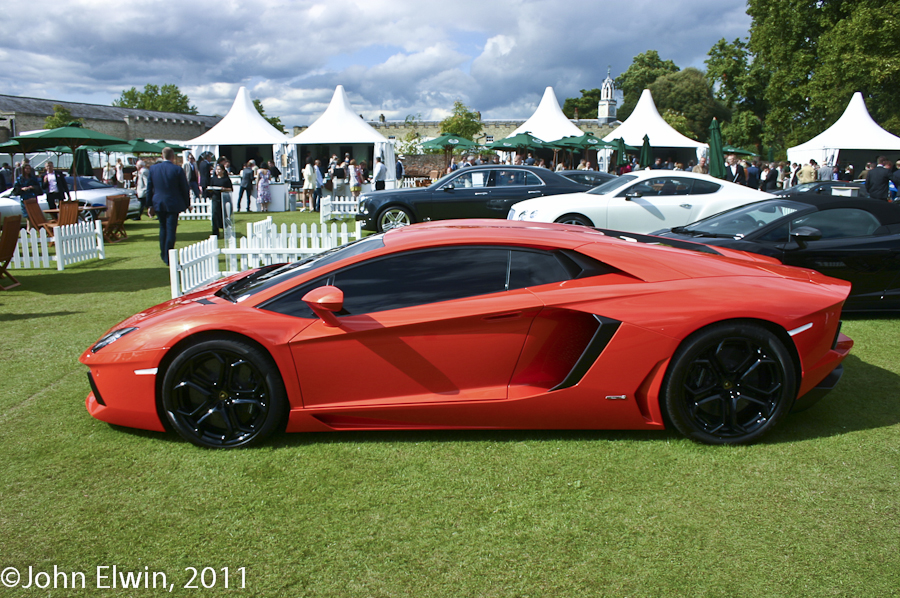
Lambo’s latest

RM Auctions were in charge of the Thursday evening sale with a large number of primarily Aston Martin, Jaguar and Rolls Royce lots on offer.

And finally.. tailpiece

An interesting day out with an opportunity to look at some rare, interesting and unusual machinery in pleasant surroundings and not too crowded – presumably there are not so many well-heeled bankers with bonuses burning a hole in their pockets now!

Smoking on the Grass

John Elwin, July 2011

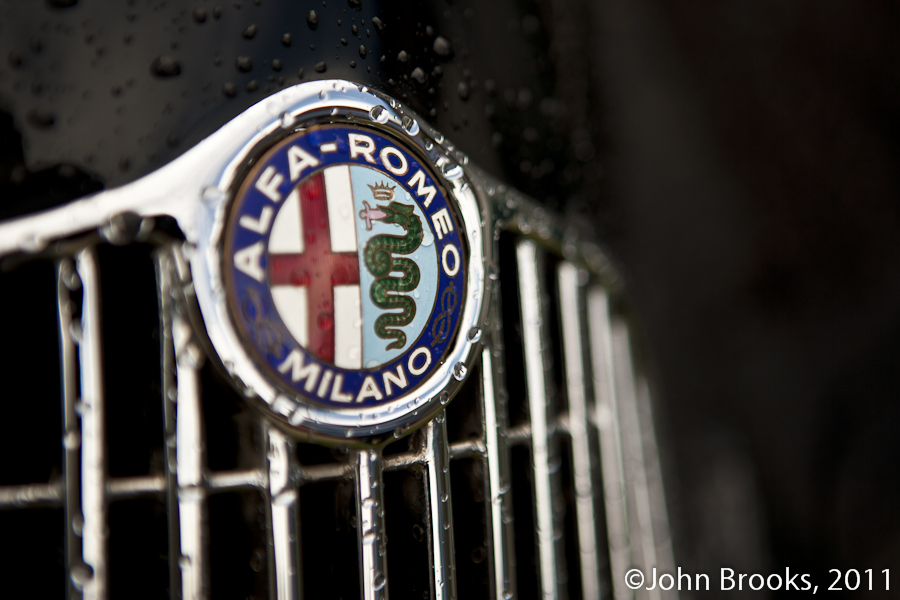
Alfa, Alfa, Alfa

The Brooklands Double 12 brought out fine examples of motoring art from Italy and specifically from Alfa Romeo. The Italians have created some of the most beautiful cars ever to turn a wheel, occasionally a dog too.

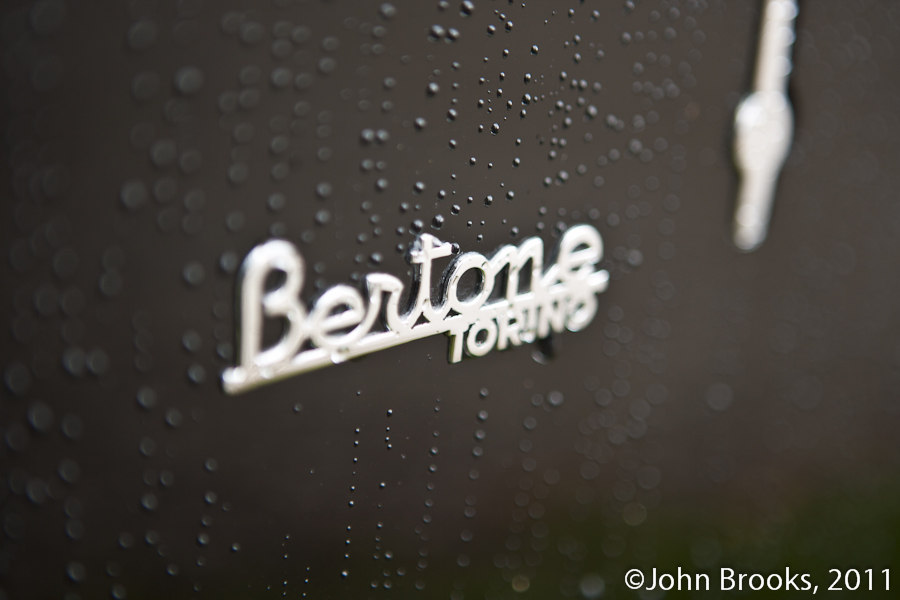
Alfa Romeo 6C 2500 Bertone

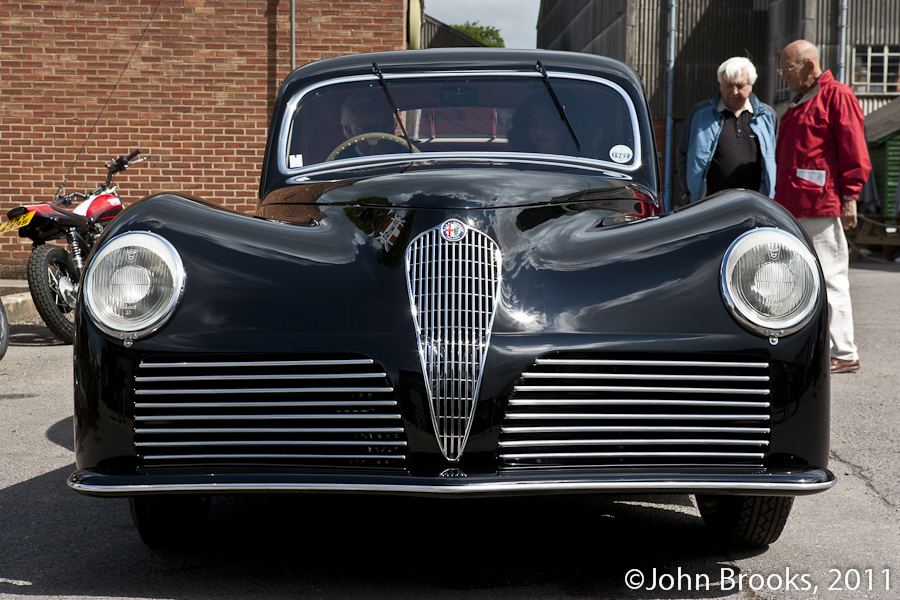
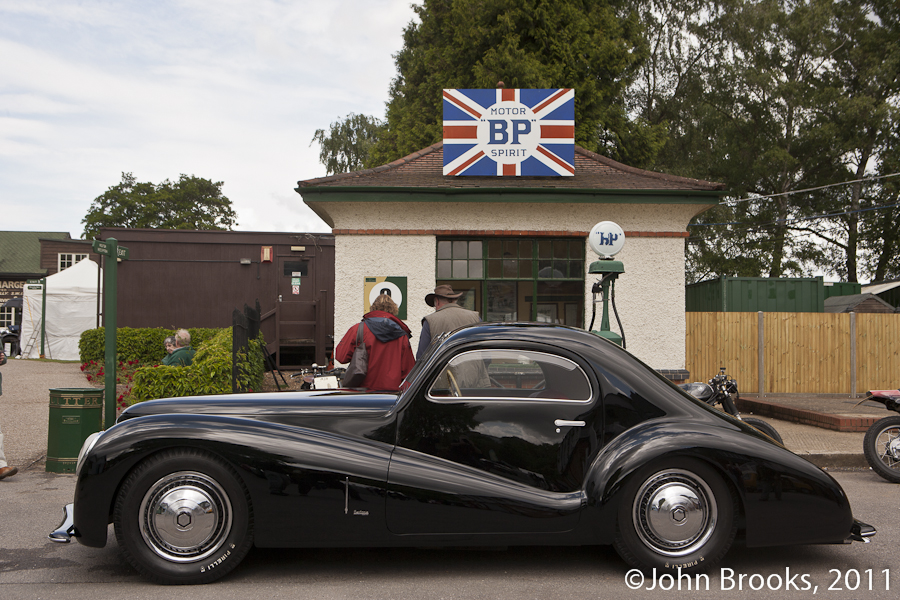
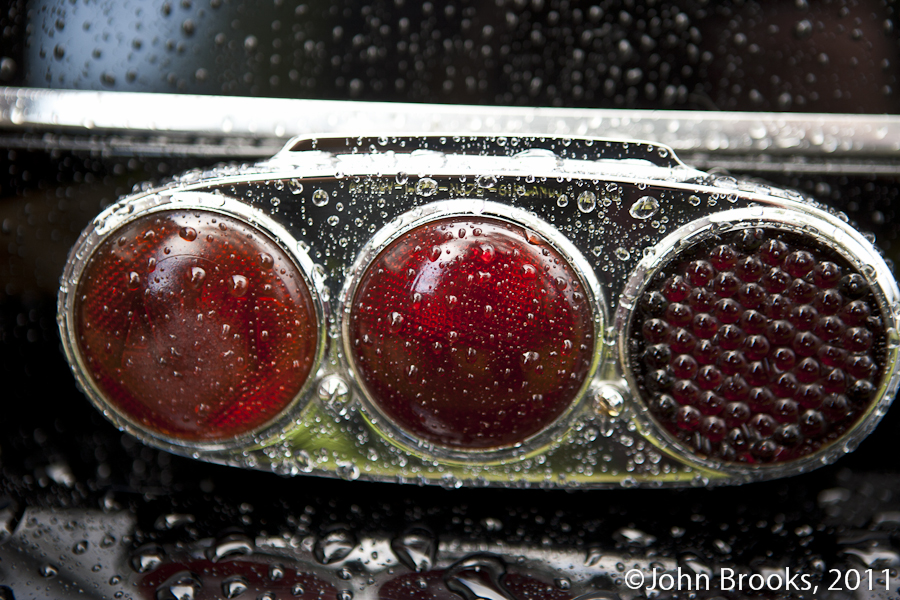
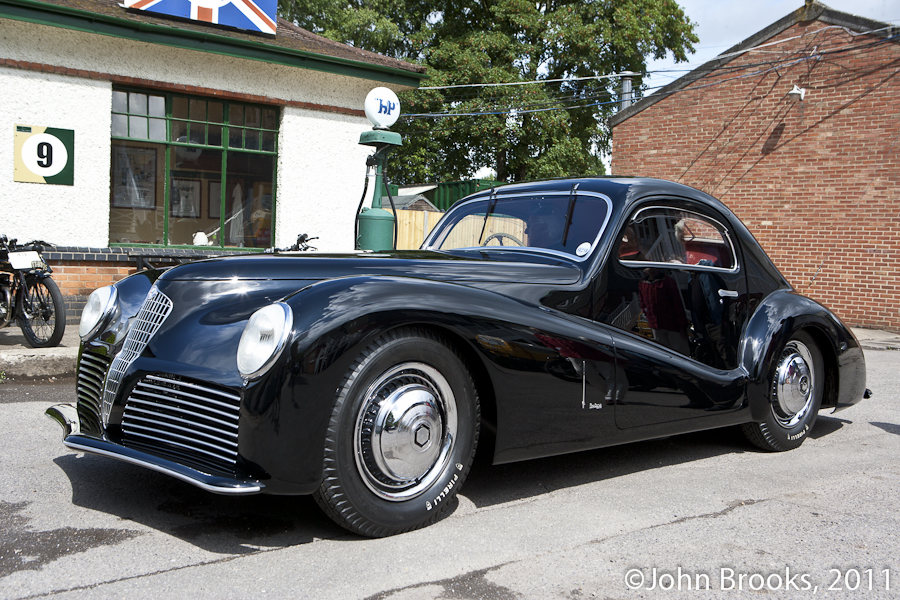
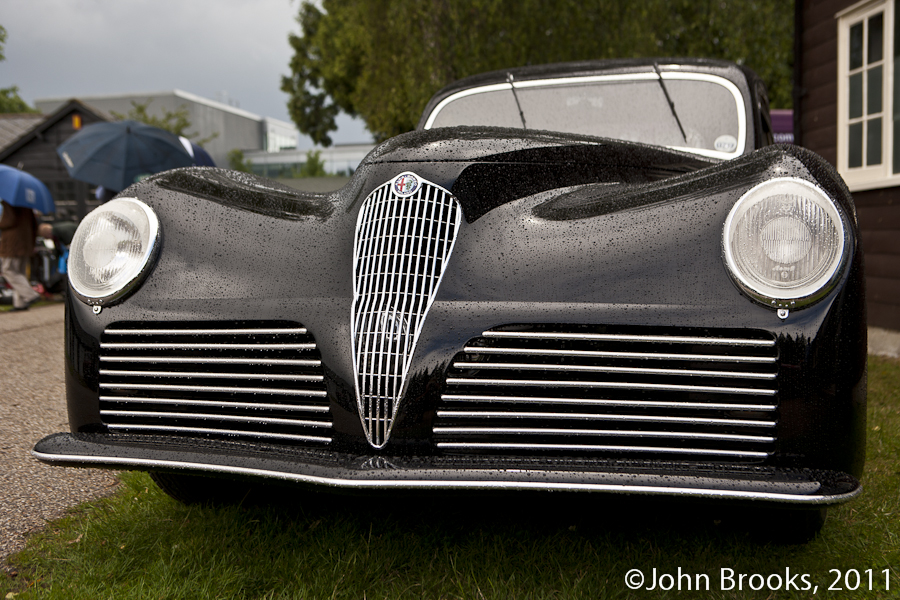
Almost the first car that the Special Correspondent and I tripped over on our arrival was this fabulous machine. It was a Alfa Romeo 6C 2500 SS Bertone dating from 1942.

Alfa Romeo 6C 2500 Bertone

It was brought to England by its current owner, Corrado Lopresto, who has restored the car to its original glory.

Artist’s Signature

Along the way it has won awards at Pebble Beach and Villa d’Este, including the 2011 Coppa d’Oro, it doesn’t get any better than that.
Tail Piece

According to my good friend Wouter Melissen the design was the work of Mario Revelli di Beaumont.

Alfa Romeo 6C 2500 Bertone

You can read up more about this fantastic car on Wouter’s excellent site HERE . Strange thing, probably a coincidence, but when you Google this car, most of the websites that describe it at Villa d’Este or Brooklands use a remarkably similar wording to that of UltimateCarPage, when it talked about the car a year ago at Pebble Beach. Spooky, this internet thing.

Alfa Romeo 6C 2500 Bertone

One thing that struck me is the question of how did this car get built at all? In 1942 World War Two was in full flow, Italy was fighting alongside Nazi Germany in the Western Desert and on the Russian Front. All materials were rationed and there was strict control of industrial activity. It must have been very powerful JuJu that allowed the war effort to be diverted to build this one off. Perhaps the Italians have always had a better sense of what is important and what is not, most of them would have seen through Mussolini’s bombast by that time. Certainly nothing like this could have been built in war time Britain, the Man from The Ministry would never have allowed it.

Badge Engineering

The car was built in 1942, delivered to Concessionaria Oreste Peverelli in Como, then rescued from Italy to Switzerland to remain intact during the Allies’ invasion of Italy. It is a thing of beauty and we were lucky to see it at Brooklands.

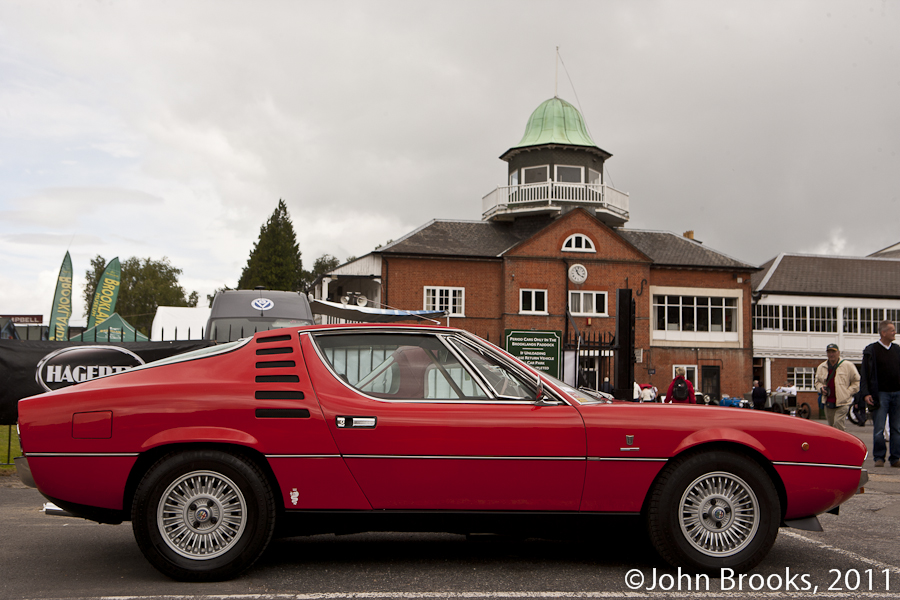
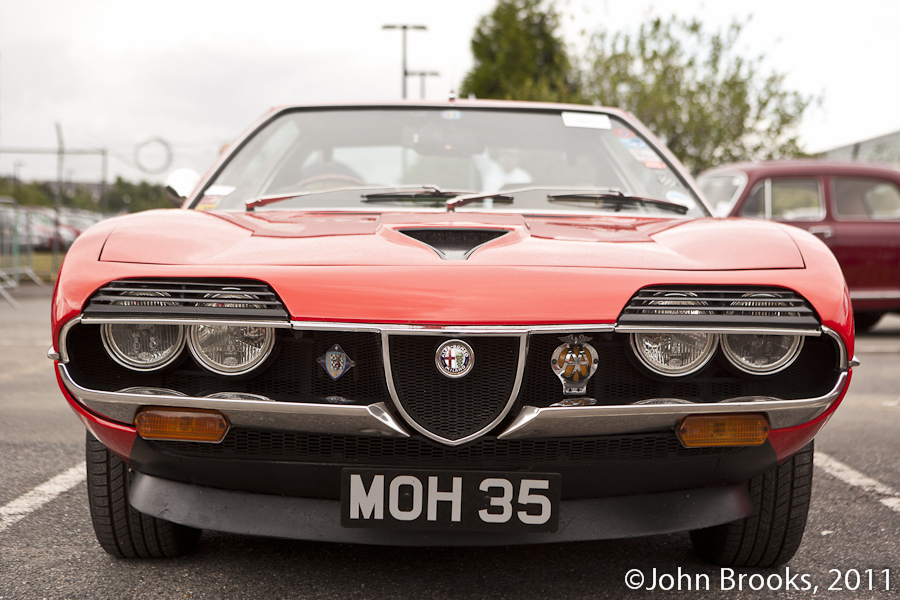
Alfa Romeo Montreal

Less exotic but still very worthwhile was this Alfa Romeo Montreal.

Alfa Romeo Montreal

The styling say 1970’s in the same way as the Bertone classic says 30’s.  Yet this does not detract from it, there really was Life on Mars.

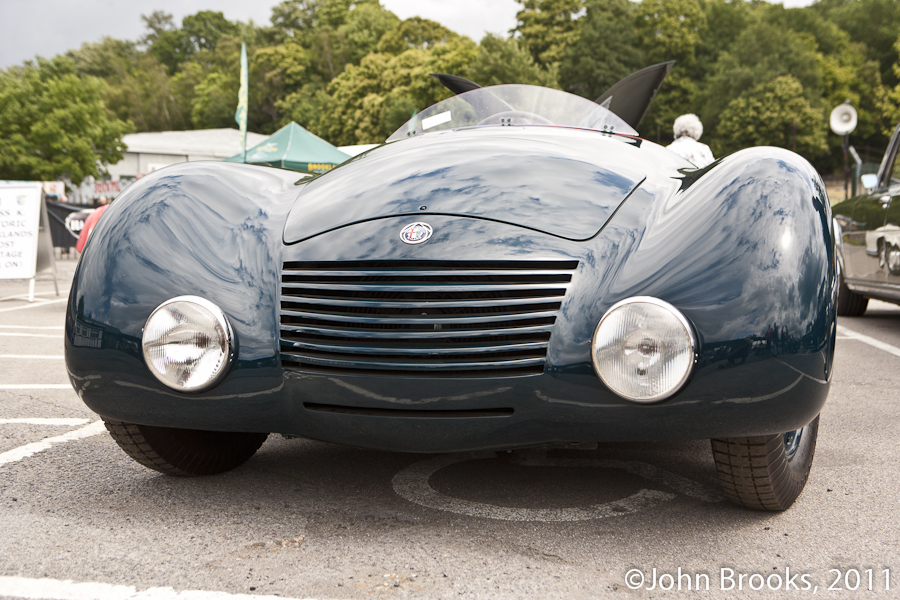
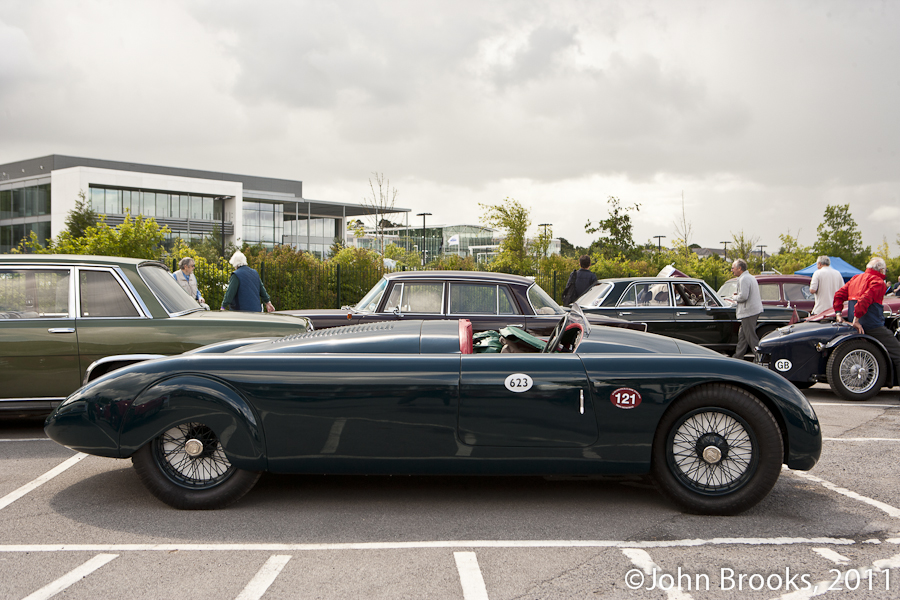
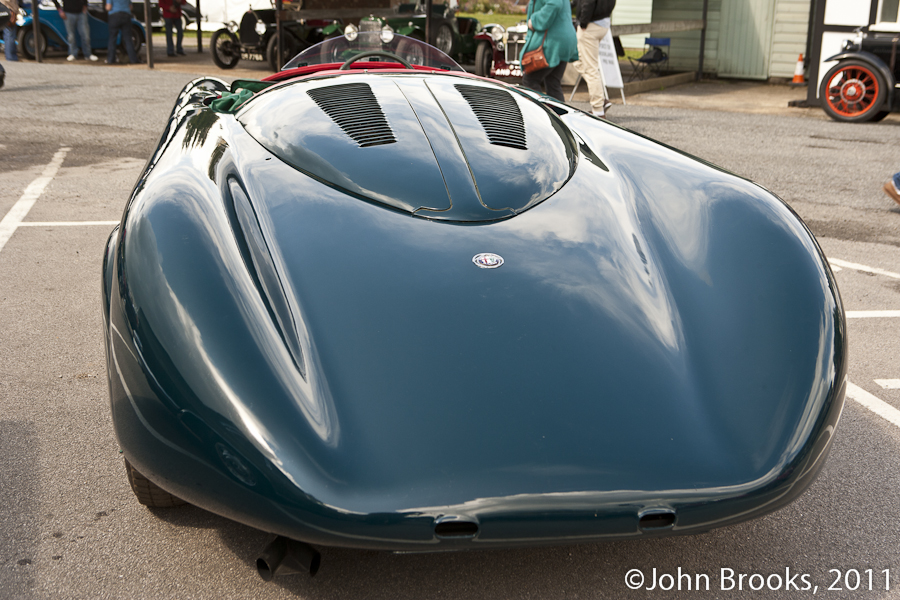
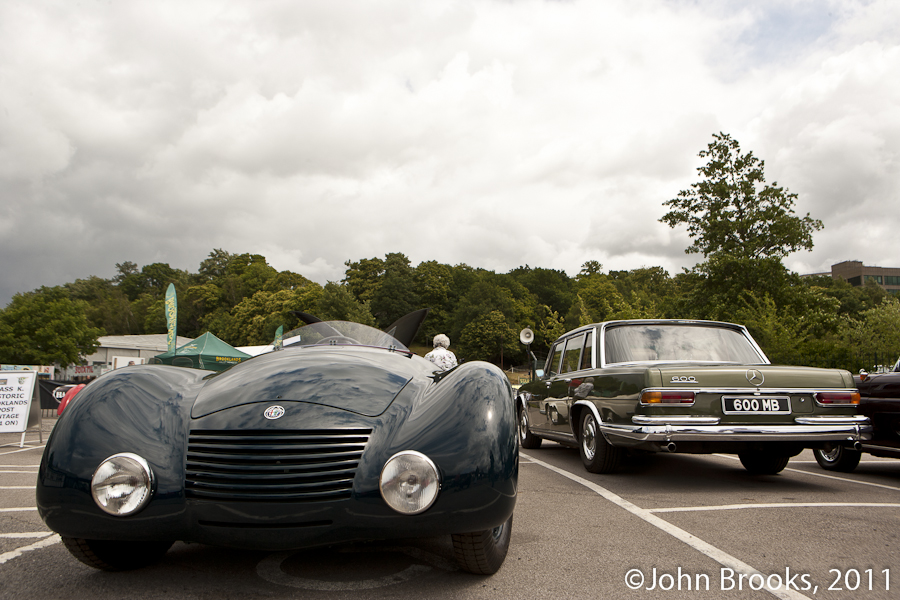
Another exhibit that purported to date from the 30’s was this weird creation.

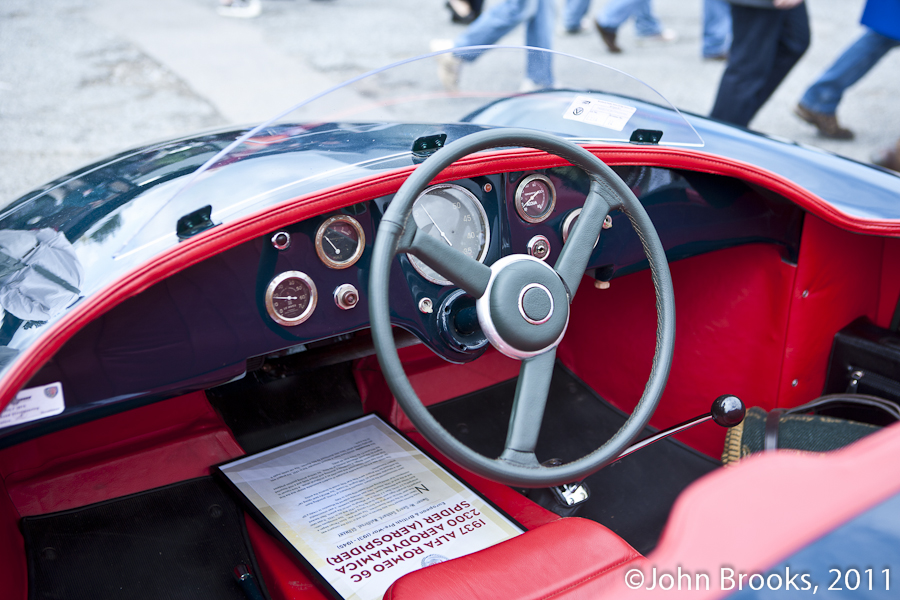
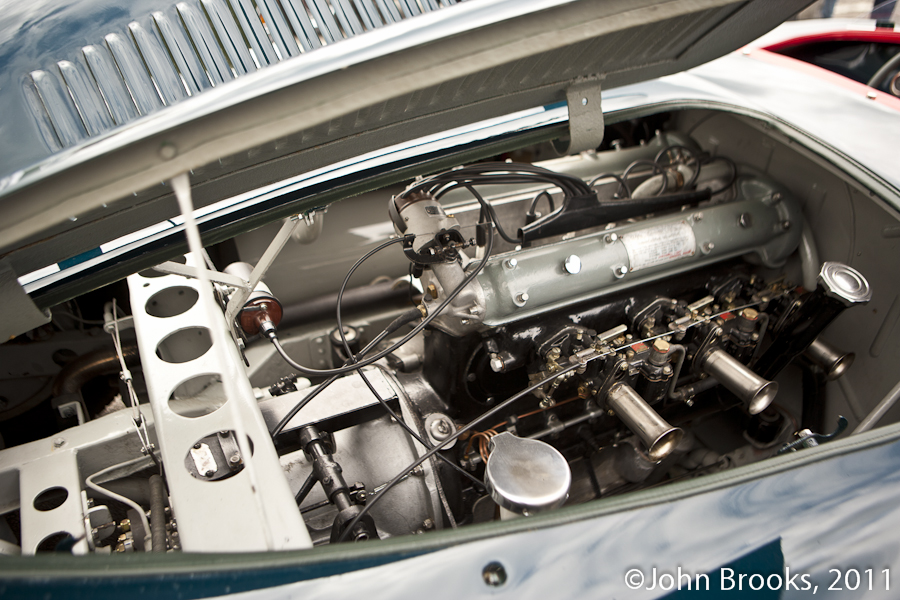
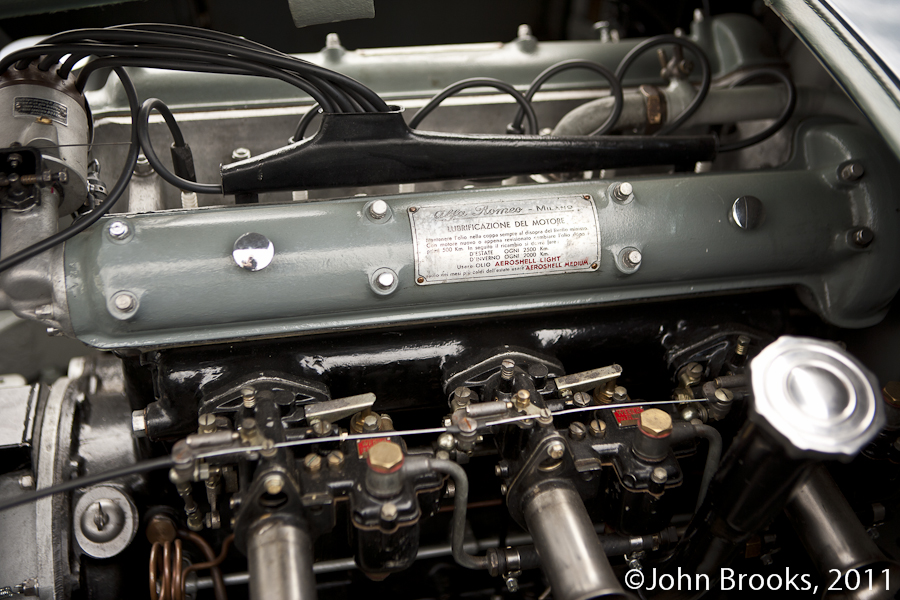
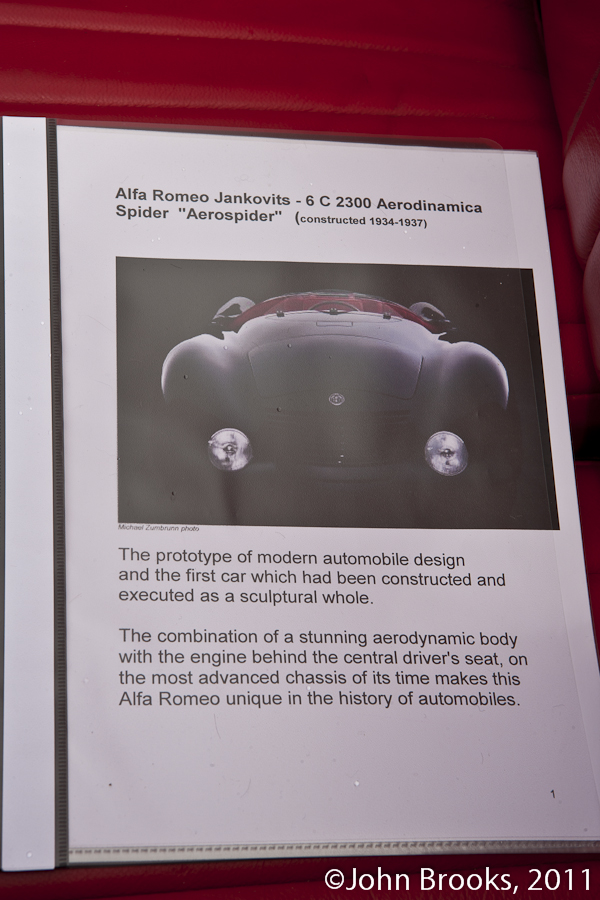
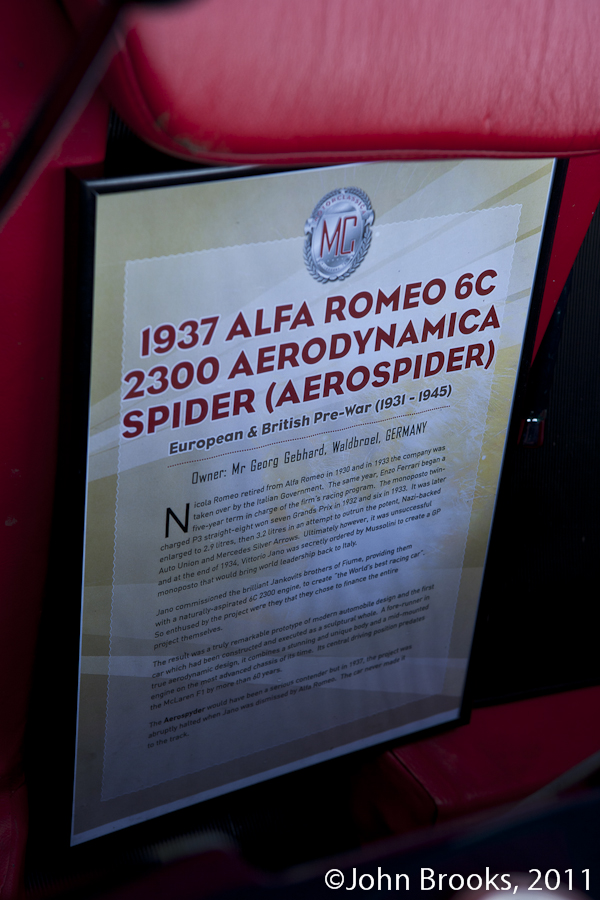
Alfa Romeo 6C 2300 Aerodinamica Spider

It is described as a secret project commissioned by Vittorio Jano.

Someone has taken a lot of time and trouble to post up a full history on Wikipedia.

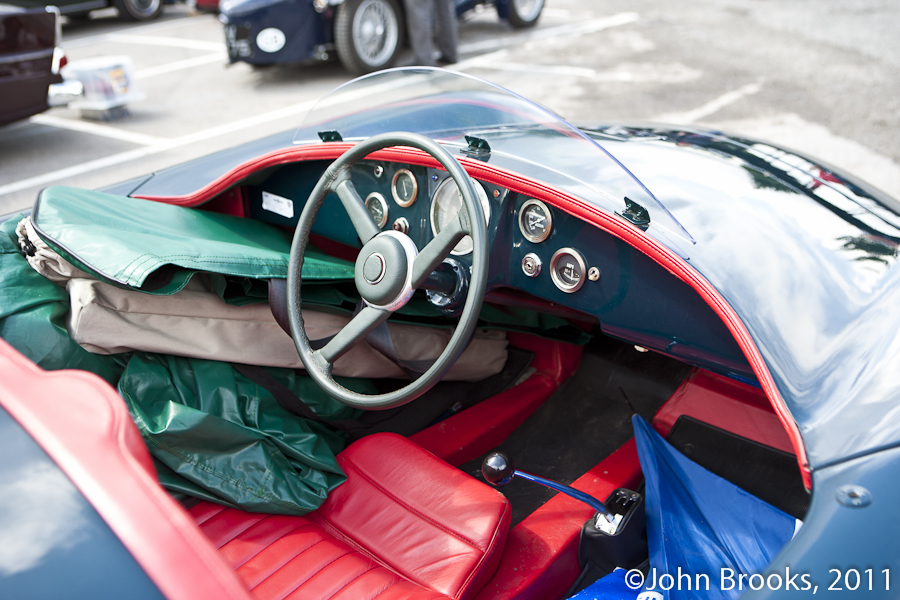
Cockpit

In 1935, Vittorio Jano, working with the brothers Gino and Oscar Jankovitz, created a one-off mid-engine prototype on a 6C 2300 chassis (no. 700316),which Jano had shipped to Fiume, Croatia in 1934. The brothers Jankovitz had been close friends with leading Hungarian aerodynamicist Paul Jaray, and the prototype, called the Alfa Romeo Aerodinamica Spider, was an especially early and clear example of ponton styling — a genre that would overtake automobile styling and last until the 1960s. Jano had intended to fit a V12 engine, though that possibility disappeared when Jano himself was fired from Alfa in 1937.

Based on documents kept in the family Jankovits the history of the car’s development is as follows:
Summary of the “Aerospider” Alfa Romeo Jankovits – 6 C 2300 Aerodinamica Spider “Aerospider” (constructed 1934-1937)
The prototype of modern automobile design and the first car which had been constructed and executed as a sculptural whole.
The combination of a very advanced aerodynamic body with the engine behind the central driver’s seat, on the most advanced chassis of its time makes this Alfa Romeo unique in the history of automobiles.
This special version of an Alfa Romeo 6C 2300 belonged to a secret project by Vittorio Jano and the brothers Jankovits.
The Aerospider represents:
The first supercar of “modern” sports car design.
The first mid-engined car with central driving position in the history of automobiles designed to keep the centre of gravity in the middle of the car – 60 years ahead of the McLaren F1
The first car designed to take account of newly developed principles of aerodynamics, to provide low-drag both externally and internally.

The article makes a whole batch of other claims about the car.


There is even a bit of James Bond, or should that be “The Spy Who Came in From the Cold” provenance attached?

The car was ‘liberated’ from East Europe in a dramatic way, according to the story.

No V12.

Any public appearance of the futuristic looking Aerospider would have caused a sensation, but because of the secrecy surrounding the project, and then the onset of the war, the prototype remained hidden in the Jankovits’ garage in Fiume, and was not seen by anyone from outside the garage. On Christmas Eve 1946, Gino Jankovits drove the Aerospider at full speed under the toll-bar of the closed communist controlled border into Italy. Border guards fired volleys of shots after him, but the low, streamlined body saved Gino’s life. Only the rear tyres were destroyed by the bullets, which also caused some dents in the rear of the car’s bodywork. To get money they had to sell their car to an Anglo-American officer. Then the Alfa disappeared for about 20 years until it was rediscovered in England. In 1978 the Aerospider was recognized by the well-known Alfa Romeo historian Luigi Fusi, who had worked with Vittorio Jano at the time of the Aerospider project. He wanted to acquire the car for the Alfa Romeo Museum. The acquisition failed, but the prototype did eventually return to Italy, 30 years after its birth, to be restored at last to its original condition as a racing car.

Original?

However, Alfa Romeo is a brand that inspires loyalty and enthusiasm amongst the Alfisti to a degree seldom seen by other motor manufacturers. So when a rare beast like this appears from nowhere it will attract commentary and not everyone has accepted the authorised version.

Brooklands

Indeed, when I asked my colleague, the venerable Special Correspondent what he thought, he was somewhat dismissive. He backed up this opinion by later confirming that the car was not in the Alfa Romeo bible ‘Alfa Romeo Tutte le Vetture Dal 1910’ by Luigi Fusi. That confirmed it, as far as he is concerned, that this car is not an Alfa Romeo. Others have written blogs about this vehicle, one can be found HERE that eloquently puts the case for the prosecution.

Proof?

Another comment that was published, “Respected antique dealer Colin Crabbe was told by Luigi Fusi of the Alfa Romeo Museum that the Jankowits car is not an Alfa Romeo, what ever the current owner seems to think, none the less it is an extremely interesting Alfa Romeo powered special, stories of the car dodging bullets to escape communist Yugoslavia are comically wide of the mark, the car and its occupants were allowed to leave the Yugoslavia with a perfectly normal travel permit, it was never designed for anything other than a straight 6, Alfa V12’s did not exist at the time the car was conceived by the Jankowits Brothers.”

More Proof?

Still, there are those who maintain that this story is true. The car has been exhibited at Goodwood’s Festival of Speed and, of course, Brooklands, giving some credibility to that version of events. Being less of a purist than those like the Special Correspondent, I am inclined to enjoy that car for what it is and am glad that we are able to see it today.

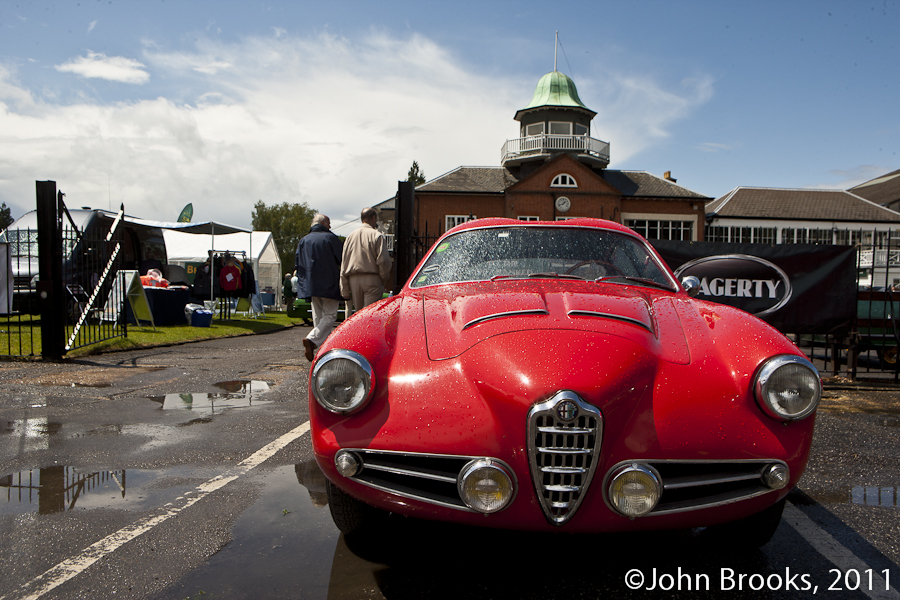
Alfa Romeo 1900C SS Zagato Coupe

One car that attracts only enthusiasm is the Alfa Romeo 1900C SS Zagato Coupe. Even the rain storm that hit the event that day could not dim the glow from the car.

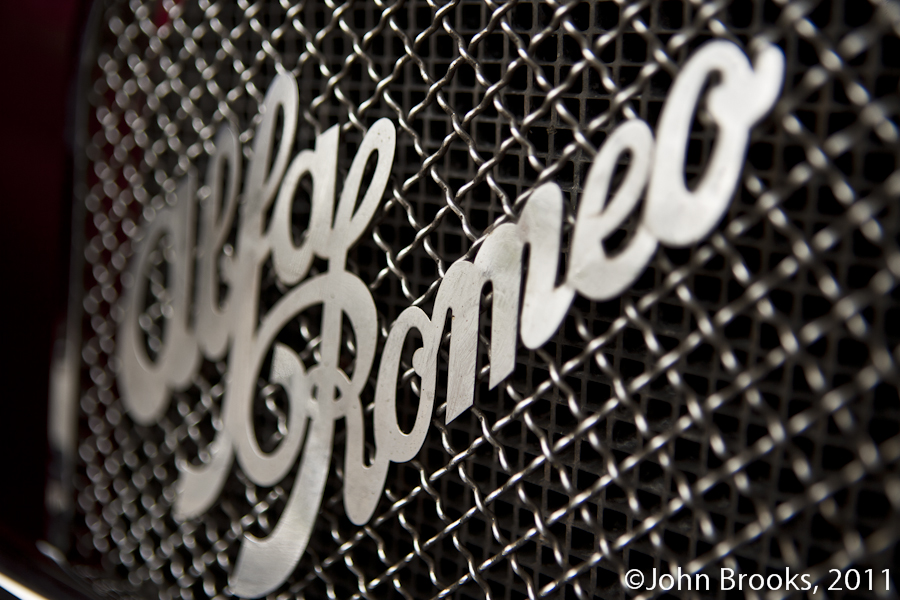
Name Check

A fitting way to end this salute to Alfa magic on display at Brooklands last month.

John Brooks, July 2011
 

Chelsea AutoLegends. An Instant Classic?

Instant Classic, a cliché in most cases but like all clichés there are instances when it reflects reality. The Chelsea AutoLegends certainly falls into that exclusive category.

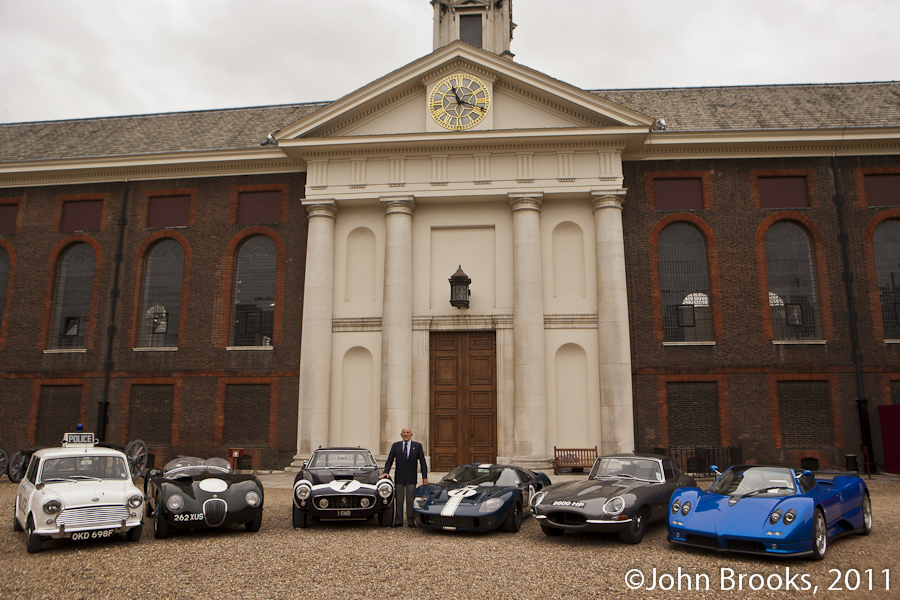
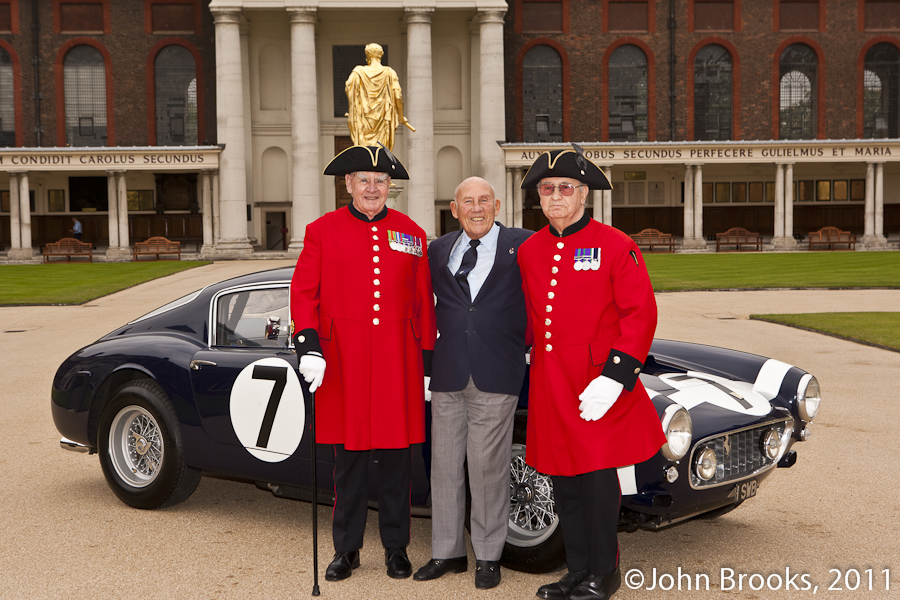
No one really knew what to expect when the first show was held last September in the grounds of The Royal Hospital, Chelsea. By any standards it was a rip-roaring success, a mouth-watering collection of cars that had competed at Le Mans over the decades in a regal setting and the atmosphere of an English Garden Fête. Even more important, substantial funds were raised for the ongoing refurbishment of the 300 year old Royal Hospital, famous home to the Chelsea Pensioners.

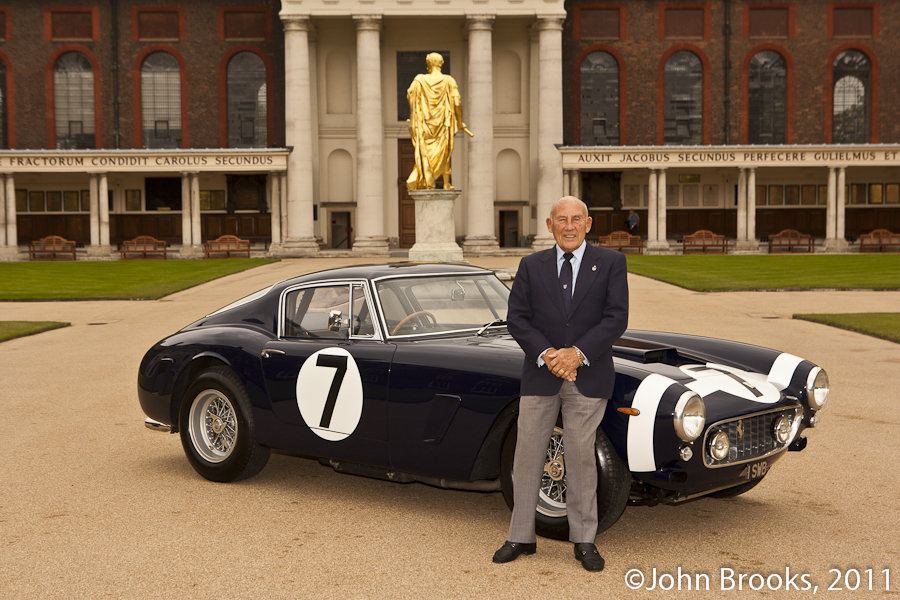
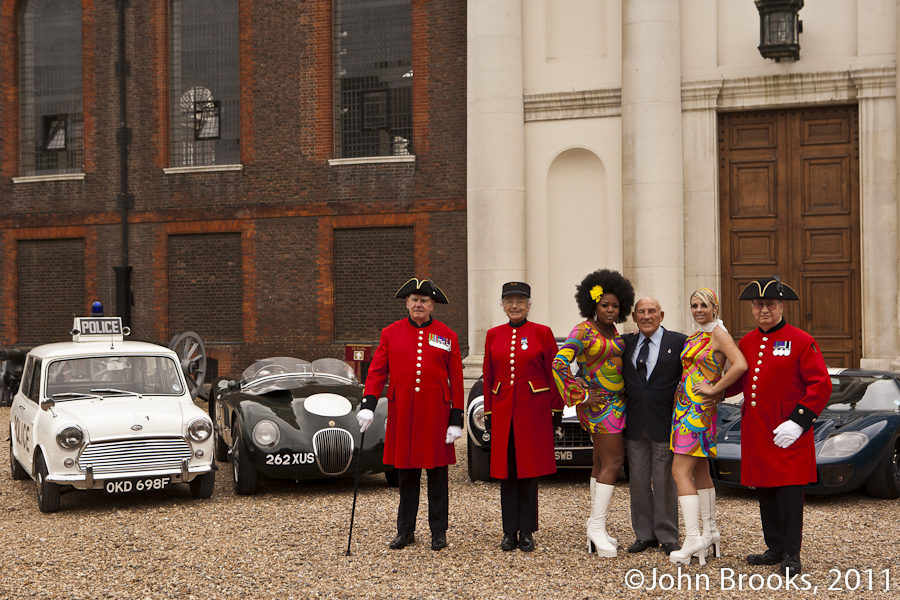
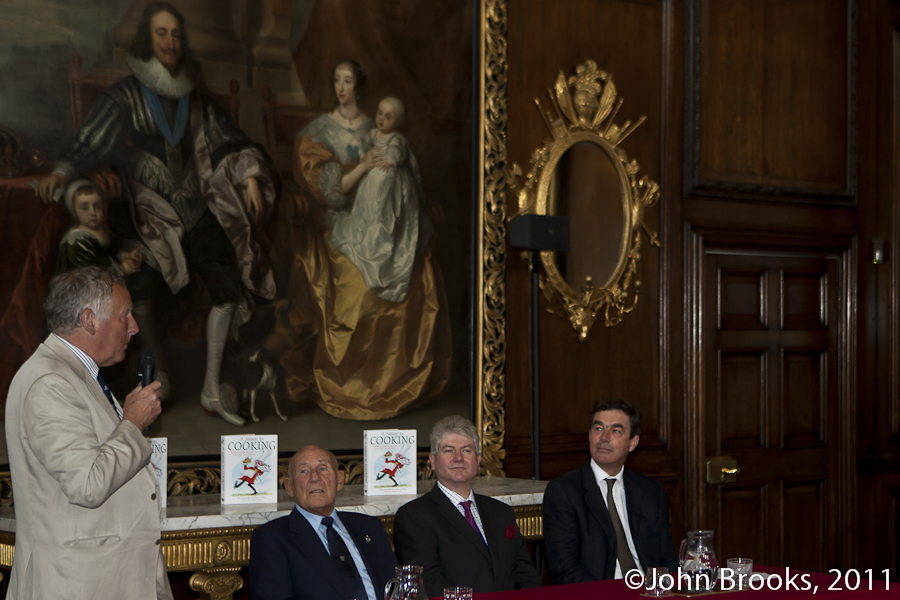
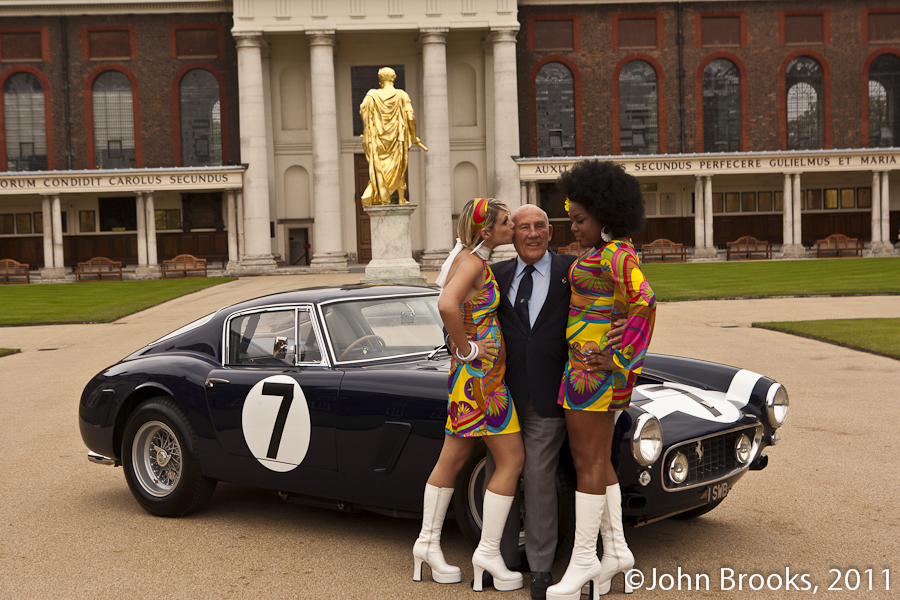
So last week we were given a taste of what to expect in early September 2011, when the second show is scheduled to take place. Central to the preparations for the event is the participation of the Patron for the event, Sir Stirling Moss OBE. Sir Stirling was on fine form, whether recalling his days as a driver for Rob Walker Racing or posing with a pair of young ladies clad in psychedelic mini-dresses (he seemed especially keen on that part of the presentation).

Old Friends

The main theme of this year’s show will be the Swinging Sixties and how apposite considering that the Kings Road is but a stone’s throw away. Mind you if you went down to The Chelsea Drugstore these days you will find a Big Mac and Fries rather than getting your prescription filled, perhaps “You Can’t Always Get What you Want.”

Aside from the inevitable fashion and musical references that this homage to half a century ago will bring there are also contemporary automotive legends to be celebrated. The 50th birthdays of the Mini and the E-type, both icons of the period, will be the excuse to have a comprehensive displays of these quintessentially Sixties cars.

SuperCars

Significant road cars will also feature in a run of Super Cars from the RAC Club in Pall Mall which should make quite a splash when the arrive en masse at the Royal Hospital. Not to be outdone the two wheel brigade will also bring a pack of bikes, old and new, from the marginally less salubrious Ace Café on the North Circular. Autocar will have an exhibition of the ten most important road cars of the period since 1960 that have been tested by the magazine. Autocar’s top ten were named following the publication of the magazine’s 5,000th road test earlier this year.

Pensioners

“The Autocar road test has often been copied but never bettered. Every car, whether a 200mph supercar or supermini is given the same exhaustive treatment,” said Autocar Editor Chas Hallett.

“It’s great that our top ten all will be on display at Chelsea AutoLegends – they are the cars we think have made the most significant contribution to motoring over the years.”

“Jaguar’s iconic E-type was named as the number one test of all time. It may not have been as important a car as the Mini, nor have broken quite so much new ground as the McLaren, but it means most to our readers and to us as writers and testers. It is a car of beauty, power, driving pleasure and value.”

The ten cars, in no particular order, are the Audi Quattro, Ferrari 458 Italia, Volkswagen Golf GTi, Range Rover, Rolls Royce Phantom, Morris Mini-Minor, E-type Jaguar, Ferrari 365 GTB/4 (Daytona), Porsche 911 GT3RS and the McLaren F1.
Late Night Line Up

Also on display at the show will be the Bugatti Veyron SuperSport, current holder of title of the World’s fastest production car……….267mph if you must know.

The Management

The Chelsea AutoLegends show was created by the imagination and hard work of local resident, Michael Scott. That being the case, there will always be a strong Le Mans element in the cars on display while he is involved. This year will feature those that were prominent in the Sixties and to introduce this theme at the launch Rob Walker’s Ferrari 250GT SWB was reunited with Sir Stirling, recalling the victory that he posted in the 1961 Tourist Trophy at Goodwood. He also raced at Le Mans that year in this Ferrari, partnered by Graham Hill.
Mention of Rob Walker brings out another theme of this year’s AutoLegends, a salute to the team Patrons of that era, John Coombs, Tommy Sopwith, and Colonel Ronnie Hoare joining Rob Walker on the pedestal. Moss spoke with great affection about his old team boss and friend.

“Rob was a true gentleman and a real enthusiast. But he was also a damn good team manager and our win together at the Goodwood TT was one of the highlights of my career. I am delighted that Chelsea AutoLegends is honouring Rob, and some of the other British private entrants, at this year’s event. Without people like Rob Walker, motor racing in the 1960s just wouldn’t have been the same.”

“Rob Walker had written in his passport where his business was described as being a Gentleman. I think that sums it up, a wonderful man.”

“When he raced at Le Mans (1939) at around six o’clock Rob came into the pits for an unscheduled stop. He came in because Gentlemen don’t wear brown shoes after Six. He had to change his shoes to suede.”

“Then just before the end of the race he had a signal to stop at the pit, once there he asked why? The team replied that he had done such a good job that they were celebrating with some Champagne and they didn’t want him to miss out.”

“That was what racing was all about back then.”


It was a different era.

Tickets for this year’s Chelsea AutoLegends are now on sale either via the event’s website www.ChelseaAutoLegends.com or from the ticket hotline on 0844 581 0760. Those pre-booking can take advantage of considerable savings with adult tickets priced at £15 in advance rather than £20 on the gate. Underlining the event’s family entertainment values, accompanied children aged under 12 will be admitted free of charge.

Keep September 4th free and go along. A Good Time for a Good Cause, simples.


John Brooks, May 2011