Category Archives: Nostalgia

Motor Klassik

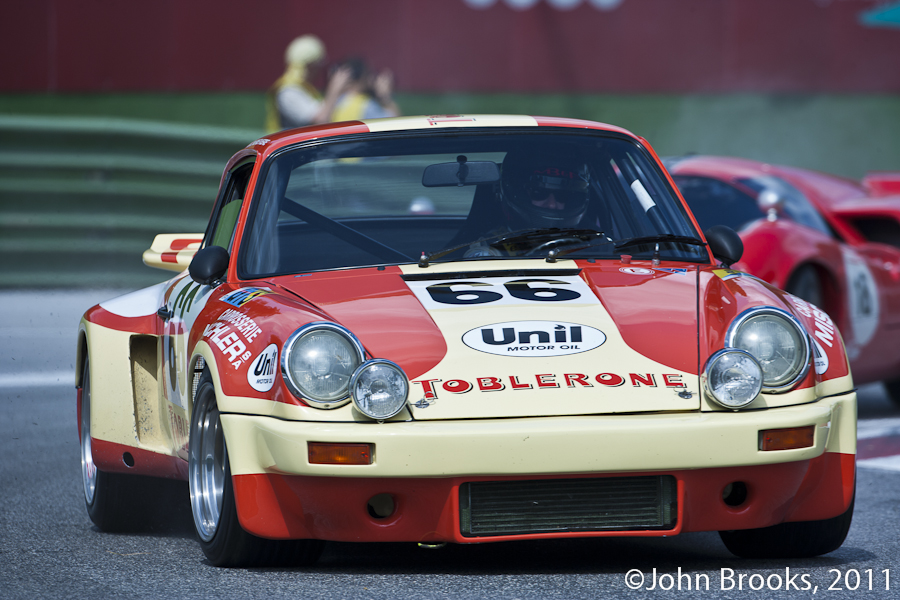
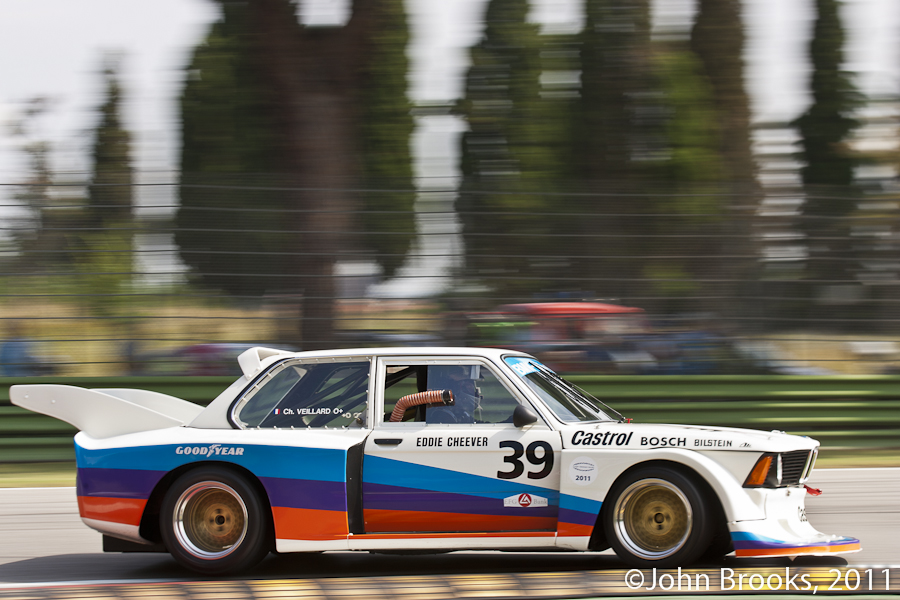
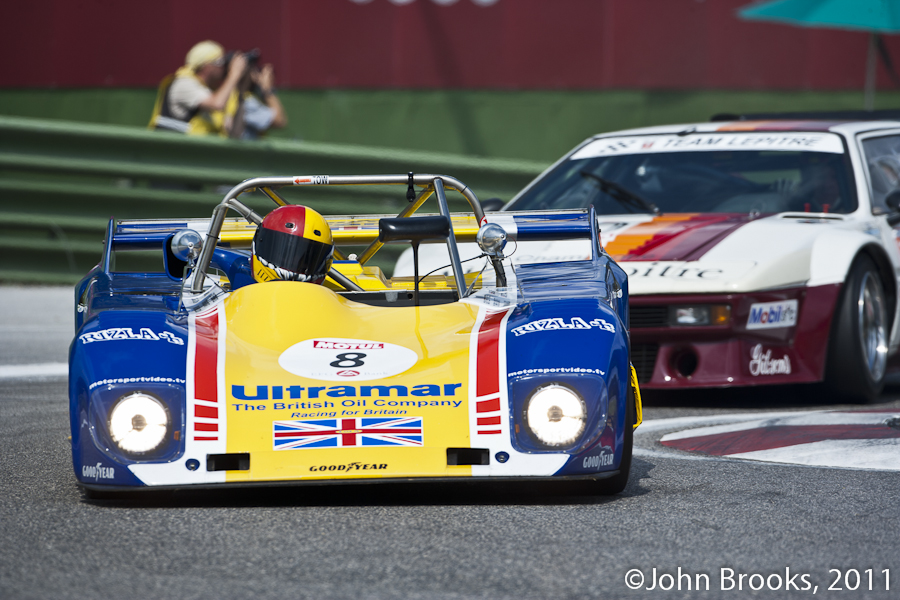
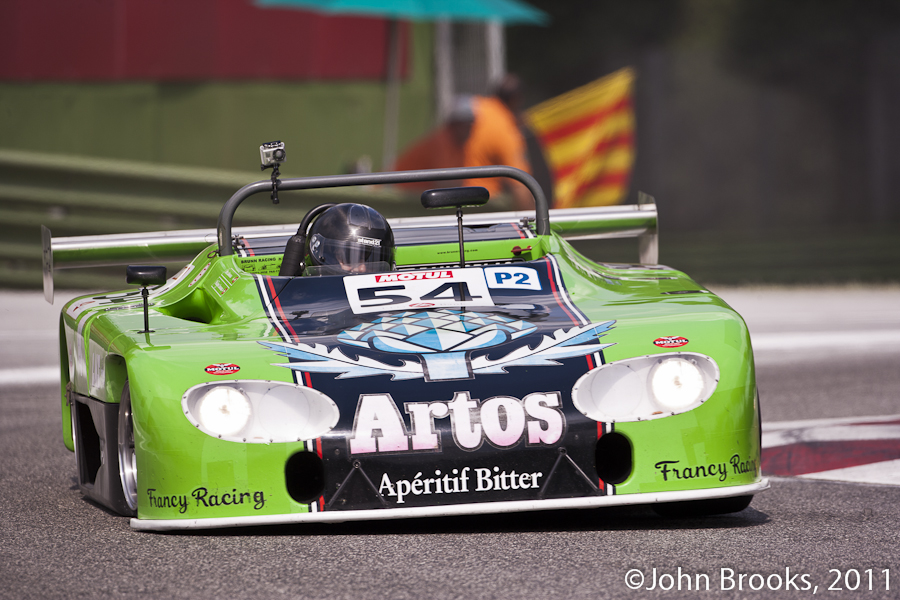
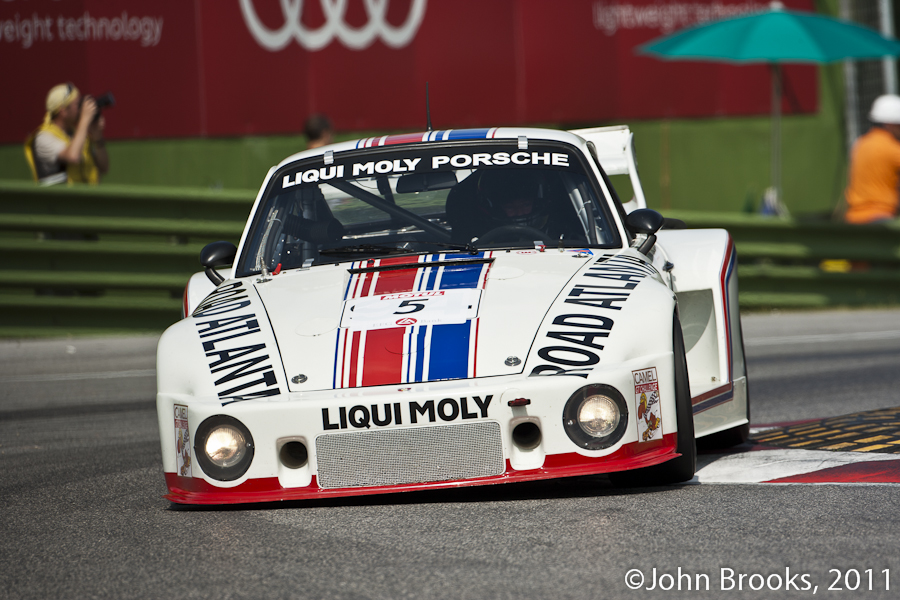
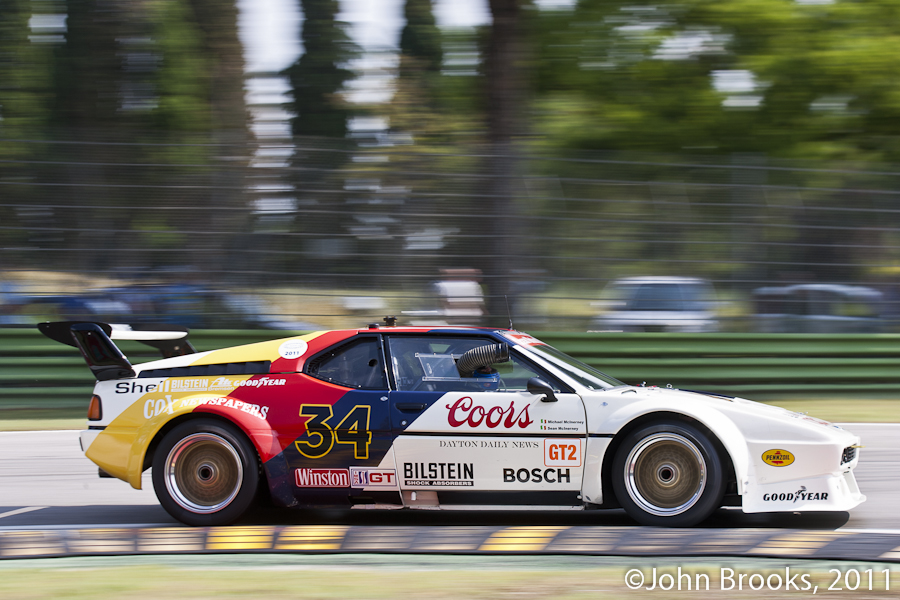
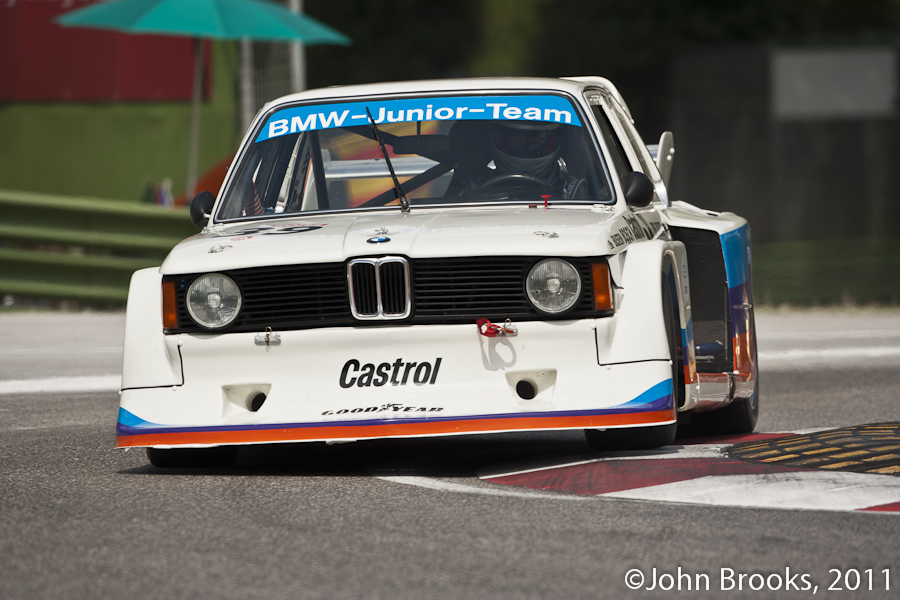
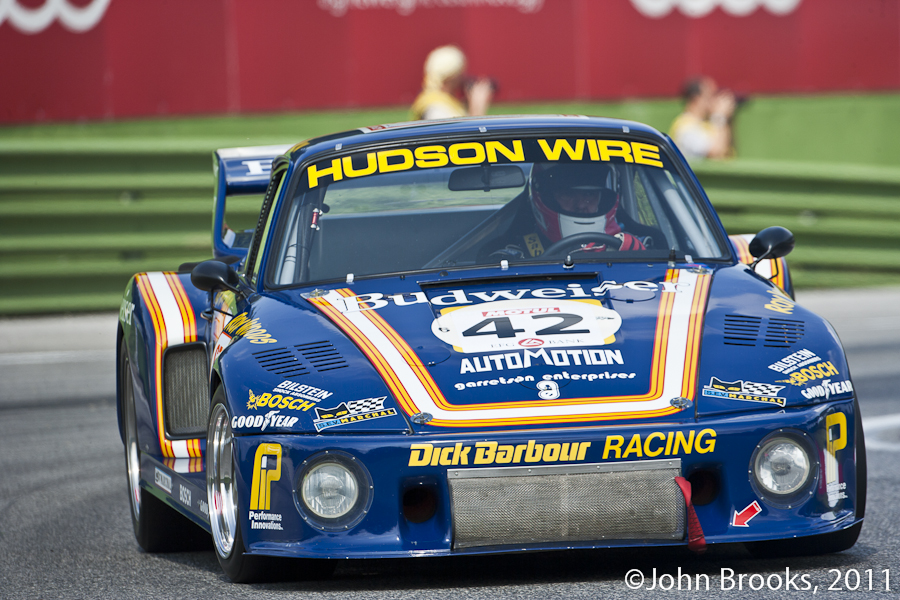
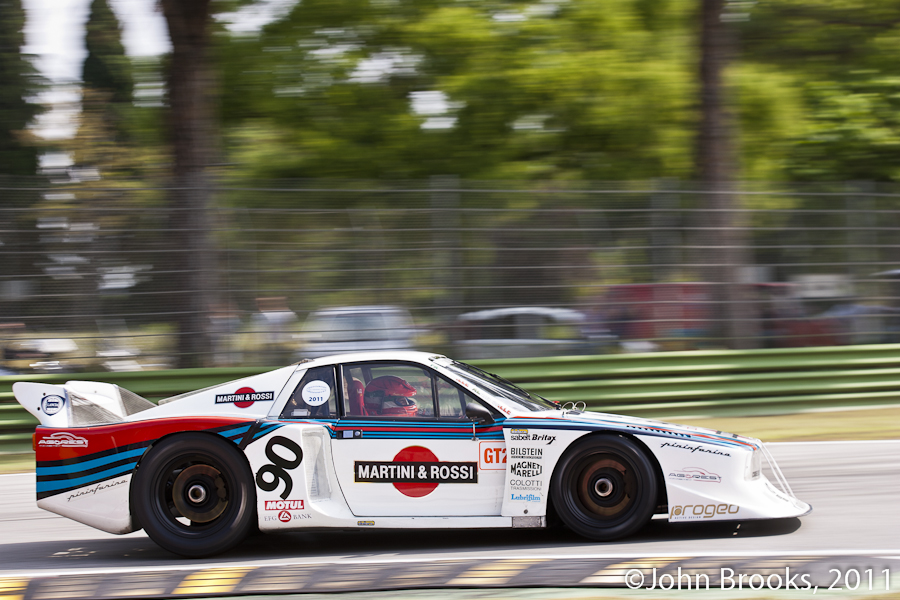
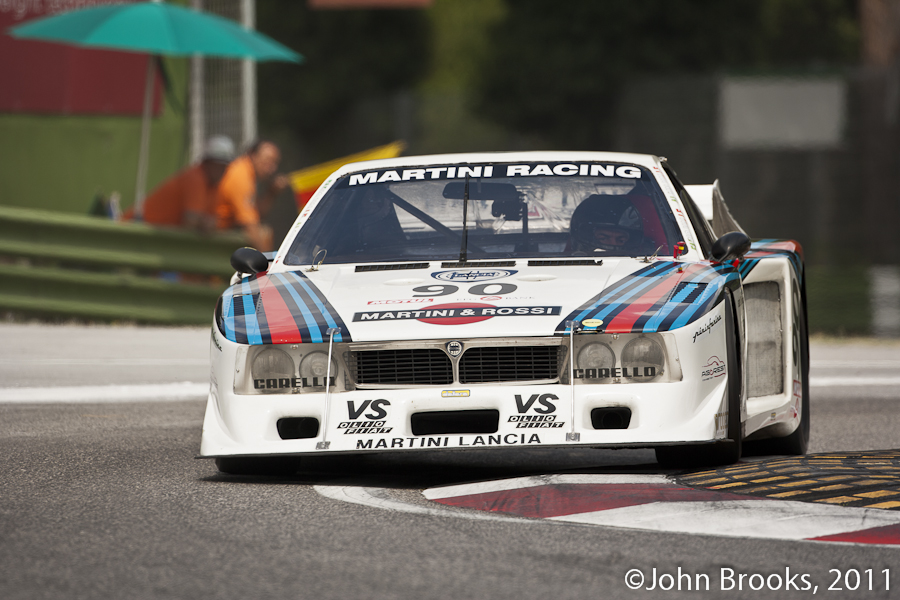
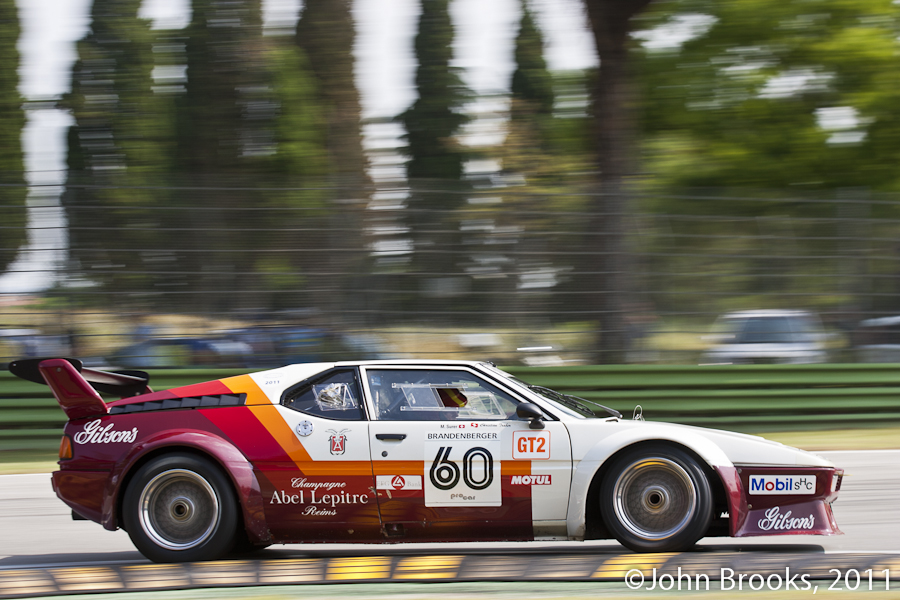
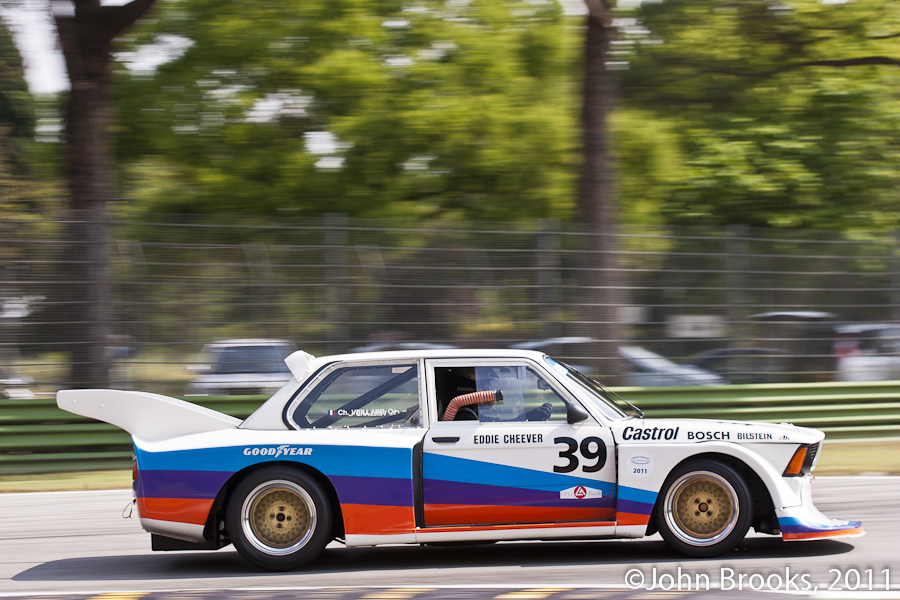
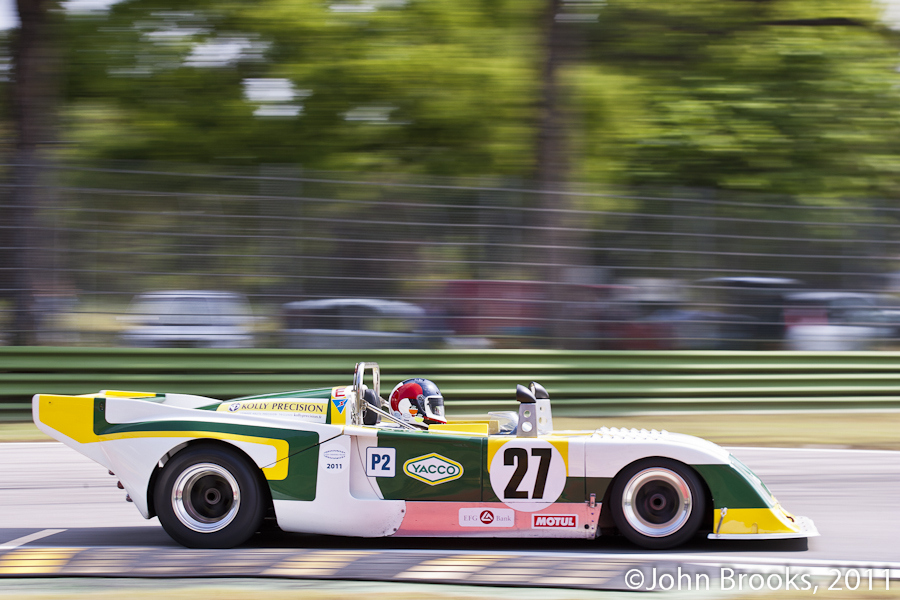
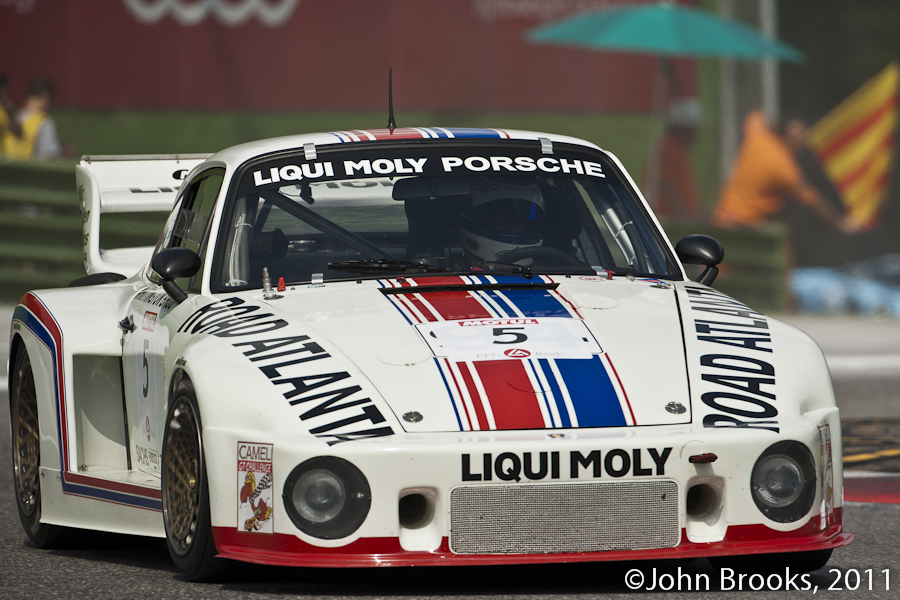
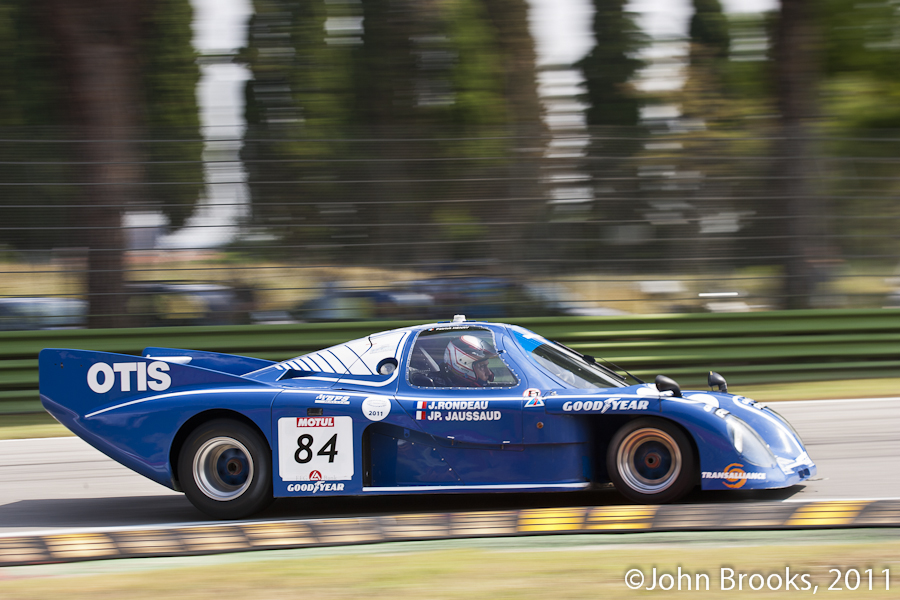
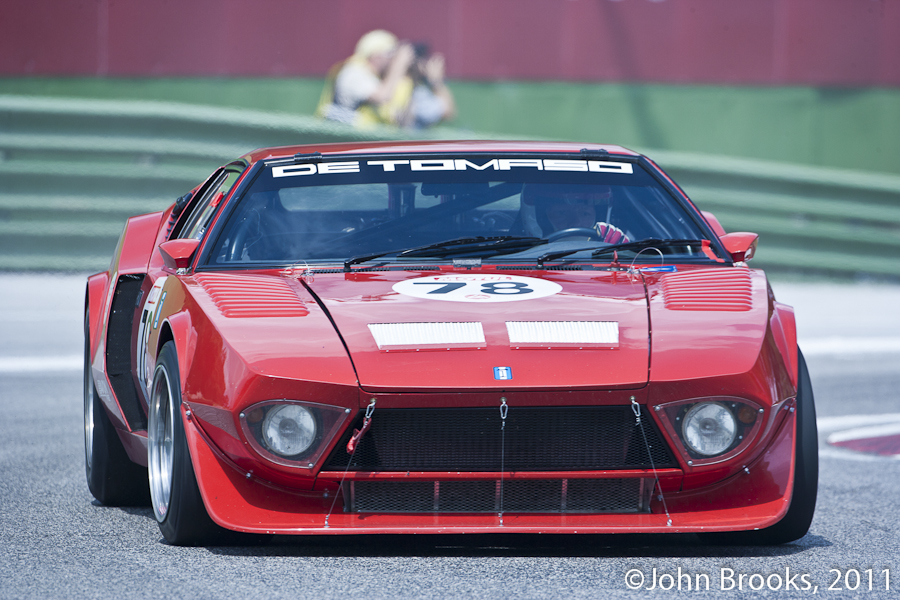
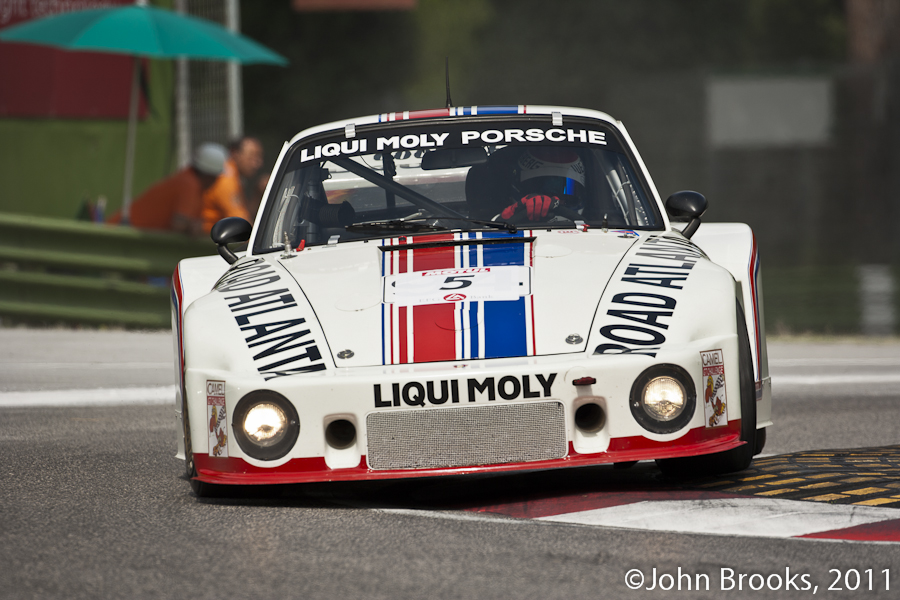
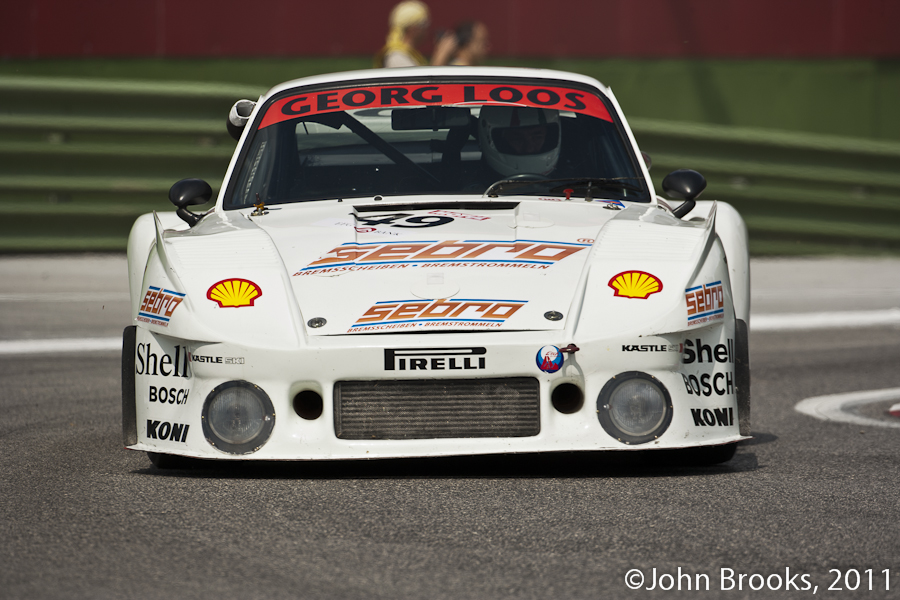
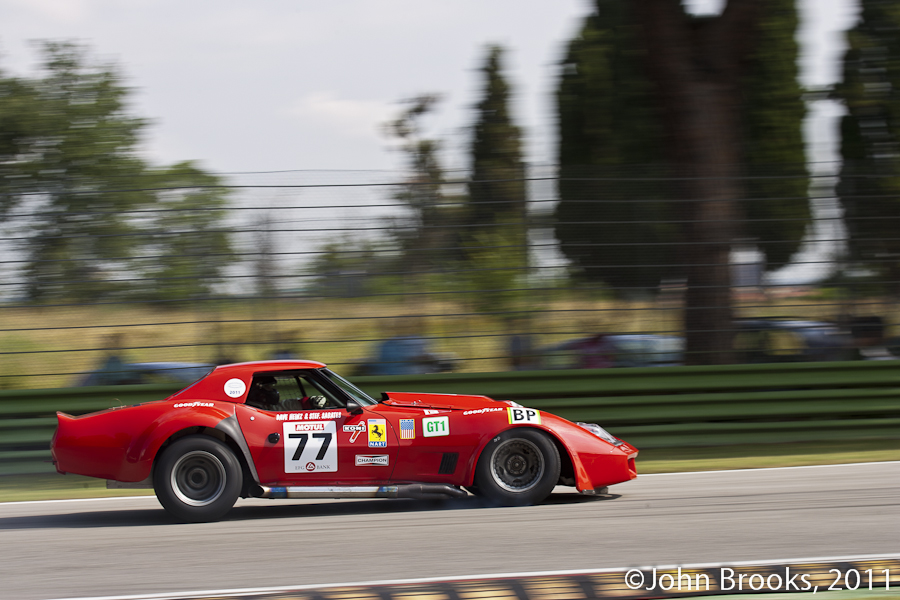
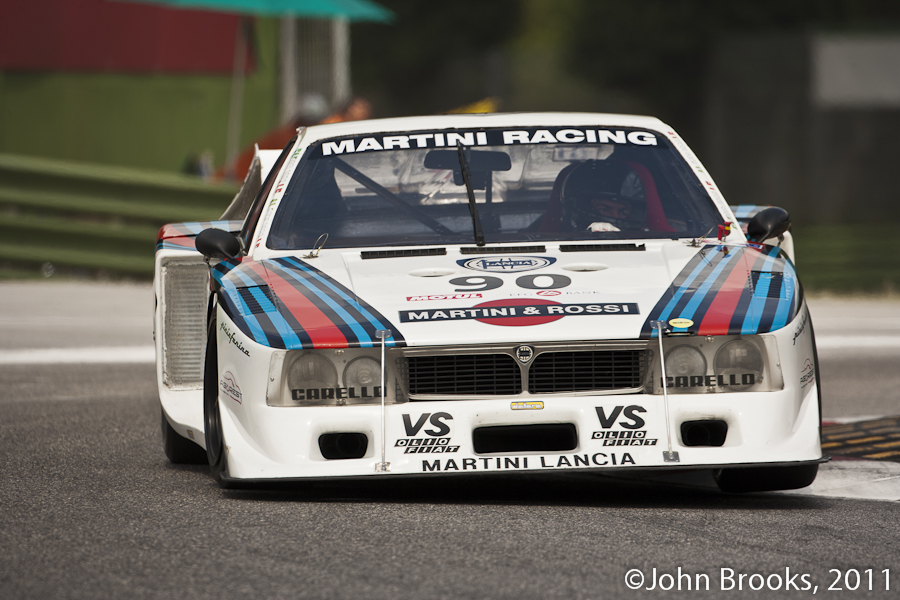
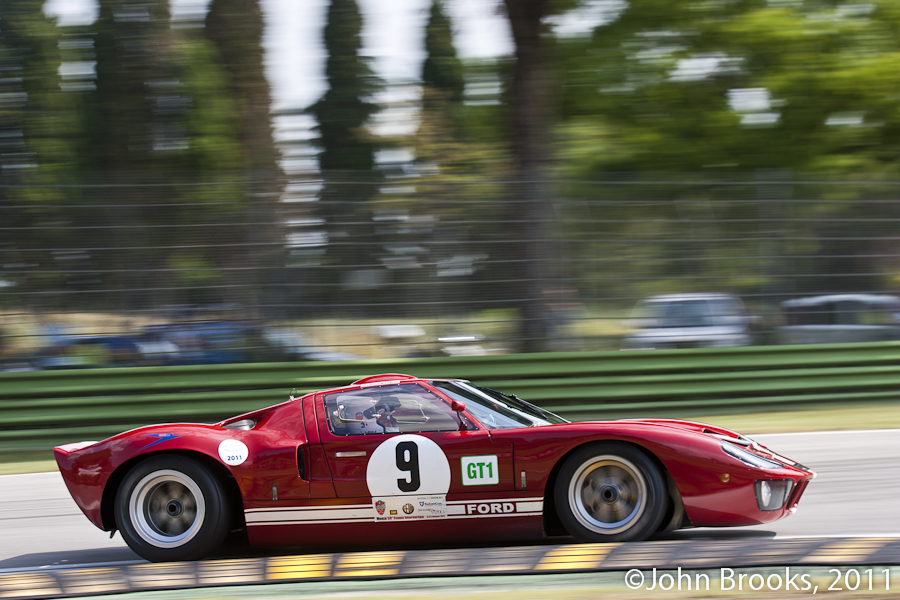
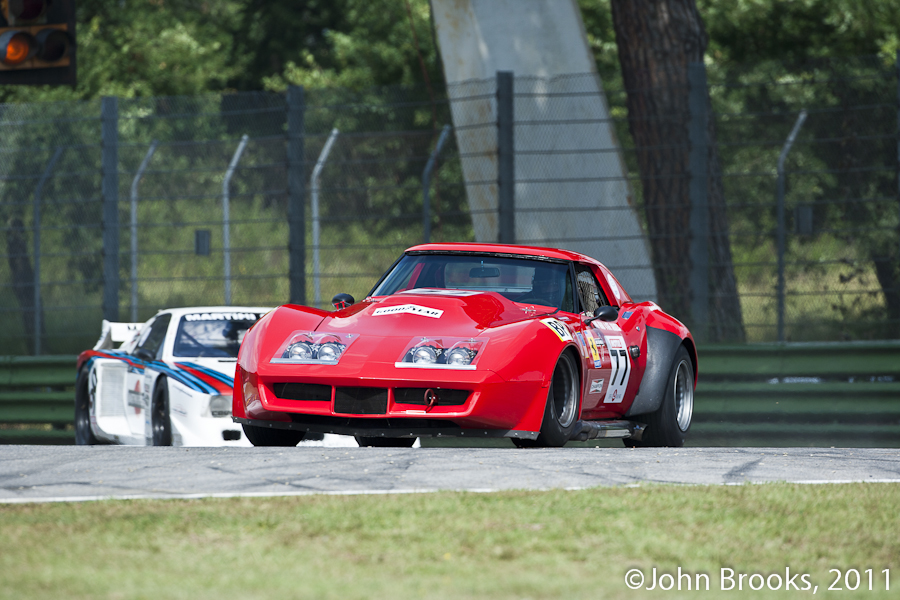
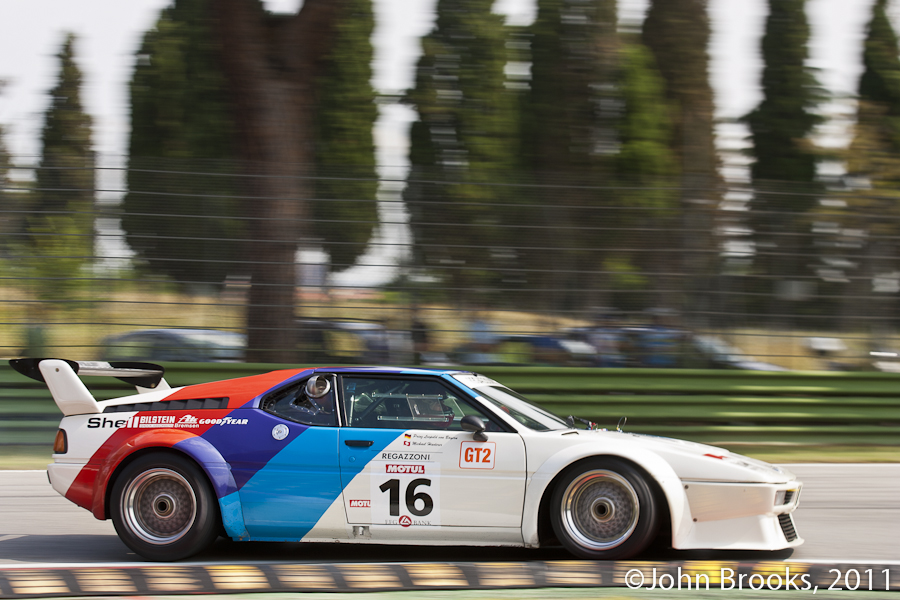
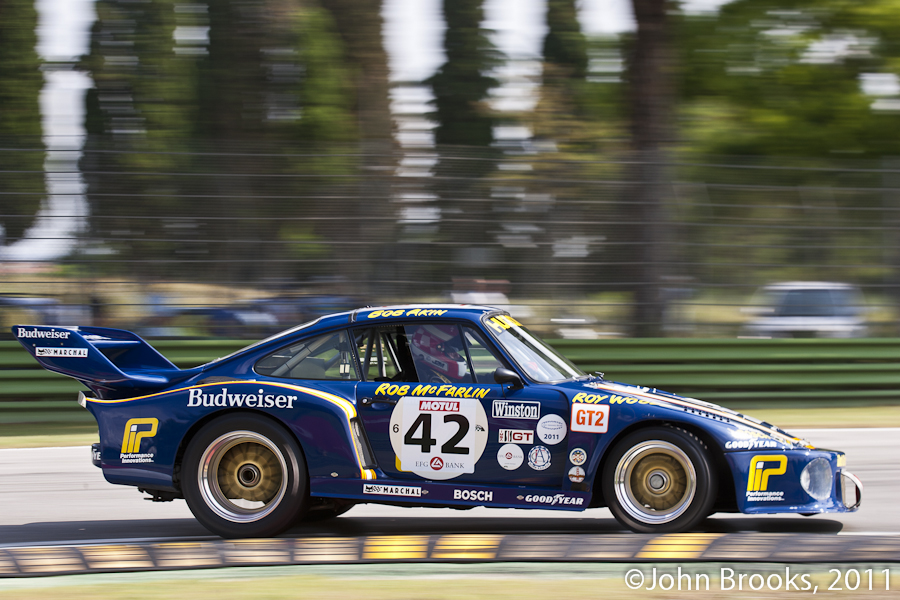
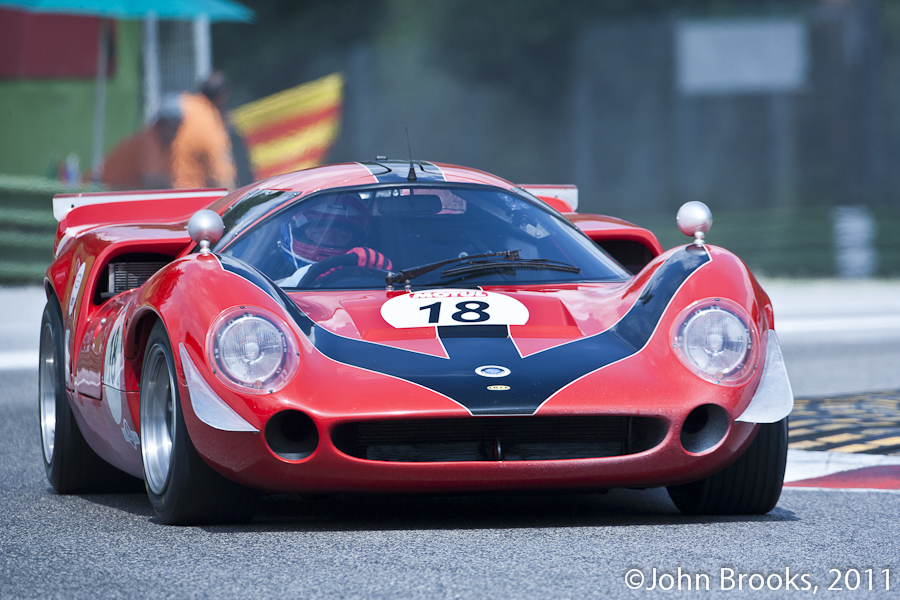
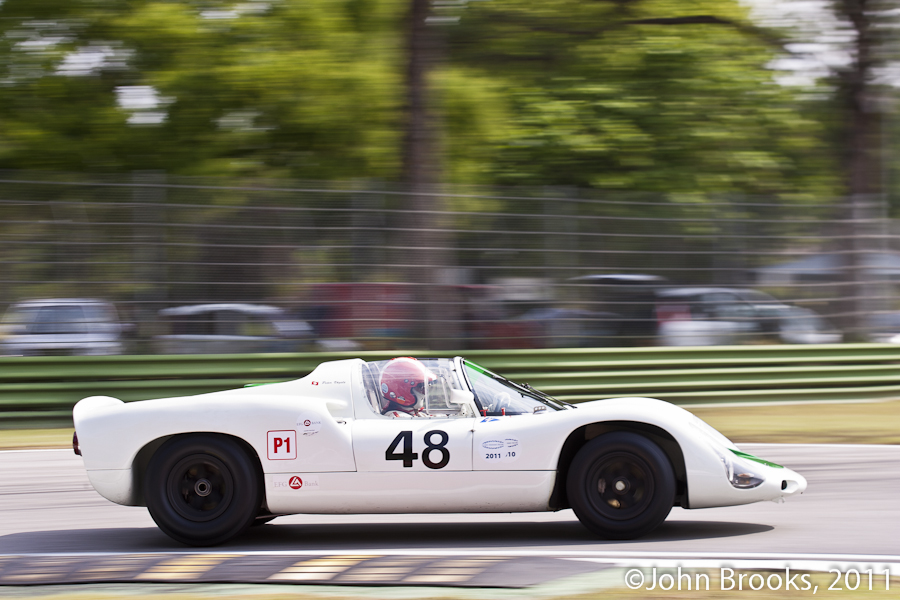
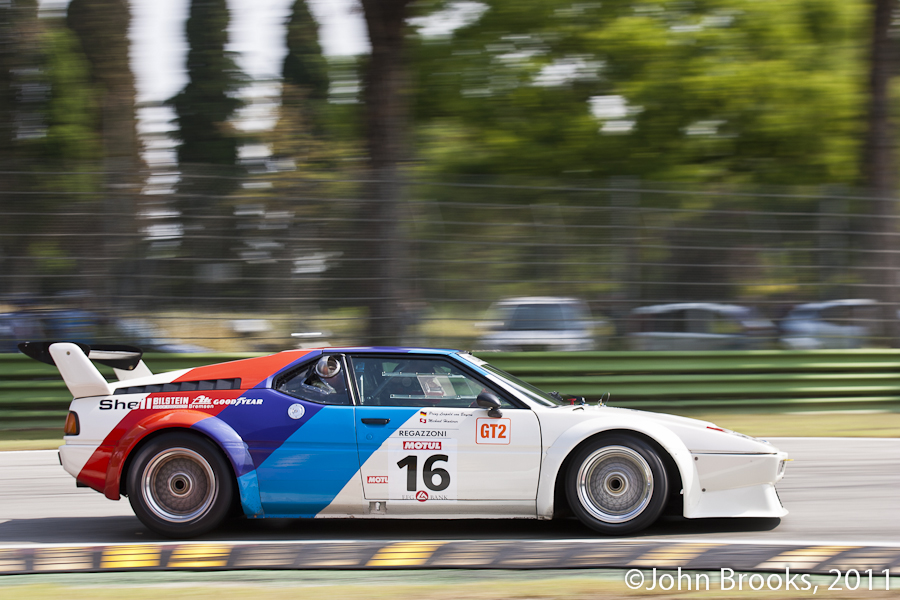
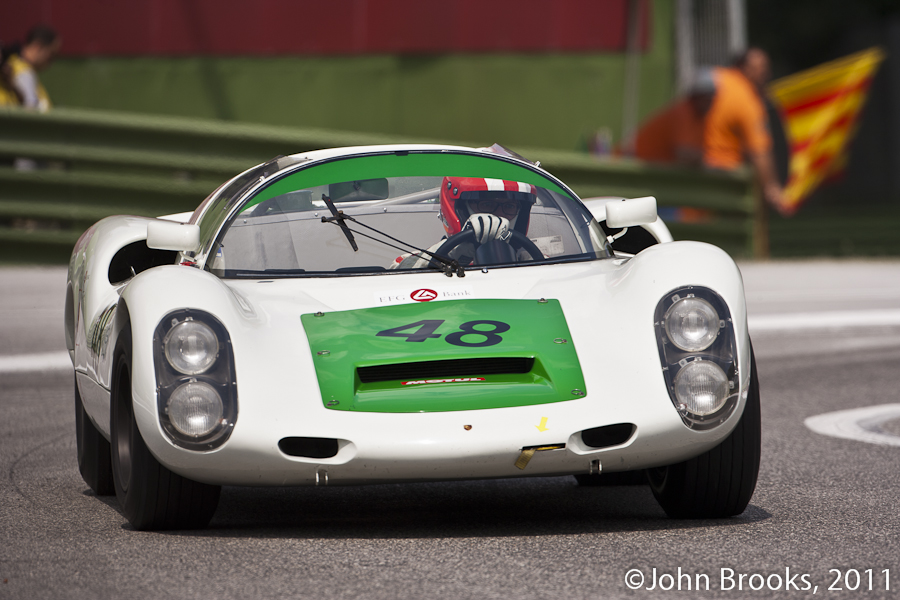
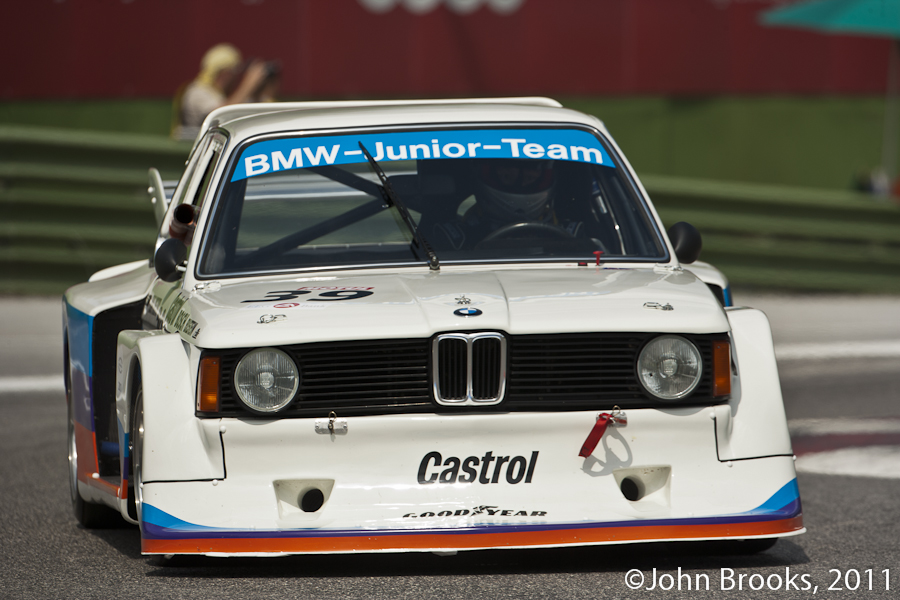
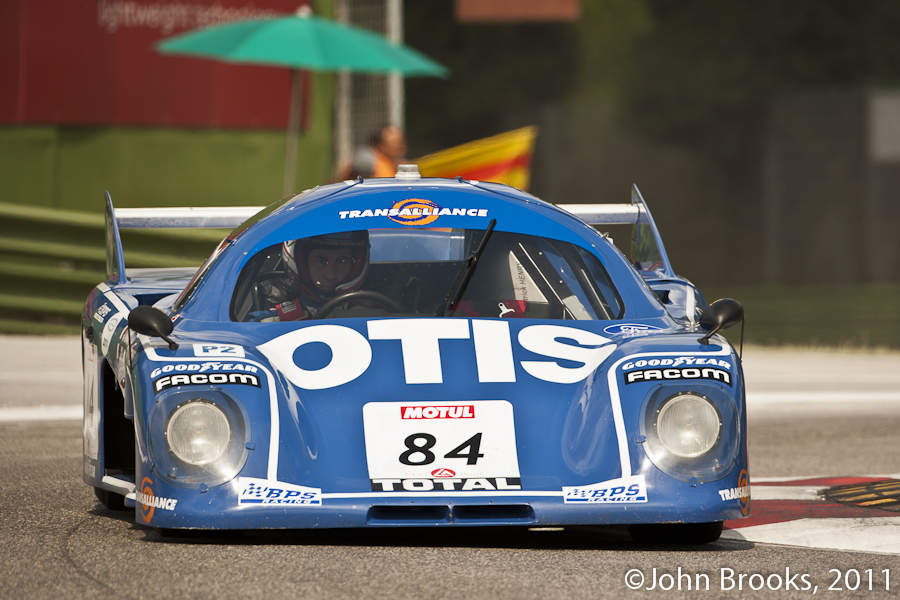
Over the past few seasons we have had good reason to be grateful for the Patrick Peter Organisation arranging a series of historic sportscar races, known as Classic Endurance Racing. There have been a great number of unusual and interesting cars to see, something new nearly every race.

In the previous years they have acted as a fantastic support to the Le Mans Series events but in 2011 they have gone off on their own highway. Till the ILMC reached Italy.

So last month in Imola it was great to see the pack of veterans back. So much so, I hung around at Variante Alta, camera poised. In the warm Italian sunshine, with your eyes closed you could imagine it was 30 years ago, the song remains the same.

Ars Longs, Vita Brevis.

John Brooks, July 2011


En Vacances

We’re all going on a Summer Holiday!

So sang Cliff Richard many years ago as he rattled along in a Routemaster Bus, heading for the seaside with all his mates.

Well, it’s that time of year again. School’s out, the weather is turning nasty and the news channels are prophesying doom, gloom and traffic jams, but at least it’ll take your mind off overblown ‘phone hacking farrago’s and impending financial melt down. Here in France it’s just the same (although without the ‘phone hacking stuff) with the great holiday exodus getting under way.

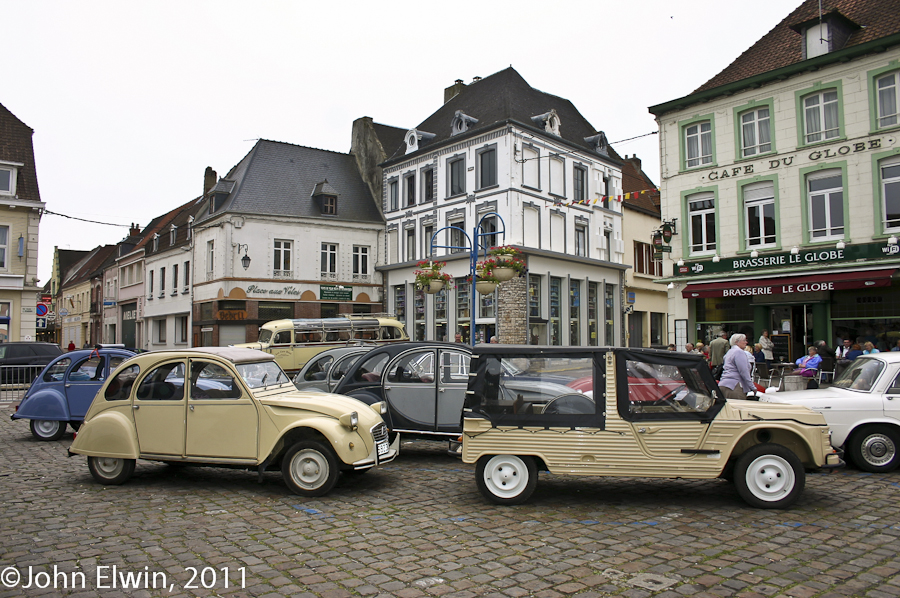
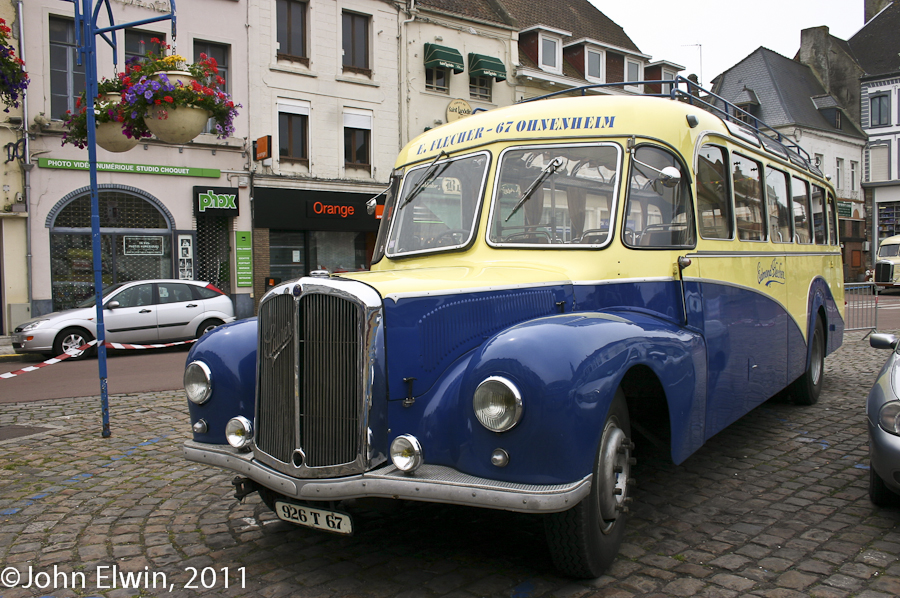
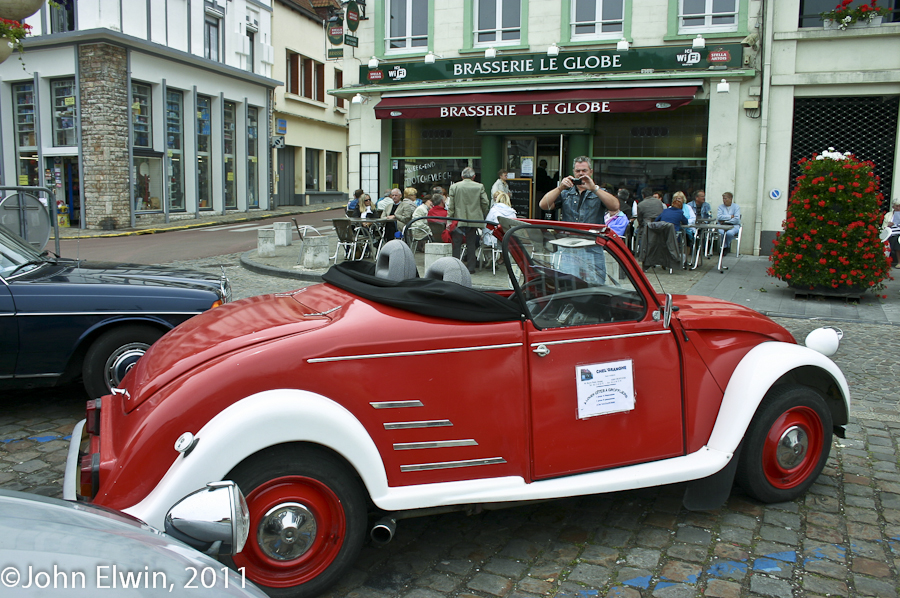
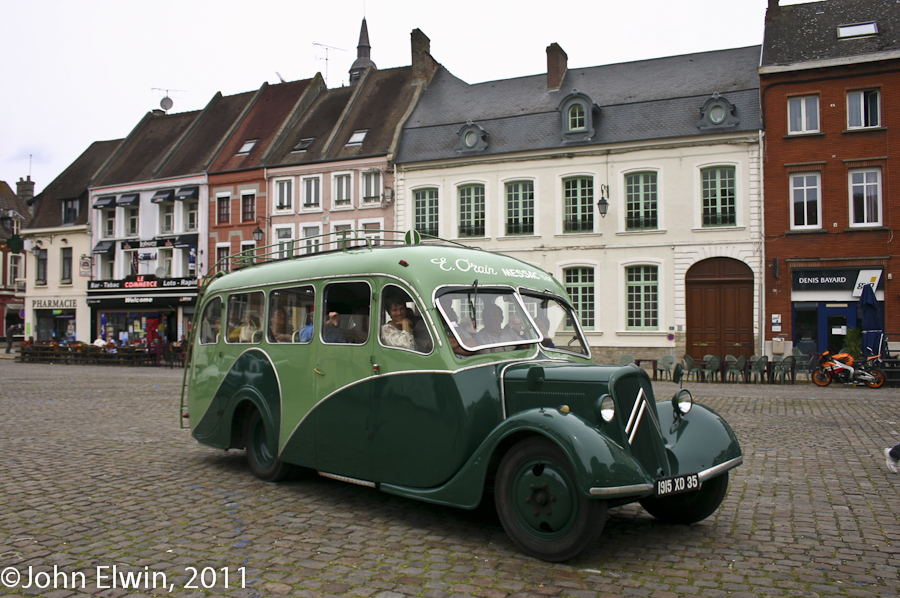
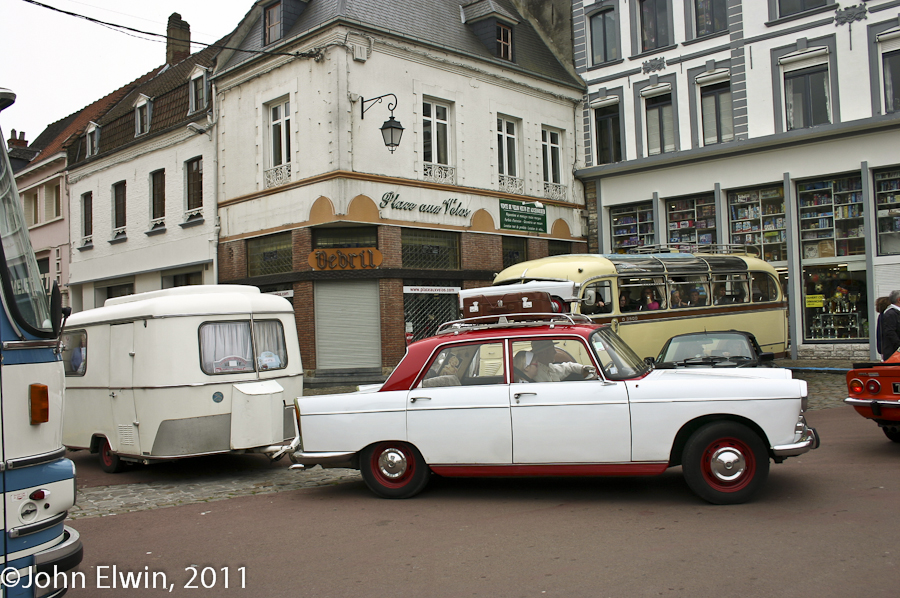
‘Twas ever thus though, and just a few weeks ago we were given a timely reminder of what it was like in the seemingly more romantic times of fifty years or so past, when a classic run entitled ‘Route de Vacances’ ran from Lens to the Côte d’Opale resort of Berck-sur-Mer, a little way south of Le Touquet. As in times of yore, many people opted for to travel by classic ‘bus – back then they probably didn’t have the choice – so much so that a modern coach had to join the fleet of old-timers, but around fifty cars took part as well.

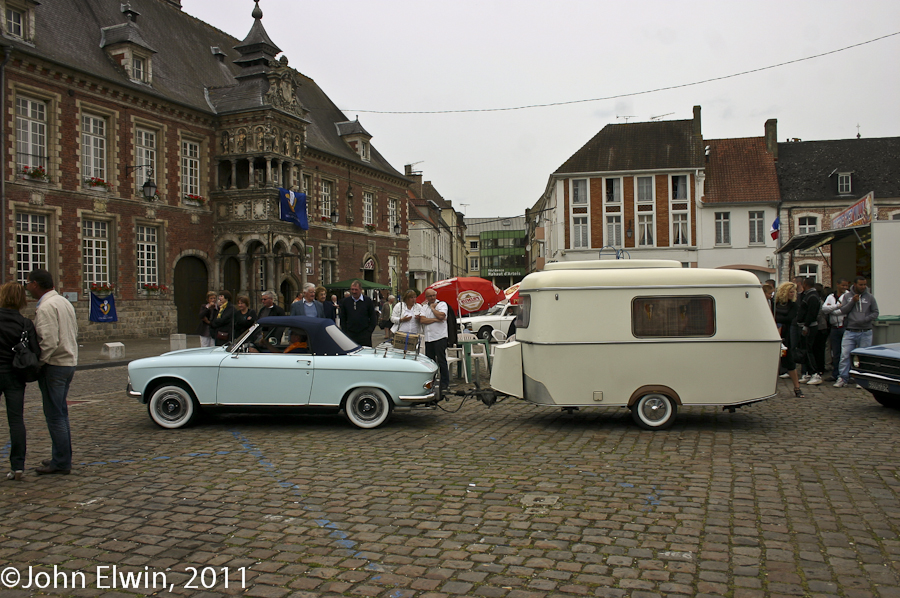
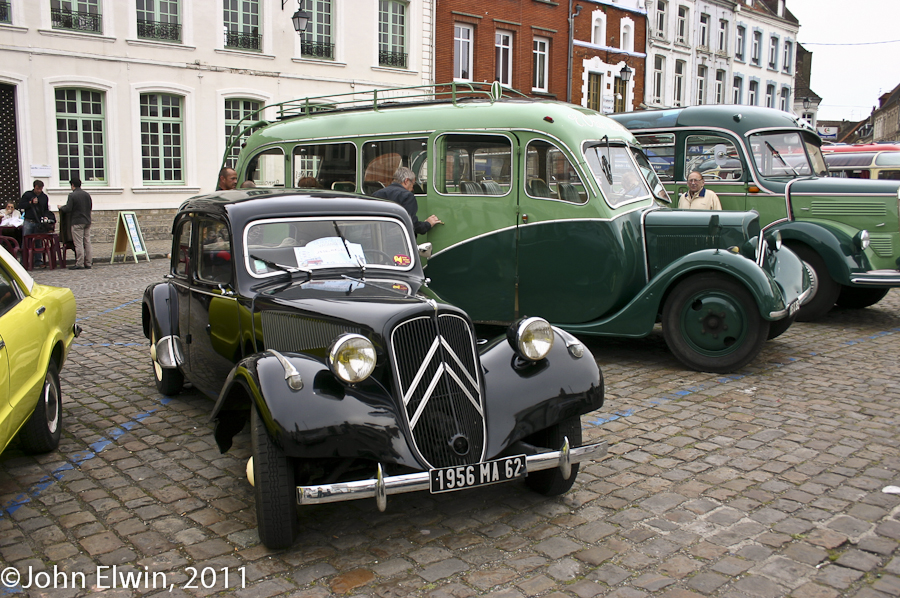
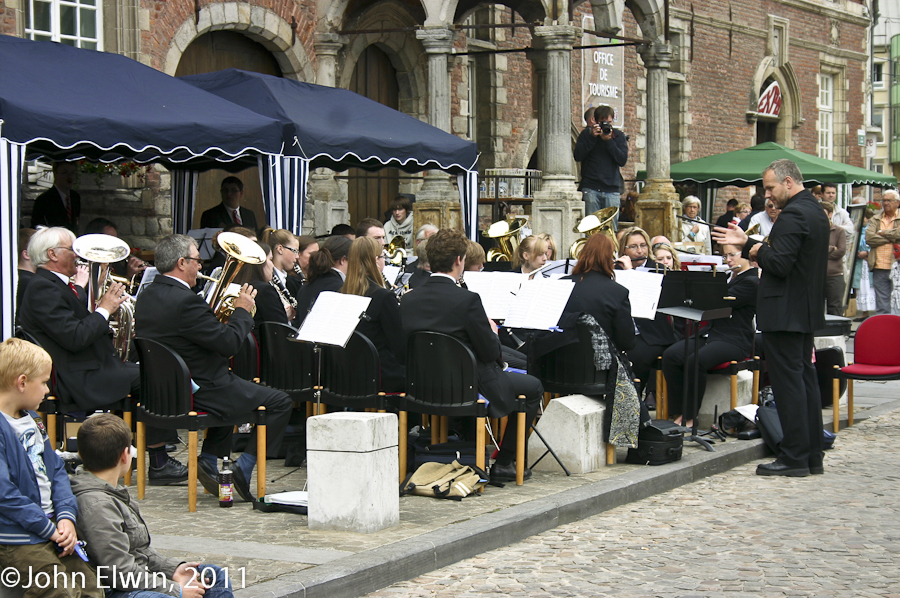
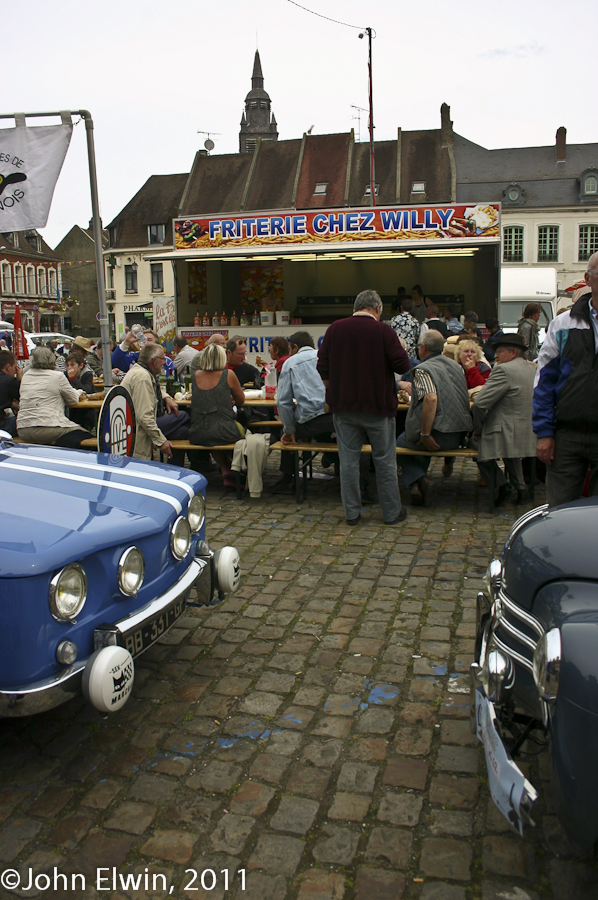
A lengthy lunch stop in the ancient market town of Hesdin saw the vehicles parked up in the Place d’Armes whilst the participants enjoyed their frites to the sound of the town’s brass band, under the leadership of its charismatic conductor.

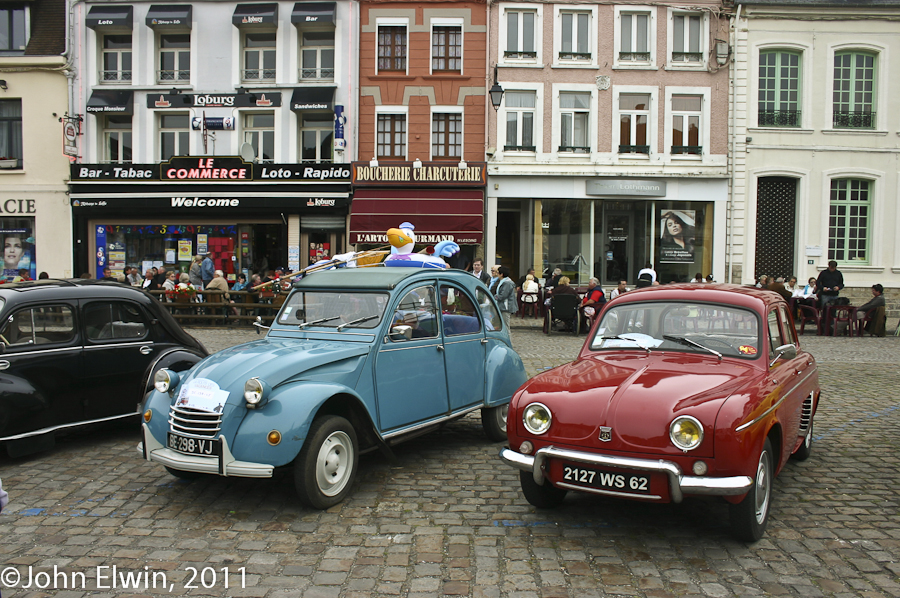
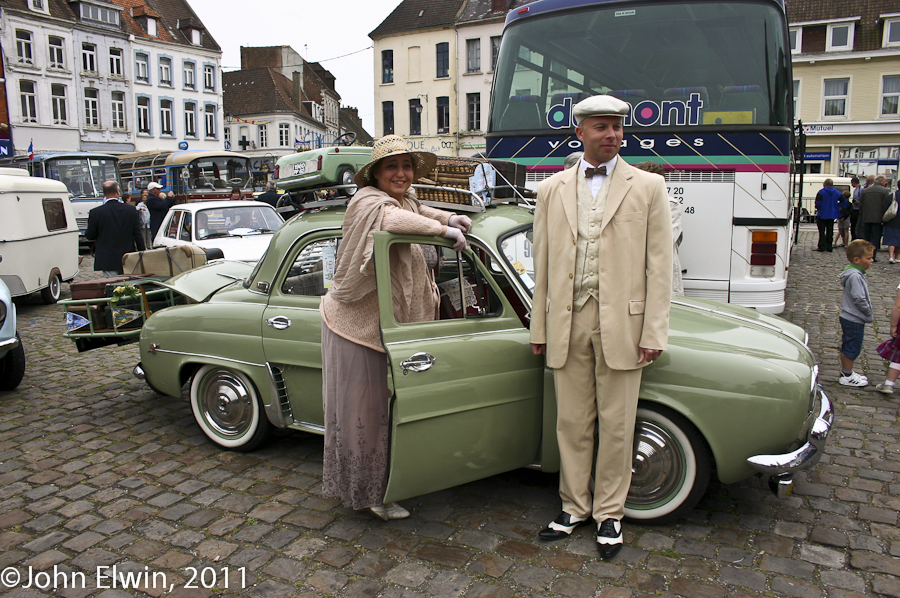
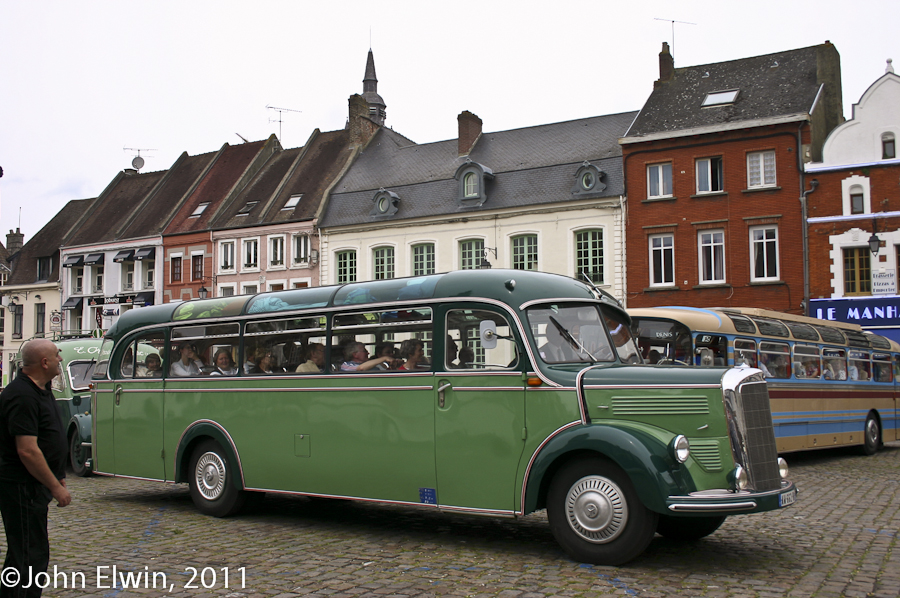
I’m no expert on buses but a couple of long-nosed Merc’s somehow didn’t look very French, unlike the delightful little Citroen-based ‘bus. However, they all added colour to the occasion, as did many of the car owners, really going for the ‘vacance’ theme period caravans, loaded roof racks and outfits that would have done credit to the Goodwood Revival. Particular mention must go to a couple with a Renault Dauphine who not only looked the part but had a loaded roof rack and one-wheel trailer, not to mention period ephemera such as a transistor radio, camera and even a nodding dog on the back shelf!

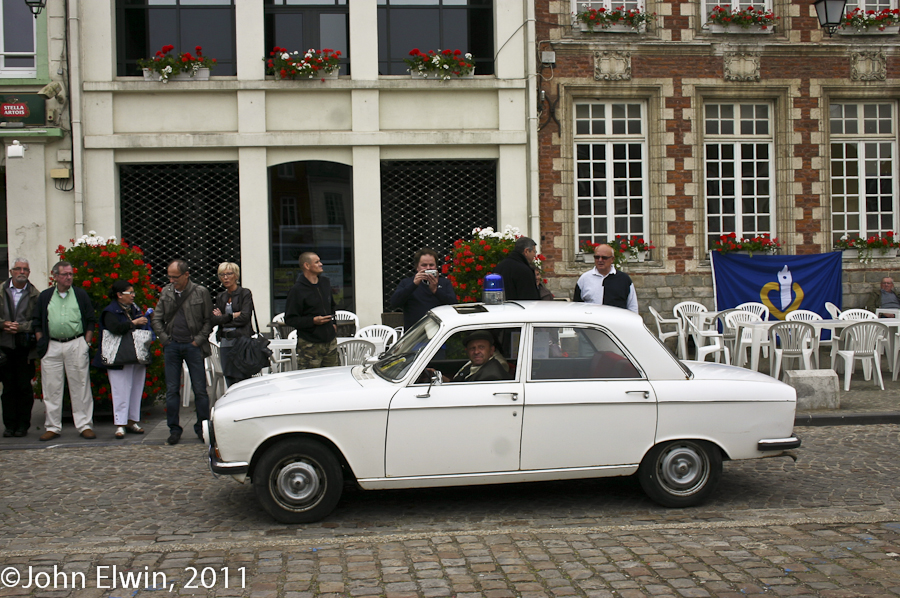
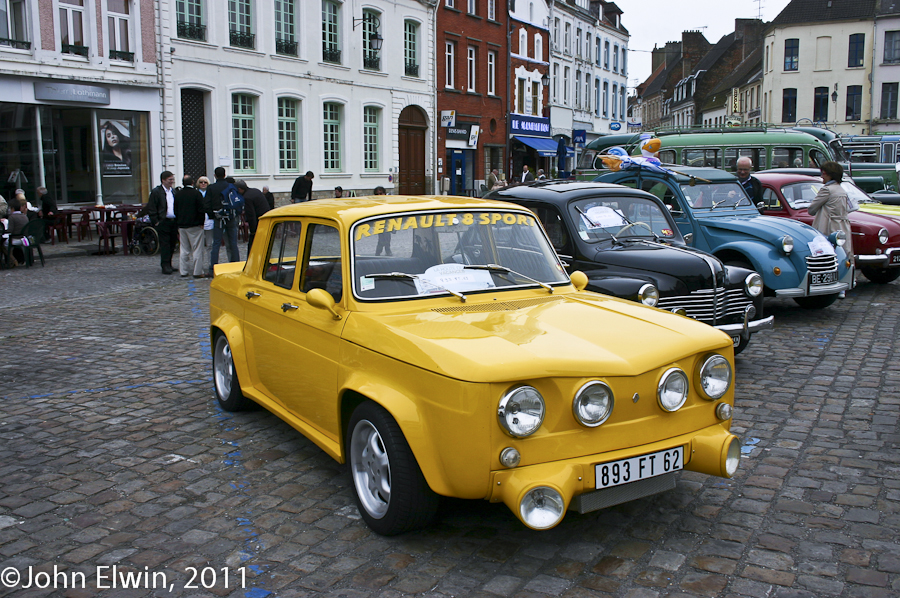
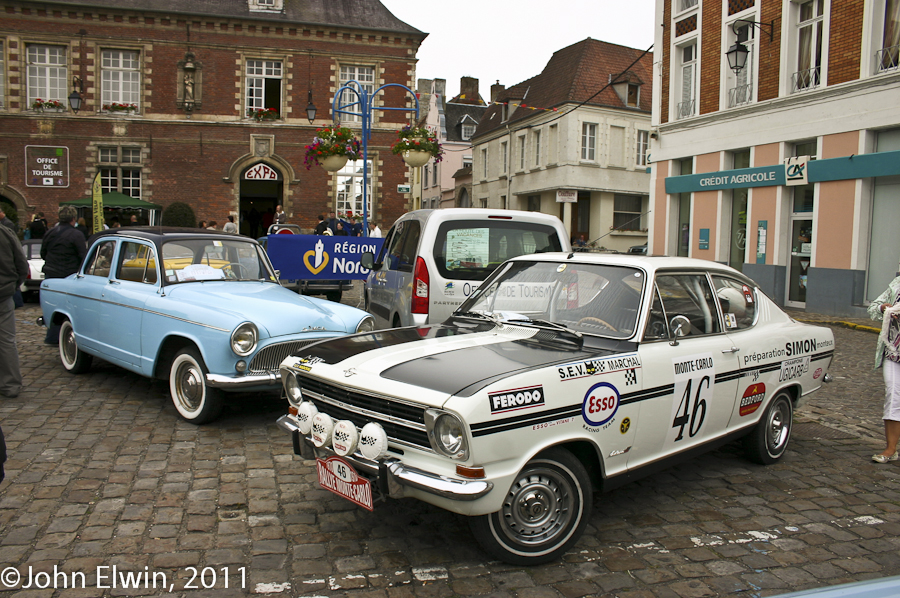
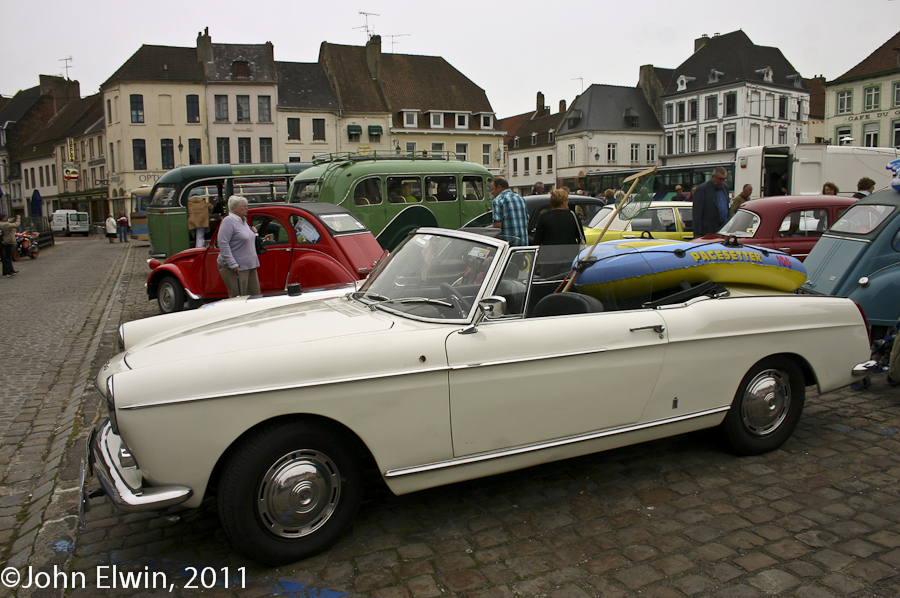
Cars on parade included a healthy selection of French classics from Citroen, Peugeot, Renault and Simca as well as a few foreigners such as VW Beetle and even a Chevrolet Impala.

Suddenly it was two o’clock and everyone loaded up and the square was cleared in the minutes despite the chaos caused by a bus that needed to do a three-point turn and delays by the traffic lights.

So very French, so very laid back, so very friendly.

Bonnes vacances!

John Elwin, July 2011


One Stop Past Barking

Ford UK should be getting a telegram from Her Majesty Queen Elizabeth ll any time now. They celebrate 100 years of activity in this country, starting with a showroom in Central London in 1911.

One Stop Past Barking

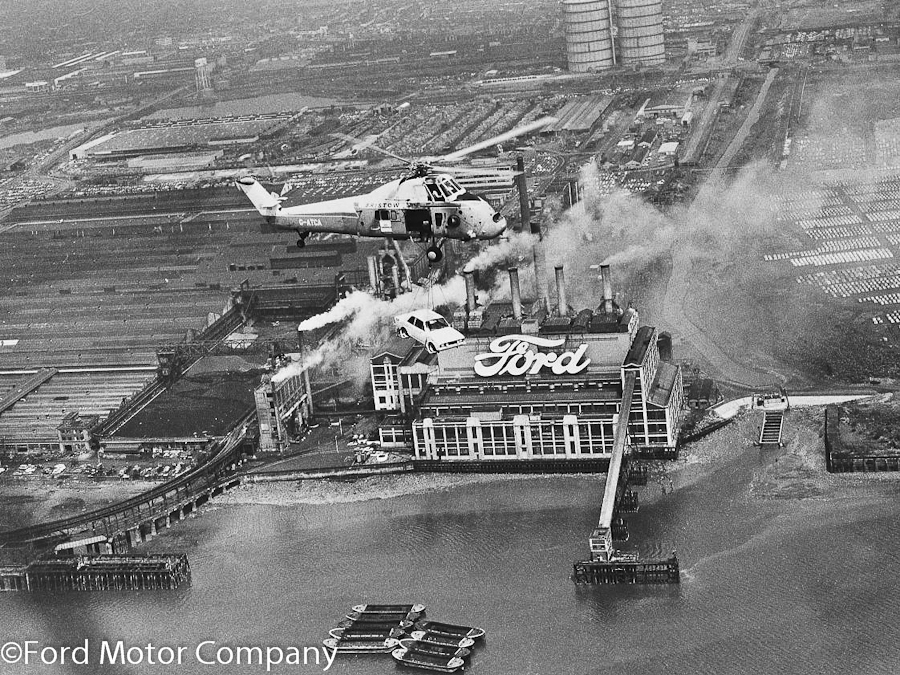
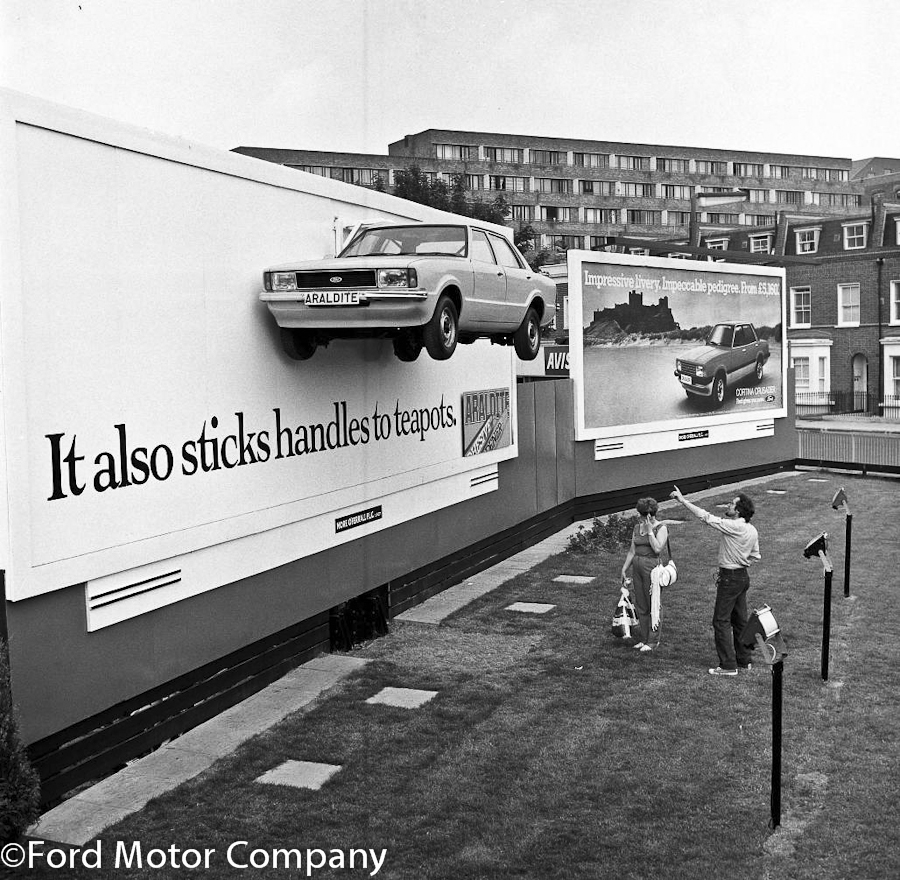
Like most of the car manufacturing industry they have been prolific recorders of times past, having huge photo libraries available. Through the excellent Newspress service, Ford have made a selection of images from the period available to outlets such as DDC.  So here they are. Above is a Ford Cortina from 1970 dangling above Dagenham. Why? No idea, but someone in marketing thought it a good way of spending the budget.

O ye’ll tak’ the high road, and I’ll tak’ the low road

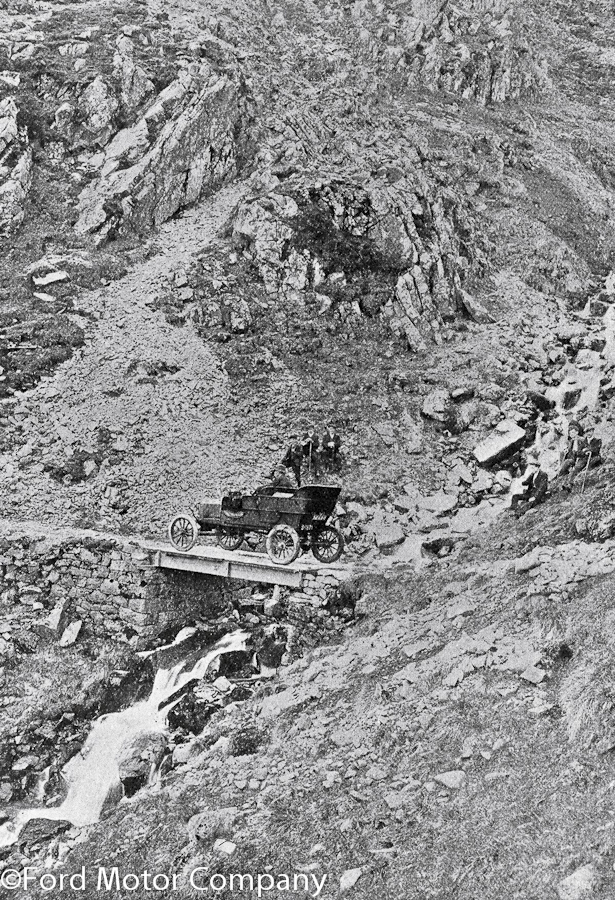
The Model-T is not readily associated with off-roading but 100 years ago an intrepid snapper caught an even more intrepid driver ascending Ben Nevis in one of Henry Ford’s finest.

Tower of Power

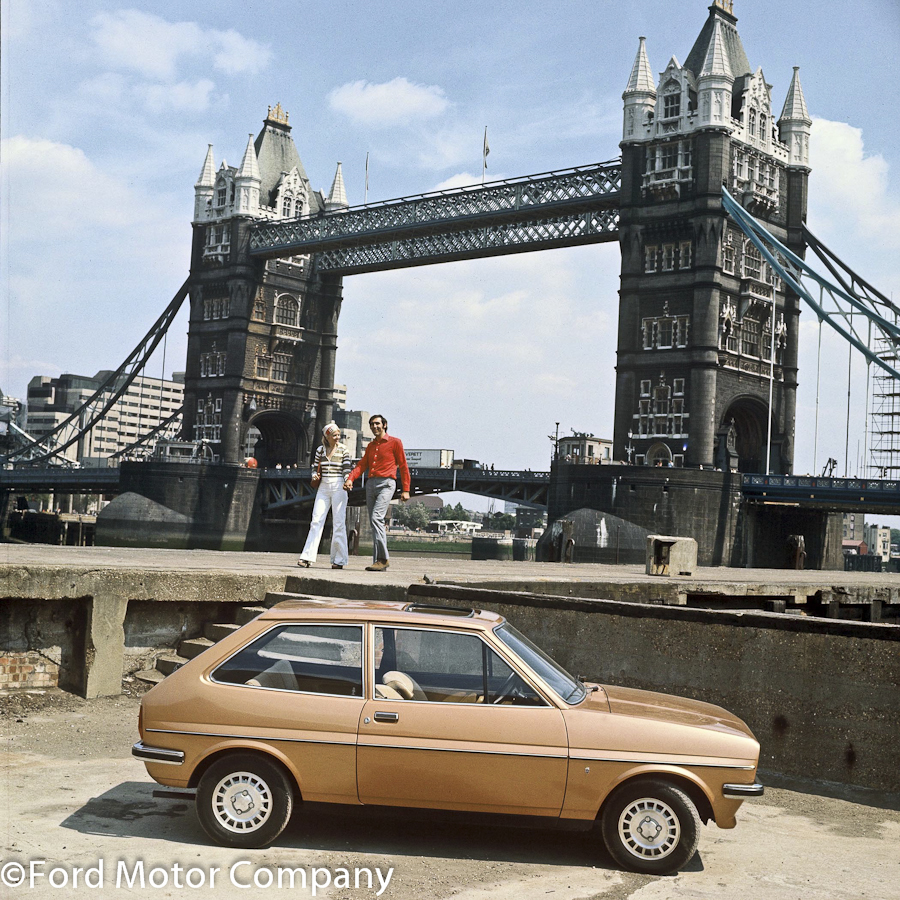
Ford has become part of the fabric of the nation. Maybe not as much as Tower Bridge but you know what I mean. Dating from the time of fashion crimes, 1976, I should know, I was there, guilty as charged. A bronze Fiesta and a couple of hipsters.

Constable Country

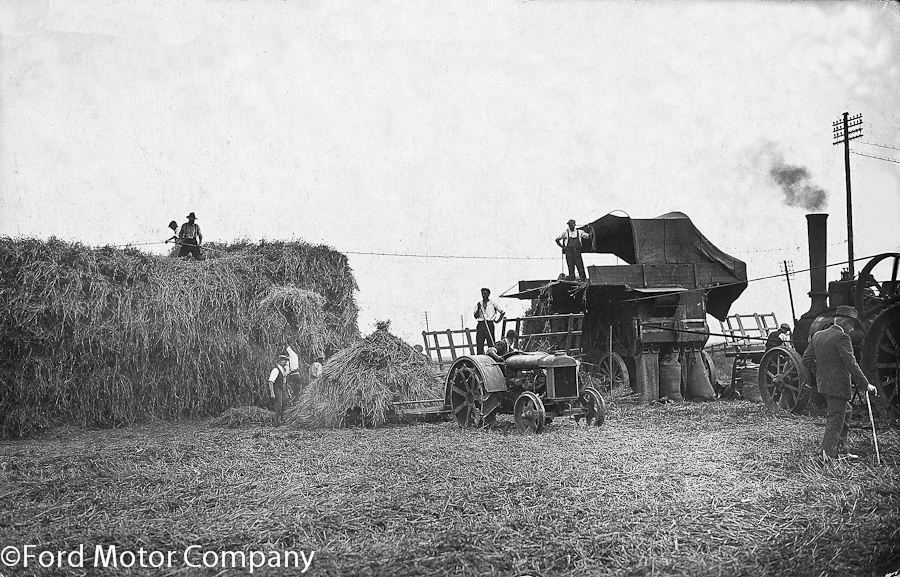
When you look at Dagenham now, it is hard to imagine this is how it looked 100 years ago.

Ford Haus

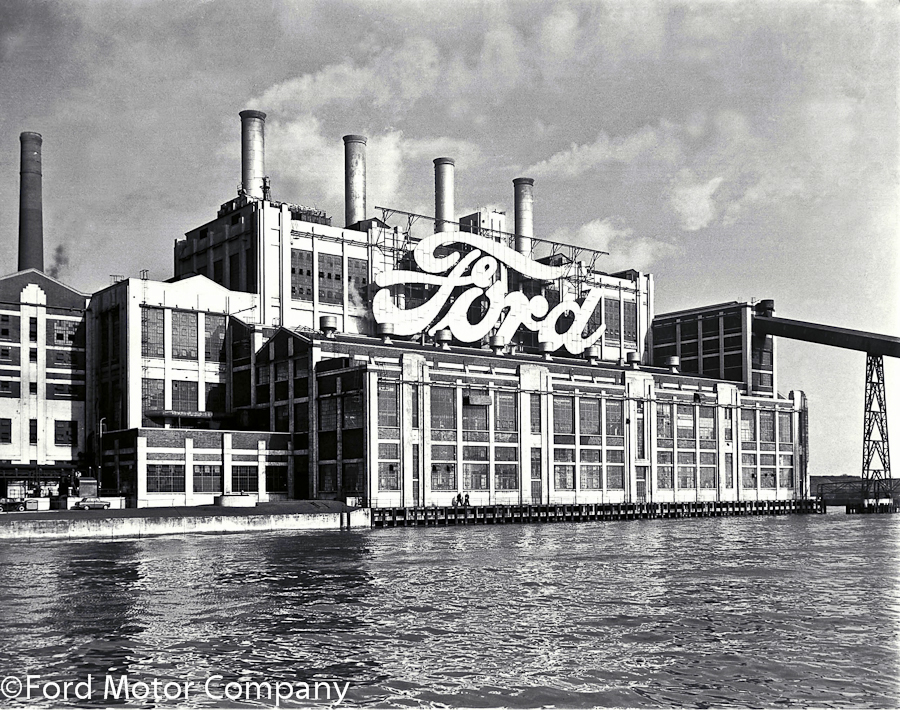
Henry Ford decided the “Detroit of Europe” would be built on the Thames, just east of London. This is how it looked at the height of its power, in 1957.

Merlin Magic

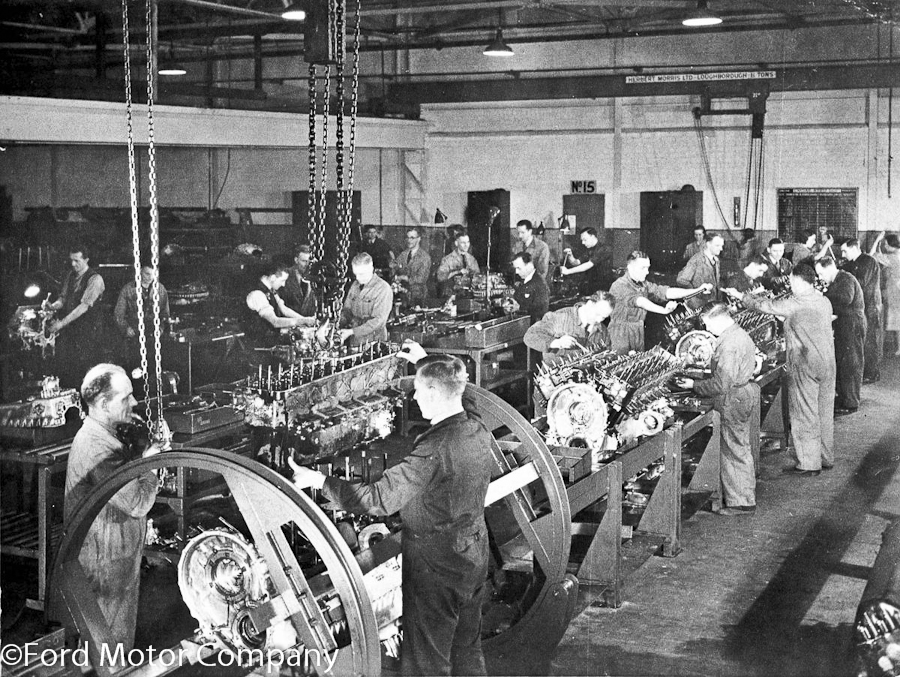
But Ford in the UK were not just about motor vehicles. Here in Urmston, Manchester the company produced Rolls-Royce Merlin aeroplane engines. There was a war on, you know.

You can ‘ave it for a ton, Guv.

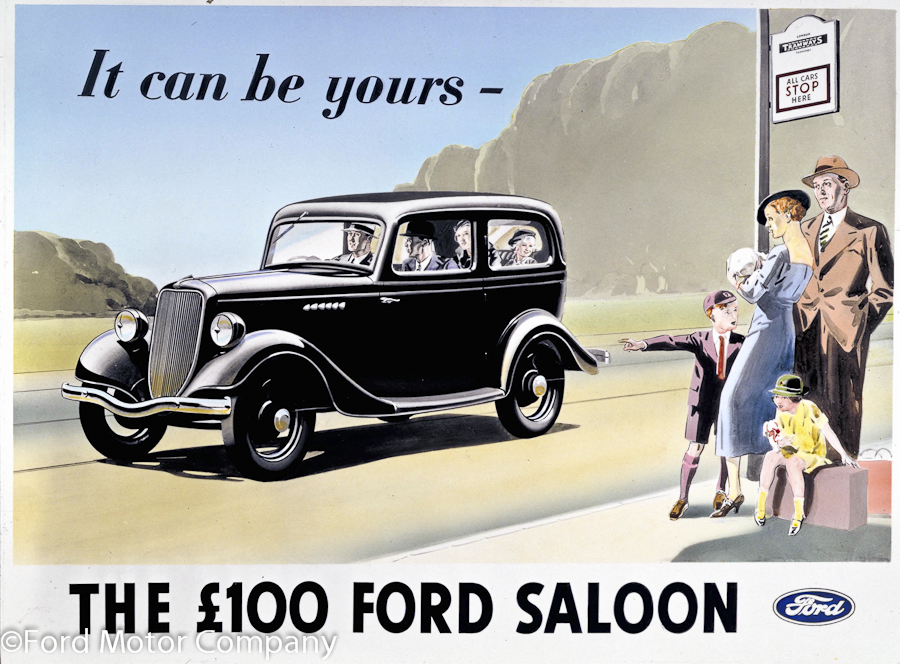
The Dagenham factory opened in 1931 but really became successful when Ford concentrated its marketing efforts on the likes of the Model Y, emphasising price and value for money.

I Walk the Line

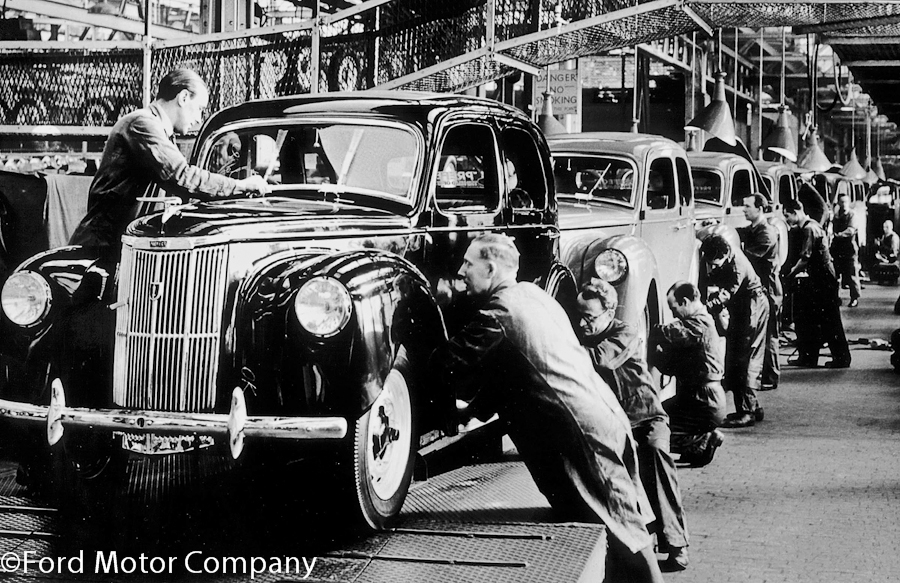
After World War Two, the model range continued to be conservative but the production lines were kept busy.

No Morris Minor

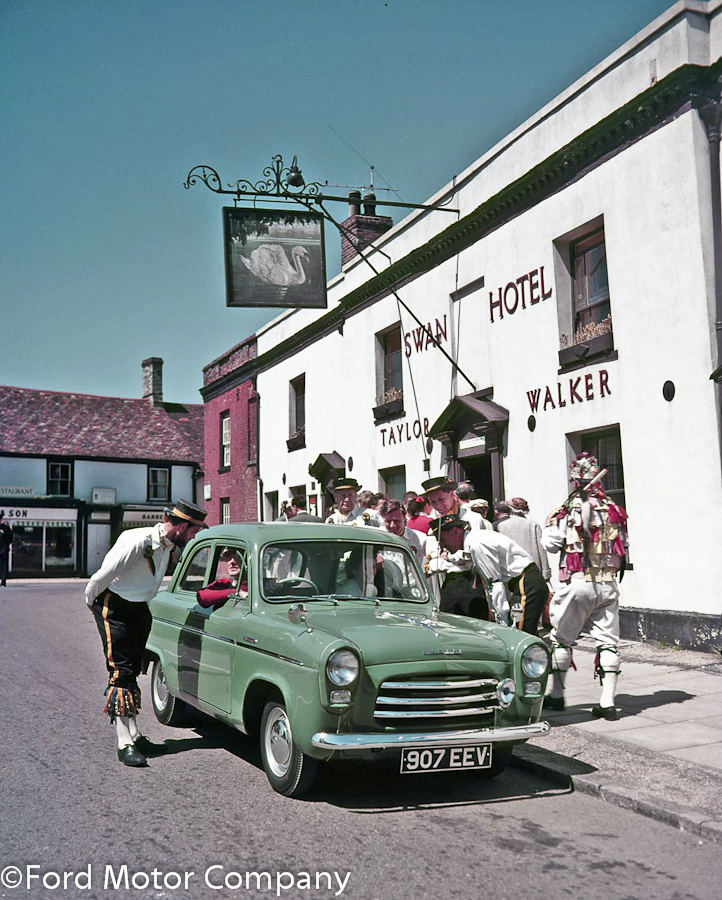
The affluence of the 50’s meant refining products to bring them into line with the demands the post war era market. Introduced in 1953 the Ford Anglia 100E sold for £360, over 300,000 were produced. Here the unlucky couple in the car encounter that scourge of quaint English villages, The Morris Dancers.

Field of Dreams

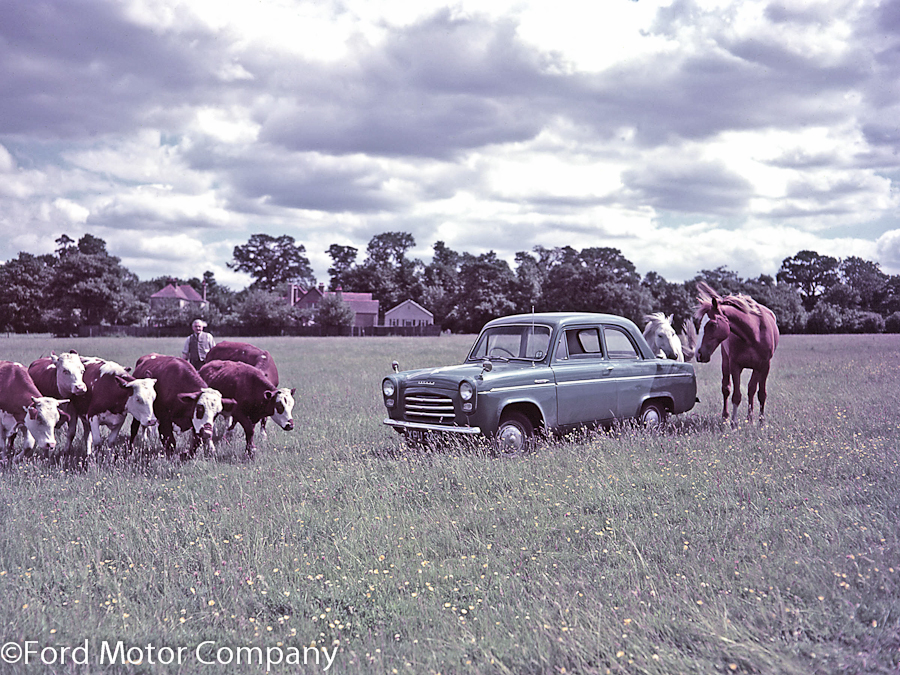
I am not sure just what brand values this shot would have been trying to extol.

Now Listen Here, Men.

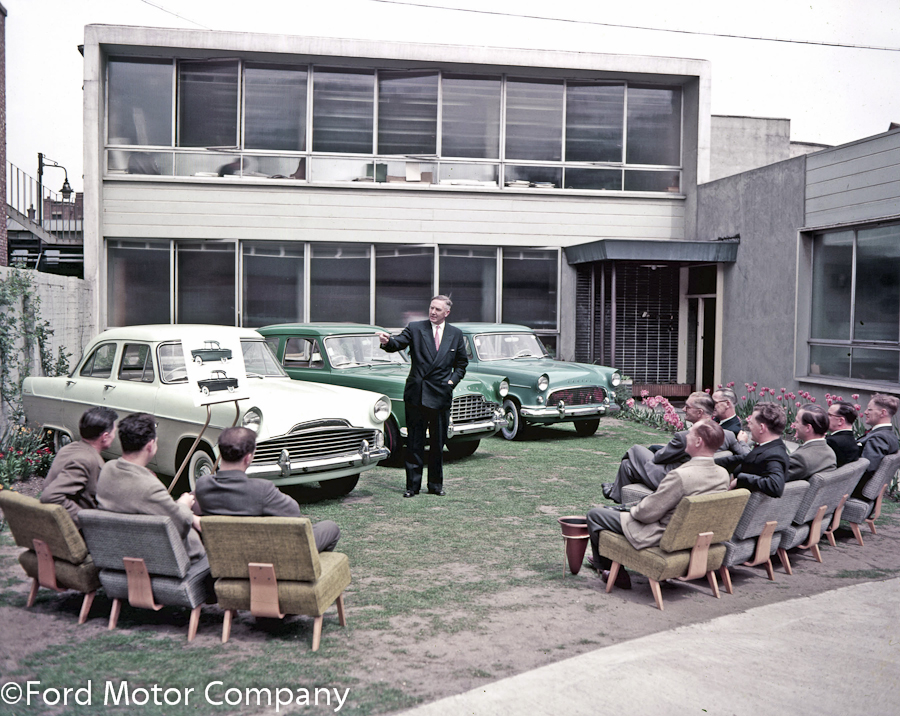
Changes in the way that cars were sold to increasingly demanding public meant that Ford had to move with the times. “Ford executives were invited to abandon the office for fresh air and a chance to see the Mark ll versions of Ford’s popular family cars. Launched in 1956 and marketed as the ‘Three Graces’, the Mark ll Consul, Zephyr and Zodiac marked a further step in British motoring away from post-war austerity towards glamour and modernity.” Or so the press release says.

Summer of Love

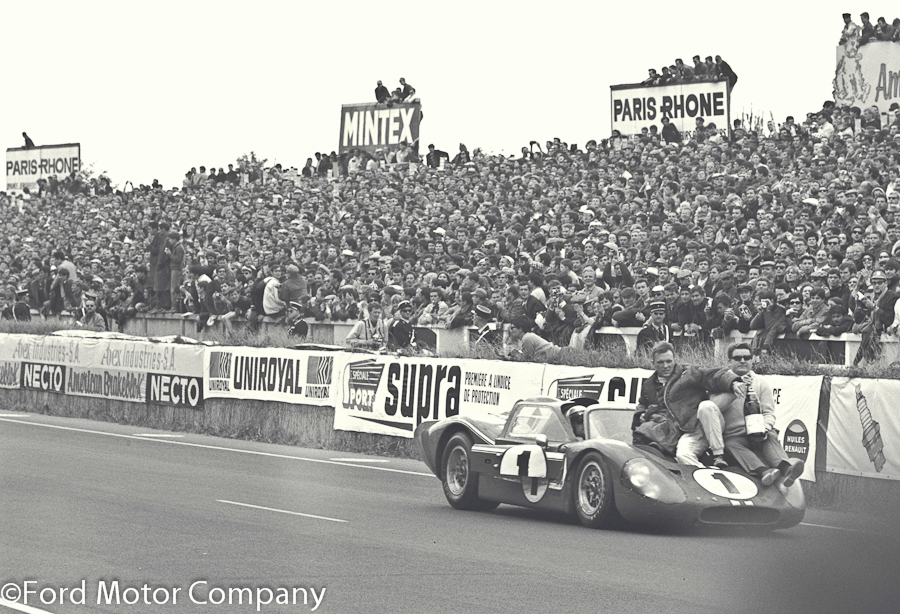
Ford harnessed the power of motorsport to enhance their brand during the 60’s, taking on Ferrari at Le Mans and eventually crushing them.

Where’s the Milk?

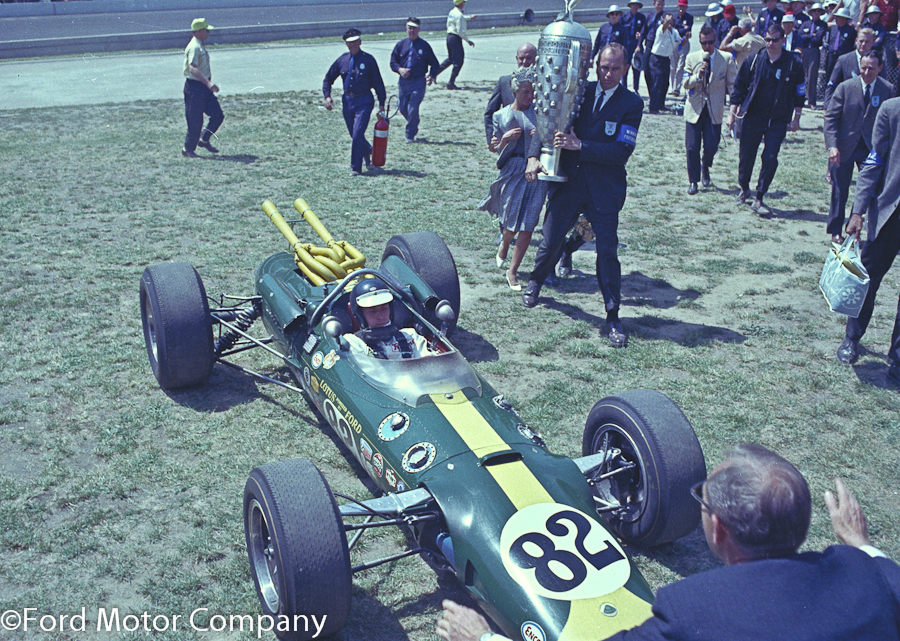
Back in the U. S. of A., a partnership with Lotus brought victory at the Indianapolis 500. Jim Clark is about to receive the Borg Warner Trophy.

Cosworth Power

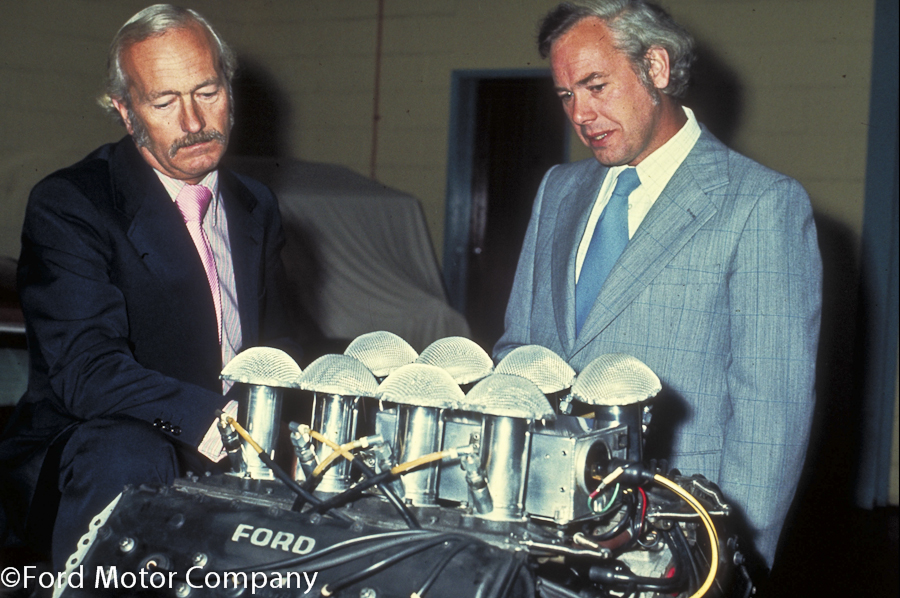
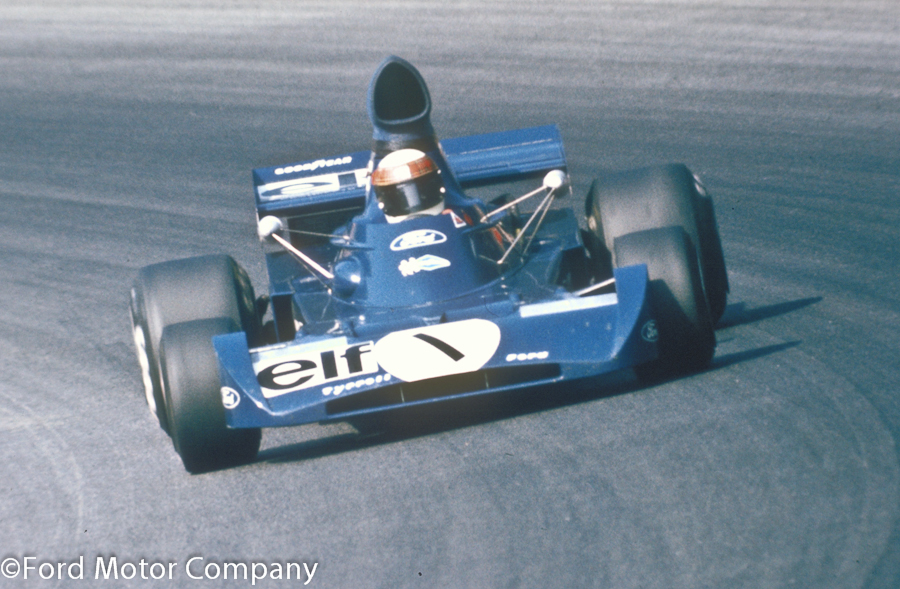
Even more significant in the long term was the Ford Cosworth V8 engine project. It powered the changes in Grand Prix racing, taking it to a truly global level. Colin Chapman and Keith Duckworth ponder the beast.

Tartan Terror

All of this activity had significant input from Britain and Ford UK.  And a significant effect on the sales performance of Ford here.

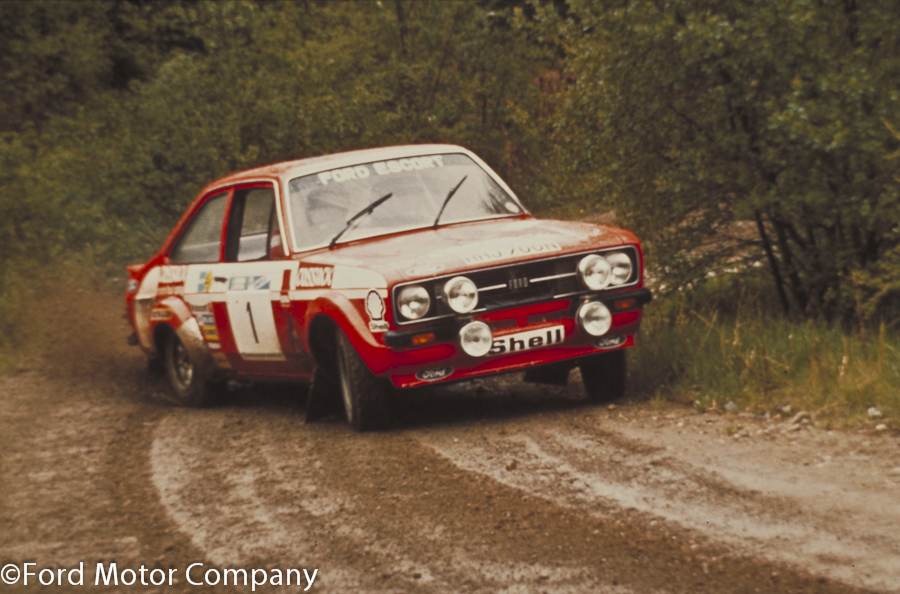
Escort Service

Not just on the tracks but also in the forests.

Left Hand Down, a Bit.

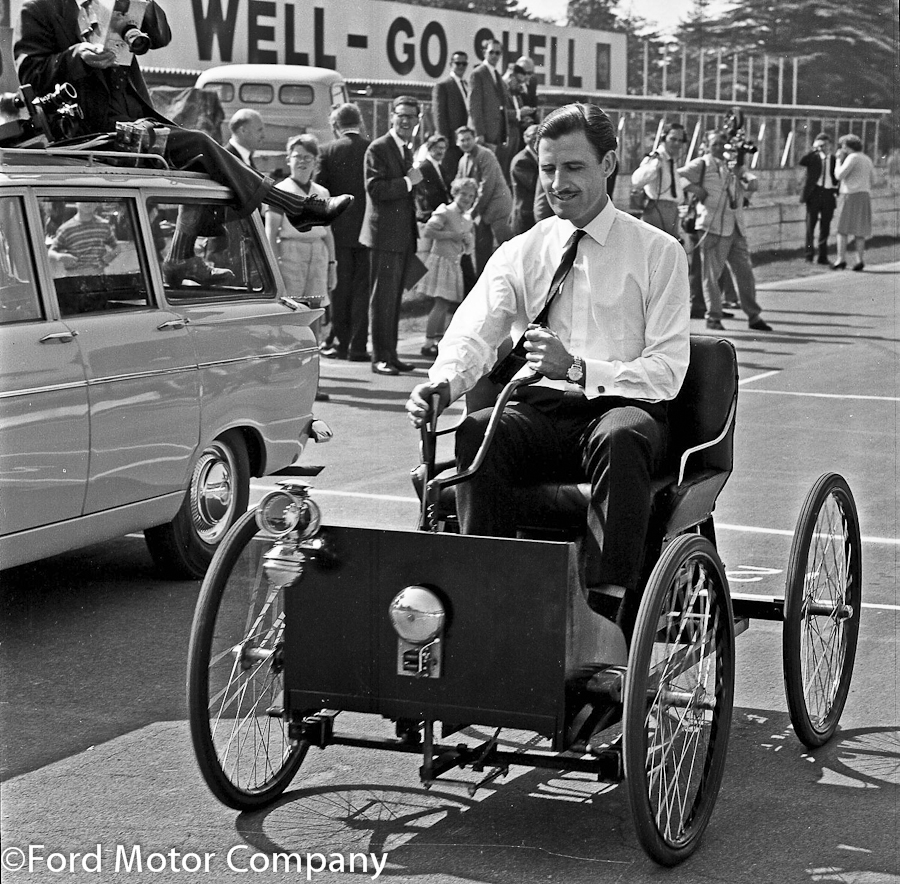
And if motor sport was not enough to attract the attention of the buyers, there were always promotions and gimmicks. Sometimes involving motor sport as well. Here Graham Hill, the current Formula One World Champion, drives the original Quadricyle. This was built by 32-year-old Henry Ford in 1896. Constructed of wood and metal it weighed only 500lbs, had a top speed of 20mph and no brakes, it rather looks as if Graham has just discovered that feature. Quite why someone who was driving for BRM in F1 and Le Mans was doing this sponsor work is not clear.

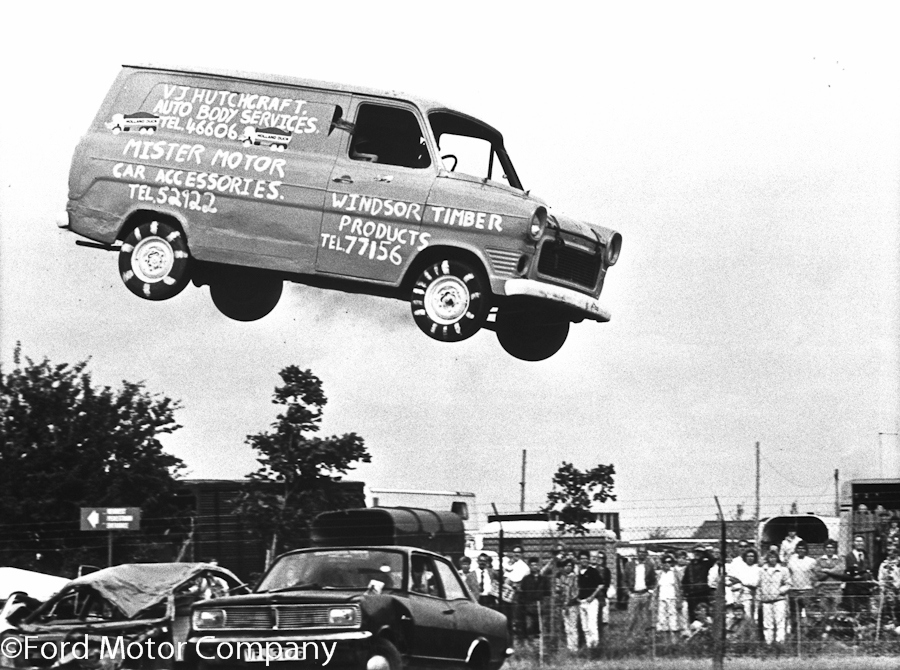
Queue Jumping

Not all gimmicks involved sport. This madness raised money for charity.

Holy Concept Car, Batman

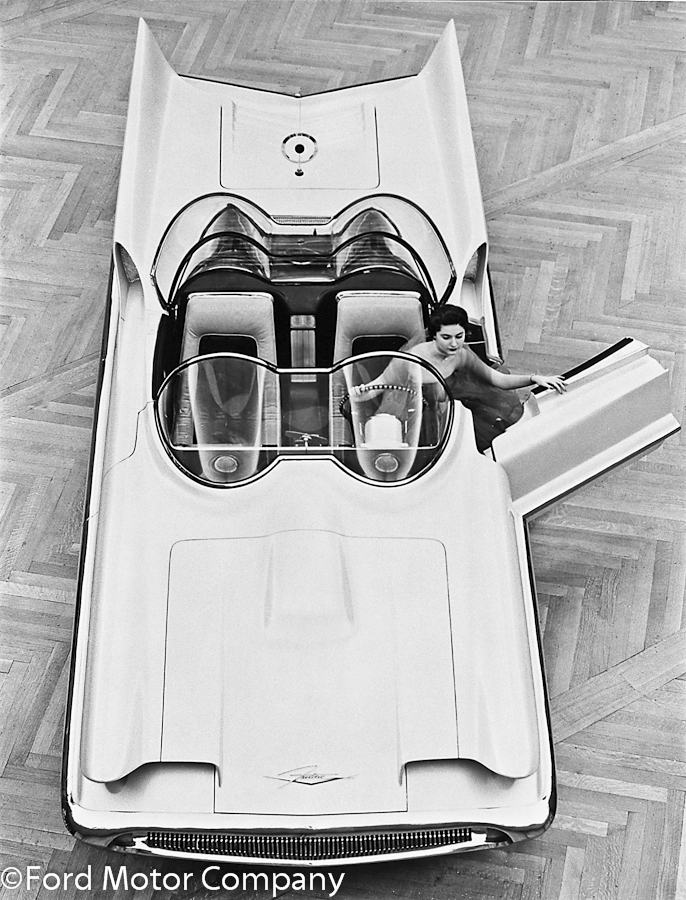
When in doubt mix a pretty girl and a concept car, covers all the bases. As Ford PR tells the story,  The Futura Concept Car was built in 1954 and designed to “garner valuable engineering data and test public reaction to styling”. A decade after its debut the Futura became the inspiration for the Batmobile in the popular 1966 television series. Although radical in appearance the Futura featured many ideas seen as mainstream today such as power-steering, power brakes, dual exhausts etc.

Bright Spark

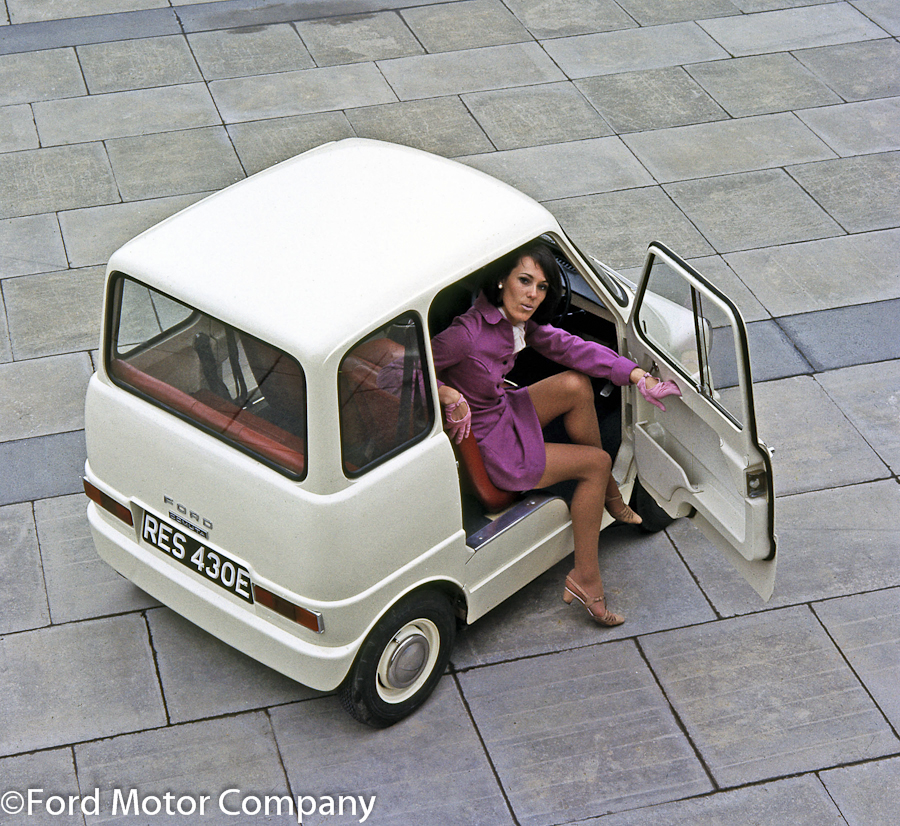
Sometimes Ford UK were ahead of a trend. In 1967 the Ford Comuta concept vehicle was used to demonstrate the potential of the electric vehicle. With a top speed of 40mph and a total range of around 40 miles on a full charge the Ford Comuta was never going to oust the best-selling Cortina as the drivers’ favourite. Even Ford’s assistant managing director at the time, Leonard Crossland recognised electric motors would not replace combustion engines for long journeys, saying: “…their uses will be primarily as city centre delivery vans and suburban shopping cars.”

Reach for the Stars

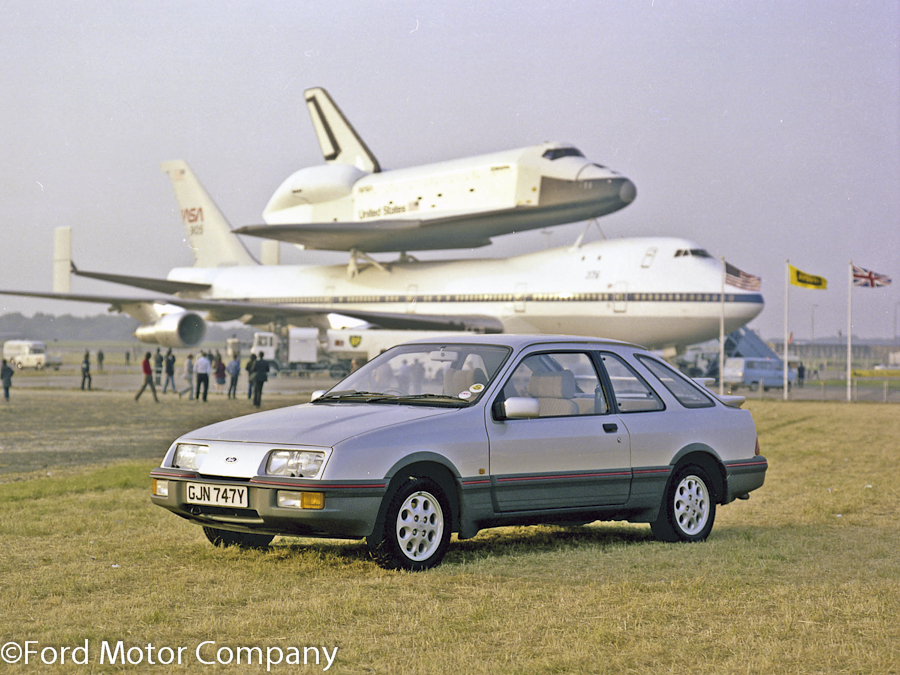
Using the latest cutting edge technology to boost your current product line seems such a good idea at the time but in retrospect may not be quite so clever.  The Sierra and the Space Shuttle look about as 80’s as shoulder pads and yuppies. Look at how relaxed security is, it is almost as if commonsense prevails.

Stuck in traffic

Commonsense, no evidence here.

Happy Birthday, Ford UK. Britain would have been a poorer place, in every sense, without you.

John Brooks, July 2011


Alfa, Alfa, Alfa

The Brooklands Double 12 brought out fine examples of motoring art from Italy and specifically from Alfa Romeo. The Italians have created some of the most beautiful cars ever to turn a wheel, occasionally a dog too.
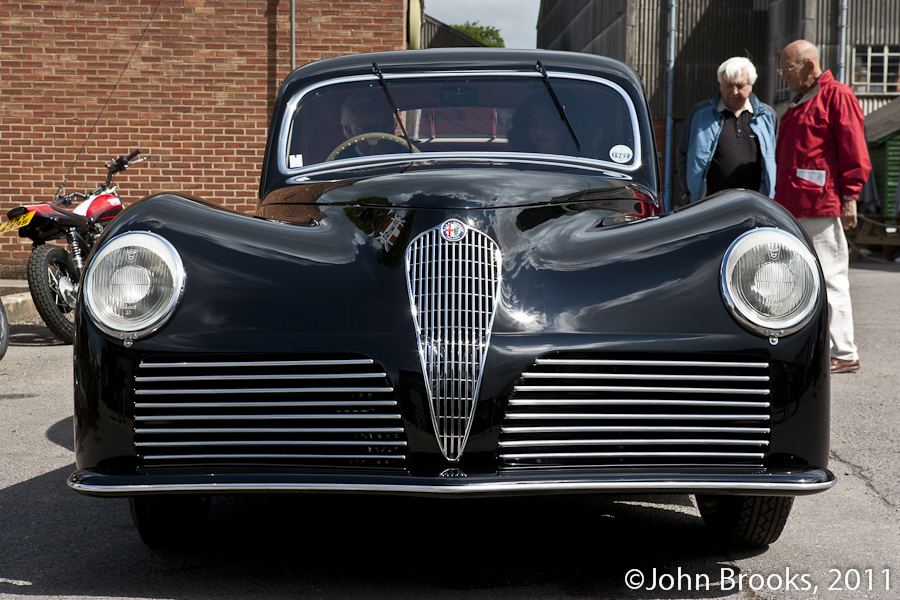
Alfa Romeo 6C 2500 Bertone

Almost the first car that the Special Correspondent and I tripped over on our arrival was this fabulous machine. It was a Alfa Romeo 6C 2500 SS Bertone dating from 1942.
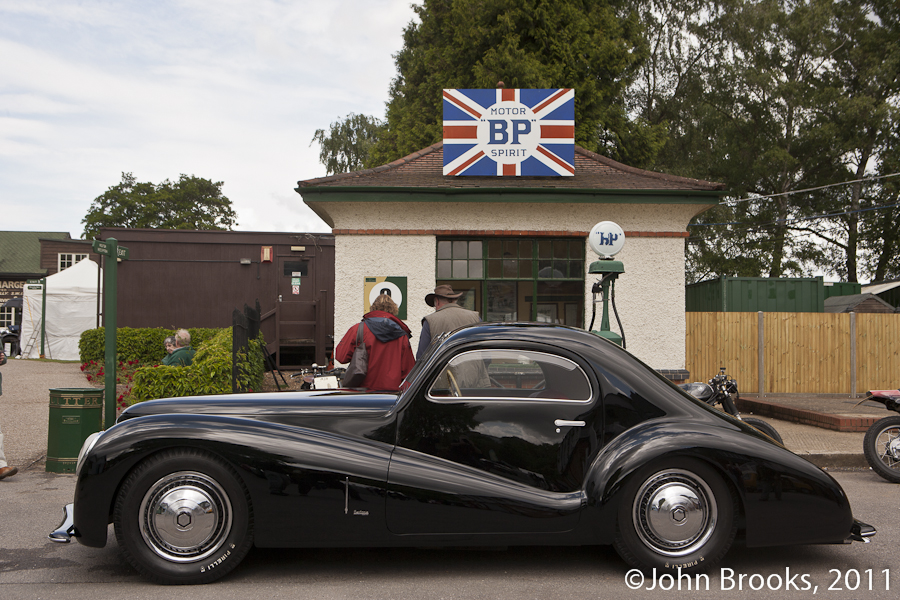
Alfa Romeo 6C 2500 Bertone

It was brought to England by its current owner, Corrado Lopresto, who has restored the car to its original glory.
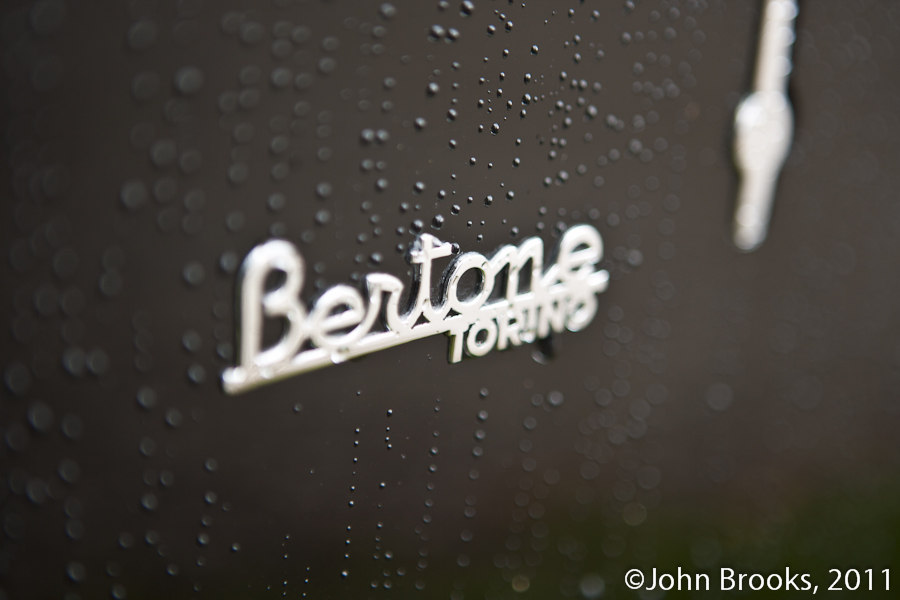
Artist’s Signature

Along the way it has won awards at Pebble Beach and Villa d’Este, including the 2011 Coppa d’Oro, it doesn’t get any better than that.
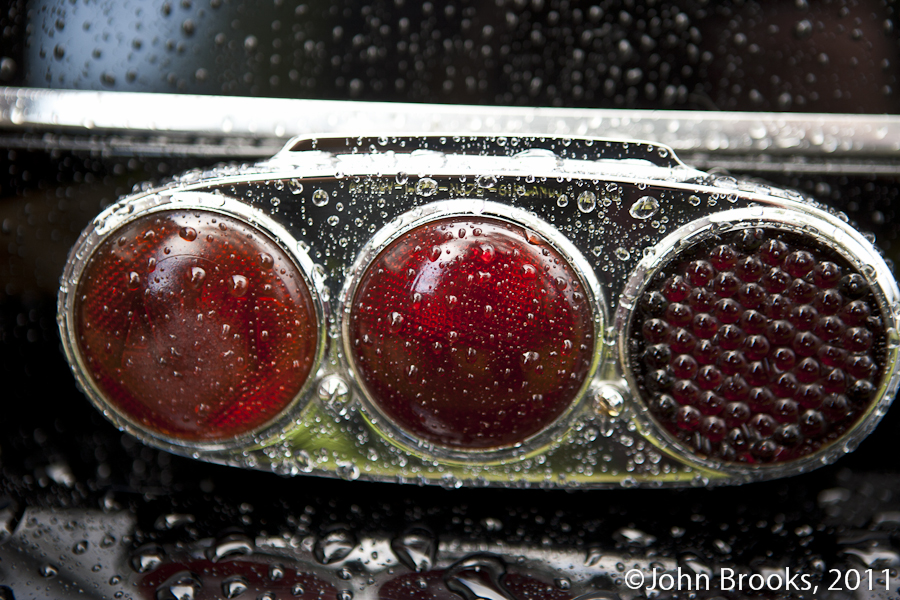
Tail Piece

According to my good friend Wouter Melissen the design was the work of Mario Revelli di Beaumont.
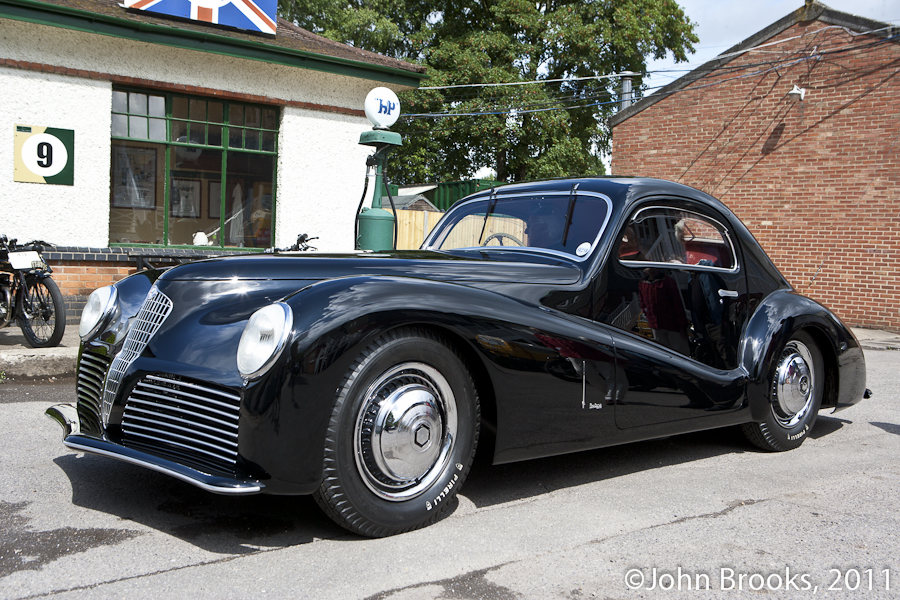
Alfa Romeo 6C 2500 Bertone

You can read up more about this fantastic car on Wouter’s excellent site HERE . Strange thing, probably a coincidence, but when you Google this car, most of the websites that describe it at Villa d’Este or Brooklands use a remarkably similar wording to that of UltimateCarPage, when it talked about the car a year ago at Pebble Beach. Spooky, this internet thing.
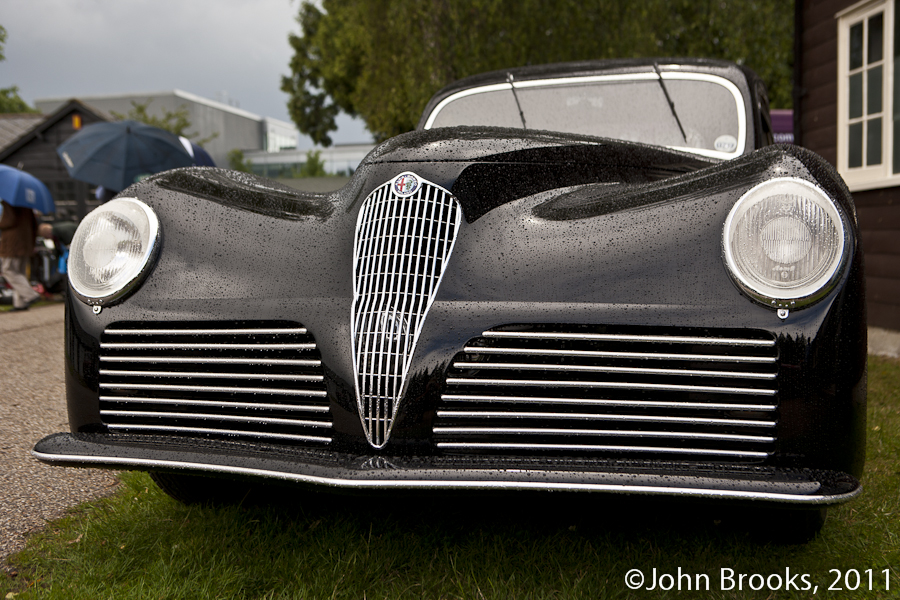
Alfa Romeo 6C 2500 Bertone

One thing that struck me is the question of how did this car get built at all? In 1942 World War Two was in full flow, Italy was fighting alongside Nazi Germany in the Western Desert and on the Russian Front. All materials were rationed and there was strict control of industrial activity. It must have been very powerful JuJu that allowed the war effort to be diverted to build this one off. Perhaps the Italians have always had a better sense of what is important and what is not, most of them would have seen through Mussolini’s bombast by that time. Certainly nothing like this could have been built in war time Britain, the Man from The Ministry would never have allowed it.
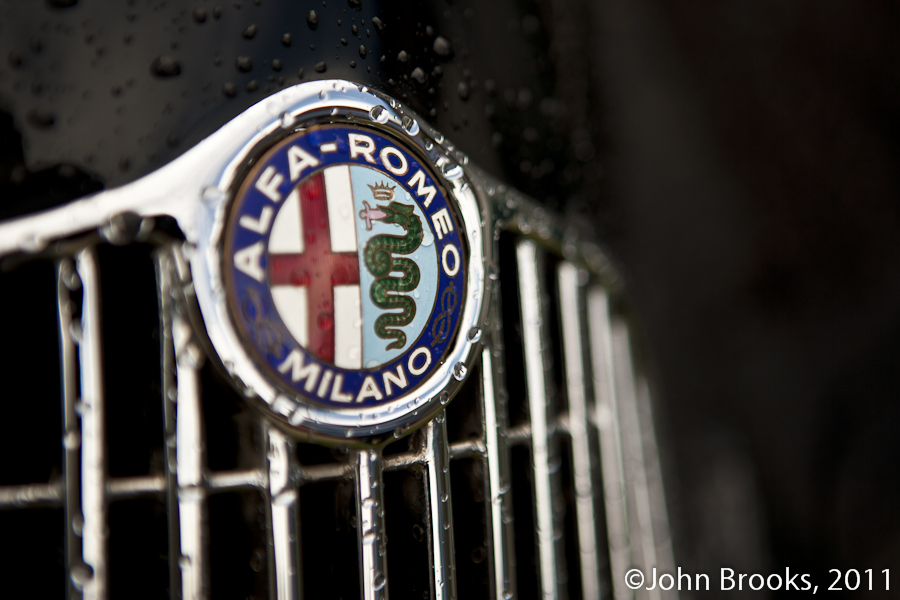
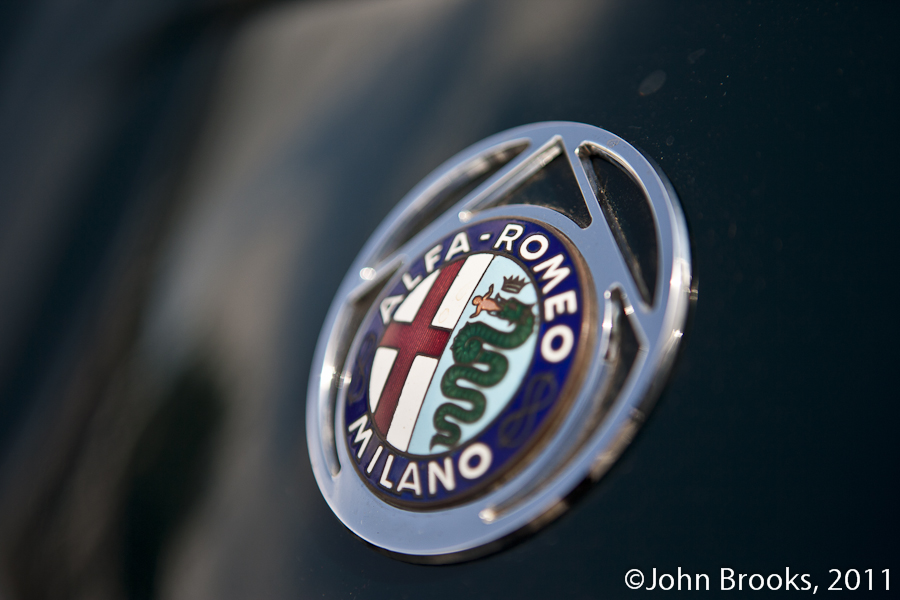
Badge Engineering

The car was built in 1942, delivered to Concessionaria Oreste Peverelli in Como, then rescued from Italy to Switzerland to remain intact during the Allies’ invasion of Italy. It is a thing of beauty and we were lucky to see it at Brooklands.
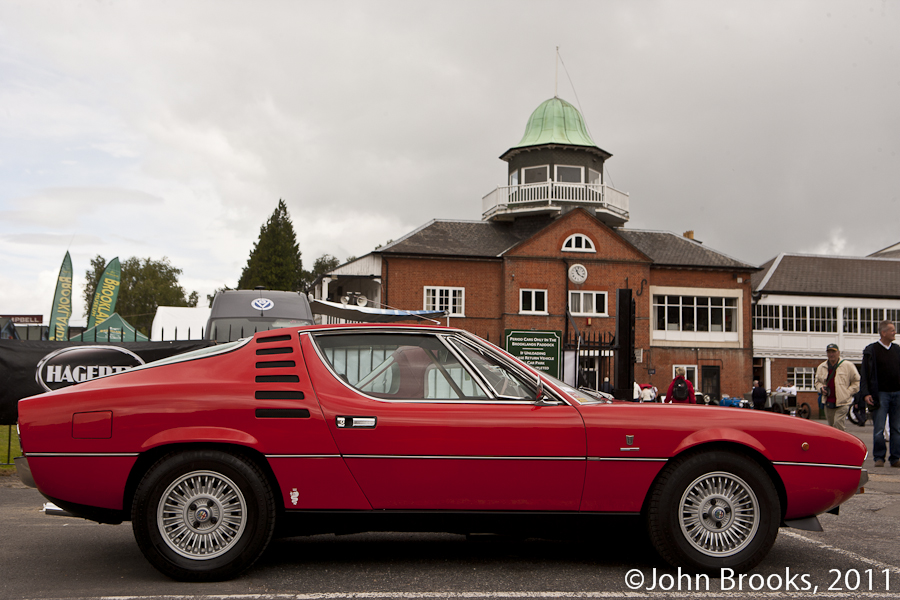
Alfa Romeo Montreal

Less exotic but still very worthwhile was this Alfa Romeo Montreal.
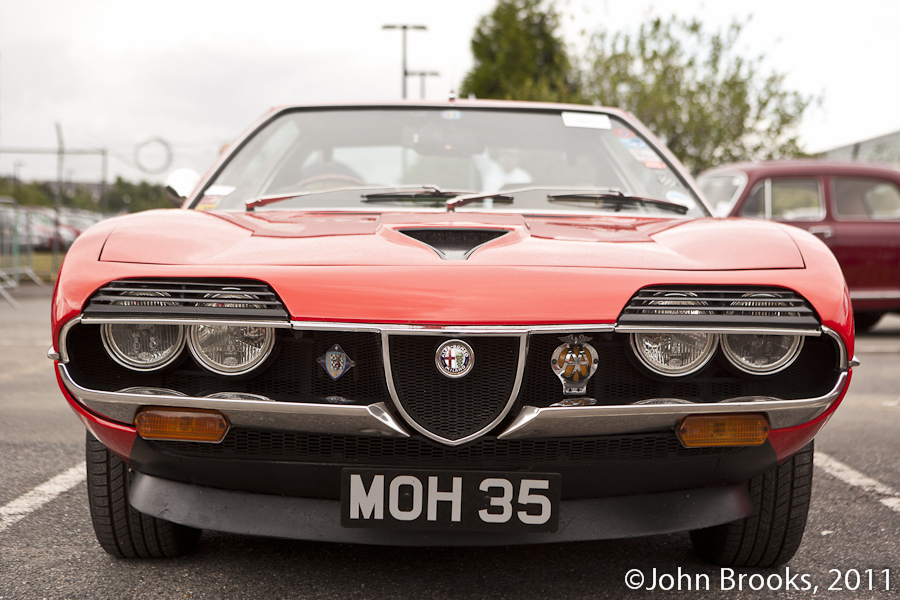
Alfa Romeo Montreal

The styling say 1970’s in the same way as the Bertone classic says 30’s.  Yet this does not detract from it, there really was Life on Mars.
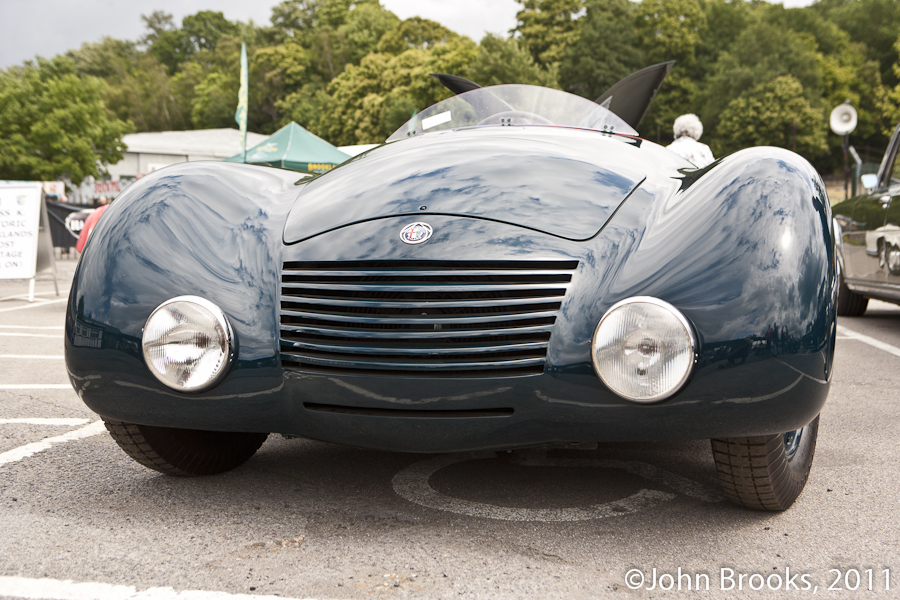
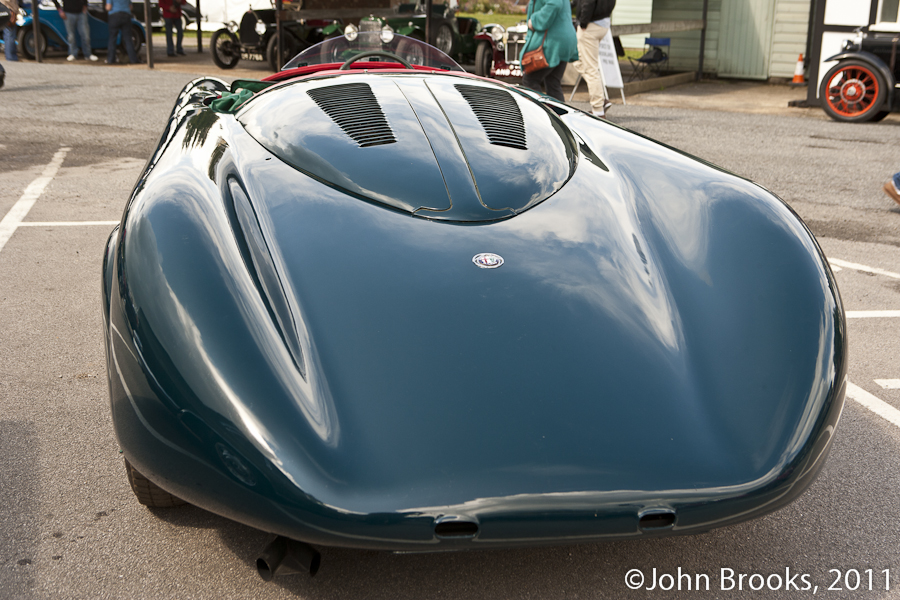
Another exhibit that purported to date from the 30’s was this weird creation.
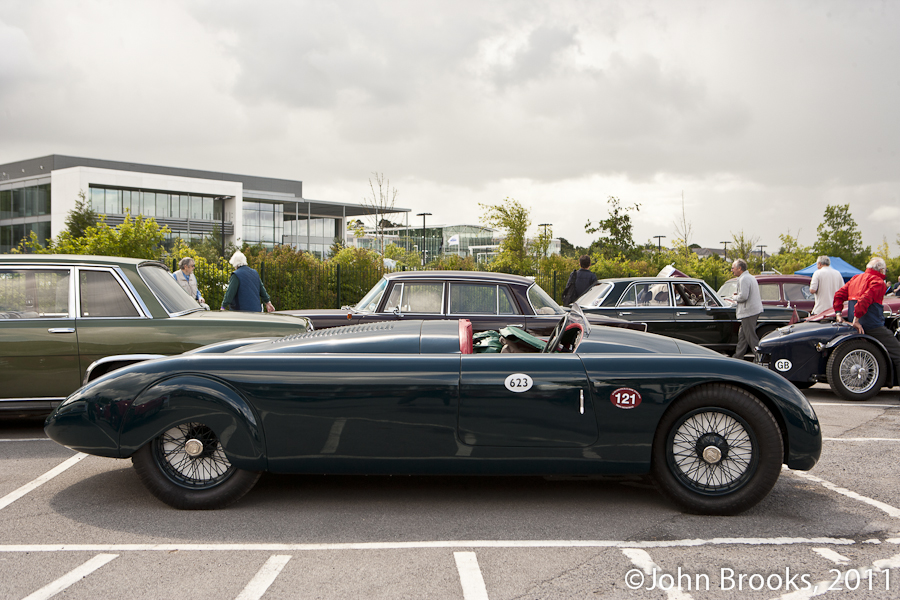
Alfa Romeo 6C 2300 Aerodinamica Spider

It is described as a secret project commissioned by Vittorio Jano.
Someone has taken a lot of time and trouble to post up a full history on Wikipedia.
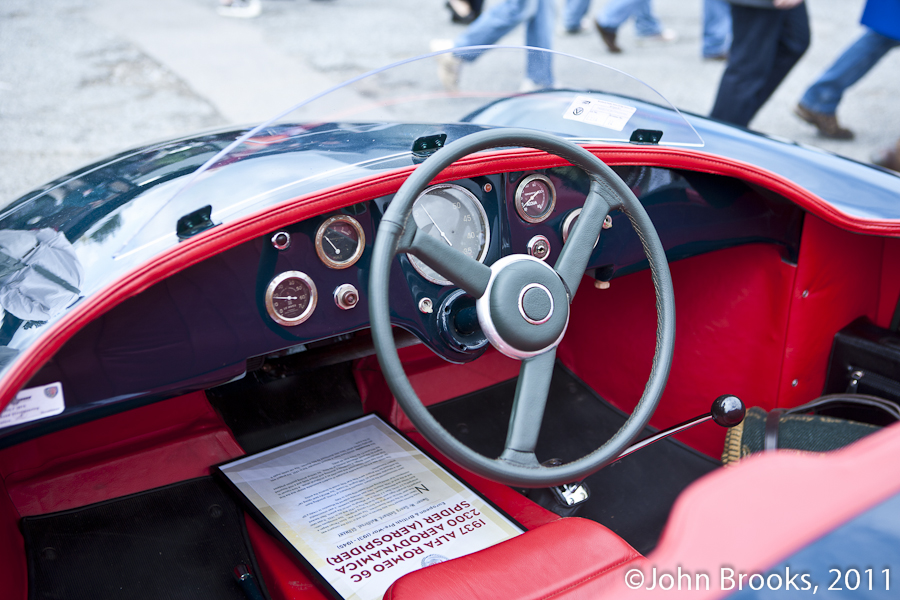
Cockpit

In 1935, Vittorio Jano, working with the brothers Gino and Oscar Jankovitz, created a one-off mid-engine prototype on a 6C 2300 chassis (no. 700316),which Jano had shipped to Fiume, Croatia in 1934. The brothers Jankovitz had been close friends with leading Hungarian aerodynamicist Paul Jaray, and the prototype, called the Alfa Romeo Aerodinamica Spider, was an especially early and clear example of ponton styling — a genre that would overtake automobile styling and last until the 1960s. Jano had intended to fit a V12 engine, though that possibility disappeared when Jano himself was fired from Alfa in 1937.

Based on documents kept in the family Jankovits the history of the car’s development is as follows:
Summary of the “Aerospider” Alfa Romeo Jankovits – 6 C 2300 Aerodinamica Spider “Aerospider” (constructed 1934-1937)
The prototype of modern automobile design and the first car which had been constructed and executed as a sculptural whole.
The combination of a very advanced aerodynamic body with the engine behind the central driver’s seat, on the most advanced chassis of its time makes this Alfa Romeo unique in the history of automobiles.
This special version of an Alfa Romeo 6C 2300 belonged to a secret project by Vittorio Jano and the brothers Jankovits.
The Aerospider represents:
The first supercar of “modern” sports car design.
The first mid-engined car with central driving position in the history of automobiles designed to keep the centre of gravity in the middle of the car – 60 years ahead of the McLaren F1
The first car designed to take account of newly developed principles of aerodynamics, to provide low-drag both externally and internally.

The article makes a whole batch of other claims about the car.
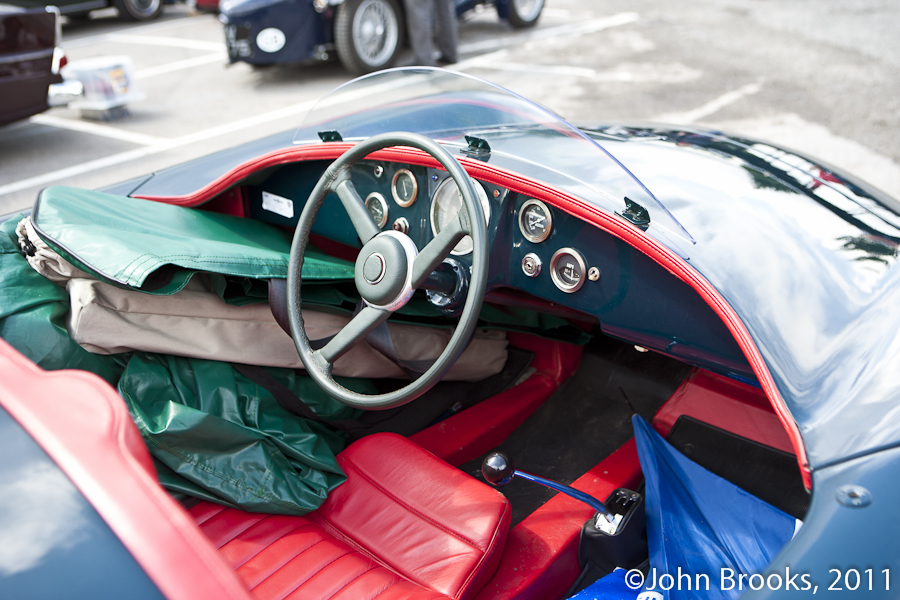

There is even a bit of James Bond, or should that be “The Spy Who Came in From the Cold” provenance attached?
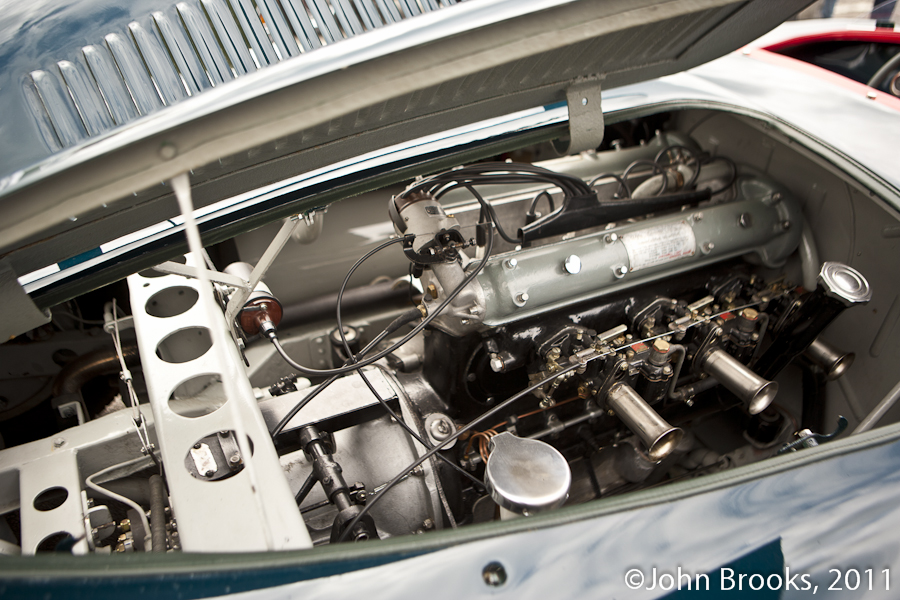
The car was ‘liberated’ from East Europe in a dramatic way, according to the story.
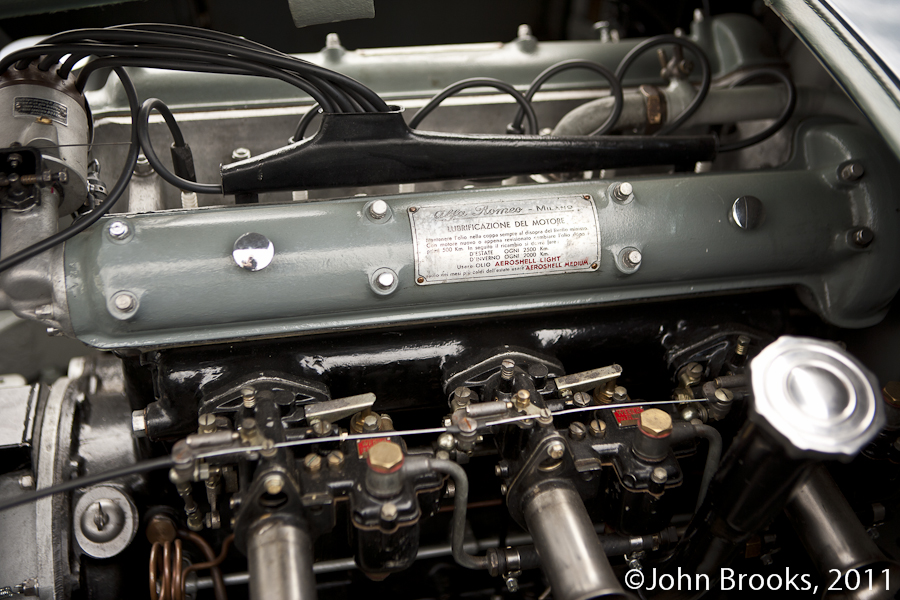
No V12.

Any public appearance of the futuristic looking Aerospider would have caused a sensation, but because of the secrecy surrounding the project, and then the onset of the war, the prototype remained hidden in the Jankovits’ garage in Fiume, and was not seen by anyone from outside the garage. On Christmas Eve 1946, Gino Jankovits drove the Aerospider at full speed under the toll-bar of the closed communist controlled border into Italy. Border guards fired volleys of shots after him, but the low, streamlined body saved Gino’s life. Only the rear tyres were destroyed by the bullets, which also caused some dents in the rear of the car’s bodywork. To get money they had to sell their car to an Anglo-American officer. Then the Alfa disappeared for about 20 years until it was rediscovered in England. In 1978 the Aerospider was recognized by the well-known Alfa Romeo historian Luigi Fusi, who had worked with Vittorio Jano at the time of the Aerospider project. He wanted to acquire the car for the Alfa Romeo Museum. The acquisition failed, but the prototype did eventually return to Italy, 30 years after its birth, to be restored at last to its original condition as a racing car.
Original?

However, Alfa Romeo is a brand that inspires loyalty and enthusiasm amongst the Alfisti to a degree seldom seen by other motor manufacturers. So when a rare beast like this appears from nowhere it will attract commentary and not everyone has accepted the authorised version.
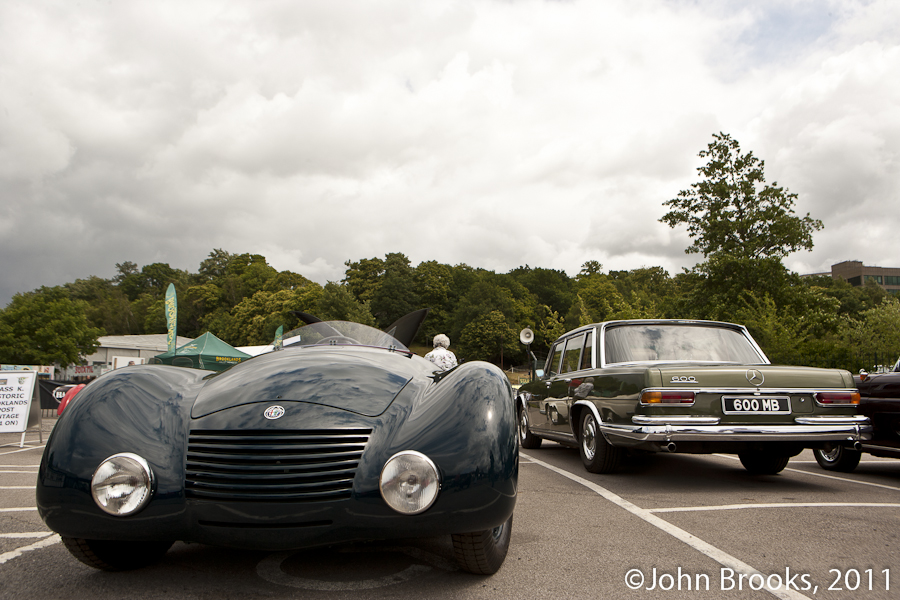
Brooklands

Indeed, when I asked my colleague, the venerable Special Correspondent what he thought, he was somewhat dismissive. He backed up this opinion by later confirming that the car was not in the Alfa Romeo bible ‘Alfa Romeo Tutte le Vetture Dal 1910’ by Luigi Fusi. That confirmed it, as far as he is concerned, that this car is not an Alfa Romeo. Others have written blogs about this vehicle, one can be found HERE that eloquently puts the case for the prosecution.
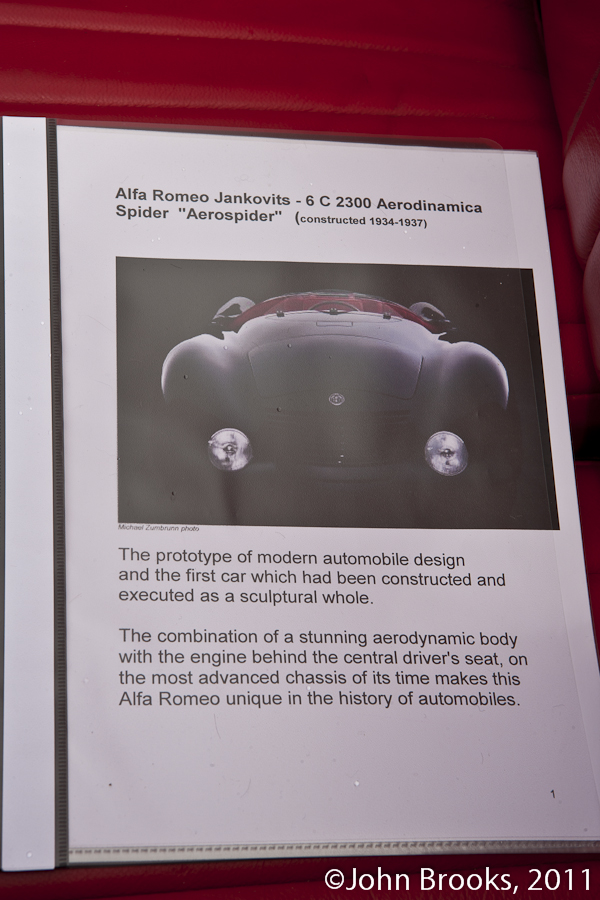
Proof?

Another comment that was published, “Respected antique dealer Colin Crabbe was told by Luigi Fusi of the Alfa Romeo Museum that the Jankowits car is not an Alfa Romeo, what ever the current owner seems to think, none the less it is an extremely interesting Alfa Romeo powered special, stories of the car dodging bullets to escape communist Yugoslavia are comically wide of the mark, the car and its occupants were allowed to leave the Yugoslavia with a perfectly normal travel permit, it was never designed for anything other than a straight 6, Alfa V12’s did not exist at the time the car was conceived by the Jankowits Brothers.”
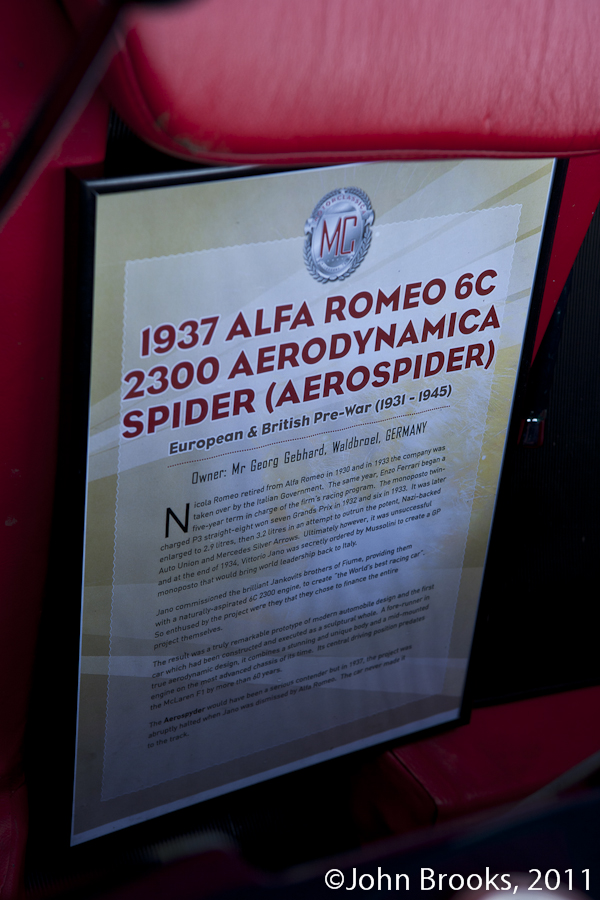
More Proof?

Still, there are those who maintain that this story is true. The car has been exhibited at Goodwood’s Festival of Speed and, of course, Brooklands, giving some credibility to that version of events. Being less of a purist than those like the Special Correspondent, I am inclined to enjoy that car for what it is and am glad that we are able to see it today.
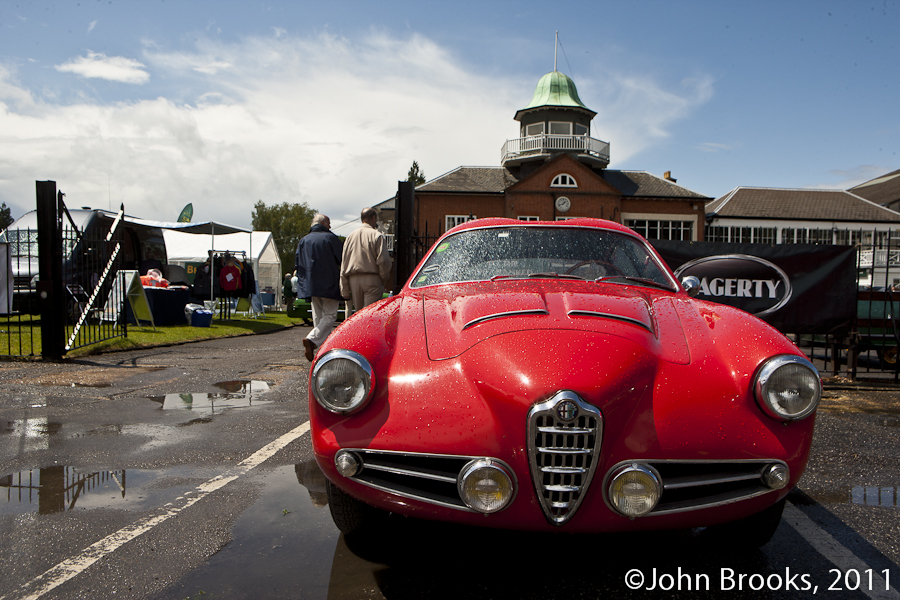
Alfa Romeo 1900C SS Zagato Coupe

One car that attracts only enthusiasm is the Alfa Romeo 1900C SS Zagato Coupe. Even the rain storm that hit the event that day could not dim the glow from the car.
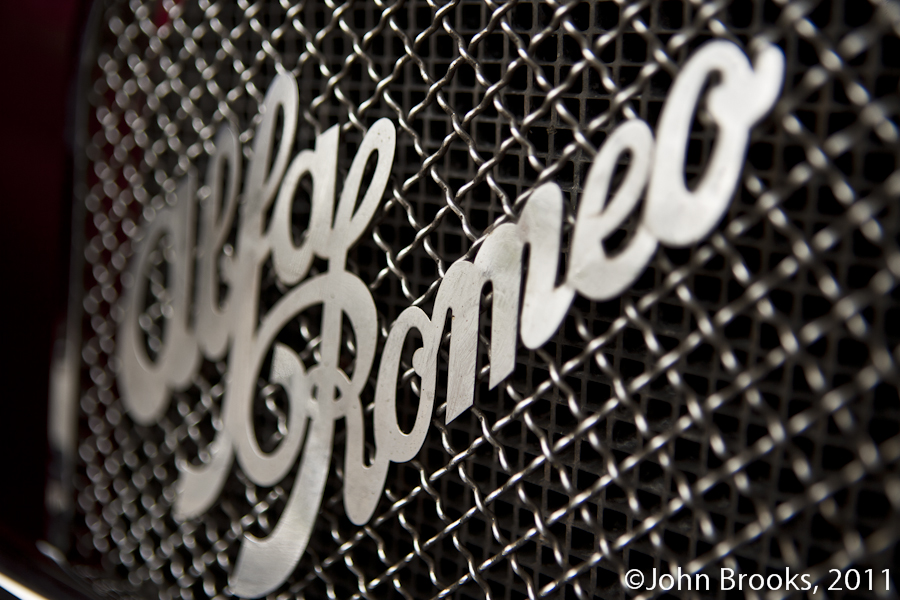
Name Check

A fitting way to end this salute to Alfa magic on display at Brooklands last month.

John Brooks, July 2011
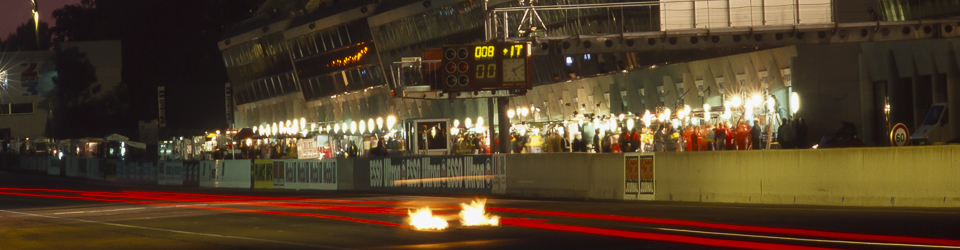
 

Brooklands’ Best

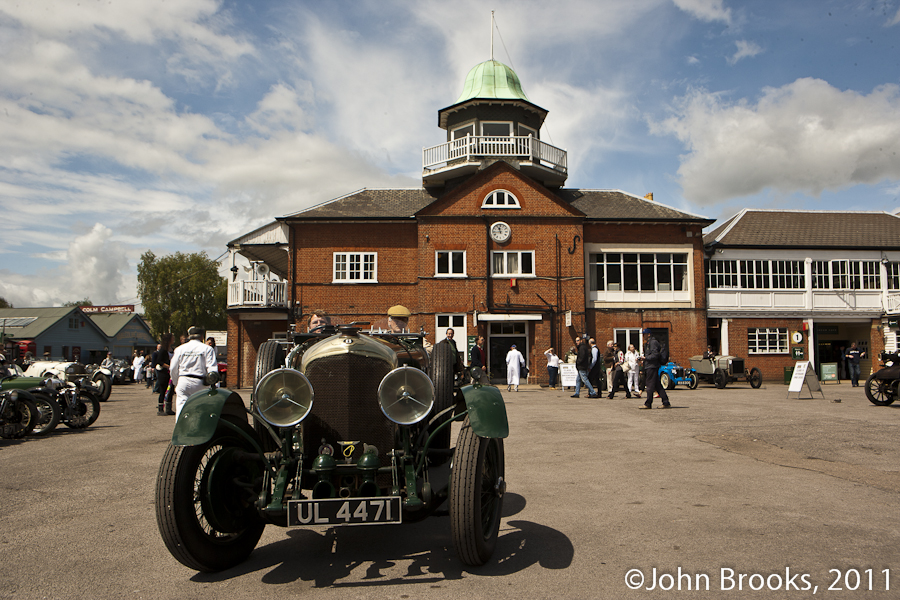
Instead of the usual trek across countries and continents, the journey last month was just down the road. Brooklands, the world’s first purpose built motorsport track, is but a few miles from base. As a child going to school in Weybridge I could hear the testing of VC10 engines echoing down the hill from the Vickers factory located at the site. My Grandfather even worked there at one stage, so I certainly feel a connection with the place.

Clubhouse Racer

So when our Special Correspondent suggested a trip to the Double 12, how could I resist? The Brooklands Museum is a unique place, preserved by the efforts of a few true believers.

Hill Street Blues

OK, the site is now a business park, manufacturing having disappeared from the place many years ago, much like the rest of the UK. A substantial part of the famous banking remains, plus the Clubhouse and hangers.

Concorde

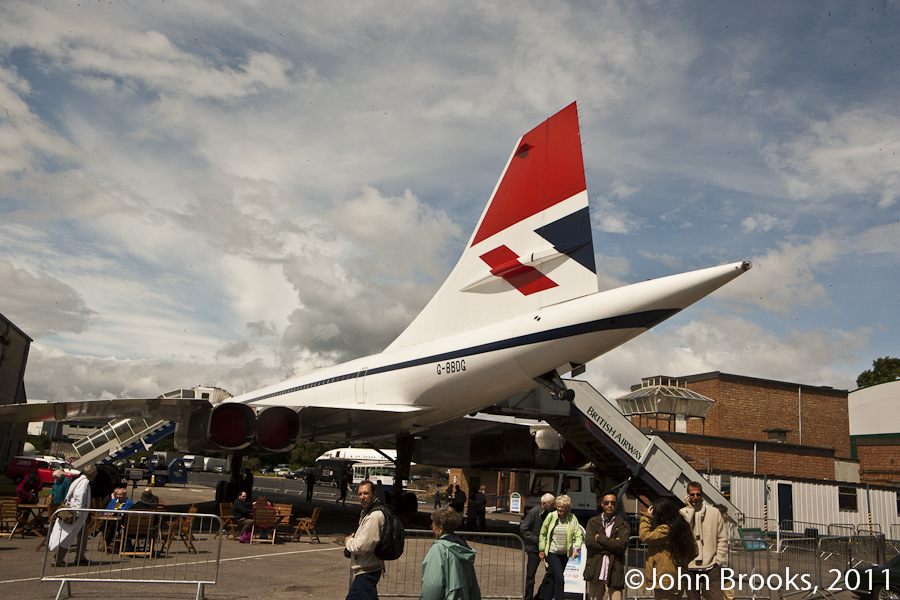
Indeed there is as much aviation history on site as motoring, ranging from Concorde to the war planes that were built here during the past century.

Crew Bust

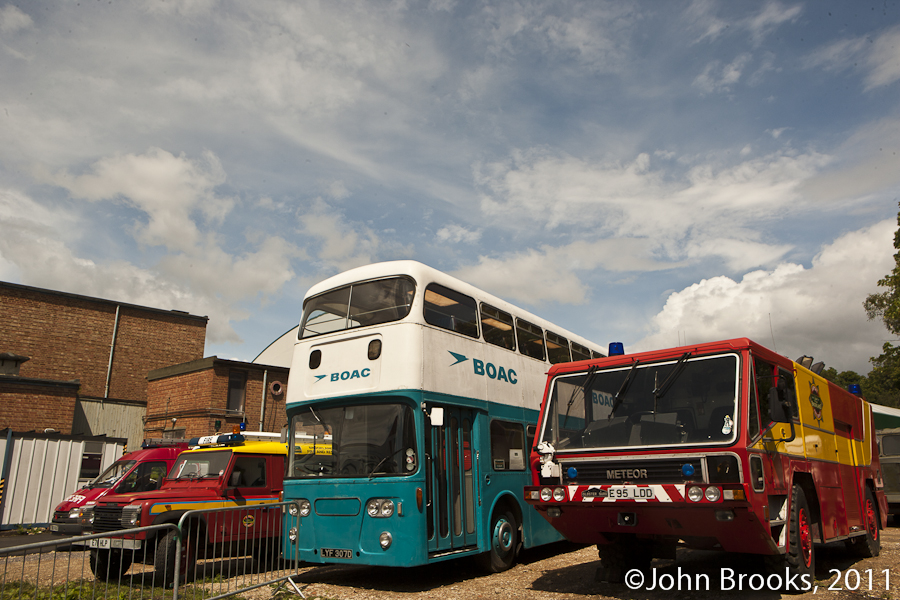
There is also a collection of the ancillary vehicles that would have been found at airports during the past 50 years.

Continental Auto?

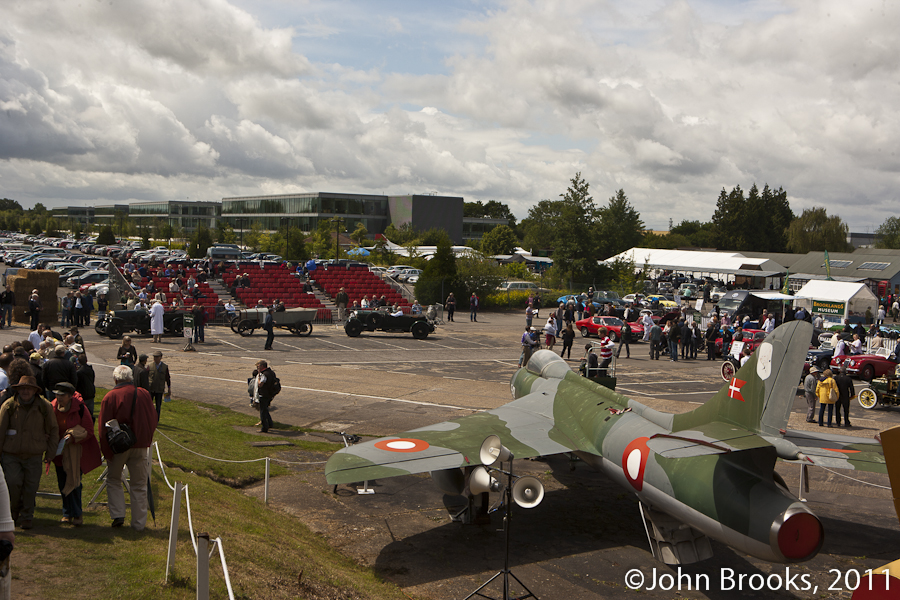
Cars and Aeroplanes sit comfortably together, a Connaught and a P1127 pose in the sunshine.

Record Breaker

However the purpose of the visit was to admire the collection of cars that were assembled, some of which would be static displays, such as the aero-engined monsters that raced around the Surrey track before WW2.

Instant Classic

Some are more authentic than others, the less worthy cars attracting the ire of our Special Correspondent.

Warning

But the message was clear, speed it was.

Mon Ami Mate

There was a good mix of cars at the 2011 Brooklands Double Twelve, some road and some with true racing heritage.

Mike Hawthorn made his name racing a Riley Ulster Imp before signing up with Ferrari on his way to becoming Britain’s first Grand Prix World Champion in 1958. The Riley is now proudly displayed, complete with a hat tip to the former owner.

Broadspeed Cat

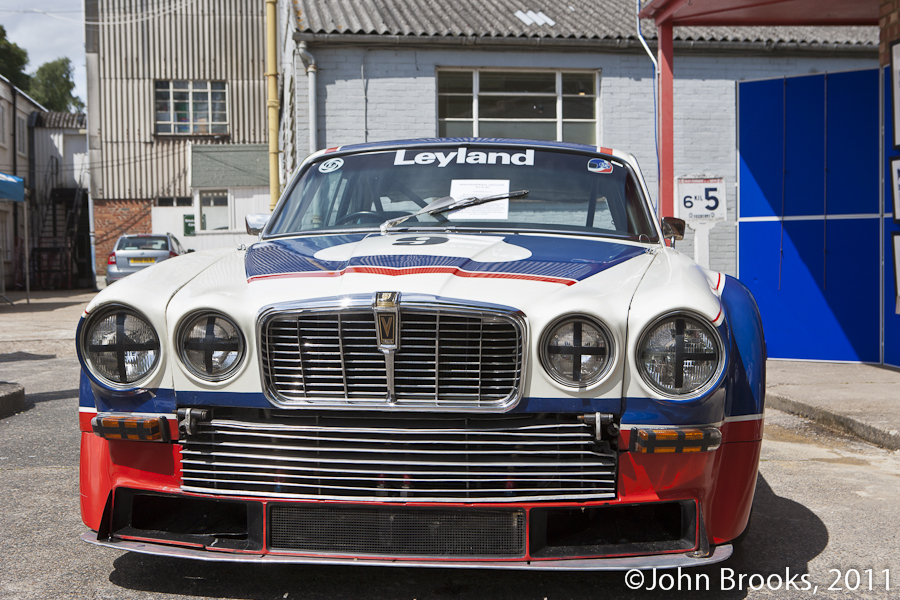
At the other end of the racing spectrum is the Jaguar XJ12C, the results never quite matched the presence.

Not a Dolomite Sprint

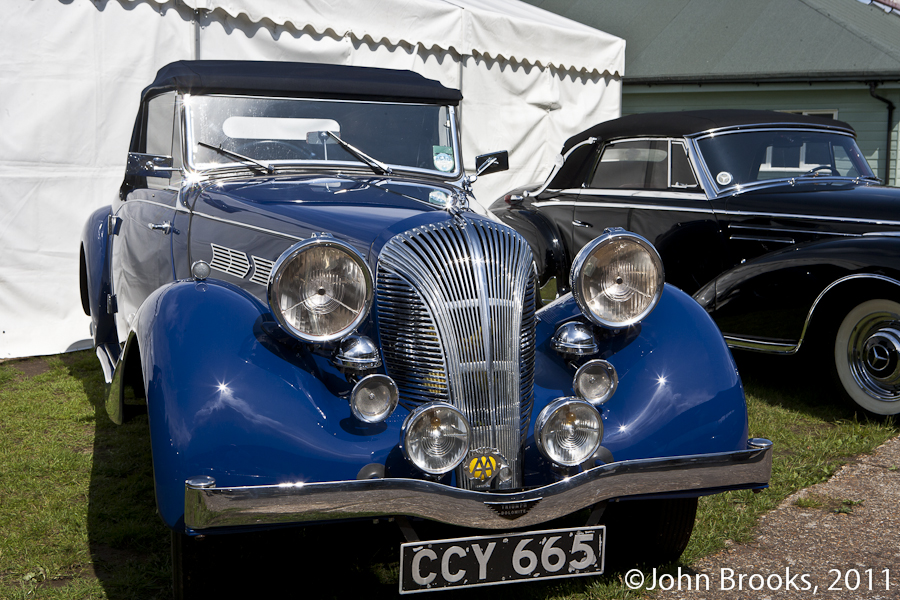
However it was the road going cars that really caught my fancy. The Triumph Dolomite Roadster from the 30’s is elegant and understated.

Staff Car

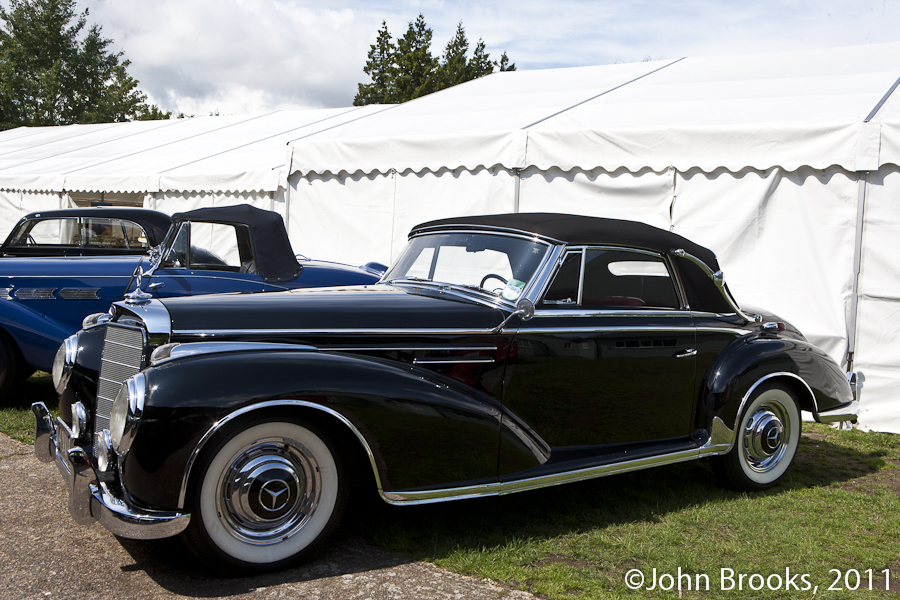
Another Roadster, this time from the 50’s, as Mercedes Benz continues the line of elegance on display with the 300S

190

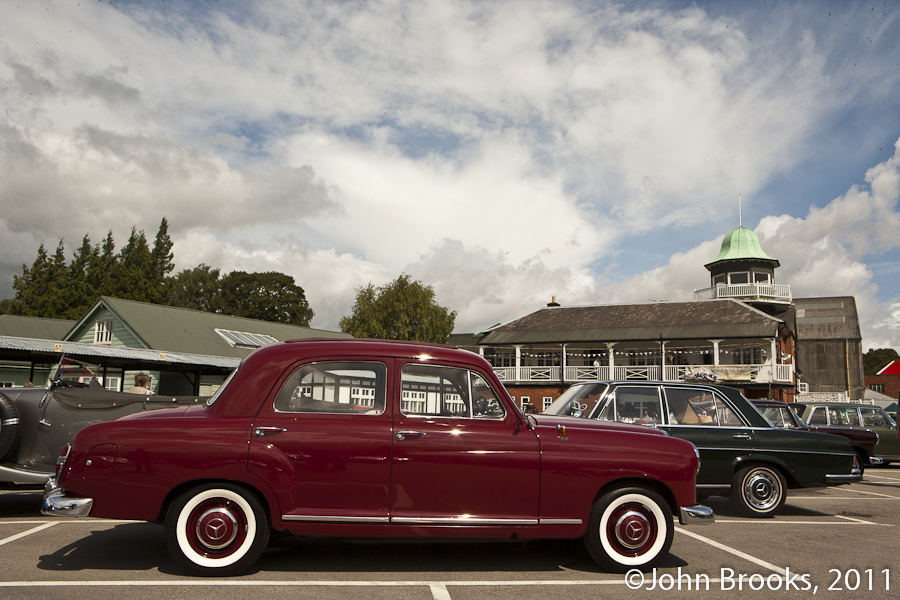
Mercedes Benz were well represented, as might have been expected, given that Mercedes Benz World is the next door neighbour. A very tidy 190.

Gentleman’s Carriage?

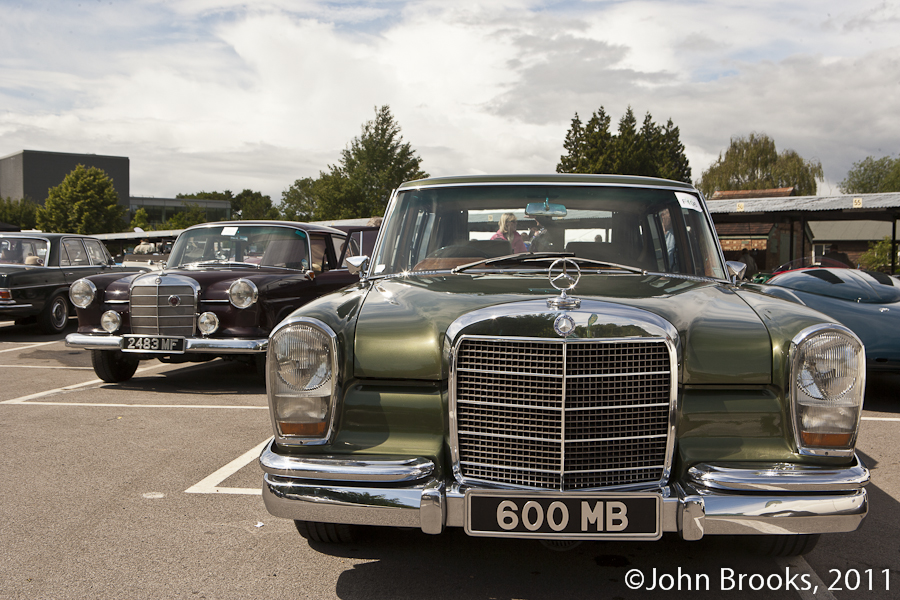
And beloved of megalomaniacs everywhere, be they Pop Idol, Film Star or plain old Dictator is the imposing 600. Any list of former owners that contains the likes of Elizabeth Taylor, Elvis Presley, Enver Hoxa, Idi Amin and the Shah of Persia is sure sign that the vehicle is exceptional. A Zil or this, maybe Kim Il-sung was not so crazy after all.

Social Hill Climber

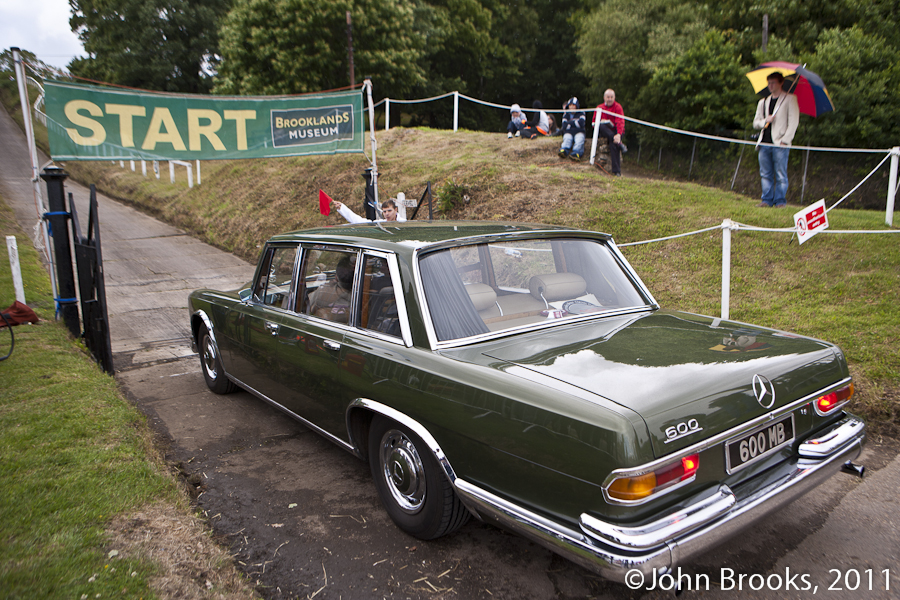
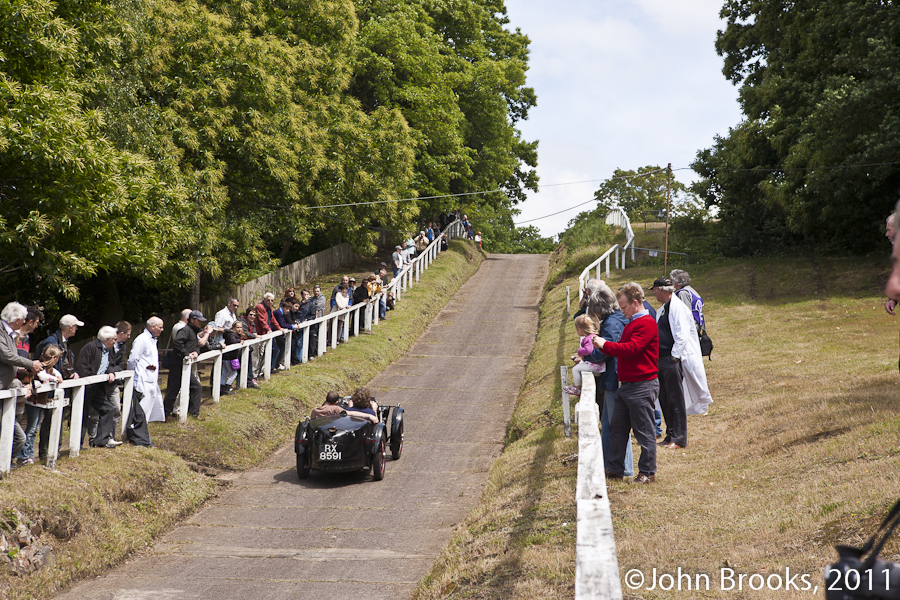
Of course being a Mercedes it is still in full working order, raring to run up the Test Hill.

DS23

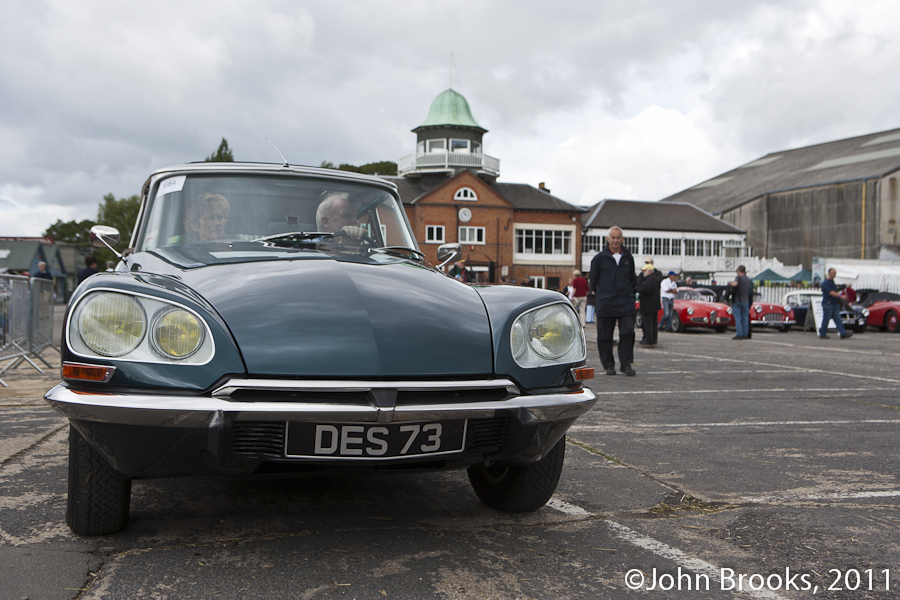
I will make a separate post on the Alfa Romeo gang that showed up but I was much taken by the French contingent. I have always had a soft spot for DS Citroëns, my father had a couple, they just ooze Gallic style and flair. Nice DS 23 Pallas.

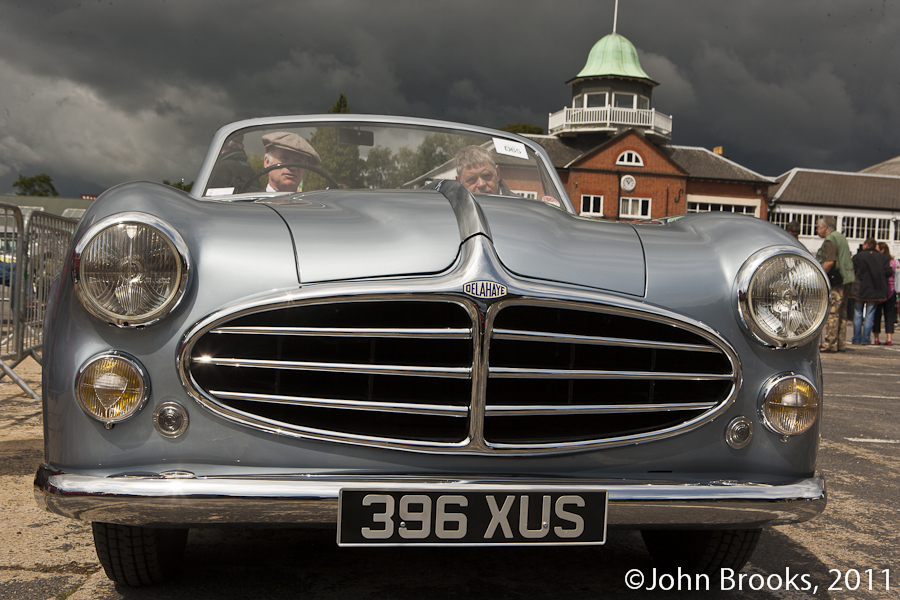
Delahaye 235 Cabriolet

What about this beautiful Delahaye 235 Cabriolet? The line ended with this model.

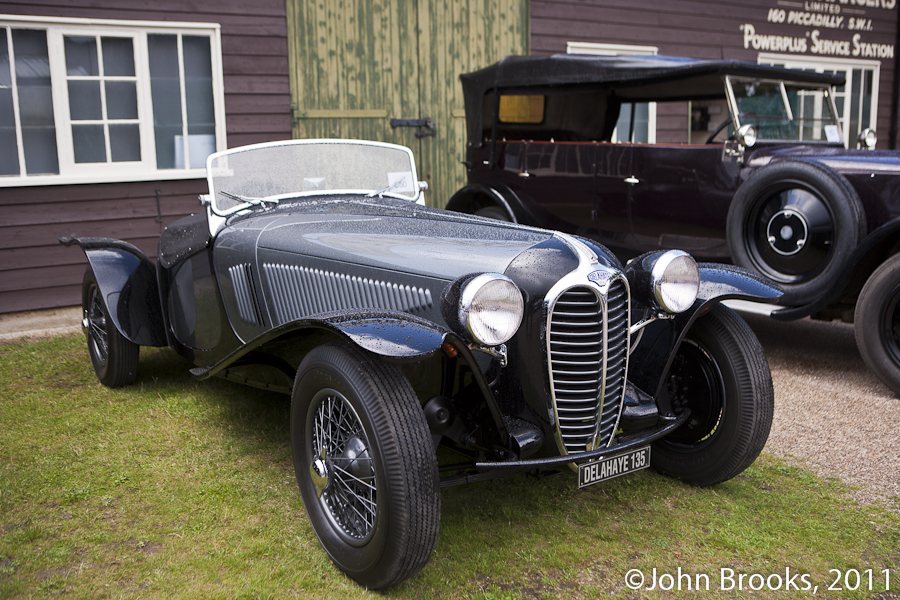
Delahaye 135

Before the World War Two, Delahaye had been very successful in competition, winning both the Monte Carlo Rally and the Le Mans 24 Hours outright, the model a 135.

360 Degrees

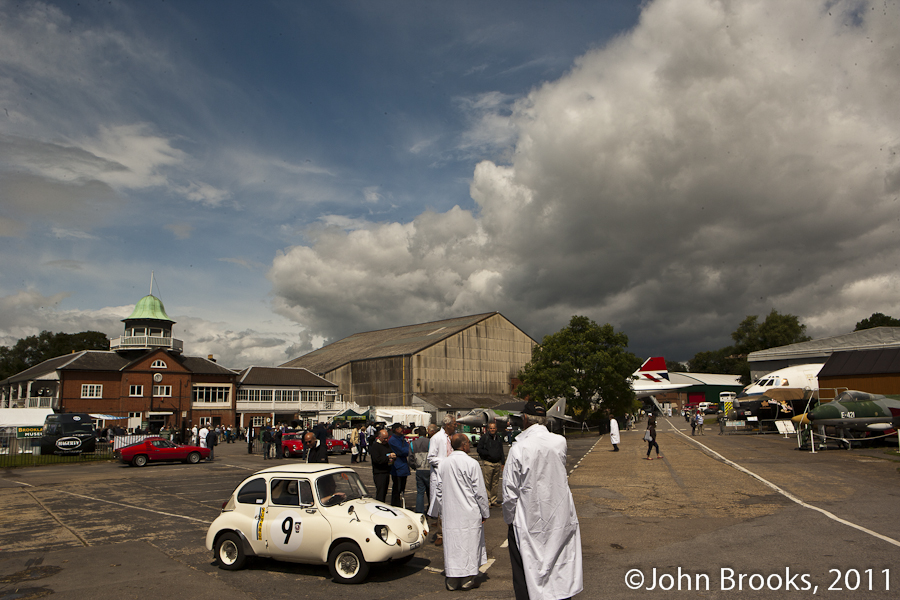
In complete contrast is the Subaru 360 or Ladybug……………..it did get up the Test Hill, though not with the same speed as the 600 Merc.

Diana Dors or Gina Lollobrigida?

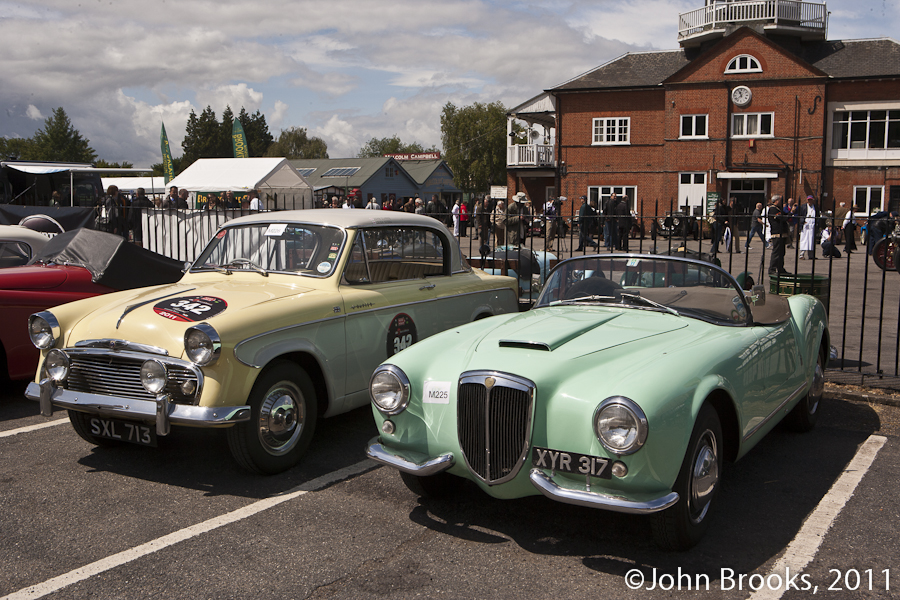
Which would you prefer now? Sunbeam Rapier or Lancia Aurelia? The Special Correspondent favoured the Italian.

OK, Squire?

Hens’ Teeth? A Squire from the late 30’s, one of only seven made.

Malvern Marvel

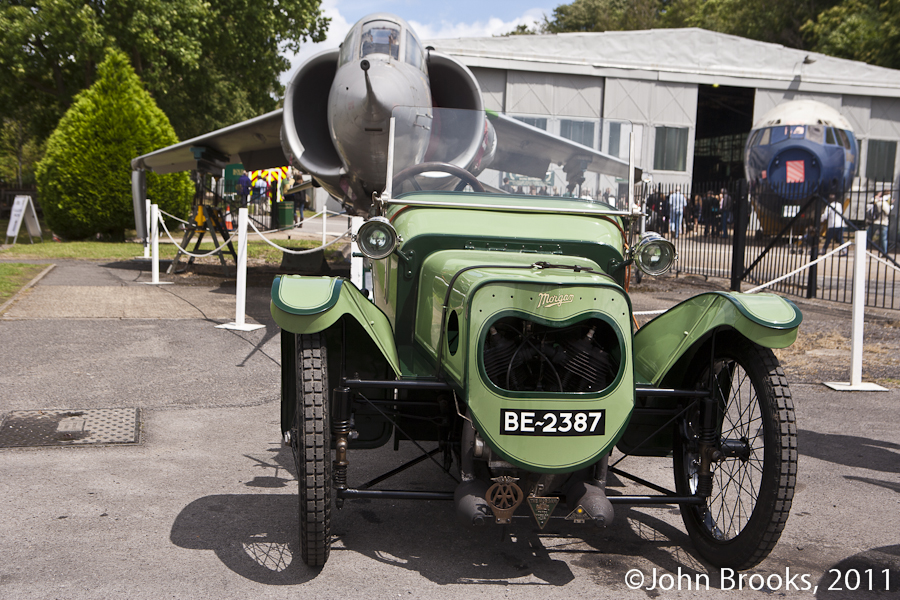
Early Eccentricity from Malvern, a Morgan Runabout.

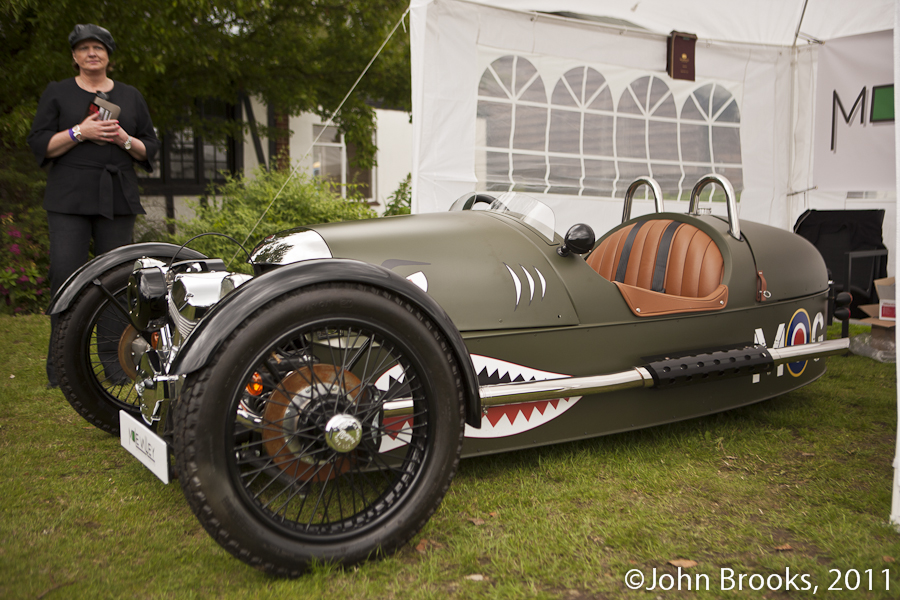
Threewheeler

The three wheeler concept has been revived by Morgan this year, I have to admit that I did not know what to make of it. Having seen one in the flesh, I am convinced, a brilliant car for a summer’s day.

Minor Moggie

Yes please.

Cat out of the bag

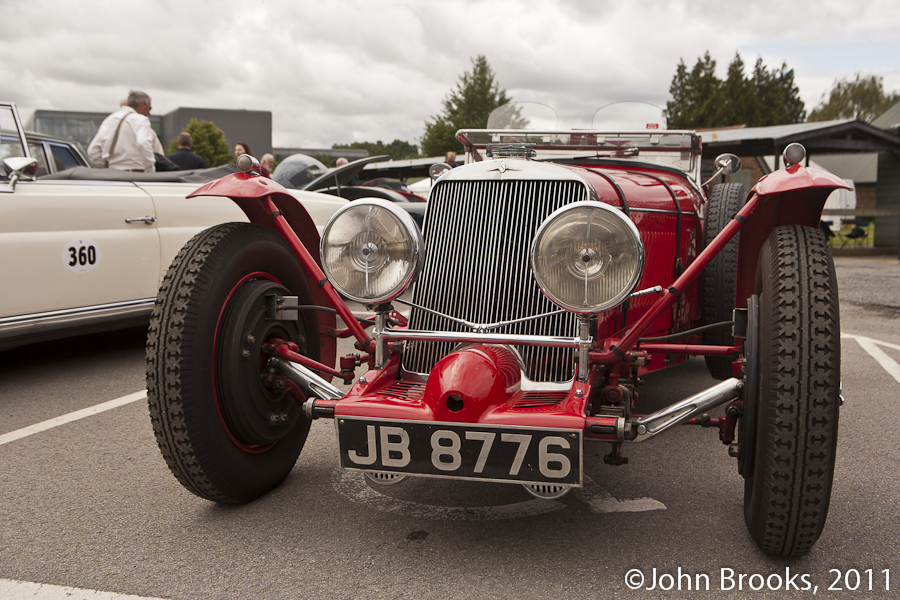
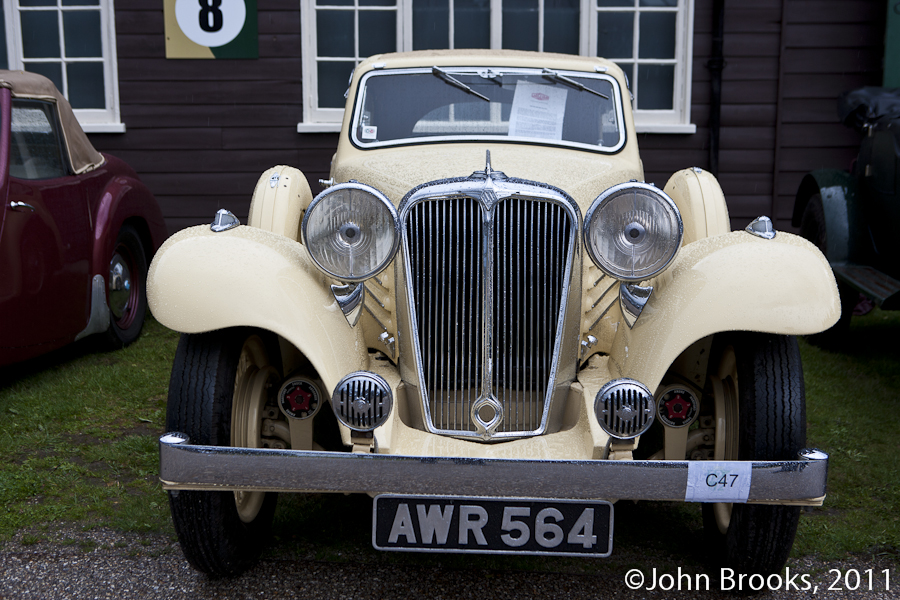
This 1935 SSI Airline saloon is the car that preceded the Jaguar……………..

Over The Hill and Far Away

So another good day out at Brooklands, it should be a must do for anyone who has petrol in their veins.

More on the Italians later.


John Brooks, July 2011
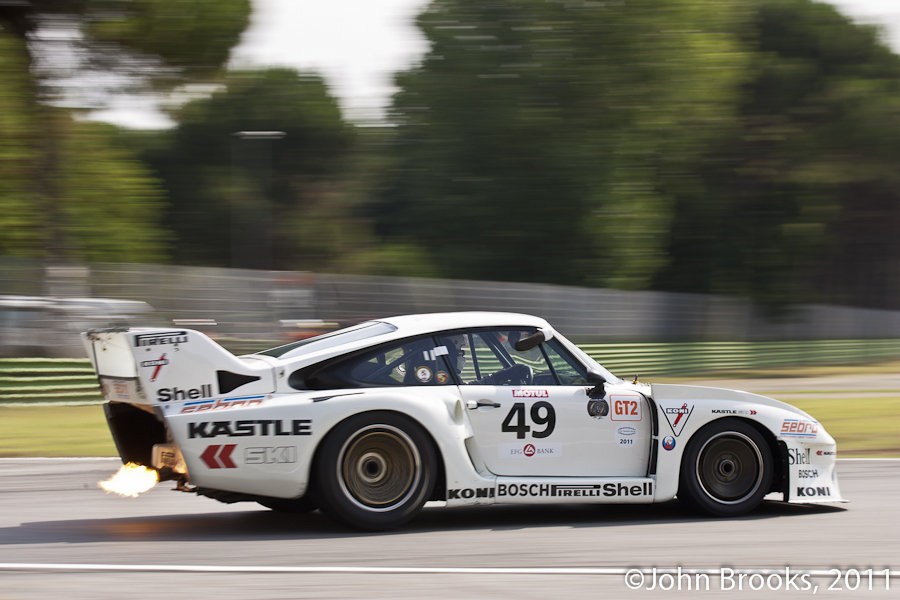


40 Years Gone


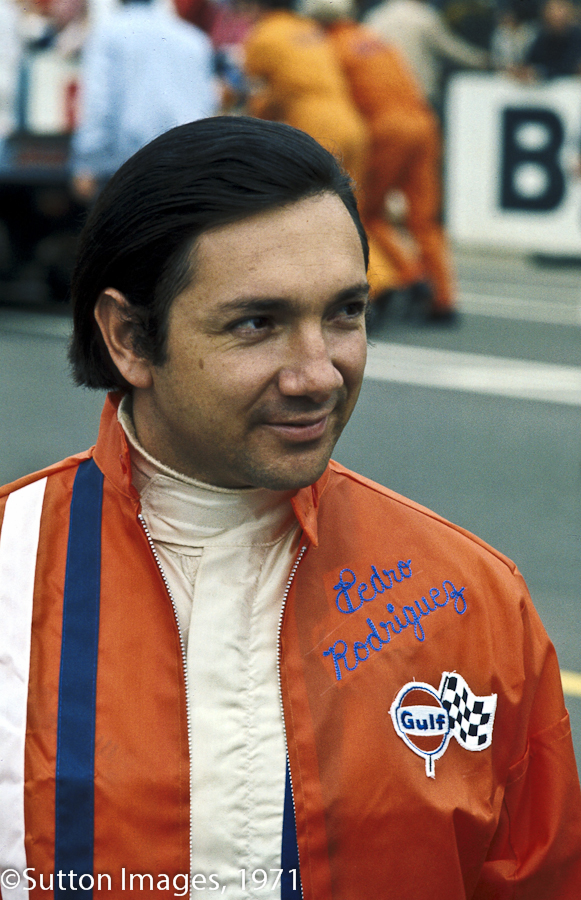
Forty years ago, in the summer of 1971, I was eagerly anticipating the British Grand Prix. It was to be held the following weekend at Silverstone. In particular I wanted to support my heroes, Pedro Rodriguez and Jo Siffert, team mates at BRM and JW Automotive.

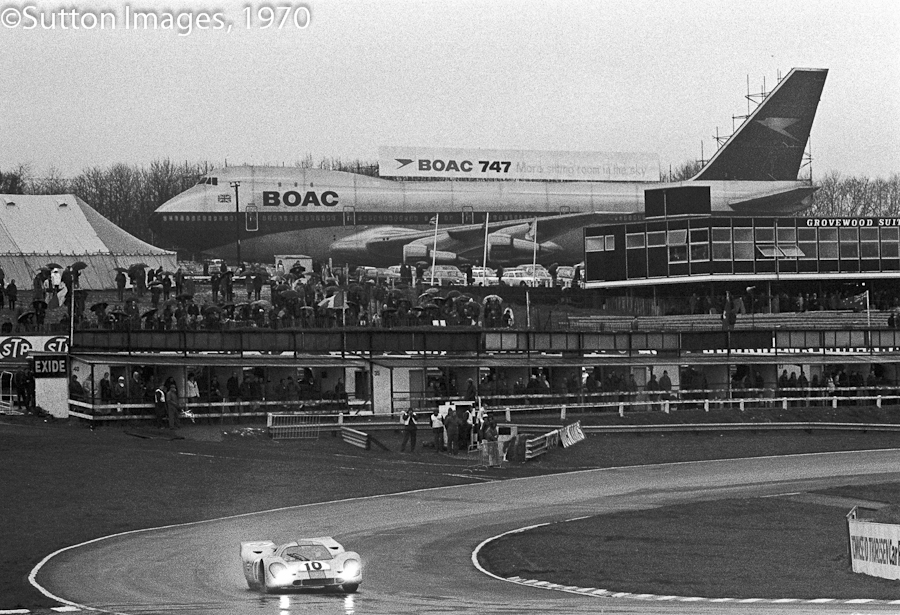
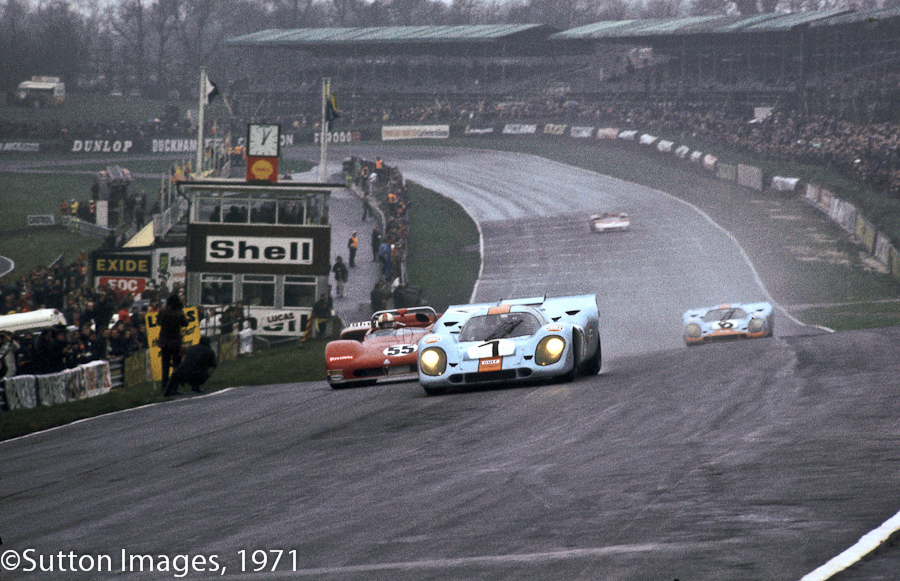
I had been lucky enough to see them both racing the Gulf sponsored Porsche 917Ks at Brands Hatch earlier in the year.  A great day, seeing both drivers and the Porsches in action.

Having said that there was no repeat of the legendary 1970 performance from the Mexican. Despite damp conditions that Pedro usually revelled in, it was an Alfa Romeo T33-3 driven by Andrea de Adamich and Henri Pescarolo that took honours that day.

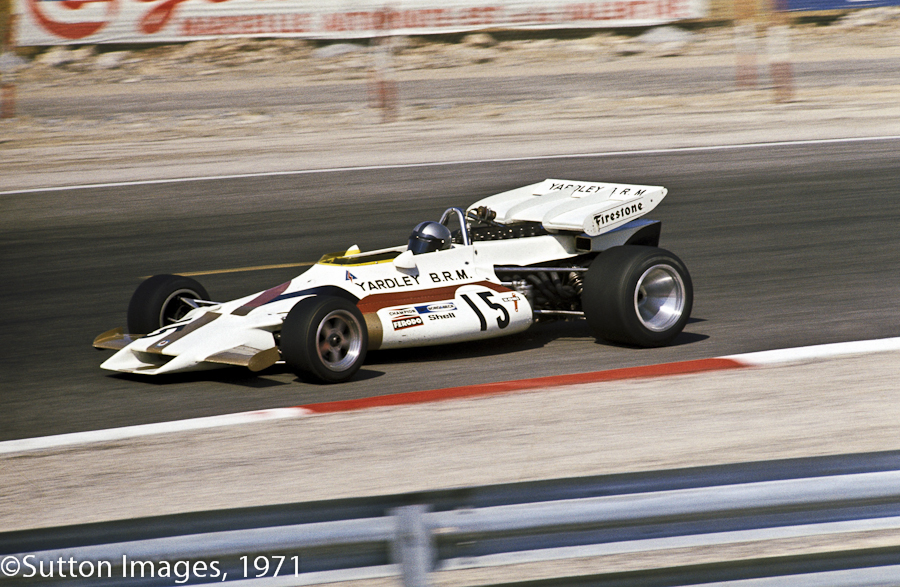
However for Silverstone it would be an BRM P160 for both Pedro and Seppi. The Tony Southgate designed car was realising some of the enormous, and usually wasted, potential of BRM.

Except that Pedro did not make it to the British Grand Prix. He accepted a chance to race a Ferrari 512M at the Norisring and was killed in this minor event. It seemed inconceivable to me but back then motor racing was a blood sport, it killed its heroes.

As if to drive this point home, three months later I was back at Brands Hatch for the Victory Race, celebrating Jackie Stewart’s second F1 World Championship. A few laps into the race the whole place went quiet, there had been an accident, that was all I knew. I took the train home to learn from the evening news that Jo Siffert had been the latest victim of the dangerous occupation of driving racing cars. Both heroes were now gone, the 917 was a thing of the past, it was the end of an era for me and for many others.

John Brooks, July 2011
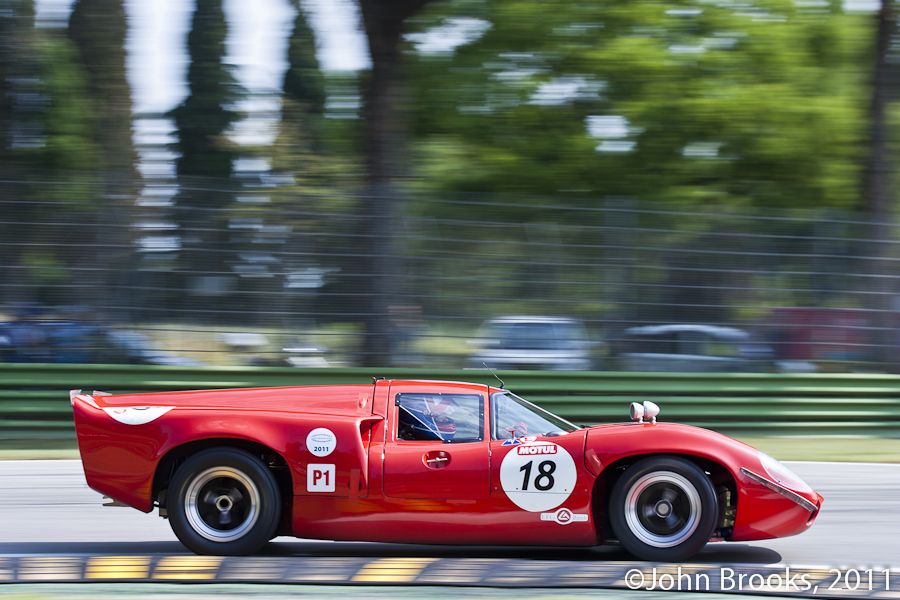


Lotus Blossom

A Lotus Le Mans Anniversary, 55 years ago Lotus scored their first success at Le Mans.

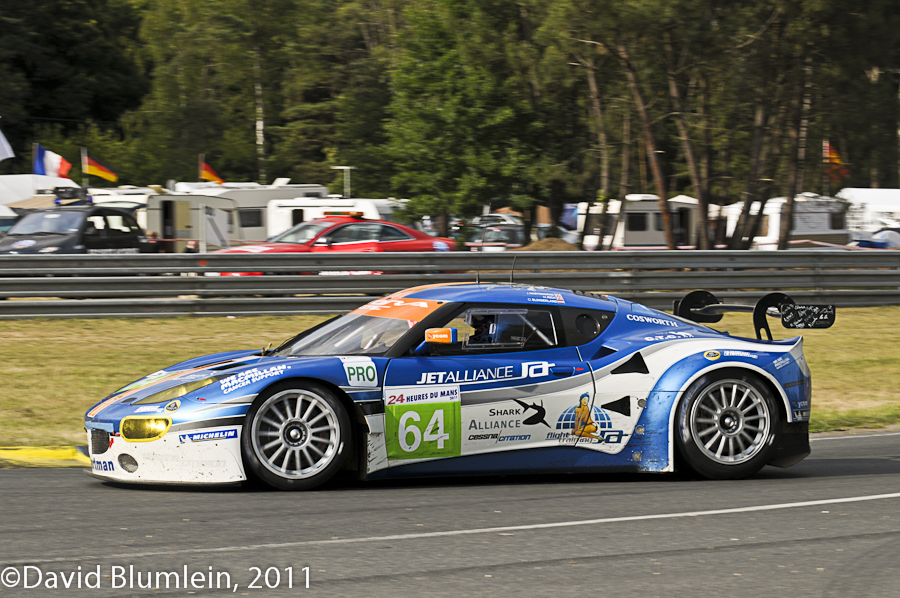
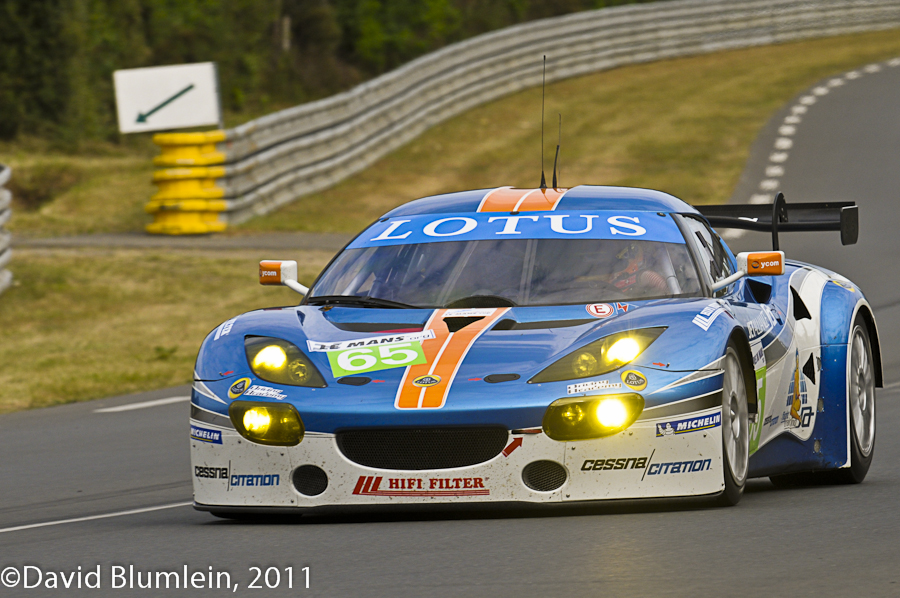
What have these Lotus types in common: Mark IX, Eleven, Fifteen, Elite, Elan, 47, Esprit, and Elise GT1? Answer: they have all taken part in the Le Mans 24 Hour race. In fact Lotus first raced at Le Mans in 1955 with a Mark IX Climax-engined car but Colin Chapman was disqualified when a rule infringement was committed after leaving the track at Arnage in the early part of the race. Now in 2011 Lotus is back with the V6 Evora and so it is apposite to look back to the marque’s first success in the famous event.


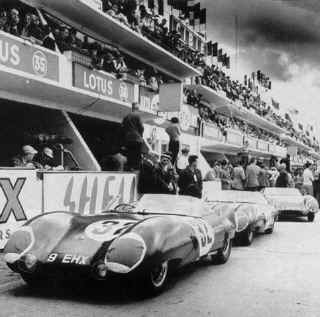
This took place a year later in 1956 when the company decided to enter a team of three of its new Eleven models. New regulations drawn up in the aftermath of the 1955 disaster meant that the cars needed considerable modification: cockpits had to be bigger than the original and so the chassis frames were built wider at the centre section sweeping in abruptly before the rear wheels; a full-width windscreen of minimum depth and with a wiper was needed – Lotus fitted a sloping screen which wrapped around the sides. There were bucket seats and twin spot lights on either side of the air-intakes; all lights were mounted behind plastic covers. The cars had Coventry-Climax single cam“fire-pump” engines,, one of 1500c.c. and the other two of 1100c.c. John Eason Gibson was the Team Manager and the team was based outside of Le Mans at the Auberge de St Nicolas at Mayet.

There was also considerable modification to the circuit. That narrow two-car road past the pits just had to go! The whole pit area was widened and new pits were built and entry to the pits was strictly controlled by the need to keep to the right of a yellow line; any transgression incurred instant disqualification. Changes were made at the Dunlop Curve and at Arnage, the section at Maison Blanche was resurfaced and the whole pits signalling operation was transferred to the exit at Mulsanne Corner. All this work inevitably took time and the race was postponed until the last weekend in July, one of only three times that the race has not been held in June (the others being in 1923 when the very first race was held in May and 1968 when the May riots in France pushed the race back to September).

The three Lotus entries were: Car no.32   1500  Chapman/Mackay Fraser, Car no.35    1100  Allison/Hall, Car no.36    1100 Jopp/Bicknell. The race started in the wet but Chapman managed to complete the first lap in 16th place! By 5pm as the race settled he held on to 17th position behind his main opposition, the Porsches and a Maserati which soon broke. By the mid-day on the Sunday the Lotus lay second in class behind the leading Porsche but a broken big-end bolt ended its run. In the meantime the two 1100c.c. cars were locked in battle with the Hugus/Bentley Cooper. The weather was dreadful during the night and at dawn Cliff Allison had the misfortune to hit a dog on the Mulsanne Straight which resulted in the demise of the dog and the retirement of the Lotus. The remaining Lotus, however, was doing much better and by the end of the race had gained a lap over the American-driven Cooper, giving Peter Jopp and Reg Bicknell a win in the 1100c.c. class, Lotus’s first success in the Le Mans 24 Hours. They finished 7th overall and came 4th in the Index of Performance. This was the race when Ecurie Ecosse won for Jaguar after the works cars had suffered all sorts of calamities.

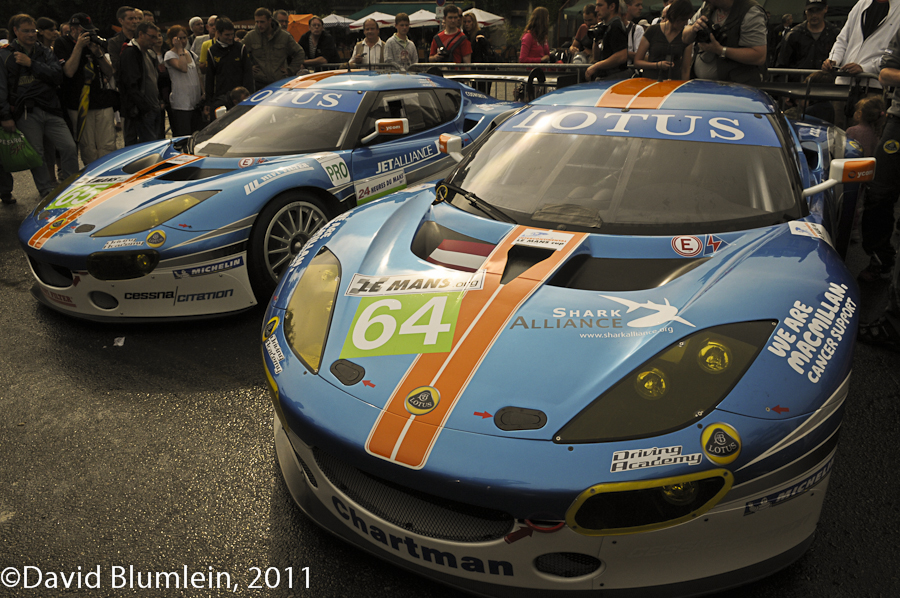
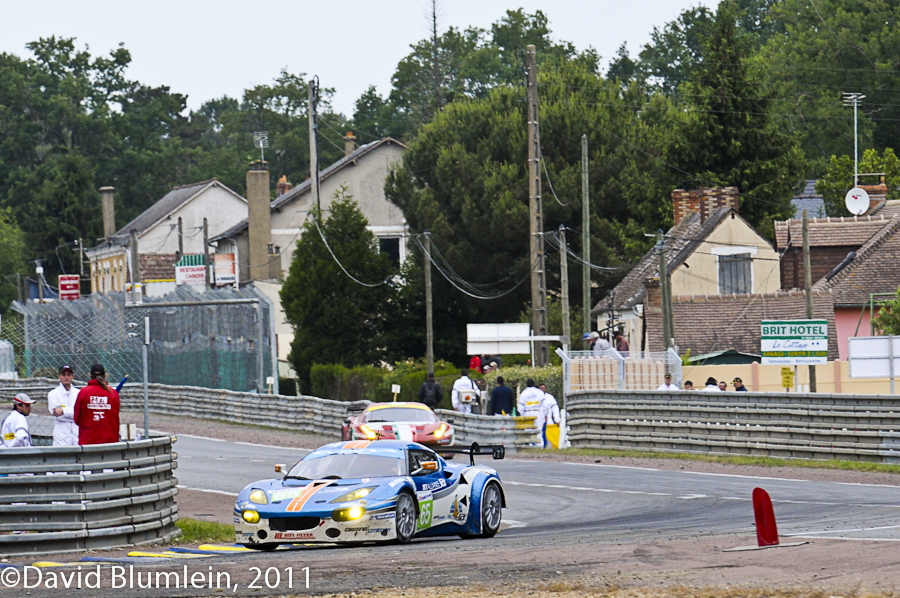
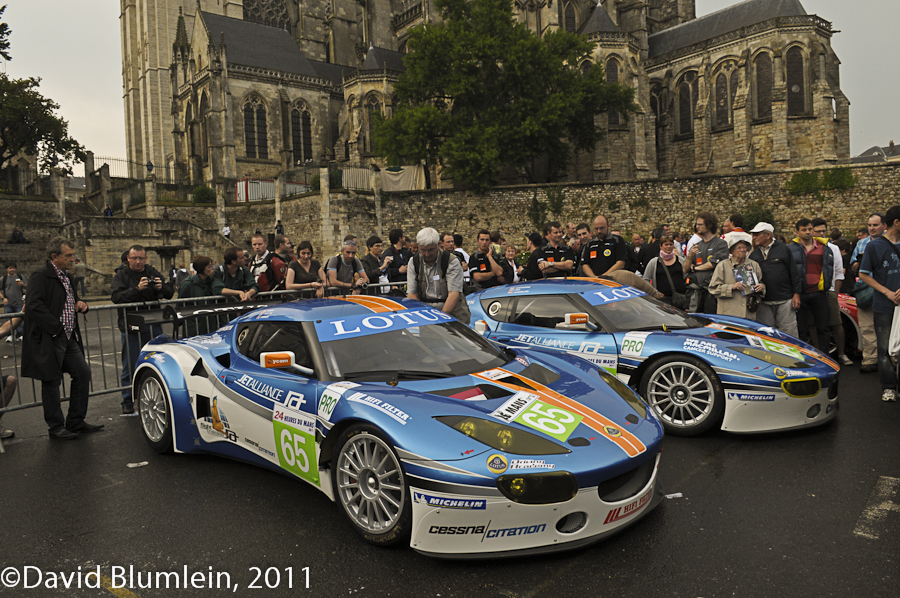
Four years later the company’s first proper road car, the Elite, went on to win its class for six consecutive years. Now the marque is back with the new GTE version of the Evora, a car in the early stages of its development. The two cars, run in collaboration with the factory by the Jet Alliance team, were: No. 64  Rich/Slingerland/Hartshorne, No. 65  Mowlem/ Rossiter/Hirschi. In the race the no. 65 car ran with practically no problems, just a fifteen minute stop to change brakes. It finished 22nd overall out of fifty-six starters and 7th in class.

The other car had some bad luck – Martin Rich was forced off and hit the wall, causing a bit of damage. In the following stint John Hartshorne was almost at the end of his drive when a rear wheel nut came off, causing the rear wheel to come off and the ensuing damage rendered the car too dangerous to drive; it was therefore abandoned near the end of the Mulsanne Straight. With the GT4 Lotus Evora finishing the Dubai 24 Hours this year and now this GTE version  doing similarly at Le Mans, the new chapter in Lotus endurance racing is getting off to  good start.

© David Blumlein 2011

Room in the Back, Sir.

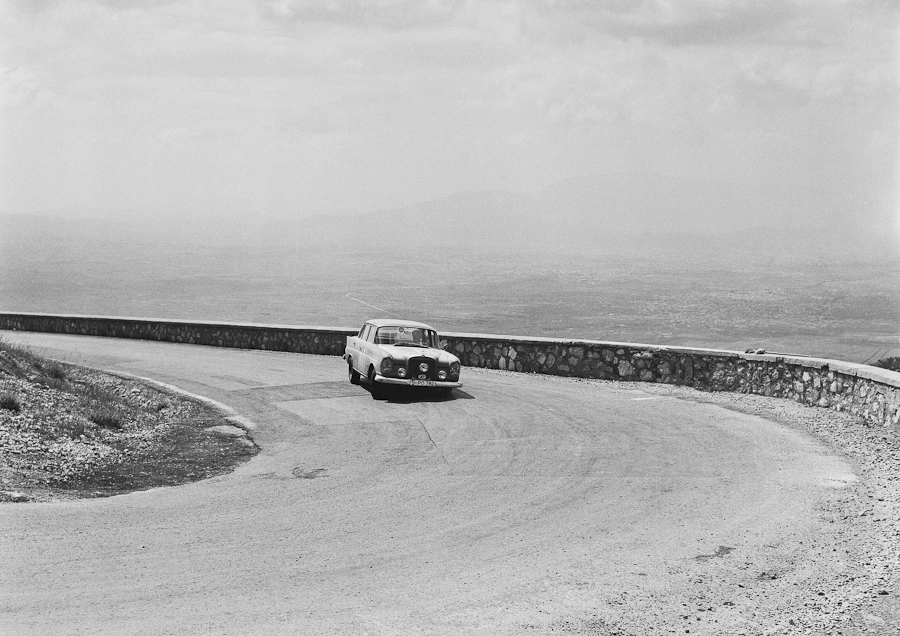
Daimler AG has plenty of treasure stored in their press archives. The Formula One stuff, both pre and post war, is familiar, less so some of the tin top material from the 50s and 60s. So this release attracted my attention or rather the images did. This is what we raced and rallied half a century ago. jb


Following the Mercedes-Benz works team’s retirement from Formula 1 and the sports car world championship at the end of the 1955 season, the rallies claimed fans’ full attention as of 1956. The Mercedes vehicles competing on race courses all over the world were fielded for the most part by private teams. While the racing and racing sports cars of previous years had performed superlatively as elite fine-tuned high-end vehicles, the near-series passenger cars now demonstrated their solid credentials in the nitty-gritty of rally racing. Karl Kling was responsible for rally activities as sports director at Mercedes-Benz. In the wake of Alfred Neubauer’s retirement, the ex-racing driver thus assumed a degree of responsibility for upholding the race manager’s legend.

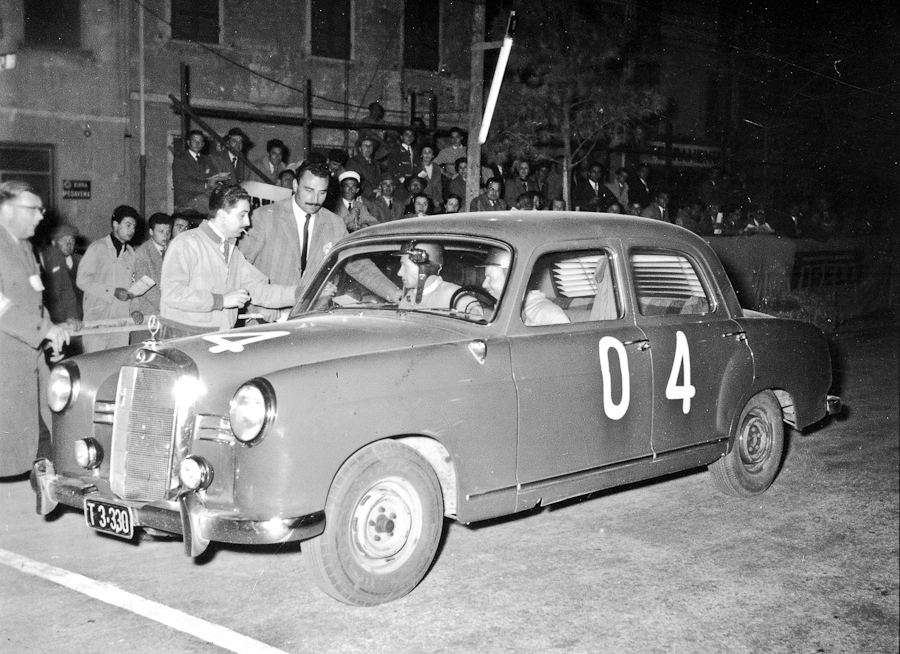
In the late 1950s and early 1960s it was first and foremost the 300 SL sports car and the six-cylinder 220 SE and 300 SE saloons that caught people’s imagination on the roads and gravel tracks all over the world. The team comprising Walter Schock and Rolf Moll was among the contenders who made their mark in these years. The duo, who raced for the Motorsportclub Stuttgart, received comprehensive support from Mercedes-Benz in the form of vehicles and service. Walter Schock competed in the Monte Carlo Rally in the Mercedes-Benz 220 “Pontoon” on 15 January 1956, crossing the finishing line on 23 January just 1.1 seconds behind the winner.

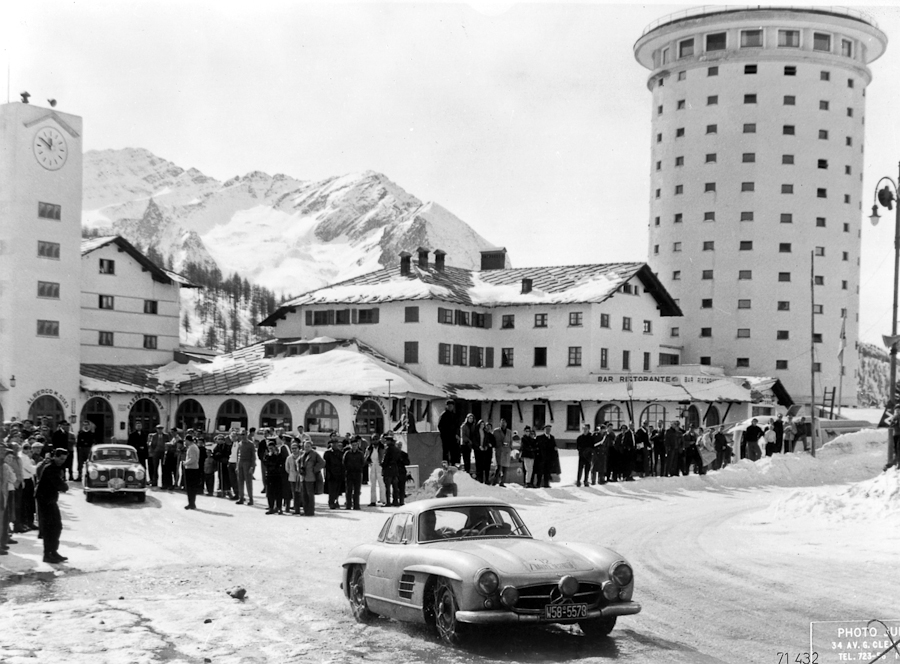
7th Sestrière Rally, 24 to 28 February 1956. The Walter Schock / Rolf Moll rally driver team (starting number 12) won the class of Gran Turismo cars over 2 litres in a Mercedes-Benz model 300 SL touring car.

A month later, the Stuttgart duo took part in the Rally del Sestrière in Italy at the wheel of the “gull-winged” 300 SL. In the mountains, the high-performance sports car left the other vehicles in its wake. Schock recalled the Coupé’s outstanding capabilities in the winter rally conditions: “Really fine snow chains on all four wheels allowed us to reach uphill speeds of up to 180 km/h.” The team finished the race as winners on 28 February. Further triumphs ensued in the shape of an overall win in the Acropolis Rally (26 to 29 April 1956) and class victories in the Wiesbaden Rally (21 to 24 June 1956) and the Rally Adriatique (26 to 30 September). Schock also won his class in the Eifel Race and took 2nd place in the fringe race at the Nurburgring Grand Prix meeting. On the back of this performance he became the European touring car champion in 1956 and German champion in the GT class above 2000 cc.

The sports director was also wont to take to the wheel once in a while, putting in sporadic stints as a Mercedes-Benz works driver. Karl Kling achieved an unusual victory in 1959 with Rainer Günzler in the 14,000 kilometre Rally Mediterranée-Le Cap running from the Mediterranean to South Africa: the Stuttgart team embarked on this rally in a Mercedes-Benz 190D, cruising to victory on its diesel power. 1961 saw Kling speeding through Africa at the wheel of a saloon once again. This time he opted for a “fin-tail” Mercedes-Benz 220 SE, winning the Algiers-Lagos-Algiers Rally with Rainer Günzler as co-driver once again. Kling was also on the scene as race manager when works teams competed in selected major races at the wheels of Mercedes-Benz vehicles.

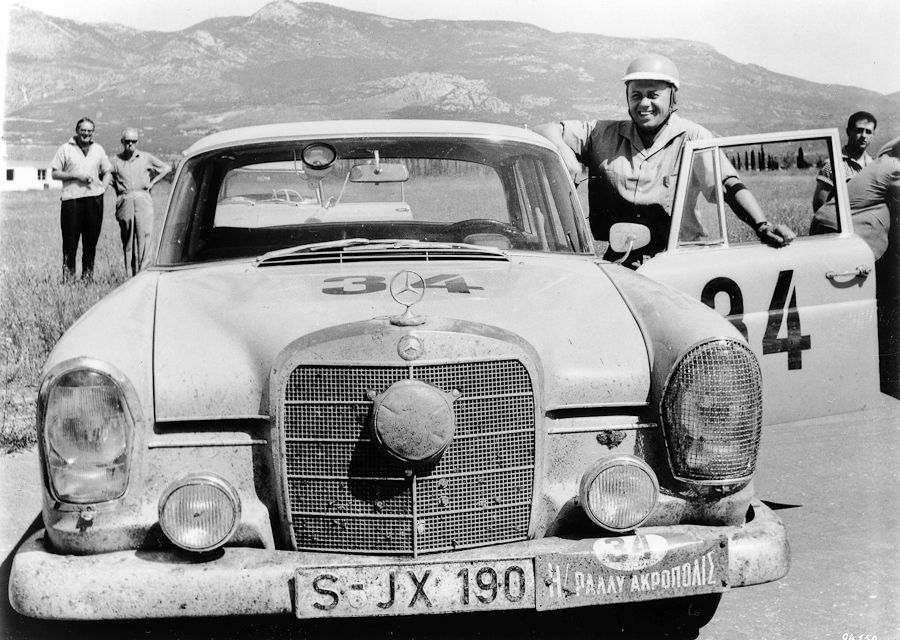
8th International Acropolis Rally from 19 to 22 May 1960. The eventual overall winner, Walter Schock, (starting number 34) in the Mercedes-Benz model 220 SE touring car.

Schock and Moll claimed the European rally championship once again in 1960, in their 220 SE. Their winning ways got off to a bright start at the legendary Monte Carlo Rally.

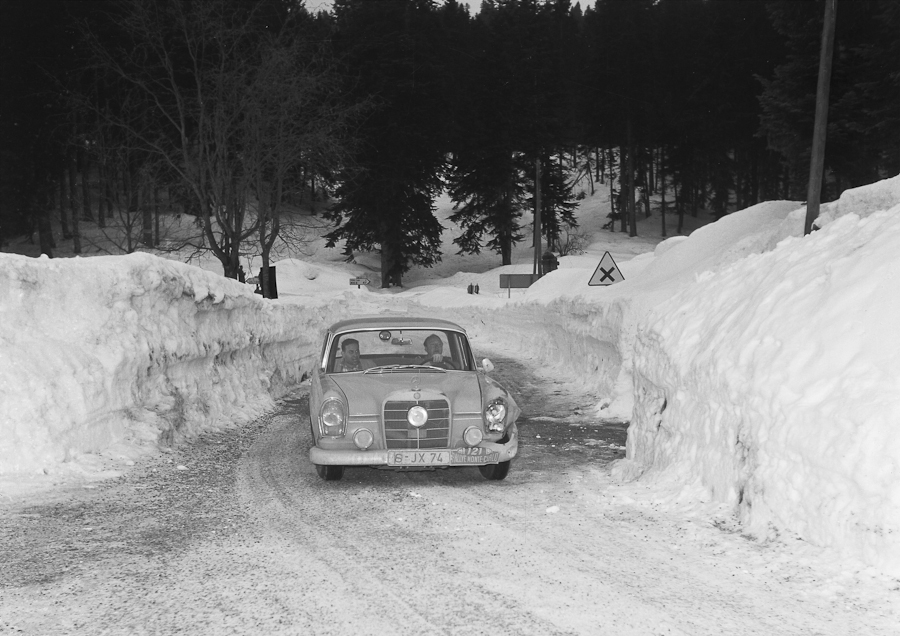
29th Monte Carlo Rally, 18 to 24 January 1960. The team Eugen Böhringer / Hermann Socher took 2nd place in a Mercedes-Benz model 220 SE touring car.

The first final win by a German team in this competition was part of a triple success for Mercedes-Benz, with driver teams Eugen Böhringer/Hermann Socher and Eberhard Mahle/Roland Ott taking 2nd and 3rd places. Following this triumph in 1960, the sports press called on Mercedes-Benz to return to the world’s racing circuits with works vehicles on a permanent basis. But sports director Kling was clear in his words, saying “This success will encourage us to carry on putting great effort into rallies. But Mercedes does not intend to return to motor racing.”


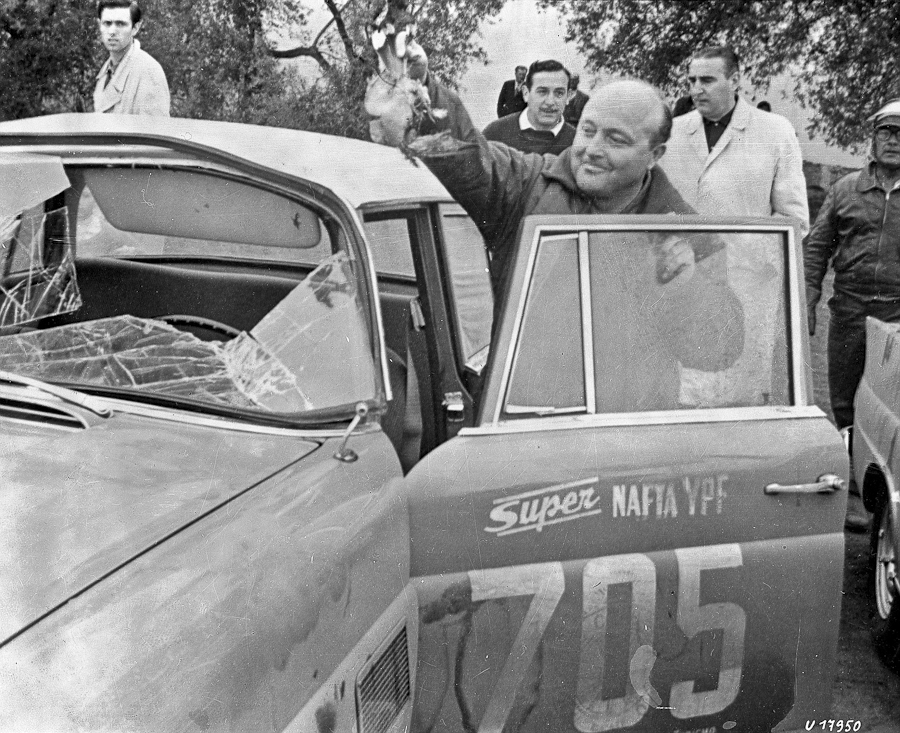
In the 1960s, Mercedes-Benz teams took part in the “Gran Premio Argentina” road race on several occasions. On 26 October 1961, Walter Schock competed in this very special rally, which was contested by a total of 207 drivers. A tough race was in store for the participants on a route covering 4600 kilometres and taking in a difference in altitude of around 3000 metres. The hard slog ended on 5 November with a double victory for Mercedes-Benz. Walter Schock and Rolf Moll were the first to pass the finishing line, followed by Hans Herrmann and Rainer Günzler. “That must be the toughest race I’ve ever competed in,” said rally champion Schock on his return from South Africa. The Mercedes-backed teams received personal support from Juan Manuel Fangio together with race manager Karl Kling. As this competition was very important for the American market, Mercedes-Benz continued its involvement in the coming years, too.

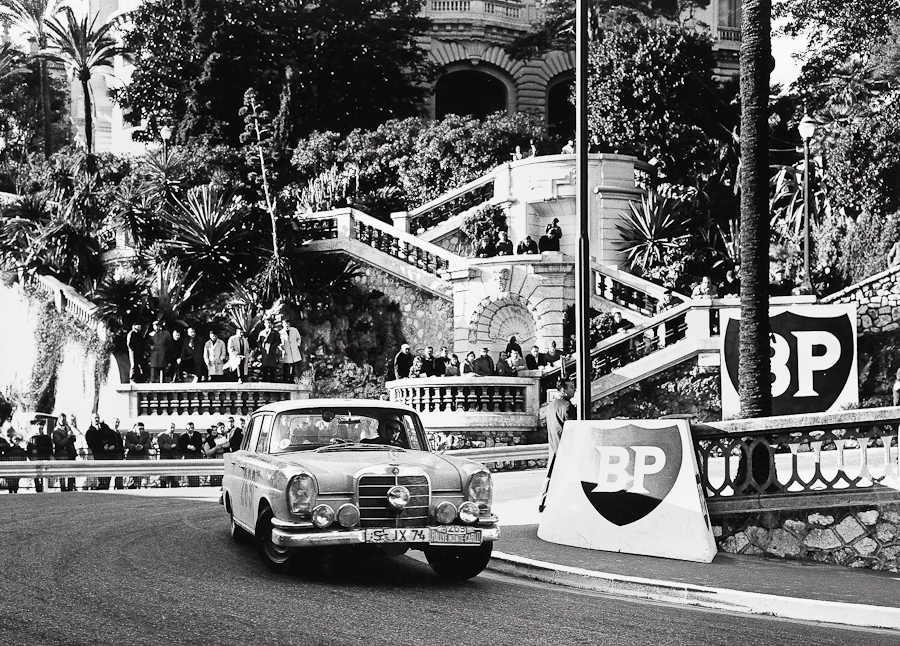
33rd Monte Carlo Rally, 18 to 25 January 1964. Ewy Rosquist-von Korff and Eva-Maria Falk won the category of touring cars up to 2500 cc in a Mercedes-Benz 220 SEb.


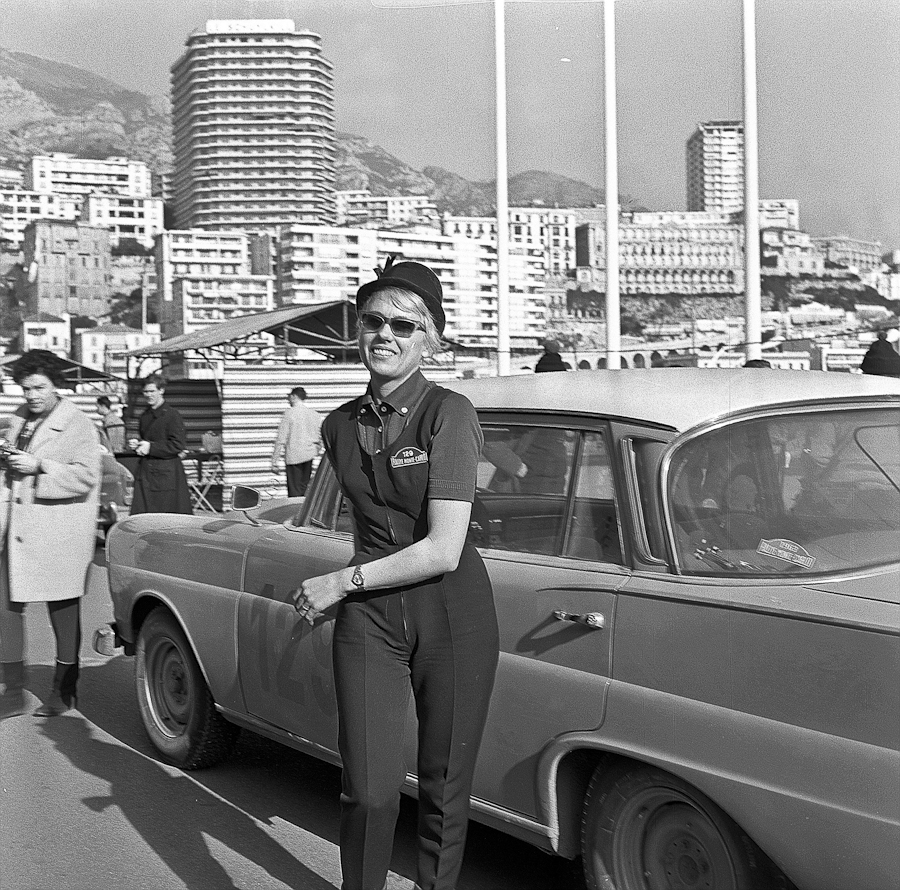
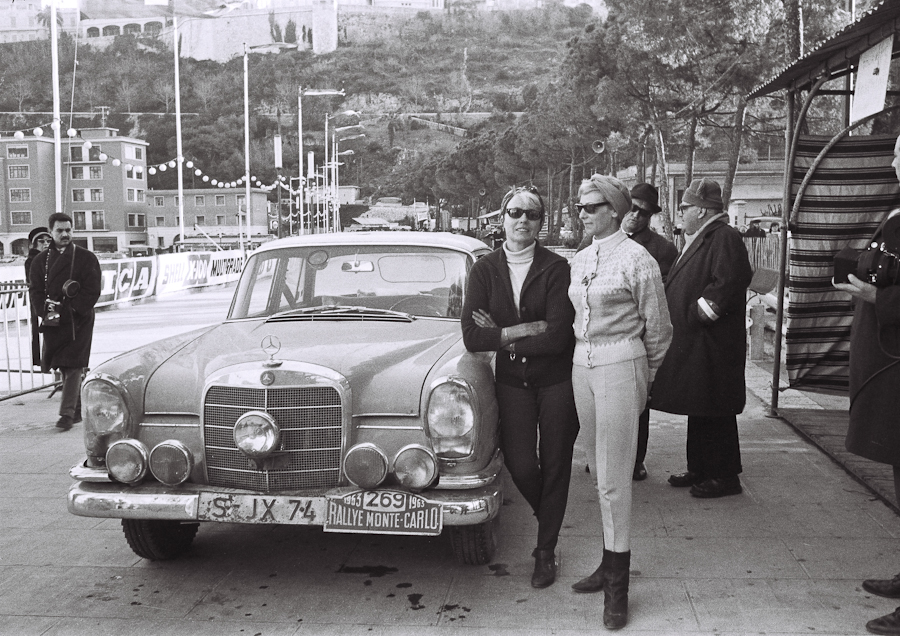
Monte Carlo Rally, 1963. Ewy Rosqvist and Ursula Wirth with a Mercedes-Benz 220 SE.

1962 saw a sensational win by the ladies’ team comprising Ewy Rosqvist and Ursula Wirth, while Eugen Böhringer sped to victory in 1963 and 1964, crossing the finishing line with two other Mercedes-Benz cars directly behind him in each case.

32nd Monte Carlo Rally, 19 to 26 January 1963. Ewy Rosqvist-von Korff (left) and Ursula Wirth won the Ladies Cup in a Mercedes-Benz 220 SEb.


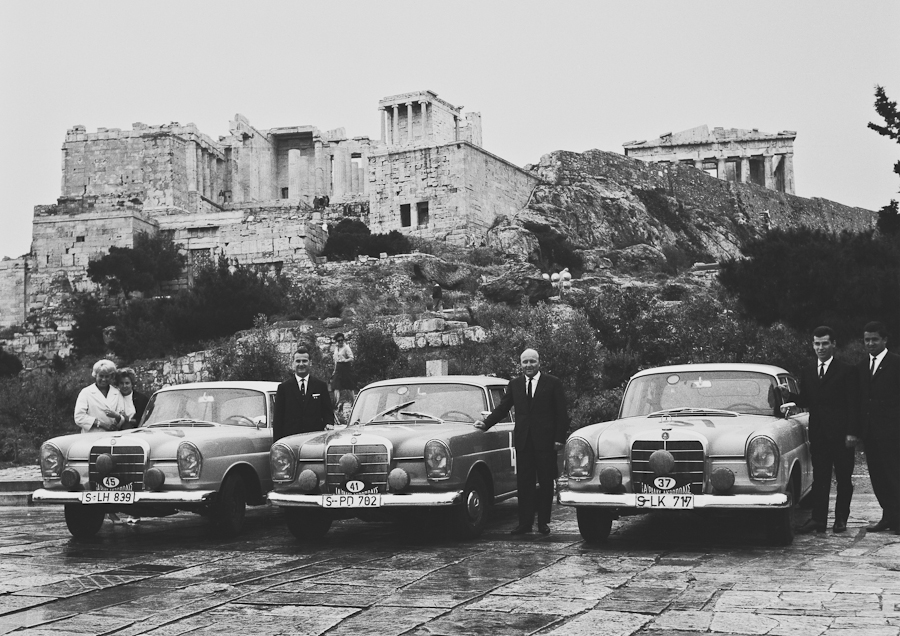
11th Acropolis Rally, 16 to 19 May 1963. Mercedes-Benz competed with three cars. On the left is the ladies’ duo of Ewy Rosqvist and Ursula Wirth (starting number 45) competing in a Mercedes-Benz 220 SEb (3rd in class and 12th overall). In the middle is the team Eugen Böhringer / Rolf Knoll (starting number 41), which claimed victory in its class and in the overall placings in a Mercedes-Benz 300 SE. On the right is the team Dieter Glemser / Klaus Kaiser (starting number 37) competing in a Mercedes-Benz 220 SEb (2nd in class and 5th overall).

Böhringer, who drove Mercedes-Benz cars in rallies as of 1957, won the European rally championship in 1962 at the wheel of a Mercedes-Benz 220 SE. With his co-drivers Peter Lang and Hermann Eger, Böhringer notched up points in various races throughout this season, including the Monte Carlo Rally (2nd place), the Tulip Rally (7th place),

Motor racing on ancient terrain: Eugen Böhringer and Rolf Knoll (starting number 41) wrap up the 11th Acropolis Rally in May 1963 in a Mercedes-Benz 300 SE touring car. They were winners in their category and overall winners.

the Acropolis Rally (1st place), the Midnight Sun Rally (5th Place), the Polish Rally (1st place), the Liège-Sofia-Liège Rally (1st place) and the German Rally (2nd place).

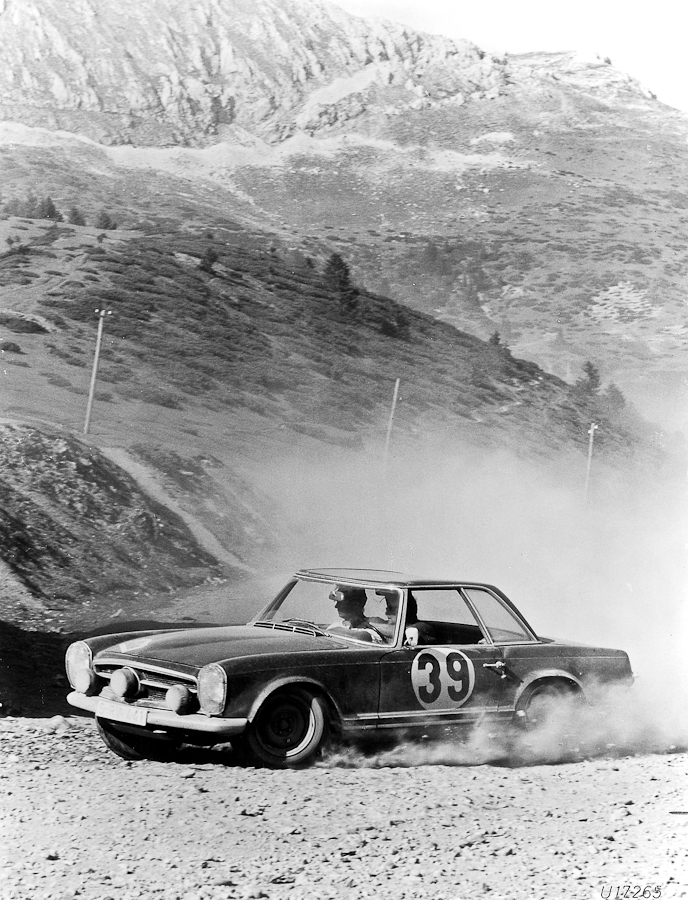
Liège – Sofia – Liège Rally, 1963. Eventual winners Eugen Böhringer and Klaus Kaiser with their Mercedes-Benz model 230 SL (starting number 39).

A highlight of the year was the victory in the legendary Liège-Sofia-Liège road race in the Mercedes-Benz 220 SE.

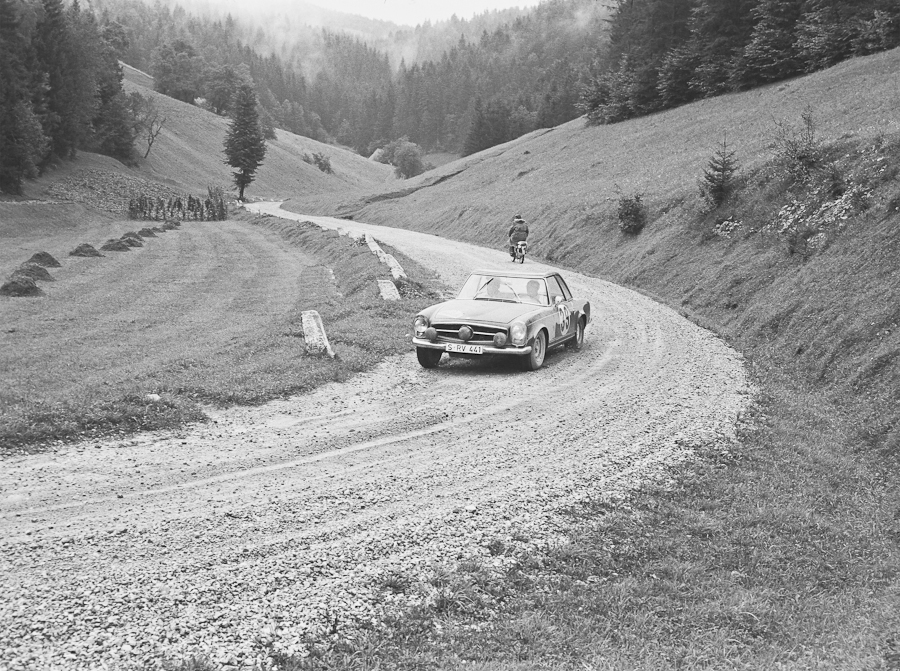
Liège – Sofia – Liège Rally, 1962. Eugen Böhringer and Klaus Kaiser won the event in a Mercedes-Benz 230 SL (model series W 113).

The Stuttgart-based driver was also victorious when this marathon across Europe came around again in 1963. This time, the destination was Bulgaria rather than Rome, and the winning vehicle was a Mercedes-Benz 230 SL “Pagoda”. This was the first time ever that a driver had achieved two successive victories in this gruelling rally.

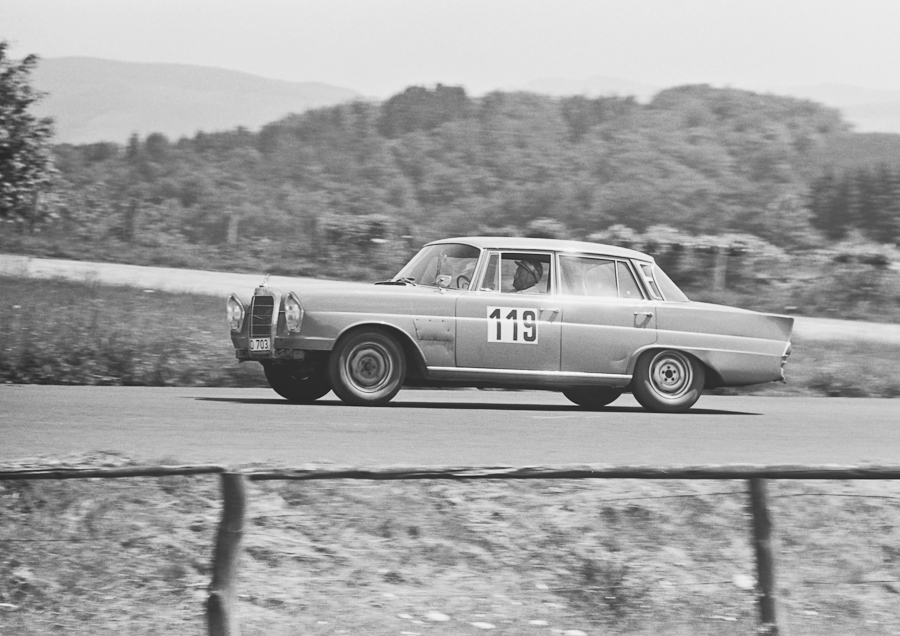
ADAC International 6-Hour Touring Car Race at the Nürburgring, 16 June 1963. Mercedes-Benz model 300 SE touring car. The team Eugen Böhringer / Dieter Glemser (starting number 119) claimed 2nd place in class 9 for cars up to 2500 cc.

Mercedes-Benz was also successful in North America: the Mercedes-Benz 300 SLS was designed especially for the American sports car championship in 1957. It was based on the series-production 300 SL Roadster sports car, with a 900 kilogramme reduction in weight and engine power boosted from 215 hp (158 kW) to 235 hp (173 kW) to turn it into a highly competitive vehicle once again. The SLS provided Paul O’Shea with his third title in succession, following two wins in the “gull-winged” 300 SL in 1955 and 1956.

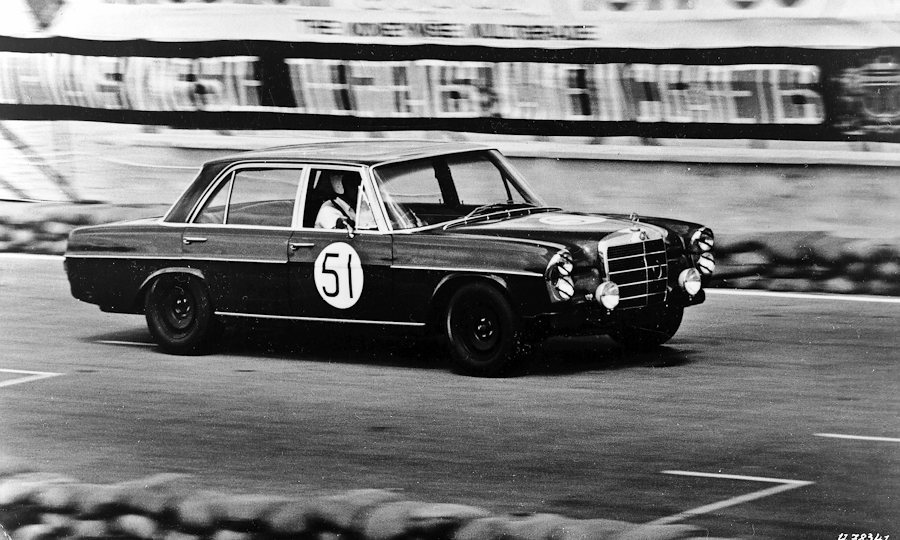
“Guia 101” Endurance Race, Macao, 18 May 1969. Erich Waxenberger and Albert Poon (starting number 51) won the six-hour Macao race in a Mercedes-Benz model 300 SEL 6.3.

The powerful eight-cylinder 300 SEL 6.3 saloon only saw works team action in one race, winning the six-hour touring car race in Macao in 1969 with Erich Waxenberger at the wheel. The oil crisis at the beginning of the 1970s put an end to this saloon’s motorsport career. Automobile historian Karl Eric Ludvigsen emphasizes the importance of this break in Mercedes-Benz’s motor racing history: “The oil crisis resulted in the first interruption to Daimler-Benz’s long tradition triggered by external events. The company’s racing traditions began around the turn of the century, with the only hiatus – apart from the war years – occurring in 1955; every year, there was always one or more Benz, Mercedes or Mercedes-Benz cars in at least one key race, with either direct or indirect support from the works.”


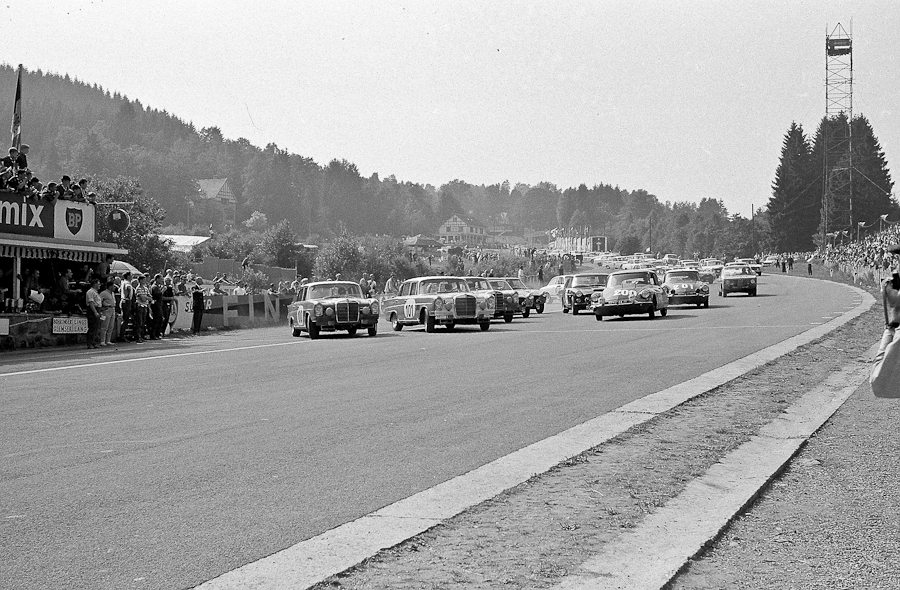
Private drivers continued Mercedes-Benz’s racing traditions, however. Increasingly, their vehicles came to be prepared for competitive use by AMG – a company founded in Burgstall near Stuttgart by former Daimler-Benz employees Hans-Werner Aufrecht and Erhard Melcher in 1967 as an “engineering firm pursuing the design, testing and development of racing engines”.  The leading products in the company’s early years included the refined version of the Mercedes-Benz 300 SEL with a 6.8-litre engine, which claimed a class victory and took 2nd place overall in the 24h Spa Francorchamps race.  The independent tuning firm made a name for itself preparing vehicles for racing competitions over many years, before it was taken over in its entirety by the then DaimlerChrysler AG.

Courtesy of and Copyright Daimler AG. All images courtesy of and Copyright Mercedes-Benz Classic.

John Brooks, May 2011

Genius…………but Flawed

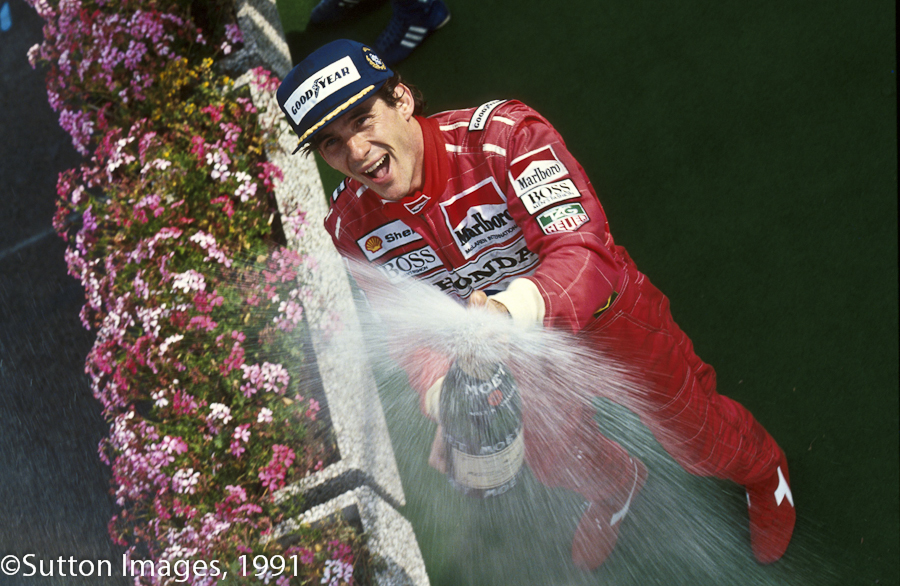
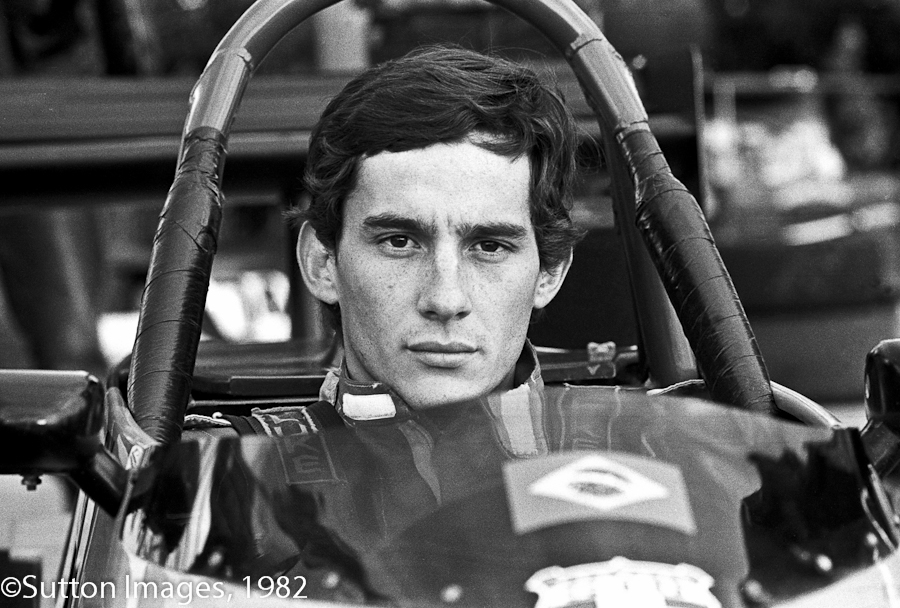
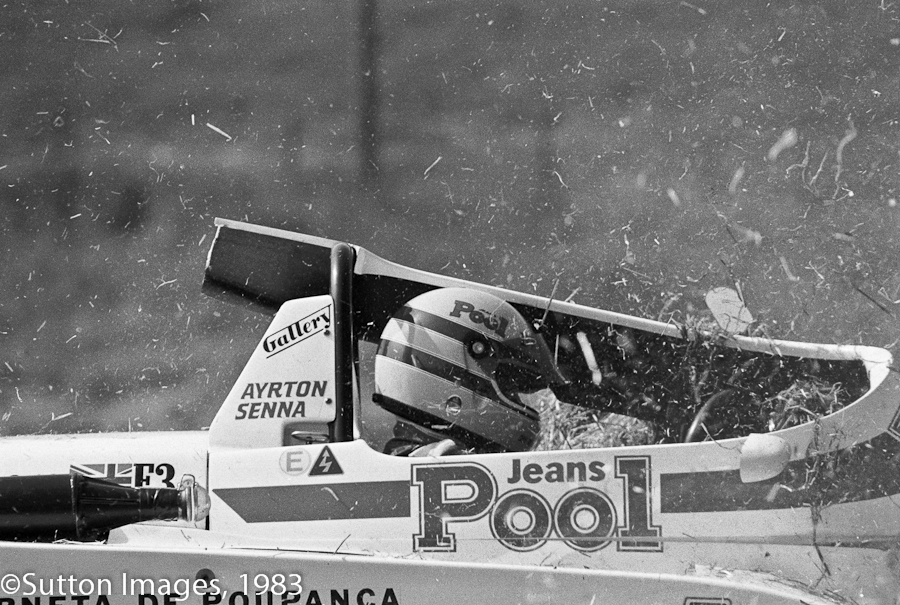
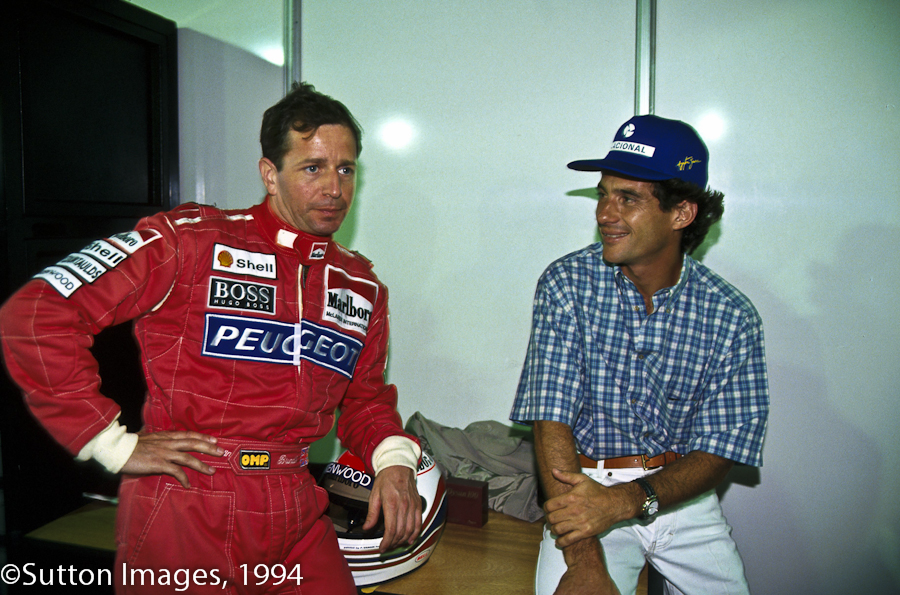
Seventeen years ago today the world of motorsport was shaken to the core. The San Marino Grand Prix held at Autodromo Internazionale Enzo e Dino Ferrari on 1st May 1994 proved to be a pivotal point in the history of Formula One. The paddock was still reeling under the shock of the death of Roland Ratzenberger during Qualifying the day before. Then, the unbelievable happened, the World’s top driver, Ayrton Senna, lost control of his Williams Renault FW16, left the track and suffered fatal head injuries. Ten years before I had spent a season following the Brazilian round England, while he won the Marlboro British Formula Three Championship. It seems some how appropriate to recall that time, today.


I’m on Top of the World, Ma.

The dictionary tells us that  A genius  is something or someone embodying exceptional intellectual ability, creativity, or originality, typically to a degree that is associated with the achievement of unprecedented insight.
How do we apply this term than to motorsport? I suppose it gets tagged to something or someone who is beyond exceptional. I have encountered a few in my time of following the sport but arguably the greatest example of this label that I witnessed was back nearly 30 years ago in 1983.

The Guru

At that time I lived in a small hamlet called Charlton Village, a place of farms and two small housing developments surrounded by the massive water reservoirs that supply West London. There were also some small industrial estates and on one of these was located West Surrey Racing. Formed in 1981 as a partnership between entrepreneur Mike Cox and motorsport engineer, Dick Bennetts. Bennetts had worked for Ron Dennis running the Project Four BMW M1 ProCar entry for Niki Lauda and later Hans Stuck. During the 1980 season he had been parachuted into the P4 Formula Three team that was struggling with the then new Ralt RT3. The Kiwi managed to put some order into the project to the extent that Stefan Johansson was able to snatch the Vandervell British Formula Three title at the last race.

Portrait of the Young Man as an Artist

Ron Dennis had his eyes on McLaren and Formula One for 1981 so West Surrey Racing took over the successful chassis and scored another title win for Jonathan Palmer. 1982 saw almost a hat trick of Championships for the outfit but Enrique Mansilla was narrowly beaten by Tommy Byrne. WSR were the top dogs of British Formula Three.
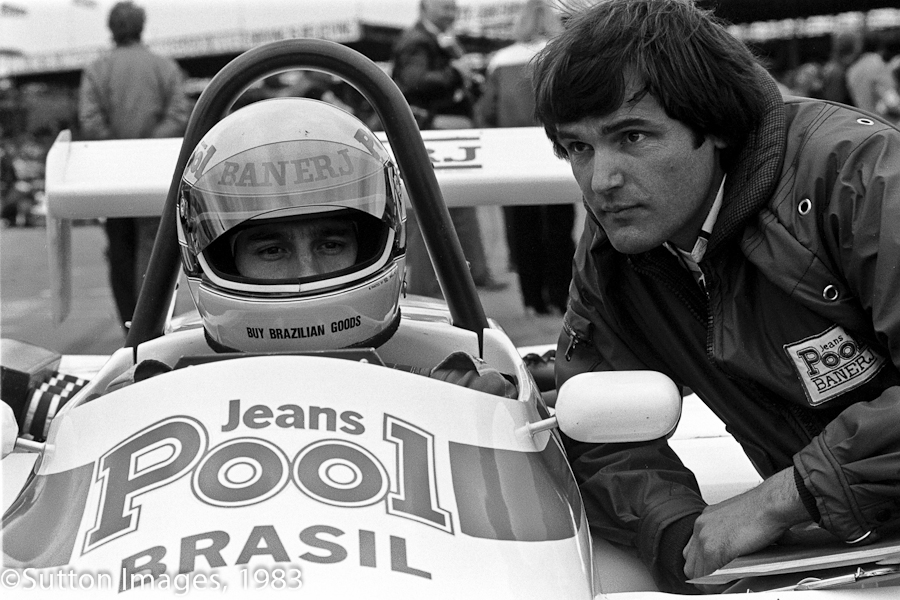
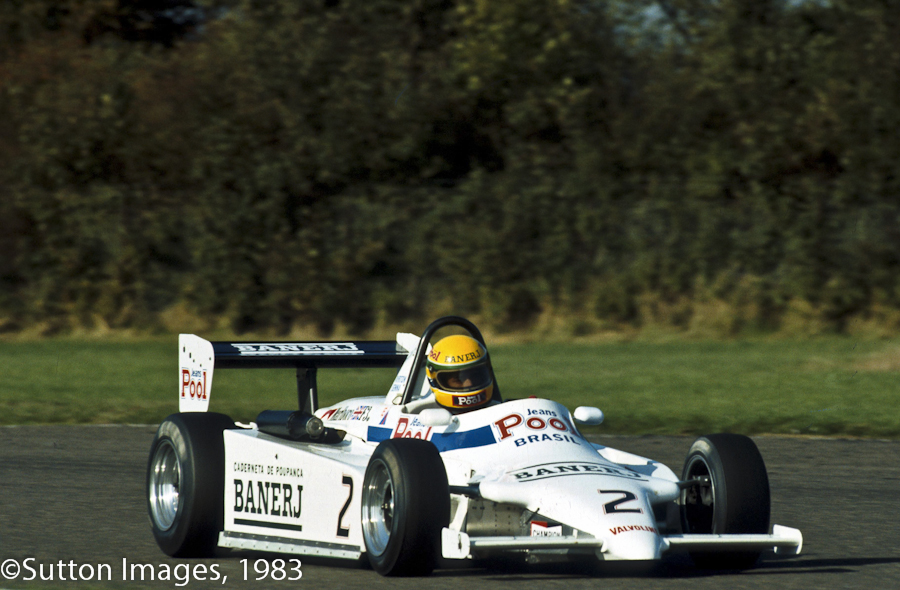
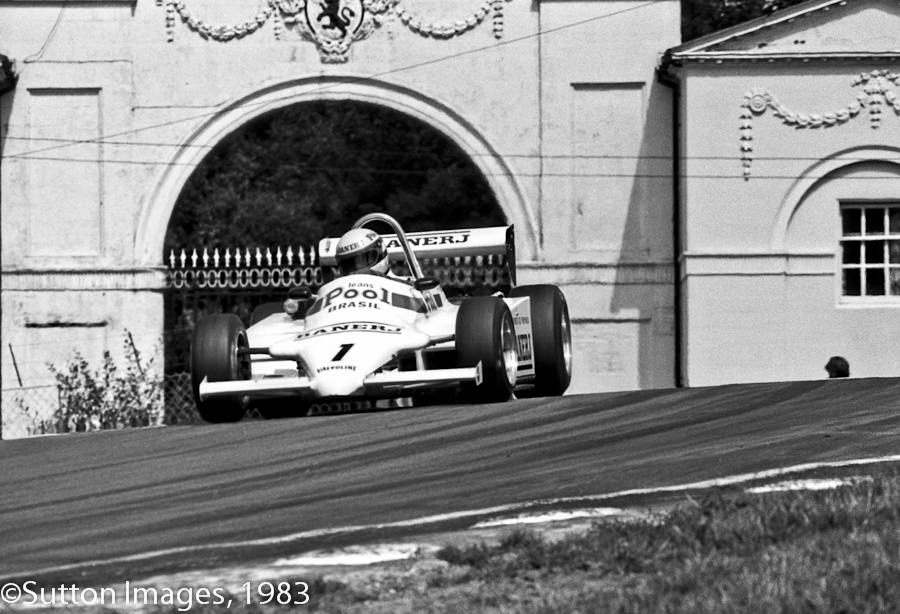
There was an end of season non-championship race held at Thruxton back then, an opportunity to test out new talent. WSR had another South American in the hot seat, Ayrton Senna da Silva. The Brazilian had swept all before him Formula Ford 1600 and 2000 and was marked out as a rising star. Senna shrugged the opposition aside on that cold November day. He had laid down a marker to his opponents for 1983.

There was quite a racing community based around that part of the world that I lived in, F1 teams Brabham, McLaren and Tyrrell were all locals and the Ralt factory was also located nearby. One of the favourite places for social interaction was an old pub based in Shepperton, The Kings Head. Characters as diverse as Brabham team manager Herbie Blash, sportscar legend David Yorke and of course Dick Bennetts could be found propping up the bar on a regular basis and there was a full supporting cast of mechanics and wannabes like myself. At that stage I had one of Dick’s mechanics renting a room in my house and I would regularly visit the workshop to see what “my team” was up to. My wife had even made some of the team’s uniform during their first two seasons, F3 was still a bit of a cottage industry back then. The gang at The Kings Head felt part of the extended family of WSR.

Man and Machine


However the feeling of intimacy with team changed on the arrival of Ayrton. Strange to say unlike the previous drivers I did not really get to know Senna. He was polite enough but somewhat reserved, part shyness but mainly that he was at all times fully focused on the task in hand, that of winning the 1983 F3 Championship and getting into Formula One. His briefings with Dick Bennetts have passed into legend with the disciplined and methodical approach of the engineer allied to the fierce commitment and work ethic of the Brazilian producing set-up sheets and data logging rarely found outside of F1 at that time. No effort was to be spared in the pursuit of victory.
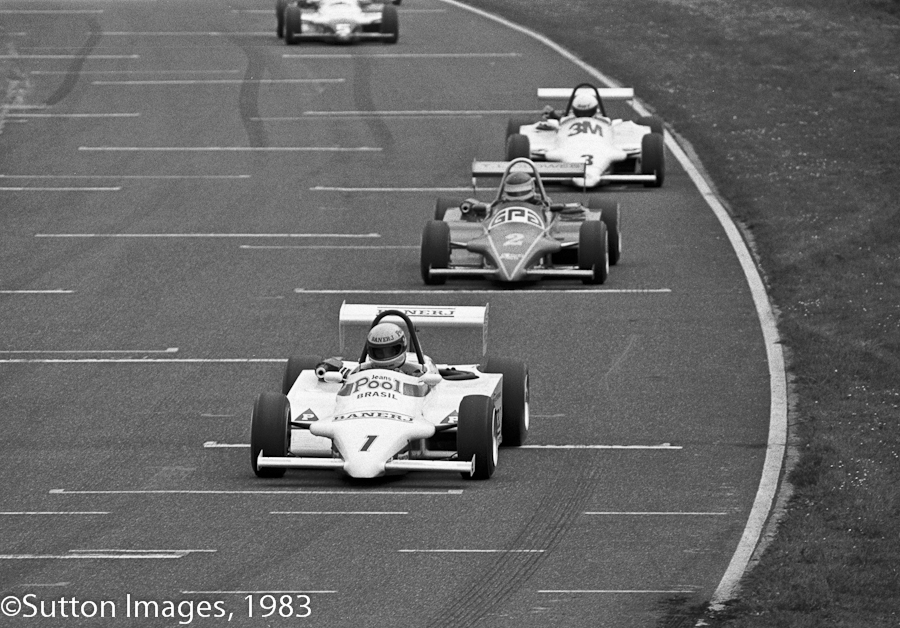
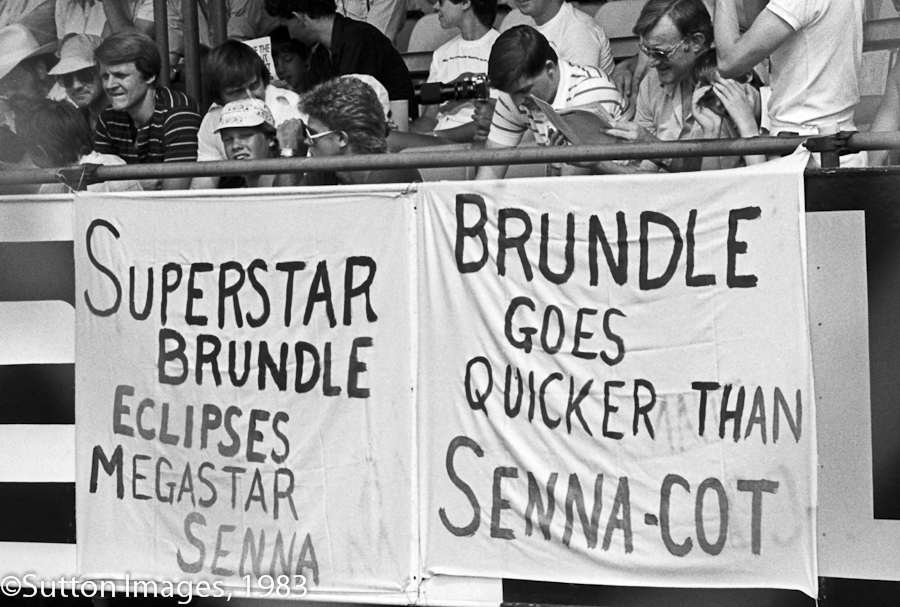
While the combination of Senna and WSR were the Bookies’ favourite there was considerable opposition before honours could be won. Leading the charge was Martin Brundle who was also lining up in a Ralt RT3, this example for Eddie Jordan Racing. Other contenders were expected to be Davy Jones, Allen Berg, David Leslie, Calvin Fish and Johnny Dumfries but in reality they all became just bit players to the drama that surrounded the two leading protagonists.
If one had considered the position of the Championship after the 9th round and approaching the halfway point, drama would have been the last word to be used. At that time nine points were awarded for a race win plus one for fastest lap, so theoretically the maximum points that anyone could have scored at that point in the season was 90………..Senna had 88.

Leader of the Pack

On March 6th the grid had formed up at the Silverstone Club Circuit to open the 1983 Marlboro British Formula Three Championship, David Leslie was on pole but Senna roared away at the start and drove just fast enough to take victory. This proved to be the template for the first half of the season except all the other races would see the Brazilian on pole. So there would be wins for WSR at Thruxton, Silverstone GP, Donington, Thruxton, Silverstone Club, Thruxton, Brands Hatch and Silverstone Club. Add in seven fastest laps and the position is one of complete dominance over the rest of the grid. Well not quite, as Martin Brundle has finished second eight times, third once plus two fastest laps. Each defeat seemed to spur on the Englishman to greater efforts, he wanted more than ever to get on terms with the Brazilian and he was about to get his chance.

Champions

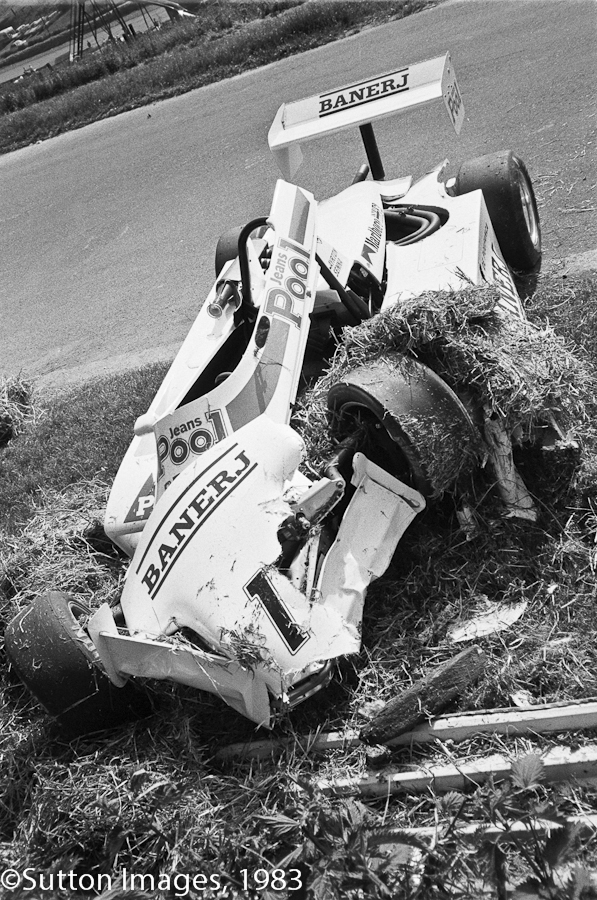
The 10th round of the Championship was run in combination with the European Series. The choice for the British entries was to run on the control Avons and score points or run the sticky Yokohamas or Michelins and be faster. As three scores had to be dropped during the season both Senna and Brundle opted for the faster Yoko rubber. However EJR had much more experience on these tyres and got their set up right, whereas WSR struggled and went the wrong way. The result pole position and a flag to flag win for Martin Brundle. Ayrton has one spin, recovered but trying too hard comprehensively thumped the barriers at Woodcote, a bit embarrassing.

I have been to the Mountaintop

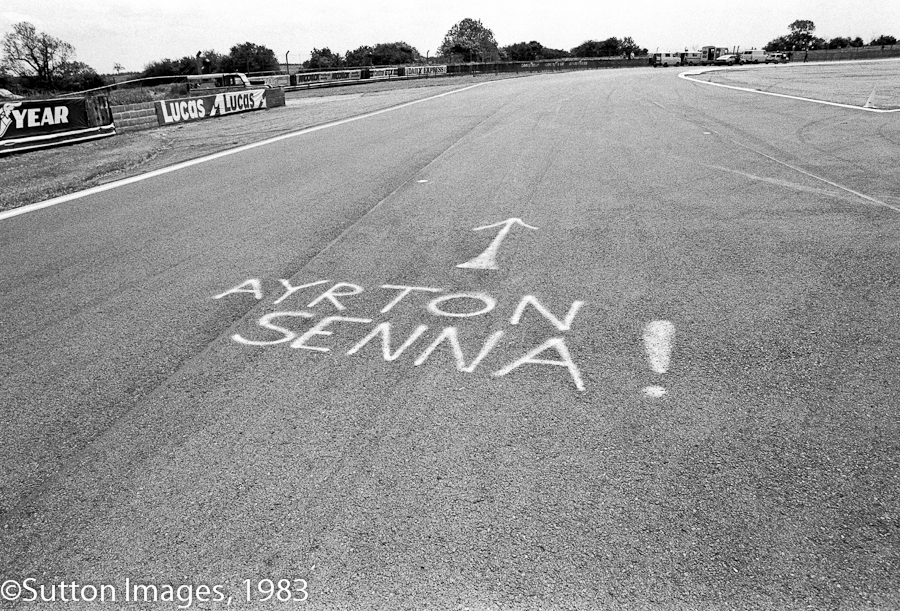
It got worse for the Championship leader, next round at Cadwell park, he did not even make the race. Duelling with Brundle for pole he trashed the Ralt on the Mountain causing yours truly to jump for cover. The pressure was getting to Ayrton. Brundle duly won the race making up more ground.

Crash Landing

The action reached boiling point at Snetterton when the two drivers made contact after an optimistic move from Senna was blocked by a resolute Brundle. Another win for Martin, another retirement for Ayrton. The Stewards were kept occupied for hours trying to work out who, if anyone was to blame. No conclusion was reached but relations between the drivers and both the teams was strained to say the least. Certainly the crew at WSR were not happy not least because they had to set to and rebuild the car once again. This was having a serious effect on progress, as Dick Bennetts put it at the time “You can’t go testing when you are spending late nights rebuilding a car.” The Kings Head saw precious little of the team personnel during the mid summer period.

Sign of the Times

The old order was restored at the British Grand Prix support round with Ayrton taking another trademark win in front of what he hoped would be next year’s employers. During 1983 I started working with Keith Sutton, then on his way to be one of the great F1 photographers. He had become a kind of press officer to Ayrton since linking up together in FF1600 days. During 1982 Ayrton and Keith had taken the then revolutionary step of sending out press releases of Ayrton’s triumphs in FF2000 to any interested parties including the bosses of all the Formula One teams. A simple idea, well executed, typical of Ayrton’s ability to think five moves ahead.
A few weeks later the tables turned once again in the now compelling contest as Brundle dominated the Donington round putting in a Senna-esque performance that had WSR scratching their collective heads.

Normal for Norfolk

Controversy returned at the following round held at Oulton Park. The pair were scrapping for the lead when Ayrton tried a move that stepped over the boundaries of recklessness. The result was that both cars retired with the WSR Ralt ending up perched on the top of the EJR example. The Stewards moved swiftly to nip this nasty situation in the bud, someone was going to get badly hurt if the fight was allowed to escalate. The Brazilian got a £200 fine plus an endorsement on his licence, this was not popular with WSR. Another race another rebuild.
Then tragedy struck the EJR outfit when the truck bringing their car back from a Euro F3 race went over a cliff killing the team’s chief mechanic, Rob Bowden. This shattered the team so it was no surprise that the next race at Silverstone went to WSR and to add insult to injury the EJR Ralt was declared illegal after failing a check on skirt heights.
Despite all this the contest was far from finished. The momentum swung back to Brundle as he swept up the next three races at Oulton Park, Thruxton and Silverstone. Worse for Senna was the pair of non-finishes with yet another accident at Oulton Park and engine problems at Thruxton. Second at Silverstone was a poor return.

Triumphal Arch

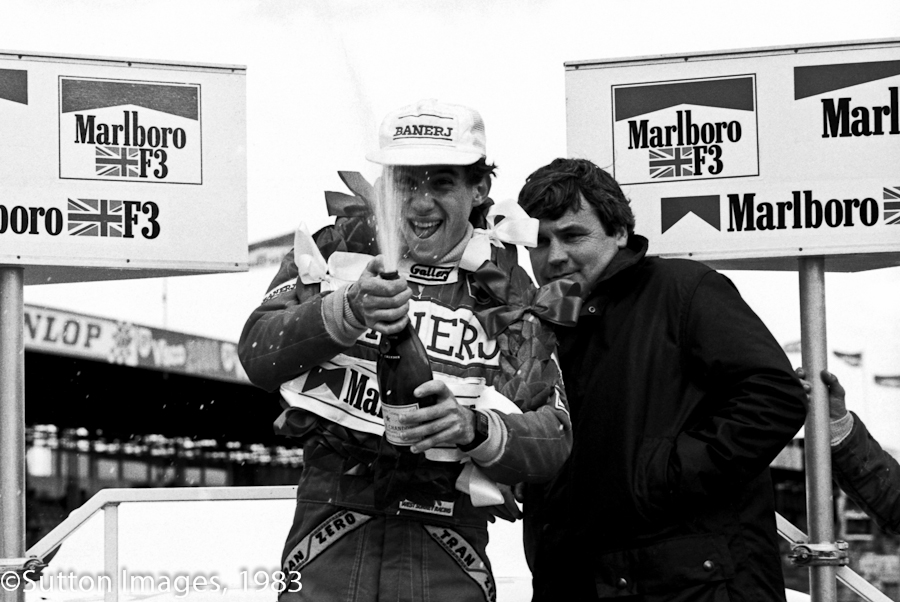
So amazingly going into the final round, number 20, at Thruxton Brundle held a one point lead, at least if you looked at the table. The reality was once the three worst results were dropped, the advantage swung back to Senna by three points. That would be enough and Ayrton and WSR regained their composure to win the final race and the Championship. It had been a hell of a fight.
The WSR camp followers all motored back up from Hampshire after the race and took over The Kings Head, then on to a celebratory dinner at The Riverview Club, also in Shepperton. Needless to say the whole party, including Ayrton, and even his Mother, were extremely well refreshed by the end of the evening.

Perhaps at the time we had not appreciated what we had witnessed during the year but those at the sharp end were under no illusions. Senna reflected “At the beginning, we had our car set up better than the others. Then, the others caught us up. I have done a few mistakes, but still, we have done all we could do. A couple of times we were not so lucky, like at Oulton in practice when something broke and at Thruxton with the petrol thing. Dick is right: it takes away from our development time and all the time Martin is getting the advantage, getting the points. I don’t feel it is a pressure situation for me. Nothing has changed, only perhaps a little bit of luck and that has been with Martin.”
Brundle summed up his approach to the second part of the year, “He’s not unbeatable. After the Euro round at Silverstone I just forced the pace and let him worry about how fast I was going. Psychologically it shifted all the pressure on to him.”
Dick Bennetts was perhaps the best placed of us all to assess just how good his man had been. “He’s the best. Amazingly quick, clever in the car and he always wants to win. I’ll still be here when he moves on, but it is good when both the team and driver make each other look good.”


In truth the title could have gone either man and no one could have been disappointed. Perhaps the massive achievements of the Brazilian in his Formula One career mean that looking back it seems inevitable that he would come out on top. Back then, approaching the Thruxton decider it was not so certain, even to man so convinced of his destiny as Ayrton Senna. The rest of the field was nowhere compared to the Dynamic Duo and they included future Grand Prix drivers and Le Mans winners, it was an incredible performance from them both.

John Brooks, May 2011
La Route Est Dure…………….Deux

The Great Men. Norbert and Bob

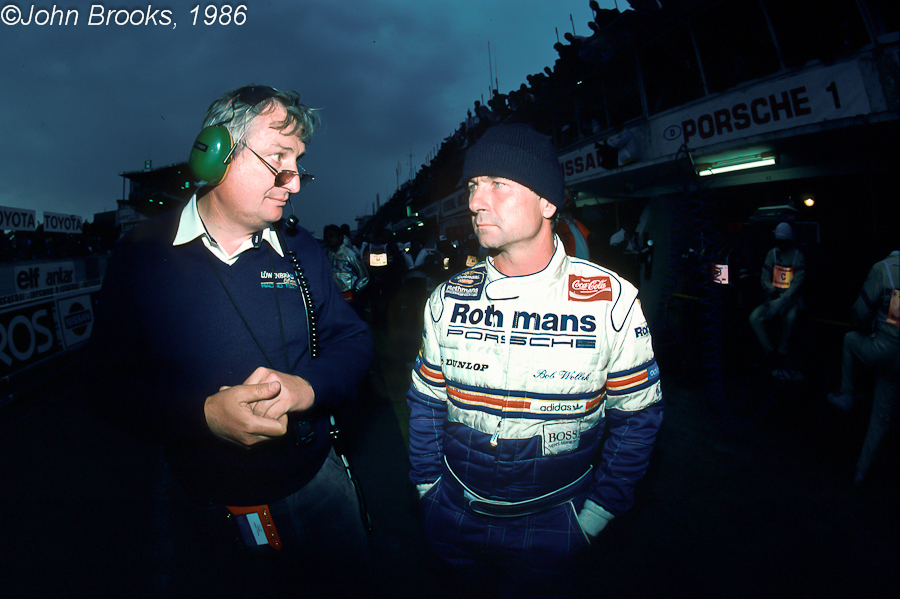
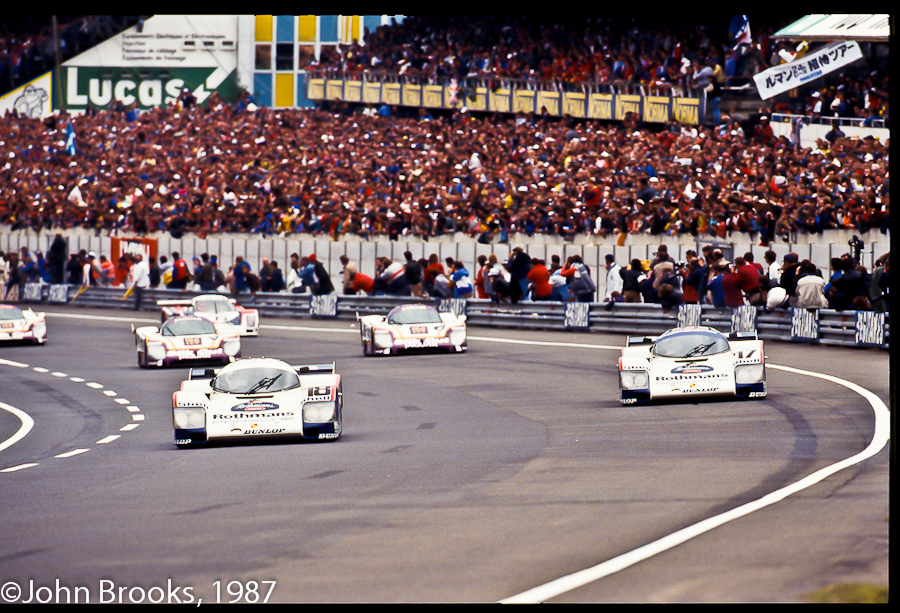
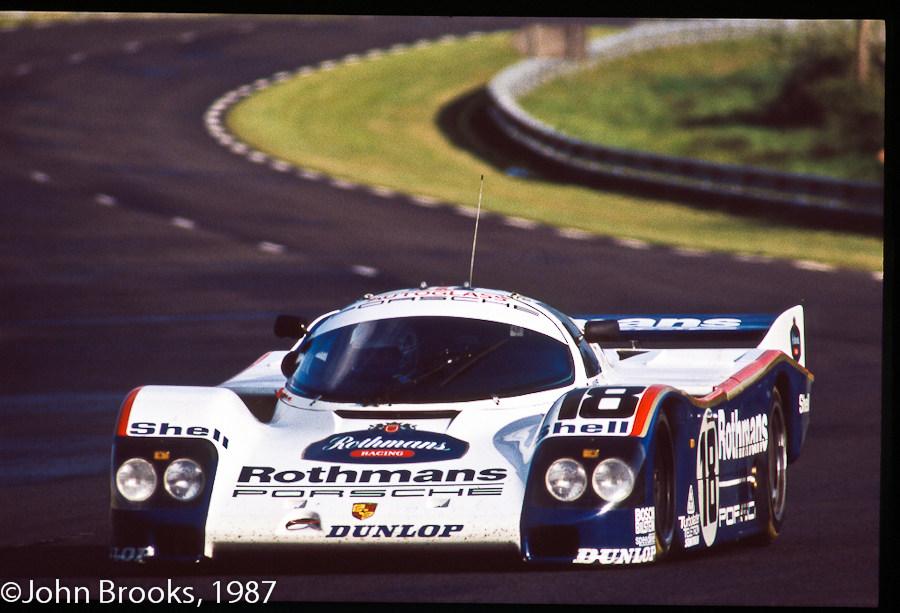
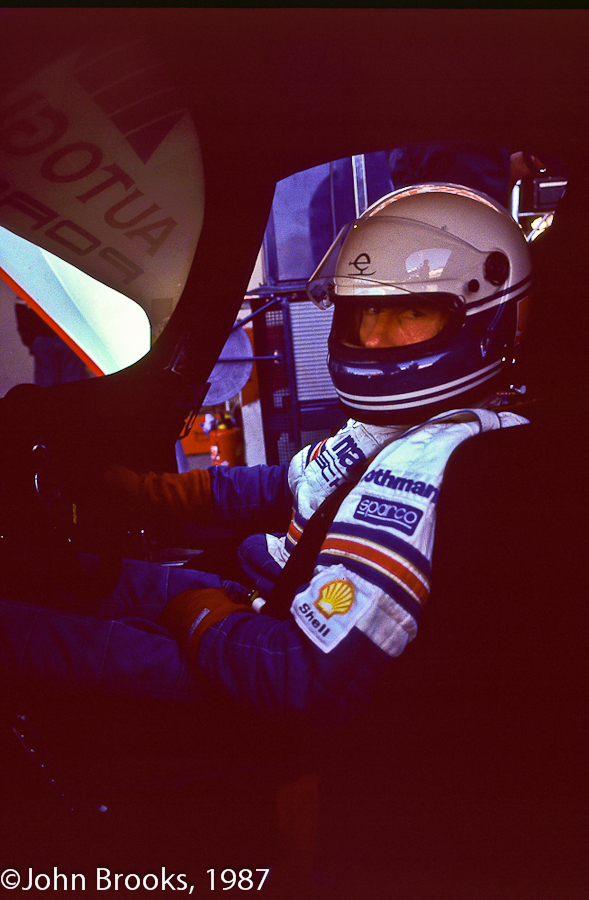
During 1986 and 1987 the combination of Bob Wollek and Rothmans Porsche 962C were irresistible at Le Mans, at least during Qualifying. The races proved more problematical.

Before the Storm

Teammate Jochen Mass was involved in someone else’s accident, which accounted for the 86 race and the following year Bob did not even get to drive a lap as his 962C was the highest profile victim of the engine problems that afflicted the Porsche competitors during the opening stint of the race. It was not Bosch’s finest hour but the real villain of the story was poor quality fuel supplied by the ACO.

Porsche at Porsche Curves

I had started to get media accreditation at Le Mans back then and I recall attending the annual press conferences at that time. Actually there serious incentives to go along and sit through an hour of French, in 1986 Moet et Chandon provided all attendees with a magnum of their vintage Bubbly. I still have the bottle, if not the contents. The usual routine was to have the FIA President Jean Marie Balestre, bellow at the assembled hacks about whatever issue was troubling him at the time. It was usually to do with Formula One, which would confuse us all mightly.

A Day in the Office

I do remember the President being stopped in his tracks after an intervention from the taciturn Bob Wollek. He had listened to the rant, took issue with some particularly egregious assertion, then quietly and firmly contradicted Ballestre, for once silencing the garrolous Frenchman. Those in the crowd such as me, who did not really know Bob were impressed. He could talk the talk, as well walk the walk.

Crowd Pleasing Man

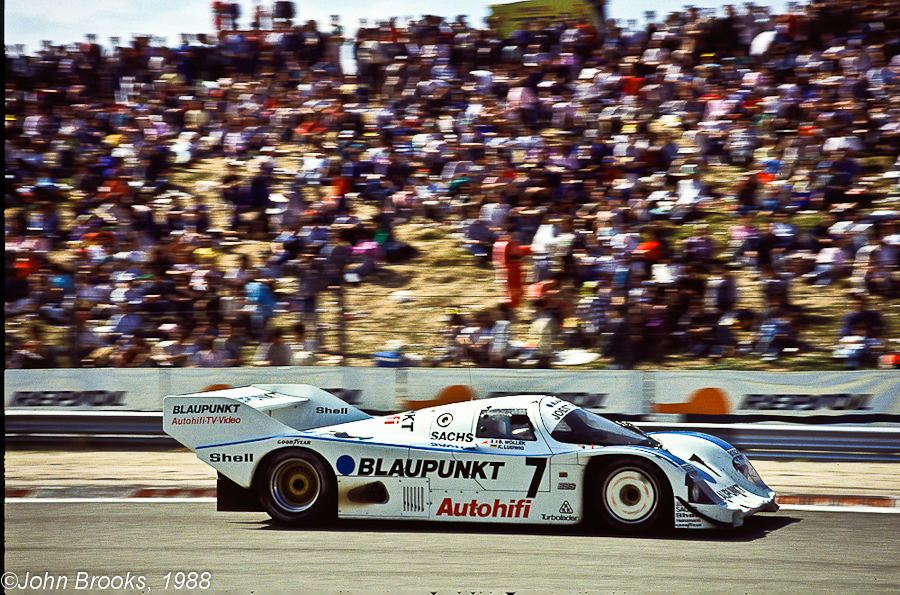
1988 saw the end of the association between Rothmans and Porsche, so Wollek joined Joest to partner Klaus Ludwig. However the 962 was not really up to the level of either the TWR Jaguars or the Sauber Mercedes. Le Mans once again saw disappointment with his factory Porsche lose the lead with engine failure.

Victory Lane

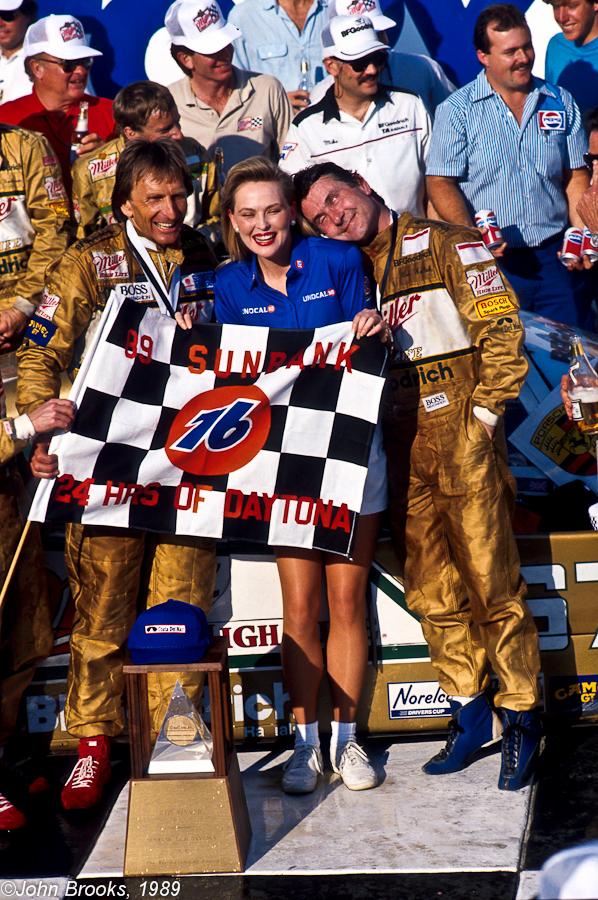
Whatever the frustrations La Sarthe brought, on the other side of the Atlantic things were very different. Four outright wins in the Daytona 24 Hours told a completely different tale of Bob Wollek from the results at Le Mans.

The end of Group C, driven down by the madness of the the F1 based engines and technology and the spending war in IMSA almost killed sportscar racing for good.  Wollek’s career like so many of his contemporaries was on hold till matters improved.

Courage, Mon Brave

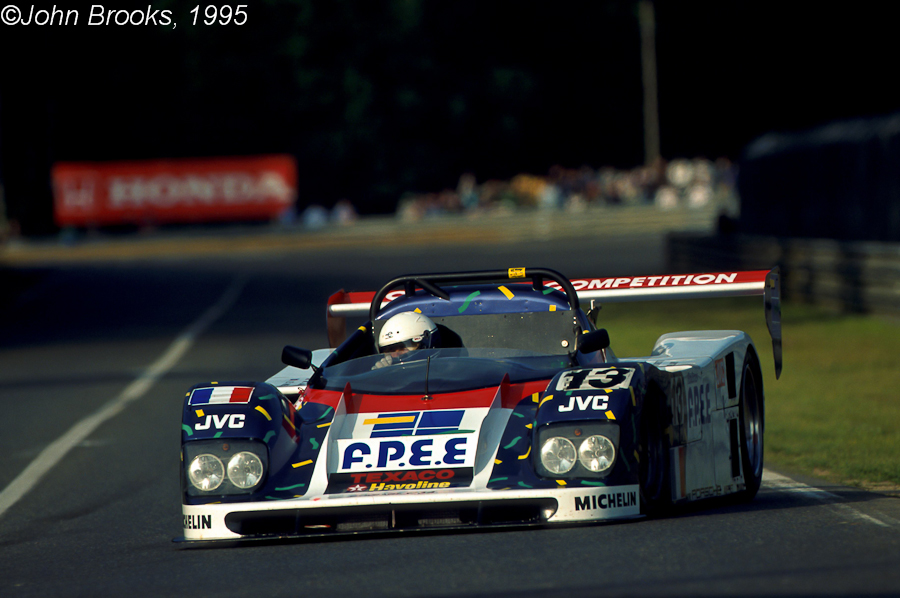
A gradual revival in the mid 90’s brought Bob Wollek back to the top table. Once again a Le Mans win went begging in 1995. In truly awful conditions, co-driver Mario Andretti was forced to avoid a spinning car and clouted a wall. The repairs cost the car six laps, when the Chequered Flag was waved the next day the Courage was just over a lap down on the winning McLaren.

911 GT1
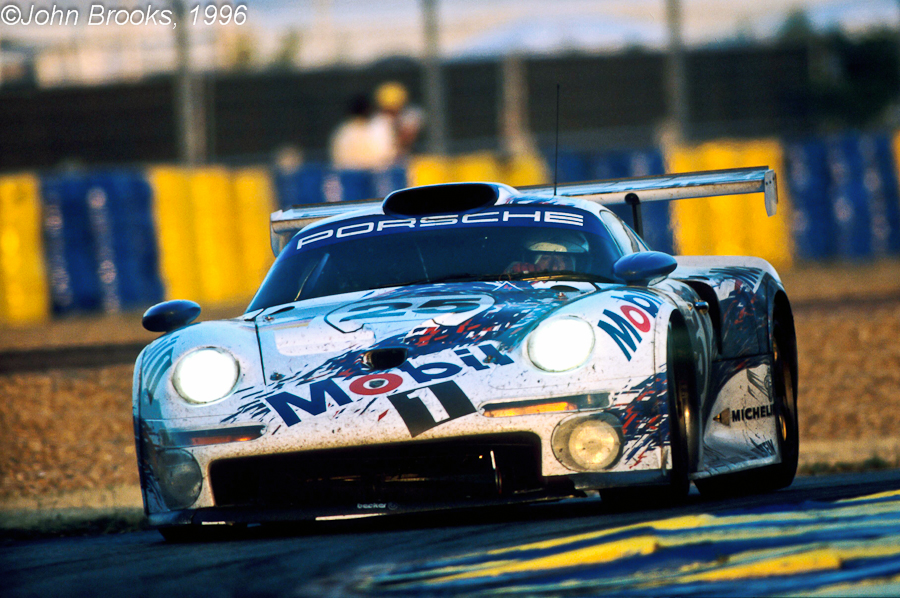
Porsche returned to racing and Le Mans in 1996 with the 911 GT1. Somehow Porsche decided to shoot themselves in the foot by allowing Joest to run the ex-TWR Porsche WSC prototype. It outran the fancy GTs winning by a lap from Wollek.
In 1997 there was more cruelty for the Frenchman at Le Mans. The relative performance of the Joest prototype and the 911 GT1 had been reversed. So as dawn broke on the Sunday morning, Wollek’s wait for victory, in the race he cherished above all, looked to be finally over. Then a half shaft failed pitching the Porsche off the track. A few hours later the sister car caught fire, handing another win to the Joest team.
Cheese!

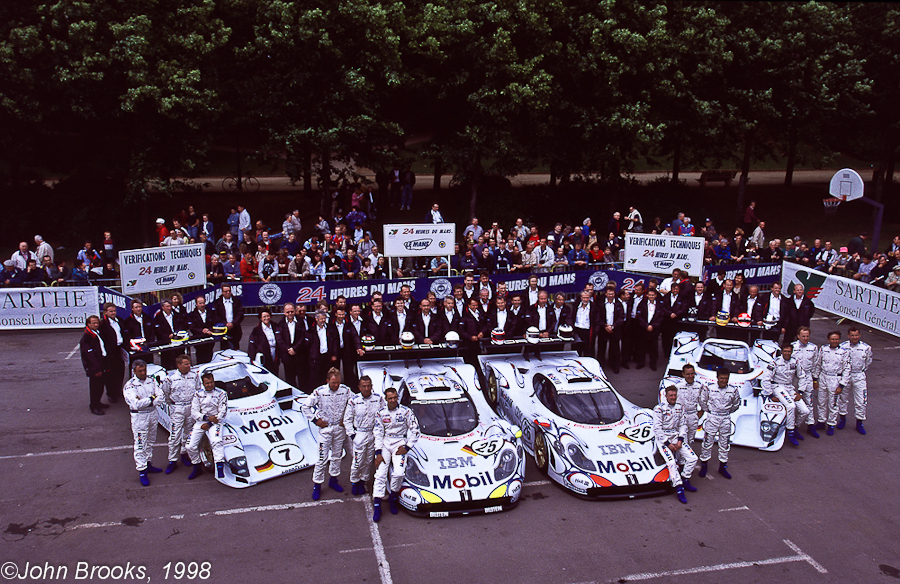
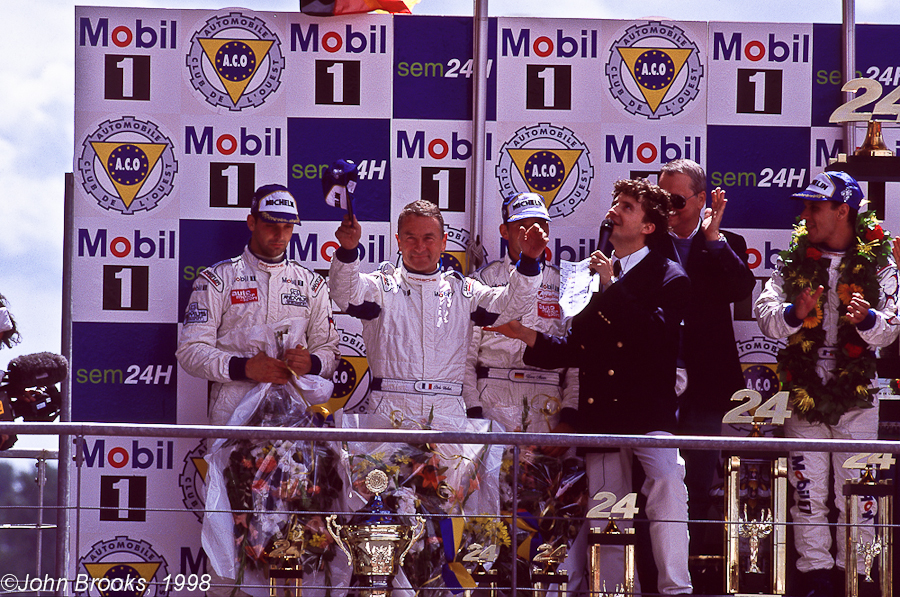
1998 would be Bob Wollek’s last chance to take outright victory at Le Mans. He was originally down to drive one of the prototypes that were entered in support of the new 98 GT1 cars. Yannick Dalmas had a training accident and as a result swapped cars with Wollek. Good luck coming his way?

Rub of the Green

The 1998 race was a fantastic contest. After the demise early in the race of Mercedes Benz and BMW and the lack of pace from the Nissans, the battle was going to be between Toyota and Porsche. The Japanese had a speed advantage but suffered with gearbox problems. Both teams had accident damage to contend with after localised showers during the night. Brundle’s Toyota was eliminated whereas the undertray on Wollek’s car was replaced in 30 minutes after Müller had taken a trip across a gravel trap. The other Porsche had a leak in the cooling system but got back on track slightly quicker than #25. Come 3.00pm on Sunday that would prove the difference between first and second.

This could be the last time……….

There was no fairy-tale ending for Wollek, tears on the podium from him and his team mates, generous applause from the huge crowd.

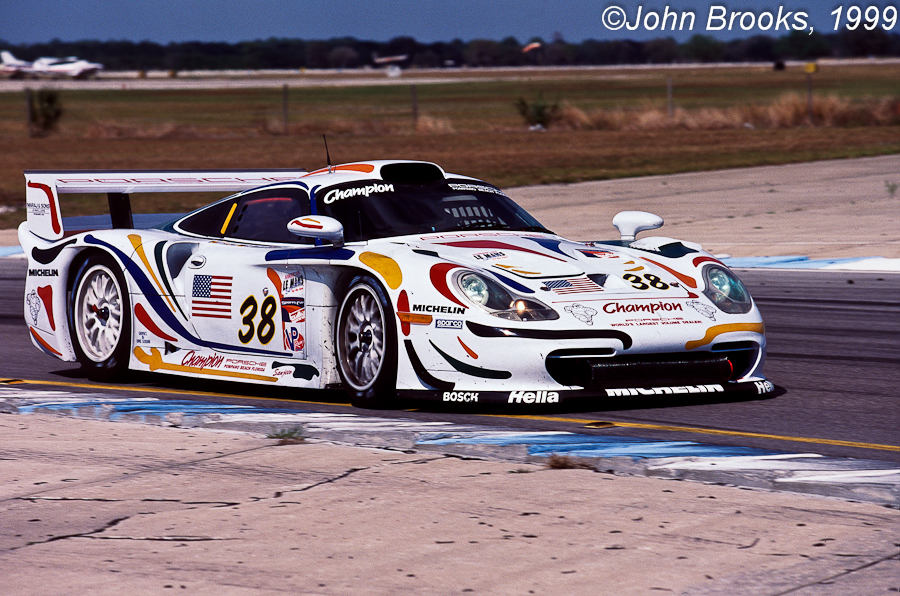
Champion Stuff

Porsche cancelled their prototype racing project at the end of 1998 and decided to focus on a 911 customer programme. Wollek was retained by the factory and parachuted into cars as necessary. So the Champion 911 GT1 EVO for Sebring.

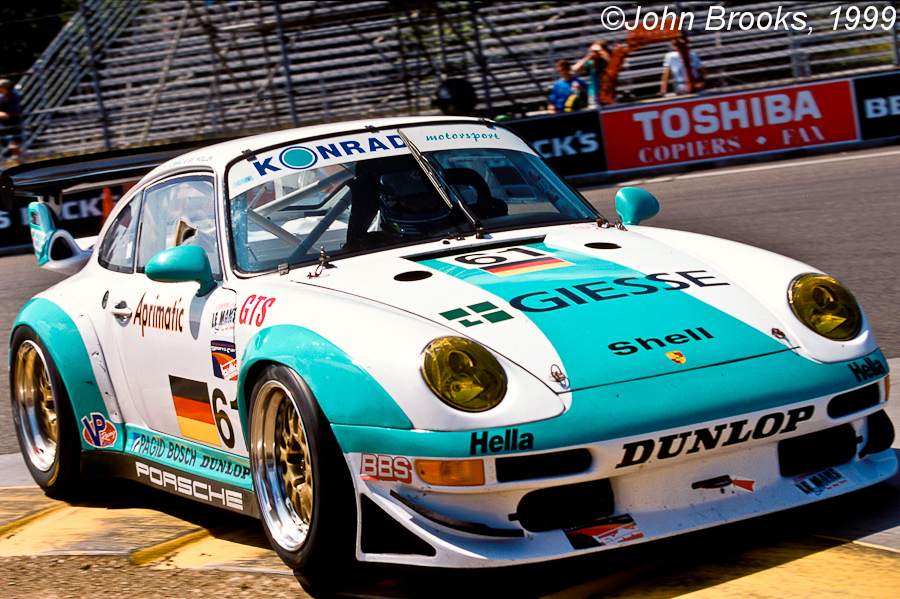
Portland Pavement

Other destinations were the Konrad and Freisinger teams.

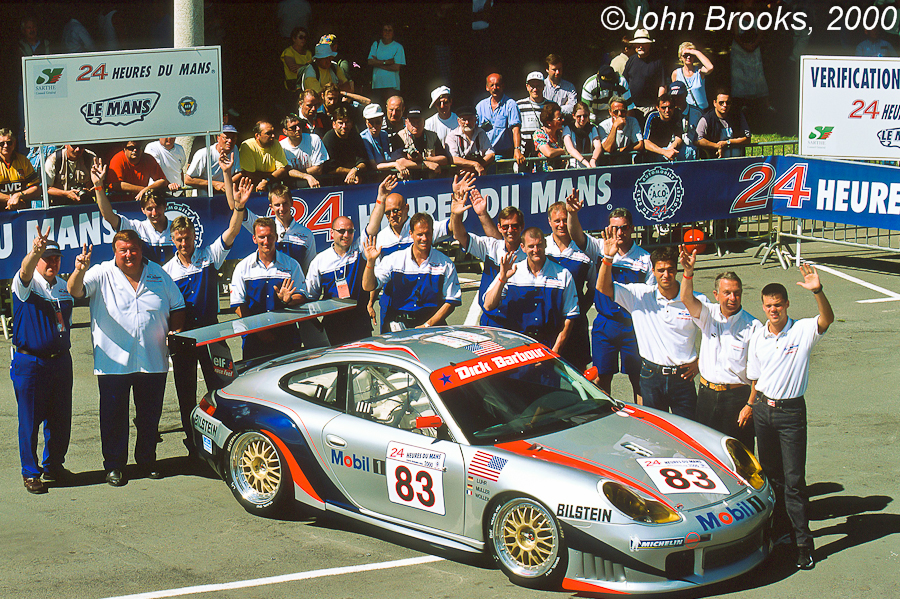
On Parade

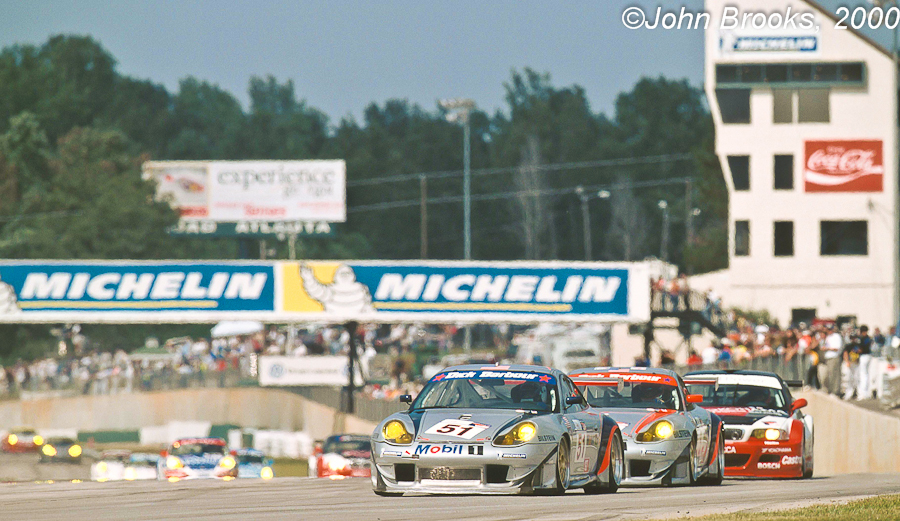
For 2000 Wollek joined Dick Barbour Racing at Le Mans and in the ALMS.  Le Mans produced another class win and then it didn’t, as there was a squabble about fuel tank capacity. As ever the ACO had the final word.

Head of the Pack

The team dominated the ALMS GT class. Bob surprised his younger colleagues such as Lucas Luhr and Dirk Müller with his speed, it drove them up the wall trying work out where the pace came from.

Texas Two Step

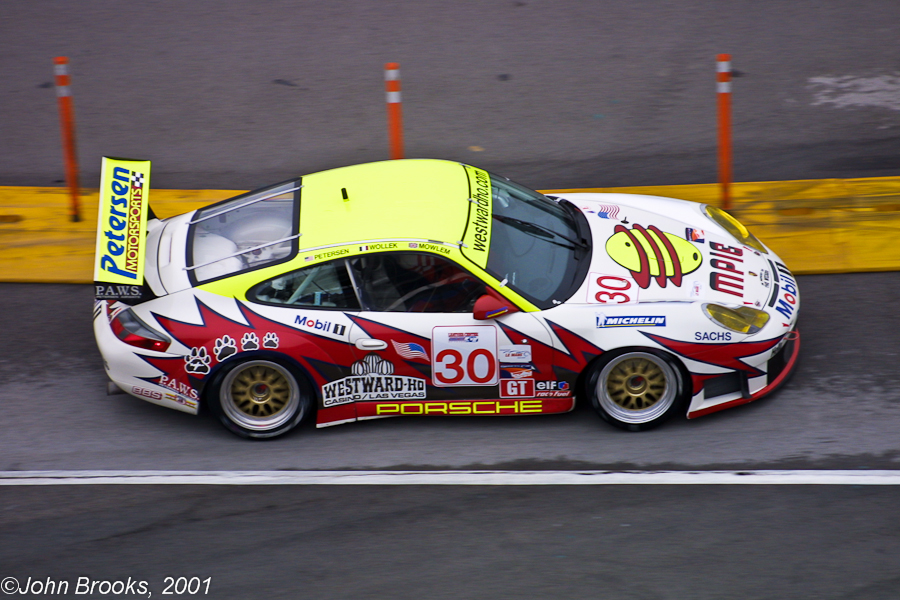
2001 saw Wollek join Petersen/White Lightning, another Porsche customer. Then came Sebring.

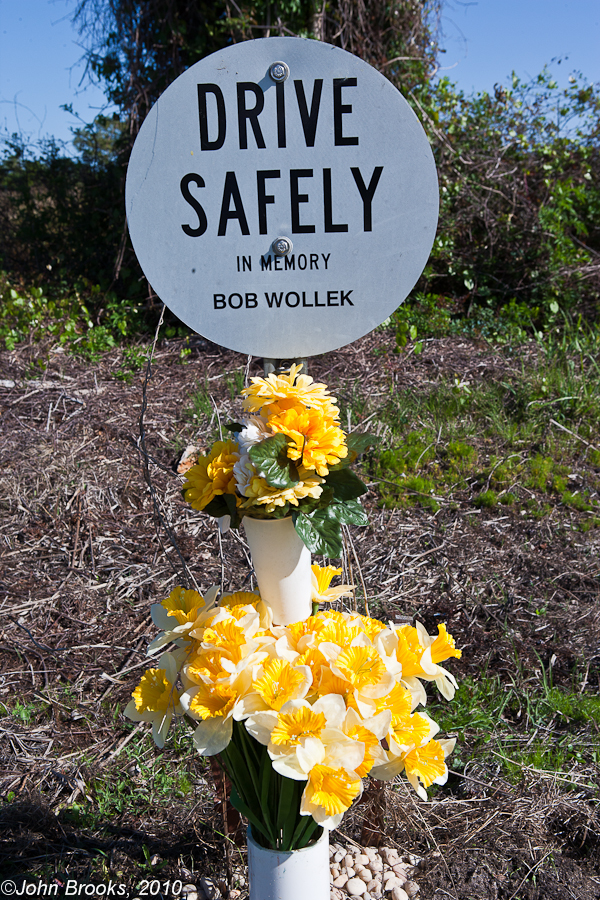
Memorial

Take a trip down Highway 98 towards Okeechobee, you will find the above marker, a simple tribute to a great champion.

Rest in Peace, Bob.

John Brooks, March 2011