Category Archives: Notes from the Cellar

Room in the Back, Sir.

Daimler AG has plenty of treasure stored in their press archives. The Formula One stuff, both pre and post war, is familiar, less so some of the tin top material from the 50s and 60s. So this release attracted my attention or rather the images did. This is what we raced and rallied half a century ago. jb
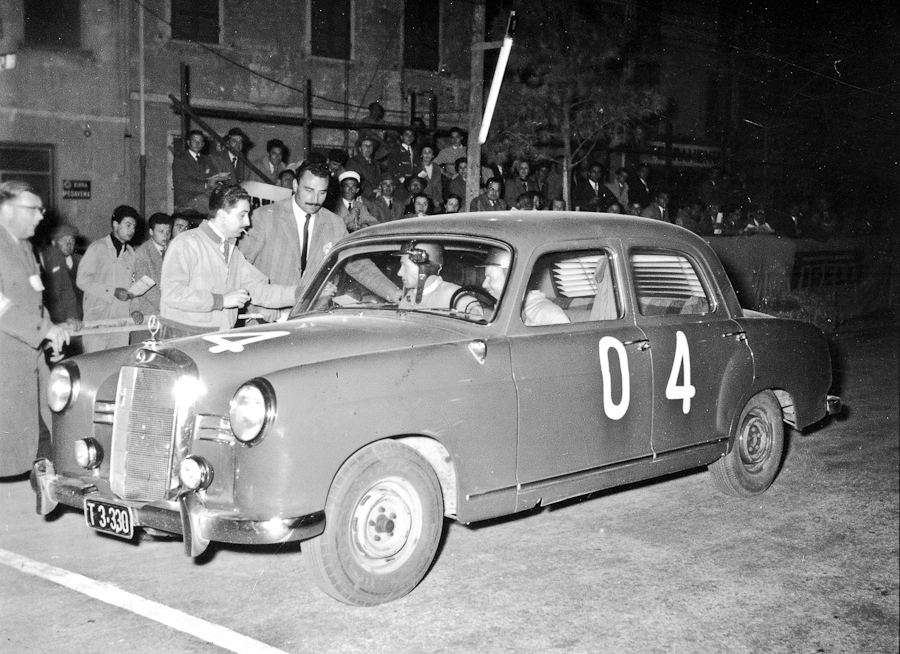

Following the Mercedes-Benz works team’s retirement from Formula 1 and the sports car world championship at the end of the 1955 season, the rallies claimed fans’ full attention as of 1956. The Mercedes vehicles competing on race courses all over the world were fielded for the most part by private teams. While the racing and racing sports cars of previous years had performed superlatively as elite fine-tuned high-end vehicles, the near-series passenger cars now demonstrated their solid credentials in the nitty-gritty of rally racing. Karl Kling was responsible for rally activities as sports director at Mercedes-Benz. In the wake of Alfred Neubauer’s retirement, the ex-racing driver thus assumed a degree of responsibility for upholding the race manager’s legend.

In the late 1950s and early 1960s it was first and foremost the 300 SL sports car and the six-cylinder 220 SE and 300 SE saloons that caught people’s imagination on the roads and gravel tracks all over the world. The team comprising Walter Schock and Rolf Moll was among the contenders who made their mark in these years. The duo, who raced for the Motorsportclub Stuttgart, received comprehensive support from Mercedes-Benz in the form of vehicles and service. Walter Schock competed in the Monte Carlo Rally in the Mercedes-Benz 220 “Pontoon” on 15 January 1956, crossing the finishing line on 23 January just 1.1 seconds behind the winner.
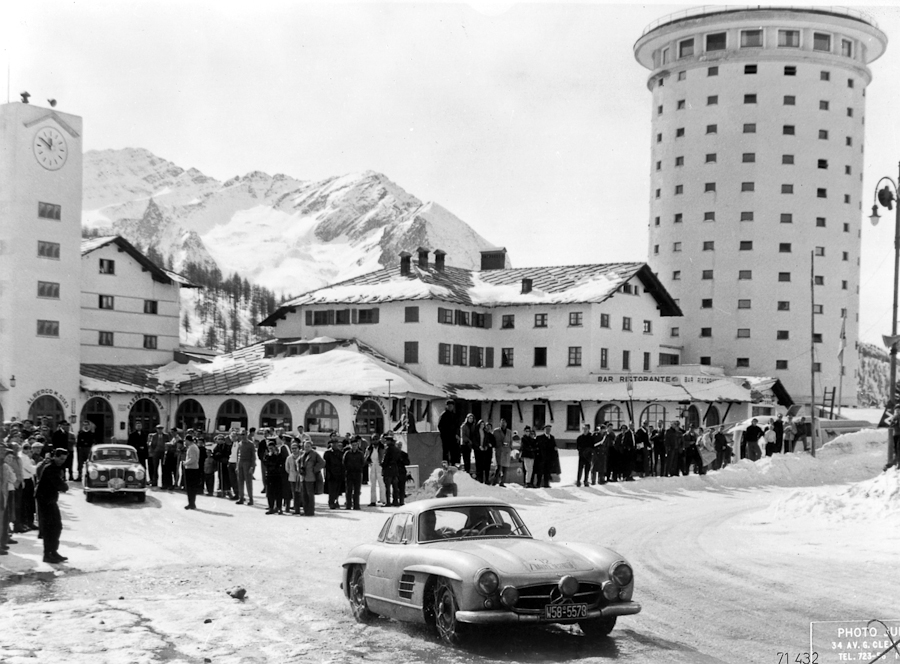
7th Sestrière Rally, 24 to 28 February 1956. The Walter Schock / Rolf Moll rally driver team (starting number 12) won the class of Gran Turismo cars over 2 litres in a Mercedes-Benz model 300 SL touring car.

A month later, the Stuttgart duo took part in the Rally del Sestrière in Italy at the wheel of the “gull-winged” 300 SL. In the mountains, the high-performance sports car left the other vehicles in its wake. Schock recalled the Coupé’s outstanding capabilities in the winter rally conditions: “Really fine snow chains on all four wheels allowed us to reach uphill speeds of up to 180 km/h.” The team finished the race as winners on 28 February. Further triumphs ensued in the shape of an overall win in the Acropolis Rally (26 to 29 April 1956) and class victories in the Wiesbaden Rally (21 to 24 June 1956) and the Rally Adriatique (26 to 30 September). Schock also won his class in the Eifel Race and took 2nd place in the fringe race at the Nurburgring Grand Prix meeting. On the back of this performance he became the European touring car champion in 1956 and German champion in the GT class above 2000 cc.

The sports director was also wont to take to the wheel once in a while, putting in sporadic stints as a Mercedes-Benz works driver. Karl Kling achieved an unusual victory in 1959 with Rainer Günzler in the 14,000 kilometre Rally Mediterranée-Le Cap running from the Mediterranean to South Africa: the Stuttgart team embarked on this rally in a Mercedes-Benz 190D, cruising to victory on its diesel power. 1961 saw Kling speeding through Africa at the wheel of a saloon once again. This time he opted for a “fin-tail” Mercedes-Benz 220 SE, winning the Algiers-Lagos-Algiers Rally with Rainer Günzler as co-driver once again. Kling was also on the scene as race manager when works teams competed in selected major races at the wheels of Mercedes-Benz vehicles.
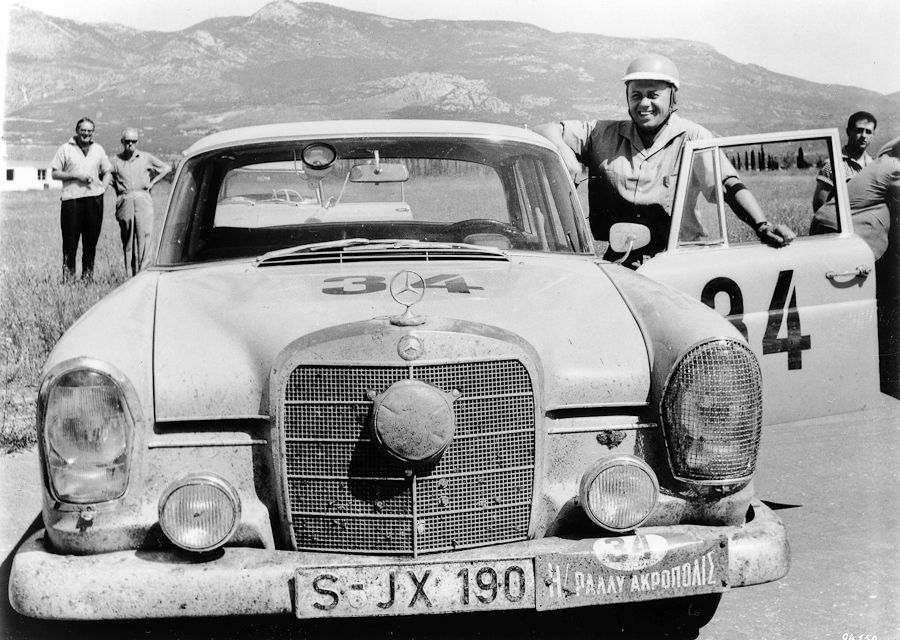
8th International Acropolis Rally from 19 to 22 May 1960. The eventual overall winner, Walter Schock, (starting number 34) in the Mercedes-Benz model 220 SE touring car.

Schock and Moll claimed the European rally championship once again in 1960, in their 220 SE. Their winning ways got off to a bright start at the legendary Monte Carlo Rally.
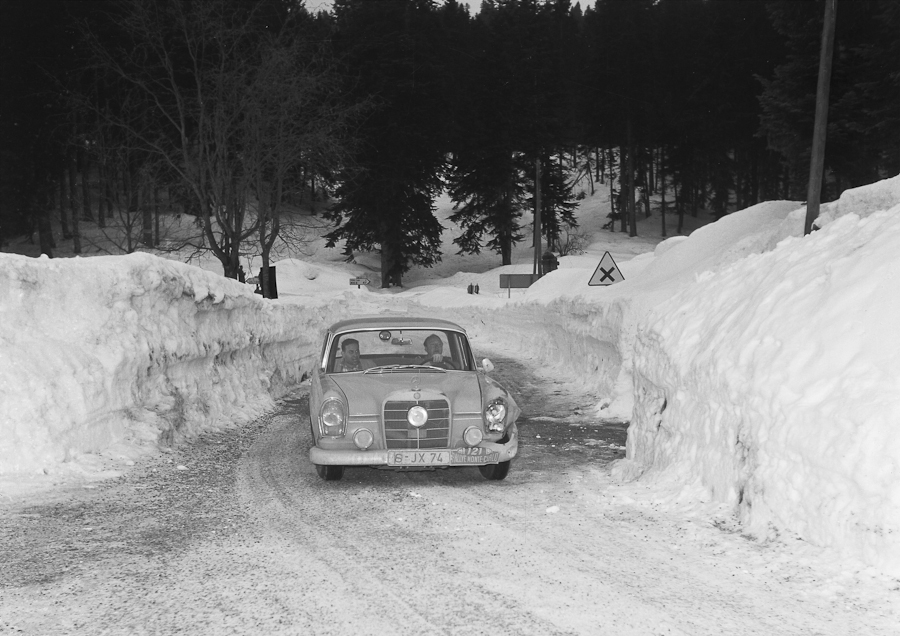
29th Monte Carlo Rally, 18 to 24 January 1960. The team Eugen Böhringer / Hermann Socher took 2nd place in a Mercedes-Benz model 220 SE touring car.

The first final win by a German team in this competition was part of a triple success for Mercedes-Benz, with driver teams Eugen Böhringer/Hermann Socher and Eberhard Mahle/Roland Ott taking 2nd and 3rd places. Following this triumph in 1960, the sports press called on Mercedes-Benz to return to the world’s racing circuits with works vehicles on a permanent basis. But sports director Kling was clear in his words, saying “This success will encourage us to carry on putting great effort into rallies. But Mercedes does not intend to return to motor racing.”
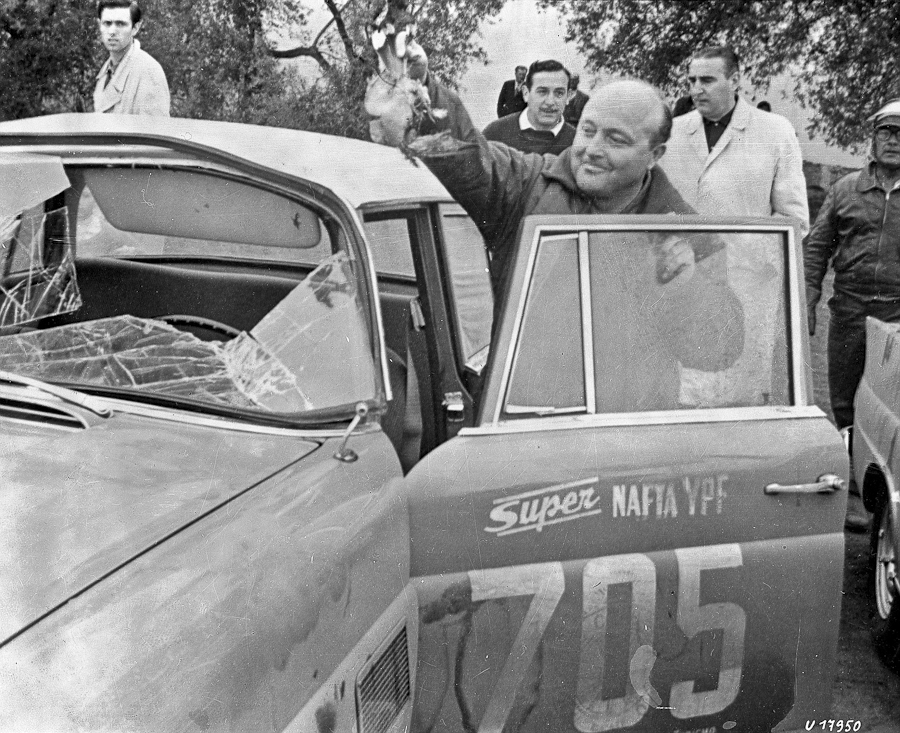

In the 1960s, Mercedes-Benz teams took part in the “Gran Premio Argentina” road race on several occasions. On 26 October 1961, Walter Schock competed in this very special rally, which was contested by a total of 207 drivers. A tough race was in store for the participants on a route covering 4600 kilometres and taking in a difference in altitude of around 3000 metres. The hard slog ended on 5 November with a double victory for Mercedes-Benz. Walter Schock and Rolf Moll were the first to pass the finishing line, followed by Hans Herrmann and Rainer Günzler. “That must be the toughest race I’ve ever competed in,” said rally champion Schock on his return from South Africa. The Mercedes-backed teams received personal support from Juan Manuel Fangio together with race manager Karl Kling. As this competition was very important for the American market, Mercedes-Benz continued its involvement in the coming years, too.
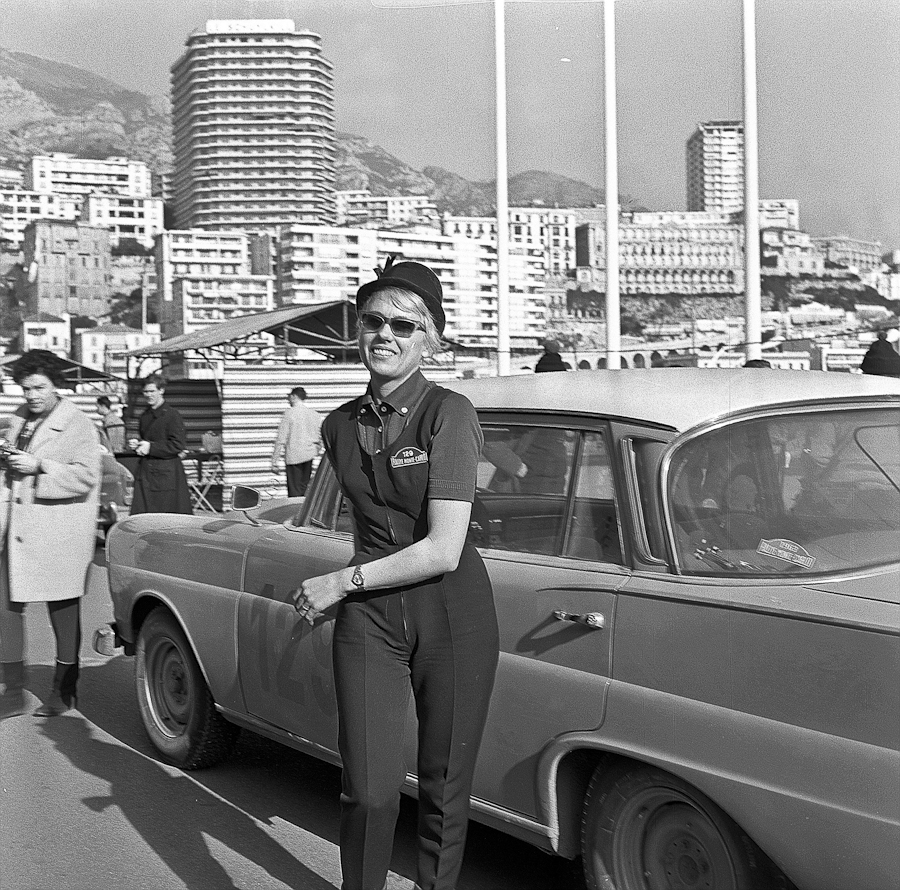
33rd Monte Carlo Rally, 18 to 25 January 1964. Ewy Rosquist-von Korff and Eva-Maria Falk won the category of touring cars up to 2500 cc in a Mercedes-Benz 220 SEb.
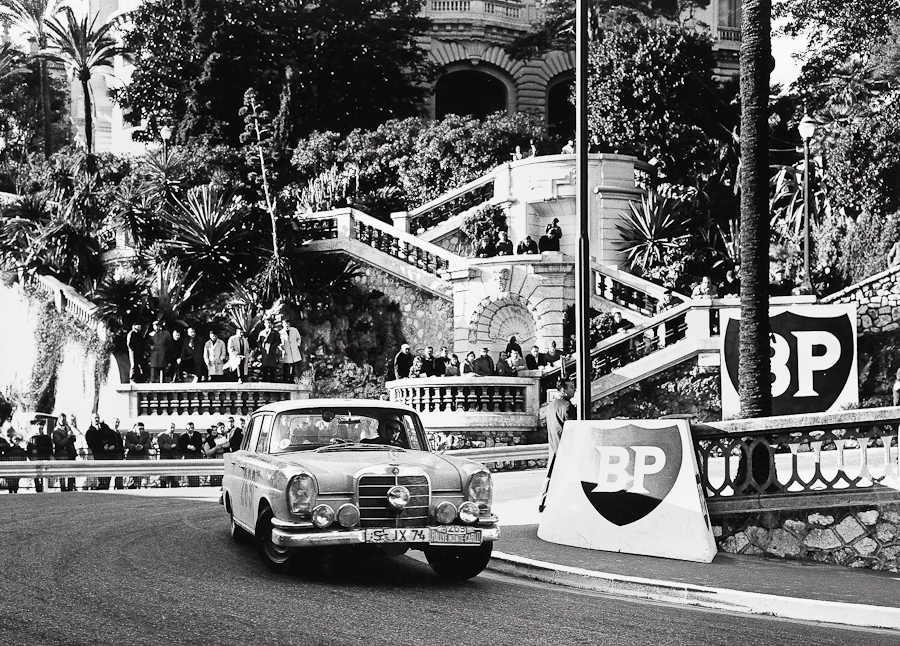
 

Monte Carlo Rally, 1963. Ewy Rosqvist and Ursula Wirth with a Mercedes-Benz 220 SE.

1962 saw a sensational win by the ladies’ team comprising Ewy Rosqvist and Ursula Wirth, while Eugen Böhringer sped to victory in 1963 and 1964, crossing the finishing line with two other Mercedes-Benz cars directly behind him in each case.
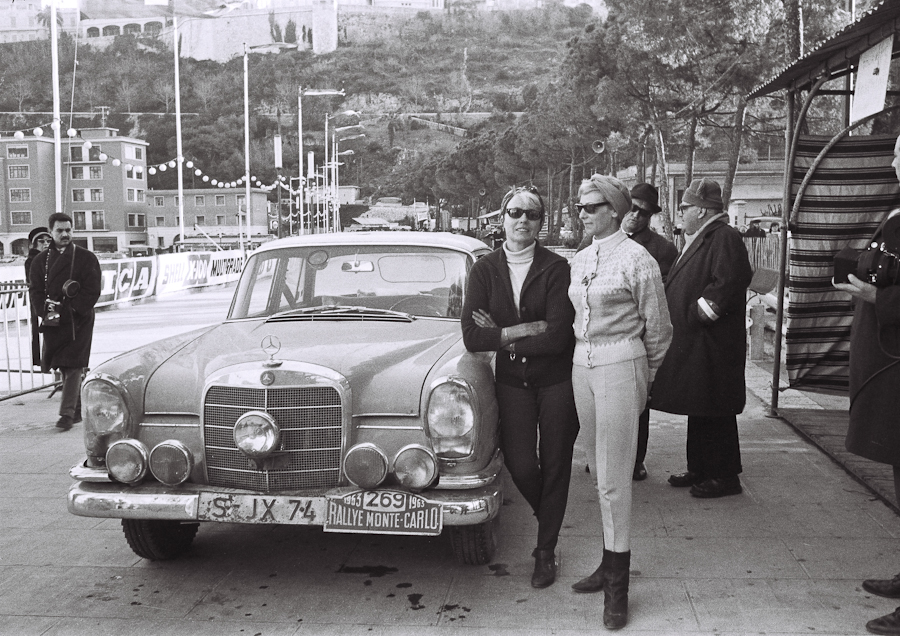
32nd Monte Carlo Rally, 19 to 26 January 1963. Ewy Rosqvist-von Korff (left) and Ursula Wirth won the Ladies Cup in a Mercedes-Benz 220 SEb.
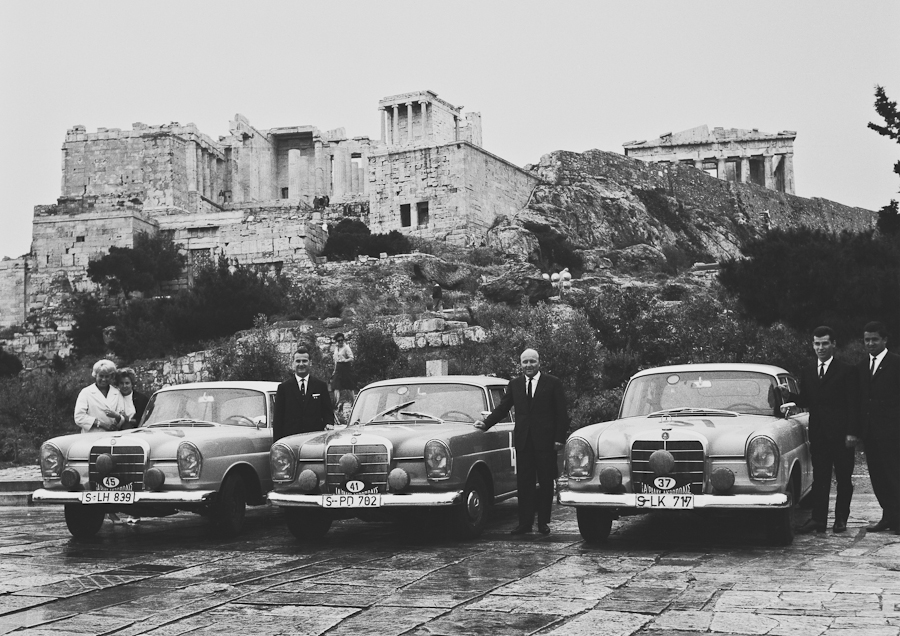
 

11th Acropolis Rally, 16 to 19 May 1963. Mercedes-Benz competed with three cars. On the left is the ladies’ duo of Ewy Rosqvist and Ursula Wirth (starting number 45) competing in a Mercedes-Benz 220 SEb (3rd in class and 12th overall). In the middle is the team Eugen Böhringer / Rolf Knoll (starting number 41), which claimed victory in its class and in the overall placings in a Mercedes-Benz 300 SE. On the right is the team Dieter Glemser / Klaus Kaiser (starting number 37) competing in a Mercedes-Benz 220 SEb (2nd in class and 5th overall).

Böhringer, who drove Mercedes-Benz cars in rallies as of 1957, won the European rally championship in 1962 at the wheel of a Mercedes-Benz 220 SE. With his co-drivers Peter Lang and Hermann Eger, Böhringer notched up points in various races throughout this season, including the Monte Carlo Rally (2nd place), the Tulip Rally (7th place),
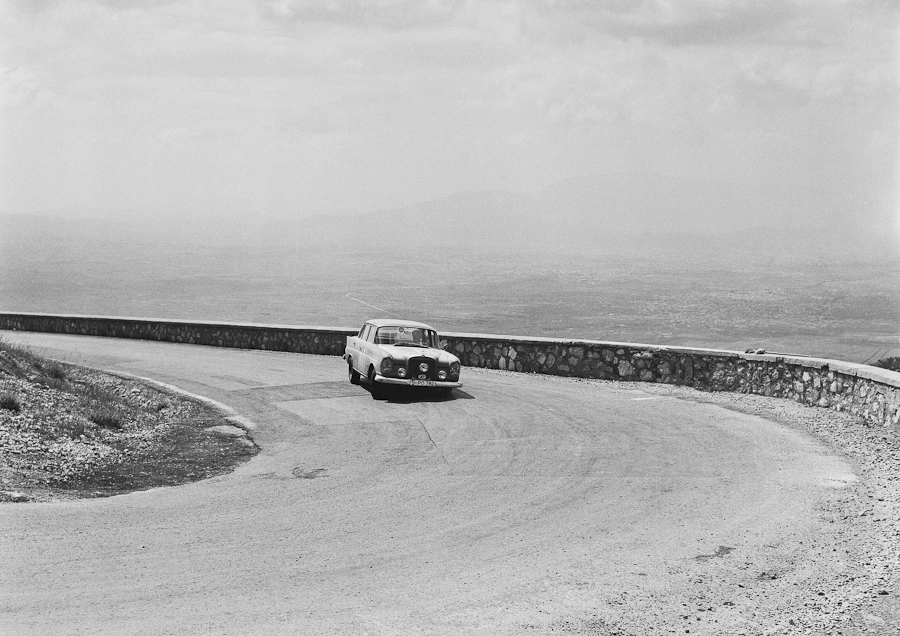
Motor racing on ancient terrain: Eugen Böhringer and Rolf Knoll (starting number 41) wrap up the 11th Acropolis Rally in May 1963 in a Mercedes-Benz 300 SE touring car. They were winners in their category and overall winners.

the Acropolis Rally (1st place), the Midnight Sun Rally (5th Place), the Polish Rally (1st place), the Liège-Sofia-Liège Rally (1st place) and the German Rally (2nd place).
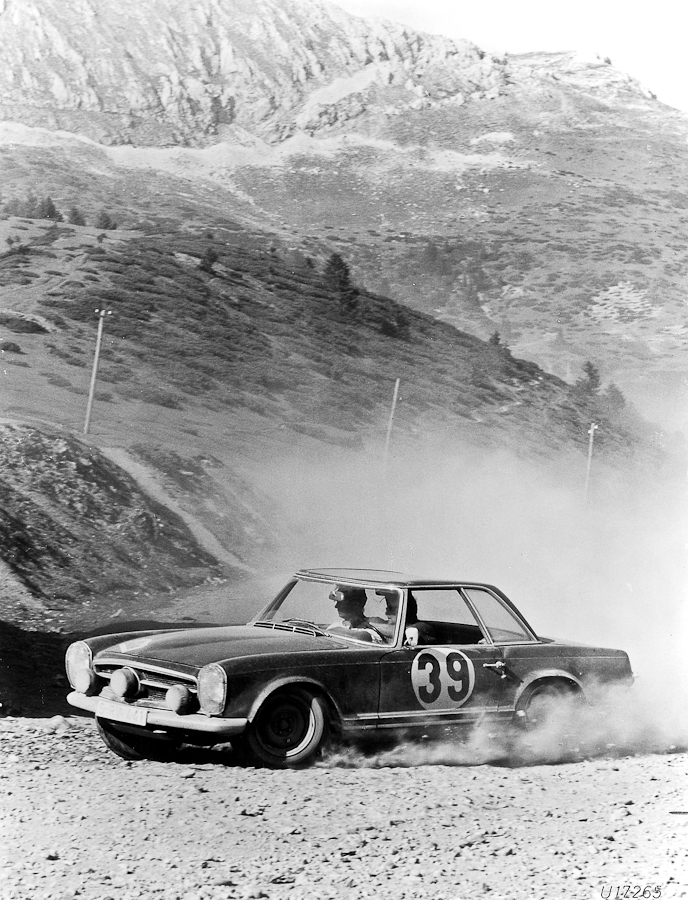
Liège – Sofia – Liège Rally, 1963. Eventual winners Eugen Böhringer and Klaus Kaiser with their Mercedes-Benz model 230 SL (starting number 39).

A highlight of the year was the victory in the legendary Liège-Sofia-Liège road race in the Mercedes-Benz 220 SE.
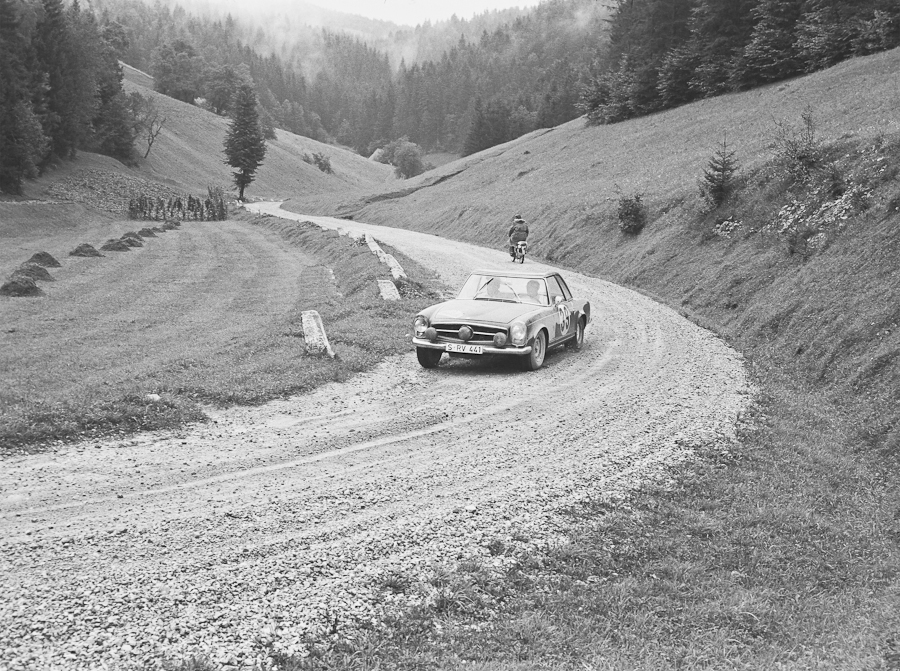
Liège – Sofia – Liège Rally, 1962. Eugen Böhringer and Klaus Kaiser won the event in a Mercedes-Benz 230 SL (model series W 113).

The Stuttgart-based driver was also victorious when this marathon across Europe came around again in 1963. This time, the destination was Bulgaria rather than Rome, and the winning vehicle was a Mercedes-Benz 230 SL “Pagoda”. This was the first time ever that a driver had achieved two successive victories in this gruelling rally.
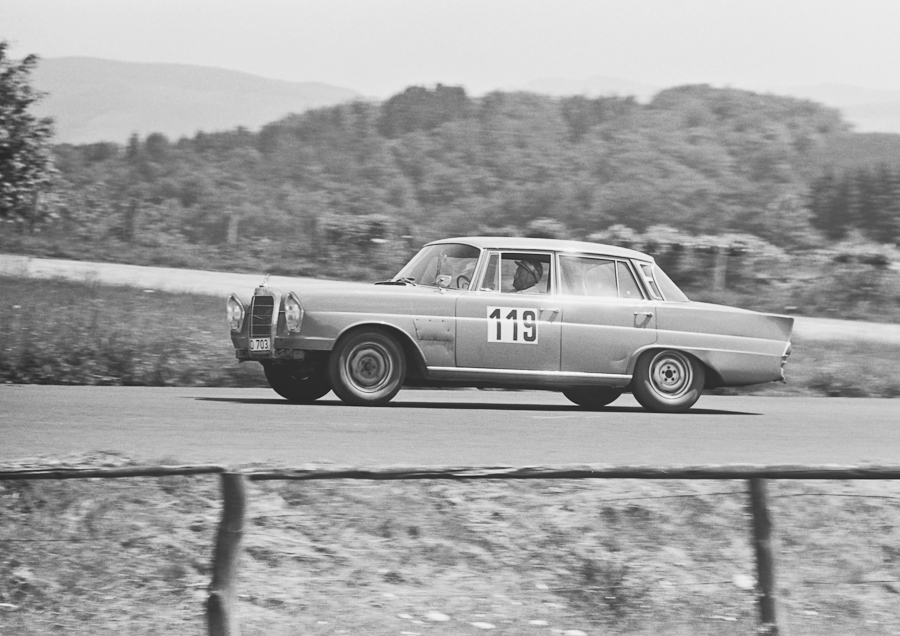
ADAC International 6-Hour Touring Car Race at the Nürburgring, 16 June 1963. Mercedes-Benz model 300 SE touring car. The team Eugen Böhringer / Dieter Glemser (starting number 119) claimed 2nd place in class 9 for cars up to 2500 cc.

Mercedes-Benz was also successful in North America: the Mercedes-Benz 300 SLS was designed especially for the American sports car championship in 1957. It was based on the series-production 300 SL Roadster sports car, with a 900 kilogramme reduction in weight and engine power boosted from 215 hp (158 kW) to 235 hp (173 kW) to turn it into a highly competitive vehicle once again. The SLS provided Paul O’Shea with his third title in succession, following two wins in the “gull-winged” 300 SL in 1955 and 1956.
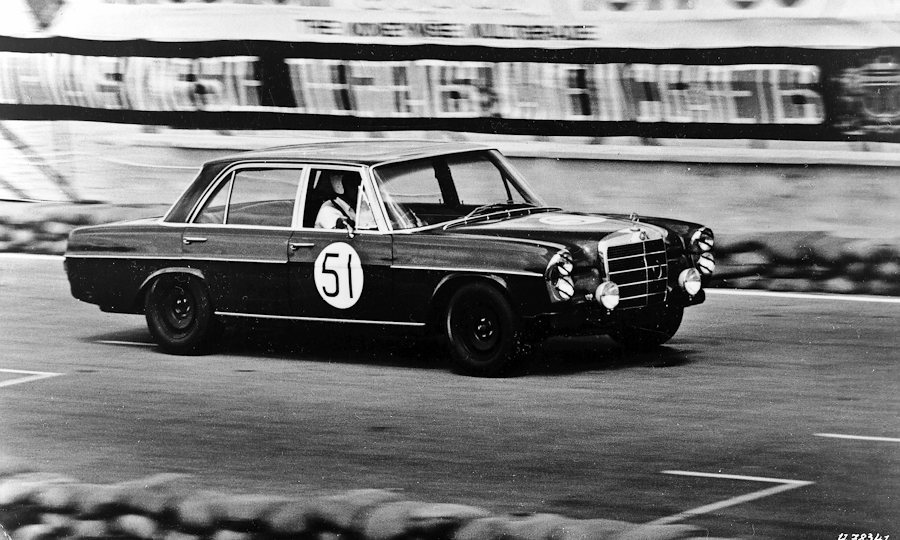
“Guia 101” Endurance Race, Macao, 18 May 1969. Erich Waxenberger and Albert Poon (starting number 51) won the six-hour Macao race in a Mercedes-Benz model 300 SEL 6.3.

The powerful eight-cylinder 300 SEL 6.3 saloon only saw works team action in one race, winning the six-hour touring car race in Macao in 1969 with Erich Waxenberger at the wheel. The oil crisis at the beginning of the 1970s put an end to this saloon’s motorsport career. Automobile historian Karl Eric Ludvigsen emphasizes the importance of this break in Mercedes-Benz’s motor racing history: “The oil crisis resulted in the first interruption to Daimler-Benz’s long tradition triggered by external events. The company’s racing traditions began around the turn of the century, with the only hiatus – apart from the war years – occurring in 1955; every year, there was always one or more Benz, Mercedes or Mercedes-Benz cars in at least one key race, with either direct or indirect support from the works.”
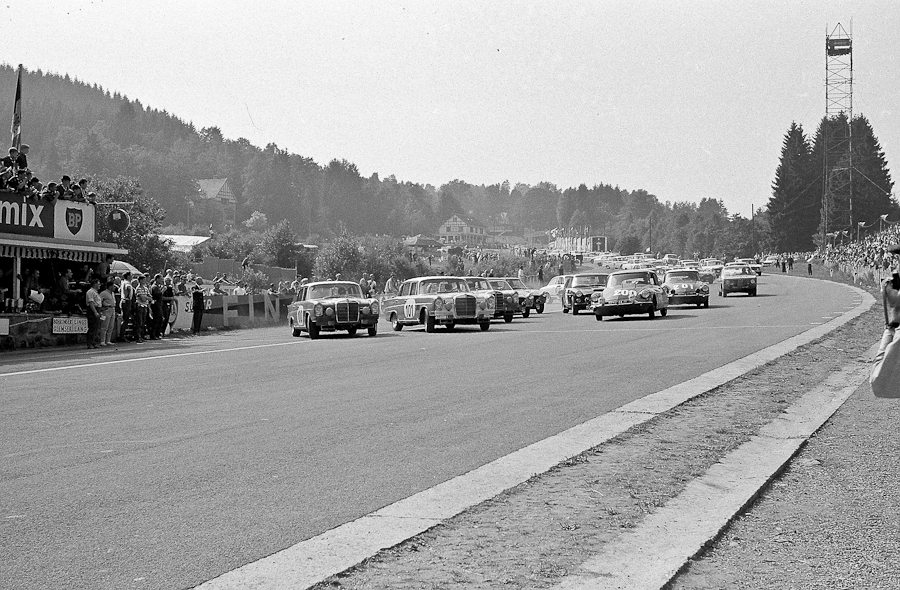


Private drivers continued Mercedes-Benz’s racing traditions, however. Increasingly, their vehicles came to be prepared for competitive use by AMG – a company founded in Burgstall near Stuttgart by former Daimler-Benz employees Hans-Werner Aufrecht and Erhard Melcher in 1967 as an “engineering firm pursuing the design, testing and development of racing engines”.  The leading products in the company’s early years included the refined version of the Mercedes-Benz 300 SEL with a 6.8-litre engine, which claimed a class victory and took 2nd place overall in the 24h Spa Francorchamps race.  The independent tuning firm made a name for itself preparing vehicles for racing competitions over many years, before it was taken over in its entirety by the then DaimlerChrysler AG.

Courtesy of and Copyright Daimler AG. All images courtesy of and Copyright Mercedes-Benz Classic.

John Brooks, May 2011

The Revolution Will Not Be Televised

A  strange weekend, no racing for me, calm before the storms of the Le Mans and Nürburgring 24 Hours next month. So a chance to pause and reflect.

Gil Scott-Heron, RIP


The news came down the Mojo wire of the passing of Gil Scott-Heron. What does that have to do with motorsport? Nothing, but despite that I feel the need to mark this event with respect, he was a great Jazz Artist and Poet. There really “Ain’t No Such Thing As A Superman”.

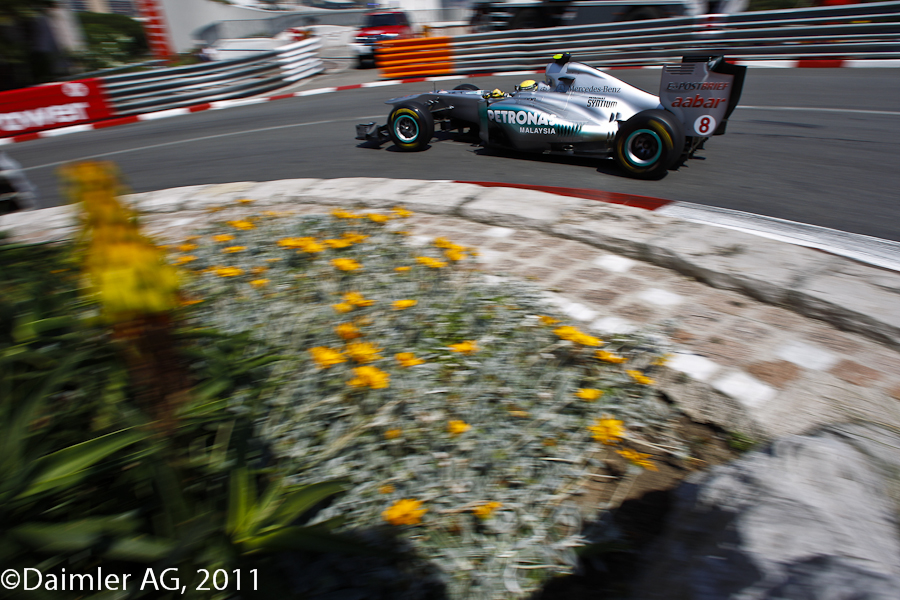
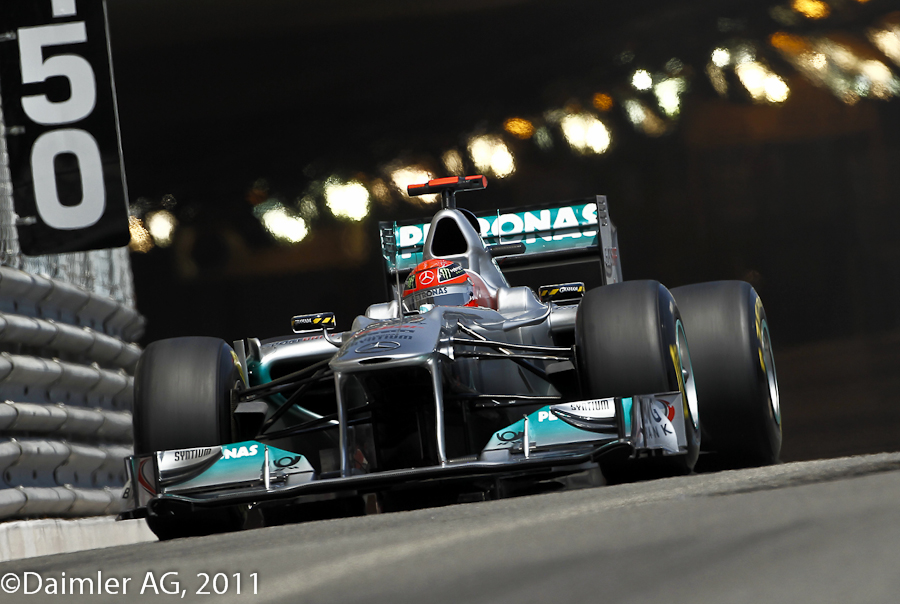
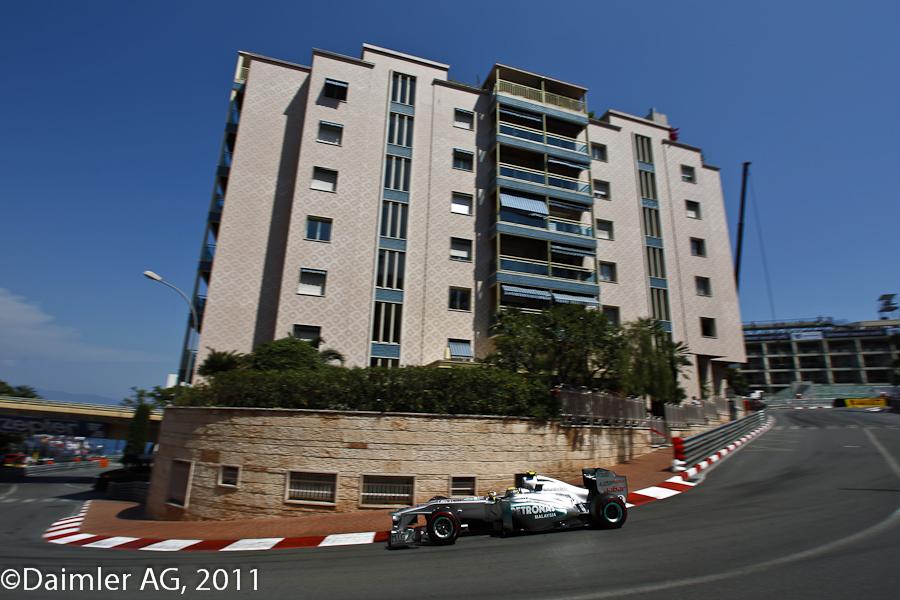
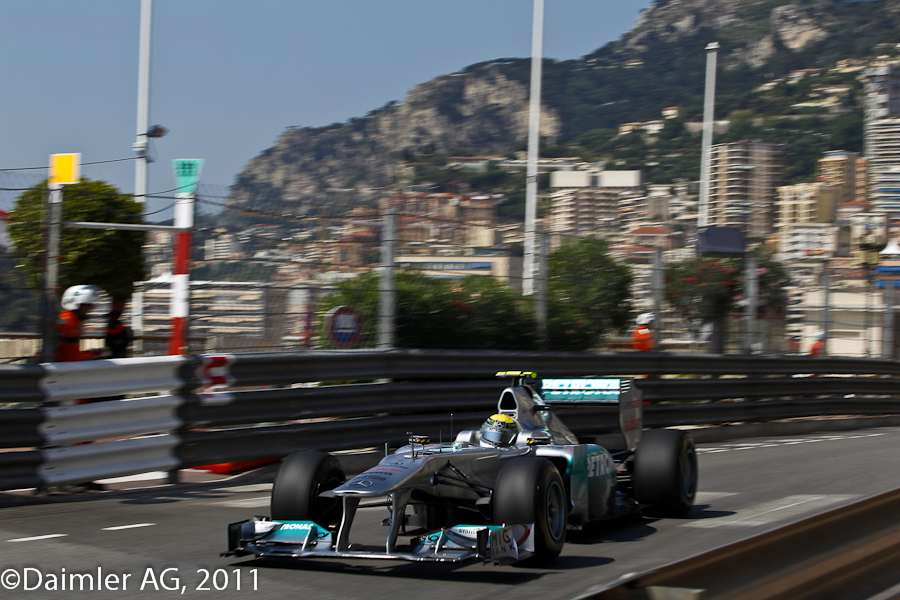
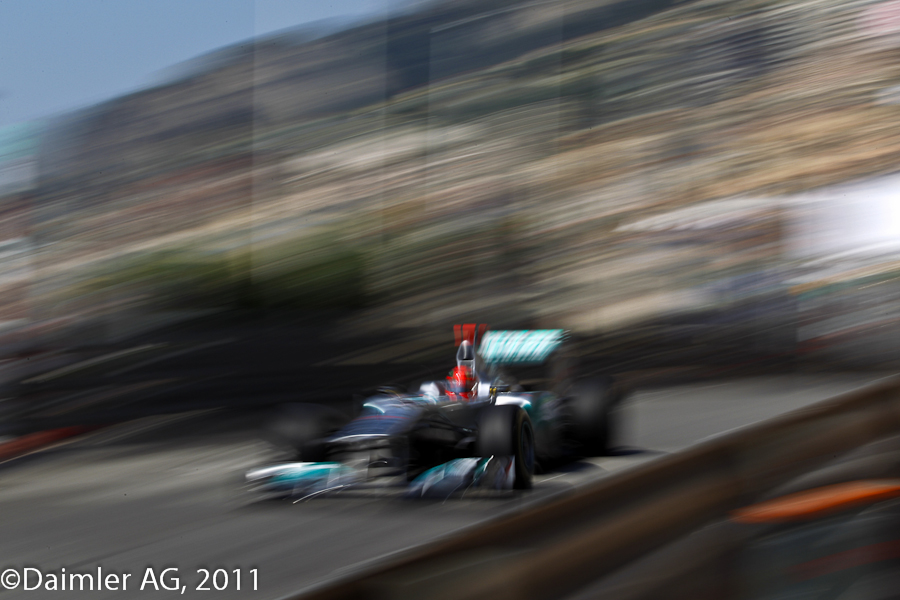
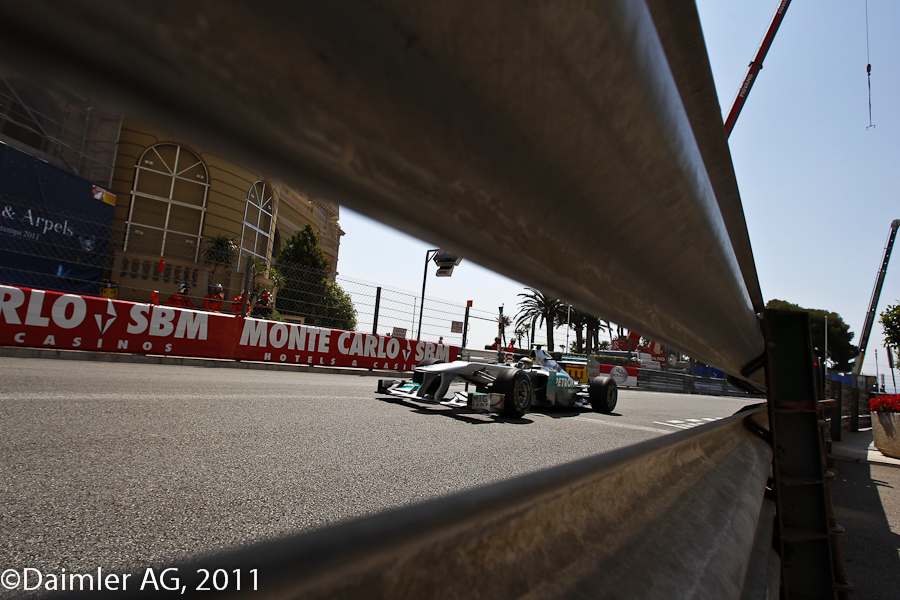
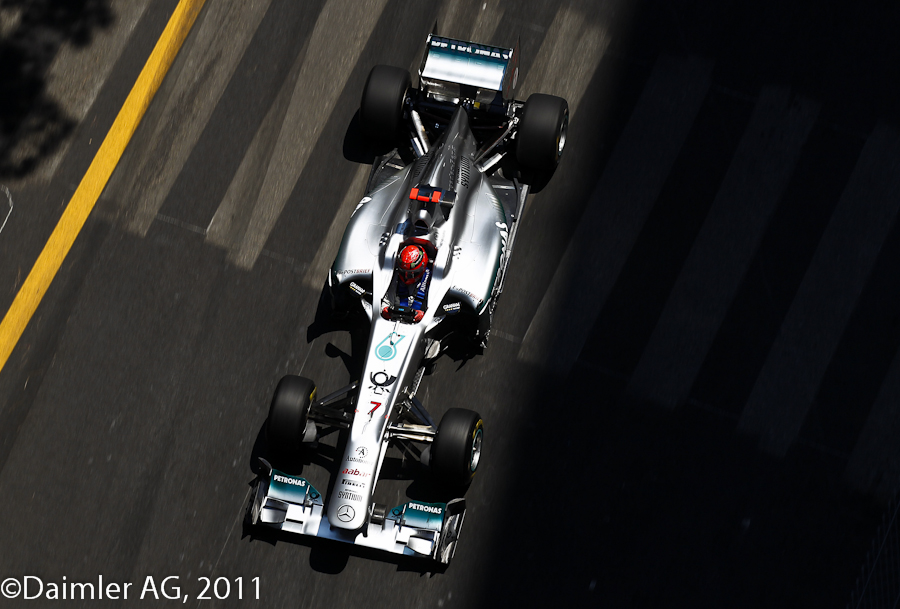
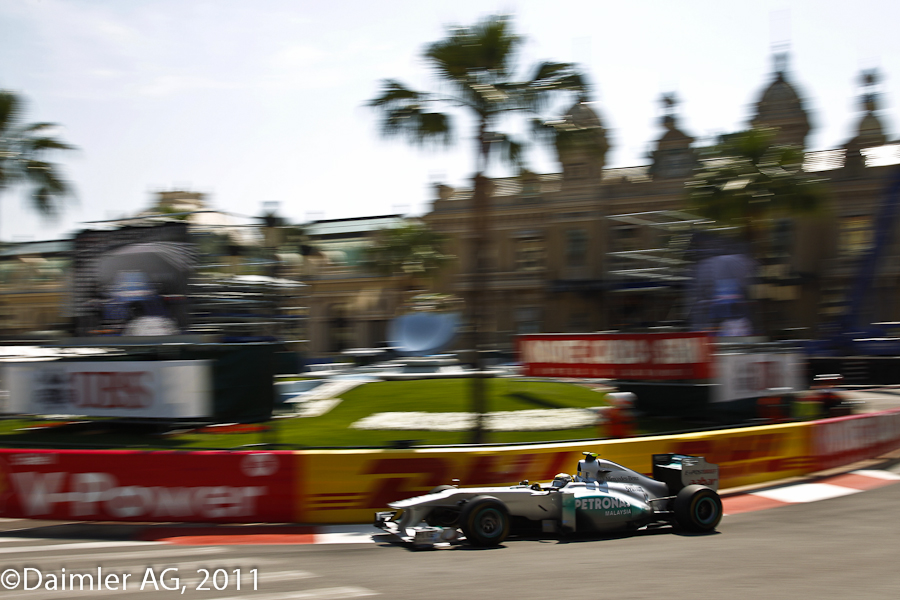
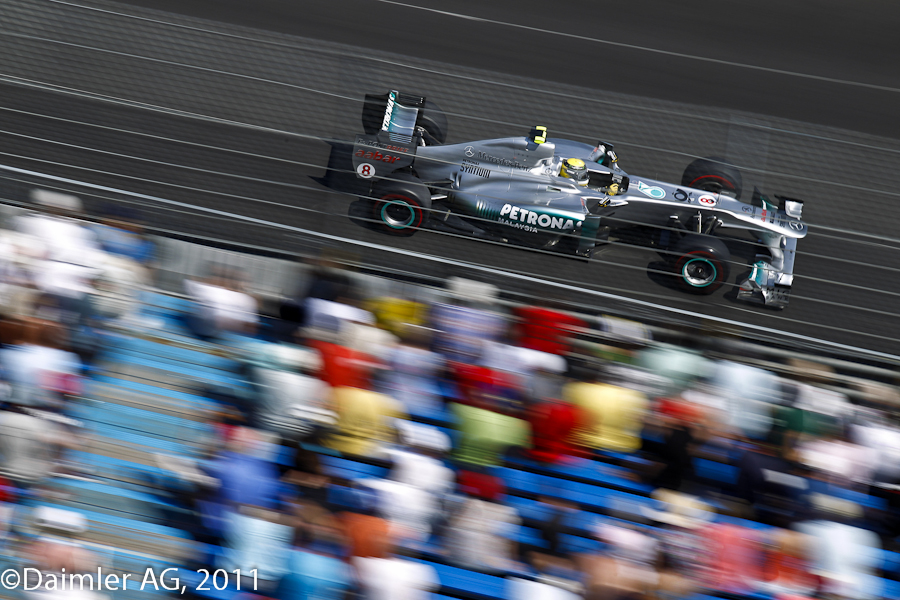
Someone who is finding that out in a public way this year is Michael Schumacher, being constantly outpaced by Rosberg Junior at the Grand Prix tracks. However anyone who doubts the commitment of the Seven-time World Champion just needed to watch him wring the the neck of his Mercedes at Monaco yesterday during Qualifying. Fearless does not even get close. Like all the hot shoes the speed through the chicane at the Swimming Pool was staggering.

Mercedes Benz has a reputation for efficiency, amongst other things, and I have to say that their press site is one of the best out there. Daimler AG is rightly proud of their heritage and is happy to share it. So there are several pieces using their source material in the pipeline.

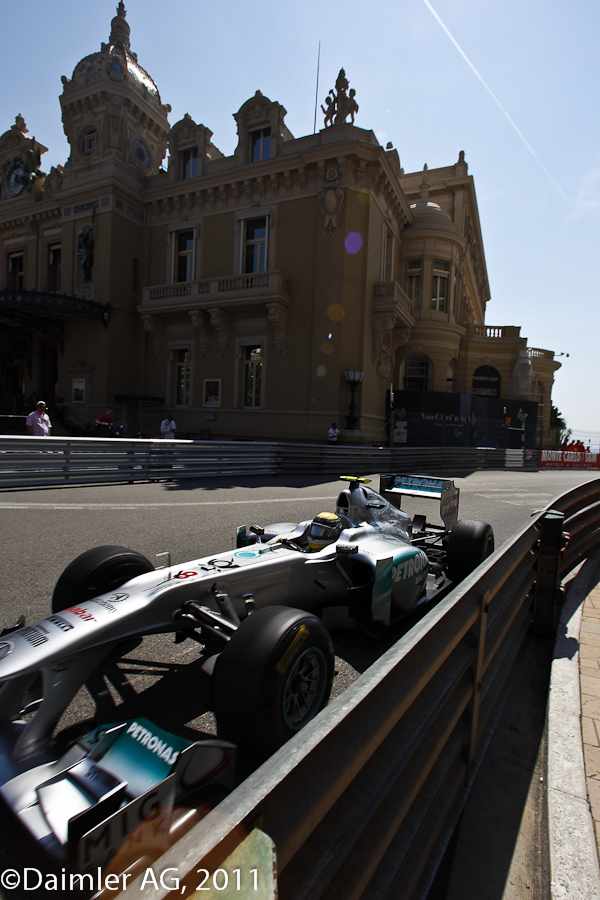
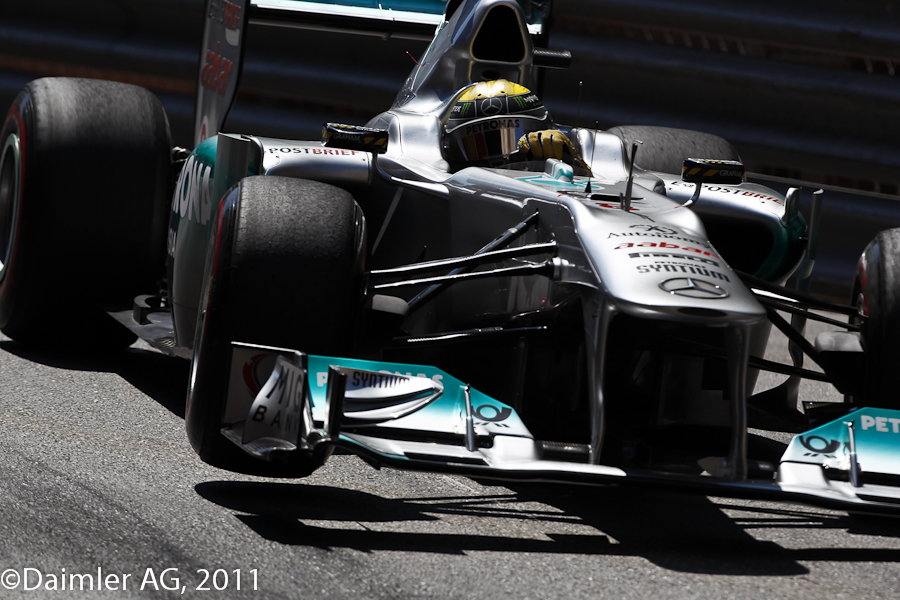
Daimler do not only hire top drivers, their photographers are first rate too. So here is a small selection of imagery from yesterday’s action on the shores of the Mediterranean.

I would like to have that stuff myself, but……………………………..

John Brooks, May 2011
Cat Out Of The Bag?

Before heading down the highway to Navarra last weekend, I stopped in at the El Salón Internacional del Automóvil de Barcelona. The Show was the usual concoction of desirable contemporary automobiles, but one item caught my eye.

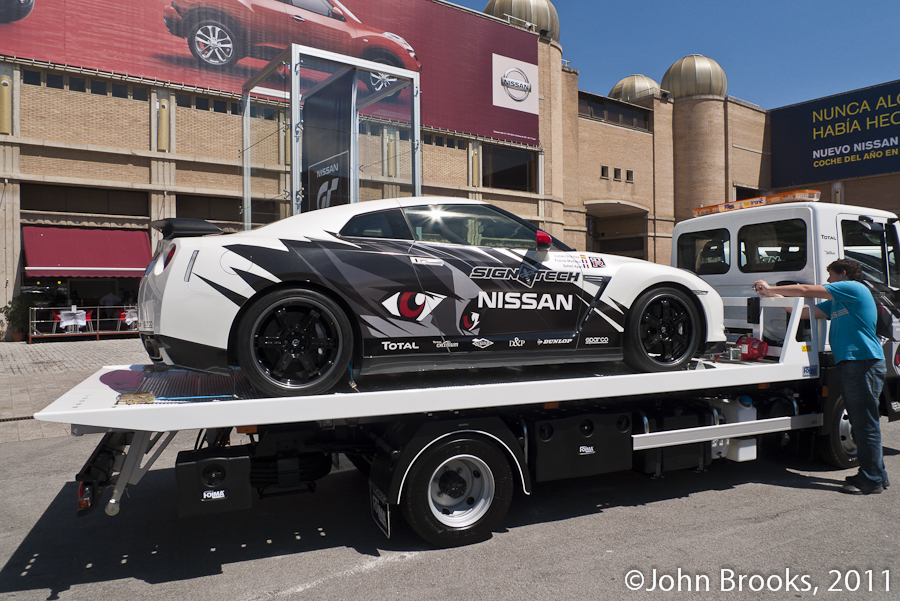
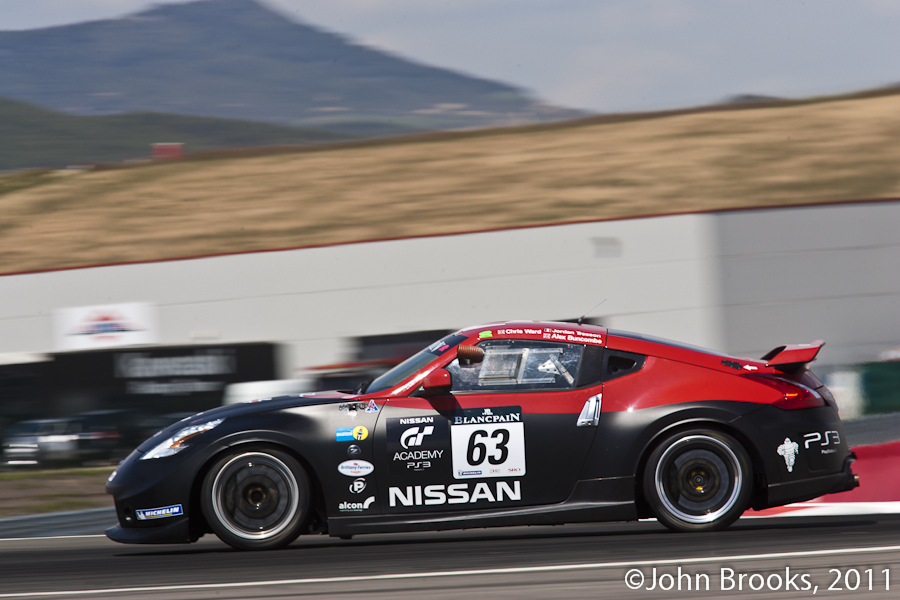
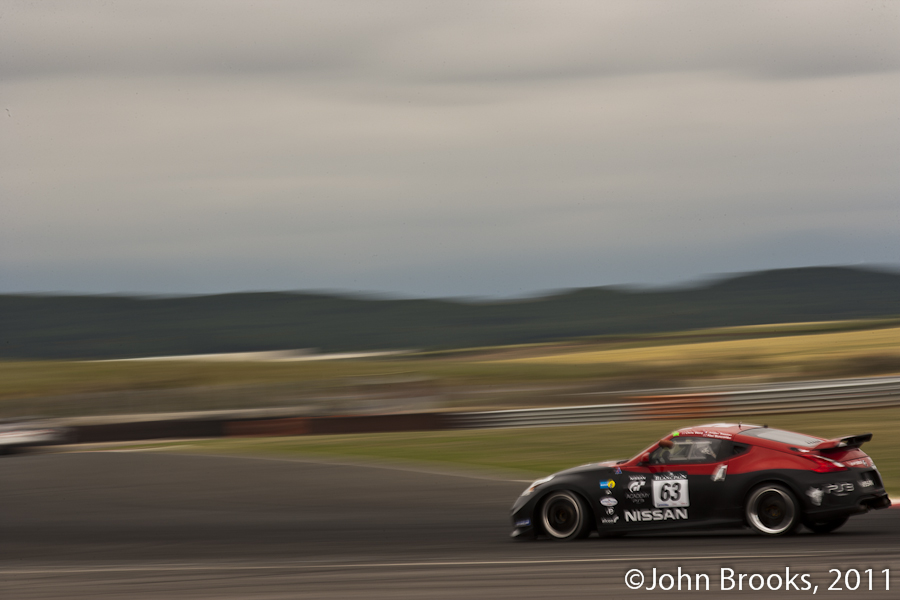
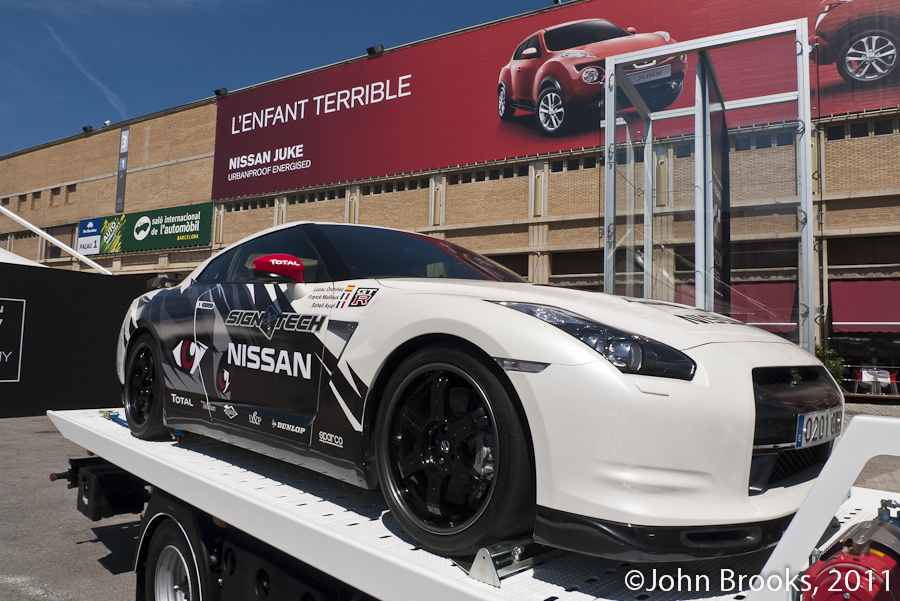
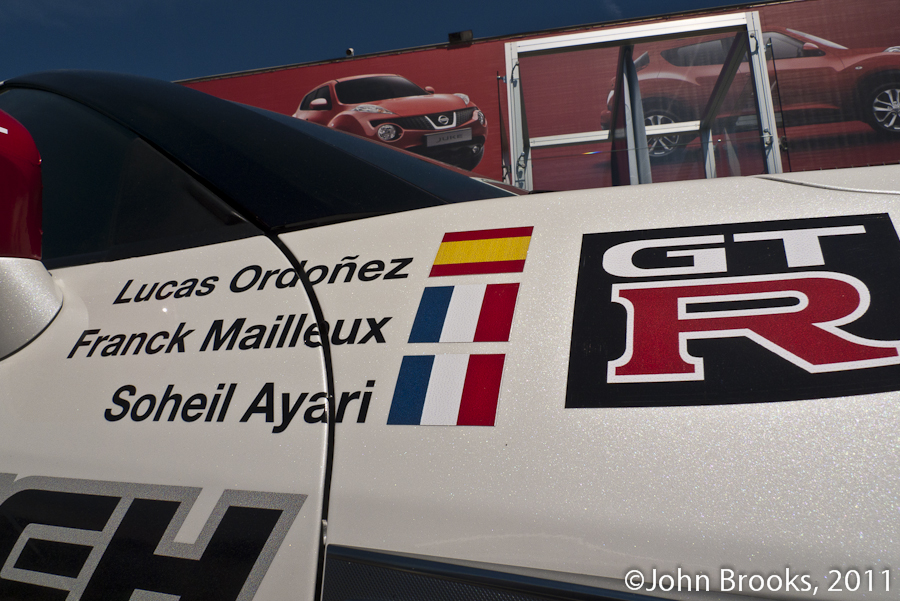
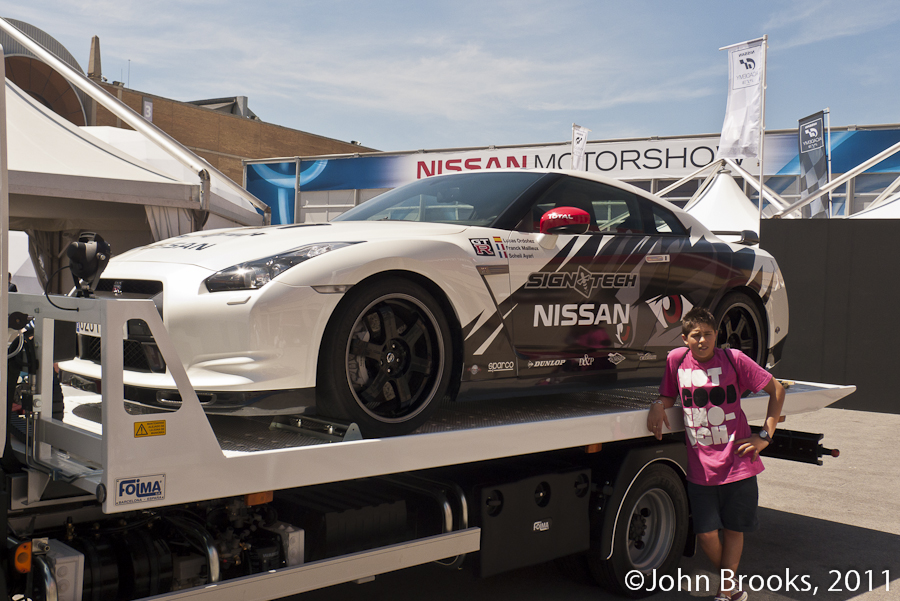
I wondered into one of the pavilions, totally occupied by Nissan, then something out back attracted my attention. It was GT-R, a road car but decked out in the livery of the LMP2 team Signature Racing. They utilise a Nissan engine mated to an ORECA 03 chassis and race in the Intercontinental Le Mans Cup under the banner Signatech Nissan.

The announcement of a GT3 racing version of the Nissan GT-R was made earlier this year. Not much was known about the project other there is an intention to début the car at the 2011 Spa 24 Hours and that it will be powered by a V6 turbo (not the V8 pickup truck engine that is used by the GT1 car). I got that tidbit from someone who really does know.

It has been assumed that the car would be run by Sumo/JR Motorsport on behalf of NISMO, as a development programme prior to selling the beasts to the discerning public. To be fair when I have asked the question, I have not been given a clue either way by the team.

However it seems strange that Signatech would go to the bother (and expense) of creating a livery and naming drivers if they had not some intention of racing something similar.

Maybe it was just promoting the tie up between Playstation and Nissan, Lucas Ordoñez, being something of a local hero. It was certainly a popular exhibit, even if inelegantly displayed on a flat bed.

My guess is that we will see one or more of the GT3 Nissans lined up at Spa or Magny Cours in this paint scheme.

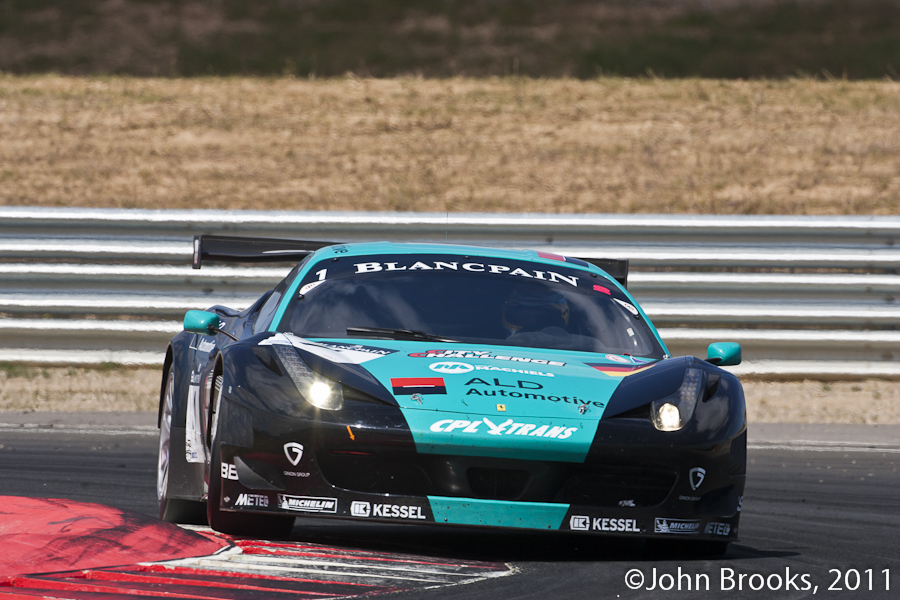
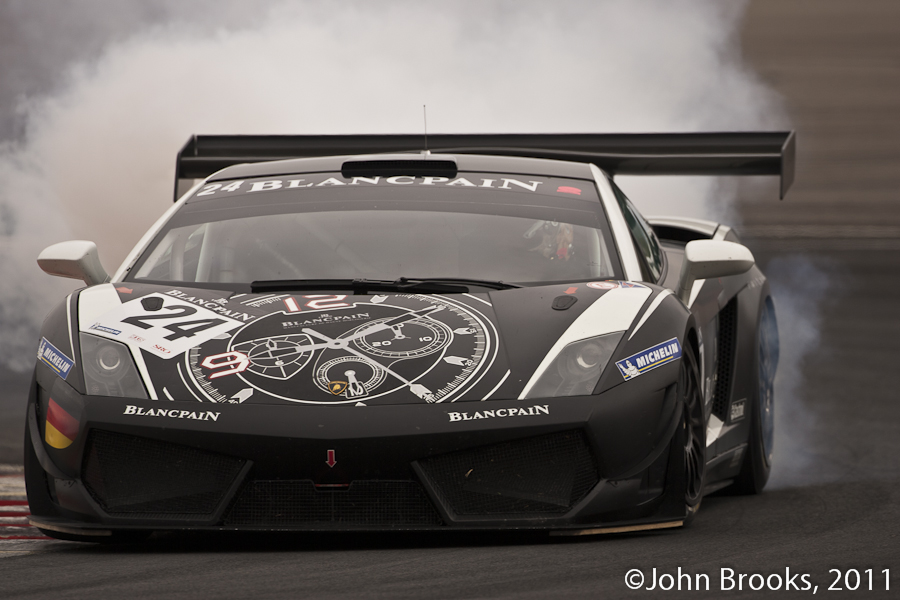
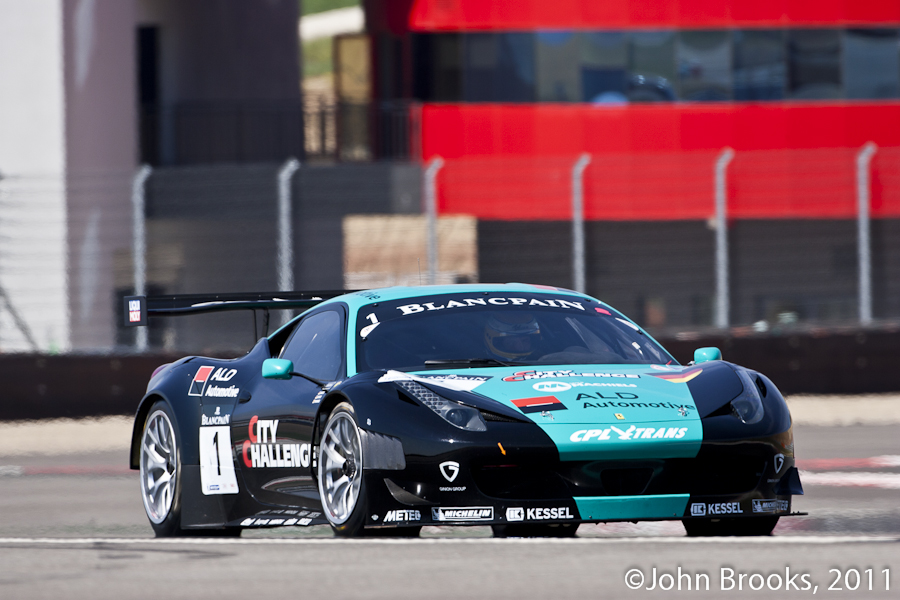
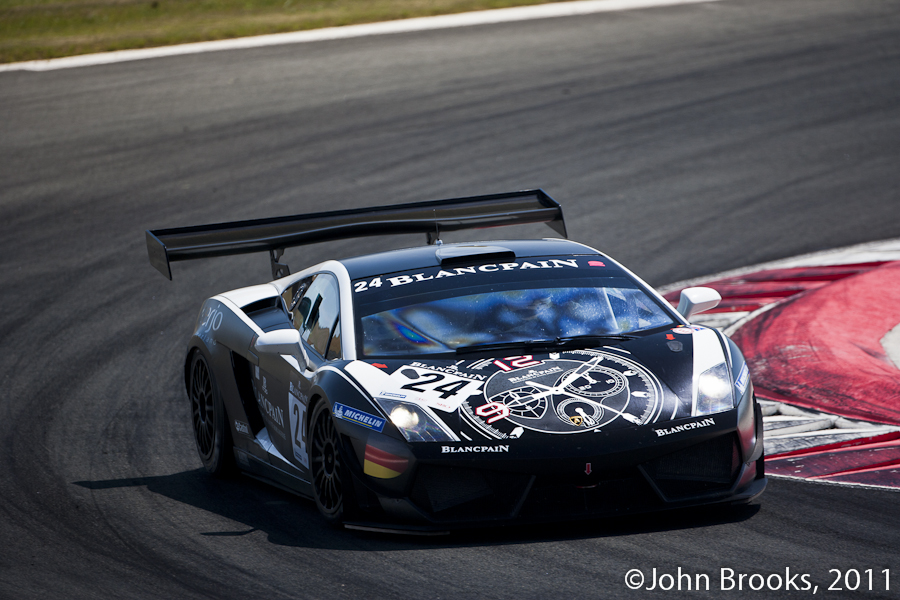
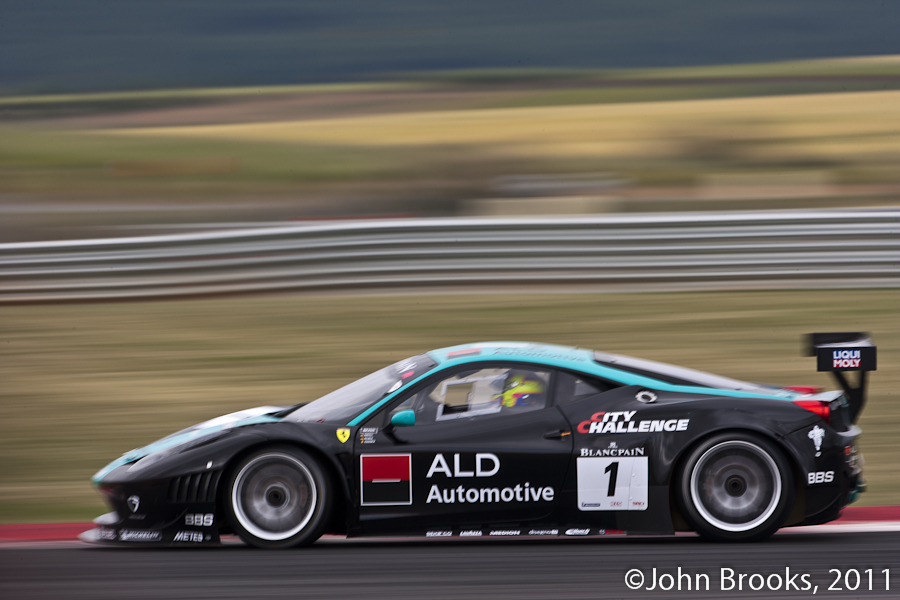
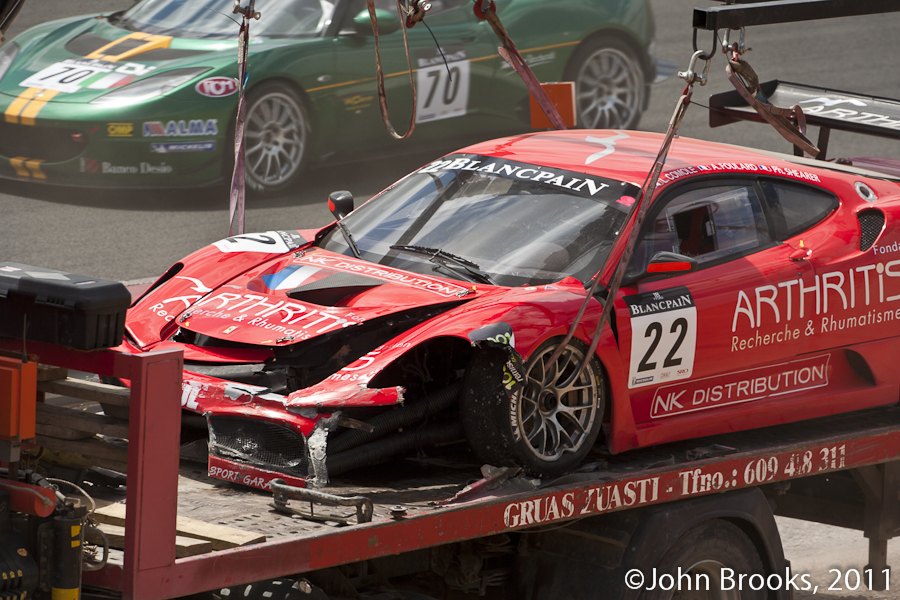
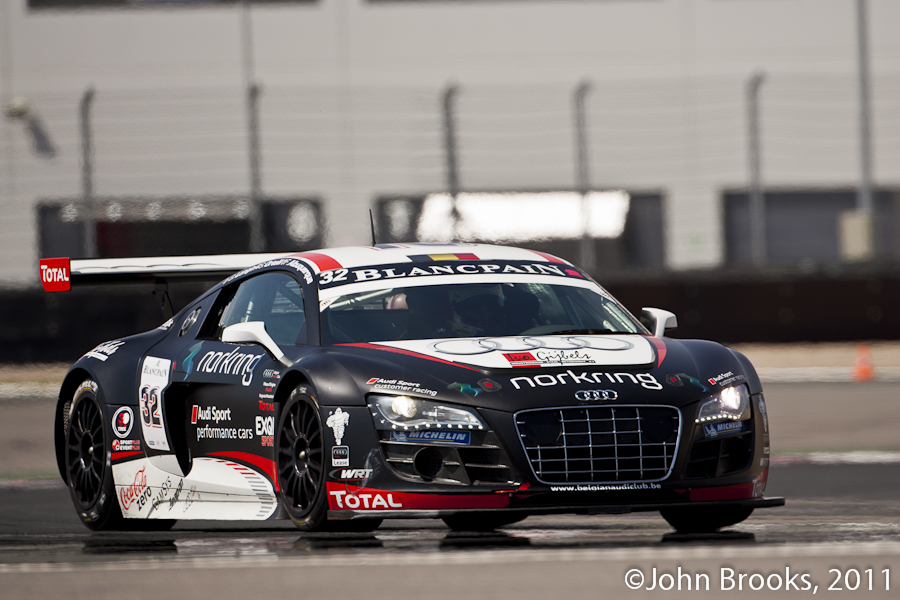
This certainly adds to the feeling that the Spa 24 Hours, part of the new Blancpain Endurance Series, is a must-do event this summer.

John Brooks, May 2011


Chelsea AutoLegends. An Instant Classic?

Instant Classic, a cliché in most cases but like all clichés there are instances when it reflects reality. The Chelsea AutoLegends certainly falls into that exclusive category.

No one really knew what to expect when the first show was held last September in the grounds of The Royal Hospital, Chelsea. By any standards it was a rip-roaring success, a mouth-watering collection of cars that had competed at Le Mans over the decades in a regal setting and the atmosphere of an English Garden Fête. Even more important, substantial funds were raised for the ongoing refurbishment of the 300 year old Royal Hospital, famous home to the Chelsea Pensioners.

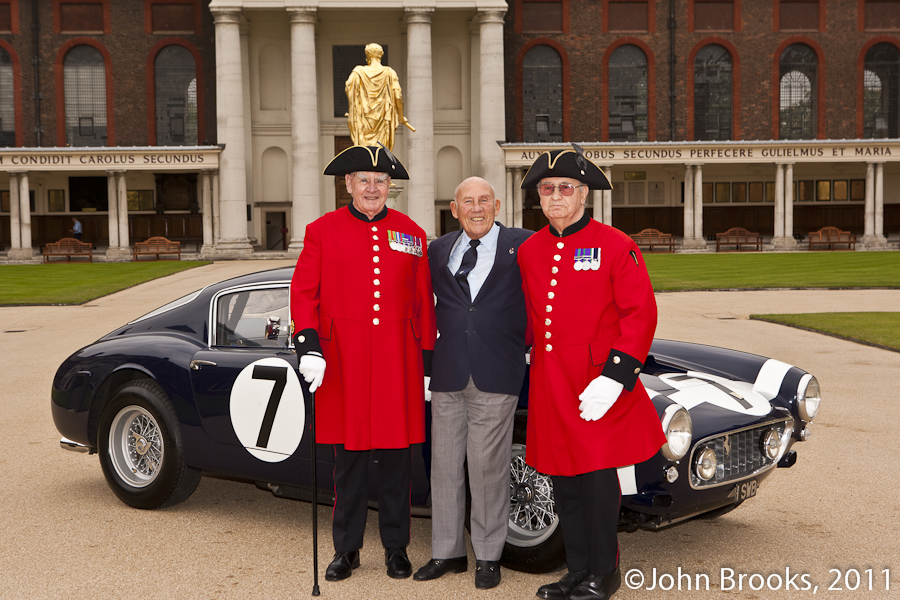
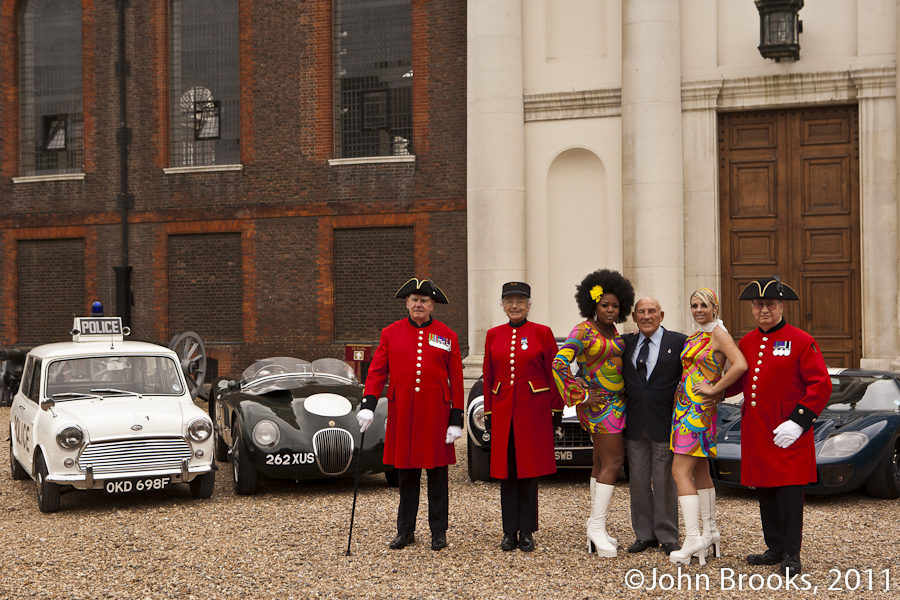
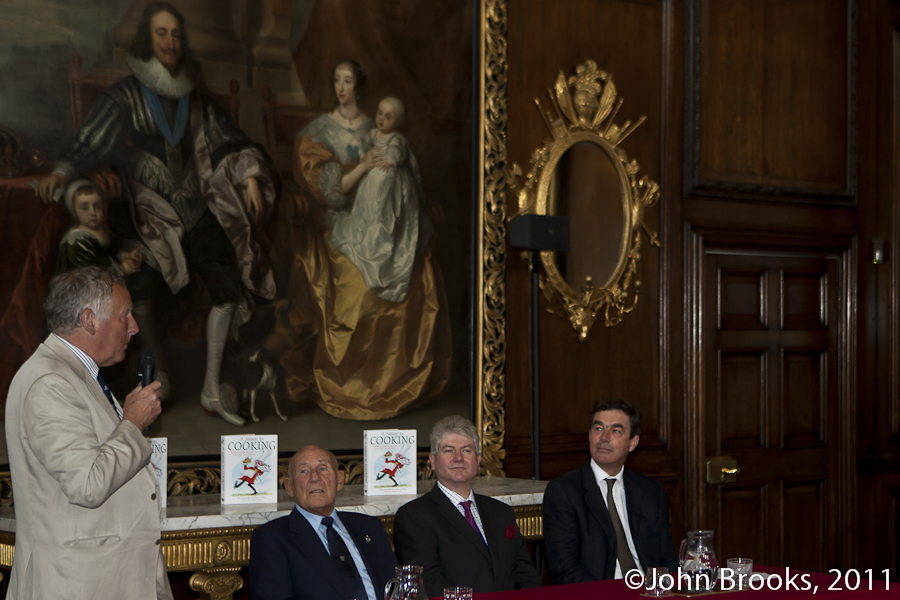
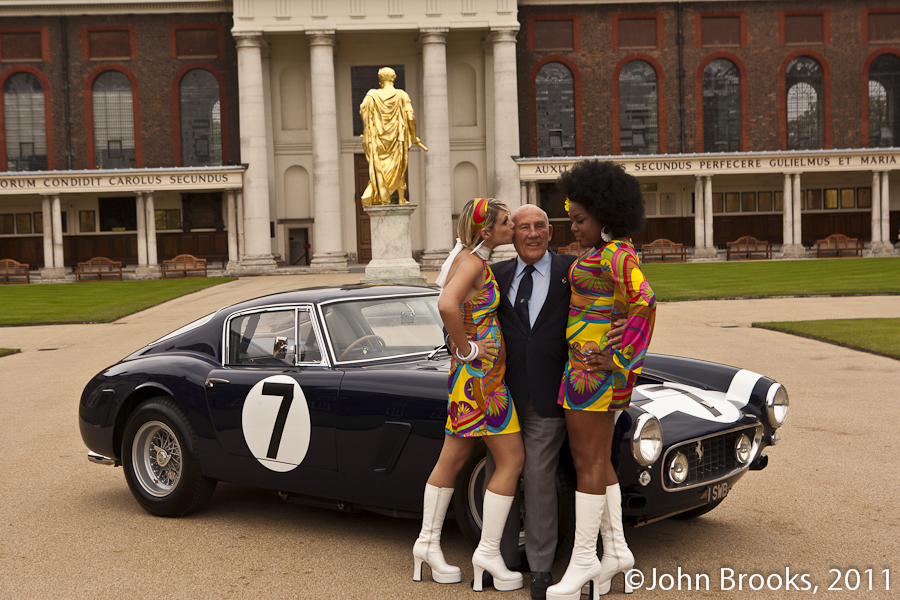
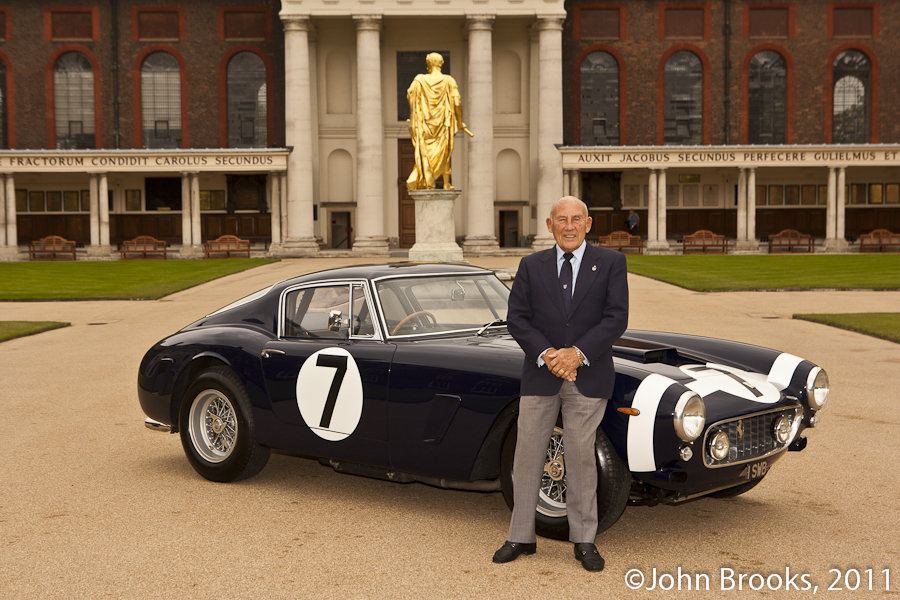
So last week we were given a taste of what to expect in early September 2011, when the second show is scheduled to take place. Central to the preparations for the event is the participation of the Patron for the event, Sir Stirling Moss OBE. Sir Stirling was on fine form, whether recalling his days as a driver for Rob Walker Racing or posing with a pair of young ladies clad in psychedelic mini-dresses (he seemed especially keen on that part of the presentation).

Old Friends

The main theme of this year’s show will be the Swinging Sixties and how apposite considering that the Kings Road is but a stone’s throw away. Mind you if you went down to The Chelsea Drugstore these days you will find a Big Mac and Fries rather than getting your prescription filled, perhaps “You Can’t Always Get What you Want.”

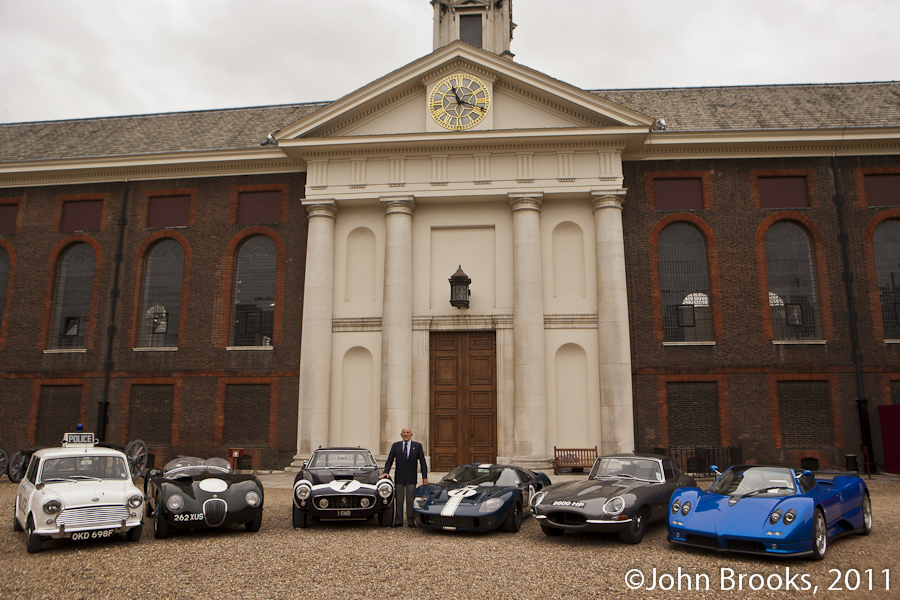
Aside from the inevitable fashion and musical references that this homage to half a century ago will bring there are also contemporary automotive legends to be celebrated. The 50th birthdays of the Mini and the E-type, both icons of the period, will be the excuse to have a comprehensive displays of these quintessentially Sixties cars.

SuperCars

Significant road cars will also feature in a run of Super Cars from the RAC Club in Pall Mall which should make quite a splash when the arrive en masse at the Royal Hospital. Not to be outdone the two wheel brigade will also bring a pack of bikes, old and new, from the marginally less salubrious Ace Café on the North Circular. Autocar will have an exhibition of the ten most important road cars of the period since 1960 that have been tested by the magazine. Autocar’s top ten were named following the publication of the magazine’s 5,000th road test earlier this year.

Pensioners

“The Autocar road test has often been copied but never bettered. Every car, whether a 200mph supercar or supermini is given the same exhaustive treatment,” said Autocar Editor Chas Hallett.

“It’s great that our top ten all will be on display at Chelsea AutoLegends – they are the cars we think have made the most significant contribution to motoring over the years.”

“Jaguar’s iconic E-type was named as the number one test of all time. It may not have been as important a car as the Mini, nor have broken quite so much new ground as the McLaren, but it means most to our readers and to us as writers and testers. It is a car of beauty, power, driving pleasure and value.”

The ten cars, in no particular order, are the Audi Quattro, Ferrari 458 Italia, Volkswagen Golf GTi, Range Rover, Rolls Royce Phantom, Morris Mini-Minor, E-type Jaguar, Ferrari 365 GTB/4 (Daytona), Porsche 911 GT3RS and the McLaren F1.

Late Night Line Up

Also on display at the show will be the Bugatti Veyron SuperSport, current holder of title of the World’s fastest production car……….267mph if you must know.

The Management

The Chelsea AutoLegends show was created by the imagination and hard work of local resident, Michael Scott. That being the case, there will always be a strong Le Mans element in the cars on display while he is involved. This year will feature those that were prominent in the Sixties and to introduce this theme at the launch Rob Walker’s Ferrari 250GT SWB was reunited with Sir Stirling, recalling the victory that he posted in the 1961 Tourist Trophy at Goodwood. He also raced at Le Mans that year in this Ferrari, partnered by Graham Hill.

Mention of Rob Walker brings out another theme of this year’s AutoLegends, a salute to the team Patrons of that era, John Coombs, Tommy Sopwith, and Colonel Ronnie Hoare joining Rob Walker on the pedestal. Moss spoke with great affection about his old team boss and friend.

“Rob was a true gentleman and a real enthusiast. But he was also a damn good team manager and our win together at the Goodwood TT was one of the highlights of my career. I am delighted that Chelsea AutoLegends is honouring Rob, and some of the other British private entrants, at this year’s event. Without people like Rob Walker, motor racing in the 1960s just wouldn’t have been the same.”

“Rob Walker had written in his passport where his business was described as being a Gentleman. I think that sums it up, a wonderful man.”

“When he raced at Le Mans (1939) at around six o’clock Rob came into the pits for an unscheduled stop. He came in because Gentlemen don’t wear brown shoes after Six. He had to change his shoes to suede.”

“Then just before the end of the race he had a signal to stop at the pit, once there he asked why? The team replied that he had done such a good job that they were celebrating with some Champagne and they didn’t want him to miss out.”

“That was what racing was all about back then.”


It was a different era.

Tickets for this year’s Chelsea AutoLegends are now on sale either via the event’s website www.ChelseaAutoLegends.com or from the ticket hotline on 0844 581 0760. Those pre-booking can take advantage of considerable savings with adult tickets priced at £15 in advance rather than £20 on the gate. Underlining the event’s family entertainment values, accompanied children aged under 12 will be admitted free of charge.

Keep September 4th free and go along. A Good Time for a Good Cause, simples.


John Brooks, May 2011


Peninsular Wars

The attention of the motor sport world was firmly fixed last weekend on the Iberian Peninsula, mostly it has to be said in Catalonia, where the F1 heroes were strutting their stuff.

Sound and Fury


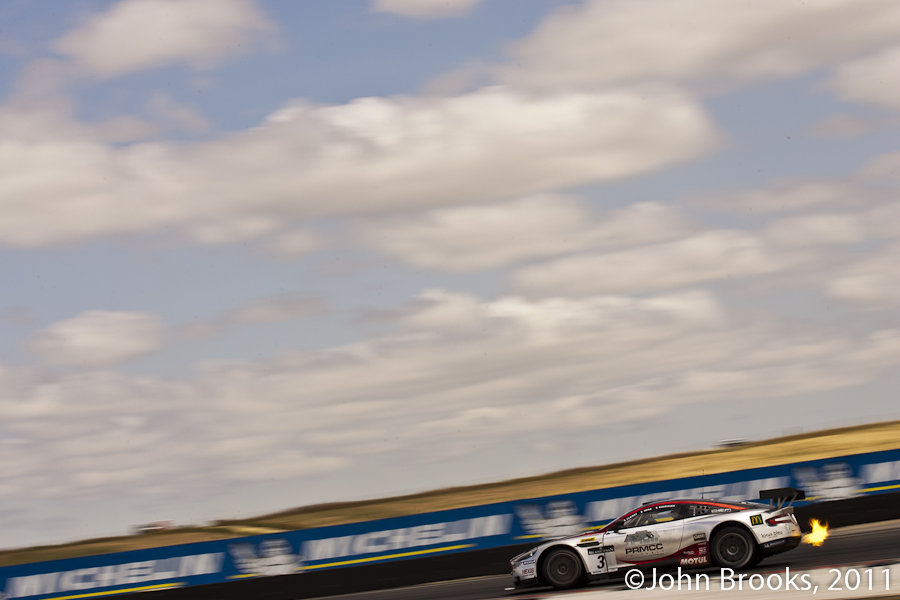
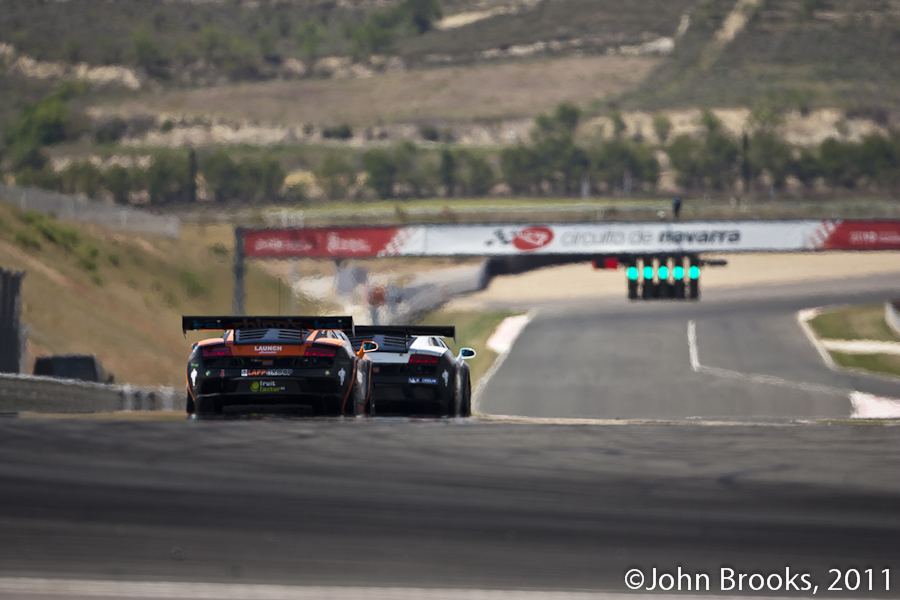
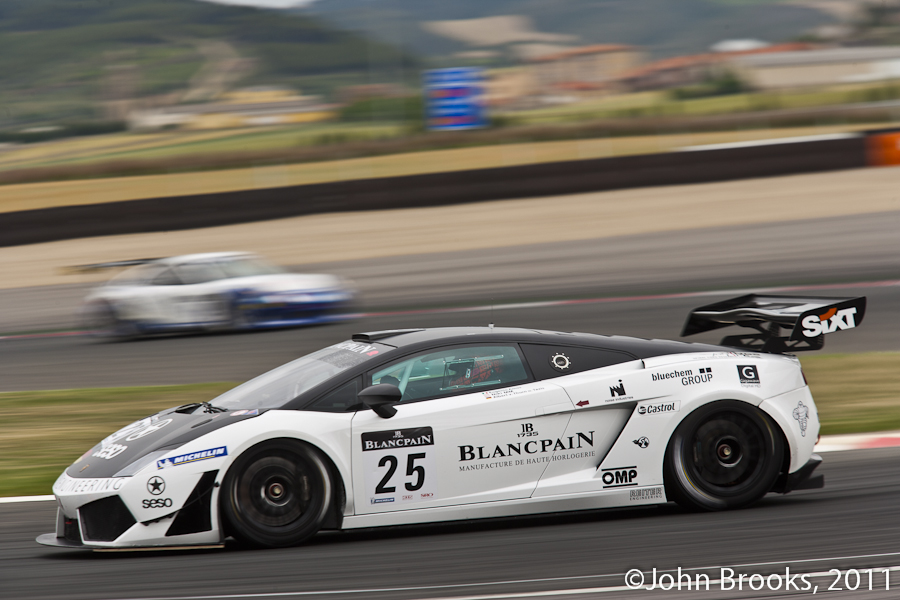
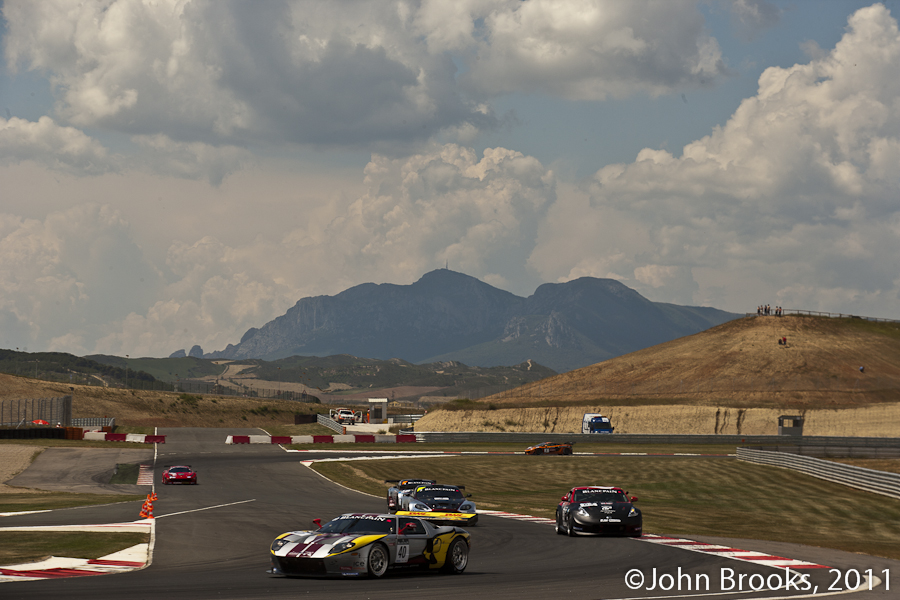
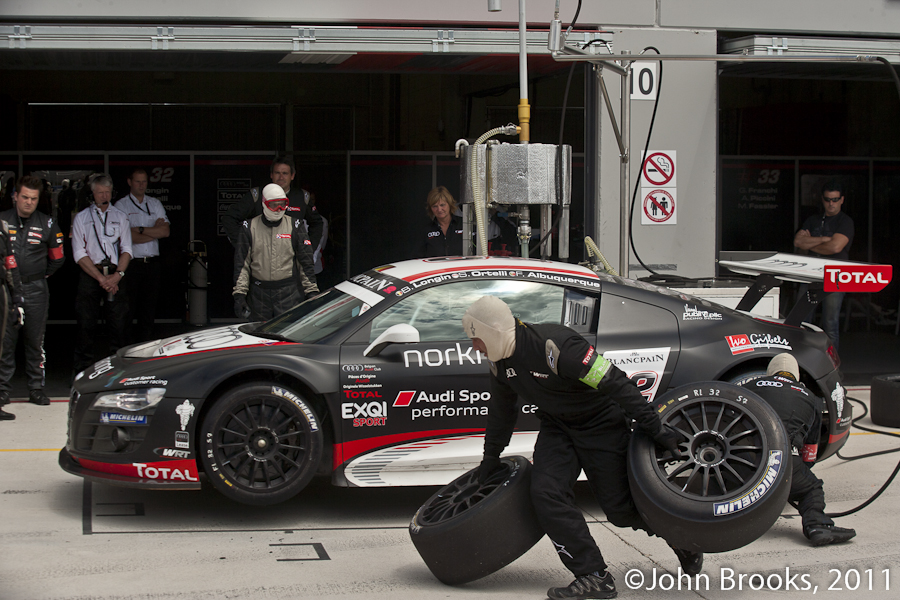
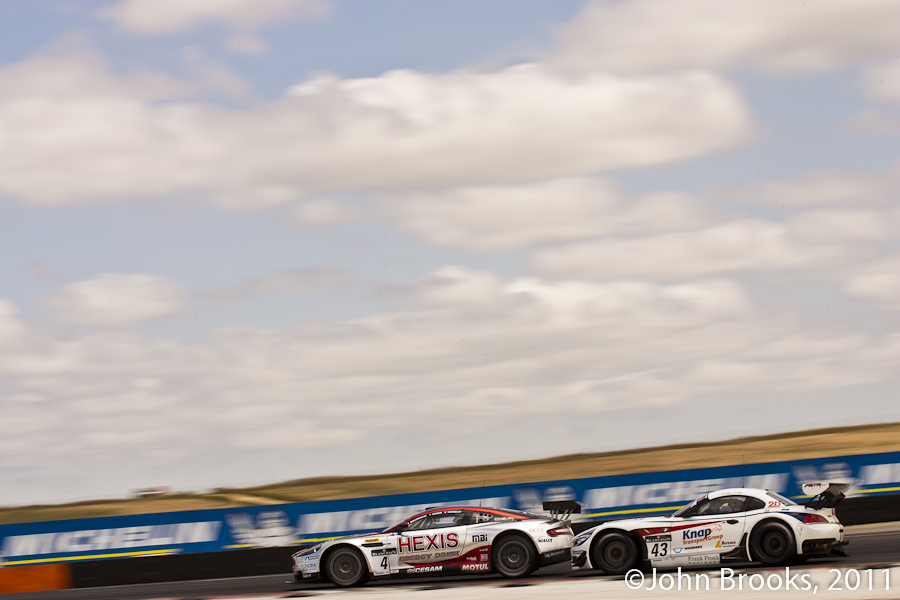
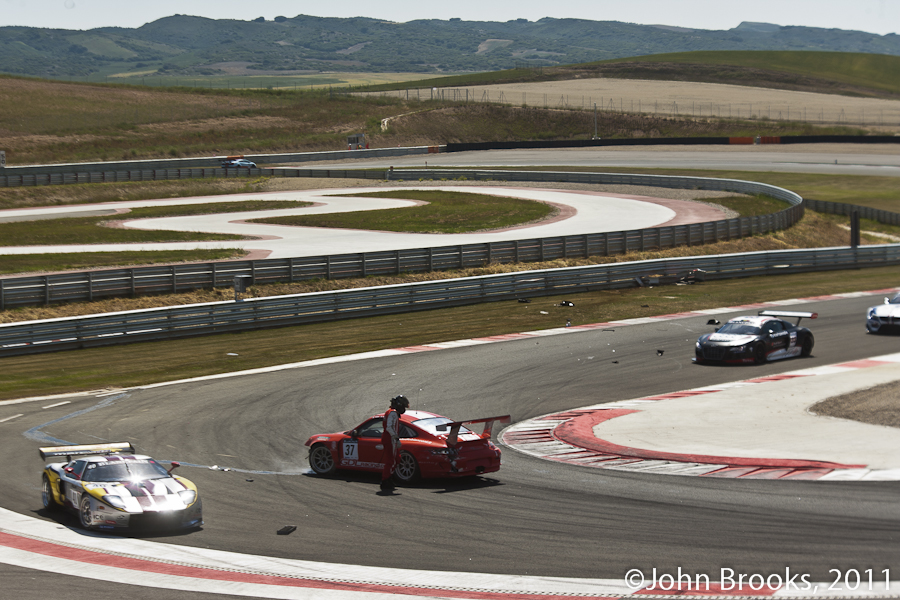
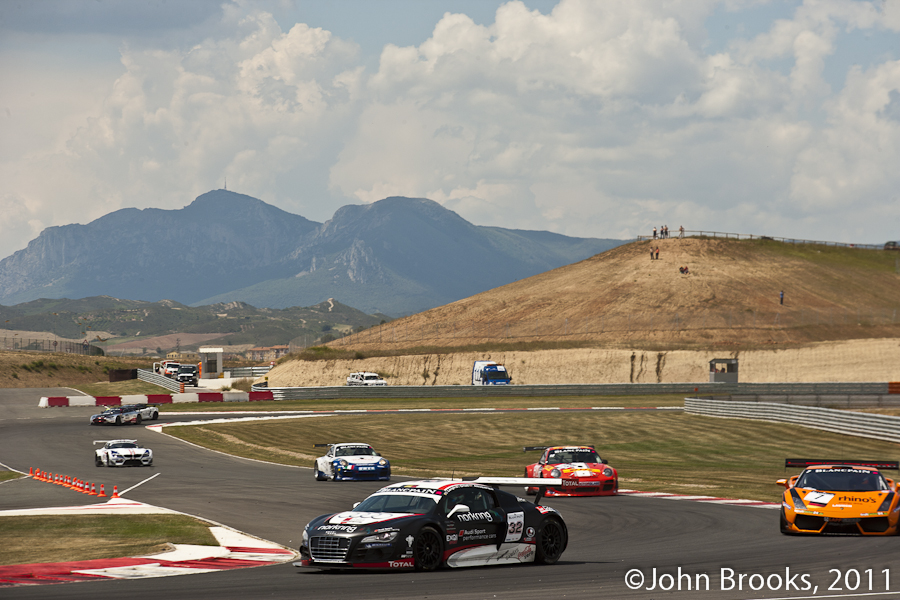
However for some like me the story was unfolding some 300 miles’ drive to the west of Barcelona, in the wine country that surrounds the Circuito de Navarra. A newish circuit for a new formula, the Blancpain Endurance Series.

I Walk The Line

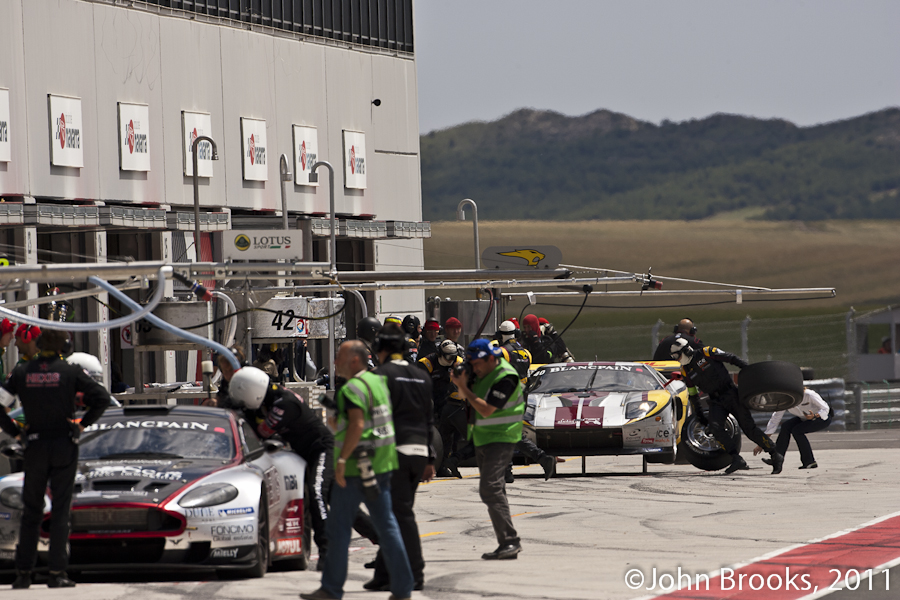
Stéphane Ratel, the charismatic El Jefe of SRO, has gone back to his roots this year with this new set of events. Four 3 Hour races to support the Spa 24 Hours, aimed firmly at a mix of professionals and gentlemen drivers, giving mucho bangs per bucks. Not a sprint event that resembles Banger Racing at Walthamstow, nor travelling halfway round the globe to spend the best part of a week out of the office, this formula works for those who work.

Thundering Herd

Those of with long memories, or in my case, still with some memory, can see a distinct resemblance of the BES to the fabled BPR, oh, we love our acronyms in motor sport. BPR (the initials of Jürgen Barth, Patrick Peter and Stéphane Ratel) was a major part of the revival of endurance sportscar racing in the mid-90s after the destruction of Group C.

Hot Stuff

The BPR Global Endurance Series grew rapidly, helped in part by the format of 4 Hour races and rules that encouraged the inclusion of the talented and the monied in equal measure. It was also boosted by the debut of the legendary McLaren F1 GTR, that took the fight to the Ferrari F40 and others. At the high water mark, Silverstone 1996, the series could boast 54 starters and  11 marques (McLaren, Lotus, Ferrari, Porsche, Marcos, Callaway, Venturi, TVR, Jaguar, Vertigo and Morgan).

Green Light Racing

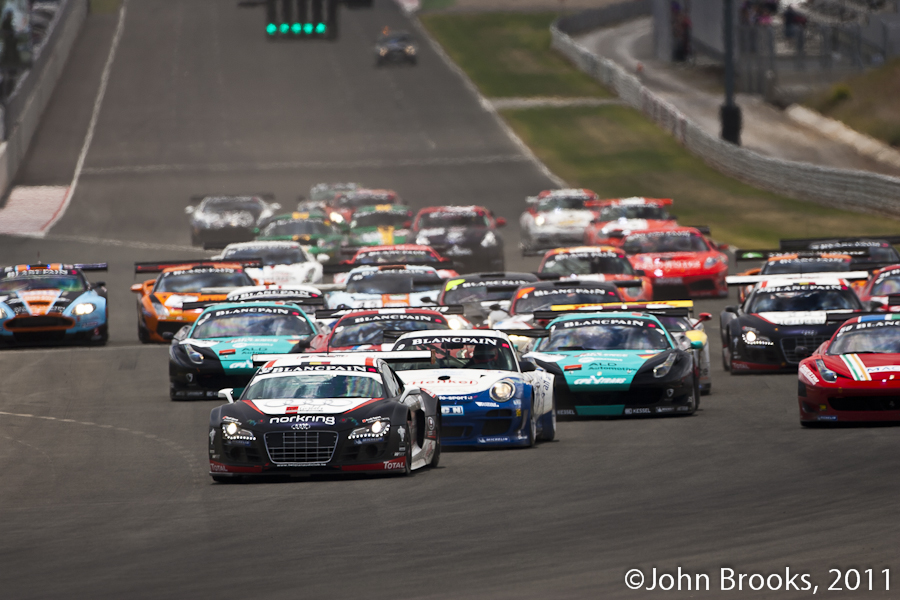
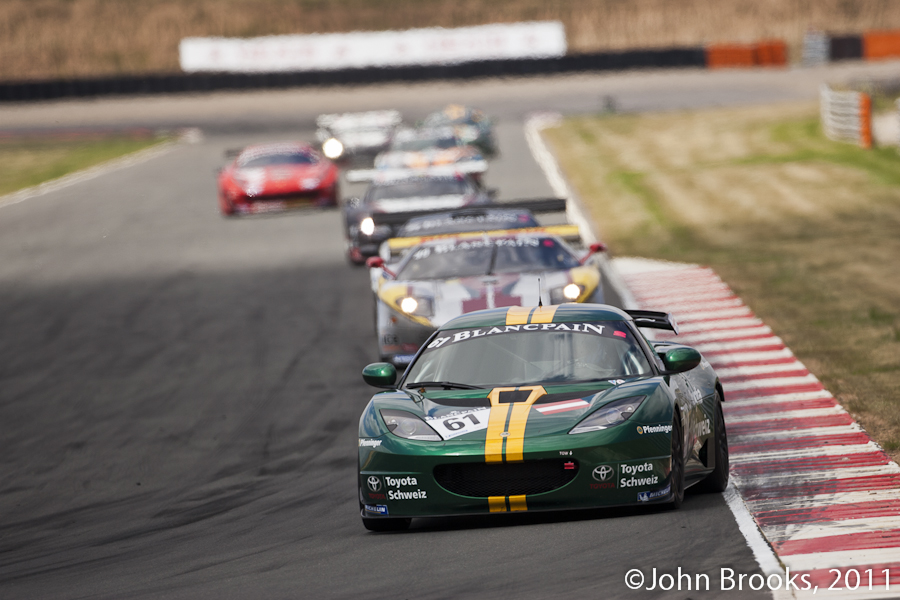
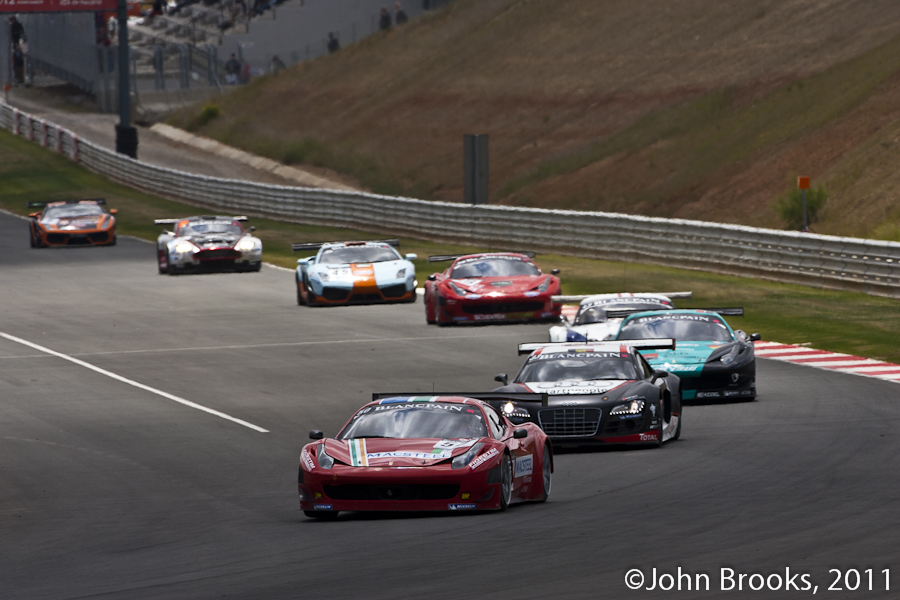
The Blancpain Endurance Series kicked off at Monza last month with 33 cars taking the start, a respectable number. More importantly the grid of GT3 and GT4 machines were all high quality, no one lap, start-money specials. With the prospect of McLaren returning to the GT arena plus the SLS Mercedes on the horizon, things are looking very promising for the new kids on the block.

Leap of Faith

In fact the GT3 McLaren was scheduled to make its race debut in Spain but though the CRS team were in Navarra testing during the preceeding week (or so I was told) the MP4-12C GT3 (just trips off the tongue) had left the track before I arrived on Saturday. BES will have to wait till Spa before Woking’s finest graces the series. Despite that, and the absence of the Benz, the level of the entry was still good.

Non Starter

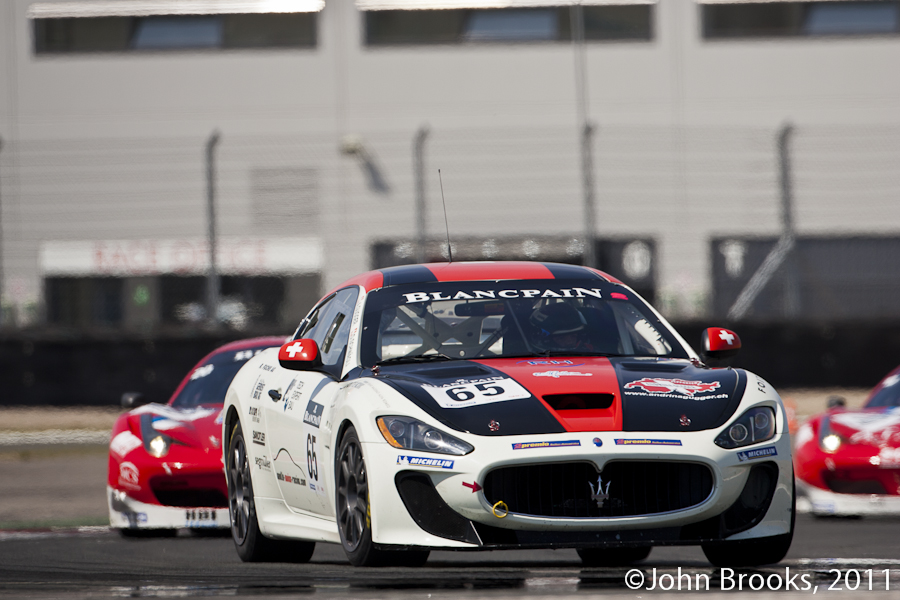
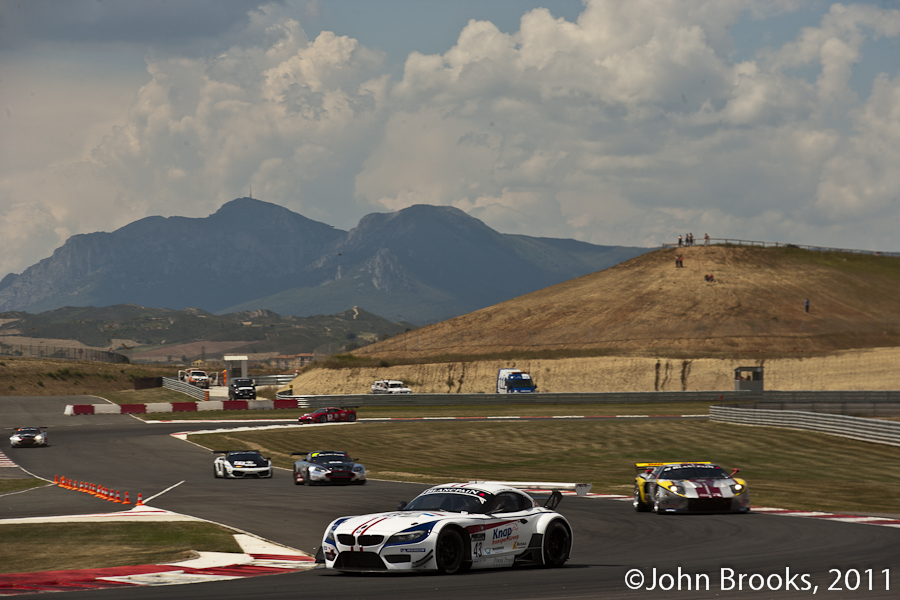
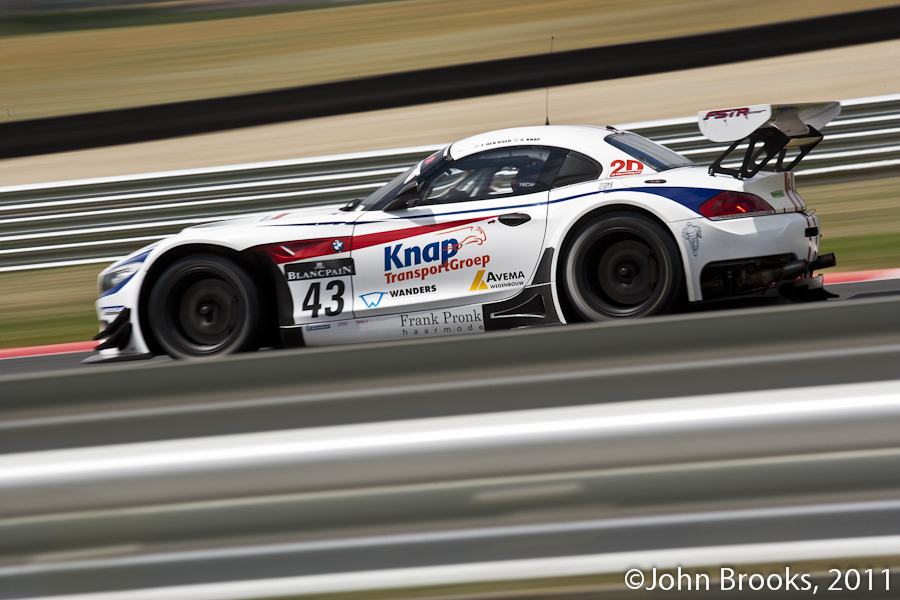
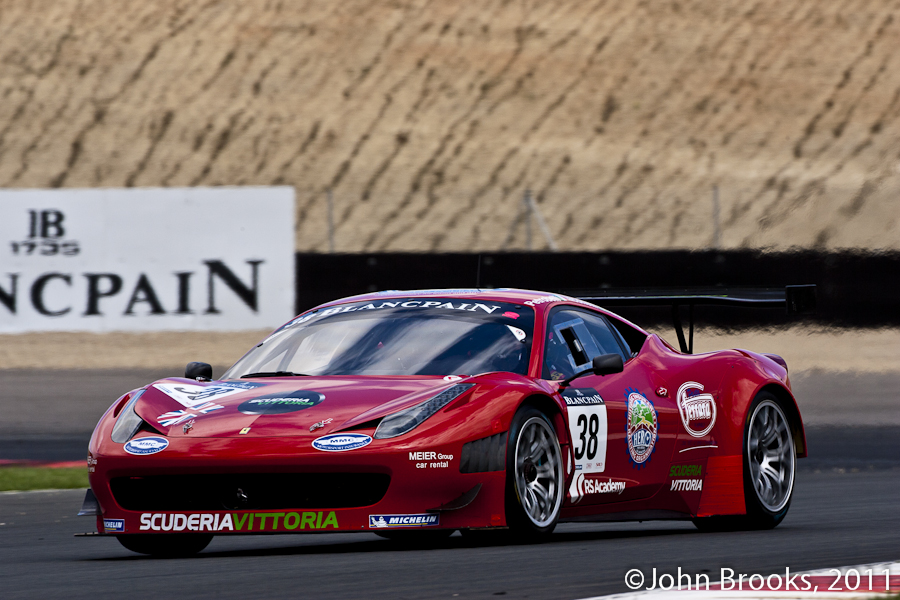
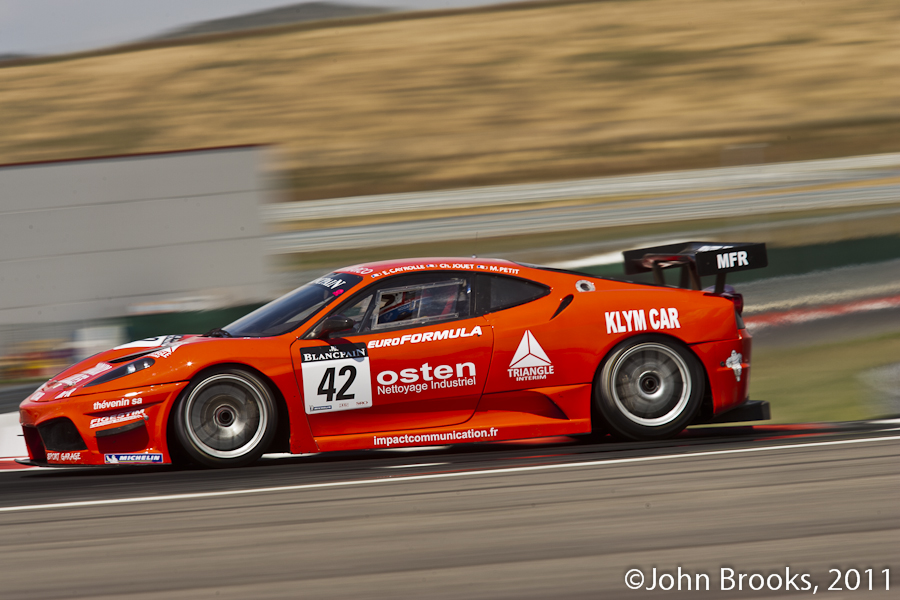
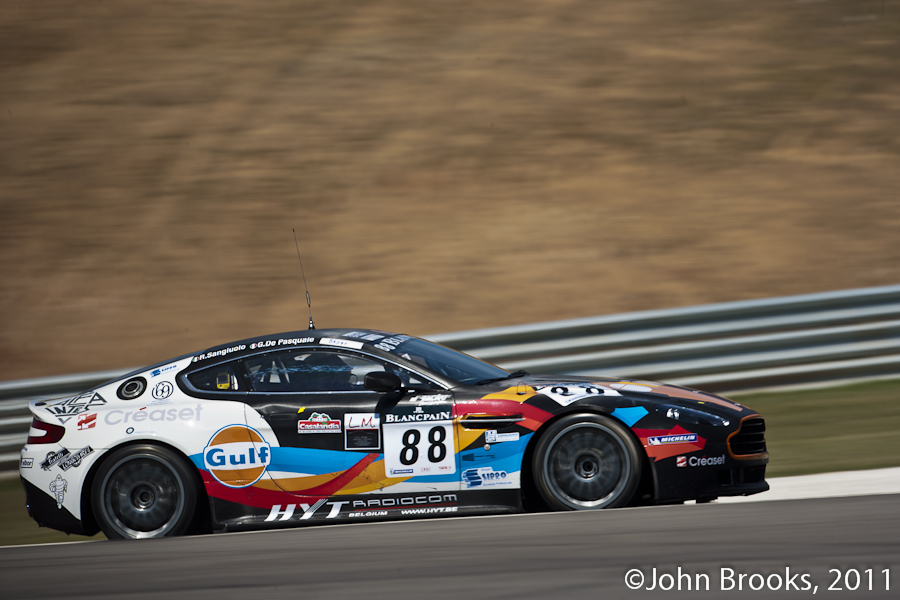
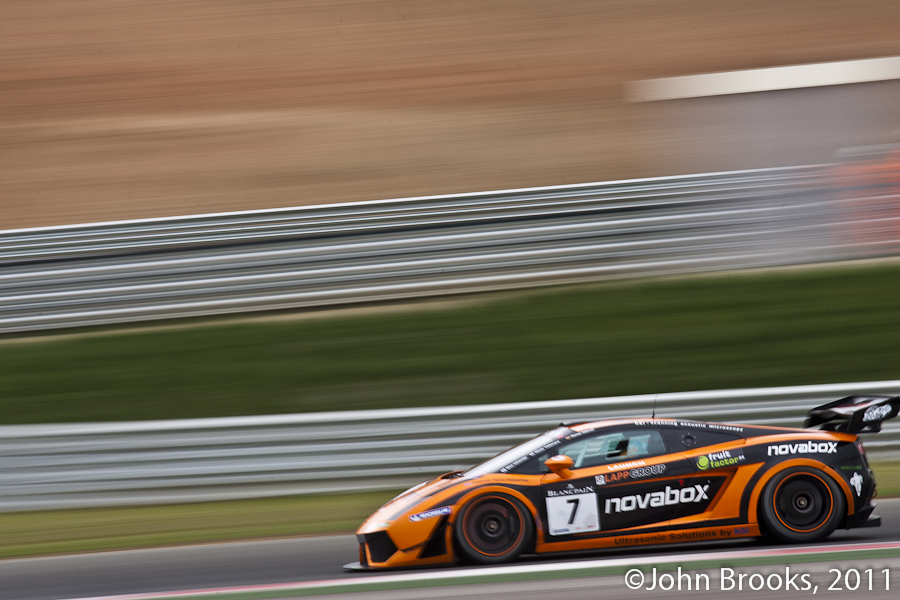
30 cars took the start, should have been 31, but the Gentle Swiss Racing Maserati MC Granturismo GT4 had a problem after qualifying and was withdrawn. Ferrari, Porsche, Lamborghini, Aston Martin, Audi, Ford, BMW, Lotus, Nissan, Ginetta were the brands on display, all very promising for the future.

Numero Uno

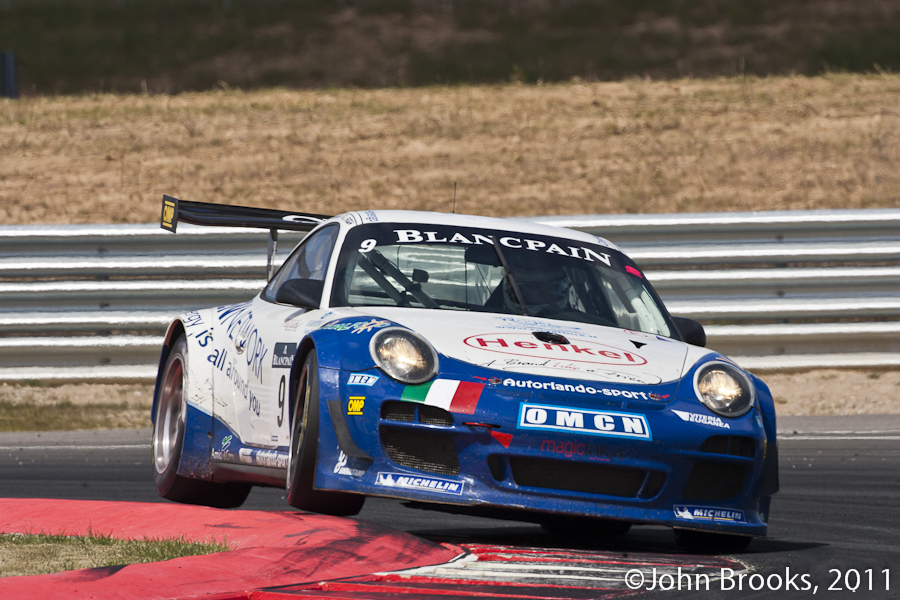
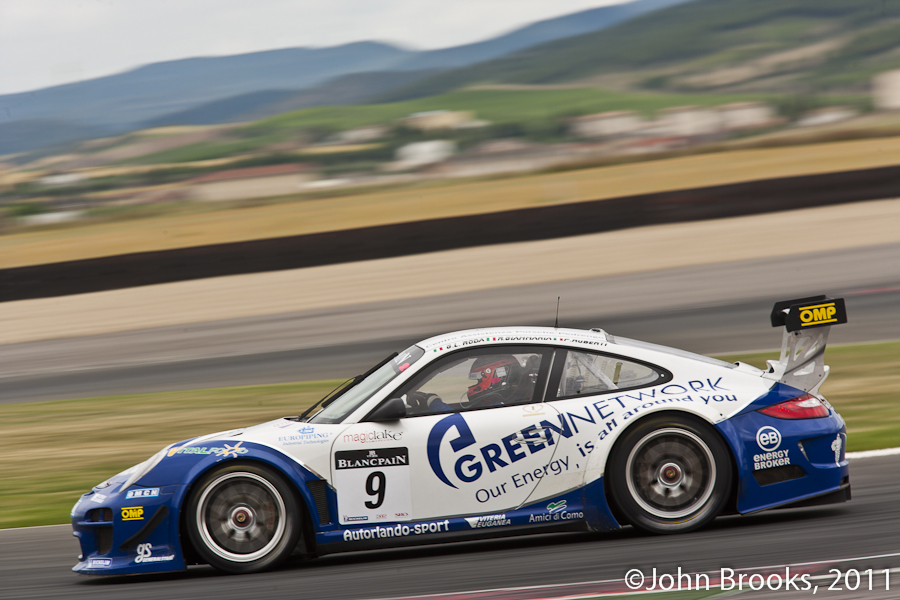
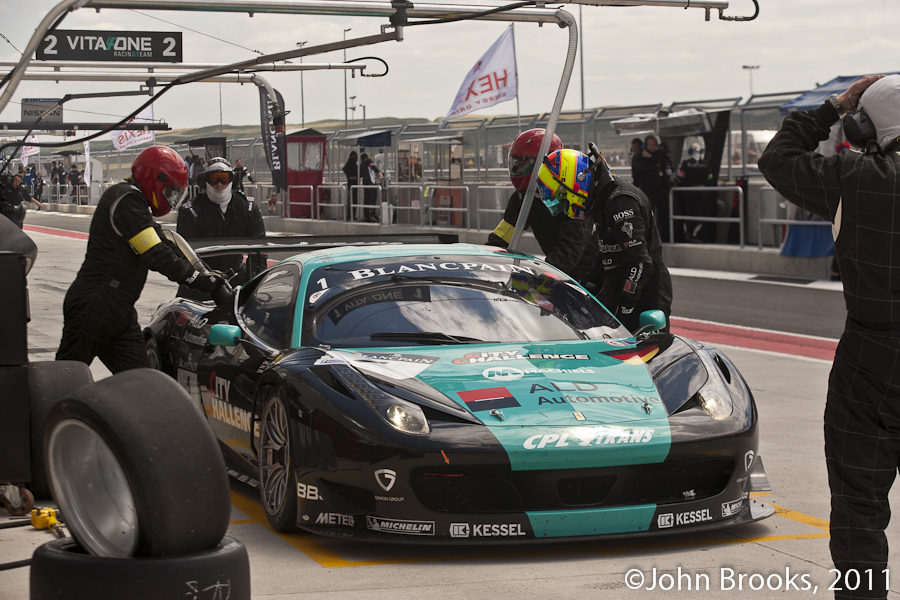
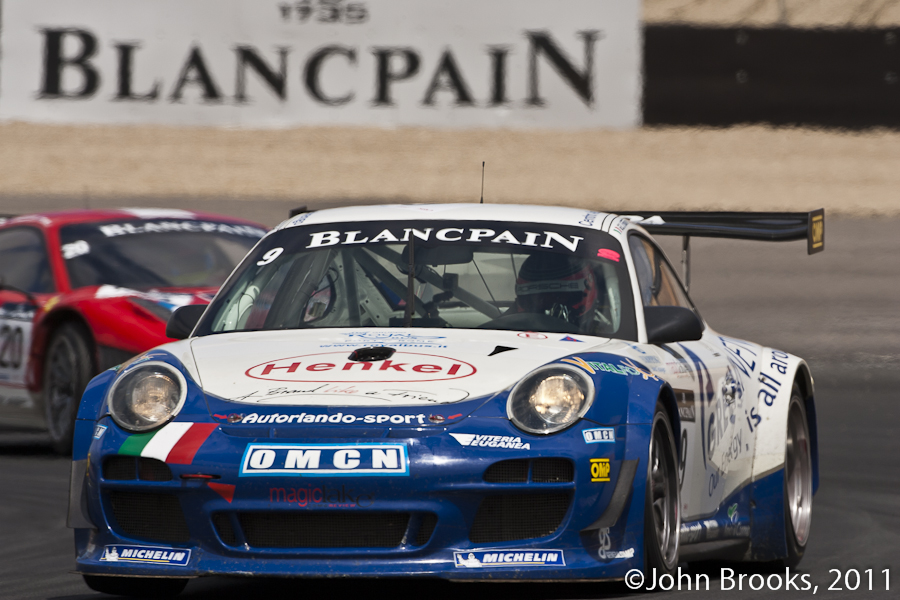
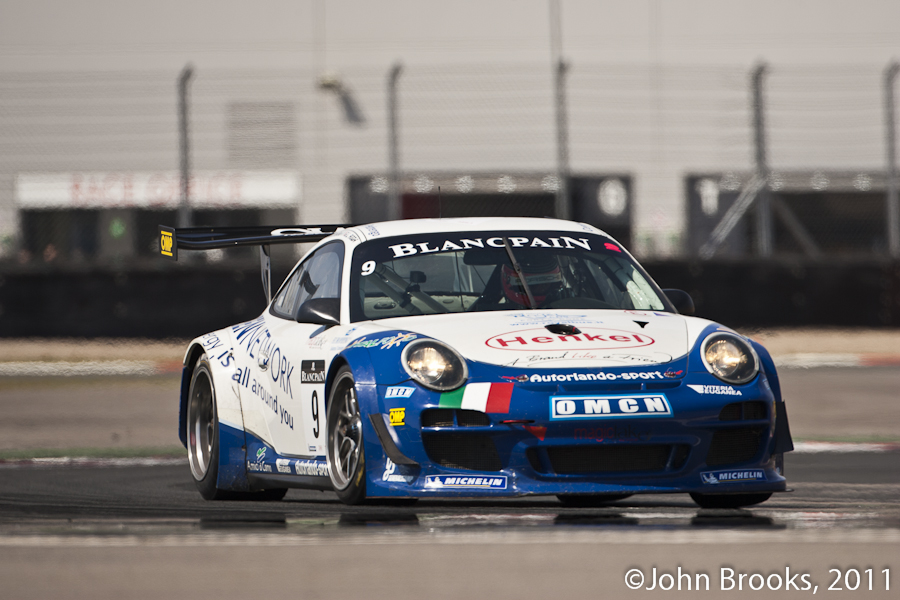
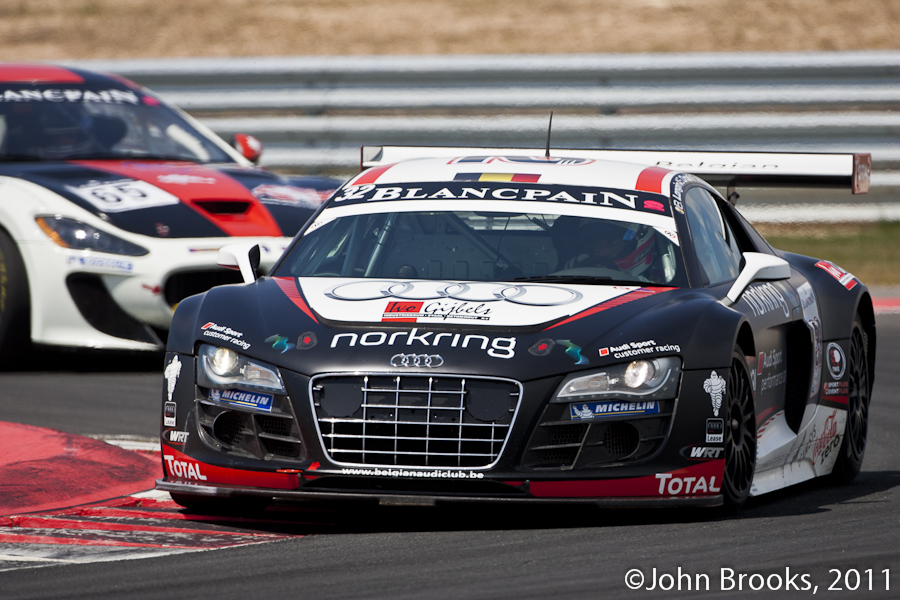
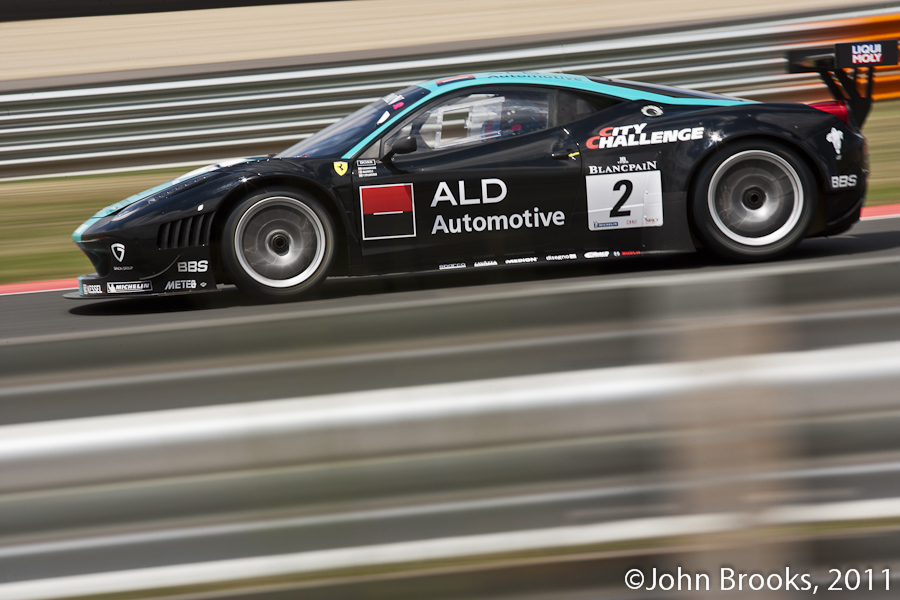
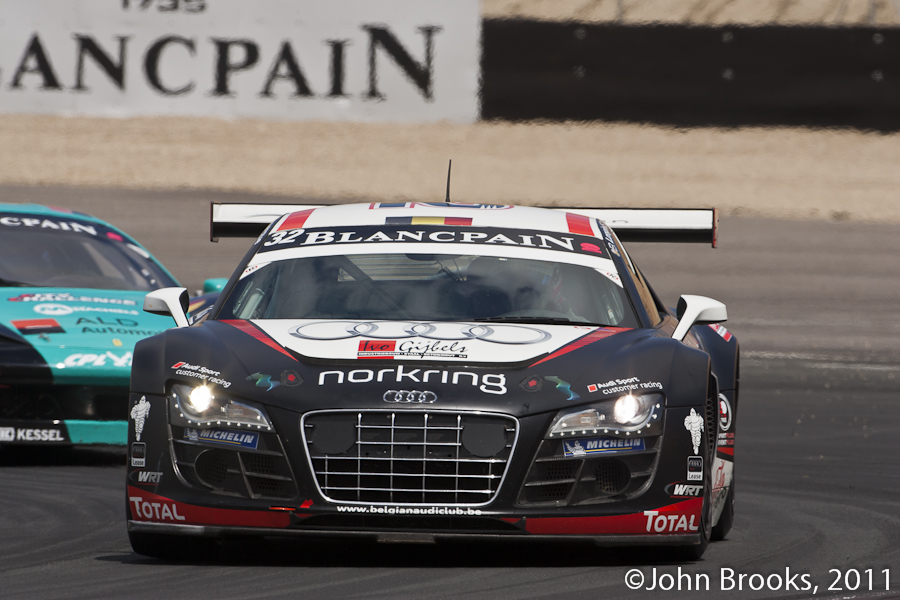
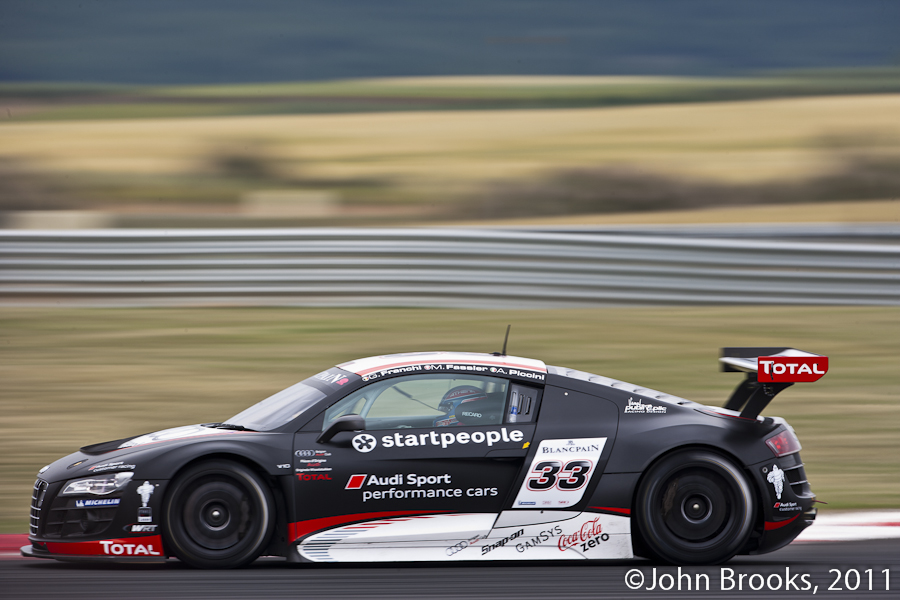
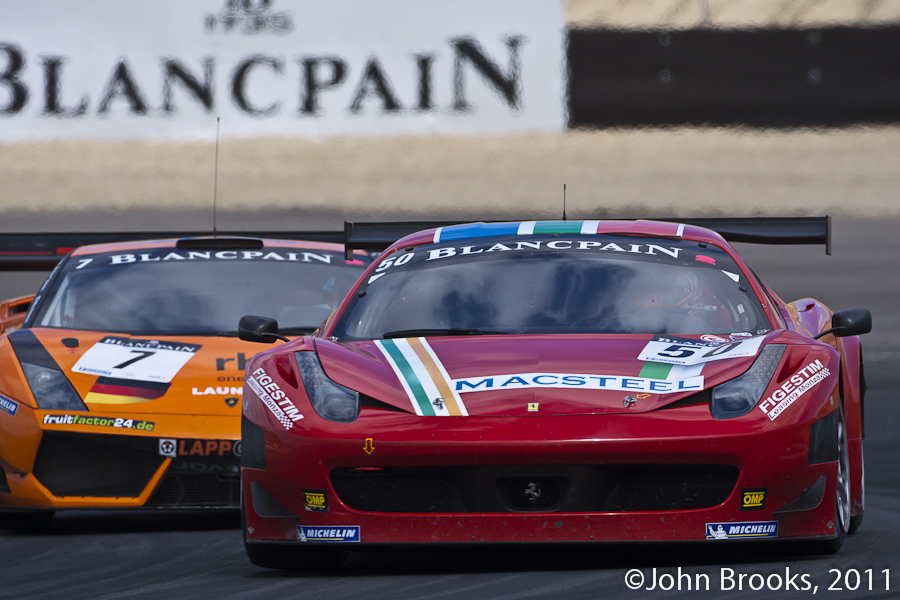
Never mind about the future, the present is what we are concerned with now. On Sunday we were treated to a pretty good contest, with the WRT Audi pair scrapping with Monza victors, the AutOrlando Porsche and the #1 Vita4one Ferrari.

Reverse Order

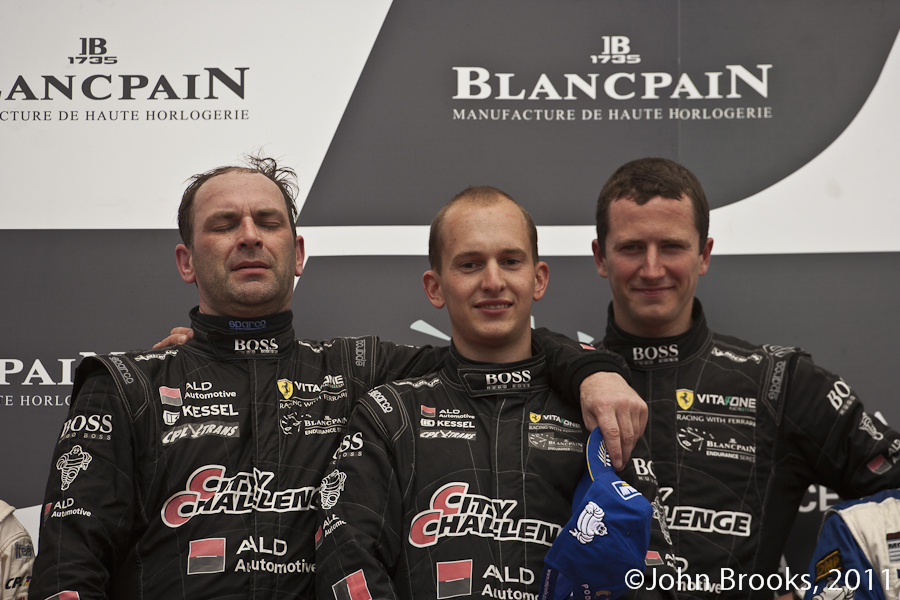
In the end Micheal Bartels took up in the Blancpain Endurance Series where he had left off in the FIA GT1 World Championship, on the top step. Joining the veteran were youngsters Frank Kechele and Nico Verdonck, the team looked sharp as one might expect, they will be hard to beat over a season.

R8 Mate

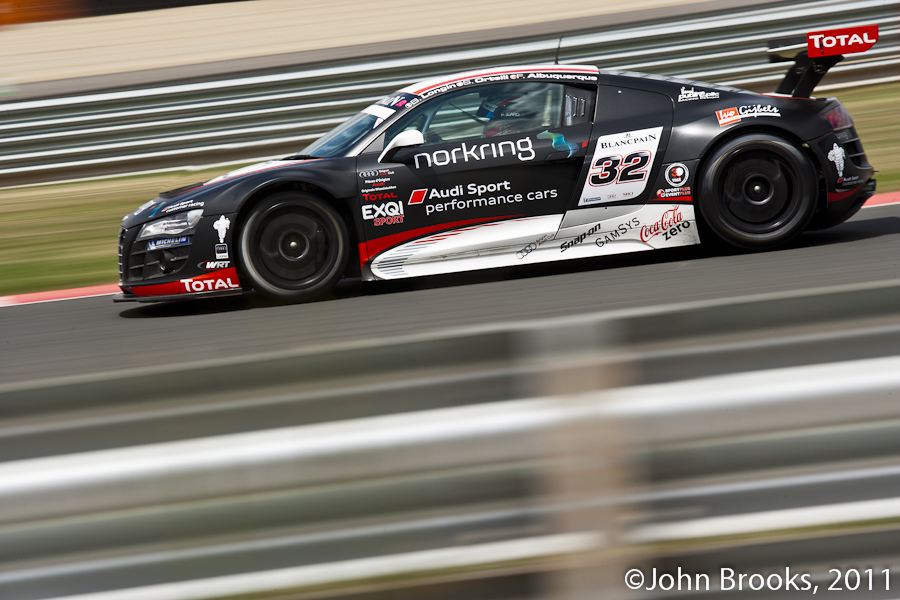
Second was the Audi R8 of Stéphane Ortelli, Bert Longin and Felipe Albuquerqe with the Italian Porsche, hampered by transmission problems, taking third.

Lotus Position

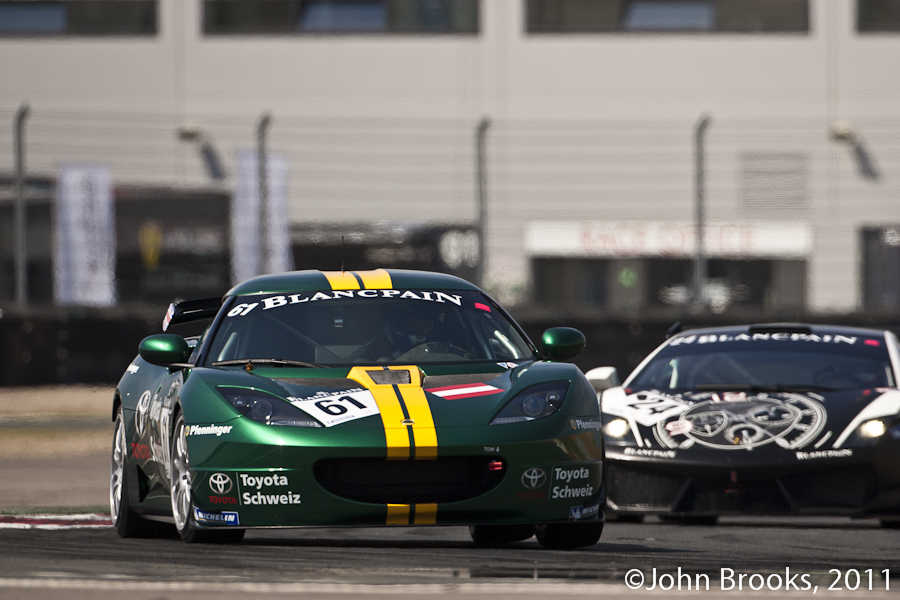
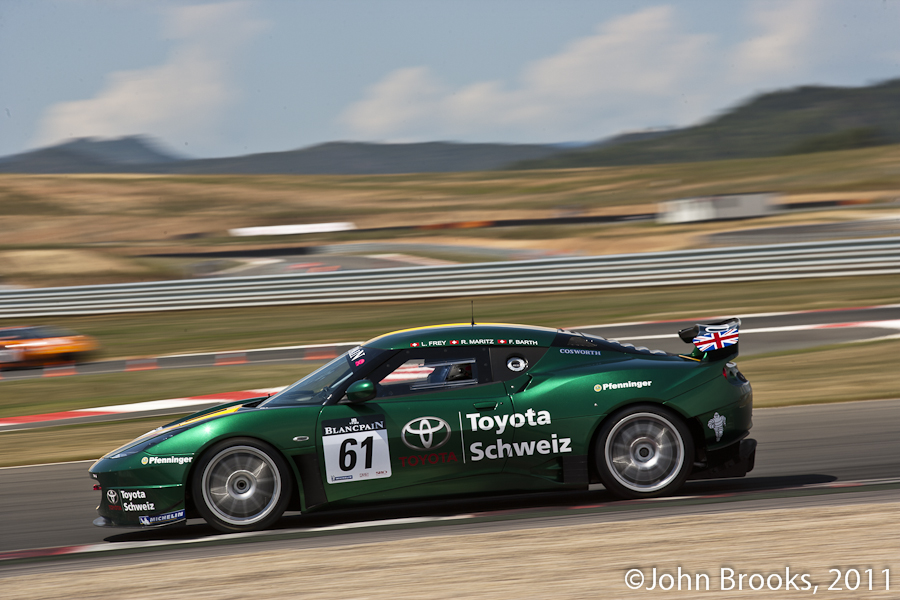
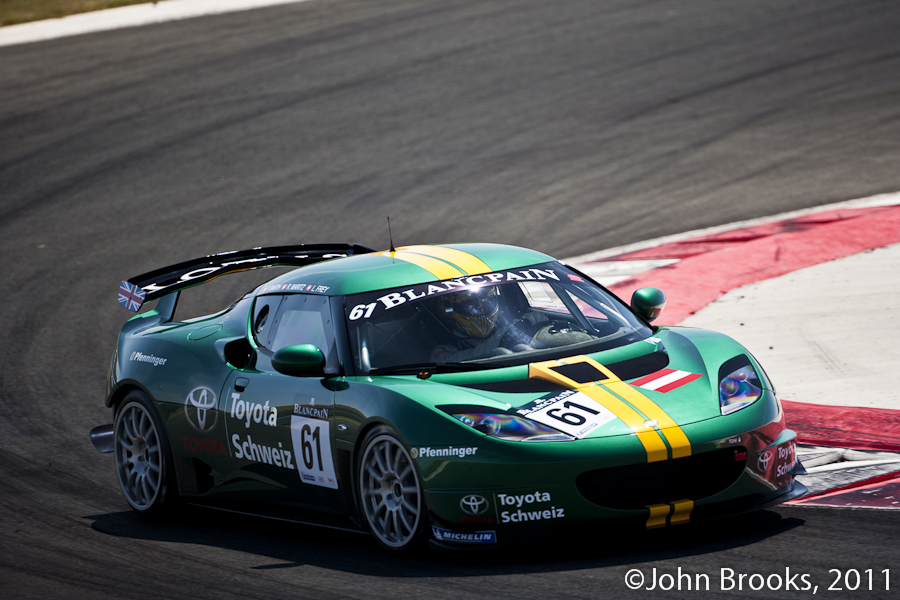
GT4 honours went again to the Lotus, this time to the Evora GT4 of Lotus Driving Academy with Lorenz Frey, Rolf Maritz and Fredy Barth on driving duties.

Italian Hustle

Navarra is an impressive track, surrounded by vineyards and bodegas, nestling under the shadow of the Pyrenees. The circuit facilities are modern and the place has a brisk efficiency about it. Perhaps the only drawback is the location, it is by European standards the middle of nowhere, a five hour slog from Barcelona. Still as Lawrence might have said,

“Aqaba is over there. It’s just a matter of going.”

Class of ’98

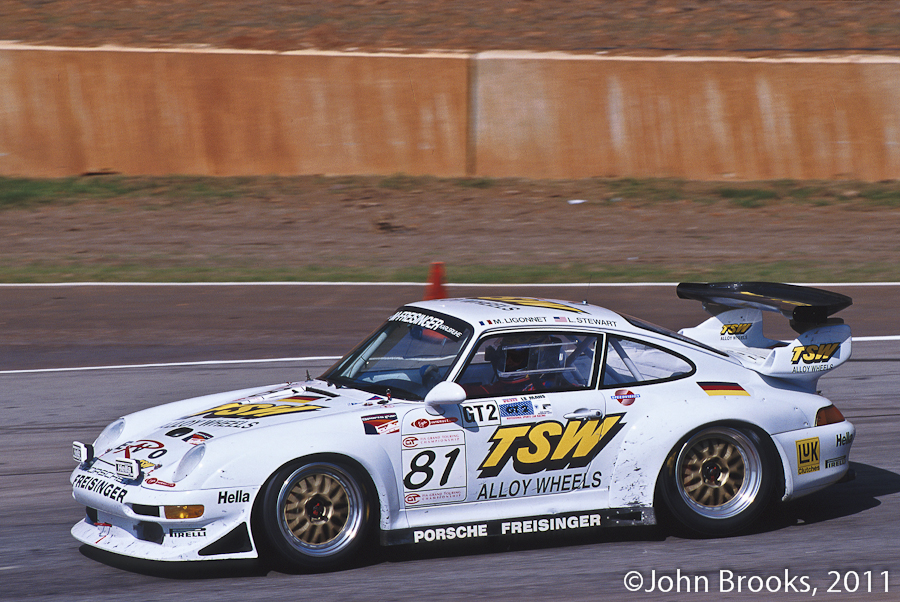
One familiar face at Navarra was the Circuit Director, Michel Ligonnet. Michel was pretty handy racer in his time, winning the GT class at the inaugural Petit Le Mans back in 1998. It was good to catch up with him once again.

Rhino Charge

It is clear that Stéphane Ratel is on to a winner with the Blancpain Endurance Series but the benefits will be enjoyed by all those who like GT Racing, if you get to the Spa 24 Hours or the remaining rounds at Magny Cours and Silverstone you should.

John Brooks, May 2011


Recalling Michele

Ten Years After…………..

Brands Hatch 1000 Kms.

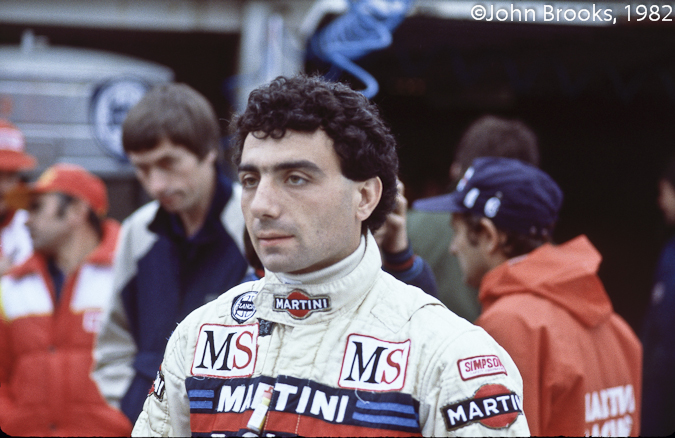
Looking at the commemorative stickers displayed on the Audis at the Le Mans Test Day prodded me to recall that ten years have flown by since the dreadful news came through of Michele Alboreto’s fatal accident while testing at Lausitzring.

Barchetta

Lancia Cockpit

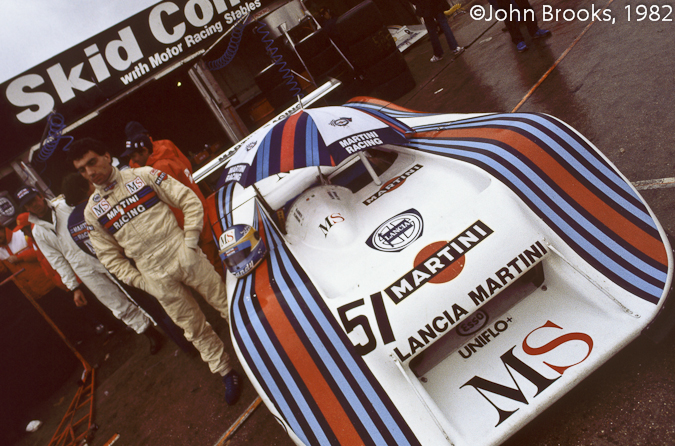
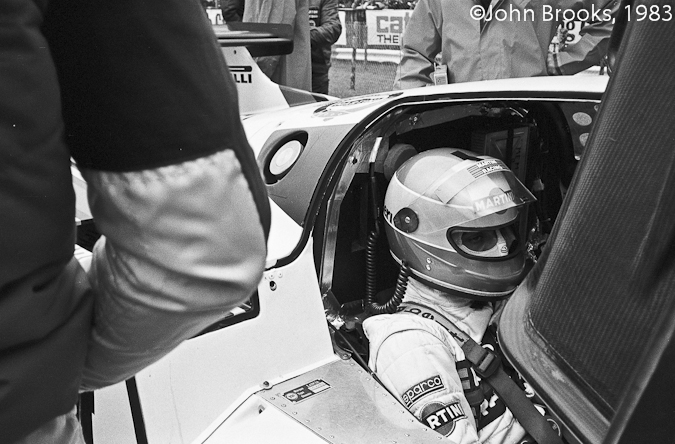
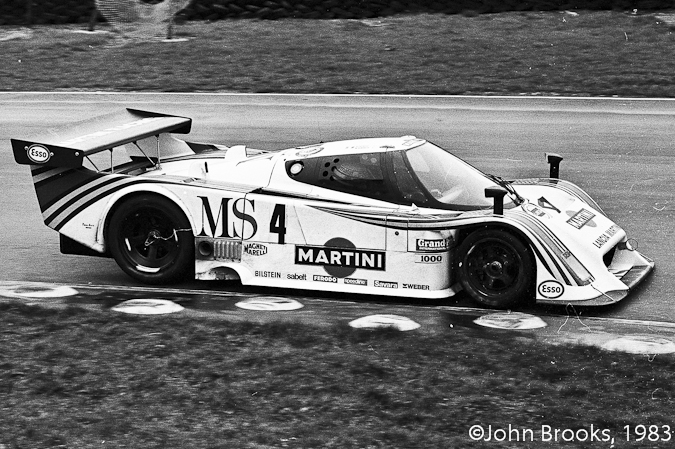
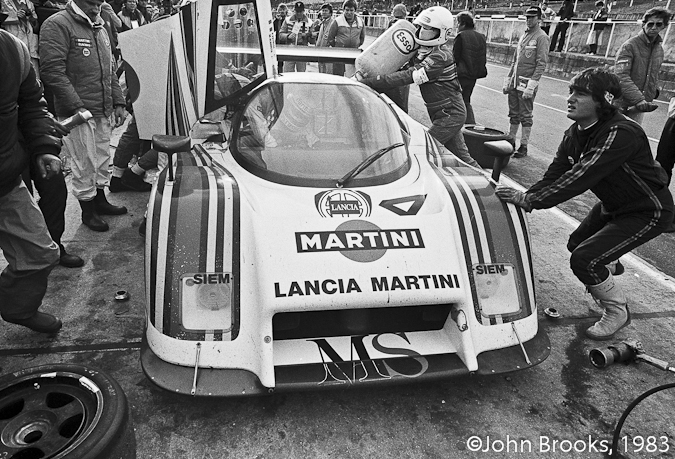
Michele had been a familiar name to me during his single seater career, back then I did follow Formula One. Of course his exploits in the Martini Lancia team coincided with my first trackside passes, which is where some of this material comes from. He raced the exotic Italian prototypes from 1980 to 1983, ending up somewhat frustrated by the reliability issues that plagued the elegant Lancia LC2/83.

LC2

So he turned his back on that aspect of the sport and concentrated on F1. His record, 194 Grand Prix starts for seven teams, the last win by an Italian in a Ferrari and just failing to beat Alain Prost to the World Championship in 1985, give an indication of the talent that Michele brought to the job in hand.

Disappointment

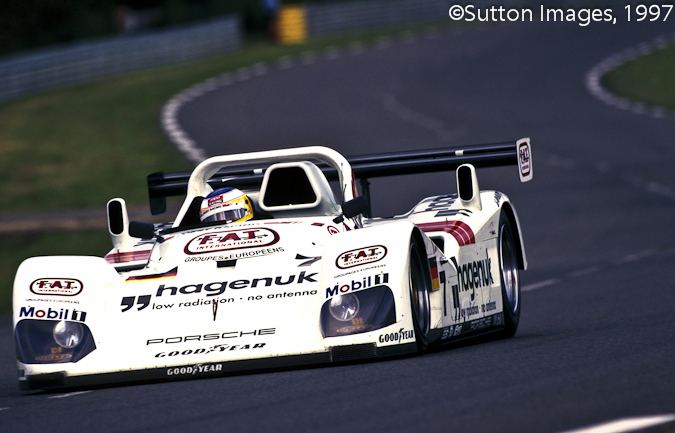
After his retirement from Grand Prix circus Michele spent a short time racing in IRL but eventually he came back to sportscars, racing the Joest WRC at Le Mans in 1996 and 1997. The second year saw him take victory with newcomer, Tom Kristensen and former F1 Ferrari Team mate, Stefan Johansson.

97 Le Mans

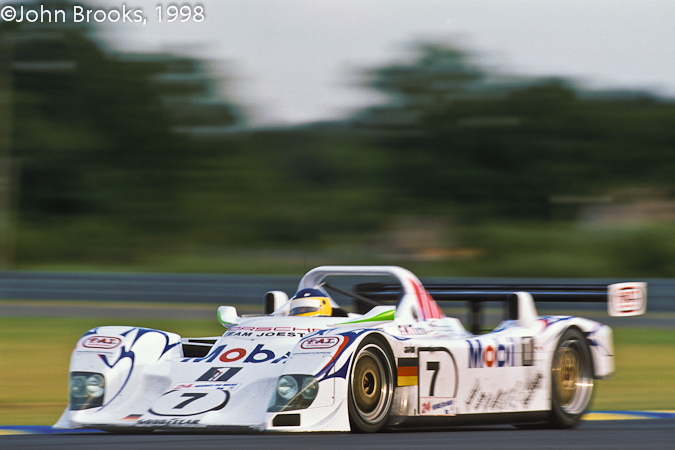
In 1998 Porsche AG hired him to spearhead the LMP aspect of their 50th Birthday Le Mans challenge but the “improvements” to the double winner did not work out.

98 Le Mans

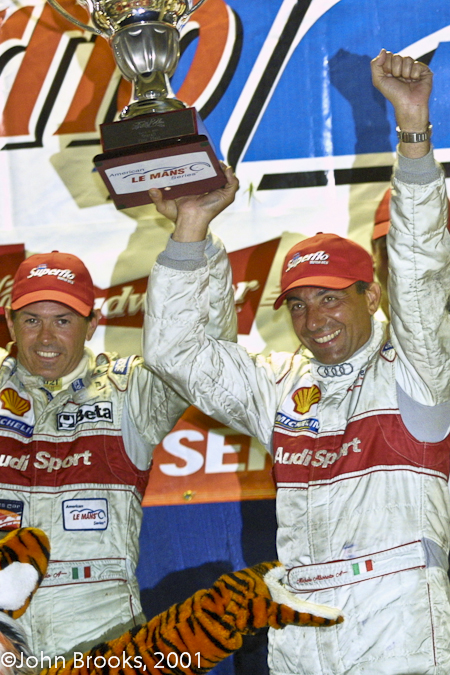
In 1999 Alboreto was recruited by Audi as part of their new endurance sportscar programme, which really kicked into gear in 2000 when the Audi R8 appeared at Sebring. Michele got back on the top step of the podium at the 2000 Petit Le Mans, taking the R8 to a win with Dindo Capello and Allan McNish. He enjoyed his final triumph, at the Sebring 12 Hours the following year, once again in an R8, with Dindo and Laurent Aïello.

R8

A month later came a tyre failure while testing straight line speed, the Audi vaulted the Armco, killing the popular Italian instantly.

2000 Le Mans

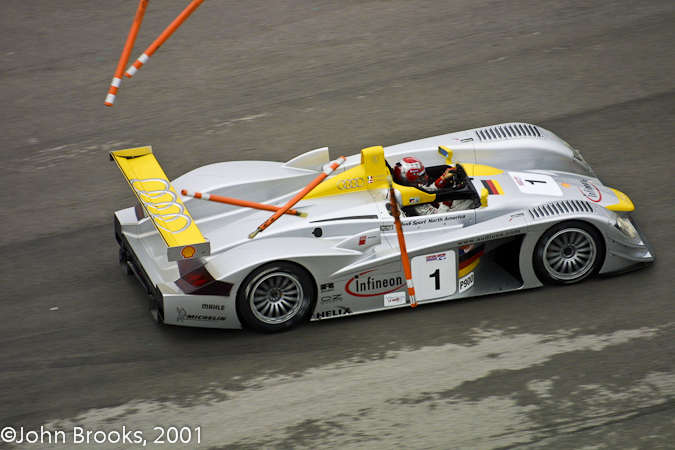
I had not known Michele when he raced in the Lancias, low life such as I did not speak to Grand Prix drivers. However I did get to meet him in when he drove for Audi and I recall one evening in particular. For some reason back then the ALMS held a number of races at Rovals, road courses fashioned inside the banked oval tracks that were the stomping ground for NASCAR and IRL. It was one of many attempts to take sportscar racing to previously uncharted territory, the results are almost always the same, a failure. The last of these ‘events’ was held in the first week of March 2001 at Texas Motor Speedway. The Australian Grand Prix was also running that evening (time zones are a wonderful thing), so we all got in our rental cars and drove 20 miles (all journeys in Dallas are at least 20 miles or more) to a sports bar where the Grand Prix was being televised.

Dindo and Michele

I had just acquired my first digital camera; it was powerful Juju back then, the ability to see your work instantaneously, no waiting for the film processors to do their work. Instant gratification, how 21st Century?

I was sitting with Dindo and Michele watching another dull Schumacher/Ferrari procession when I piped up.

Final Victory

“Dindo, did you damage the car today, during Qualifying?”

“What do you mean, damage?” said the completely innocent Italian, butter would not melt.

“When you hit the chicane and scattered the poles”

“No, that was not me”

“Well, how do you explain this?”

I flicked the back of the camera to show cart wheeling poles from the chicane that Dindo had driven over. It was a magic show, that Michele had been keenly observing as Dindo squirmed, his mistake now public.

Pole Dancing

Michele seized the moment, grabbed the camera and got all the Audi crew to see the evidence of his friend’s indiscretion. I recall it cost Dindo a round of drinks. From that point on Michele and I got on like a house on fire.

Six weeks later and he was gone.

Rest in Peace, Michele. 1956 to 2001.

Champion

Soames Langton 22nd August 1967 to 20th April 2011 RIP

The editor of DailySportsCar, Graham Goodwin, commissioned me last month to write a tribute to the late Soames Langton. With his kind permission I now publish the piece on my own blog.


The editor rang me last week to let me know that word had reached him of the death of Soames Langton. He asked me to put a few words on paper to mark the passing of this unfortunate young man, as I had known him back in the day.

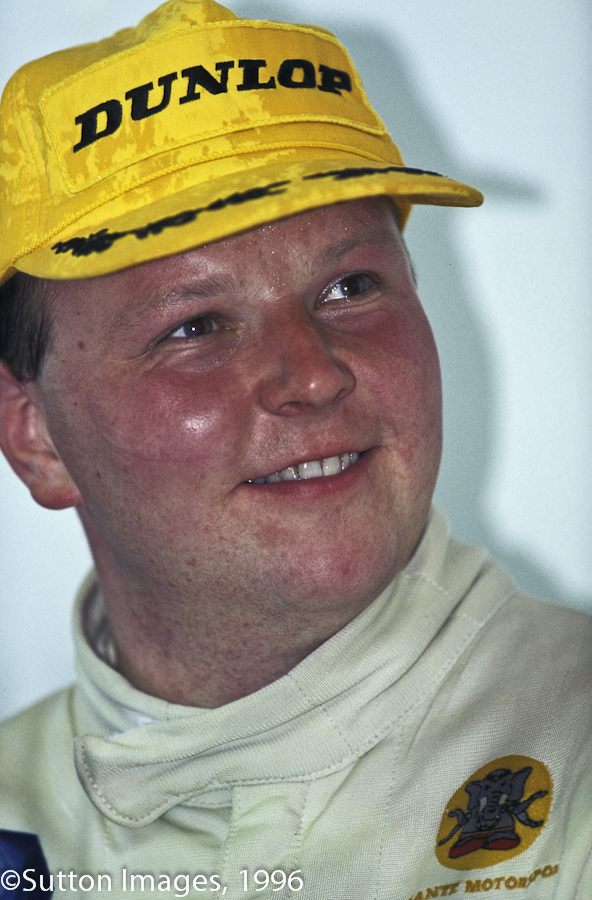
Those of you with good memories will recall Soames as being a very handy racer during in the mid-90s, starting with Historics, and then graduating to the International GT scene. Those with very good memories will recall that Soames was grievously injured in the 1996 BPR race at Nogaro. He never recovered from that accident, now he never will.

Motorsport and car culture was certainly in his genes as his father, Stephen, was a highly respected vintage car dealer and also a historic racer. Tragically he was killed at Brands Hatch during the historic support race to the 1985 British Grand Prix. Soames took on his father’s business and was very successful in his own right.

Le Mans 1996

I first met Soames while following the BPR Series in 1995. He was a larger than life character, but underneath the leg pulling there was a serious and talented racing driver. Soames drove the Paul Lanzante run Porsche 911 GT2 with car owner, Paul Burdell, and German Wido Rössler, naturally I gravitated towards this friendly and well run outfit. Their first appearance at Monza ended in retirement but thereafter things went well with class finishes of 5th at Jarama and then 3rd  at the Nürburgring.

Lanzante at Le Mans

That year the Lanzante team were contracted by McLaren to run a car at the Le Mans 24 Hours and they had a dream result, winning the race outright. Soames pitched in and helped the team, if one looks at the video that McLaren released afterwards to celebrate their success, the final scene fades out with Soames spraying the Champagne in the garage……….

There were further successes for Lanzante and regular points finishes, the best result was 2nd in class and 6th place overall in the Silverstone 4 Hours.

In 1996 Soames continued his BPR association with Lanzante and Burdell, with 1989 Le Mans winner, Stanley Dickens joining the pair. The Lanzante team put together a very good set of results in the first half with a pair of class 2nd places at Monza and Nürburgring, with an incredible 4th overall at the attritional Italian event.

Into Arnarge

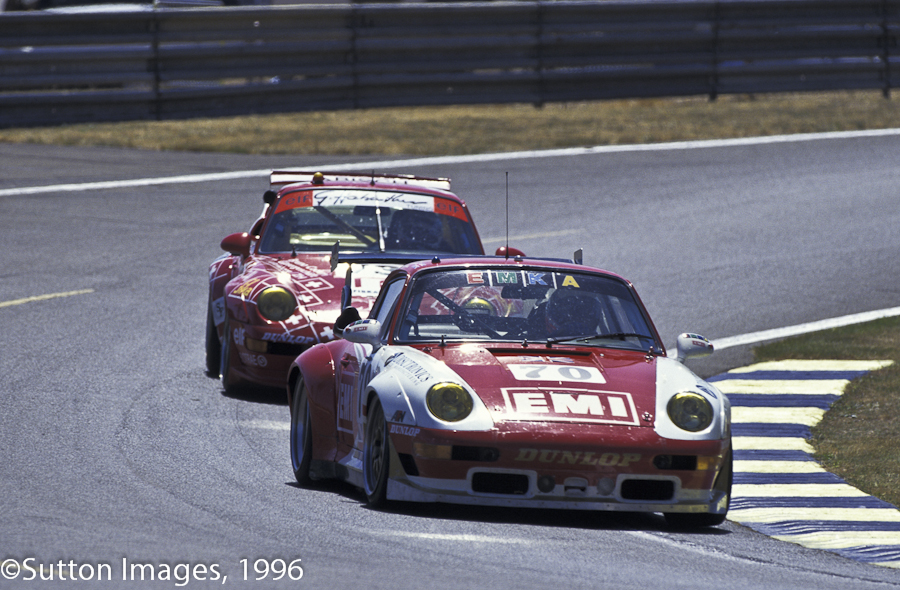
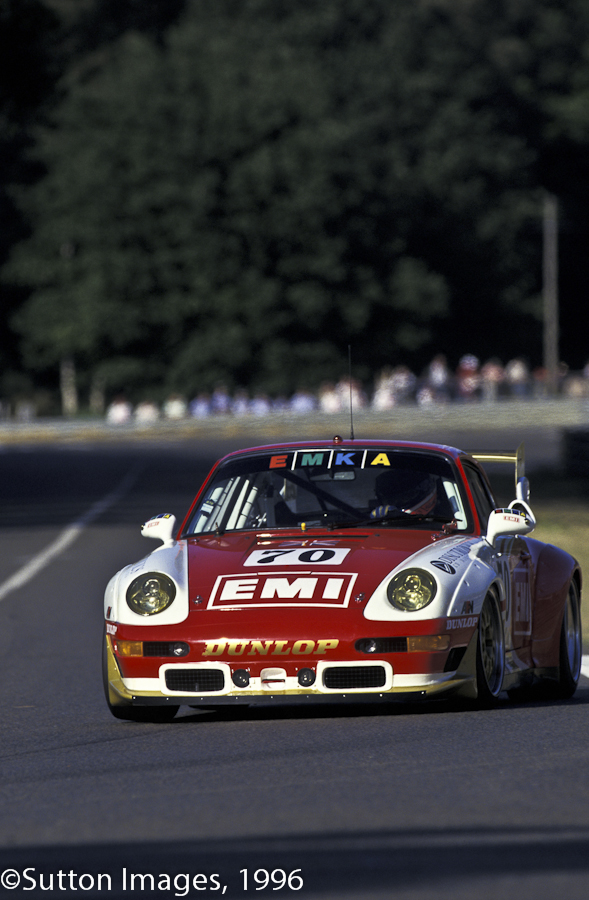
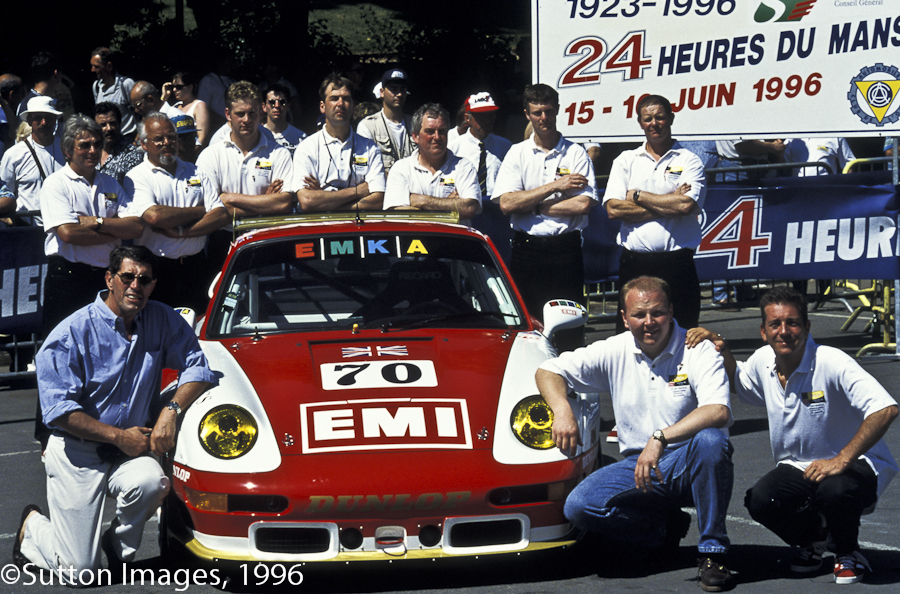
1996 saw Soames race at Le Mans for the first time in the Steve O’Rourke EMKA Porsche. It was the time of the ACO accepting an over subscribed entry (and entry fees), letting the aspiring competitors slug it out during a weekend in April. Soames turned in a sparkling performance to qualify the car for the race with a time of 4:10.689. This was considerably quicker than either of his music business co-drivers, Steve O’Rourke and Guy Holmes could have managed.

Qualifying for the race was something of a high water mark for Soames in 1996. Fast forward to June and during the Wednesday Practice/Qualifying he overcooked his entry to the Porsche curves and stuck the 911 in the wall. With their usual efficiency the marshals extracted Soames from the bent car and give him the once over, before releasing him into my custody for the ride back to the pits. He was quite apprehensive about facing Team Principal and car owner, Steve O’Rourke, who was fearsome figure when angered. Like all privateer team owners he did not tolerate his hired gun trashing the car and he would be upset about the damage to his precious Porsche. Soames recalled an episode, years back, when he had borrowed his father’s Jaguar without permission, in an effort to impress a young lady, then stuck it in a ditch during icy conditions. He remembered that conversation did not go well and suspected that his looming encounter with Steve would have similar unpleasant consequences.

The Boys are Back in Town

During the ride back to the paddock I helpfully suggested that he remind Steve of his contribution to the cause with his Pre-Qualifying efforts but it was not considered a good strategy, likely to cause a bigger conflagration than was already about to happen. Discussions with Steve went as expected but then the team got their heads down, repaired the damage and rolled the Porsche onto the grid for Saturday’s race. Soames started the race, completed two stints and handed over to Le Patron. Twenty minutes later the engine let go and the EMKA Porsche became the second official retirement of the event.

Back with Lanzante the season went downhill. While researching this piece I found a “blog” that I had written for the internet back that year. It summarises the situation as well as I could manage now.

If any illustration was needed of the great highs and terrible lows that involvement in motorsport will inflict on you, the Lanzante Team will serve as a good example.

Last year as a private team (with help from the factory) they triumphed at Le Mans. Since Suzuka at the end of August it has all been downhill. Soames Langton wrote off the car in practice at Brands, then a struggle with engine maladies at Spa appeared to end with a podium finish, till they were disqualified for Paul Burdell not doing the required time behind the wheel.

Following that disappointment, Burdell, for personal reasons, decided that he did not want to go ahead with the plans to run two Lotus Esprits in GT2 guise next year, leaving the team scratching around for an alternative. Then came the accident at Nogaro last week with Soames still in a coma. Those of you waiting to read on your ceefax of Damon’s triumph in Japan (hopefully) will also get a message (page 366) that Soames is out of his coma and on the way to full recovery, at least that’s what will happen if there is any justice in this world.

Next it is off to China if there is still a series.

Damon Hill did win the F1 title that year, which seemed important at the time, it could be explained by his main opposition coming from Michael Schumacher and Jacques Villeneuve, enough said. There was no justice for Soames though.

The hospitals in France and the UK, including one run by Professor Sid Watkins, did an amazing job in keeping Soames alive during the months following his accident. We all hoped for the best and felt that he would make a recovery, especially having endured so much. However once out of his coma it was clear that was not going to be the outcome. Once again I am reminded of what I wrote at the time.

I went to see Soames in hospital with Shaun Redmayne………a harrowing experience for us…………..how much worse for him………..he appeared to understand who we were and what was been said and the pictures that were shown to him…………I had the impression that he was trapped behind a wall.

Though I did not fully understand his condition at the time, I had stumbled on the correct diagnosis. Soames was suffering from Locked In Syndrome which Google defines as “a condition in which a patient is aware and awake but cannot move or communicate verbally due to complete paralysis of nearly all voluntary muscles in the body except for the eyes.”

This condition lasted for the rest of his life. Mercifully his suffering, and that of his devoted family, is at an end, and he, and they, can have peace and respite. Those of us who lost him as a friend some 14 years ago will recall a genuinely good guy, who did not deserve his awful fate. Life and Motorsport can be cruel some times.

The Life and Soul

Soames, Old Boy, Rest in Peace.

John Brooks, April 2011

Those interested will find a Facebook page dedicated to Soames’ memory.

http://www.facebook.com/pages/Soames-Langton/109991705753679

Soames’ team mate, Paul Burdell, has contacted me through an intermediary with the following comment. I am grateful for his clarification.

The only point missing, was Soames and I (after consultation with Selina my wife) had decided that rather than a full season we were going to do the “fun” events  (Le Mans, Suzuka, Daytona, Monza etc.) because it, racing, was becoming too serious and I had a business to run.. It’s after the fact, obviously, but we had already agreed that we’d stay together for 1997.

Genius…………but Flawed

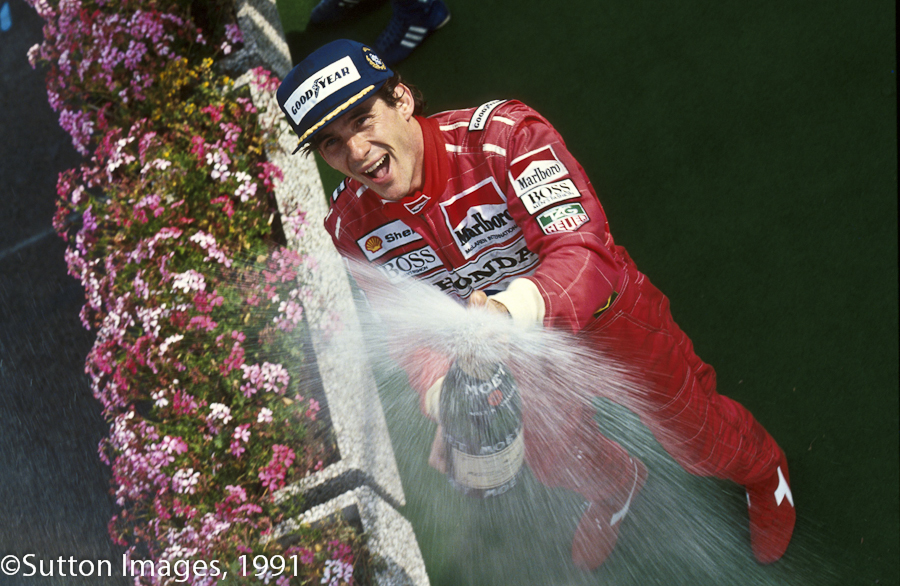
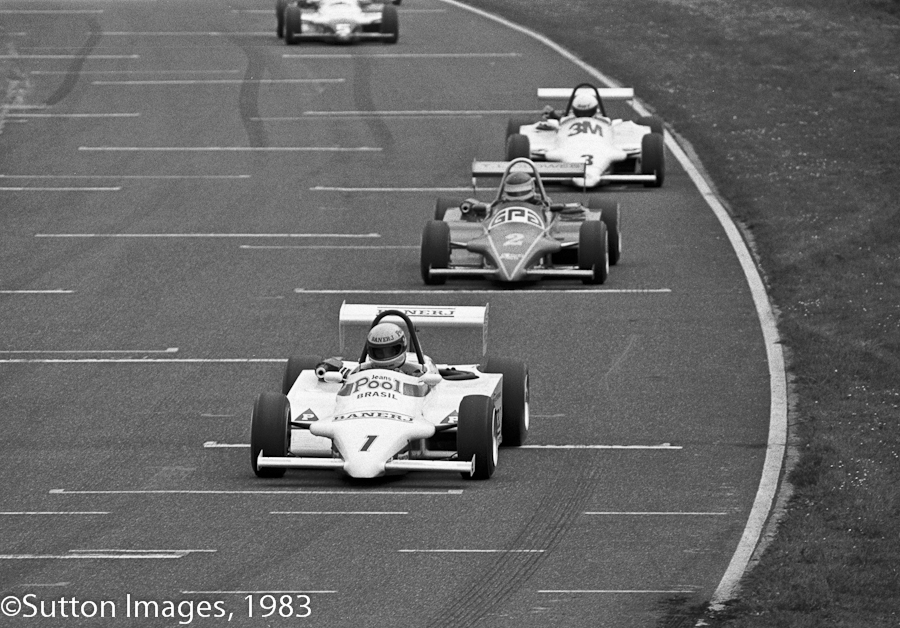
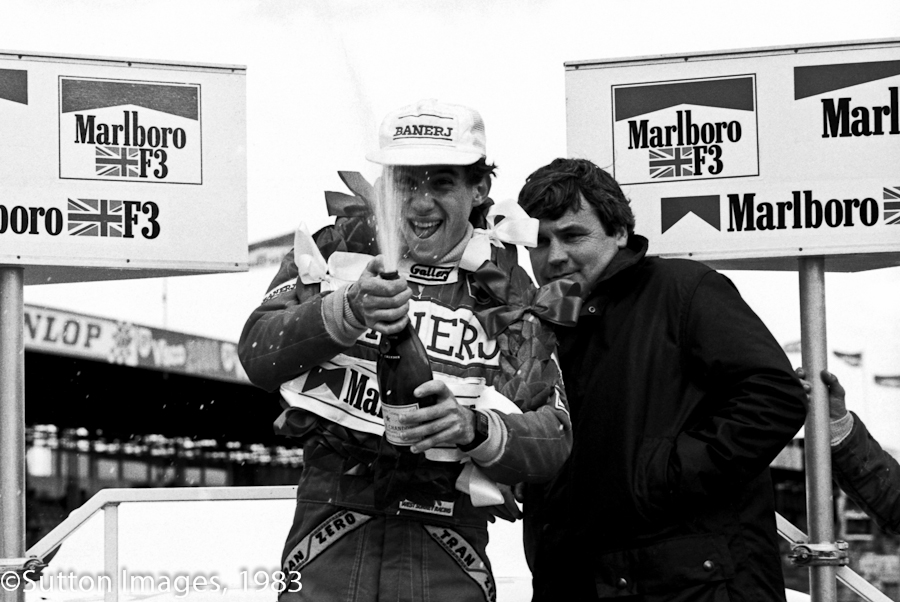
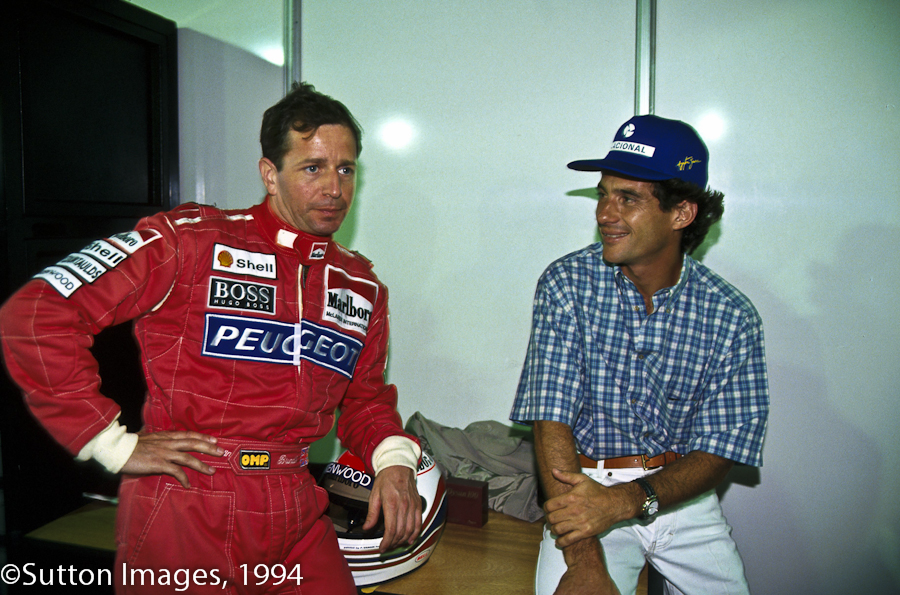
Seventeen years ago today the world of motorsport was shaken to the core. The San Marino Grand Prix held at Autodromo Internazionale Enzo e Dino Ferrari on 1st May 1994 proved to be a pivotal point in the history of Formula One. The paddock was still reeling under the shock of the death of Roland Ratzenberger during Qualifying the day before. Then, the unbelievable happened, the World’s top driver, Ayrton Senna, lost control of his Williams Renault FW16, left the track and suffered fatal head injuries. Ten years before I had spent a season following the Brazilian round England, while he won the Marlboro British Formula Three Championship. It seems some how appropriate to recall that time, today.


I’m on Top of the World, Ma.

The dictionary tells us that  A genius  is something or someone embodying exceptional intellectual ability, creativity, or originality, typically to a degree that is associated with the achievement of unprecedented insight.
How do we apply this term than to motorsport? I suppose it gets tagged to something or someone who is beyond exceptional. I have encountered a few in my time of following the sport but arguably the greatest example of this label that I witnessed was back nearly 30 years ago in 1983.

The Guru

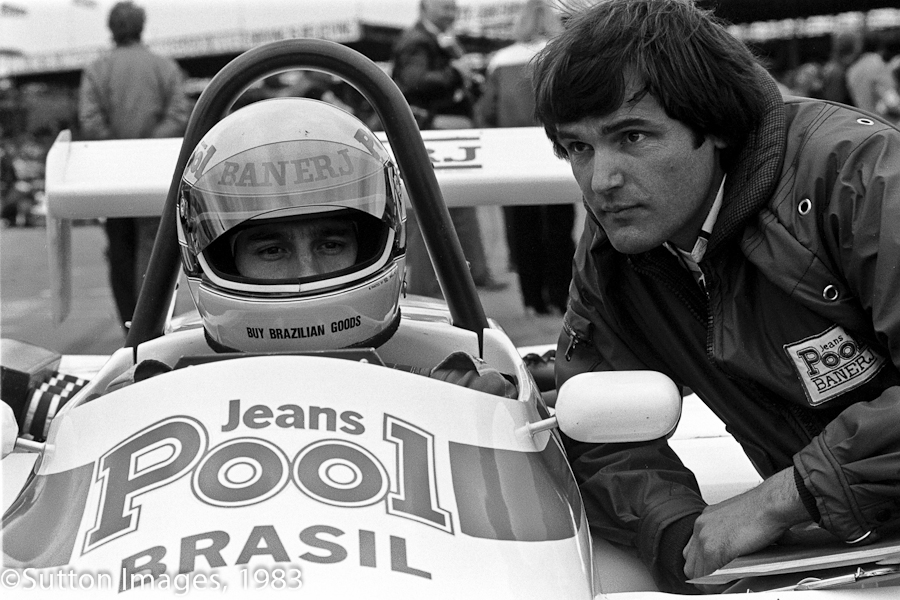
At that time I lived in a small hamlet called Charlton Village, a place of farms and two small housing developments surrounded by the massive water reservoirs that supply West London. There were also some small industrial estates and on one of these was located West Surrey Racing. Formed in 1981 as a partnership between entrepreneur Mike Cox and motorsport engineer, Dick Bennetts. Bennetts had worked for Ron Dennis running the Project Four BMW M1 ProCar entry for Niki Lauda and later Hans Stuck. During the 1980 season he had been parachuted into the P4 Formula Three team that was struggling with the then new Ralt RT3. The Kiwi managed to put some order into the project to the extent that Stefan Johansson was able to snatch the Vandervell British Formula Three title at the last race.

Portrait of the Young Man as an Artist

Ron Dennis had his eyes on McLaren and Formula One for 1981 so West Surrey Racing took over the successful chassis and scored another title win for Jonathan Palmer. 1982 saw almost a hat trick of Championships for the outfit but Enrique Mansilla was narrowly beaten by Tommy Byrne. WSR were the top dogs of British Formula Three.
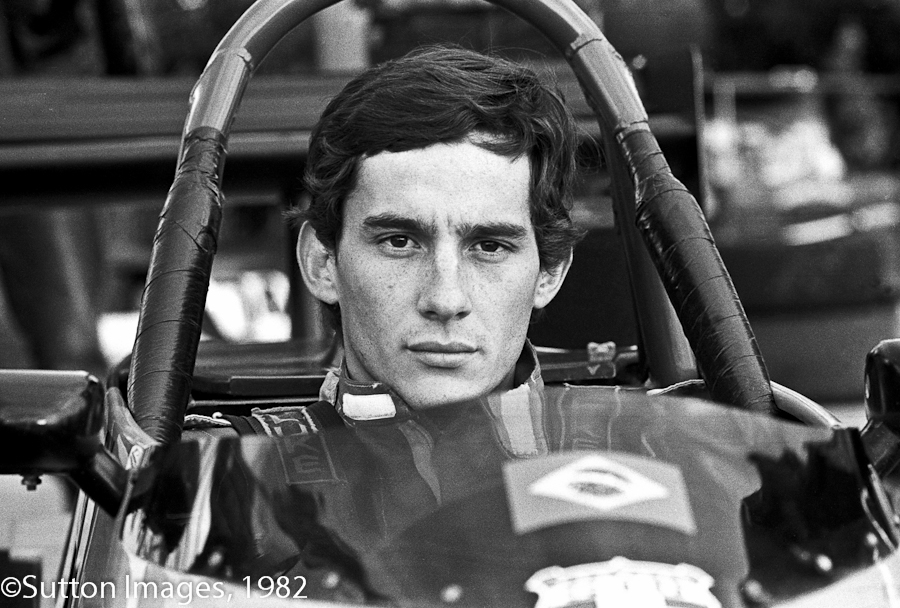
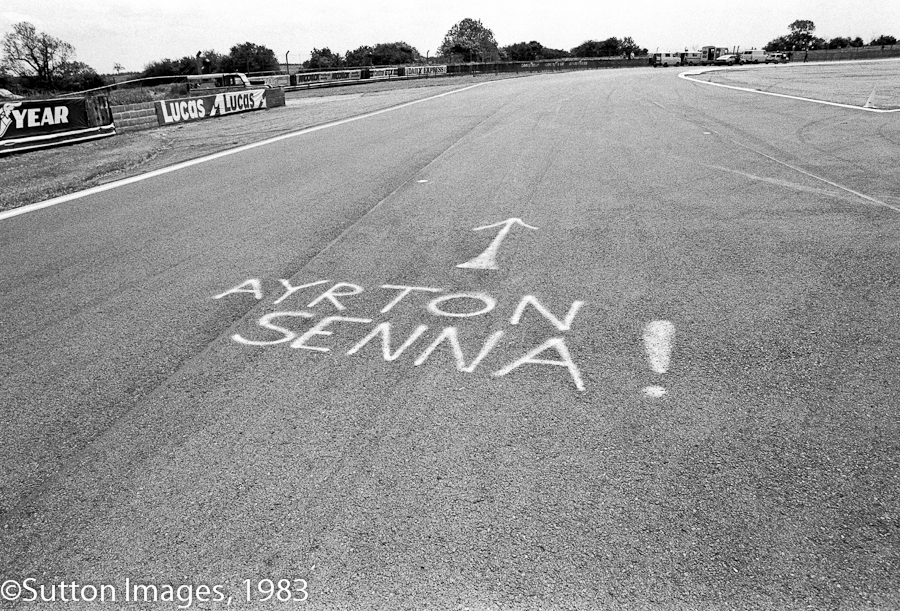
There was an end of season non-championship race held at Thruxton back then, an opportunity to test out new talent. WSR had another South American in the hot seat, Ayrton Senna da Silva. The Brazilian had swept all before him Formula Ford 1600 and 2000 and was marked out as a rising star. Senna shrugged the opposition aside on that cold November day. He had laid down a marker to his opponents for 1983.

There was quite a racing community based around that part of the world that I lived in, F1 teams Brabham, McLaren and Tyrrell were all locals and the Ralt factory was also located nearby. One of the favourite places for social interaction was an old pub based in Shepperton, The Kings Head. Characters as diverse as Brabham team manager Herbie Blash, sportscar legend David Yorke and of course Dick Bennetts could be found propping up the bar on a regular basis and there was a full supporting cast of mechanics and wannabes like myself. At that stage I had one of Dick’s mechanics renting a room in my house and I would regularly visit the workshop to see what “my team” was up to. My wife had even made some of the team’s uniform during their first two seasons, F3 was still a bit of a cottage industry back then. The gang at The Kings Head felt part of the extended family of WSR.

Man and Machine


However the feeling of intimacy with team changed on the arrival of Ayrton. Strange to say unlike the previous drivers I did not really get to know Senna. He was polite enough but somewhat reserved, part shyness but mainly that he was at all times fully focused on the task in hand, that of winning the 1983 F3 Championship and getting into Formula One. His briefings with Dick Bennetts have passed into legend with the disciplined and methodical approach of the engineer allied to the fierce commitment and work ethic of the Brazilian producing set-up sheets and data logging rarely found outside of F1 at that time. No effort was to be spared in the pursuit of victory.
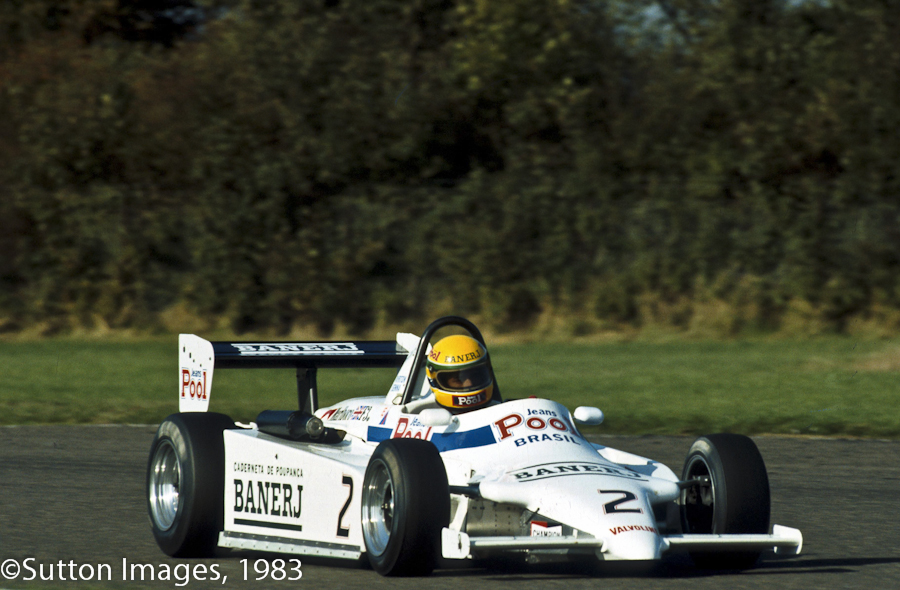
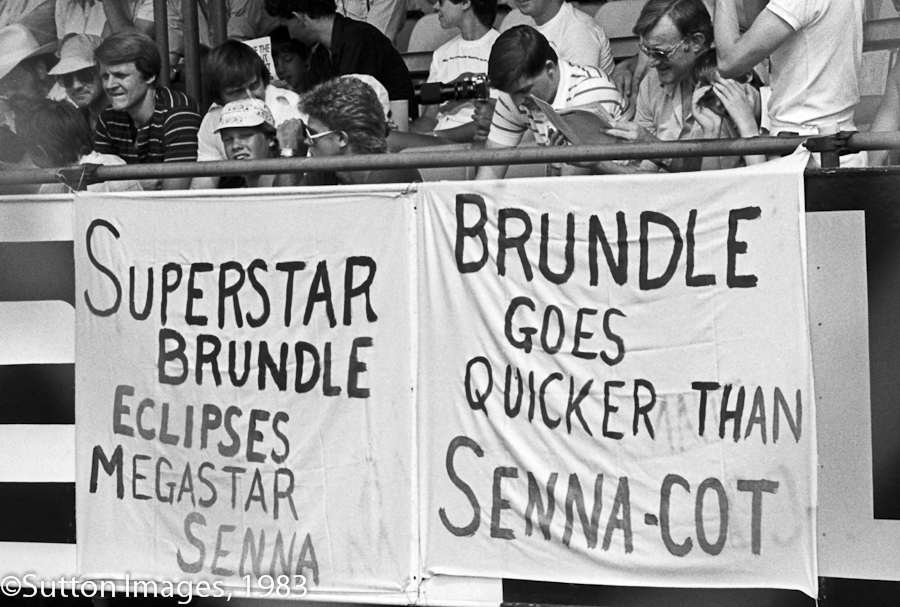
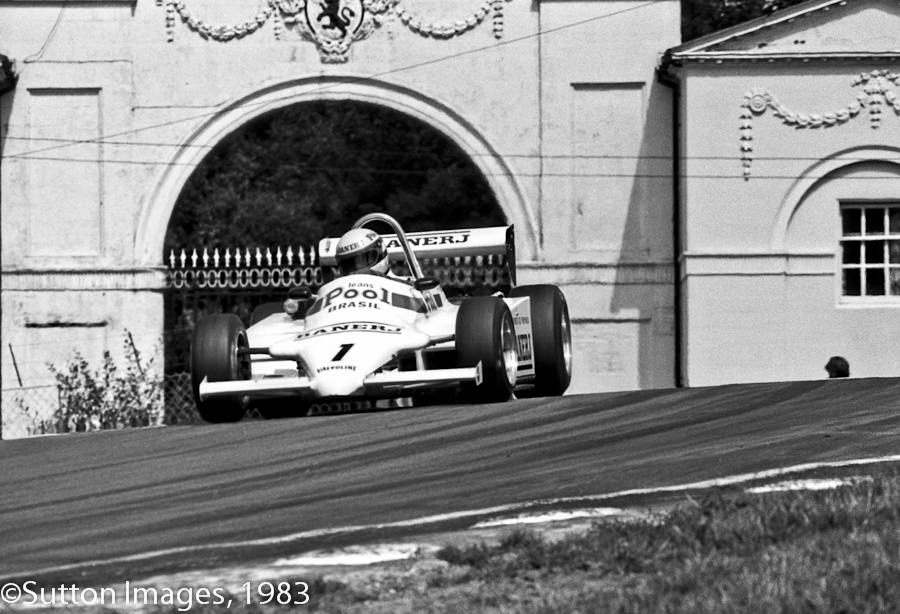
While the combination of Senna and WSR were the Bookies’ favourite there was considerable opposition before honours could be won. Leading the charge was Martin Brundle who was also lining up in a Ralt RT3, this example for Eddie Jordan Racing. Other contenders were expected to be Davy Jones, Allen Berg, David Leslie, Calvin Fish and Johnny Dumfries but in reality they all became just bit players to the drama that surrounded the two leading protagonists.
If one had considered the position of the Championship after the 9th round and approaching the halfway point, drama would have been the last word to be used. At that time nine points were awarded for a race win plus one for fastest lap, so theoretically the maximum points that anyone could have scored at that point in the season was 90………..Senna had 88.

Leader of the Pack

On March 6th the grid had formed up at the Silverstone Club Circuit to open the 1983 Marlboro British Formula Three Championship, David Leslie was on pole but Senna roared away at the start and drove just fast enough to take victory. This proved to be the template for the first half of the season except all the other races would see the Brazilian on pole. So there would be wins for WSR at Thruxton, Silverstone GP, Donington, Thruxton, Silverstone Club, Thruxton, Brands Hatch and Silverstone Club. Add in seven fastest laps and the position is one of complete dominance over the rest of the grid. Well not quite, as Martin Brundle has finished second eight times, third once plus two fastest laps. Each defeat seemed to spur on the Englishman to greater efforts, he wanted more than ever to get on terms with the Brazilian and he was about to get his chance.

Champions

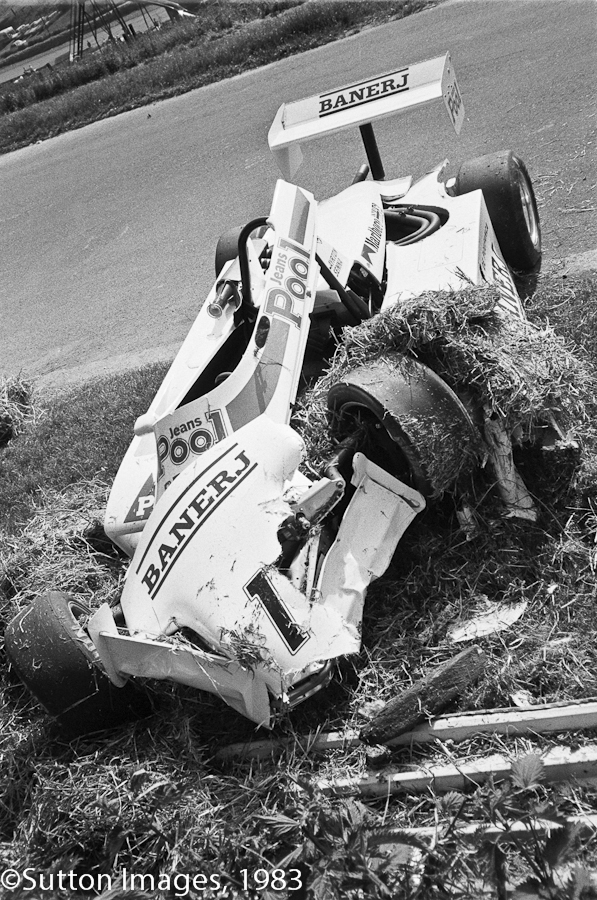
The 10th round of the Championship was run in combination with the European Series. The choice for the British entries was to run on the control Avons and score points or run the sticky Yokohamas or Michelins and be faster. As three scores had to be dropped during the season both Senna and Brundle opted for the faster Yoko rubber. However EJR had much more experience on these tyres and got their set up right, whereas WSR struggled and went the wrong way. The result pole position and a flag to flag win for Martin Brundle. Ayrton has one spin, recovered but trying too hard comprehensively thumped the barriers at Woodcote, a bit embarrassing.

I have been to the Mountaintop

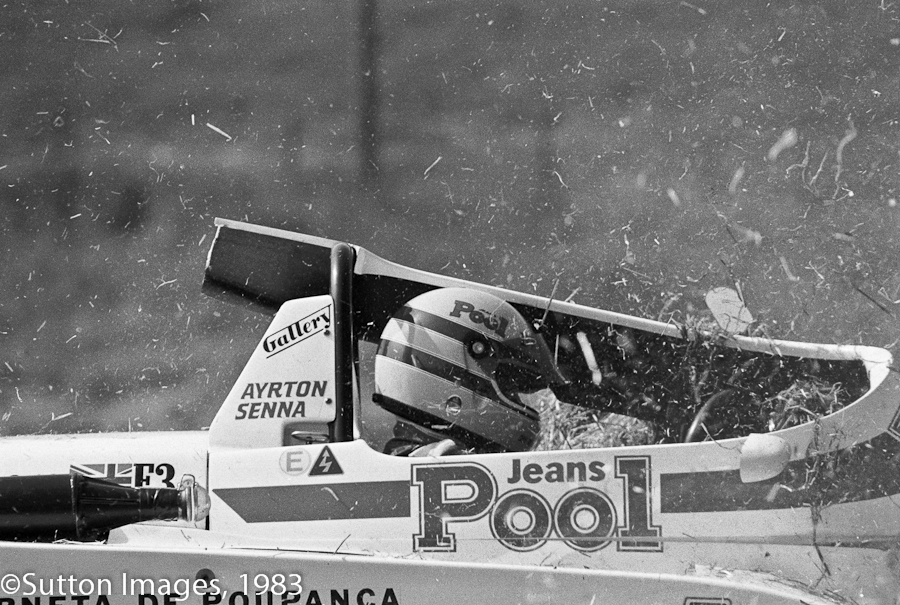
It got worse for the Championship leader, next round at Cadwell park, he did not even make the race. Duelling with Brundle for pole he trashed the Ralt on the Mountain causing yours truly to jump for cover. The pressure was getting to Ayrton. Brundle duly won the race making up more ground.

Crash Landing

The action reached boiling point at Snetterton when the two drivers made contact after an optimistic move from Senna was blocked by a resolute Brundle. Another win for Martin, another retirement for Ayrton. The Stewards were kept occupied for hours trying to work out who, if anyone was to blame. No conclusion was reached but relations between the drivers and both the teams was strained to say the least. Certainly the crew at WSR were not happy not least because they had to set to and rebuild the car once again. This was having a serious effect on progress, as Dick Bennetts put it at the time “You can’t go testing when you are spending late nights rebuilding a car.” The Kings Head saw precious little of the team personnel during the mid summer period.

Sign of the Times

The old order was restored at the British Grand Prix support round with Ayrton taking another trademark win in front of what he hoped would be next year’s employers. During 1983 I started working with Keith Sutton, then on his way to be one of the great F1 photographers. He had become a kind of press officer to Ayrton since linking up together in FF1600 days. During 1982 Ayrton and Keith had taken the then revolutionary step of sending out press releases of Ayrton’s triumphs in FF2000 to any interested parties including the bosses of all the Formula One teams. A simple idea, well executed, typical of Ayrton’s ability to think five moves ahead.
A few weeks later the tables turned once again in the now compelling contest as Brundle dominated the Donington round putting in a Senna-esque performance that had WSR scratching their collective heads.

Normal for Norfolk

Controversy returned at the following round held at Oulton Park. The pair were scrapping for the lead when Ayrton tried a move that stepped over the boundaries of recklessness. The result was that both cars retired with the WSR Ralt ending up perched on the top of the EJR example. The Stewards moved swiftly to nip this nasty situation in the bud, someone was going to get badly hurt if the fight was allowed to escalate. The Brazilian got a £200 fine plus an endorsement on his licence, this was not popular with WSR. Another race another rebuild.
Then tragedy struck the EJR outfit when the truck bringing their car back from a Euro F3 race went over a cliff killing the team’s chief mechanic, Rob Bowden. This shattered the team so it was no surprise that the next race at Silverstone went to WSR and to add insult to injury the EJR Ralt was declared illegal after failing a check on skirt heights.
Despite all this the contest was far from finished. The momentum swung back to Brundle as he swept up the next three races at Oulton Park, Thruxton and Silverstone. Worse for Senna was the pair of non-finishes with yet another accident at Oulton Park and engine problems at Thruxton. Second at Silverstone was a poor return.

Triumphal Arch

So amazingly going into the final round, number 20, at Thruxton Brundle held a one point lead, at least if you looked at the table. The reality was once the three worst results were dropped, the advantage swung back to Senna by three points. That would be enough and Ayrton and WSR regained their composure to win the final race and the Championship. It had been a hell of a fight.
The WSR camp followers all motored back up from Hampshire after the race and took over The Kings Head, then on to a celebratory dinner at The Riverview Club, also in Shepperton. Needless to say the whole party, including Ayrton, and even his Mother, were extremely well refreshed by the end of the evening.

Perhaps at the time we had not appreciated what we had witnessed during the year but those at the sharp end were under no illusions. Senna reflected “At the beginning, we had our car set up better than the others. Then, the others caught us up. I have done a few mistakes, but still, we have done all we could do. A couple of times we were not so lucky, like at Oulton in practice when something broke and at Thruxton with the petrol thing. Dick is right: it takes away from our development time and all the time Martin is getting the advantage, getting the points. I don’t feel it is a pressure situation for me. Nothing has changed, only perhaps a little bit of luck and that has been with Martin.”
Brundle summed up his approach to the second part of the year, “He’s not unbeatable. After the Euro round at Silverstone I just forced the pace and let him worry about how fast I was going. Psychologically it shifted all the pressure on to him.”
Dick Bennetts was perhaps the best placed of us all to assess just how good his man had been. “He’s the best. Amazingly quick, clever in the car and he always wants to win. I’ll still be here when he moves on, but it is good when both the team and driver make each other look good.”


In truth the title could have gone either man and no one could have been disappointed. Perhaps the massive achievements of the Brazilian in his Formula One career mean that looking back it seems inevitable that he would come out on top. Back then, approaching the Thruxton decider it was not so certain, even to man so convinced of his destiny as Ayrton Senna. The rest of the field was nowhere compared to the Dynamic Duo and they included future Grand Prix drivers and Le Mans winners, it was an incredible performance from them both.

John Brooks, May 2011
La Route Est Dure…………….Deux

The Great Men. Norbert and Bob

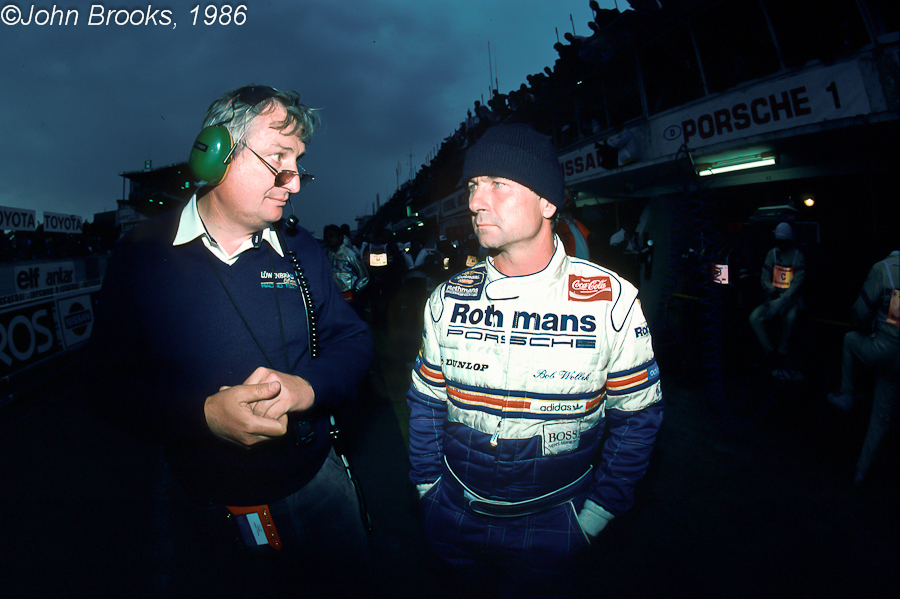
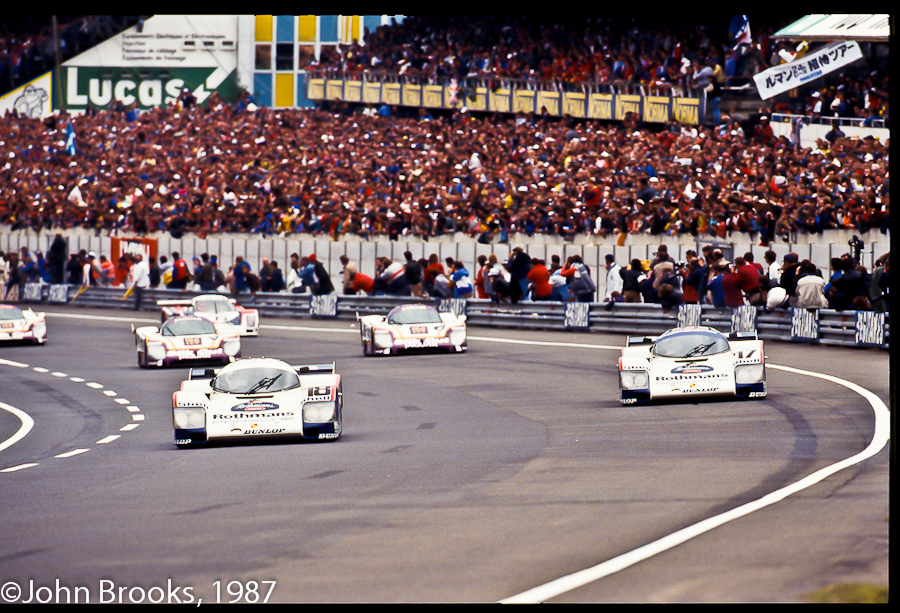
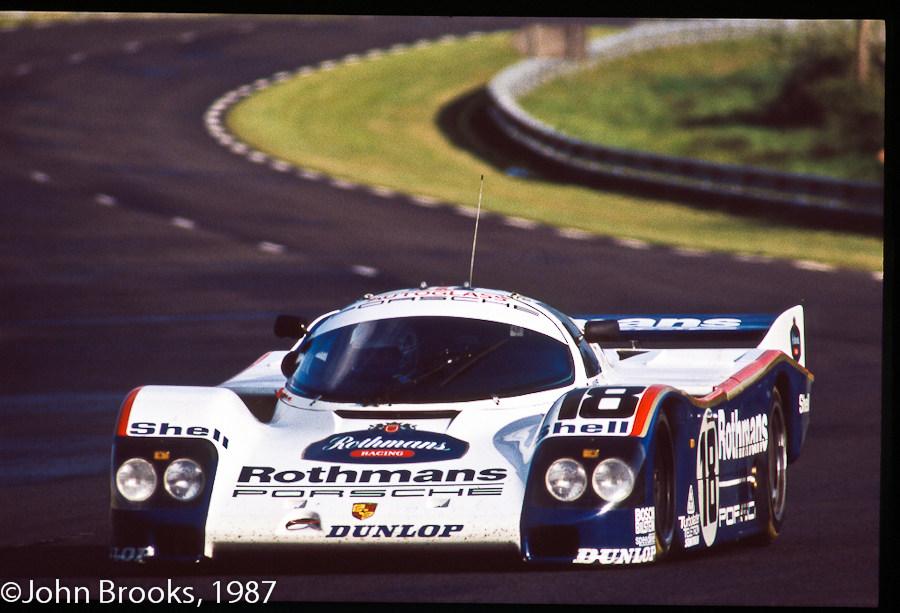
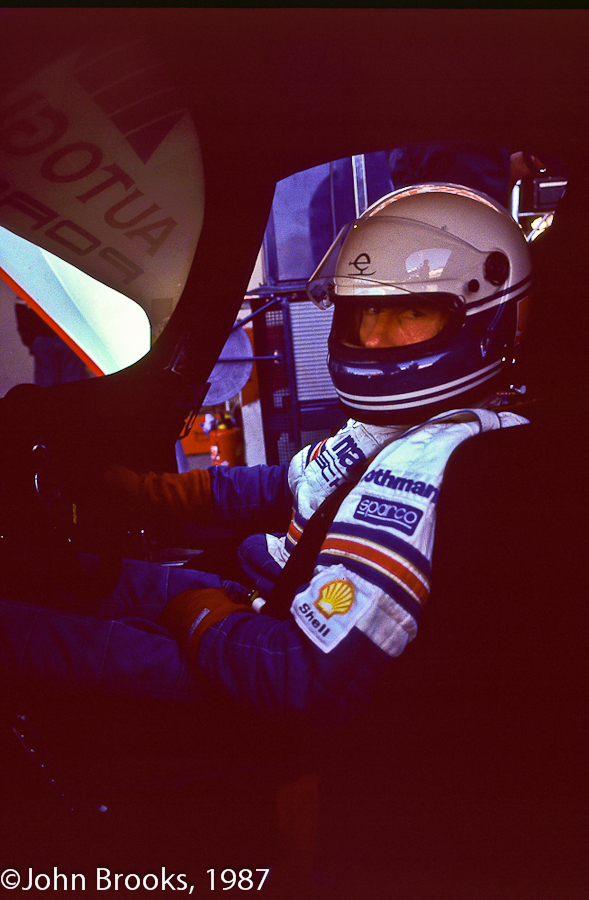
During 1986 and 1987 the combination of Bob Wollek and Rothmans Porsche 962C were irresistible at Le Mans, at least during Qualifying. The races proved more problematical.

Before the Storm

Teammate Jochen Mass was involved in someone else’s accident, which accounted for the 86 race and the following year Bob did not even get to drive a lap as his 962C was the highest profile victim of the engine problems that afflicted the Porsche competitors during the opening stint of the race. It was not Bosch’s finest hour but the real villain of the story was poor quality fuel supplied by the ACO.

Porsche at Porsche Curves

I had started to get media accreditation at Le Mans back then and I recall attending the annual press conferences at that time. Actually there serious incentives to go along and sit through an hour of French, in 1986 Moet et Chandon provided all attendees with a magnum of their vintage Bubbly. I still have the bottle, if not the contents. The usual routine was to have the FIA President Jean Marie Balestre, bellow at the assembled hacks about whatever issue was troubling him at the time. It was usually to do with Formula One, which would confuse us all mightly.

A Day in the Office

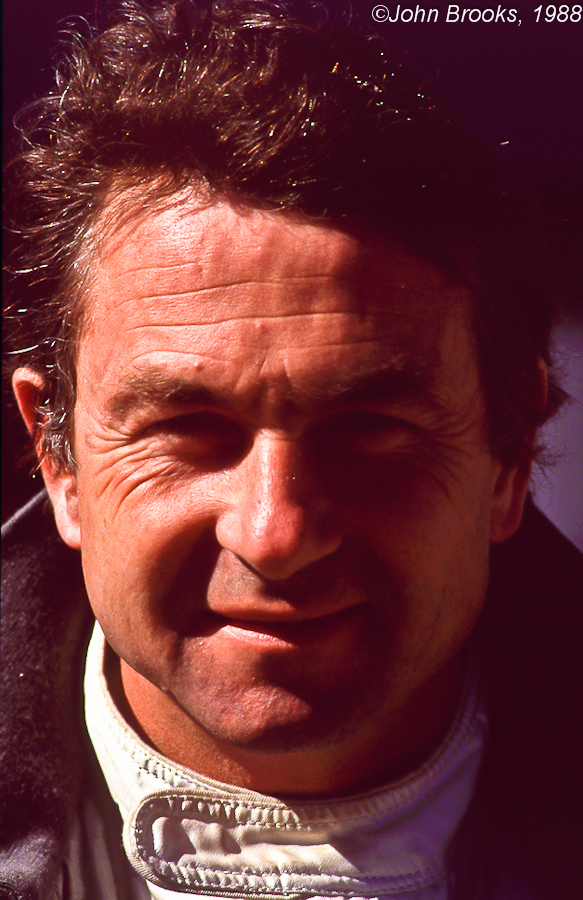
I do remember the President being stopped in his tracks after an intervention from the taciturn Bob Wollek. He had listened to the rant, took issue with some particularly egregious assertion, then quietly and firmly contradicted Ballestre, for once silencing the garrolous Frenchman. Those in the crowd such as me, who did not really know Bob were impressed. He could talk the talk, as well walk the walk.

Crowd Pleasing Man

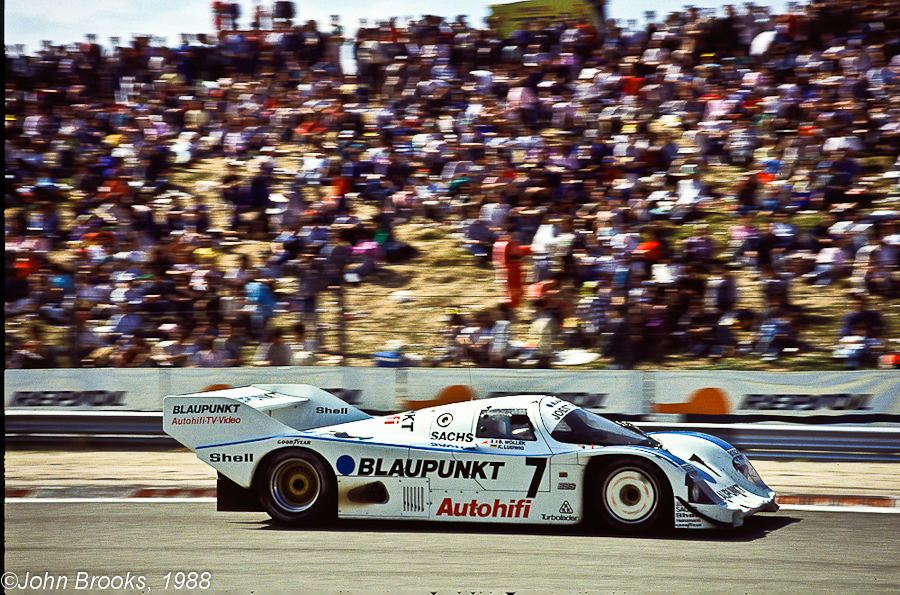
1988 saw the end of the association between Rothmans and Porsche, so Wollek joined Joest to partner Klaus Ludwig. However the 962 was not really up to the level of either the TWR Jaguars or the Sauber Mercedes. Le Mans once again saw disappointment with his factory Porsche lose the lead with engine failure.

Victory Lane

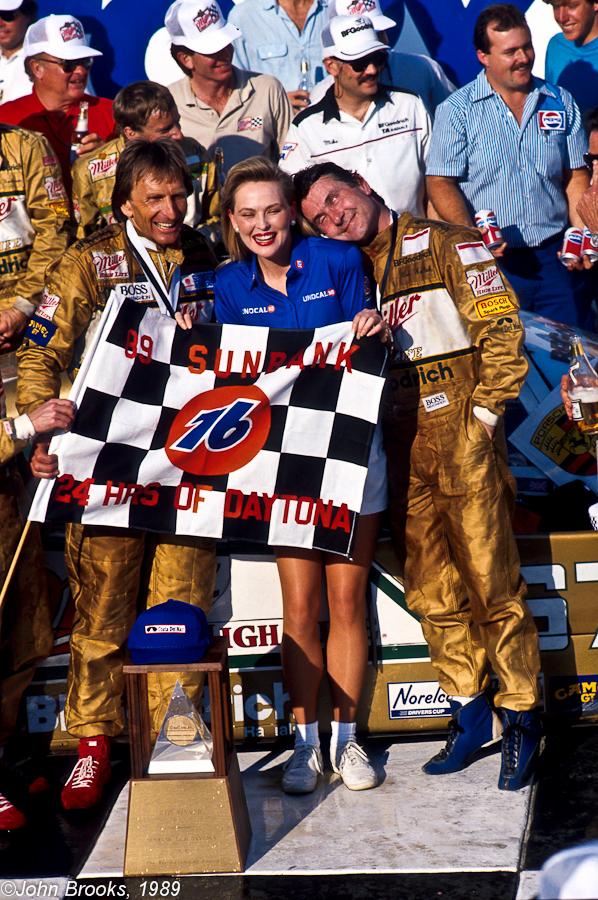
Whatever the frustrations La Sarthe brought, on the other side of the Atlantic things were very different. Four outright wins in the Daytona 24 Hours told a completely different tale of Bob Wollek from the results at Le Mans.

The end of Group C, driven down by the madness of the the F1 based engines and technology and the spending war in IMSA almost killed sportscar racing for good.  Wollek’s career like so many of his contemporaries was on hold till matters improved.

Courage, Mon Brave

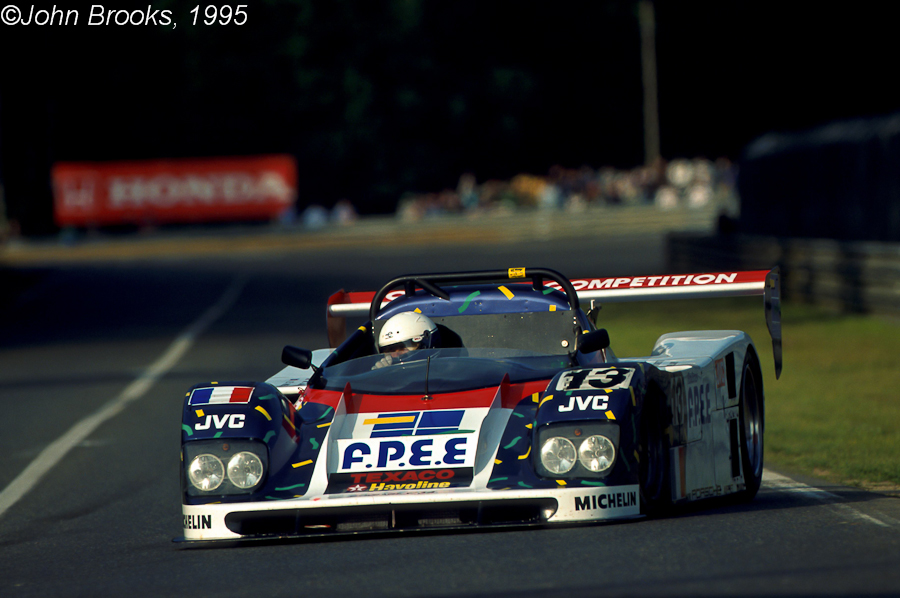
A gradual revival in the mid 90’s brought Bob Wollek back to the top table. Once again a Le Mans win went begging in 1995. In truly awful conditions, co-driver Mario Andretti was forced to avoid a spinning car and clouted a wall. The repairs cost the car six laps, when the Chequered Flag was waved the next day the Courage was just over a lap down on the winning McLaren.

911 GT1

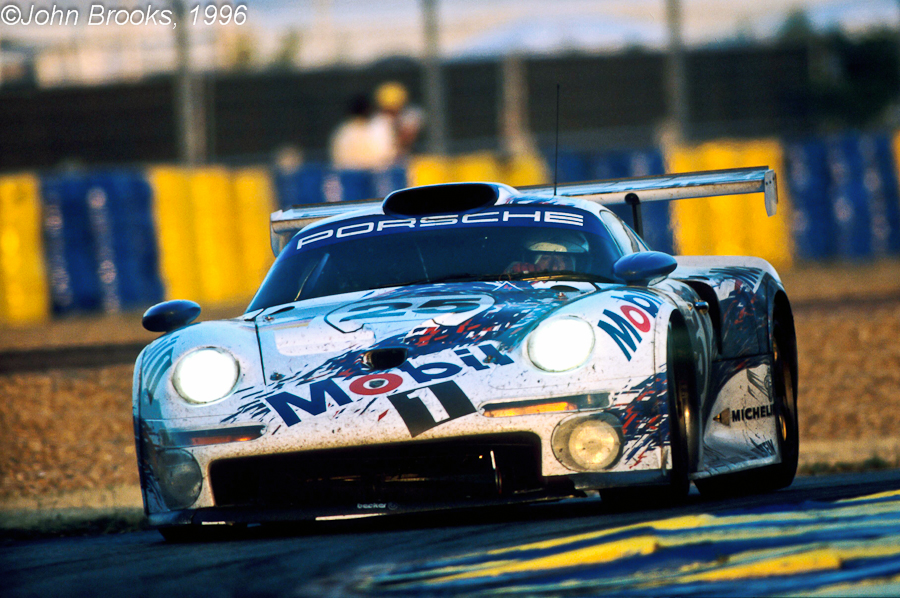
Porsche returned to racing and Le Mans in 1996 with the 911 GT1. Somehow Porsche decided to shoot themselves in the foot by allowing Joest to run the ex-TWR Porsche WSC prototype. It outran the fancy GTs winning by a lap from Wollek.

In 1997 there was more cruelty for the Frenchman at Le Mans. The relative performance of the Joest prototype and the 911 GT1 had been reversed. So as dawn broke on the Sunday morning, Wollek’s wait for victory, in the race he cherished above all, looked to be finally over. Then a half shaft failed pitching the Porsche off the track. A few hours later the sister car caught fire, handing another win to the Joest team.

Cheese!

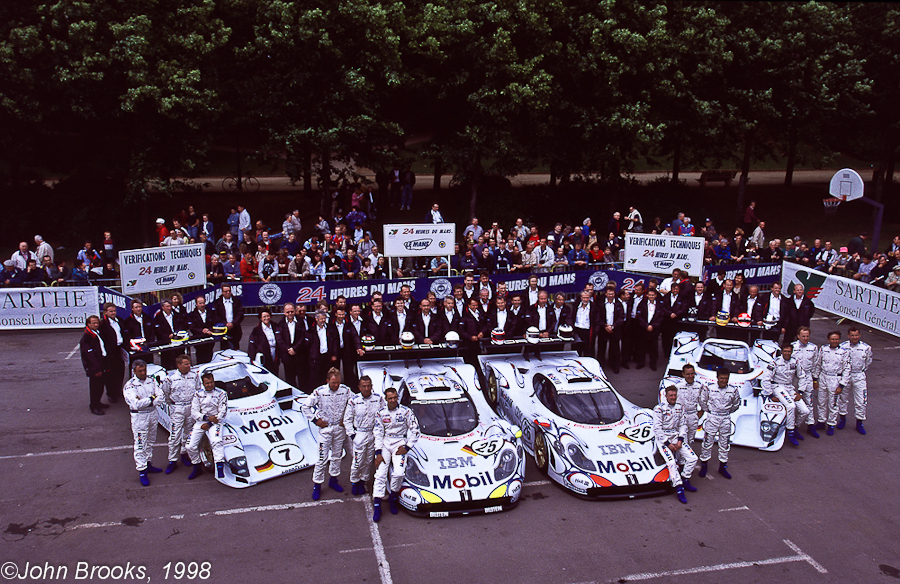
1998 would be Bob Wollek’s last chance to take outright victory at Le Mans. He was originally down to drive one of the prototypes that were entered in support of the new 98 GT1 cars. Yannick Dalmas had a training accident and as a result swapped cars with Wollek. Good luck coming his way?

Rub of the Green

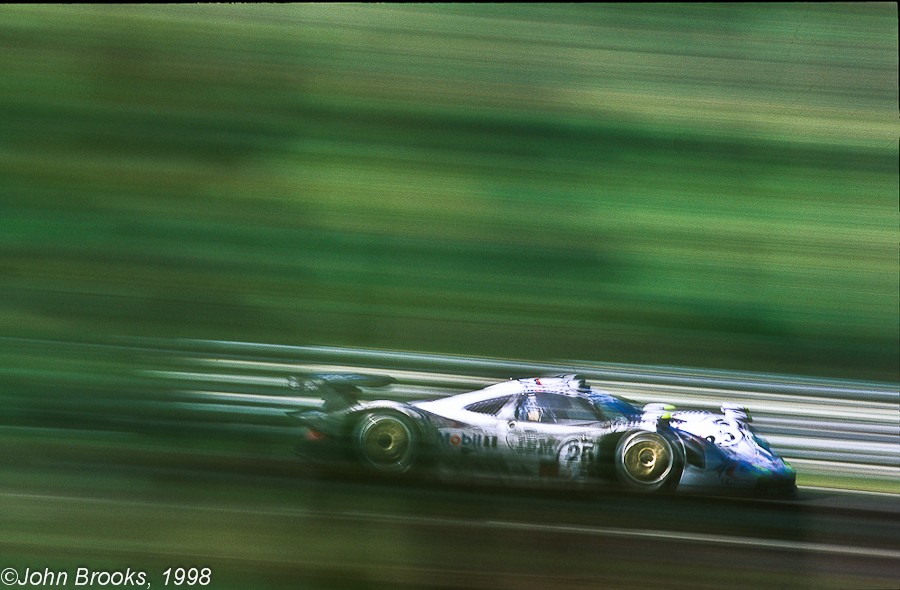
The 1998 race was a fantastic contest. After the demise early in the race of Mercedes Benz and BMW and the lack of pace from the Nissans, the battle was going to be between Toyota and Porsche. The Japanese had a speed advantage but suffered with gearbox problems. Both teams had accident damage to contend with after localised showers during the night. Brundle’s Toyota was eliminated whereas the undertray on Wollek’s car was replaced in 30 minutes after Müller had taken a trip across a gravel trap. The other Porsche had a leak in the cooling system but got back on track slightly quicker than #25. Come 3.00pm on Sunday that would prove the difference between first and second.

This could be the last time……….

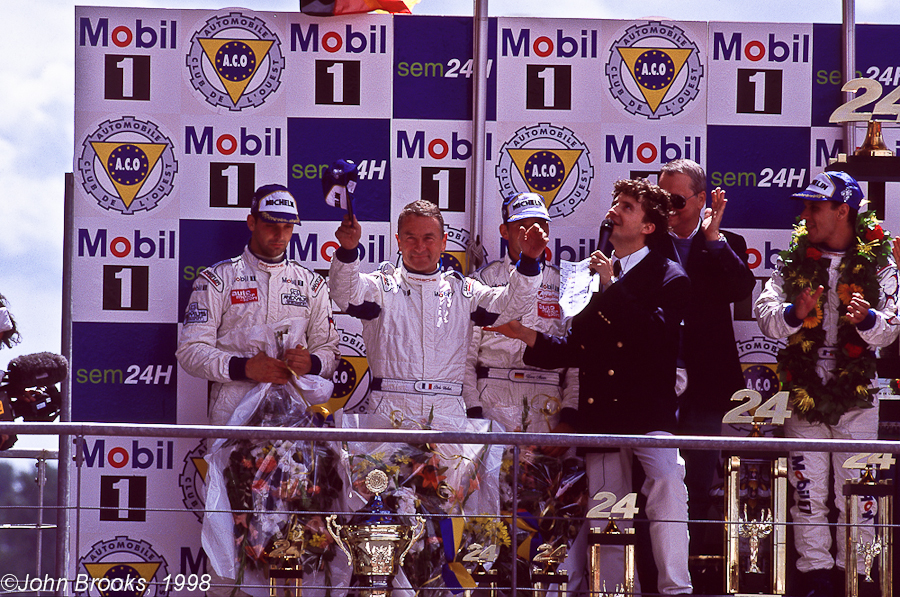
There was no fairy-tale ending for Wollek, tears on the podium from him and his team mates, generous applause from the huge crowd.

Champion Stuff

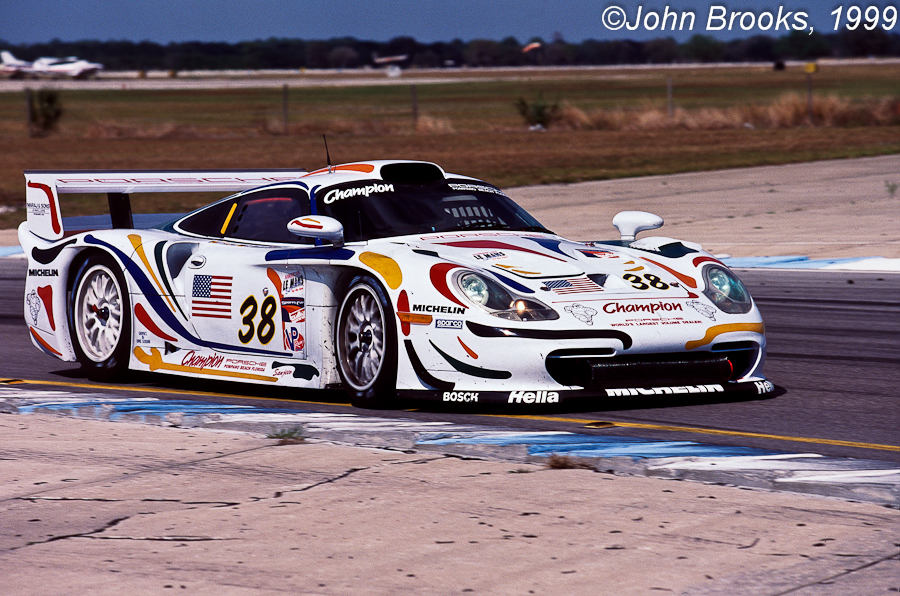
Porsche cancelled their prototype racing project at the end of 1998 and decided to focus on a 911 customer programme. Wollek was retained by the factory and parachuted into cars as necessary. So the Champion 911 GT1 EVO for Sebring.

Portland Pavement

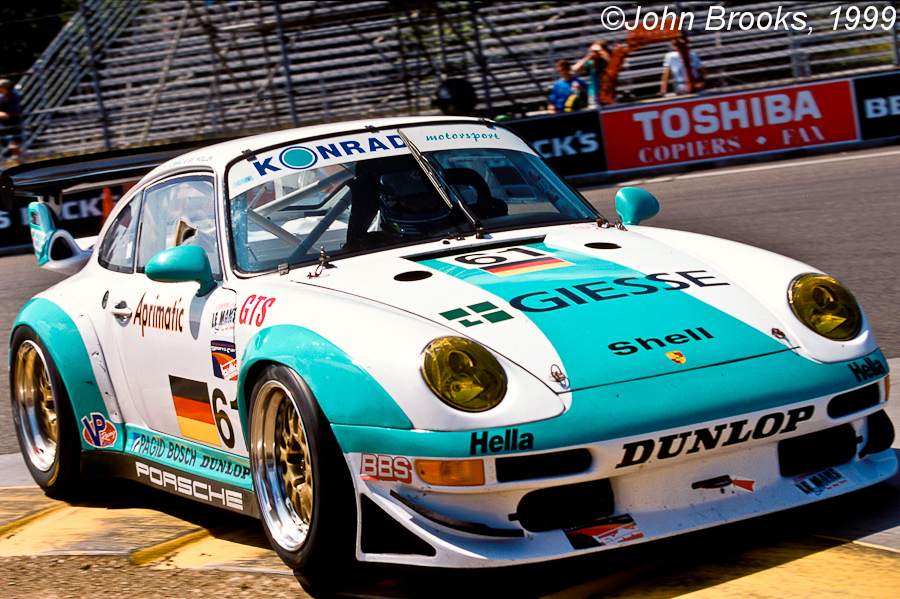
Other destinations were the Konrad and Freisinger teams.

On Parade

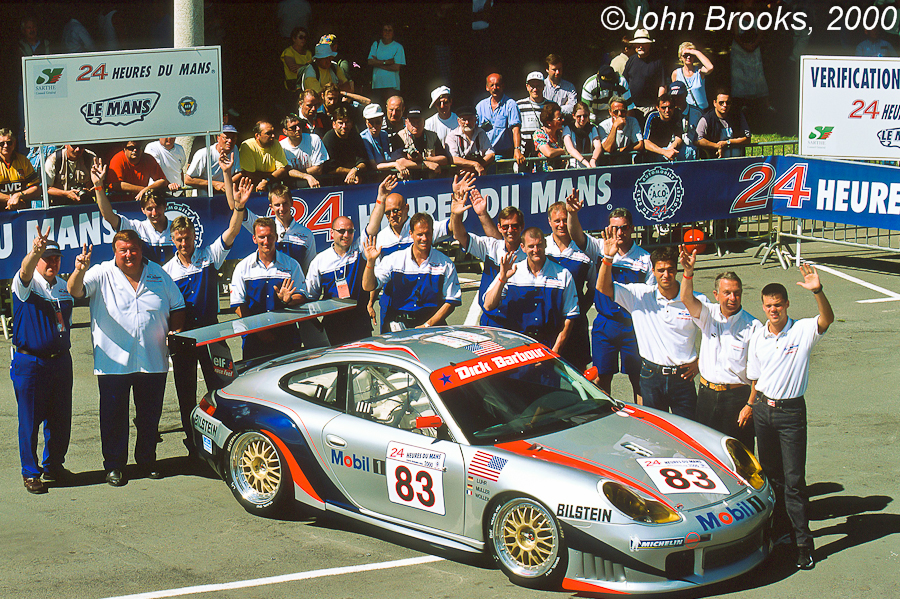
For 2000 Wollek joined Dick Barbour Racing at Le Mans and in the ALMS.  Le Mans produced another class win and then it didn’t, as there was a squabble about fuel tank capacity. As ever the ACO had the final word.

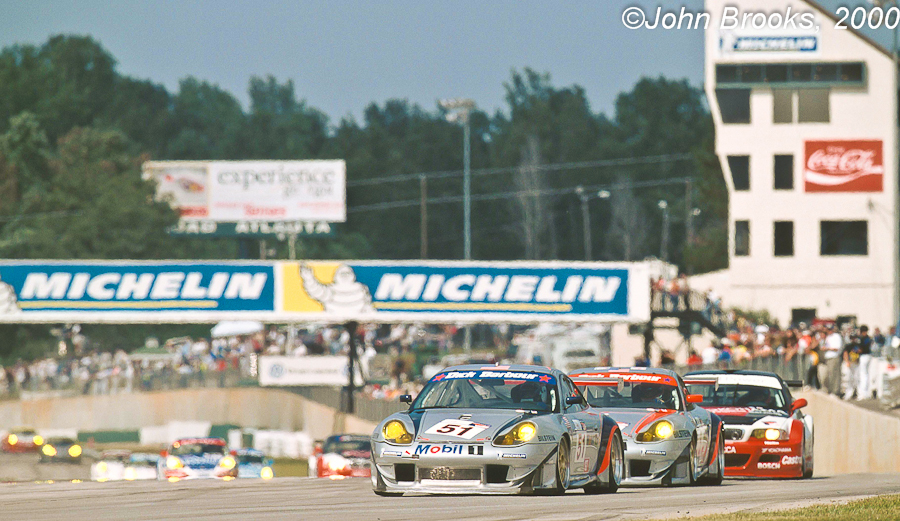
Head of the Pack

The team dominated the ALMS GT class. Bob surprised his younger colleagues such as Lucas Luhr and Dirk Müller with his speed, it drove them up the wall trying work out where the pace came from.

Texas Two Step

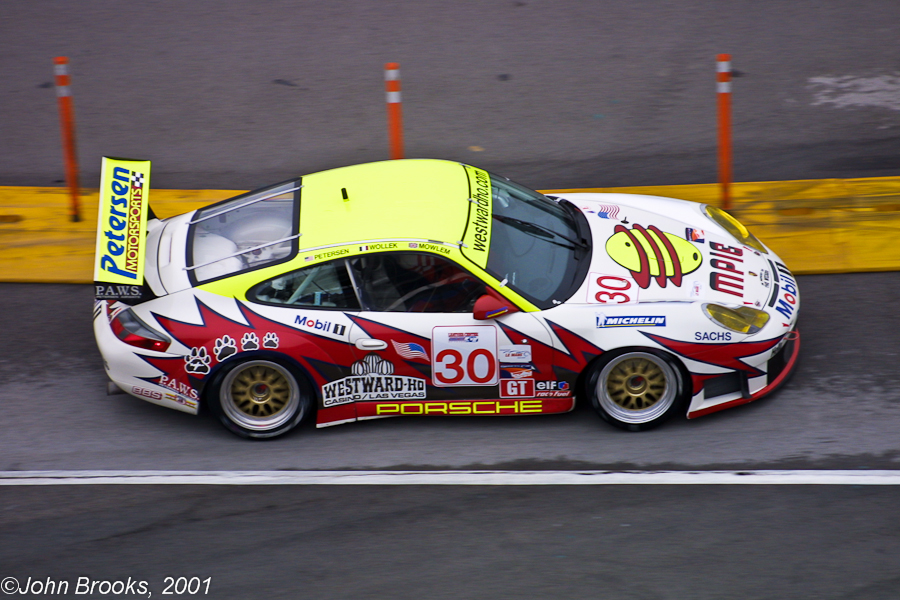
2001 saw Wollek join Petersen/White Lightning, another Porsche customer. Then came Sebring.

Memorial

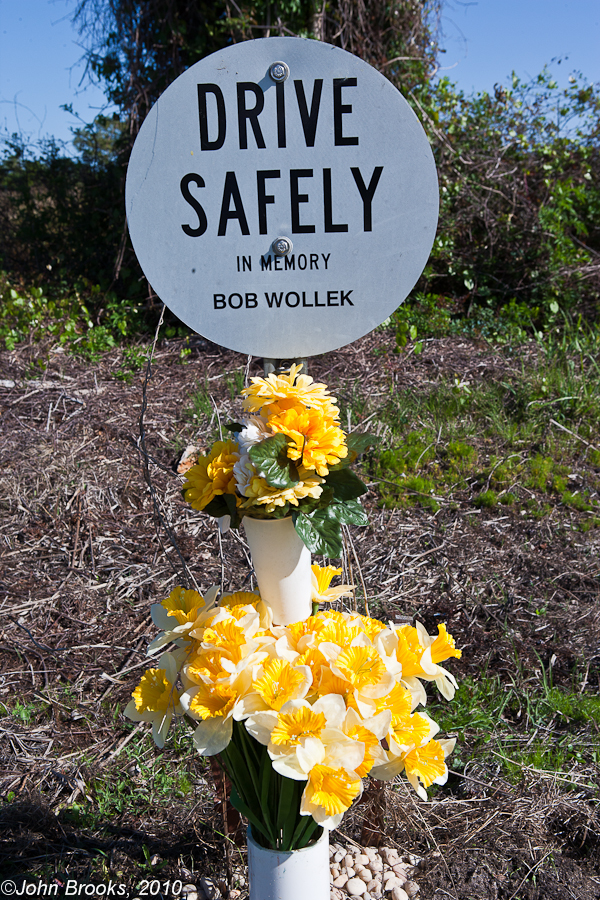
Take a trip down Highway 98 towards Okeechobee, you will find the above marker, a simple tribute to a great champion.

Rest in Peace, Bob.

John Brooks, March 2011


La Route Est Dure…….Une

Birthdays, anniversaries, memorials. Who knows where the time goes?

From the Fans

There is something in our wiring that makes us reconsider events in an orderly, time related  fashion, I suppose some of it has to do with our annual trip round the Sun. Maybe the concept of decades came from having eight fingers and two thumbs. Whatever, ten years seems to be significant period, perhaps because we know that we will only experience a handful of such landmarks in our brief time here on earth, it us gives pause to stop and reflect.

Ten years ago tomorrow, St. Patrick’s Day 2001, I stumbled into Sebring International Raceway in the dark. Our American cousins love their early morning photo meetings. So we assembled grumbling, the collective noun for a bunch of photographers is a Moan. Sheriff Rick Dole tried to instil some sense into us, giving details of the reserved spots for the turn one opening lap scramble and reciting the dos and dont’s.

Then someone, I can’t remember who, asked had I heard about Bob?

Bob?

That could only mean Bob Wollek.

What?

He’s dead, killed last night in a road accident.

Brilliant

This seemed impossible, Bob Wollek had survived during a truly dangerous period in motorsport and now as he contemplated retirement he was killed in a pointless traffic incident.

Tribute

Just how pointless was soon evident when the circumstances emerged. Bob was a keen cyclist and would use that method of transport to get to and from the circuit. In fact he would ride to Le Mans every year from Strasbourg. So on Friday afternoon he left the Sebring paddock en route to his lodgings, west along Highway 98 towards the small town of Lorida. An 82 year old local resident driving a van collided with the Frenchman killing him instantly.

The Florida Highway Patrol reported “Wollek had been riding close to the edge of the pavement marking and the van, traveling in the same direction behind other traffic, hit the back of the bicycle.
Wollek was taken to Highlands Regional Medical Center with fatal injuries.”

Spirits

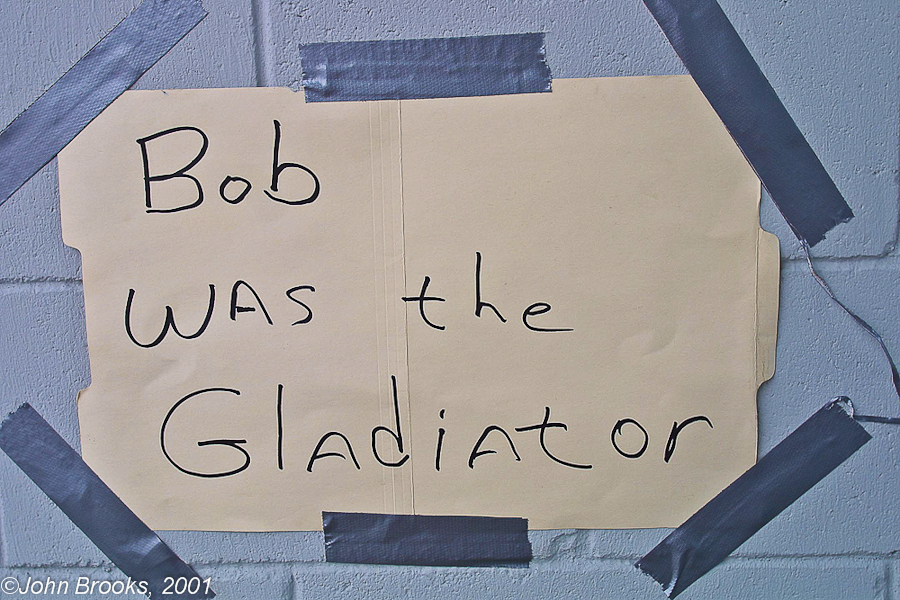
To say the paddock and the whole crowd were shocked would be a gross understatement, as evidenced by the signs posted up around the pits and the respect shown on the grid of a minute’s silence. The Petersen/White Lightning Porsche that Bob was scheduled to drive was also withdrawn from the race.

Kremer 917

I am not about to try and write a feature on Bob Wollek’s career, that requires a book, in fact one has just been completed by Jean-Marc Teissedre. Rather I have looked through the small archive and using a few shots will post some recollections in my personal tribute to the man.

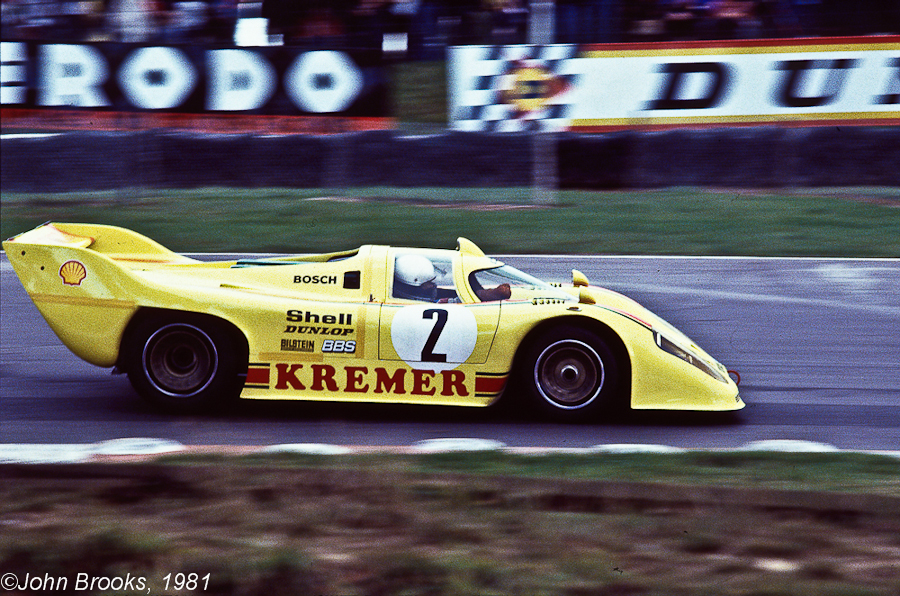
Back in 1981 Bob was already a top line sportscar driver and champion, I could not even get media accreditation at that year’s Brands Hatch 1000kms. However with a bit of effort from the spectator area this modest effort was possible. A Kremer 917? Yes the brothers from Cologne built up this fibreglass kit car, based around the original iconic design. It failed to impress at Le Mans but ran respectably at Brands, dueling for the lead till suspension failure.
936C

Another year, another adaptation, this time the 936C. For 1982 Joest Racing was aware that getting a customer version of the Porsche 956 would have to wait till 1983. So adapting their ‘customer’ 936 chassis and sticking some bodywork allowed them to be in the pack. In fact they were best of the rest after the Porsche and Lancia factory efforts.

Joest Porsche 956 at Brands Hatch

1983 saw Joest get hold of a Porsche 956 , chassis 104. Wollek used it to good effect with WEC wins at Monza and Mugello (both with Stefan Johansson) to bag the WEC European Drivers Championship. The DRM title too with three wins.

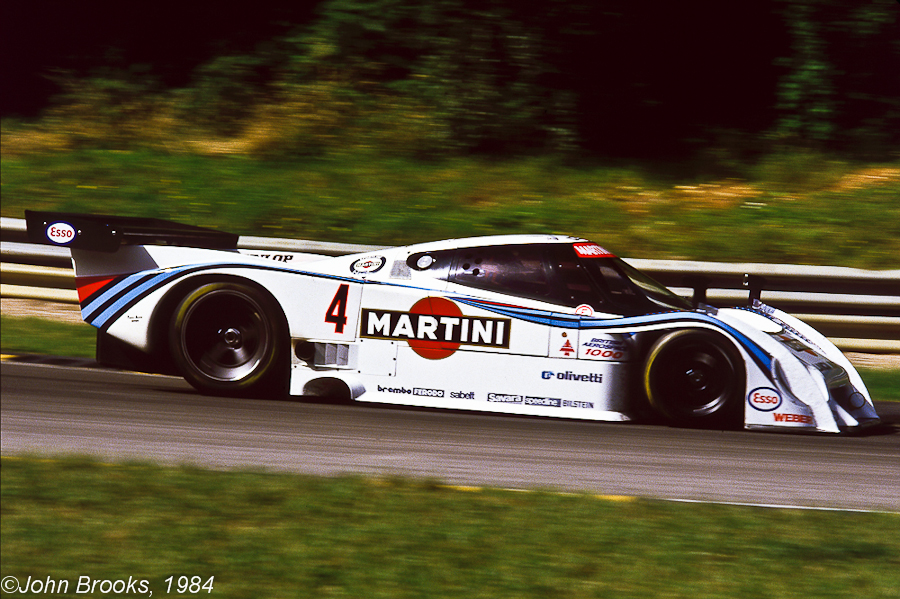
1984 saw Wollek join the Martini Lancia team, an odd choice given the reputation for chaos that the Italians had. The LC2s were fast and fragile.

Too Little, Too late

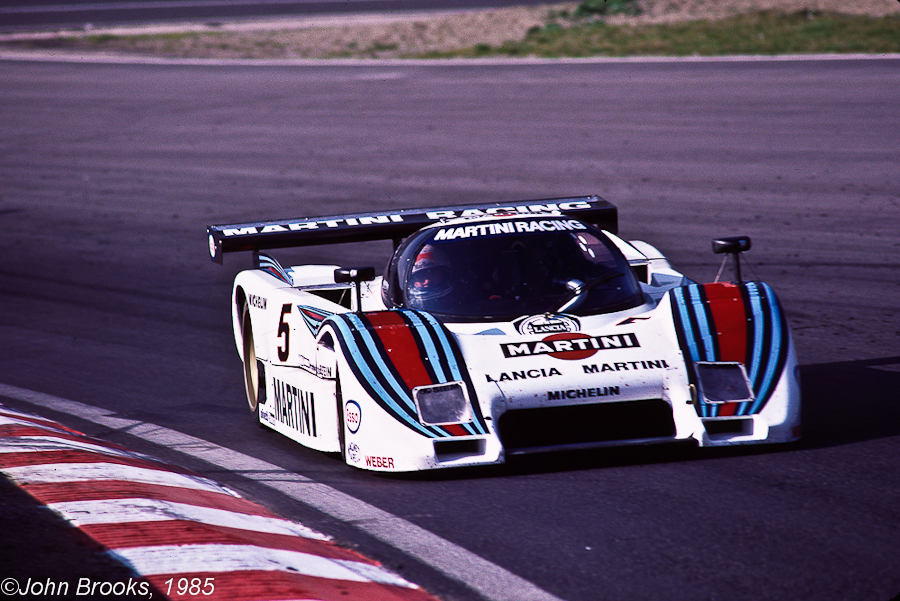
The following year the problems persisted, though there was a win at Spa. No one cared though, Stefan Bellof had been killed during the race, the result was irrelevant. Of course it would not have escaped Wollek’s attention that had he stayed with Joest in ’84 and ’85, he might well have been a double winner at Le Mans.

Pole at La Sarthe

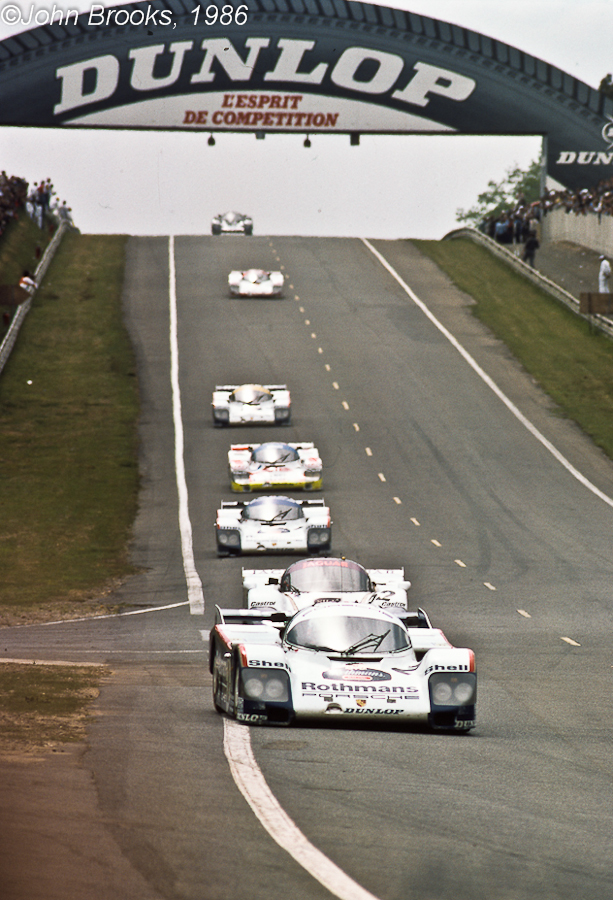
1986 came and Lancia left Group C and Jaguar joined. Wollek returned to the factory Porsche team, in place of Jacky Ickx who retired. Pole at Le Mans meant nothing after co-driver Jochen Mass clouted the barriers after encountering an oil spill.

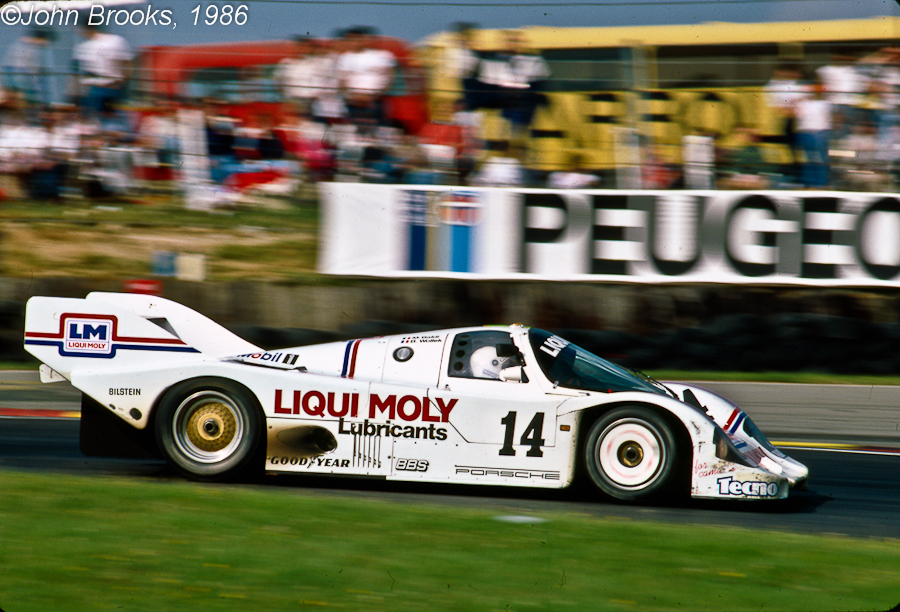
I was at Brands Hatch to see Mauro Baldi and Bob defeat the other privateer Porsches and the TWR Jaguars, in the Richard Lloyd 956 GTI.

More tomorrow.


John Brooks March 2011