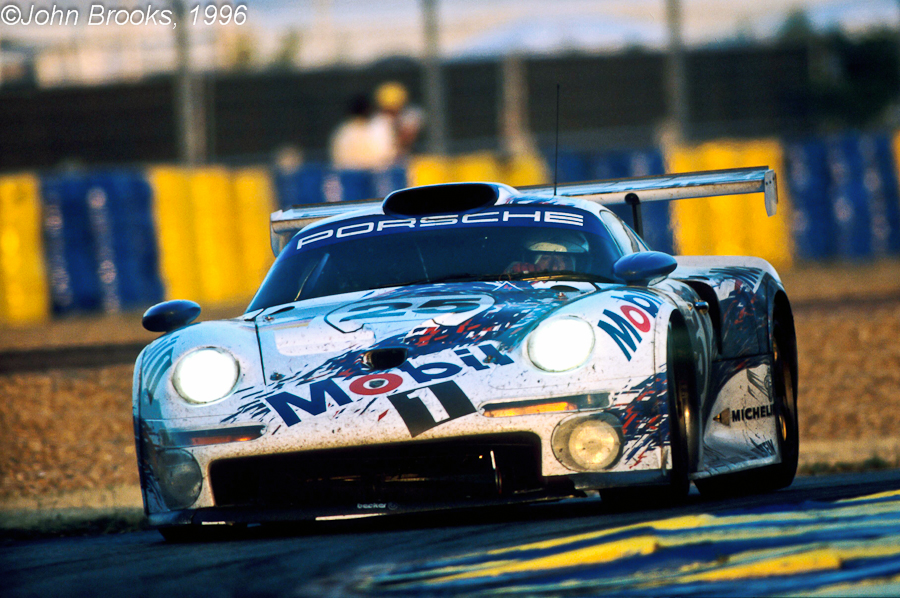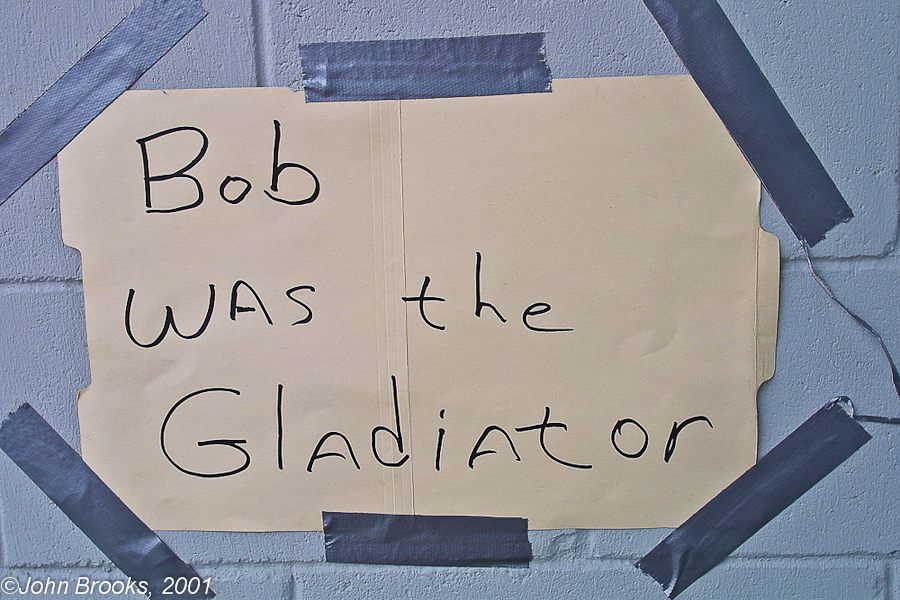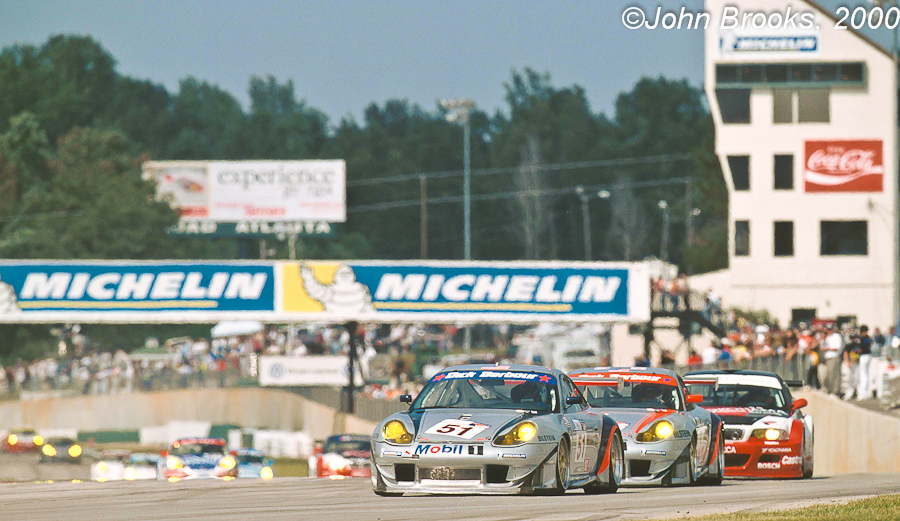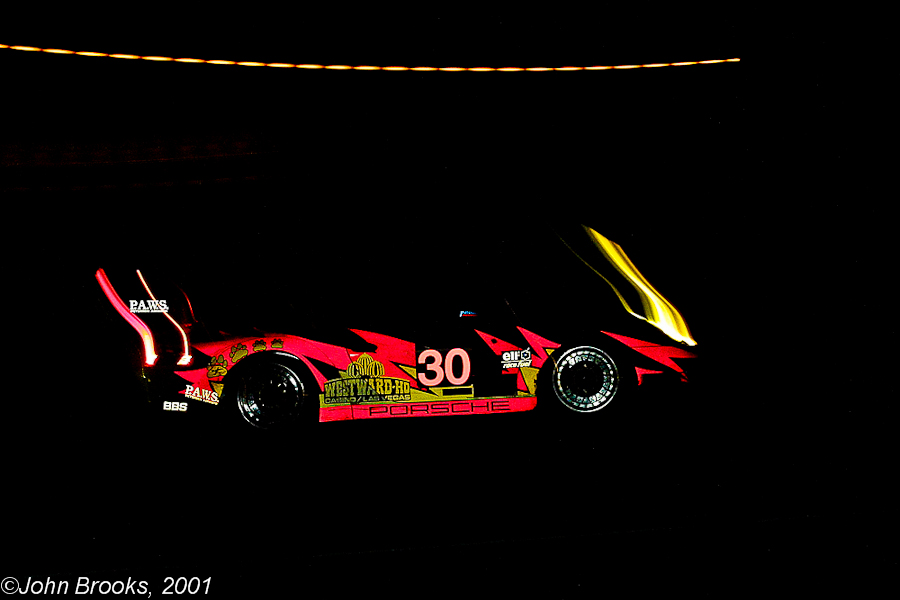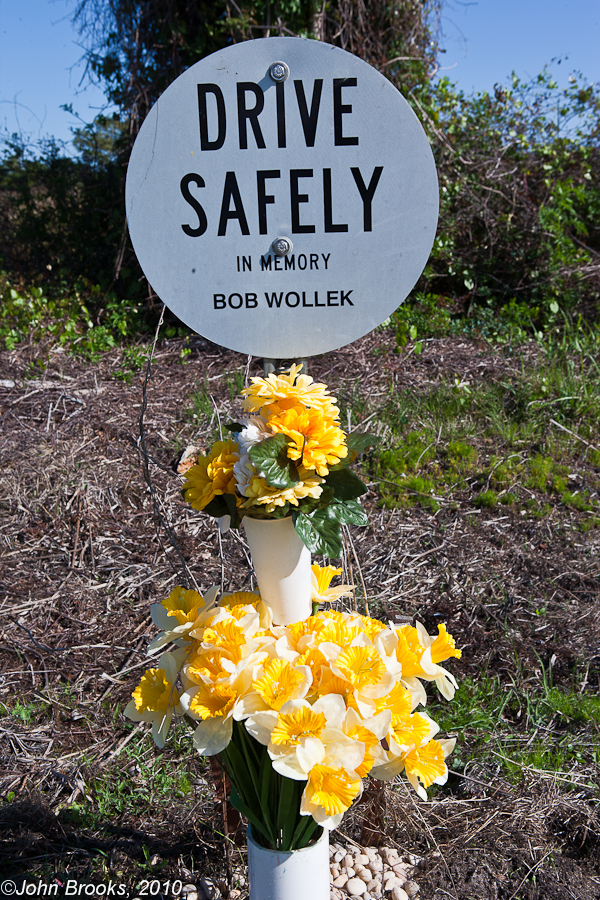
Long ago and far away Kerry Morse and I ran a small website, SportsCarPros.com . We didn’t post much but when we did it was generally the real deal rather than filler or press releases. We always knew when we were on target from the abusive outbursts from those we had called out. We also provided a platform for those who understood what the Right Stuff was. So ten years ago today the news came through that Milt Minter had passed away the day before. A month or so later there was a memorial service which Kerry and his buddy, Hal Thoms, attended and the upshot was this fine tribute to Milt courtesy of Hal. I am of the opinion that it is too good a piece of writing to moulder in a dormant website.
When I proposed running this piece as a mark of respect to Milt on his tenth anniversary Kerry suggested that he would update his introduction, of course this deadline was missed, and frankly, I would not have it any other way.
Apologies for the strange formatting, WordPress has a mind of its own some days, did Morse inspire it?
Compliments of the Season to one and all.
John Brooks, December 2014
A few weeks ago my friend Hal Thoms and I made a journey to the small town of Sanger, located just outside Fresno in the central valley of California. The purpose of this drive was to get together with several hundred people and to throwback a few beers and swap tales of one of the most original individuals to climb aboard a race car. Upon arriving, it was obvious that we were here for a party, not a weepy memorial. The choice was not a church or hall but a sound stage full of Americana and a large horseshoe bar located off to one side. But then that’s the way Milt Minter is and was. In today’s motor-sport world talent and ability are not enough, it is what one can bring in addition to the table. Milt Minter’s greatest asset was himself and nothing else. Hal Thom’s remembrance of the man is proof enough of that. Ironically there were several close friends of Milt that could not make the trip because it was the same weekend as the test days for the Daytona 24 Hours. Any guilt? Nah, Milt would have skipped his own party to be back in a race car.
Kerry Morse, February 2005
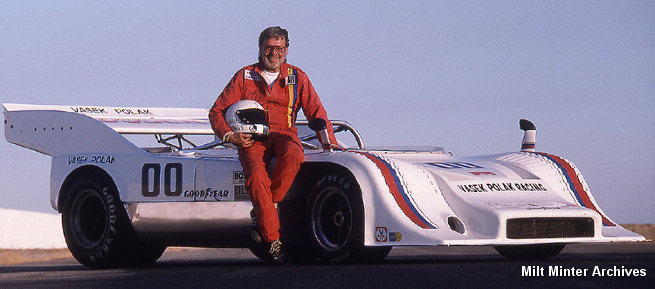
Milt Minter – An American Driving Legend (Donkey Bop)
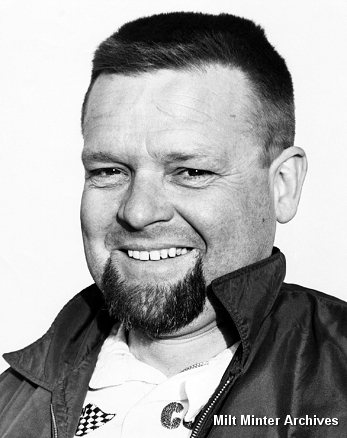
Milt Minter was a great race car driver. He had an immense fire and passion for racing, and was as competitive as they come. He could drive the wheels off of anything he drove. He “kicked ass” not only on the track, but also in life. He made many cars appear much better than they actually were with his smooth, aggressive driving style. More importantly, he was a true friend. Every one of us, who knew him, knew him as one of the friendliest, kindest, sincere people we have ever known. He always had time for everyone. He was one of the best storytellers ever. He is truly one of the last of a rare breed. We will miss him dearly. We lost Milt after his long battle with cancer on December 23 in his hometown of Sanger, Ca. He was 71.
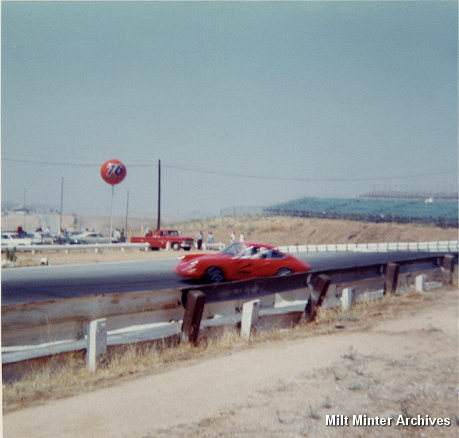
Down by the River (side)
My friendship started with Milt in the summer of 1968. I had just graduated from high school, and attended an SCCA race at Riverside Raceway. Boy, was I into Porsches! I borrowed my mom’s Brownie Instamatic camera, and off I went. Nothing was sweeter than the sound of a 911S “on it” with the pure Porsche tunes being played out of a Bursch exhaust! I was truly awed by a bright orange 911S being driven sideways lap after lap through Turn 6. It was there that I clicked off the first picture of this 911S that I ever took at a car race.
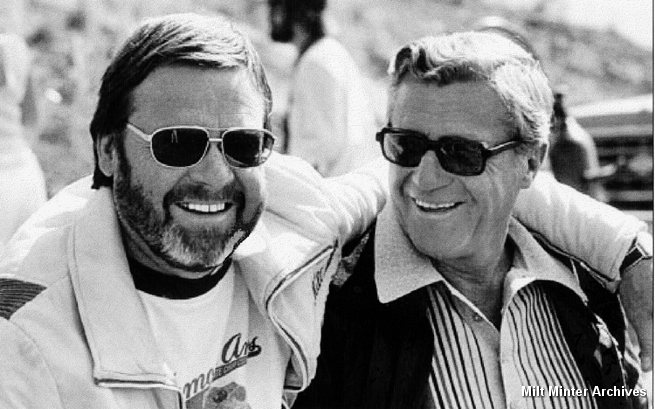
We later ventured into the pits. There it was, that hot 911S! Beside it, it’s driver, Milt Minter. To our surprise, he asked us “How are you guys doin’?” Is he talking to us? WOW! We talked for nearly a half hour before an older gentleman came up and needed to speak to Milt. I need a photo before we go. Click. My second photo ever taken at a race. It was of Milt, and the older gentleman I would later come to know, Vasek Polak.
Soon thereafter, in January of ’69, I began a four year stint serving my country in the Air Force. I would miss, what I now consider, the “glory days” of Road Racing. Not only the SCCA races, but the Trans-Am and Can-Am wars. Thank God for ROAD & TRACK. I kept up with all the racing news. Among others, I read about that driver that had befriended us in the pits at Riverside.
P-O-R-S-C-H-E
In 1958, after service in the Navy, Milt began his racing career in his hometown of Sanger, Ca, when he traded in his VW Beetle on an MGA that he prepped for racing. He found it uncompetitive even though he finished 3rd or 4th in his class behind a gaggle of Porsches in his very first race.
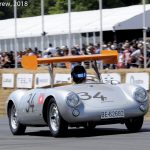
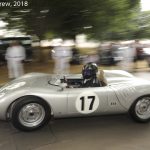
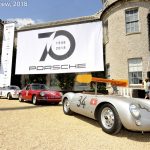
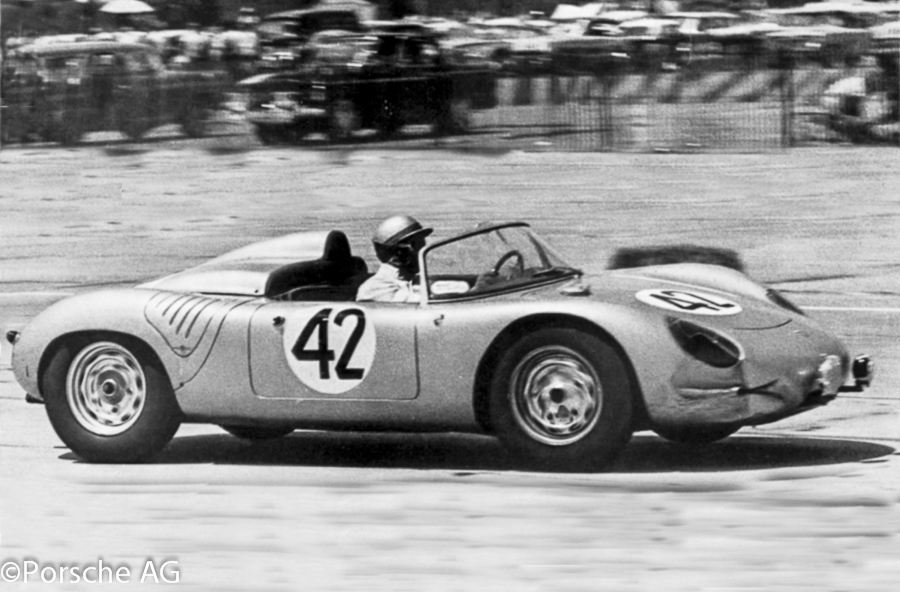
Sam Caldwell of Foreign Motor Sales in nearby Fresno, where Milt had purchased his Beetle, also introduced him to those quick little Porsches. Milt was convinced Porsche was the car to have if you wanted to be successful in racing. After scrimping and saving his earnings from driving a school bus, be had enough to buy a very used 550 Spyder in 1960 for $5,000.00. It was a handsome amount back in those days. With fewer than five total races under his belt, he entered himself in the prestigious Pacific Grand Prix at Laguna Seca. The world-class event included drivers of the stature of Jack Brabham, Jimmy Clark, and Dan Gurney.
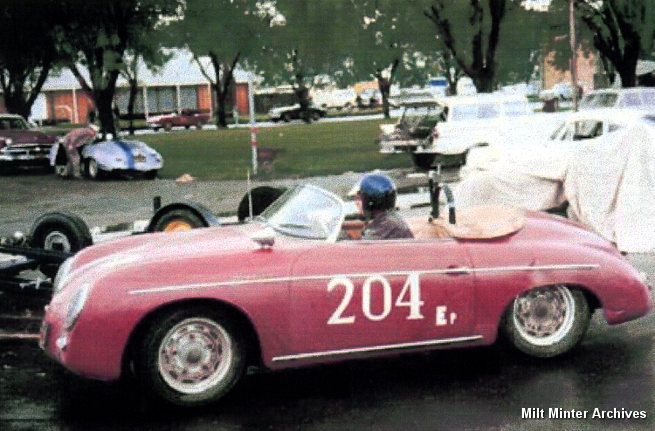
Milt did well enough not to embarrass himself in his first professional outing. Unfortunately, the 4-cam engine blew before the checker flag fell. He soon found out that no one in the Fresno area would touch the complicated 4-cam engine. He had disassembled the engine but didn’t have the knowledge (nor did anyone else) to rebuild it. The 550 would sit in his backyard for over a year before he sold it for $4,000.00 to a local PCA crony, Warren Crumly.
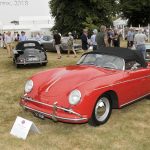
Meantime, Milt’s first real patron in his racing career was another Fresno area native, Bob Rhodes. Rhodes turned his gorgeous concours winning Super-90 356 Coupe into a road racer. He installed a roll bar behind its drivers seat for Milt who would not disappoint as he would place second behind Harry Weber’s 356 at a race at Laguna Seca. In the pits between sessions, Rhodes would be wiping off his car trying to keep it in pristine shape. Milt didn’t put a scratch on it.
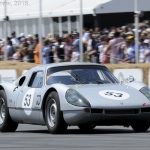
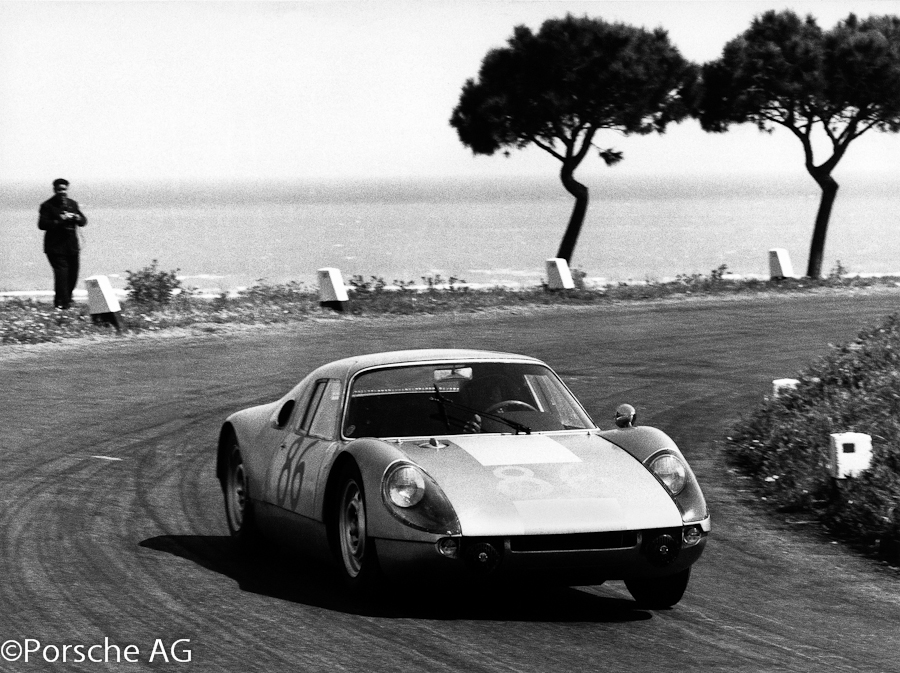
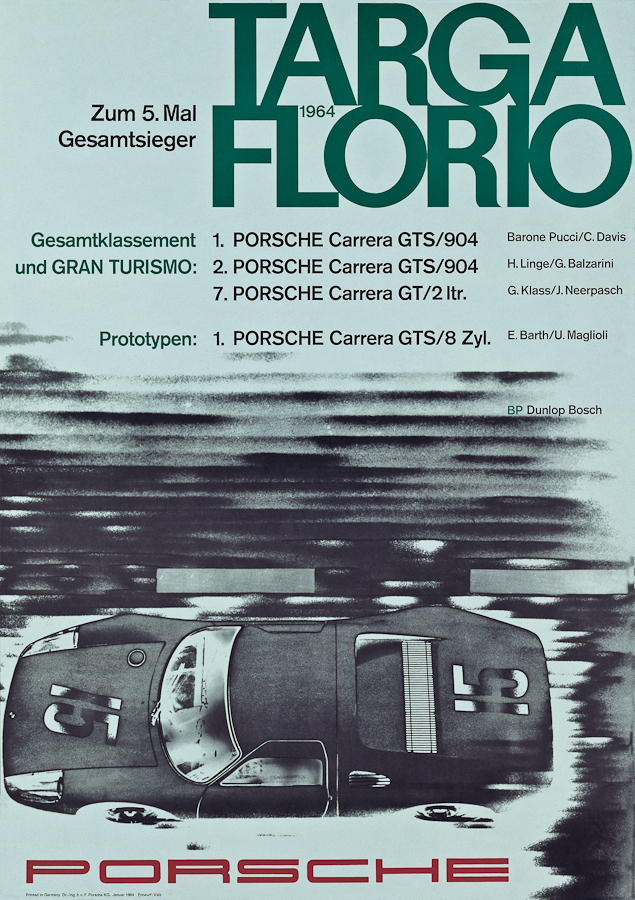
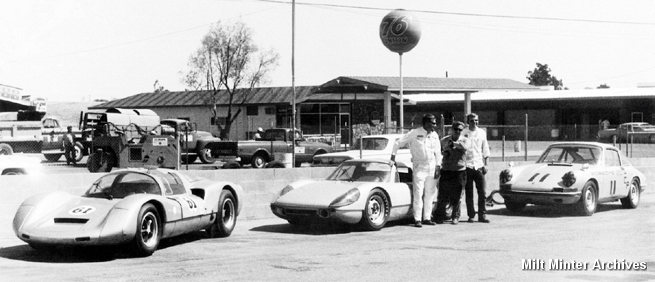
Harry Weber was so impressed with Milt’s aggressive, smooth driving style, that he hired Milt to drive for his own team. In 1963, Weber fielded Milt in a black Carrera GT belonging to Don Dickey, once again at Laguna Seca. Milt was having a tremendous race until the motor blew. Still impressed, Weber put Milt in his newly purchased red 904 at an SCCA event at Candlestick Park in San Francisco in 1964. This was the ride that boosted Milt out of production car ranks and into the sports racer elite. Even though Milt came within a length of beating Porsche guru Scooter Patrick, driving Otto Zipper’s 904, Weber withdrew his 904 “baby” from further competition after it had suffered minor collision damages in the contest. It would be Milt’s last Porsche ride for 4 years.
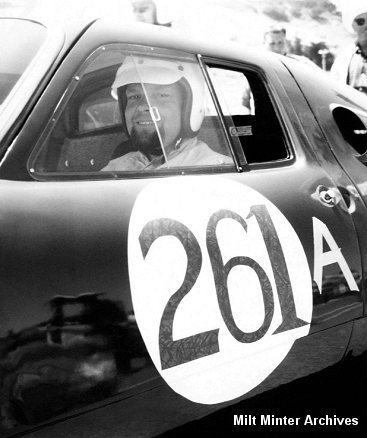
Enter Otto, here’s Vasek and a no go for Ginther
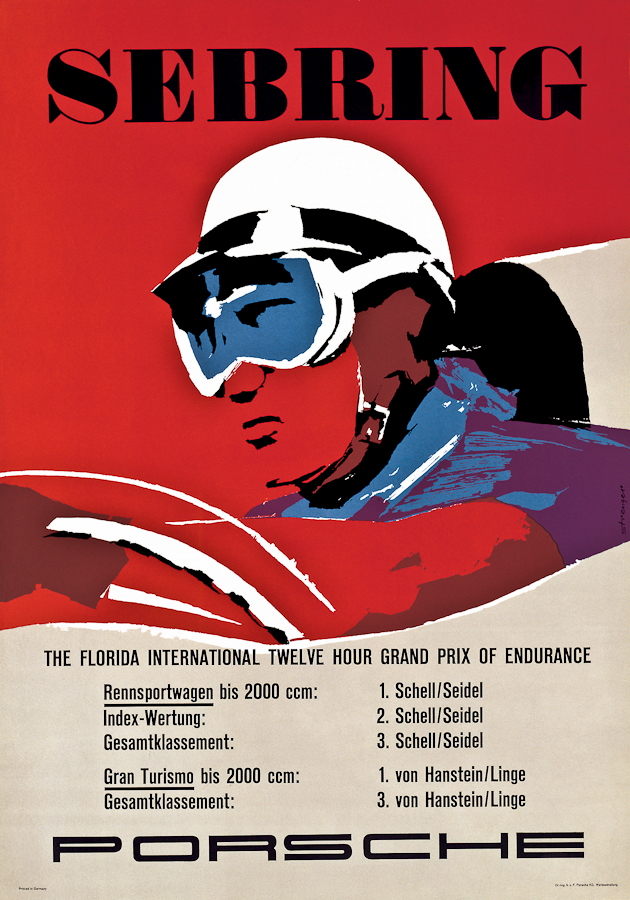
After the Candlestick Park race, Otto Zipper convinced Milt to move to the L.A. area to become a mechanic for him. Zipper thought Milt had prepared Weber’s 904 for competition. He hadn’t. Even though he insisted he wasn’t a good mechanic, and that it was his great driving skills that had gotten him his second place finish, Zipper insisted on hiring him. As Zipper and his team, anchored by Patrick, departed for the 12 Hour race in Sebring, Florida, Milt was left behind to be in charge of Zipper’s Beverly Hills garage. “It was one of the saddest times of my life. Everyone went off racing but me.”
When Zipper returned and discovered that Milt wasn’t really a mechanic, he let him go to Vasek Polak who had also thought that Milt was a great mechanic, even though Milt continued to confess it was great driving skills that he possessed. After a short time, Polak also let him go.
In 1965 Milt drove a Lotus Super-7 fielded by another Fresno area patron, Clarence Matthews in many selected SCCA events. He had some great battles with yet another Fresno resident, Dick Smith, in his quick Carrera Speedster. Smith wound up taking the Division title, and later the National Championship in his Speedster. Once again beaten by a Porsche. Milt did have a fine season and finished up 6th in the Pacific Coast Division.
1966 saw Milt behind the wheel of the Universal Motors Formcar Formula-V. He went on to take 1st in the Southern Pacific Regional Championships.
By the time 1967 rolled along, Clarence Matthews offered Milt a ride in his new Mustang in the second year of the Trans-Am series. It was a successful year. In ten Trans-Am events where he finished, Milt never finished out of the top ten. Milt gained much experience ‘banging fenders” with the likes of Parnelli Jones, David Pearson, Cale Yarborough and Peter Revson.
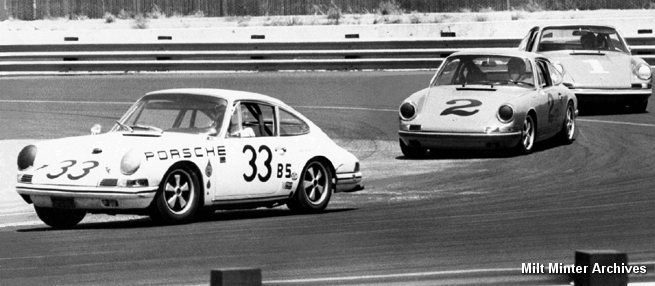
Vasek Polak again entered the picture at the end of the season when he approached Milt and offered him a test drive in his SCCA Porsche 911. Milt jumped on the chance to pilot a Porsche once again. The test was conducted at Willow Springs. Milt passed with flying colors and was offered the ride for the upcoming ’68 season.
In 1968, the SCCA was the factory battleground for bragging rights in the sports car industry. The Porsche 911s were up against the heavy guns from Lotus, Triumph and Toyota. In the very first race of the season at Willow Springs, Milt had a race long battle with Scooter Patrick’s factory Toyota 2000 that damaged every corner of his Polak 911. Milt was victorious! Polak was ecstatic! The “farm boy” from Sanger thought he had found a new home. Not so. Days later he was informed by his boss that Jon von Neumann made an offer to Polak for Milt’s services that he could not refuse. It was off to von Neumann’s Porsche Distributor team headed by Richie Ginther. He soon found out that he was expected to play “second fiddle” to the teams lead driver, Alan Johnson. Johnson had won the ’67 SCCA C/P National Championship at Daytona.
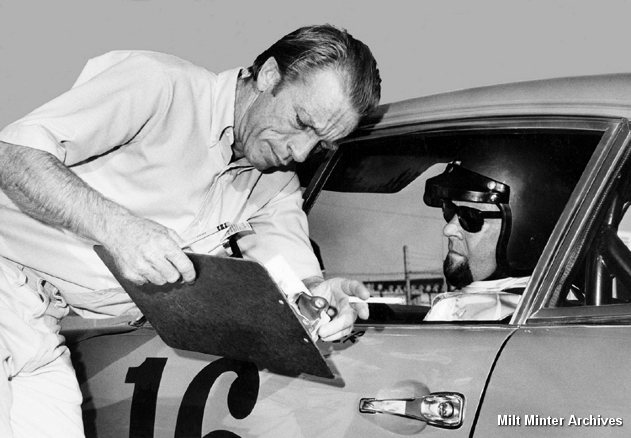
Milt’s status with the team created a major problem for Milt. “When it came to scrappin’ and we were back a little ways, I could run circles around Alan fightin’ for the lead.” Milt did confess that Alan was a much better frontrunner, and very hard to catch and pass while in the lead.
After two full seasons with Ginther and the team orders, it came down to the 1969 SCCA American Road Race of Champions at Daytona, and Milt had had enough. “I told Richie that the race was going to be mine, even though I knew it might cost me my ride.” He was told that if he won, he’d be fired. He drove to a convincing win. After the winner’s ceremony in winners circle, he was indeed fired.
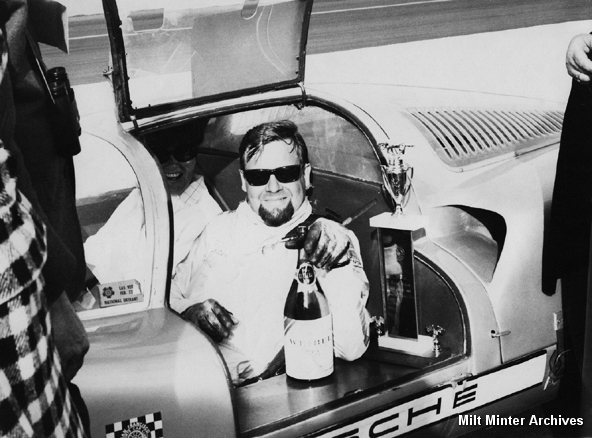
Milt’s driving relationship with Polak was quickly rekindled. The following year, 1970, he took Polak’s 906 to the BSR National Title. Milt also spent time behind the wheel of the Polak 904, which dated back to ’68, winning several Pacific Division A/P races.
Heavy Metal – enter Trans Am
1970 also saw Milt driving for Roy Woods Camaro American Racing Team again in the Trans-Am Series. In July, at the Donnybrook, MN round, Milt became the first independent driver to win a Trans-Am race.
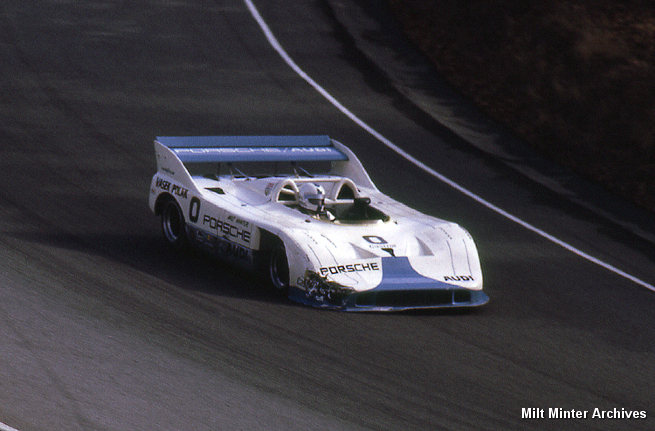
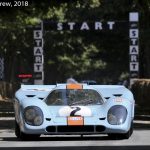
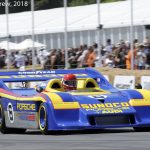
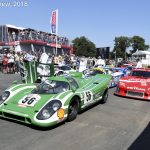
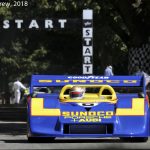
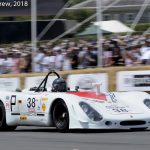
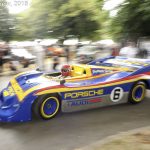
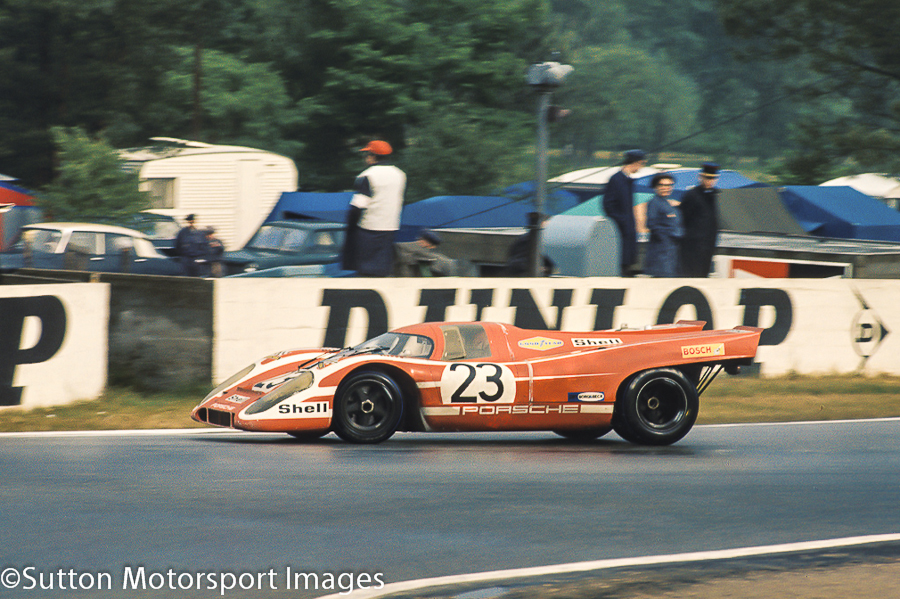
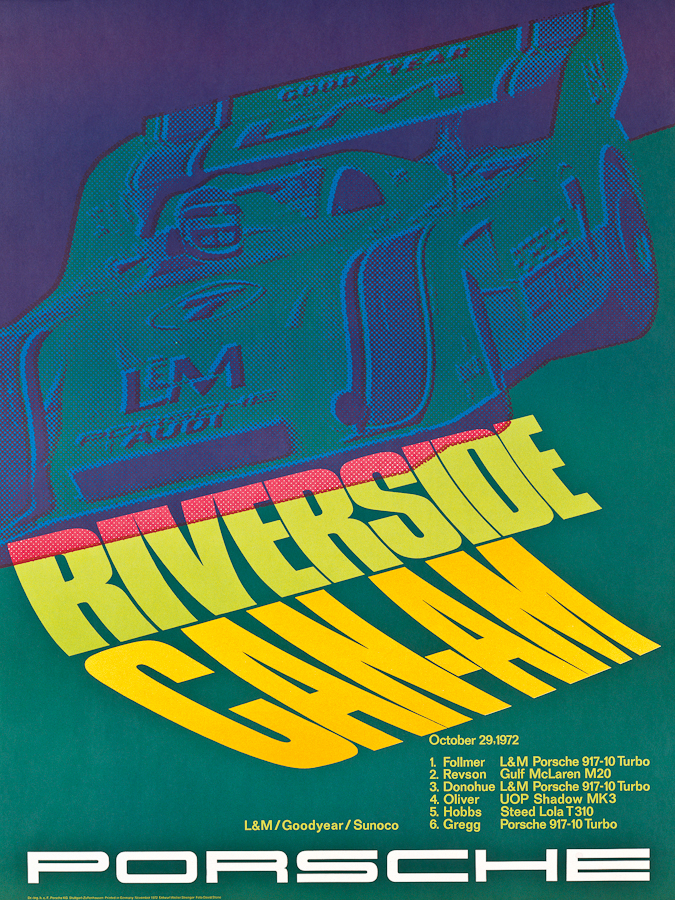
Other highlights of Milt’s career included 1972 when he drove a Jerry Titus Firebird(see the reply below from Harry Quackenboss) to victory at Mid-Ohio, becoming the first driver to win a road race for Pontiac. He wound up 2nd overall in the season’s Drivers’ Championship. He also finished 2nd overall in the Can-Am Drivers Championship driving Polak’s 917/10. At the end of the season, Milt was flown to Stuttgart where Ferry Porsche awarded him the “Pedro Rodriguez Trophy” for most aggressive Porsche driver in the 1972 Can-Am Series.
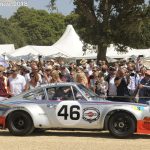
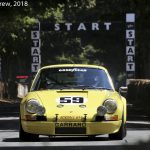
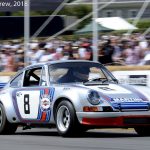
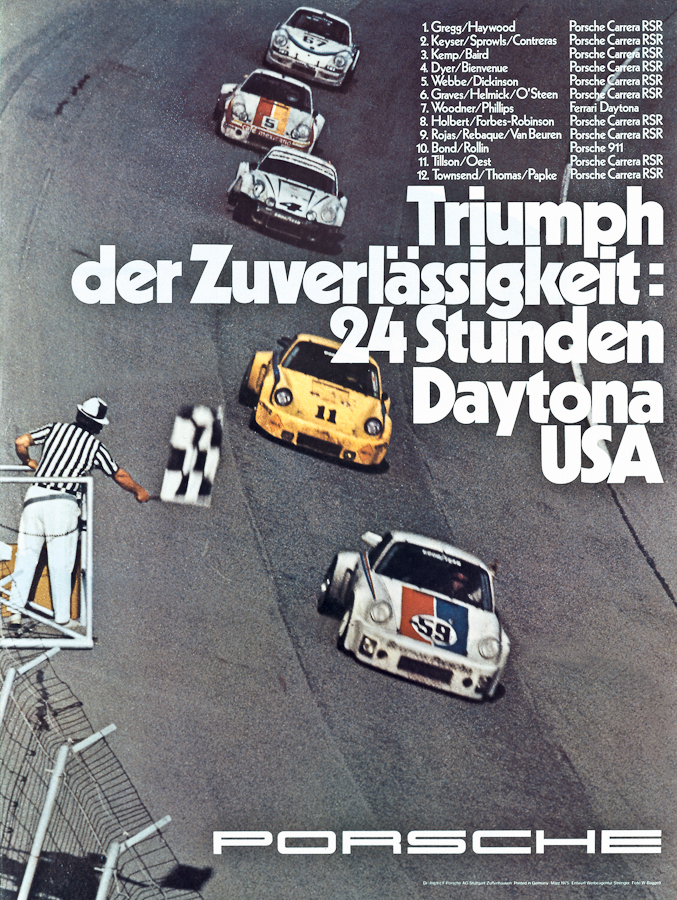
1973 was off to a quick start as he co-drove a Luigi Chinetti Ferrari to a fine 2nd in the 24 Hours of Daytona. That was followed up the following month with another 2nd overall in the 12 Hours of Sebring co-driving Michael Keyser’s Porsche Carrera RS.
Meanwhile back in the States….
Milt had accomplished quite a bit in his racing career. But he was not done. As I mentioned earlier, I was off serving my time in the USAF from January ’69 – January ’73. A great racing era. I missed it.
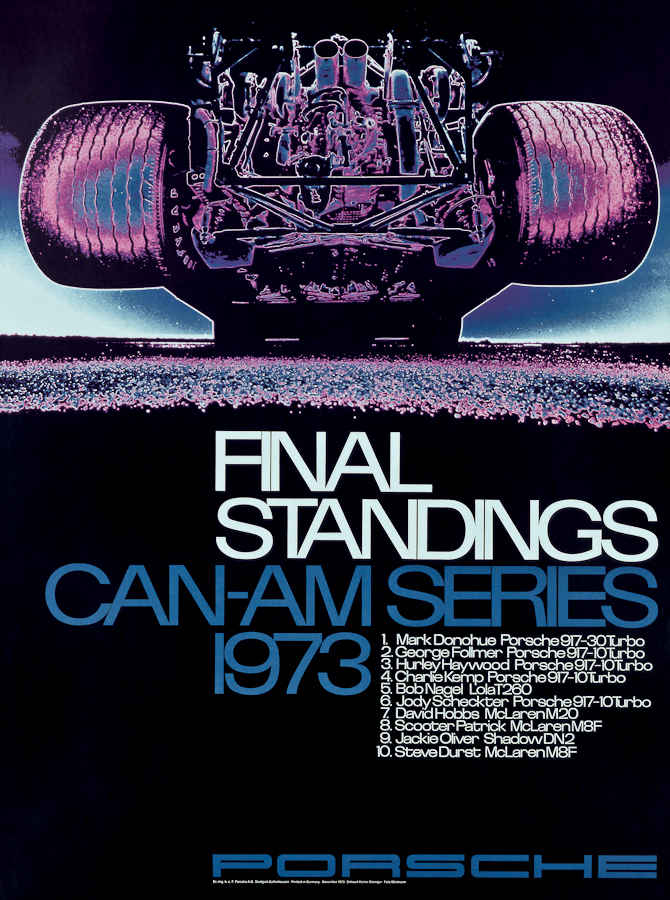
In October of ’73, I was off again to Riverside Raceway for the Can-Am race. The Can-Am Series was in its final glory that year. Porsche 917s had been totally dominating that year as well as the previous two. Mark Donohue in Roger Penske’s 917/30 was all conquering in ’73. Porsche’s dominance would lead to major rules changes the following year, as the Can-Am would eventually die off a few years later.
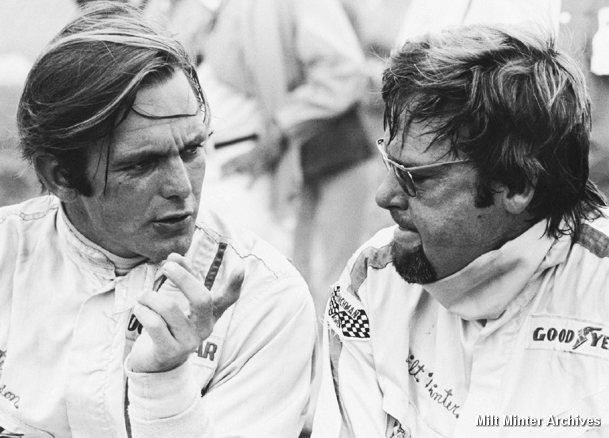
Milt was not driving a 917 for Polak. That was left up to Jody Scheckter and Brian Redman. Instead, Milt was driving once again for an old friend, Otto Zipper. He had a great race finishing 5th overall in Zipper’s little 3-liter Alfa Romeo. On Friday, cruising the pits, I once again came across Milt as I had back in ’68. “How’s it goin’?” he asked me once again. I told him “Great!” I told him of our previous encounter and explained I was now attending College and was taking up photography. I was armed with my new Nikon 35mm camera, and I was shooting my very first rolls of B&W film for my first assignment for my first photography class. I clicked off a few shots of him and his Alfa. After a nice chat, he wished me luck in my photography endeavors. It made another long-lasting impression on me. Unfortunately, over time, I have misplaced those first rolls of B&W. They were the first rolls of film I ever developed myself, and the first prints I ever printed myself, ever. I got an A in my class. I would later attend Brooks Institute, School of Photography in Santa Barbara, CA, where I would later obtain a BPA degree in photography.
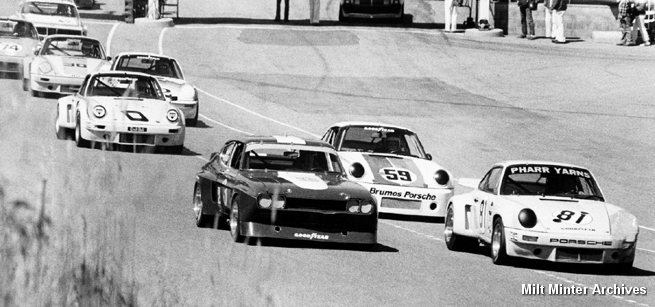
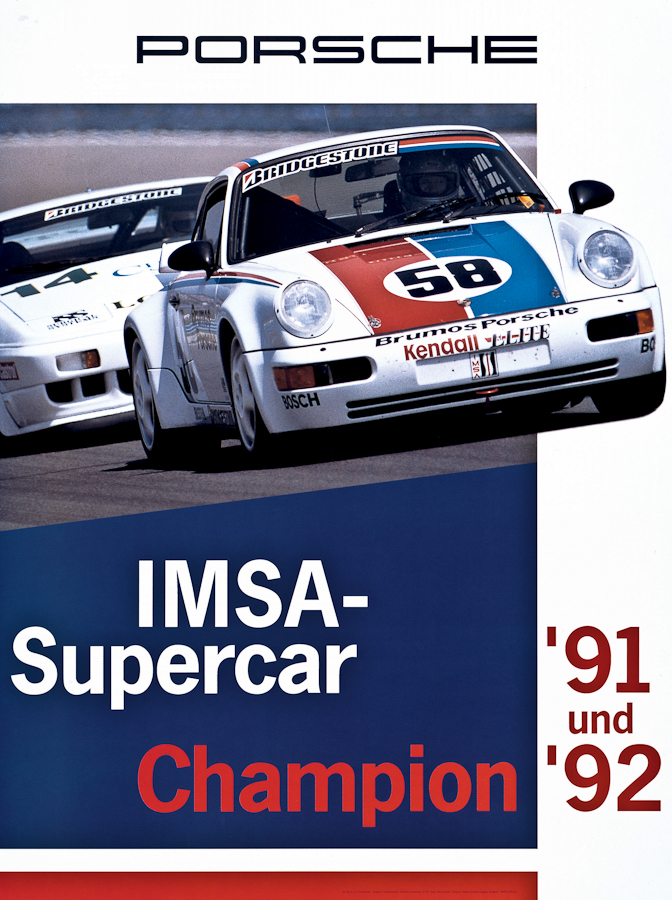
More racing laurels were obtained by Milt in 1974. He came in first in Toad Hall’s Carrera RSR at the IMSA Camel GT race a Laguna Seca, defeating Peter Gregg and a very large and talented field. Throughout the ’74 IMSA season, Milt drove three different cars. Later in the season, at Talledaga, he would win driving John Greenwood’s Corvette. Going down to the wire of the IMSA season, Milt was locked in a tight battle with Peter Gregg, previous multiple IMSA driving champion.
In the series finale, a 250-mile race at Daytona, Gregg lead Milt 98 to 96 in points. Milt jumped once again in the Toad Hall RSR and led the race until the engine disintegrated. Greg went on to win the race, and the championship.
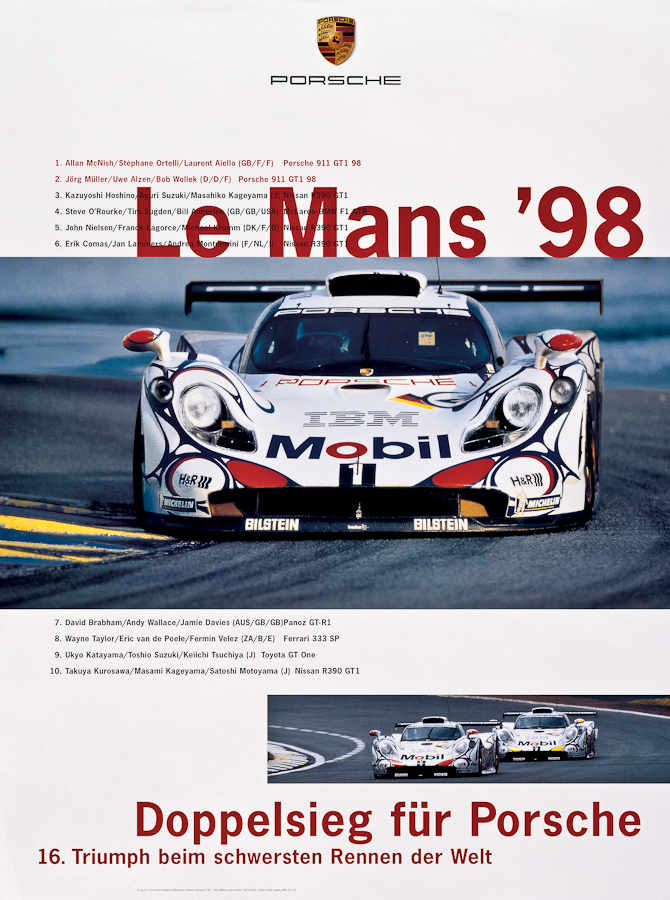
1974 also saw Milt’s first appearance at the 24 Hours of Le Mans where he co-drove an RSR with Michael Keyser. They experienced several problems during the race, but still managed to finish 20th.
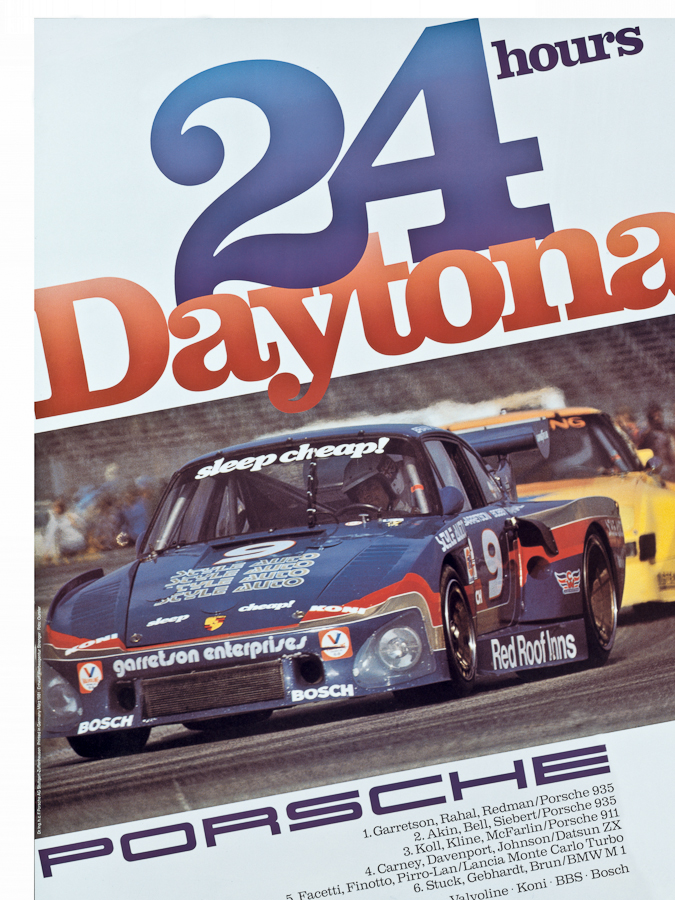
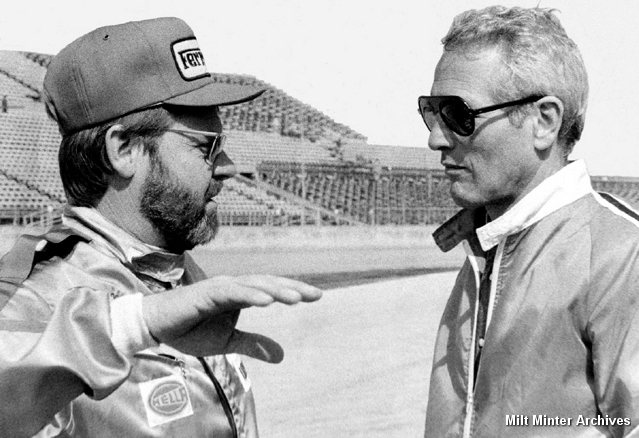
The remainder of the ‘70s saw Milt in action as a “hired gun” by several professional race teams. He competed for Ferrari Teams several times at the 24 Hour Daytona race. In 1977, he finished 5th in a Ferrari 365 GTB/4 Daytona co-driving with Elliot Forbes-Robinson and Paul Newman.
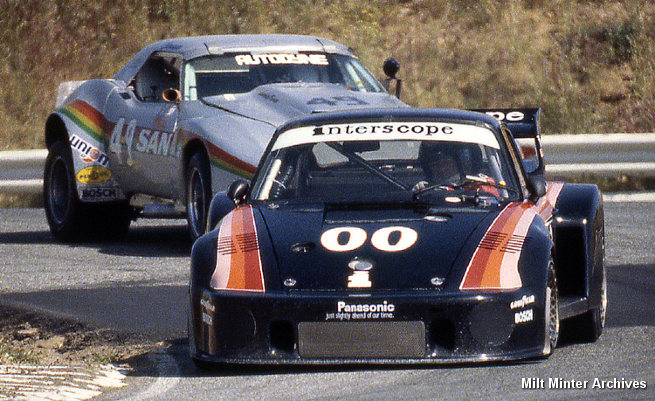
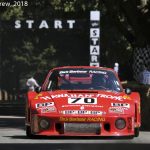
Milt and I would have another chance meeting in 1979. This time, I was now a professional photographer working for Rapid Pace, Inc., and shooting for Ted Field’s Interscope 935 team. Danny Ongais, Fields usual co-driver, was off at Indianapolis for the 500, so Milt was hired as Fields co-driver for the Riverside 6-Hour event. I was very surprised, to say the least, when I entered the Interscope pit area – THERE WAS MILT! I made my way over to him and he asked me “How’s it goin’?” NO WAY! We once again had a great chat. He was very impressed that, after hearing about our earlier encounters, I was now a professional photographer. He was very happy for me.
I got a Nikon camera, I love to take photographs…. It would be another 5 years before Milt and I would meet up again. By now I had been earning my living as a professional advertising photographer for several years. I had become good friends with Carl Thompson and Vasek Polak. Carl was Head of the Polak Competition Department, which had moved into historic racing. I had done a lot of product/race photography for Vasek Polak’s magazine ads. When I had spare time, you could find me hanging out at Polak’s race shop in Torrance, Ca.
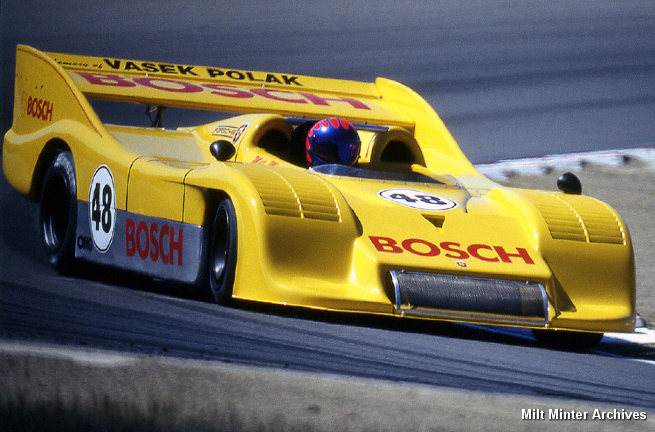
In 1994, Polak & Thompson were ready to begin running one of the Polak 917/10s in vintage racing. Who better to drive it than Milt! It was VARAs (Vintage Auto Racing Association) Porsche/Alfa Challenge being held at Willow Springs that September. Friday afternoon, it was getting pretty late. “Where’s Milt?” Finally, in rolled an old green pick-up truck and out jumps this crazy guy with a goatee – it’s Milt. “How’s it goin’?” he asked.
That weekend he hung out with us. I now had a motor-home and several of our 356 racers would use it as a base at the vintage race event. Beer was in order and a BBQ followed by hours of Milt’s great story telling. He made several new friends that weekend.
Desperado
After many vintage races, and a few years passed, VARA planned to revive Pomona’s glorious road course of the late ‘50s and early ‘60s through the L.A. County Fairgrounds. An initial race was run in 1995. For it’s second race at this historic venue in May of ’96, VARA was looking for something great to promote the race. I suggested to Dan Verstuyft, VARAs President (and excellent Speedster racer!) and to Carl Thompson an idea I had. “How about having the race in honor of Vasek?” After some discussion with Vasek himself, it was decided that is what we would do. The race would be a Tribute to Vasek Polak. I was very honored to have lunch with Mr. Polak several times, and other meetings with him, and got to know him quite well.
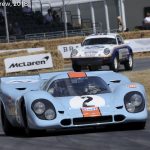
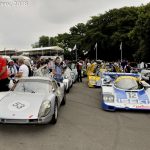
After 6 months of planning, over 65 vintage Porsche race cars would show up to pay homage to Vasek. Cars included 550, 550A, RSK, 356 Carreras, 911s, 904, 908, RSR, and 962 examples. Vasek brought out three 917s, a 908/3, a 2.1 RSR Turbo, and the very first 935 ever produced. Drivers in attendance included Milt Minter, Jack McAfee, Jon von Neumann, Joe Playan (550 Spyder driver), Max Balchowsky (Ole Yellar fame), John Morton and George Follmer. It was quite a weekend indeed. Drinking beer and hanging with Vasek and Milt one evening was quite an experience. Who was the most popular storyteller? Why, it was Milt of course.
Milt would also visit our camp-sites at Laguna Seca for many of the Monterey Historic weekends. That man could stay up all night drinking beer and telling Bill Doyle, Steve Schmidt, Gary Emory and me his stories as only he could tell.
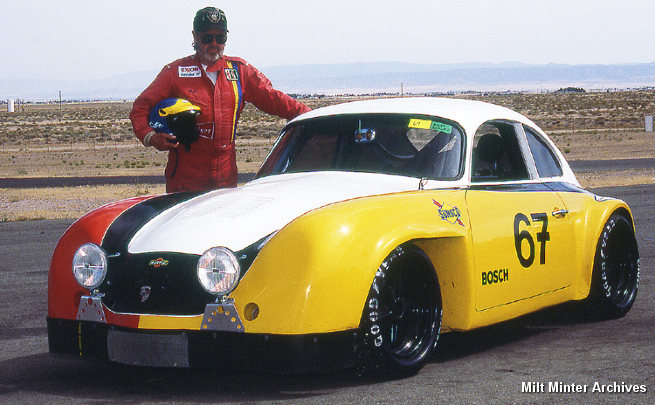
Speaking of Gary, he built a 356 “time-bomb” racer called Desperado in the early ‘80s. Desperado was so radical, it could only be raced in the POC (Porsche Owners Club) events in an experimental class. The body fenders were flared, the front fenders had “917-type” design, and the body was painted in Gary’s favorite Porsche 908 Flounder paint scheme. Eventually, Dean Polopolus needed a radical car to place his newly developed 911 engine into, so he talked Gary into installing it into Desperado. Dean’s engine was a 3.2-liter, 911 6-cylinder engine, with the middle two cylinders cut out, producing a 2 litre, 4-cylinder configuration. “It ran like stink!” said Milt, who was the cars primary driver. Milt would go on to set several fast times of the weekend in POC time trials.
Gary once decided he would like to drive Desperado at an event at Willow Springs. Milt was Gary’s instructor for the weekend. In an early practice session, Milt was riding shotgun as Gary was familiarizing himself with the track and the car. After a few laps, Milt was getting bored. “Come on Gary, Goddamn it! You’re driving like an old woman, lets get goin’!” Gary quipped that he was going fast enough, thank you. Well, the next thing Gary knew, as they were approaching the “sphincter-tightening” turn 9, Milt took his left foot and stomped Gary’s right accelerator foot down to the floorboard and grabbed the steering wheel with his left hand, “Come on Gary, we can go twice as fast through this turn!” For the next half lap, Milt was driving from the right hand seat, and Gary had one of his thrills of a lifetime!
Fast lap and the final lap
Milt had his biggest battle the last few years of his life. He battled cancer. It was a gallant fight. He would never complain. You wouldn’t expect anything but that from Milt. I saw him drive Ray Stewart’s ex-Ginther 914/6 at Willow Springs last October. Guess what, he still could kick ass and won the race. It would be his last.
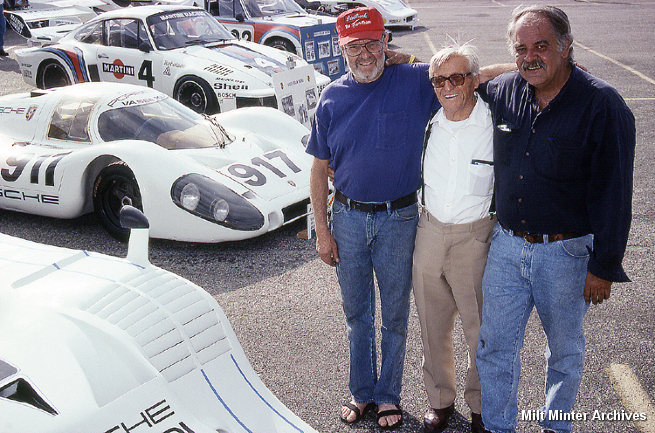
I had been telling him for quite some time that I wanted to come up to Sanger and see him because I wanted to do a story about him. A few weeks later I finally made the trip to see Milt and Melissa. What an afternoon we spent. His good friend Dean Polopolus was also there. Milt had his passion for great story telling in full gear sharing many great tales with us. Nobody could tell a story quite the way Milt could. After another most memorable afternoon, it was time for me to head back home to Southern California. He gave me a huge hug, and with a twinkle in his eyes, he told me he wasn’t doin’ too good. He looked into my eyes and told me we’d be friends forever. He passed away about a month later.
I am a lucky man. I have a wonderful wife, Marilyn, and two wonderful daughters, Tricia and Traci. I have been very blessed. I have gotten to pursue my passion in life that I have totally enjoyed. How many people can get up every day and look forward to it and the work they are involved with?
No one else in my life inspired me to pursue my dreams of being a race photographer than my encounters with Milt did. He was a great driver, but a greater friend. I only know one thing, when I hopefully reach the Promised Land, he’ll be one of the first ones to greet me, “How’s it goin’?”
Hal Thoms
Tustin, California
February 2005