Archive for Race Reflections

Banditti of the Plains

Untitlednnn_24

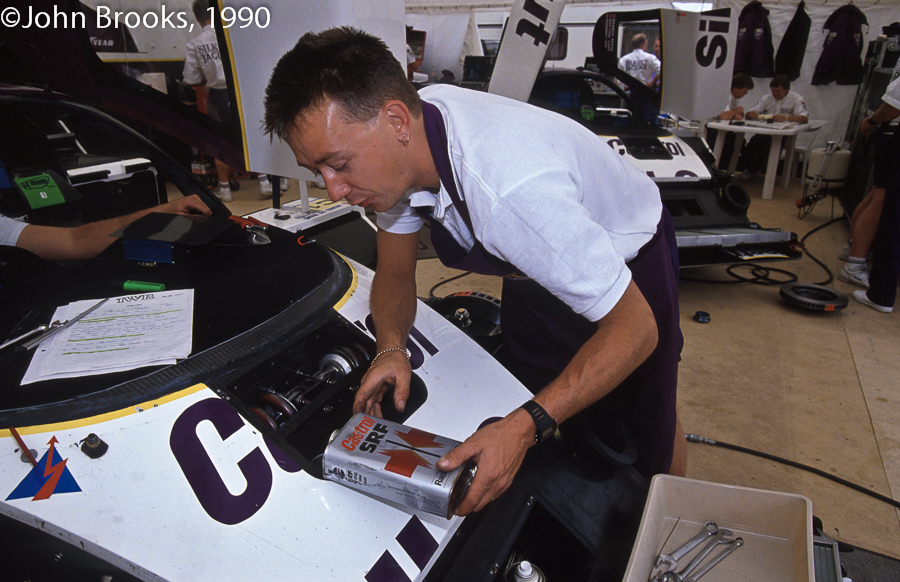
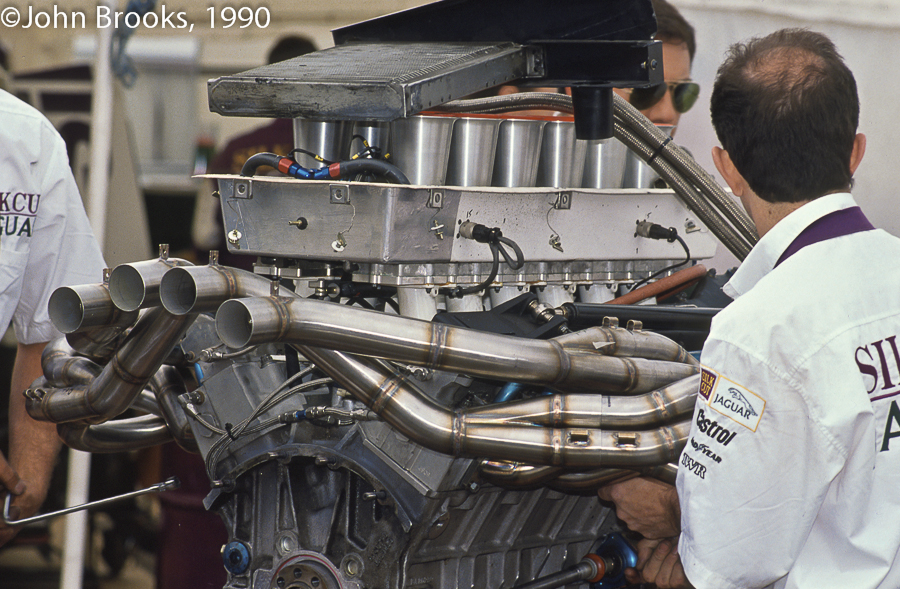
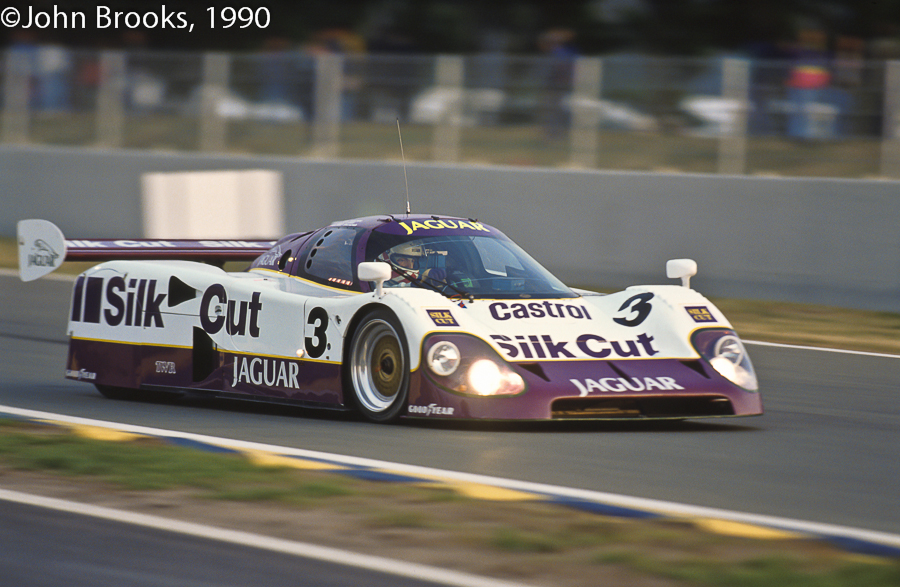
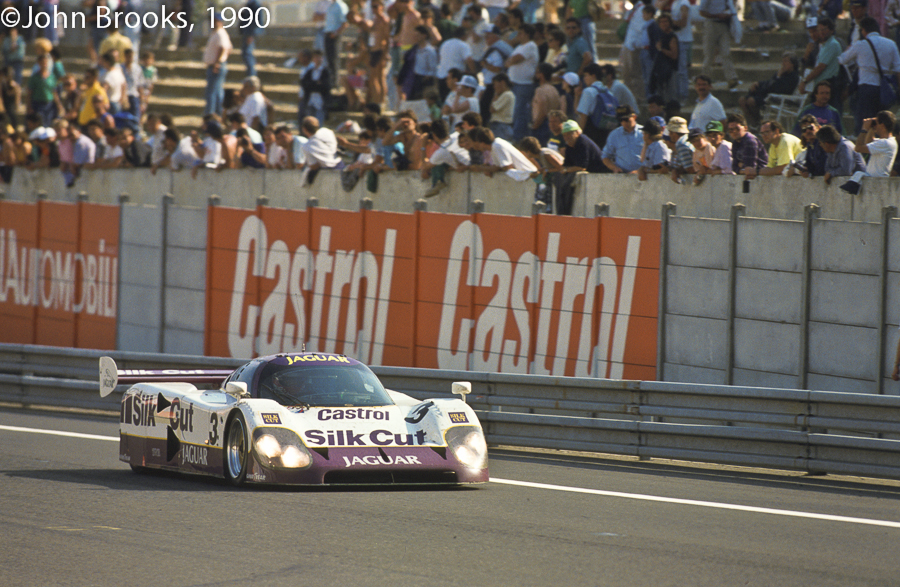
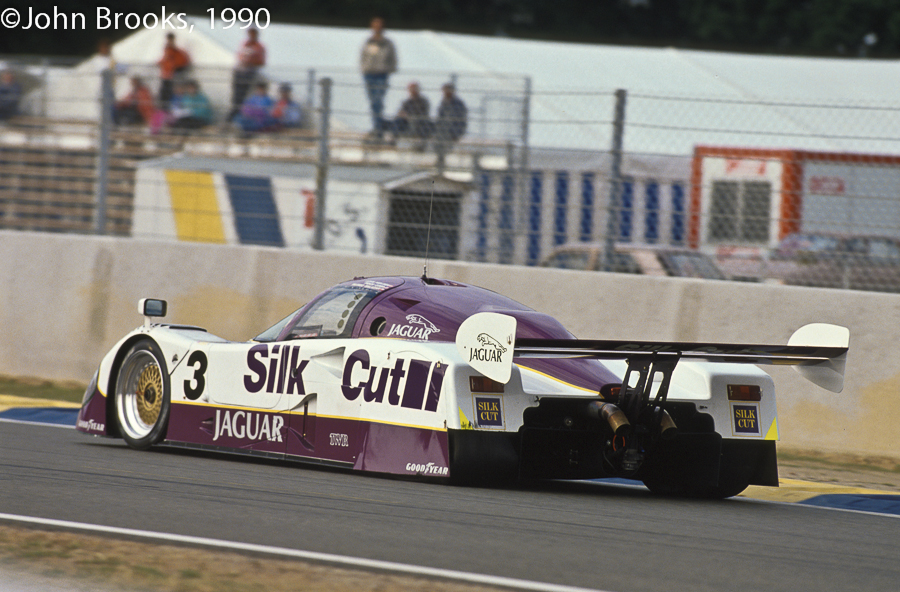
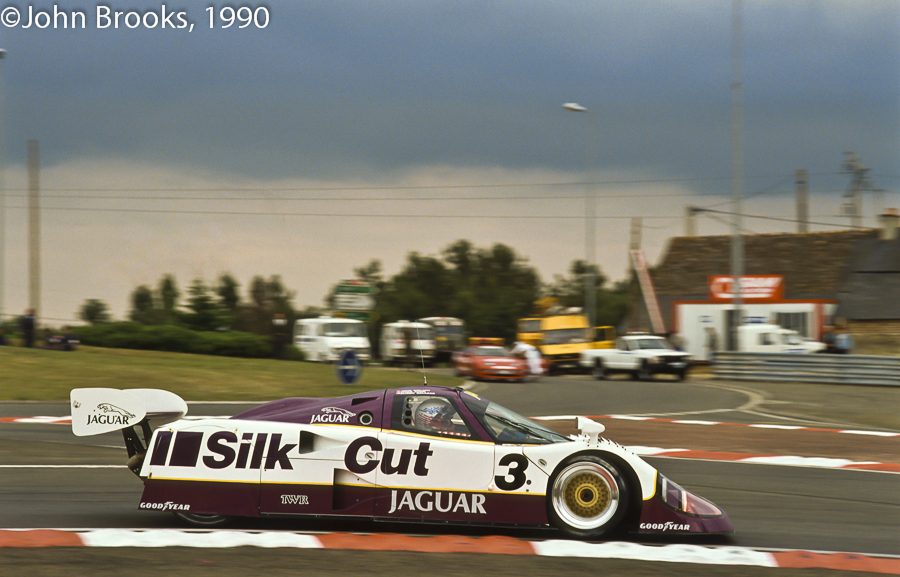
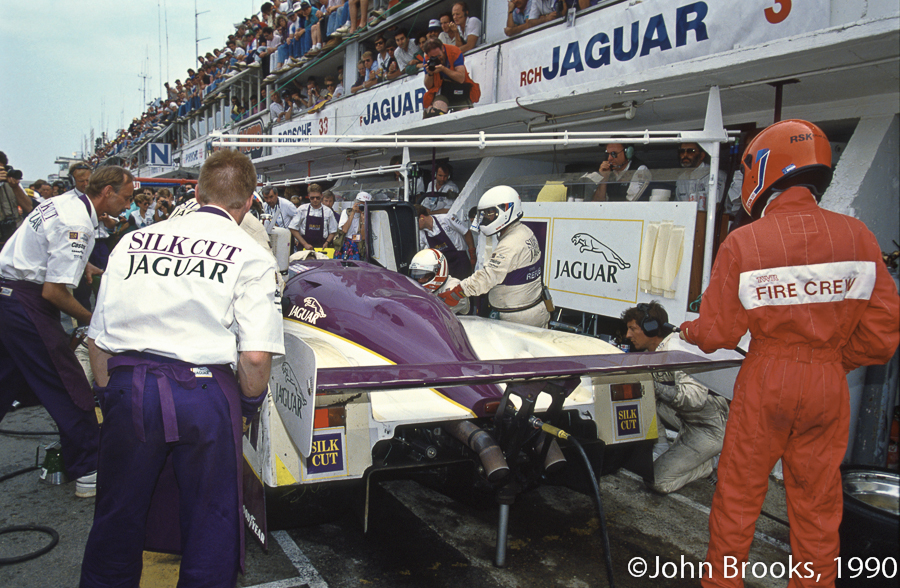
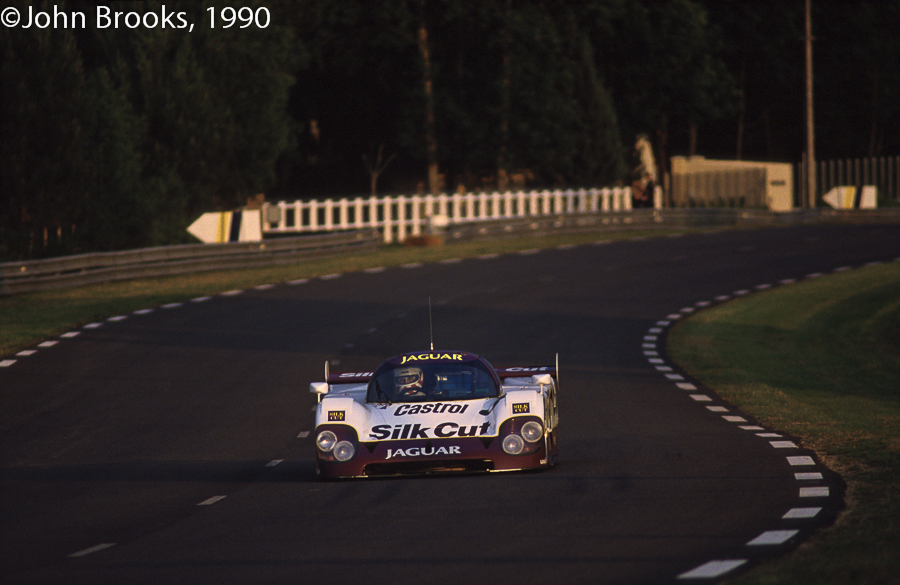
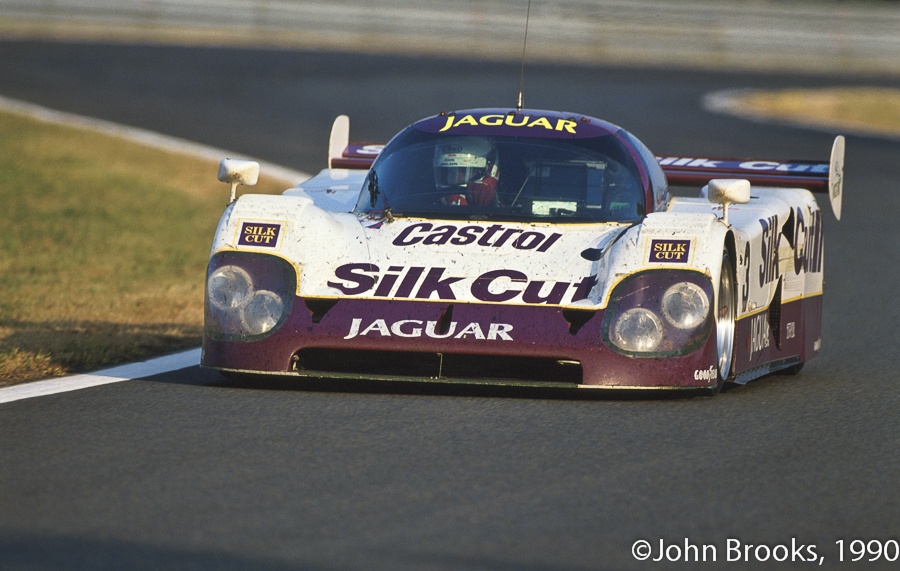
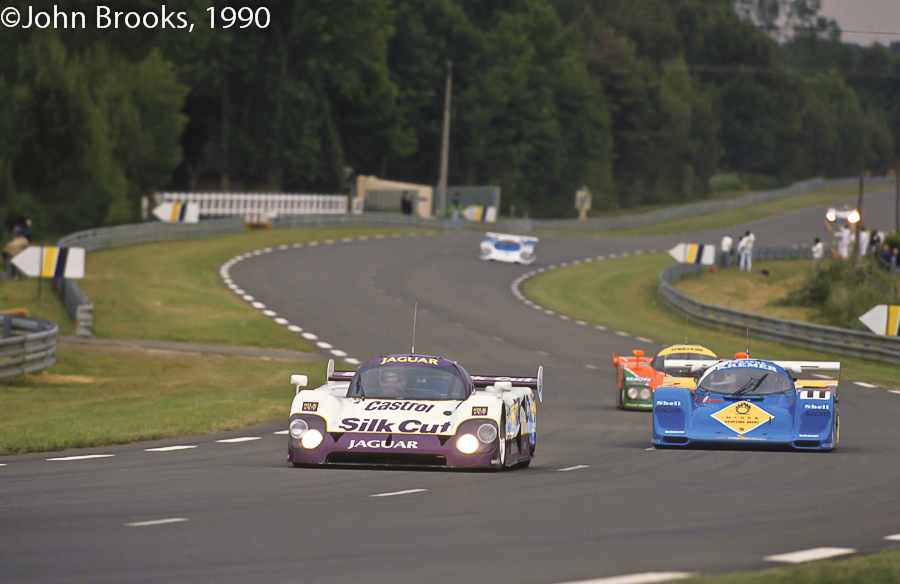
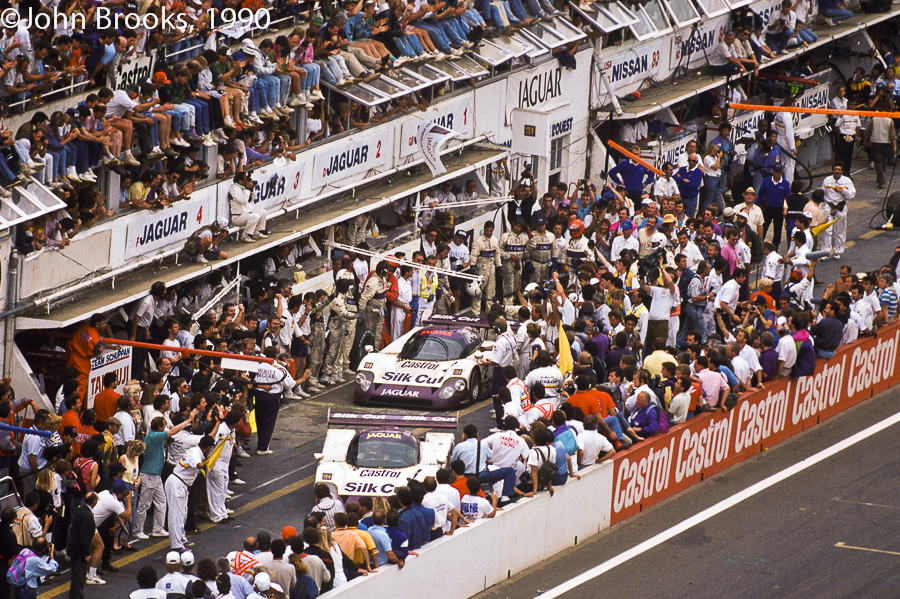
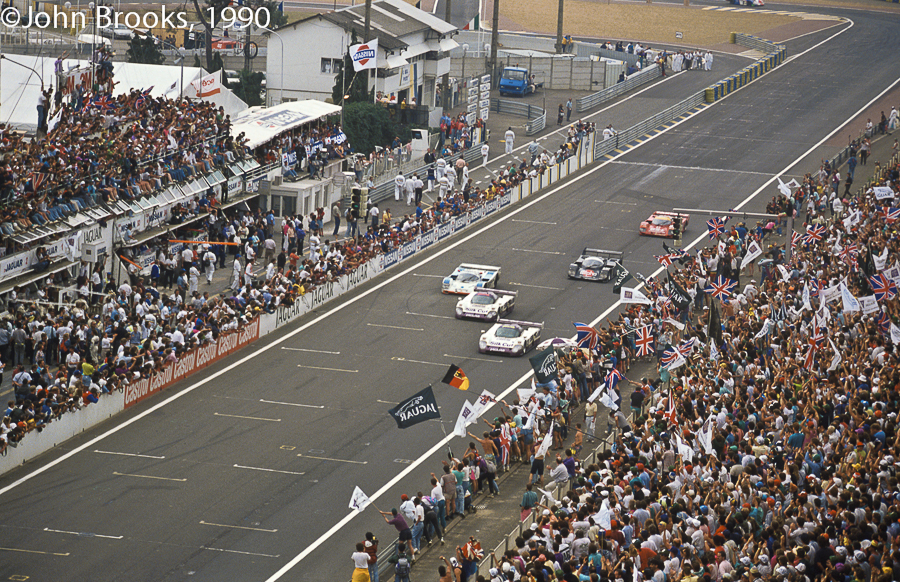
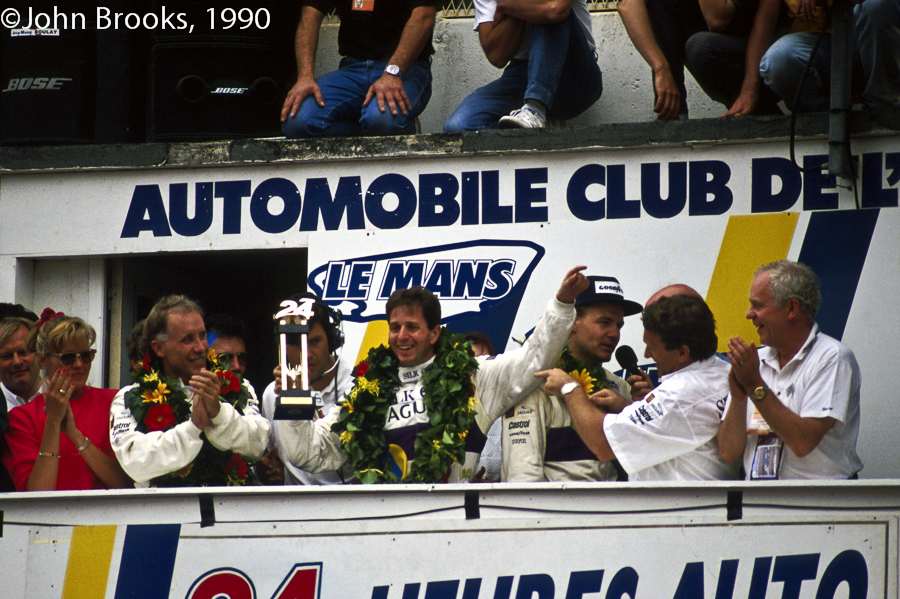
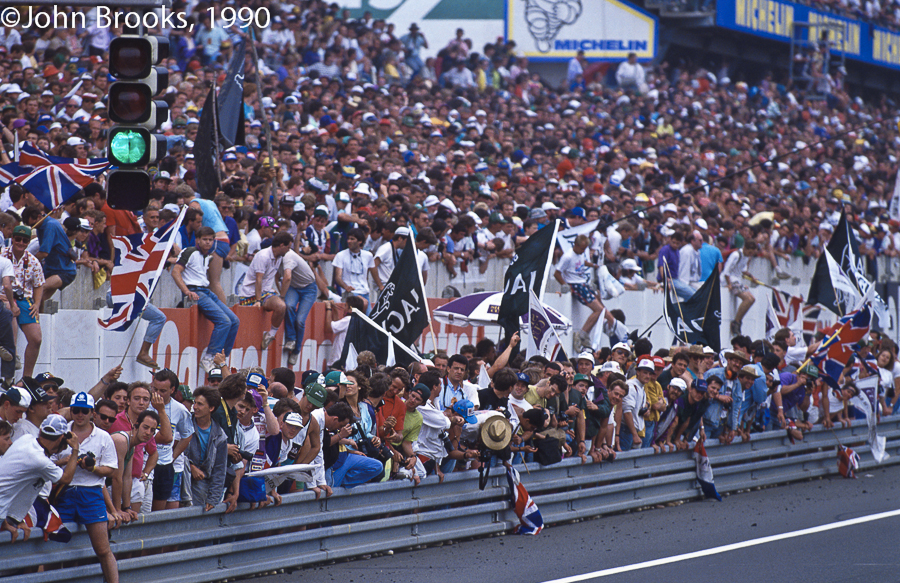
As promised in the last post, I have a story to tell regarding chassis 288 from Tom Walkinshaw Racing, it was put together by Kerry Morse a few years back when we ran SportsCarPros together. Typical of Kerry’s work, it is too good to molder in the archives of a dormant website. Why now? Well the car was one of the stars of the Retromobile on the Hall & Hall stand, more on that topic later.

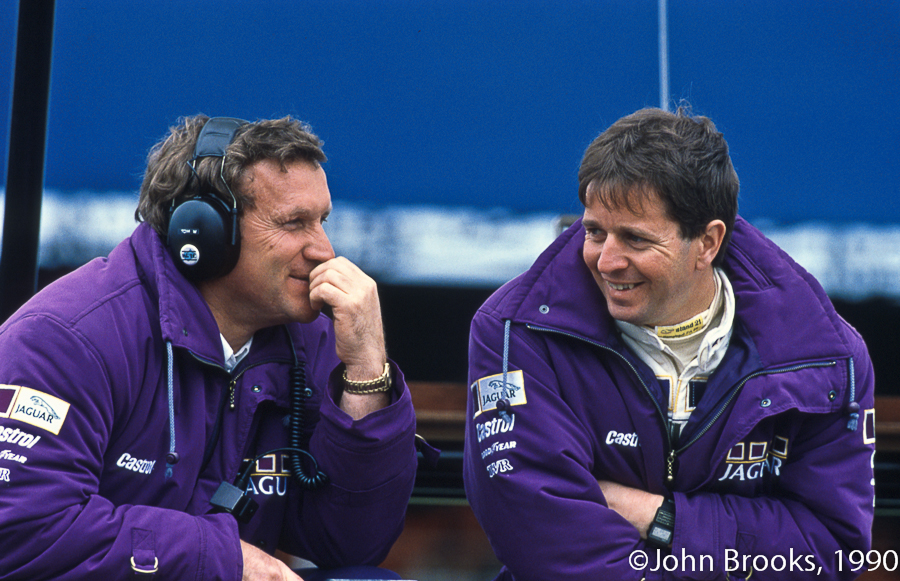
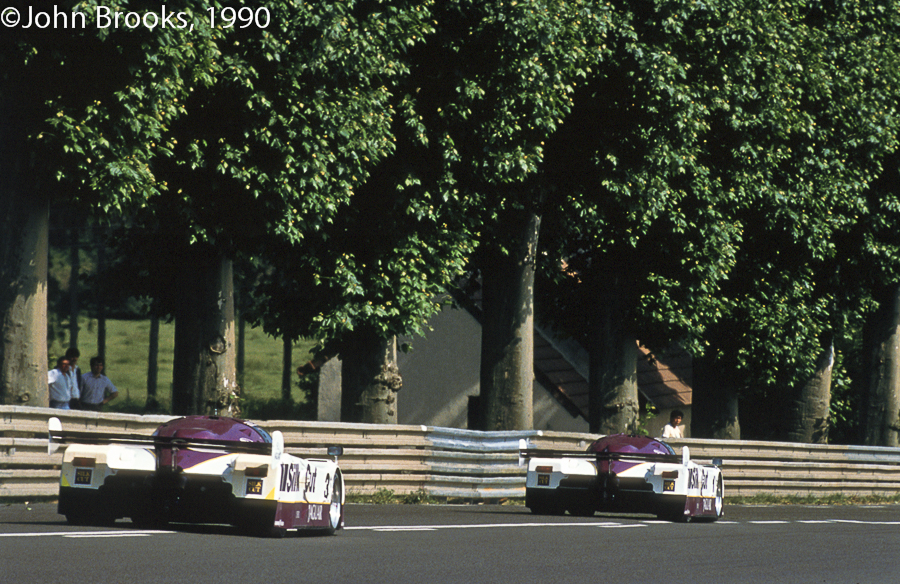
Kerry and I both have a personal connection to the story and 288. I was shooting with Keith and Mark Sutton at the time and had introduced them to Castrol, which led to work with Jaguar and Silk Cut, so we were busy at Le Mans in 1990. If you have five minutes visit their archive HERE you will soon lose an hour or two with all the amazing photography. It is with their permission that I use these images. Kerry’s connection is that he arranged the purchase of this car for a client a few years back. Plus we both hold Tony Dowe in high regard, this is really his tale……………

John Brooks, February 2013

There are winners and there are WINNERS. Tony Dowe obviously belongs to that
second group of selected individuals. John Brooks and I want to thank Tony for all his efforts over the years of getting great performances from the teams he has been involved with. He makes our job a lot more interesting. What was it that mean old Ron Dennis once said to a gathered group of hacks. I think it was something along the lines of “ We make the history, you only report it”. Tony Dowe has made and continues to make history.

Kerry Morse, February 2005

Untitlednnn_4

What it takes… Tony Dowe on winning at Le Mans with Jaguar

I worked for Tom Walkinshaw Racing from 1987 until 1998 as Managing Director of TWR USA. During this period one of my “duties” was to supply a couple of cars as part of the
massive TWR/Jaguar effort at Le Mans. Unfortunately it was always made clear, never by Tom Walkinshaw of course, that the “American” cars were only there to support the real effort that was run from Kiddlington. Obviously this became a bit “second hand” and so after being the supporting act in 1988 and 1989 I gave some serious thought as to how to:

a) Win the race
b) Circumvent the restrictions placed on my U.S. team because of the supporting role we were expected to play.

Untitleds_14

The Rules of the Game
Let me say here that you should only undertake such an action if you’re sure that you can carry it off! Because to achieve anything less than the win is to open one’s self up for a very long period looking for a new job! Of course, if you win, then most of your sins are forgiven!

I always felt that TWR USA were a better race team than the UK team for no other reason than by the time Le Mans came around we had done a 24 hour race, a 12 hour race and a couple of sprint races. The Group “C” team had probably only done a single race and some testing. We were very sharp by 1990. We had finished 1st and 2nd at the Daytona 24 Hours that year, 1990, and had had such a better team we had each car race each other the whole 24 hours. It was a fantastic race.

Untitleds_12

TWR USA also had a couple of very good engineers, Ian Reed, recently head of development at Penske, and Dave Benbow, recently with Prodrive. Ian and Dave were very good in there respective areas. Both were and are lateral thinkers and complemented each other very well. Ian was, as now, very good with the suspension and we were running dampers, for example, that were much ahead of the ones used by the UK team. We had briefly used a pair on the rear of the car in 1989 when Davy Jones led the race in the early stages. The biggest problem that had to be overcome was that, along with most of the other team cars, we were only allowed a single engine for both practice and the race. The only team car that had a qualifying engine was the one that was lead by Martin Brundle.

Untitleds_7

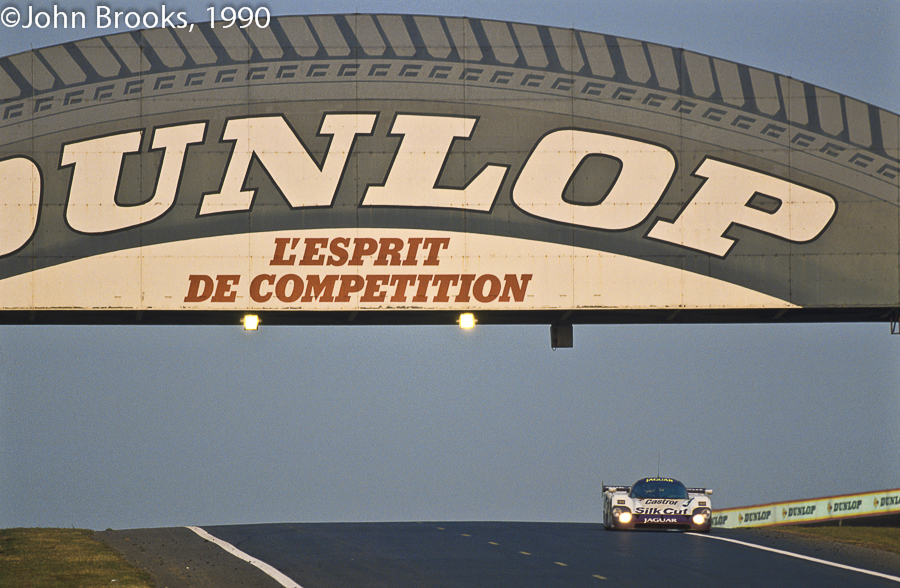
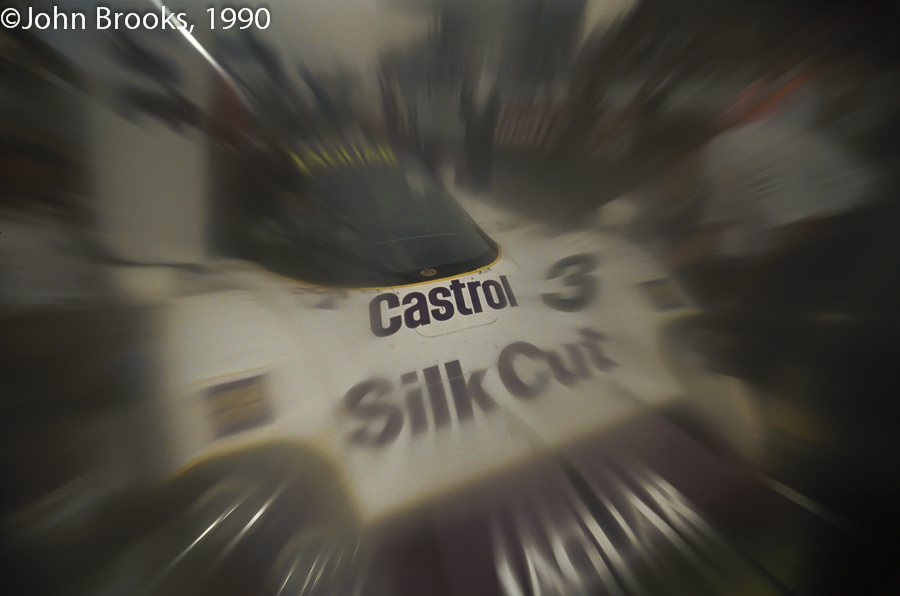
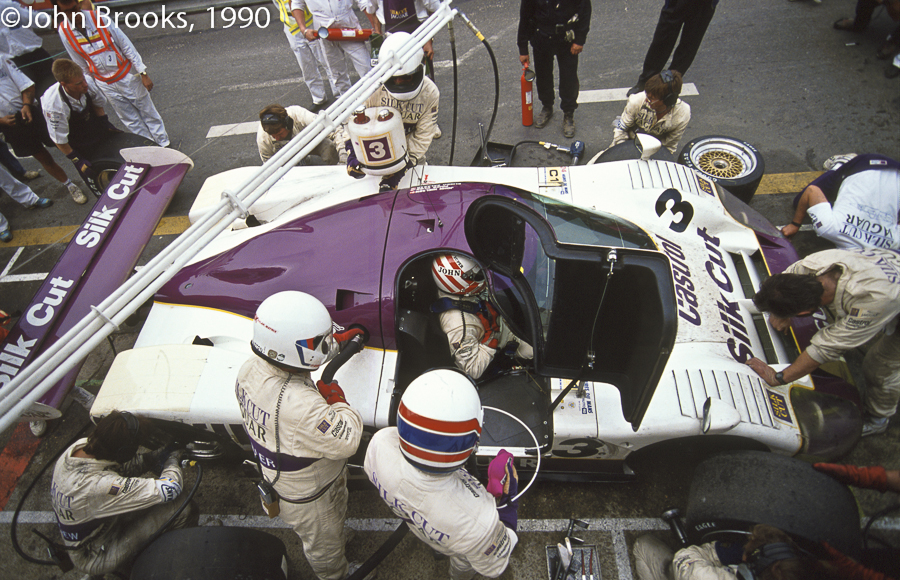
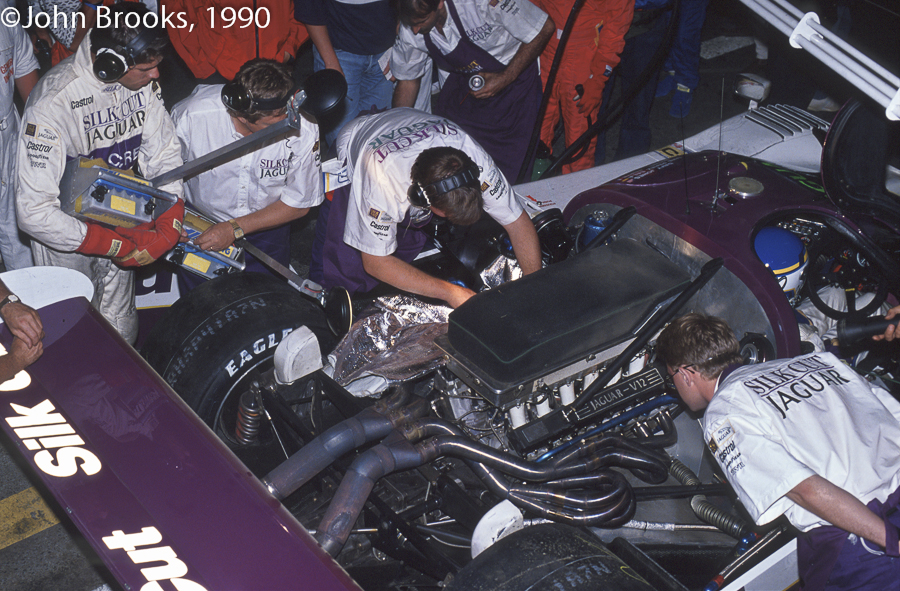
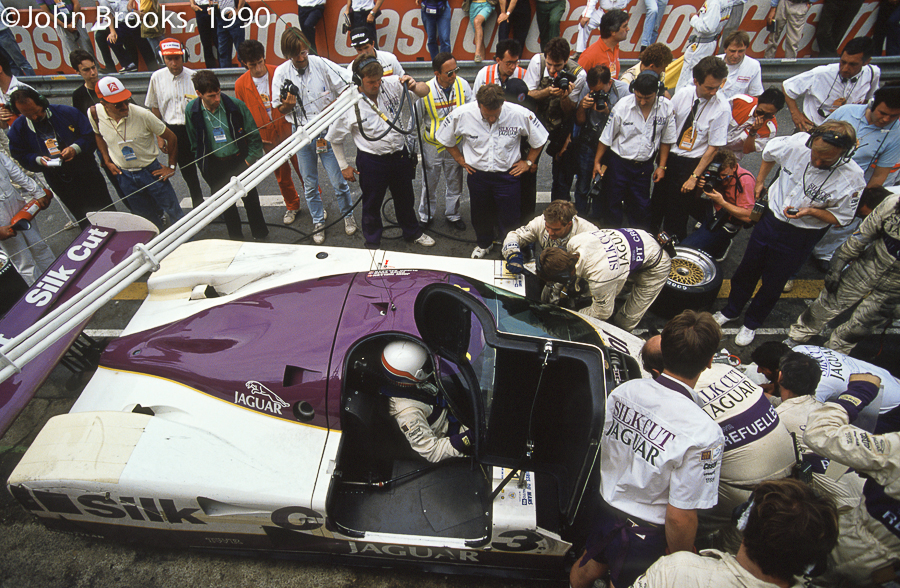
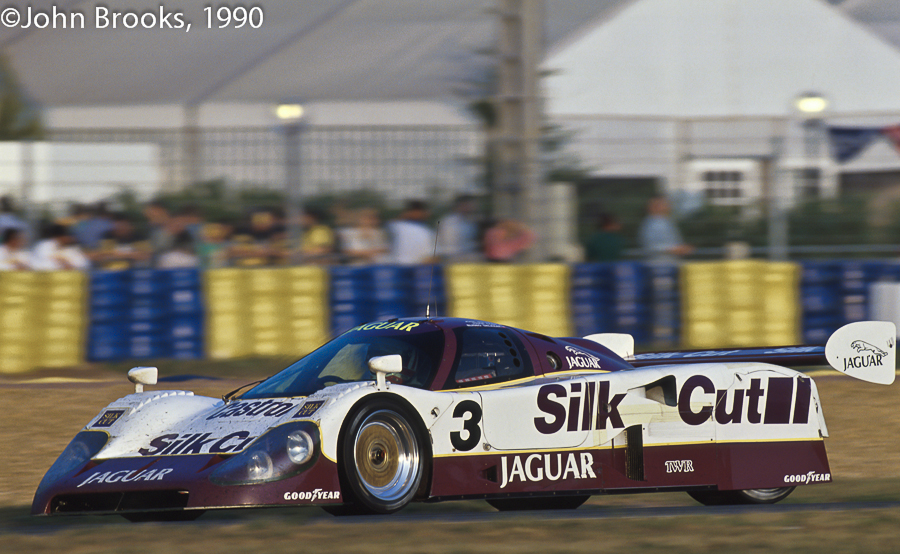
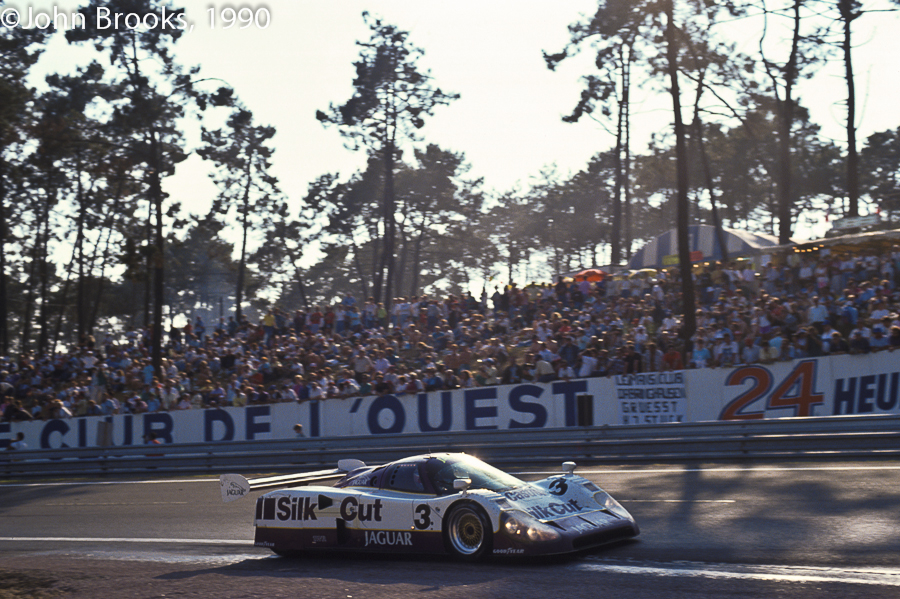
As we were now running the V-6 turbo cars on a regular basis in the IMSA series, we were able to take one of our V-12 cars out of the mix and prepare it with a lot of love and care. We used chassis 288, which had won our first ever IMSA race in the USA back at the 1988 Daytona 24 Hours. The lead mechanic was Winston Bush, still in Indianapolis, and he did a super job of building a car to the exact same specification as the UK cars!

Untitlednnn_18

Dowe Chemicals
Now we get to the interesting bit!

The week before we had to leave for Le Mans we were racing at Lime Rock Park. Super place and made better when John Nielsen and Price Cobb won with a turbo car for the first time, exactly a year after we had début of the first TWR Jaguar turbo. There to see the car win was the head of TWR engines, Allen Scott. Allen is now back in New Zealand enjoying his retirement and rallying a Mazda. After the race we had a super night at a very nice local restaurant run by an English guy called Terry. Lots of drink, etc. After the meal I took Allen to one side and asked him why “my” car could not have a qualifying engine for Le Mans? Allen, now very “mellow” told me to use common sense, “It’s just not going to happen”.

Untitleds_1

I then asked what would happen if we had a mis-fire at the end of qualifying that
could not be found. Allen said, “obviously there would be spare engines for such
an eventuality.” Allen was booked on a flight from Kennedy the next morning back
to the UK. I then played the trump card. I produced an envelope from inside my
jacket and told Allen that inside was a ticket for the next morning’s Concorde flight
to London. It was his if he found a problem with our engine after Le Mans qualifying. After a moment of hesitation Allen looked around and then took the envelope and put it in his jacket pocket. The game was on! Only Ian Reed was aware of what I was planning. And he was like a kid when I told him the bait had been taken. The now finished “vanilla” 288 chassis was sent to the UK for painting and, I suppose inspection to see that we had built the car to the decreed spec.

Untitleds_3

We then set about putting together a “care package” of our IMSA “goodies” for fitting when we got to Le Mans. We had different roll bars, front and rear. Different shock absorbers front and rear. But the biggest item were some very special one piece (Billet) brake calipers that Ian had designed and we had built here in Atlanta. They were made to accept a much thicker brake pad than standard, Performance Friction made the pads for us. So now we could also go further than the UK cousins without a pad change. We had also had “Rabbit” (A legendary fabricator who still lives in the Georgia mountains) build us some really trick pad changing tools. The gearbox was built with a limited slip differential. This was quite different from the UK cars because the thinking was that with a “spool” fitted if a drive shaft failed you could get back to the pits! Well, unbeknown to the guys in England, we had Kenny Hill of Metalore (they now make most of the F1 world’s hubs/drive shafts and axles) make us some super strong F1 type drive shafts.

Untitleds_16

Can you hear me Major Tom ?
One further item that would prove very useful was the use of the American radios.
Every year we had gone to Le Mans the circuit length meant that the European radios supplied by a guy called “Crackly Ken”. They usually gave up when the cars left the pits! The last thing that we had changed at TWR USA was the rear wing. With the additions of the chicanes along the Mulsanne straight, Le Mans was now the same aero level as Daytona, things were just going our way.

Untitleds_8

Lock, stock and two smoking barrels…
So now the fun started.

We started practice with “just a few bits” changed, radios etc, so there was not much notice taken of what we were doing. There was a bit more interest when the brakes went on and the roll bars were changed, but at the early morning meetings the comments were mainly directed towards us in the manner of “So what silly things have the you Americans changed now?”
Roger Silman, the UK Team Manager was more concerned with why Jan Lammers could not match Brundle’s practice times. He did not like drivers, or anyone else for that matter, to think for themselves about how the race should be run. I’m sure that Tom had some idea of what we were doing as he was a regular visitor to IMSA races and was aware of our development items, but he never said anything to me about what we were up to.

Untitledgg_9

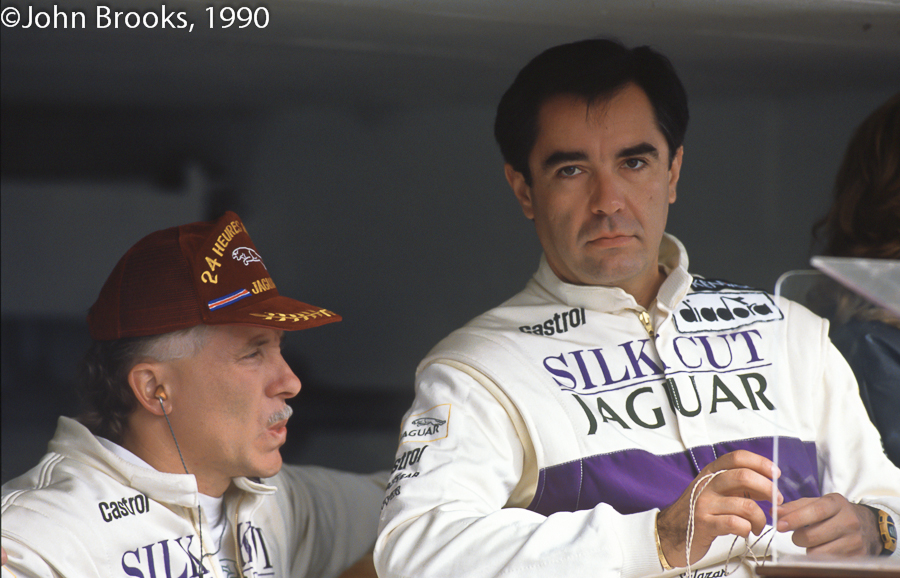
Our driver lineup was pretty good, “Big” John Nielsen, Price Cobb and Eliseo Salazar. Obviously John and Price knew what we had fitted and were very happy because it brought the car to the same specification as they had been used to racing. Unfortunately after the end of practice, guess what? Allan Scott found the “mis-fire” and we had to change engines! Another hurdle crossed, because if Allan had gone back on the “deal” then the whole plan would have probably sunk out of sight!

Untitlednnn_19

Friday’s pre race preparation brought to light another small problem. The gearbox “dog rings” were being used by one of the drivers in a way that was tooheavy on the gear changes. As we had lots of experience of John and Price it was obvious that Eliseo was the problem. I went and found Julian Randles, then of Spice Engineering, who Eliseo drove for sometimes in IMSA and had a “discussion” about his experiences with Eliseo and his use of the gearbox. Julian confirmed that Eliseo’s style of gear changing was quite heavy on the dog rings. I had a long day of thinking about how to deal with this problem and it was a
problem because with a dog box we were going to probably lose 3rd and maybe 4th gear if history was any guide.

Untitledgg_14

I went to dinner with Tom, his lady Martine, and a guy from Jaguar who I honestly can’t remember who he was. During dinner I told Tom of my concerns and suggested that it might be a good strategy if I kept Eliseo out of the car for as long as possible in order to keep a seat free should one of theother “favorite “drivers had a problem. Tom agreed and so at our race morning briefing I told the drivers that we were going to use “Big John” and Price through the evening and night until Sunday morning, when Eliseo would be “fresh” for the remainder of the race.

Untitledgg_13

Sex Pistols and the holiday on the grid
Race day: Just as we parked the car on the “dummy” grid, JJ found a small fuel leak from one of the fuel pump unions… Now, as it is today, there can be no work done on the car on the dummy grid. So what were we to do?

Untitled-1

Well one of our XJR-12 design features was that the whole fuel system, pumps, filters etc, were mounted in the left-hand side pod on quick release clips. So it would only take moments to change them. The problem was how to make the change with the whole ACO “police” walking up and down the grid!

Untitlednnn_21

Fortunately we had made some very nice mock leather “pouches” to protect the spare pump assemblies in. While the whole team posed in front of the car with, what else, the Hawaiian Tropic girls, JJ slid inside and changed the leaking pump assembly for a new one! Honestly! I think that in another life JJ would have made a great David Copperfield.

Untitledgg_10

The numbers added up for a very Goodyear…
The race its-self was quite easy.

One of the big race advantages we had was that having run at Daytona we knew that the “standard” 480 compound rear Goodyear tires would not double stint on the Jaguars at Le Mans. So back in February at Daytona we had run a much harder 600 compound tire during the heat of the day. When we arrived at Le Mans I found that Goodyear Europe had no 600 compound tires available! Our tire guy for this event was the great American Airlines guy, Kenny Szymanski. I called back to the States and had 10 sets of 600 compound tires shipped in without anyone knowing, thanks to Ken Moore of Rapid Movements. Kenny S. did his bit by removing the tire coding from each tire and hiding the tires inside the old pit tunnels.

Untitled-4

When we started double stinting the tires and beating the UK team “hands down” in the pits, I had a very “uptight” meeting with Tom as to what was going on!!! I had to come clean as to what was going on and we were forced into giving some of our rear tires to Brundle’s car. All of this while trying to run the race! One of the other “fun” bits happened around 10:00 PM. A car had caught fire at the Porsche curves and the ACO had put out a “pace” car, or safety car as it was then called. John Nielsen had just been in for fuel a couple of laps earlier and he called in and told me it would take a bit of time to clean up. Just like we would over here. Good US radios at work. I called him straight into the pits to top off the fuel, as you would! Boy, did that move unleash a load of trouble. I had Tom right in my
face about giving up track position. Obviously the UK team cars continued running around under a caution flag while we topped off the car, so they then had to pit under a green when we went back to racing! About an hour later we went into the lead after everyone else had had to pit for fuel, etc under a green. This was a lead we never gave up.

Untitled-2

Big Bad John
The next bit of drama was that Price was slowly dehydrating, remember, these cars had no power steering, little ventilation and no drink bottles, and over 5000 lbs. of downforce in those days. So during the middle of the night we had to ask “Big John” to triple stint (!!) while Price recovered. A star then, still a star now. Then the Brundle car, which had been fighting a slow water leak, finally called it a day. Tom came and asked me if I thought the car would be able to last until the finish
(!) You can imagine my reply.

Untitleds_9

TW took Eliseo off our team and told him he was not going to get in the car and he was putting Brundle in instead. You can imagine how heartbroken Eliseo was with this decision. So around 8:00 am Brundle got in the car.

Untitlednnn_3

The Mechanics of the Isle of Sodor
The only thing we now had to deal with was the 3rd gear had decided it had enough of the chicanes and gave up. This meant that the drivers had to change from 2nd to 4th, not a great problem, but enough to get some very dirty looks from TW! The final drama was a couple of stops from the end we had a scheduled brake pad change and JJ (John Jackson, our regular chief mechanic, ex Williams F1) found a couple of caliper pistons leaking! So we had to change one of our mega expensive calipers. Now they were a bit tight on the studs, so Pete “Hodge” (Peter Hodgkinson, a New Zealander and now the new car build manager at BAR) took a very big hammer to our beautiful machined caliper to quickly remove it! Job done and not too much time lost.

Untitledgg_5

Then politics started to take over. The “Management” wanted to have the UK team suddenly involved so they would look part of the effort. No way.

Untitlednnn_17

The Day of the Jackal
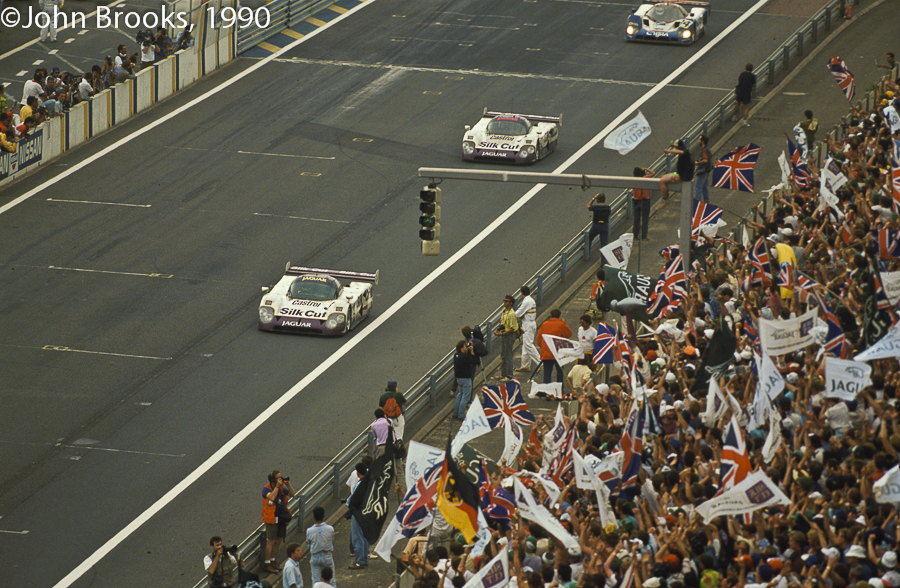
So we won. Very satisfying.

Le Mans 24 Hour Race

Mike Dale, then MD of Jaguar North America and a true racer, had supported us all the way and was terrific as the laps wound down. Our car was the only chassis that had won both the 24 hours of Daytona and Le Mans as far as I’m aware of. Now it was lots of celebrating. I remember taking TW back to the airport and he told me I had “done good” I then had to find my way back to the chateau where we were staying. Now that was a trip. I was so tired, and a bit the worse for Champagne. I can’t remember how many times I went off the road. And all the while driving Tom’s personal Jaguar.

Untitlednnn_1

The next morning we went back to the circuit to see the car and it was very emotional for us when we untapped the engine cover and lifted the rear deck off. Never lifted it in the whole race. A couple of weeks later the whole team who had been at Le Mans went to New Jersey and had dinner with Mike Dale and Bob Burden, another super Jaguar person, in a small restaurant a few miles from the Jaguar Headquarters. Very nice.

There are very few people that knew of the lengths that we had all gone to get this result, so this is the first time I’ve told the whole story. Thanks to all of the “villains” that took part, it is something to tell the kids when you grow up. I hope that we will be forgiven, but only ever do this if you are sure your going to win.

Tony Dowe, February 2005

The Inauguration

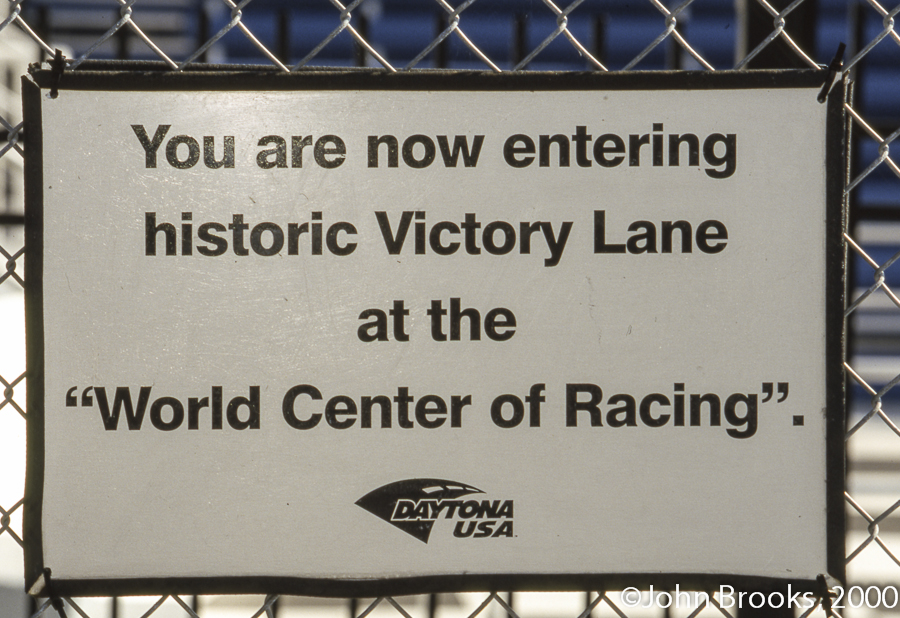
2000 Rolex 24

It is late January and a familiar yearning comes over me, there is a 24 Hour race about to happen but I am on the other side of the Atlantic. There are, of course, good reasons for this, mainly financial, as revenues fall and costs rise, so my current involvement with the Rolex 24 is confined to looking back over the years……………….
2000 Rolex 24

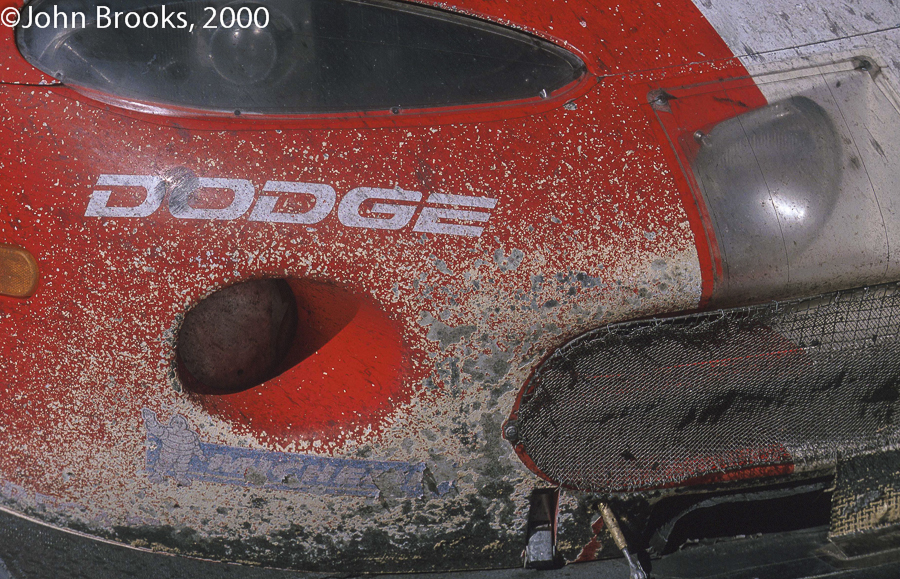
Now undisputed master of motorsport in North America, NASCAR entered the endurance arena just over a decade ago setting up the Grand-Am organisation to sanction and run its blue riband endurance event, the Daytona 24 Hours. This was of course the 2000 edition of Rolex 24 Hours held at Daytona International Speedway.
2000 Rolex 24

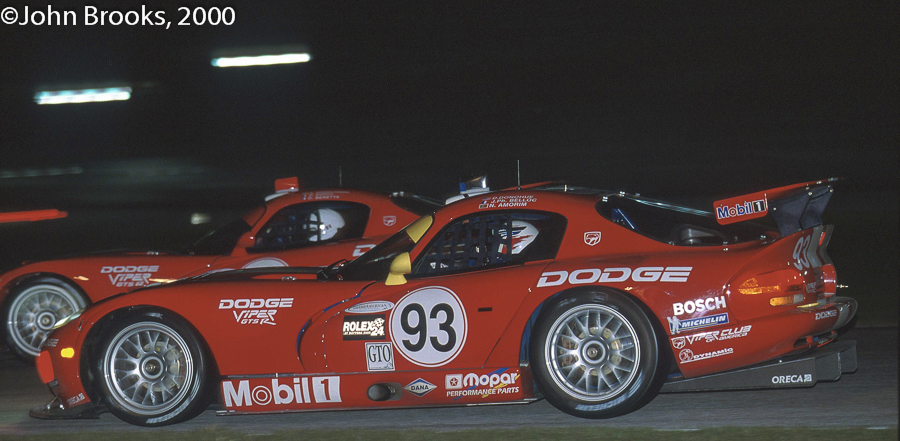
For most observers the first race was one of the high points in the whole story of Grand-Am, starting the project at the top level. There were big battles everywhere, in the various prototype and GT classes but nothing was more keenly anticipated than the fight in the GTO category between the Dodge Vipers and the Chevvy Corvettes.
2000 Rolex 24

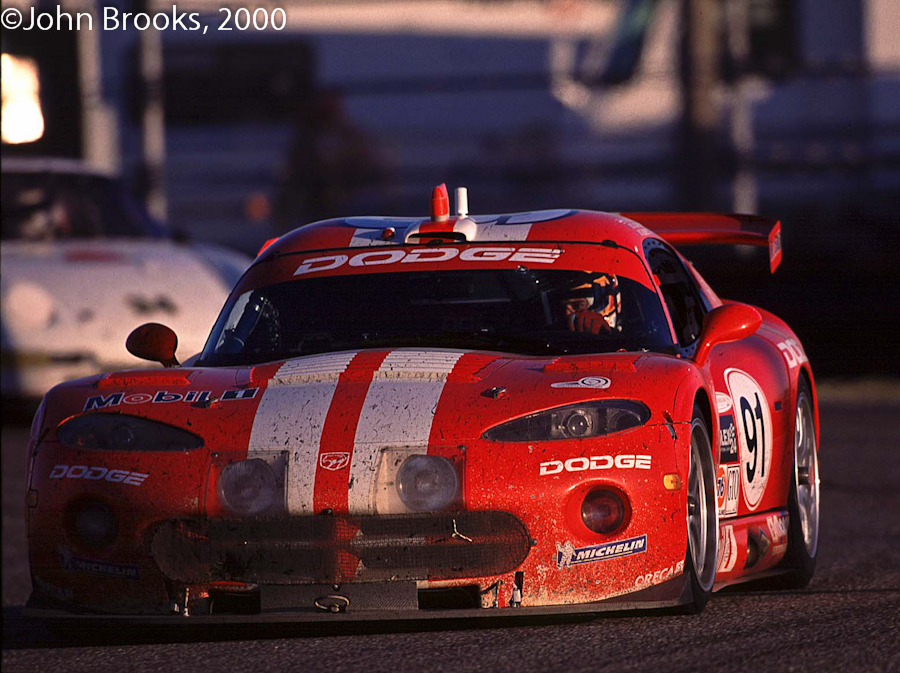
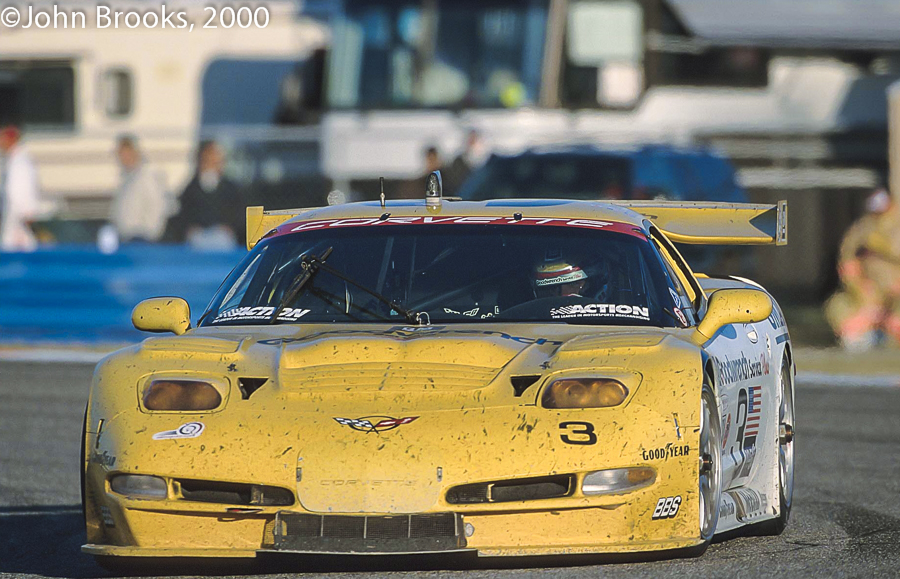
Two full factory outfits pitted three French ORECA run Viper GTS-Rs against two American Pratt & Miller C5-Rs, each with top line drivers, it was a Detroit Heavyweight Championship of the World Contest. An automotive “Thrilla in Manila” – Beretta/Wendlinger/Dupuy/Donohue/Amorin/Archer/Belloc/Duez versus Fellows/Bell/Kneifel/Pilgim/Collins/Freon – enough to keep everyone on the edge of their seats.
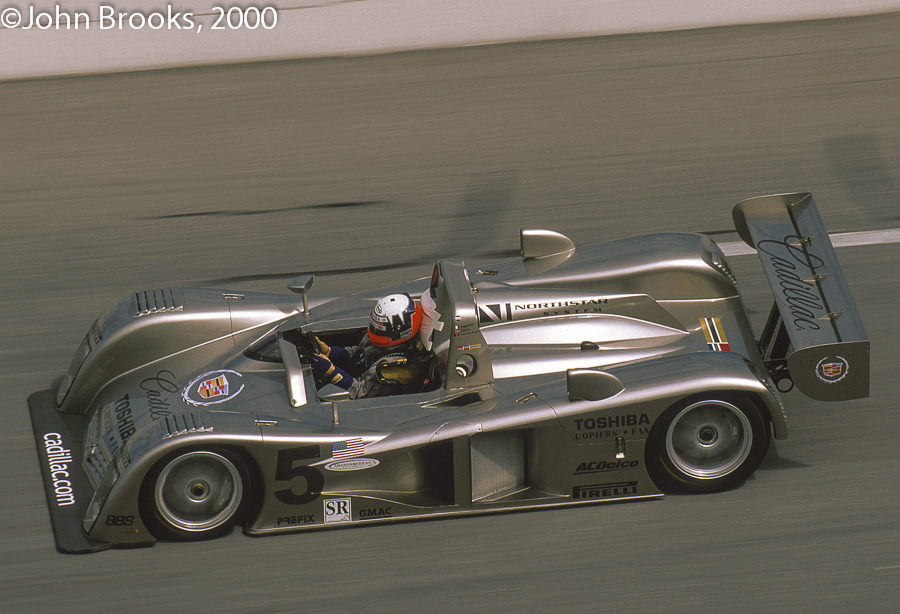
2000 Rolex 24

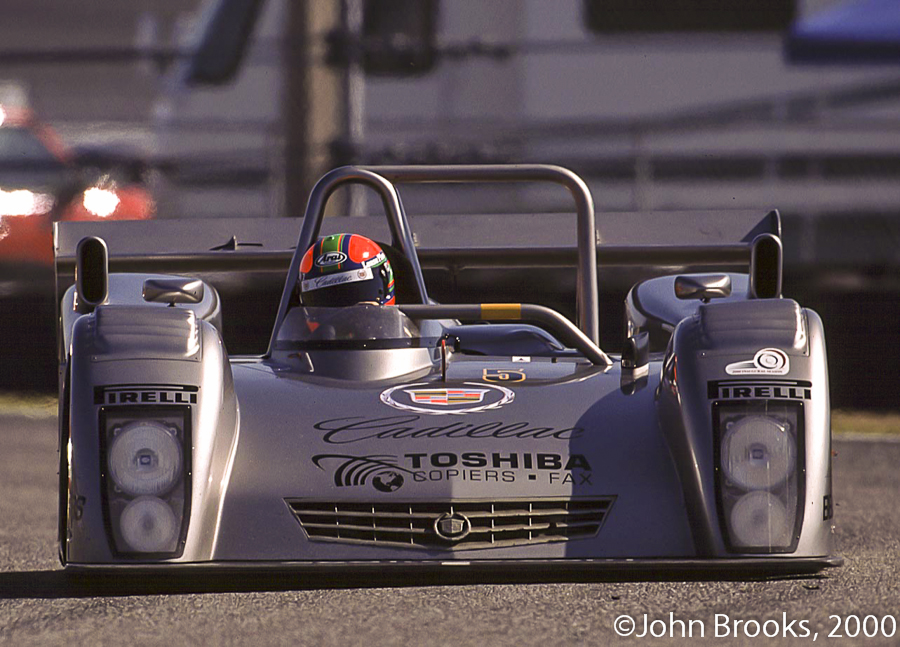
That would be more than enough excitement for most races but there was more. After a gap of some 50 years Cadillac was back in competition running a Riley & Scott built prototype with victory at Daytona, Sebring and Le Mans the aim. Why, did this conservative brand feel the need to return to the tracks? While other automotive brands were at that time heading towards nostalgic retro-style designs like the Beetle, the Mini and Thunderbird, Cadillac had decided to march to a different drummer. Under the rallying cry “Art & Science” the brand was launched on a path to develop their range to be the equal in every respect of the likes of Lexus and the German trio, Audi, BMW and Mercedes Benz.
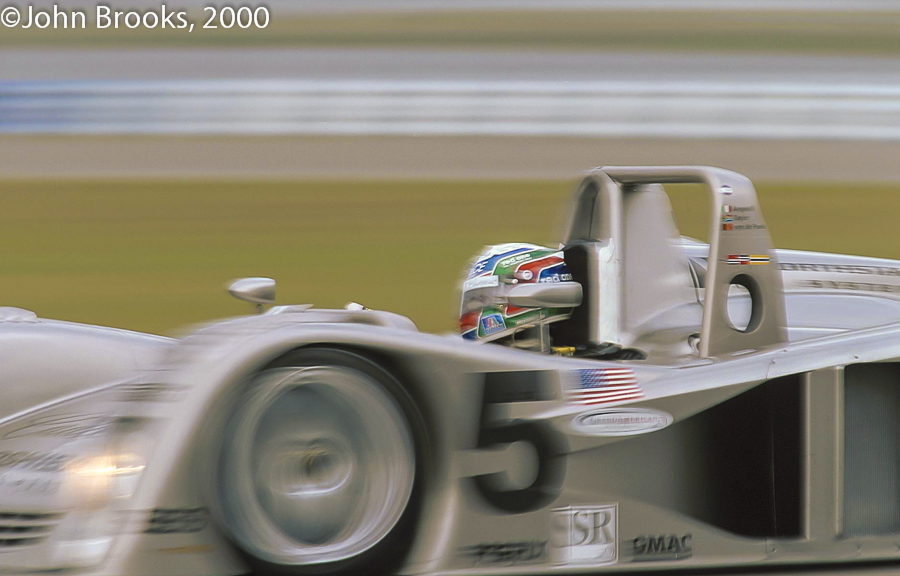
2000 Rolex 24

Another point of view expressed to me at the time was that Cadillac had to change and aim at a younger market, their existing customer base was dying off………..and fast.
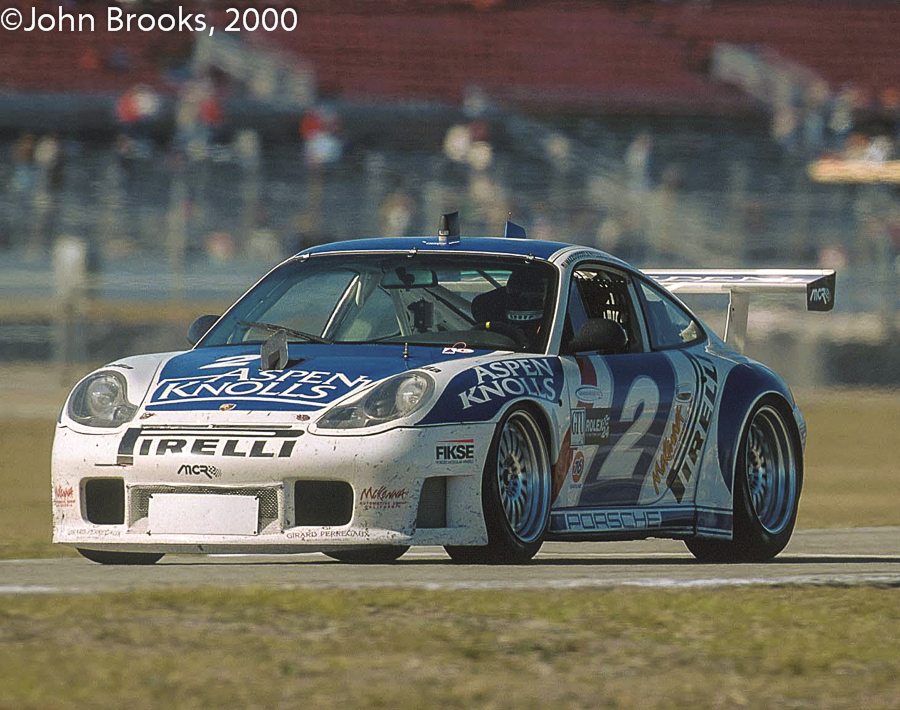
2000 Rolex 24

The 2000 Rolex 24 also witnessed the debut of the customer version of the Porsche 911 GT3R, there were 23 examples that would take the Green Flag at the Rolex, all that dot.com money was burning holes in pockets, or so we speculated. The GT3R would be the car that would carry GT Racing forward around the world for the next few years. It had the first water cooled engine in a Porsche 911 based racing model.
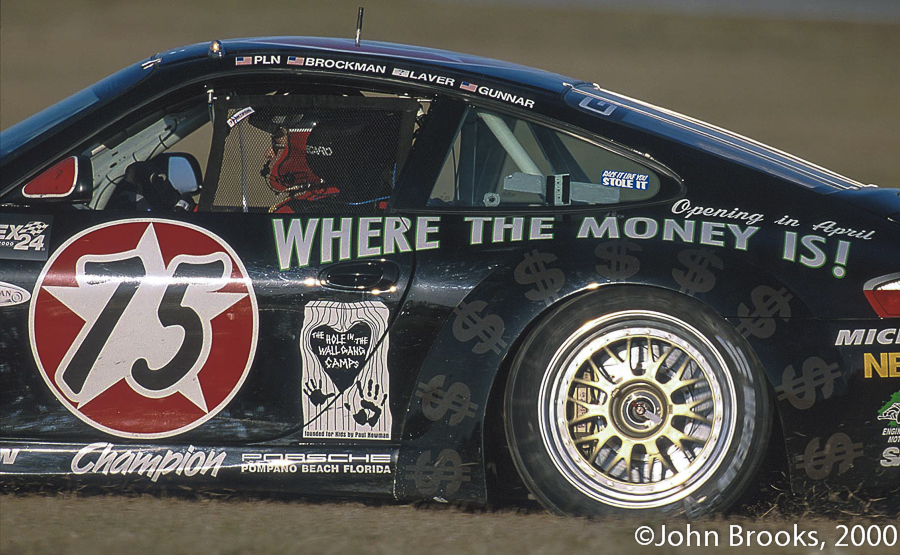
2000 Rolex 24

Another GT3R was in the hands of of the youngest driver in the race, 17 year old Gunnar Jeannette and the oldest, Paul Newman. Newman was utterly charming as long as you confined the talk to racing, when at the tracks he just wanted to be another driver and not the movie superstar. Newman won the GTO Daytona 24 title on his last attempt in 1995 and he said at the time, “When we won it in 1995, when I was seventy, well, I’ll give it another five years and come back again.” When asked why he would enter such a grueling contest of speed and endurance, the 75 year old actor responded, “Just for the hell of it.”
2000 Rolex 24

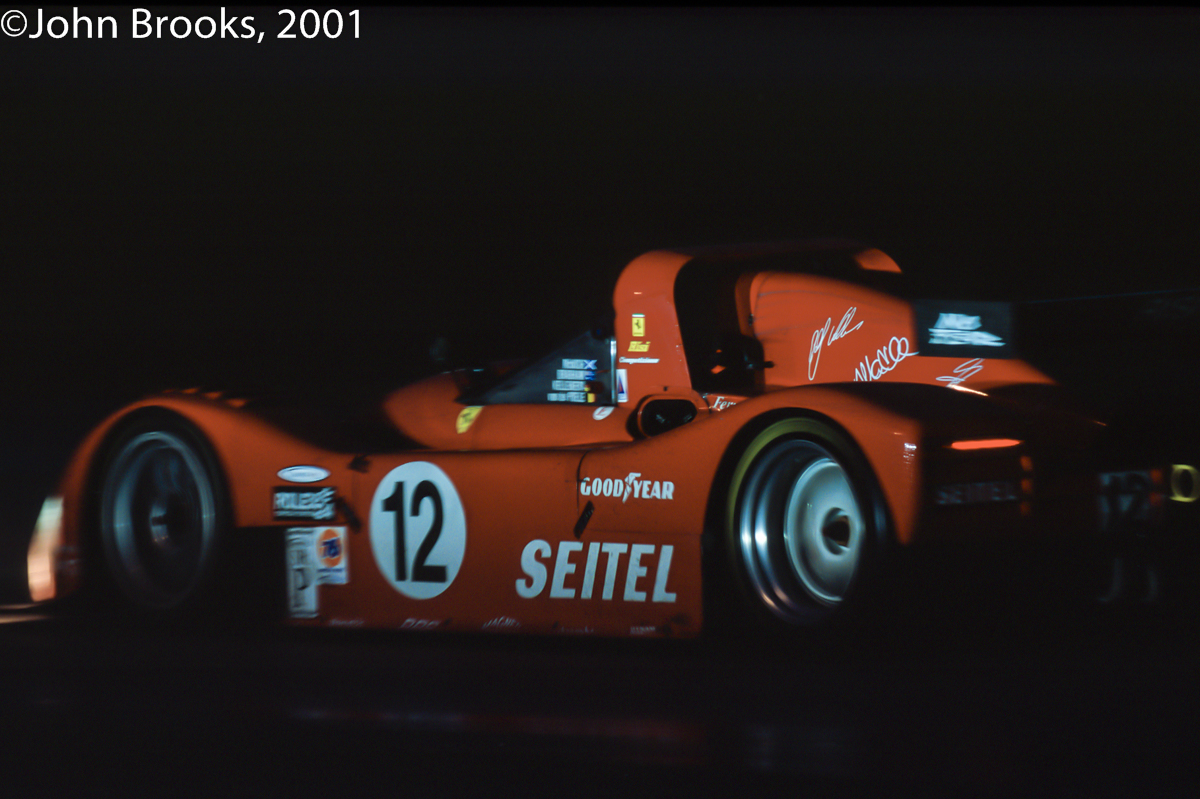
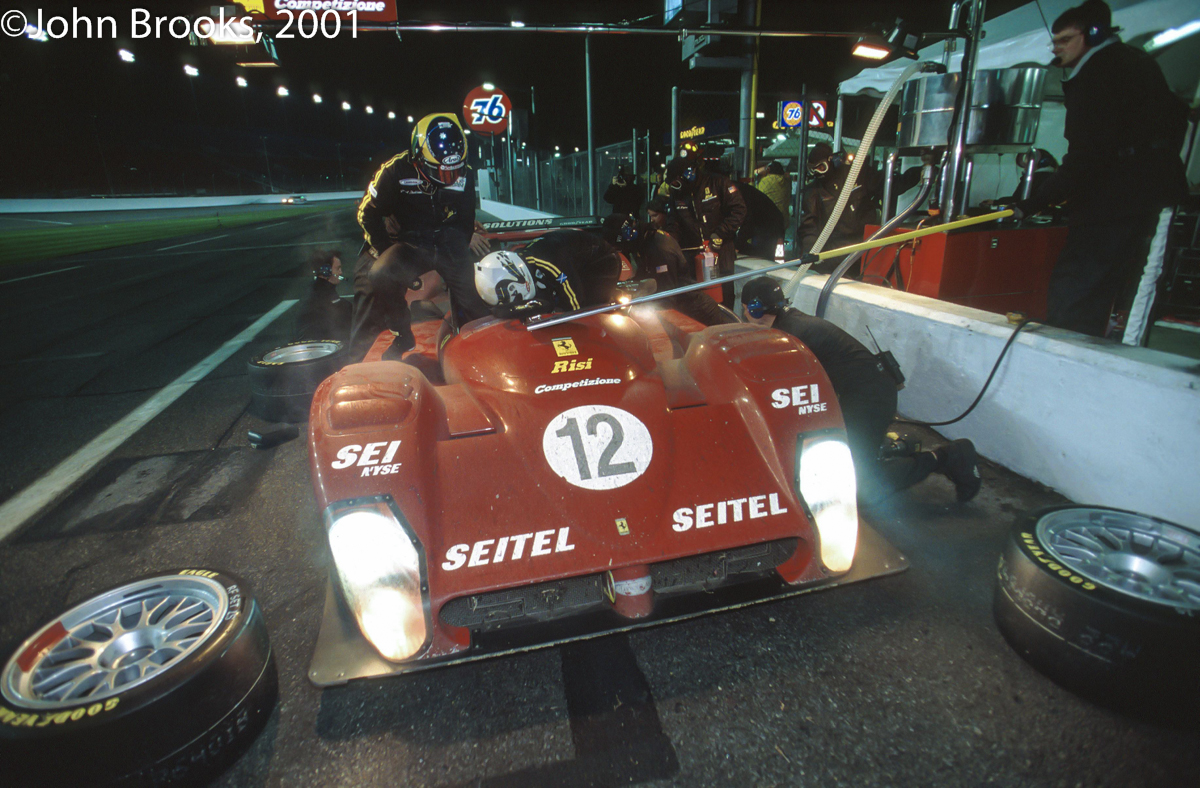
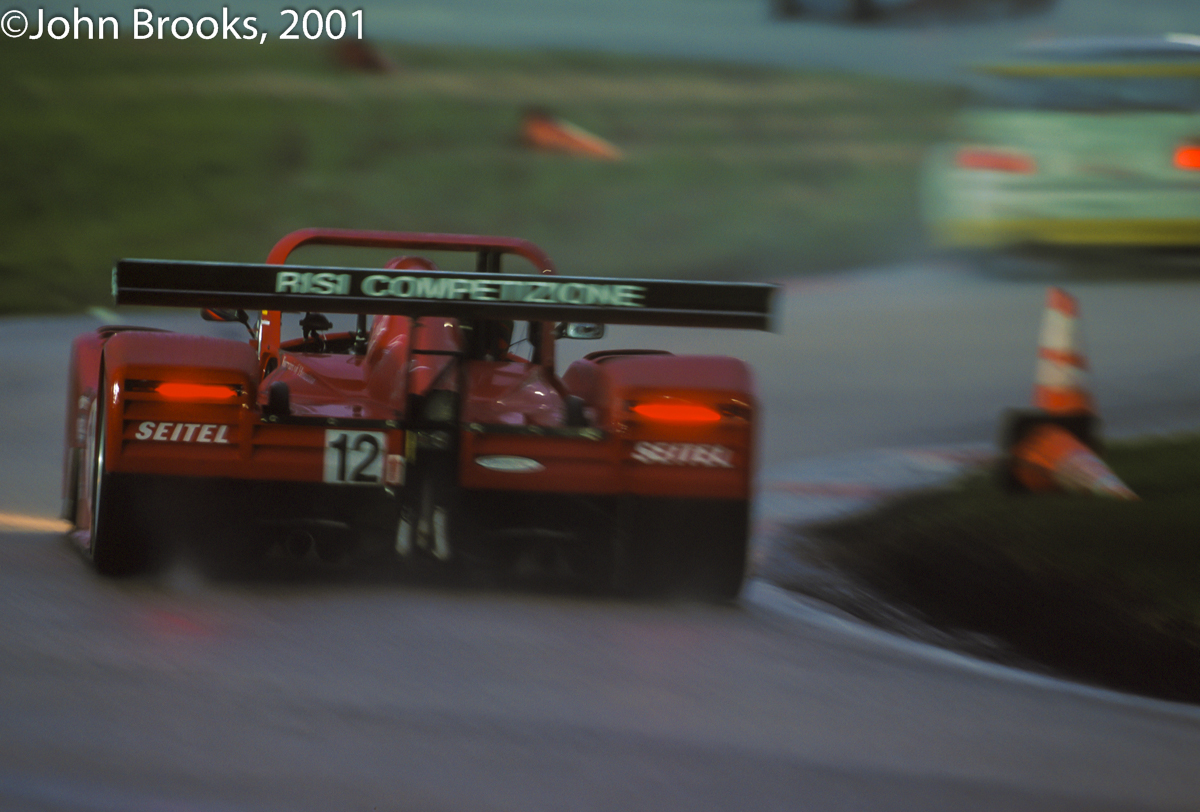
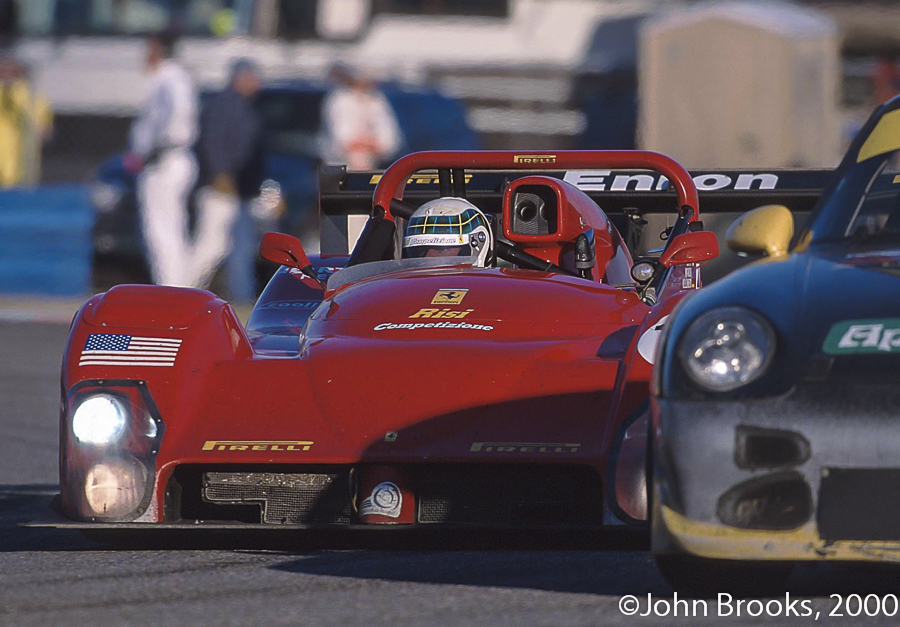
There were five classes of cars that were eligible to run in the 2000 Rolex 24, two prototype and three GT. The prototype rules were based on John Mangoletsi’s Sports Racing World Cup and had SRP and SRP 11 categories depending on power, engine size and budget. One of the most popular models with the fans was the Ferrari 333SP, here the Risi Competizione example with Allan McNish on a busman’s holiday from Audi duties. There were three 333SPs on the grid, the howl of the 4 litre V12 was worth going a long way to hear.
2000 Rolex 24

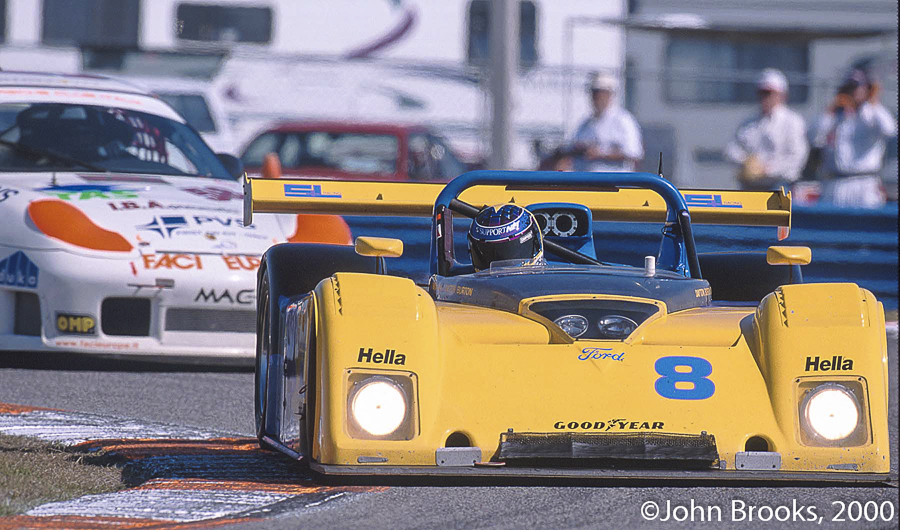
The Ferraris were outnumbered by six Riley & Scott MKlll powered by either Ford and Chevrolet V8 engines. This is the Philip Creighton Motorsports entry.
2000 Rolex 24

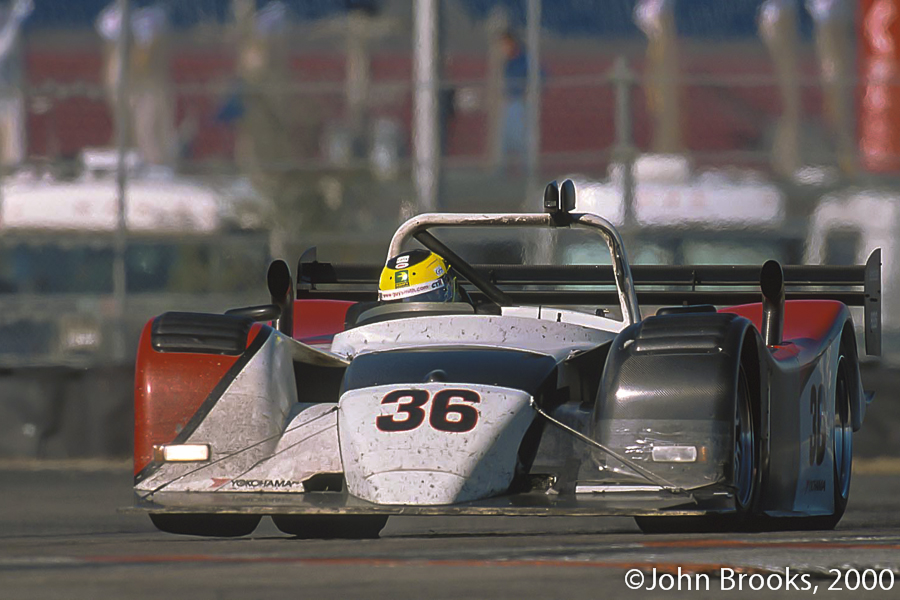
Also making a first appearance was Johansson Matthews Reynard 2KQ Judd. This advanced customer programme was a new departure for the world’s biggest racecar constructor. The year before Reynard had acquired Riley & Scott who, aside from providing the MKlll cars, also built and ran the Cadillac programme. A tangled web.
2000 Rolex 24

The prototype scene was finely balanced in 2000, the workhorses of the past five or six years, the Rileys and the Ferraris, were getting long in the tooth but were expected run reliably at the notoriously tough combined infield and banking layout of Daytona International Speedway. Both models had success in the past and would form the foundation of plans to run combined Grand-Am events with the Sports Racing World Cup. The plan was for John Mangoletsi to bring the cream of European prototype racing over to create a set of world class events. A truly Cunning Plan.

2000 Rolex 24

In the background, however was the the American Le Mans Series, running to Le Mans rules, that allowed full factory participation, specifically outlawed in SRWC land. Well not so much outlawed as price capped. The top class of the category, SRP, had an on the track price limit of $640,000 including engine, SRP 11 was pegged at $201,000. The logic being that no constructor such as Lola or Reynard would sell cars at a loss, however, a manufacturer like Cadillac could just factor any excess cost into their overall project budget and still sell cars under the price limit to any customers well heeled enough to afford them.

2000 Rolex 24

After a promising first season in 1999, the ALMS was set to expand with Audi due to bring their latest car, the R8, to the tracks of North America to take on BMW and Panoz. Would that prove to be a bigger draw than watching privateers in Grand-Am? The attractions of keeping onside with the ACO, organisers of Le Mans, and the halo effect of the top class factory battle meant that both Viper and Vette would direct their attention to the ALMS.
2000 Rolex 24

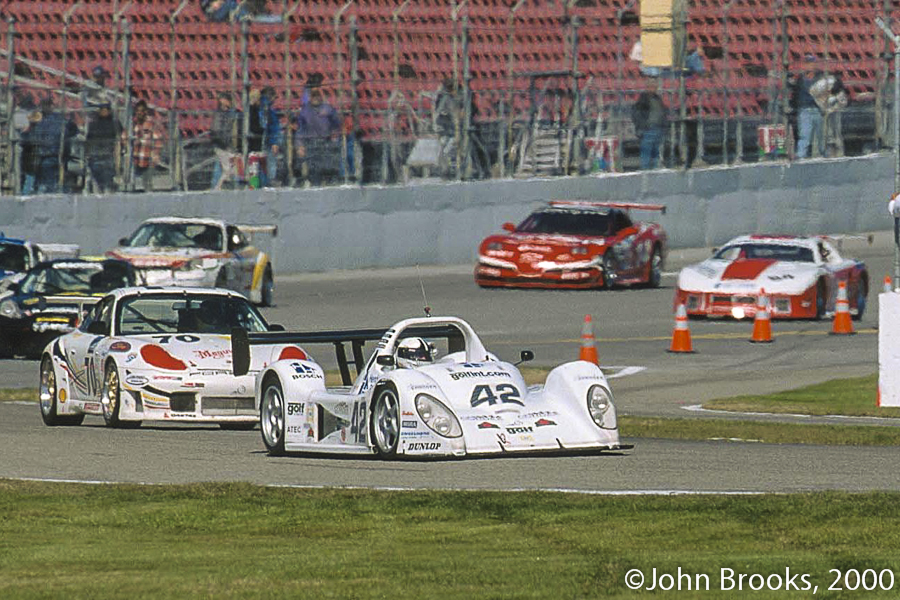
Mention of the SR2 class? Well only the Pilbeam of Martin Henderson turned up, a bit disappointing but given that these cars were not originally intended or engineered to survive 24 hour races it was not a surprise.

2000 Rolex 24

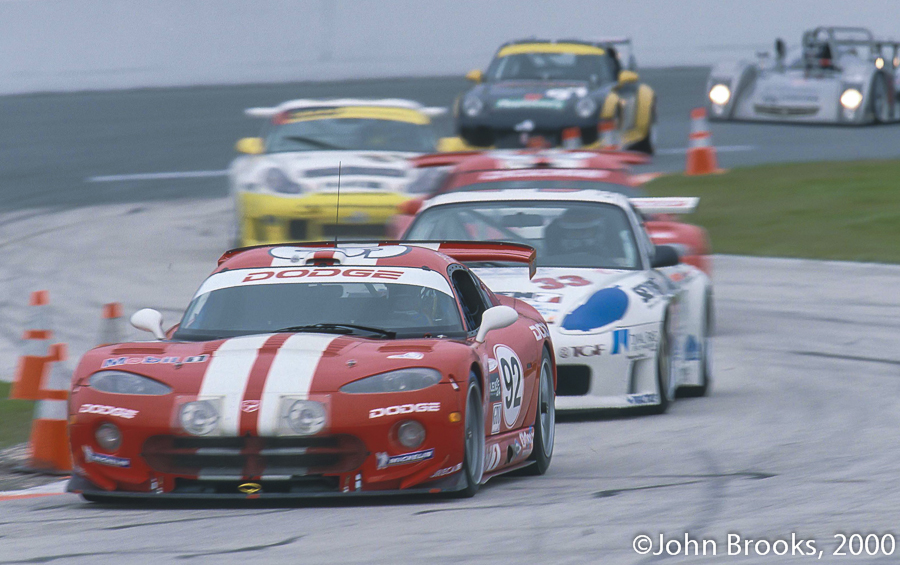
There were three GT classes, GTO translating roughly to the Le Mans LM GTS class. Top of the list were three Chrysler Vipers from ORECA, full factory supported entries. Based on the Viper GTS the GTS-R was one of the most successful GT cars in history. Oreca had achieved back to back domination during 1998 and 1999, winning the FIA GT Championship, and taking class wins in the Le Mans 24 Hours plus the American Le Mans Series drivers’ and manufacturers’ titles in ‘99. The French team were going to be very difficult to beat.
2000 Rolex 24

The Viper had first appeared on the tracks back in 1996, powered by a V10 8 litre engine, which not surprisingly produced power and torque in abundance. The chassis had originally been massaged and built by our old friends, Reynard, but by this stage in the project, Oreca had taken things in house.
2000 Rolex 24
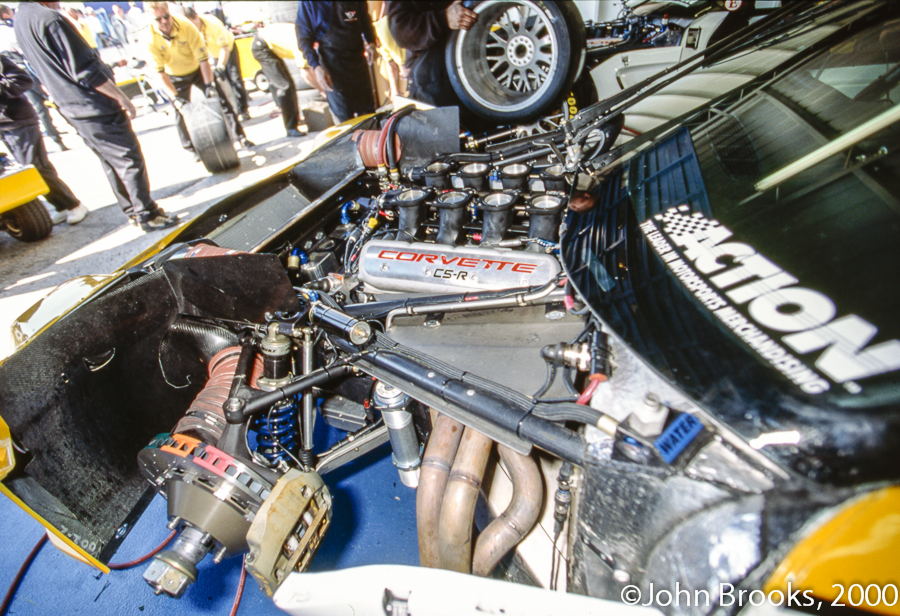
Up against them were two Corvette C5-Rs run by Pratt & Miller on behalf of General Motors. During the 1999 season the Vettes had gradually got closer to the Viper squad, going into the Floridian classic they were quietly confident of coming out on top. The Corvette, first raced in 1999 at the Rolex 24, had 7 litres of Detroit V8 muscle to propel them along, it would be a mighty contest.
2000 Rolex 24

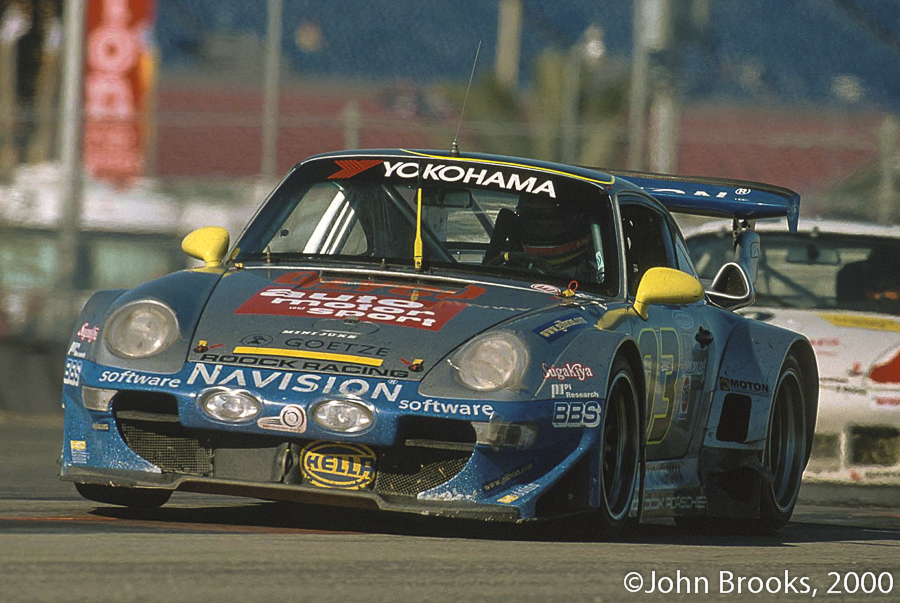
If some disaster befell the factory squads then the out-gunned but still fearsome Porsche 911 GT2 would be around to pick up the pieces but that outcome was not expected.
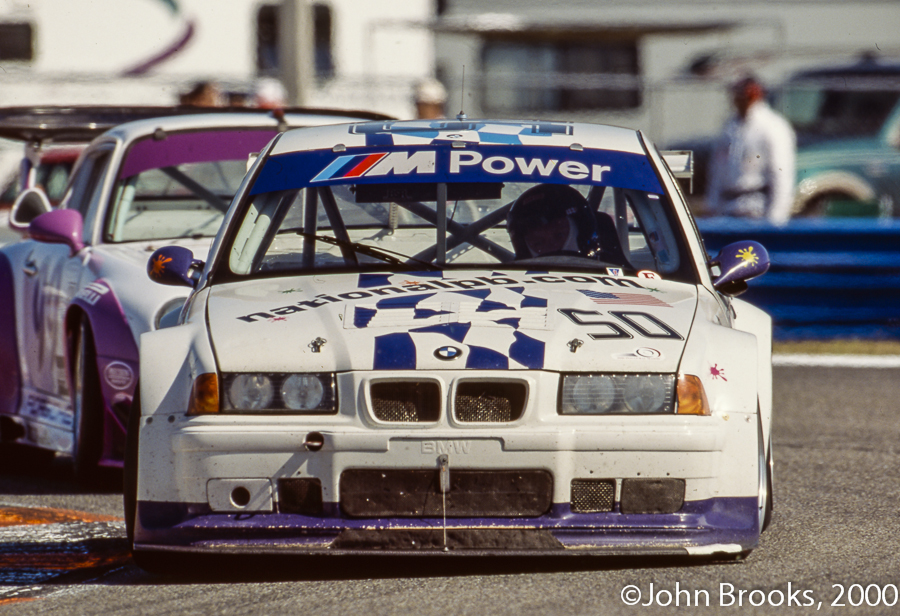
2000 Rolex 24
The second rank of GTs, GTU was expected to be a walk over for the phalanx of new Porsches but they would face determined opposition from the successful PTG BMW M3 squad, previous class winners at the Rolex.
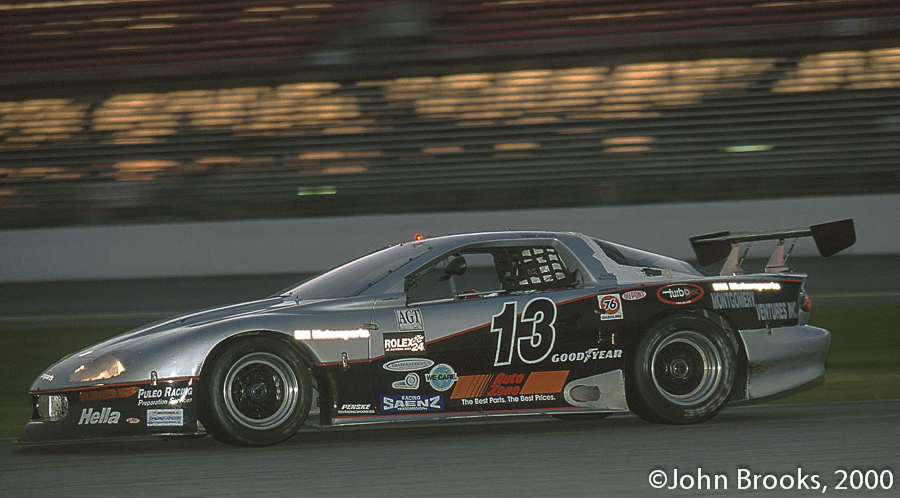
2000 Rolex 24

The Run What You Brung brigade were catered for in the A-GT class. They were tube framed, home built specials, regarded by the leading lights as mobile chicanes and not expected to feature in the grand scheme of things.
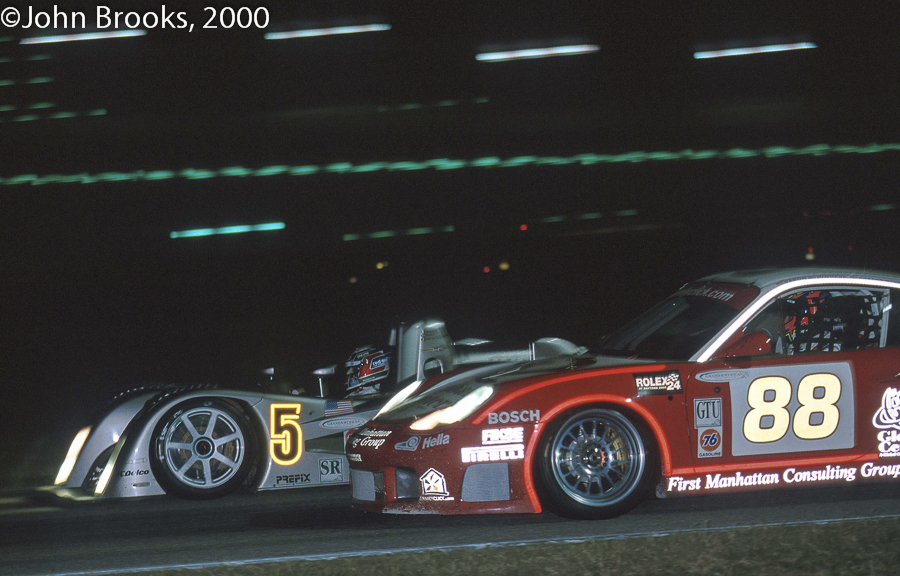
2000 Rolex 24
As always, practice and qualifying dragged on through Thursday and Friday, giving everyone a chance to get back into the groove after the winter break and especially to get used to running in close proximity with 79 other cars.
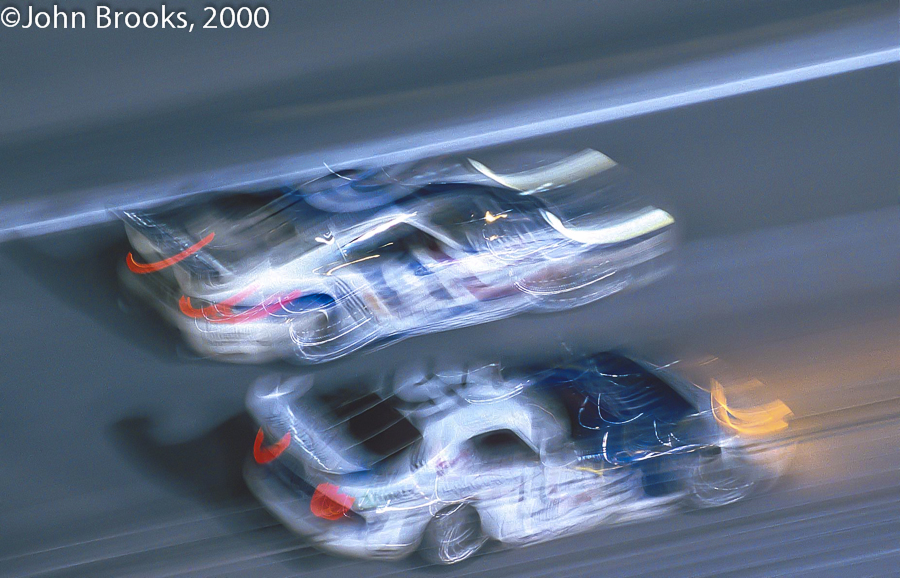
2000 Rolex 24

Traffic on the banking was manageable but on the infield and at the Bus Stop chicane at NASCAR 3 great care had to be taken to avoid problems arising out of speed differentials between the quick guys and the not so quick.
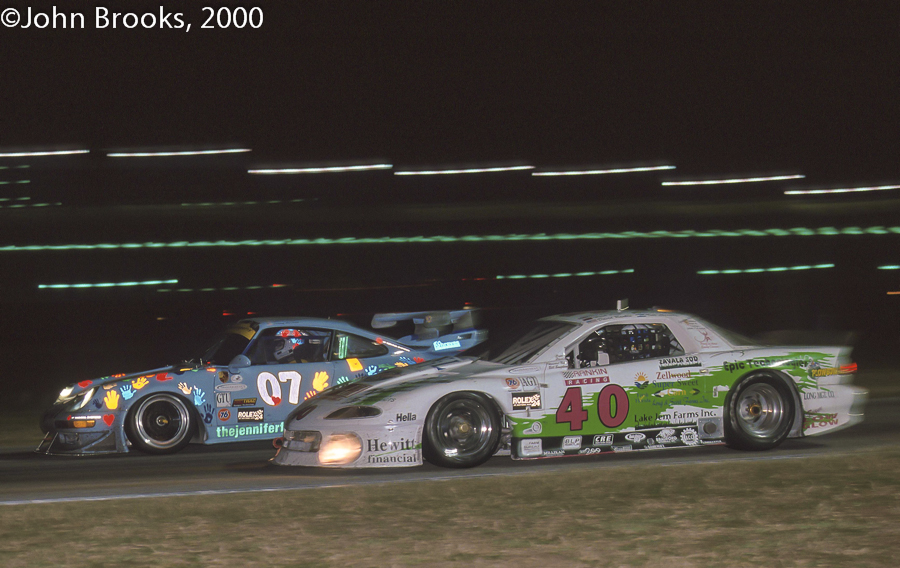
2000 Rolex 24

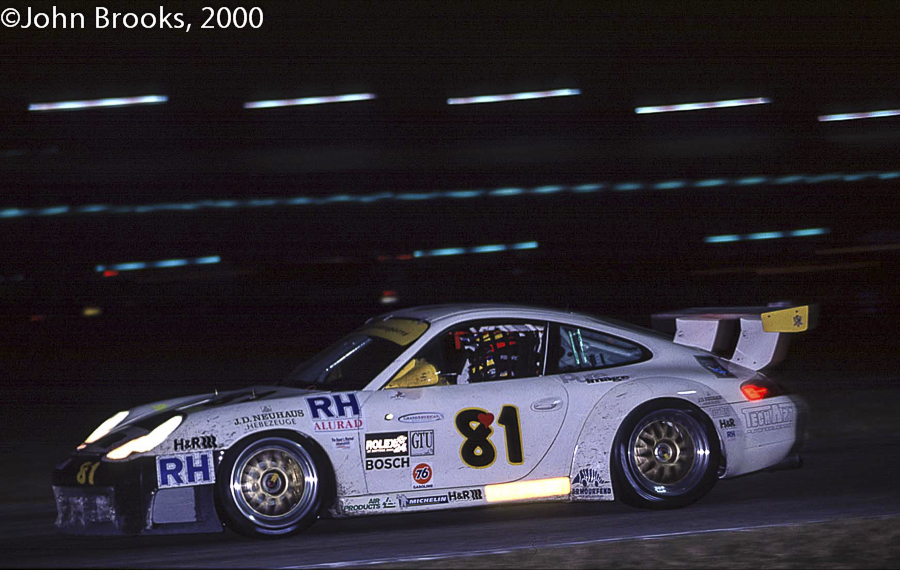
At night the problem was even more acute. Somehow the drivers sorted it all out.
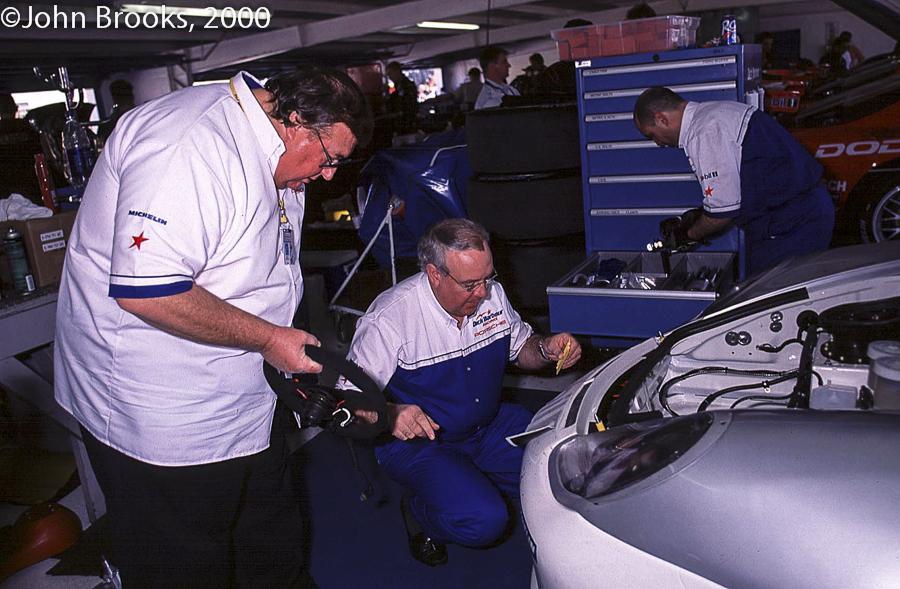
2000 Rolex 24

Meanwhile down in the garage areas the teams were racing against the clock to prepare their cars for the struggle ahead. Here Dick Barbour and Tony Dowe try to fettle what was widely regarded as the leading Porsche GT3R.

The European teams are always pleased to find the strict curfew regulations enforced at Daytona International Speedway meant no all-nighters, no matter what Sociopaths who tend to run teams wanted. The Shark Lounge had its siren call……………

2000 Rolex 24

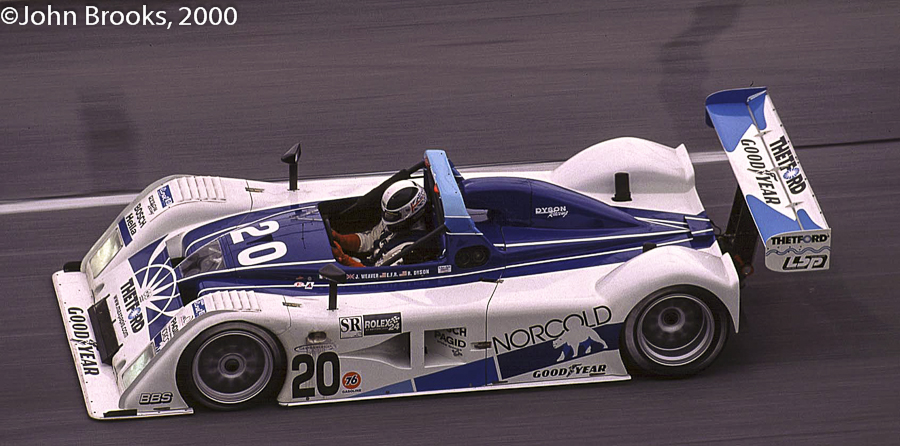
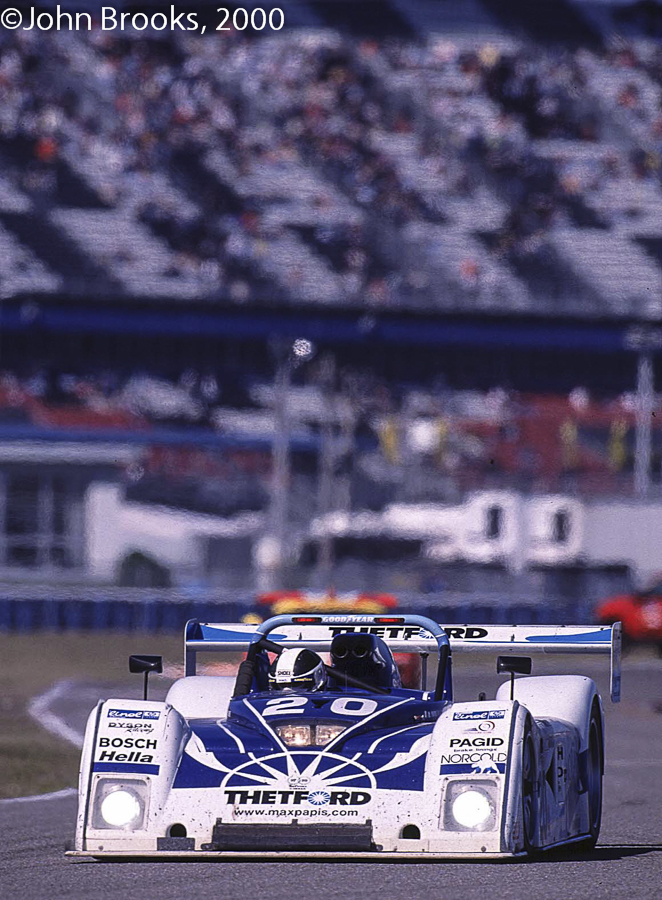
Pole position went to James Weaver in the old faithful #20 Riley & Scott MKlll Ford who rattled round in 1:41.002. Actually the Dyson team entered their No. 20 car as being Lincoln powered. The team’s Ford engines were prepared by Lozano Brothers Racing Engines. “We’re just trying to work with our engine builders and engine developers to see what we can create, and maybe we’ll create something,” said team owner Rob Dyson. “You never know.”
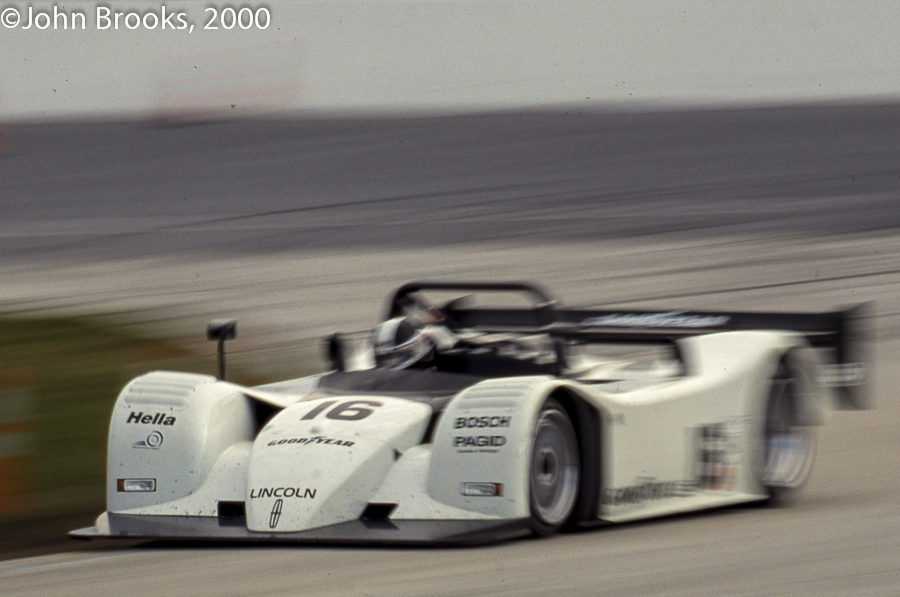
2000 Rolex 24
This was trying tempt the Ford owned brand to come and fight with their American rival, Cadillac. Perhaps Dyson should have painted that car black with gold piping and called it a Cartier Town Car………white walled Goodyear slicks please for P Diddy Weaver……….Yo!

Dyson had run one of the new Reynards at the early January test sessions at Daytona but reverted to their Rileys for the race itself. “We were planning to have two Reynards,” said Dyson. “Due to a number of problems, we were not able to get even one chassis working. Right after our test here we had to make the decision to run the Riley and Scott. Our objective is to win races. We just felt that we had a better chance of winning the race with the Riley & Scott rather than the Reynard. This is the Super Bowl of sports car racing. This is a race where we’ve been fortunate to win it, and that’s our objective this time.”

“We’ve got high hopes for the Reynard, I think any new car takes three or four months to get sorted out. I think Cadillac need a little more time as do Reynard,” Weaver added.
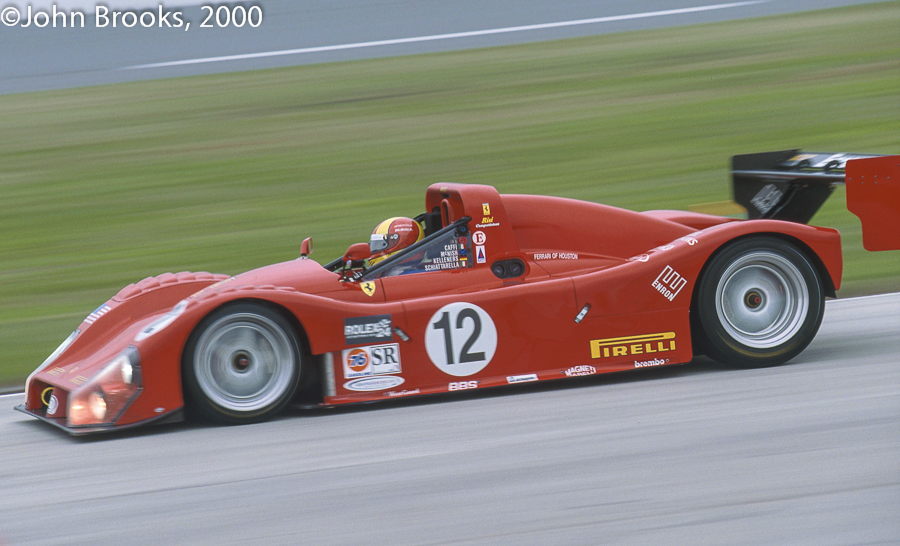
The Ferrari of Alex Caffi was second on the grid just a tad slower than Master James. A battle royal was in prospect.
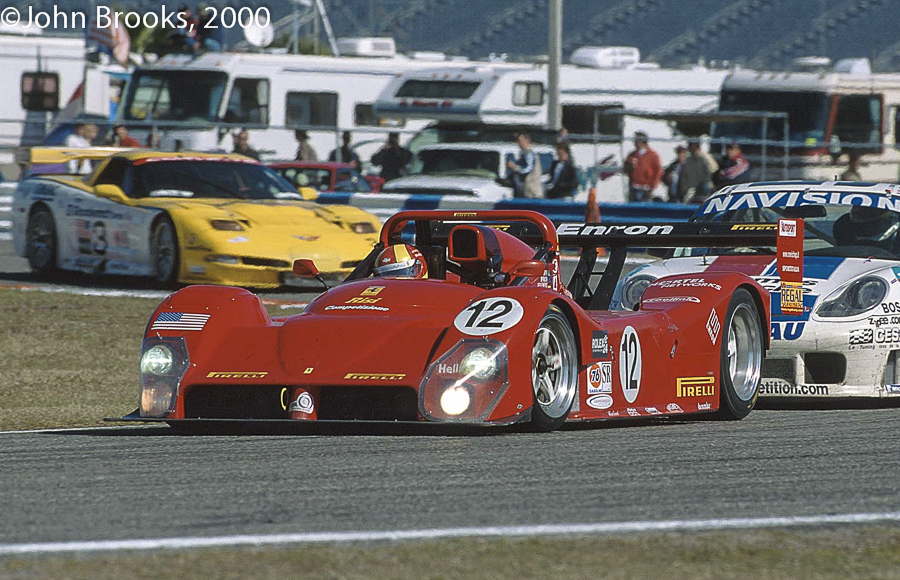
2000 Rolex 24

The Italian, nicknamed The Disco Kid during his F1 days was typically lyrical about his prospects, “This is a big event, I raced in Formula One, the top of racing cars, but this is a beautiful day in my life because Daytona is very famous, also in Europe. Especially in Italy, nobody forgets the finish of the three Ferraris in the late sixties. This is one of the most famous races and I’m very happy to be here.” A local newspaper reporter’s dream.
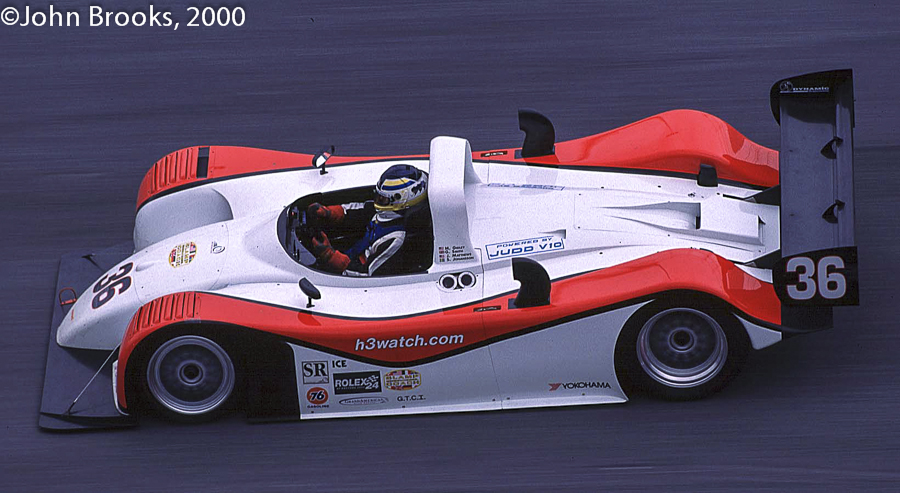
2000 Rolex 24

Also pretty content with the way things were panning out was the Reynard team, lining up fourth on the grid. They were confident of being on the race pace and felt that they could be dark horses in the hunt for victory.
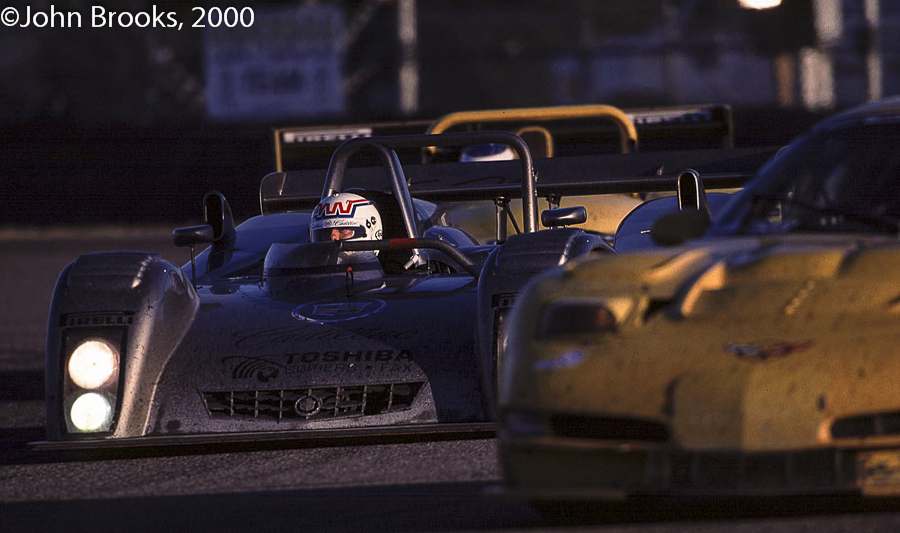
2000 Rolex 24

The lead Cadillac was one place down on the Reynard, it was clear that there was plenty of work to do on these elegant cars.
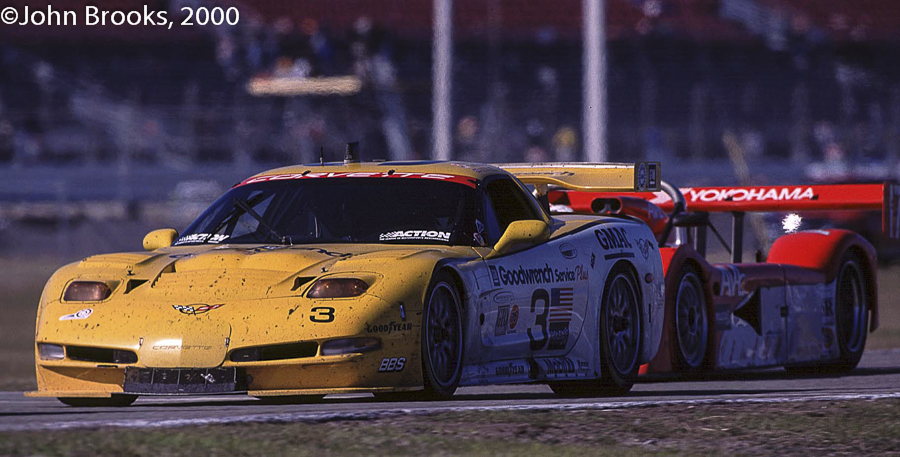
2000 Rolex 24

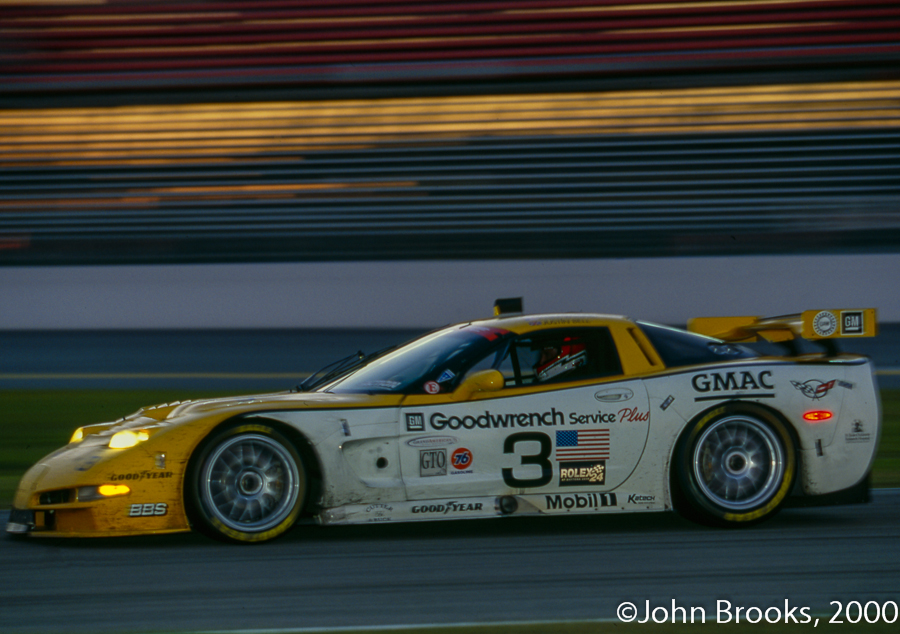
GTO pole and first blood to Ron Fellows and the Corvette with a lap of 1:45.889. Ron, one of the smartest drivers you will ever meet, was pleased. “This is our first pole with the Corvette so we’re pretty happy. We really didn’t do much since the test. We found a pretty good set up there. This morning we made one little change to the back and off we went to qualify. Right at the end of the second set of tires, I had a perfectly clear lap. The guys sent me out exactly at the right time. I was able to maximize the grip we had with the tires for one or two laps right at the end.”

Corvette 1, Viper 0 but still all to play for.

Fellows was still realistic about the race, “We’re still the underdogs here at the Rolex 24, these guys have won two straight Le Mans’ titles and we’re still chasing them. But we’ve got the package together to race for 24 hours. It’ll be a long race and the fastest car doesn’t necessarily always win, anything can happen. You’ve got to be smart with so many cars. It really won’t thin out until 1:00 or 2:00 in the morning. The biggest thing is traffic, just staying out of trouble.”

Prophetic words, indeed.
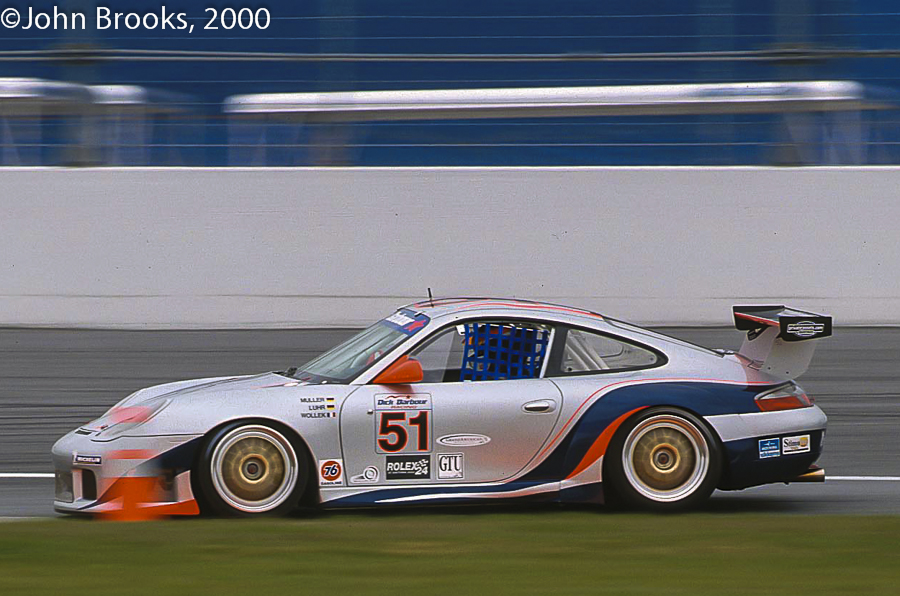
2000 Rolex 24

1:52.028 was good enough to secure pole in GTU class with Dirk Müller on qualifying duties for Dick Barbour Racing’s GT3R. The loudspeakers were ringing out Friday at 6.30pm telling the faithful all to leave “The World Centre for Motorsport” for the day and head off to get rested in preparation for the race day. What would the Green Flag bring?
2000 Rolex 24

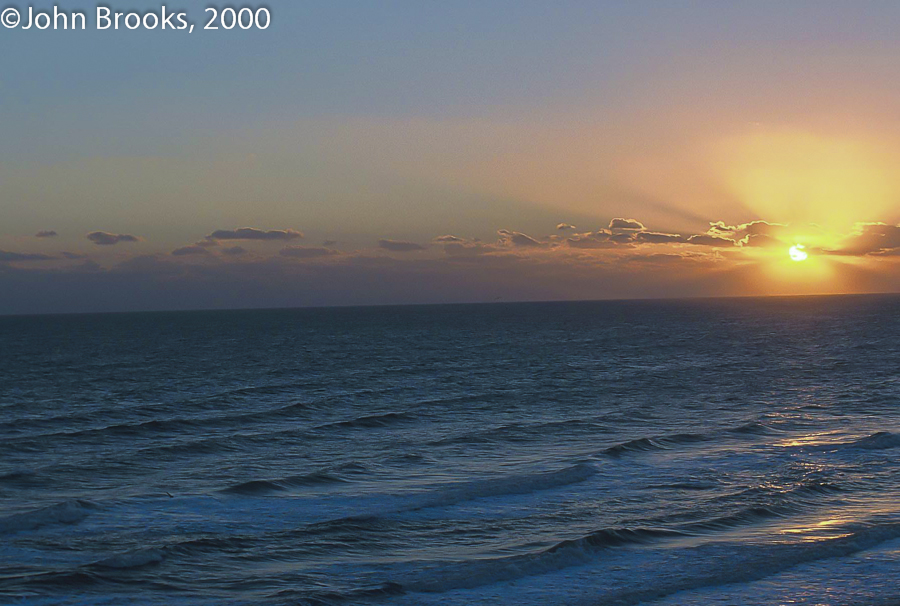
Saturday morning and the Sun punched its way West across the Atlantic, for those of us with business at Daytona International Speedway it was time stop admiring the colours over the ocean and head to the track. The weather was forecast to remain dry but it would get cold, even by European standards.
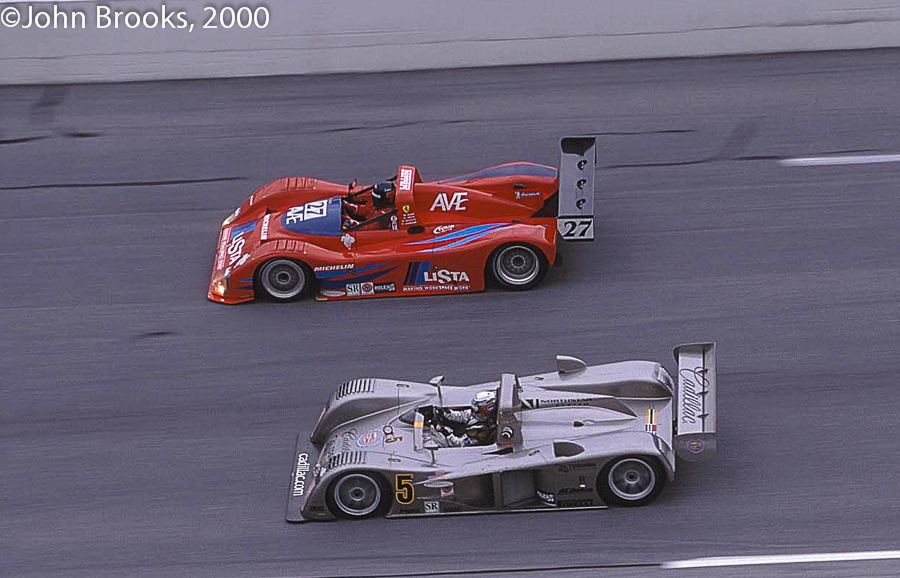
2000 Rolex 24

There were three clear contests in prospect, SR1 prototypes would head the field and all things being equal win the race. GTO would be a vicious bar brawl between the Detroit duo but if the boys up front did not watch it the Viper-Vette combo could get close, a podium for the fast and reliable GTs was a distinct possibility. GTU was almost certainly a Porsche walkover, numbers and speed would see to that.
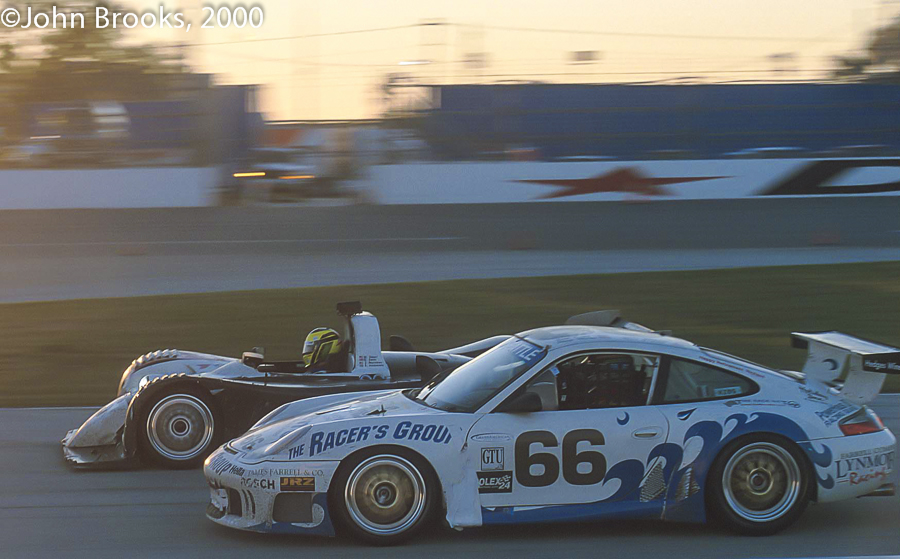
2000 Rolex 24
There were, and possibly still are, two schools of thought about how to approach competing in the Rolex 24 Hours. The question is simply, is this a race or an endurance? Flat out racing or stroke it round looking after the car and hope to finish?

Some driven by bitter experience favour the latter approach.
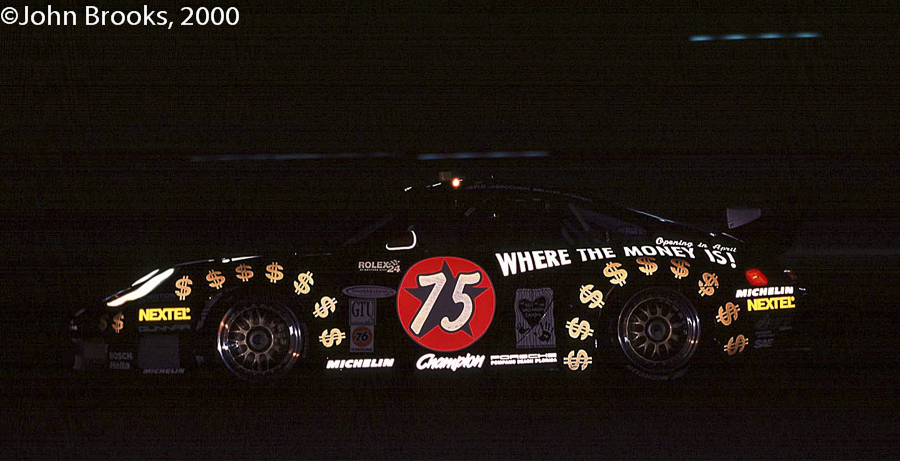
2000 Rolex 24

Take Mike Brockman, Paul Newman’s teammate in 1995, who was back to help his friend attempt to win again. “I’ve done this race a lot of times, I led it once for 13 hours, unfortunately it was the first 13 hours. It took me 15 attempts before I won it, and that was in 1995. Jack Roush, who we drove for in 1995 said it best, we were talking in the morning before the race, and we were talking about race strategy, he said, ‘there will be no racing here until the sun comes up, and not until I say so. ‘If we make it, and the sun comes up, and we’re still alive, then we’ll talk about racing.’”

Well that’s one way of going about things.
2000 Rolex 24

The other strategy is go flat out and devil take the hindmost.

James Weaver, who was as hard and fast a driver as ever graced the tracks, expressed it this way.

“The top sports cars, they’re more than strong enough to race flat out for 24 hours. There’s not much you can do to nurse one of these cars along. If you’ve got a good driver in it, you might as well drive it as fast as you can because you won’t break it. When you’ve got to race against people like Alex (Caffi), they’re going to be going flat out, we’ll take the fight to them, and they’ll be coming after us. It’s just a question of, don’t get too hot headed in traffic. That’s always the game here.”
2000 Rolex 24
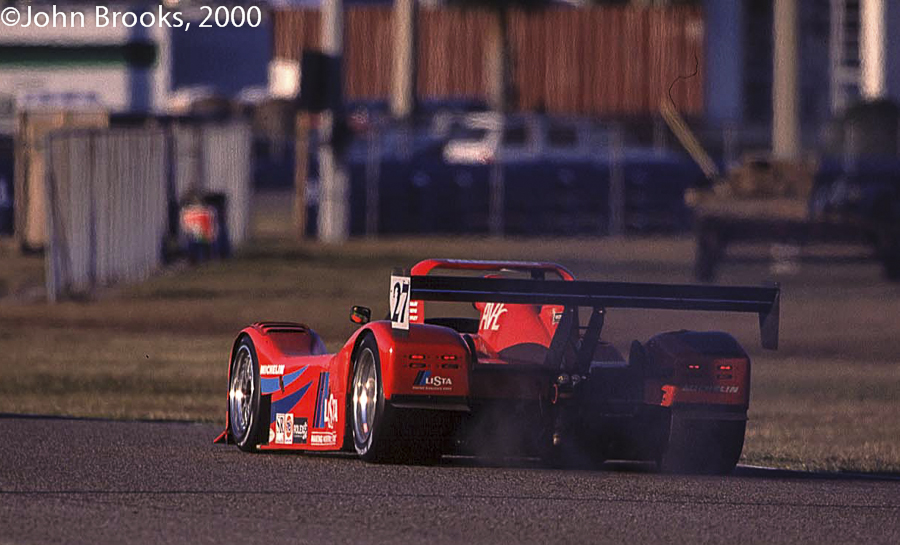
Anyhow all the planning in the world usually goes out the window as soon as the Green Flag drops and the field of prototypes were soon flat out on the banking. The initial pace was set by the Lista Ferrari 333SP driven hard as ever by Didier Theys. Almost from the start one of the main contenders for victory, the Risi Ferrari, ran into problems, Caffi spinning to the back of the field on lap 2, then within the hour there were transmission issues and fitting a new gearbox was the time consuming cure. Scratch one top prototype from the race.

2000 Rolex 24

With 79 cars starting the race, traffic, and how the leaders manage it, was always going to be a major factor. Given the disparity in speed and performance between the classes especially into the braking zones it was vital that the top drivers balance out ultimate pace with due circumspection. The best drivers really embrace the challenge of threading their way through the maze of cars in front of them.

Once again, James Weaver, explains things in his own, unique way. “Personally, the traffic element at Daytona, I find tremendously exciting and a real challenge. It’s like a high-speed video game or racing back from the pub through Piccadilly Circus in the rush hour. It’s just tremendously exciting. You try to judge all the closing speeds, what the other guy is going to do, see if you can recognize the helmet, determine who it is. When a car goes off line in front of you, you see if it’s throwing up dust, so you can tell if you can go off line. There are a thousand and one tricks you can do to make the race work for you.”
2000 Rolex 24

At the front the battle raged between the Lista Ferrari and the Lola Ford of Konrad Motorsports with the evergreen Jan Lammers leading the charge. This conflict continued for the first three hours until an oil leak delayed the #31 car. The #20 Dyson Riley & Scott took up the challenge shadowed by the leading Cadillac.
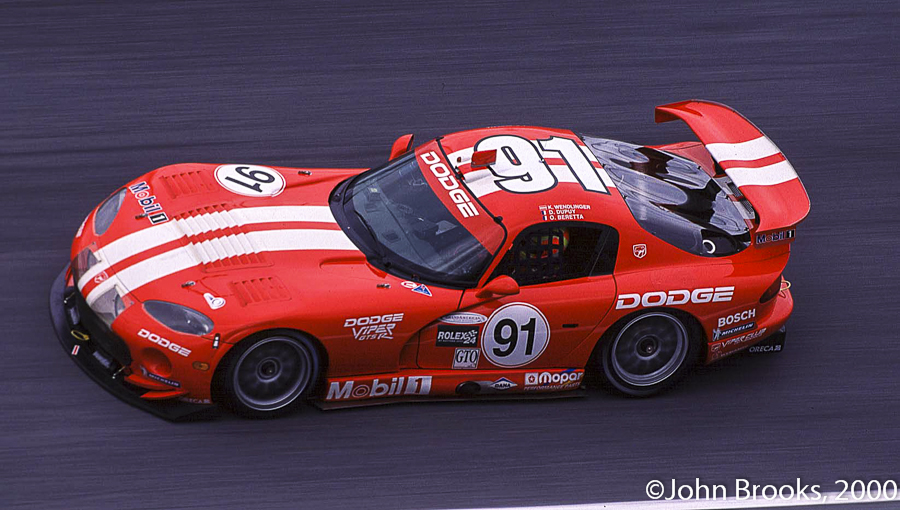
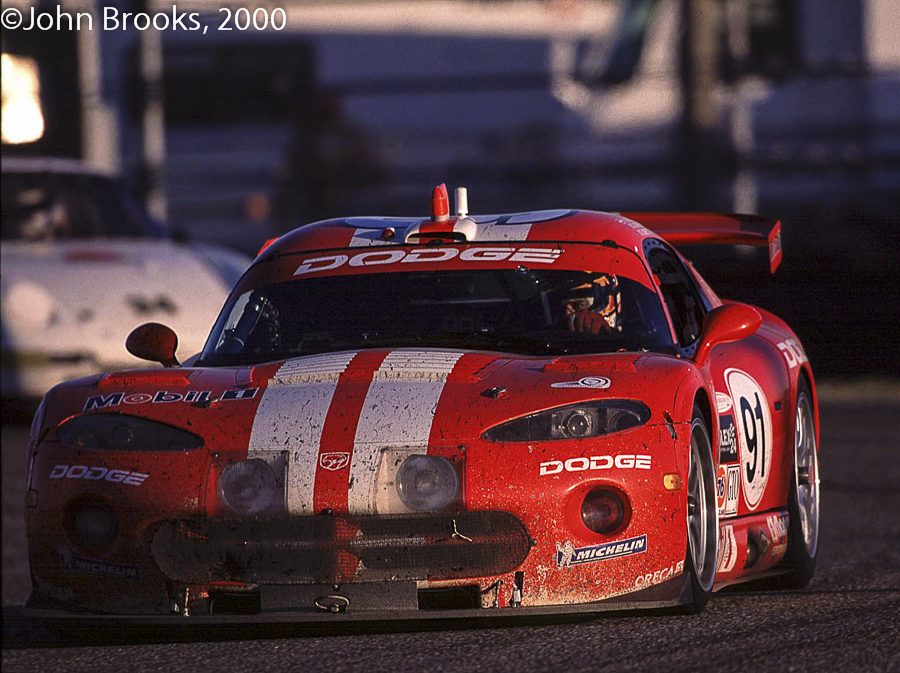
The gradual erosion of the lead prototypes propelled the GTO class battle into the the top ten positions overall. The #3 Covette of Ron Fellows, Justin Bell and Chris Kneifel pushing the #91 Viper of Olivier Beretta, Karl Wendlinger and Dominic Dupuy very hard and in case they stumbled there were the three support cars from the the Detroit duo in close attendance.
2000 Rolex 24

If there was any sign of weakness in the ORECA camp it was that Olivier Beretta was ill with the after effects of chicken pox, which meant that Wendlinger in particular would have to take up the slack. He rose to the occasion in a champion’s style.
2000 Rolex 24
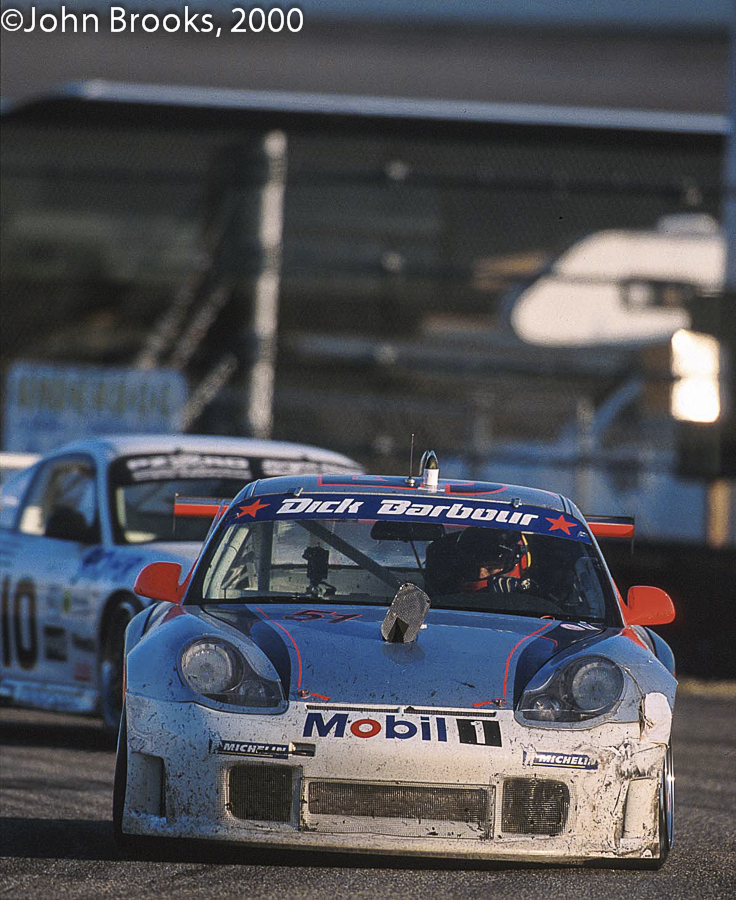
GTU was, as predicted, a walk over for the Porsche 911 GT3R armada with the head of the pack being the Barbour Racing example with Lucas Luhr, Bob Wollek and Dirk Muller behind the wheel.

2000 Rolex 24
At around 6.00pm, just before sunset the leader slowed up with smoke coming from the engine bay. The Lista Ferrari limped back to the pits but their race was run.

“We had an air box fire,” said team manager Kevin Doran. “It’s kind of a documented problem with the Ferraris. It’s happened six or eight times before with different teams. It happened to us once before, at Portland last year. In a downshift deceleration mode you get an over-run of fuel in the air box, and for some odd reason, you get a backfire out of an air trumpet, and it ignites it, and all that excess fuel burns, and it takes out the injection wiring harness.”

The engine had ingested some of the debris so even re-wiring would be in vain as there was damage to the pistons. Didier Theys reflected on a race win that had got away. “The engine caught fire. We had a backfire and the backfire burned the wire harness, it melted a couple of trumpets, it even melted one of the butterflies. Too much fuel was going into the engine. I don’t know what happened. We’ve had one problem like this in the past, but that was after a pit stop. When you do a pit stop and you don’t clean up the engine properly, too much fuel goes into the engine and it starts to burn.”
2000 Rolex 24
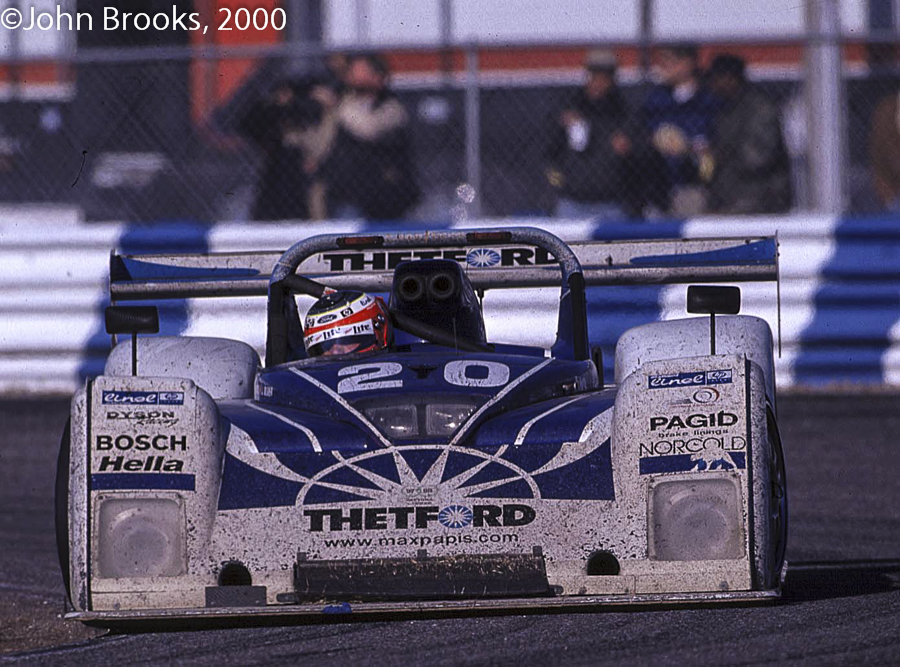
The misfortune that had struck the Ferraris meant that the #20 Dyson Riley & Scott Ford of James Weaver, Rob Dyson, Elliot Forbes-Robinson and Max Papis assumed the lead but the big surprise was the pace of the #5 Cadillac.
2000 Rolex 24

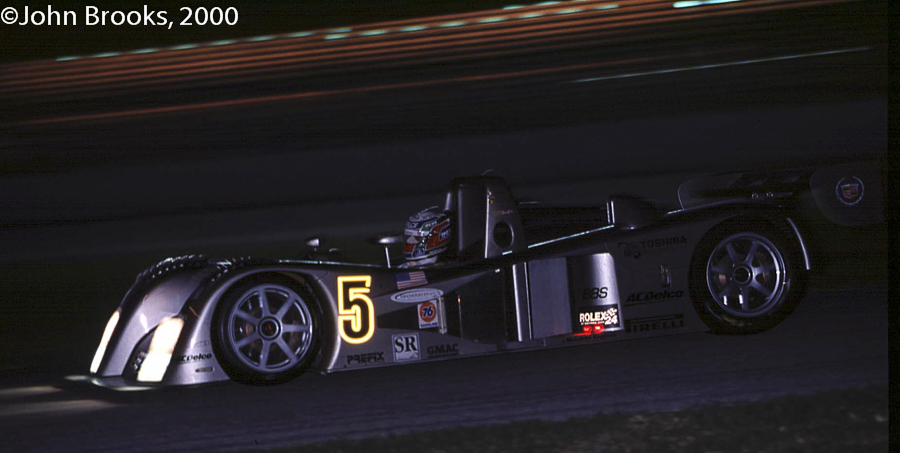
Indeed at the 6 hour point the #5 car was at the head of the field with a 30 second advantage over the Dyson Racing Riley & Scott but it was not to last. A series of problems with transmission, brakes and suspension blunted the Cadillac challenge, but the team just kept repairing the cars and sending them back out, retirement was not even contemplated.
2000 Rolex 24

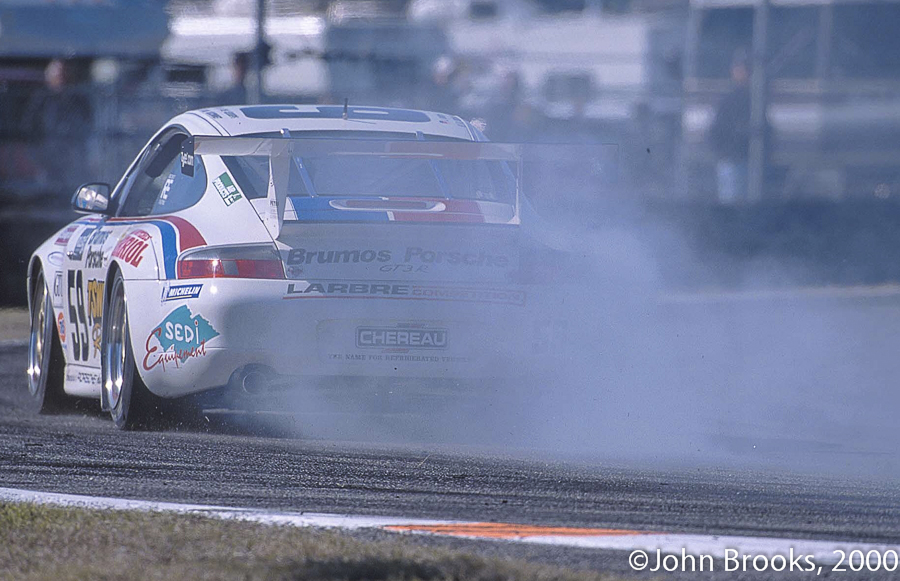
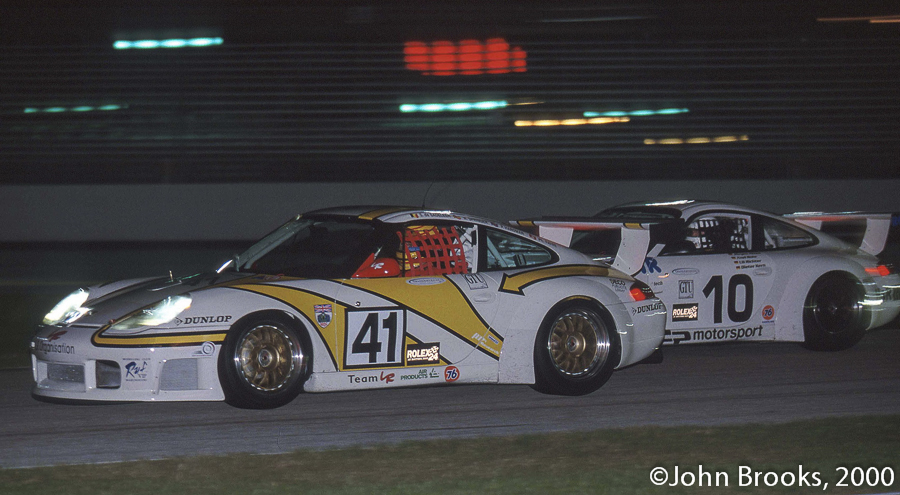
It was not only at the head of the field that problems were found. Porsche was having something of a nightmare with their new GT3Rs. Water pumps and consequently engines were failing and in numbers. This was not the way that Porsche does things, “Excellence was Expected” was something of a company motto right from the early days, so to introduce the first water cooled 911 based racer and then have water pump failures caused red faces throughout the paddock.

Bob Wollek summed up the situation ” There was no warning, no light, no temperature going up, it just went ‘BANG’ on the straight.”
2000 Rolex 24

The explanation was simple enough, sand that had been used in the engine block casting process had not been fully cleaned out and the residue was clogging the water pumps causing them to seize and then the engines to fail. In short order entries from Barbour Racing, Labre, MAC Racing, Racers Group, Skea, Seikel, MCR, PK Sport, Reiser Callas and Haberthur all retired as a result of engine problems. Not good.
2000 Rolex 24

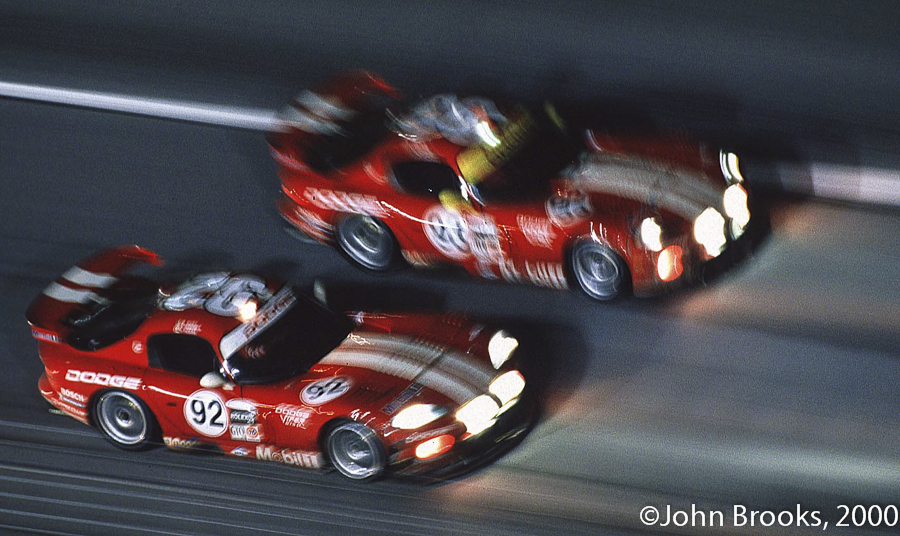
During the long hours of darkness the race stabilised with the Dyson Riley & Scott having a ten lap lead over the chasing pack of Vipers and Vettes.
2000 Rolex 24
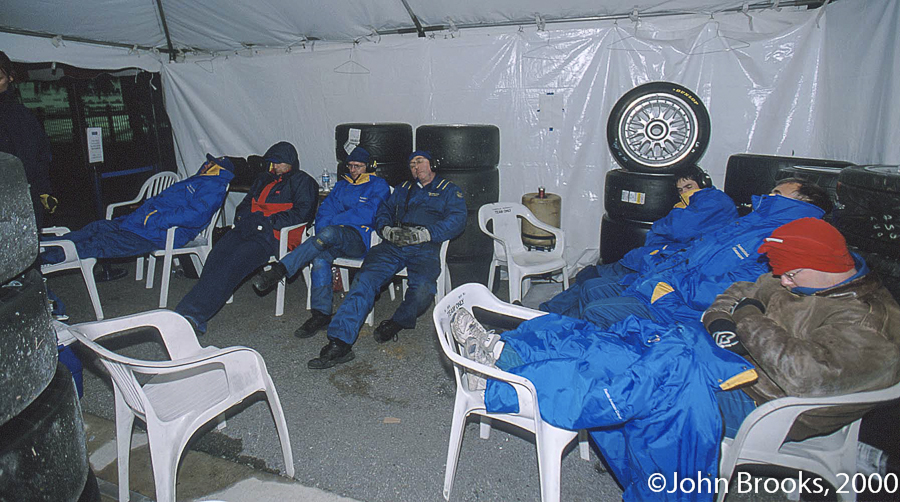
The 2000 Rolex 24 was run under unusually cold conditions with the temperature hovering just above freezing for most of the night. This put extra strain on the already exhausted crews who would take whatever rest they could between pitstops.
2000 Rolex 24

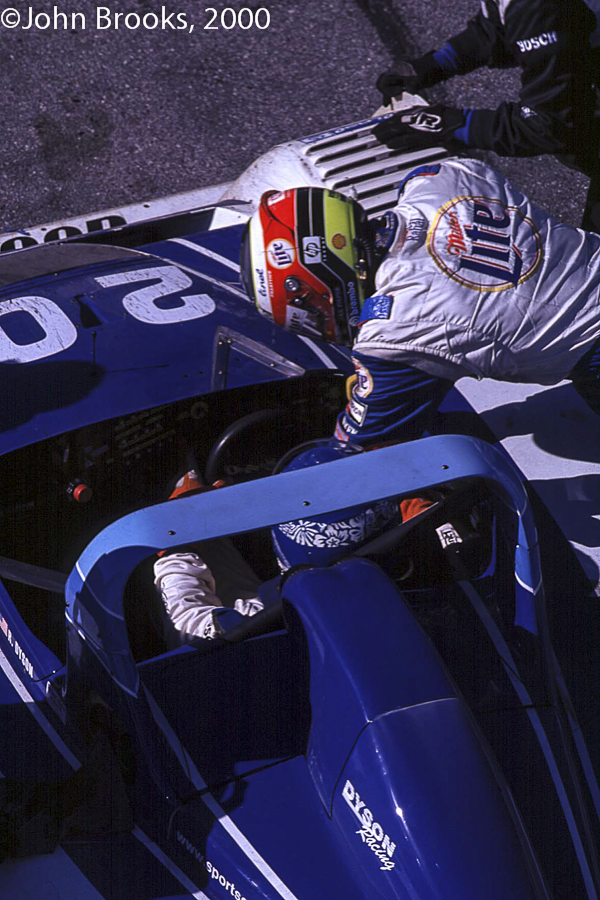
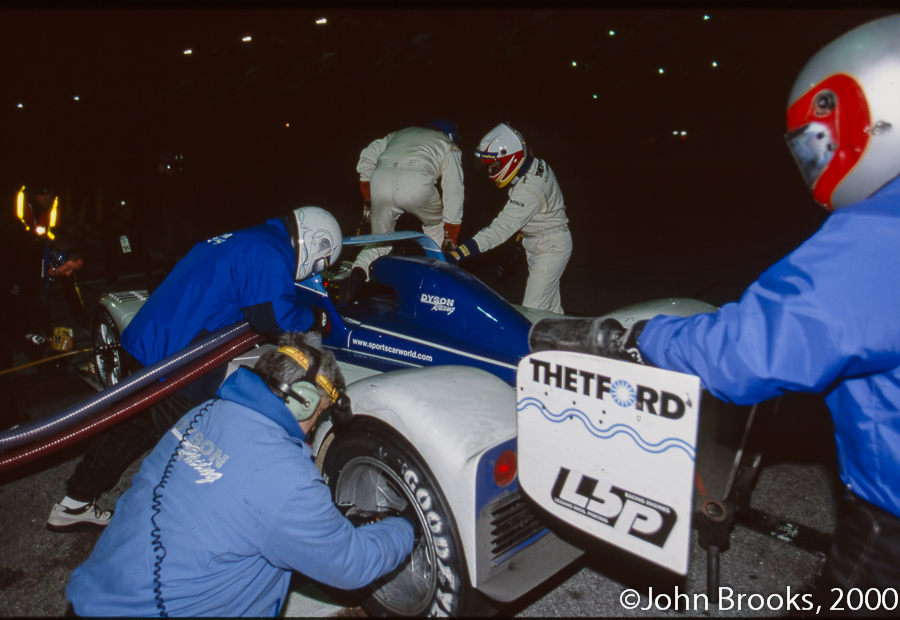
A routine pit stop for the leader, EFR out, Rob Dyson in. Behind the Dyson car and the factory Vipers and Vettes the privateer Chamberlain Vipers ran strongly, moving into the top ten overall as the Porsches failed.
2000 Rolex 24

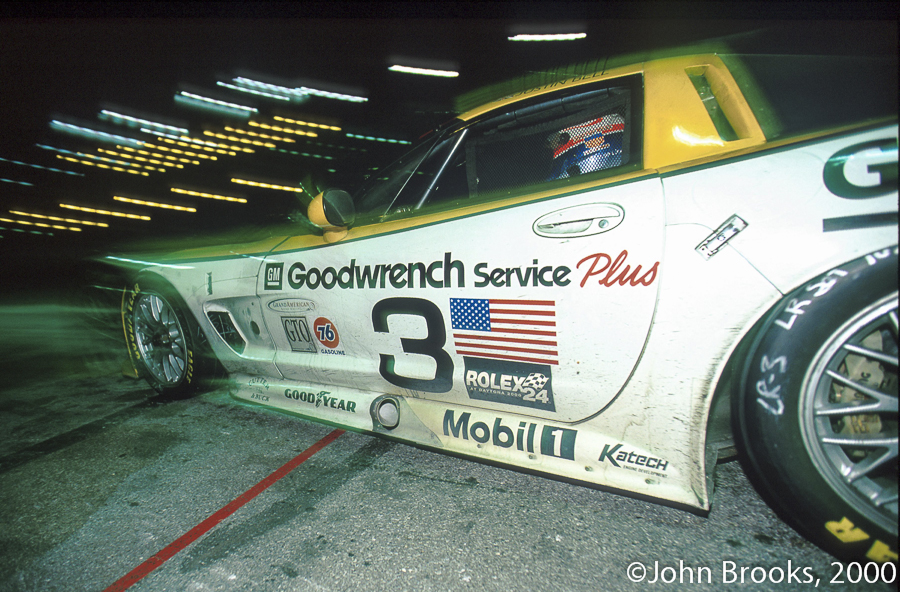
The Corvette #3 ran flat out to keep up the pressure on the leading Vipers but could not quite close the gap. Here Justin Bell heads out for another stint in the dark.
2000 Rolex 24

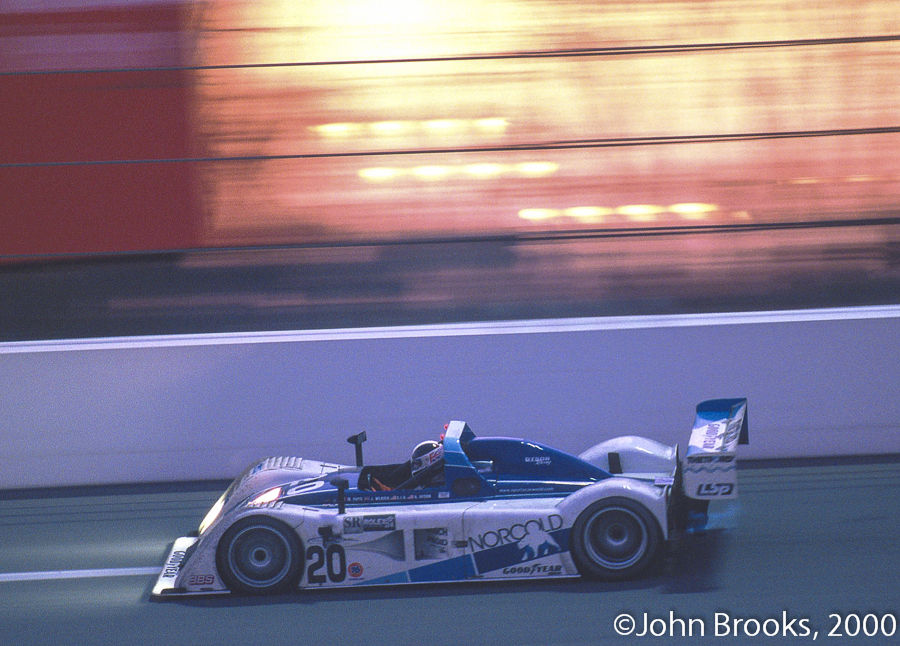
At around 3.00am point the race changed course again. The #20 was 13 laps up on the #93 Viper but trouble was on the way as the leader started to slow. A pitstop to investigate led to the team removing the valve covers in order to find what has become a persistent but slight misfire. No broken rockers or valve springs were discovered but the restriction in pace and the unscheduled time spent in the pits cut the lead over the pack of GTO cars to 8 laps.
2000 Rolex 24

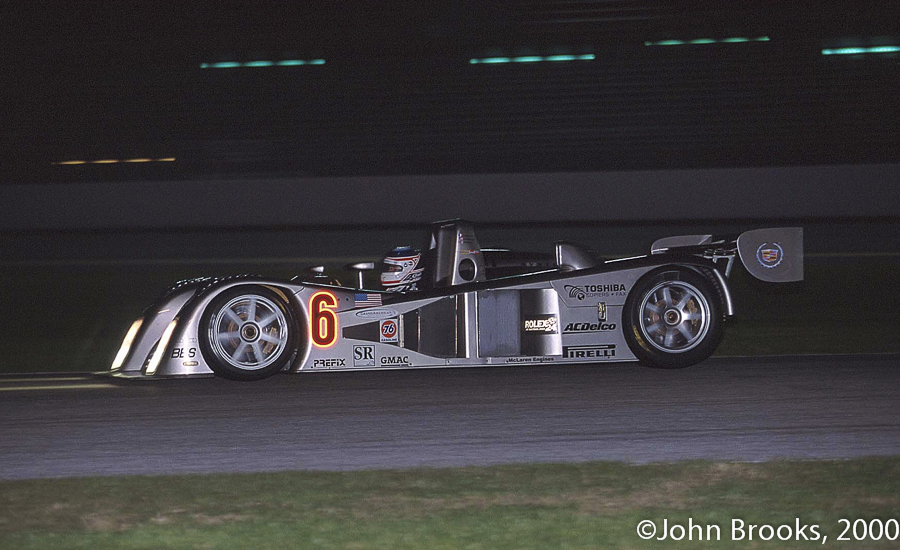
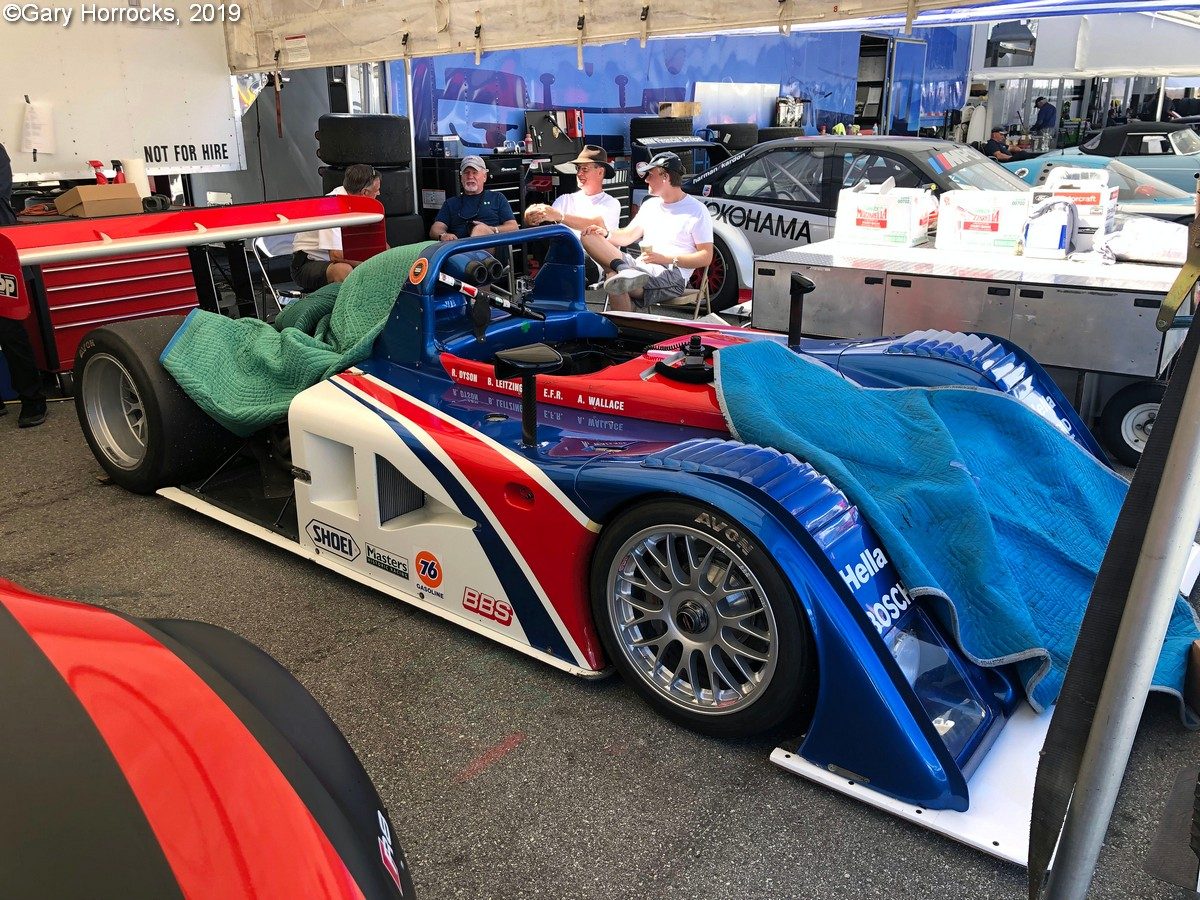
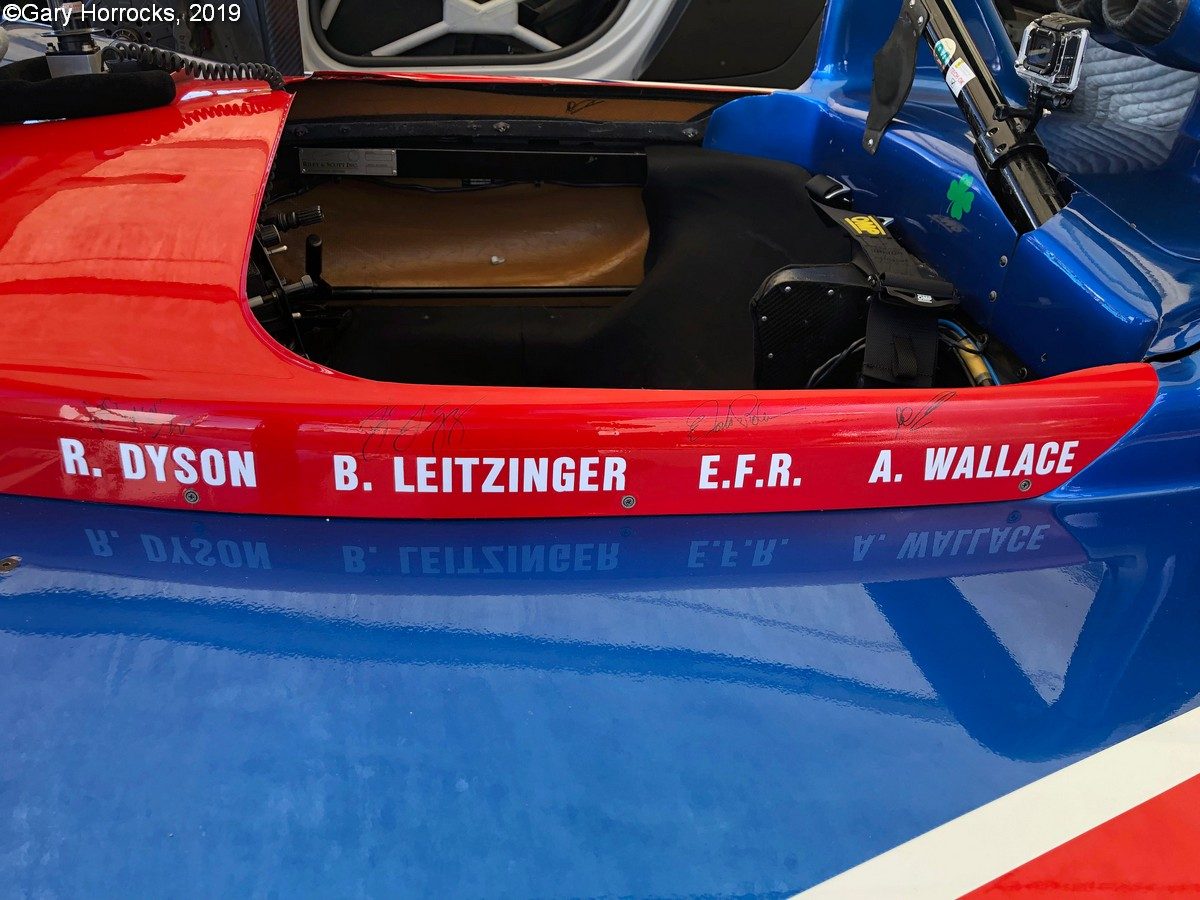
Another strong performer was the #6 Cadillac of Butch Leitzinger, Franck Lagorce and Andy Wallace. Early race problems had dropped them down the order to 69th but by 5.00am they were up to second place overall. They were seven laps down on the Dyson lead car and were scrapping with #91 and #93 Vipers. Then problems with the gearbox meant a complete change of transmission which cost them around 30 laps and any chance of victory for Cadillac.
2000 Rolex 24

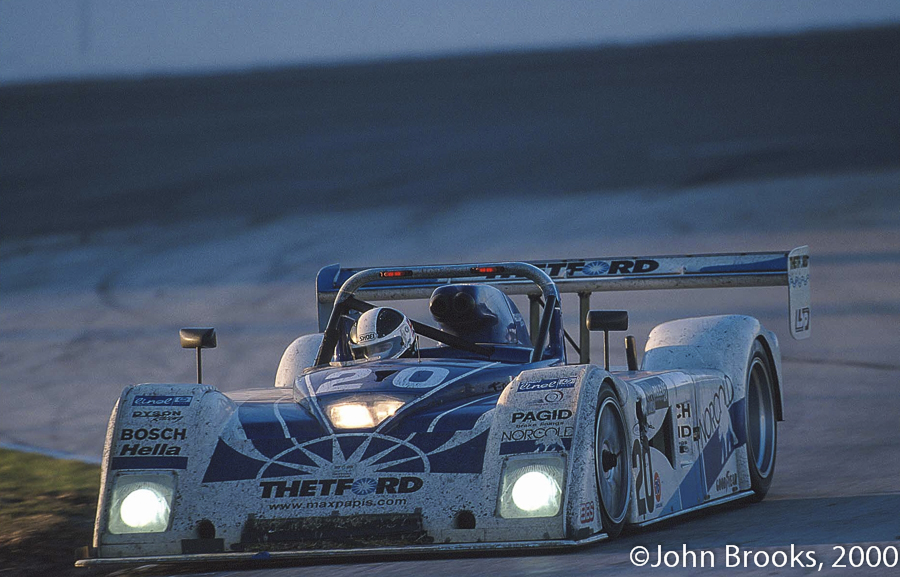
So it was a sick Riley & Scott up against a charging pack of Vipers and a lone Vette, would Dyson make it to the finish line and score a second win in the Rolex 24 Hours?

2000 Rolex 24

GTU class was firmly in the grasp of the G&W Motorsports GT3R but shortly after 18 hours they too suffered the dreaded Porsche engine failure. Uwe Alzen was not happy, “We were more than 10 laps ahead and the car was running perfectly. The only problems we had were with a broken seat and something wrong with the jacking system.”
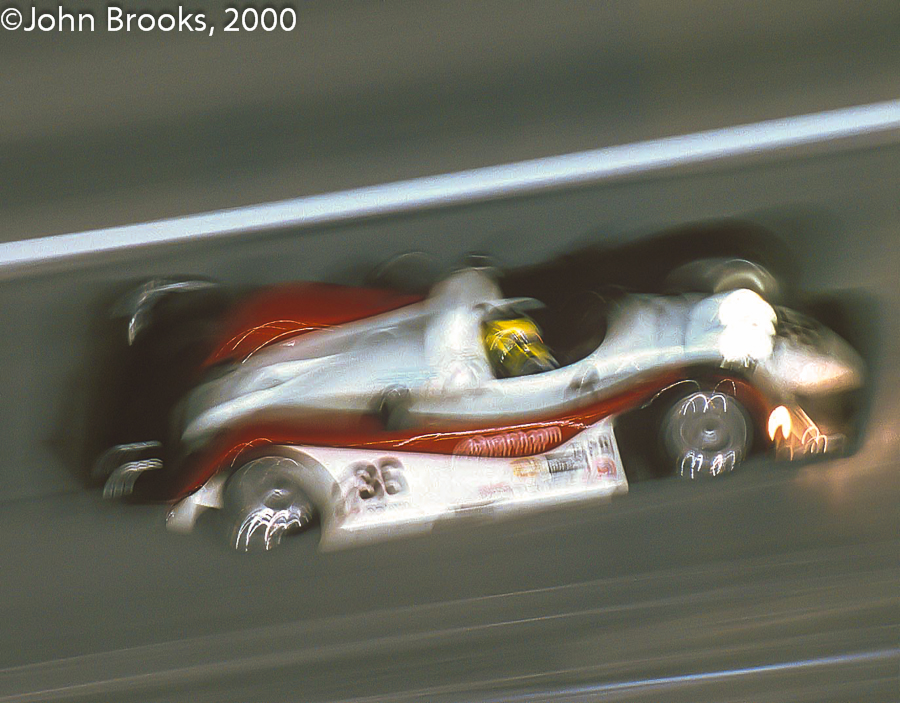
2000 Rolex 24
A surprise at sunrise was to see the Johansson Matthews Reynard still running. Four gearbox changes plus numerous other repairs had seen the crew exhaust themselves. However the warming rays of the Sun gave fresh hope to the survivors still running.
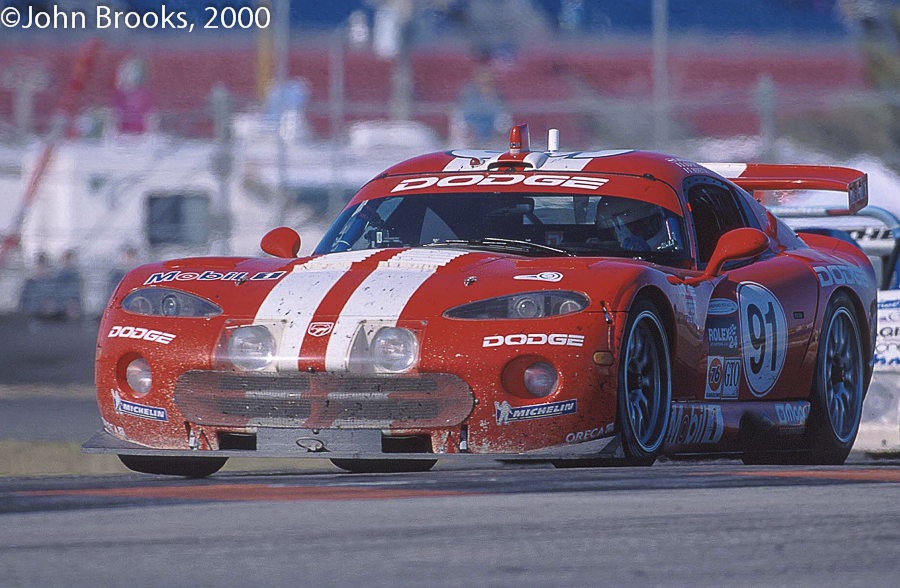
2000 Rolex 24

For the Dyson team the agony continued as the leading Viper and Vette chipped away at their lead till they slipped behind with just two hours of the race to go. The team could see this fate coming as they lost around ten seconds a lap to the GTO pursuers. Rob Dyson was philosophical about the situation, “Specifically, what happened was an exhaust valve had a crack in it starting about one in the morning. We had a high-speed misfire that was due to a crack in an exhaust valve, and those things don’t heal themselves.”
#91 held an advantage over #3 of around a lap but Pratt & Miller were not done yet. There would be a sprint to the finish.
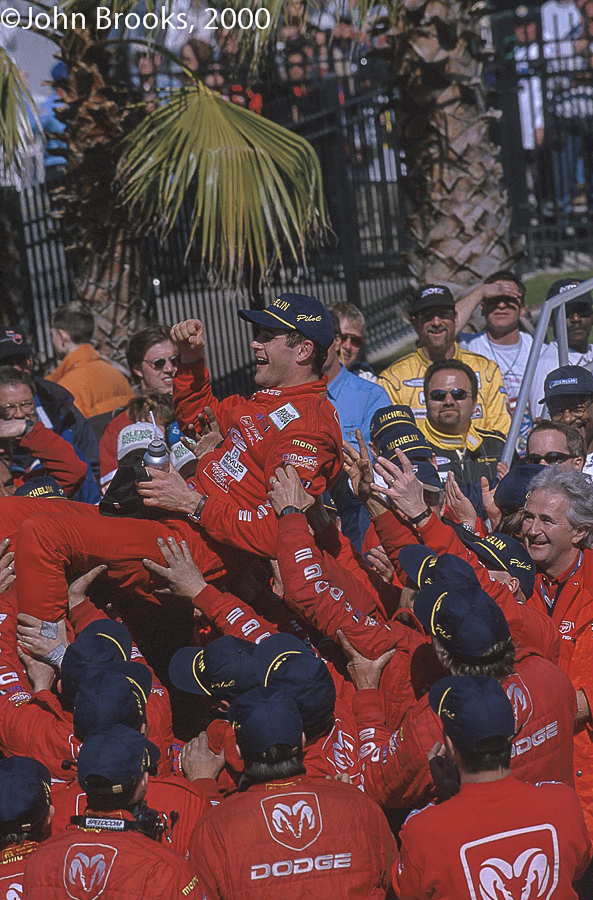
2000 Rolex 24

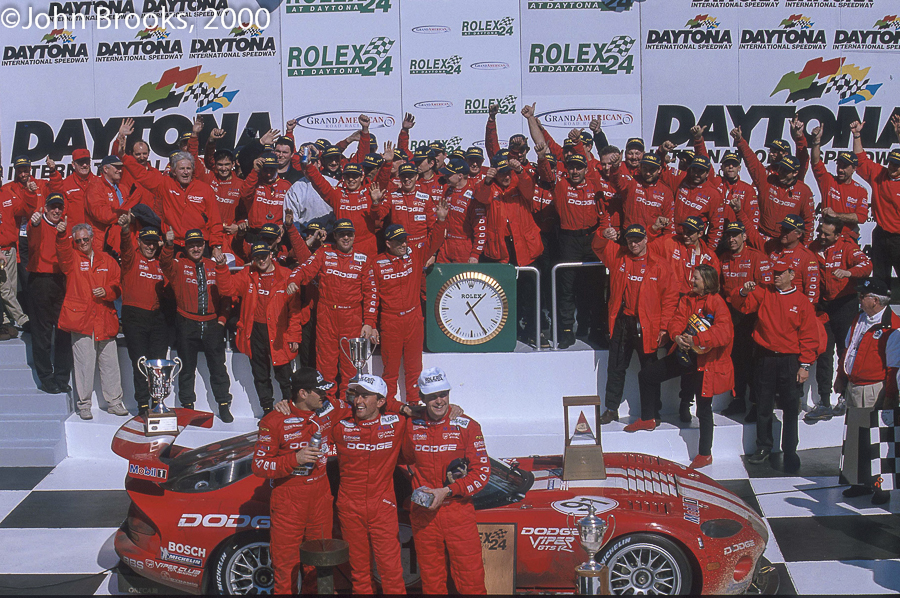
The #3 Corvette got back on to the lead lap with an aggressive pit strategy and was really pushing in the final hour. Ron Fellows rung the neck out of the Vette but Karl Wendlinger was up to the task in hand and was 32.7 seconds in front when the Chequered Flag dropped at 1.00pm Sunday. Victory, the closest margin in the race’s history, for Viper and Oreca.
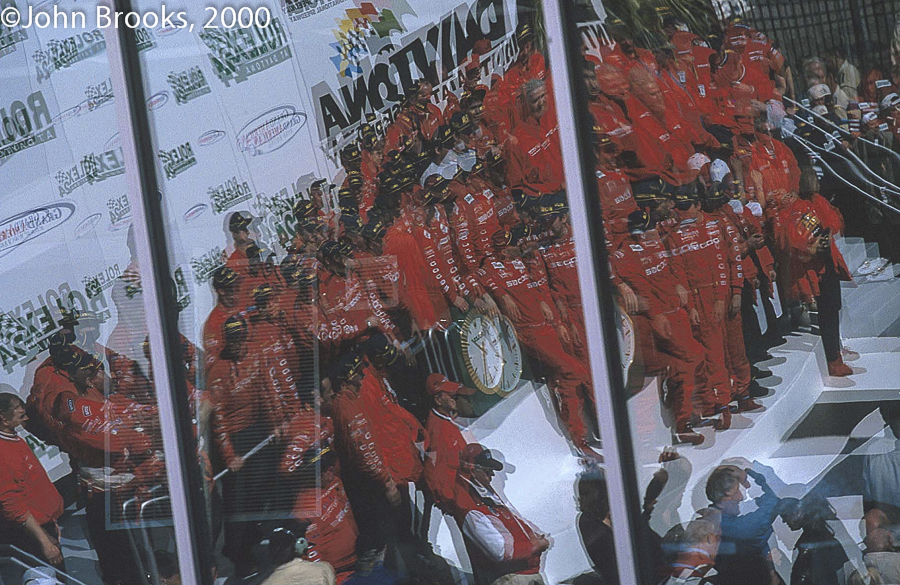
2000 Rolex 24

The team had remained calm even during the late onslaught from the #3, “Before I left the pits for the last half hour of the race, I knew the Corvette could be very fast, and that Ron Fellows was a very fast driver,” said Wendlinger. “But I also knew that throughout the race we’d learned how fast our car could run, and that we could win the race with the pace we’d set.”
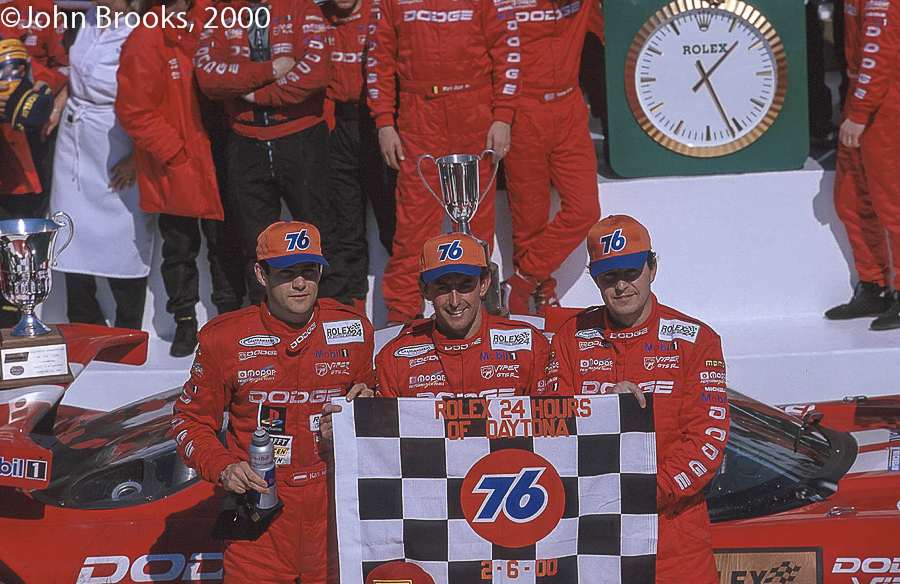
2000 Rolex 24
Celebrations then in Victory Lane for the French team and much later in the Shark Lounge………………….Hughes de Chaunac, Team Principal of Oreca, was ecstatic, “It is hard to imagine you can win a 24-hour race by 36 seconds. The entire Oreca team did a fantastic job all weekend, Dodge gave us a tremendous racecar and it was our job to perform. The Corvette proved to be a tremendous challenge to the Viper and we respect their programme. It sets up an epic battle for when we race Le Mans.”
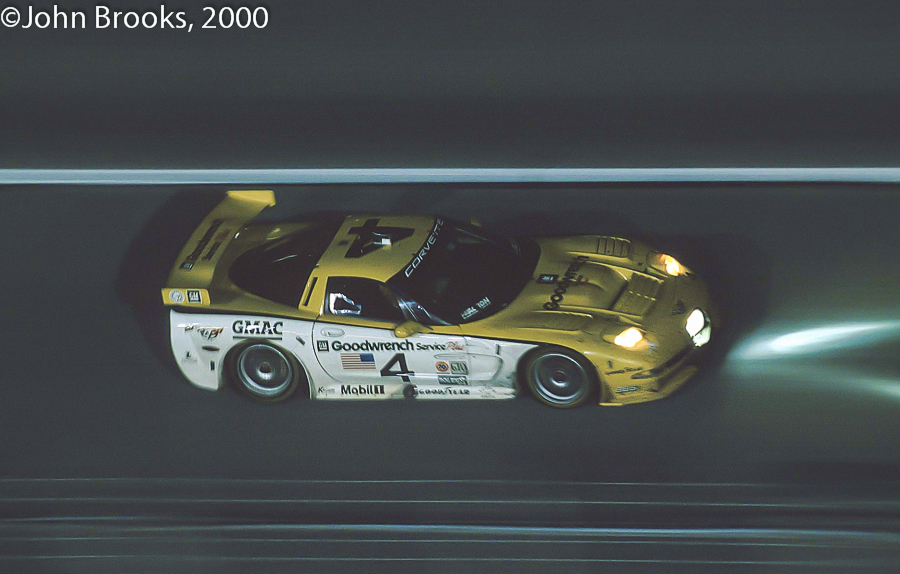
2000 Rolex 24

Beaten by the narrowest of margins, the Corvette team was disappointed but rightly proud of their performance, it was the first of many such displays in the following seasons.
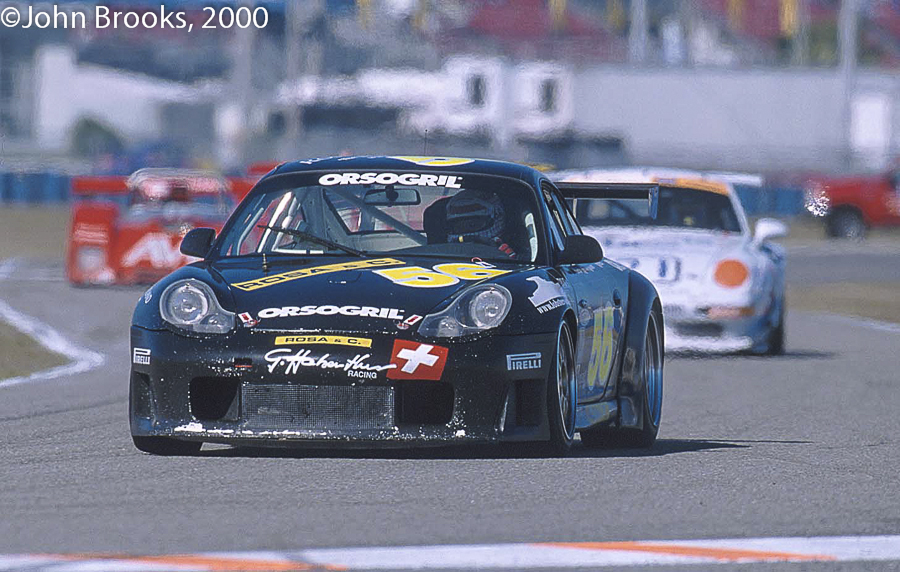
2000 Rolex 24

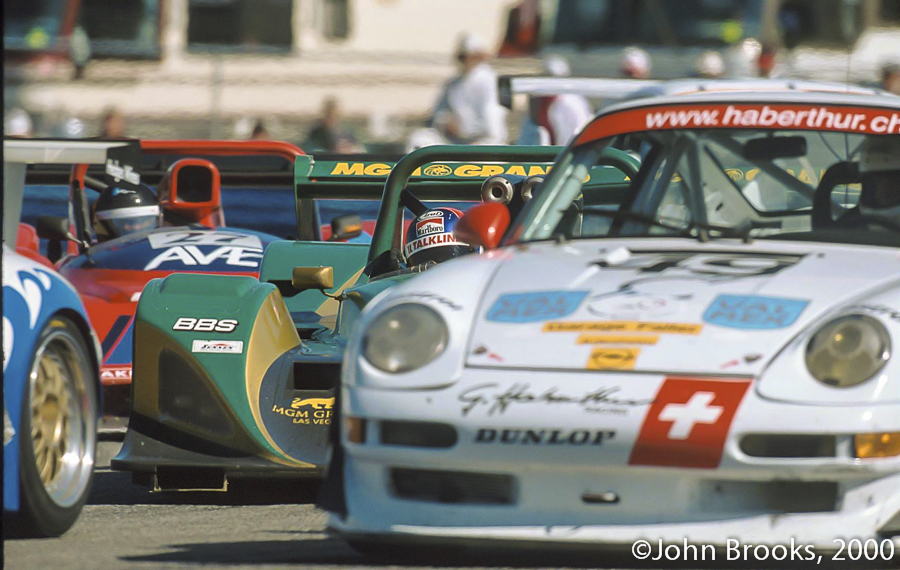
Surviving the carnage in the Porsche GTU ranks was the Haberthur 911 GT3R driven by Fabio Babini, Luca Drudi, Gabrio Rosa and Fabio Rosa. They finished 8th overall and were worthy class winners.
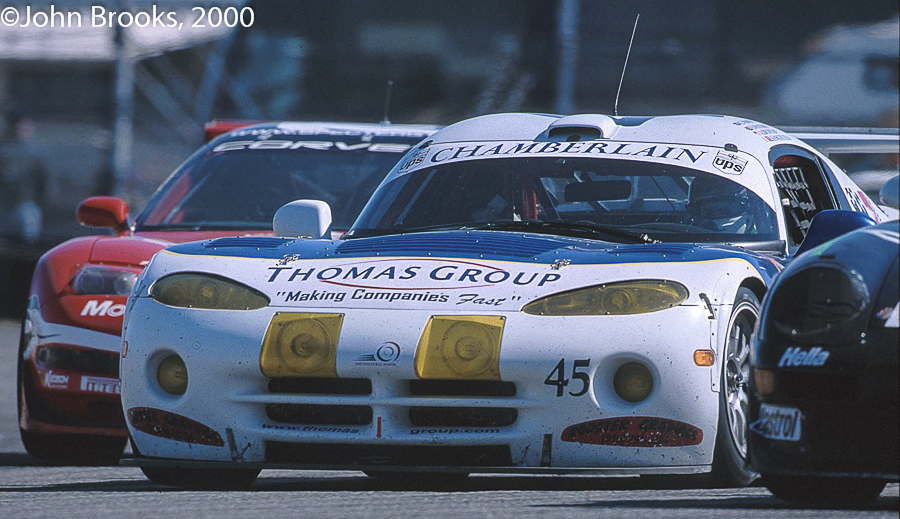
2000 Rolex 24
Adding to joy in the Dodge camp was the top ten finish for two of the customer cars run by Chamberlain Motorsport.
2000 Rolex 24

The top brass at Chrysler were very pleased, John Fernandez, Director of Engineering and Speciality Vehicles, had this to say. “This is a historical moment. An outright win in one of the world’s most prestigious endurance races by a production-based car like the Dodge Viper GTS-R is rare and hard-earned. In fact, the Dodge Viper GTS-R – now a Le Mans and Daytona 24-hour race winner – is remarkably like the Vipers that you can buy from your neighborhood Dodge Dealer. Not only does it look the same, but it uses the same basic engine, chassis, transmission and suspension. If push came to shove and we needed to, we could have gone out to the Viper Owners’ Club Parking Paddock in the Infield and swapped parts with our customers’ cars. The only significant differences are a full roll cage for safety, a carbon fiber body (versus composite plastic bodywork on the street cars), a dry-sump engine and racing slicks. But having a great production car to start with gives us the edge on the track. And conversely, having a great racing car makes our street cars better.”
2000 Rolex 24
So Grand-Am had kicked off their existence and what a way to start.

Grand-Am President, Roger Edmondson and his team were overjoyed with the first event, ” The Rolex 24 at Daytona was not just a great first race for Grand-Am, it was an outstanding motorsport event by any basis of judgement.”

Those of us who had shivered our way through the cold Floridian night would agree whole heartedly. Grand-Am was on its way.

John Brooks, January 2013
A Case of the Benz

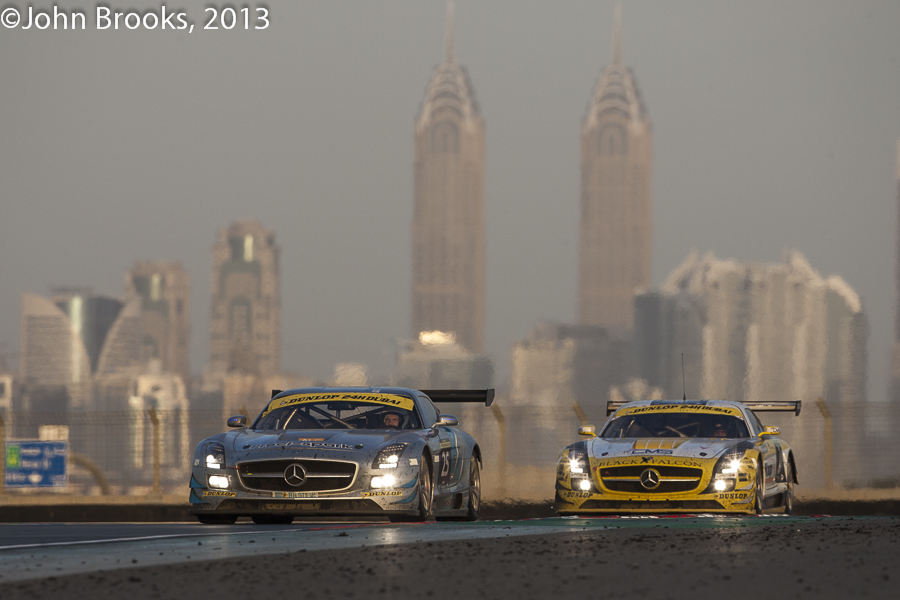
2013 Dubai 24

The eighth edition of the Dubai 24 Hours took place last weekend. The event has matured nicely and even in these financially perilous times could boast 81 starters, someone must be doing something right.

At dawn we have a brace of SLS coupés, with the Jones’ example on its way to a fine fifth place overall. More from the race during this week.

John Brooks, January 2013
Full of Eastern Promise

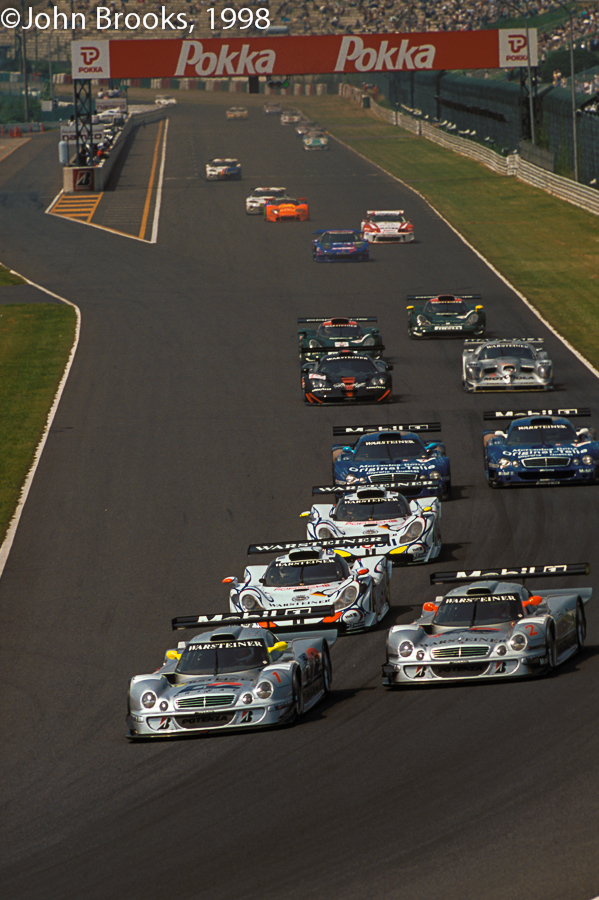
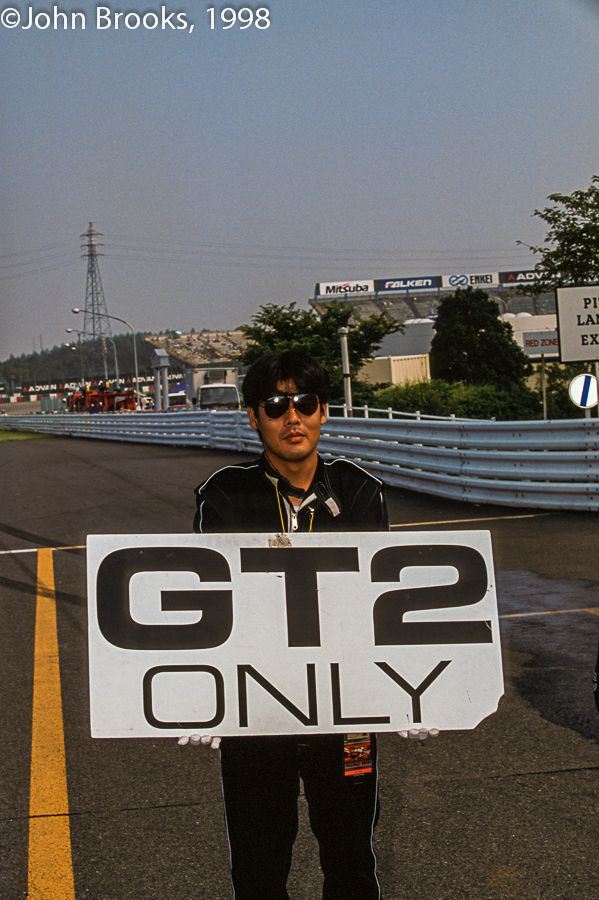
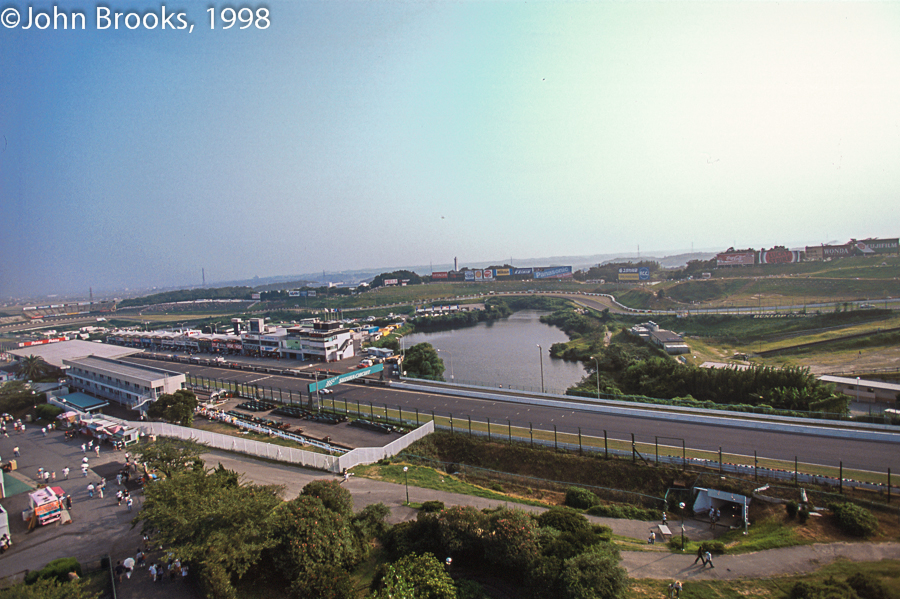
The attention of the endurance sportscar world  has been rightly focused out East this weekend, to the majestic Fuji Speedway, nestling in the shadow of Mount Fuji. My mind drifts back to the last century and the previous FIA sportscar race in Japan, the enticingly titled Pokka Sweat 1000 Kilometres.

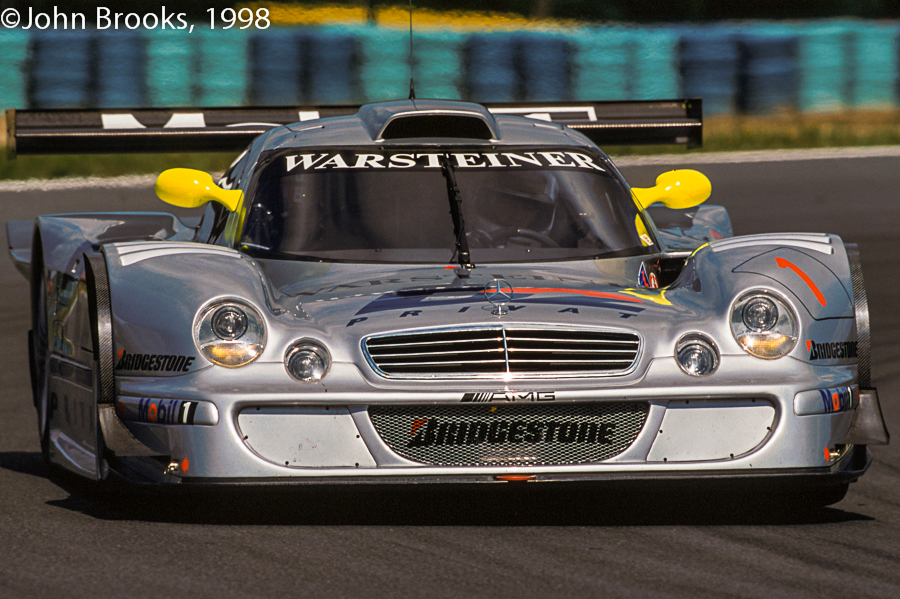
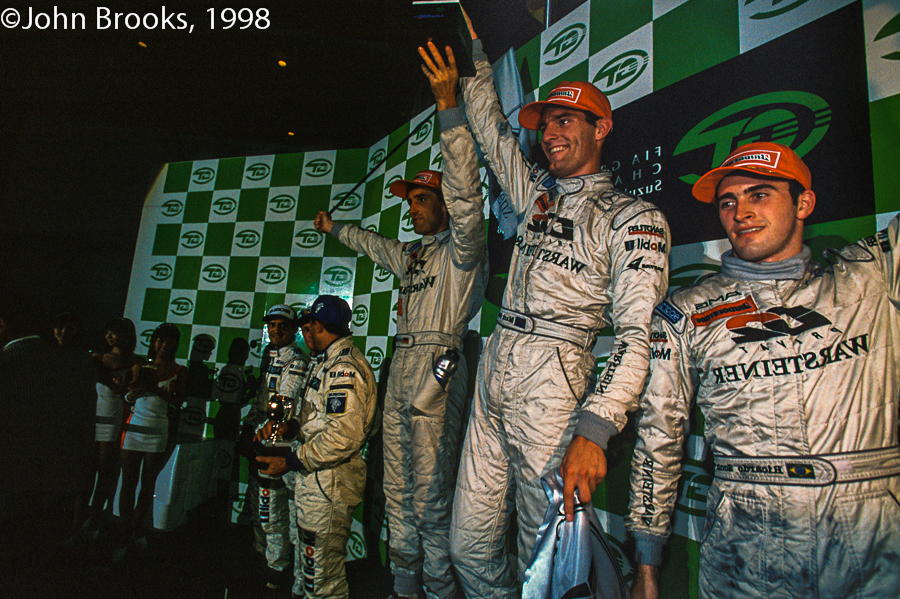
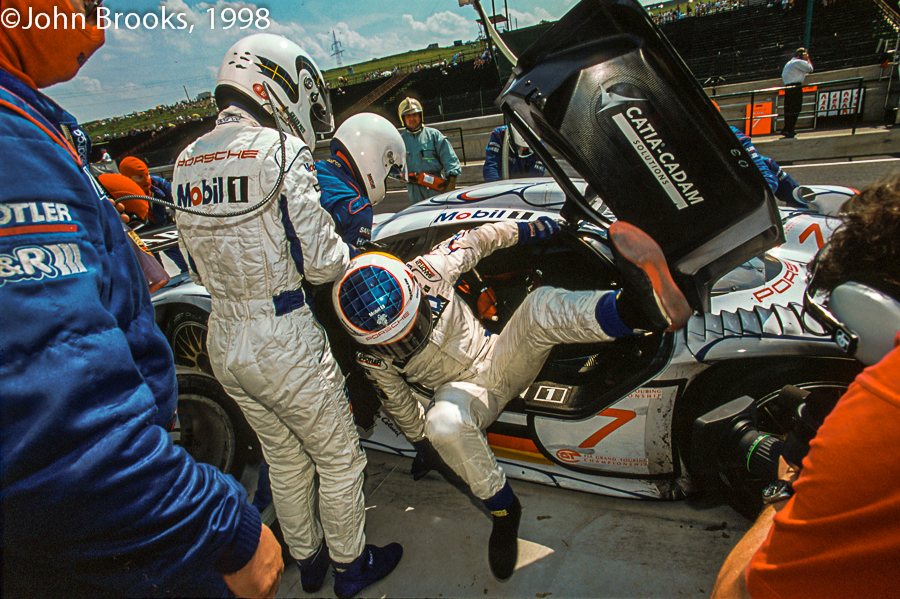
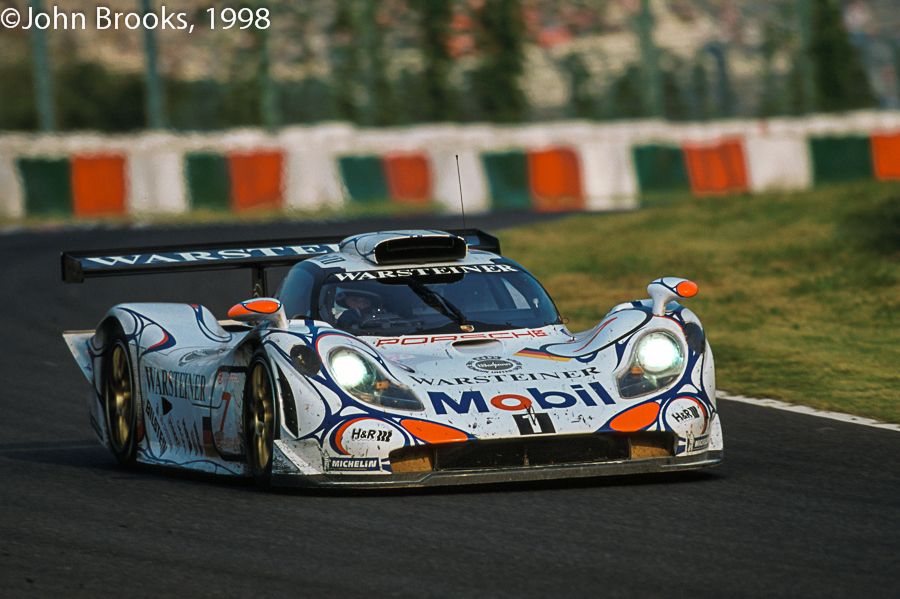
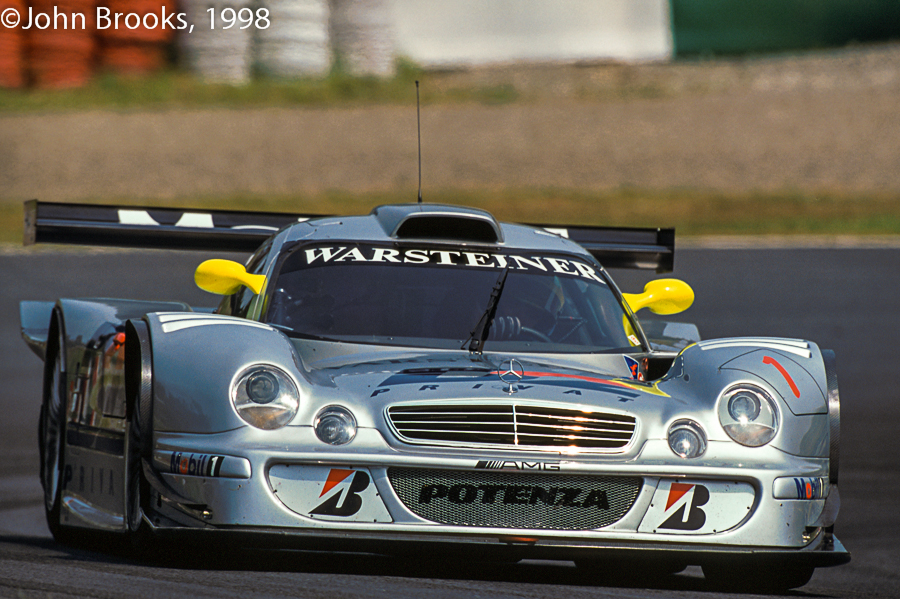
Sweat was indeed much in evidence during that event, run in baking hot conditions with nasty August in Japan humidity, a photographer’s lot was not a happy one. Another whose lot was less than joyous during that era was Porsche AG, as the AMG Mercedes steamroller beat them like a gong for the whole of the 1998 FIA GT Championship. Suzuka was no exception and the lead CLK LM, with favoured son Bernd Schneider and his side kick Mark Webber in the cockpit, won easily by two laps.

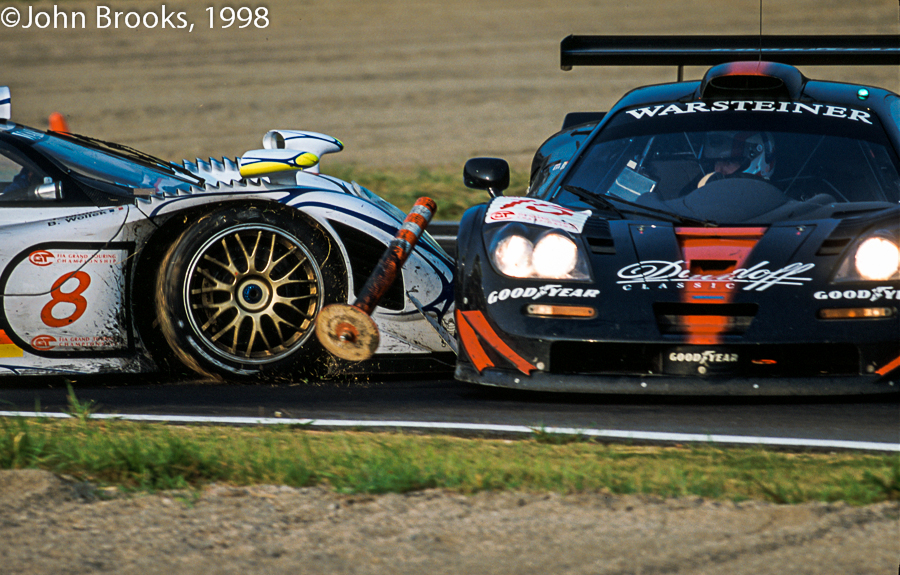
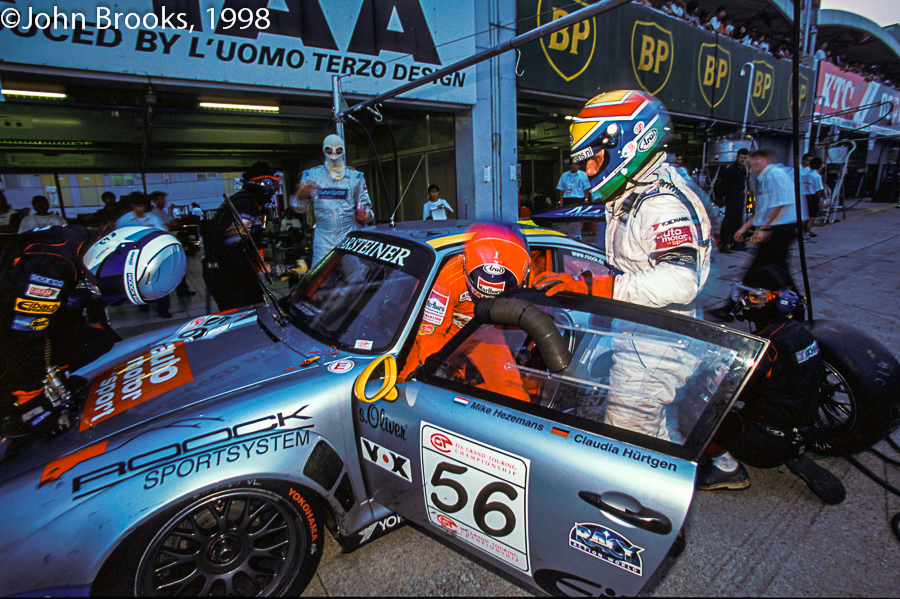
The AMG pair were aided in this convincing victory by the blunder in the early part of the race by one of their team mates, Ricardo Zonta. Zonta was duelling for second spot with the Porsche 911 GT1 98 of Allan McNish (who else?) and used one of the GT2 Porsches driven by Claudia Hürtgen to assist with late braking, the result when the dust cleared was that all three cars were beached in the gravel trap. To add insult to injury the marshals got Zonta on his way first, leaving an incandescent McNish to wait his turn. The race was over as a contest, barring misfortunes for #1 AMG.

The incident cost the Porsches a couple of laps and Zonta later received a drive through penalty for his misjudgement, though this did nothing to restore the time lost by McNish.

While the Wee Scot was matching Schneider’s lap times before the incident it required something of a leap of faith to imagine that this could be maintained by Yannick Dalmas and Stéphane Ortelli over the 1000 kilometres. In the end the lead Porsche finished a lap down on the #2 Merc to grab the final step on the podium.

The second entry from Weissach suffered a number of misfortunes that first blunted, then eventually ended their challenge for the podium. Mid-race Bob Wollek had contact with a slower car in the chicane and drove the short distance into the pits against the flow of traffic to check the damage. As I wrote at the time, this eccentric piece of driving incurred the ire of the Stewards who awarded him a three minute Stop and Go penalty. That observation incurred the ire of “Brilliant Bob” when he later read it and he threatened the magazine with legal action, even by his standards he was especially touchy that summer.
Jörg Müller finished the day for #8, when once again there was contact with another car in the final chicane. This time it was Geoff Lees in Thomas Bscher’s McLaren F1 GTR who was hit by the Porsche, both crews enjoyed an early bath, Nul Points Reykjavik.

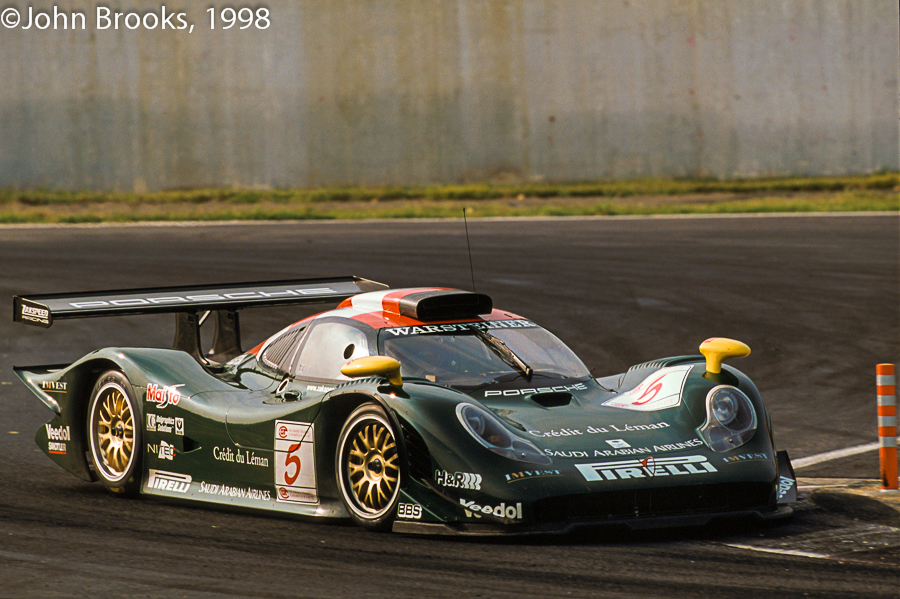
The rest of the GT1 field had a pretty nondescript afternoon, the Persson Mercedes CLK GTR pair showing their 1997 pedigree, finished 4th and 7th, while the singleton DAMS Panoz thundered round to 5th. The Zakspeed Porsche 911 GT1 98 duo could only manage 6th and 8th.

The GT1 category had a fin de siècle feel in the heat and humidity of Japan that year, exaggerated by the rumours that the FIA GT Championship, 1999 style, would be for GT2 cars only. Having invested heavily in this form of competition, Mercedes Benz were keen to go racing somewhere other than Le Mans in the following season. A month or two later we were all dragooned into a press conference in beautiful downtown Miami-Homestead Speedway. Stéphane Ratel was at his charismatic and visionary best, revealing the proposed FIA International Prototype Championship that would pit Mercedes against Porsche and possibly Toyota, Nissan and Audi. The factory contingent would be padded out by a motley crew of GT1/GT2 survivors and prototype inductees who would be press ganged in from the newly formed International Sports Racing Series. The problem was that there were not enough of the true believers, heretics and cynics were found at every turn.

Mango’s Barmy Army in the ISRS may have earned their title many times over, but even daft as they were, they would not fancy a regular drubbing from the Silver Arrows, no matter how good or guaranteed the start money was. Look at how AMG annhilated the Porsche Werks effort in ’98, the score ended up at 10-0 in Stuttgart’s favour. Porsche’s Le Mans prototype project was about to be  killed off by Dr. Wendelin Wiedeking, the CEO, who preferred to invest the cash in Porsche’s new light truck range, the Cayenne. Those of us with true grit gave him the raspberry at the time but he had the last laugh when the multitudes with questionable taste queued round the block to pay full price for this odd vision of a Porsche. PT Barnum really knew what he was talking about. Toyota had another cunning plan in mind in their quest to spend riches of Croesus on mediocre motorsport, go to Formula One. Nissan fired TWR after Le Mans 1998 and then realised that they were bust in all but name, so motorsport went out the window. Audi were in no hurry to tangle with their German rivals, reasoning that they had much to learn about the sport of driving long distances fast. So the IPC was a dead duck almost from the start and then the newly formed ALMS became the potential target for AMG and Mercedes. The aviation disasters at La Sarthe the following June extinguished that dream.

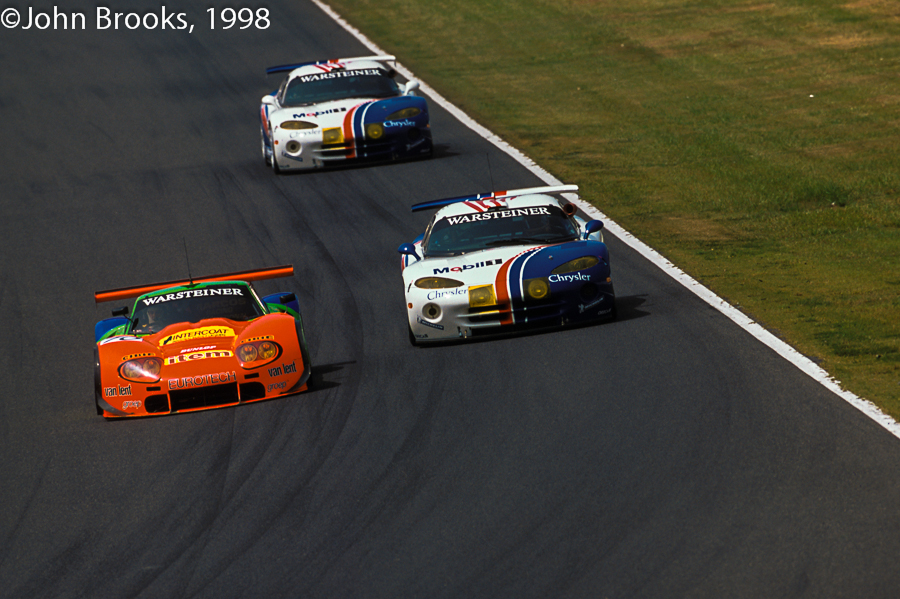
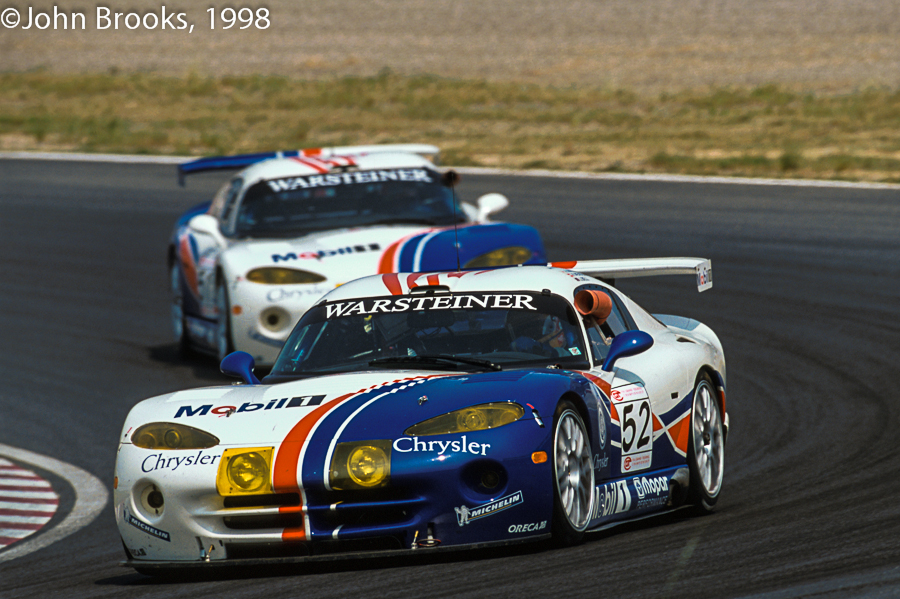
All of which meant that the GT2 battle was under increased scrutiny, as this was our probable future. The contest, such as it was, had three elements Chrysler Vipers versus the factory blessed Roock Porsche 911 GT2 and Cor Euser in his fierce Marcos LM 600.

The reality was that the 911 GT2 was beyond any further significant development, the Marcos was quick with the fearless Euser at the wheel, less so when the money men were in the hot seat and the Oreca run Chryslers were an absolutely better package than anything else.

At the start Cor did his usual thing jumped into the lead, irritating the Viper pair, but it was just a matter of time and so it proved with #51 just edging out #52 to give Chrysler a 1-2. Zonta’s indiscretion stuffed the lead Roock 911’s race and behind that it was just a gaggle of GT2 Porsches making up the numbers.

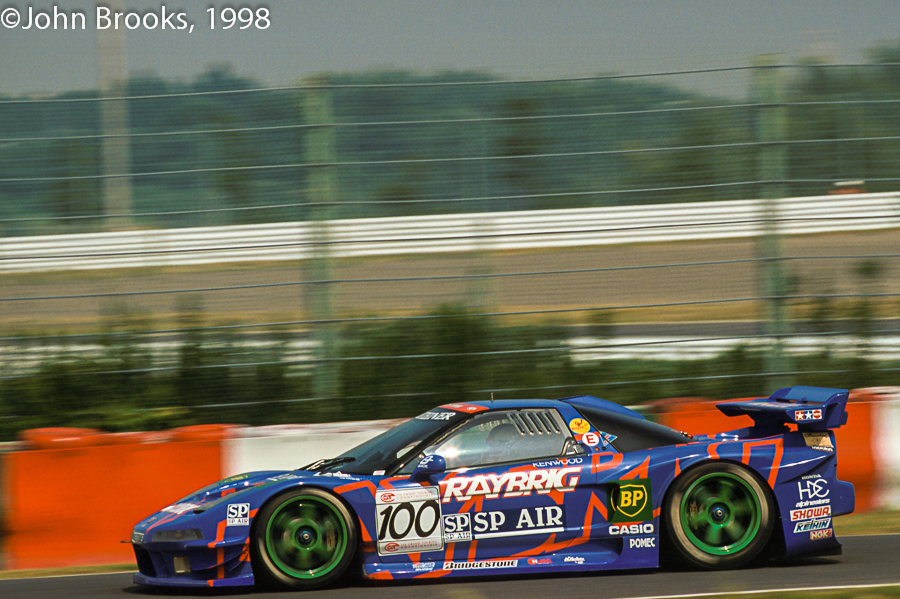
A few locals had rocked up to excite those enjoy diversity on the entry list. The Kunimitsu Takahashi Honda NSX-S was actually faster than the Vipers in Qualifying, a result, no doubt, of a collaboration with Dome, but the engine blew early in the race.

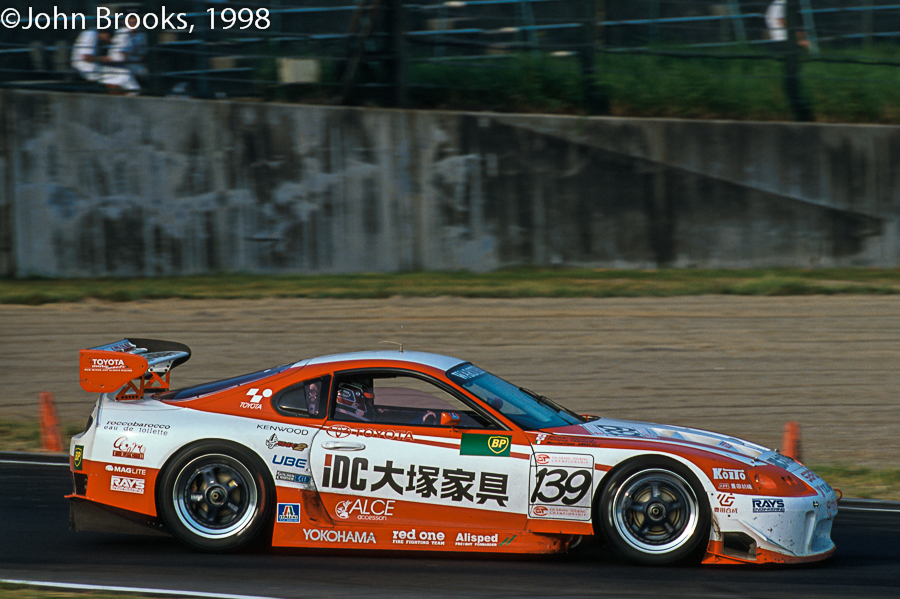
The other respectable performance, speed-wise, from the Japanese contingent was the Toyota Supra LM that was also quicker over one lap than the Oreca entries, but it struggled to make an impact during the race.

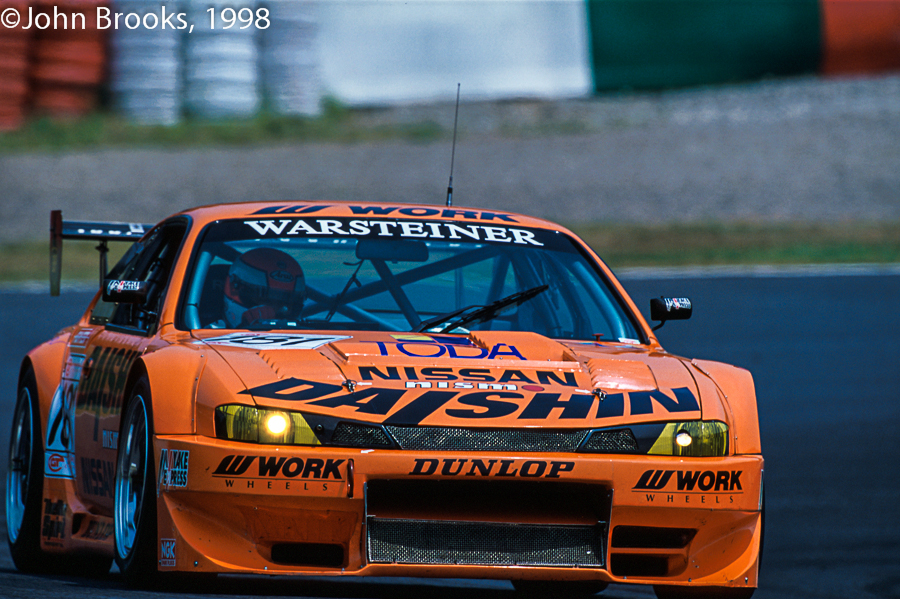
In the end home grown honours were taken by a rather plodding Nissan Sylvia.

From the adrenaline climb that GT Racing had enjoyed from 1995 to 1997, the 1998 season was flat and rather expensive. It could not continue, especially as no one was keen to take on AMG Mercedes, and the North American market was about to offer exciting opportunities, the first Petit Le Mans was just round the corner. But that, as they say, is a story for another day.

John Brooks, October 2012


Once Upon a Time in the West

American Gothic
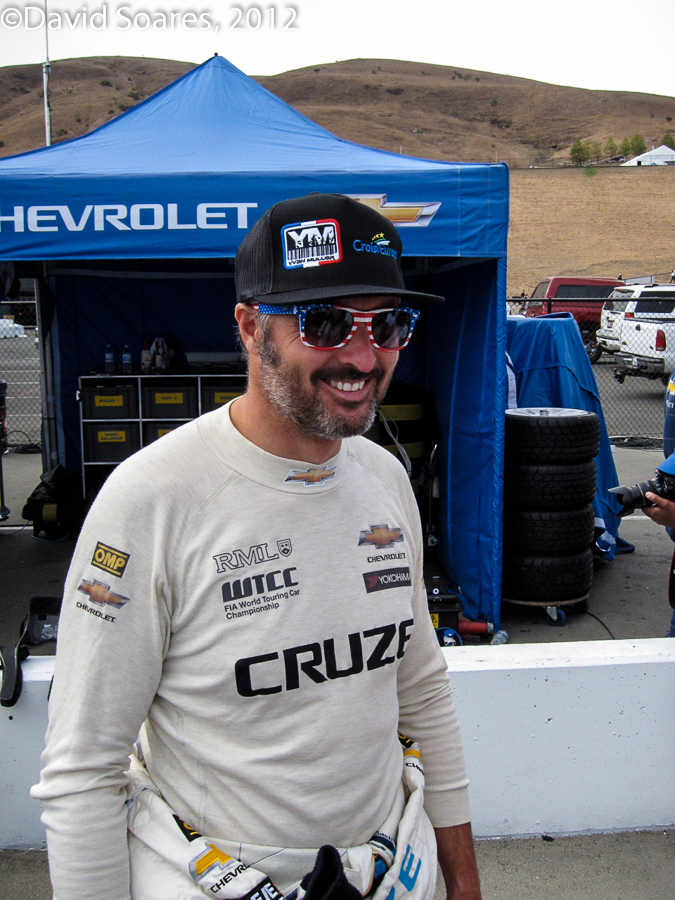
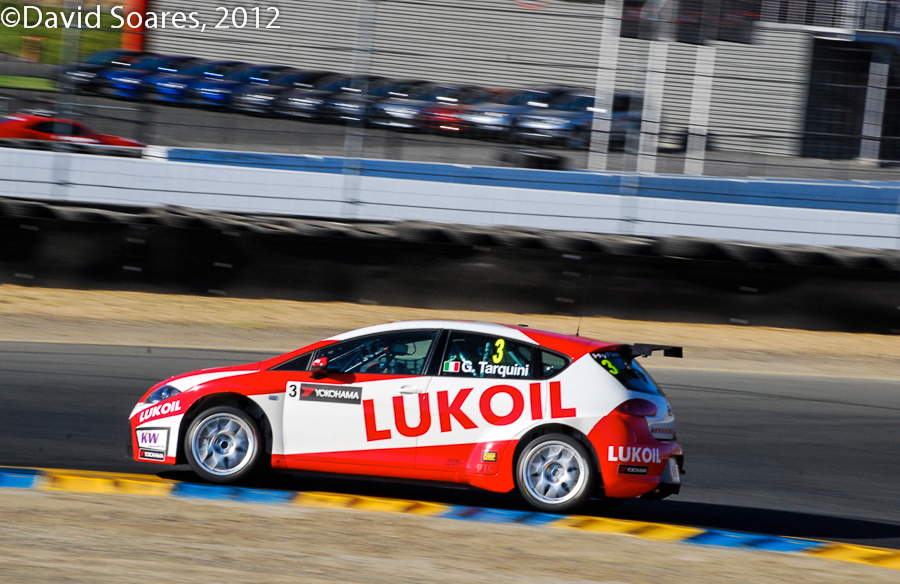
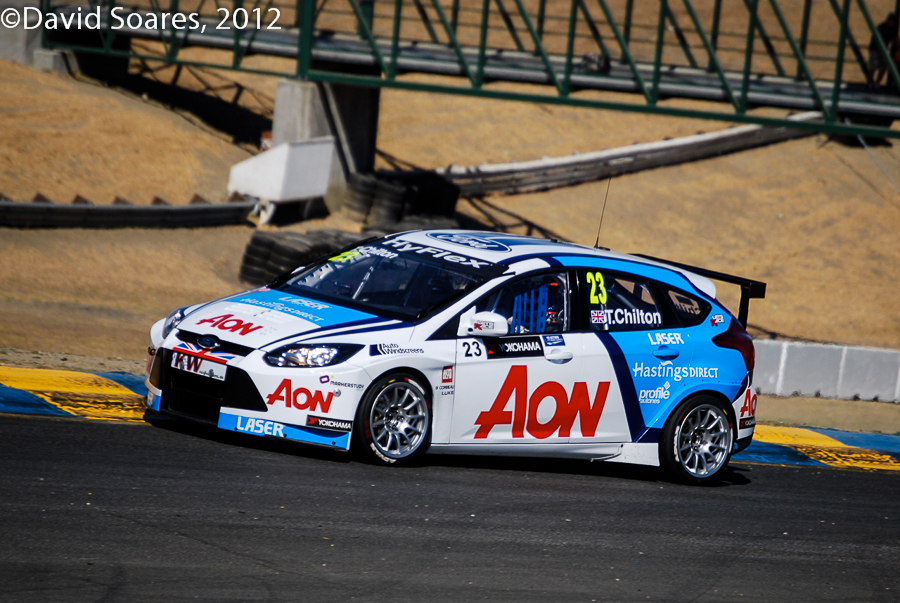
Much trepidation over WTCC’s first USA visit.  Would we be subjected to another European export that can’t survive the crossing, a steaming helping of tripes a la mode de Caen – the chance to watch old men grinding the tires off of a gaggle of front-drive shit-box SEAT Leons that Americans have likely never even heard of?

Un-American

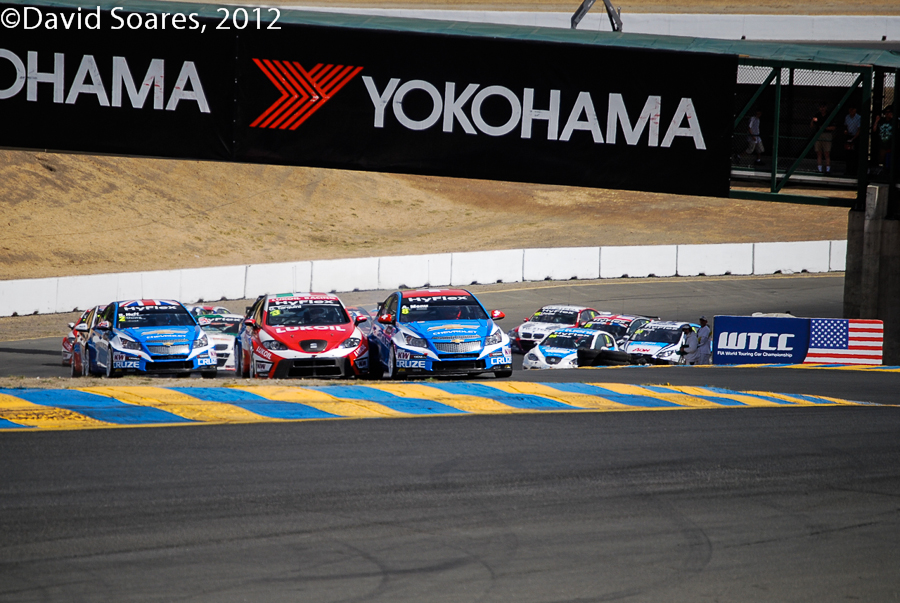
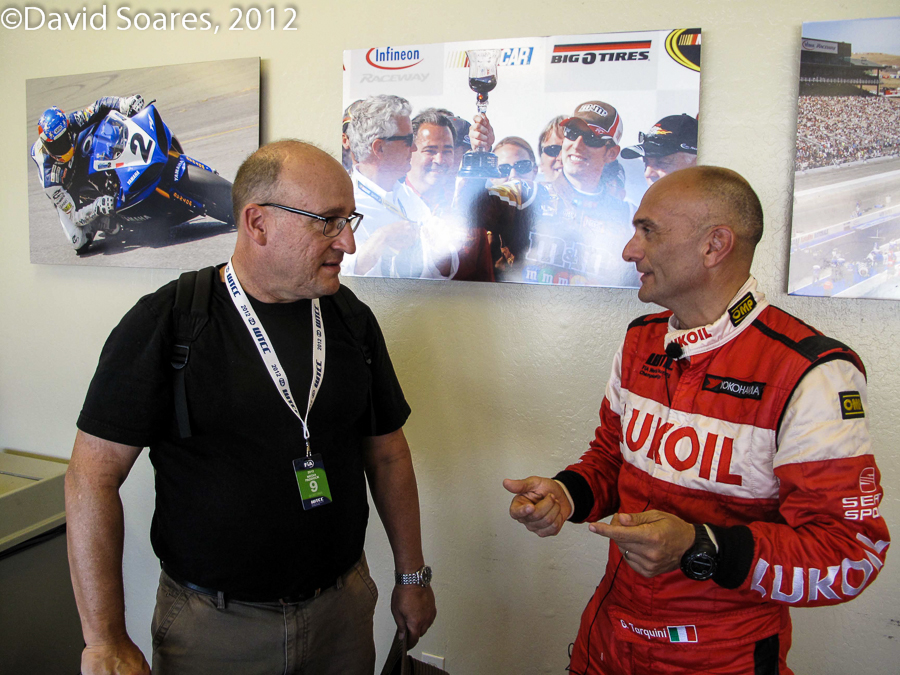
Sunday, a surprisingly large and enthusiastic crowd turned-up at the raceway in Sonoma to see what it was all about — and the racing was quite entertaining.  I had to scratch my head about the made-for-television format of two 13 lappers with lots of dead-time before, between, and after, but the open grid for pre-race festivities and plenty of tradin’ paint appeared to keep the youthful throng happy enough.
Trading Paint

In this age we’ve become accustomed to their short attention spans — sailing’s America’s Cup World Series was on San Francisco Bay earlier in the month, and Cup defender tech-billionaire Larry Ellison exchanged traditional blue blazer yachting’s endless hours of tacking duels for an explosion of fixed-wing catamarans contesting a series of brief high-tech dinghy races.

Future Ford

The micro-burst races of the WTCC follow a similar tack in attempting to present our old-school sport to an X-Games audience.  WTCC’s sprint-race format has the advantage of keeping the field from stringing-out, while the reverse grid assures that there is plenty of action during the brief moments during which millennial attention-spans can accept stimulation.  It’s all over before the next round of Tweets can come through.

Witness Protection Programme

Of course, I can’t imagine that the tires of a front-driver would hold-up to any more than the required 13 tours, so it works out rather well for teams trying to compete in cars employing on this unfortunate layout.  The speeds, handling, and size of the WTCC cars is quite well-suited to the Sonoma circuit.  Real racing, real teams, real drivers, well presented and organized.
G 'n T

If the shotgun wedding of ALMS and GrandAm can be interpreted as evidence that the manufacturers are heading back to racing what they really sell, this series presents a fine showcase for the sort of car that the newly-pauperized 99-Percent are actually buying today.  Why, even Morse showed-up in a press-fleet Kia Forte rather than his accustomed Panamera Hybrid or Bentley Flying Spur.
David Soares, October 2012

A New Dawn?

When considering the merger/buyout of ALMS by NASCAR folks tend to dismiss the idea of Grand-Am having any dealings with factory teams.

Well cast your mind back to the beginning, the 2000 Rolex 24 and the first race for the new sanctioning body. Full factory efforts from Dodge, Corvette and Cadillac………..

John Brooks, September 2012

Nϋrburgring Natters Two

Our Special Correspondent has been over to Germany for the Nürburgring 24 Hours. As usual he kept his eyes open and his ears pinned back, here is some of the knowledge he acquired on the trip.

The 2012 Nürburgring 24 Hours

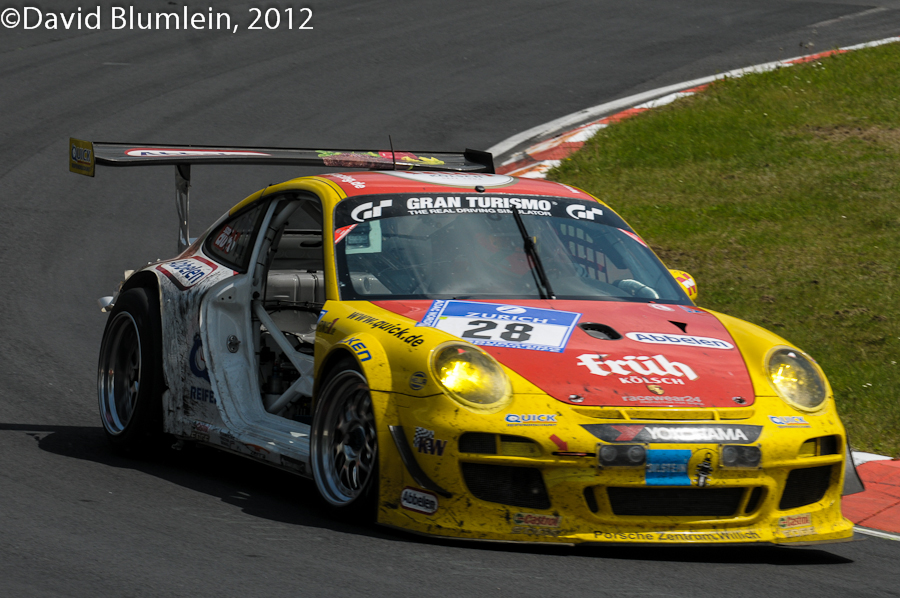
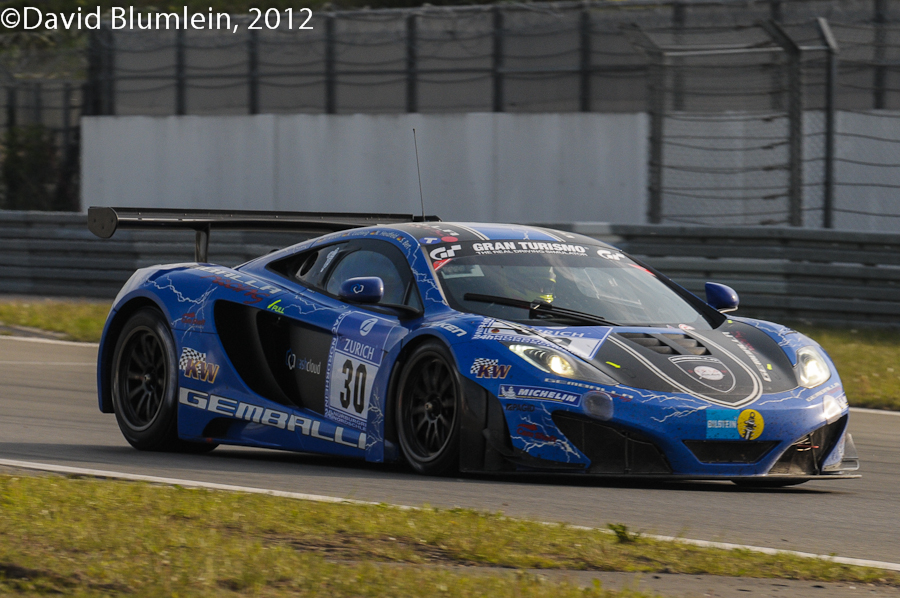
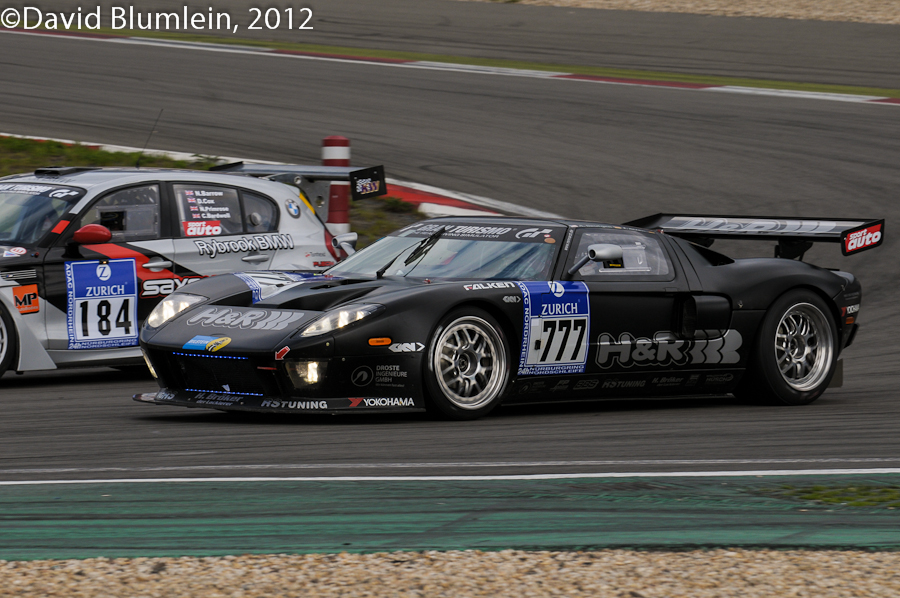
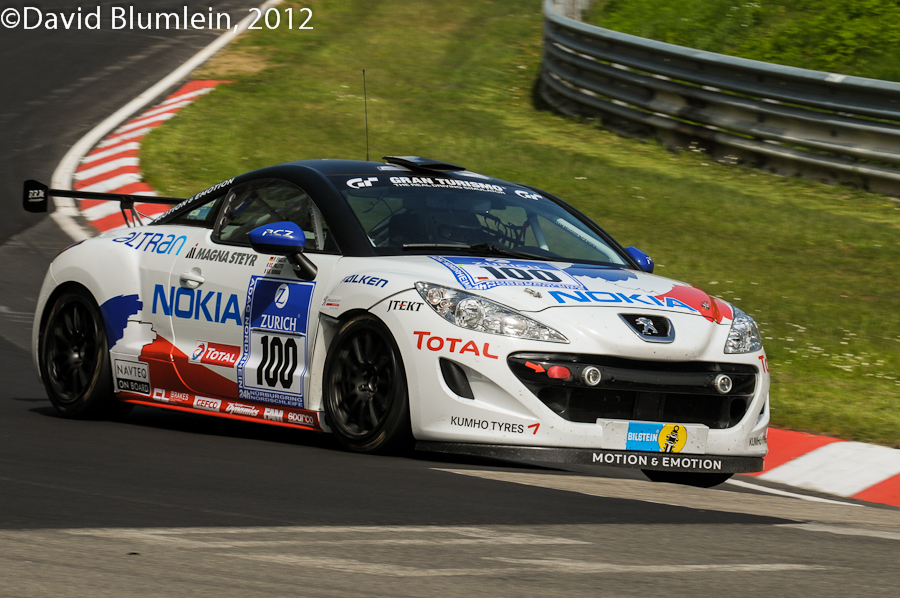
In their reports of this wonderful race the general motoring press tend to mention the winners and the main contenders and tell us very little else. But there were 169 cars in this year’s race, so here is a brief selection of some of the other cars that took part:

The weather was in fact nice and warm in the early afternoon on the Sunday so this Porsche had no real need for extra ventilation! A replacement door was indeed fitted shortly after this picture was taken and the Frikadelli Racing Team car went on to be the highest placed Porsche at the finish, taking a well deserved 6th overall. The factory Porsche drivers were not so lucky this year, suffering all sorts of problems.

Three of the McLaren MP4 12C cars started the race, this Gembella Team car having no less than Nick Heidfeld and three times winner Klaus Ludwig on the driving strength. Alas, none of the cars survived into the Sunday, falling victims to accidents.

And this Ford GT did not last the race either!

The Peugeot RCZs are regulars at the Nürburgring 24 Hours these days. Although its team-mate failed to finish this year, this car went on to win its class. They are assembled by Magna Steyr in Austria.

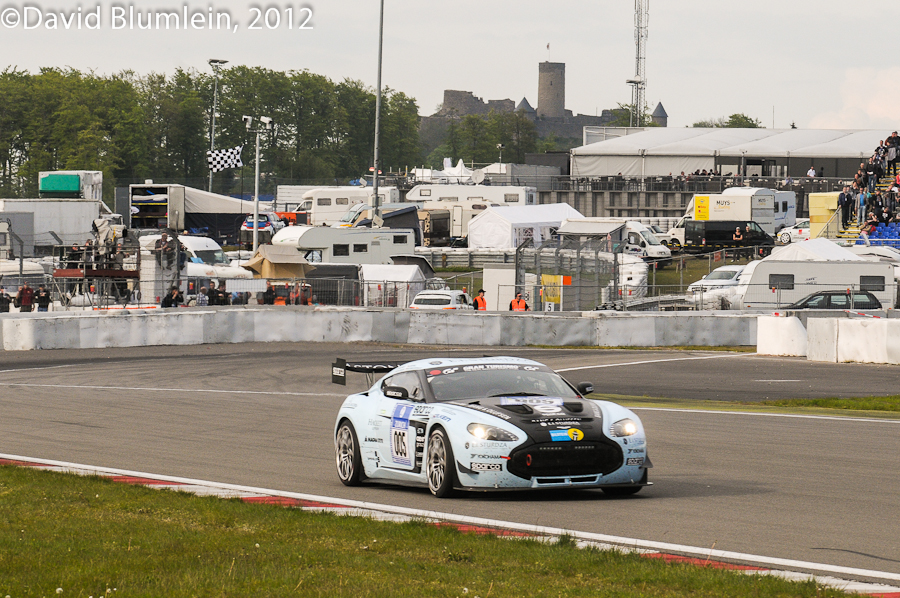
Aston Martin are also regulars in this race and last year they ran their two new prototype Zagato cars, nicknamed “Zig” and “Zag”. This year they brought along just “Zig” which ran steadily into 26th place and 2nd in class. Here it is seen with a backcloth of the famous Nürburg Schloss.

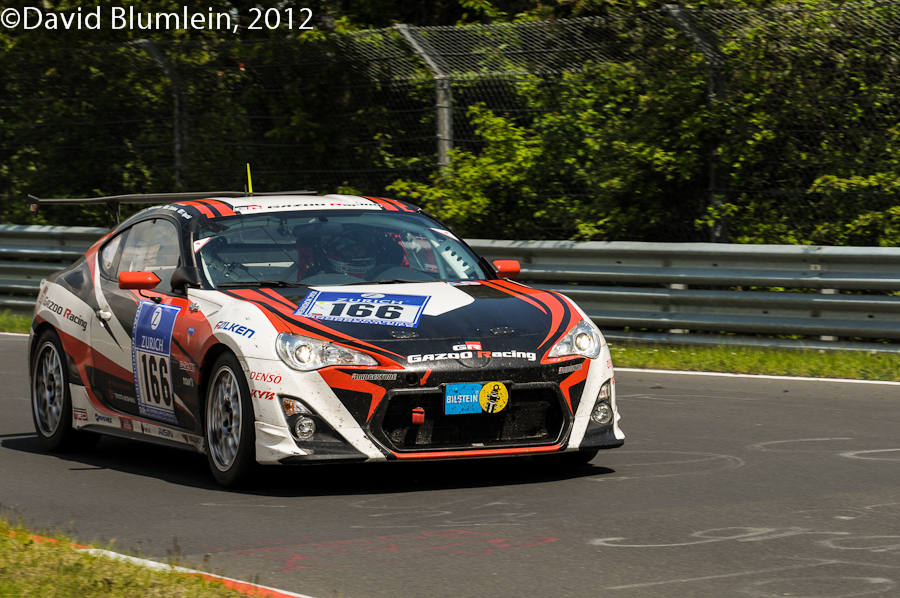
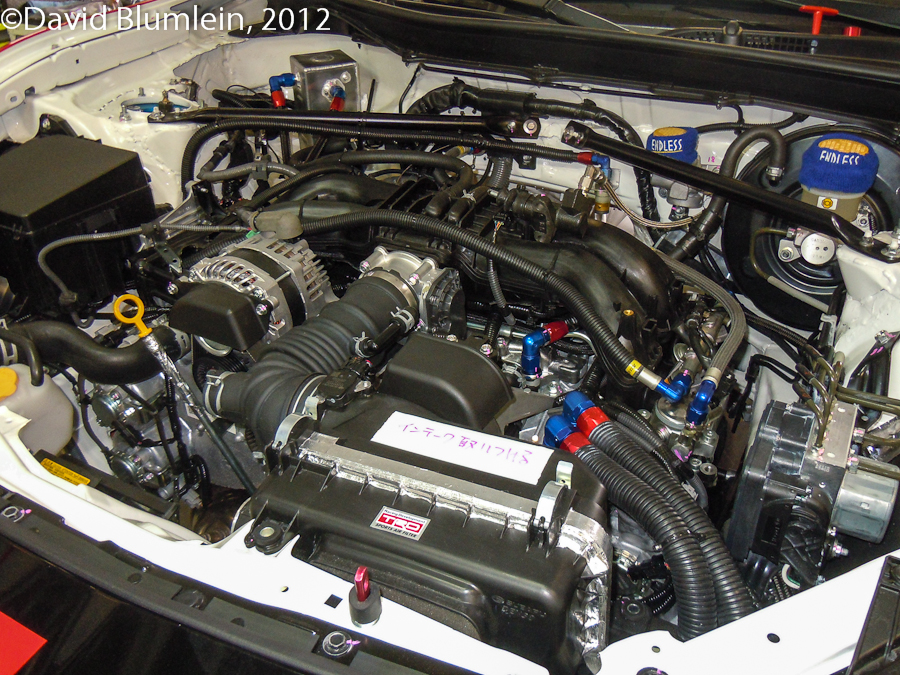
Toyota love to use the 24 Hour race as a workout for their forthcoming and new models – for them it provides the best test session they can have. The Lexus LFA was here as usual, winning its class, but we also saw the new GT86 cars, Toyota’s rear-wheel driven sporting car developed in conjunction with Subaru whose flat-four engine powers it:

This car won its class.

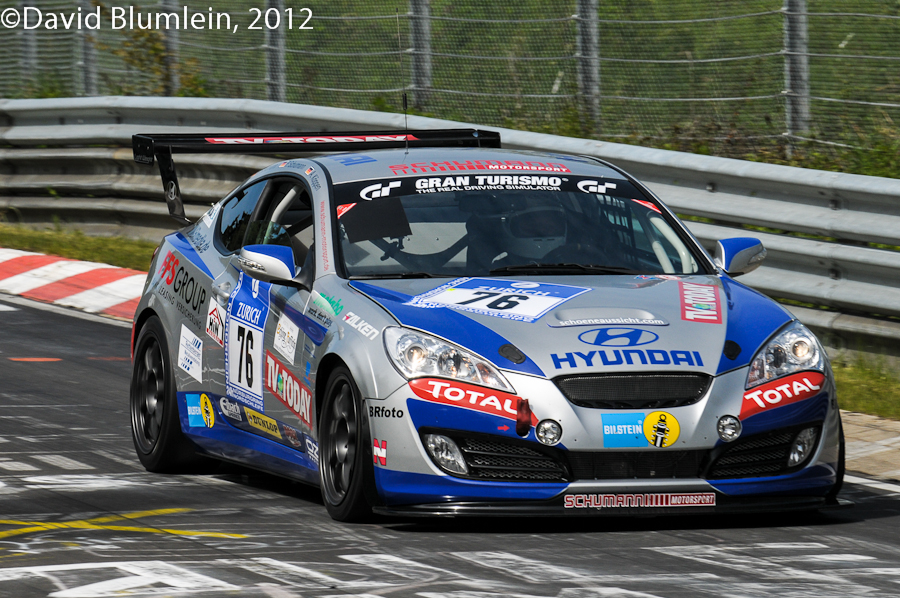
Hyundai adopt a similar attitude. Here is their Genesis Coupé which finished 105th.

Jaguar saloons are not new to success in endurance races at the Nürburgring. In the 1962 12 Hours and 1963 12 Hours on the Nordschleife, Peter Lindner drove his 3.8 Jaguar Mk 2 saloon to victory, first with Peter Nöcker and secondly with Hans-Joachim Walter (European Rally Champion). This was the longest event held at the Nürburgring  at the time – the 24 Hours did not start until 1970.

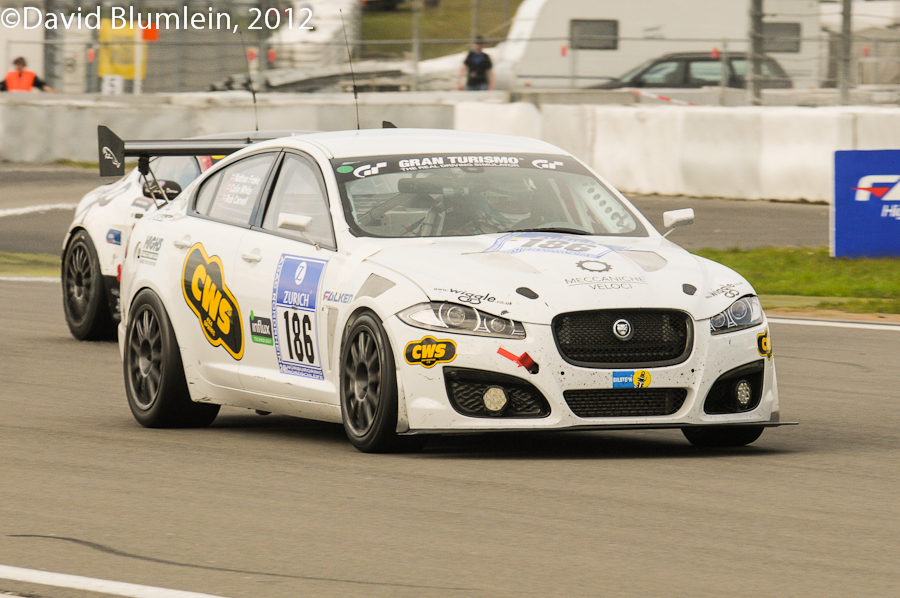
This Jaguar XF saloon therefore carries on a Jaguar tradition and it not only won its class but was the first diesel car to finish the race. Privately entered by Carvell Motorsport, it had a 3-litre V6 diesel and completed 109 laps finishing 92nd.

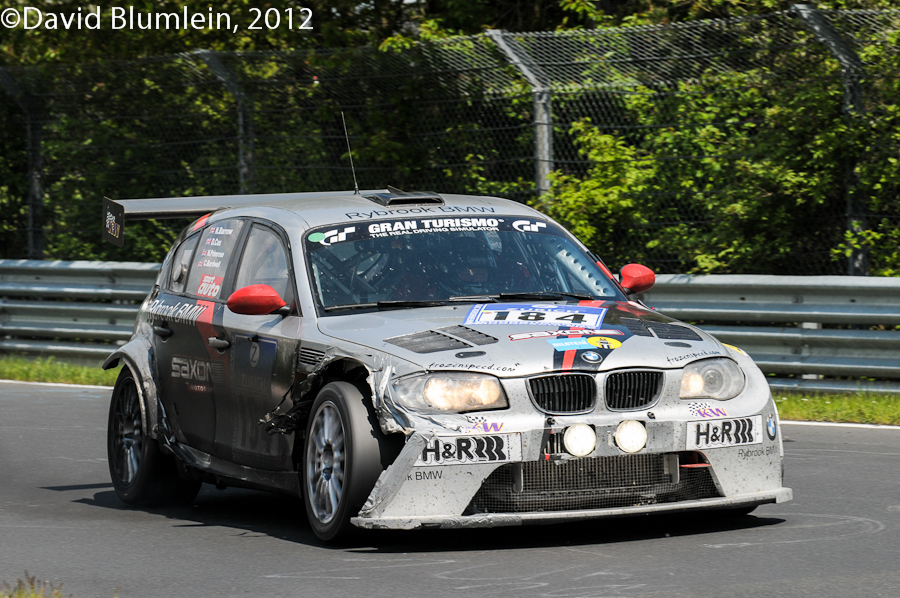
One of the attractive features of endurance racing is that the teams are invariably reluctant to give up if there is the slightest chance of keeping the car going. Having received a considerable mauling, this BMW 135D managed to reach the finish scoring 2nd in the diesel class.

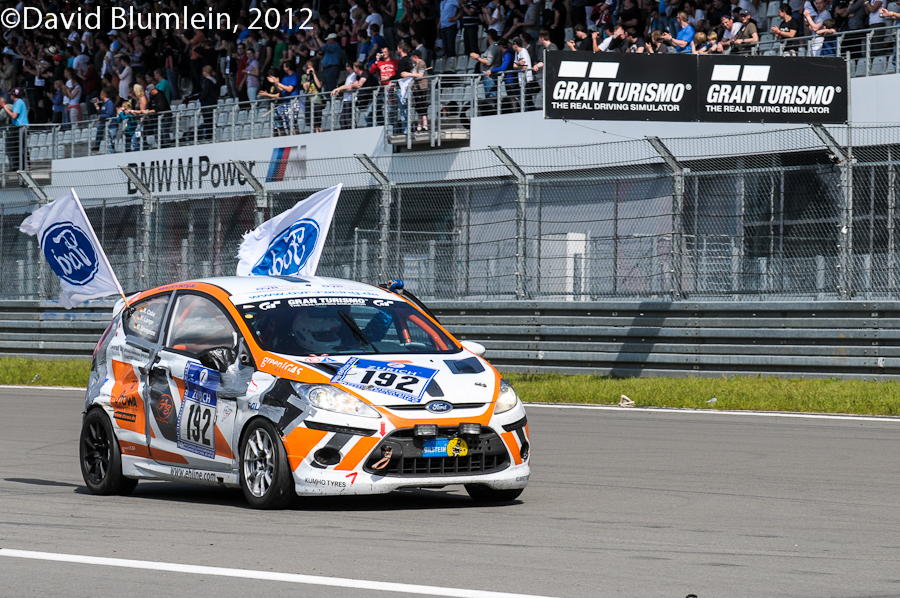
This Ford Fiesta, clearly proud of its heritage and managing to hide its ravaged nearside bodywork from the crowds in the main stands, finished 110th and 2nd in its class.

TAILPIECE

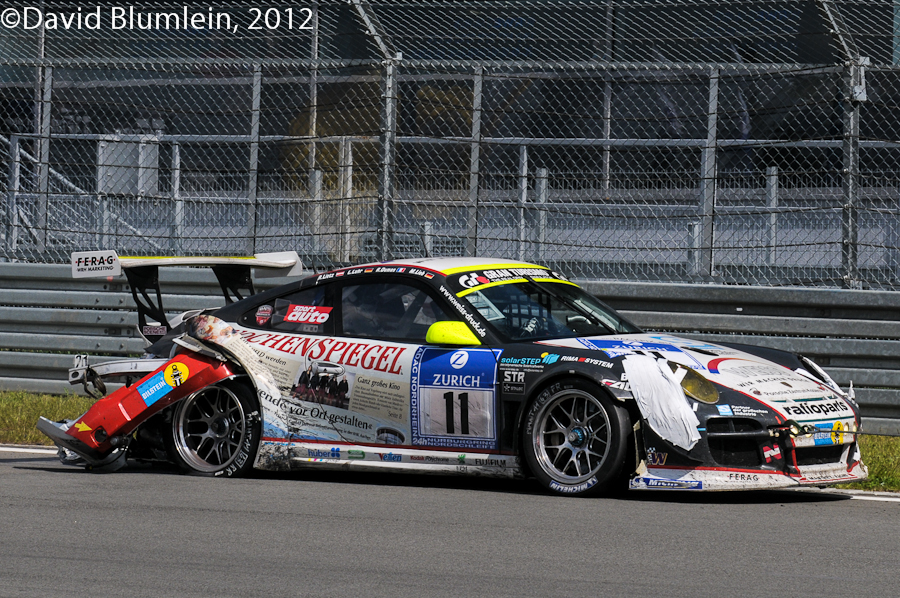
The no. 11 Manthey Porsche, one of the original favourites and crewed by three former winners, had a troubled race and suffered the indignity at the end of being towed away after being rammed just before the finishing line by a Renault Clio.

David Blumlein, May 2012


The Full Monte

The Nurburgring 24 Hours was, as ever, a proper race. The stars get their due recognition but just important are the supporting cast, so just before we turn our attention towards La Sarthe here is a full roll call, including two who did not make the start.

Mainly my work, but gaps generously filled by David Blumlein, David Lord, Peter May and David Stephens.

John Brooks, May 2012


Traditions – Porsche and Sebring

For years Porsche played the role of a supporting player in sports car racing around the world. It played it well – perhaps Academy Award winning well, but nevertheless seemingly destined to remain as a class and not an overall winner capable of standing alone in the center stage spotlight.

 
Yes, there were outright wins in the unique over-the-road events like the Targa Florio as well as the important hillclimb arena. These, though, for all their tradition – the Targa going back to 1906 – were perceived to be outside the mainstream. The general consensus being that such affairs suited well a small displacement entry like a Porsche Spyder because handling and balanced performance rather than a reliance on outright horsepower and speed were the keys to winning.

 
That perception of Porsche changed one March Saturday in 1960 when Hans Herrmann and Olivier Gendebien drove their underrated RS60 Spyder to an overall victory at Sebring, leading a one-two Porsche sweep and humbling the far more powerful Ferrari Testa Rosa in the process. Before the decade was out not only would Porsche repeat its Sebring success in 1968, but would also go on to claim the World Manufacturers Championship just a year later.

 
But, while under Ferdinand Piech, then head of Porsche racing, and today the chairman of giant Volkswagen, Zuffenhausen transformed itself into the mega, global headlining sports racing star it now is, no where has its greatness been more evidenced than at the Florida 12-hour classic.

 
Porsche’s Sebring record shows it has amassed no less than 67 class triumphs, 207 top ten finishes, and led 19,977 miles out of the 2, 4 million miles covered by its cars and their 3,300 drivers that have participated at the Central Florida airport circuit.
Perhaps more important than those impressive statistics is the fact that of the 60 12-Hours held so far,Porsches have won 18, or just under 20 per cent, 13 of those wins being consecutive between 1976 and 1988. And, as if all that weren’t enough, it was Derek Bell who set the existing lap record of just 130 miles an hour in a Porsche 962 during the 1986 event.
 
Will Porsche win Sebring again? With the factory preparing to re-enter the prototype scene for 2014 don’t bet against the engineers from Weissach.. Remember their last overall Sebring triumph came in 2008 when Roger Penske’s supposedly underdog RS Spyders took the checkered flag ahead of the then undefeated headlining Audis. If they could do that, with a car not necessarily designed and made to race at the front, you can bet they’ll be a favorite to carry on what was one of their most proud winning tradition, not only at Sebring, but that everywhere they race.

 
Susann Miller, March. 2012

Susann Miller (susannart@aol.com) is a noted Porsche author and enthusiast, with 12 books and numerous articles to her credit on the subject of Zuffenhausen and its cars. www.porschebooks.org

Over The Horizon

In the run up to the 60th Anniversary 12 Hours of Sebring I amassed a few recollections from those who had been at previous events………..Ken Breslauer has graciously allowed me to publish these accounts here on DDC……………enjoy.

Oh and

You can still order a souvenir program from this year’s 12 hour classic. Fans have told us its the best Sebring program ever- 200 pages filled with historical photos and features. $20 + $6 shipping. You can order by calling Toni at 800-626-7223.

Andy Pilgrim


In November 2000, we were testing the Corvette GT1 cars on the full Sebring track and it was the first time Dale Earnhardt and Dale Jr. had been in the cars. This was prior to them doing the Rolex 24 Hours of Daytona in February 2001. The Earnhardts had never driven in the Vettes before nor had they seen the track. I had already met Dale (Big E) and Dale Jr. the month before when the whole deal was announced. When Dale arrived at the track he grabbed me and asked me to take him around the track in my C5 street car, while Jr. went off with someone else. The street car Vette was the car that GM had given me to use during my time with the Corvette factory team. I had driven up in it from Boca Raton, about 125 miles south of Sebring.

I did a couple of slow 70 mph laps of Sebring with Dale in the passenger’s seat. I pointed out the apex of each of the corners and how the weird Sebring pavement changes. Meanwhile Dale was filling me in on how his new boat was coming along. I wasn’t totally sure he’d heard one word I’d said, to be honest, but I kept babbling on as best I could giving my top Sebring tips in a two or three slow laps.

As we came down the Ulmann Straight towards Sunset a third time, Dale piped up “My turn”. So I said “Alrighty, no problem,” and pulled in the pit lane and we changed seats.
Dale asked if I was ready, suddenly I saw this little twinkle in his eye. I just knew this was not going to be good. Within a microsecond of the words “I’m ready”, coming out of my mouth Dale launched the car and we must have been doing 100 mph before exiting the pit lane. I closed my eyes, braced for the inevitable impact and started saying sorry for all the things I thought might affect my status in the hereafter.

After a few seconds I realised we were not impacting anything and that Dale had masterfully negotiated Turn 1 and that we were already braking for Turn 3. Dale had not only been listening but had put down every apex and was gaining confidence with every corner and gear shift.

As we were flying down the Sebring’s long back straight I was starting to relax, I could even think about getting out of the car and walking away, we were almost home, one more corner.

But wouldn’t you know it,  there was more. Dale flew into the braking zone at Turn 17, a monster of a brake zone in any car, never mind a production car with zero downforce. As Dale went for third gear from flat out in fourth the car felt like it got hit by a truck and ripped sideways into a massive spin at over 130mph. Round and round we went until finally coming to rest about 8 feet from the bridge at the apex of turn 17.
I just sat in silence for a second and then looked at Dale. He had the biggest grin on his face. He looked at me and asked “You a nervous Nellie yet?” “Nope” I lied. He looked down at my feet and said. “Well that’s not what your feet are telling me” and he laughed. I laughed too, admittedly a more nervous laugh. He was right of course, my feet had almost pushed right through the fire wall as I braced myself. We calmly drove into the pits and parked. No one had really seen anything and nobody asked any questions, it was amazing.
Of course the question on my mind was why had we spun out? I’m sure some of you car fans can hazard a guess. My own little thought on it would be a grab for 3rd gear ended in a grab for 1st. That would have certainly caused the immediate spin.

Did we ever talk about it specifically, no? Am I sure Big E found 1st gear, pretty sure? Do I think he might have done it on purpose to bust my chops? From the mischievous look in his eyes after the spin, a distinct possibility ladies and gentlemen, a distinct possibility.

That is my most cool Sebring moment for sure. It is a different story and feeling than winning the 12 Hours but I thought you might like a story a little off the racing line.


Serge Vanbockryck

When friends in Europe ask me about Sebring, I refer to it as being a bit like Woodstock, but for sportscars. Coming from the sanitized world of European race tracks it is always a great joy to each year start the season in the relaxed and down-to-earth Floridian atmosphere. The guys running the Sebring event are just as professional as their counterparts across the pond, but that week in March they sure try to make everybody’s life as easy and enjoyable as possible, as do the fans.
One afternoon after testing, early in the “Sebring week” in 2001, while standing on the pit lane terrace, our Corvette team photographer and I noticed a scantily clad lady tanning on the roof of one of the RVs, right in front of the Corvette pit. She was wearing little more than a postage stamp-size bikini and, obviously, drew some healthy attention from the Corvette crew (and indeed most other crews who had a view).
As the week progressed, the girl got more daring, the bikinis got smaller and our crew got more and more enthused by the unexpected moral support from across the road. On Thursday morning before practice, a senior Corvette Racing team member donned his shades, hopped on a golf cart and made his way to the other side, armed with his usual convincing charm and a “Corvette Racing – Welcome Race Fans” banner which was neatly tied to the fence in front of the lady’s RV. When later the crew arrived to set up the pit for the practice session, they immediately noticed their new #1 fan and certain requests were hollered across the track. Soon enough, the lady fulfilled their wishes and off came the mini-skirt to give the boys a 360-degree view of a tiny professional g-string contraption which briefly silenced her fans all along pit road. The banner unfortunately disappeared the next day, and apparently the lady was arrested on Friday while strolling through the paddock in a short, fishnet dress and little else.
Oh, and Sebring also has the best coffee trailer in the business, conveniently parked right outside the media centre. Helps cure the jetlag.

Dindo Capello

I have many good memories about Sebring , I have four victories to my name, for sure a very good score :-) . (Now Five)
But what will be forever my best memory about Sebring, is the the podium of the 2001 race.
The smile of Michele Alboreto, my co-driver, next to me.
It was his last race and last victory before the terrible crash at Lausitzring.


Graham Goodwin.

I was co-commentating with John Hindhaugh at Sebring in 2007 in the final stages of the race – John’s attention, correctly, was on the overall winner but I’d been watching the developing GT2 battle between Jaime Melo and Jorg Bergmeister – I got Hindy’s attention to what was going to be a grandstand finish just as the TV turned their attention to the Ferrari vs Porsche shenanigans.

From that point on there was no point in saying a thing as Hindhaugh went into overdrive, gripping both sides of the sound desk and nailing it with an emotionally charged but perfect commentary on one of the epic finishes to a classic endurance race – I swear he didn’t take a breath – or pause – for a full two minutes.

The film of that last lap became an internet classic of course and laid the foundations for one of the great needle matches in the ALMS – Risi vs Lizards, Ferrari vs Porsche, Melo vs Bergmeister.


Mike Garton was a factory driver for British Motor Corporation (BMC) during the 60’s. He recalls the 1968 Sebring 12 Hours.
It was March 1968 and I was with the BMC mob on our way to Florida. We tried to leave London Heathrow in a VC10 bound for New York but had to taxi back for few hours’ delay. We found out that a fuel pump actuator was changed – not a good omen !

The flight was then diverted to Canada as we ran short on fuel.  So we had to spend the night in New York as we missed the connection, eventually arriving West Palm Beach the next day.

We found Geoff Healey was not best pleased as the dockers had left the imprint of their size 12 boots all over the alloy bodywork of our Sprite Coupe.  Before the cars could be released from US Customs they all had to be steam cleaned.  Warwick, where our factory was based was subject to quarantine as that winter there was a major outbreak of Foot & Mouth disease that devastated the farming community. At Tech, the officials objected to my race gloves, they felt that the soft leather gloves with pin holes were unsafe. I was told that I must buy the official gloves, but on seeing them I pointed out they had larger holes than mine and said no thanks. Eventually they agreed with me and I kept my gloves.

Then we finally got out on track, I was totally awed by the size of it all.  However the pits were from the Dark Ages with fuel drums on scaffolding. I remember the Howmet TX Turbo especially, it caused much excitement. BMC had entered our Sprite prototype, a Group 4 Midget,  Group 3 MGB and the MGC prototype. During practice I tried different cars while learning the circuit and trying not to get lost.
We had a good start by Clive Baker, my co-driver, who reappeared early in the race with overheating, we sent him back out again and  promptly disappeared. He returned on foot reporting that the fuel is contaminated with water.  Actually that’s not what he said, but I cannot repeat the exact expressions here! Clive was sent back to car with some tools accompanied by Geoff Johnson, the Lucas Fuel Injection boffin, to advise over the fence. After a while Clive got the car back to the pits and the boys cleaned out the system. We found that the fuel drum had over a gallon of water in it. Once that issue was fixed we found that our pace was good. But our fuel stops were interspersed by stops to top up the coolant as car was continually overheating. These extra calls into the pits were really annoying, considering  how well the little 1.3 litre ‘A’ series ran. We managed around 120bhp with the experimental Lucas fuel injection, hitting 7400rpm continually on the straights. The car also had experimental four wheel brake discs which were fantastic. The only problem was the pedal disappearing on the straights due to the pads being knocked back, you learned to tap the pedal with your left foot so there was a hard pedal for the hairpin. On the last session of the race a Javelin tried to side swipe the Sprite and to miss him I had to leave the track at the hairpin, I hit the sand but kept foot down and just managed to get out and back on track.

At the finish we were classified and we won the class!

Funniest memory – Paul Hawkins, coming into pits with a badly damaged car, as a result of contact from a car that pulled across him, driven by a well known lady driver who favoured pink. As he got out of car a media guy shoved a microphone in his face and asked for a comment. As this was then broadcast over the track live he probably wished he hadn’t asked, as Paul replied in typical Aussie fashion.
“There’s only one f——— place for f——— women and that’s the f——– kitchen or bed !!”
Oh dear. After the race was run I flew back to New York for the Motor Show and worked on the BMC stand where that wonderful ‘car’ the Austin America’ was introduced.
Great Times.

Nic Minassian

I have now raced at Sebring three times, always with Peugeot. Although I finished on the podium in 2010, I think my favourite memory of the race comes from 2008.

It was Peugeot’s first trip outside of Europe with the 908. We knew that Sebring has a reputation for testing the limits of the car and also the drivers. We needed to finish to learn about the car and gather information for the future.

We were on the front row, with the #1 Audi on pole position but we felt that we had the faster car and were determined to prove it. I was nominated to start, so my team mates, Stéphane Sarrazin and Pedro Lamy discussed strategy with me. This happened while on the grid and I think they may have been joking, telling me to go round the Audi on outside on the first corner, a completely crazy risk with 12 hours of racing to go.
Then I was in the car on the warm up lap and it was one of those days where you feel invincible, that you can do anything you want with the car, so I decided to follow their advice. I went for it, absolutely flat around the outside of Dindo’s Audi into Turn One and it stuck and I was into the lead and pulling away, fantastic,

It felt really great, I really loved it, why I went racing in the first place. We had a few problems in the race and did not keep the lead but we did finish. That move will stay with me forever, when someone says Sebring it is what I remember the most.

Marty Kaufman

John….I have so many fond memories of the Sebring 12 Hour events from the 20+ years that I was there as IMSA’s Race Director, and the history that it brings, it is really impossible to single out one….but there was one event that truly stands out in my mind and, I am sure, in the minds of a few other folks who worked in Race Control.


The Race Control office was remodeled in the late 80′s or very early 90′s and was nicely done in that there was more room, better lighting, and an outside stairway that provided access.  During the 12 Hour race, a power transformer that was located on a new power pole very close to the new outside stairway began releasing a significant amount hot, poisonous liquid of some sort.  The order came from the Fire Department to immediately evacuate the Tower as this substance was really bad news (contained PCP’s or some other really ugly agent) and would eventually cause the transformer to blow up and cause significant damage to anything around it.  Only problem with this order from the Fire Department was that this stuff was showering down on the only stairway to exit the facility.  We all decided, the Race Control staff, we would stay the course and wait it out and continue running the race.  About a half an hour later, that shower of liquid stopped and the Fire Department folks cleaned up the mess and all was well.

Just kind of one of those things that sticks in your mind…..for a long time.


Allan McNish

I have many memories of Sebring, good and bad, but that is only in terms of the racing. That usually tends to go by race results. From my point of view Sebring 2009 is probably one of my best races in my career, it was fighting all the way to the end against Peugeot. The last two hours I had to pull everything out of the bag to make sure that the R15 won its first ever race. I could also look back to 2006 and the pole position with the first diesel, the R10, and to give the car its first victory, with Tom, Dindo and I, it was really incredible.
But the biggest impression Sebring has made on me is the crowd, the 180,000 or so fans that turn up. The way they create such a carnival, they make this an annual event. The way they get into the spirit of this unique race is just………..fantastic. there is no other way to put it.

I do love that at the autograph session you see the weird and the wonderful; someone dressed as The Stig’s very fat brother, then there are the lawyers dressed up as cows, everyone coming along with their families and friends, all being part of this great event.

As a single story, probably the biggest thing that has brought me into this scene was going to Turn Ten, for a photo shoot with Mr. Brooks, one year (2004). To see that there is a club at Turn Ten, where they have made their own grandstands, they have made their own bar, their own restaurant, in effect they have cornered a section of the track as their own territory. They return there every year, like a pilgrimage. They have their own entrance ticket effectively, which is a key ring and I am pleased to say I have been able to build up a collection of Turn Ten key rings over the years. To see the commitment that these guys have put into enjoying the 12 Hours of Sebring certainly matches the commitment that AudiSport and every other team makes to win the race, that makes Sebring special.

Andy Wallace

I had been testing the Toyota TS010 in Eastern Creek, Australia a few weeks before (Sebring ’92). We had been doing a marathon test, which lasted for nine days straight! Eastern Creek is a great racetrack, but there is a monster bump in the middle of turn one, which is taken flat-out in sixth gear at about 190 mph. Fantastic corner, but each time you go over the bump you get bashed about quite badly in the cockpit. Well after nine days of endurance testing I went over the bump one more time and, CRACK, two ribs decided they’d had enough of that! Within an hour Hitoshi Ogawa had also broken his ribs for the same reason. As you can imagine, the flight back from Sydney to London was interesting… If I got up for a walk around the plane, I remember having to tell anyone who was thinking of passing me going the other way in the aisle, DON’T TOUCH ME, as you pass me. Sneezing was another very painful experience.

Anyway, back to the point of the story; my ribs broke on February 29, 1992, and the race day at Sebring was on March 21, 1992. I didn’t dare tell Dan Gurney what had happened, as I knew he would find another driver. I remember the worst part for me was the driver changes and also, strangely enough, under yellow. Behind the pace car the stiffly sprung Toyota was running too slow to compress the springs and the car bounced all over the place – not pleasant. Anyway, we won!


Timo Bernhard


The 12 Hours of Sebring is one of the hardest races in my point of view, all over the world, for a driver and the team. I have competed in the race nine times between 2001 and 2011.

2001 Sebring was the first race for me in the US, that’s why Sebring has a special place already for me. With the Alex Job Racing Porsche we finished 2nd in GT, a great result. The heat, the roughness of the track, the humidity, the corner speed, the bumps, the track layout and all the traffic makes this race absolutely tough but also challenging. You want to beat it, to win it.

My best Sebring memory was the overall victory with the “small” LM P2 Porsche RS Spyder from Team Penske! It was a dream come true! We had a perfect race. The years before, Romain and I always had a difficult Sebring as not only a single race but also as a start to the American Le Mans Series. So it was vital to finish this race and to score the points. But also there was the glory to try to win it overall and be part of the “Heroes’ Wall” at the entrance of the paddock. In 08 everything came together!

And also we made Roger Penske very proud, it was his first overall Sebring win as a team owner. For Porsche it was the first overall Sebring victory since 1988.


Michael Keyser

Between 1970 and 1980 I raced eight times on the old 5.2 mile Sebring circuit and there are two words that come to mind: hot and rough. In 1971 and 1972 when the race was still a part of the Manufacturer’s Championship Series the cars I drove, 2 liter and 2.5 liter Porsche 911s, were some of the slowest in the field, mixed in with Porsche 917s and Ferrari 512s. This meant I spent almost as much time looking in my rear view mirror as I did out the windshield. In 1973 when the race came under the auspices of IMSA and was limited to the GT and Touring classes I was one of the fastest and cared little about what was happening behind me.
As is the case today the old circuit was a combination of concrete and asphalt. Although the concrete portions were referred to as “runways,” in fact they hadn’t been used for that purpose for many years. The actual runway planes used was adjacent to the section of track known as the North-South Runway, and you’d often look off to your left and see planes taking off and landing.
When the airport was first built, the concrete had been laid in slabs, which required seams between each one. As a result you felt as if you were driving on a washboard. With wear and tear over the years and the effects of weather and general deterioration, the concrete had inevitably shifted; fallen, risen and broken up. Although track maintenance was carried out each year prior to the race, weeds scraped away and concrete chunks removed, parts were bound to degrade and break up during 12 hours, so unexpected surprises were to be expected.
We’ll begin our lap of the old circuit at the start finish line, midway down pit straight where we’d probably shift into 4th gear. I may have hit 5th just before entering the very fast left-hand sweeping turn #1, bearing in mind this is some 40 years ago and my memory is not crystal clear. Depending on traffic, which is something I’ll repeat, you’d swing to the right just after pit out in order to make the widest arched turn possible, clipping the apex on the left and drifting out to the far right, close to the edge of the concrete surface. This was one of the fastest turns on the circuit and could be taken flat out…or not, depending on who you talked to.
If you were unfortunate enough to run out of room and slide off the concrete, a weed-covered expanse awaited you. The ground was not somewhat sandy here, which insured an explosion of dirt resulted. If you were lucky, it was nothing but a spin. If you were unlucky you might collect an errant chunk of concrete, a rusted piece of rebar or some other nasty bit of busness.
Between turn 1 and the fast left-hand turn 2 was a short straight. Still in top gear you’d fly through turn 2, then almost immediately brake and downshift for the ninety-degree left-hand turn 3. Immediately after the apex the road surface changed from concrete to asphalt. I believe that originally this was one of many service roads that crisscrossed this part of the airport. You immediately felt the smooth surface under your tires which was welcome each lap.
From 3rd gear you’d shift up to 4th for the short run up to the Esses, then back to 3rd for the quick left, right, left flick under the MG Bridge. I seem to remember the track sort of undulating a bit through here. When taken properly it was a nice little section. Unfortunately, it was where my race ended in 1975. I believe I was running 2nd in a Porsche RSR in the latter stages when another RSR spun ahead of me, flew back across the track and I promptly T-boned it. I made it back to the pits on the front rims in a shower of sparks, but the front left wheel nut had been smashed onto the hub and the chassis was badly twisted, not the mention extensive body damage.
After the Esses, it was up to 4th gear and into the long sweeping right-hand Big Bend and under the vehicle bridge. Depending on traffic, you either drifted out to the left or hugged the right side. In 1973, driving a Porsche RS with Milt Minter, I was on my first lap after taking over early in the race when, in the middle of this curve, the car suddenly burst into flames with a loud WOOOMPF. I later learned fuel had surged up the vent tube onto the left-front disc and ignited. I pulled to the side of the road, where thankfully emergency crews arrived quickly and extinguished the fire. I drove back to the pits where the crew cleaned up the car and we went on to finish 2nd. Who’d a thunk.
I may have shifted to 5th on the exit to Big Bend, but the Hairpin was fast approaching. If you were on your own, it was a mechanical exercise of braking and downshifting, at least to 2nd gear and in some cases 1st, clipping the apex of the turn and accelerating away. All neat and easy. If you were in traffic, there was always the potential for disaster with faster and slower cars jockeying for position. If there was one place where body to body contact was insured numerous times during the race, it was the Hairpin.
In the 1971, Gregg Young was driving a Ferrari 512M and overcooked it in the hairpin. There was an exit road to the left of the turn, but if you slid across it, as Gregg did, there was a large sand bank waiting. His car climbed the bank and flipped onto its roof, and since the doors on the Ferrari opened up, not out, he was trapped inside. Luckily the corner workers were on the scene quickly and a group of them lifted the car up just high enough for Gregg to crawl through the door. The second he was out, the car burst into flames. I recall a two-page spread in Sports Illustrated showing the corner workers dropping the car, Gregg scrambling away and the Ferrari, “fully involved,” as firemen say, behind them.
The Hairpin was a place where many photographers congregated as they could get quite close to the track. Of course a bonus was that there was always the possibility of drama, as evidenced by Mr. Young’s conflagration. It was the one place on the circuit where I remember seeing familiar faces of photographers I knew. Sometimes I’d give a little wave if it was a close friend.
Accelerating out of the Hairpin, it was a drag race up the short straight to the Green Park Chicane, then stand on the brakes and downshift, followed by a quick right and left turn of the wheel. Taken alone it was an enjoyable section. Traffic could make it “interesting.”
In 1971, during night practice in my 911S I recall being followed closely by a set of lights through Green Park. On the exit I clung to the right as a car pulled alongside. Looking over I saw it was Jacky Ickx in the Ferrari 312P. He hesitated a moment, shook his fist and then blasted off into the distance. It was only my second FIA race, so I was somewhat mortified. The following year when I was making the documentary film, The Speed Merchants, I got to know Jacky quite well. At dinner one night I related the story of his fist shaking at Sebring the previous year. “I would never have done that,” he said, with a guilty grin on his face.
After  Green Park there was a long section that may have been called the Warehouse Straight where you got up to 5th gear and the asphalt changed back to concrete. Fast approaching was a very quick right hand sweeper, taken flat, or close to it, after which you were all over your brakes and down shifting for the 3rd gear right hander that led onto the 4,700 ft. North-South Runway.
This long section of the track was sort of like the Wild West, ie: anything goes. It was so wide that cars would often run three and four abreast. There was always the chance a car ahead of you running the same speed would throw up a piece of concrete, so you’d pick another lane. In the meantime you might be passing slower cars on one side and being passed by faster ones on the other. Some sections of the track were smoother than others, and you quickly learned where those were, sometimes drifting back and forth to weave around the rough bits. Maybe you’d look over and wave to a fellow driver you knew.
At the end of the North-South Runway was a 90 degree turn that led onto the Backstretch, but because there was a wide expanse of concrete on both the entrance and exit you were able to take the turn at a very high speed, 4th gear or even 5th. To turn a fast qualifying time, swinging out wide to the left before turning into the apex and drifting out obscenely wide to the left on exit was a prerequisite. If you were going to perform this maneuver you were forewarned to keep an eye out for another car diving on your inside otherwise there could be a nasty incident.
The Backstretch was smoother than the North-South Runway and not quite as long or wide. At the end was the double-apex left hander that has changed little from its present configuration. If you were going into the pits, you clung to the inside right, and if you were continuing for another lap you’d swing out to the left and climb through the gears back to the start/finish line.
Since its inception in 1952, Sebring has always been a unique venue in which to hold a race. The lack of decent accommodations near the track in the 1970s was always a challenge and I did my time at The Kennelworth and Harder Hall, the pink stucco whales from the 1920s near the town. There were fairly massive crowds during this time, with spring break providing its fair share of college fans. Much like today, they were probably there more for the party than the racing, but in the 70s things were considerably wilder than today, if that’s possible.
At one race I remember driving through the infield with some friends between stints to check out the “zoo” as we called it. It was a radical juxtaposition. To be sweltering in the hot noisy car, racing around the circuit one minute, and idling through the infield the next with the air conditioner blasting, the smell of pot wafting through the air and young ladies flashing their wares.

Oh, to be young again.