Archive for Cool Stuff

24 Hours at the Starlight

KeyserBook161
A recent celebration of the Steve McQueen classic “Le Mans” in Los Angeles brought out all the stars. DDC’s own Bond Girl was on hand to add lustre to the occasion and here she gives her take on the screening.

When the film “Le Mans” was released in 1971, I was barely driving. It was the era of the Saturday night date at the local drive-in theater. I saw “Le Mans” at the Starlight. Please rest assured that any exuberance exhibited while watching cars racing around a track in the French countryside existed purely for the benefit of the boyfriend of the moment. However, it wasn’t all feigned. There was that crush on Steve McQueen. As far as I was concerned, the King of Cool just embodied the sexy Hollywood superstar. So while a trip to the drive-in to see Le Mans was, for some, all about the racing footage, I just wanted to gaze up into those dazzling blue eyes. Talk about a passion pit.

KeyserBook160

In the racing world, however, it wasn’t just about McQueen’s taciturn Michael Delaney and those charismatic facial expressions. Beyond his craft, enthusiasts respected the man as a competent racer, making the role a realistic fit. For all that, the movie itself co-starred in pole position with the Circuit de la Sarthe. Considered by many to be the most influential racing film ever made, some forty years later, “Le Mans” enjoys an almost cult like following. From Delaney’s slate gray 911S, to the Heuer Monaco on his wrist, to the 917 in Gulf Colors, the film resonates.

signage

Still, aside from McQueen, just who and what were we actually watching? For starters, actual footage from the 1970 24 Heures du Mans. Moving on from there, how about a supporting cast including the likes of Brian Redman and Jo Siffert to name just a few of the notables – piloting various Porsche 917’s and Ferrari 512’s. In addition to list of drivers named in the credits was a very young Jürgen Barth. When asked of his own role in the film, Barth replied, “I drove the 911 that caused the crash.” We were watching legends at work, no wonder it all appeared to be so authentic.
KeyserBook155

Voyeuristically, we screamed along the Mulsanne Straight in the rain, at night and in the home stretch. And that’s what makes the film more of a documentary, that insider’s perspective. At the time, a good percentage of us truly had no idea we were watching the real deal as we munched popcorn and steamed up the windows of our own rides.

TCM ON SCREEN

Today, aside from in-home, Blu-Ray screenings, the chance to revisit “Le Mans” on the big screen is almost never going to happen. But the opportunity did arise recently, and what better venue than The Chinese Theater in LaLa Land? Hollywood is not only the land of the star, but playground to the luxurious, the fast, the cool, the expensive automobile. These attributes converged at the Turner Classic Movie Festival with Porsche Cars North America joining the celebration by hosting Club TCM, held at a venerable hotel. A pre-screening discussion presented two of racing’s own cool cats, Derek Bell and Vic Elford, on the dias, and rounding out the expertise was McQueen’s son, Chad. Each reminisced about a simpler time in racing, about McQueen and his driving, his personality and their own experiences during the filming of the movie.

Hollywood-5

Basking in the glitz and glamour of Tinseltown, the approach to Hollywood’s Roosevelt Hotel revealed two Porsches positioned on their own crimson runner; a brand-new, bright yellow 991, and a black, completely original 1965 911. Needing no introductions, the pair stood in silent welcome as fans of the film and the marque arrived to revisit 1971 in the comfort of Hollywood’s Chinese Theater.

Dave sees a

It may not have been the Starlight, but then again, I’ve been driving for a long time now.


Lizett Bond, May 2013

Photos courtesy of Lizett and scans courtesy of Michael Keyser, taken from my review of his book on the making of the movie

http://www.doubledeclutch.com/?p=3224


On The Skids In New Orleans

on track 3

Today we welcome a new name to the DDC family, far more elegant than the usual correspondents we have but that’s not much of a compliment when I look in the mirror. Lizett Bond has been the acceptable face of the automotive media for ages, recently she went tire testing at the invitation of BF Goodrich and she kindly shares her experiences with us. I sincerely hope that she will become a regular contributor to this site, welcome Liz!

pre run

Tire testing. I’ve observed it, even written about it. But when the invite arrived in my inbox to actually participate in the BFGoodrich media launch of a new tire, taking place in New Orleans? To say I approached this one with a mix of trepidation and excitement is understatement. I was filled with a sudden urge of uncertainty. Turns out, I didn’t need to be.

BF Goodrich knows their stuff. The Charlotte, North Carolina, based tire company also understands how to extend some good old Southern hospitality and the recent media launch of the g-Force Rival in the Big Easy led to the pleasant discovery that BFG is just as savvy when it comes to passing a good time and throwing in a little lagniappe.

the newest

The g-Force Rival Extreme Performance Summer tire, the newest offering from the tire maker, demonstrates a continual quest to improve and add to the brand. This latest addition, the Rival, is a sort of hybrid, falling in between the street oriented g-Force Comp-2 and the g-Force R1, a serious, DOT (Department of Transportation) approved, competition racing tire. The Rival is eligible for those racing series requiring UTQG (Uniform Tire Quality Grading) ratings of 140 or higher, while still suitable for street use. Meaning weekend enthusiasts can drive to the track, race and head home with their trophy, all on the same rubber. In theory at least, perhaps not in practicality as it always looks more professional to bolt on a hot set of tires at a venue.

So, what more appropriate venue to debut a tire with this pedigree than a new racetrack? The NOLA Motorsport Park is located in Avondale, Louisiana, just 20 minutes from downtown New Orleans French Quarter. The public friendly track opened in 2011 as a full-featured events facility that includes two international standard racetracks, an eight-acre autocross pad and a world class kart facility.

lesson time

On the track, it is a given that tires play an integral role in performance and offer a significant impact on lap times. While many enthusiasts consider braking, power upgrades or suspension to be the more crucial upgrade improvements when it comes to enhancing a car’s overall performance, the ‘shoes’ worn must factor into the competitive equation. In any segment of this market, a new tire has to transcend “good enough” and outshine competitors and the Rival g-Force was developed as a “two-fer”, with the ability to turn heads on the street and lower lap times at the track with its extreme grip.

in the classroom

Before heading out to the track, these talking points were relayed to us, the “legal info” according to the manufacturer, as follows:

The Rival is designed for predictability, track level abuse and highlight features, according to the manufacturer,  include:

BF Goodrich’s Performance Racing Core with a reinforced internal structure reduces sidewall flex for instant steering response.

The tire is designed to stick and the Asymmetric tread with large, solid tread blocks on the outside shoulder to optimize cornering grip.

Extreme Tread Edge (ETE) raises the limit as the design brings tread compound farther down the shoulder for increased grip in hard cornering and predictable feedback.

The Equal Tension Containment System (ETCS) ensures optimum contact patch shape at speed. Silica-infused competition compound delivers better grip from start to finish.

The Rival will initially launch in 15 sizes with rim dimensions from 15-20 inches and 205-355 section width.

Laissez les bon temps roulet!

Technically correct, classroom talking points aside, we were in New Orleans to run a comparison test that included a little “fais do do” with a mix of courses, vehicles and tires.

no valets

Shuttling into the NOLA complex, an impressive line up of chariots awaited outside of the media center. Inside, sustenance, including the requisite beignets, insured high energy for a long day. After a short orientation, including a PowerPoint with plenty of tech/spec tire information, drivers were divided into groups and we fanned out to four different driving stations, each with its own task. I was nervous, having never really done any serious track driving and not being much of a speed demon to begin with. I can, however, drive a manual transmission, my saving grace.

on track-7

First up for our group, the Long Course Autocross, where we would be driving BMWE46 M3’s, some equipped with Hankook Ventus R-S3 for comparison to those sporting the Rivals.  My nerves calmed a bit when I realized I’d have an instructor riding shotgun.

on track 5

Focusing so intently on the course, I worried that I would not be able to tell the difference between the two tires. But I could. The first attempt around the course consisted of two laps on the Rivals, then two on the Hankook and back to the Rivals. By round three, the familiarity with the course allowed for a little more attention to contrasts. The Hankooks felt softer in the turn with a slower response time, not as tight in the corners as the Rival. Even with my lack of experience, I could tell the difference and felt the Rival won, hands down.  Feeling a bit cockier after my final lap, I climbed in the passenger seat for a couple of true hot laps with an instructor and humbled down a peg or two. It was also with great relief that I discovered the basket of peppermints strategically placed nearby. Pockets full of mints and great envy for constitutions that do not succumb to motion sickness, I was ready for our next station.

on track 1

In spite of a little queasiness, I was gaining confidence and ready to take on the next task as I crawled behind the wheel of a Mustang FR500 racer for a few hot (or in my case “warm”) laps on the full NOLA circuit. For comparison, half of the Mustangs wore g-Force Rivals with Falken RT-614K’s installed on the other half. We completed two hot laps on the Rivals followed by two on the Falkens and then back to the Rivals. Being a ‘newbie’ to this type of track time, I certainly didn’t even approach the limits, but I could feel the difference between the two tires, with the Rival holding on to the track. I just felt more confident coming into each turn, and going around corners with the Rivals, they felt more stable, like I would not be leaving the track anytime soon.

full run prep

Gaining familiarity with the 2.8 mile track helped as each lap instilled a little more confidence. Again, thanks to BFG for the fabulous instructors at each driving station. One of those coaches, Bill Follmer, yes, of that family, took the first lap with me, and with outward calm, placed my hand wordlessly on the steering wheel, each time I placed it by habit on the shifter. I think his real fear might have been a sudden burst of confidence on my part, and the possibility of being rocketed into the Florida Keys. He did make mention of the fact that he wasn’t sure which track we were on. But each lap came a little bit easier as the new Rival BFG’s inspired confidence that I would be staying on the NOLA track. Could I feel the difference? Absolutely, I felt I could push to my own limited limits with an unexpected assurance.

Time for a peppermint snack.

After a break for lunch, and a little fresh air to calm the stomach it was time for phase three…..

on track 6

Next up, the Autocross featured Subaru WRX STI’s that bore no resemblance to the Subaru Outback I once owned. We were to compare the Rivals to Hankook Ventus R-S3 and Toyo Proxes R1R. We made two runs on the Rivals, and then two on the Toyo R1R and then two on the Hankook RS3, followed by a final lap on the Rival.  Again, the difference in handling was noticeable, even to one with limited experience in driving an autocourse, with crisp turns that held to the line inspiring much more boldness to push to a higher limit. At the end of our runs, all three cars were lined up to compare tread wear, with the Rival distinctly showing more tread and less wear than the competition. For some drivers, this attribute may not seem essential, but as a consumer, I found this to be of great interest and crucial when considering a tire purchase.

on track 2

And those weren’t jus’ flyin’ horses, cher…..

fast run

Departing the Autocross, we headed to the Skid Pad and Mazda MX5 Cup cars, all equipped with BF Goodrich examples, the g-Force Sport Comp-2, g-Force Rival and serious g-force R1-S. At this point in the day, even striped pink candy couldn’t save me and I seriously considered skipping this station. I’m glad I didn’t.

testing 1-2-3

My intrepid instructor pushed me to my own limits as he measured g-force on a car mounted iPad. Our goal; To feel the “break away” point of each tire.  First up, the g-Force Comp 2 tires, followed by the Rivals and finally the R-1’s. Reaching the point of hearing that coveted skidding sound, my own personal best was not depositing my peppermint on his shoes. All the tires held well, I could feel the progression with the Rival very close to the R1 in grip.

So, an A+ to BFG for patient instructors, a mix of tires and cars and for the opportunity to really compare. The Rivals inspire confidence, a huge plus being the ability to get a racer to and from the track. From a vanity perspective, I thought the tires were a more attractive design than the others. I didn’t hear anyone else discuss that, but I liked their look on a car better than the others.

sounds of the crescent city

And as if all that wasn’t lagniappe enough? How about a welcome party and dinner at Arnaud’s French 75 Restaurant on Bourbon Street and a soft bed in a Ritzy hotel. The well coordinated event ran smoothly, without any noticeable glitches. And the peppermints at every station were greatly appreciated.

Topping off an educational 24 hours was the opportunity to meet up in the bar during a layover in Houston’s Hobby airport, for a quick libation with several of my new driving instructor friends from the track.

all friendly rivals

Just one of the boys and better than peppermint…..

Lizett Bond, February 2013

Retro Retro

2013 Retromobile

It is safe to say that the Classic Car Season really kicks off when the Retromobile comes round.

2013 Retromobile

Held at Pavilions 2 and 3 at the Parc des expositions, Porte de Versailles, Paris, the Retromobile has grown in stature and importance, as well as size, reflecting, perhaps, the general rising level of interest in automotive heritage.

2013 Retromobile

The Show is a cocktail of many ingredients, from the flea market to the top dealers, car manufacturers to the car clubs, enthusiasm abounds and there is much to see for even the casual visitor, let alone the dyed in the wool enthusiast.

2013 Retromobile

This Delahaye is typical of the quality that was found throughout the Retromobile.

2013 Retromobile

Despite the difficult trading conditions that prevail in Europe’s car market, especially for the French, there were prominent stands from Peugeot, Citroën and Renault, the latter having a well designed circular effort with the stars being

2013 Retromobile

a 1937 Renault Nerva Grand Sport

2013 Retromobile

and, from 1968/69, an Alpine Renault A220 that ran at the Le Mans 24 Hours.

2013 Retromobile

I also liked the contrast between the Renault 8 and Renault’s first modern day F1 car.

2013 Retromobile

The 70′s graphics are still striking.

2013 Retromobile

I witnessed the Renault RS01′s first race at Silverstone in 1977, the turbo era had arrived, though we did not appreciate it that day. We were more concerned with James Hunt and John Watson, and some crazy Canadian, Gilles Villeneuve making his debut.

2013 Retromobile

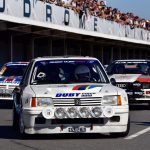
As with every show, anniversaries and birthdays are celebrated, any excuse and the Retromobile was no exception. So 30 years of the 205, one the quintessential hot hatches, was a focus on the Peugeot stand.

2013 Retromobile

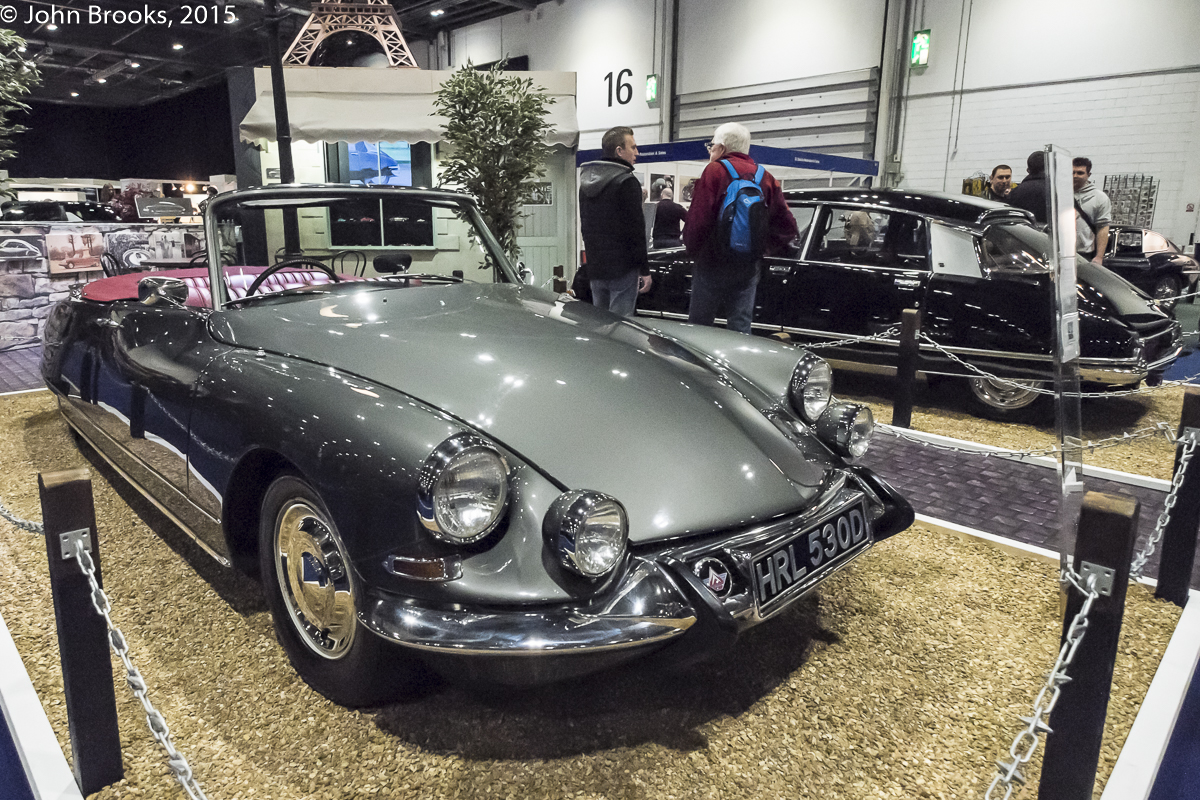
Citroën’s DS19 did not have any obvious celebration to make, except being about as Gallic as is possible for a car. There were many fine examples of this ground breaker to be seen.

2013 Retromobile

The Germans occupied a big slice of Parisian territory with one of the show’s highlights being the Mercedes-Benz stand.

2013 Retromobile

Leading the fine selection of Mercedes rarities was  a joint exhibition with the Louwman Museum of the pair of recently restored Prince Heinrich 1910 Benz. The pair of cars had left in store room for decades, and recognising the importance of these cars, the two organisations decided to pool their efforts at restoration.

2013 Retromobile

“Since the beginning of the twentieth century, a large number of car races have taken place in Europe. Sons of wealthy families and rich sportsmen were the main competitors. One of these races was the Prince Heinrich, named after a keen sportsman who was the brother of Kaiser Wilhelm II. It was restricted to four-seater touring cars.”

2013 Retromobile

“On 10 June 1910 no less than 10 Benz cars took part in a 1,900 kilometer race across Germany and part of France. They had 80HP and 100HP engines with lubrication pumps, drive shaft transmission replacing the old chain system, and elegant ‘tulip’ bodywork. A month later, some of these cars took part in the ‘Kaiser Nicolas’ race in Russia covering 2,800 kilometres in eight days.”

2013 Retromobile

Speaking of the Louwman Museum, they had as a companion to the Benz a 1903 Spyker as they describe it. “This was the first car in the world to be equipped with a six-cylinder engine, and the first petrol-driven car with four-wheel drive and all-wheel brakes. This Spyker 60-HP is therefore one of the most significant cars in motoring history.”

2013 Retromobile

Rounding off the display of Mercedes Benz’ rich heritage was the “Blitzen Benz”.

One of the key goals in those early years of the 20th century was to break the then magic speed barrier of 200 km/h. Benz was the first company to do so, with a petrol-engine automobile: the 200 hp racing car took to the track at the Brooklands circuit in England in 1909, achieving an average speed of 202.7 km/h. This record-breaking racing car, with its massive four-cylinder engine, would however go on to achieve its greatest successes in Florida, USA. In 1911, Bob Burman reached the amazing speed of 228.1 km/h on the sand track at Daytona Beach, so making the “Lightning Benz”, as the model became known in the US, the fastest vehicle in the world – faster even than any aeroplane or train. It was a record that would remain unbeaten for eight years.”

2013 Retromobile

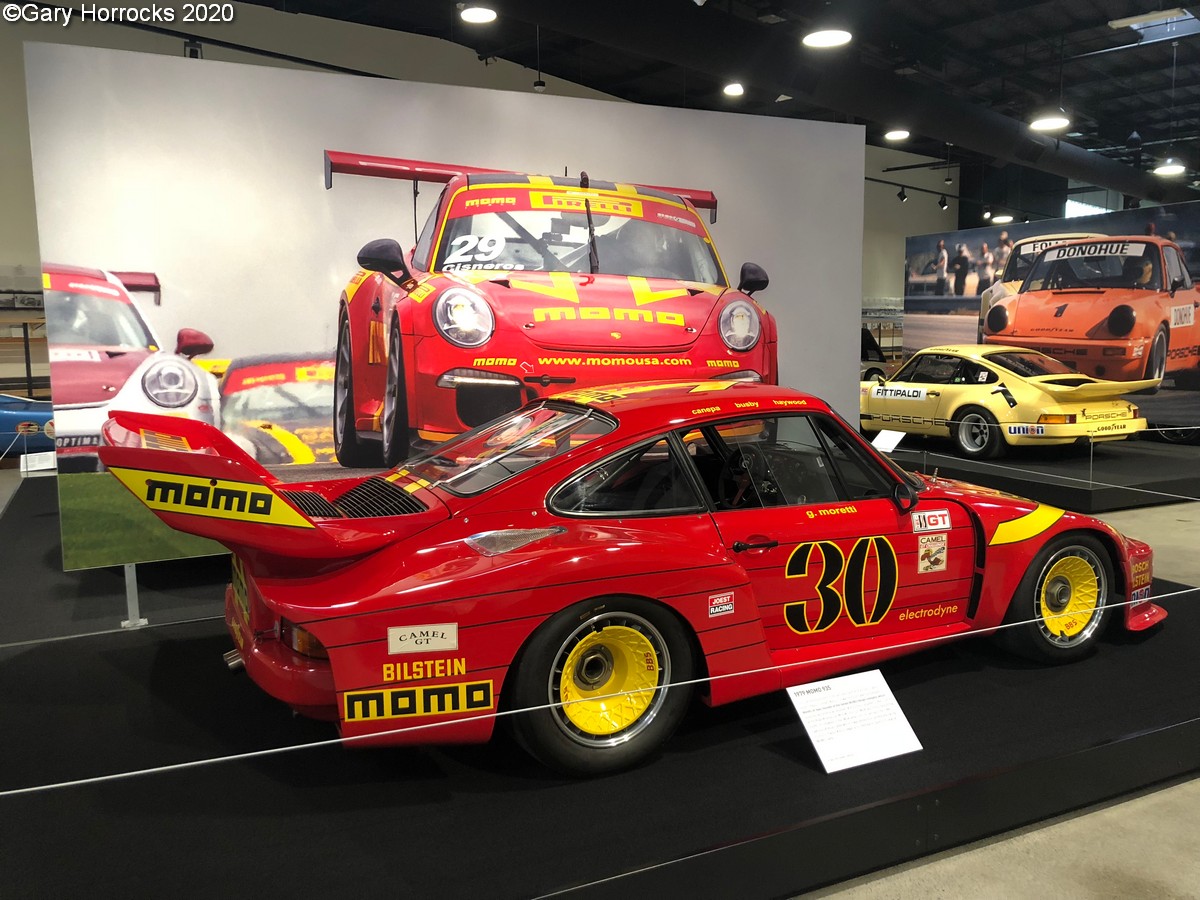
Porsche began the first of many celebrations of the 50th anniversary of the 911 with a fine selection of examples of the model through the years. Yes I know it’s a 935…………….

2013 Retromobile

BMW’s stand was frankly disappointing with some strange concept cars paying homage to the 328 and the M1, must have sounded better on paper than it looked in reality.

2013 Retromobile

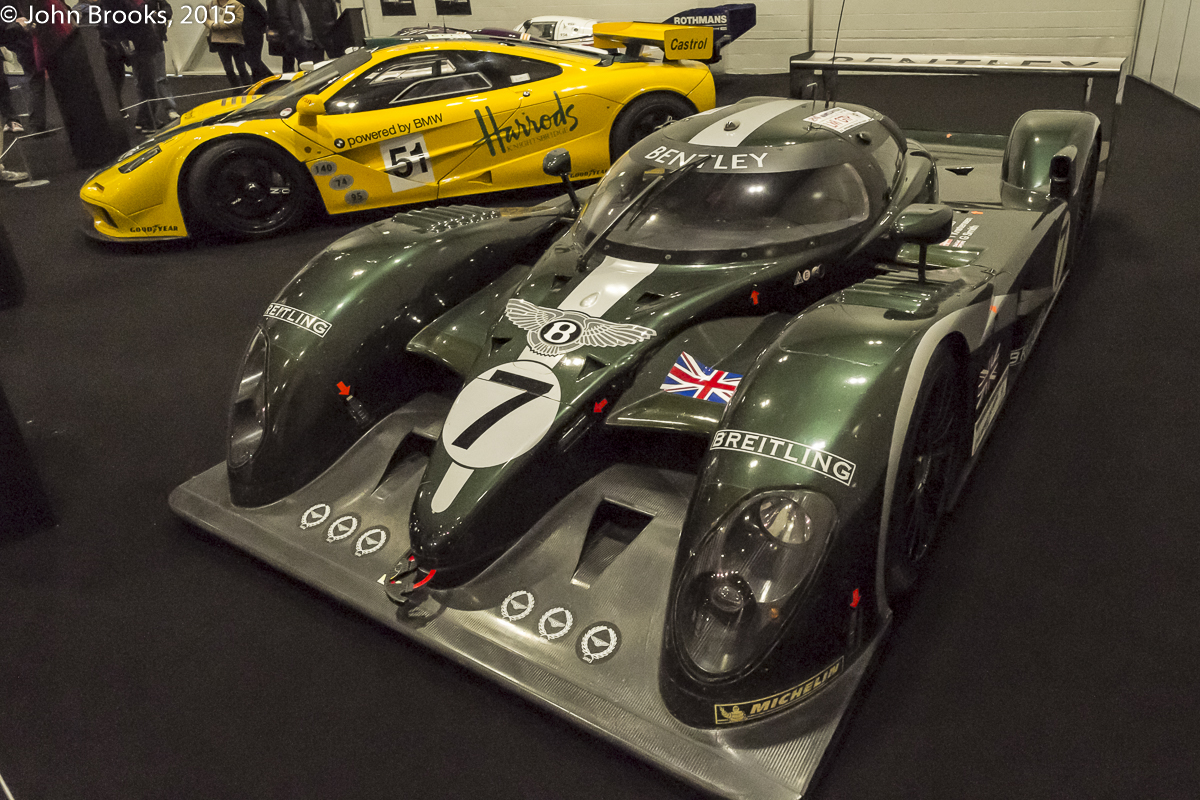
Bentley had a small stand with the amazing Embiricos 4¼ Litre Pourtout Coupé on display, the impact of this important car only slightly diminished by obscure location and lighting of the stand. This will be the last appearance of this Le Mans’ veteran on this side of the Atlantic for a while.

2013 Retromobile

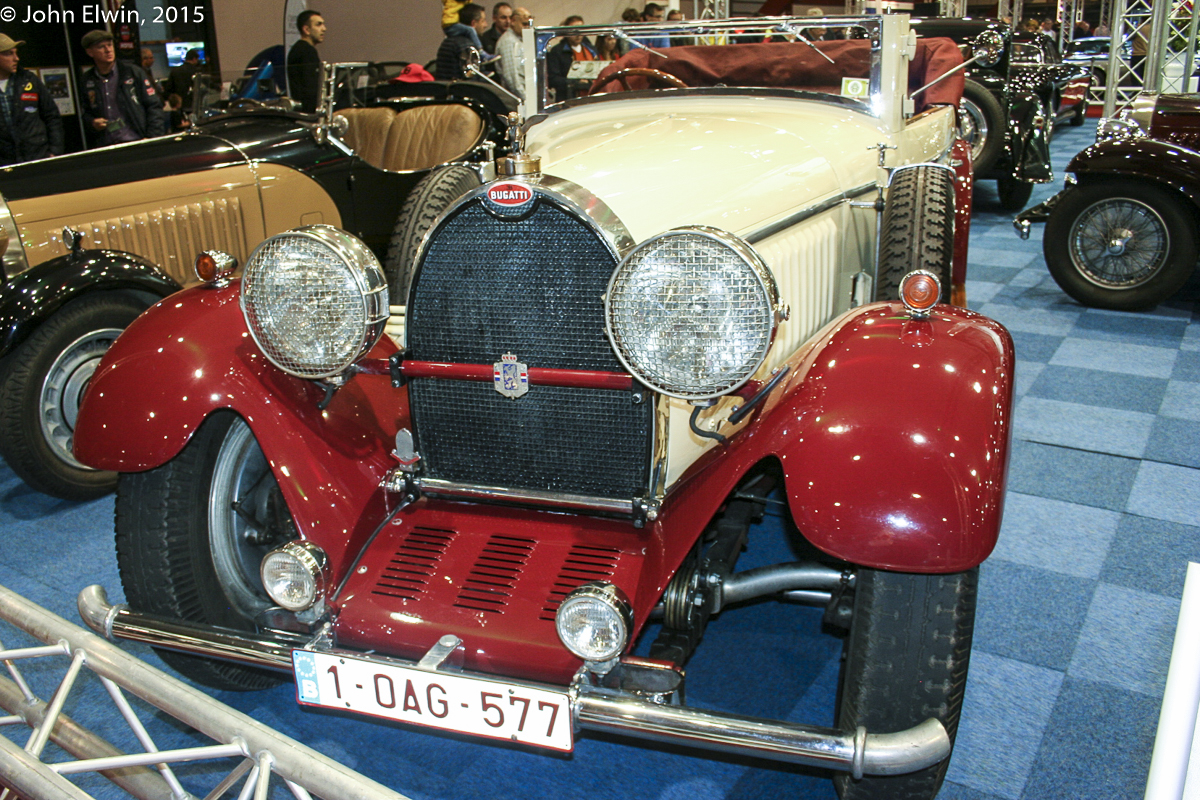
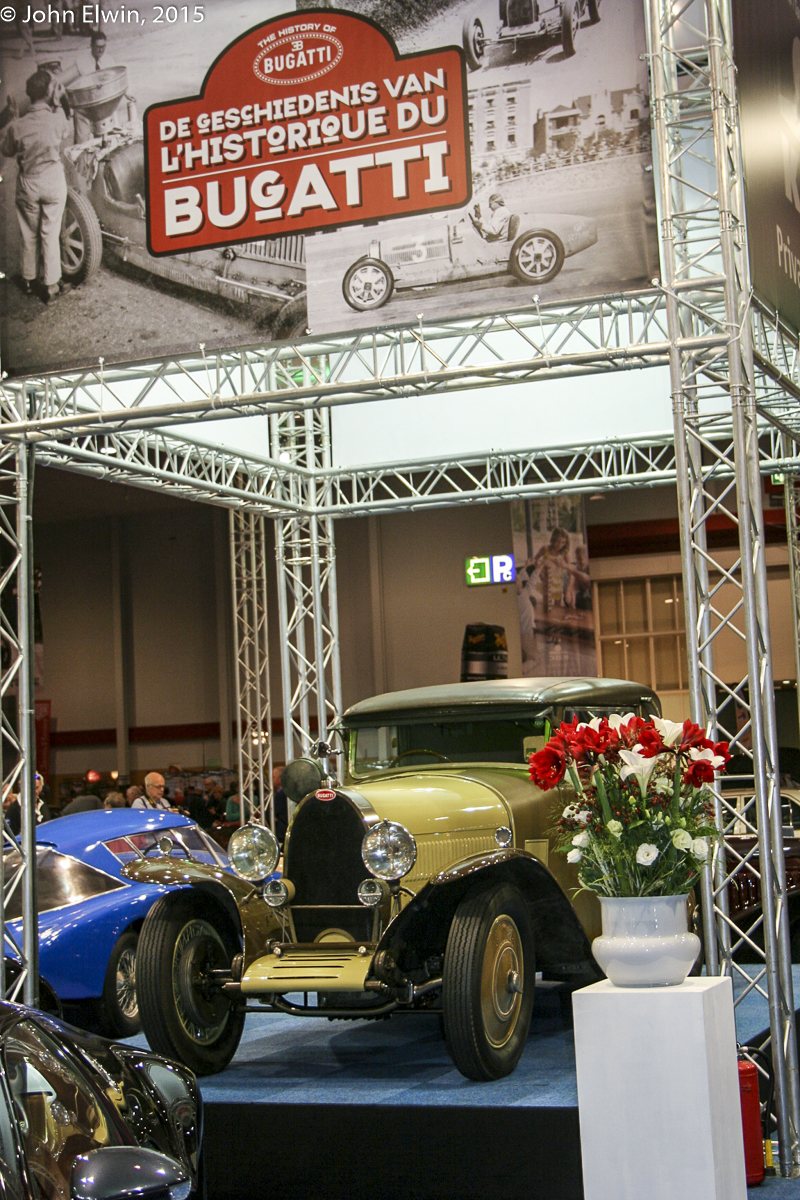
Sharing with the men from Crewe were fellow VW Group members, Bugatti, who brought out a Type 59 Grand Prix racer from 1934. I drew encouragement from the fact that it sported a tax disk, meaning that someone drives it on the UK roads.

2013 Retromobile

Skoda displayed an interesting array of rarely seen competition cars dating back to the 60’s including this sports prototype, the 720.

2013 Retromobile

There are always a selection of quite obscure vehicles at the top shows, tucked away in a corner was a stand celebrating Germain Lambert, an enterprising engineer who ran Automobiles Lambert from the 20’s through to 1953. This is the Lambert 6CV.

2013 Retromobile

Lambert was also an enthusiast, who raced his own creations, this is the CS Cabriolet Sport

2013 Retromobile

The output of another French engineer, Marcel Leyat, was also exhibited at the Show. His idea was to have a lightweight wooden chassis powered by a propeller, a plane without wings.

2013 Retromobile

During the 20’s he managed to sell around 30 of these strange contraptions but the concept never really caught on.

2013 Retromobile

One of the delights of shows such as the Retromobile  is finding the unexpected, here I encountered the Scuderia Filipinetti Ferrari 512S as driven at Le Mans in 1970 by Mike Parkes and Herbert Müller. They were eliminated in the notorious accident early in the race that took out the three 512s of Regazzoni and Wisell, as well as Parkes, I am sure it made for an interesting debrief.

2013 Retromobile

Another 70′s Ferrari present was this immaculate 512 BB LM

2013 Retromobile

And Paul Knapfield’s 312PB, with extra air intake to cool the F1 spec engine.

2013 Retromobile

And one last Prancing Horse, from the early days, a Ferrari 340/375 MM Berlinetta Competizione, promoting the Villa d’Este Concours.

2013 Retromobile

Carrozzeria Touring Superleggera had a stand to show off their skills and it contained a rarity from Lamborghini, dating back to 1966, the Flying Star II prototype. This was a collaboration with the factory and based on a Lamborghini chassis.

2013 Retromobile

The Retromobile had a wide range of automobilia for sale, from the likes of Hortons Books to several stands offering fine wines, and of course there are the ART stalls.

2013 Retromobile

Steve McQueen still has a power to fascinate……………..

2013 Retromobile

Someone’s wall is incomplete without this

2013 Retromobile

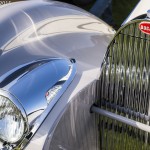
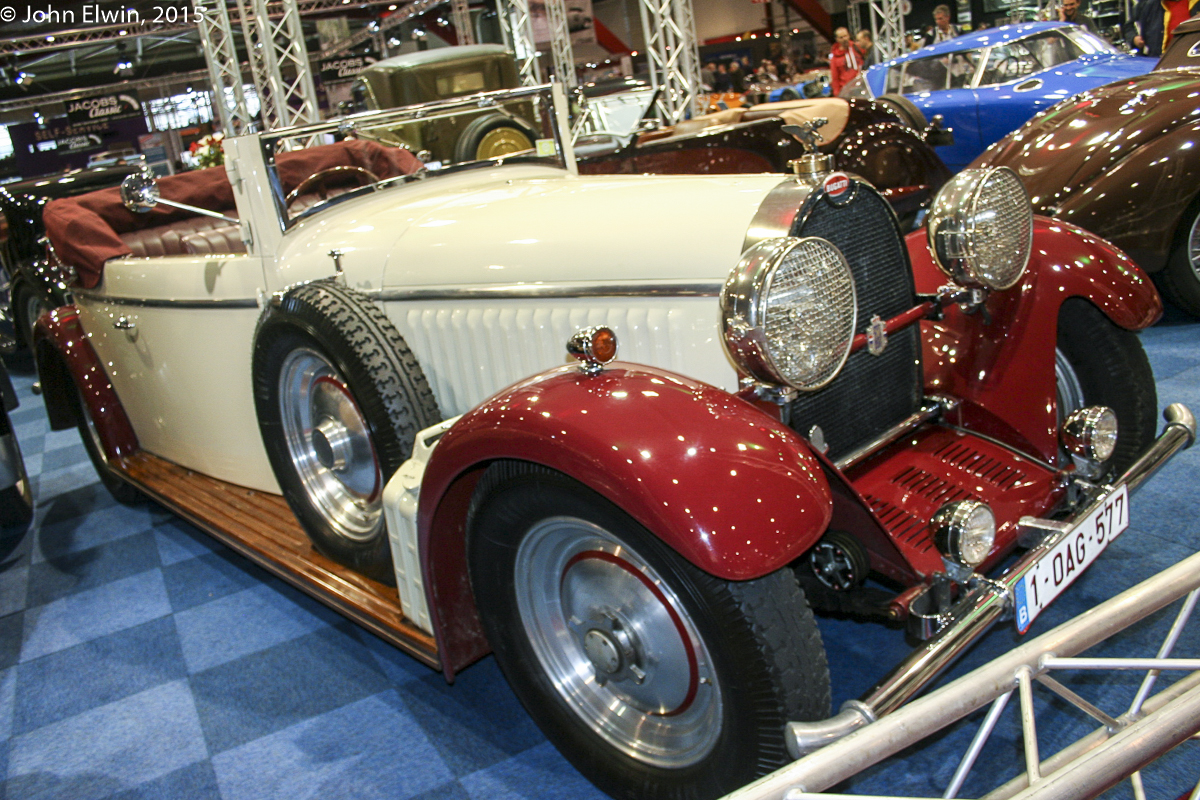
The Lukas Huni stand had several outstanding cars, the pick of which was this Type 57 Bugatti

2013 Retromobile

And this Alfa Romeo 8C 2300 Monza

2013 Retromobile

I might be a bit biased but to my mind the two stands that were head and shoulders above the others came from across the English Channel.

2013 Retromobile

The sheer quality of the cars on Hall & Hall and Fiskens, or Fiskens and Hall & Hall, depending on whose stand you were on, was staggering.

2013 Retromobile

Highlights at Fiskens were two Le Mans’ veterans, the 1926 Bentley 3L Le Mans and Scuderia Filipinetti Ferrari 275 GTB/C that was a class winner in 1967, these endurance classics were just part of a fantastic set of cars that the well known London based dealer had in Paris.

2013 Retromobile

I caught up with Gregor Fisken who gave his thoughts on the 2013 Retromobile.

2013 Retromobile

“Every year it gets a little bit bigger, a little bit better, I think the show has really found the right balance. It is important that it still has elements of a flea market, it is important that the modern manufacturers can come in and embrace their heritage as well. It is important that there is wonderful art, models, parts but it is also important that it is Europe’s pre-eminent début event of the year. It kicks off the year and everyone leaves here motivated, they see old friends, they make new friends, they plan for the season and they have the opportunity to review what they are going to use in the future.”

2013 Retromobile

“What we have here on the stand today, I think, is a little bit of something for everyone. We have arguably one of the most important Le Mans’ Bentley team cars to come on the market in recent years and we have a Bugatti T37A that has had 50 years of one family ownership, so that is a special opportunity. Of course with the Ferrari 275 GTB/C there is an opportunity to purchase a car that raced in Les Vingt-Quatre Heures du Mans three times and it won its class. We had Claude Sage on the stand, from Scuderia Filipinetti, who ran the car in period. He remembered driving the car from Geneva to Le Mans, the car running in the race and then being driven back afterwards, absolutely fantastic.”

2013 Retromobile

I think cars from this period, the 60’s GT era, were the last that could be genuinely driven from the factory to Le Mans, win their class and be driven home. I think for a lot of new people that are coming into the market they find the opportunity to use such a car on the road and on rallies, events and races is very attractive. They can go to the Le Mans Classic and have a pretty prestigious way to travel down the Mulsanne.”

2013 Retromobile

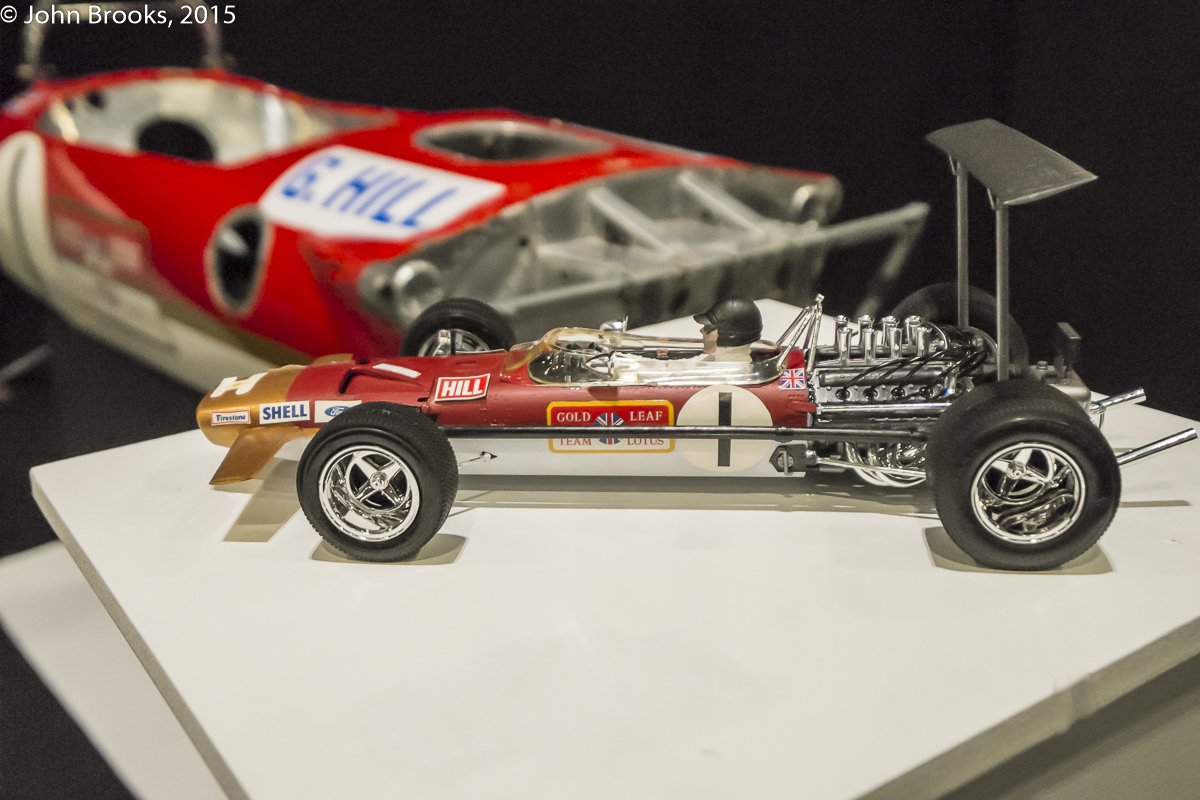
It is hard to imagine but this impressive array of classics were matched by the Hall & Hall display. Endurance Racing was again well represented with Porsche 956/001 supporting Jaguar XJR-12 chassis 288, with the unique record of a victory in both the Le Mans and Daytona 24 Hours. Another flash from my misspent youth was a Lotus 49C in Gold Leaf Team Lotus livery, this being an unraced spare built for Ford.

2013 Retromobile

Rob Hall gave me his views on the Retromobile. “We have been attending the Retromobile for seven years now, it starts the season off for us really, it is a good shop window for the selling side of the business, a few of the cars here are not for sale but they add to interest to the exhibit and it gets our name noticed. It costs us certainly but during the rest of the year we recoup the outlay, either through picking up work or picking up sales.”

2013 Retromobile

“I had a quick look round the Show early today before things got busy and it is clearly a great event. There is something for everyone, whether it is old, new or something to help you work on your car.”

2013 Retromobile

“The Show is quite a big commitment but what has made it a lot easier is that it is now condensed into one weekend and a few days as opposed running over two weekends as it did in the past. The cost of hotels and travel and having staff on site has been reduced and that acts as an incentive for us to come to Paris. So both parties benefit.”

2013 Retromobile

A show would not be a show without an auction taking place and Artcurial provided the necessary ingredients, with many fine lots. The hammer came down the loudest when a 1936 Talbot Lago T150C Roadster went to a new owner for just under €1,500,000, despite the financial storms that rage in Europe there is still some money about for a classic car.

2013 Retromobile

The 2013 season is now underway having been launched at the Retromobile, it is worth a visit and especially as Paris is but a short train ride away, it can be done in a day and enthusiasts should be making their plans for February 2014.

John Brooks, February 2013


On the Mean Streets of Paris

2013 Retromobile

It is early February and a visit to Paris for the Retromobile is a must do. Amongst the many gems and rarities there is always the commonplace. This is how the Parisians fought the poodle owners before The Great War – a Renault Balayeuse – we could do with something similar in Elmbridge 100 years on.

More from this excellent show later.

John Brooks, February 2013

The Battle of Evermore

All things considered I have been a lucky man, perhaps not in a financial sense, I have been too slow to really make more than a buck or two, but I have met many fine folks along the highway of life and I have been enriched by them in other ways. My old friend David Soares has brightened up my (and hopefully yours) day with this peek into that lost continent, the past. I hope you enjoy it as much as I do. Wealth is not only measured in monetary terms………….

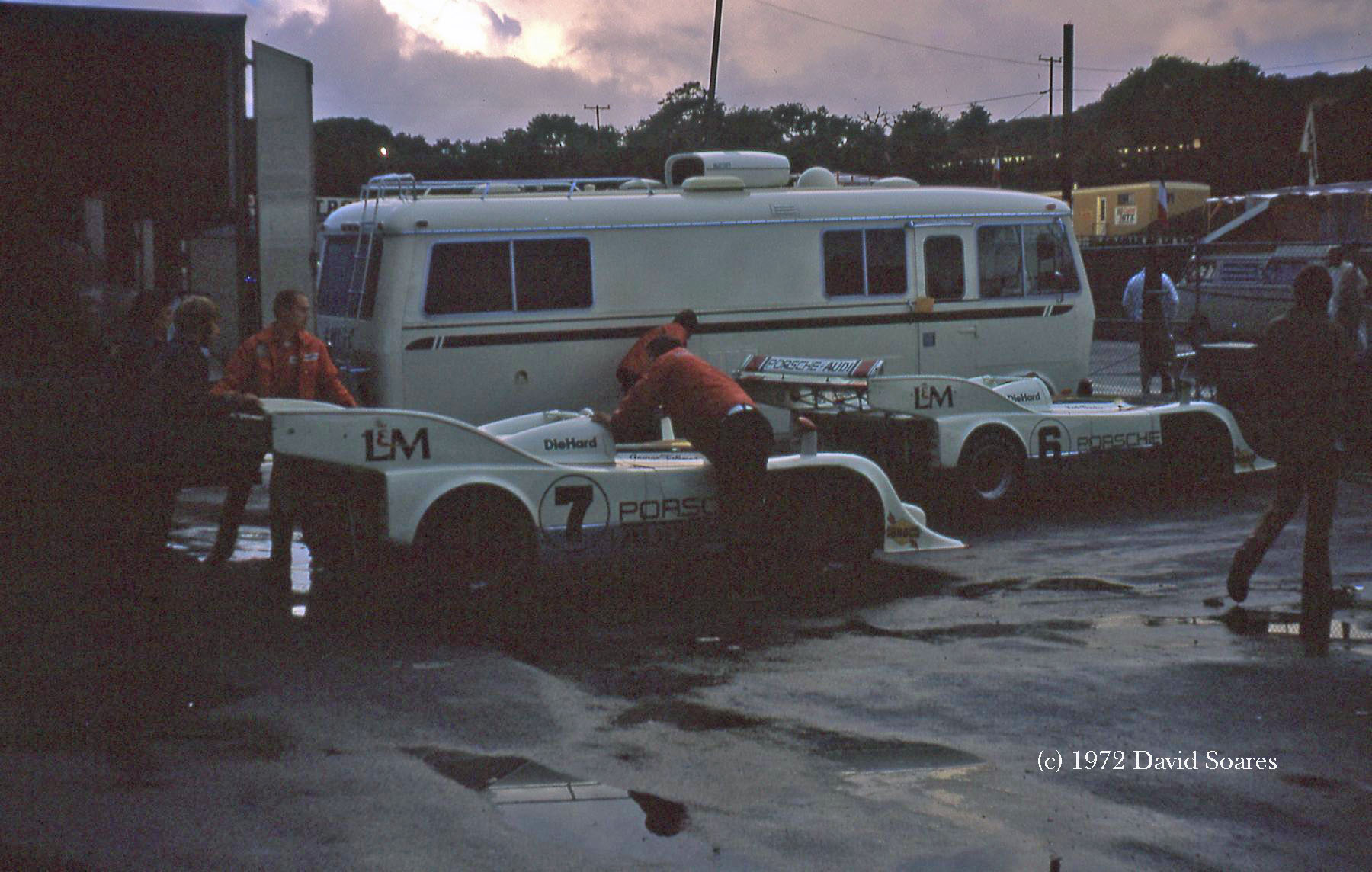
Can Am 1972 Start

The title of Thomas Wolfe’s novel You Can’t Go Home Again has launched a thousand journalistic ruminations about the futility of searches for times lost but perhaps, like other ruminants, they’re simply contributing to climate change.  In opposition to this popular view, the Romans saw history as man’s long downfall from a past Golden Age and they aspired to restore the past, not to dismiss it.  This month I saw two tributes to our own past, which served to remind me that maybe we ought to stop re-inventing the wheel and just maybe aspire to revive our own Golden Age.

Paddock Pair Morning

The first was the recent Kennedy Center Honors for the boys who recorded at Bron-Y-Aur cottage forty years back.  After a pathetically American introduction by Jack Black, the now gray-haired Jimmy Page, Robert Plant, and John Paul Jones nodded politely at a few lame attempts at impossible covers.  It seemed as if the ghost of Keith Moon was in the room and that things were going over like the lead gas-bag he famously predicted.  Then Ann and Nancy Wilson (who long ago performed as a Led Zeppelin cover band before calling themselves Heart) took the stage accompanied by an orchestra and full chorus, along with the only man who can truly lay down a Bonzo percussion line, his son Jason Bonham.  From Ann Wilson’s first notes, their rendition of “Stairway to Heaven” was better than perfect.  By the climax of Shayne Fontaine’s note-perfect tribute to Stairway’s soaring solo, Jimmy Page was mouthing the cord changes and smiling beatifically while Robert Plant openly wept.  You can go home.  (See their performance here: http://youtu.be/JK_DOJa99oo)

Can-Am Rev 4

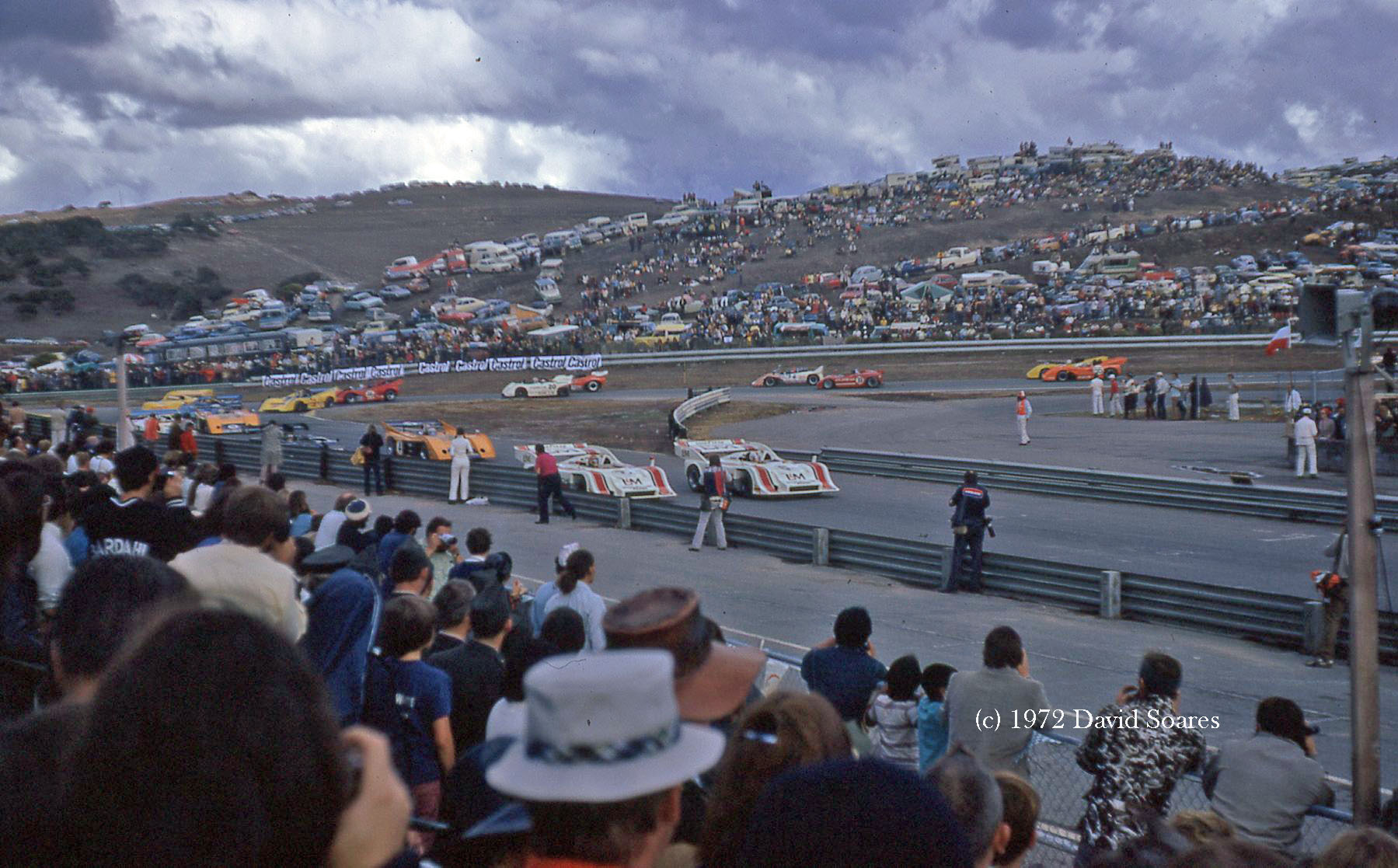
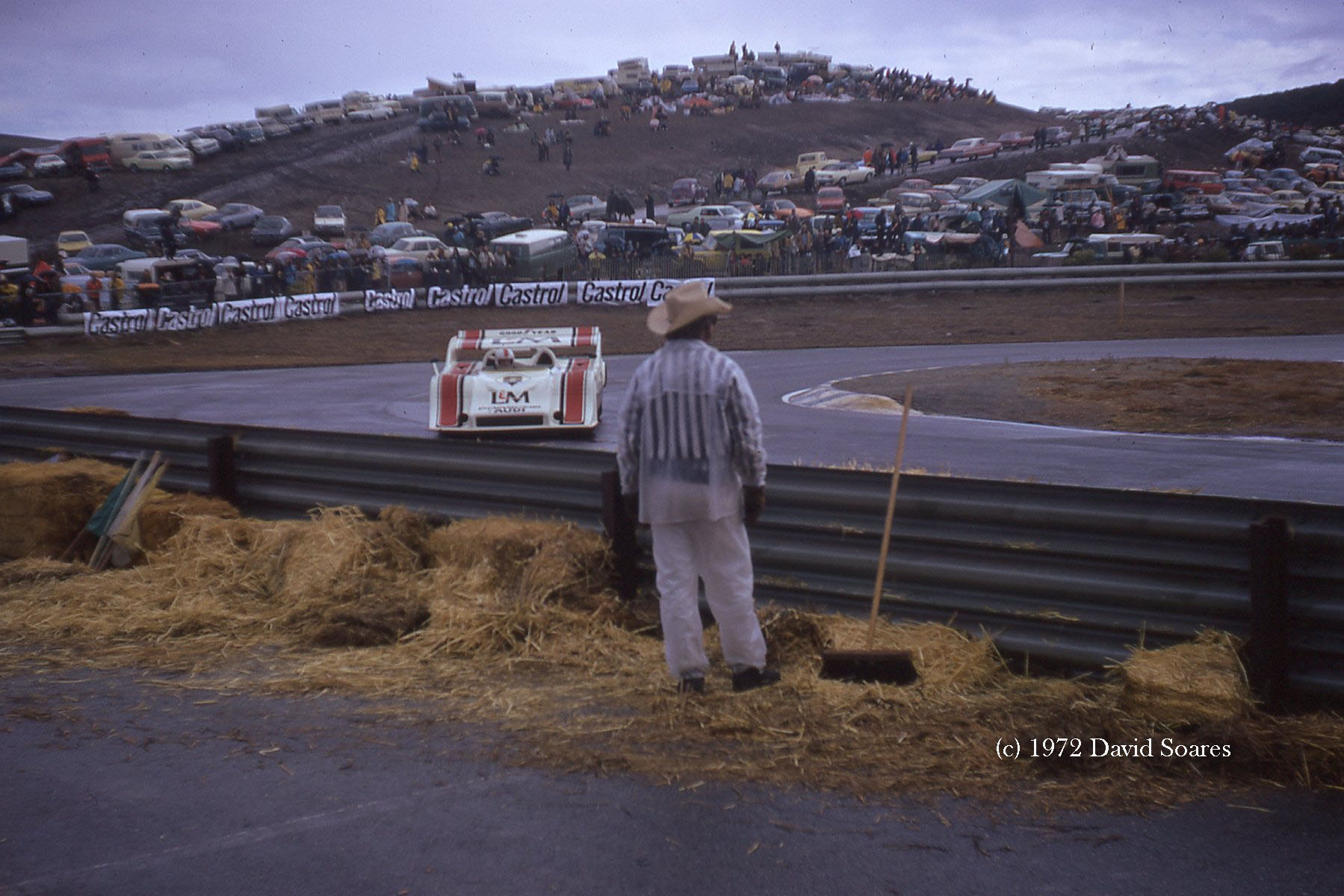
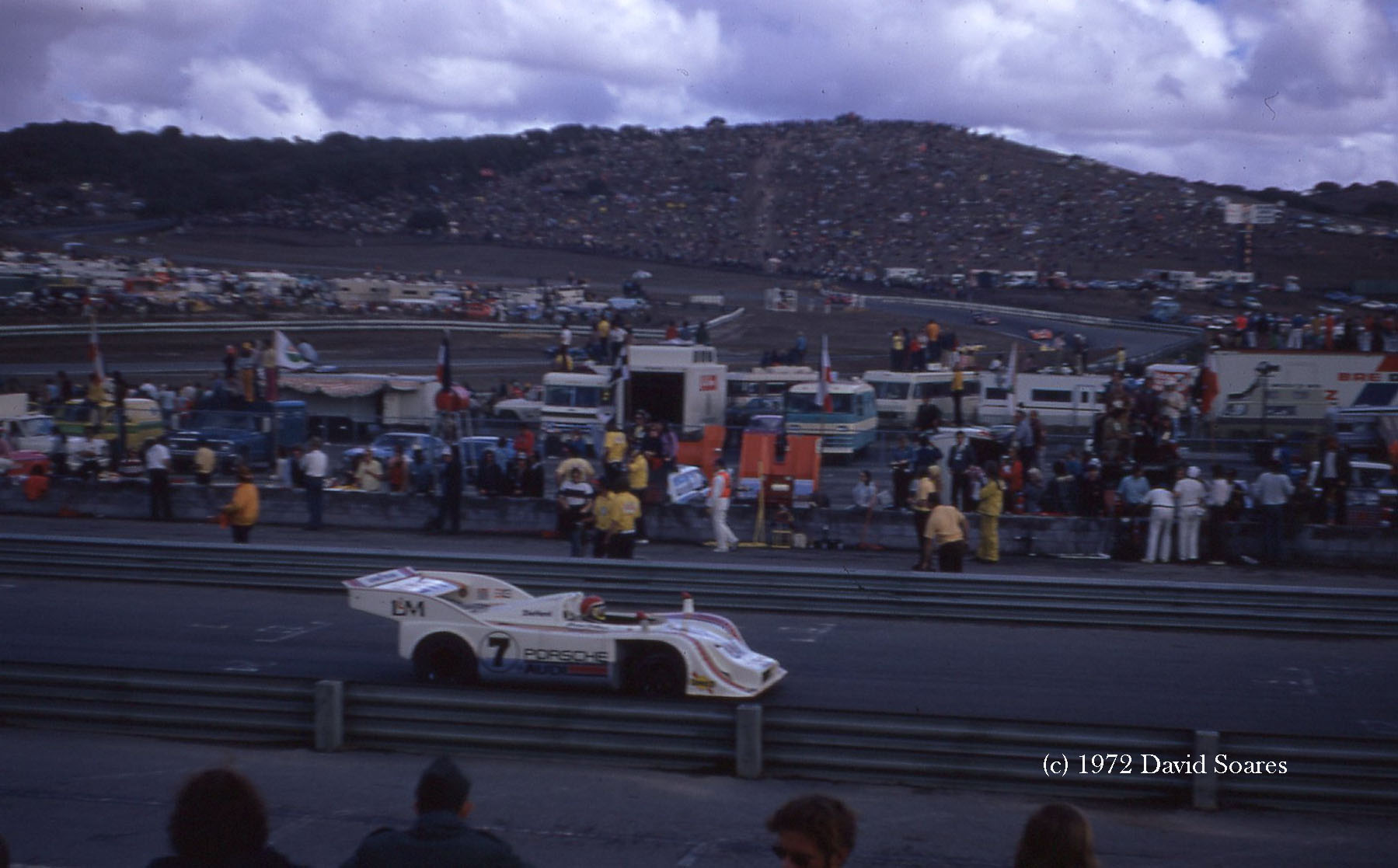
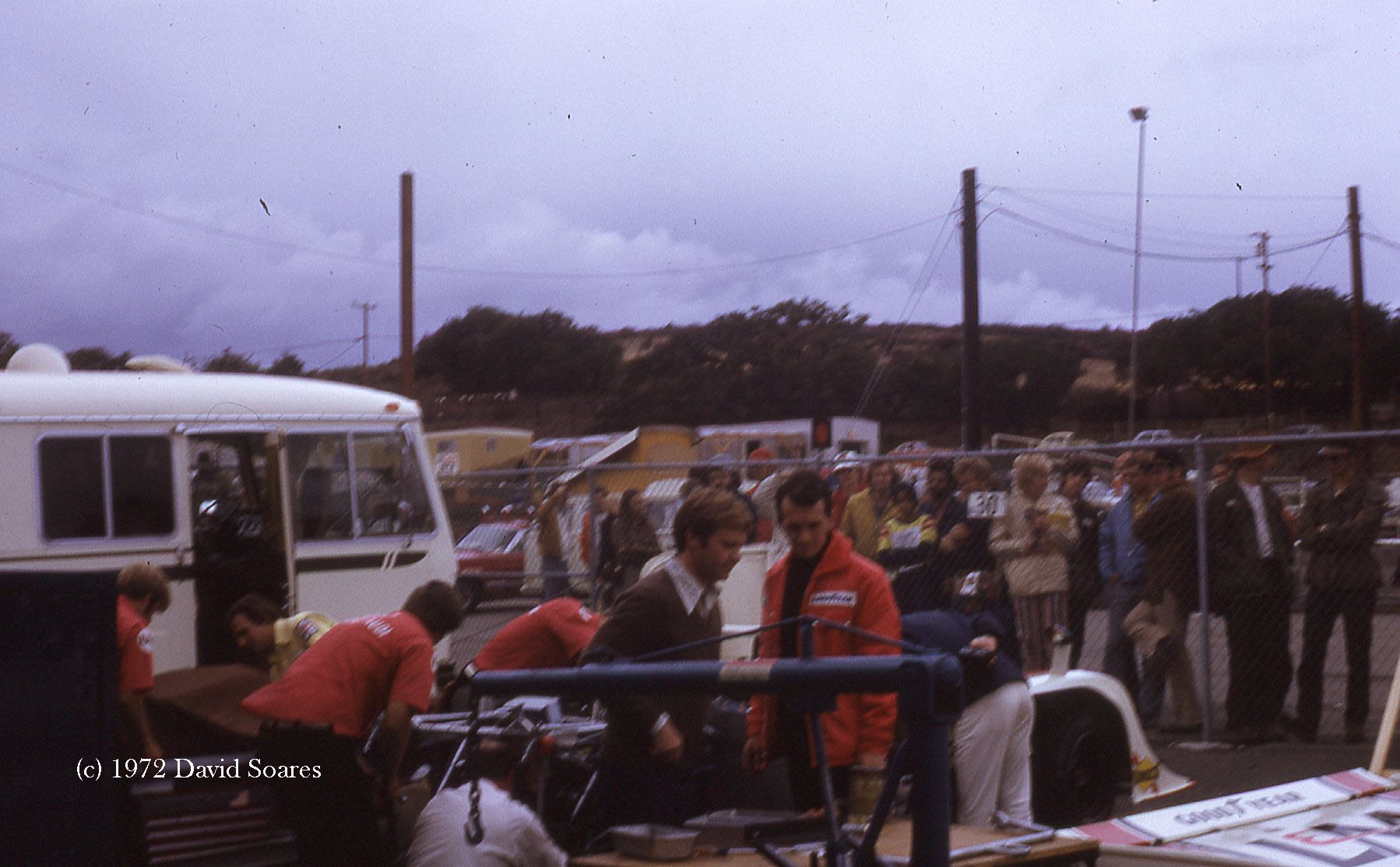
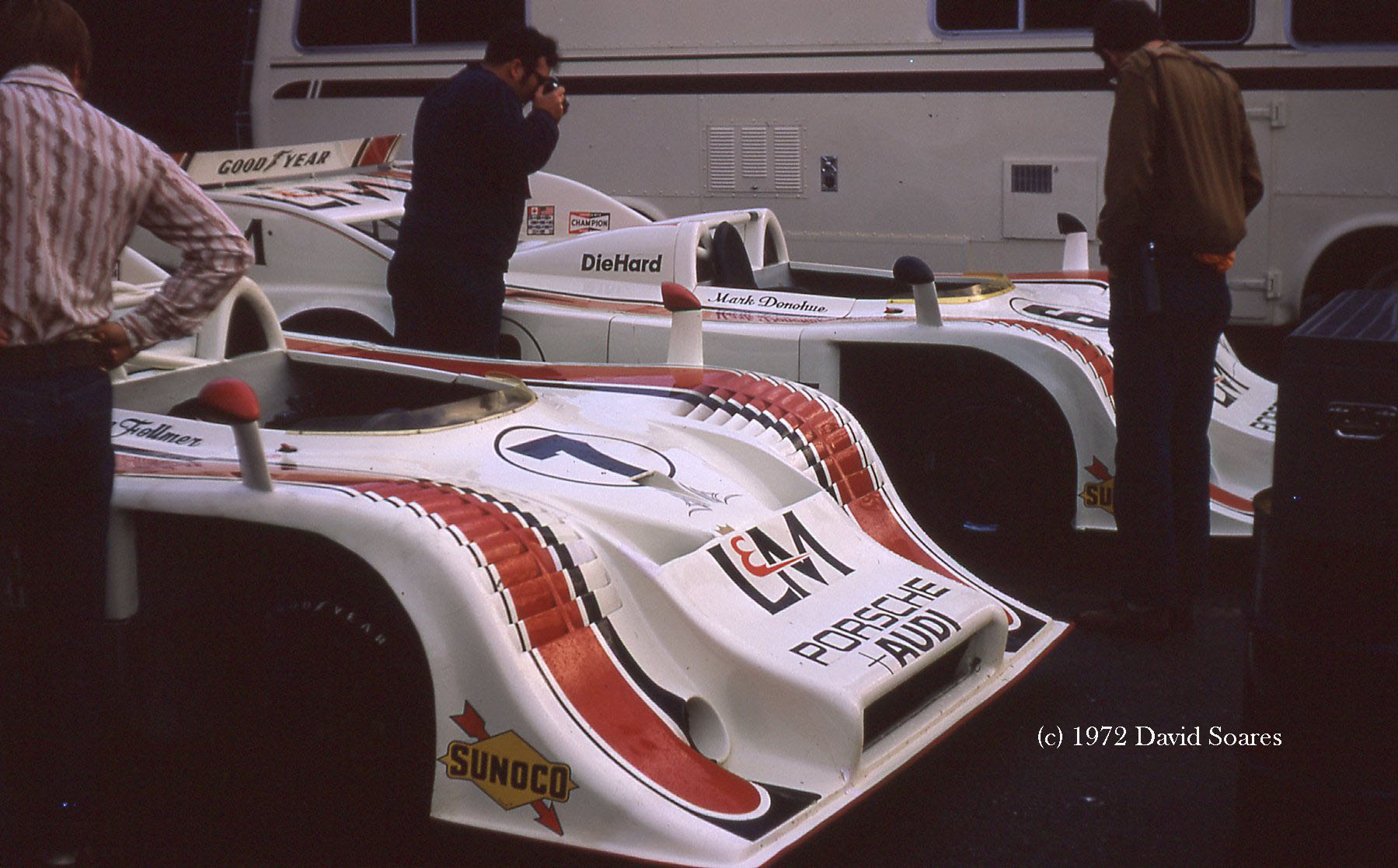
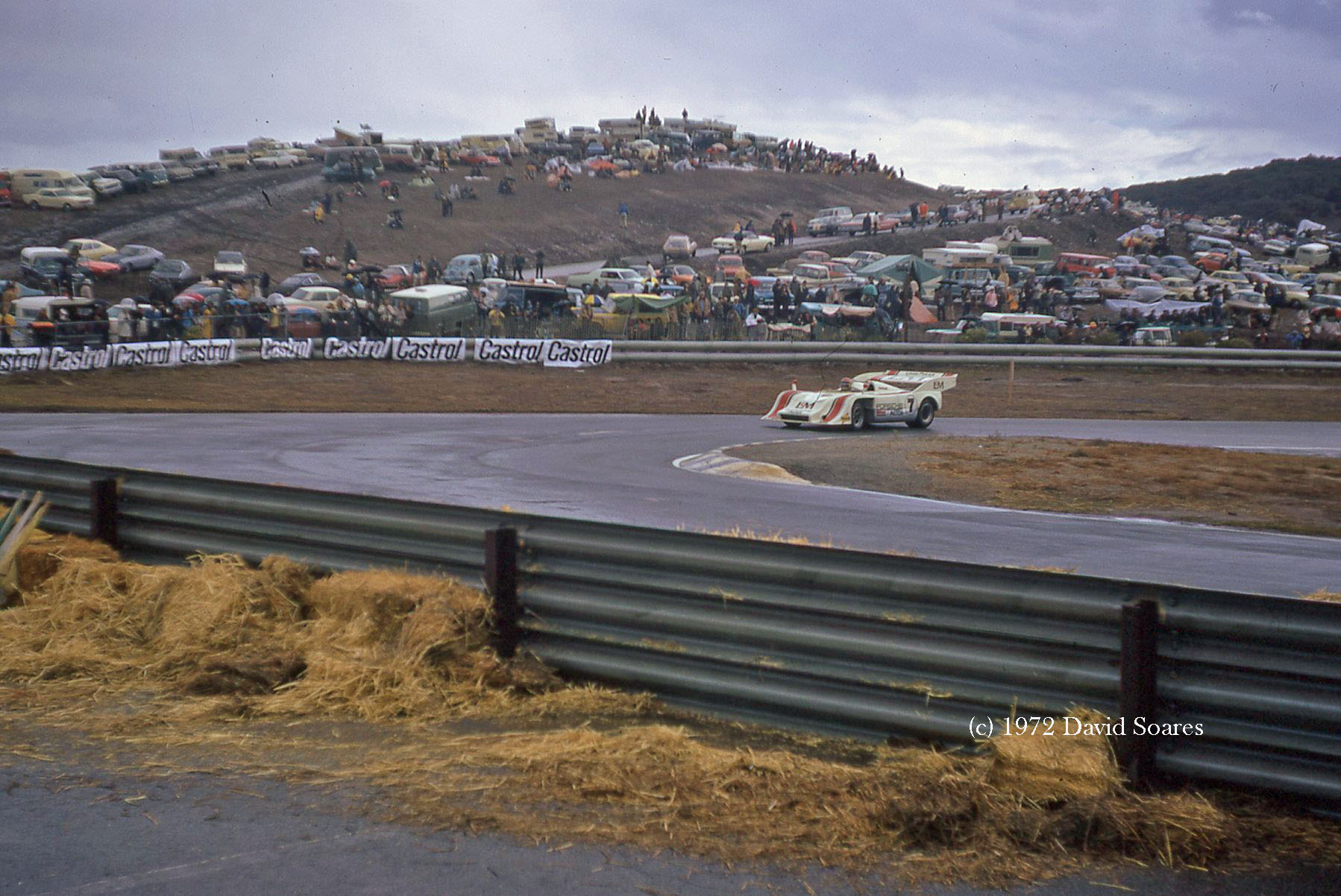
Ten days after, I went home to 1972 once again.  The proprietor of this website, Mr. Brooks, has been after me for years to purchase a decent scanner to digitize my trays of Kodachromes from the amazing early-‘70’s Laguna Seca Can-Am races that I’ve been carrying around since my boyhood.  There is no sight or sound like a field of thundering Group 7 cars taking the green on the front straight at Laguna, driven by the likes of Revson, Hulme, Donohue, Follmer, Siffert, Stewart, Andretti, Oliver, Cevert, Scheckter, Elford, and Redman.  I freely admit to having been warped for life by the experience by a monkey that I will never get off my back.

Can-Am Rev 5

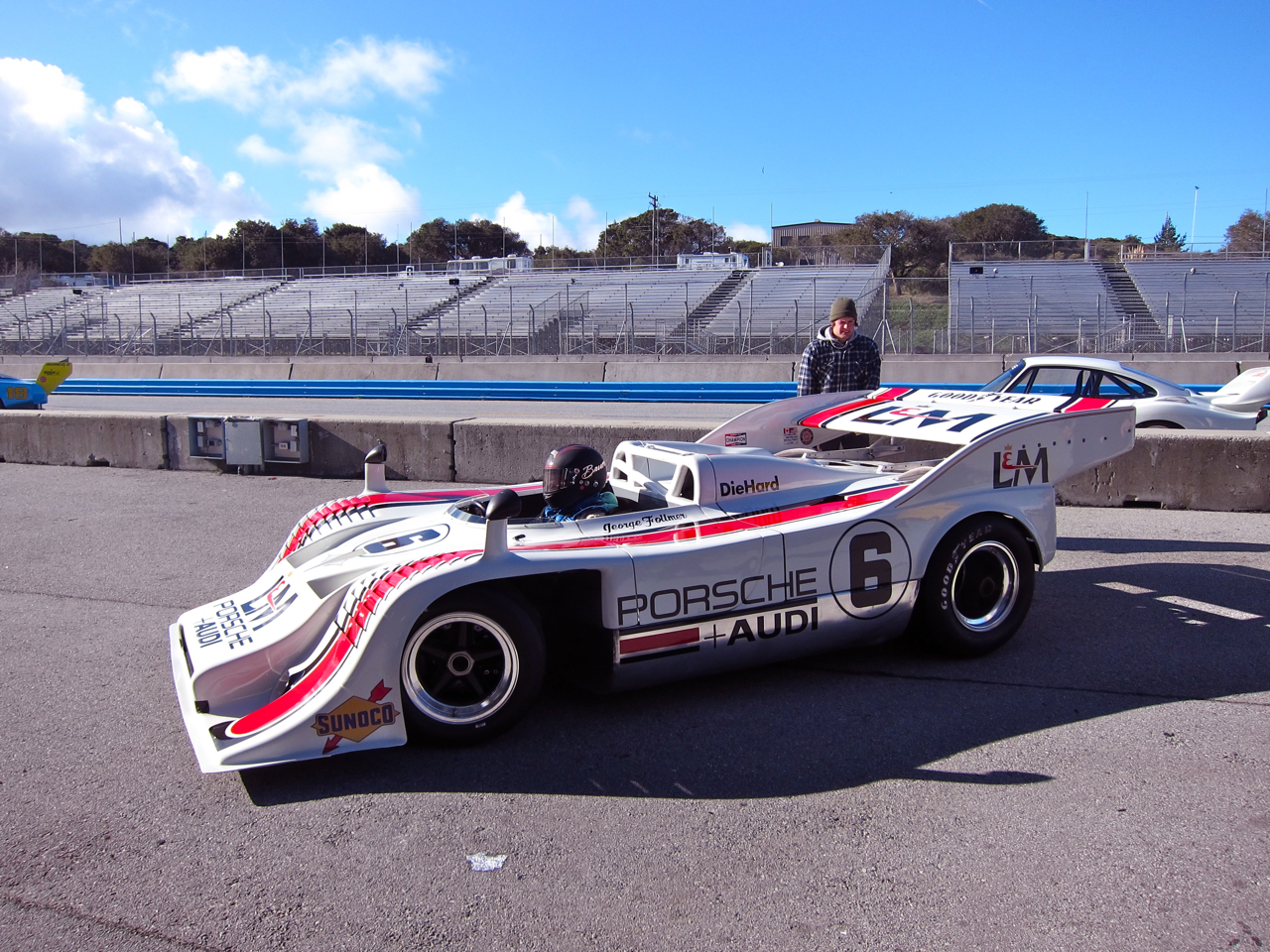
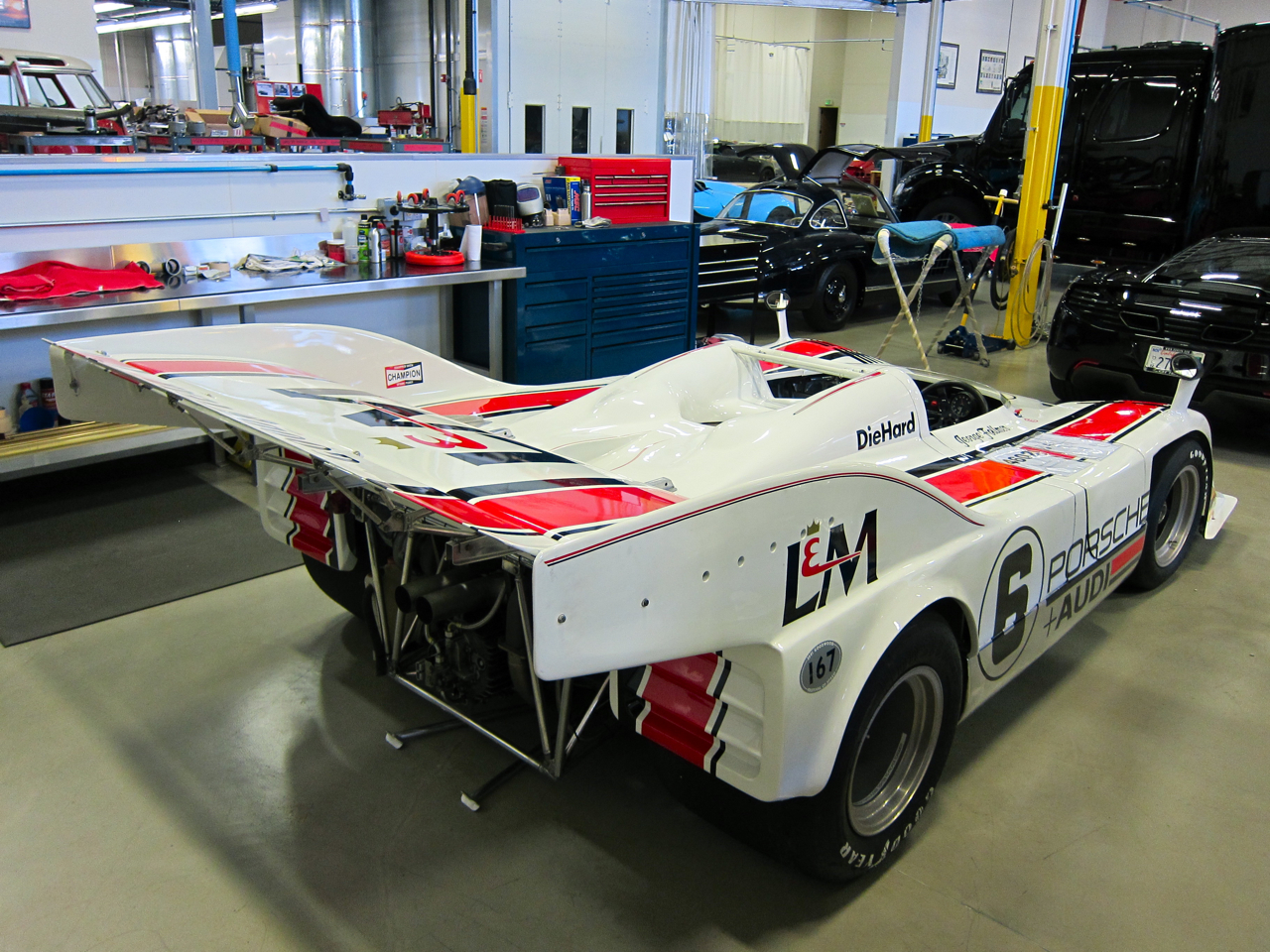
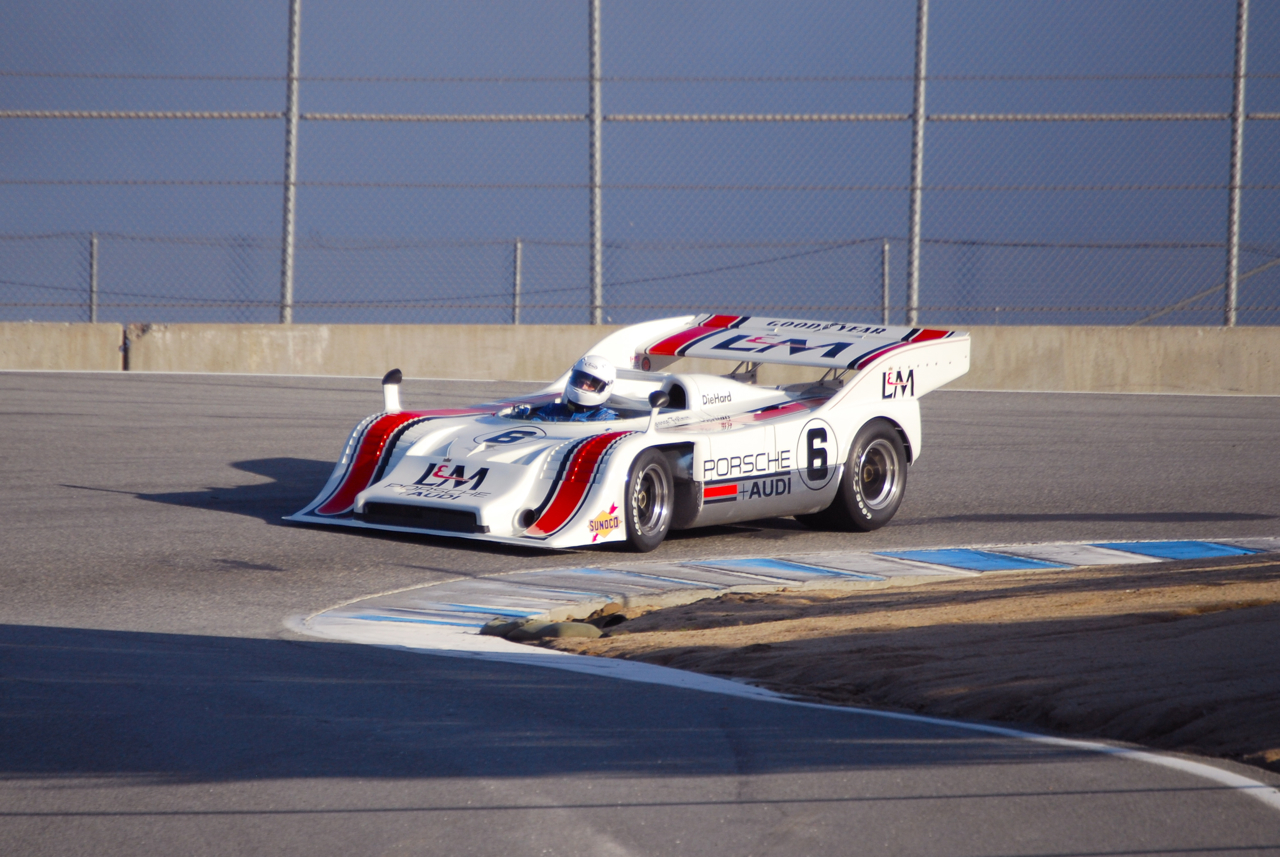
My neighbor down the road, Bruce Canepa, recently began fettling George Follmer’s 1972 Can-Am championship-winning Porsche 917/10, chassis -003, for the new owner after handling the $5.5M sale this past August at Mecum’s Monterey auction.  The crew of his state-of-the art facility in Scotts Valley, California is handling several cars for the same enthusiast owner, including Peter Revson’s 1970 L&M Lola, Denny Hulme’s 1970 Can-Am championship McLaren M8D, and the ex-Jackie Oliver 1974 champion Shadow DN4 recently purchased from Don Nichols.  Bruce is no stranger to the mighty 1000-horsepower 917/10, having owned and raced the ex-Georg Loos chassis -017 for the past decade.  The car was to be rolled-out shortly after New Year’s at a private track day at Laguna Seca, where I had seen the car raced over 40 years ago.

Mark in 9 1972

Much has changed at what is now known as Mazda Raceway Laguna Seca in the four decades since the original Can-Am, but in many ways the start-finish straight is like it was when I was a teenager with hair hanging down below my shoulders and a borrowed range-finder camera.  The day began wet, just as the weekend did back in ’72, but in the afternoon the clouds parted and the track dried.  Mr. Canepa took -003 out for a few laps to warm the fluids and conduct a final systems check before turning the car over to its new owner.  Bruce came around for his final lap and I stood at the pit wall as he properly opened-up the throttles the way George Follmer did back in the day.  Suddenly, I was transported back in time by the whoosh of 12 air-cooled and turbocharged cylinders making a big chunk of their Metzger-designed 1000 horses.  The sight and sound of a 917/10 returned to its stunning white, red, and black L&M tobacco livery literally made me weak in the knees.

Follmer 72

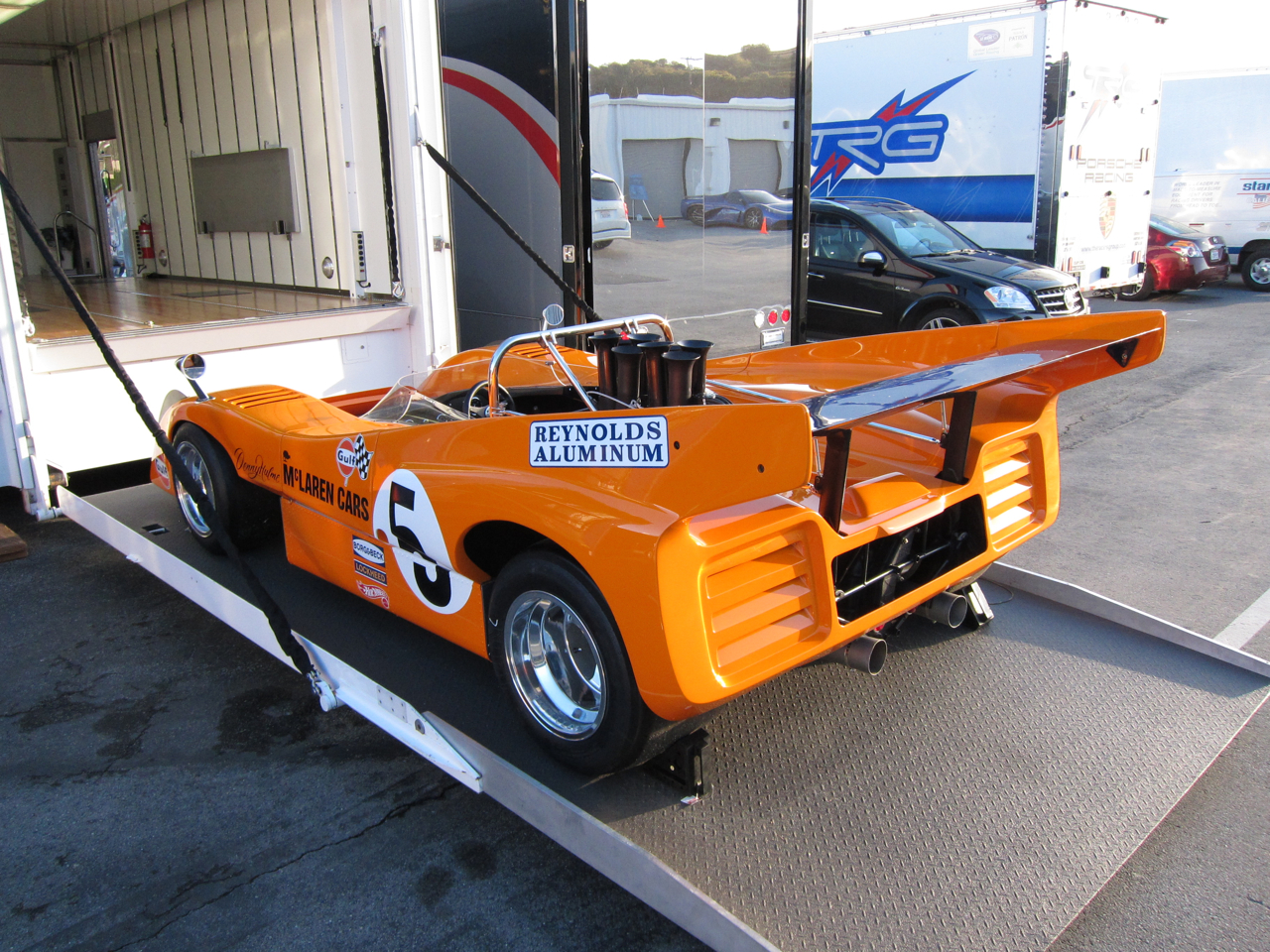
What was special about those Canadian-American Challenge Cup races?  The races were, after all, just races.  The reason that we turned up every year was to see what was going to come off the trailers.  The fields of Group 7 were incredibly diverse.  Jim Hall introduced wings and sucker-cars for Hill and Elford; Gordon Coppuck’s papaya-orange Big Macs driven by Bruce, Denny, and Revvie were different every season and always better than the Trojan customer cars; Don Nichols’ AVS Shadows were truly innovative; Eric Broadly’s Lolas gave drivers like Surtees, Stewart, and Donohue something new and different; and Hans Metzger and Helmut Flegl changed the game with their 917 variants for Siffert, Donohue, and Follmer.  The amazing cars were reason enough to turn up, and in those days before Led Zeppelin performed at Bill Graham’s first stadium show, thousands did.

Mark D 1972

Most pundits have wanted to place blame for the demise of the Can-Am at the feet of Roger Penske and Mark Donohue, who with Metzger and Flegl developed 1972’s 917/10 into the amazing 1200-horsepower 917/30, but I will have none of it.  The year 1973 was the beginning of a long global economic crisis linked to oil.  Nobody had the budget to go racing in the unlimited class, and gas-hog 8-liter Chevy’s and 5.4 turbo Panzer’s were far from politically correct when most Americans were lining-up for hours to simply pump gas into their Pintos.  The result has been decades of spec and consumption-based sportscar formulae which lack the pizzaz and diversity of the Golden Age of the Can-Am.

Papaya Orange

Today, with the takeover of the ALMS by NASCAR’s Grand-Am subsidiary, we are again being fed more spec-formula pablum.  Close racing is promised, between the same cars and teams year after year.  No diversity.  No anticipation of seeing something new, different, and better.  The racing will be good, but if I want to see good racing I can watch the shit-boxes of the WTCC.  This is why Rich Guys lined-up transporters at Laguna to run a bunch of old cars rather than invest in spec-racers.

Can-Am Rev 2

As Robert Plant crooned 40 years ago in Stairway to Heaven, “Ooooh, it makes me wonder.”  Why can’t we go back?

Paddock Pair Left 1972

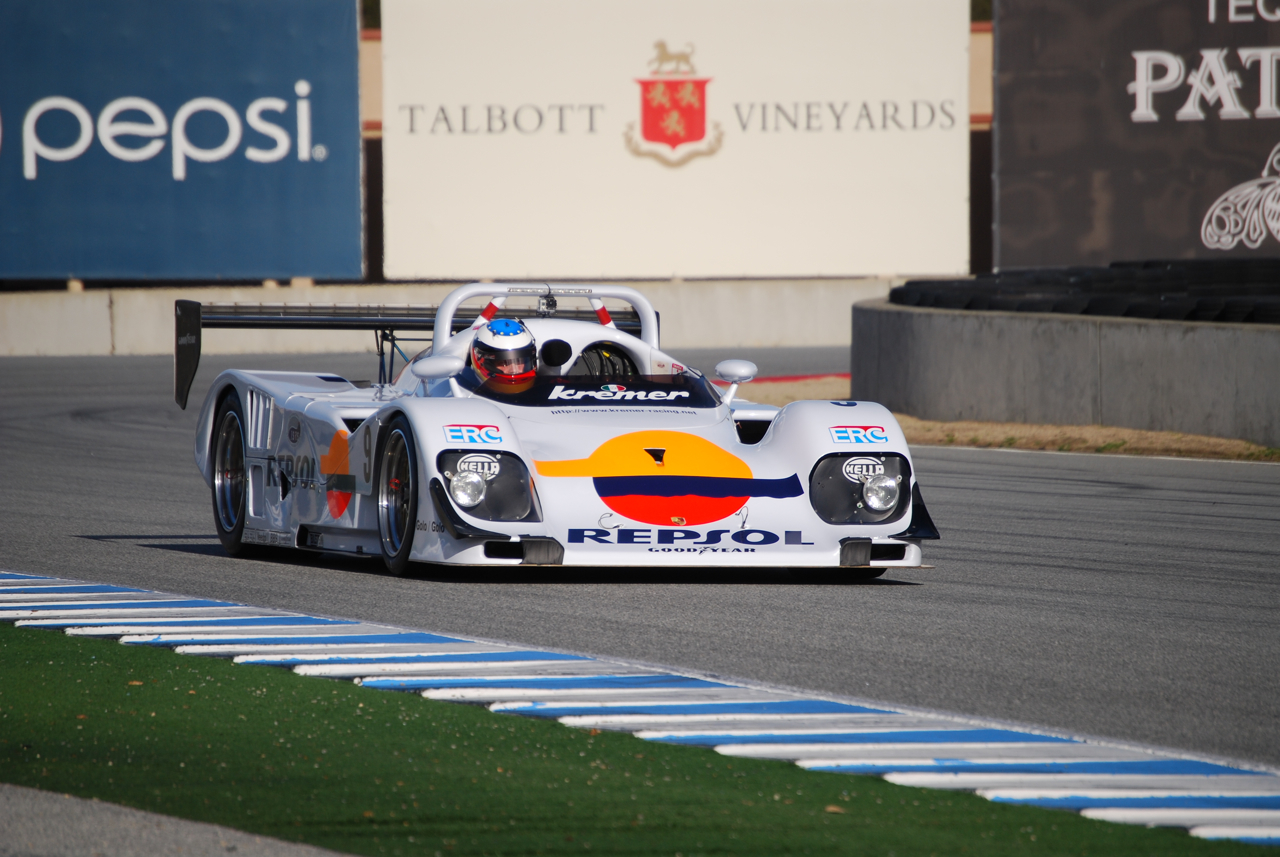
Kremer

LMB

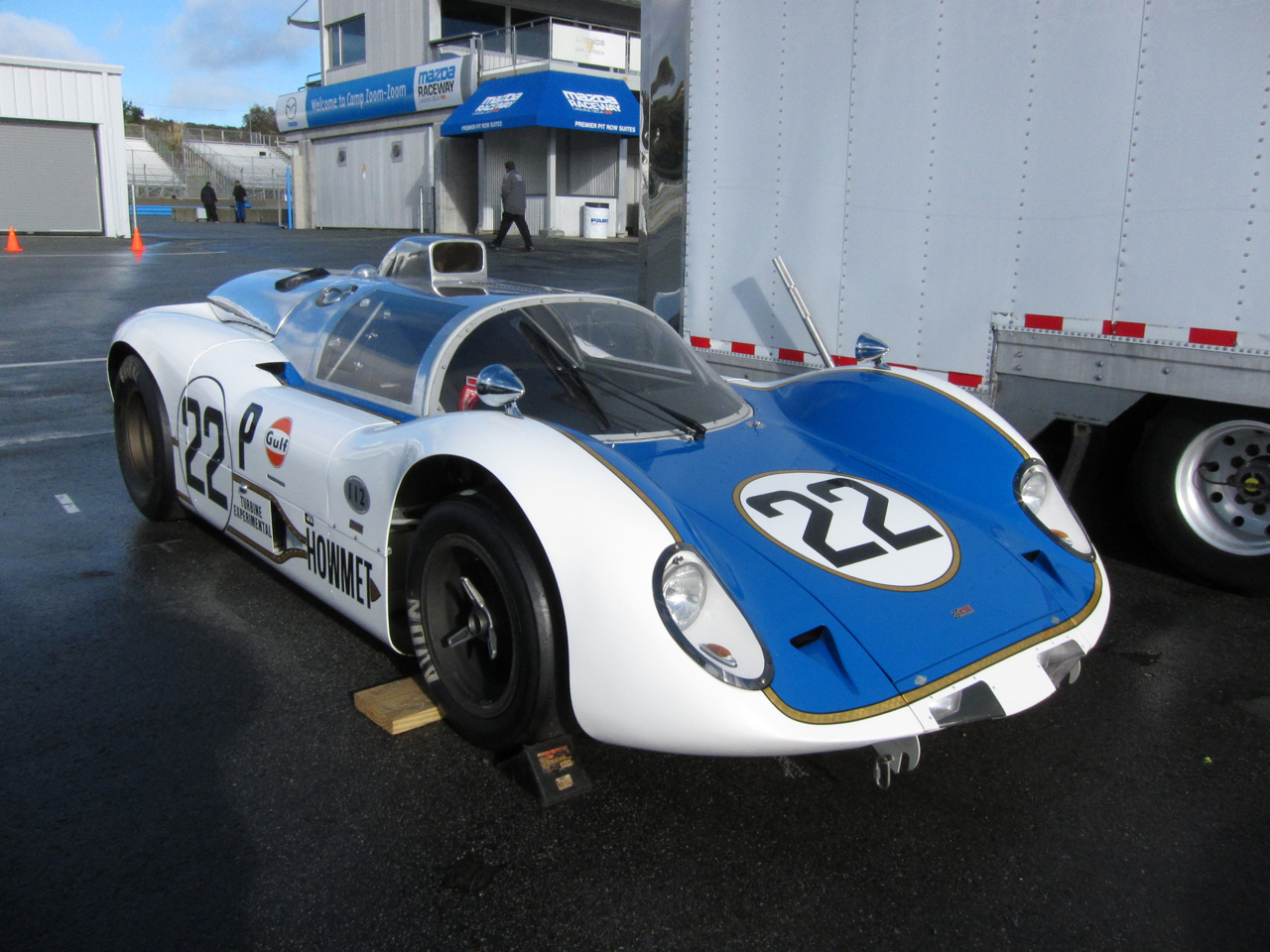
Howmet


Follmer in 9

David Soares, January, 2013


The View from Baku

Janos Wimpffen sends us an updated despatch from the shores of the Caspian Sea, as ever his analysis cuts straight to the chase. Having been fortunate enough to have fantastic imagery from Pedro, we are now doubly fortunate to have available from the organisers, some of David Noels’ excellent work I understand. NB the press manager, Rene de Boer, now informs me that the great images below are also the work of Raymond de Haan, so I am pleased to give credit where it is due.

Zero to 100 in a Few Days

The City Challenge GT race held in Baku, Azerbaijan on the last weekend of October may have been off the radar for many racing fans. It shouldn’t be. It was a great successful on many levels. In addition to some fine track activity, the organization and atmosphere was top notch. It should herald a new era of street circuit racing and has opened many eyes to how motorsport can expand its horizons to new markets and conversely, how some excellent corners of the globe can be exposed to the motorsport community.

Throughout the past few decades both Formula One and Sports Car Racing have been exported to ever more exotic locales. Each move has expanded the global horizons of the sport. The City Challenge race in Baku proved to be a success on a large scale, bringing top level GT racing to a local audience of tens of thousands and broad TV coverage of a new age of street circuit racing.


The short of it was that the pairing of Fred Makowiecki and Stef Dusseldorp scored a convincing win in the Hexis Racing McLaren MP4-12C. The 3.8-liter turbocharged supercar has proven to be formidable in these sprint settings. They had to overcome a persistent challenge from three BMWs entered by anotheroutfit regularly seen on the GT circus, the Vit4One Racing Team. The Z4 of Frank Kechele and Mathias Lauda was rarely more than a few seconds behind the eventual winners.

The past few seasons have proven to be both the best and worst of times for GT racing. The American Le Mans Series has revelled in the production based class as it has provided some of the finest contests in that championship. Apart from North America, the GT3 specification has become the global norm and many of the nationally based series using the corresponding balance of performance based rules have seen ample fields with a mix of professional and amateur drivers. However, the concept has struggled at the highest level with the FIA GT1 World and European GT3 Championships both foundering. The former, which despite the name used GT3 based machinery, was cancelled after a mediocre 2012 season.

Undaunted, the German based City Challenge company launched a new GT3 formula concept this October. They had previously been associated with FIA GT races held in downtown Bucharest, Romania, in 2007-2008, and now ran a pilot race for a potential series of an urban based championship a year or two down the road. The chosen venue this time was Baku. A quick geography lesson: it is the capital city of Azerbaijan, a former Soviet republic in the Caucasus area, bordering the inland Caspian Sea.

Baku is a quite prosperous locale, currently undergoing an oil boom with a pipeline that feeds Europe. It had seen such oil riches in the days of the Rockefellers in the 19th century as well as success much earlier as a transport hub for the silk trade. As a result there is wide mix of building styles, with some spectacular new architecture. Although there is some volatility in the region (Iran borders on the south), the Turkic Azeris enjoy a very stable setting.

The short (2.4-kilometre / 1.3-mile) circuit has been laid out near the waterfront and around a complex of government and hotel buildings. It has the usual string of 90-degree bends, interspersed by a few chicanes to manage entrance speeds. The front boulevard is wide and long enough to allow the odd pass or two.

The City Challenge is more than just a motor race with a plethora of music and arts events as well such as a Cirque du Soleil like acrobatics show. Despite the wealth, the country has no motorsport heritage at all, so an event if this stature is a rapid introduction to sports car racing at the highest level. This dearth of a past has led to some odd questions from the local press such as, “how do I sign up to drive?” No, it’s not that amateur.

All of the infrastructure, expertise, and most of the teams were imported from Germany, giving the event much of the feel of the ADAC GT Masters series, currently Europe’s most successful GT3 based series. Teething glitches aside, the event proved a great success as both the local and German organizers stepped forward to put together a truly world class extravaganza.

The format of the Baku City Challenge race included five sessions that matter. These consisted of one 30-minute qualifying period for Driver One and another for Driver Two. They set the grid for a pair of half-hour sprint races, again, one for each of the assigned drivers. Saturday’s solo events were followed by the main event on Sunday, a one hour race with a mandatory pit stop and driver change.

There was also imported star power as former Grand Prix driver Jos Verstappen joined former World and IndyCar champ Jacques Villeneuve in one of the three BMW Z4s in the field. That nearly came undone when the veteran Canadian slapped the wall during one of the free practice sessions. A local welder was summoned. Dragging his equipment into pit lane with an old Lada the BMW was repaired overnight.

Indeed, this was just one example of an amazing can-do local spirit. In the weeks before the race the German organizers were concerned about the Azerbaijanis ability to construct the course. The benignly autocratic government “urged” dozens of contractors to suspend other projects and it became a 24/7 effort to install barriers and fencing. The results were top notch. One can think of many other countries where the results would have been delayed, slapdash and met with much opposition. In the end, one could sense a keen and genuine pride from the citizenry.

Returning to the race, the sharp end of the field included Franck Kechele and Matthias Lauda (Niki’s son) in one of the other Vit4One BMWs and a pair of McLarens from FIA GT champions, Hexis Racing. Another headline driver was Bernd Schneider in one of the Heico Motorsport Mercedes SLS AMG gullwings. Two Corvettes, three Ferraris, and a seemingly endless string of Cup and R-type Porsches completed the 24-car entry. The word “entry” is important to remember as the unforgiving concrete walls of street courses have a tendency to eat cars.

For that reason it is not even worth mentioning the three Lamborghini Gallardos none of which even made it to the first sprint race.

Kechele, Sean Edwards (Mühlner Motorsport Porsche), and Fred Makowiecki traded the top spot in a spirited opening qualifying with the latter’s McLaren prevailing. Makowiecki’s co-driver, rising star Stef Dusseldorp, also claimed the pole for the second sprint ahead of the BMWs of Lauda and Nicholas Mayr-Melnhof.

All indications were that the races would be fought between the BMWs, the McLarens, and the Edwards Porsche as these three marques were alone in swapping the fastest times.The first sprint was hard to describe as anything but processional. Makowiecki led from green to checker with Edwards only able to close up briefly when the McLaren bobbled at one of the chicanes. There were no position changes among the top eight but at least everyone stayed on the island.

The same could not be said for the second sprint. There was some modest chaos at the start when the mid pack runners arrived at the first chicane. Some took to either side of the rumble strips while at least one Porsche launched over the miniature markers. All continued without any real contact. More important for the race there was also some jostling at the front with Lauda edging past Dusseldorp while Alvaro Parente in the other McLaren demoted the rest for a hold on second place.Just as it appeared that there would be a good four car tussle there was a collision further back between a Ferrari and a Mercedes. Both cars kept going but Giacomo Barri’s damaged 458 was spilling fluid and the following Corvette of Mitch Mitländer spun on the coolant and clouted the wall, bringing out a red flag. After a 20 minute delay the field was released for a second time. Again we looked set for a good fight but eight minutes later the remaining Corvette was involved in a far more serious incident. Jürg Aeberhard struck the wall hard at the lap ending Turn 16. The car caught fire and although the driver scrambled out safely on the passenger side the wall had been moved a good meter and debris was scattered in every direction. The race was stopped again—this time for good. As the nearest Chevrolet parts supply house is the better part of a continent away, the starting field for Sunday’s finale dwindled once more.

It seems that neither of the big American cars was able to get their tire temperatures quite hot enough. The results certainly spoke to that possibility.The grid of the one-hour feature was to have been based on the aggregate of the two sprints. However, the stoppage led to some head scratching as to rules interpretation. It was decided that due to a clause in the regulations the grid for the 60-minute run would be based on the results of the morning’s second qualifying and the first sprint. Thus the carnage filled second sprint was beside the point.

At least the large crowd was well entertained, not only by the circus and music, but also by a historic F1 race and a drifting demo.

The less damaged Corvette was repaired for Sunday and there was a driver change in the No. 66 Porsche. Team owner Timo Rumpfkeil stepped aside in favor of a rising Dutch star, Beitske Visser, who at age 18 is the youngest woman to have won GT races in her home country.

Here was the top of starting grid after it all was settled:

#17, Hexis Racing, McLaren MP4-12C, starting driver, Frederic Makowiecki, 2nd driver, Stef Dusseldorp

#33, Vit4One, BMW Z4, Frank Kechele, Mathias Lauda

#18, Hexis Racing, McLaren, Rob Bell, Alvo Parente

#35, Vit4One, BMW, Yelmer Buurman, Nikolaus Mayr-Melnhof

#6, Heico Motorsport, Mercedes-Benz SLS AMG, Sergey Afanasyev, Bernd Schneider

#57, Vit4One Italy, Ferrari F458, Stefano Comandini, Matteo Bobbi

#9, Mühlner Motorsport, Porsche 997 GT3R, Karim Al-Azhari, Sean Edwards

#7, Heico Motorsport, Mercedes-Benz, Mike Parisy, Maximillian Buhk

#58, Vit4One Italy, Ferrari, Louis Machiels, Greg Franchi

#34, Vit4One, BMW, Jacques Villeneuve, Jos Verstappen.

The rules for the 60-minute race called for a mandatory stop coming within a 10-minute window. The stop had to consume at least 75 seconds during which there was a required driver change and a swap of the spec Hankook tires. Most of the teams had learned their lessons and the circuit well enough so that the start was perhaps the smoothest of the three races. Nevertheless, the Tews Porsche grazed the wall and spent much of the race in the pits having one corner repaired. The two Mercedes exchanged a love kiss which was enough to allow Mike Parisy to pass Sergey Afanasyev, but more importantly it played a role in a demon start by Karim Al-Azhari, launching his Porsche past the gullwings.

Makowiecki built up a three second lead and this diminished a bit as delicate began of lapping slower cars around the unforgiving corners. The McLaren’s position was solidified a bit when the chasing BMWs became distracted by their own internal fight. Frank Kechele was holding off the advances of Yelmer Buurman but a slide behind the Government House nearly cost the German driver second place. Most of the leaders waited until quite late in the pit stop window to make their required calls, mostly because they were all using their faster drivers at the start and wished to maximize their contribution. Kechele was the first of the leading trio to stop, handing over to Lauda. Makowiecki handed over to Dusseldorp which briefly left Buurman in the lead before the second BMW stopped for a swap to Mayr-Melnhof.

Not all of the stops went this smoothly. The crew of the Easy Race Ferrari neglected to tighten one lug nut and Giacomo Barri took the wobbling car behind the wall on the out lap and not risk catastrophe out on the circuit. One of the other Ferraris was penalized for a pit stop violation and when former GT champion Matteo Bobbi came into the pits to serve the penalty he promptly stepped from the cockpit and with an Italian gesture or two sulked off down the streets of Baku. It negated an excellent start by co-driver Stefano Comandini.

Another car that had run well at the start, the No. 9 Porsche, also had to visit the penalty box, as their scheduled stop had been too short. That squandered the fact that Edwards had set the fast lap of the race. Lauda closed on Dusseldorp during the third quarter of the race but it was clearly going to be the McLaren’s day. Bernd Schneider worked hard to recover spots for his Mercedes and after several laps worked past the No. 9 Porsche. Earlier in the race the lone Corvette had spun, stopped, and continued, but with 8 minutes to run the No. 20 Porsche was stranded on course when its engine electronics went dead. A very short and efficient full-course caution was needed while it was towed off and the balance of the race went on unimpeded with Dusseldorp winning by five seconds. The young Dutch driver expressed the sentiments of most of the participants, “we came with no expectations and are going home very impressed.”

Indeed, the real winners of the inaugural City Challenge race were the street circuit concept, GT racing in general, international motorsport diplomacy, and the people of Baku.

Janos Wimpffen, October 2012


Sunday in Azerbaijan

More great images from Pedro

The Sun Rises in the East

Pedro has been out and about again…….more great images from the Caucasus.

The Lotus Eaters

If you think the current Grand Prix season has been full of unpredictable excitement, cast your mind back thirty years to 1982 when, against a backdrop of the FISA/FOCA wars and the transition from normally aspirated engines to turbos, no less than eleven drivers won races during the 16-race campaign.  Keke Rosberg wound-up as World Champion despite only winning one of the races – and he was driving an ‘outdated’ Cosworth-powered Williams.


There were plenty of other dramas too, the most tragic being the loss of Gilles Villeneuve at Zolder. Shortly before his fatal accident, the French-Canadian became involved in a spat with Ferrari team-mate Didier Pironi over driving tactics. The Frenchman – full of remorse at not having patched things up – himself suffered an horrendous accident during qualifying for the German Grand Prix a few weeks later, badly damaging his legs and so effectively ending his driving career. However, Patrick Tambay salvaged something for the Prancing Horse by winning that race at Hockenheim and Ferrari went on to claim the Constructor’s title despite winning fewer races than both Renault and McLaren.


Amongst the drivers to win races that year was Italian Elio de Angelis, the first his of his two victories for Lotus, when he crossed the line a scant 0.05-seconds  before Rosberg at the Osterreichring.

Amidst great  jubilation on the pit wall Colin Chapman famously threw his cap into the air. Little did we know that this was to be the last Lotus Grand Prix victory to be witnessed by the team’s creator for he would die of a heart attack in December that year.


I can actually say “I was there”, for I travelled to the German and Austrian races with Team Lotus, in some style I might add. I had previously worked for Lotus, leaving at the end of 1979 only to be let-down very badly in a promised new venture. I went on to work for a specialist car builder in London, but that business folded too, so I was job hunting.

With the two races being a double-header I thought it would be a good idea to get myself out there to look for work (well, that was my excuse!) but couldn’t really afford it. During the course of the British GP week-end I spoke to Lotus Team Manager Peter Warr about the possibility of hitching a ride on the transporter. To my surprise he was receptive and suggested I call a bit nearer the time. The response to that call was “sorry, no room on the truck but would I mind driving Colin Chapman’s Elite out to Hockenheim? Well, I really wanted a ride in a lorry but I didn’t need asking twice!


On the allotted day I duly left Ketteringham Hall in the black Elite, accompanying the transporter down to Felixstowe and across to Zeebrugge for an uneventful drive down to Hockenheim. Qualifying was overshadowed by Pironi’s horrendous accident and for the Lotus boys it was not a great day either. They had enjoyed little success so far in the season with the recalcitrant Type 91; de Angelis qualified 13th with Mansell even further back, lining up 18th on the grid.

The race saw de Angelis retire with handling problems but Mansell  salvaged some cheer on his 29th birthday by finishing ninth. We had already celebrated the occasion during the morning when the Goodyear guys marked up one of his tyres in a rather novel way – we all signed it! Despite the disappointments, the Team Lotus boys were as ever in good cheer.

We were sharing our hotel with the Renault team which at the time was hit with some internal strife between drivers Alain Prost and Rene Arnoux. At dinner in the evenings the French crew would raise their glasses with the time-honoured French toast of ‘Proste!’, to which the Lotus table responded very loudly with ‘Arnoux! It then turned into the nightly ritual of a bread roll fight.


I was duly entrusted with taking the Lotus Elite on to Austria, this time accompanied by Kenny Szymanski. Kenny was an American Airlines steward who miraculously managed to arrange his flight schedules so that he always turned up at the right place when a Grand Prix was on and spent the week-ends working as tyre man Clive Hicks’s assistant. Always very entertaining, Kenny was excellent company for the trip – especially as we broke down! Not just anywhere but in a tunnel. A passing mechanic (and a Lotus fan to boot) helped us push it out and we got it going again without really knowing how.

The Elite soon stopped again, our friend still following us. We built-up quite a little party on the hard shoulder as the Renault transporter stopped, the crew showing no hard feelings for the hotel mullarkey! Again we got it going and carried on, only to stop again. This time we were on our own and well into the evening. We were on a hill and couldn’t believe our good fortune when we investigated a side road opposite us to see a small hotel at the bottom, so we coasted down and checked in.

Much to Kenny’s amazement, the person who had checked in just before us lived in the next apartment block to him in New York! The next morning one of the team mechanics came out from the circuit and rescued us; the problem was some dirt in the fuel pump.

The Osterreichring enjoys a beautiful setting up in the hills with excellent spectating, the team’s hotel actually overlooking the circuit. Only downside was a monster thunderstorm that seemed to arrive regularly at 5pm every day! Qualifying proved a tad better than Hockenheim just a week before with de Angelis taking seventh on the grid and Mansell 12th.


In addition to the Elite the JPS-liveried Jet Ranger helicopter was also deployed for the weekend, being used by Colin Chapman to commute from the rather more salubrious hostelry where he and Hazel were staying. Naturally he wanted to land as close as possible to the paddock and was using a small grassed spectator area(!) at the end of the pits as helipad. Mike the pilot and I used to go and shoo the punters away when he was coming in. On race morning Mike and I duly went and taped-off the area and the ‘chopper landed, with the Old Man at the controls, Hazel alongside and Peter Dyke from Players, together with his wife, in the back.

As they landed, Mike went to the pilot’s door, yelling at me to go round the other side to open the door. As everyone disembarked, Mike got in, indicating me to do likewise. I obviously looked surprised, so he repeated it. I did as I was told and before I knew it, Mr Chapman was belting me in and putting a headset on me – I could now hear Mike properly above the rotors. “You said you had never flown. I’ve got to refuel so I’ve cleared it with the Old Man to take you with me”.


Talk about no time to panic! He was right, up until that time I had never flown, the reason being that I do not like heights so assumed I wouldn’t like flying. However, with no time to think about it, here I was in this little helicopter of all things. We flew out to a local airfield to refuel and upon returning to the circuit the morning warm-up was on so we followed it from the air – how cool is that! All fears of flying were forgotten and thankfully I had my camera with me so even recorded the occasion. To this day, I’ve never had a problem with flying.


The Italian Air Force aerobatic team had clearly been inspired by the Red Arrows performance at Brands Hatch a few years earlier and went one better by enveloping us in vapour trail as we stood in the pit lane! Once that excitement was over we settled down for an entertaining race that saw a delighted Elio de Angelis pip Rosberg by less than a car length to take a fantastic win. An overjoyed Lotus team swarmed onto the pit wall in celebration, me included, but little did we know then that Sunday 15 August 1982 would be the last time Colin Chapman would throw his famous black cap in the air.

Celebrations were short-lived as it was time to head for home. The Elite was staying behind so I found myself a lift as far as Luxembourg with Dan Partel, an American who had been responsible for re-establishing FF1600 and 2000 championships in Europe. Indeed a European FF2000 round was a support race at the Osterreichring, a young Ayrton Senna led all the way in his Rushen Green Van Diemen, followed home by Calvin Fish, now familiar to Americans as a TV commentator, complete with his delightful Norwich accent!


Once again we broke down, this time a stone jamming a brake on the poverty-model Fiesta that Dan had hired for the trip. From Luxembourg I got a train up to Eindhoven in Holland to spend a few relaxing days with some old family friends. The drama was not over though. They were driving me up to Zeebrugge to catch the ferry one evening when, as we approached the Dutch/Belgian border, a car we were about to pass suddenly did a U-turn (on a motorway!) across our path – he turned out to be a Greek who was lost. Both cars were written-off on the ensuing accident, fortunately witnessed by a group of Dutch policemen so there was no doubt about where the fault lay. The police even took us back home and I eventually caught the ferry home the next day.


So ended a momentous fortnight, the memories of which have remained with me to this day.
John Elwin September 2012 – All images courtesy of and copyright John Elwin

Lawn Dressing

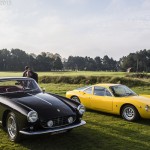
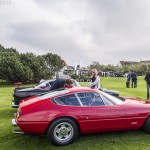
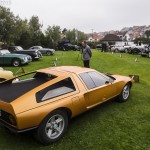
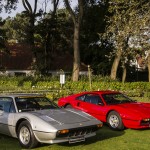
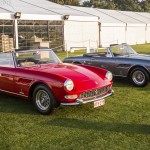
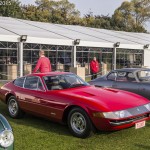
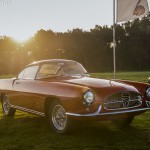
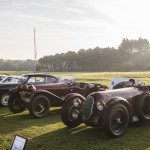
The ebbing of summer in and around London brings a generous portion of automotive exuberance. Perhaps it is the final chance to play with the classic before the nights draw in and the roads get salted. In any case the first weeks of September see a veritable cornucopia of Concours of Elegance in the UK, and the crop of 2012 is especially rich.

I got the first inclination that last week’s Salon Privé was going to be extraordinary when I took a wrong turn down by Isleworth’s famous pub, The London Apprentice. Attempting to retrace my route I was passed by the above Lamborghini Miura that was being closely followed no less than three Mercedes Benz 300 SL Gullwings. Heavy metal on the bank of the Thames…………

Frankly that set the tone for the rest of the day. Utterly amazing cars in a beautiful setting and almost perfect weather.

Syon House is the London residence of the Duke of Northumberland and is now host to the Salon Privé, the event having outgrown its original home, The Hurlingham Club. It is a fine location, matching the quality of the cars on show.

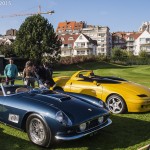
I have already posted about the central display from the ROFGO Collection but by no means did they overshadow the rest. There were stunning cars everywhere, all the colours, all the sizes, all the ages. The FXX was just one of many stars.

Aston Martin chose the Salon Privé to reveal to the public their latest model, the V12 Vantage Roadster.

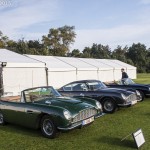
Another lovely drophead was this vibrant Bentley, no chance of losing this in an airport parking lot.

The event honoured two particular cars this year, the Gullwing Mercedes, I had witnessed that myself.

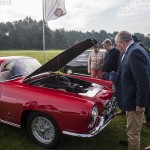
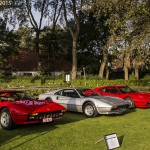
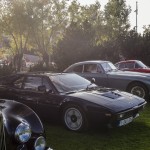
And the Ferrari F40, there were many fine examples on the lawns.


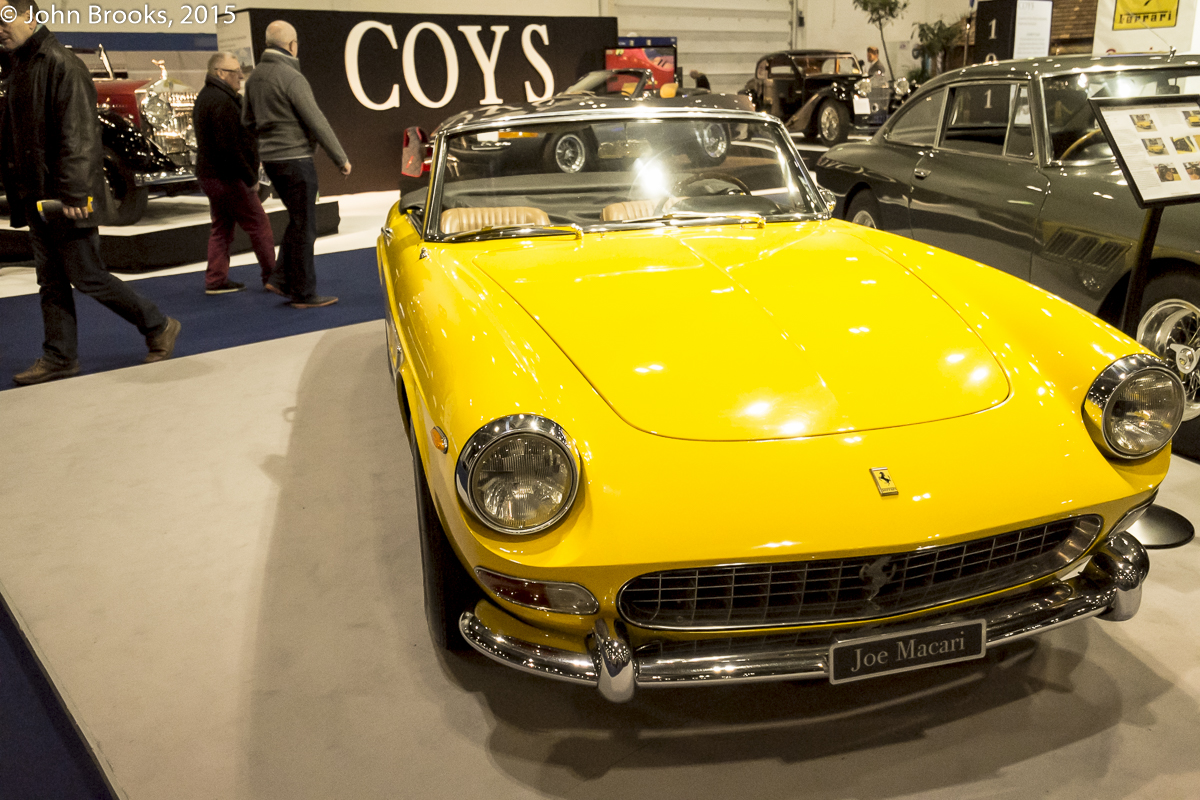
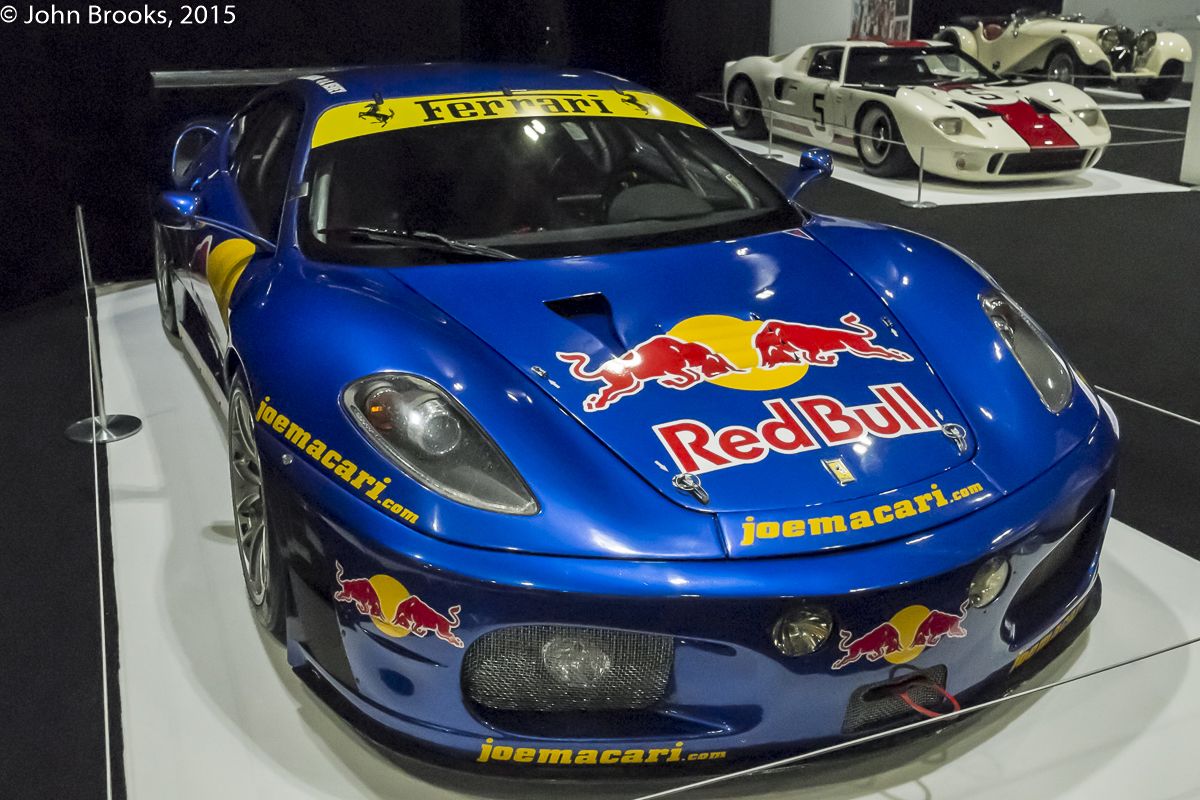
Including this ‘black sheep’ courtesy of Joe Macari.

Mr Macari was much in evidence at Salon Privé, this immaculately restored Dino engine is his handiwork.

As was this MC12

One category on display was that of Shooting Brakes, this Ferrari 330 GT was the last car to be created by Alfredo Vignale. It was brought to Salon Privé by Jay Kay, who must be worn out at this time of the year with the number of shows he attends.

One entry in that class that caught my eye, a fantastic Chrysler Town & Country Car. Looking like it had just rolled off the dealer’s lot, if you try hard you can hear Bennie Goodman and Glenn Miller swinging away in close proximity.

Is it possible to over restore a classic?

Speaking to one dealer who had much experience of cars from the period, he asserted that this beautiful Rolls Royce Silver Ghost is in way better condition today than when it left the factory nearly a century ago. Is that a problem? I suppose it depends on the car, the Silver Ghost can carry it off, one expects to be dazzled.

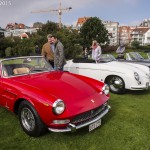
Another car that impressed me was this gorgeous Ferrari 330 GTS, absolutely mint.

Another rarity even by the standards of this event was this Daimler ‘Royal Four’ Limousine.

One of seven examples built to the specification of King George V, this is the only known car outside of the Royal Collection.

The Salon Privé is much more than a collection of fine automobiles in a splendid setting. The entry ticket appears to have a steep price till it is compared to other events of a similar stature. Unlike other motoring events, such as the Goodwood Festival of Speed, which has grown to be a victim of its own success, there is a feeling of intimacy almost like an extended family party. For those not getting behind the wheel later the excellent Pommery Champagne flows, a perfect accompaniment to the barbecued lobster.

For those whose interests extend beyond cars there are several diversions, a chance to window shop in a relaxed manner.

No motoring event can exist without an element of horology, Salon Privé is no exception to this rule.

Despite the retail distractions, the central theme of the day is the car.

And there were some many amazing examples to choose from. Choosing the crème de la crème was the task allotted to the judges, amongst whom was my old mate, Peter Stevens.

The 2012 Salon Privé stands comparison with any of the world’s great celebrations of the automobile, be they in the grounds of Villa d’Este, or on the greens at Pebble Beach. If you are reading this blog, then you should probably be planning to attend next September, I know I am.

John Brooks, September 2012