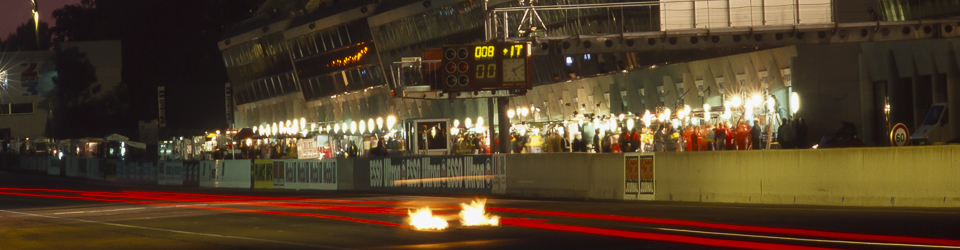
Category Archives: From A Special Correspondent

Imola Investigata

The Imola circuit, the Autodromo Enzo e Dino Ferrari, is best known for the Formula 1 races that have been held in the past, particularly the San Marino Grands Prix, world championship events named after the local republic which gave Italy the chance to have two grands prix each season on her soil. But Imola is not a stranger to sports car races, the very first four-wheeled race held there being for cars with two seats.

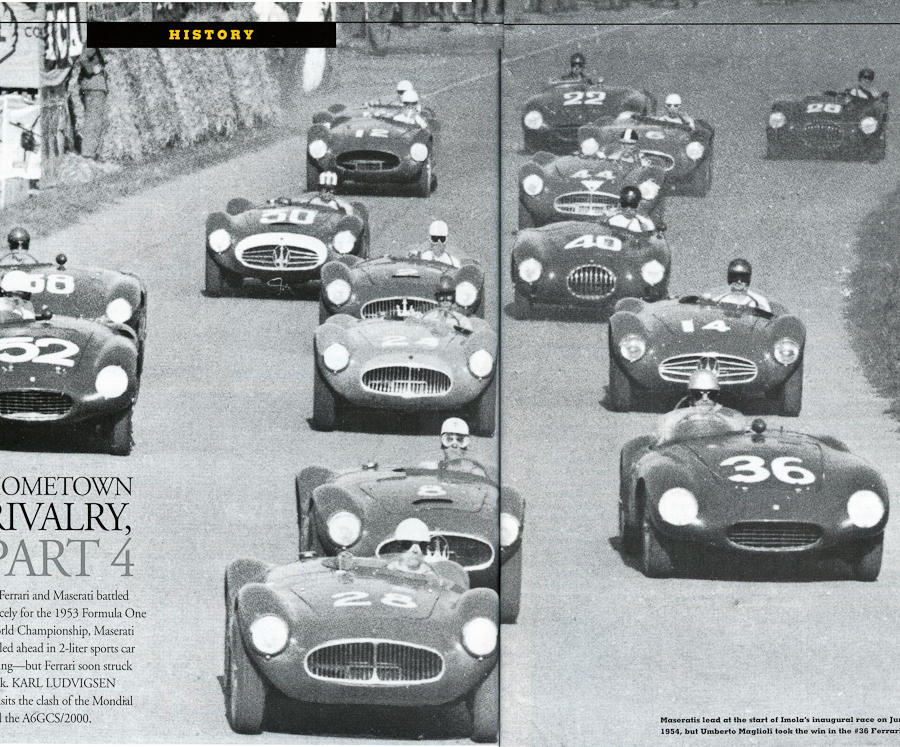
In fact the first three Imola Grands Prix were for sports cars. It was in June 1954 that Imola hosted a race for two-litre sports racers. This was at the time when there was intense rivalry between Maserati and Ferrari, be it in the world of Formula 1 or even in the 2000 c.c. sports category. In the latter Maserati had been gaining the upper hand with its attractive A6GCS 2000, having already succeeded in the Giro di Sicilia, the 6-Hours of Bari, at Naples and in the Targa Florio. But Ferrari had hit back in the all-important Mille Miglia when one of its new Mondial models came second overall in the hands of Vittorio, the oldest of the racing Marzotto brothers, beaten only by Ascari’s D24 Lancia. The Mondial was Ferrari’s contender for the hotly contested two-litre class and was based on the Type 500 Formula 2 double championship winning Grand Prix four-cylinder car of 1952/53.

The Ferrari factory sent two Mondials to Imola for that first car race, both having Scaglietti bodies based on some ideas of Dino Ferrari with unusually small front grilles. That competent and versatile Italian Umberto Maglioli drove one to victory and Robert Manzon took fastest lap in the other before retiring; Luigi Musso could only manage third for Maserati that day.
Forza


Cesare Perdisa took revenge for Maserati in the following year while in 1956 the chief race at Imola was for sports cars up to 1500 c.c. This resulted in a win for Eugenio Castellotti in an OSCA despite strong competition from three Team Lotus Elevens.

We jump ahead some sixteen years and find the beautiful Ferrari 312P sports racer winning a non-championship race at Imola – Merzario obliged with team-mate Ickx in second place.

By 1974 Ferrari had abandoned sports car racing officially to devote all its racing energies to the world of Formula One and Maserati, suffering changes of ownership, had long since ceased to be a force in sports car racing. Into this breach stepped temporarily the V12 Matras and for the first time we find the French blue displacing Italian red with the Matra MS670C winning in the hands of Pescarolo and Larrousse.

Imola went on to hold further World Sports Car rounds and Italian honour was upheld with Brambilla’s win in 1977 with the Alfa Romeo T33SC/12 and Fabi and Heyer’s success in the Lancia LC2/83 six years later. But we had to wait until 2004 before the old protagonists set to again on this circuit.

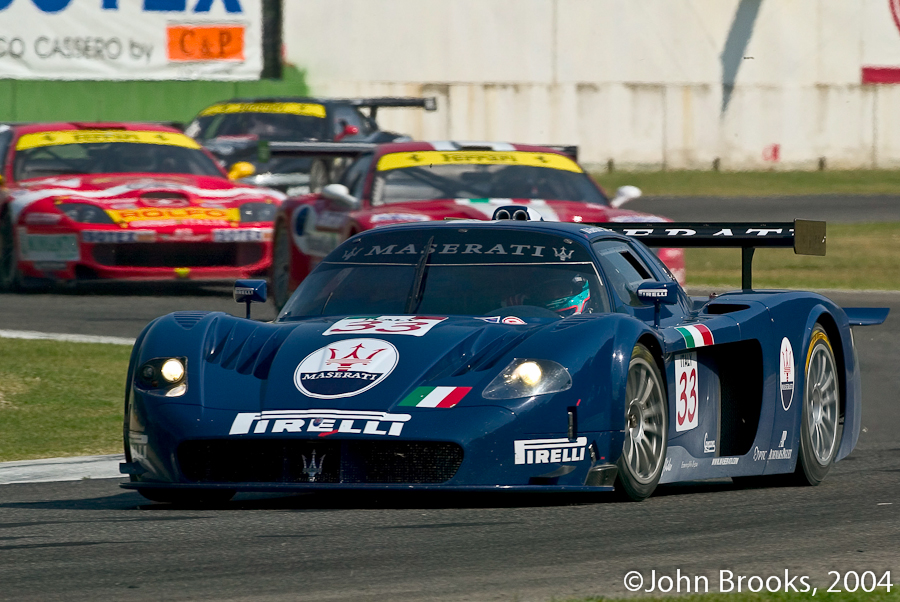
The context was the FIA GT Championship and it was at Imola that Maserati gave its new MC12 its racing début. Although the new cars from Modena were not yet eligible for points, they nevertheless finished on the road in second and third positions leading home three Ferrari 550 Maranellos – it was quite like former times! Yet to be fair to Ferrari their cars scooped enough points (technically 2nd, 3rd and 4th) to give the BMS Scuderia Italia squad the GT Teams title.
Trident Returns


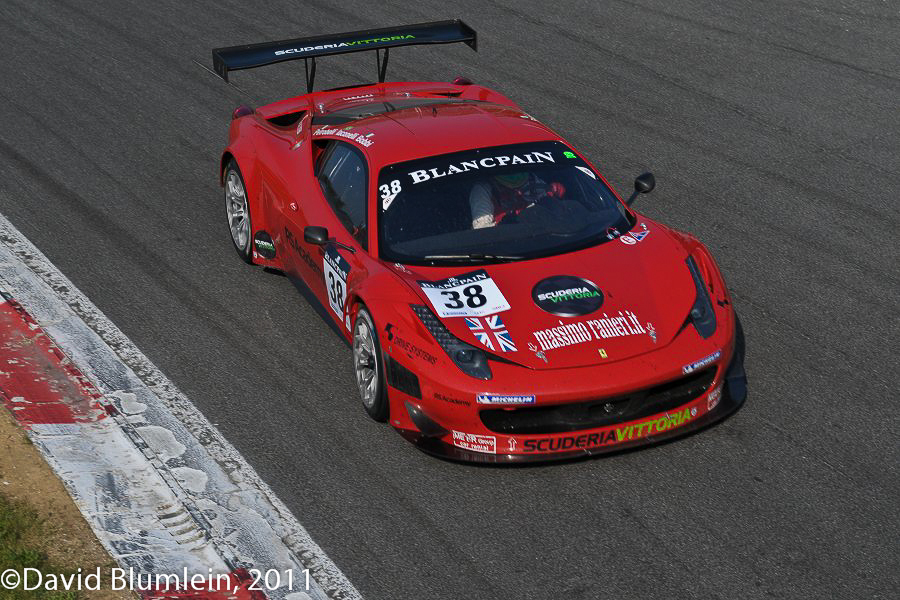
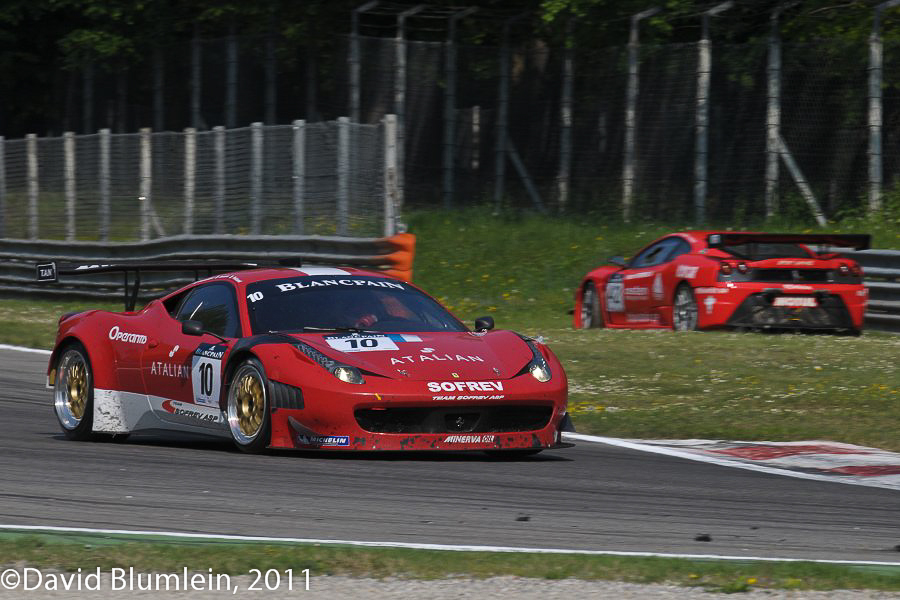
And so to 2011 and the Bleu France invades again, Peugeot fending off Audi. No more of the big Maseratis but the red of Maranello is happily at Imola once more in the GT section and the pace-setting 458 Italia winning the Pro GT category. And there were works blessed Lotuses there again.
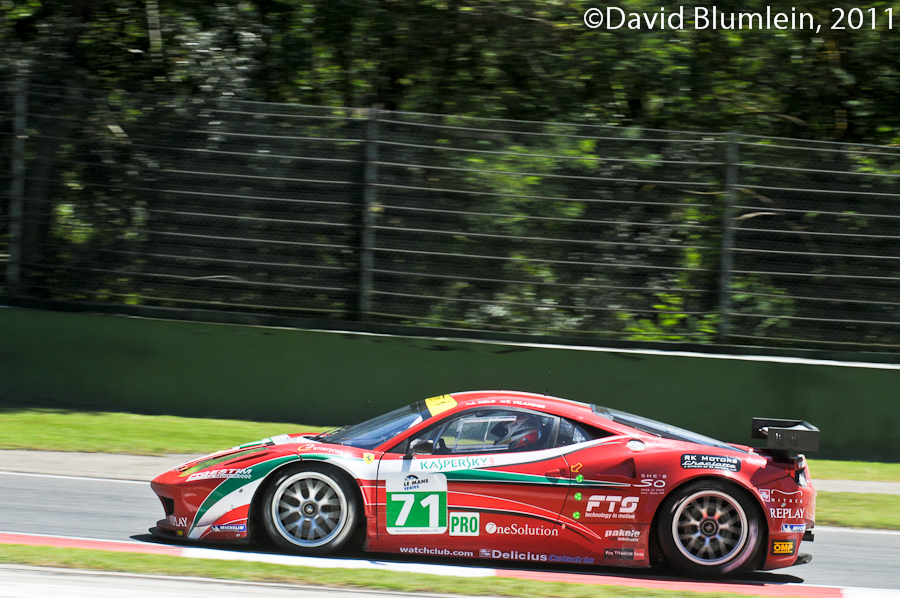
Red Line Moment
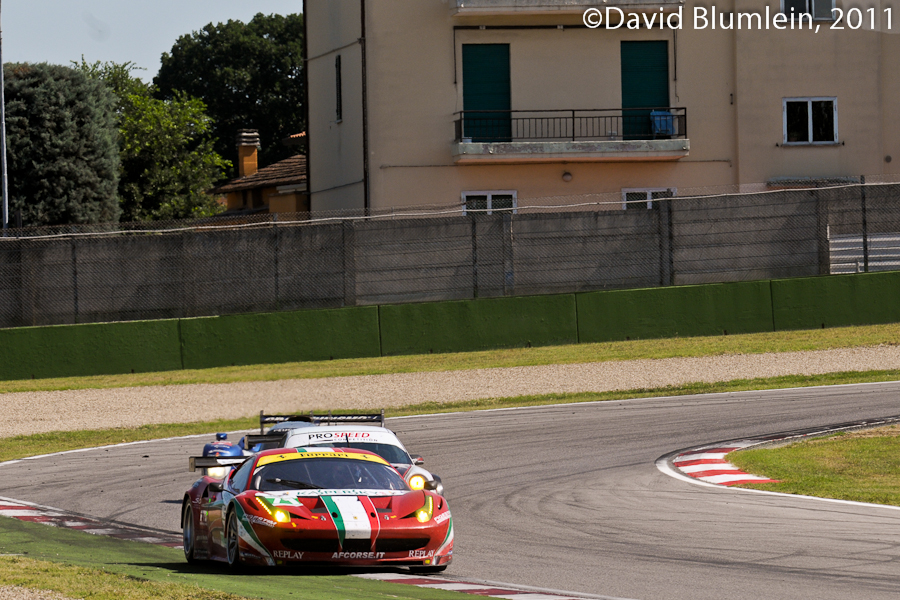


There's a Red House over yonder......


David Blumlein, August 2011
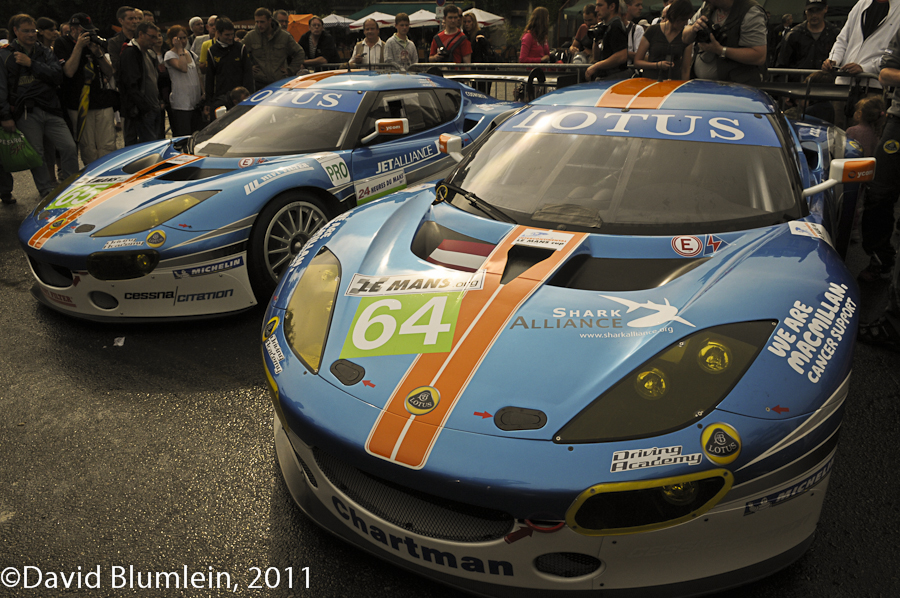
 

Lotus Blossom

A Lotus Le Mans Anniversary, 55 years ago Lotus scored their first success at Le Mans.

What have these Lotus types in common: Mark IX, Eleven, Fifteen, Elite, Elan, 47, Esprit, and Elise GT1? Answer: they have all taken part in the Le Mans 24 Hour race. In fact Lotus first raced at Le Mans in 1955 with a Mark IX Climax-engined car but Colin Chapman was disqualified when a rule infringement was committed after leaving the track at Arnage in the early part of the race. Now in 2011 Lotus is back with the V6 Evora and so it is apposite to look back to the marque’s first success in the famous event.


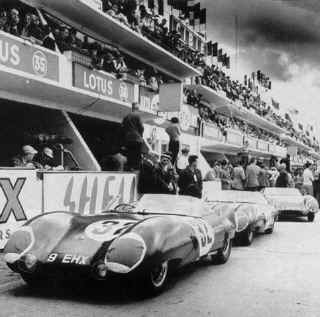
This took place a year later in 1956 when the company decided to enter a team of three of its new Eleven models. New regulations drawn up in the aftermath of the 1955 disaster meant that the cars needed considerable modification: cockpits had to be bigger than the original and so the chassis frames were built wider at the centre section sweeping in abruptly before the rear wheels; a full-width windscreen of minimum depth and with a wiper was needed – Lotus fitted a sloping screen which wrapped around the sides. There were bucket seats and twin spot lights on either side of the air-intakes; all lights were mounted behind plastic covers. The cars had Coventry-Climax single cam“fire-pump” engines,, one of 1500c.c. and the other two of 1100c.c. John Eason Gibson was the Team Manager and the team was based outside of Le Mans at the Auberge de St Nicolas at Mayet.

There was also considerable modification to the circuit. That narrow two-car road past the pits just had to go! The whole pit area was widened and new pits were built and entry to the pits was strictly controlled by the need to keep to the right of a yellow line; any transgression incurred instant disqualification. Changes were made at the Dunlop Curve and at Arnage, the section at Maison Blanche was resurfaced and the whole pits signalling operation was transferred to the exit at Mulsanne Corner. All this work inevitably took time and the race was postponed until the last weekend in July, one of only three times that the race has not been held in June (the others being in 1923 when the very first race was held in May and 1968 when the May riots in France pushed the race back to September).

The three Lotus entries were: Car no.32   1500  Chapman/Mackay Fraser, Car no.35    1100  Allison/Hall, Car no.36    1100 Jopp/Bicknell. The race started in the wet but Chapman managed to complete the first lap in 16th place! By 5pm as the race settled he held on to 17th position behind his main opposition, the Porsches and a Maserati which soon broke. By the mid-day on the Sunday the Lotus lay second in class behind the leading Porsche but a broken big-end bolt ended its run. In the meantime the two 1100c.c. cars were locked in battle with the Hugus/Bentley Cooper. The weather was dreadful during the night and at dawn Cliff Allison had the misfortune to hit a dog on the Mulsanne Straight which resulted in the demise of the dog and the retirement of the Lotus. The remaining Lotus, however, was doing much better and by the end of the race had gained a lap over the American-driven Cooper, giving Peter Jopp and Reg Bicknell a win in the 1100c.c. class, Lotus’s first success in the Le Mans 24 Hours. They finished 7th overall and came 4th in the Index of Performance. This was the race when Ecurie Ecosse won for Jaguar after the works cars had suffered all sorts of calamities.

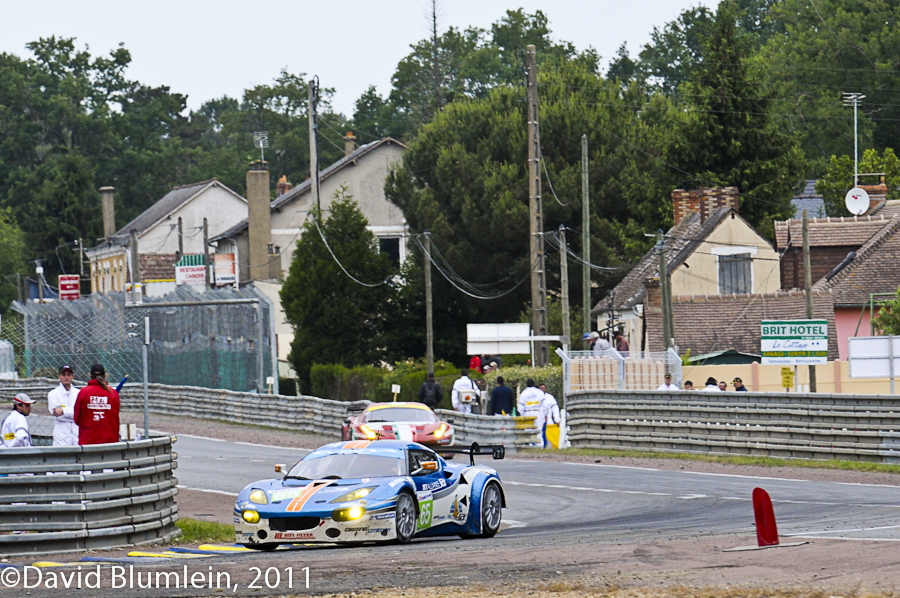
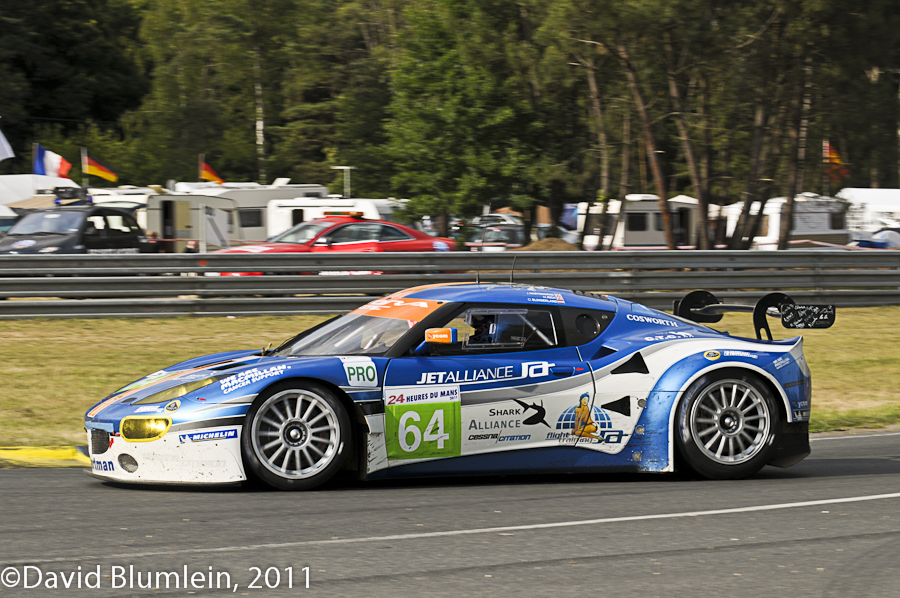
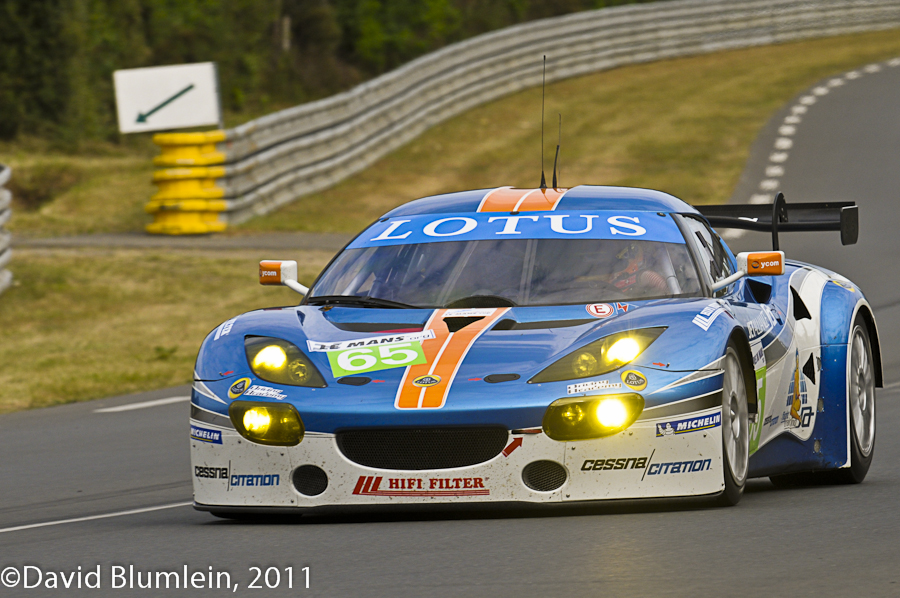
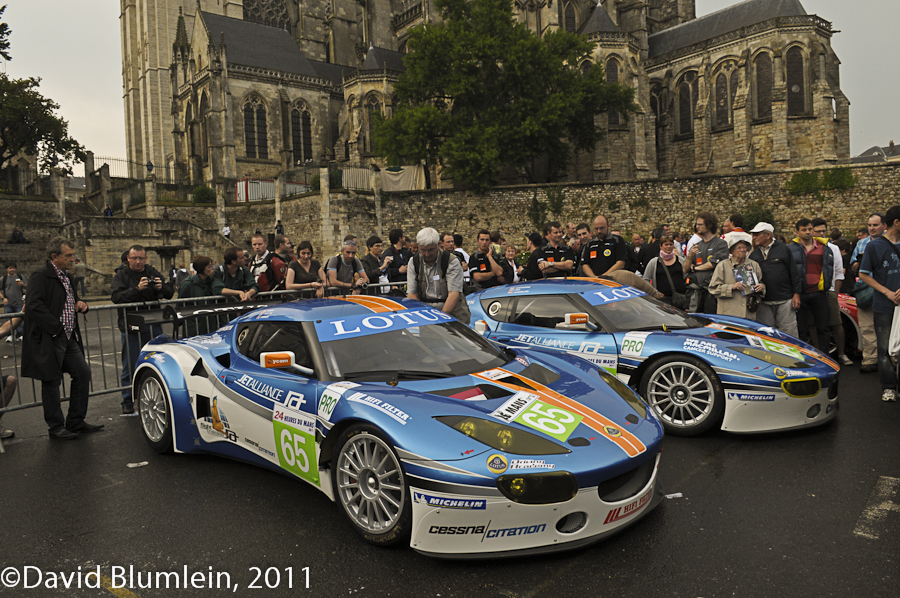
Four years later the company’s first proper road car, the Elite, went on to win its class for six consecutive years. Now the marque is back with the new GTE version of the Evora, a car in the early stages of its development. The two cars, run in collaboration with the factory by the Jet Alliance team, were: No. 64  Rich/Slingerland/Hartshorne, No. 65  Mowlem/ Rossiter/Hirschi. In the race the no. 65 car ran with practically no problems, just a fifteen minute stop to change brakes. It finished 22nd overall out of fifty-six starters and 7th in class.

The other car had some bad luck – Martin Rich was forced off and hit the wall, causing a bit of damage. In the following stint John Hartshorne was almost at the end of his drive when a rear wheel nut came off, causing the rear wheel to come off and the ensuing damage rendered the car too dangerous to drive; it was therefore abandoned near the end of the Mulsanne Straight. With the GT4 Lotus Evora finishing the Dubai 24 Hours this year and now this GTE version  doing similarly at Le Mans, the new chapter in Lotus endurance racing is getting off to  good start.

© David Blumlein 2011
Spanish Snippets

To Barcelona by train and thence by motorway some 300 miles west to the new Navarra circuit for the Blancpain Endurance GT race. But first, Barcelona. Spain has had a motor industry with a chequered history – the Civil War of 1936-38 destroyed the country’s economy and industry – but interestingly most of the manufacturers such as Hispano-Suiza, Elizalda, Eucort, Pegaso and SEAT have over the years centred on Barcelona, making the Catalan capital the hub of Spain’s motoring activity.

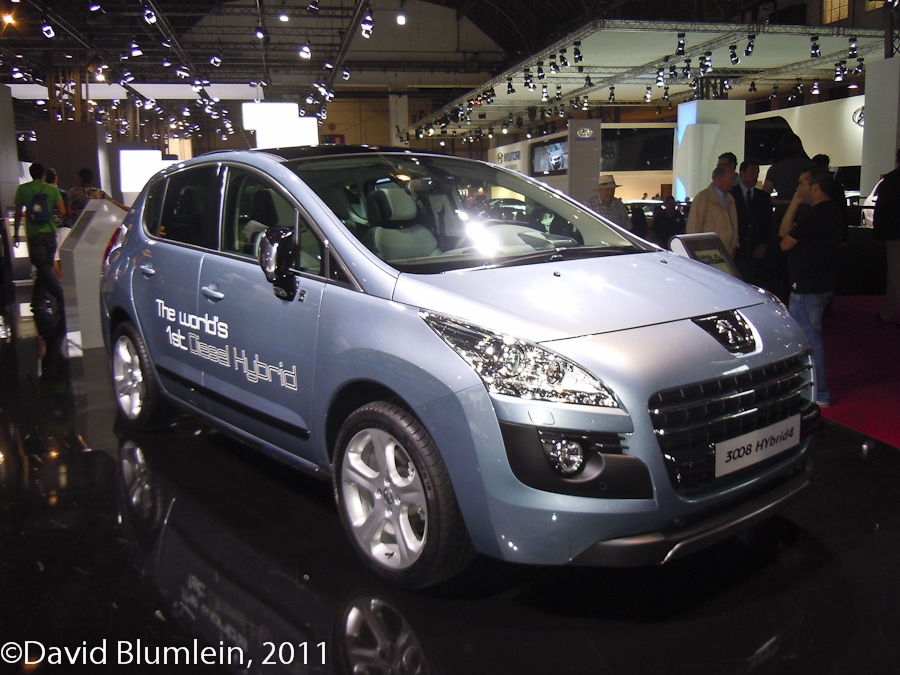
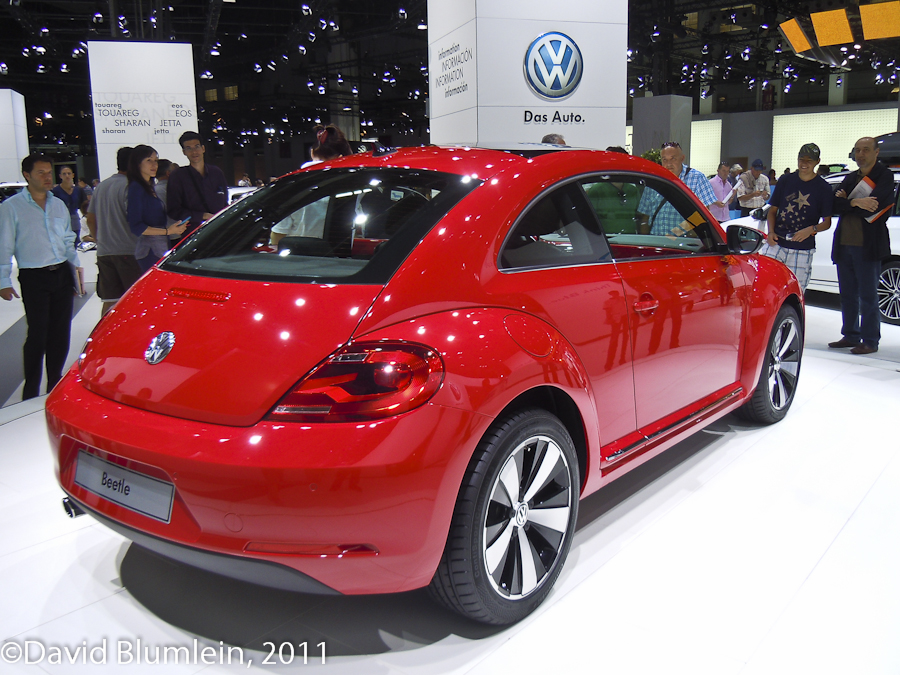
Not surprising therefore to find a Motor Show there. The Barcelona exhibition is of course a provincial show set out in a number of not too large halls and certainly not on a par with the big ones like Geneva, Frankfurt or Paris. But Peugeot used it to present the World’s First Diesel Hybrid, a new version of the 3008, and the revised VW Beetle could be seen:


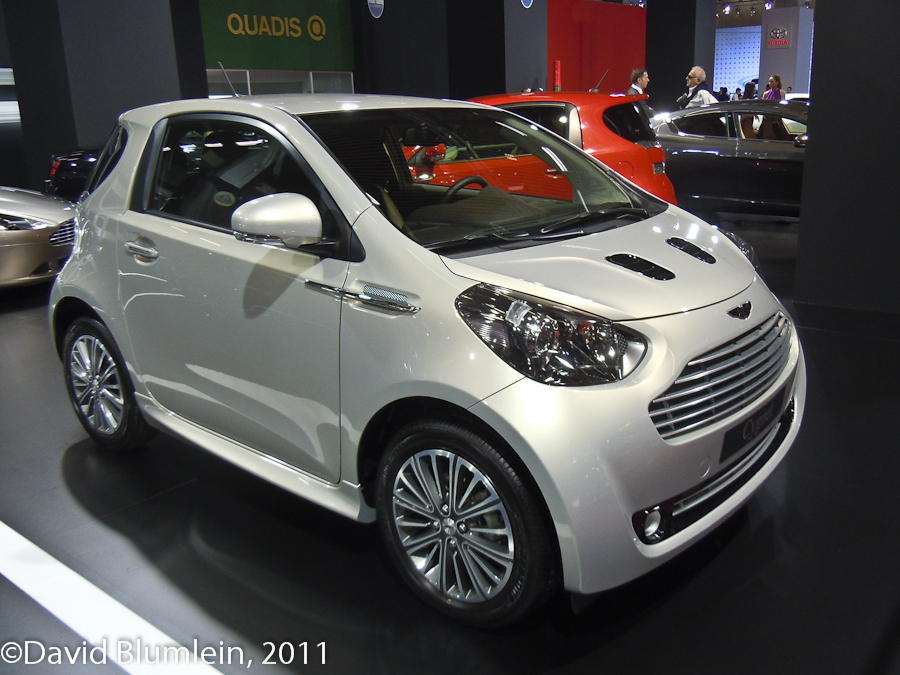
Two rare birds, the Aston Martin Cygnets, were on show:

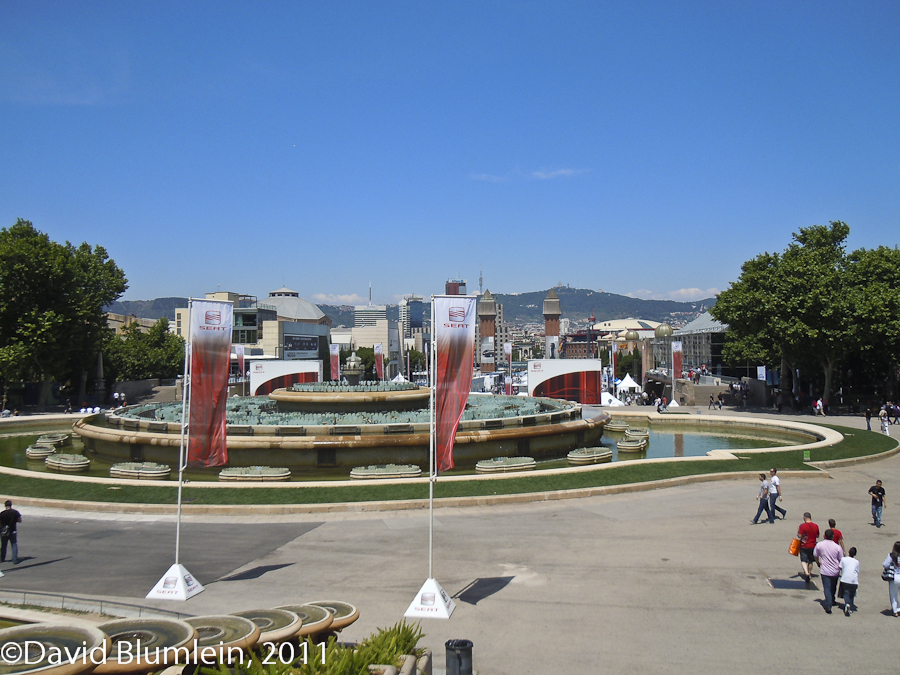
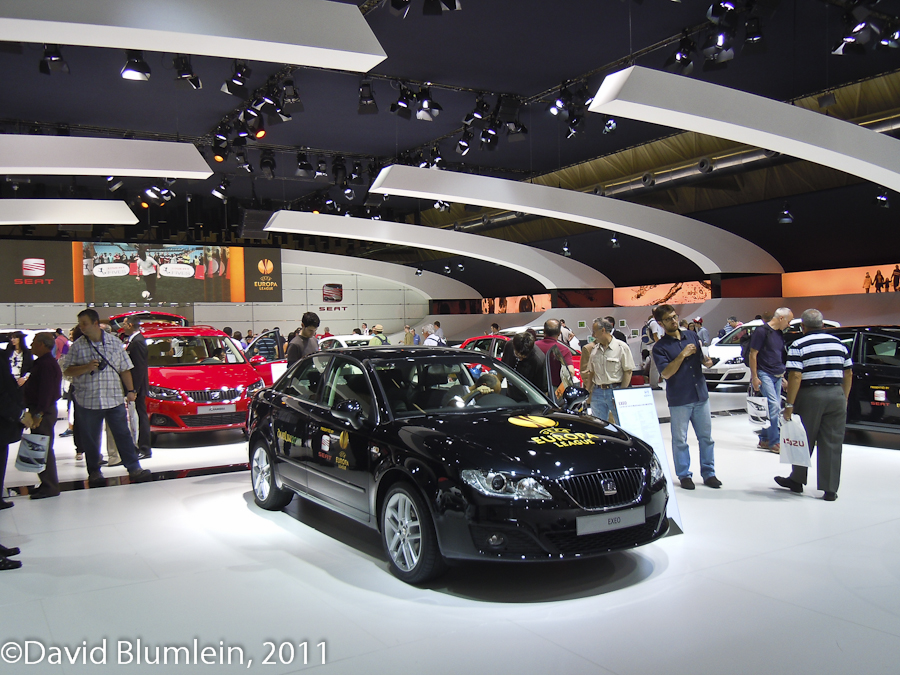
SEAT, Spain’s only indigenous large-scale manufacturer capable of creating and producing cars of its own design, naturally had a hall all to itself:


Spain hasn’t a significant history of endurance racing, the 12 hour San Sebastian events run on the long Lasarte circuit between 1925 and 1929 being the most important in their era. So a 3 Hour GT race on a circuit as close as any in the country geographically to that former location is a step in the right direction to keeping that tradition going.

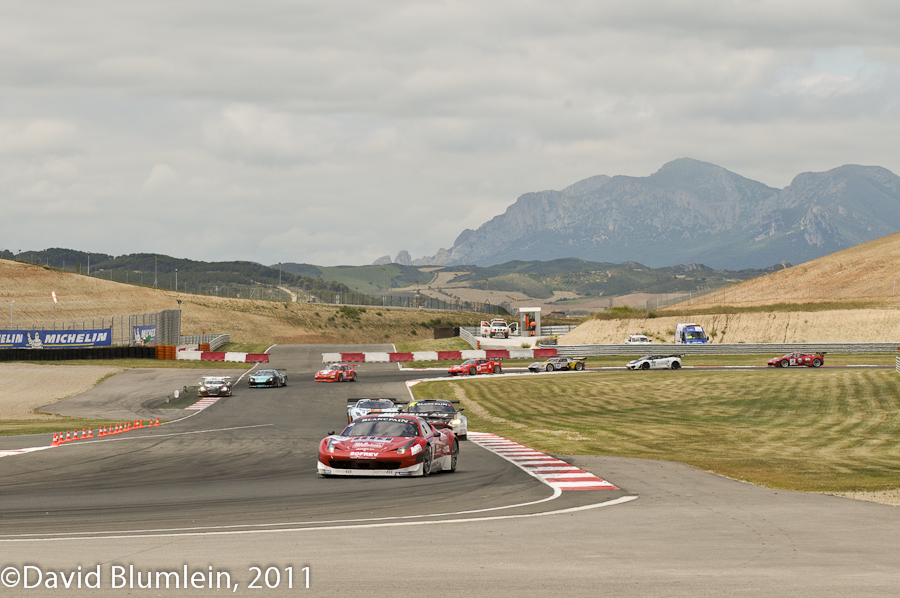
The new circuit of Navarra gives the visitor the impression of being in the middle of nowhere, its location being far from any large centre – the sparse crowds underlining this. However, it is a friendly track with good viewing points and it attracted a varied field of good quality GT cars even if the expected new McLaren failed to materialise.

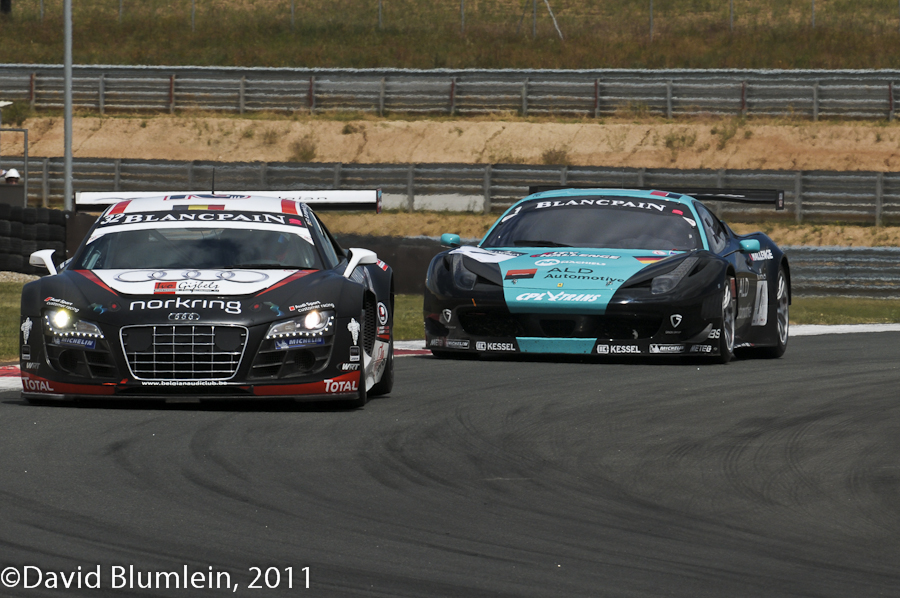
GT3 and GT4 cars are much more akin to the real world and currently the battle at the top rages between the Audi R8 and Ferrari’s new 458 Italia:

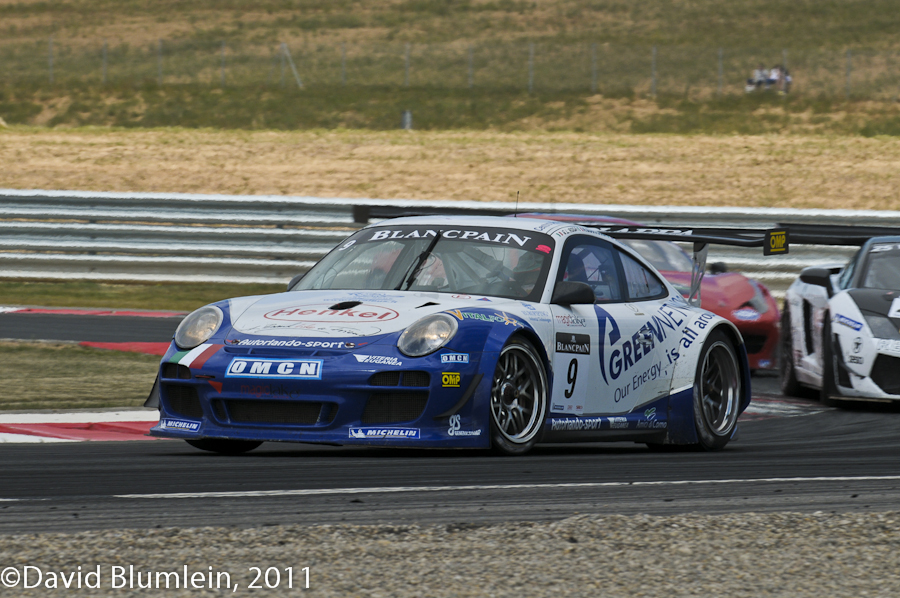
Not ever forgetting Porsche of course:

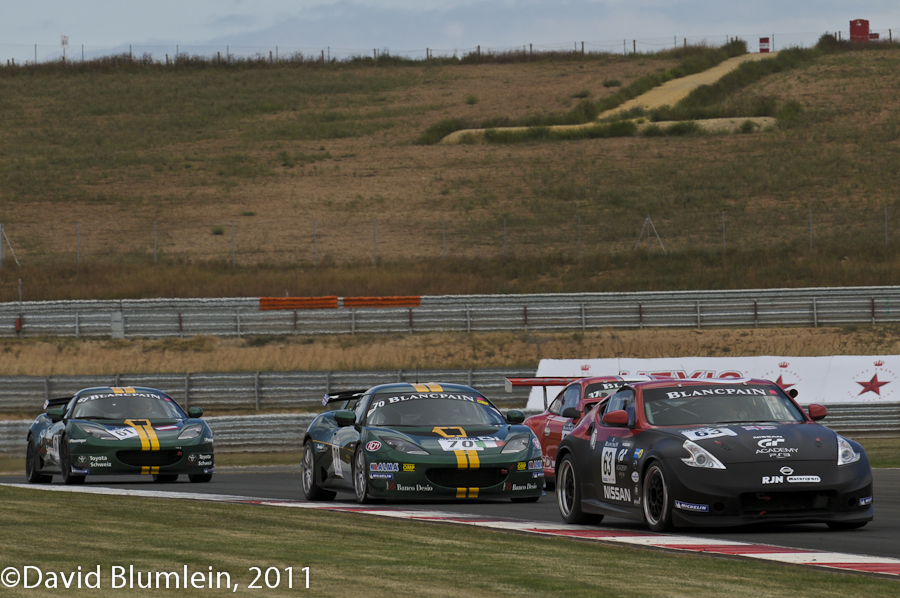
The battle early on for GT4 honours:

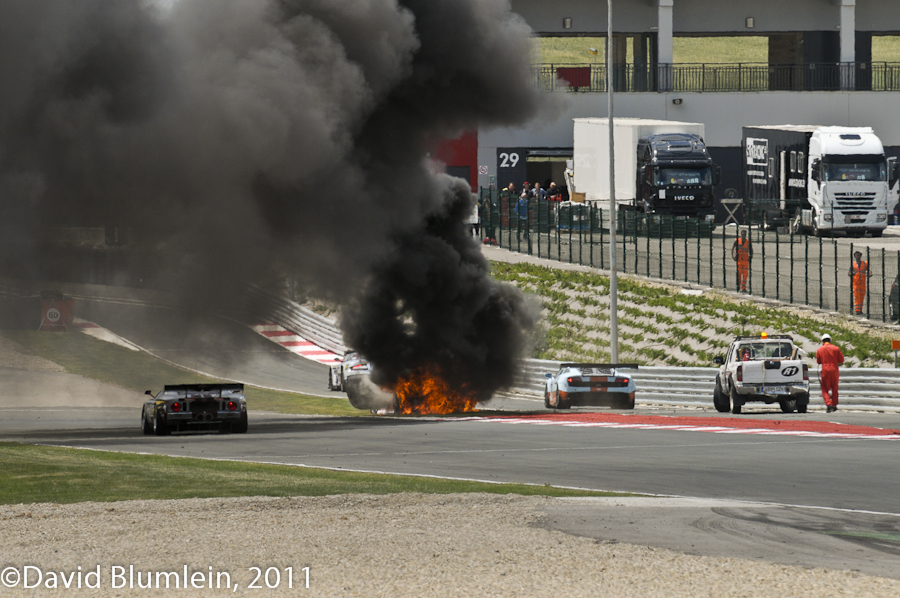
Drama always threatens. Here the Italian –entered Ginetta briefly burns:

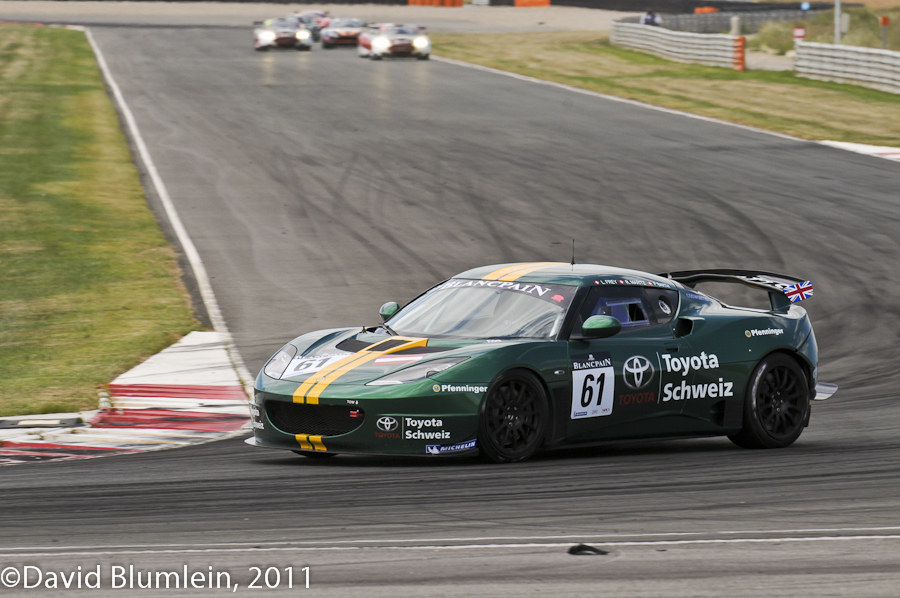
The race brought success in the GT4 class for the promising Lotus Evora:


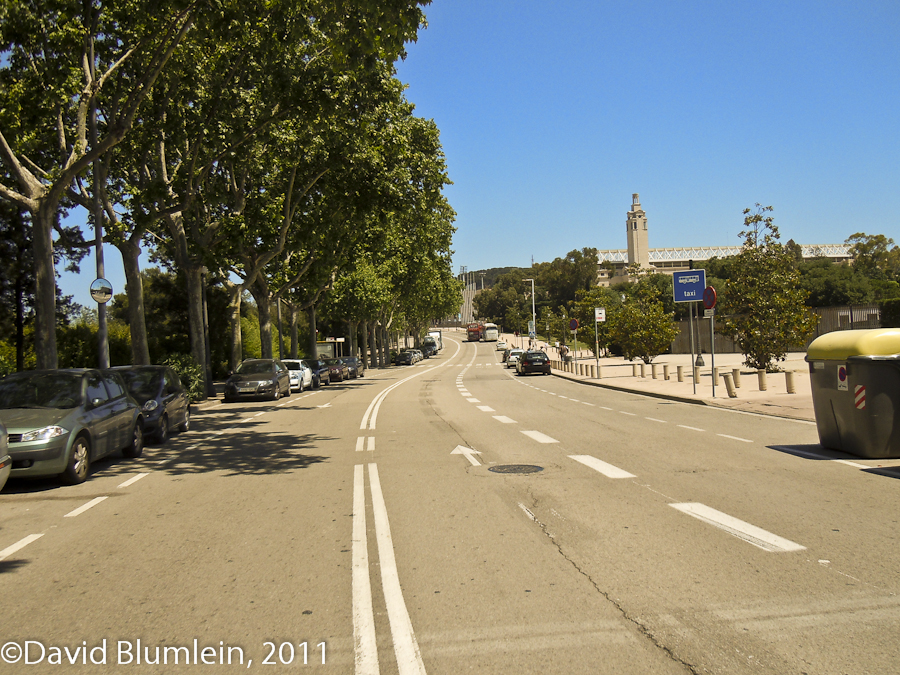
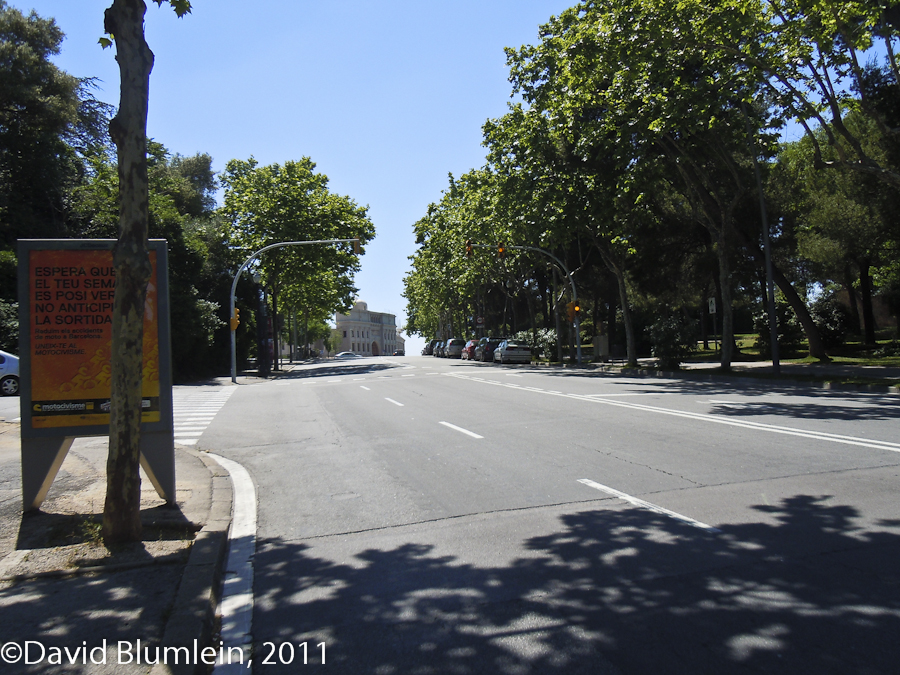
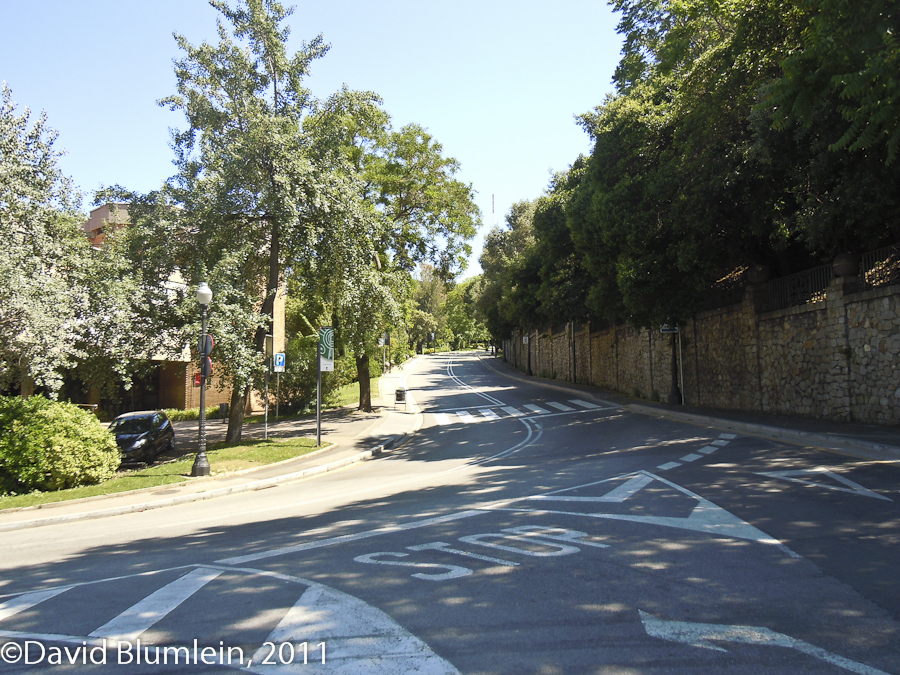
Back to Barcelona. The city has long been a centre for motor racing (and still is with the Catalunya circuit just outside) and over the years it has hosted some of Spain’s most important races. The Pedrables circuit, using roads in the north-western suburbs, was the scene for two World Championship Grands Prix in 1951 and 1954; the Penya Rhin sports car race at the latter meeting was the last time it staged an international event, not being revived after the 1955 Le Mans accident.

Up on the hill in the beautiful Montjuic Park a circuit was devised using the public roads back in 1933 and this was used for sports car races in the Fifties and up to the early Seventies – a Pegaso Spyder won the 1 Hour Copa Montjuic race in 1954 and a Porsche 908 took victory in 1969 in the 12 Horas de Barcelona. The circuit is best remembered for the incidents which occurred during the Formula One Grands Prix: the collapsing of the new-fangled wings and the crash of Rolf Stommelen which caused the death of several spectators This ensured the circuit’s demise in 1975.

The drivers’ view as they sat on the grid:

Looking back to the brow of  the hill which caused the winged cars to lift:

The left-hand Hairpin, the first tight corner on the anti-clockwise lap:

The downhill sweep to the tight right-hand Tecnica corner:


TAILPIECE

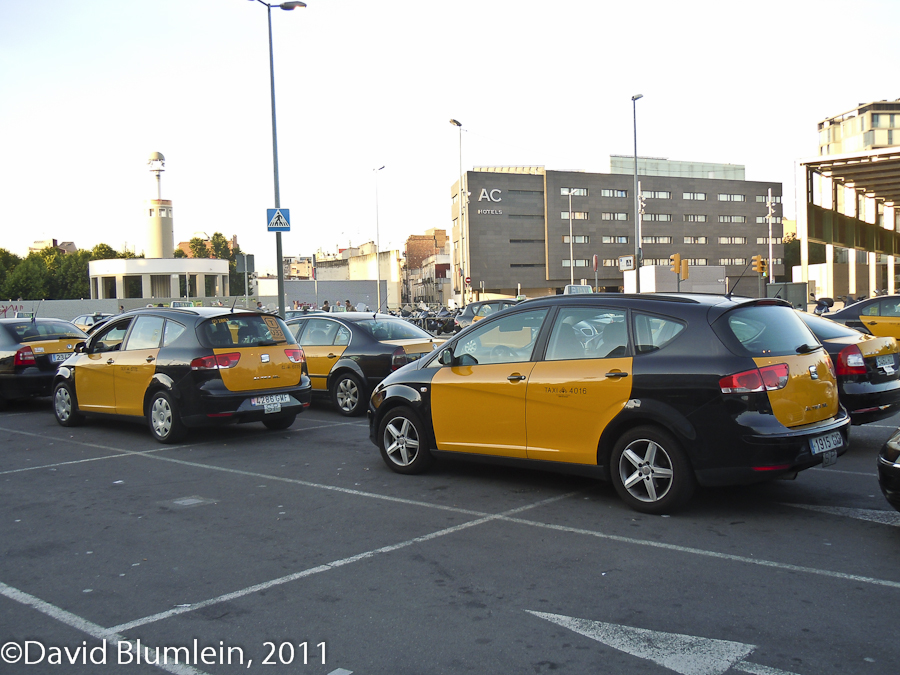
SEAT Altea XL taxis, built 30km up the A-2 Motorway at Martorell, now the company’s main plant and headquarters since they moved from the Zona Franca on Barcelona’s water front.


© Words and images  David Blumlein 2011
 

The New Snetterton – Some Thoughts

The British GT cars share the first major national event on the extended track

The Snetterton 300 represents the third phase in the circuit’s evolution. Originally of 2.7 miles, it veered off after Sear Corner to run alongside the main A11 London-Norwich road. At the end of this long, fast Norwich Straight the cars turned sharp right at the Norwich Hairpin and returned down the Home Straight which is now occupied by the Snetterton market. In 1965 the Russell Bend was introduced to slow the cars down before the start/finish area and this corner has undergone various configurations since.
In 1974 the Short Circuit was introduced, cutting out those fast “Norwich” sections and leaving the overall lap distance just 1.9 miles. Now in 2011 we have the Palmer developed infield section that brings the lap up to 2.99 miles.
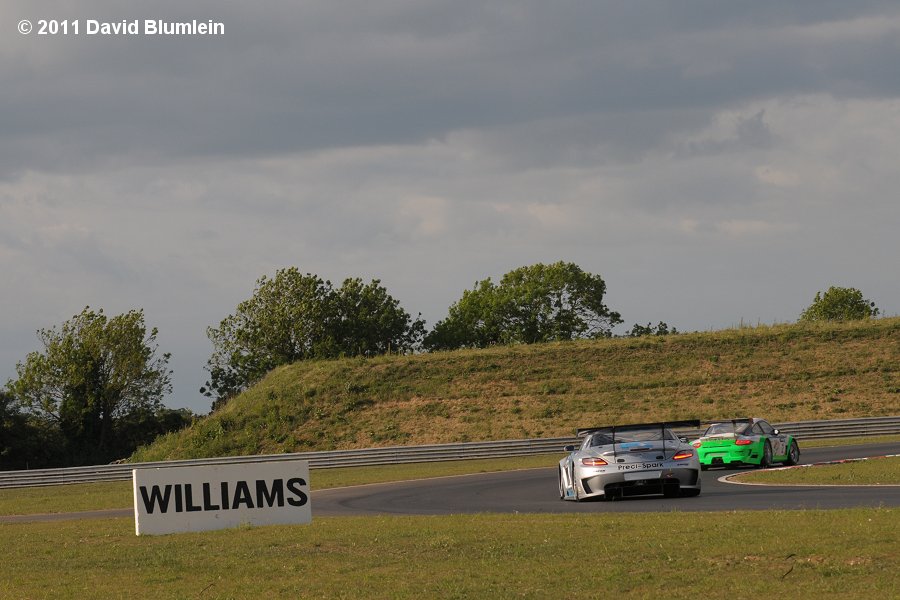
Various prominent names have been chosen for the new corners while others have been re-named. Here we see the Williams right-hander which leads on to the back straight now called the Bentley Straight; notice the elevated bank for spectators which will soon be open for the public:


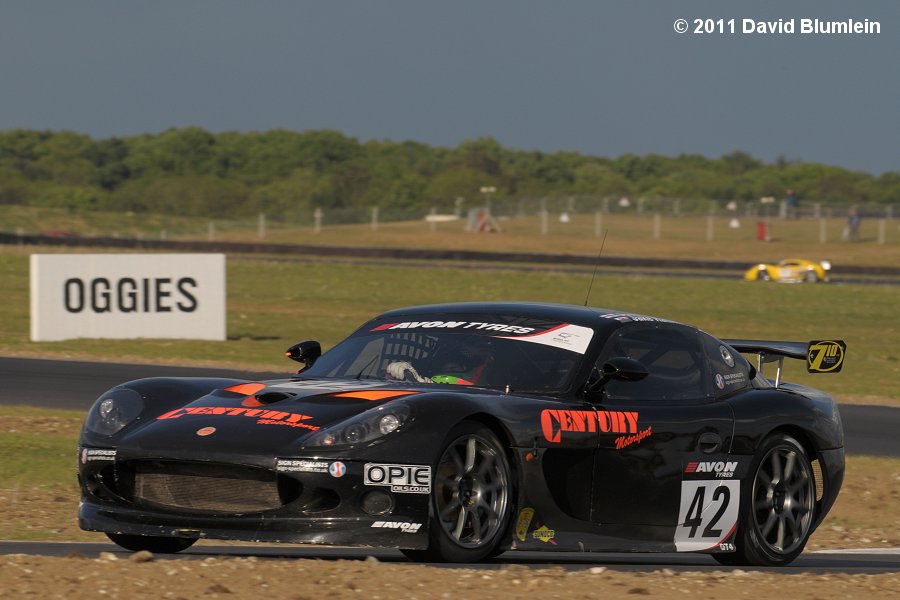
This is one of the GT4 Ginettas at Oggies which leads to the Williams corner with the Chevron GR8 in the background as it comes out of Agostini bend:


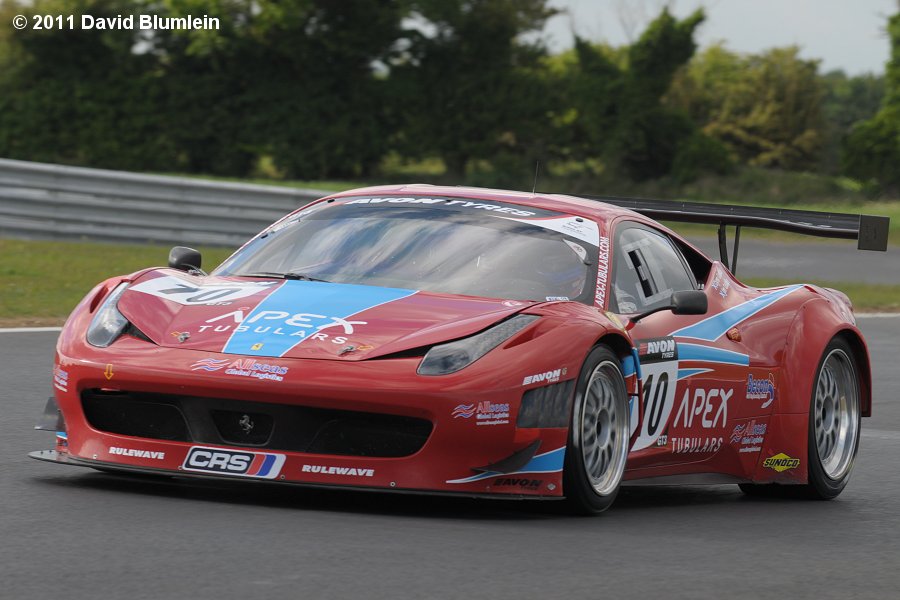
The British GT Championship this year has a very interesting and varied entry, the best for many a season. Exciting newcomers include the Ferrari 458 Italias, the CRS car shown pulling away from the Montreal corner that used to be Sear corner:

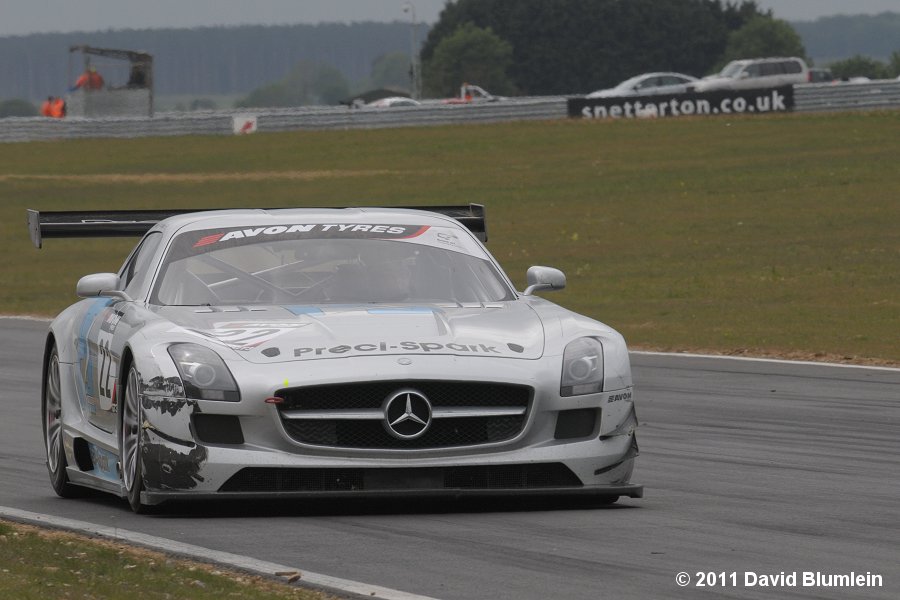
and the Mercédès SLS AMG GT3 which the Jones brothers are campaigning this year instead of their more usual Ascari in which they won the championship in 2009:


The car is seen braking hard for the left-hand turn at Agostini.

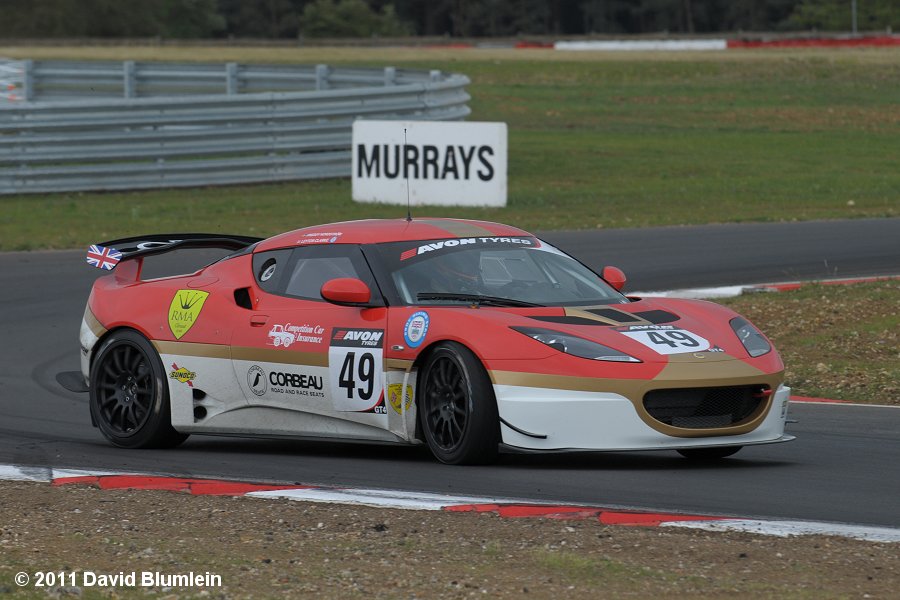
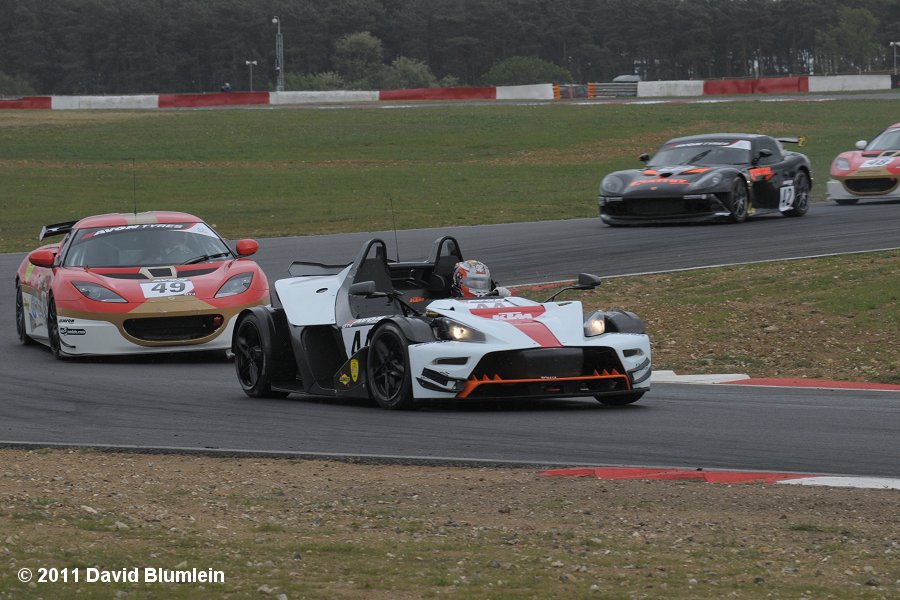
In the GT4 category are welcomed the two factory-backed Lotus Evoras, one of which is opposite-locking its way out of the former Russell Bend now re-named Murrays:


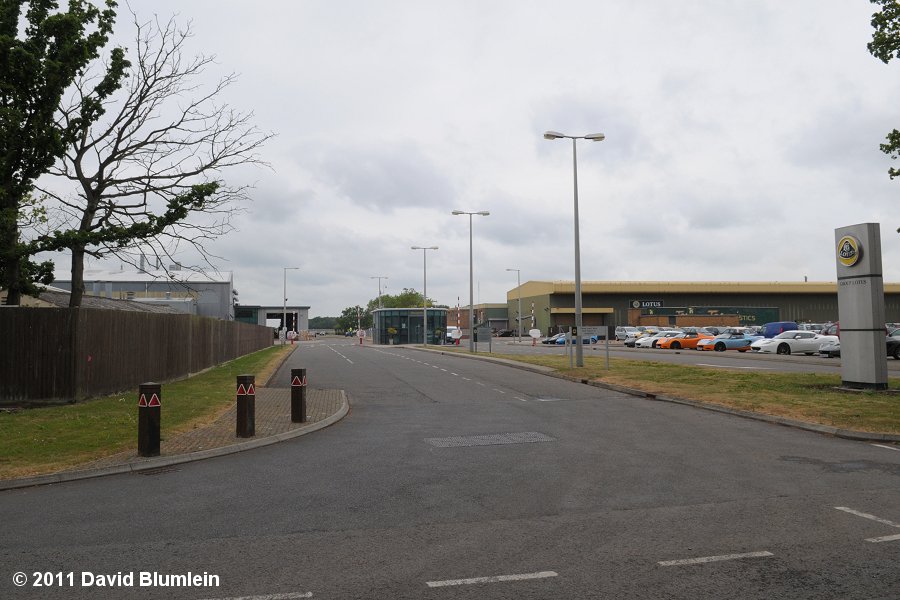
This is of course very much home territory for Lotus as their factory is just down the road at Hethel on the opposite side of the A11 from Wymondam, famous for its medieval Abbey:


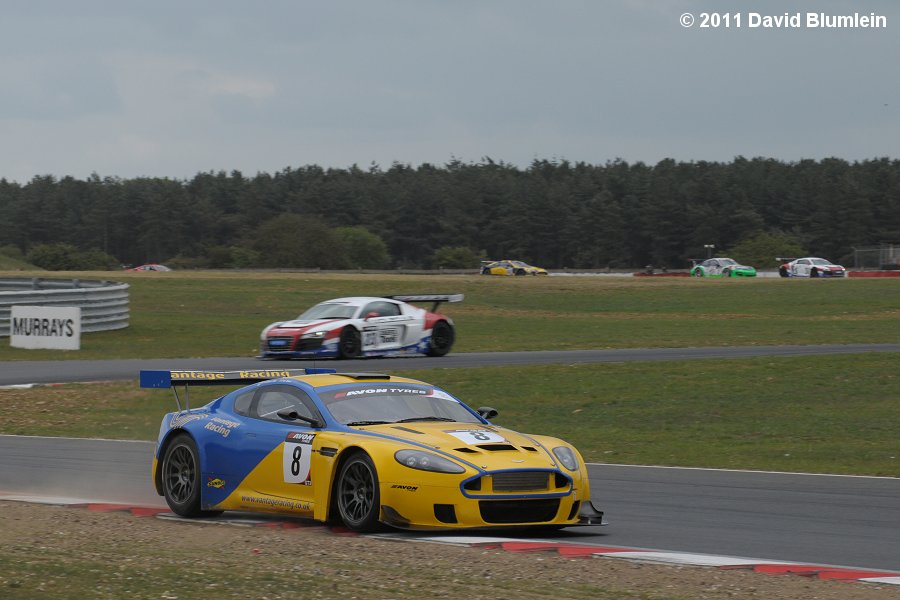
The DBRS9 Aston Martin still has life as shown by the unexpectedly large lead it established on the opening lap; the others are here struggling to keep up:


And here is the battle for GT4 honours:


The KTM has become competitive and it is good to see an Austrian car doing well on the tracks – it’s been a long time since those Austro-Daimlers!

The Snetterton 300 is certainly a big improvement on the old Short Circuit and perhaps we shall see more endurance racing in the future; after all it was Snetterton which gave Britain its first full 24-Hour race (the Brooklands Double Twelve had to be run as two separate daytime races to avoid night-time noise restrictions) with the Willhire production car events held from 1980-1994.

© 2011 David Blumlein


Eric Liddell (1930-2011)

I received the sad news of the passing of Eric Liddell, father of my old friend Robin. I met Eric on several occasions and found him a charming gentleman of the old school, who was justifiably proud of the achievements of his son. Robin has asked our Special Correspondent, David Blumlein,  to compose a brief tribute.


It is very sad to have to record the death of racing driver Eric Liddell at the age of 81. He was one of the most successful Scottish drivers in GT and sports cars and in his career he drove a wide variety of cars.

He began his competitive life as a speedway rider for the Glasgow Giants but soon turned to four wheels. He had a Lola Junior but acquired in 1963 one of the Formula 1 Emeryson-Climaxes which he took to the first meeting that year at Charterhall. Alas, in practice a breakage caused it to crash and the car caught fire, inflicting second and third degree burns on Eric and burning itself to destruction. These injuries kept Eric out of action for a considerable time but he vowed henceforth never to race open-seater cars again.

He bought then the red ex-Jackie Stewart E-type Jaguar and, among other successes, used it to win the last race held on his local Charterhall circuit.

He also raced a Lotus Elan and managed to beat the “works “ car at Crystal Palace but his big break came when Nicoll Cuthbert purchased a new Ford GT40 for him to drive. This car, painted red with a white stripe, brought him much success including a fine second place in the Ilford 500 at Brands Hatch in 1966. He shared another GT40 with Ed Nelson in some of the major endurance events at this time and co-drove the Ferrari 250LM of David Skailes both at the Nϋrburgring 1000km and Kyalami 9 Hours where they finished 6th in 1967.

In 1968 Eric drove a GT40 at the postponed Le Mans 24 Hours with Mike Salmon but, having driven a six-hour stint at night in the rain, he was very disappointed when the gearbox gave up in the 18th hour.

Further drives came in Lola T70s with his friend Paul Hawkins and in Bill Bradley’s Porsche 906. He had a test for Ecurie Ecosse in the Tojeiro-Buick but turned down the drive when he found the cockpit too small!

After testing at Silverstone he was invited to drive a race for the championship-winning John Wyer Gulf team but, having already agreed to drive for Cuthbert, felt that he could not go back on his word – such was the integrity of Eric Liddell.

In his later career he even drove a modified Jensen-Healey, putting the car on the front row at the opening event at Knockhill where incidentally he held a lap record for many years.

On retiring he was able to devote more time to promoting the career of his son Robin who follows in his father’s footsteps by becoming a fast and reliable endurance driver. To those of us lucky enough to have known him Eric Liddell was a thoroughly well-principled and decent person. To Robin and all Eric’s family and friends we offer our sincere condolences.


David Blumlein, May 2011


Nürburg Notes

36th DMV 4 Hour Race.

There is something very special about being at the Nürburgring when the winner of the race is a Mercédès-Benz.


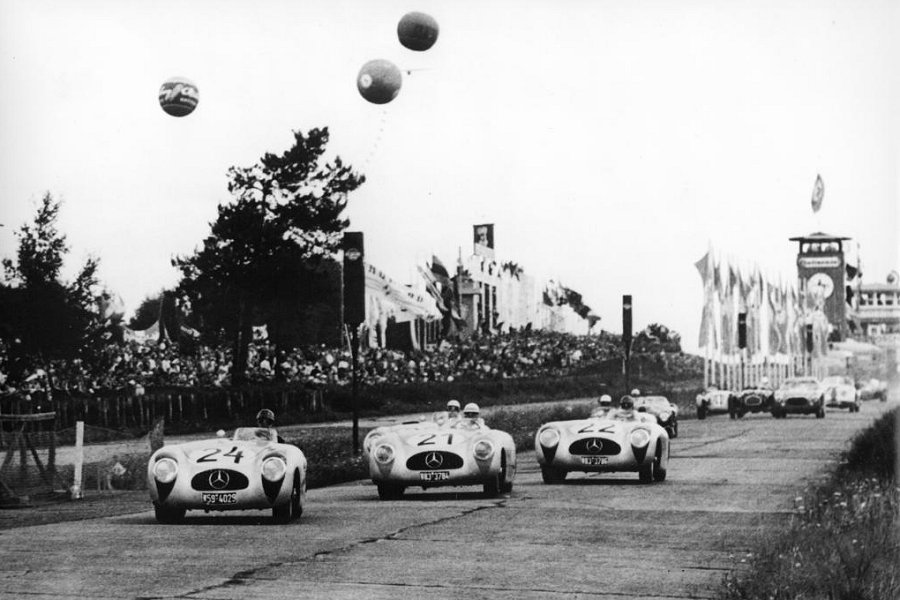
One recalls the company’s first post-war win on the Nordschleife in 1952, when a team of four 300SL models (uniquely in open form just this once) dominated the sports car race which accompanied the German Grand Prix that year. These cars had a close affinity to the current SLS AMG GT3 cars, as Engineer Rudi Uhlenhaut had been given permission by the Daimler-Benz board to create a sports car provided that it made as much use as possible of parts from the production 300 Saloon. The resultant car did admittedly have a space frame but it evolved a year or so later into the famous production gullwing 300SL Coupe which was as much a GT as anything at the time.


( Image courtesy of Daimler-Benz AG )

The occasion for this latest three-pointed star success was the second round of this year’s Veranstaltergemeinschaft  Langstreckenmeisterschaft Nürburgring or VLN for short!

It is a series of races round the Nordschleife “proper” circuit for GT/Touring cars and on average there are usually about 200 starters which, like the similar field in the 24 Hour race, are set off in three separate packs. It seems to work very well and if there is an incident official cars/rescue vehicles go round to the scene while everybody carries on racing – no safety cars picking up leaders here! There are plenty of classes to cater for different specifications – 26 categories in this race – and with such a long lap (14.2 miles) the cars are soon spread out.

This round was a four-hour event with 203 starters. Not surprisingly the manufacturers use these races as a preparation for the forthcoming 24 Hours. For example, BMW has elected to do the first three rounds this year, winning the season’s opener.

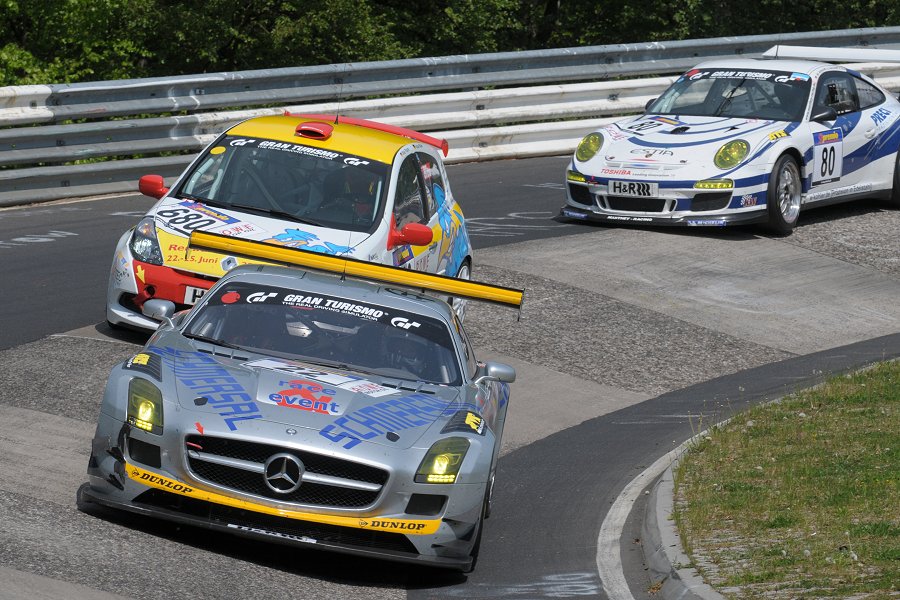
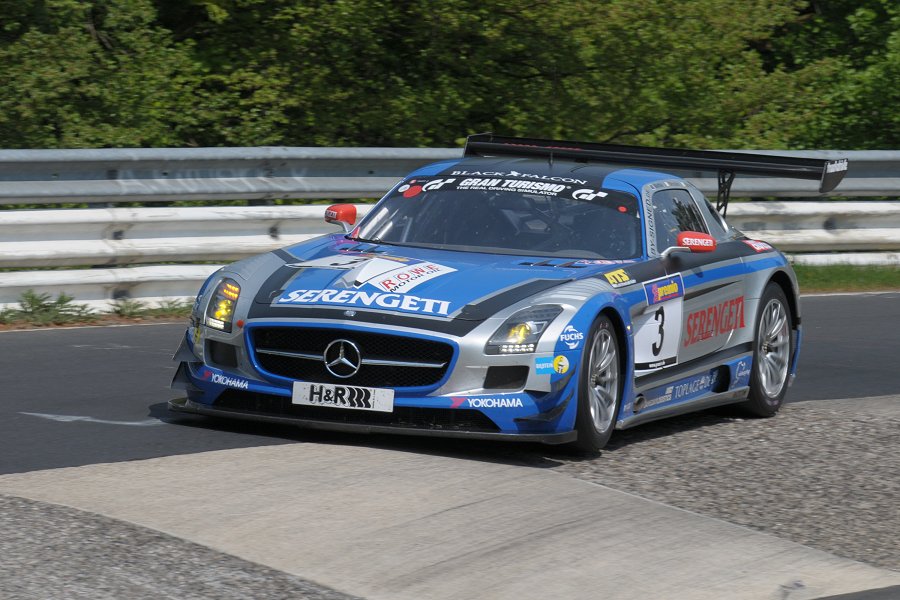
There were no less than eight of the new Mercédès taking part, all run by private teams but with the support of the factory. The car had made its competition debut here in the September 2010 VLN race but crashed early on; it scored its first win in the following round and took a third place in that year’s final race. (The car which finished 21st)

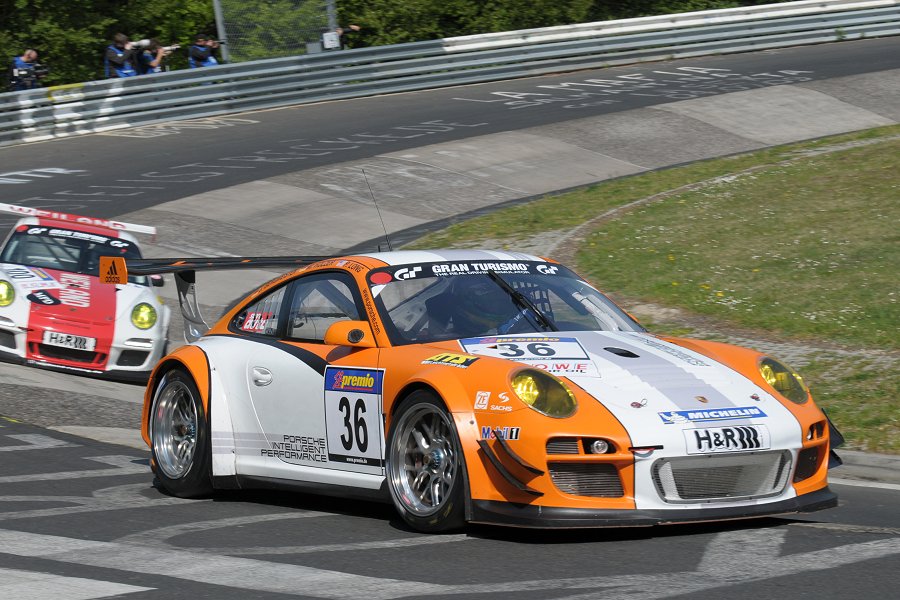
Porsche continued to develop its 911 Hybrid. This was the first appearance of this year’s new car: it is about 50 kilos lighter, has less engine power to improve economy and more power is sent to the front wheels. Also, the air intakes ahead of the rear wheels have been deleted.


The Aston Martin Test Centre nearby uses VLN races to perfect its products.

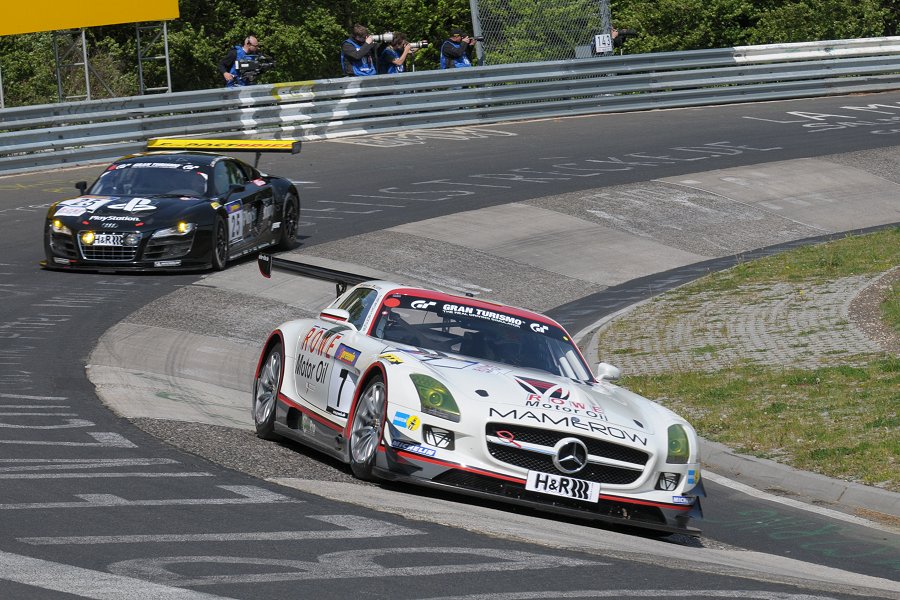
By the end of the race 63 cars had retired leaving 140 finishers. The always competitive Manthey Porsche followed the victorious Mercédès (driven by Chris Mamerow and Armin Hahne) home; then came one of the “works” BMWs, another Mercedes, the second factory BMW and in sixth place the first of the Audi R8s.


TAILPIECE


© 2011 Words and images by David Blumlein

Aston Martin Sixes (and Sevens?)

On the journey home from La Sarthe, David Blumlein considered the new Aston Martin, its unusual engine configuration and its place in the marque’s history.

Straight, No Chaser


Aston Martin enthusiasts will be somewhat dismayed that the new LM P1 car, the AMR-One, underperformed greatly at the Le Mans Journée Test. It seems that the problems revolve around the car’s new Straight-Six turbocharged 2-litre engine. It is a recent and completely new design, and clearly the team just needs more time to iron out the problems.

If Six turned out to be Nine


It is exciting to find a current team putting their faith in the Straight-Six configuration, for we are very used these days to engines using V-configurations: V6, V8, V10 and V12, but in line Sixes have been long forgotten!


But let us not forget that in the golden era of Aston Martin history, the David Brown period, Aston Martins were nearly always powered by Straight-Sixes. When David Brown bought Aston Martin in 1947 he inherited Claude Hill’s excellent four-cylinder OHV motor- this unit powered the Spa 24 Hours winner in 1948. David Brown also bought the ailing Lagonda Company as he had his eye on the post-war Lagonda 2.6 litre, twin overhead cam, six cylinder in-line engine. This engine had been developed by no less than W.O. Bentley, who had been engaged by Lagonda in 1935.

DB2/4


The engine found a new home in the Aston Martin DB2 and for racing was quickly stretched to 3 litres. Most of the Aston Martin successes in the 1950s came with the DB3S and then the DBR1. The latter went on to win at Le Mans in 1959.

La Route est Dure


So let us not lose faith and we should look forward to more Six Cylinder Aston Martin success – it is in the marque’s heritage!


David Blumlein, May 2011


Monza Miscellany

GT cars at Monza.

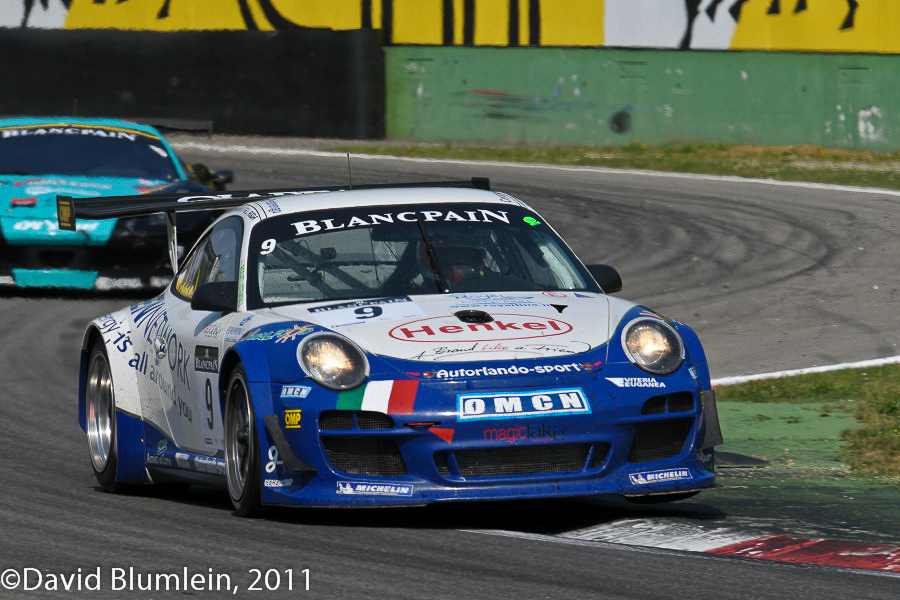
It is not generally known that the first race for cars that we now call GT cars took place at Monza: the Coppa Inter Europa in 1949. In this race three of the first five “street” Ferraris to be made (Tipo 166 Inter) were entered and they filled easily the first three places, Count Bruno Stersi winning in his Touring-bodied car and establishing already Ferrari superiority in the category. While GT cars remained front-engined Ferrari continued its domination, but then gradually Porsche, above all, came on the scene and since the demise of Group C the GT revival has witnessed real rivalry between Zϋffenhausen and Maranello. The ageless Porsche 911 is still a potent force – it won at Monza despite the presence of seven of the new Ferrari 458 Italias.

changing, yet changeless as canal water


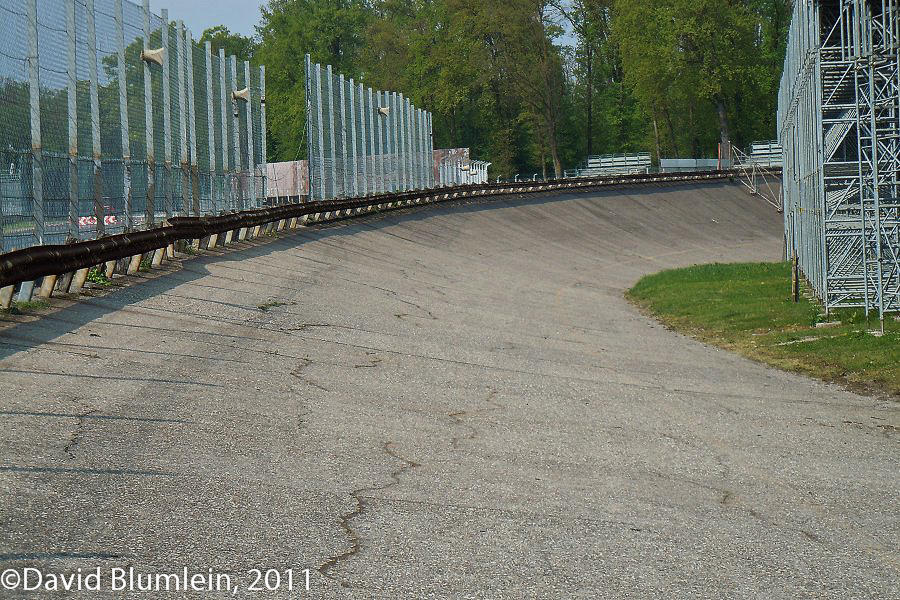
The Monza circuit is set in a Royal Park. A stroll around the old banked section of the track – lined with beautiful woodlands full of bird song – is very rewarding.

Bank of Italy

One can still pick out traces of the chicanes which were installed at the entrance to the bankings for the 1000 kilometre sports car races from 1966 until the banking was used for the last time in 1969.

Chicanery

As a very fast circuit Monza has been no stranger to chicanes and by the mid-Thirties temporary devices were inserted on the faster stretches – those thundering Grand Prix  Auto Unions and Mercedes needed slowing down! By 1972 permanent chicanes, since modified, were installed before the Curva Grande and at the Ascari Curve with a third one, the Variante dell Roggia, preceding the fast Lesmo Curves four years later. Many other changes have occurred over the years not least the creation of the famous Parabolica to replace the Curva de Vedano which itself eventually eliminated the original South Banking, a raised curve rather than a fully banked corner.

Parabolica

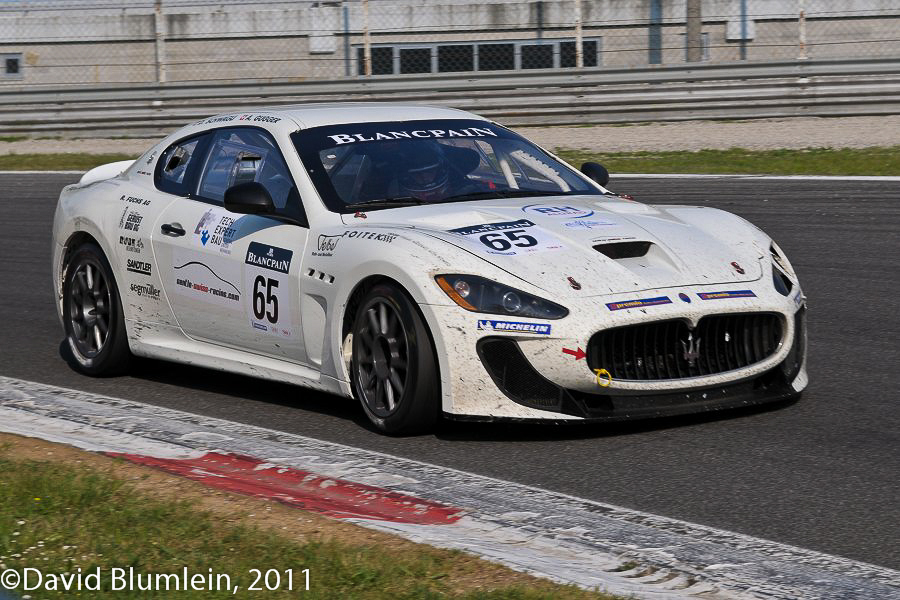
We have seen how, since the Thirties, the sports-racing car has gradually pushed aside the series production sports car in the major endurance events. This trend was encouraged particularly in the Mille Miglia and was taken up after the War by the Le Mans organisers with their Prototype class (originally intended to be temporary in the aftermath of the conflict) but the public loved the big fast racers and they seem here to stay. So it is refreshing to see at Monza the GT3/GT4 cars, especially the latter category whose cars are much more akin to those original participants in the Coppa Inter Europa races. The GT4 class had seven runners, made up of five different marques including a Maserati MC GranTurismo GT4.

Trident Tested


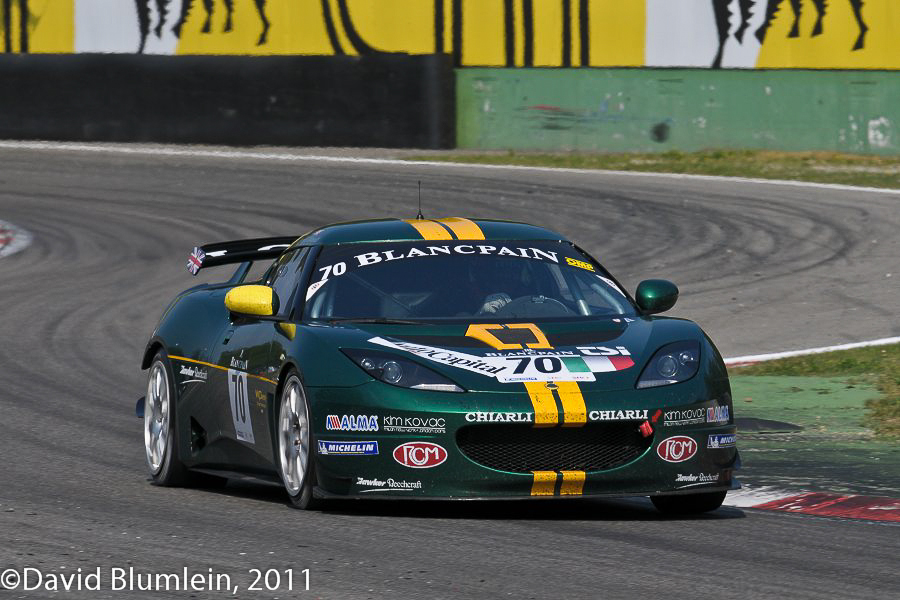
The attractive Lotus Evoras took the first two places in the GT4 class despite suffering punctures.

Lotus Flowered


The 3-Hour race was happily free of any major incident and there was no use of the Safety Car. Of the thirty-two starters just seven were unclassified. Here we can see the no. 42 Ferrari abandoned as the French-entered Ferrari 458 Italia enters the Variante Ascari.

Ferrari Park


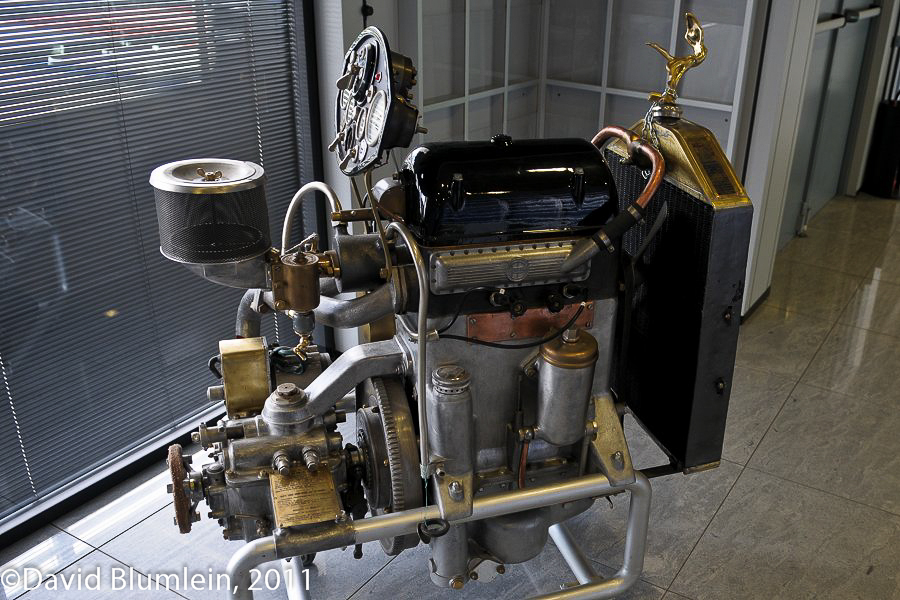
One of the joys of visiting Monza is the sense of history all around. The Sala Tazio Nuvolari, named in honour of Italy’s (the world’s ?) greatest driver, contains an example of a Lancia V4 motor as fitted to the Lambda, one of Italy’s most innovative cars.

Pedigree


TAILPIECE

Artisan

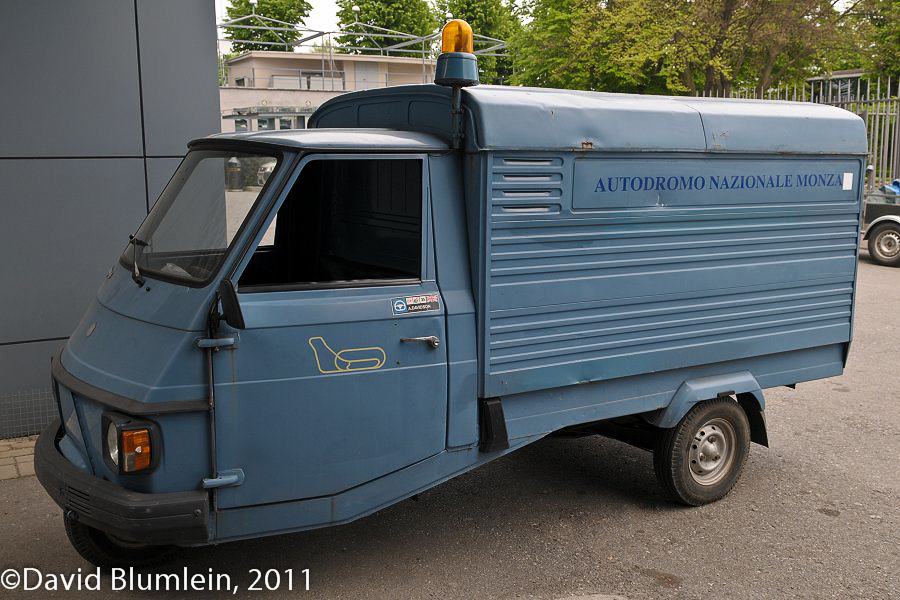
The little Piaggio Ape P3, one of Monza’s workhorses


©2011 Words and Images by David Blumlein.


Song of the Mistral

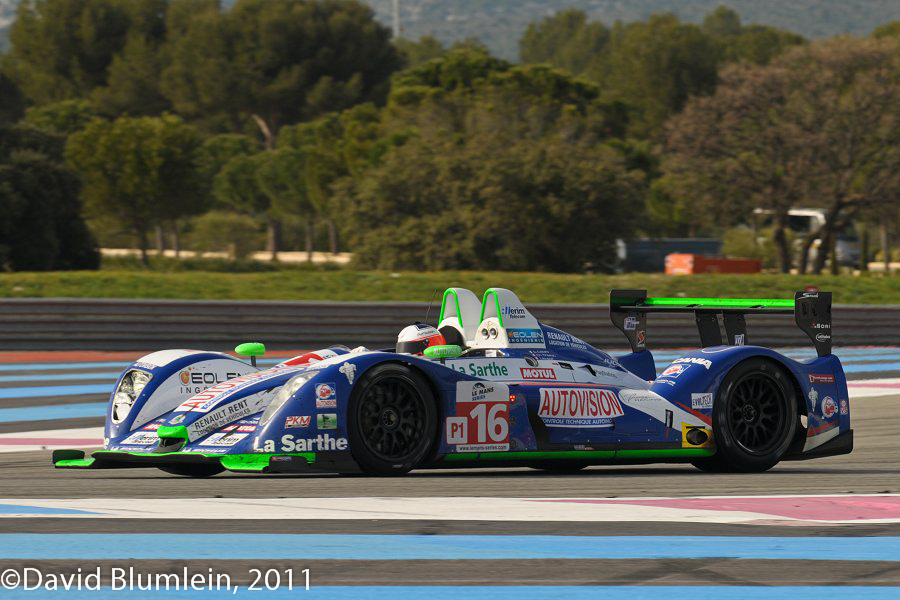
David Blumlein is on a roll. Following on from Essen, he travelled south to Le Castellet for the opening round of the 2011 Le Mans Series. His observations can be found below.

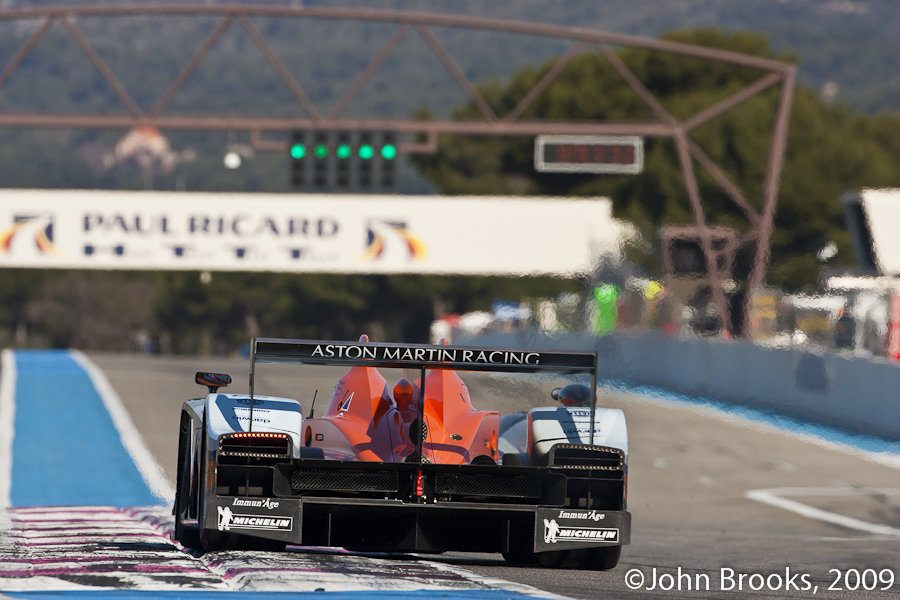
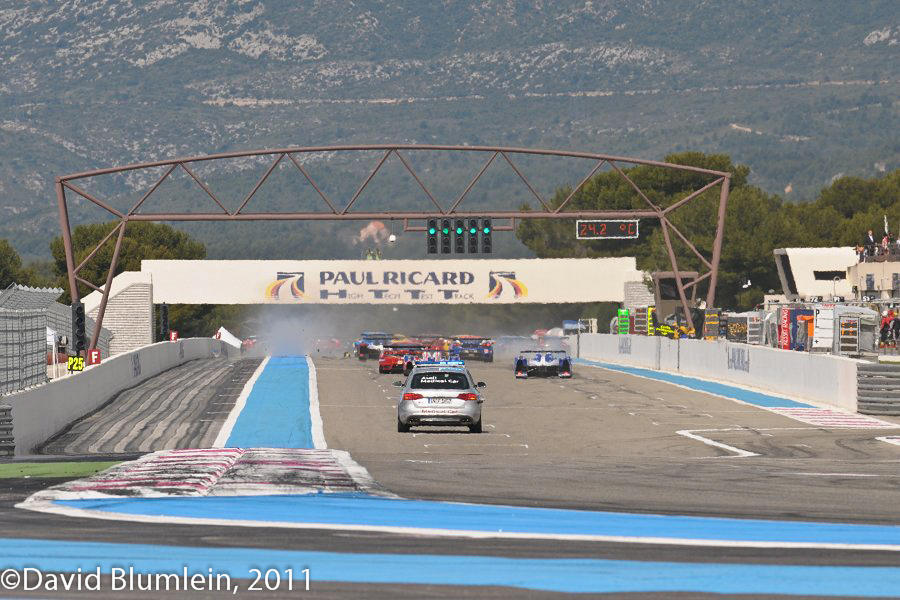
The Circuit du Castellet, set on a high plateau between Marseille and Toulon, overlooked by the mountainous hills of Sainte-Baume, has not a long tradition of long distance sports car racing. One recalls the Matra V-12s at the height of their fame coming here in 1973 but the circuit is chiefly remembered for its staging of the prestigious Grand Prix de France in former years. Having since fulfilled the rôle of a test track, it is now back to hosting international races and was chosen as the venue for the opening round of the Le Mans Series in 2010 when the race was of eight hours’ duration. Happily it was the opener again this year but the race was reduced to six hours.

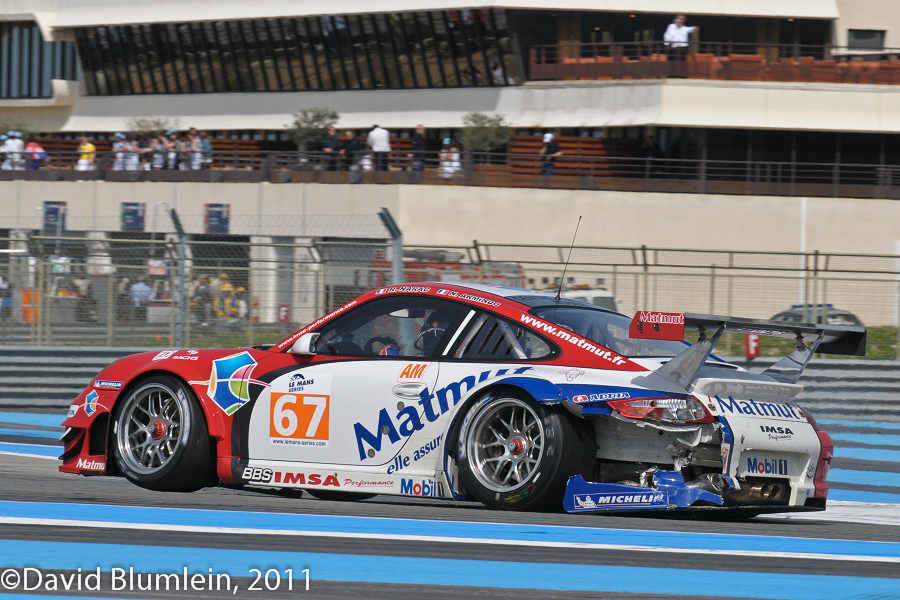
Unhappily this event will be chiefly remembered for the inexcusable confusion at the start, which severely damaged four GTE Pro Porsches and the Jota Aston Martin – only the latter car and one of the German cars were able to resume albeit way down the field. It seems that the Pace Car decided to do a second starting lap and the GT runners at the back could not see this and, finding that the lights on the starting gantry were set at green, began racing in earnest.

All this pandemonium spoilt the real Porsche versus Ferrari battle that is a regular feature of the GT field.

One of the endearing qualities of long distance sports car racing is the opportunity it provides for a good car to carry on winning even after several years of involvement in competition. Look at the Alfa Romeo 8C 2300 in the Thirties and the Aston Martin DB3S, which still made it to a fine second place at Le Mans in 1958 after five seasons of successes. So it is with the Pescarolo which unusually came back from a year’s absence during which the team’s very existence was in doubt! From the back of the grid at the start (to where it was relegated owing to a small technical infringement in practice) to the front at the end was a dream result for Henri Pescarolo and his loyal team, but it seems relevant to ask what future developments  can they look forward to?


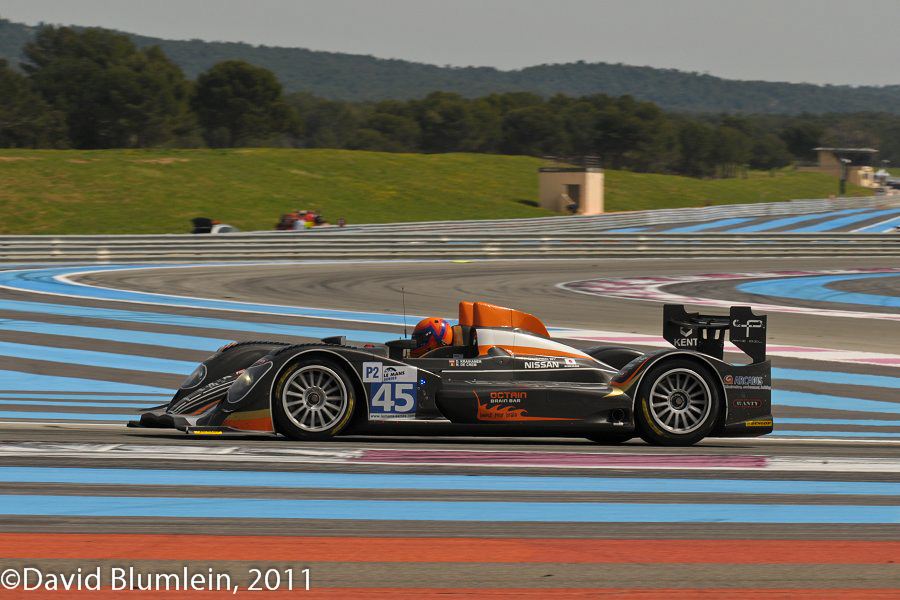
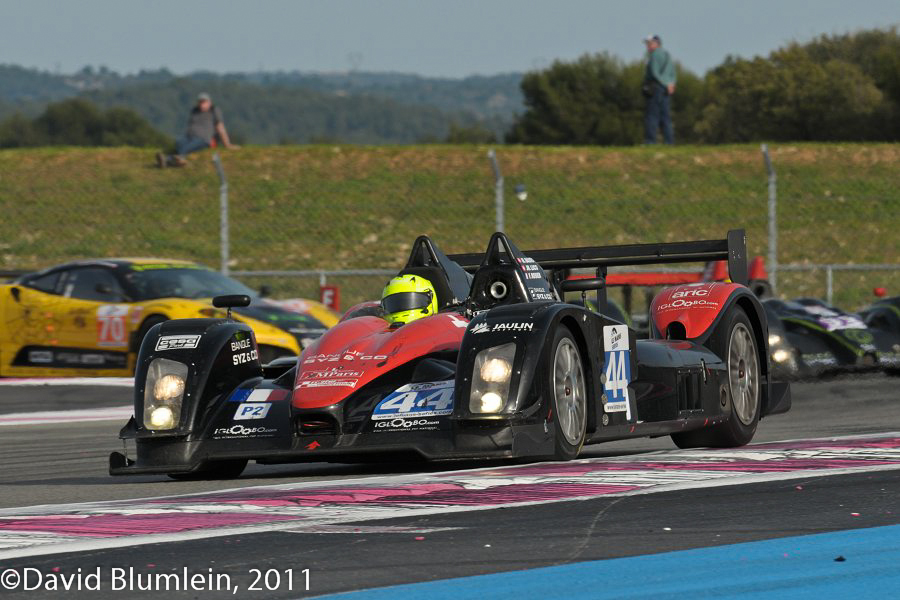
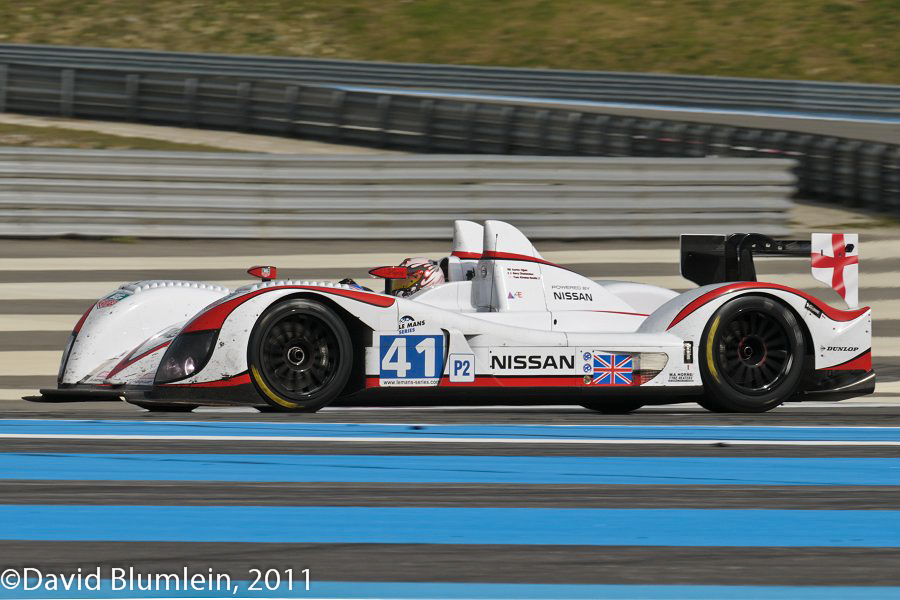
The LM P2 class was rich in variety. Among the nine entries were six different chassis and three types of engines. We had two different Lola chassis, one the ex-RML MG Lola, the Greaves Motorsport Zytek Z11SN, two HPD ARX-01d cars, three of the new Oreca-03 chassis built nearby to the circuit and the Norma M200P which made its début at Le Mans in 2010.The HPDs are an interesting mixture: they use a Courage-based tub on to which is grafted the work of Nick Wirth and they are powered by the Honda developed 2.8-litre twin-turbo V6.

The RML team could not have been happy to see their former MG-Lola finishing two places ahead of their newer car – older cars doing well in long distance events again! The new Nissan 4.5-litre V8 was used in two of the Oreca-03 chassis and in the Greaves Zytek; the rest of the class had the Judd HK, a 3.6-litre V8.

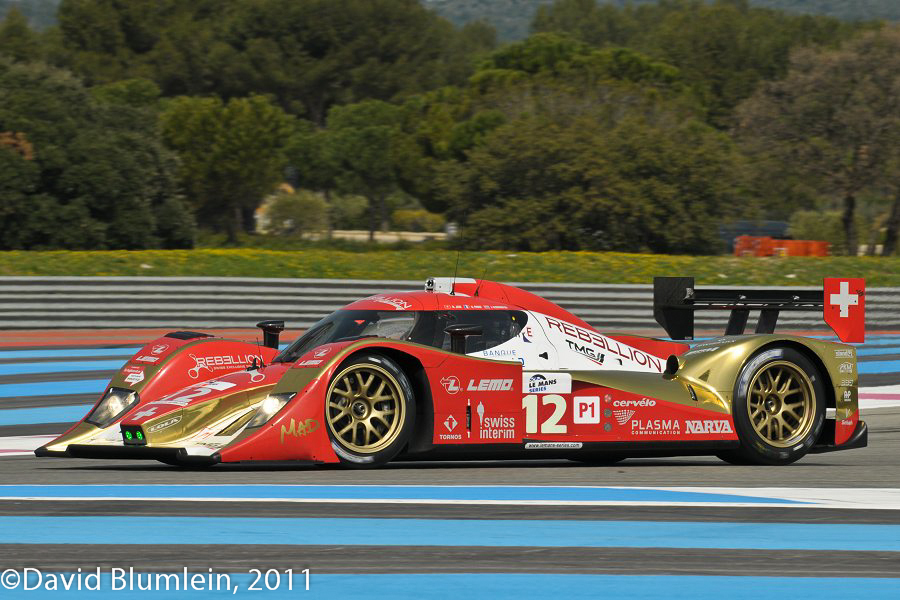
The Rebellion Lolas marked the return of Toyota to international sports car racing, the Japanese motor giant having developed a 3.4-litre V8 derived from a Formula Nippon block.

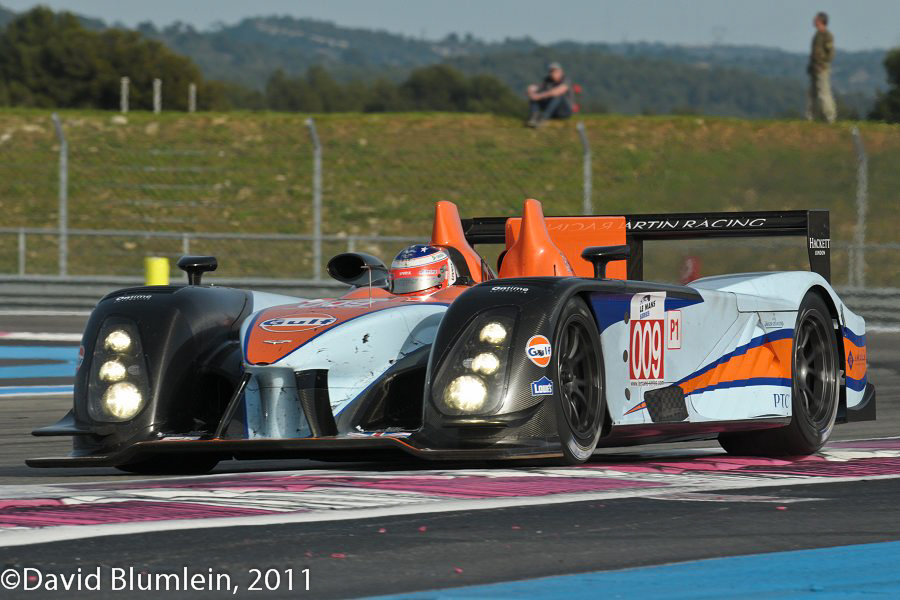
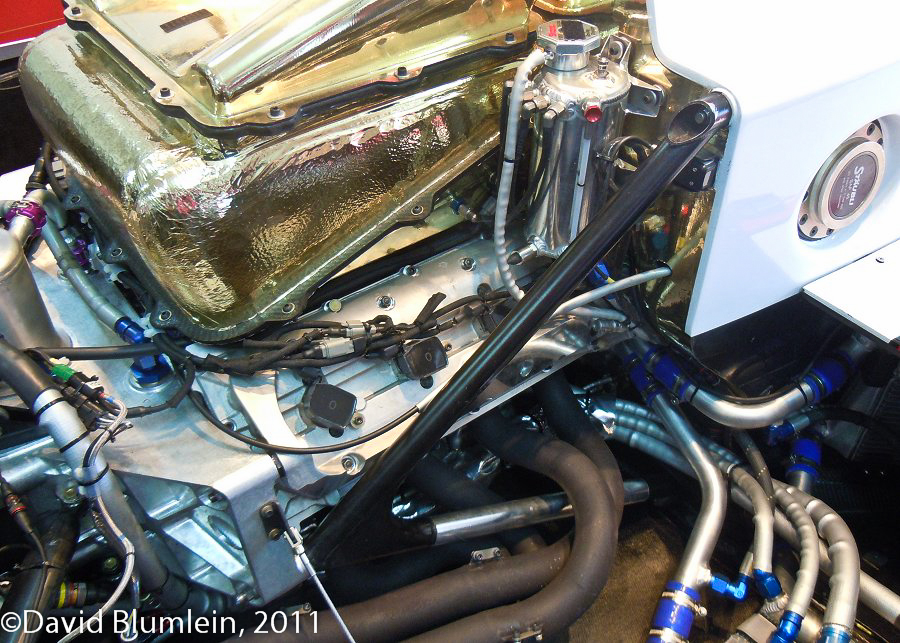
Having opted to give Sebring a miss, Aston Martin gave its new LM P1 challenger, the AMR-One, its race début at Le Castellet. The car is still too new and the team was in reality treating the race as a test session. It arrived at Paul Ricard having recently tested at Pembrey and Dijon and its unready state was emphasised by its only doing one solitary lap in Friday practice. The car differs from its rivals at Audi and Peugeot by having an open cockpit and, most interestingly, a 2-litre straight-six turbo motor; such a configuration has not been seen in the LMP class for many a year. The car started the race but later spent a long time in the pits, apparently with a misfire. Aston Martin has been very tight-lipped over the details of its newcomer but it is clear that the engine has been causing problems. The car came out again during the last half hour of the race, almost unnoticed.


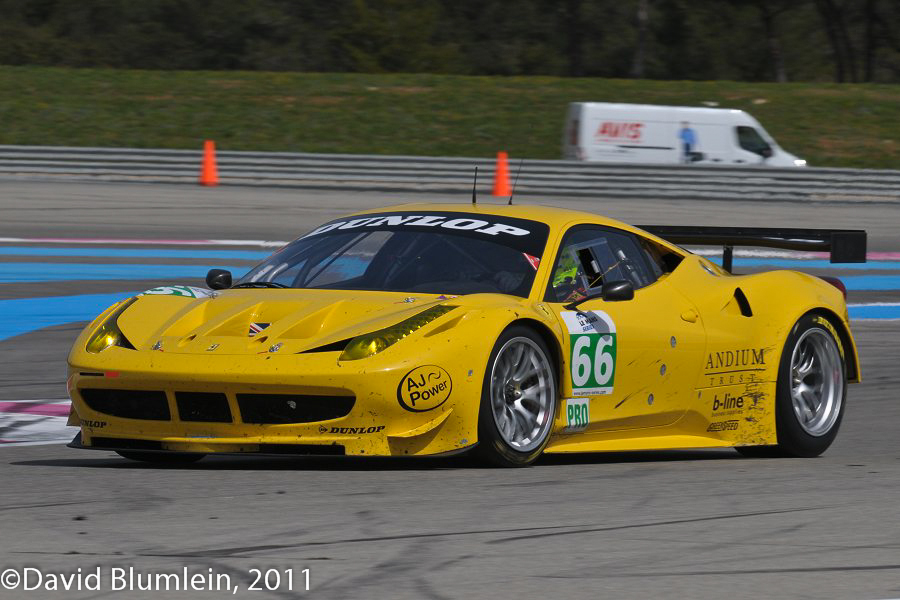
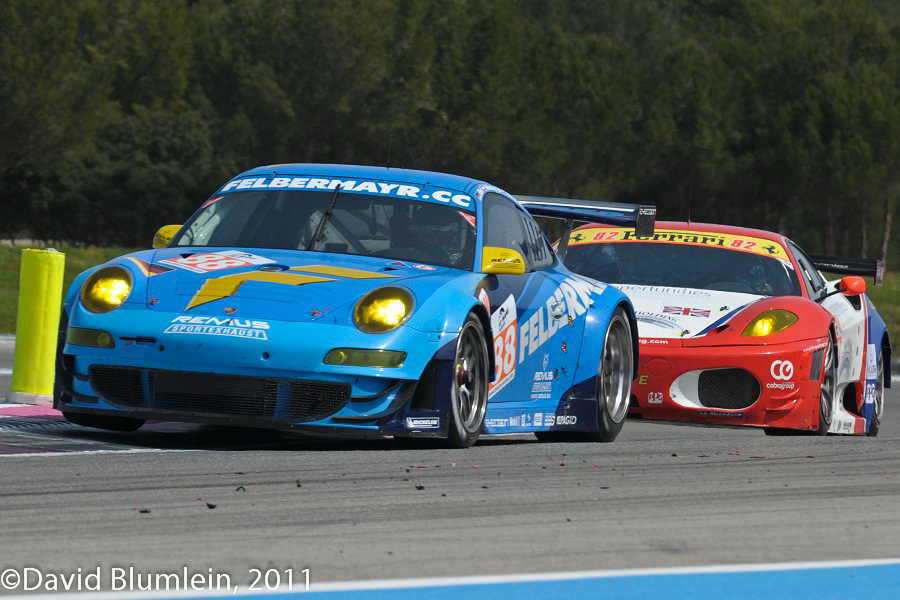
With the Porsche ranks depleted in GTE Pro, the new Ferrari 458 Italias  helped themselves to the class win but one notices that Zuffenhausen put it over Maranello in the GT Am category with the remaining Felbermayr car.


How pleasing to see Nissan win the LMP2 class with their new engine especially in view of the awful troubles back in the homeland. This success was by courtesy of the Greaves Zytek, the combination staking claim to the third spot on the overall  podium as well.

David Blumlein, April 2011

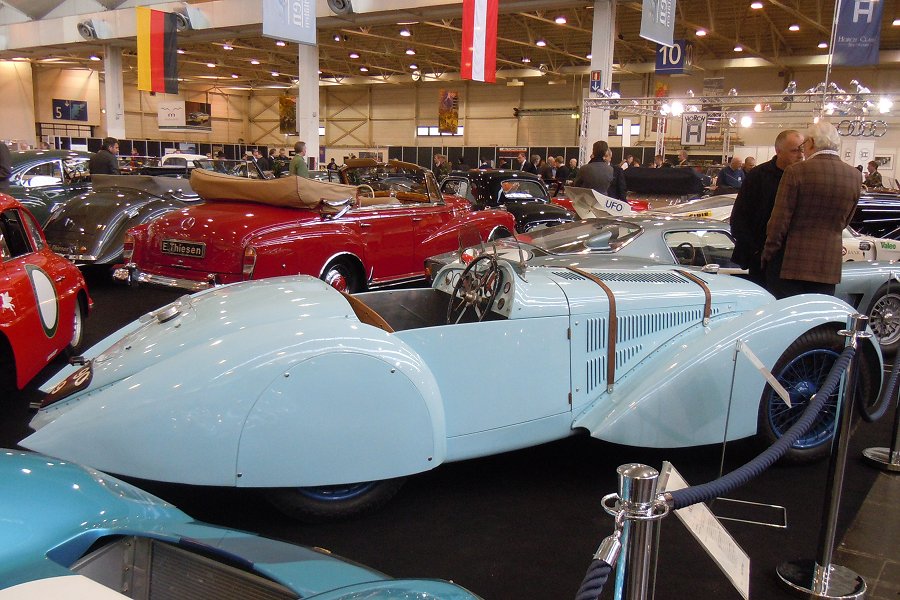
Tecno Classica from a Special Correspodent

It has been a busy few weeks on the road, Essen, Le Castellet, Zolder, Monza, Le Mans, all in short order. So posting to the blog tends to get lost in the fog of priorities but the beast must be fed.


We are lucky to have David Blumlein on board to dispense automotive wisdom. Listen, learn and enjoy.

John Brooks, April 2011.

Rosso


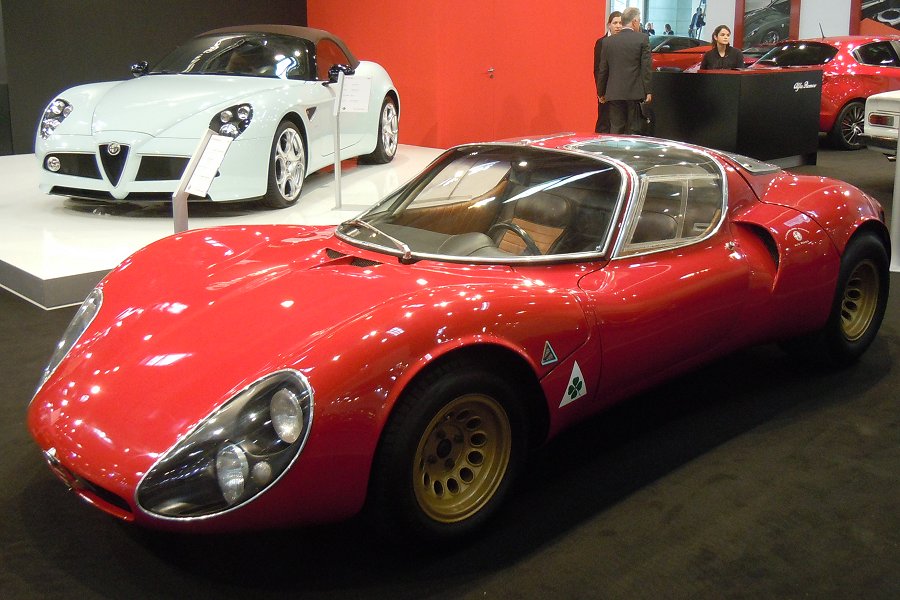
Alfa Romeo 33 Stradale.

Alfa Romeo owes its revival in sports car racing in the late Sixties to Carlo Chiti’s T33 sports –racer, powered by a 2-litre V-8. The company wanted to offer the public a taste of what they were achieving on the tracks and the result was this exquisite Stradale version, shown at the 1967 Turin Show. It was designed by Franco Scaglione but only 18 were made.

Wedding Present


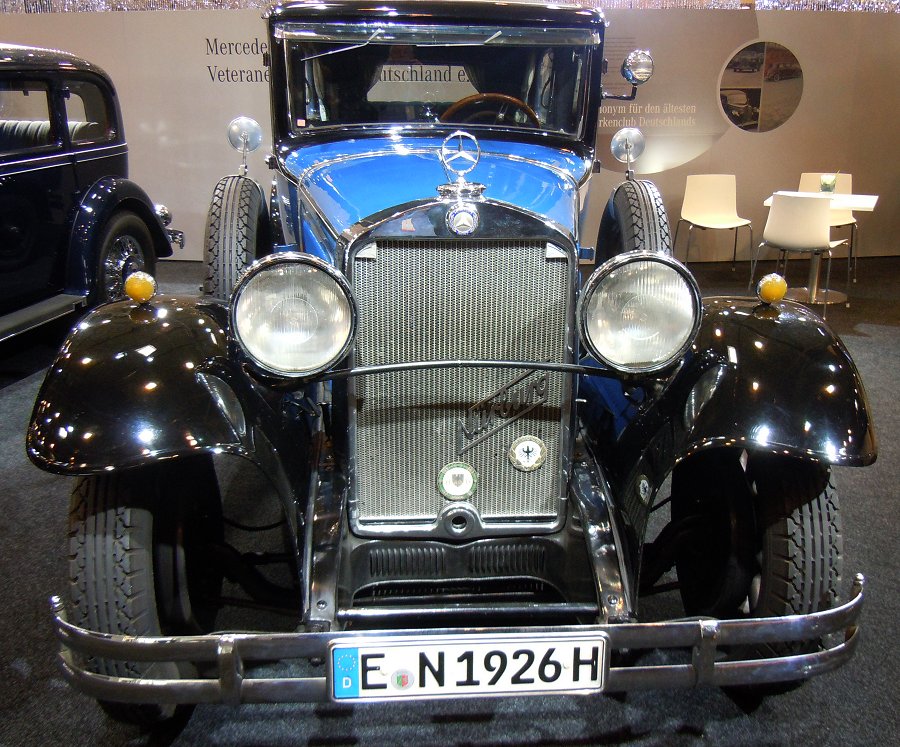
1928 Mercédès-Benz Nürburg saloon.

A typical product after Benz and Daimler A.G. merged in 1926. Its name celebrated the recently opened Nürburgring circuit on which one of the company’s cars won the first race.

Imposing


A roadster version took part in the 1929 Alpine Trial driven by future star Rudolph Caracciola.

Rear Gunner


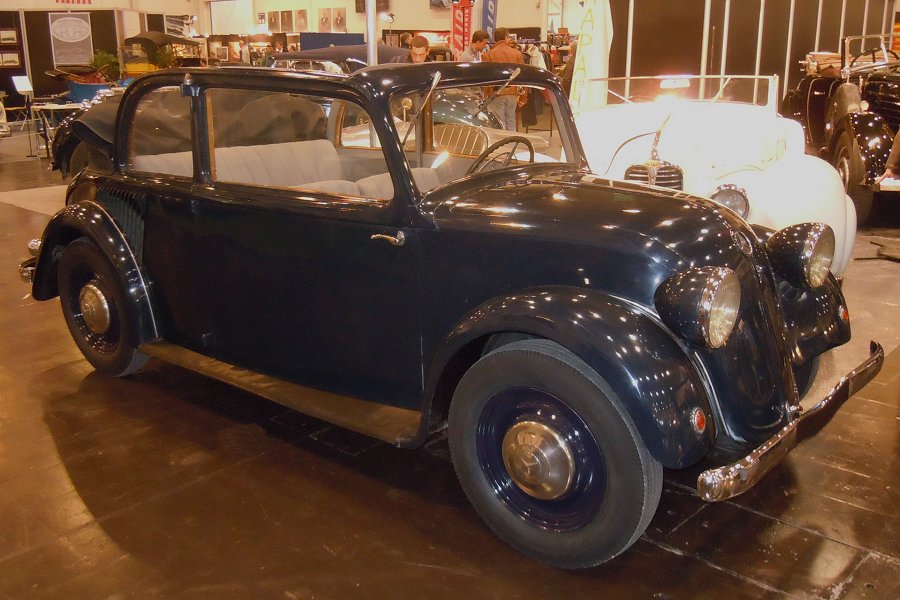
1934 Mercédès-Benz 130H

Influenced by former Benz engineers, the Stuttgart company experimented with some rear-engined designs in the Thirties and this Type 130 H (Heckmotor – rear-engined) was introduced in 1934 – it did not sell well!

Hanomag Kommissbrot


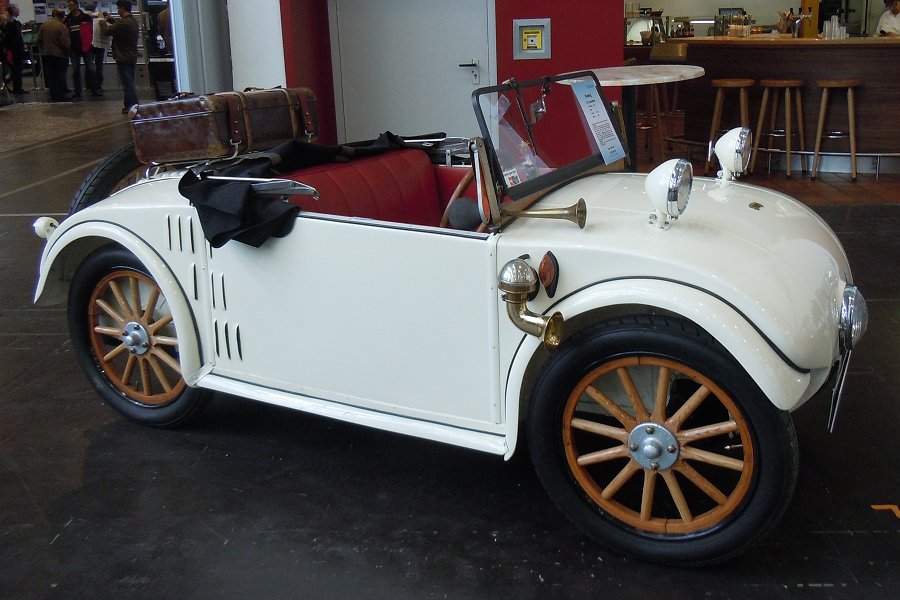
Hanomag Kommissbrot and Rekord

A name largely forgotten nowadays but Hanomag started life in the mid-19th century producing steam locomotives and then trucks, tractors and military vehicles in Hannover. By the Twenties they had turned to petrol vehicles and in 1925 they made the Hanomag 2/10, an open 2-seater with a rear-mounted 500 c.c. single-cylinder water-cooled engine. Because it resembled a loaf of Army bread, it was quickly nicknamed Kommissbrot but it was popular – 15,775 were made.

Up Town Top Ranking


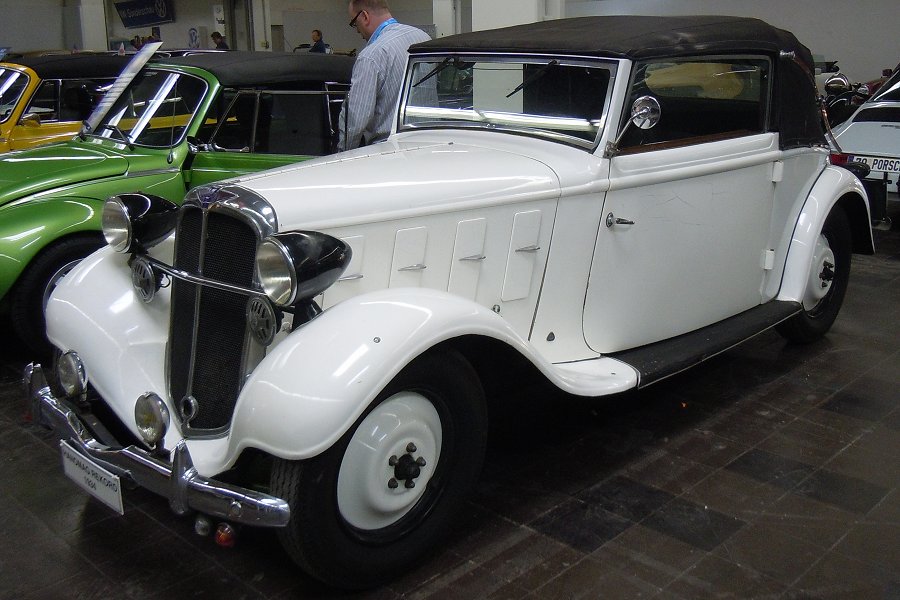
By the Thirties Hanomag had moved up market and the 1.5 litre Rekord dates from 1938.

Every Silver Cloud has a Lining


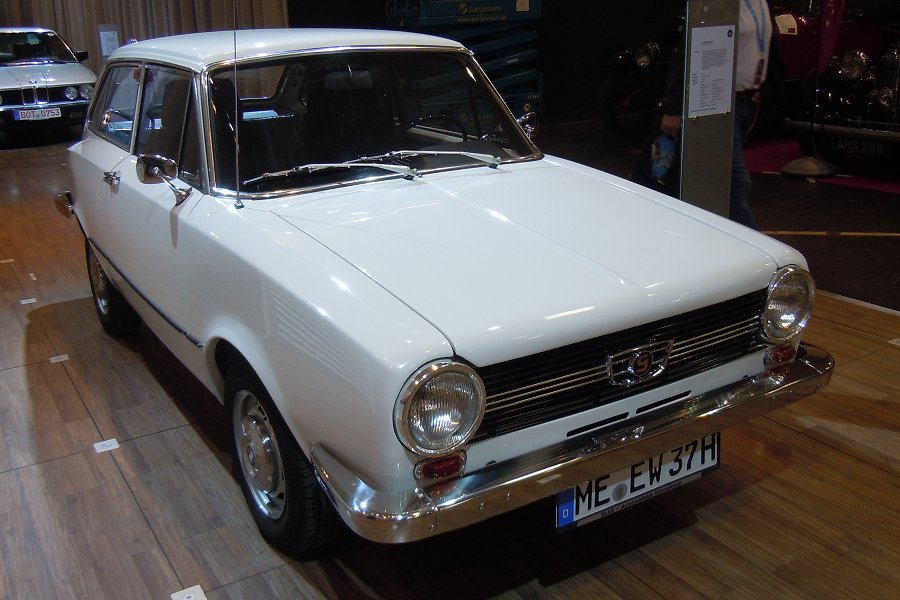
1967 Glas 1304T

Hans Glas rose to fame with the introduction of the Goggomobil in 1954 which proved to be a very popular micro car. The Glas range moved up market in the following years with bigger cars using mainly 4-cylinder engines, of which this car is typical. Glas is remembered also for the fact that he was the first to use belt drive for overhead camshafts. BMW took over his Dingolfing factory – today it produces not only BMW cars but also the bodies for Rolls-Royce cars.

W.O.'s You Know...............


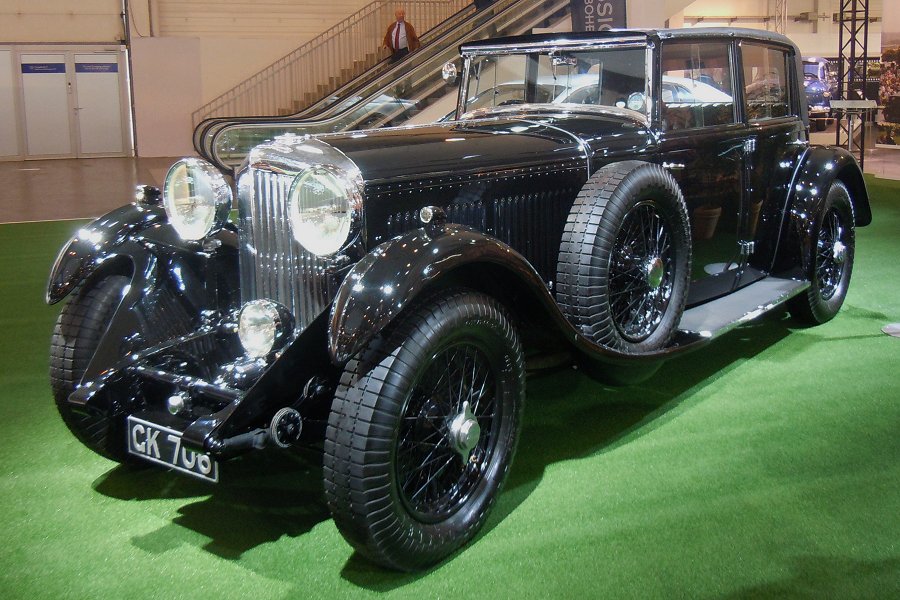
Bentley 8-Litre

The top of the range Bentley with a 6-cylinder overhead camshaft engine, designed to compete with the Rolls-Royce Phantom II. Only 100 were produced between 1930 and 1931. This was W.O. Bentley’s own car.

It's Mr. O'Reilly, Sybil.


1936 Riley Sprite

The Riley Sprite (1936-1938) was the last of the sporting Rileys before the Second World War, using a developed version of the famous engine with high camshafts and hemispherical head, introduced in the Riley Nine in 1926. Rileys had an enviable reputation in competitions particularly in endurance events. This car has special bodywork by Pourtout and was raced privately in France. The Riley company failed in 1938 and was absorbed into the Nuffield Organisation.

Bob Marley & The Wailers


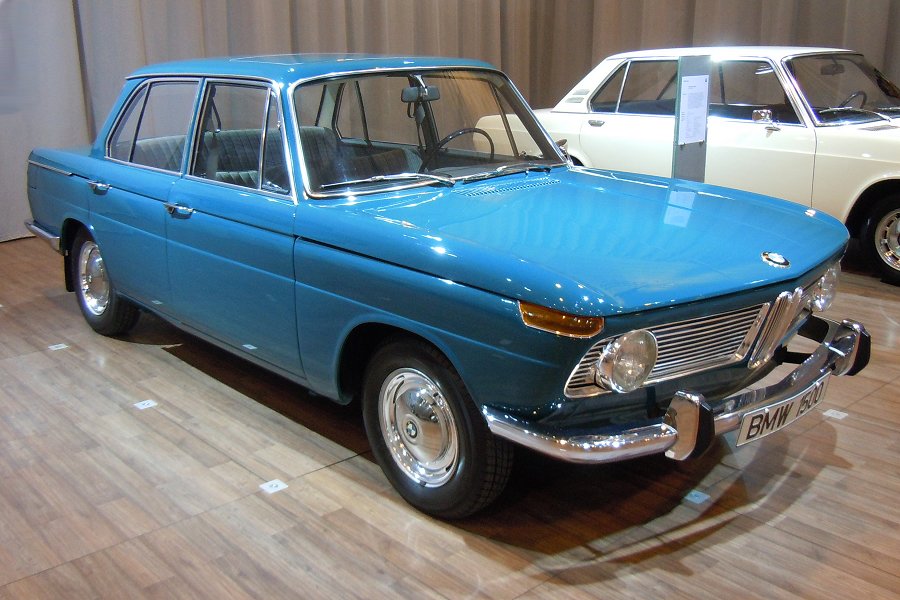
1963 BMW 1500

This model, introduced at the Frankfurt Show in 1961, was the car which saved BMW. The Munich firm was in serious financial trouble by the late Fifties – the market for Isetta bubble cars was declining and the big V-8s were hardly profitable. Fortunately the 1500, with its excellent overhead cam engine, was the right car, at the right time and was an immediate success – all the cars that followed stem from it. It is no exaggeration to say that without the 1500 there would be no BMWs today.

Iron Curtain Cruiser


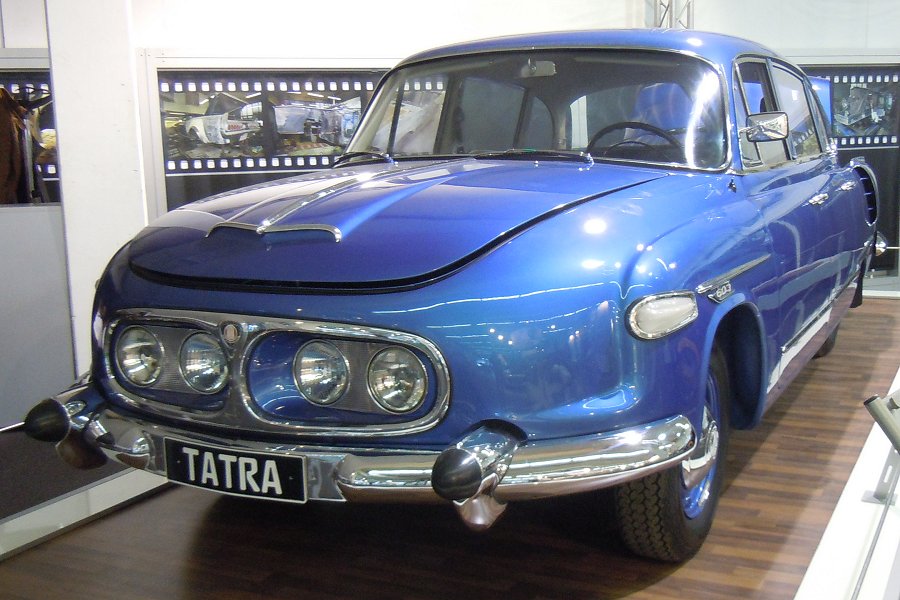
Tatra 603

Hans Ledwinka showed his sensational streamlined Tatra T77 at the 1934 Berlin Show. It had a rear-mounted air-cooled V-8 engine and initially a central driving position. Derivatives followed and when Czechoslovakia fell under Communist control the theme was continued with this, the 603. A team of these cars performed well in the Marathon de la Route at the Nürburgring.

La Sarthe Limousine


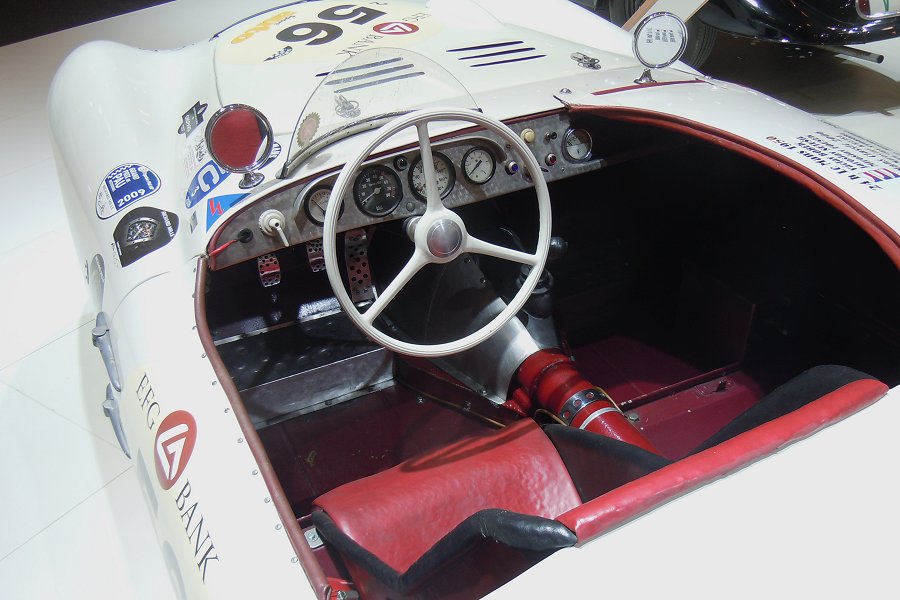
Cockpit


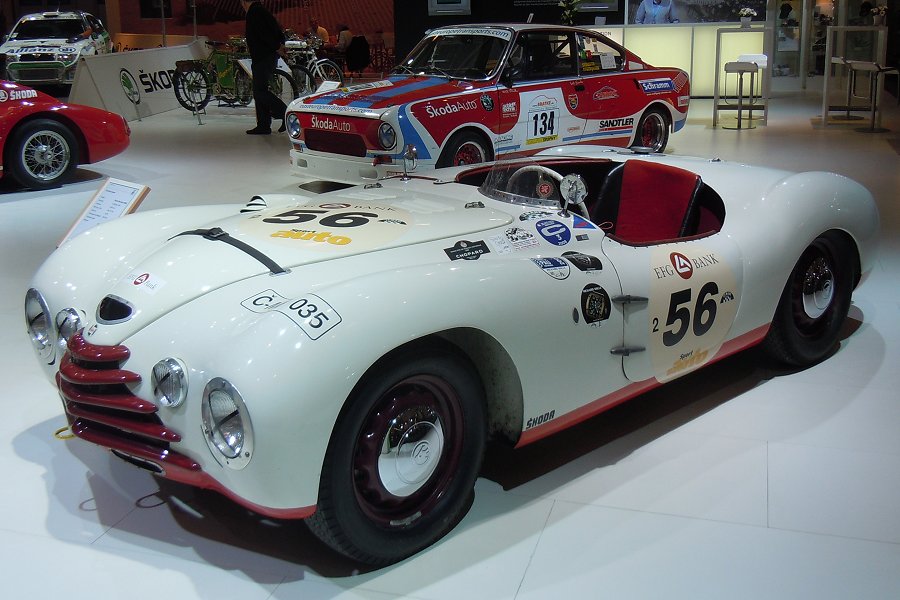
Skoda 1101 Sport

This is the actual car that Skoda raced at Le Mans in1950 but without success. Nationalisation kerbed future ambitions.

Monte Carlo or Bust


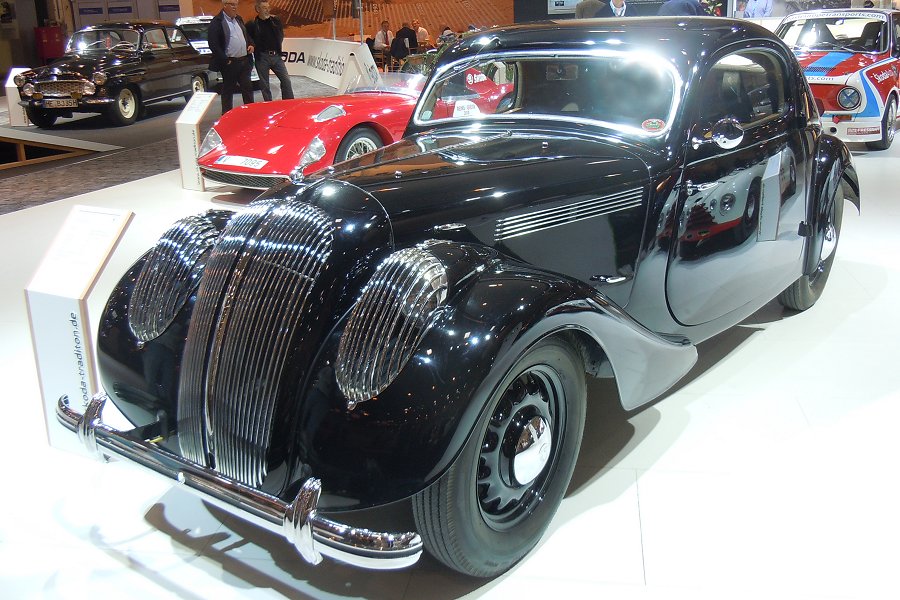
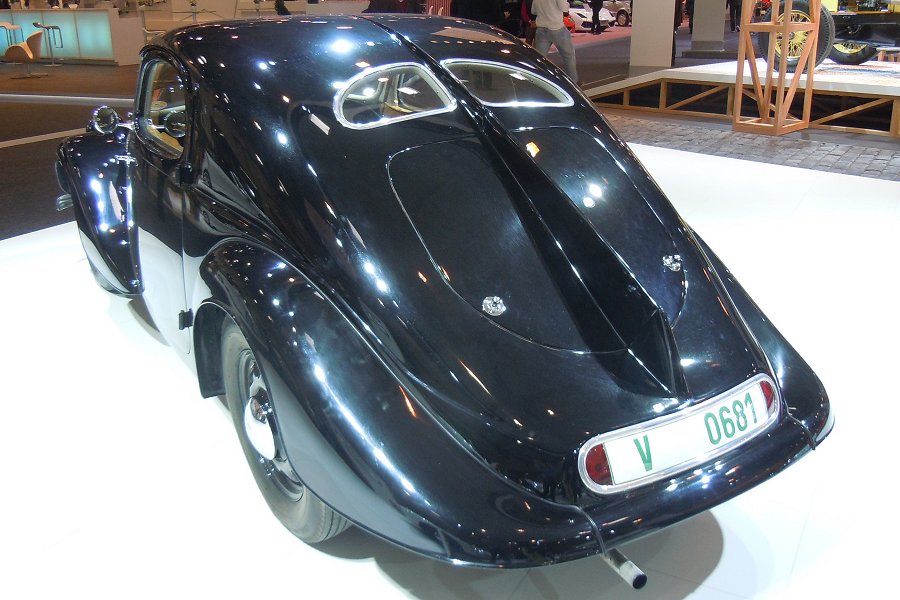
1937 Skoda Popular Sport Monte Carlo Coupé

Back Seat Drivers


Skoda made advanced cars in the Thirties and this example, one of just 72 made, is a celebration of Skoda’s second in class and eighth overall in the 1936 Monte Carlo Rally. It has not only independent suspension all round but also a transaxle.

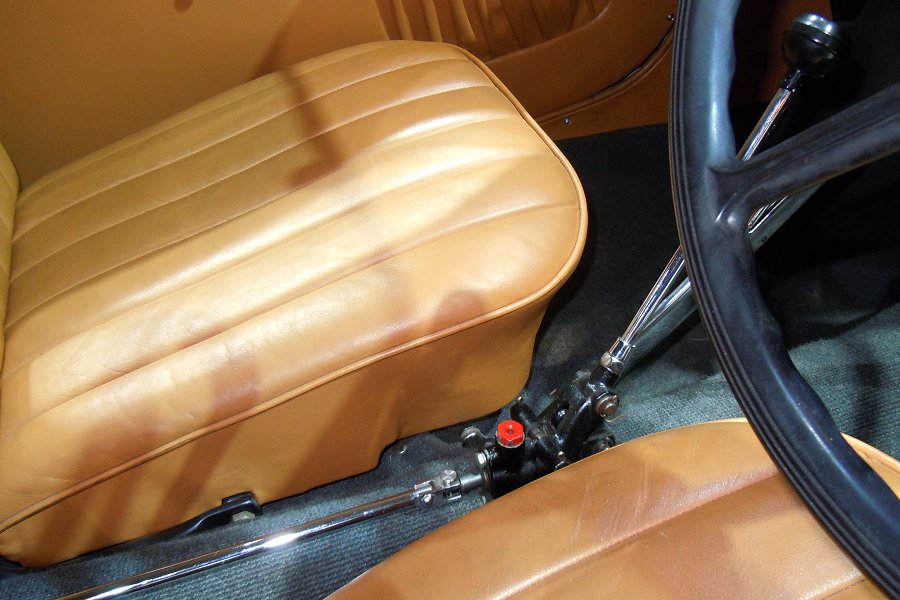
Gearboxed


Notice the linkage to the rear-mounted gearbox.

Bulldog Spirit


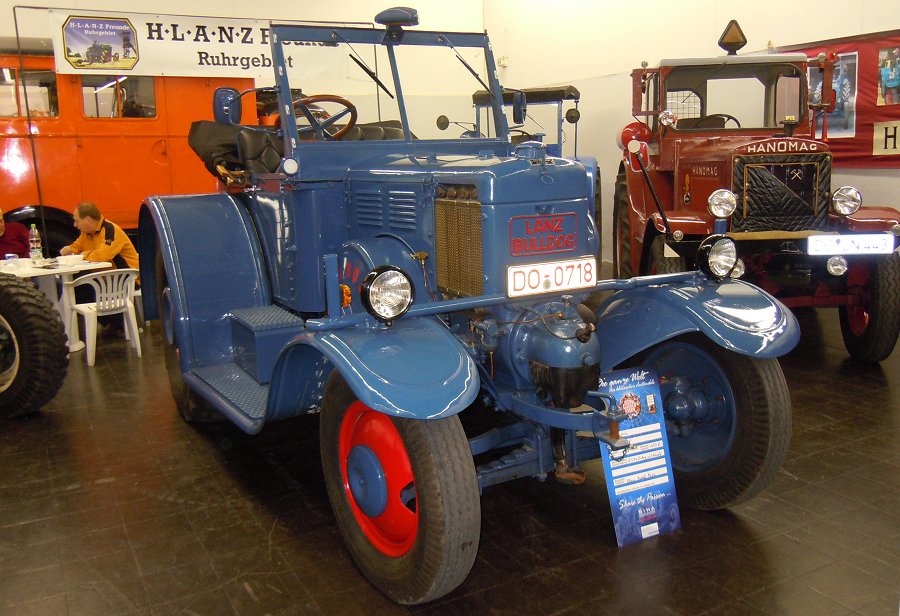
Lanz Bulldog

And now, for something completely different! The Bulldog tractor made by Heinrich Lanz in Mannheim from 1921 to 1960 had a single-cylinder horizontal hot bulb engine whose capacity was gradually increased over the years from 6.3-litres to 10.9-litres. No wonder it needed a large flywheel! It was very popular in Germany and some 220,000 were made.


David Blumlein, April 2011