Category Archives: Notes from the Cellar

Show Time

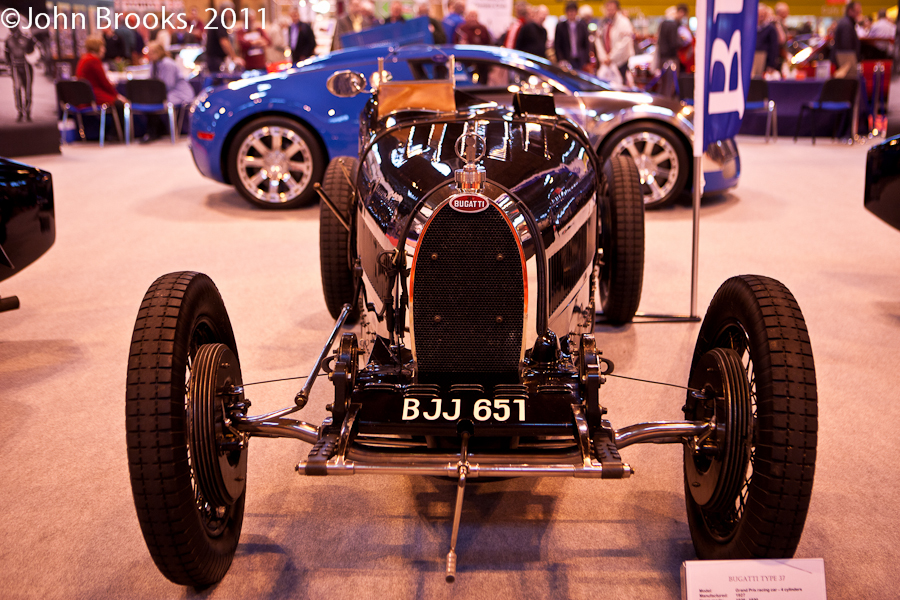
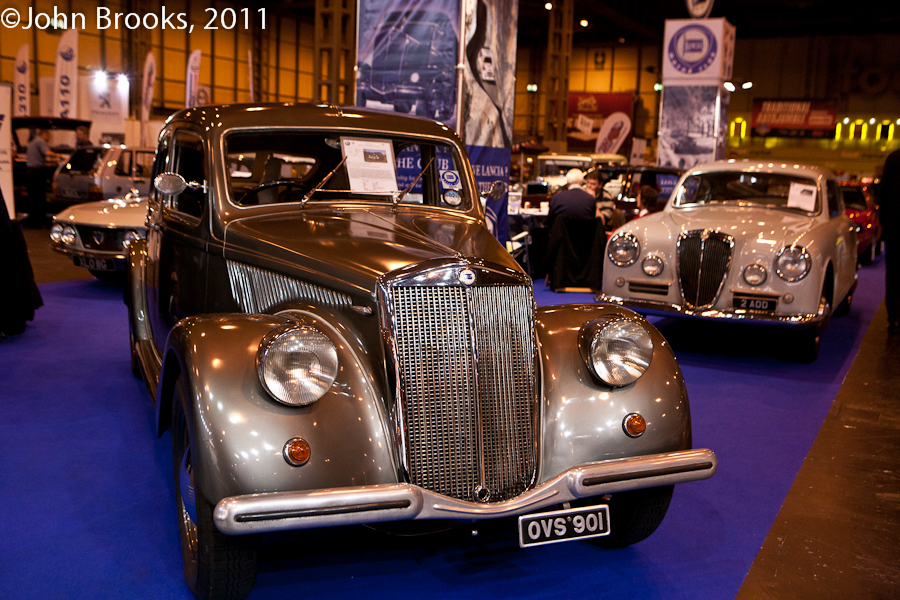
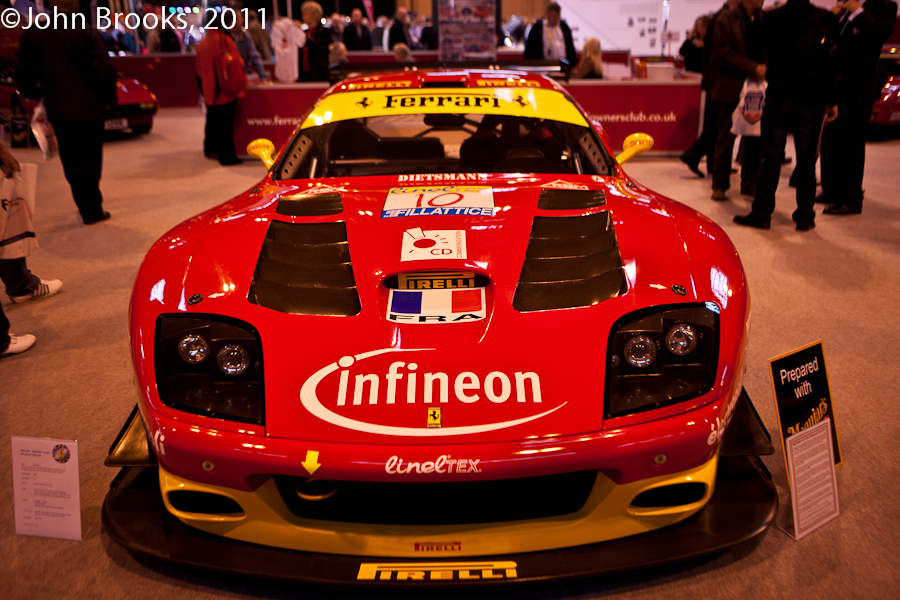
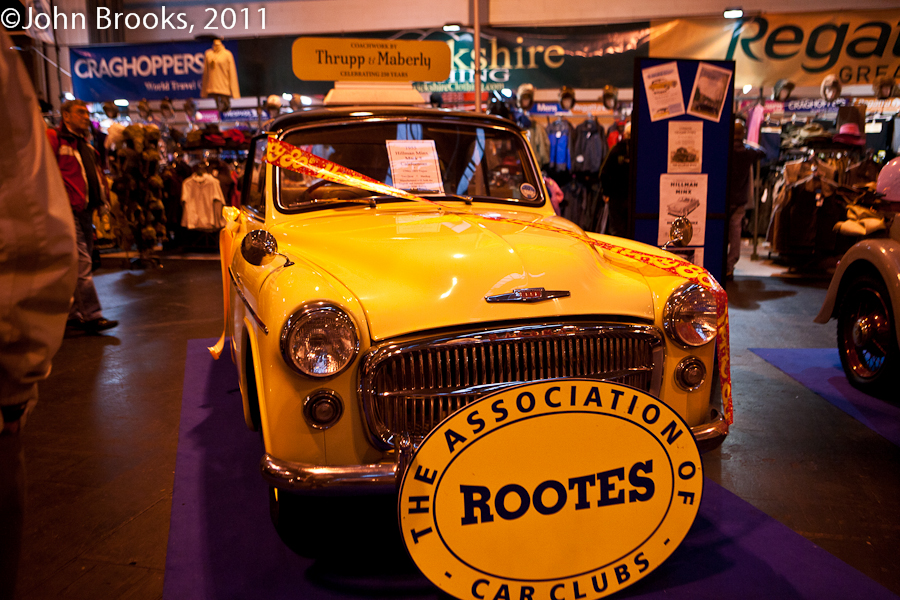
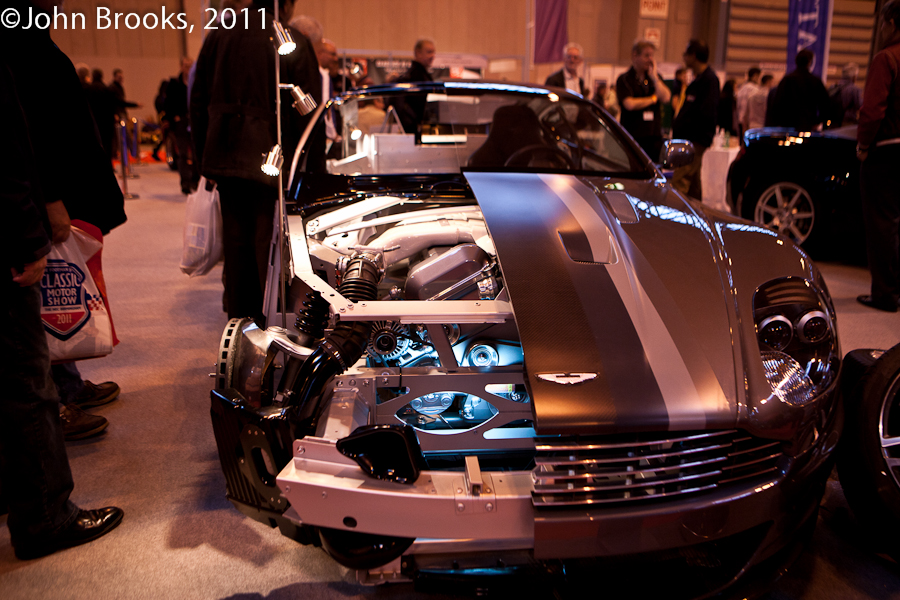
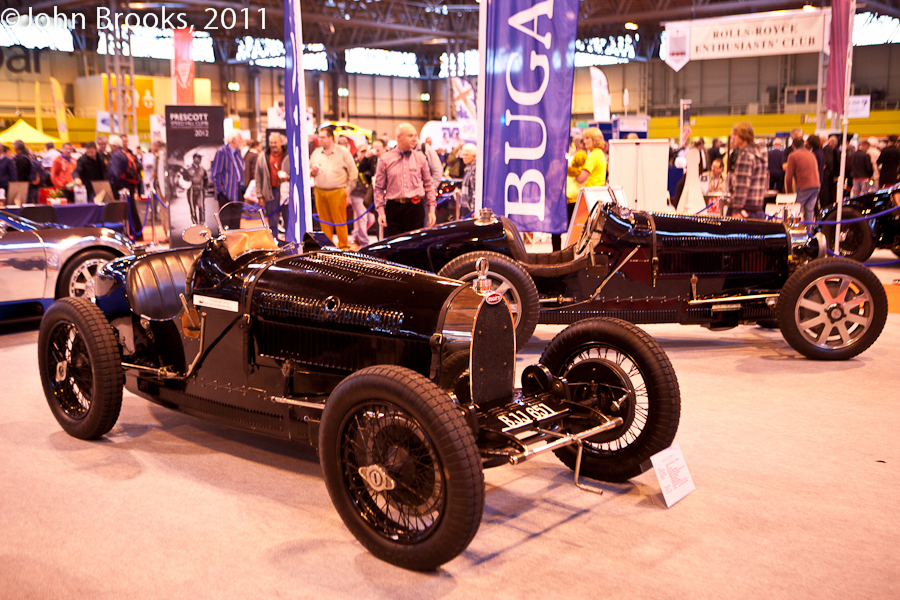
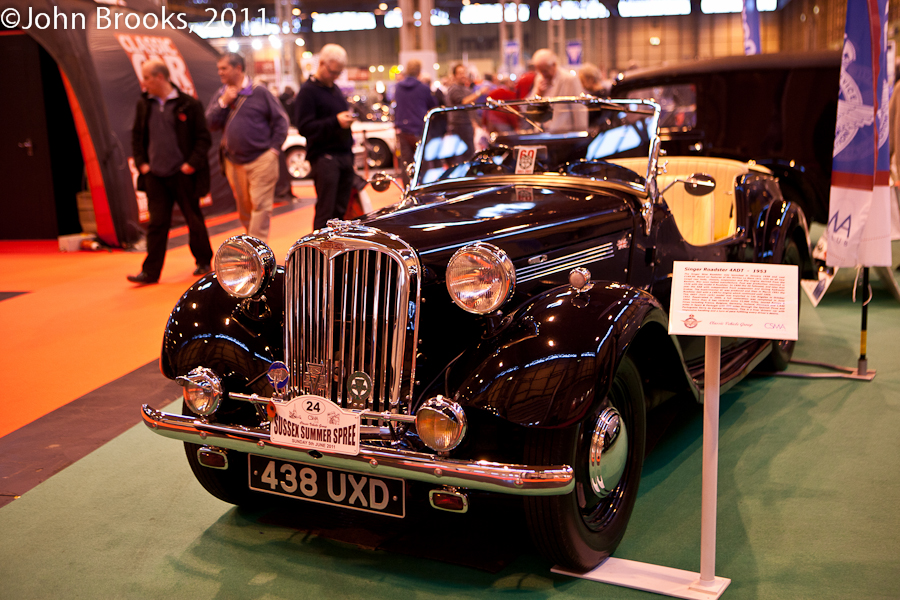
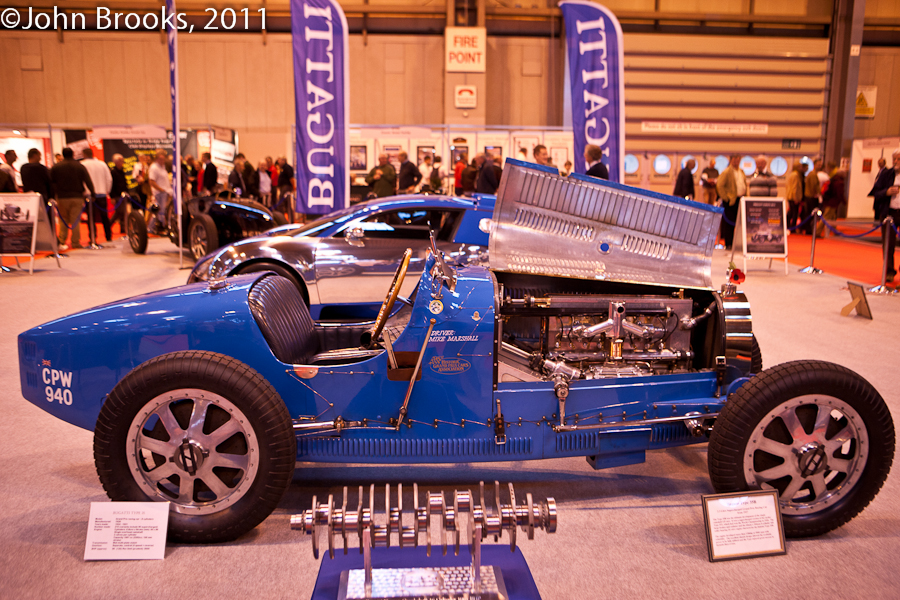
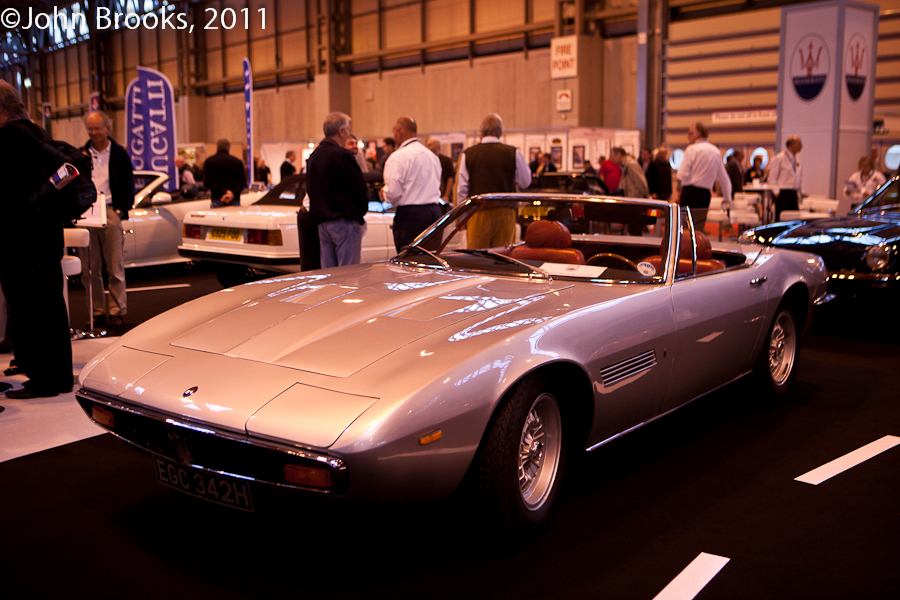
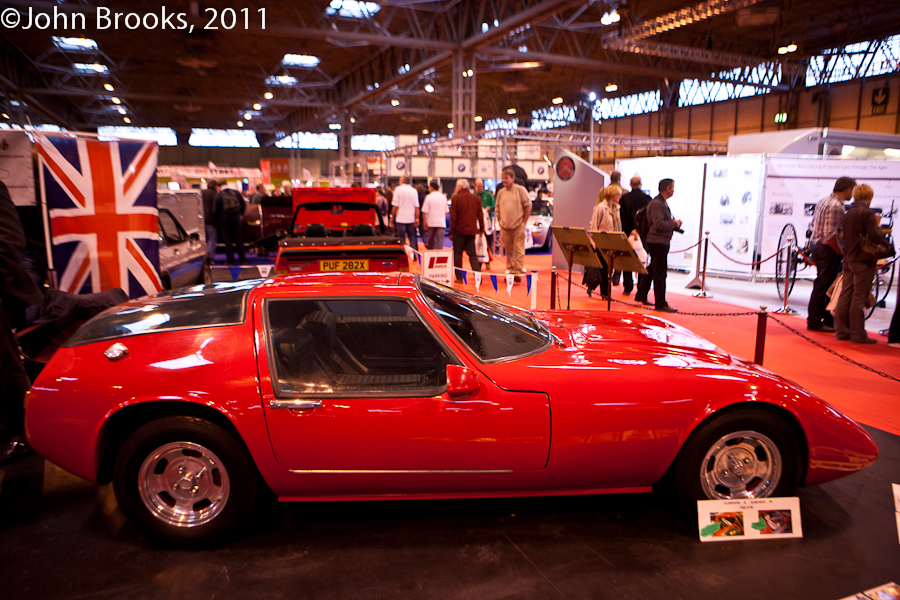
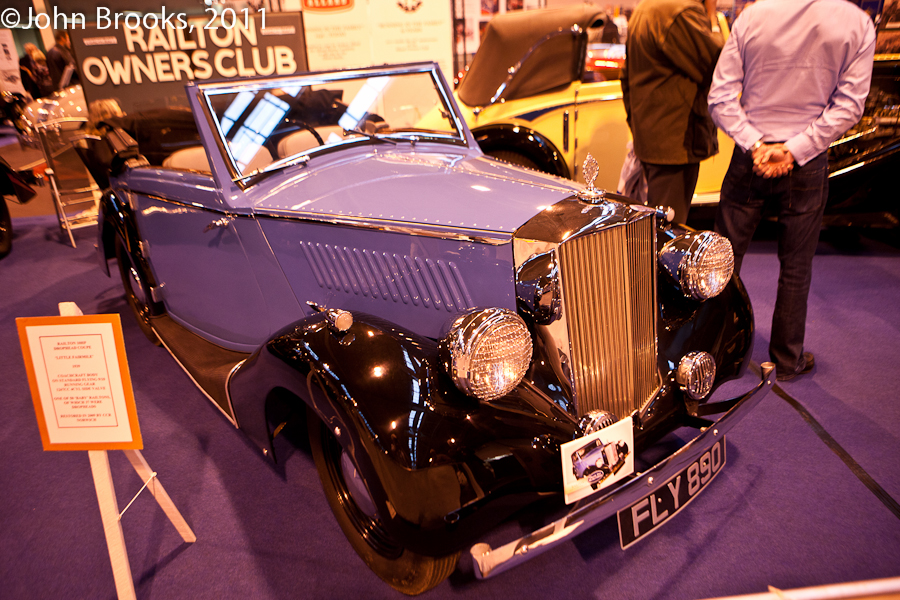
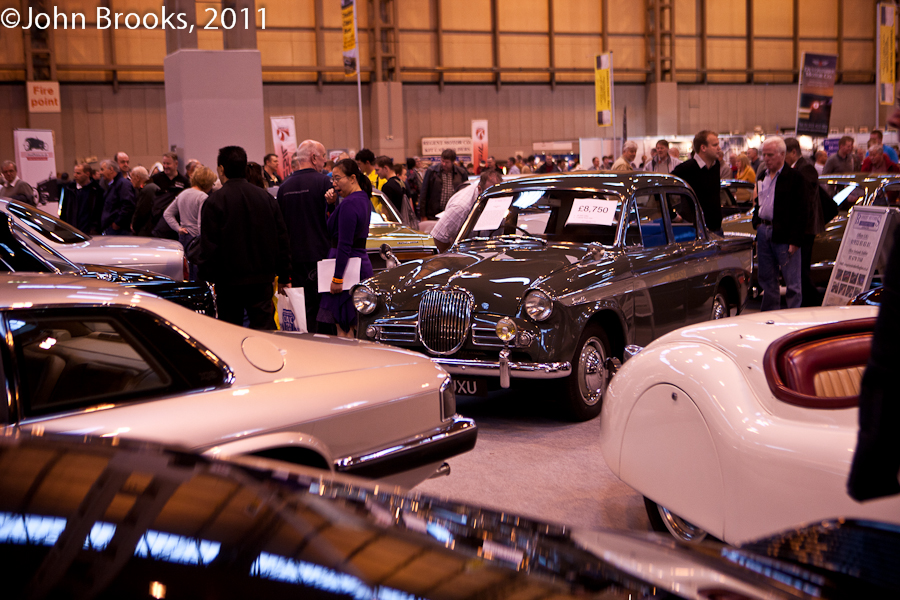
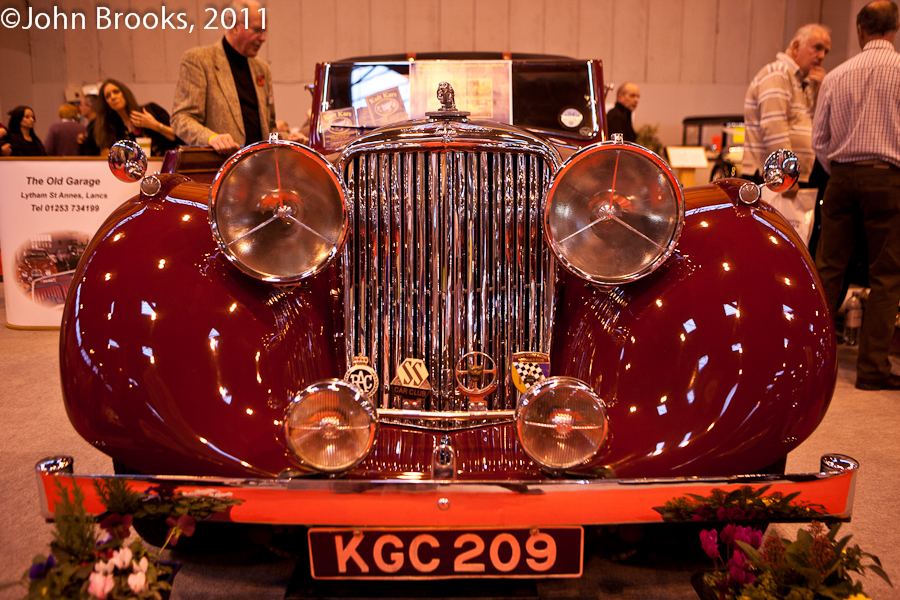
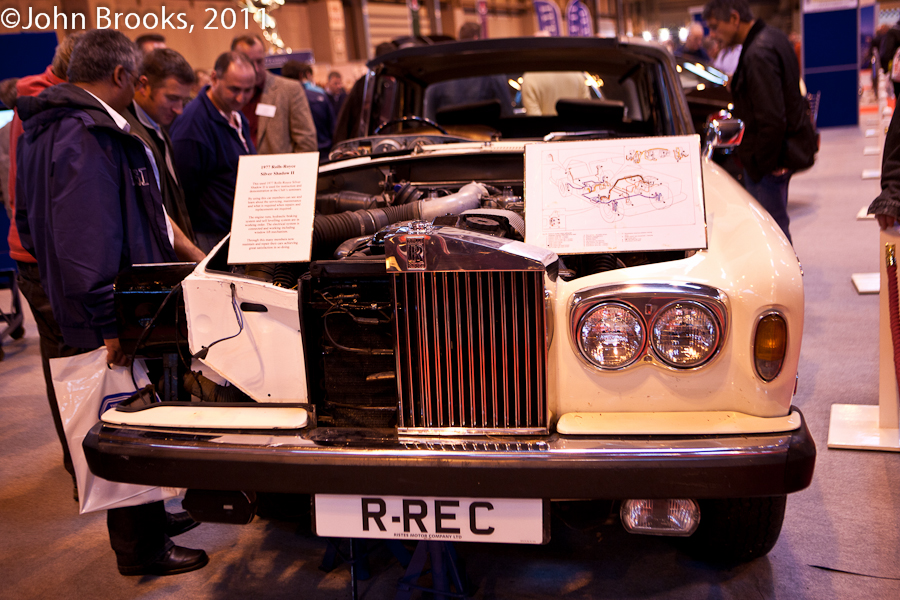
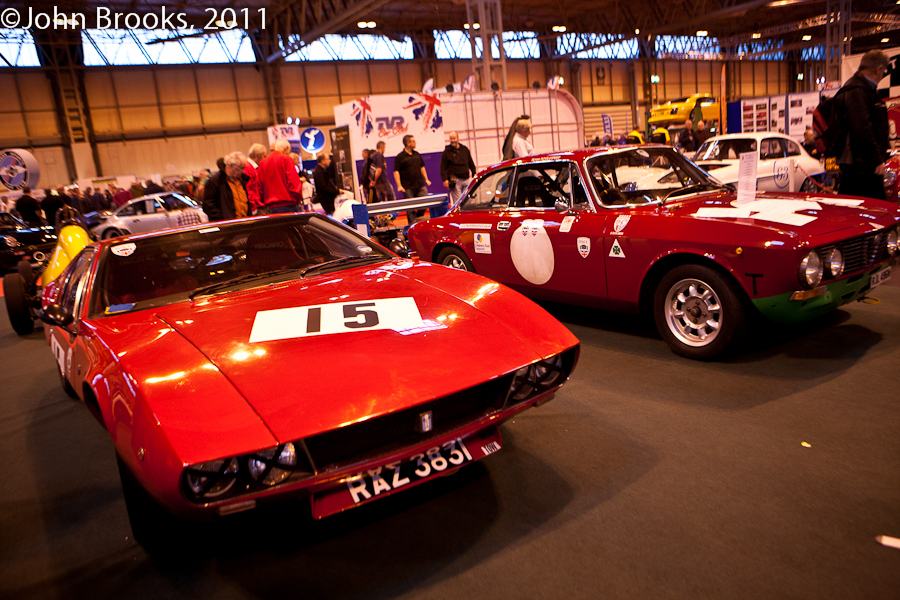
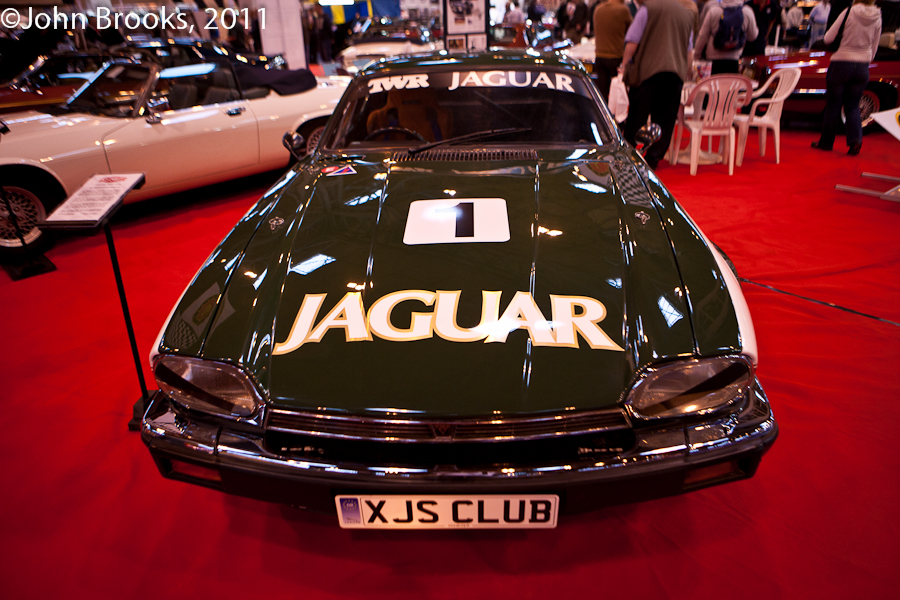
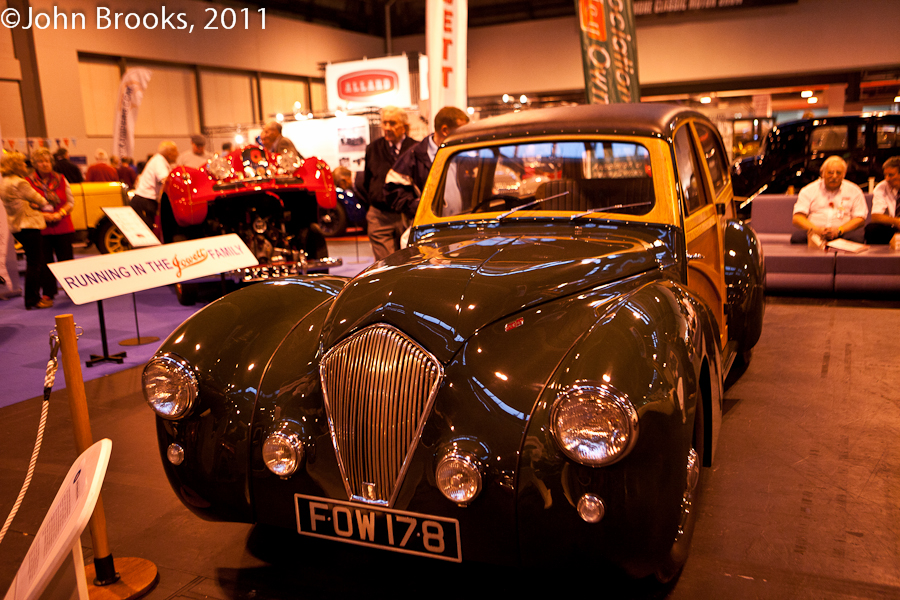
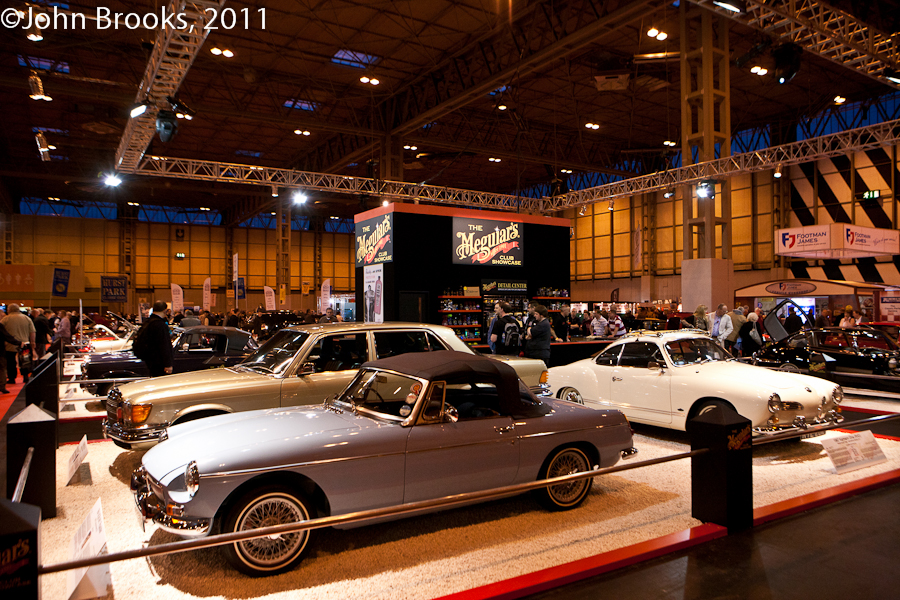
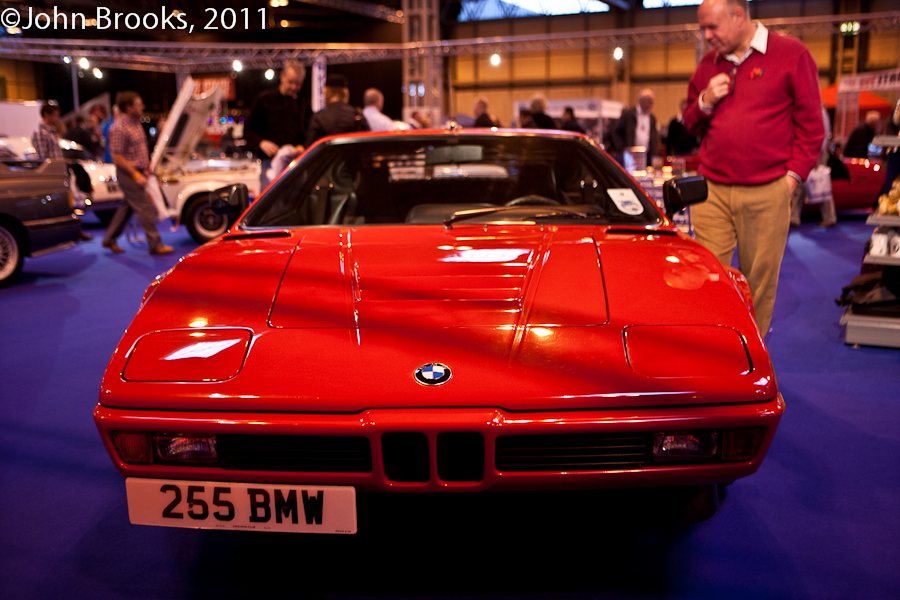
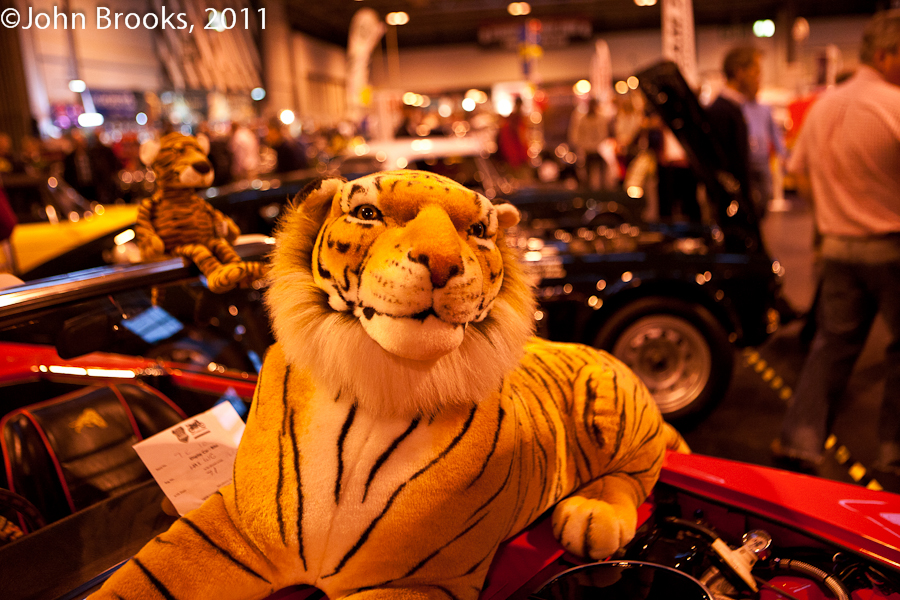
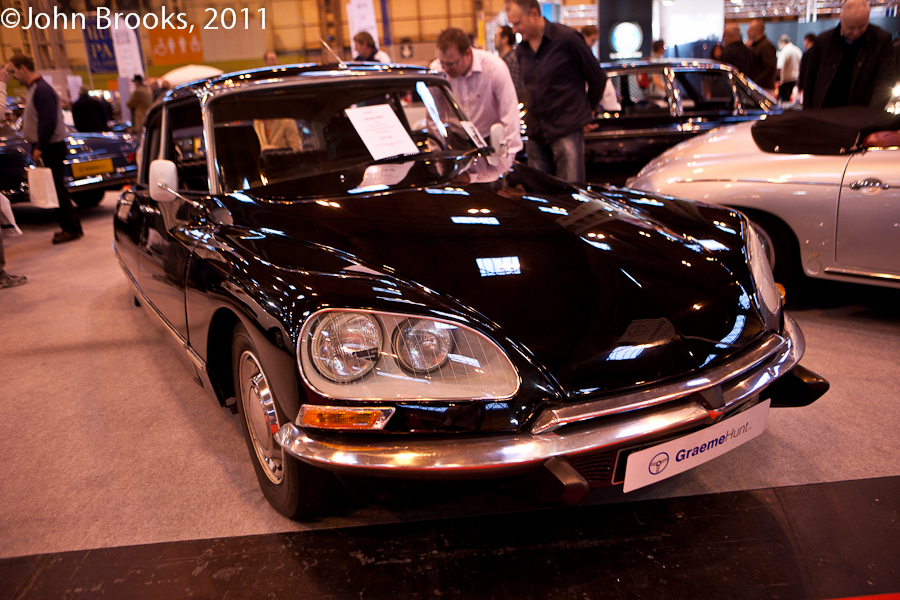
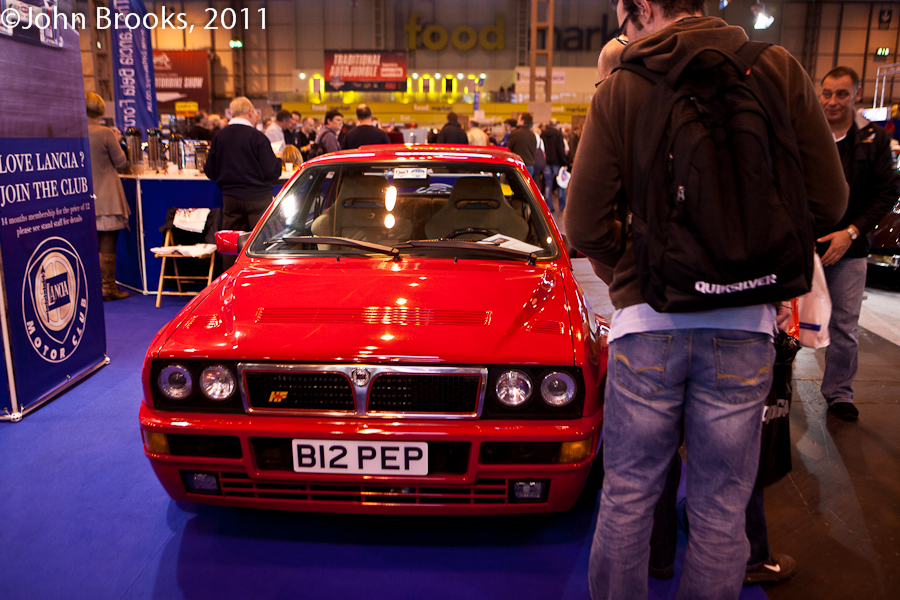
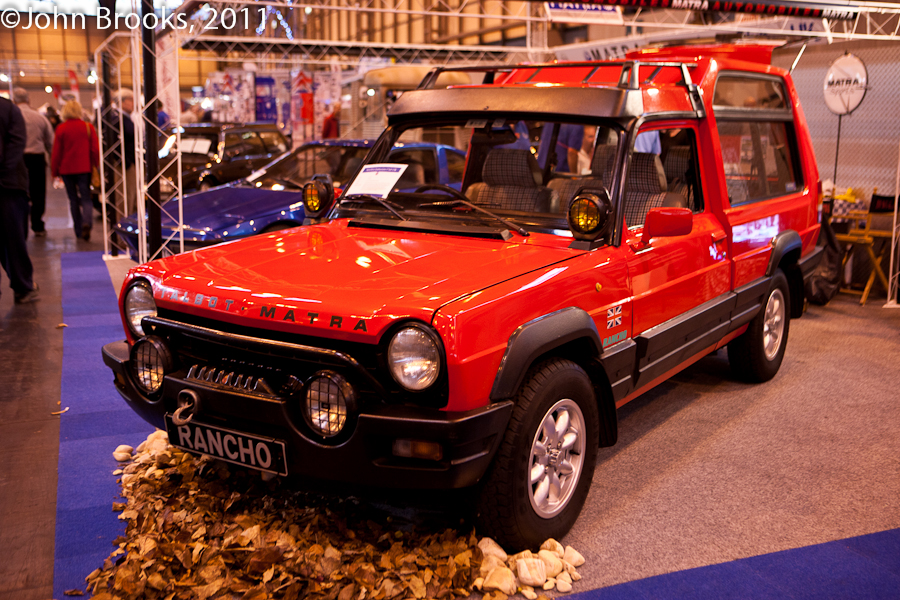
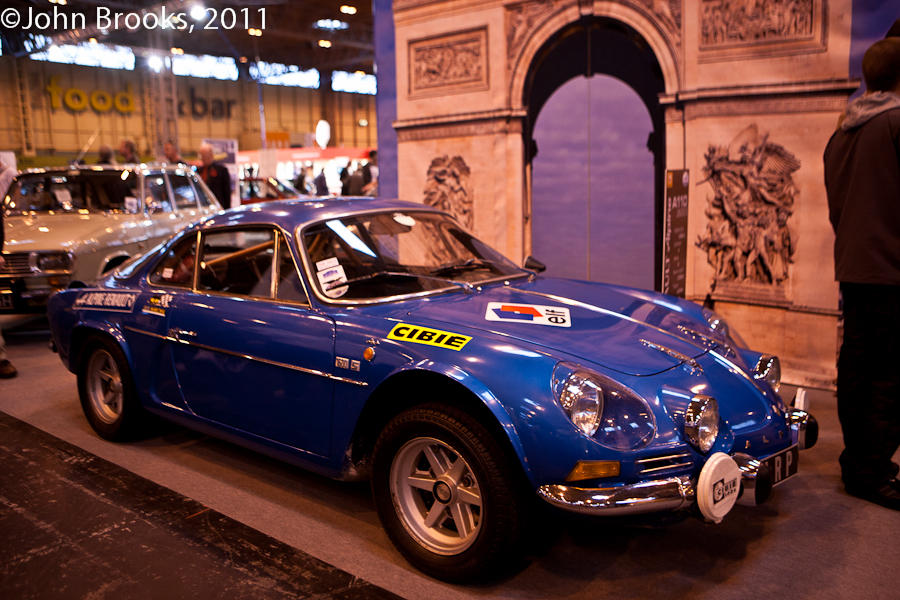
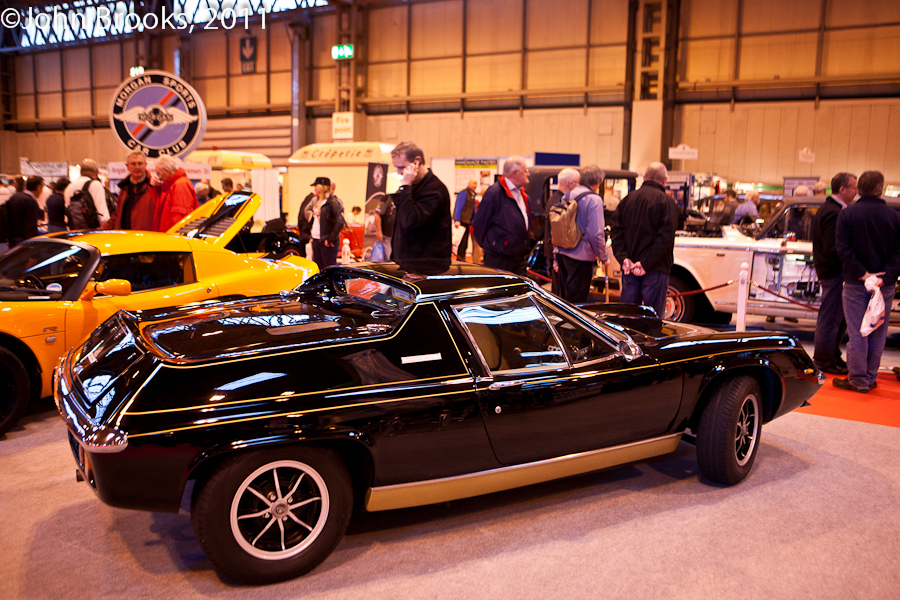
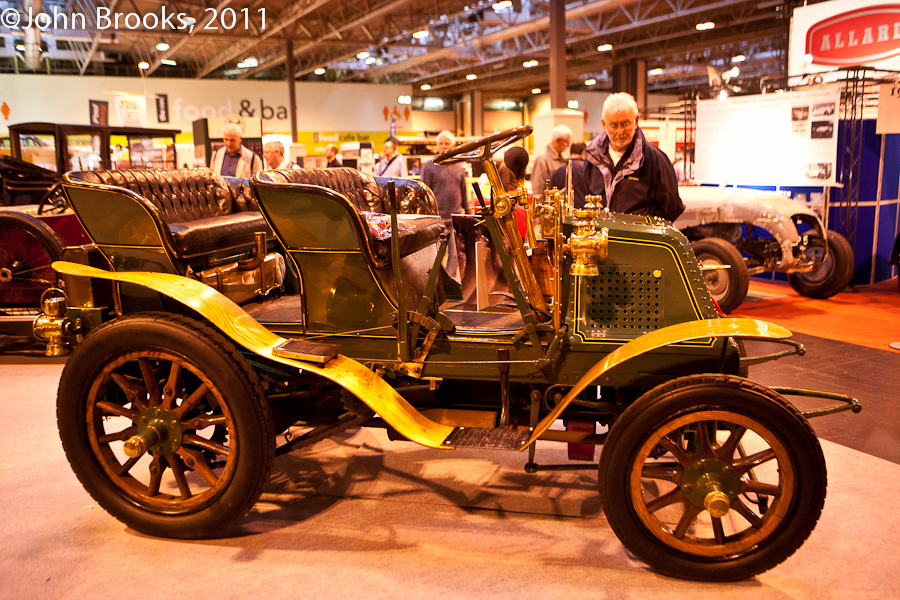
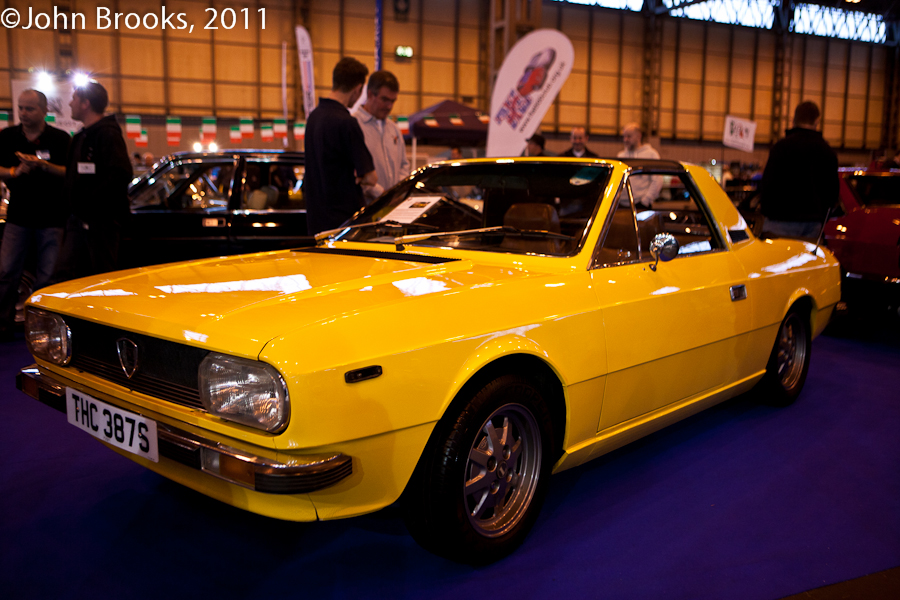
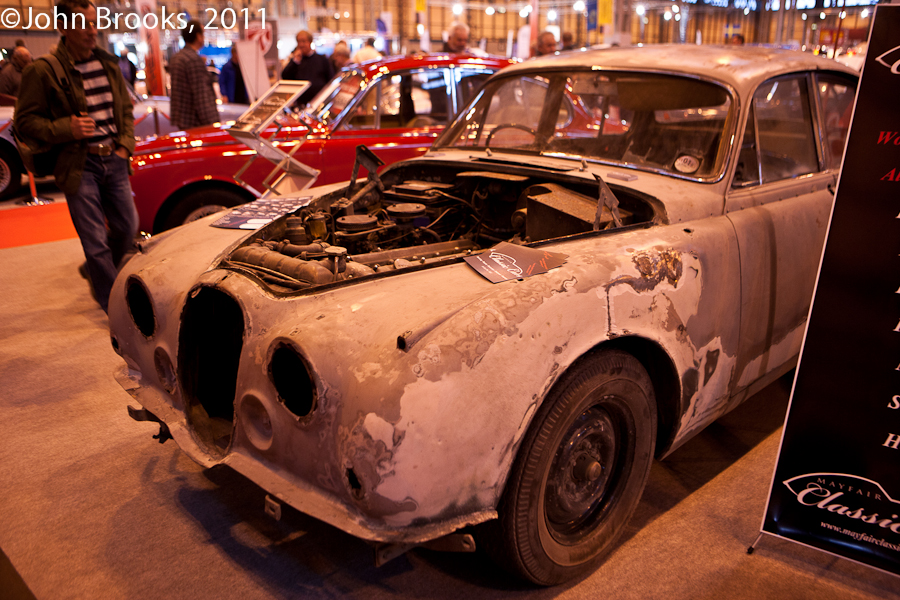
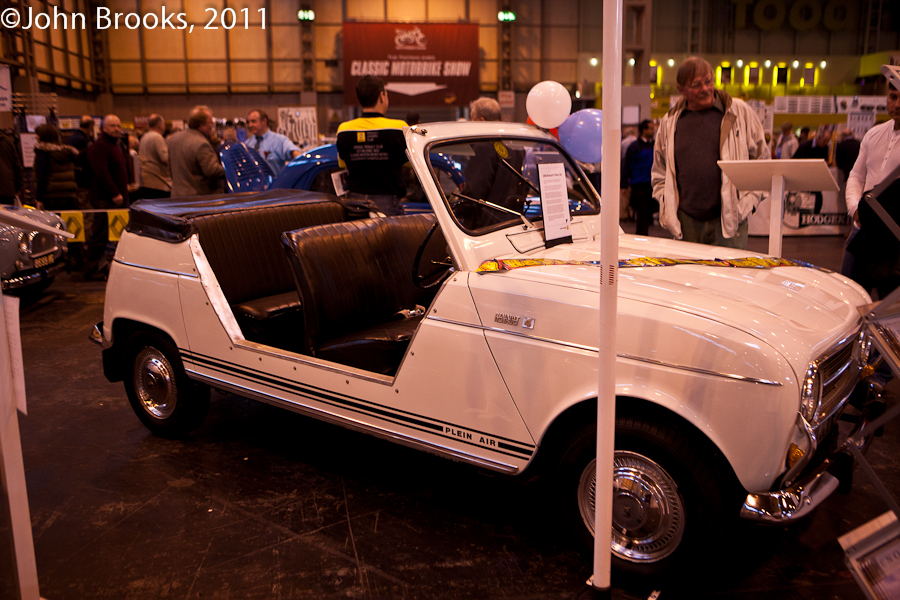
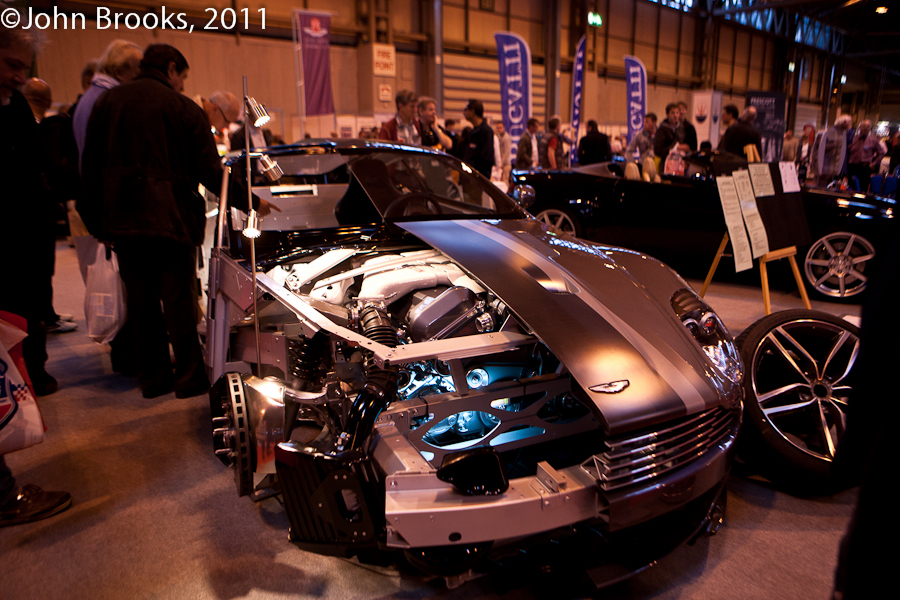
The 2011 Footman James Classic Motor Show is taking place this weekend. Unfortunately it is at the NEC, Birmingham. But more on that in a minute.

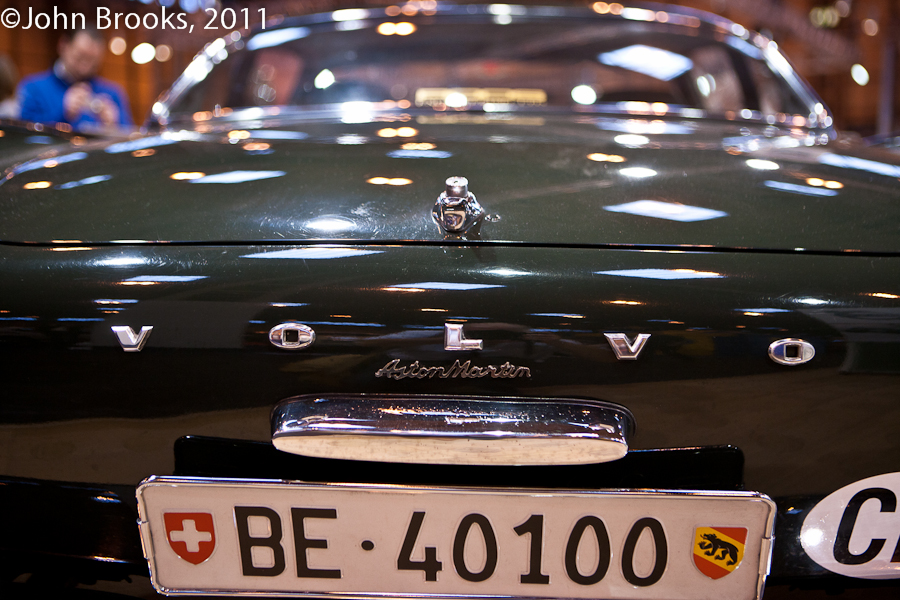
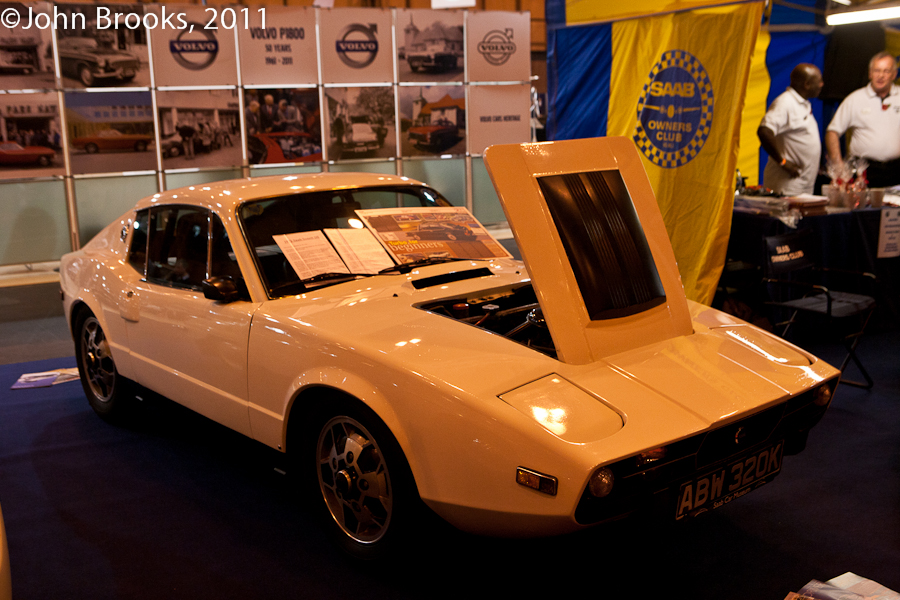
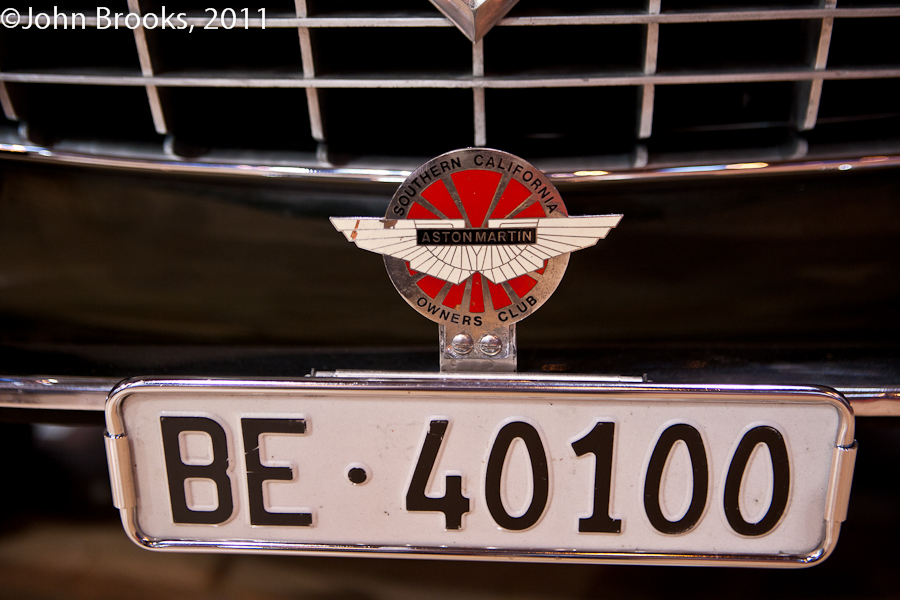
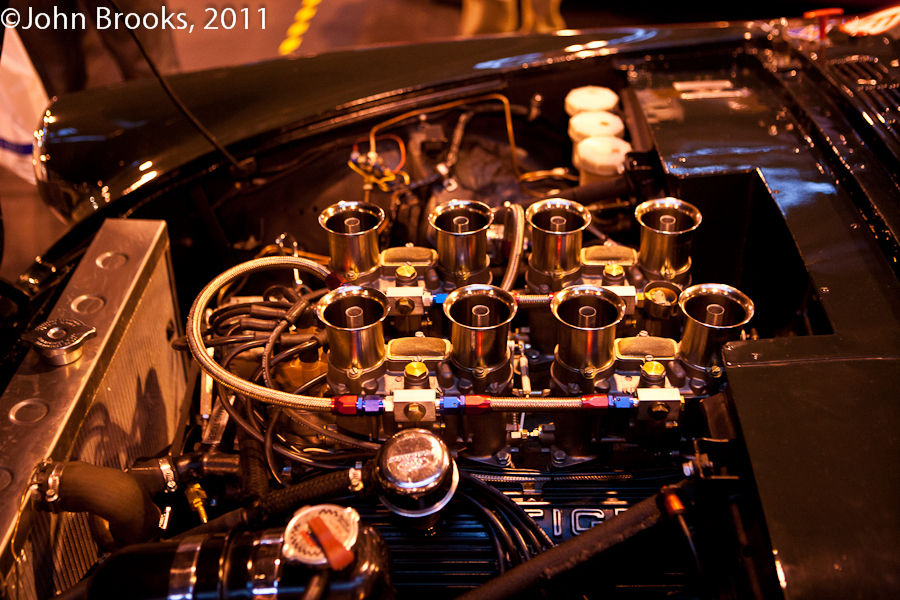
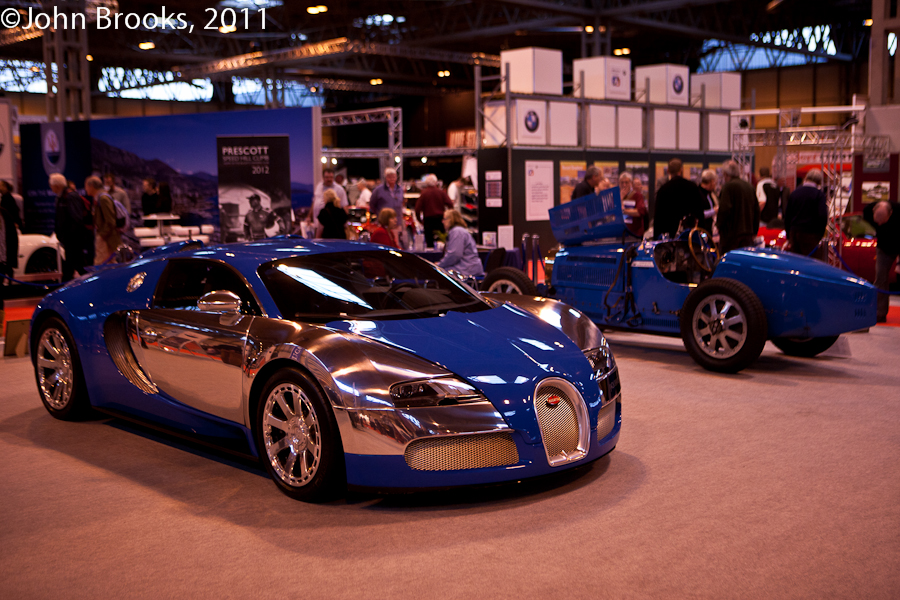
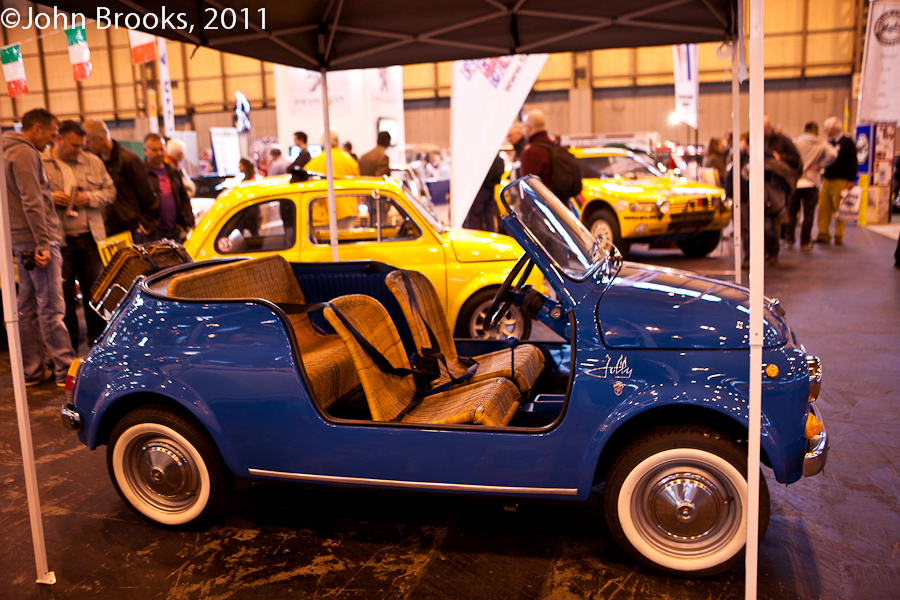
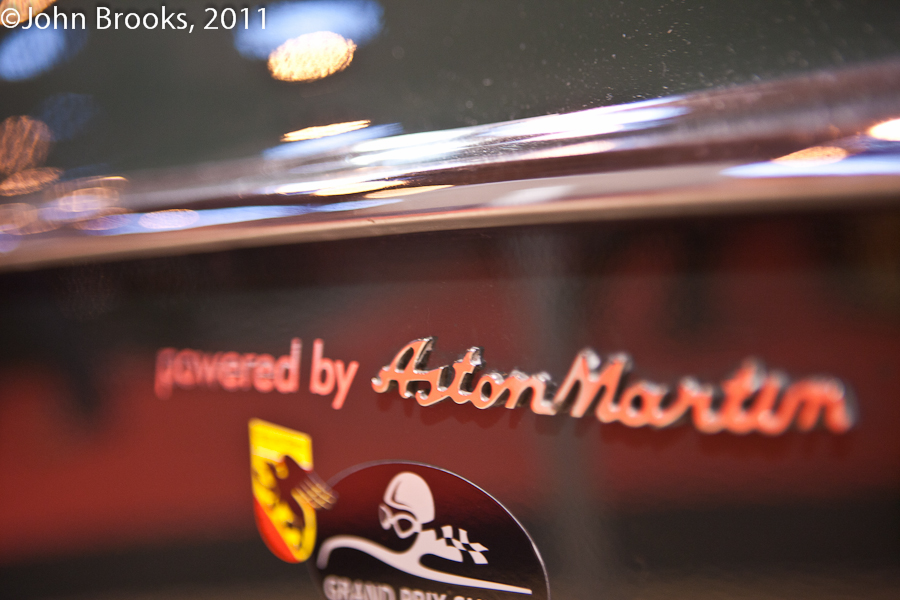
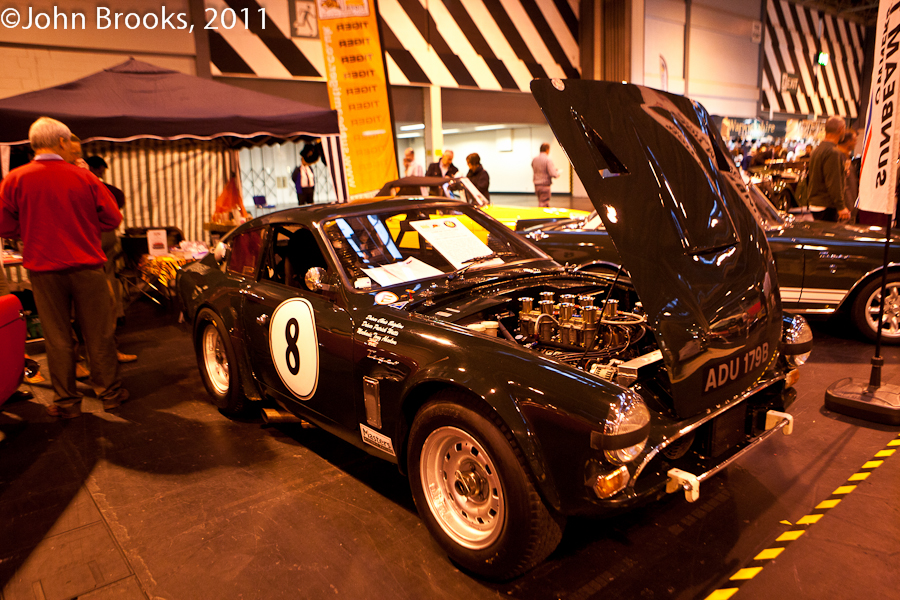
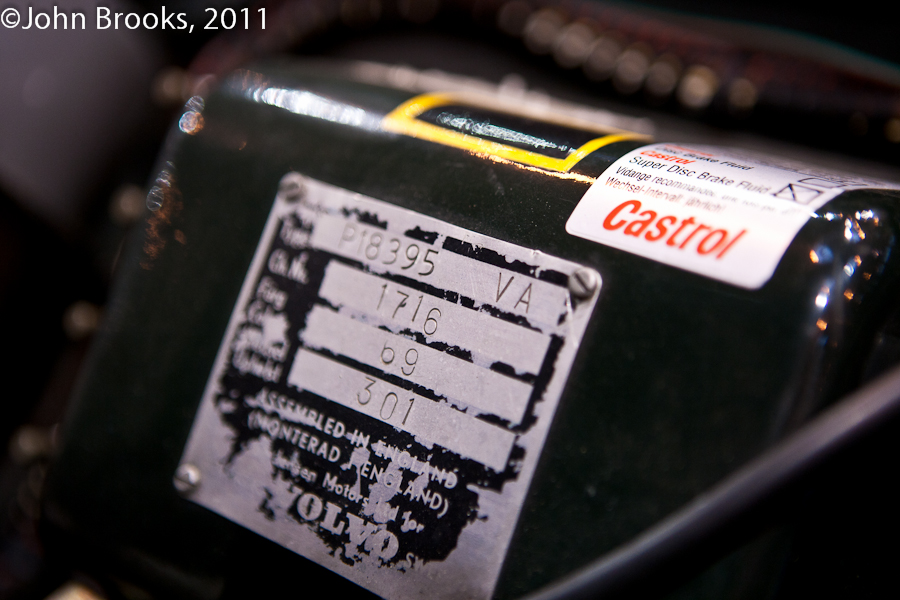
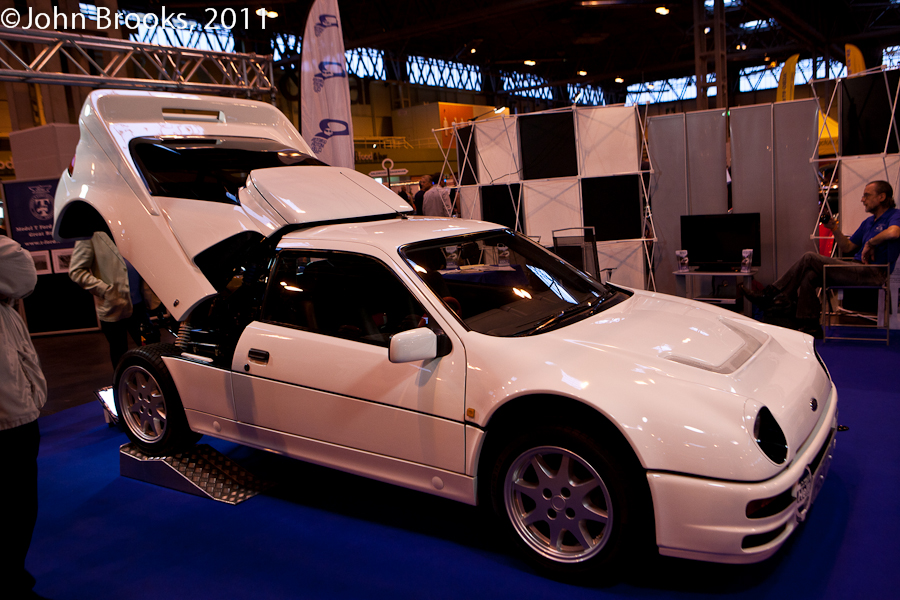
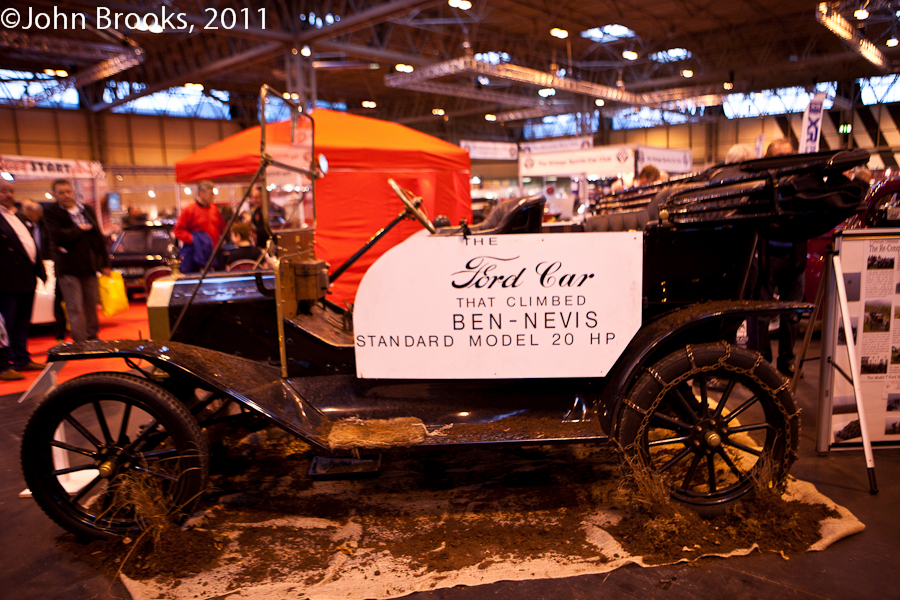
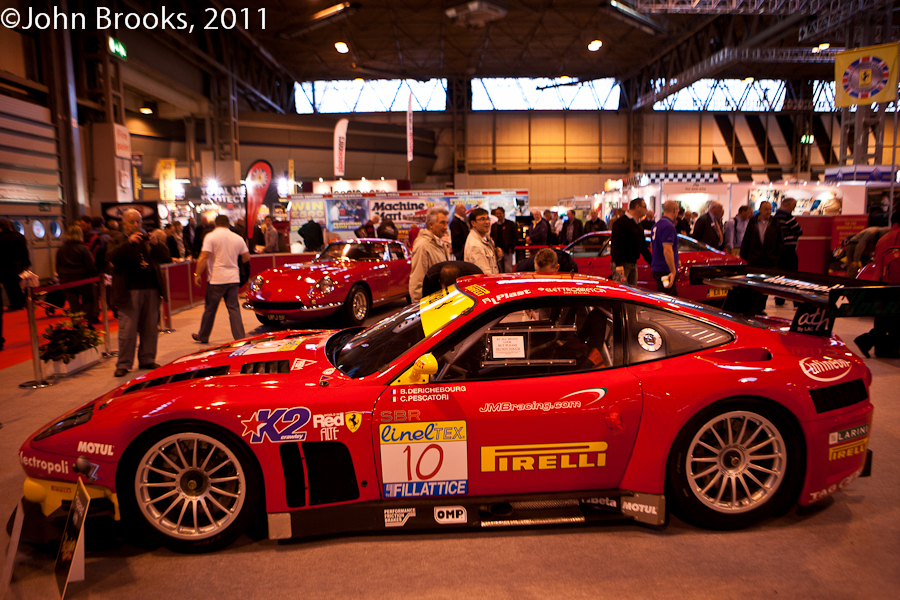
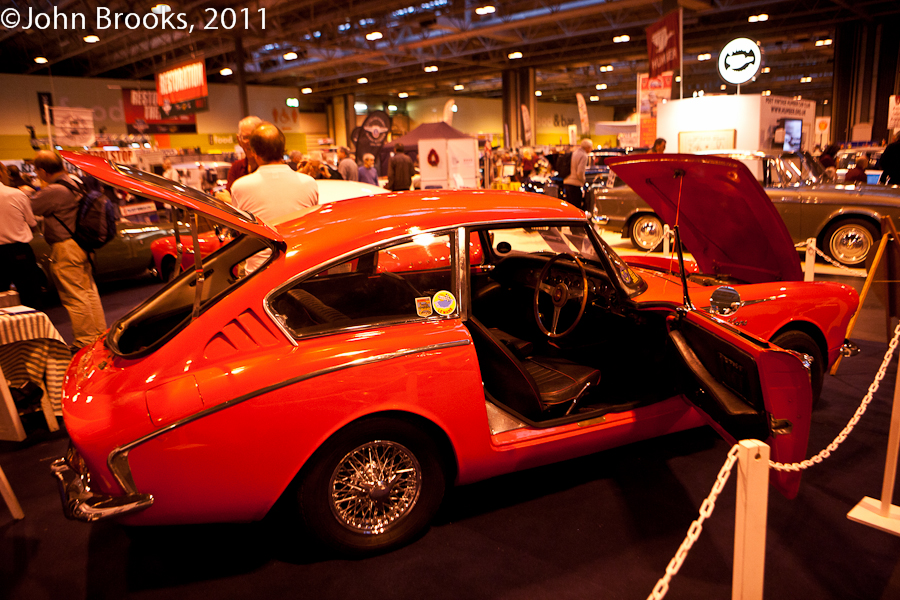
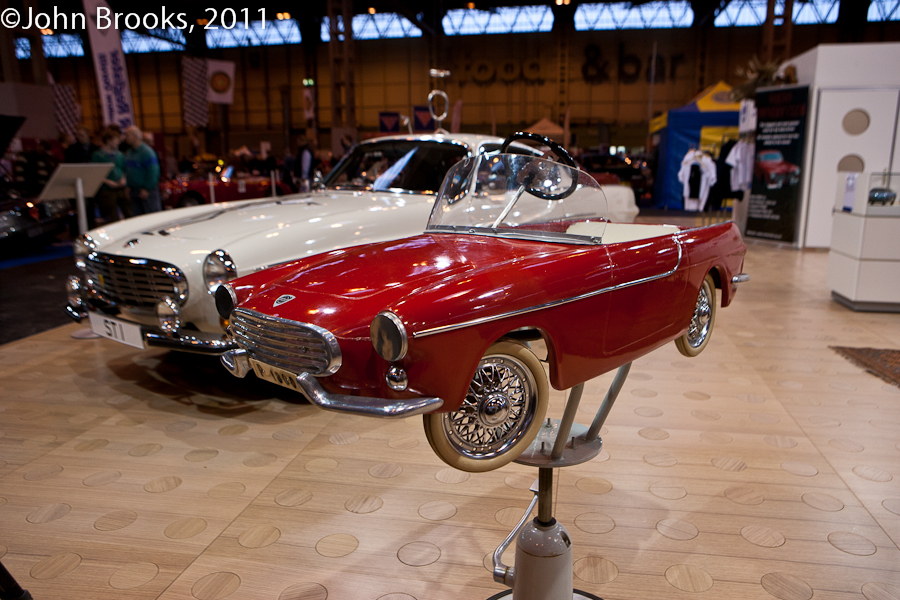
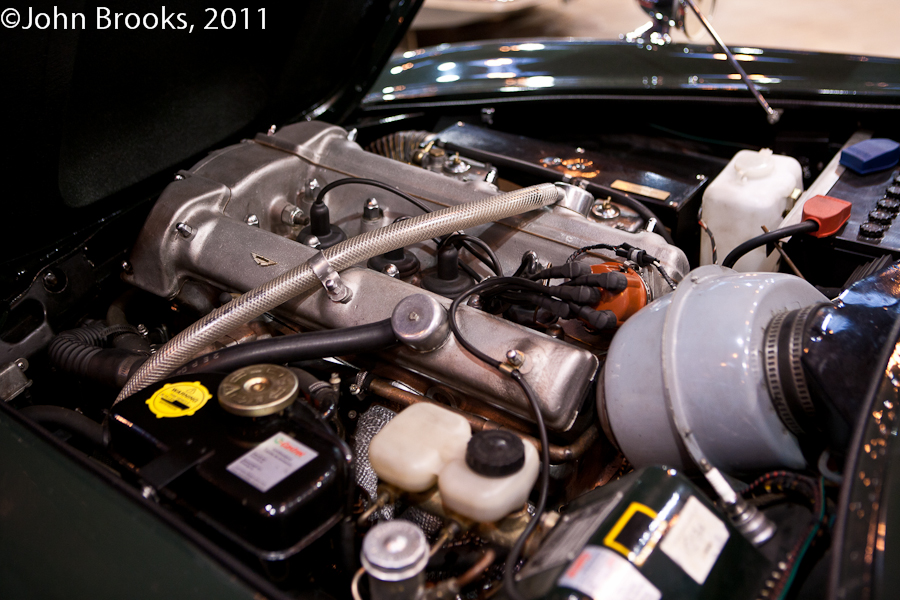
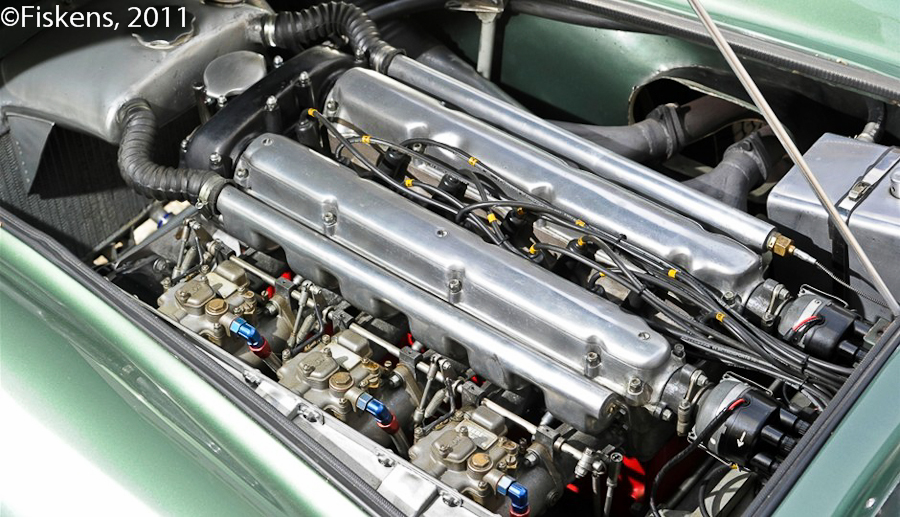
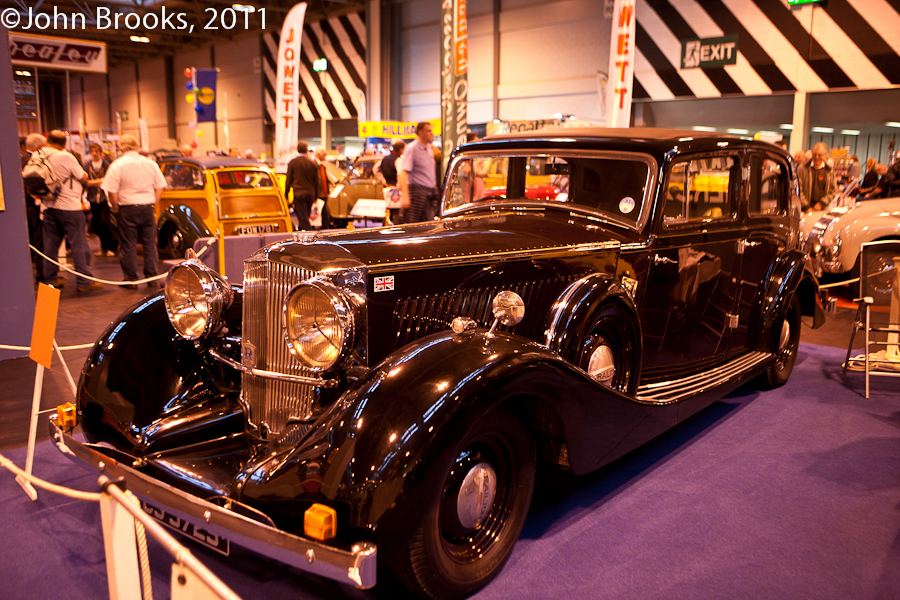
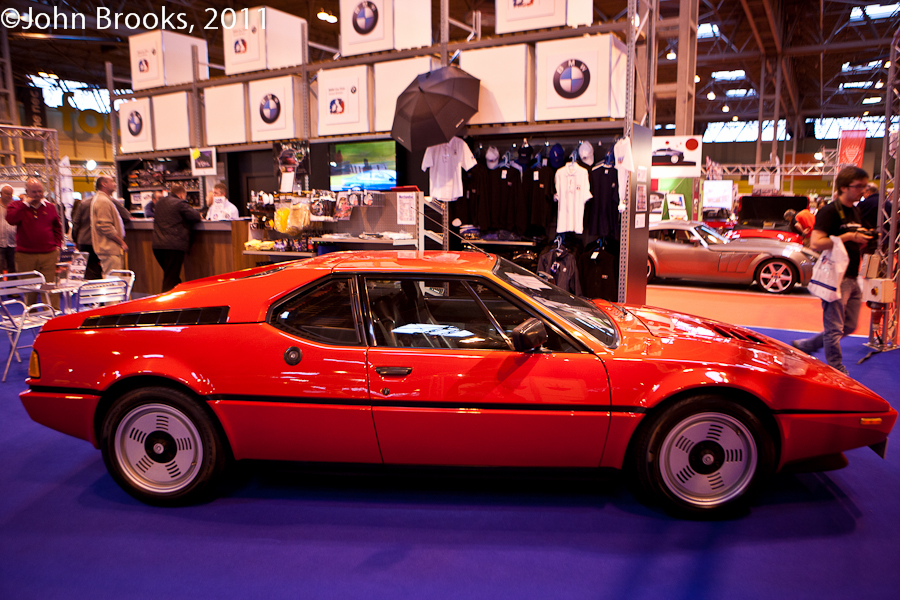
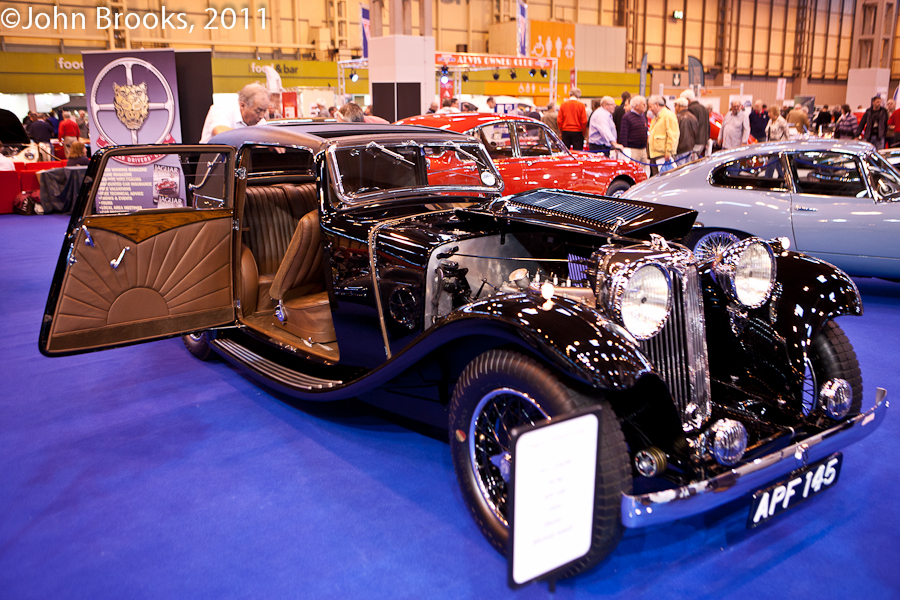
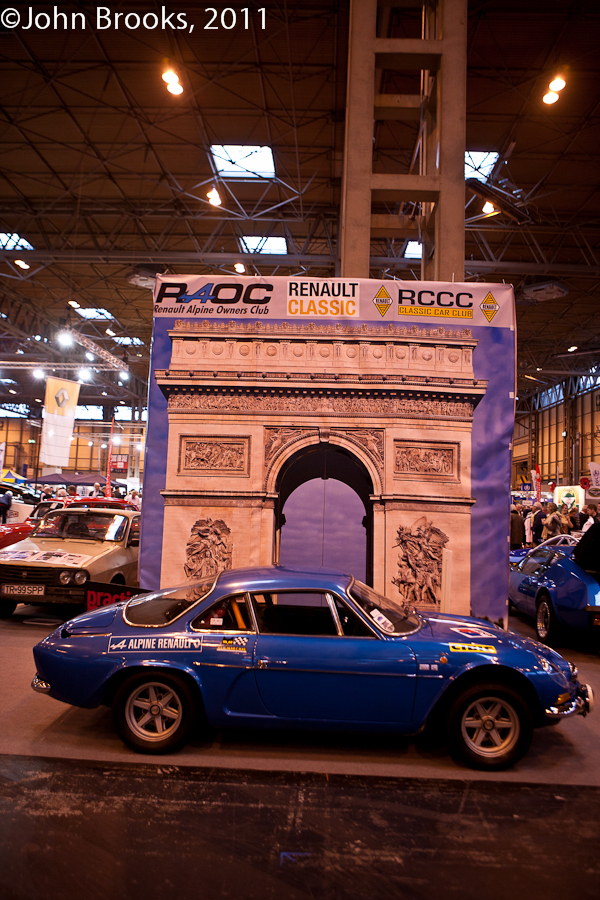
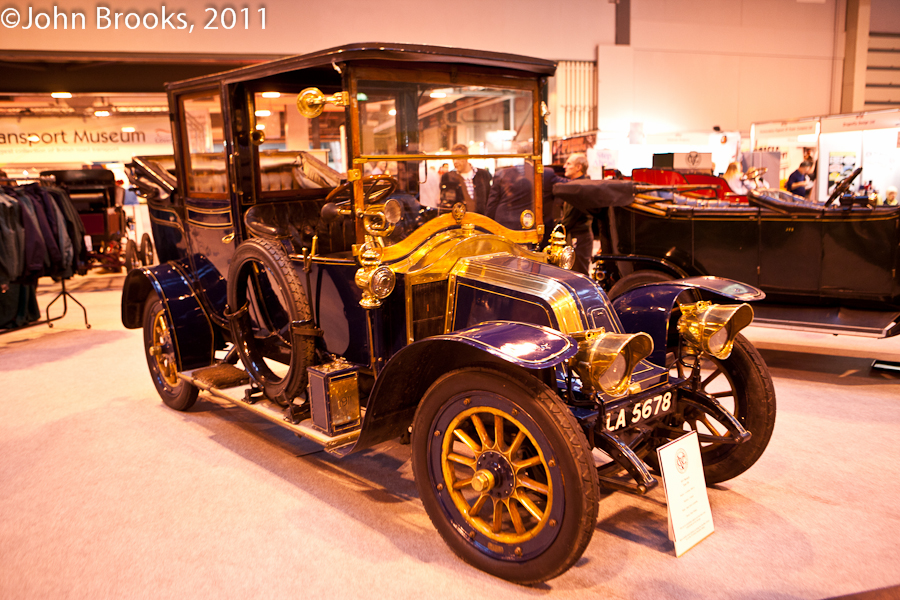
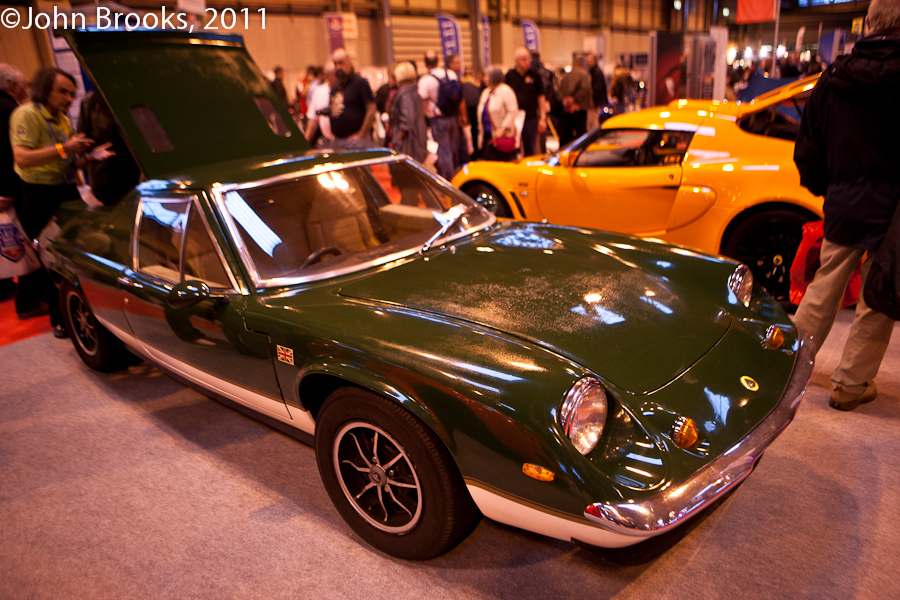
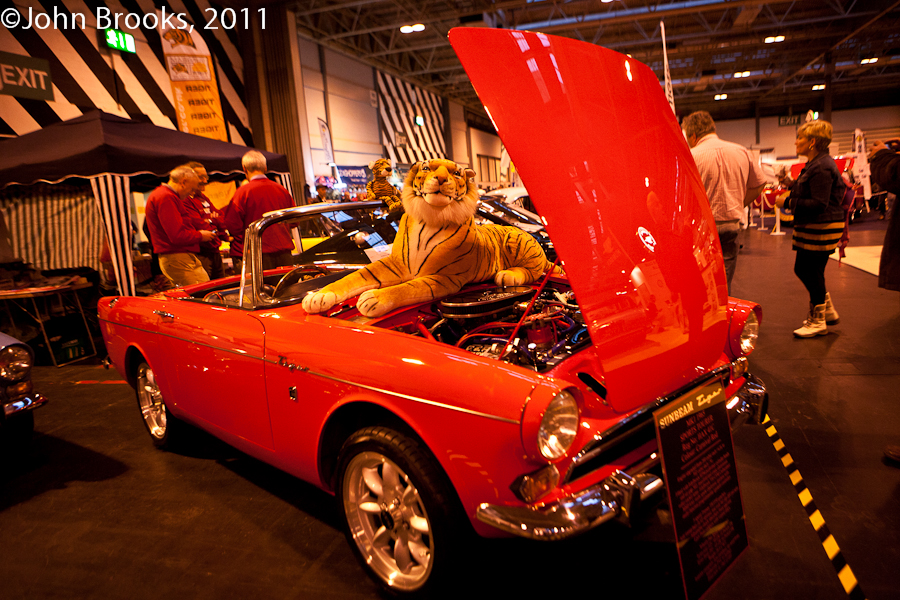
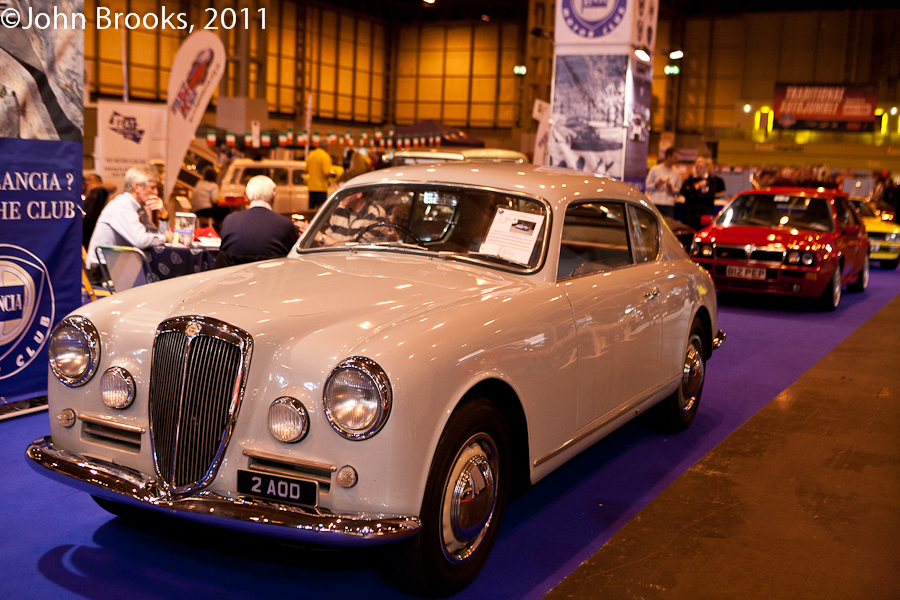
The show has expanded since last year and features many interesting, and in some cases, unique cars. This Volvo P1800 with a 2.5 litre, 4 cylinder Aston Martin engine is a good example of the gems on display.

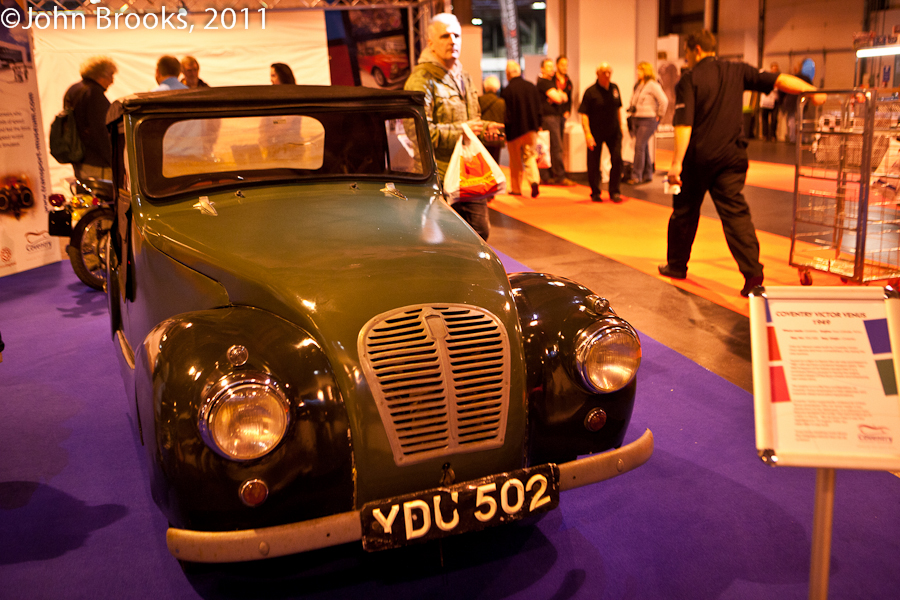
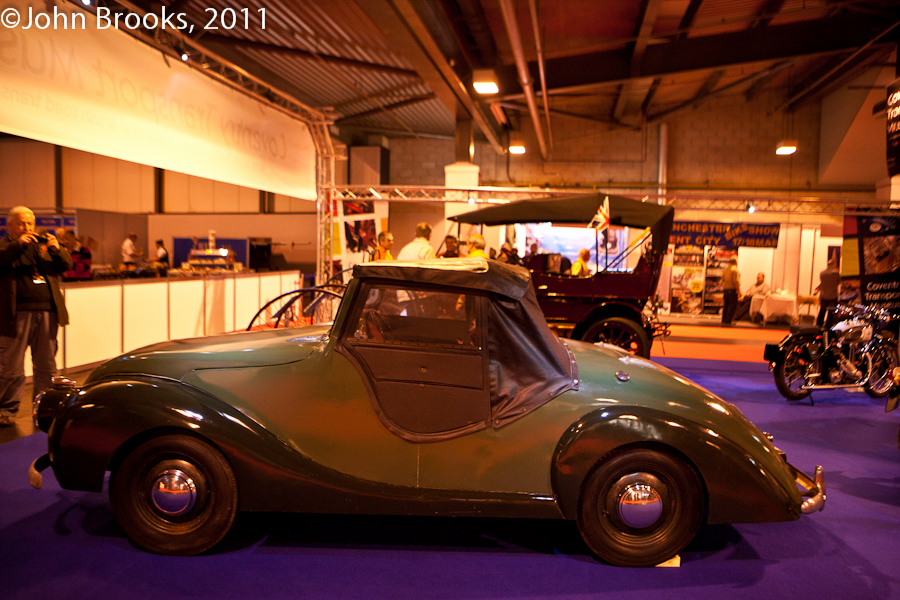
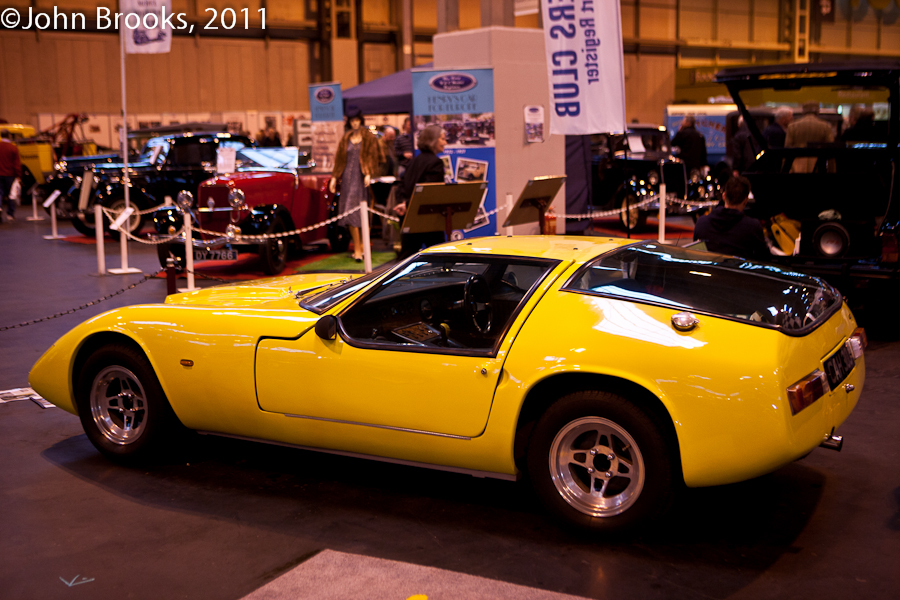
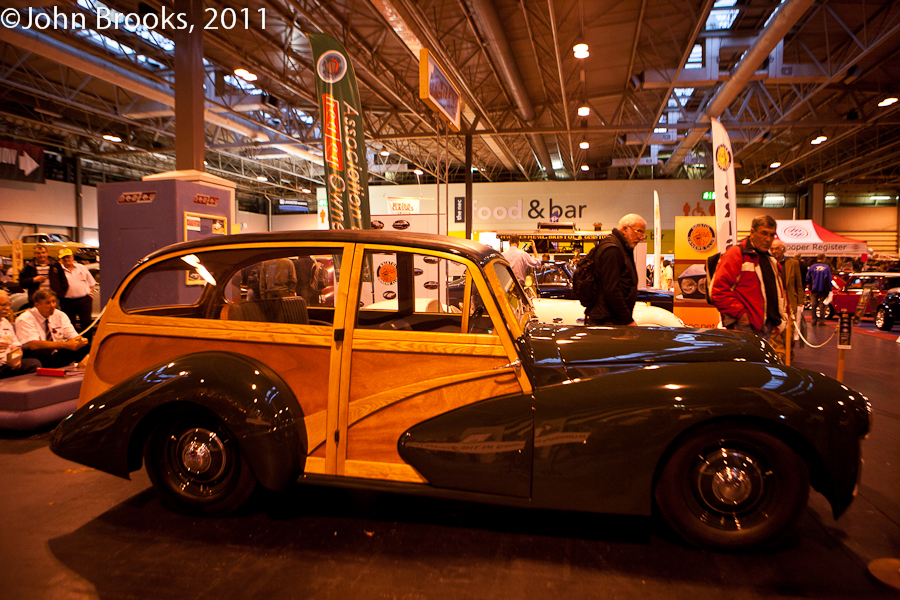
Another one off is the only surviving Coventry Victor Venus dating back to 1949. It is a mystery as to how it is still around, given that the factory ordered all 6 prototypes to be destroyed.

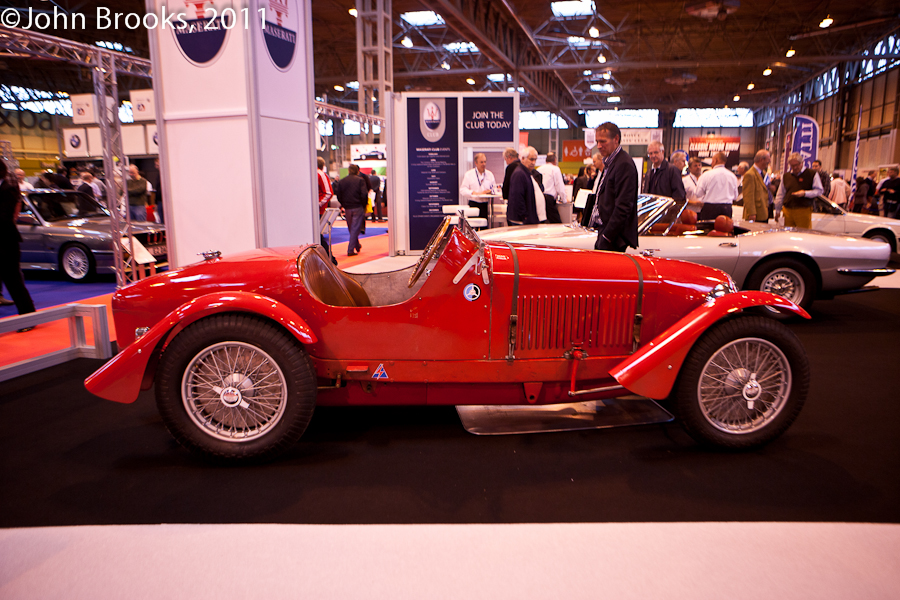
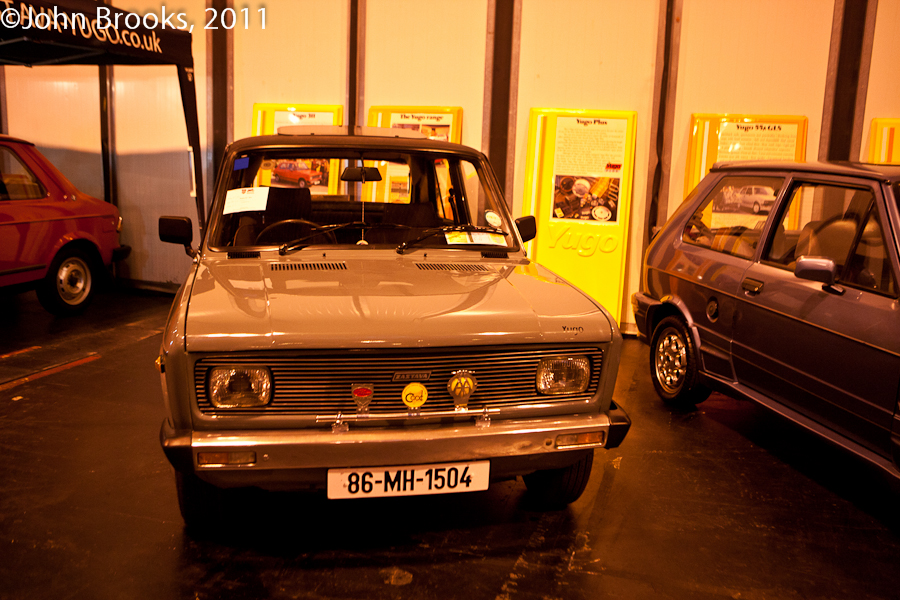
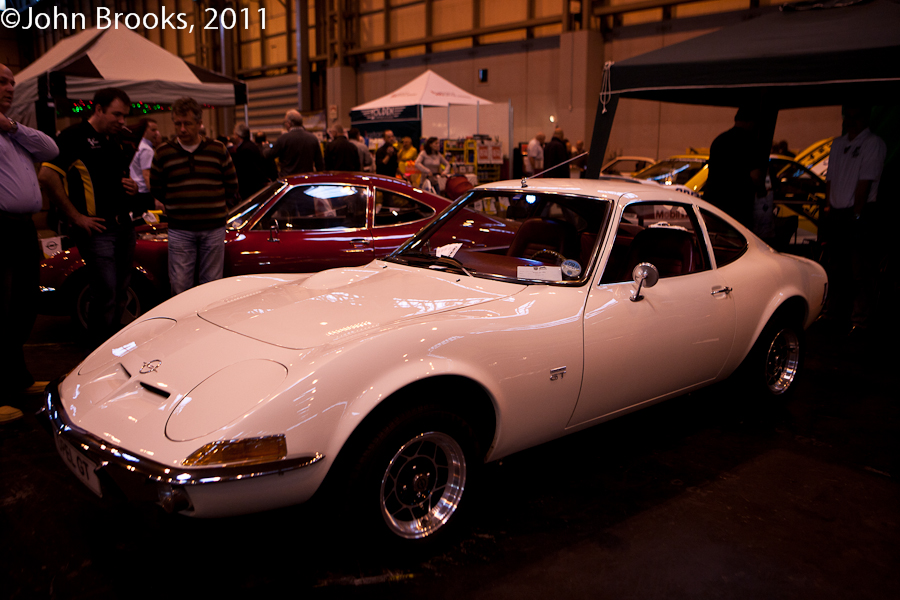
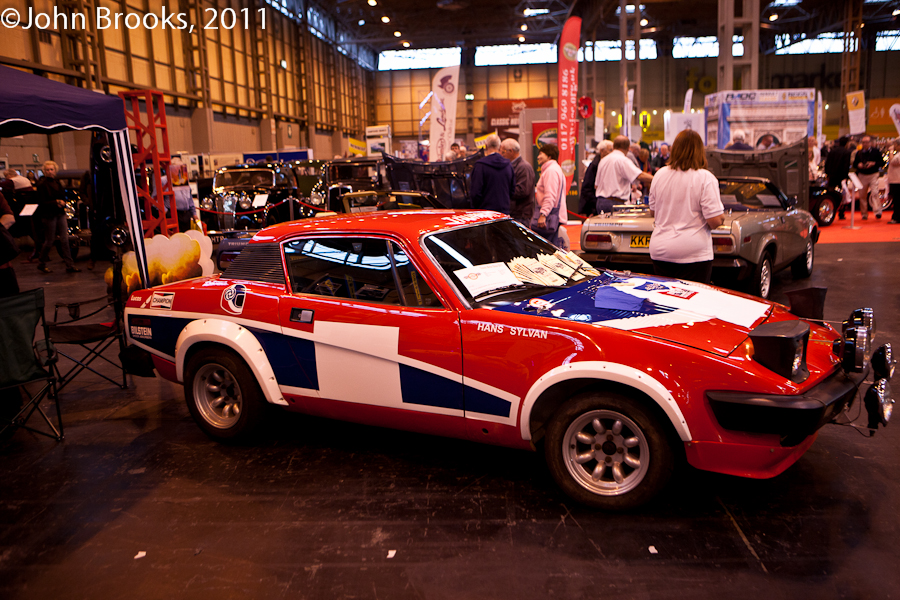
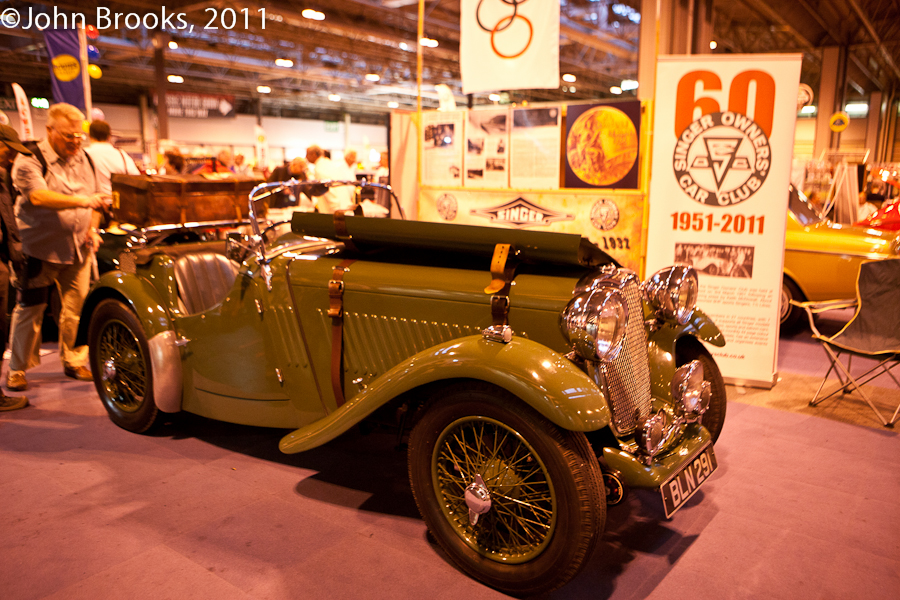
Sometime in the near future our Special Correspondent will have a detailed look at a few of these gems, till then you will have to live with this gallery.

One thing that really does need to be done is for the Health & Safety Executive to prosecute the management of the NEC for the appalling lighting in the halls. Those condemned to labour on the stands for three days are in severe danger of getting Seasonal Affective Disorder. I cannot imagine that the hire of the NEC is cheap, so why proper illumination is not provided is beyond me.

One bright light at the Show is the enthusiasm and deep knowledge of the members of the various car clubs. Their dedication keeps long departed brands like Hillman and Humber alive. Long may that continue.

So, if you get a chance in 2012, go to the show, it is full of treasures and rarities.

John Brooks, November 2011


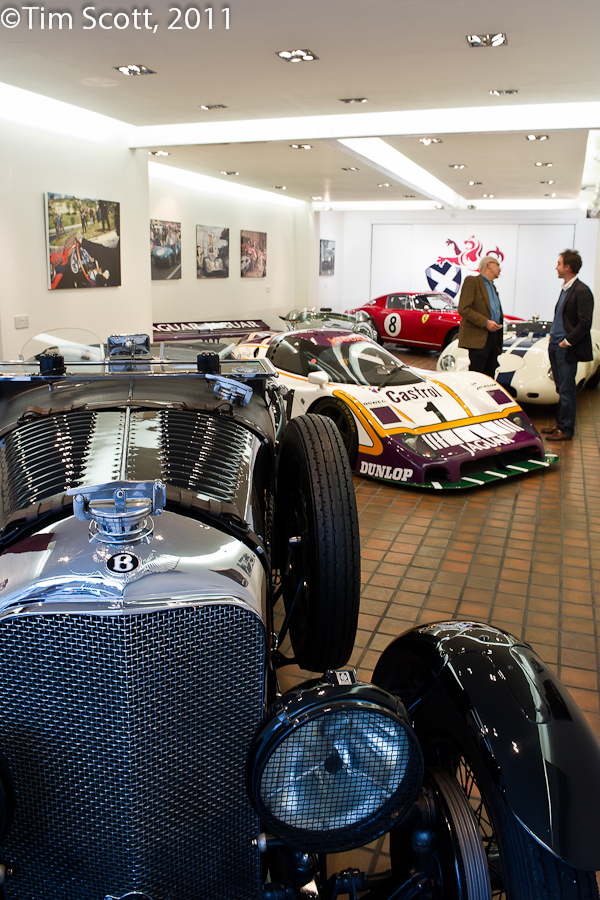
Open Day at Fiskens – Fine Historic Automobiles


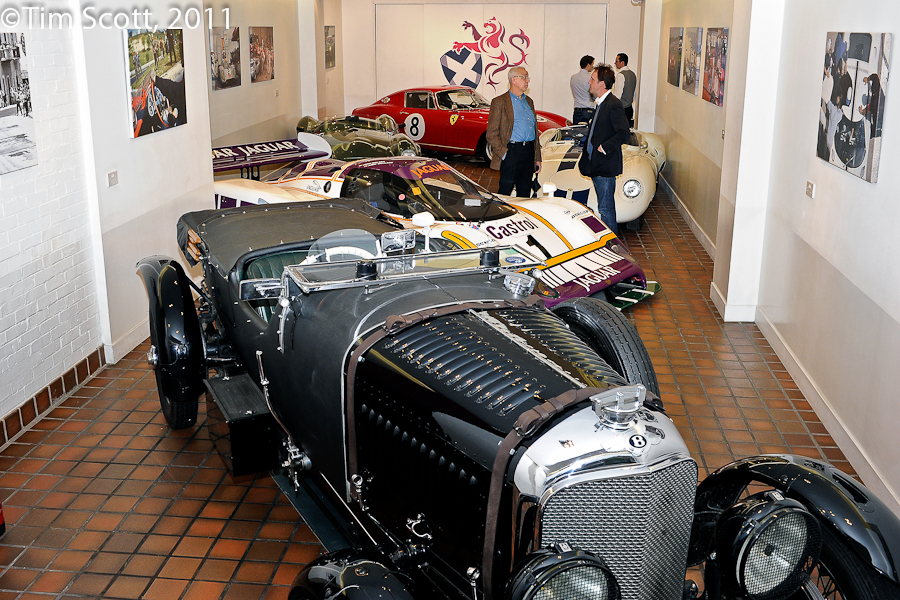
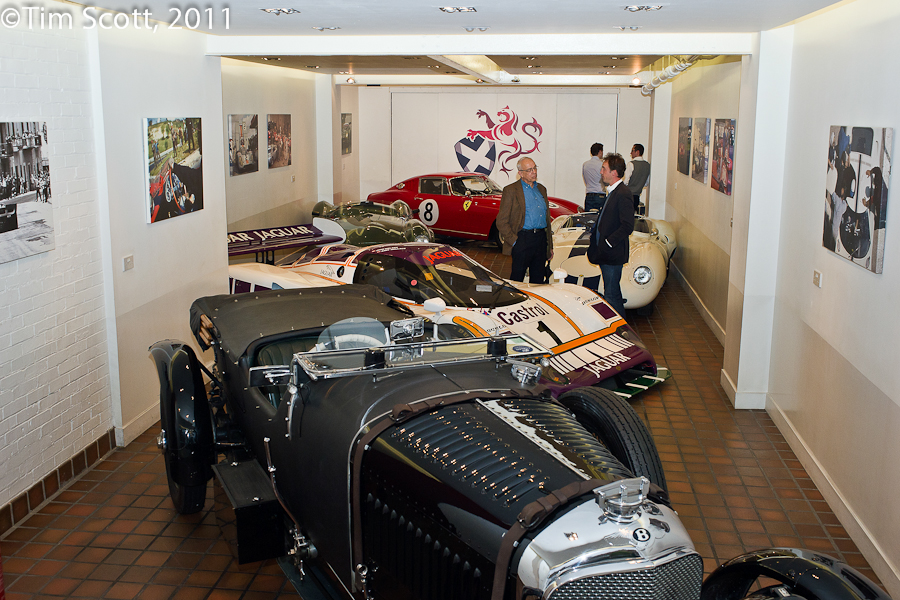
Central London to the West of Hyde Park is place of museums and mews. Tucked into one such development, just around the corner from Gloucester Road Tube, is Fiskens, well known, and well respected, dealers in classic cars. Actually they are the antithesis of “car  dealers”; I am old enough to have worked in London when Warren Street was the centre of rough and ready car dealing, Fiskens is nothing like that, nor is their stock. Gregor Fisken, Le Patron, is well known in motorsport circles, whether for his British GT campaigns or his results at Le Mans. He is also known as a “goto” guy when it comes to acquiring rare and classic automobiles.

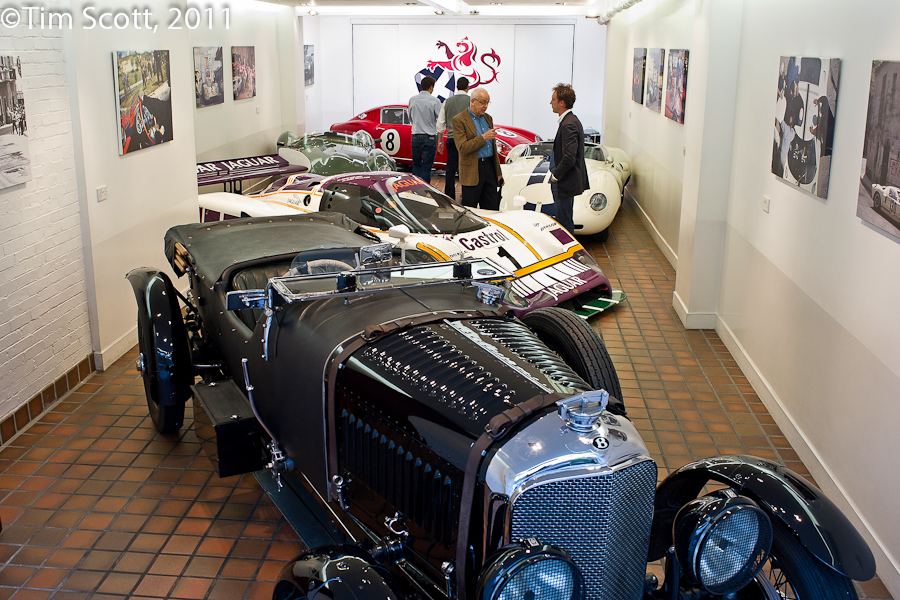
So when the invite to pop into Town have a look around their small, but select, showrooms at an Open Day hit the mailbox, it seemed a good excuse to have a look at some great cars. I accepted with alacrity. The cars did not disappoint, there was even an old friend on display but more of that in a minute.
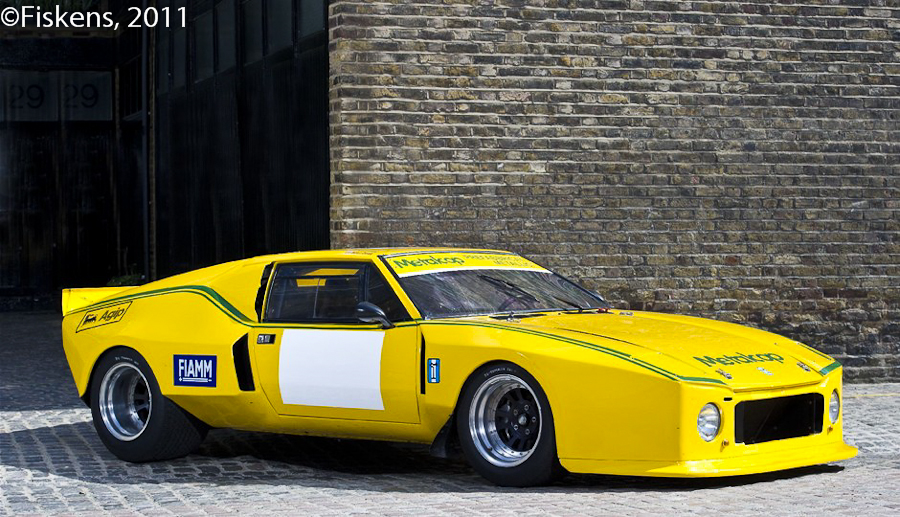

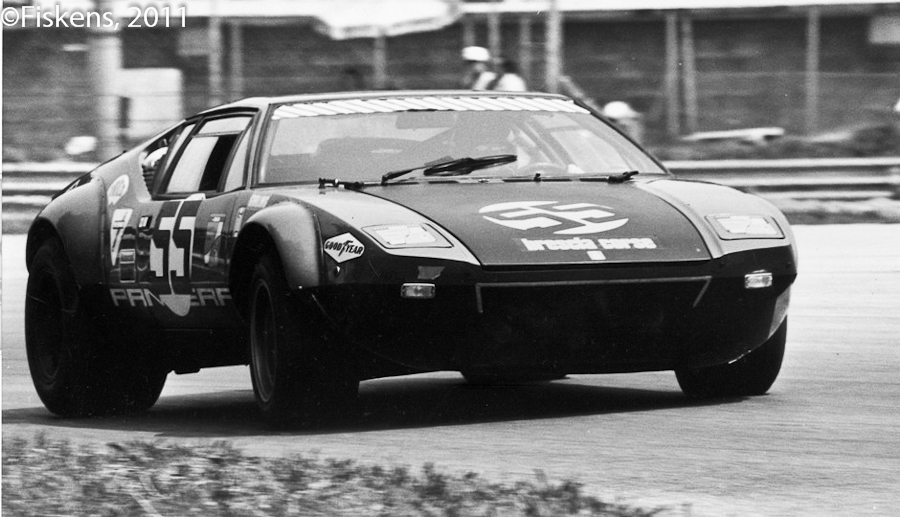
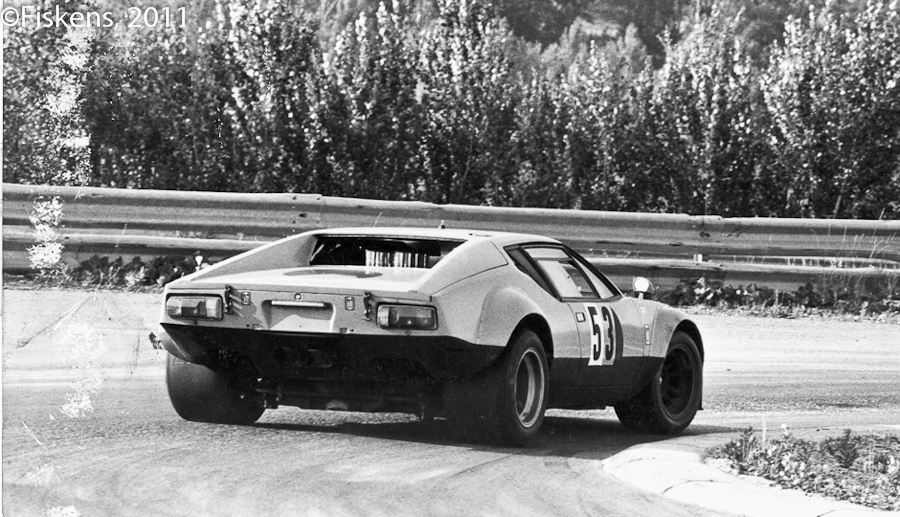
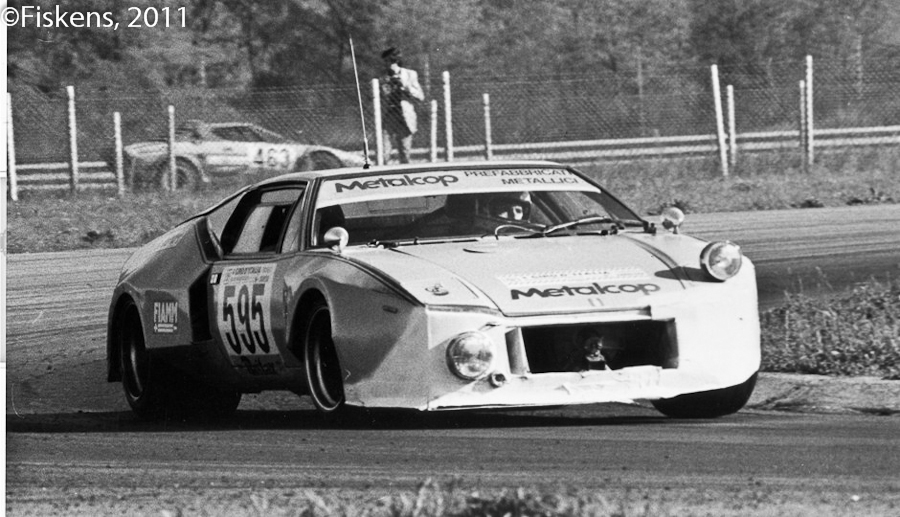
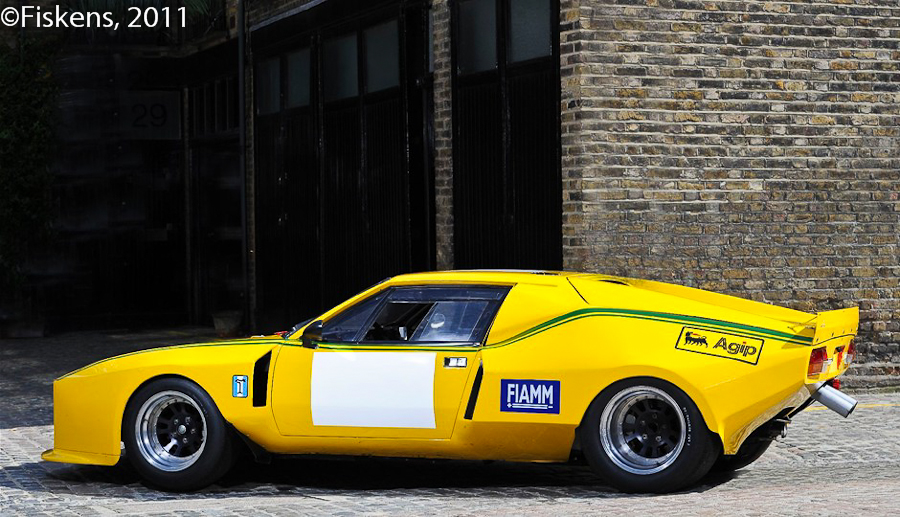
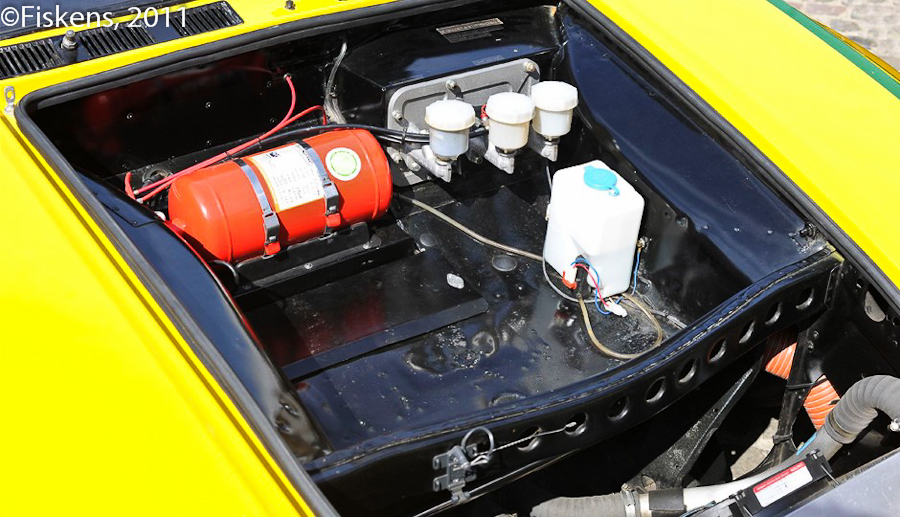
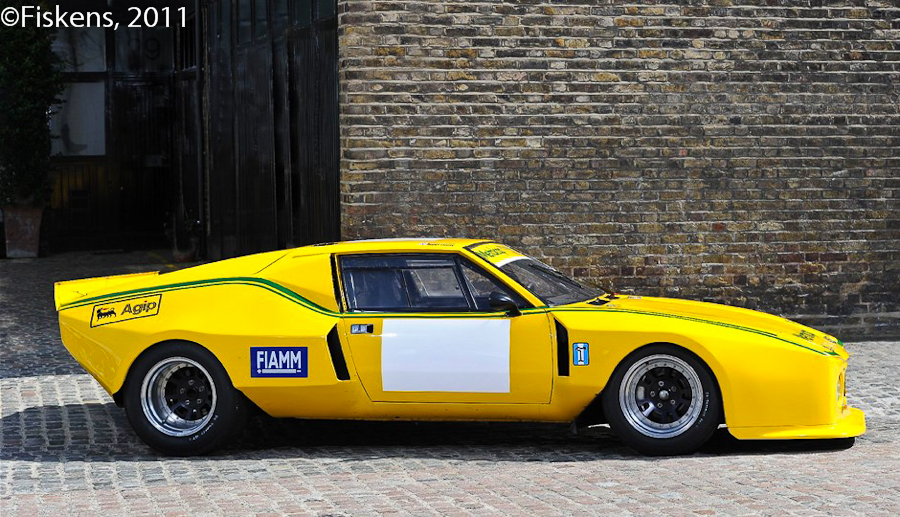
The mid 70’s Group 4 & 5 regulations produced some crazy concepts, none more so the Porsche 935-78 aka Moby Dick. The Italians were not going to be left out of the party and lurking near the back of one of the rooms was a bright yellow De Thomaso Pantera in full Group 5 spec.
As the description goes:
Chassis 02343 was sold new to the Italian Vincenzo ‘Pooky’ Cazzago, Italy who had it prepared by Scuderia Brescia Corse. Under his name, the Pantera was then entered at the following races:
April 1972 – Montlhéry – Cazzago – 13th overall

April 1972 – Monza 1000km – Cazzago/Casoni – 5th overall, 1st in class

June 1972 – 24 hours of Le Mans – Cazzago/Casoni/Pasolini/Moretti – DNQ

June 1972 – Monza Coppa Gran Turismo Speciale – Cazzago – 1st overall

Sept 1972 – Monza Coppa Intereuropa – Cazzago – 6th overall
After the 1972 season 02343 was sold to Gianpiero Moretti for the Momo Racing Team to use. Moretti raced 02343 throughout the 1973 and 1974 seasons, mainly at Italian races.
In 1975, the Pantera was acquired by Ruggero Parpinelli who at the end of the season had it converted to Group 5 specification by Achilli. In this new specification Parpinelli raced at the 1976 Giro d’Italia, where he retired with technical problems.

A really nice car, might be fun to take on the Tour Auto.
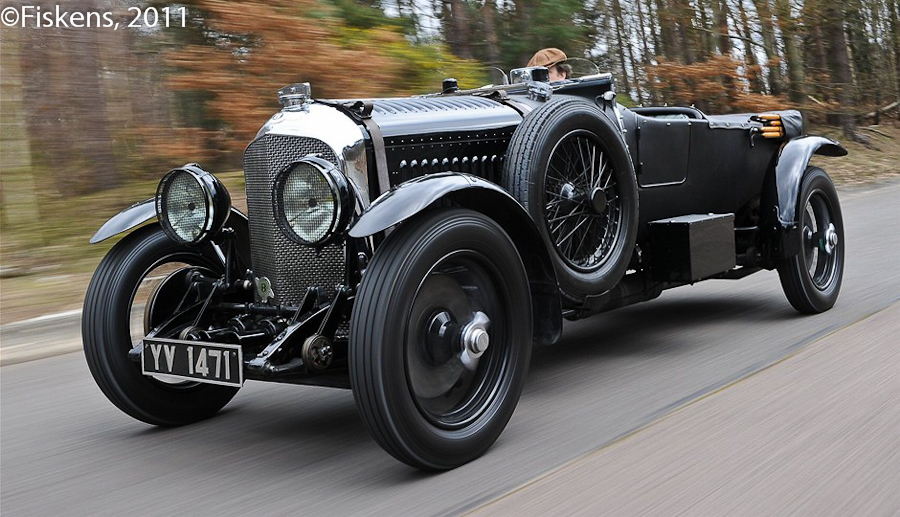

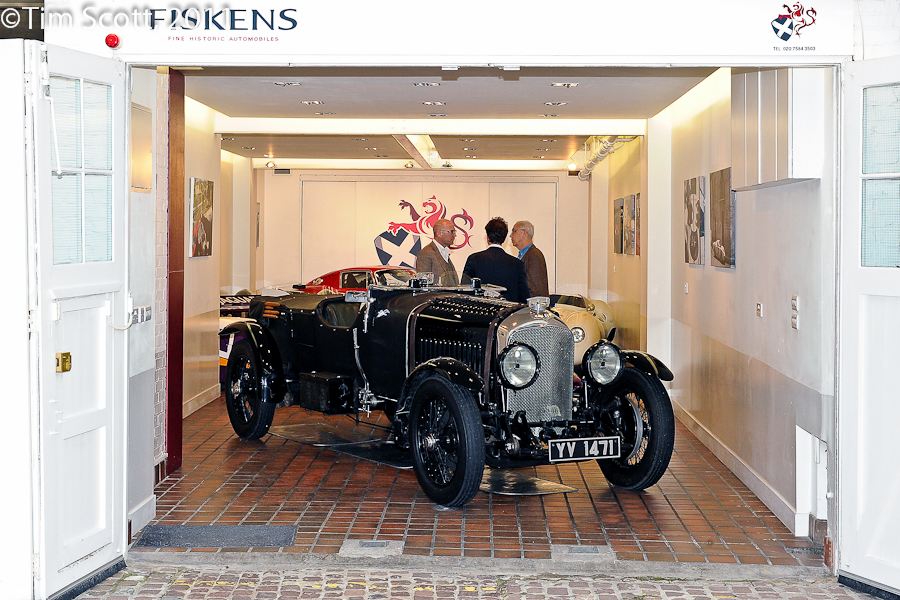
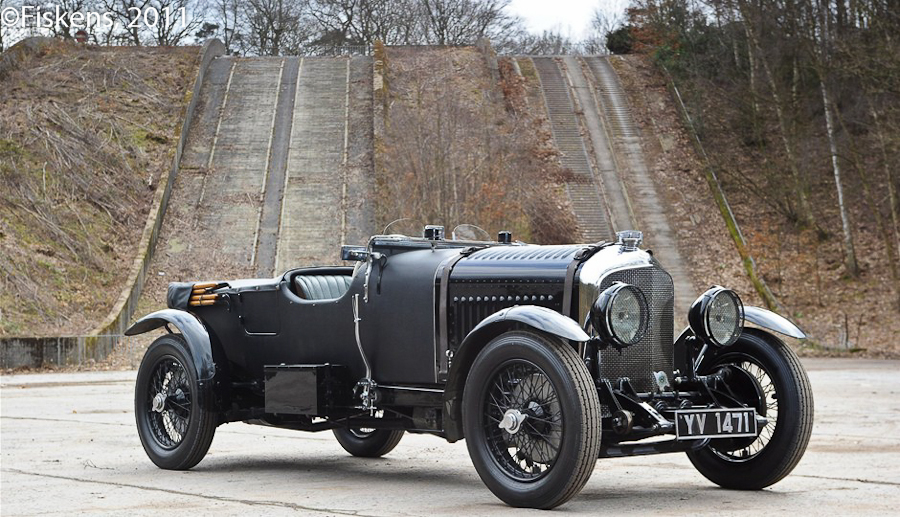
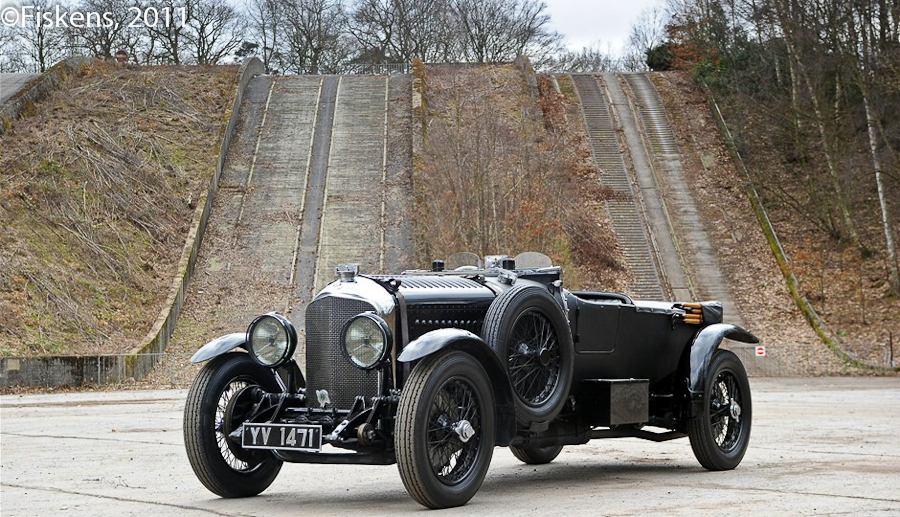
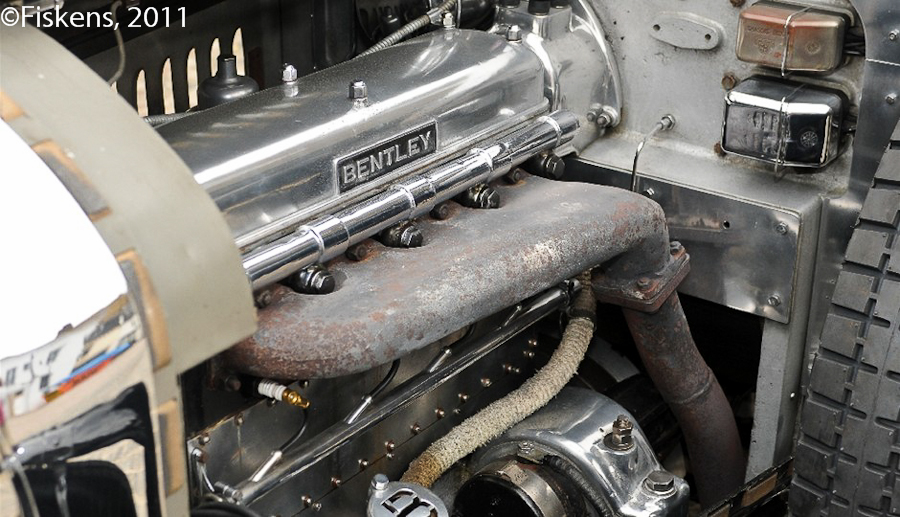
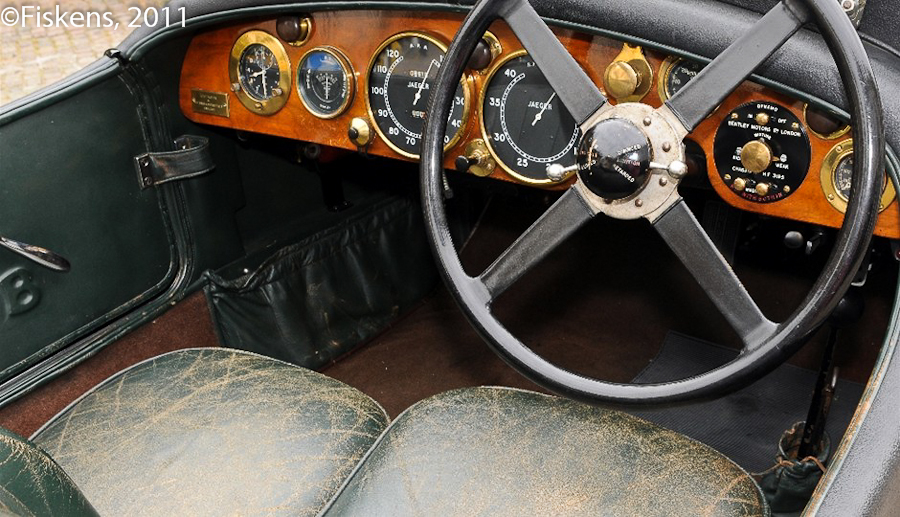
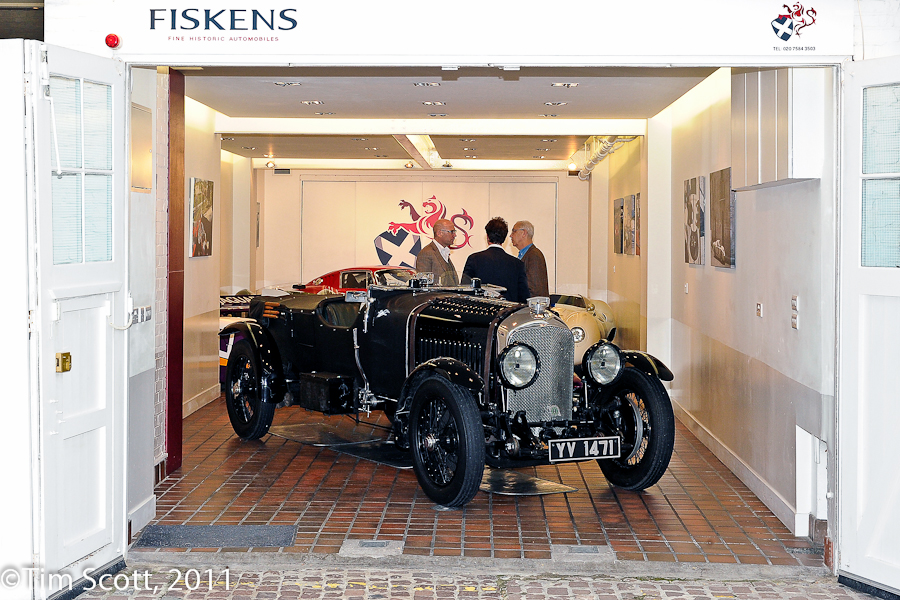
A world away from the boxy Pantera was a 1928 Bentley 4.5 litre but in its day it was an even more effective (and successful) racer.  Woolf Bernato and Bernard Rubin won the Le Mans 24 Hours in 1928 driving a Bentley 4,5 litre and the following year examples finished 2-3-4. So purchasing this car would have been the equivalent of nipping down to the Audi showroom and picking up an R18, perhaps the Bentley would be a better bet for a trip to Waitrose to shop for a few essentials.

The cachet of the “Bentley Boys” still exists today and this elegant tourer is physical manifestation of that.

This example was ordered through Jack Barclays by first owner John Mavrogordato, chassis HF 3195 passed its final factory test on 14th March 1928. Originally supplied with a long bonnet and staggered screen, Bentley records show that the radiator was chromed and Lucas P100 headlights fitted in late 1929. It is largely unchanged since its return to the factory in 1929.
A beautiful example of a pre-war classic that still look just right some 80 years on.
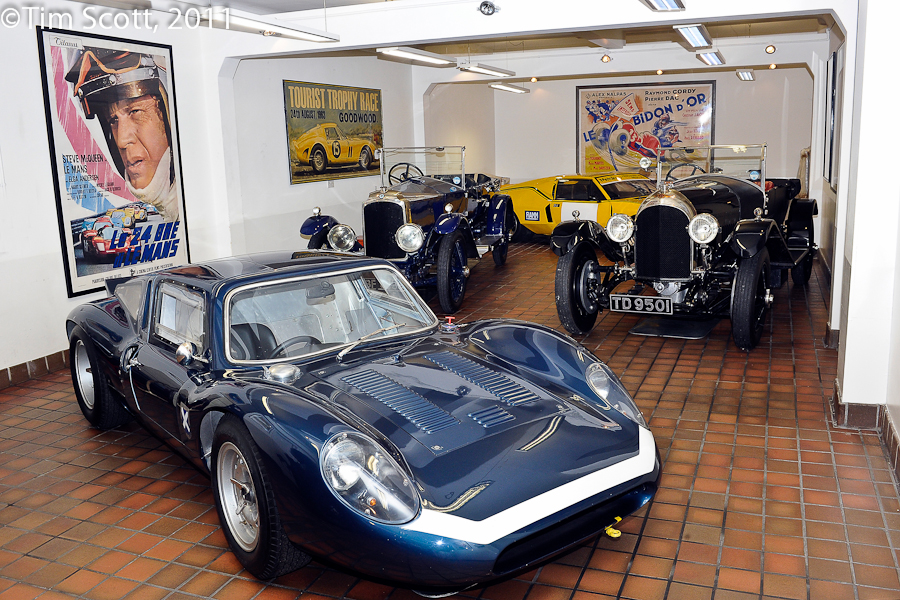

Another very interesting car was the Ecurie Ecosse Tojeiro Ford, one of the first mid-engined GTs, our Special Correspondent will be having a look at this in more detail tomorrow.
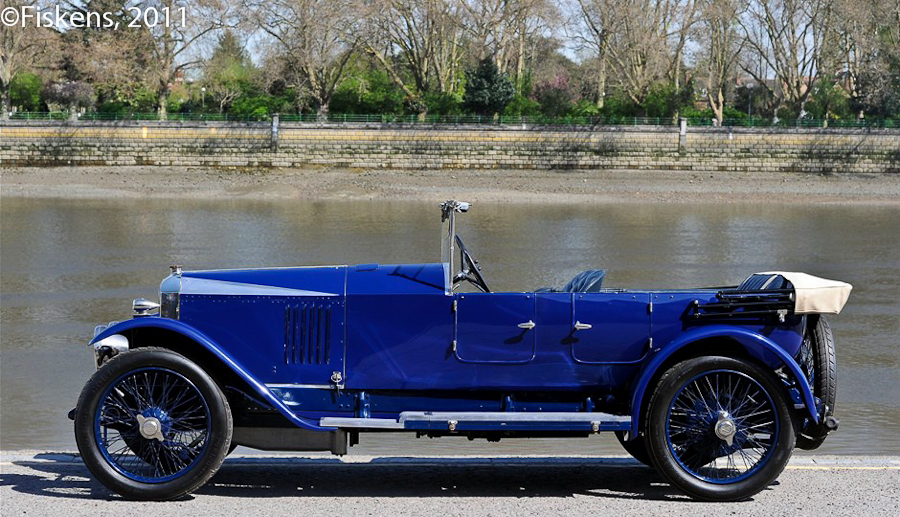

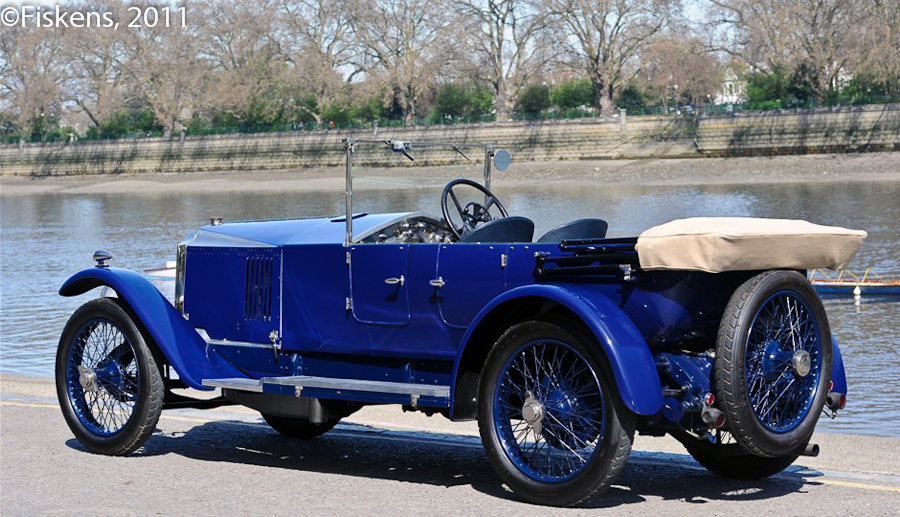
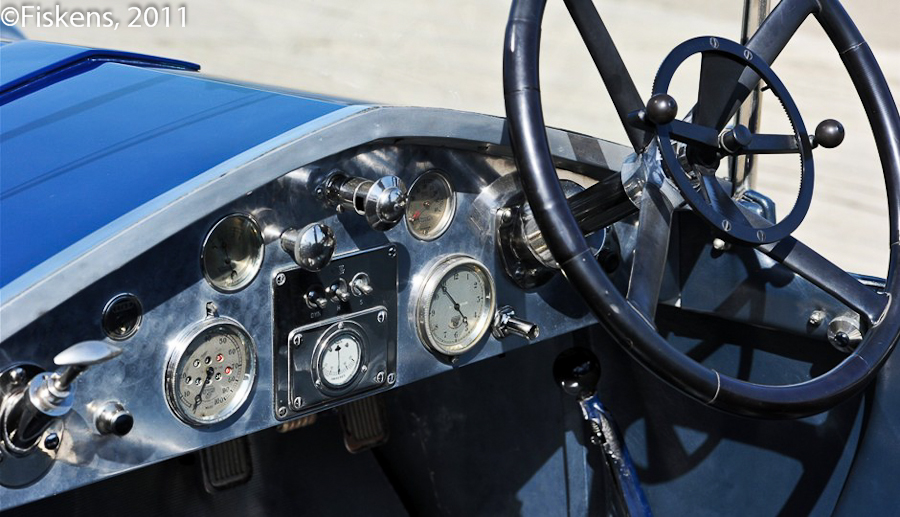
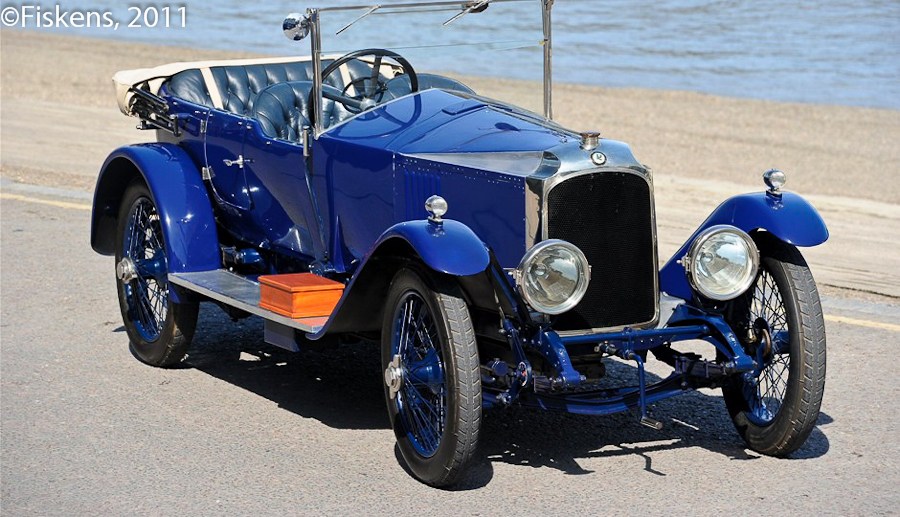
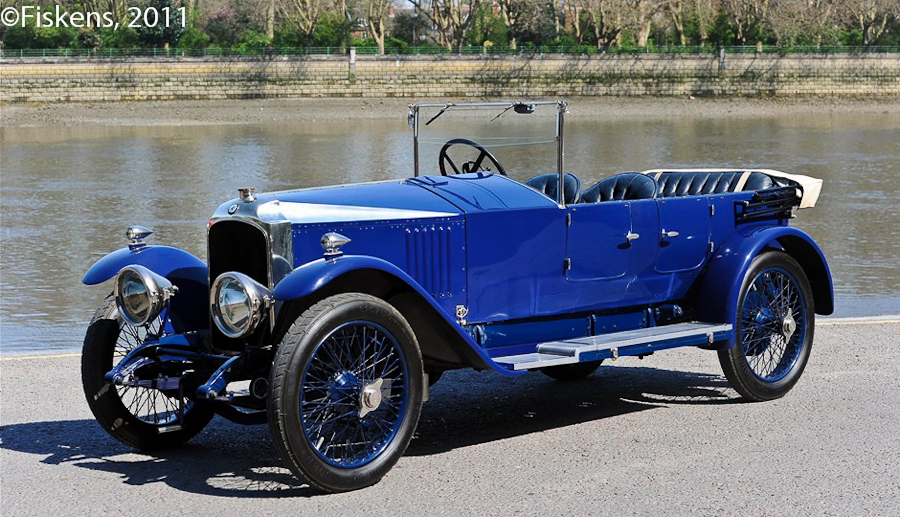
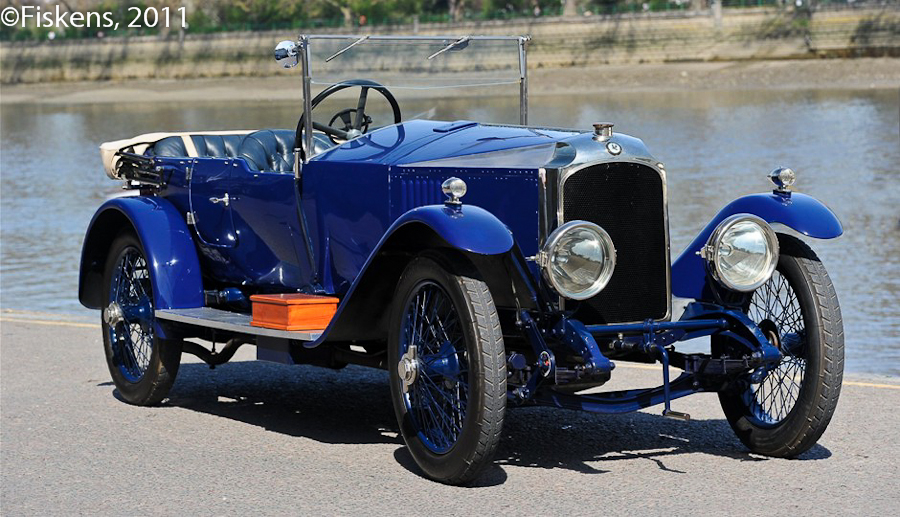
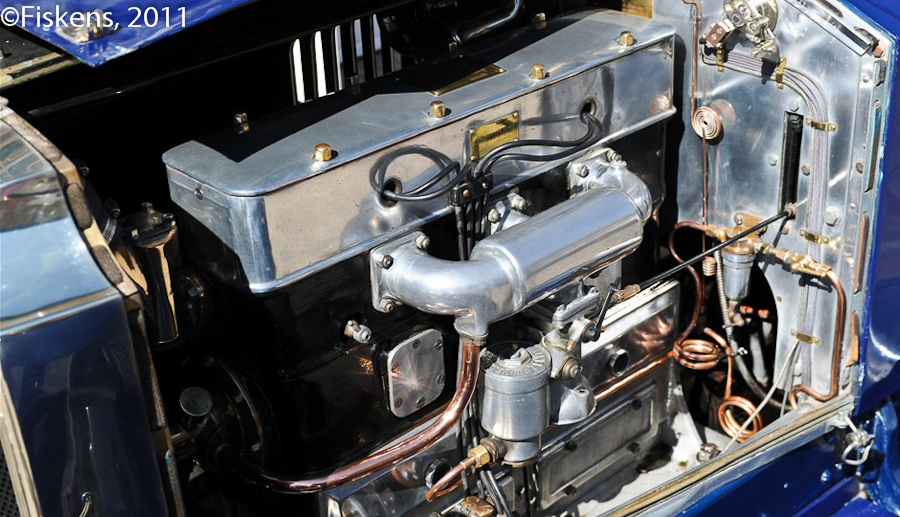
A truly British classic of the early 1920s is this Vauxhall 30/98.


The Laurence Pomeroy designed Vauxhall 30/98, considered by many to be one of the finest engineered  British sporting cars of the Vintage period, had its heart in the 4.5 litre, four-cylinder side-valve engine that was mounted in a conventional but lightweight chassis. As with ‘OE56’, many were fitted with factory built four-seat Velox tourer coachwork which was relatively light, giving a formidable power to weight ratio for its time. A fully road-equipped 30/98 was capable of around 85mph, and when stripped for racing the company guaranteed a top-speed in excess of 100mph for the later overhead valve models, a capability that was often demonstrated in period at Brooklands.

Of the total production numbered at 312 cars, a large proportion were exported to Australia, and we understand ‘OE56’ to be one these. The earliest known owners of ‘OE56’ were the McSweeney family of Canowindra New South Wales, who owned it from 1945 to 1955 when it passed to Barry Ford. Its next owner, Norm Joseph, sold the Vauxhall to Jim Cuthbert in 1958 and Jim in turn passed it on to Barry Burnett in 1961. The Rainsford family acquired the car from Barry in 1968 and retained it until earlier this year.
Having spent all of its life in Australia under the ownership of true enthusiasts, this splendid early ‘OE’ has retained all of its original features. Finished in Royal Blue with matching leather interior, ‘OE56’ represents a wonderful opportunity to acquire a handsome example of what is considered by many knowledgeable enthusiasts to be one of the finest British sporting cars of the Vintage period.
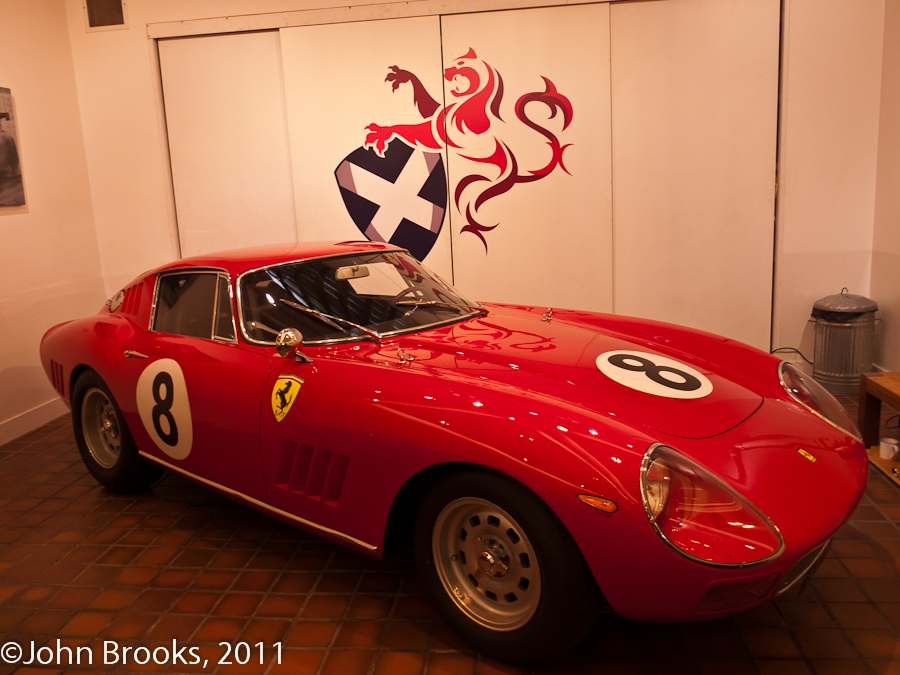

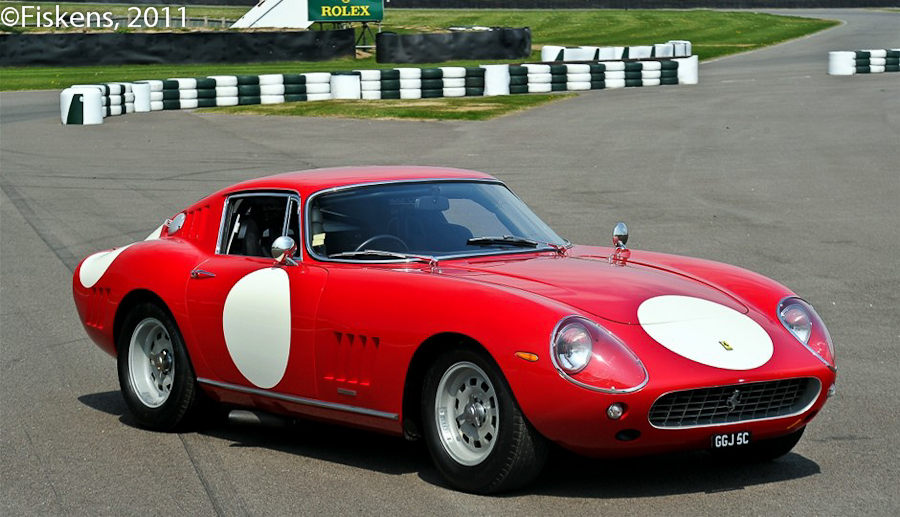
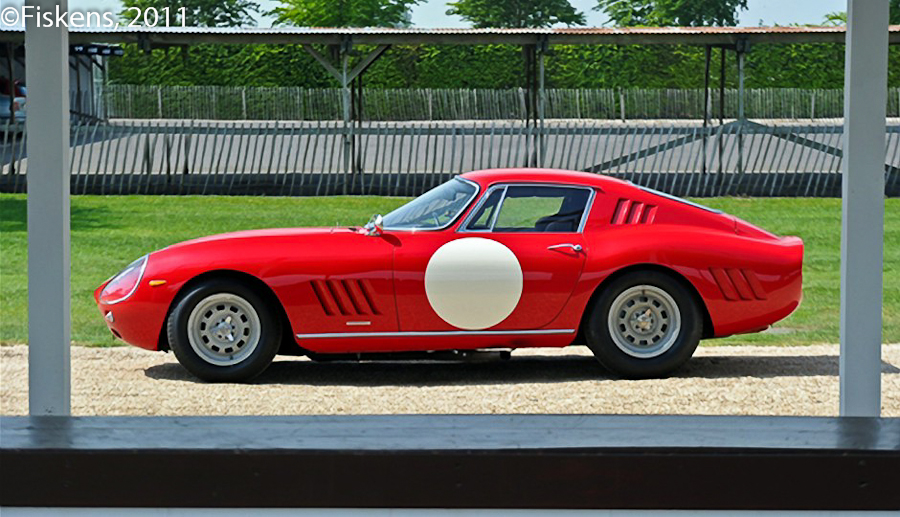
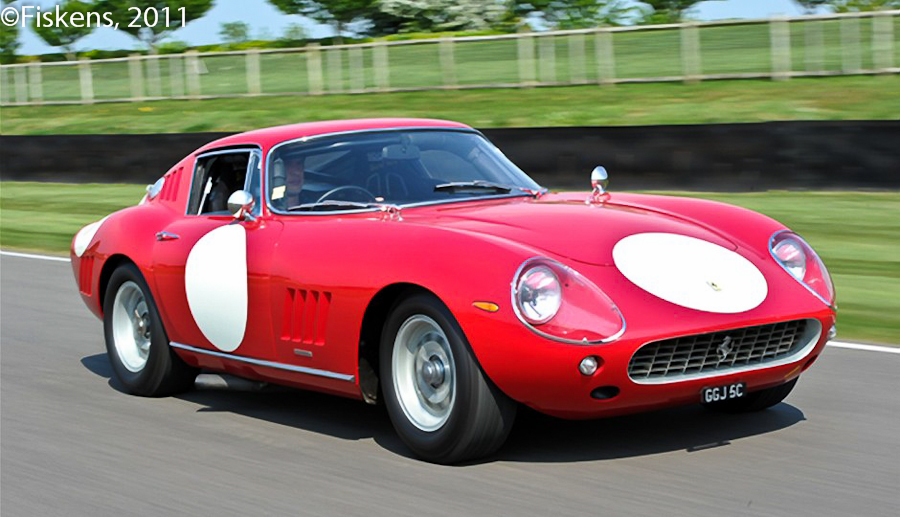
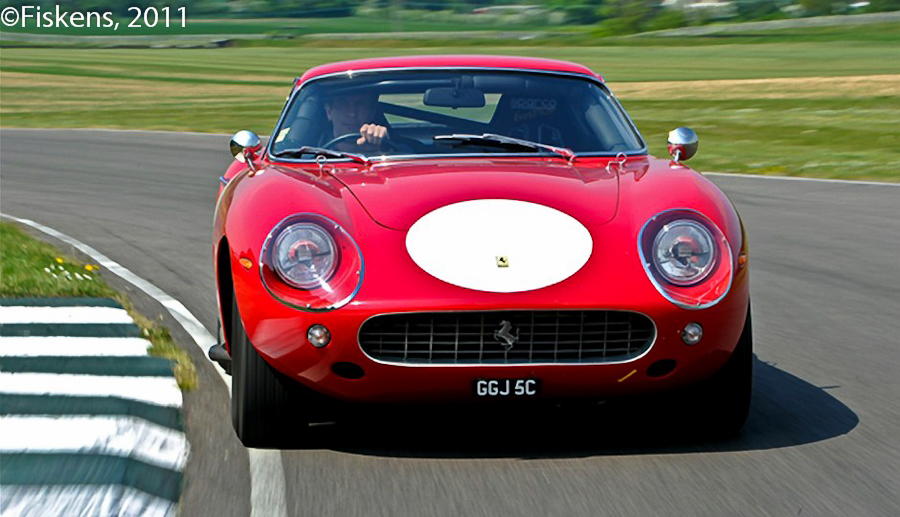
What collection of classic cars would be complete without a Ferrari? So the bright red example of a 1965 Ferrari 275 GTB/C Competition sitting under the Fiskens’ logo was most appropriate.


The latest arrival in our London showrooms is one of the rare and highly sought after 275 GTB/C Competition models built by the Ferrari factory for the 1965 season. Although these competition cars looked similar to the road cars, from nose to tail, the differences were significant. They featured ultra lightweight aluminium bodies, six carburettors on a full competition engine along with other details such as outside fuel fillers as well as extra body louvers. Beautifully presented in Rosso Corsa and prepared, regardless of cost, to be a front running circuit racer that is still at home on the road, this 275 GTB/C has successfully participated in all the major events including Goodwood and Le Mans Classic.
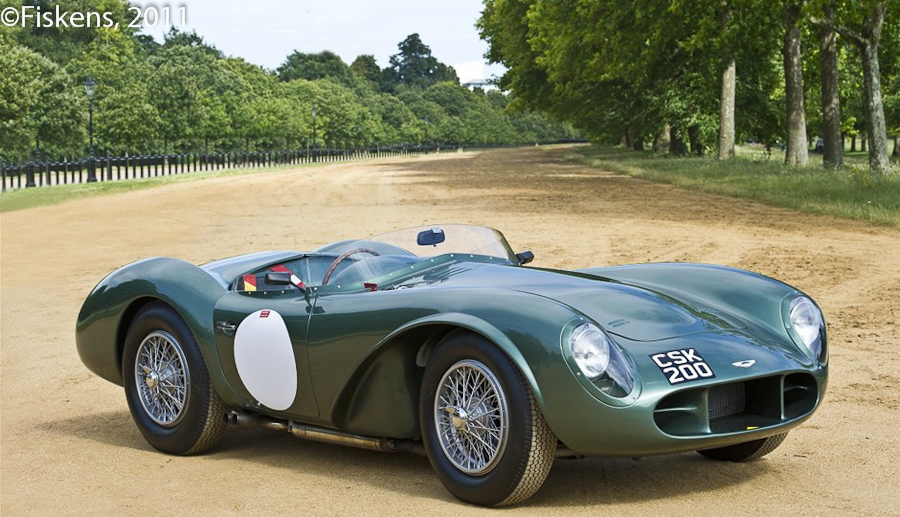

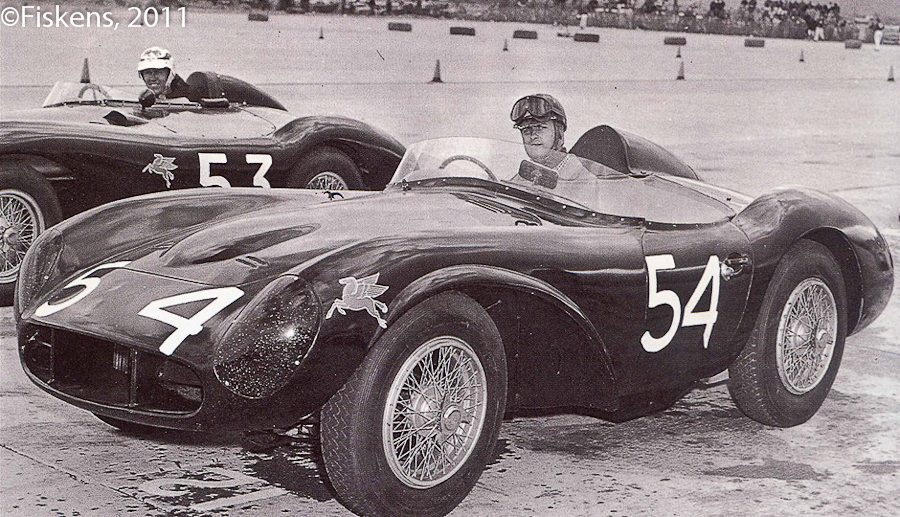
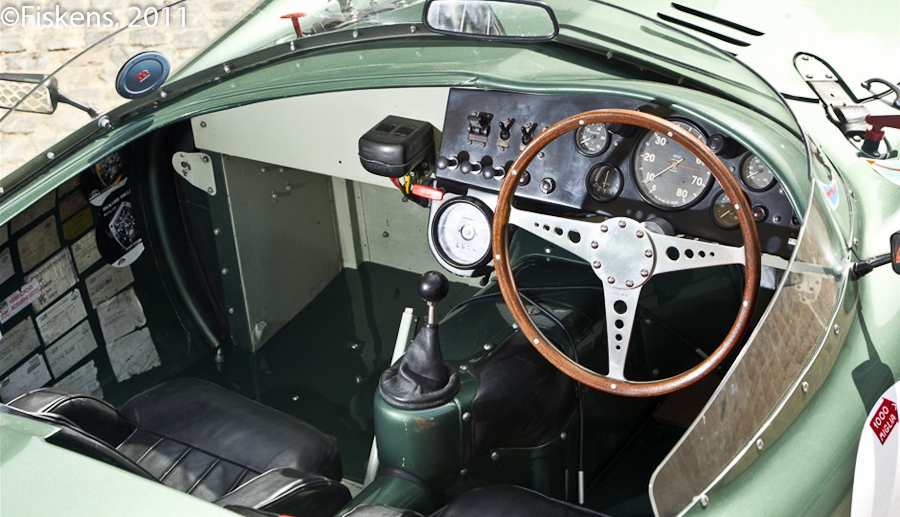
From an Italian classic to a British one, arguably one of the most elegant cars ever built, a 1956 Aston Martin DB3S, utterly desirable and, for me, totally unaffordable, still we can all dream………..


Only 11 factory team cars were built for competition use with chassis 11 being the last built by the competition department. Not content with racing a production DB3S and desperate to acquire a works car, it was supplied to the up and coming young American Rod Carveth, who used his friendship with the legendary team manager John Wyer to secure chassis 11. Carveth himself flew to England and stayed at the works in Feltham for two weeks to ‘help’ with the assembly of his new race car. It was painted black and delivered to him in California in mid-August 1957 with his first event at Elkhart Lake in September, sharing the driving with previous Watkins Glen winner George Constantine.

Carveth raced extensively throughout the rest of the season at Watkins Glen, Bridgehampton, Palm Springs and Laguna Seca before sustaining an accident at Nassau when 3S/11 was sent back to the factory for repair.
He continued to race in 1958 and in the Autumn of 1959 took the car to Australia, competing at Bathurst, Orange, Fisherman’s Bend and Mount Panorama scoring an outright victory and four class wins! On his return to California, the Aston was sold to Ed Leslie and Rod purchased the ex-works Ferrari 250 Testa Rossa, chassis 0666 TR to continue his racing exploits.
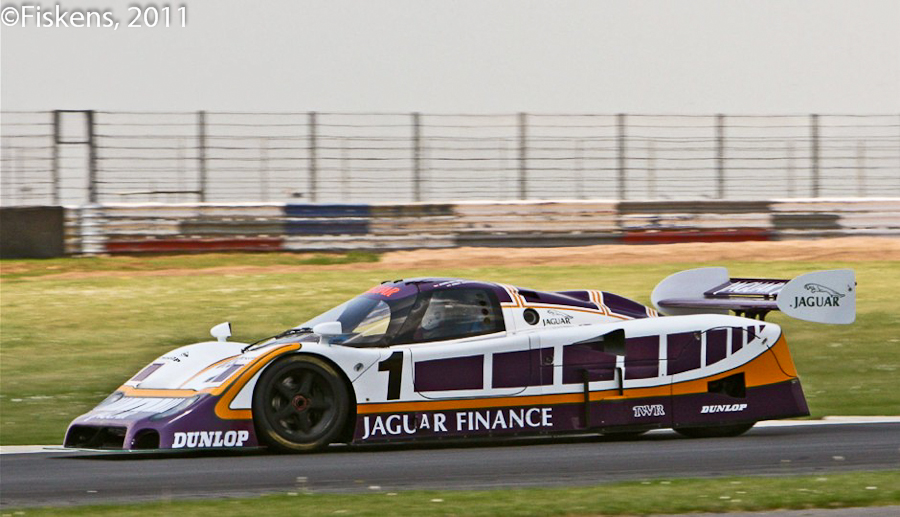
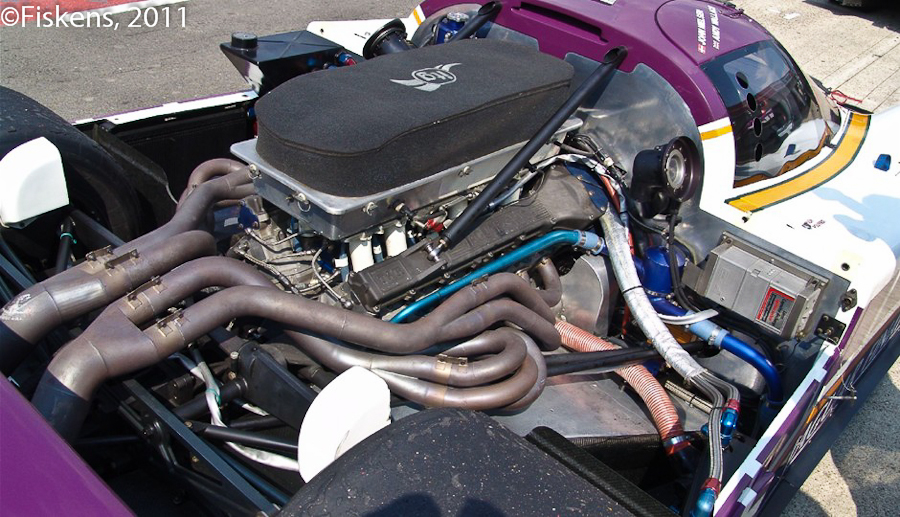
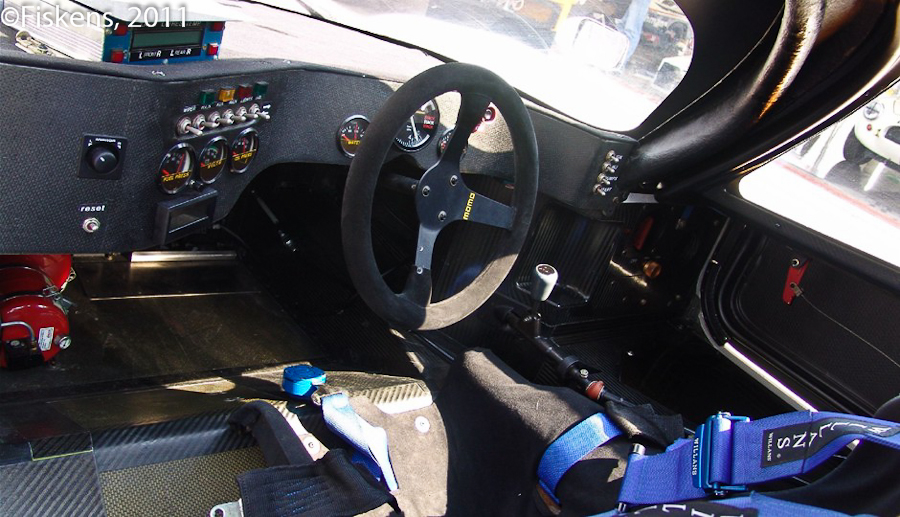
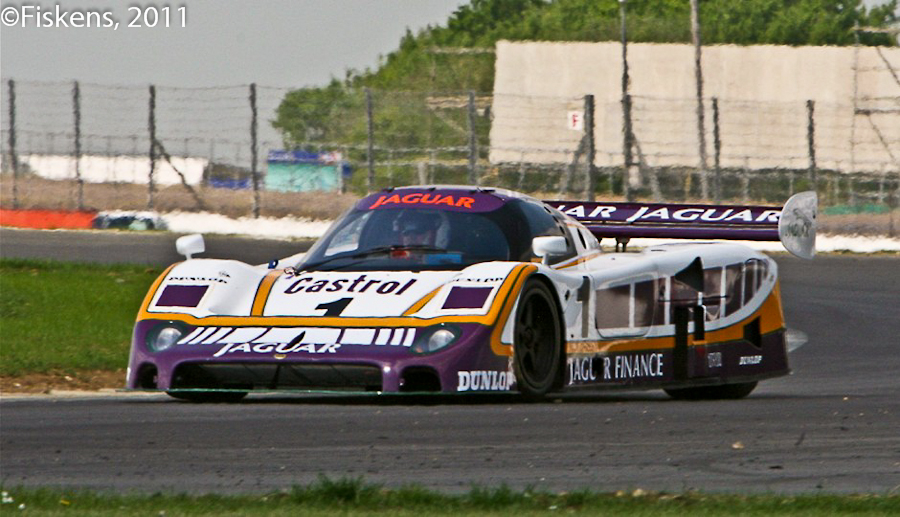
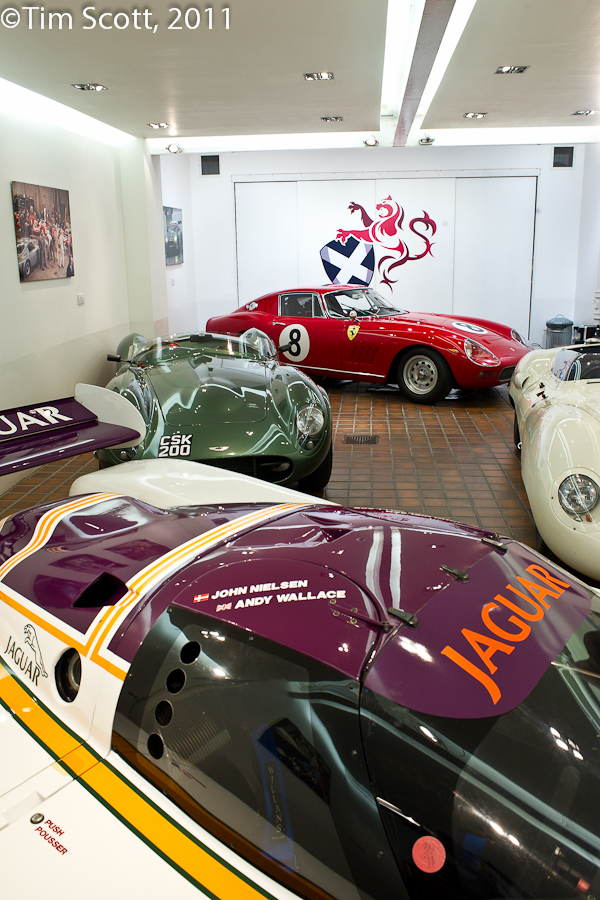
All of which sportscar magic leavesto the last my personal favourite and old acquaintance, a Jaguar XJR-9. My first major sponsor photo contract was with Castrol in 1988, so I would have followed this example, chassis 688, around in those years.
Chassis J12-C-688 was one of the famous Silk Cut Group C Jaguar XJR 9’s of the 1988 season, the sixth and final XJR 9 built by TWR. It was raced in all but one of its six races during that 1988 season by the impressive paring of ex-Formula One ace Jan Lammers and the talented young Scottish driver Johnny Dumfries. The best result of the season came when Martin Brundle joined Lammers to come second overall  at the Spa 1000 Km’s. J12-C-688 competed in a further four races in the 1989 season, most notably at Le Mans with drivers John Nielsen, Andy Wallace and Price Cobb, who qualified it 8th, sadly retiring due to a failed head gasket.

One of the most recognisable and iconic racing cars of the 1980s, this Silk Cut Group C Jaguar  XJR 9 formed part of a racing programme that took Jaguar back to the forefront of motor racing. Chassis J12-C-688, especially with its 2nd place finish at Spa, was an instrumental part of Jaguar’s World Sportscar Championship victories of 1988 and played a central role in reinstating Jaguar as a motorsport leading manufacturer.

10/07/88 – Bruno 360 Kilometres – 3rd – Jan Lammers, Johnny Dumfries

24/07/88 – Brands Hatch 1000 Kilometres – DNF – Jan Lammers, Johnny Dumfries

04/09/88 – Nürburgring  1000 Kilometres – 8th – Jan Lammers, Johnny Dumfries

19/09/88 – Spa 1000 Kilometres – 2nd – Jan Lammers, Martin Brundle

09/10/88 – Fuji 1000 Kilometres – DNF – Jan Lammers, Johnny Dumfries

20/11/88 – Sandown 360 Kilometres – 4th – Jan Lammers, Johnny Dumfries

21/05/89 –Dijon – DNF – John Nielsen, Andy Wallace

11/06/89 – Le Mans – DNF – John Nielsen, Andy Wallace, Price Cobb

25/06/89 – Jarama – 6th – John Nielsen, Andy Wallace

23/07/89 – Brands Hatch – DNF – John Nielsen, Andy Wallace

An excellent way to spend a few hours, considering what amounts to automotive art of the highest level, so thanks, Gregor, for the opportunity.

John Brooks, November 2011

Chinese Burn – Part Three

Rock Around The Clock

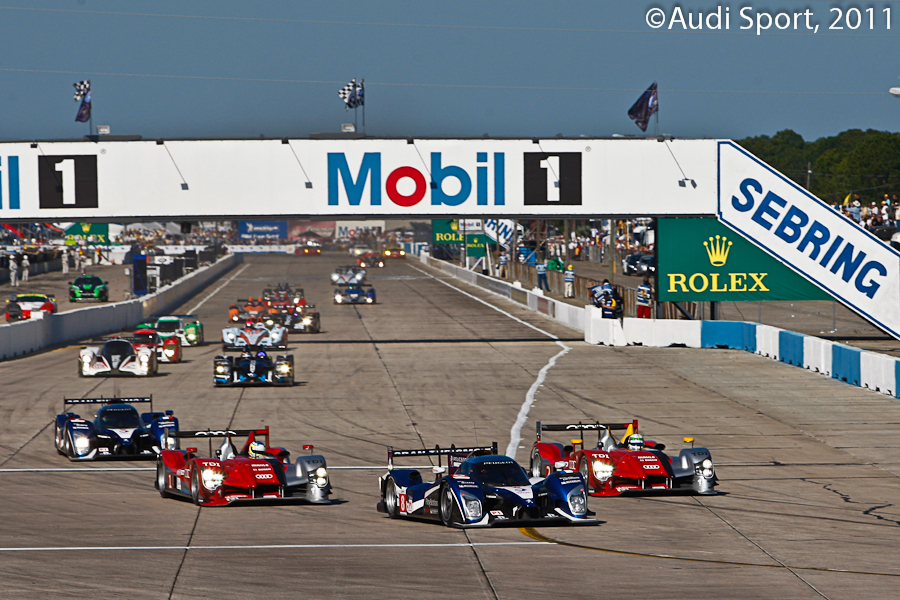
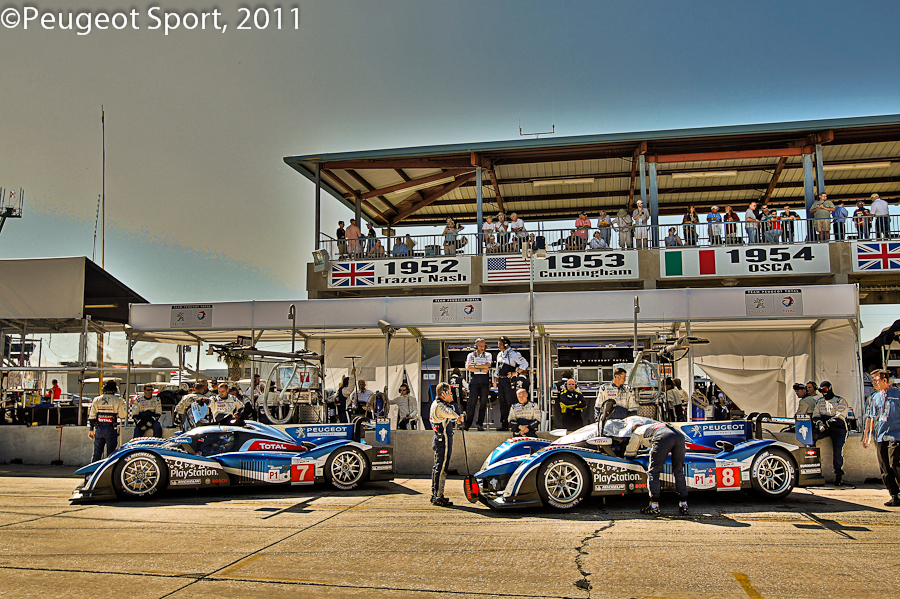
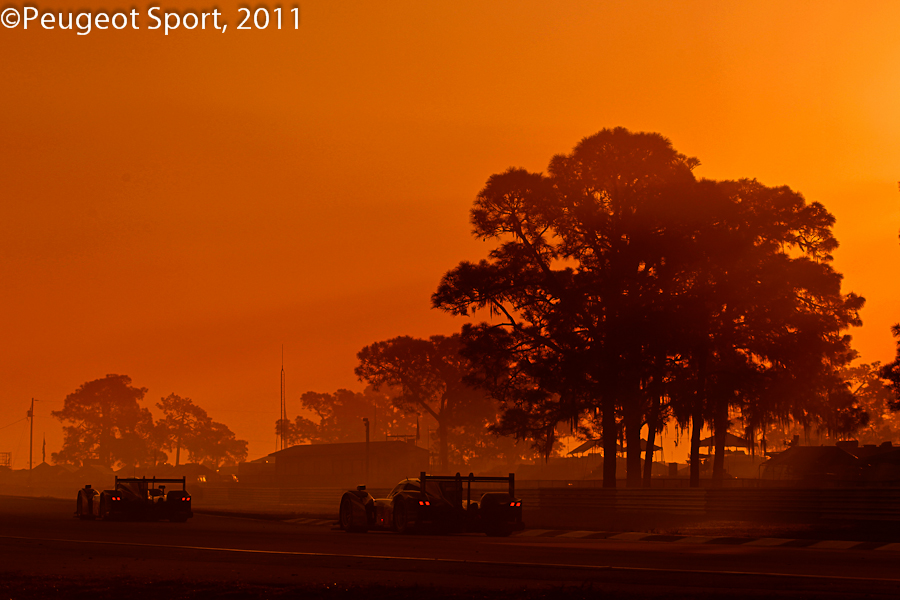
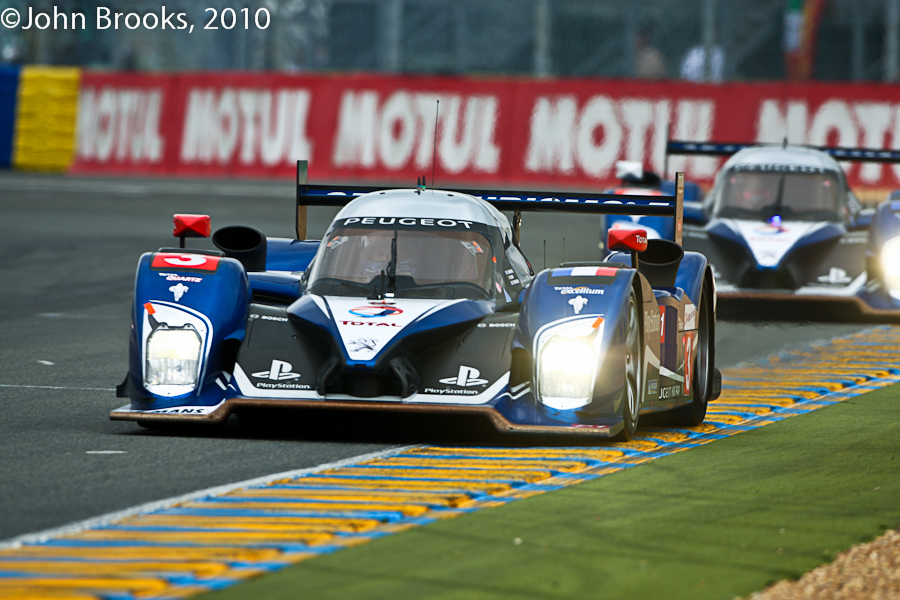
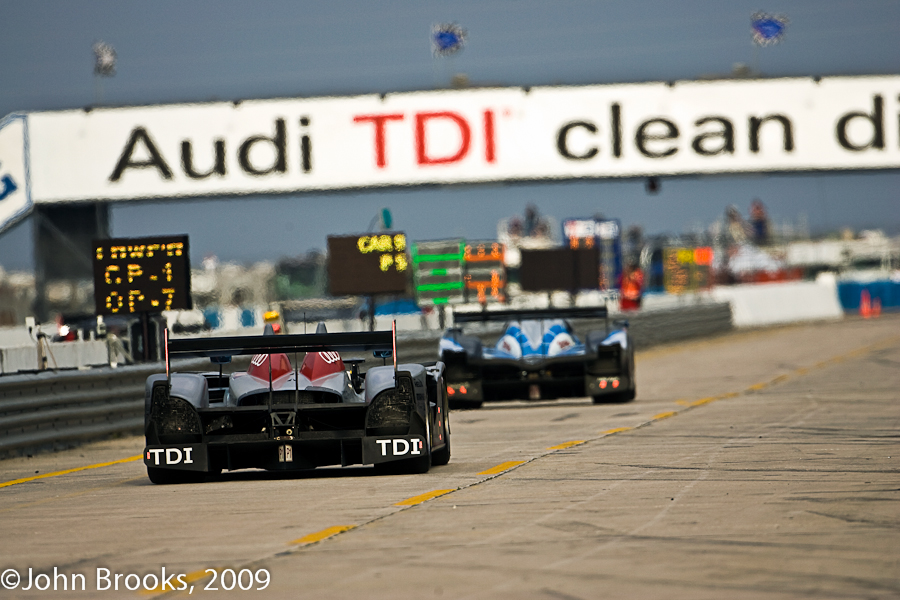
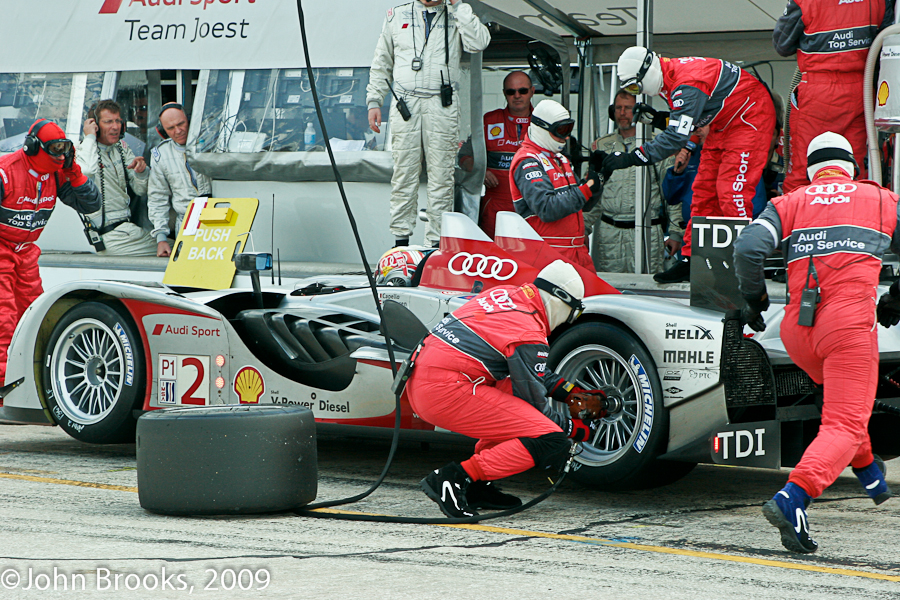
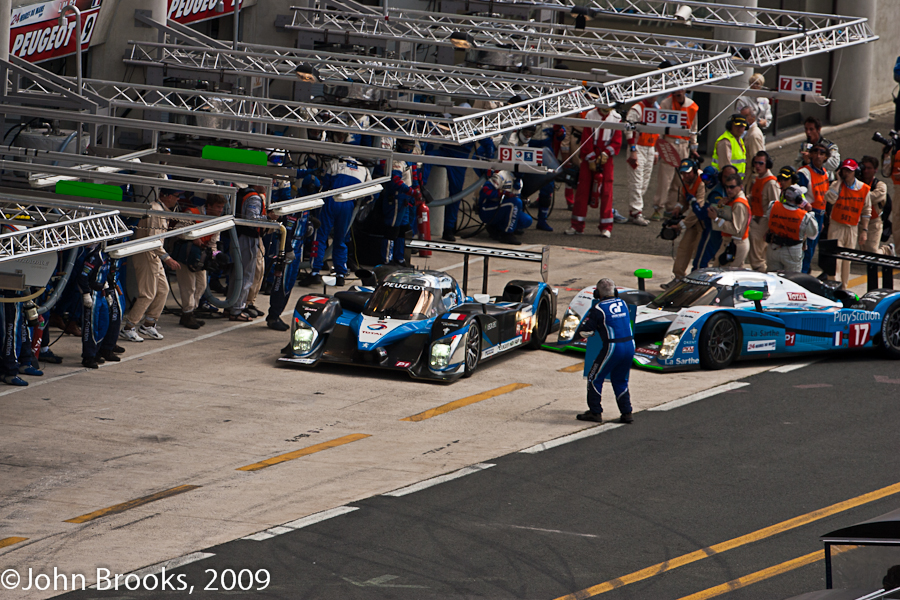
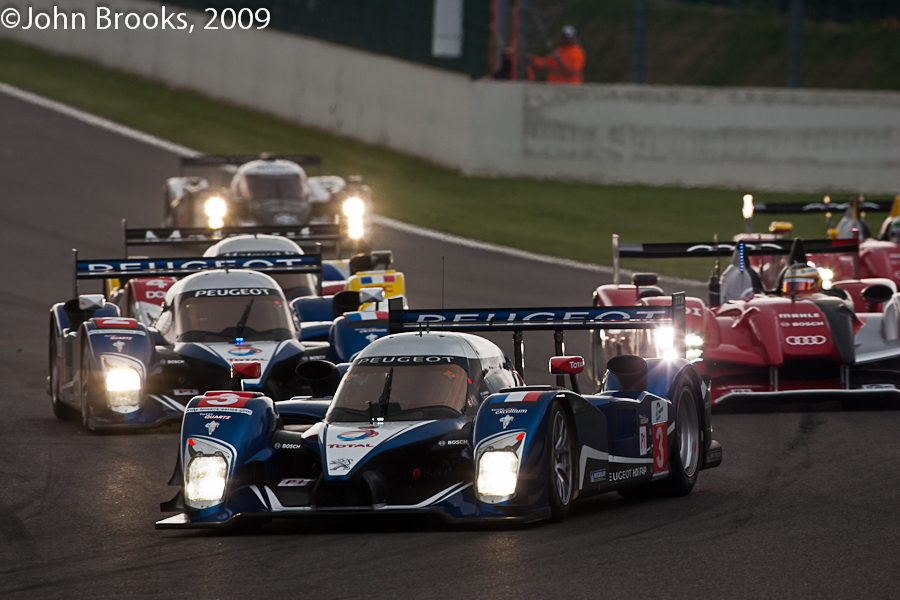
The ever increasing speeds of the diesel battle meant that the ACO felt forced to bring new rules in for 2011. Smaller engines and other measures in turn meant new cars for Audi and Peugeot. Peugeot had their new weapons ready for the opening ILMC round at Sebring, Audi did not.

At The Setting Of The Sun

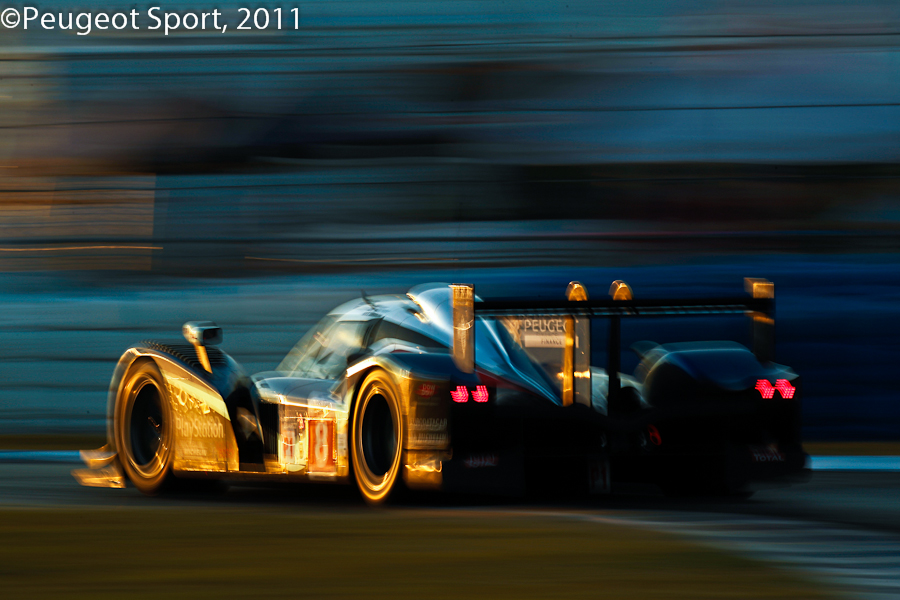
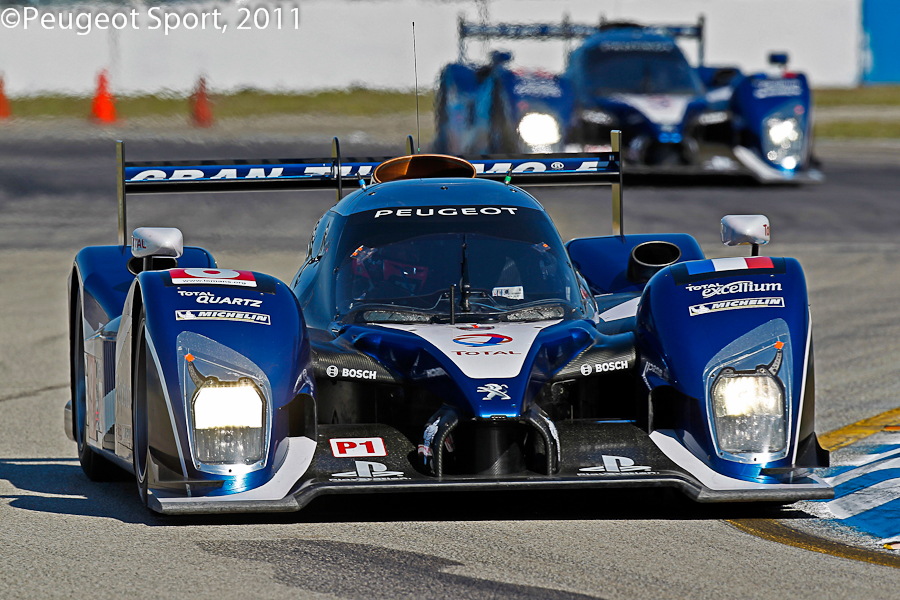
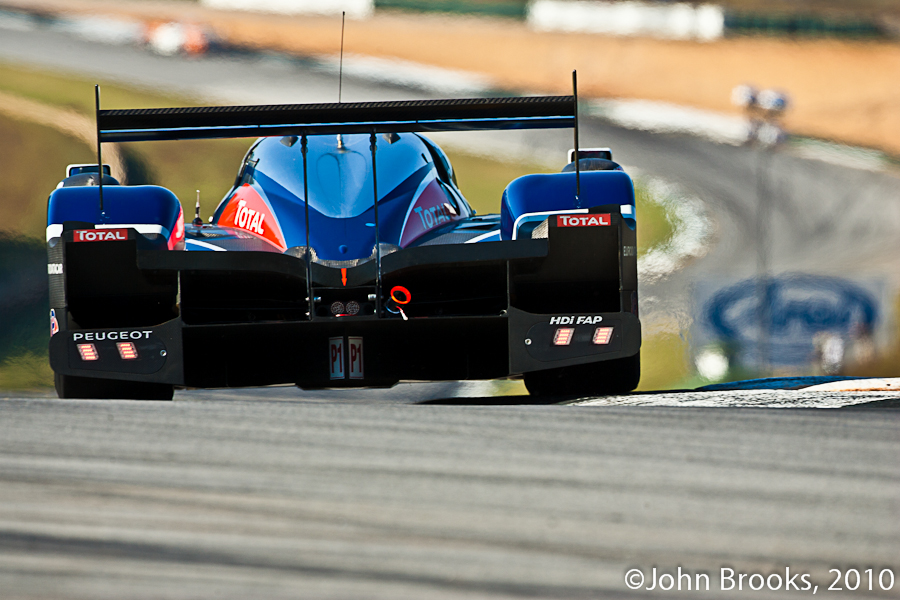
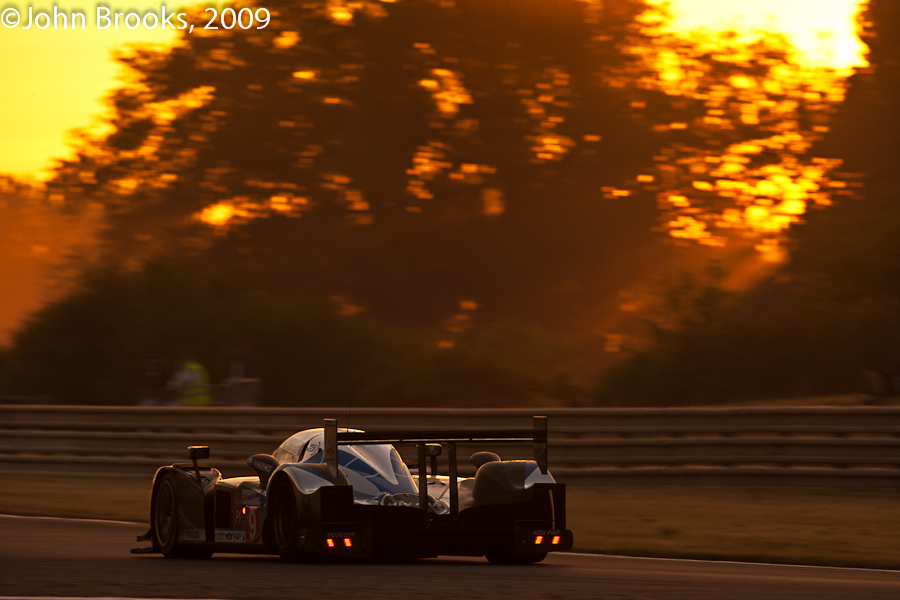
The Peugeot 908 is powered by a 3.7 V8 twin turbo diesel engine. The new regulations caused the loss of around 150hp and more importantly torque was massively reduced, so a completely new approach was needed. The Peugeot may have shared its model number and the windscreen wiper with its predecessor but nothing else. The aerodynamics concentrated on maximising the speed at the expense of downforce.

Blue Meanies

This aspect combined with the lack of torque meant a completely new technique to driving the cars flat out was also required. Keeping up the momentum was paramount and this accounts for the extremely aggressive moves that the prototypes have pulled when in slower traffic……..universally this has not been well received, especially by the professionals in the GTE class.

Pit Popsies

Another major change was the mandatory addition of a central fin extending from the cockpit to the rear wing. The aim was to prevent cars getting airborne but that has not been wholly successful. Both Marc Gene and Nic Minassian had dramatic crashes in their new Peugeots during the pre-season test programme. Nic ended up on the runway at Le Castellet airport, having cleared the barriers and fences. These incidents attracted the attentions of the FIA Technical department and further measures are now proposed.

Old School

The new regulation that has been announced by the ACO mandates that there has to be an opening at the top of each wheel arch, replacing the existing louvers at the front. These openings measuring a minimum of 200mm by 250mm, will mean that the top surface of the tyres will be visible through the bodywork. It is intended to reduce lift in the event of a car spinning sideways by equalising the air pressure around the wheels.

Brace of Audis

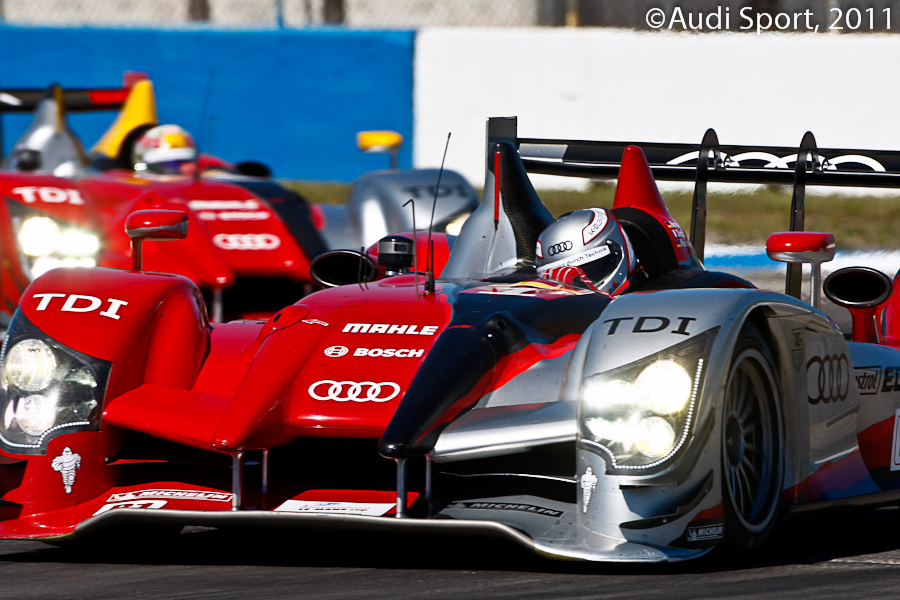
Audi were a few months behind Peugeot in the development of their own new car, so the R15+ was rolled out again at Sebring. While a team like Audi never gives up, their R15+ grand-fathered to conform with 2011 rules, were likely to struggle to match the outright pace of the French. The best hope lay in exploiting the considerable racecraft and Sebring Savvy that the team and drivers had accumulated over the years.

Very ‘Appy

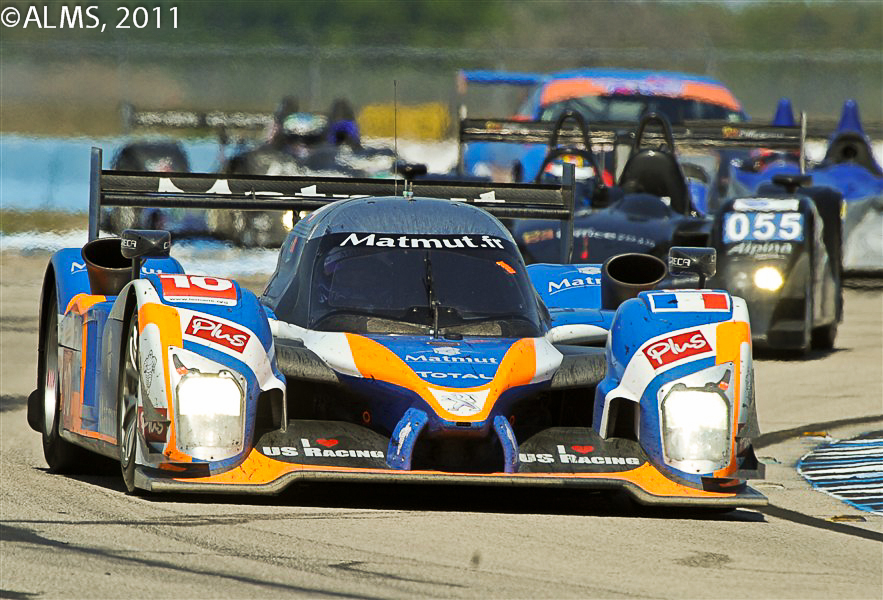
In the end neither factory team stood on the top step, the 2010-spec Peugeot, run by the mighty ORECA outfit had a relatively trouble-free run and added Sebring to their list of Florida classics, having won the Daytona 24 Hours victory back in 2000.

Audi and Peugeot each lost a car from contention after a collision between Gene and Capello led to extended pit stops to fix the damage. Bodywork problems and a spin by Pedro Lamy dropped the other Peugeot while the second Audi had several punctures that stuffed their race.

Sebring Sunrise

On a positive note the new 908s had run without mechanical problems on what is considered to be the toughest track of them all. Next up would be Spa and the début of the R18. It was going to be even more serious now.

R18

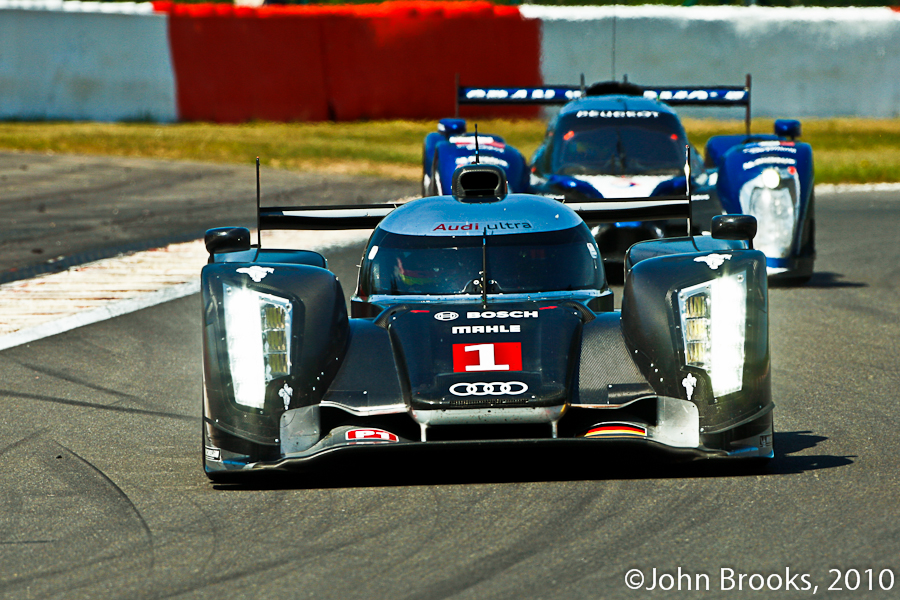
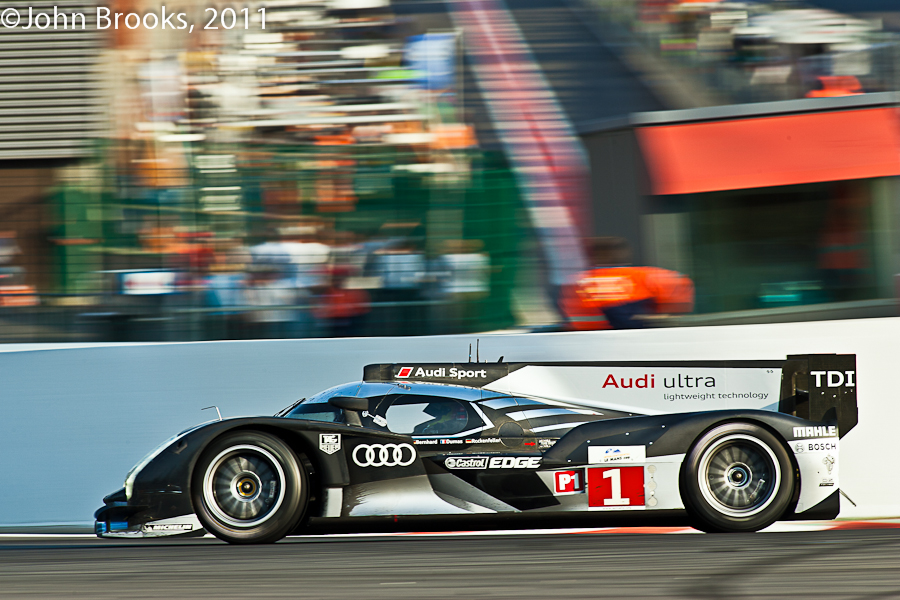
The Audi R18 was certainly dramatic when seen in the flesh at Francorchamps. It was the first coupé from Audi since the distinctly undercooked R8C in 1999. Powered by a V6 3.7-litre diesel running only one turbo in contrast the usual twin arrangement, it bristles with the latest technology, supporting the marketing message “Ultra”. The question was, would it work?

Cover Is Blown

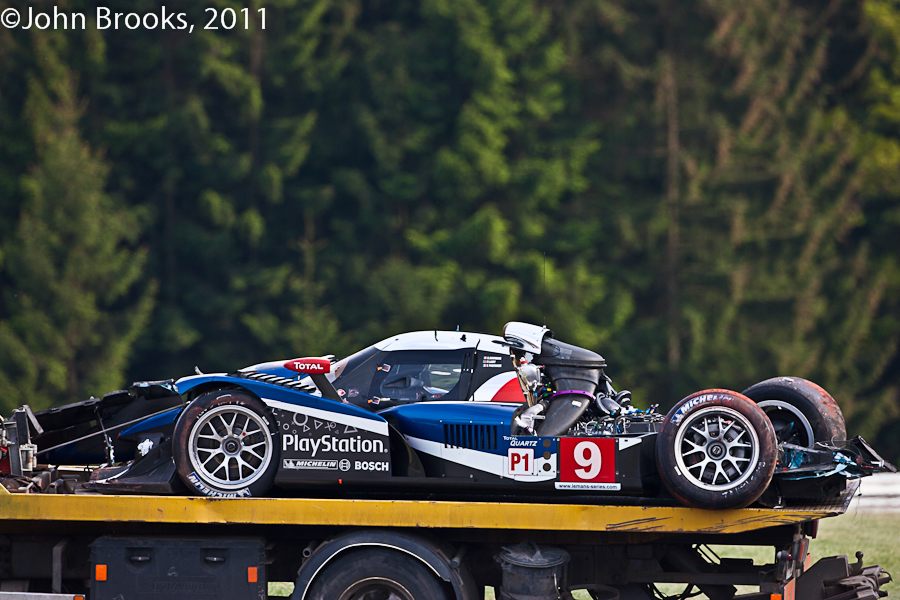
Peugeot hit problems during Friday when Pedro Lamy crashed after contact with another car. Both teams are very secretive about their cars, at least to the media, so the damage to the 908 will have been compounded by the fact that every telephoto lens in a 50 mile radius was focussed on the wreck. It would be a long night for the mechanics.

Fin De Siècle

Qualifying was also a disaster for Peugeot, with the session being red-flagged early on, before the 908s could set representative times. Then the session was cancelled as barriers were damaged beyond swift repair. Audi lined up 1-2-3 whereas their opponents could only muster 13-18-50, Sacre Blue!

Scottish Reel

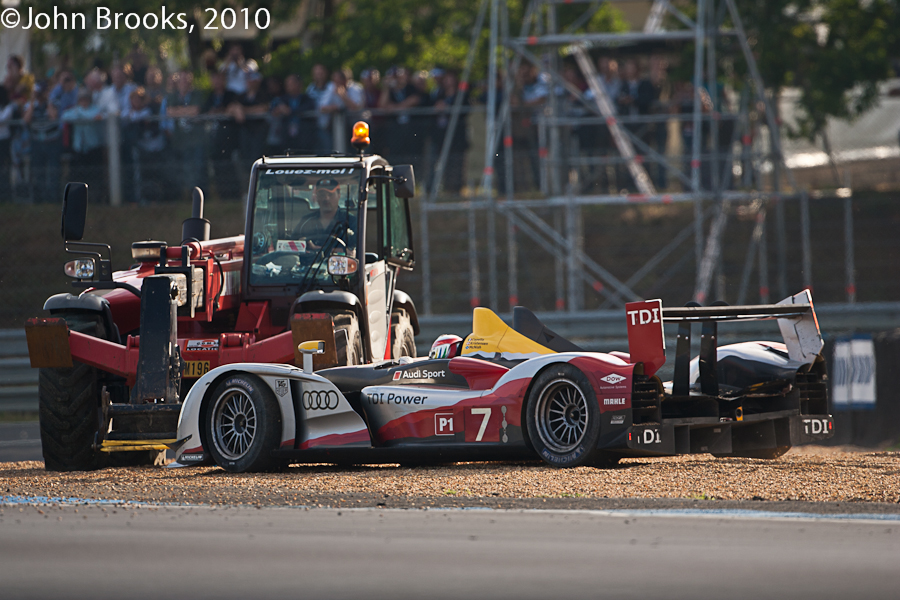
The race got underway with the trio of Audis streaming up the Kemmel Straight in formation, then the day started to unravel for Ingolstadt. McNish spun into Les Combes, then Bernhard tagged a slower car, damaging the diffuser and Treluyer spun and got beached in the gravel at Fagnes. A long litany of similar minor problems afflicted the three Audis all the way through the race.

Hill Climb

The final result saw a 1-2 to the French with McNish/Kristensen/Capello salvaging a podium and some pride for Audi. The general consensus in that fount of false wisdom, the media centre, was that it was too close to call between the two factories. It was very difficult to draw firm conclusions about the prospects for Le Mans, a few weeks down the line.

It would be close, that much was certain, just how close we could not imagine.

John Brooks, November 2011
Chinese Burn – Part Two

Fear and Loathing

The first hour or two of the 2010 edition of Les Vingt-Quatre Heures du Mans were a low point in Audi’s ultra successful Le Mans campaign of the past decade. They had largely dominated the period and now were being soundly beaten on sheer pace, by a quartet of Peugeot 908 HDi FAP coupés, the expensively revised R15+ just could not hack it.  It was a general assumption that the factory cars were bullet proof in terms of reliability, so Audi would have to keep plugging away and hope for better days.

Hanging In There

However the pace of the two factory diesel teams was extreme, pushing the cars to the limit………….and beyond. We were into uncharted territory, it was like a motorsport rerun of Ali-Fraser’s “Thrilla in Manila”, something was going to have to give.

Parting Is Such Sweet Sorrow

Suddenly the screens were full of Pedro Lamy’s Peugeot limping around the track, front wheel askew, Bruno Vandestick, the irrepressible Le Mans commentator, whipping the crowd to attention. In fact the suspension had parted company with the monocoque, possibly this was the price to be paid for pole position, as this often occurs if cars are bouncing off the kerbs, whatever, the car was listed as a retirement. A small sliver of doubt crept into the French operation, a crack in their armour had appeared, what would be next?

Sand In The Machine

In fact it was Audi that was next to flinch. Tom Kristensen in #7 tripped up over Andy Priaulx in the BMW Art Car. The M3 was crawling back to the pits, afflicted with one of the many punctures suffered up and down the field. By the time the Audi had been pulled from the gravel at Porsche Curves and the rear repaired, three laps had been lost and so had any reasonable chance of a win. Priaulx put his hands up, admitting that he had misjudged TK’s speed. He showed considerably more class than Audi boss, Dr Ulrich, who stormed down the pit lane to shout at BMW’s Charly Lamm. I can think of a few team principals down the years who would have not have endured a similar exhibition so calmly, imagine trying that crap with Tom Walkinshaw. It was a confirmation, if any were needed, of the enormous pressure that the Audi head honcho was under.

Fire In The Hole

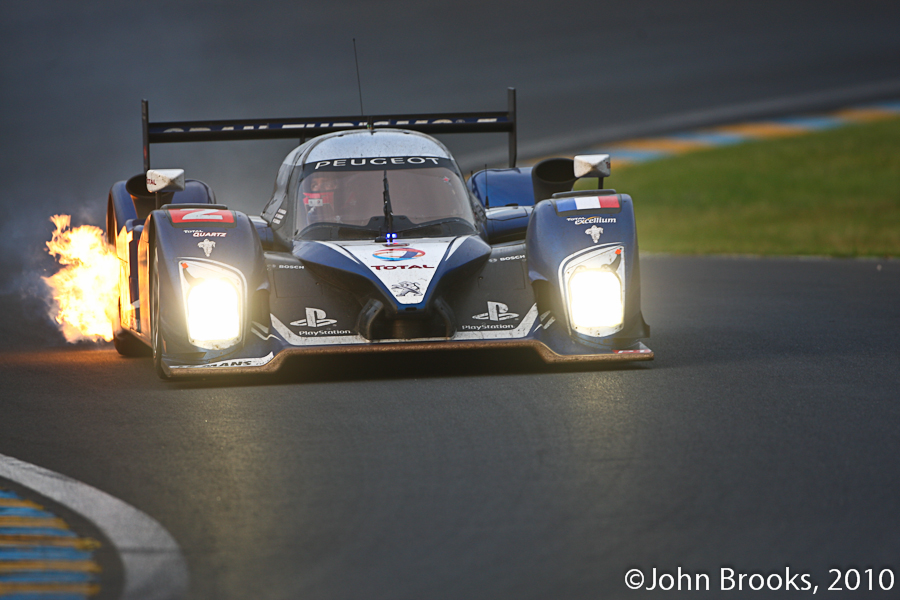
Darkness came and with it the Peugeot challenge gradually wilted, alternator failure and damage from a collision delaying two cars. Then came dawn and disaster at 7.02am as the engine of the #2 Peugeot exploded in flames, their race run. Audi was in front for the first time. This was amazing, Audi looked as if they just might pull off a major upset. The order came down from on high at Peugeot, go flat out and see if the Audis might be caught or break too.

Maximum Attack

The expression les merdes volent en escadrille best summed up the next few hours for the French as both of their challengers suffered engine failure while chasing the Audis. Olivier Quesnel maintained a terse “No Comment” when questioned about the root of the problem. In the paddock a whisper of piston broke took hold. It could explain as to how the cars were faster despite a 5% reduction in restrictor size over 2009. Whatever, Peugeot’s dream was now a nightmare.

Made it, Ma! Top of the world!

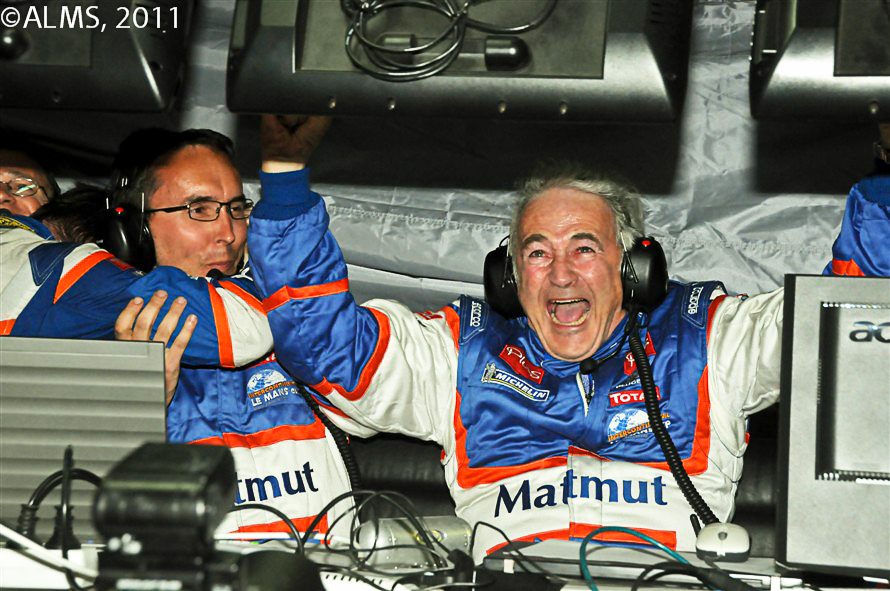
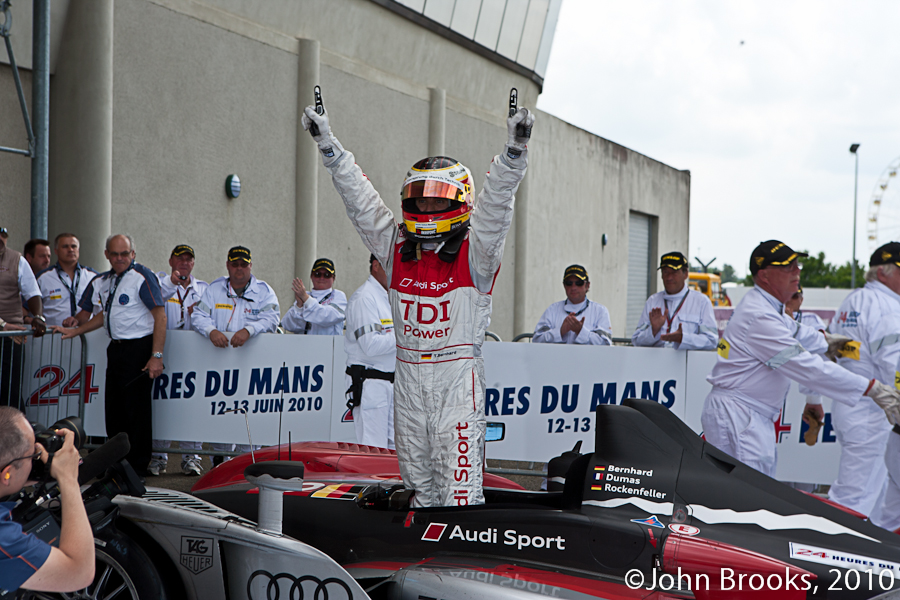
In the final analysis Peugeot shot themselves in both feet, failing to take a victory that seemed at one stage to be theirs alone. Credit must be given to Audi for never giving up and building a car that ran without fault, true Le Mans virtues. #9 spent only 36 minutes in the pits during the race. Another goal that it scored and one that may never be surpassed, was the distance record. #9 completed 397 laps or 3,362 miles, an average speed of just over 140 miles per hour. The previous record had stood since 1971…………evidence of just how hard the fight had been.

Copse Corner

How does a team pick themselves from such a public and crushing disappointment? Well it is the mark of true champions to be able to do so and that is how you would describe Peugeot. At Le Mans there had been an announcement by the powers that be, there would be a new competition, the Intercontinental Le Mans Cup, catchy name, that would, it was hoped, evolve into a proper World Championship. Silverstone in September would see the inaugural event.

That Long Black Cloud Is Coming Down

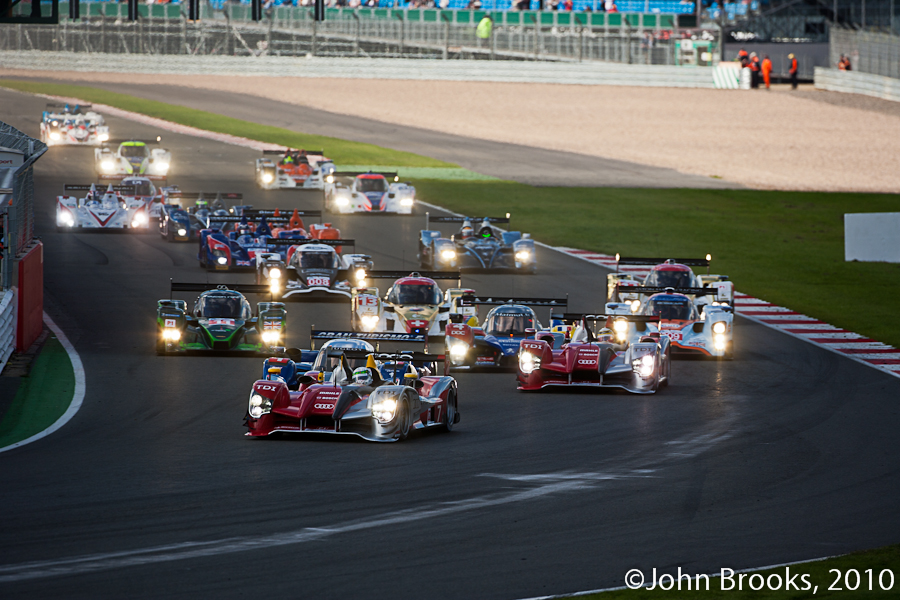
Audi fielded two R15+ prototypes against two 908s, one factory and one ORECA run. Pole went to Audi but there was a suspicion around the pressroom that the French still had the better car.

Second Best

So it proved with the 2009 spec ORECA-run 908 backing up the factory entry for a Peugeot 1-2. Audi defeated once again away from La Sarthe and Peugeot back on track.

Georgia On My Mind

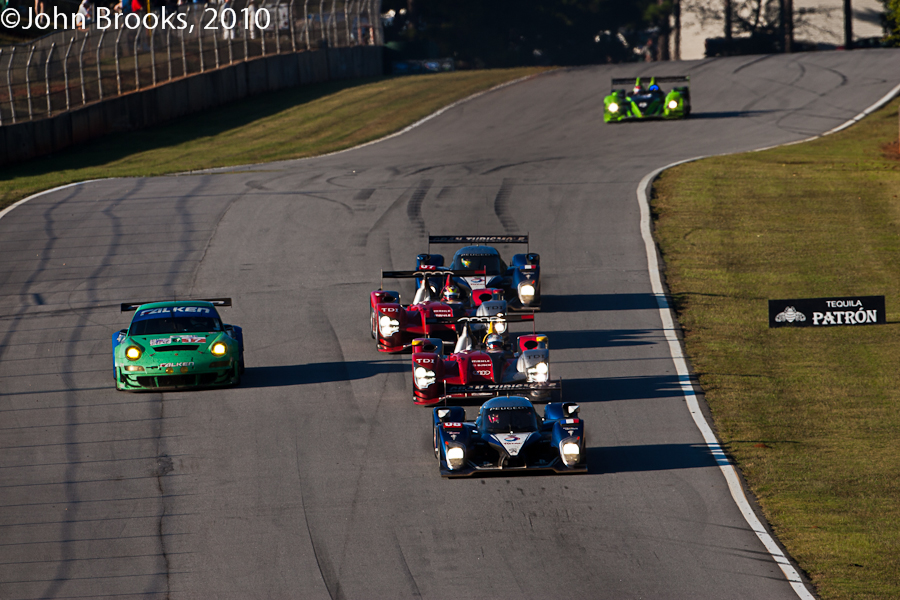
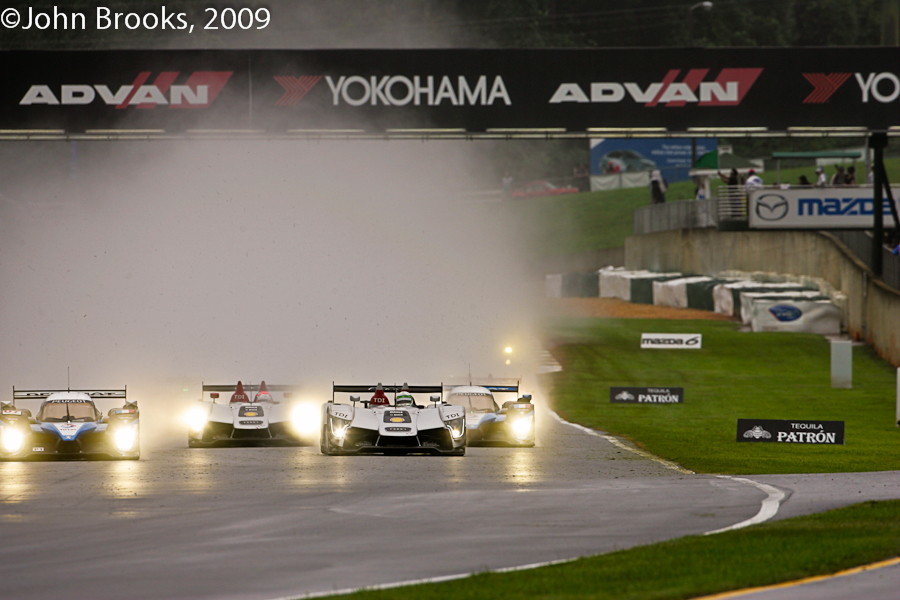
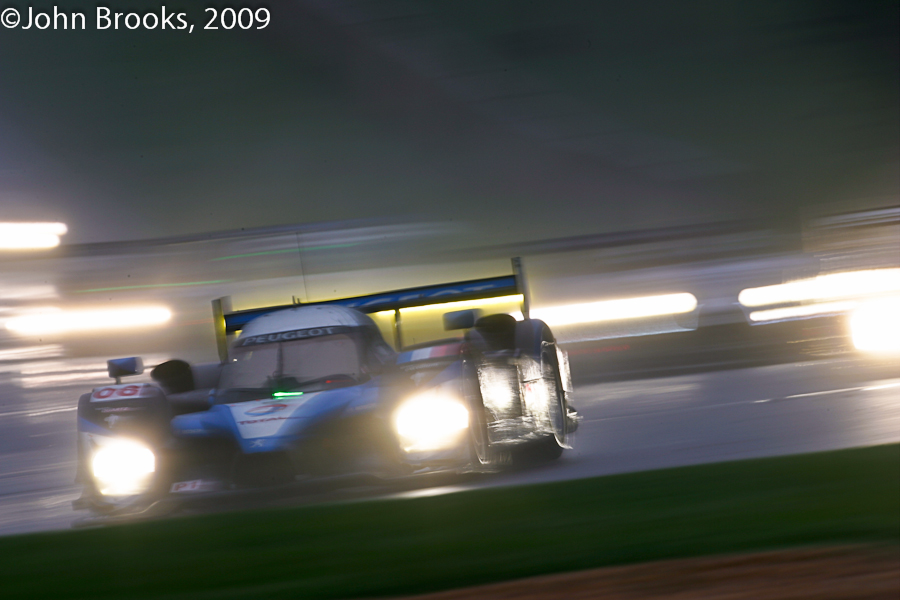
A few weeks later and we were across the Atlantic for the Petit Le Mans. The two factories seemed evenly matched around the sinuous Road Atlantic track, the outright speed of the 908 being matched by the commitment the Audi squads in the persistent traffic.

Keep That Train A-Rollin’

As the shadows lengthened there was a three-way fight at the top of the order, it was going to be a scrap all the way to the finish.

Rage Against The Machine

Except it wasn’t. Capello’s Audi slowed and pitted unexpectedly, leaving the 908s to romp away. As the PR Release put it

Dindo Capello, who was leading at that time, had to come in for an unscheduled pit stop because an insert in his helmet prescribed by the regulations had come loose and the fireproof balaclava started to cover his eyes. Without being able to see anything, Capello had to let the Peugeot behind him pass and head for the pits in a blind flight.

In his own words. “But then the nightmare started. At first I didn’t have a clue as to what was happening. I had the feeling that the helmet was suddenly three sizes larger than before. We later found out that the E-Ject insert in the helmet had come loose. I was even lucky not to have had an accident since I was completely blind in one turn because the helmet slipped across my eyes. Even after so many years you can still experience something new.”

Another race to Peugeot, though the sympathy was with Audi.

Red Flagged

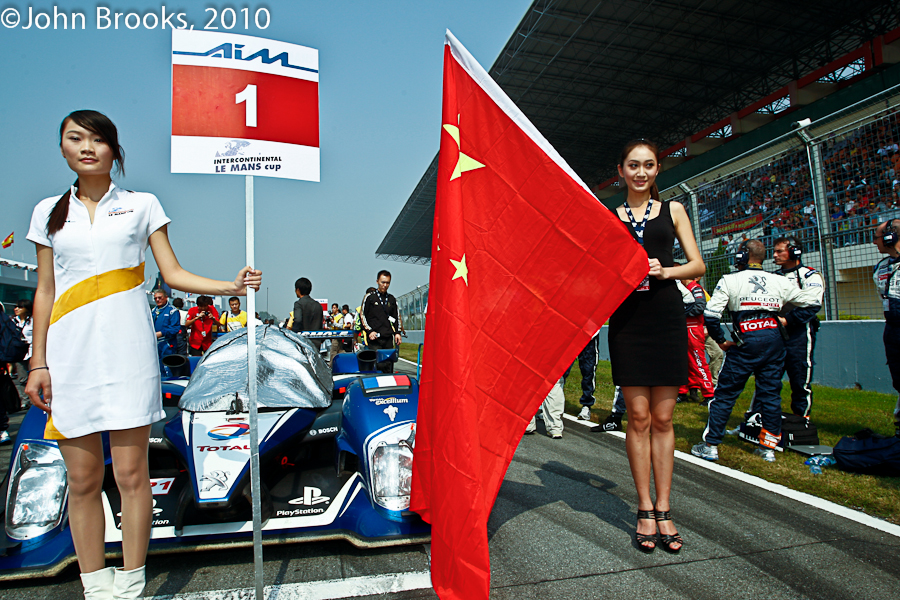
The final encounter of the diesels for 2010 was to be in Zhuhai, the ILMC title was at stake as was Audi’s pride.

Double Take

Once again there was little to choose between the factories and in the end it all came down to the last few laps and some questionable driving by a lapped Bourdais who impeded Kristensen’s pursuit of Sarrazin. Predictably there no action from the officials and a bit of light hand-bagging after the race but another win had slipped away.

Sign Language

For Audi 2010 had been a difficult year to say the least. Victory at Le Mans was the one shining light, they had been hammered in the DTM and the R8 GT3 project had failed to get the desired results. Something must be done.

Peugeot had recovered strongly from the nightmare in June and had serious plans to gain revenge for that humiliation. 2011 was going to another cracker.

John Brooks, November 2011
 

Chinese Burn – Part One


The final ever round of the Intercontinental Le Mans Cup will be held in a week or so at Zhuhai, next year the competition will be called the FIA World Endurance Championship. At the sharp end the titles are settled, so one might assume that things should be relaxed between Peugeot, the Champs, and Audi, the Le Mans’ winners. I somehow doubt this, proud teams such as represent the French and German manufacturers hate to lose, it is not in their DNA, as the phrase goes.

Golden Girls?

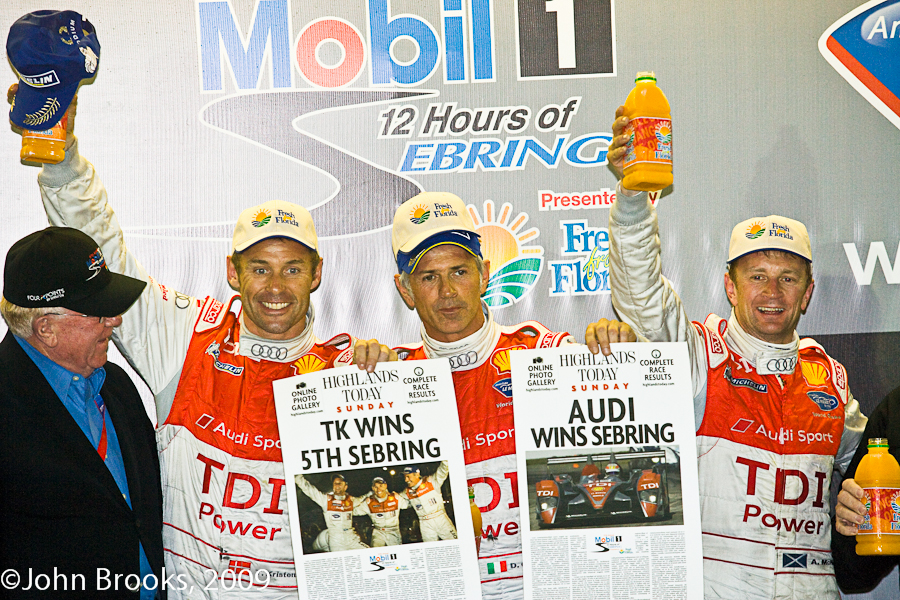
A question then that the protagonists, if not the average fan, will know the answer to. Leaving aside the 24 Hours of Le Mans for 2010 and 2011, when was the last time that Audi beat Peugeot in a straight fight? Unbelieveably you have to go back to Sebring 2009 when TK, Dindo and Nishy took the R15 to début win. That will be almost three years ago unless Audi takes the top spot next week. If this were a boxing match Audi would have counted out on a TKO.

Three years, 12 races and over 100 hours of competition; standing on the rickety photo stand at Sebring back then grabbing these podium shots, what odds would you have got on that forecast?  How has this dry run happened and how do Audi break this pattern and resume their rightful place on equal terms with their French opponents?

Diesel Drama

After the disappointments and failures of 2007 and 2008 Peugeot decided enough was enough. A new season and a new boss, Olivier Quisnel, sharpened their approach. Marketing distractions, like Jacques Villeneuve were dropped and Peugeot were honest enough to admit that they had to learn from the Top Dogs, Audi.

Candid Camera

I remember Allan McNush telling me that at Sebring, a camera crew from Peugeot had recorded every Audi pit stop, “I always waved at them”.

Carambolage

Whatever Peugeot learned from their home movies seemed to work, excepting this monumental folly. Naturally it was all the fault of the photographers and not the mob standing around oblivious………………

Sunrise

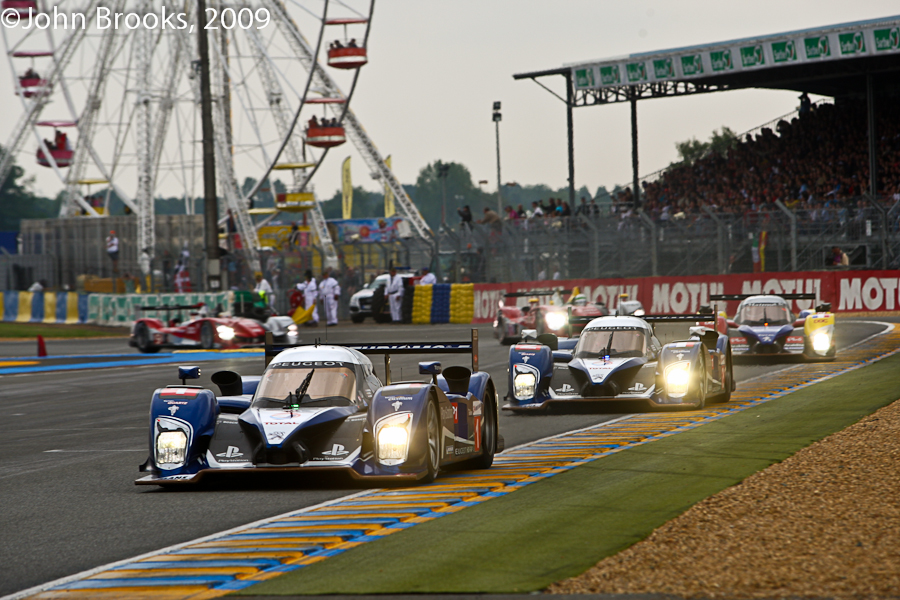
Peugeot were brilliant that weekend in Le Mans and it was Audi who always seemed to be on the backfoot. The R15 was something of a disappointment and the 908 always seemed to have pace to spare. Peugeot resembled their national rugby team when on song, almost unbeatable in that mood.

Scotch Mist

As if to reinforce the point that balance of power had shifted to the West, Peugeot even went after Audi across the Atlantic chasing them to Road Atlanta and Petit Le Mans.

A typically forthright start by McNish, who else, and a storming first stint nearly put the lead Audi a lap up. A safety car period put a stop to that and it was game on once again between the diesel rivals.

Blow, Ye Winds, and Crack Your Cheeks

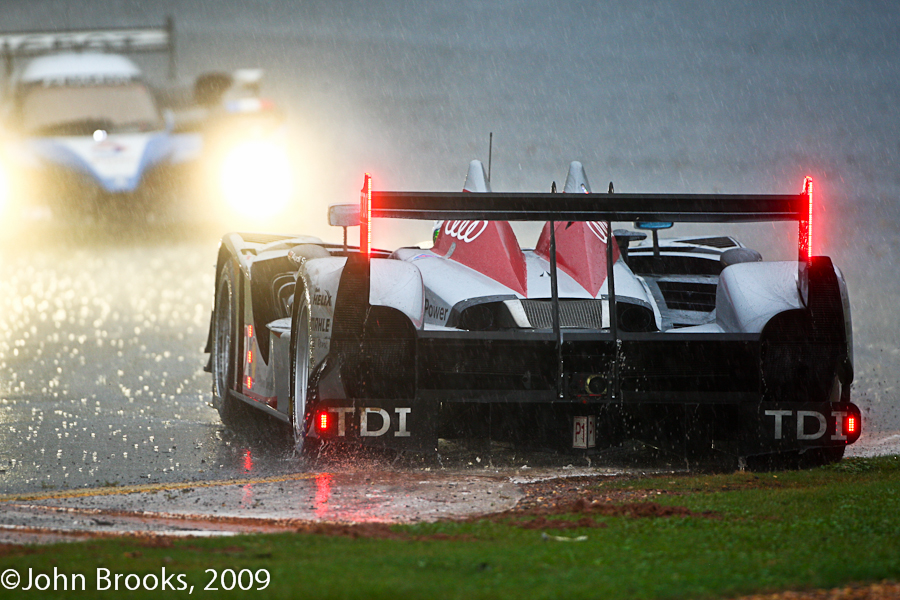
This time there was a third contestant in the race, the appalling weather. No matter what Audi did it was matched by Peugeot whose confidence was sky high after the victory at La Sarthe.

Slip Sliding Away

It was Audi who cracked, a couple of minor spins as a result of aquaplaning, put the French at the front.

At The Car Wash

Then the race was first stopped, then abandoned. I was happy enough, carrying round a big lens or two supported by a metal pole in the middle of an electrical storm was probably not the cleverest thing to do.

So another win for Peugeot. Audi skipped the next confrontation at Sebring, they needed more time to develop the R15+………most of us were not convinced. There is nothing quite like racing around Sebring for 12 Hours to pinpoint any weaknesses in the team or cars.

Allez Les Blues

The next contest at Spa seemed to confirm the impression that Peugeot would beat Audi at Le Mans. Peugeot won at a canter leaving the Audis struggling. It was a bit of a confused race with the farce of the timing screen failing after a power cut. The race was halted while the problem was sorted…..’tis whispered that someone had forgotten to fill the emergency generators….never in Belgium said I.

View From The Top

The run up to the 24 saw Peugeot grabbing the first two rows on the grid, it looked as if it could be a really long race for Ingolstadt’s finest

Blue Train

The first hour or so of the contest confirmed that Audi had no answer for the French pace.

Part Two Tomorrow

John Brooks, November 2011


Remembering Seppi…………..

Seppi

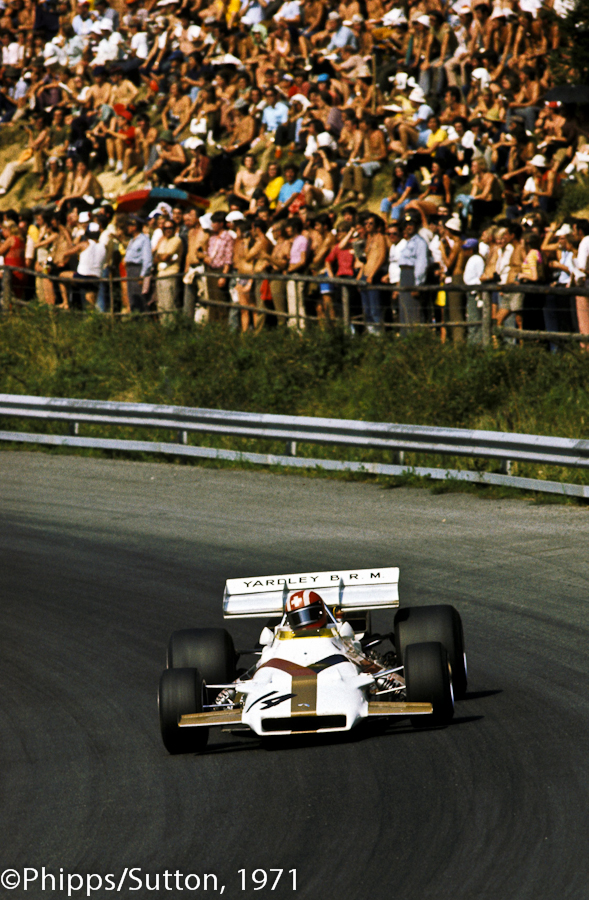
Forty years ago today I got on a couple of trains, then caught a bus on a journey to Brands Hatch. The Rothmans World Championships Victory Race was due to take place, a non-Championship Formula One event celebrating the World Titles of Jackie Stewart and Tyrrell. There was an Indian Summer back then, much like this year. So 40,000 or so flocked to the fabulous track on Kent’s border with London, all anticipating a grand finale to the 1971 season.

A Champion’s performance

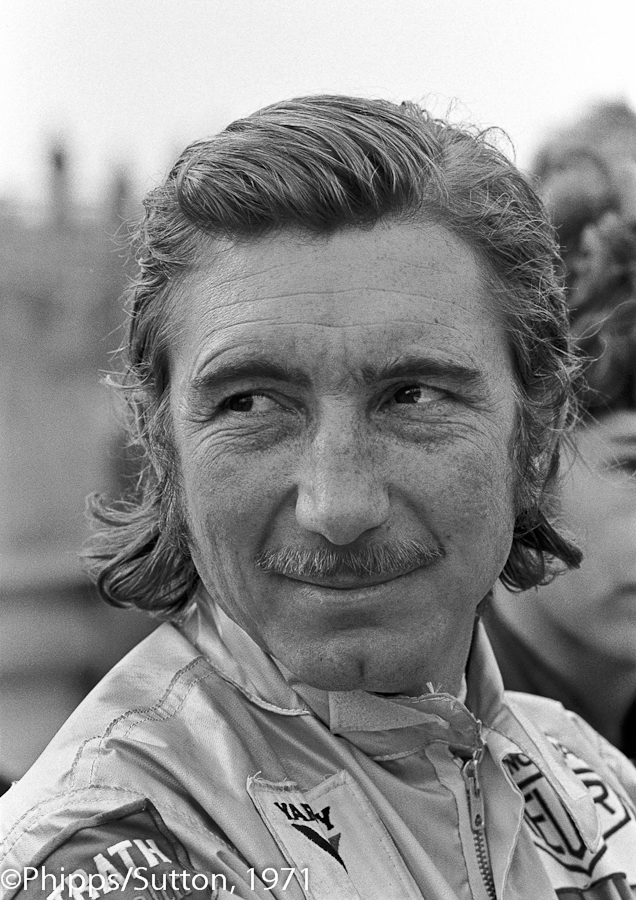
After the death of Pedro Rodriguez in July, Jo Siffert had assumed the mantle of team leader at BRM. Their Tony Southgate designed P160 was running at the sharp end by the end of the year. Siffert’s dominant victory in Austria was followed by Peter Gethin outfumbling the rest of the pack at Monza, perhaps BRM would repeat their glory days of the 60’s. It was no surprise to see the Swiss ace on pole position, maybe he could round off the year with another win. Siffert made a poor start but was recovering well till on lap 15 his BRM left the road suddenly at Dingle Dell, one of the fastest parts of the track. The impact and consequent fire were severe, Siffert was asphyxiated in the delayed rescue, his only other injury was a broken ankle.

Immortals

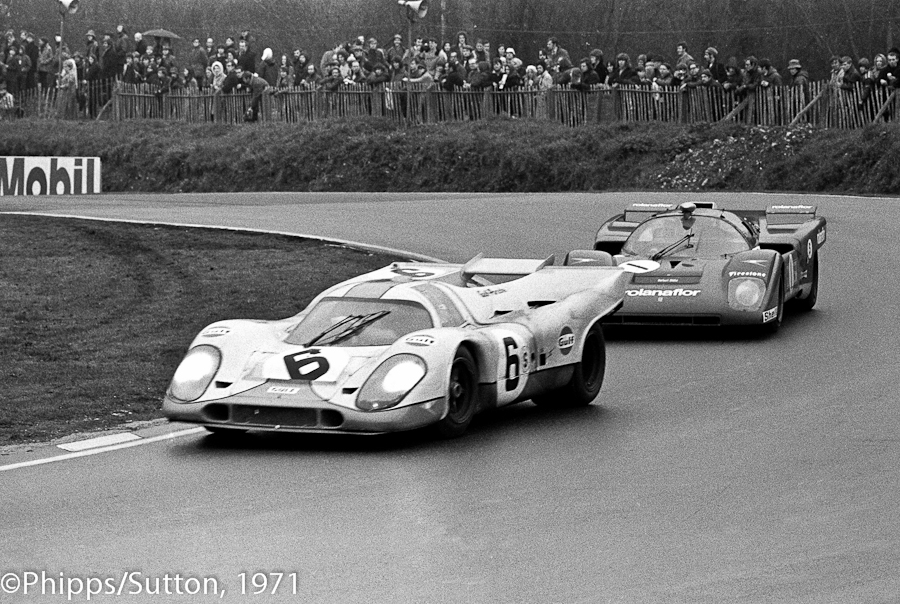
I had managed to see both Jo and Pedro race the awesome Gulf Porsche 917 earlier that year, though that day belonged to Alfa Romeo. Now both were gone.

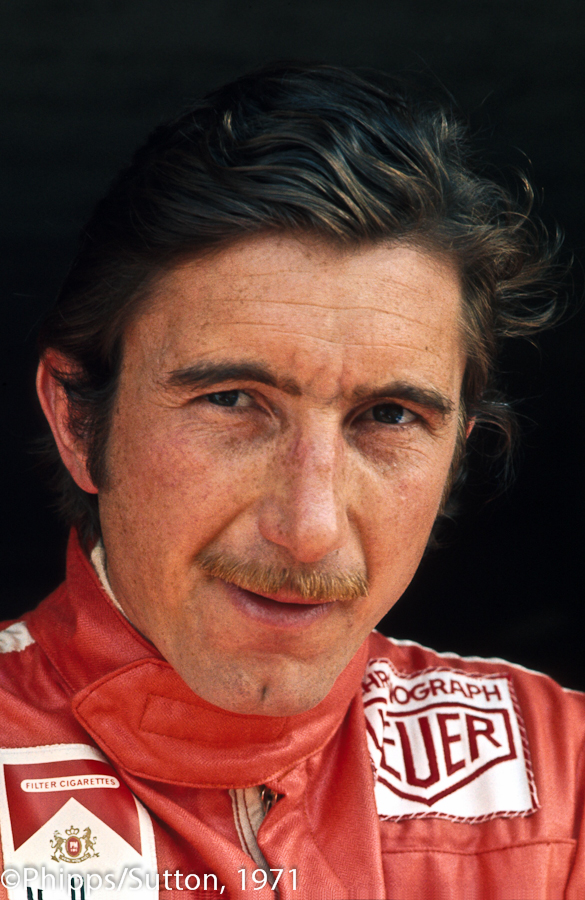
RIP Jo Siffert

Today at 3.00pm there will be a memorial ceremony at Fribourg Cemetery, as there has been for many years. Friends and family will join his son Philippe in remembering one of the purest racers ever.

God Speed, Jo.

John Brooks, October 2011
All Downhill From Here

Master James

As a snapper of sorts, I am only too well aware that most of what we shoot is inconsequencial. Often the subjects do not lend themselves to greatness, sometimes we do not live up to our potential as photographers.

So when we encounter an image that has subject and execution in harmony, that catches a moment of the human condition in perfection, those of us with eyes to see salute such a photograph.

The great Henri Cartier-Bresson expressed this quality in far more eloquent terms that I ever could.

“There is a creative fraction of a second when you are taking a picture. Your eye must see a composition or an expression that life itself offers you, and you must know with intuition when to click the camera. That is the moment the photographer is creative, Oop! The Moment! Once you miss it, it is gone forever.”

Photographers are guardians of the present and the past. Through our work, those who come after us can see how we lived, how we thought and what we did. It is, perhaps, the most powerful element of the photographer’s art. Until photography and film making arrived all we had to rely on was the written and spoken word and we all know how that can be manipulated or mistaken with the passage of time.

So on a morning when there is memorial service to Dan Wheldon scheduled at Indianapolis and the news over the mojo wire is of the death of Marco Simoncelli in Malaysia, it is good to remember the pleasures of life.

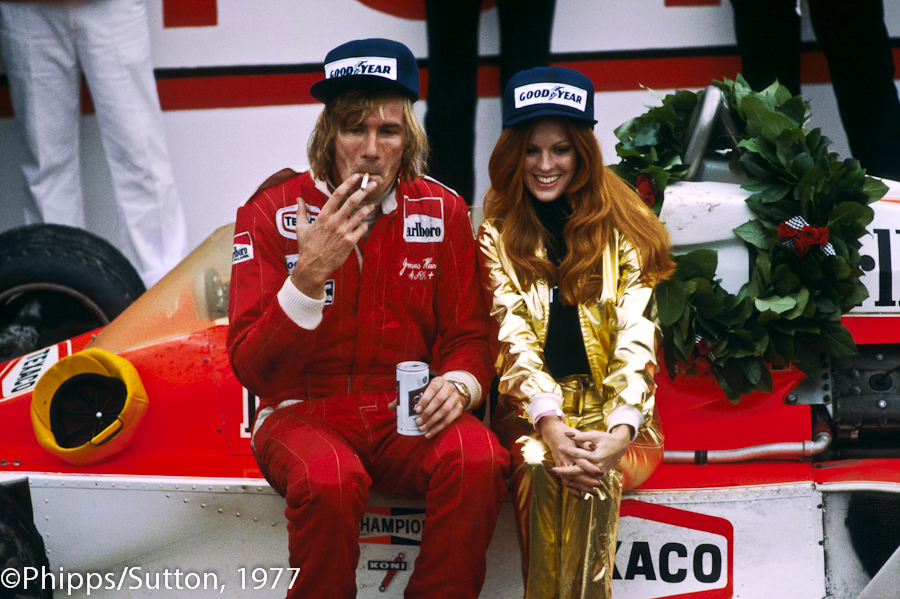
Here we see James Hunt in his full pomp having just won the 1977 United States Grand Prix. He is captured puffing on a tab, can of beer in hand, excitable Penthouse Pet at his side, it was the stuff of my dreams. And I could only dream about making images as powerful as this.

John Brooks, October 2011


The Power Game – A New World Order

It has been a generally held assumption in our business that the pinnacle of international motorsport is Formula One. Messrs Ecclestone, Mosley and the FIA have managed to convince most of the major motor manufacturers in the past twenty years that Grand Prix racing is the only game in town worth playing. This fable was held on to tightly by those who were not really seeing any success on the track despite the mountains of cash that they burned in pursuit of victory. The financial crisis of recent past changed the rules, even the largest organisations were forced to examine and genuinely evaluate all of their expenditures. Honda, Toyota, and eventually BMW, all looked at the return that they were getting from their F1 programmes and all reached the same conclusion, quit.

Whatever questionable benefits these brands were getting from the halo effect of being part of the culture of prestige, glamour and excitement that is 21st Century F1, was eradicated by the consistently poor performance of the teams that represented them, anyone could see that the cars were dogs.

Entering into the second decade of this century the priorities of motor manufacturers engaged in competition are changing fast. Power, performance and victory will always be a part of the motorsport mix but now other factors are in play. Sustainability, efficiency and economy are increasingly the primary motivators beyond that basic need for success in the sport. Even in defeat the brands are looking for a return on their investment, the simple formula of Win on Sunday, Sell on Monday does not hack it anymore.

These underlying trends go some way to explaining why Endurance and Sportscar racing should be heading for another golden age. As ever the principle “follow the money” will give a reliable compass point to the direction that we headed.

Modern day Grand Prix racing, with its proposed V6 turbo petrol technology and tightly specified rulebook, cannot provide the platform for manufacturers to achieve their extended objectives. In addition the old arguments of brand values being enhanced by proximity to F1’s prestige, glamour and excitement have been discredited, so where to go?

Perhaps the first question is why competition, why not just pure research? Major players like Volkswagen and Toyota have annual road car development budgets that are measured in the billions, Dollars, Euros, Yen, it matters not. There is enormous global pressure to introduce new technologies to answer the issues of reducing the dependence on fossil fuels and to cut emissions significantly.

At the end of July US President Obama announced an agreement with a broad coalition of motor manufacturers and other interested parties to dramatically increase fuel economy and reduce pollution for all new cars and trucks sold in the United States in the period from 2017 to 2025. The new standards call for incremental improvements each year in fuel efficiency to achieve a 2025 target of 54.5 mpg – almost a 100% increase on the 2011 requirements. Greenhouse gas emissions would be reduced to 163 grams per mile, approximately 50% of the current position. These are major changes and provide a huge challenge to the car industry. Where America goes, the European Union and the rest of the world will surely follow. It is held that competition is a sure fire way of fast tracking that process, diverting a small proportion of the road car budgets into the competitive arena will bring disproportionate benefits, well that’s the theory.

How all of these strands link into the direction that endurance racing is headed is now beginning to become clear. From 1950 to 1992 there was a FIA sanctioned World Championship for sportscars and long distance racing. Why that stopped is a topic for another day, but since that time the Automobile Club de l’Ouest (ACO), custodians of Les Vingt-Quatre Heures du Mans, have steered their own course, largely pulling the rest of sportscar racing in their wake. Relations between the FIA and the ACO improved after the departure of the choleric FIA President Jean Marie Balestre, who engaged in outright warfare with the ACO during the final years of the World Championship. Max Mosley, who succeeded the Frenchman as head of the FIA was much more concerned with Formula One battles and largely left the ACO to get on with re-building endurance racing.  This restoration was essential as the great race was nearly bankrupt, a direct consequence of the rules introduced by the FIA in the final years of the World Championship. This created the perfect storm of a vastly reduced number of entries together with the substantial costs of building a new pit and paddock complex and making changes to the Mulsanne Straight in the form of chicanes.

Last year a new FIA President, Jean Todt, was elected. Best known for managing multiple F1 Championships at Ferrari, Todt was, before that, head of Peugeot Sport during their years of triumph in the World Rally Championship and also during their two victories at Le Mans. Todt’s style since his elevation has been to eschew the confrontational approach favoured by his predecessors; he has kept a much lower profile too.  He has tried to unify the FIA and the sport in the face of the growing threats to the very existence of such activities. Todt has also built on the worthy initiatives of Max Mosley to expand the remit of the FIA to promote road safety worldwide and to engage with the various government bodies on green issues and sustainability.

Under encouragement from Audi and Peugeot, the ACO created a new competition for 2011, the Intercontinental Le Mans Cup, which was in reality a new world championship. Of course that designation cannot be used without sanction from the FIA, so it was not hugely surprising to see the presence of Jean Todt at this year’s Le Mans pre-race press conference. Nor was the announcement of the FIA World Endurance Championship for 2012, which will be run by the ACO in a partnership with the FIA. Peace in our time then, let bygones be bygones, honeyed words between the principals with Todt leading the chorus.

“For several years there has been collaboration between the ACO and the FIA, but this needs to be closer. An Endurance Commission will be set up at the FIA, involving manufacturers, privateers and the ACO. A working group will be put in place, their proposals to be approved by the FIA.”

So we have a World Championship for Endurance racing once more, but why now? What has prompted this sudden betrothal? The answer lies somewhere near the Corleone family strategy, “Keep your friends close but your enemies closer.” This is a marriage of convenience; The ACO needs World Championship status to attract manufacturers and it also needs the political influence of the FIA with those making the regulations that the manufacturers will have to comply with in the coming decades. The manufacturers want a platform that offers both technological and marketing benefits. The FIA wants to follow the money and keep some nominal control over what promises to be a very significant part of the motorsport world.
2012 will see the new Championship emerge with races in Europe (Le Mans 24, Spa and Silverstone?), America (Sebring and Brazil? Petit Le Mans?) and Asia (Zhuhai and Japan?). These races will all be of six hours duration (except Le Mans and Sebring) and will feature the usual multiple classes with trophies being awarded for Manufacturers’ Endurance World Champion, Drivers’ Endurance World Champion (both for LM P1) GTE World Cup Pro, FIA GTE AM (both for LM GTE but no drivers’ category), FIA LMP2 and the FIA Trophy for the best private team – open to all categories. So a contest aimed squarely at manufacturer participation but run broadly along the lines of the status quo. To figure out why this should be attractive to other parties not presently involved, the future has to be the answer.
There are a new set of regulations being drawn up at present, scheduled to be introduced for the 2014 that will provide the framework to transform endurance racing into the platform that will encourage technological development. The aim will be to limit the amount of energy available for each car with all starting from an equal point. There will be no restriction on hybrid technology systems that will recycle the energy produced and not utilised by the engine. If one considers that even the most efficient petrol engine used in current road cars is only utilises 20-30% of the petrol’s energy in driving the rear wheels. The rest of the energy is consumed in thermal or frictional losses or when the vehicle is ticking over at rest. Clearly there are big gains to be made if the right technologies can be employed. That is the Holy Grail that the new World Endurance Championship offers.

There are three manufacturers competing in the LMP1 class at present, in reality only Audi and Peugeot are likely to have the resources and financial firepower to go to the brave new world, Aston Martin are not. It has been officially announced that Porsche will return to the top class with a form of petrol hybrid. This has led commentators to assume that Audi will leave the endurance arena, the logic runs that the bean counters will not allow such duplication of effort, and more importantly budget. My sources from Germany disagree with this obvious conclusion, saying that after the victory at Le Mans this year, Audi have been given the green light to compete in the Great Race for the foreseeable future.

Why these conflicting messages? The answer lies in the determination of the Chairman of the VW Board, Ferdinand Piech, to accelerate the pace of development of alternative power technology and other fuel efficiency measures. Ruthless by reputation, this highly talented engineer is arguably the Ultimate Car Guy and sees that for Volkswagen to meet its primary objective of being the world’s leading motor manufacturing group, in the face of the proposed changes to fuel consumption and emissions, radical measures are necessary. The logic runs that two approaches along different lines will fast track the optimal solutions. Few would bet against the mercurial Piech getting his way, as those who have opposed him in the past have found to their cost. As if to support this pan-VW assault on the WEC, comes the news that the new Chairman of Bentley, Wolfgang Dürheimer, wants to take the brand back to the tracks, Bentley Boys anyone?

Which other manufacturers are looking to join this trio of heavyweights? The answer would appear to lie in the East. Toyota have announced a programme for 2012 incorporating hybrid technologies. Certainly there is a sense of unfinished business in respect of the Japanese company and the Le Mans 24 Hours. They could also do with a rebuilding of their reputation, publically battered in the blizzard of US Congressional Hearings in 2010, as a result of road safety issues.

Nissan are also looking seriously at a full blown attempt on the FIA WEC. However the tsunami back in March has derailed these intentions and may end up leading to a delay or postponement of the plans, time will tell. Persistent stories are found in the media of Jaguar, now owned by Indian conglomerate, Tata, commissioning a Le Mans project. Some say with Williams Grand Prix, who took BMW to victory in 1999.

All of which ties explains the unlikely union of the FIA and the ACO at this point in time. Big budget projects with a complicated technological package will result from this initiative and both parties feel the need to involve the other. The face of Endurance racing will be fundamentally changed and hopefully so will the world of road cars and personal transport.


John Brooks, October 2011
I Like A Bit Of A Cavort……..

I don’t send solicitor’s letters…………I apply a bit of……………pressure.

The immortal lines from Chas in the epic movie “Performance”, all understated menace.

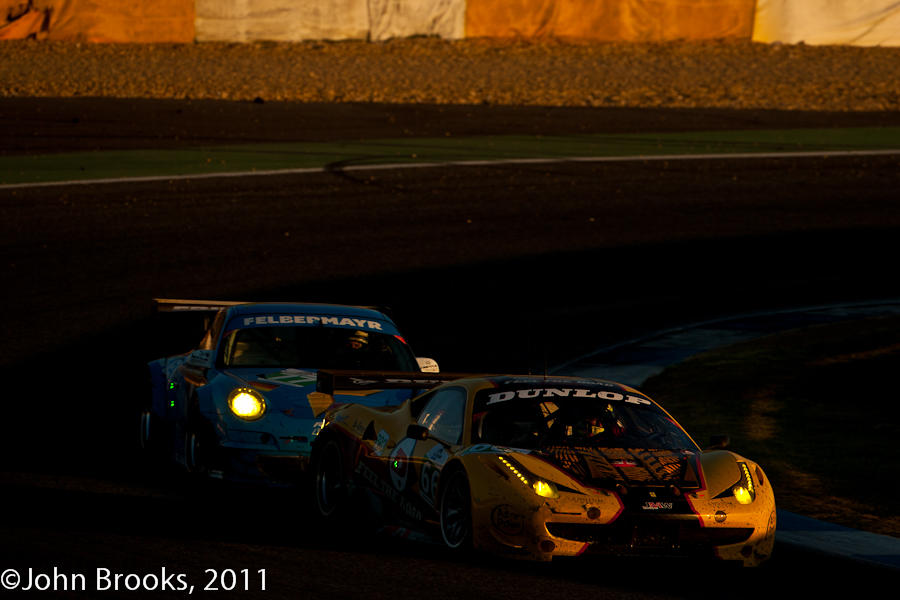
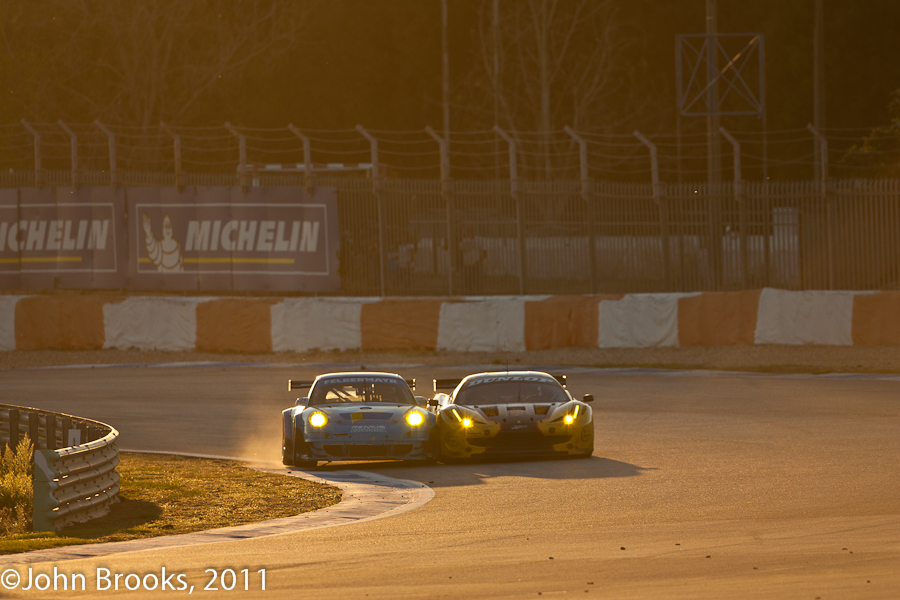
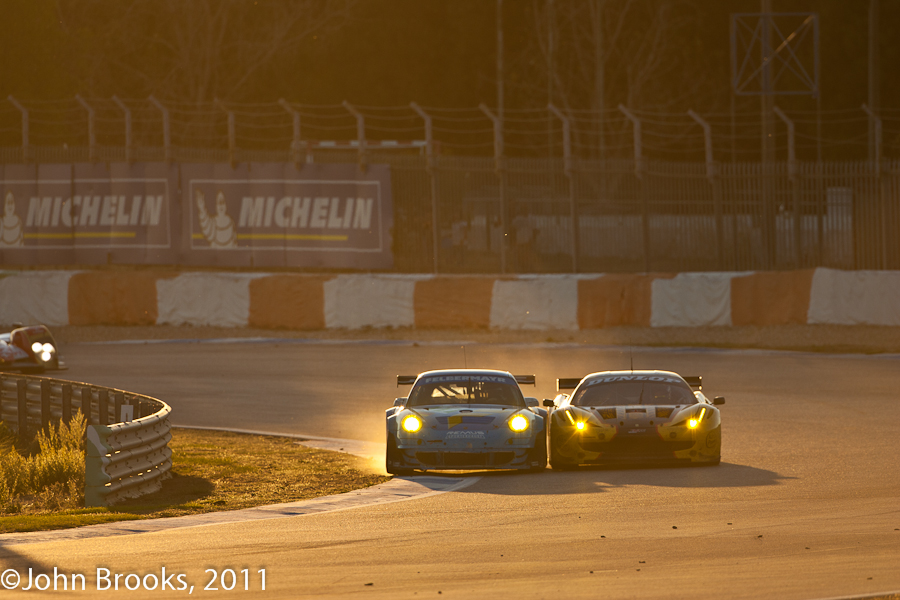
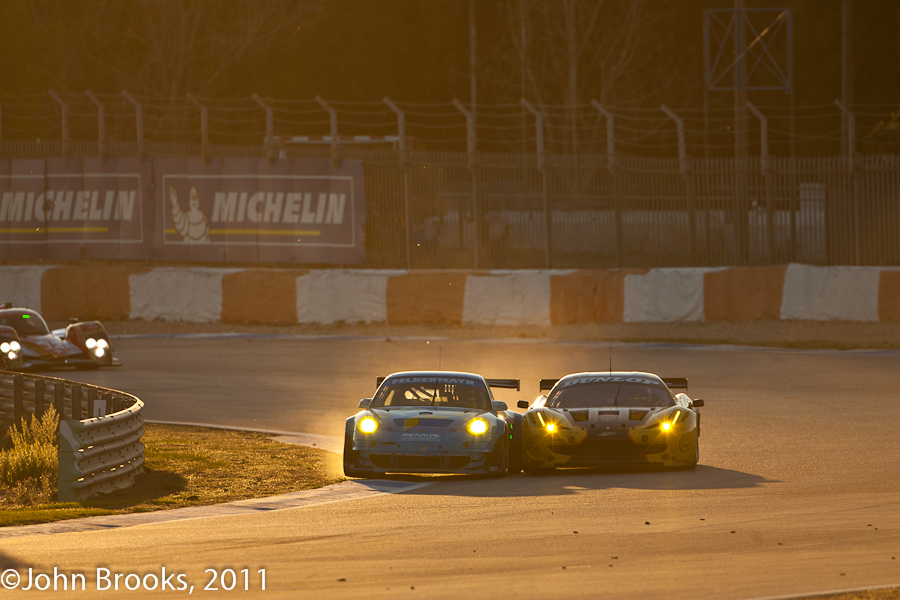
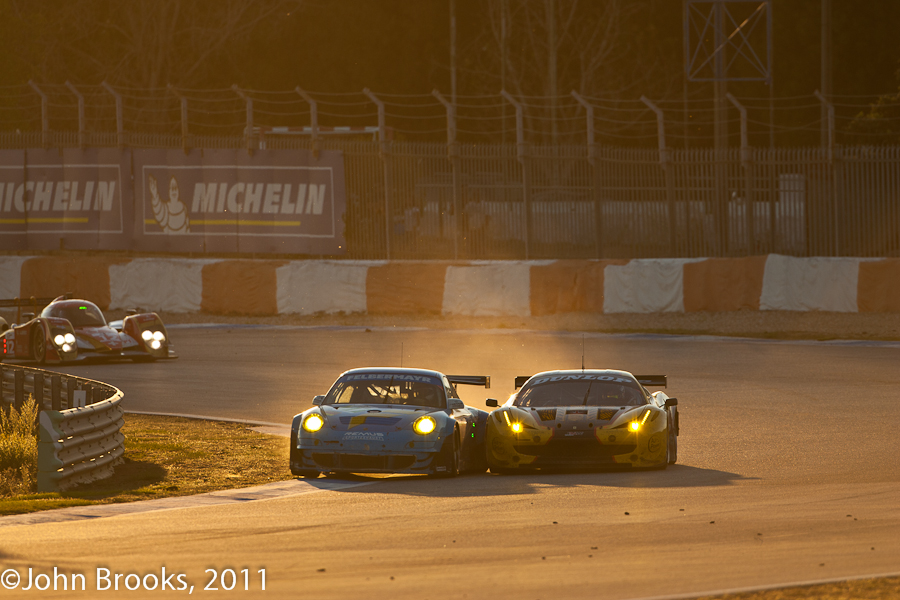
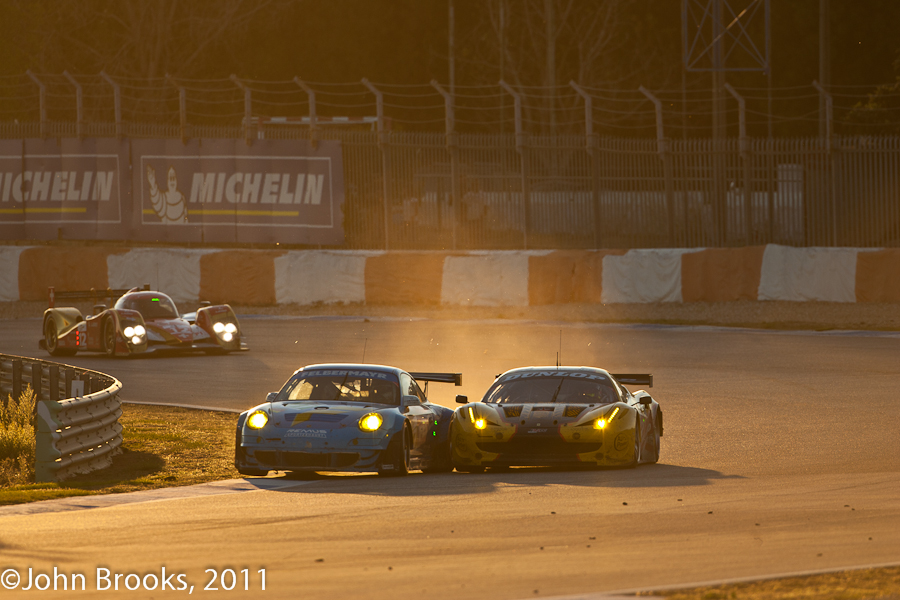
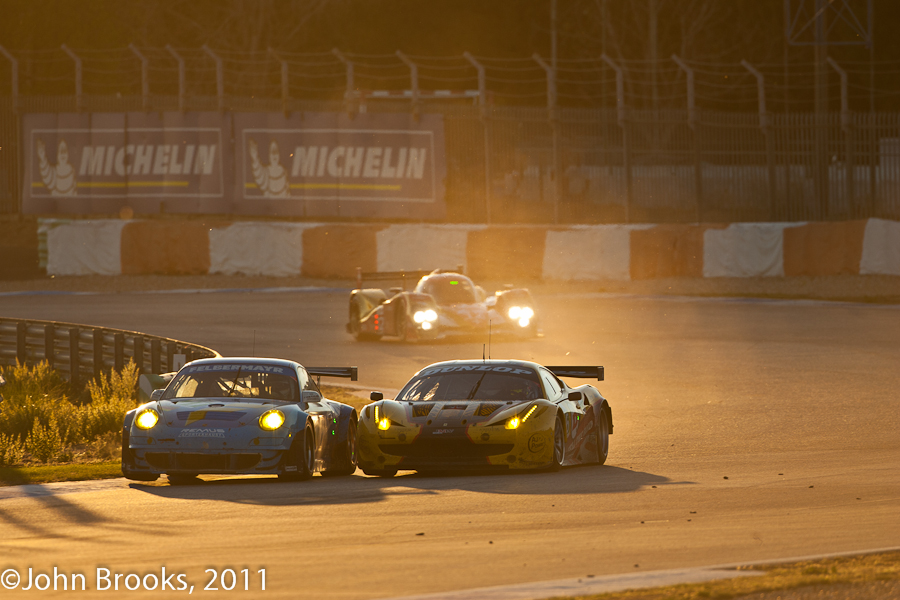
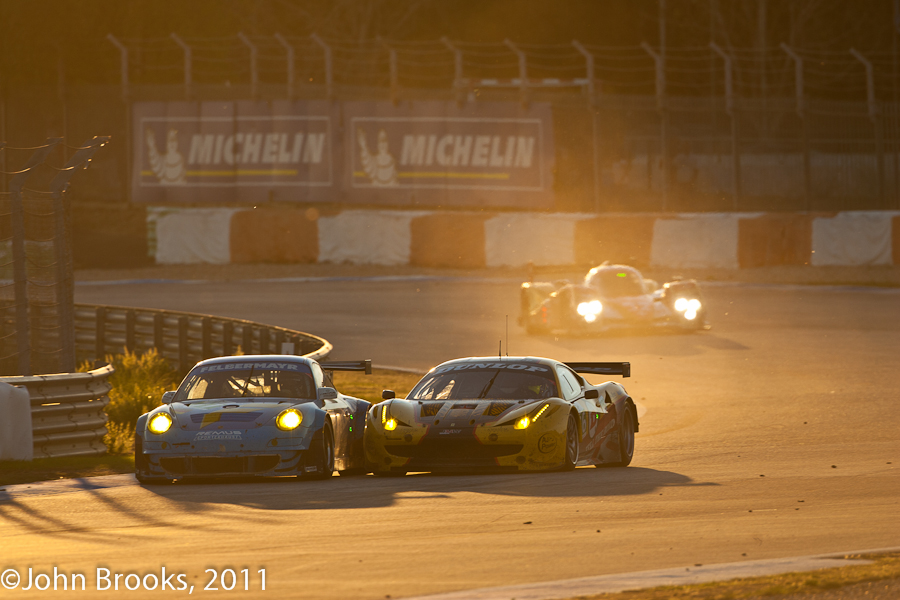
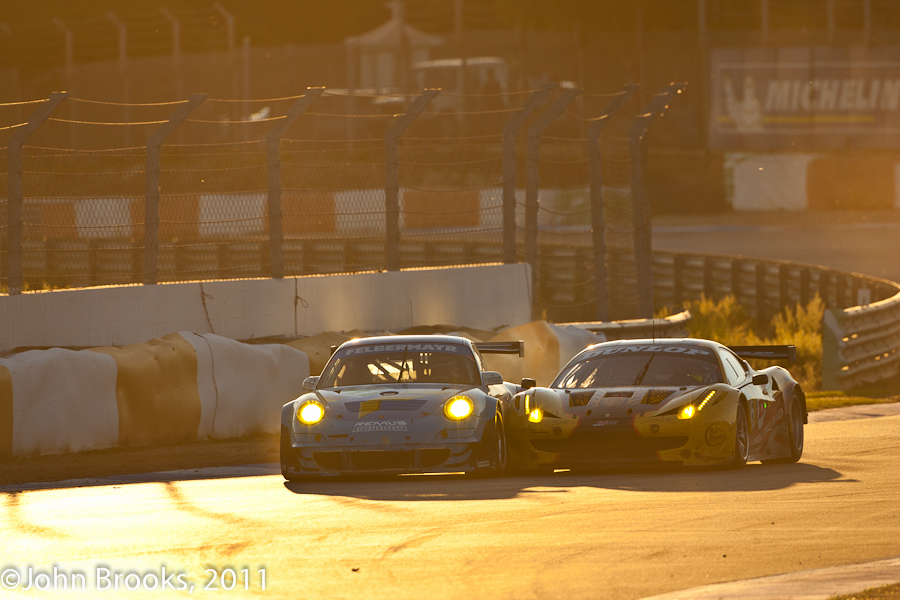
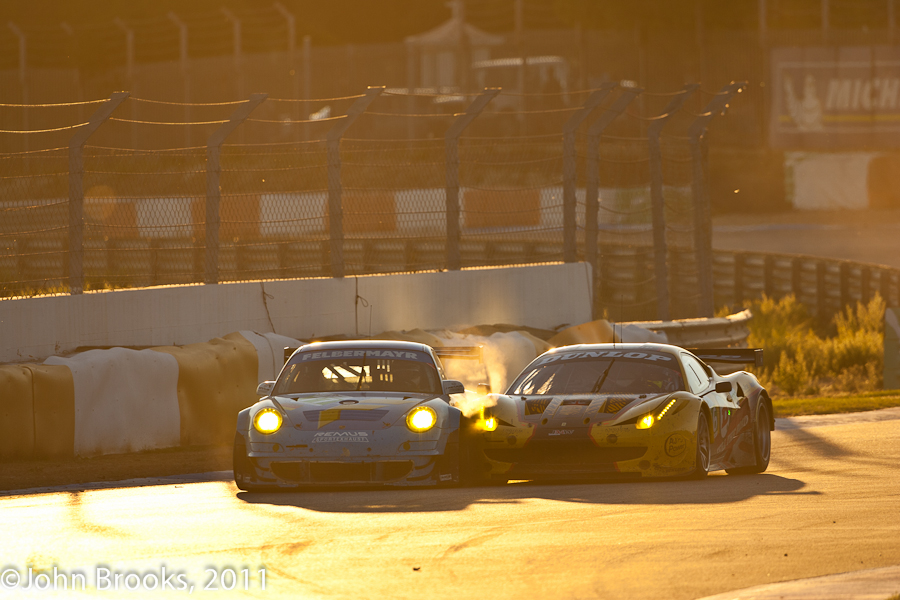
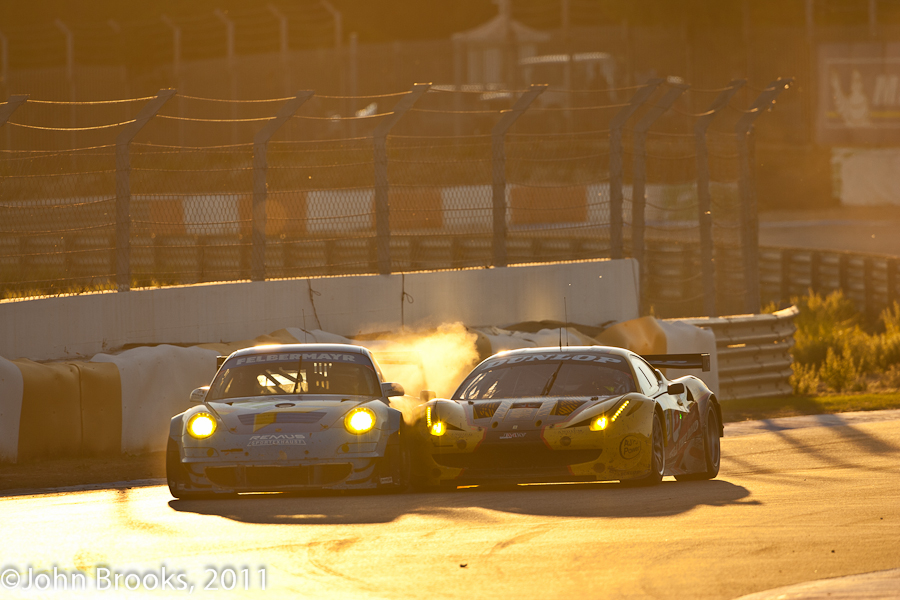
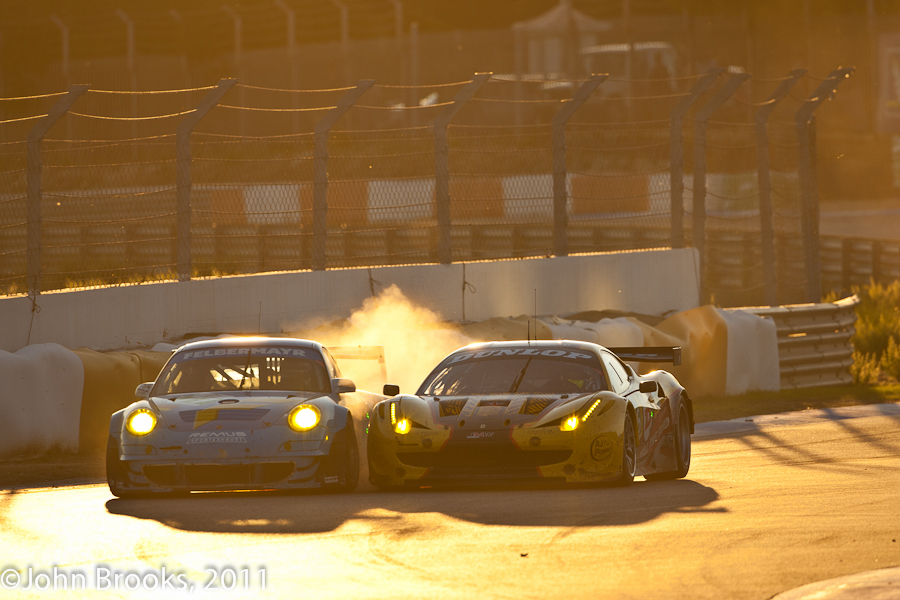
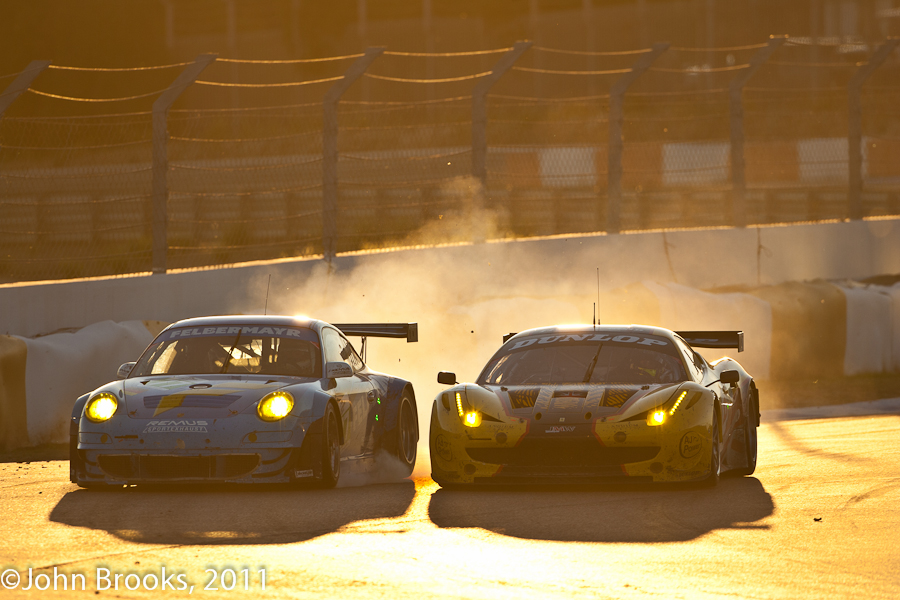
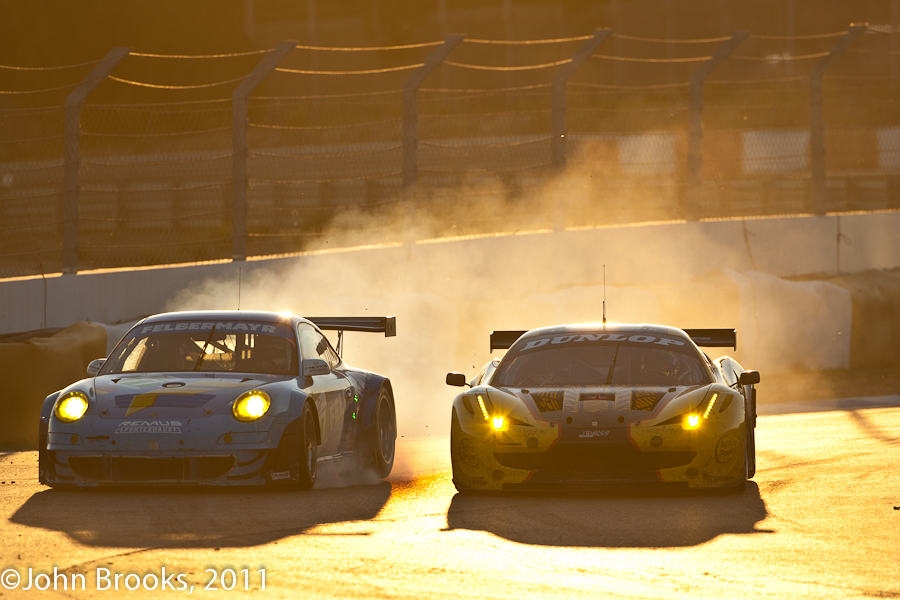
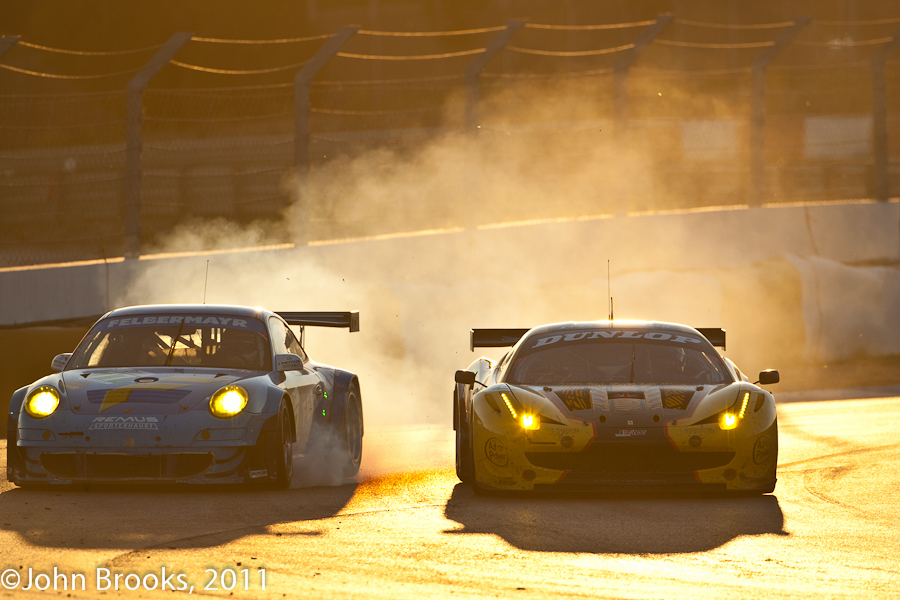
Perhaps a bit more Max and Paddy-like were the antics of the GTE Pro leaders on the last lap of the 6 Hours of Estoril. Rob Bell and Richard Lietz, in a typical Ferrari/Porsche battle, had been going at it, hammer and tongs, for over an hour. It was an utterly engaging contest between two top line pros in two top line cars, either would be a worthy winner. Most other photographers had legged it back to the pits for the finish but Pedro and I just knew it was all going to kick off…and it did. Handbags swinging, panels bashing, the pair contested the penultimate corner, whoever emerged in front would win, simple as that. Well, our Geordie Lad held his nerve and his line to take a well deserved victory, proper GT Racing.

To both drivers and both teams, Salut!

Time Machine

It is held that the past is a foreign land, once visited, but one that we are destined never to return to. Well, that may be true but sometimes, in special circumstances, we can bring the past to us in the here and now.

“He was the craziest devil I ever came across in Formula 1” Niki Lauda on Gilles Villeneuve

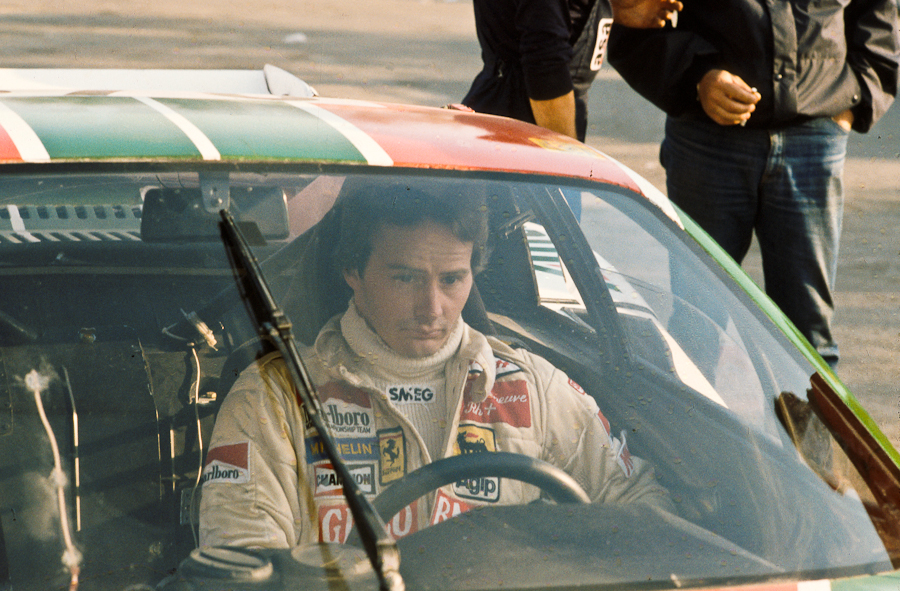
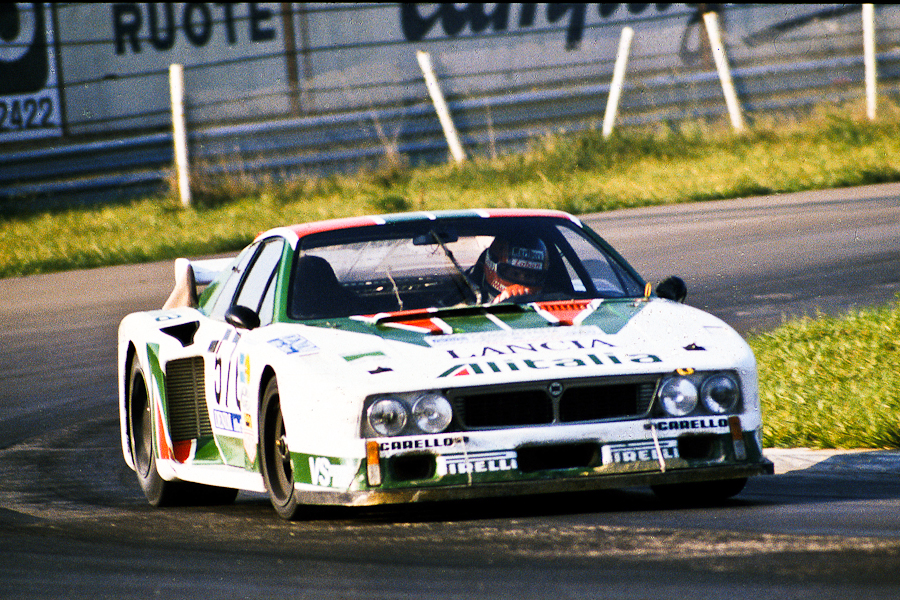
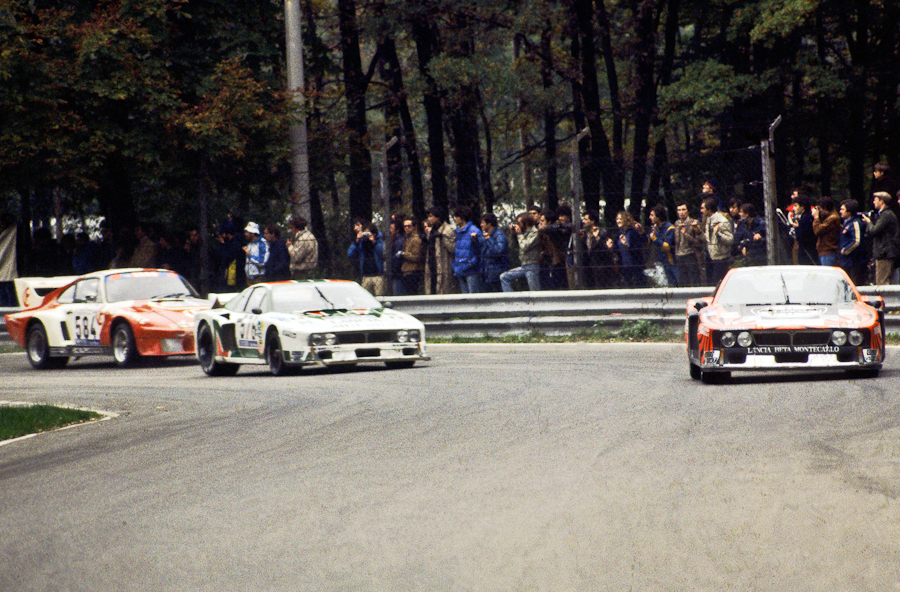
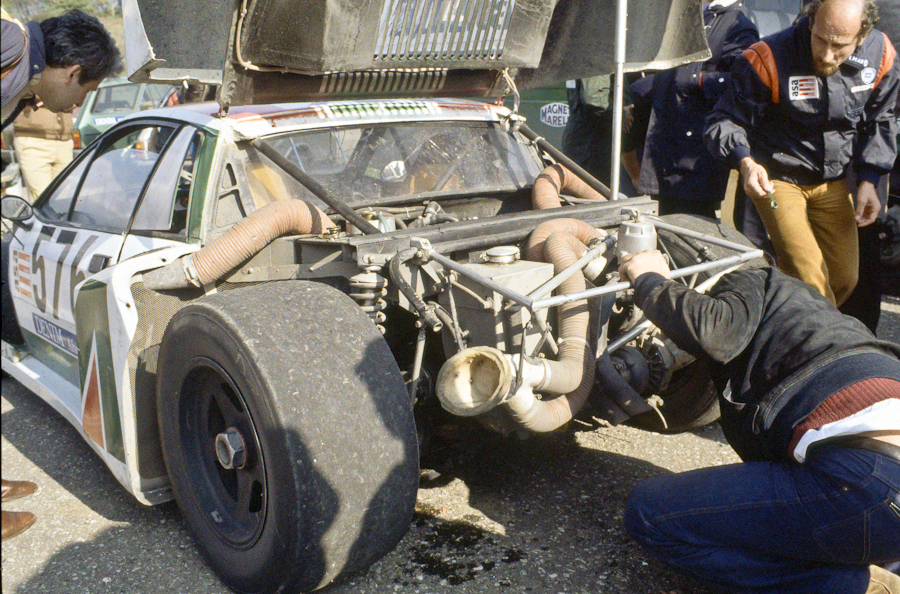
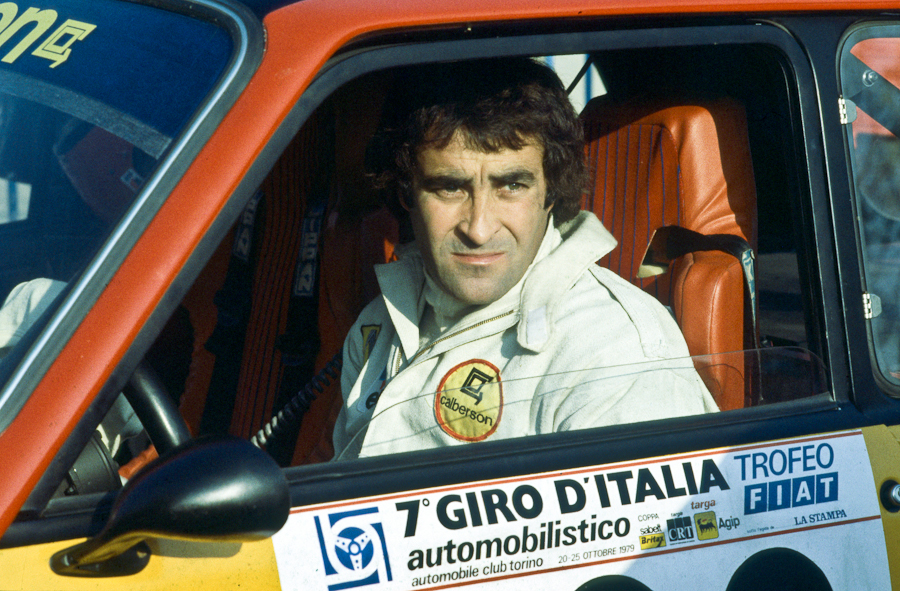
It is hard to imagine that Fernando Alonso or Lewis Hamilton will be racing on Italy’s roads in late October but some 30 years ago that is what happened. Gilles Villeneuve, Ferrari’s Grand Prix star and runner up to Jody Scheckter in the 1979 F1 World Championship took part in the Giro d’Italia that autumn.

Gilles…………..

The Giro d’Italia was a madhouse event, part rally, part race held on the roads and tracks of Italy from 1973 to 1980.

I’ll have mustard with that………

Italy will be celebrating 150 years of unification  in 2011, so some bright spark had the idea of reviving the Giro to add to the nation’s gaiety. How inspired. I am planning  to cover the event when it happens in late October.

So when the organisers of the 2011 event put out a series of photos from the 1979 and 1980 events it seemed a good excuse to run some Group 5 goodness.
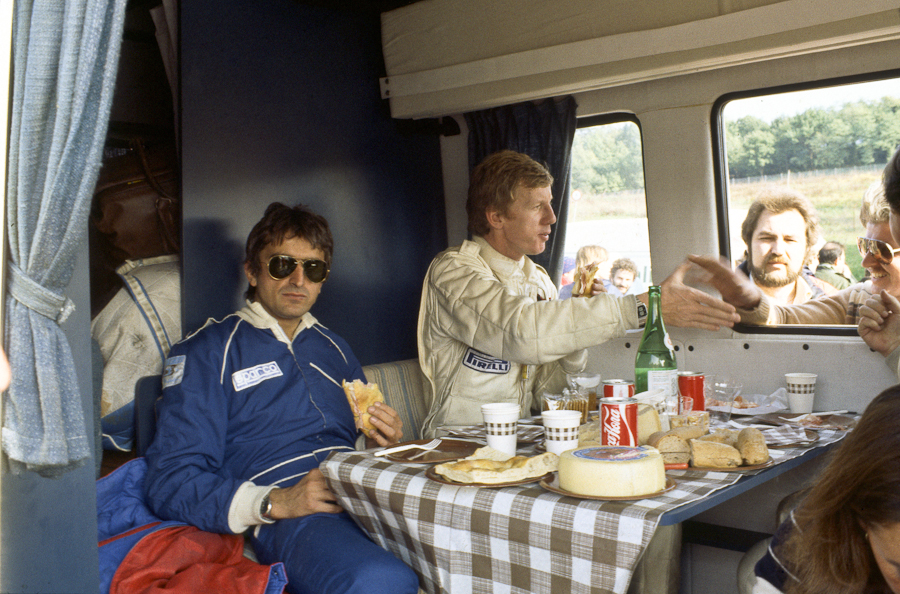
Villeneuve’s co-drivers on the 1979 event were  Walter Röhrl and Christian Geistdöfer, here enjoying 70’s style hospitality.

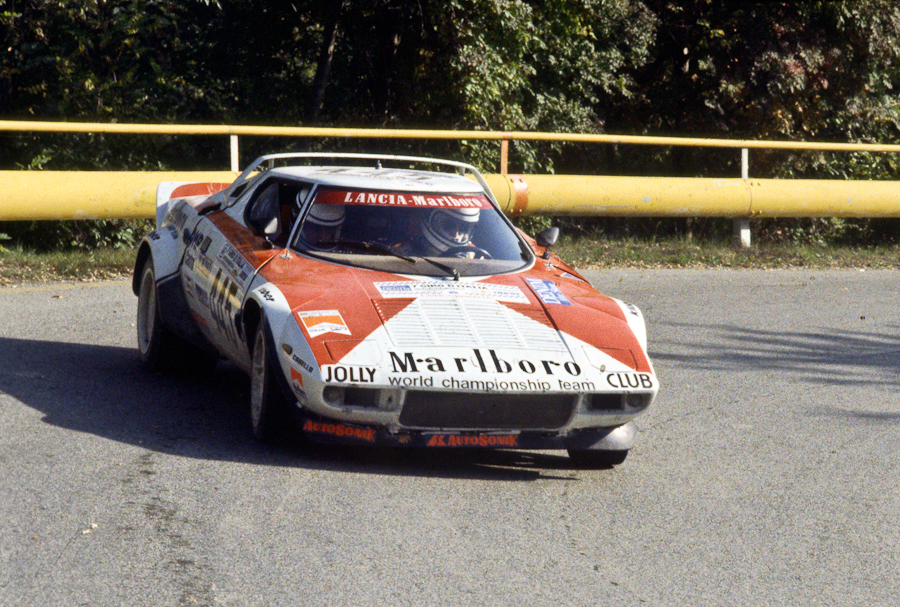
Stratos

The star trio finished top of the pile in their Lancia  but were later disqualified, the reason I am informed, is driving on a motorway!

Group 5 Madness

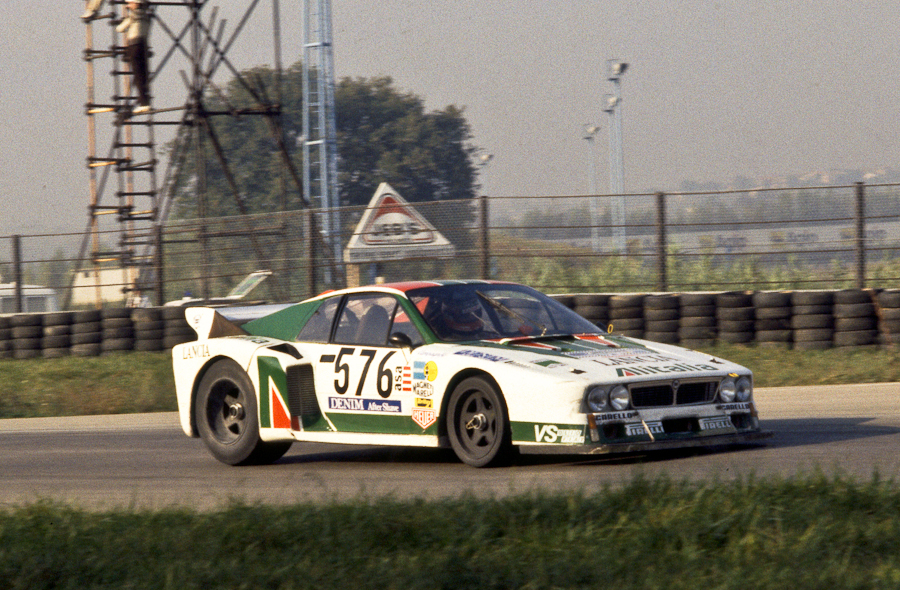
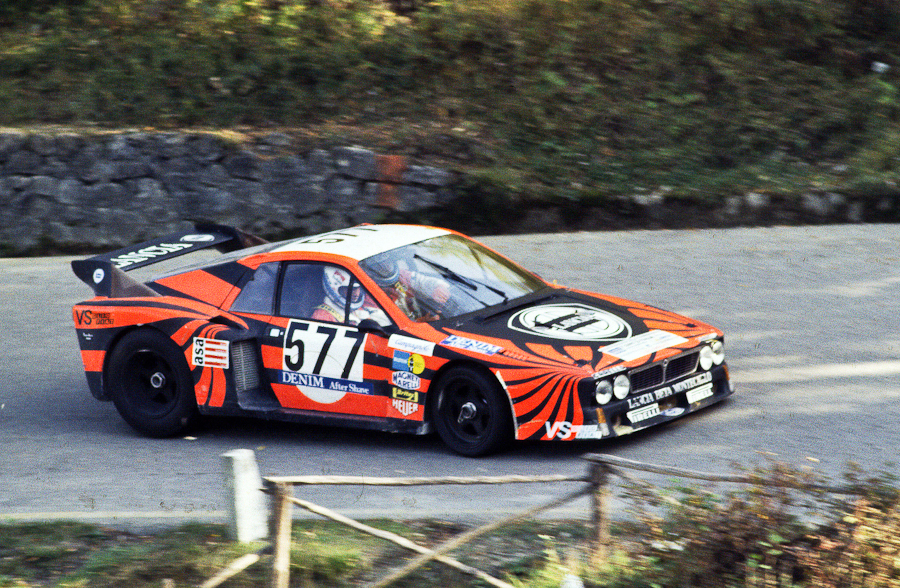
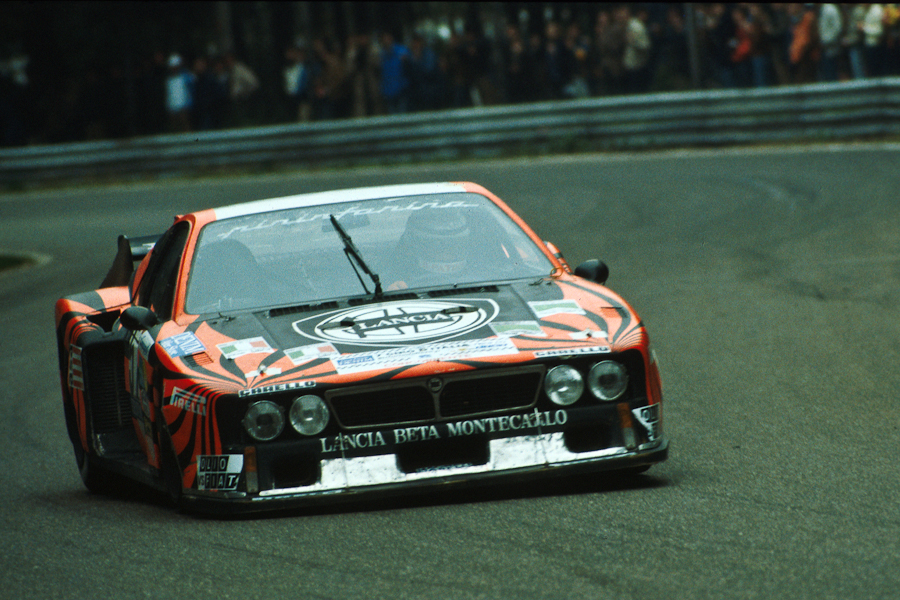
Also disqualified was the other factory Lancia, which finished second on the road.

Lancia Battle

Here is the Lancia on one of the circuits.

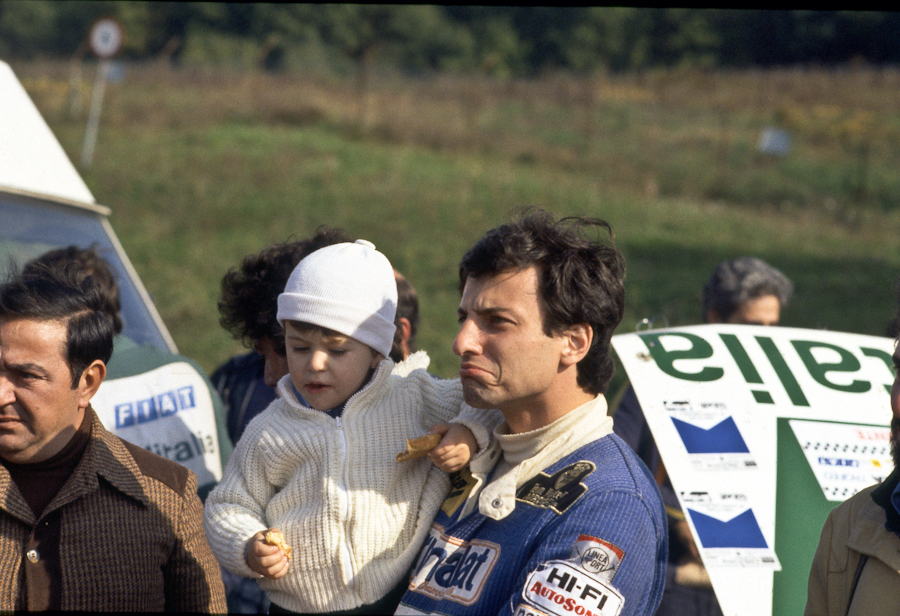
Patrese and Son

The second car was driven by Riccardo Patrese.

Patrese was driving for Arrows in F1 that year.
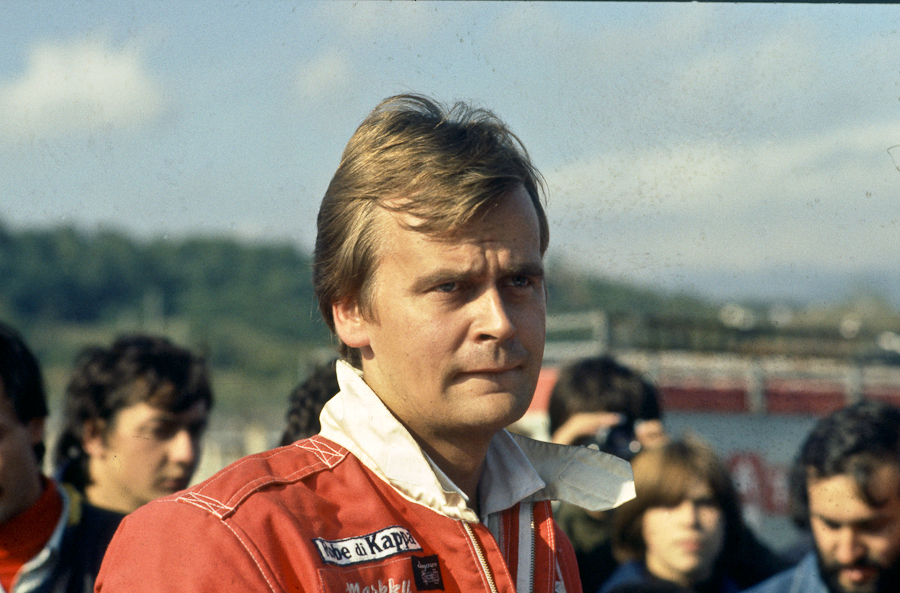
Now Maximum Attack

His co-drivers were Markku Alén and Ilkka Kivimäki, the reigning World Rally Drivers Champion.

The Serious Bit

The Lancias were the class of the field.

Momo

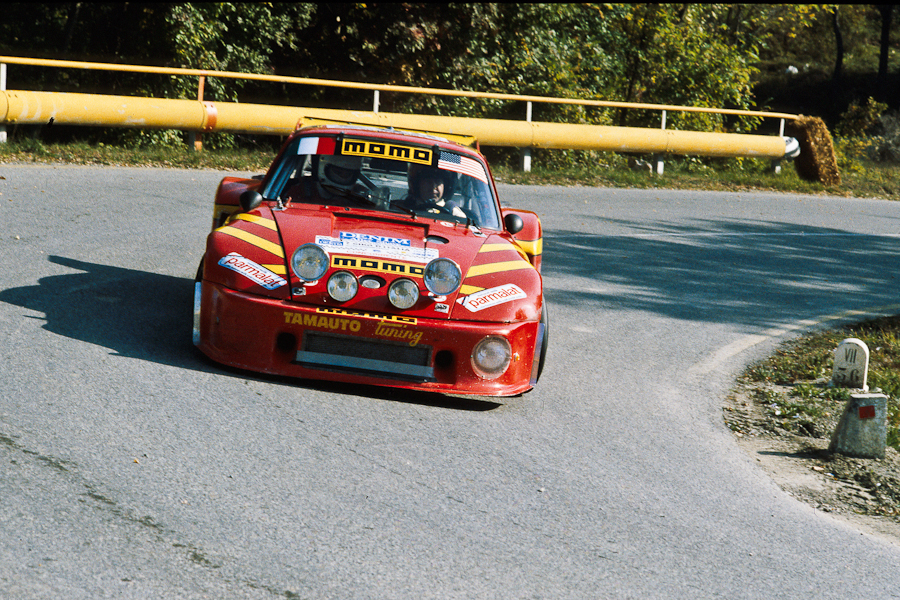
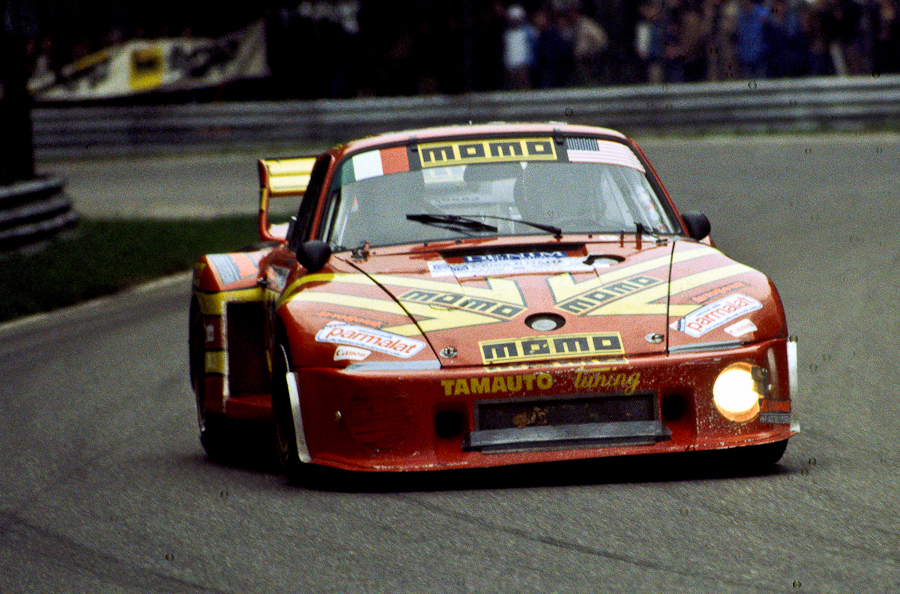
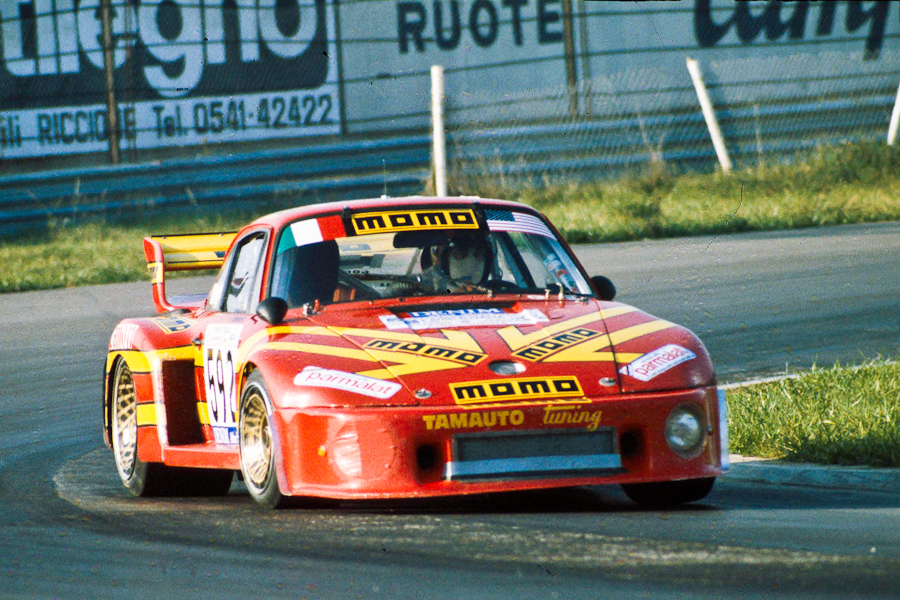
After the exclusion of the Italian pair, victory fell to that great expat Italian in US Sportscar racing, Giampiero Moretti.

935 K3

Moretti was accompanied in Italy by Giorgio Schon and Emilio Radaelli (ITA) in his Porsche 935 TT biturbo. He is famous for winning the 1998 Daytona 24 Hours and, of course, was founder of the Momo brand of racing accessories.

Porsche Power

The 935 would have been a handful of the roads.

Attilio Bettega

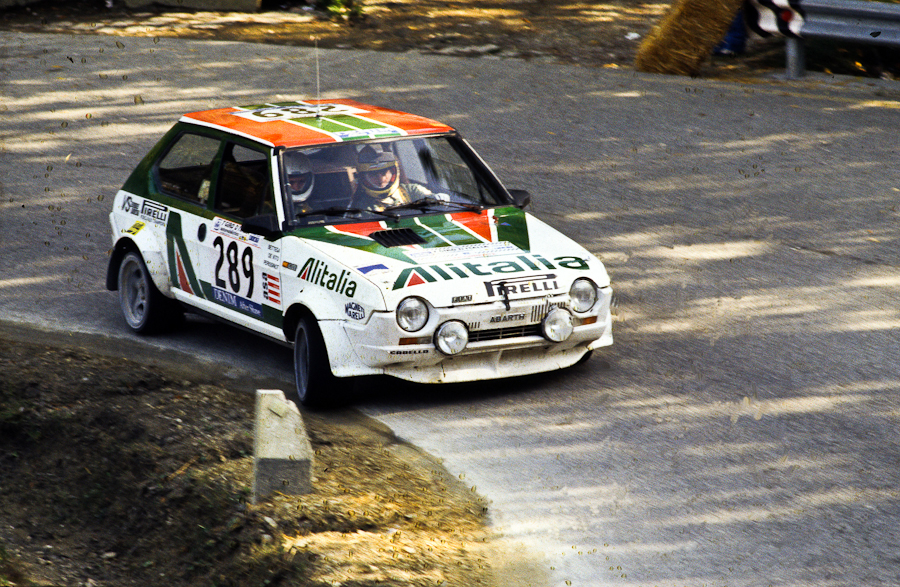
Factory Fiat/Lancia rally driver Attilio Bettega along with Maurizio Perissinot and Enzo De Vito in the Fiat Abarth Ritmo 75 Alitalia.

Tour de France?

Another rally star, Guy Frequelin ran in a Renault 5 turbo

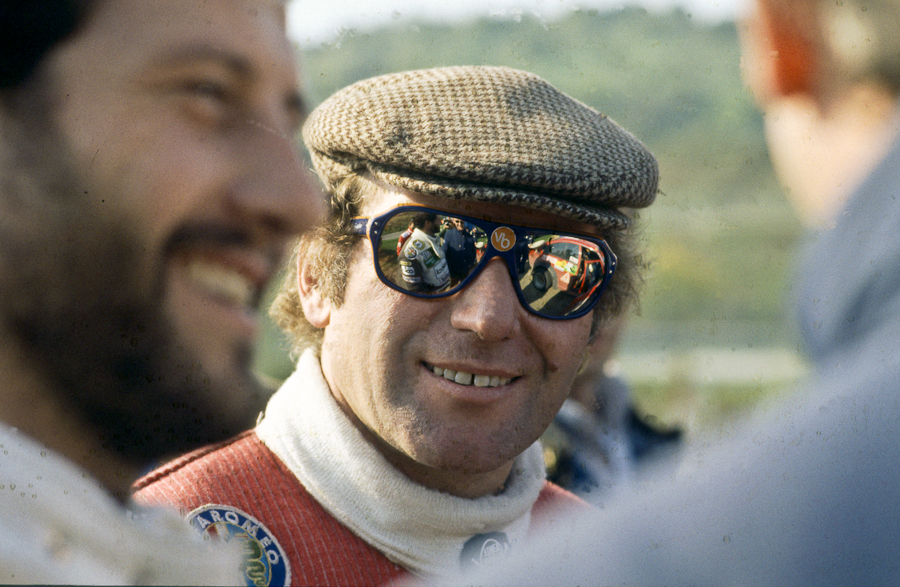
Simian?

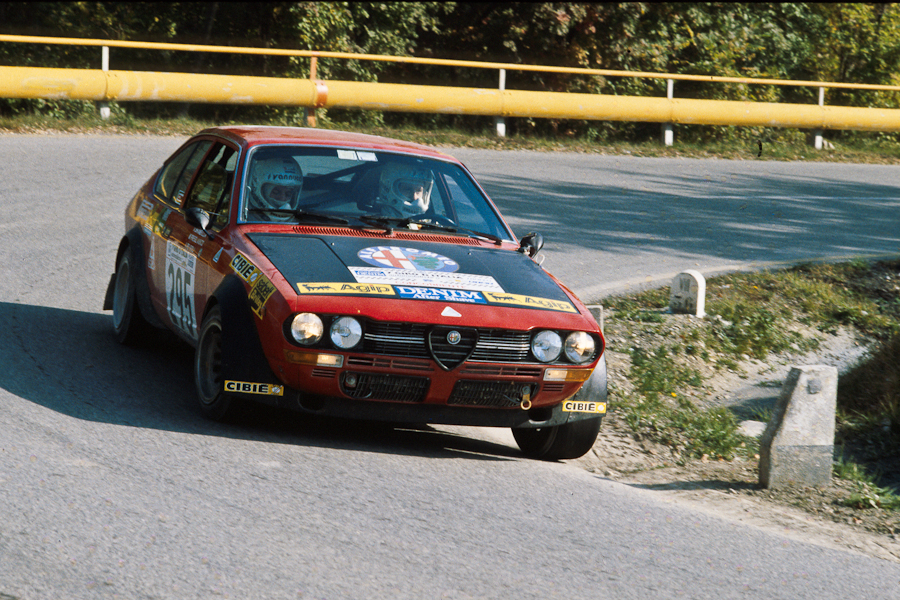
F1 star, Vittorio Brambilla, also known as The Monza Gorilla,  raced in an Alfa Romeo Alfetta GTV 2000.
GTV

His co-drivers were Mauro Pregliasco and Vittorio Reisoli.

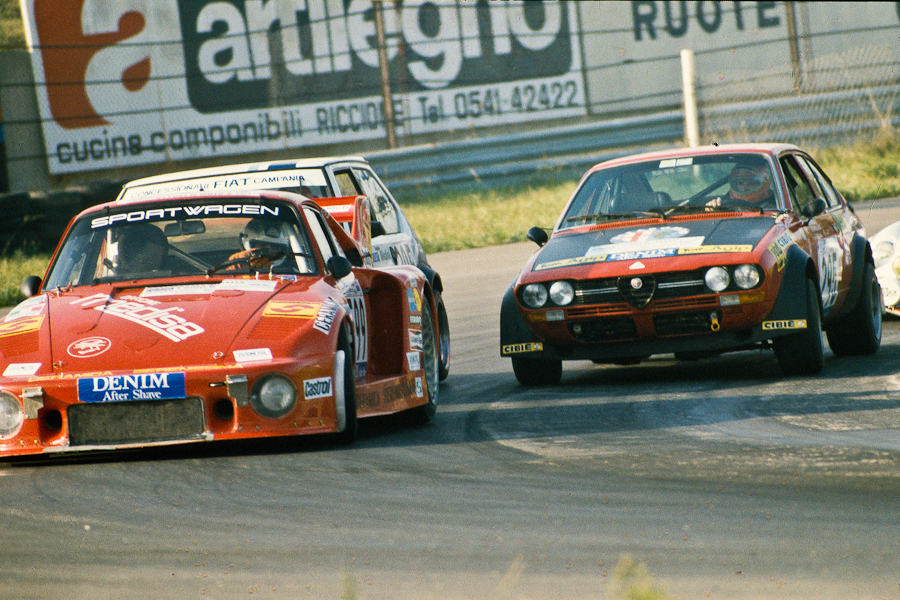
Porsche v Alfa

Here the Alfa encounters another 935.

Andrea de Cesaris

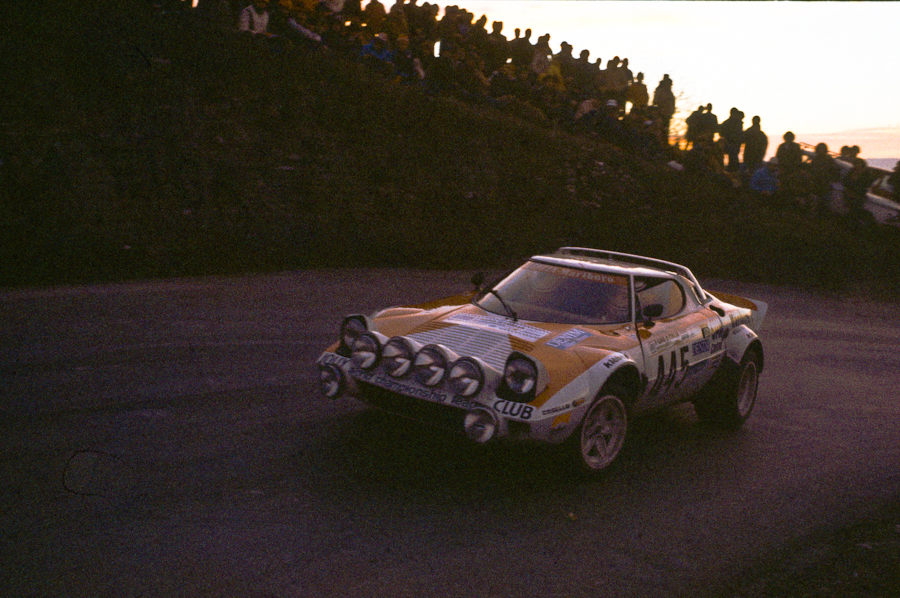
A 70’s classic Italian super car, the Lancia Stratos HF, entered by The Jolly Club.

Jolly Japes

Top Italian rally pair, Tony Carello and Renato Meiohas were joined by Grand Prix aspirant, Andrea De Cesaris, in the Stratos.

That is it for 1979. 1980 will be along some time soon.

John Brooks, September 2011. Photos courtesy of and copyright Giro d’Italia/Photo 4