One of the best things about blogging is the ability to draw on the wisdom and expertise of others. In, what is hoped to be part of an on-going series of pieces, my good friend David Blumlein will bring his knowledge to the blog to share with us all. In a recent visit to Brooklands a particular car caught his eye, here is why he thinks it is both rare and interesting..
Rare and Interesting
Armstrong Siddeley Special
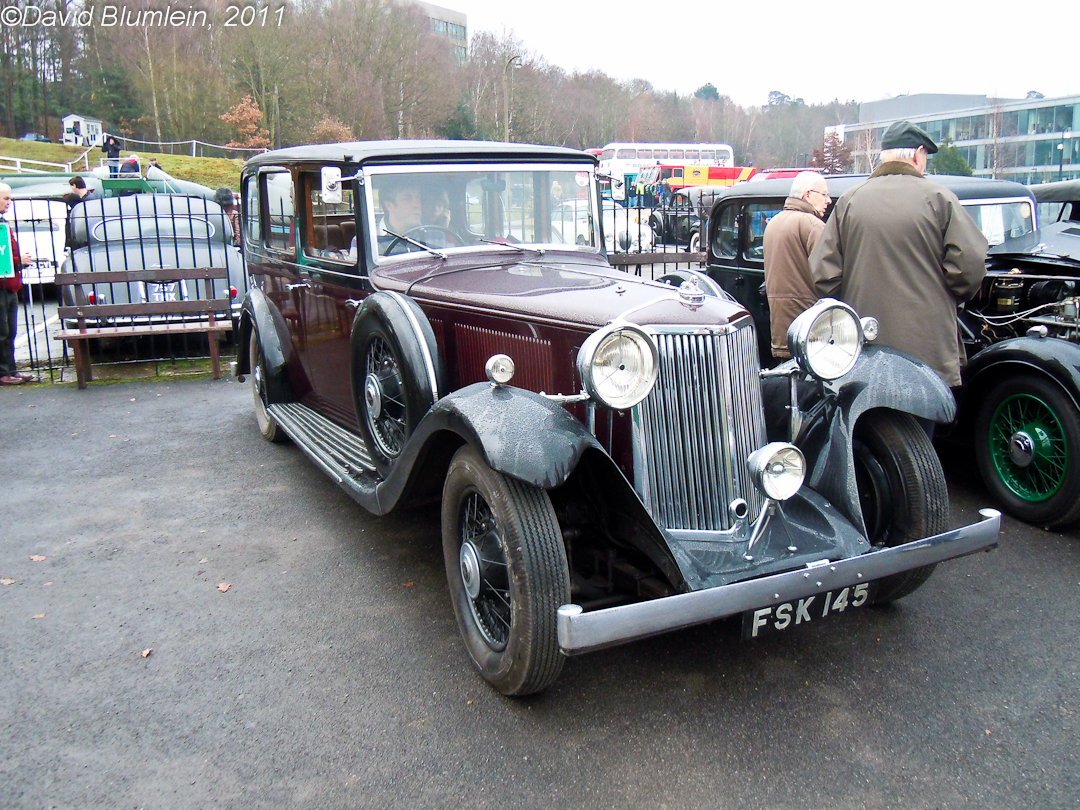
To a car lover a trip to the historic site of Brooklands on New Year’s Day is most rewarding. It needs dry weather and this year there was gathered a massive selection of older and very interesting machines, all carefully tended by their proud owners. One can always rely on there being some which one has never seen before and my eye fell on an Armstrong Siddeley Special, a model that I cannot recall ever having encountered before – plenty of Armstrong Siddeleys in my youth but never one of the rare Specials. The name Armstrong Siddeley will not mean much to the modern car enthusiast, the marque having ceased car production in the early Sixties, but in its day it was of sufficiently good quality to attract royal patronage, the cars having a reputation of being well engineered gentlemen’s carriages.
The inspiration behind them was one John Davenport Siddeley, later to be ennobled as Lord Kenilworth. At the turn of the twentieth century he had started his business by importing Peugeot cars to which he gradually added his own bodywork while re-naming the cars as Siddeleys. His designs caught the eye of Vickers Sons & Maxim who offered him a post he could not refuse. As Vickers owned Wolseley at the time the cars became known as Wolseley-Siddeleys but by 1909 he had moved to the Deasy Company in Parkside, Coventry. Here he re-organised the company so efficiently that he soon became the Managing Director. By 1912 this company had changed its name to Siddeley-Deasy and a year later the firm started to make its own engines. At this time the London-based Burlington Carriage Company was acquired, their activities being moved to Parkside. Siddeley-Deasys were characterised by their scuttle-mounted radiators and a fine example can be seen in the Coventry Transport Museum.
The onset of war gave Siddeley’s entrepreneurial spirit scope to expand the whole business: production included lorries, other vehicles and, most significantly for the company’s future, aero engines. Very soon these were being made for the R.A.F. (as it became) but the designs were considered unsatisfactory and Siddeley’s engineers turned their attention to creating much better motors, the Puma becoming the first in a long line of aero engines the company was to turn out in the succeeding decades. With the advent of peace the company was taken over by the Sir W. G. Armstrong Whitworth & Co. engineering firm at Newcastle-upon-Tyne in May 1919 which had been making cars such as the Wilson-Pilcher prior to marketing cars under their own name; the combined firms adopted the new identity of Armstrong Siddeley Motors Ltd., based in Parkside.
However, before considering the subject of this article in more detail we must note two significant developments that came about. First, Armstrong Siddeley began car manufacturing by producing a large 5-litre 30 hp model. Siddeley’s son, Ernest, had paid a visit to America to study their motor industry’s progress and developments and returned to Coventry very impressed by the Marmon 34 which had been introduced in 1916. It is thought that one of these American machines was secretly imported to Coventry where it was carefully studied. Suffice to say here that the new Armstrong Siddeley 30 had certain significant features in common with the Marmon, including a six-cylinder O.H.V. engine, a 3-speed gearbox with central change (unusual at the time) and much use of aluminium, experience of which had been gained by both companies in the production of aero engines. The 30 was sufficiently impressive to receive an order from the Duke of York (the future George VI) and one of these staid heavy carriages was stripped by its owner and driven to a race victory at Brooklands in 1921!
The second point to note resulted from John Siddeley’s meeting with Walter Gordon Wilson who had already gained a reputation as an outstanding engineer. He it was who designed the advanced Wilson-Pilcher car, a beautiful example of which was one of the highlights of the 2009 N.E.C. Classic Car Show. He had also had a hand in the design of the original army tank but it was for his ingenious epicyclic gearbox – what we came to know as the pre-selector gearbox – that he is lastingly remembered in the annals of motoring history. Siddeley and Wilson formed Improved Gears in 1928 and they set up a design and development facility in Parkside, the company later becoming Self-Changing Gears Ltd. which was to go on to supply other manufacturers as well as some racing car constructors. Armstrong Siddeley became the first manufacturer to offer this advanced transmission as standard on its range of cars (1928).
In its first decade Armstrong Siddeley offered various models smaller than the 30 which continued in production until 1932. Worthy of mention is the fact that the 20hp car was thrown into the demanding Alpine Trial in 1932 where it did not disgrace itself although one never thought of Armstrong Siddeleys as sporting cars.
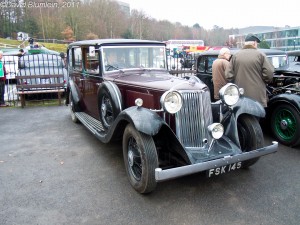
1933 Armstrong Siddeley Special with a Hooper Limousine Body
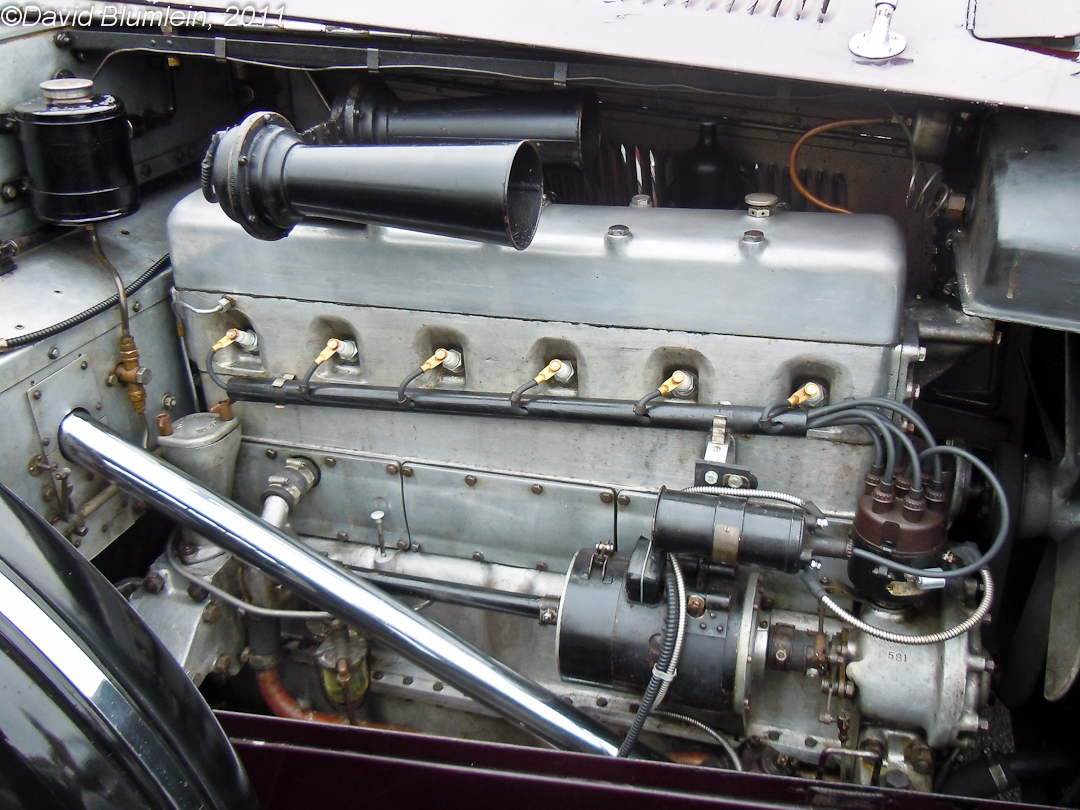
It was at the 1932 Olympia Show that John Siddeley sprung a surprise, for on the company stand was a chassis of what we can think of as the spiritual successor to the 30 – the new Armstrong Siddeley Special. This car continued to use a large capacity engine, 4968 cc, and overhead valves but its real interest centres around the use that was made in the engine of the newly developed alloy, hiduminium. This material was the result of collaboration between Rolls Royce and a Siddeley subsidiary, High Duty Alloys, and it was developed because Rolls Royce was initially having problems of durability with the V-12 engines it was building for the Schneider Trophy racing seaplanes. Hiduminium was therefore used for the crankcase, cylinder block and pistons of what became the Rolls Royce “R” aero engine, the “R” standing for “Racing”. History records how Mitchell’s Supermarine S.6 equipped with this improved engine went on to win the Trophy for Britain but motor car lovers will know that Reid Railton, who worked for Thompson and Taylor at Brooklands, decided to re-engine Sir Malcolm Campbell’s updated “Bluebird” with this Rolls Royce “R” motor which brought new Land Speed records at Daytona in March 1935 (276.2mph) and at Bonneville in September that year with Campbell being the first to top the 300 mph mark with 301.129.
1933 Armstrong Siddeley Special Engine
In the Siddeley Special the crankcase and cylinder block used the RR50 alloy and the pistons the RR53 just the same as in this famous aero engine. The car’s specification was otherwise fairly conventional for the period: a channel section chassis with semi-elliptic springs all round, worm and nut steering, cable-operated Bendix brakes but of course a four-speed Wilson pre-selector gearbox. Chassis came in 12 ft Long form and 11ft Short and at the Olympia Show in 1933 there was a beautiful Hooper limousine on the long chassis and a Burlington-bodied Sports Saloon on the shorter one. These cars could obtain 90 mph in top, 70 mph in third gear and reach 60 mph in 18.2 secs which was certainly impressive for a 38 cwt car in the mid-Thirties!
They were indeed “special” because only 253 were built and one possible explanation for their rarity is that the precious alloy in their engines was commandeered for the war effort. Among the lucky owners was Sir Malcolm Campbell who bought a Sports Tourer with a 4-light Burlington body, almost certainly finished in his favourite “Campbell blue”. And the company even considered entering a Special for the 1933 Le Mans 24 Hours but the idea was turned down as it was feared that failure would undermine the company’s image.
Words and images by David Blumlein