Category Archives: From A Special Correspondent

Carroll Shelby 1923-2012

Racing has lost one of its true “originals” with the death last week of 89 year old former Texas chicken farmer, Le Mans winner and Cobra entrepreneur, Carroll Shelby. While he wasn’t the originator of the Ford Motor Company’s “Total Performance” program that brought the Detroit giant foursquare into motorsport in the 1960’s, it was he and his Cobra which arguably expanded Ford’s competition efforts beyond the world of NASCAR into the international scene that included Le Mans and eventually Formula One.
A Second World War Army Air Force instructor pilot, Shelby was one of the many Americans who came out of the Southern California road racing community in the immediate years following the conflict’s end; a cadre that included men such as Phil Hill, Richie Ginther, Masten Gregory and Dan Gurney among others. Having established himself as part of the winning elite behind the wheel of various Ferraris and Maseratis, he moved to Europe in the latter part of the 1950’s, driving in both Formula One and in sports cars.
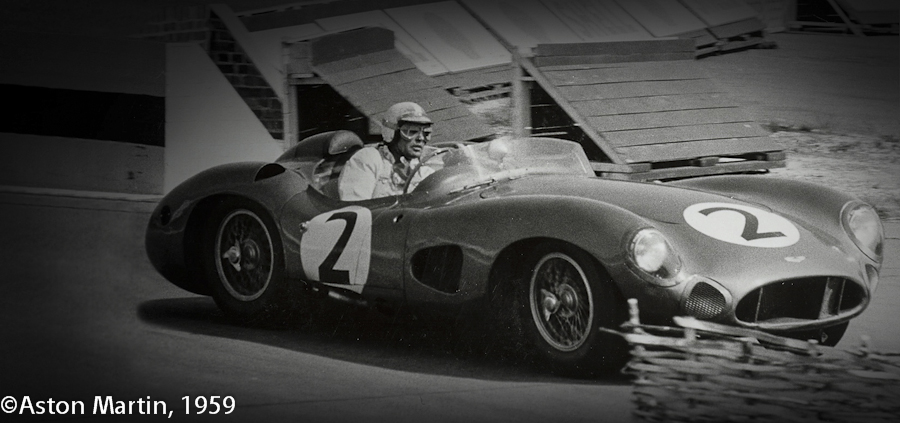
And, although his F-1 career was less than spectacular, his two seater results were more than impressive, including his 1959 Le Mans triumph as a member of the John Wyer led Aston Martin factory team. Unfortunately, it was not long after that he began to experience the heart issues which would force his cockpit retirement and which would eventually lead to a heart transplant that extended his life for more than 20 years.
While his heart have made him quit as a driver, he didn’t quit the sport. In 1962, having learned that the Bristol engine supply for the AC Ace had dried up, Shelby set out to make a deal that would replace that powerplant with a V-8 from one of Detroit’s big three. Coming to an agreement with AC was the easy part, convincing the “Motown” executives was not.
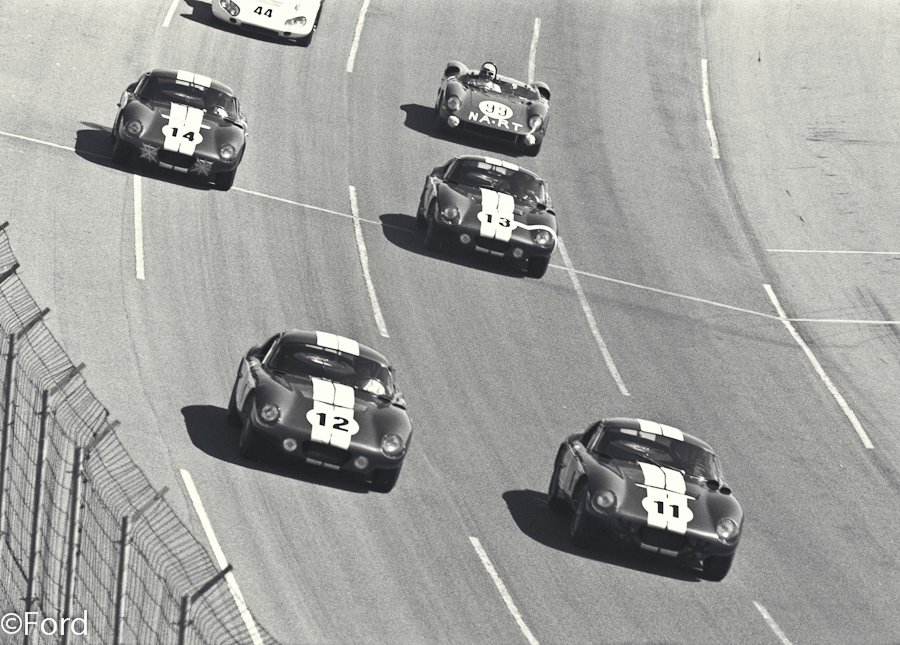
Turned away at both General Motors and Chrysler, Shelby found a much better reception at Ford which saw the opportunity being offered them and said “yes.” Thus was born the Cobra “powered by Ford” in the form of its small block eight cylinder used in its Falcon compacts and medium sized Fairlane. The Cobra proved to be not just a race winner, but a performance image sales leader that boosted Dearborn’s profits throughout its entire car range.
Despite its crudeness, the reborn Ace was more than up to the job of humbling its Corvette competition, claiming two straight United States Road Racing series crowns in 1963-64 against not only Zora Duntov’s two seater, but the Ferrari and Aston Martin entries that accompanied it. More importantly, having lost out to the Italians through a bit of chicanery on Enzo Ferrari’s part in 1964, Shelby’s Cobras took the World Manufacturer’s title for Ford in 1965 with relative ease.
By then, though, Shelby was deeply involved in not only the GT40 project, but also in transforming the hot selling Mustang into a proper racing car  in the form of Shelby’s California-produced GT350 version which dominated its class in North American amateur competition.
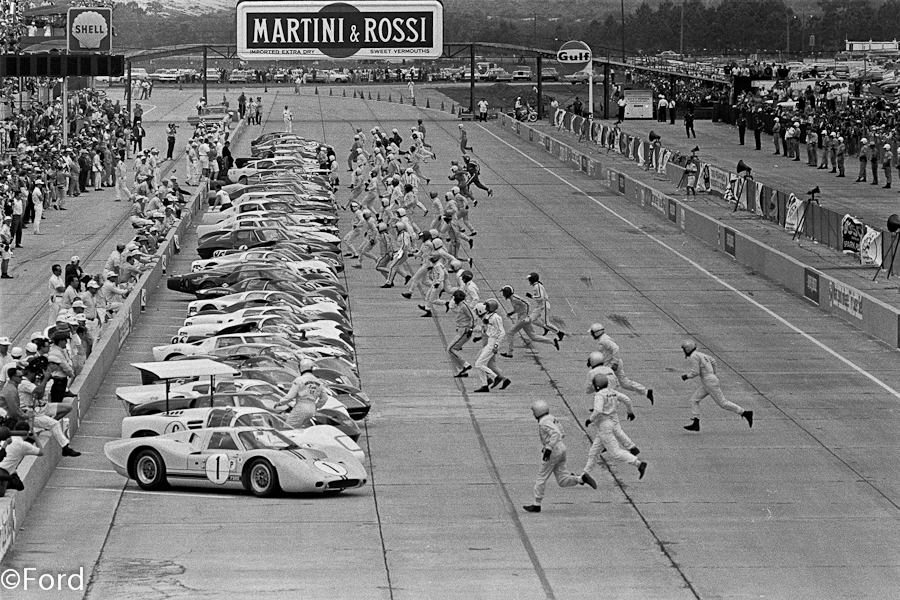

Despite problems, it would be Shelby entered Mark II and Mark IV  GT40s that would claim the honors for Ford at Le Mans in 1966 and ’67, those triumphs leading the FIA to kick the Americans out of the Makes championship of which the Sarthe was a part immediately thereafter.
With end of the factory GT40 program (Wyer-entered five liter Mark I examples would embarrass the FIA and the French by winning again in 1968 and ’69), came a new domestic beginning for Shelby in the form of the Trans-Am sedan series which again pitted the Mustang against GM’s Camaro and AMC’s Javelin for “Pony Car” superiority, again on the track and in street sales.
For Shelby the Trans-Am was a mixed bag. After winning the title in 1967, his team’s fortunes declined despite some individual race successes, as Camaros of Roger Penske and Mark Donohue claimed the Trans-Am crown in 1968 and ’69, the latter season being Shelby’s last in the championship.
Indeed, it likewise marked the end of his relationship with Ford, as the company was forced to leave motorsport during the 1970’s to deal with the increasingly burdensome government imposed emission and safety regulations. Later in life, after a brief association with Chrysler, he would return to Ford, not as a racer, but rather in the role of someone who lent his name to various of Dearborn’s high performance street vehicles.
In many ways, Shelby’s true talent, aside from his driving, was as a self promoter, which might seem at first glance to lessen his value and image within the sport and the automotive industry, but which on more sober reflection is not so because in his self promotion Shelby over and above his racing successes left us with a desire for high performance street cars that has continued to this day despite all attempts to quench it. For that he will remain always a giant.


Bill Oursler, May 2012
Sebring Surprises

Our Special Correspondent has been on his travels once again, this time to Florida. The big birthday celebrations brought forth all manner of automotive goodness and here a select few are given due consideration.

For the 60th Anniversary of this classic race, the organisers were able to bring together a collection of magnificent cars associated with this eminent event.

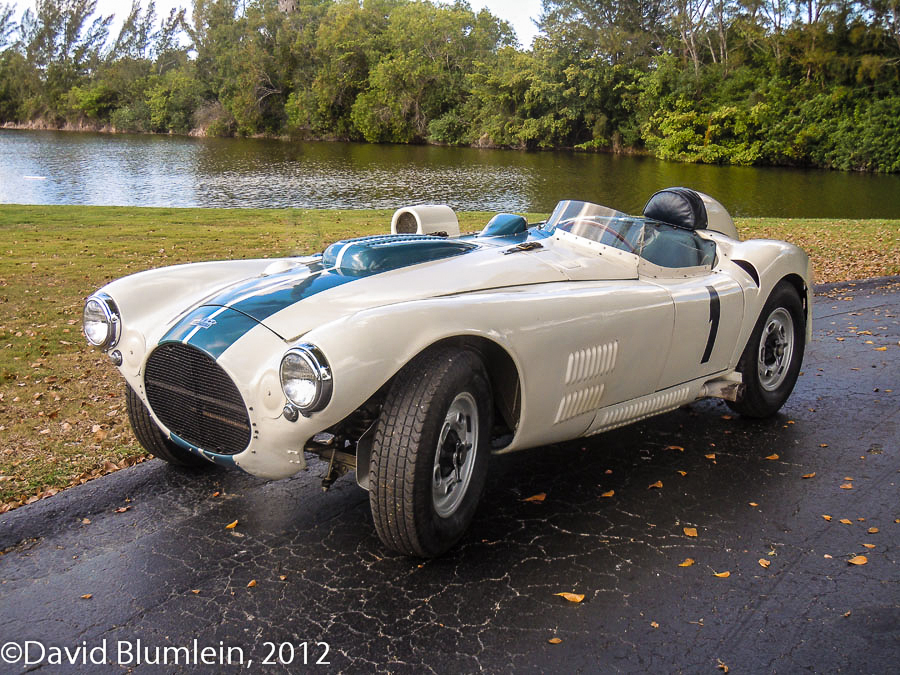
Cunningham C-4R

Cunningham C-4R

After a toe-in-the-water effort at Le Mans with Cadillacs in 1950, Briggs Cunningham was determined to try to conquer the 24-Hour race with his own all-American cars. The C-2Rs were quite promising in 1951 but were far too heavy to compete with the likes of the Jaguar C-type etc., and so he commissioned a new lighter car, the C-4R. This was designed by Briggs George Weaver, previously associated with Du Pont’s 1929 Le Mans entry and then during the 1940s with the design of the American Indian motorcycles.

Cunningham C-4R

This C-4R is famous as the winner of the 1953 Sebring 12-Hour race in the hands of John Fitch and Phil Walters. The race was the very first round of the newly conceived World Sports Car Championship and thus the car was the first all American car to win an international sports car race.

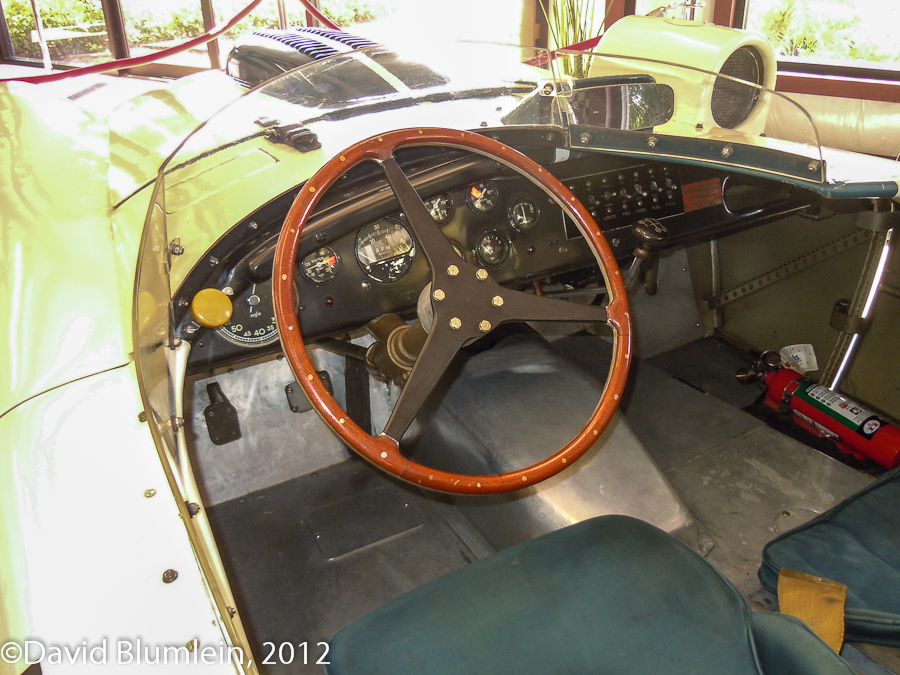
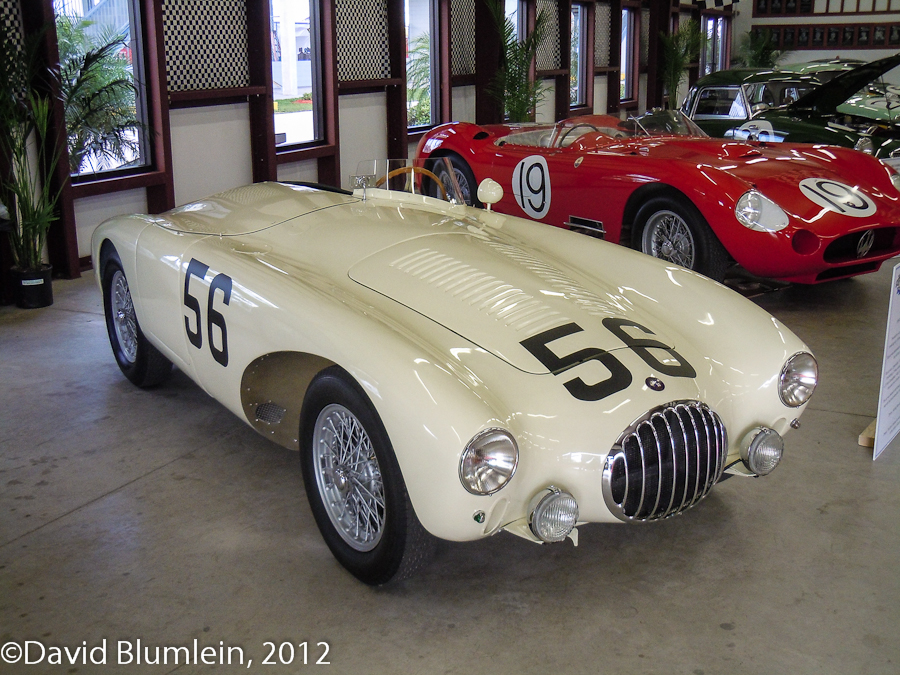
OSCA MT4 1500

OSCA MT4 1500

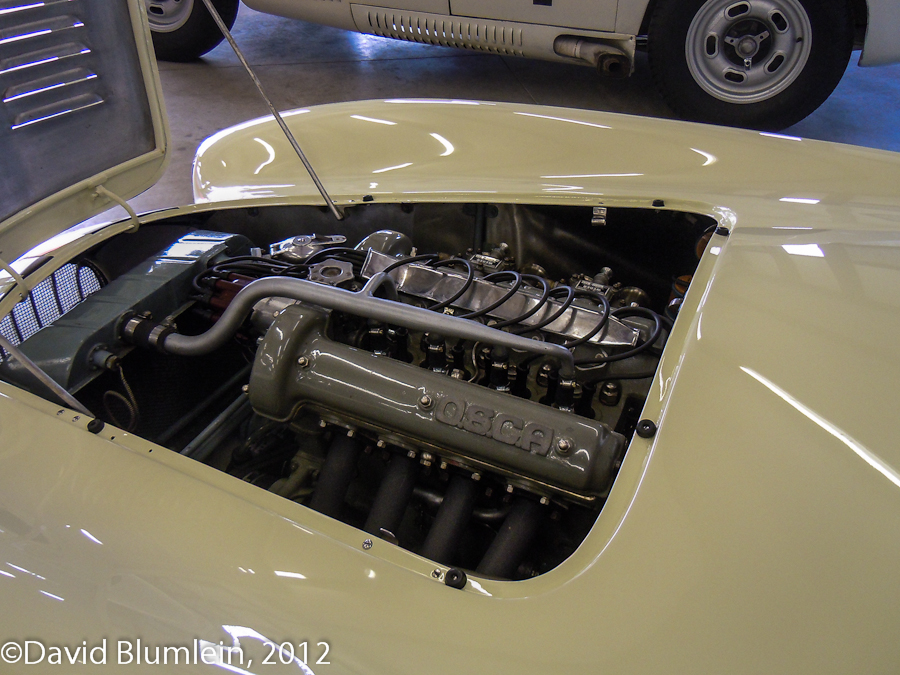
Officine Specializzate Costruzioni Automobili – the company set up in December 1947 by the remaining Maserati brothers. They had sold their eponymous business to the Orsi family in 1938 but stayed with the firm until 1947 when the Orsis wanted to concentrate on more profitable road cars. The brothers wanted racing and built, at Bologna, small capacity sports cars. From 1950 onwards these had twin OHC 4-cylinder engines of varying capacities, the outstanding model being the MT4.

Big international recognition came to OSCA with the car’s win in the 1954 Sebring 12-Hour race, driven by Stirling Moss and Bill Lloyd.

OSCA MT4 1500

The strong entry of four Lancia D-24s, three Aston Martin DB3S cars and various private Ferraris all suffered problems, the leading Lancia of Taruffi/Manzon failing with just 54 minutes remaining. This little OSCA was there to pick up the pieces, five laps ahead of the surviving Lancia of Rubirosa/Gino Valenzano. Other OSCAs finished 4th and 5th.

It remains one of the major upsets of international endurance racing.

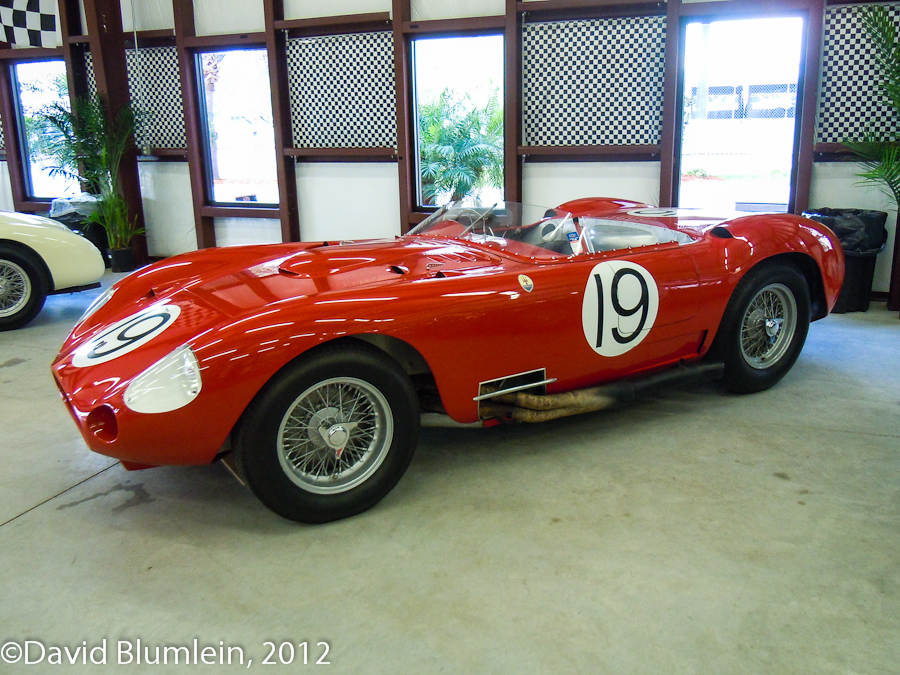
Maserati 450S

Maserati 450S

The brutish Maserati 450S, with a 400 b.h.p. 4.5-litre V8, had a lengthy gestation, design work on the engine having begun in 1954. A car was first seen during practice for the 1956 Swedish Grand Prix but its race début came in the 1957 Buenos Aires 1,000 km. It was instantly superior to all the opposition and Fangio and Moss led easily until that Maserati Achilles heel, transmission failure, intervened on the 57th lap.

At the Sebring 12-Hour race in 1957 Fangio and Behra had such superiority that they cruised home to a comfortable win. Maserati scored one more win that year with the 450S, at the Swedish Grand Prix, but the car suffered such bad luck in the final championship race at Caracas, Venezuela, that Maserati was unable to clinch the Sports Car crown from Ferrari.

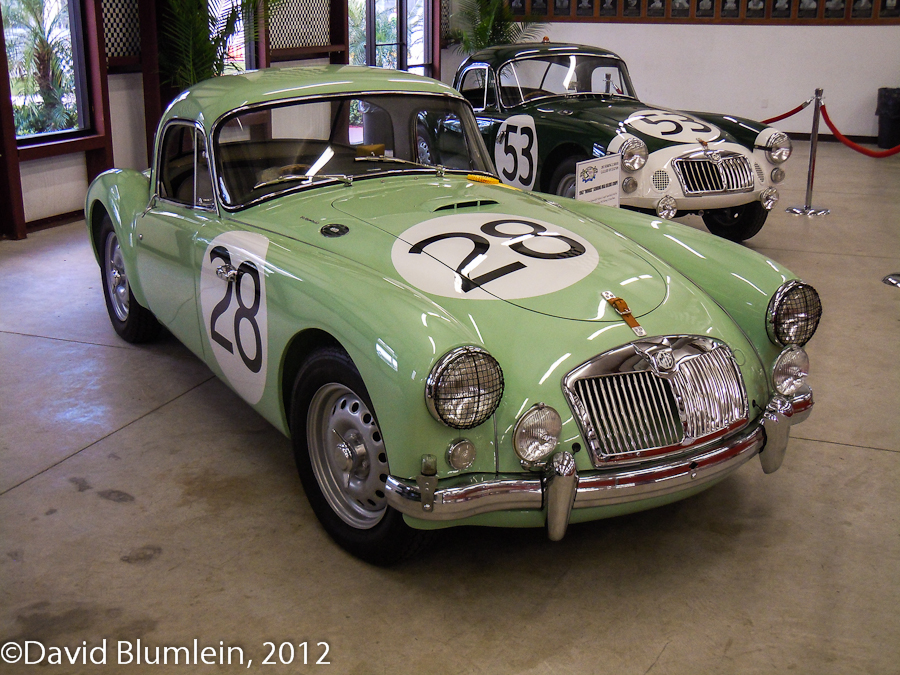
1959 MGA Twin Cam Coupé

MGA Twin Cam Coupé

There came a decree from Longbridge, BMC Headquarters, that, following the accidents at Le Mans and in the Tourist Trophy in 1955, there were to be no further official works race entries. The way around this for Sebring was to employ regional drivers in cars entered and prepared by dealers in New York, Washington and Pennsylvania.

In 1959 a full team of Twin Cams with hardtops was prepared at Abingdon and shipped over to the States for drivers from the U.S.A. and Canada, using mechanics drawn from the workshops of BMC Hambro Auto Corp. in New York and BMC Canada.Gus Ehrman and Ray Saidel came 2nd in class behind a works Porsche with this car.

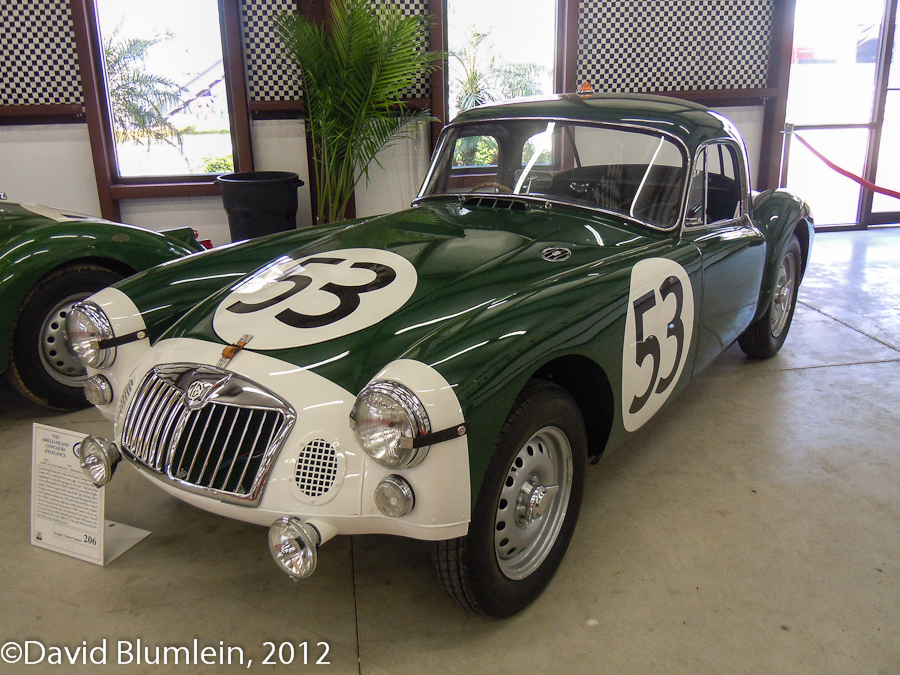
1962 MGA works car

MGA

This is one of the three lightweight coupés built by the MG factory for the 1962 Sebring 12-hour race. Powered by the 1.6-litre engine in a Twin Cam chassis, the car had 4-wheel disc brakes, Plexiglass rear and side-windows and fibreglass bumpers.

The three car team finished the race and this one came 20th driven by John Whitmore, Bob Olthoff and F.Morrell.

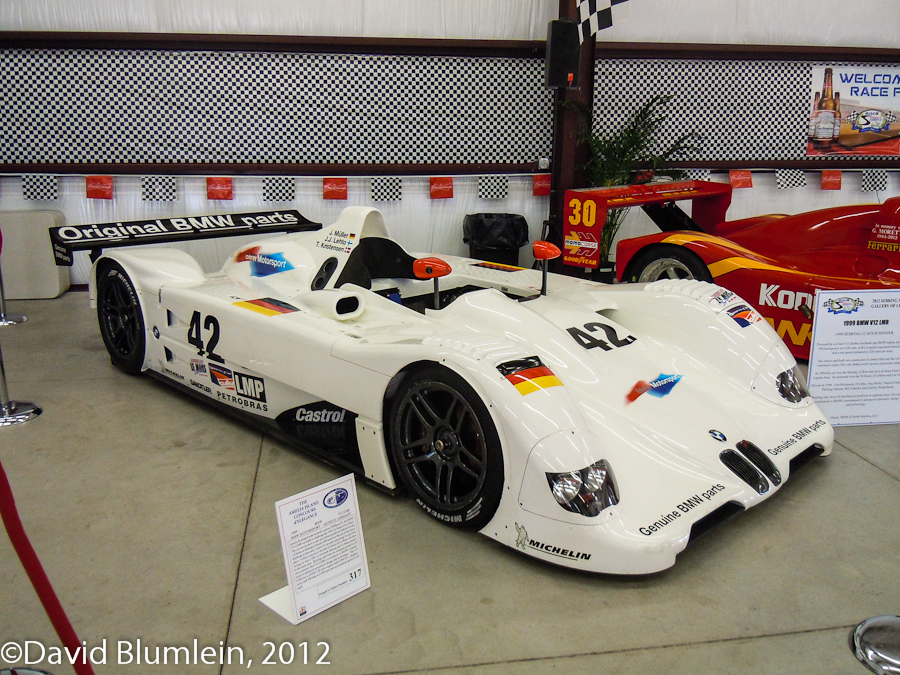
1999 BMW LMR V12

BMW LMR V12

This car was built by BMW Motorsport Ltd in co-operation with Williams Grand Prix Engineering at Grove in England. It was powered by a 48-valve 4 cam V12 of 5,990 c.c., a development of the engine that won Le Mans in the McLaren in 1995.

It not only won the Sebring 12-Hour race in 1999 but also that year’s Le Mans 24 Hours.

David Blumlein March 2012

Nϋrburg Natters

A brief look at how endurance racing came to the Nϋrburgring and a look at some of the less publicised participants in the 2011 24 Hour race

The Nϋrburgring is chiefly remembered for the many outstanding  Grands Prix races that took place over its unparalleled Nordschleife, a driver’s circuit if ever there was one, and it is not surprising that some of the greatest talents of all shone there e.g. Nuvolari in the P3 Alfa Romeo in 1935, Fangio in the 250F Maserati in 1957 and Moss in the Lotus 18 in 1961. With such performances as these is it any wonder that the circuit has tended to be associated with the single-seater racing car?

And so it has not been thought of as a natural home for long distance enduring racing, although its early Grands Prix were ironically run for sports cars, mainly because Germany had no suitable Grand Prix contender and because Mercédès had just joined up with Benz and the new combine was intent on getting on with their new 6-cylinder S, SS and SSK supercharged sports cars designed by Dr Ferdinand Porsche and Max Wagner.

Sports car races supporting the Grands Prix events, yes, but nothing really serious until 1953 when the Nϋrburgring hosted its first 1,000km race as a round of the newly created World Sports Car Championship. This 1,000km race steadily became a permanent fixture ( with hiccups in 1954 and 1955 ) and as the Sixties unfolded a 12-Hour Touring Car race joined in, providing BMW and Jaguar with two wins apiece. Then, as the Liège-Rome-Liège/Liège-Sofia-Liège rally, the Marathon de la Route, was forced  off the roads of neighbouring countries, it found refuge in a series of real endurance events around the Nϋrburgring as 82,84, 86 and 96 Hour marathons between 1965-71.

By this time endurance racing was firmly in the Eifel blood and in 1970 the 24 Hour race was instituted. With gaps in 1974/75 owing to the oil crisis and 1983 when the reconstruction was being carried out, this wonderful event has been run ever since and long may it continue! One of its great attractions is the way it is not limited by constraints of championships in the breadth of its varied entry. Le Mans has long forsaken all those varied capacity classes which made its fields so very rich and interesting – not so the Nϋrburgring 24 Hours: lots of classes to accommodate all sorts of runners and sufficient factory interest nowadays to give the event big importance.

The top runners get all the media attention in the motoring press so here are some of those others who took part in 2011. There were 198 starters and 783 drivers!

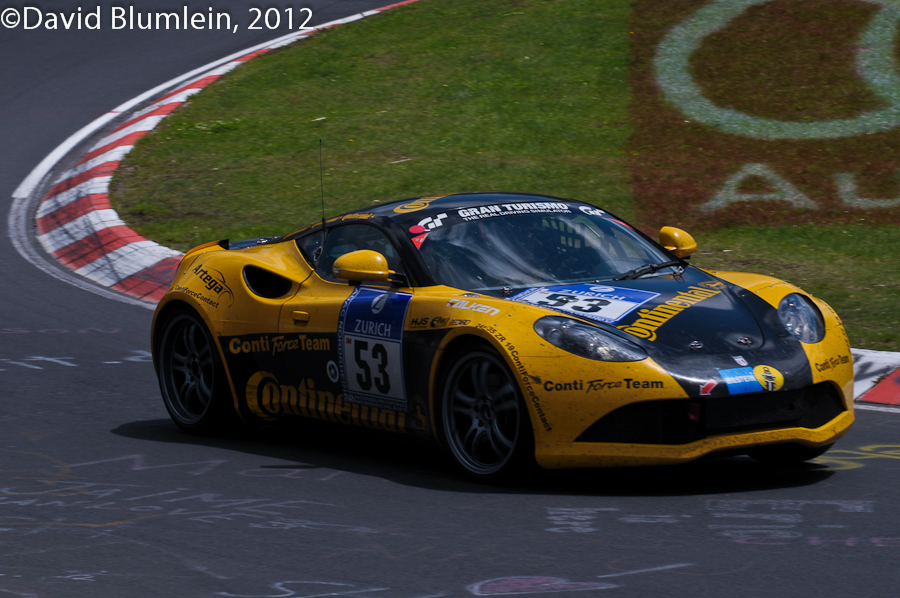
Artega GT

Welcome to the Artega GT, a new German sporting car with a 3.6-litre V6 engine mounted midships. Designed by Henrik Fisker, it is built in Delbrück in northern Germany. The car finished the race in 70th position.

Zig


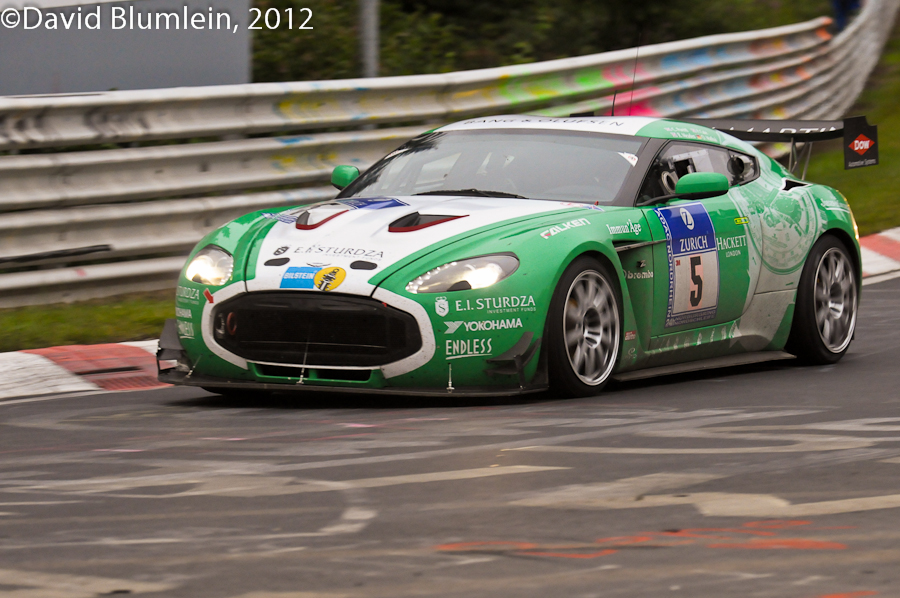
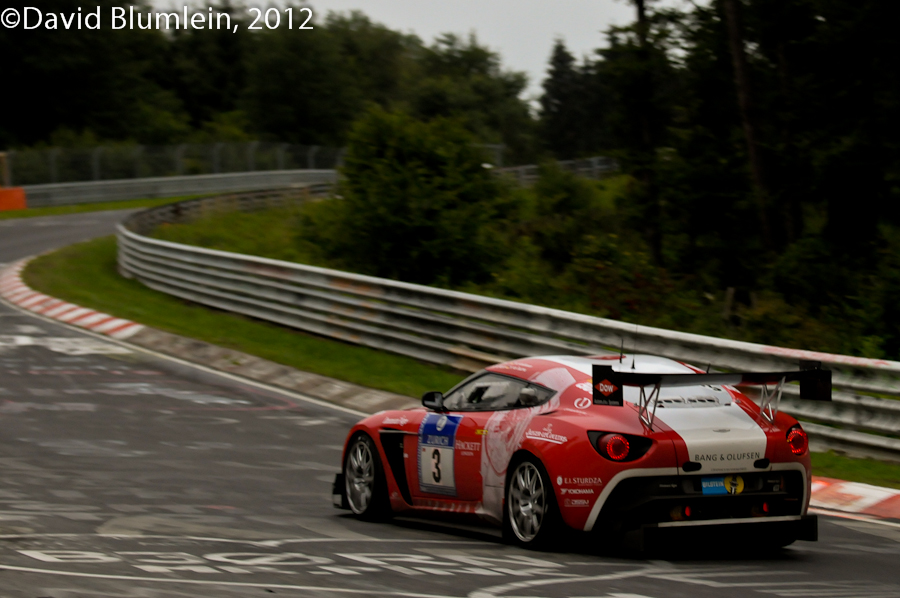
Aston Martin constructed two prototypes of their forthcoming Zagato model – this one is nicknamed “Zig” and encountered many delays but finished 111th.

Zag


And this is “Zag” powering out of the Pflanzgarten to finish 89th. In the background is the spot where poor Peter Collins came to grief when his Ferrari Dino ran wide during the 1958 German Grand Prix, throwing him out against a tree.

Opel Manta


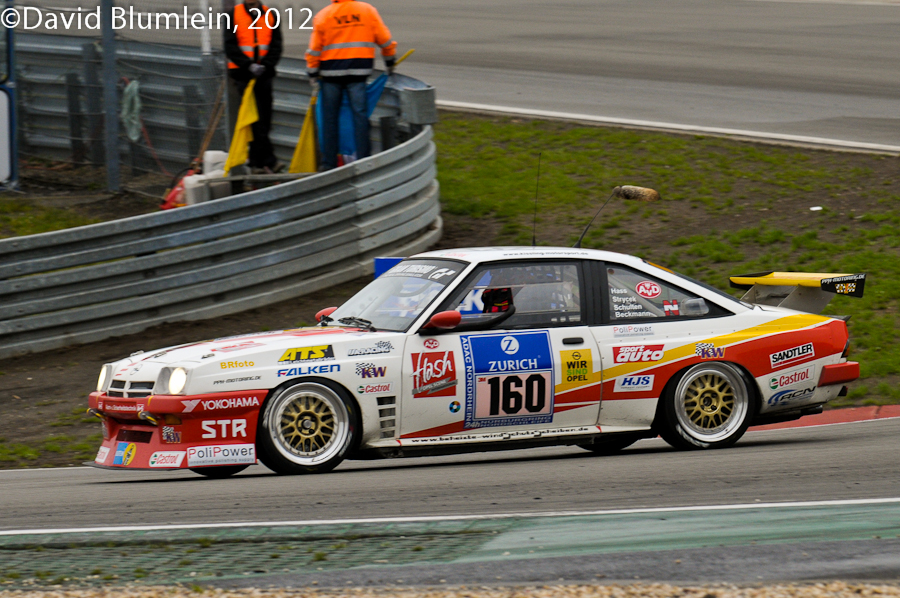
The rules require all entries to be less than ten years old but special dispensation was given to this Opel Manta which managed a noble 129th!

Lexus LF-A


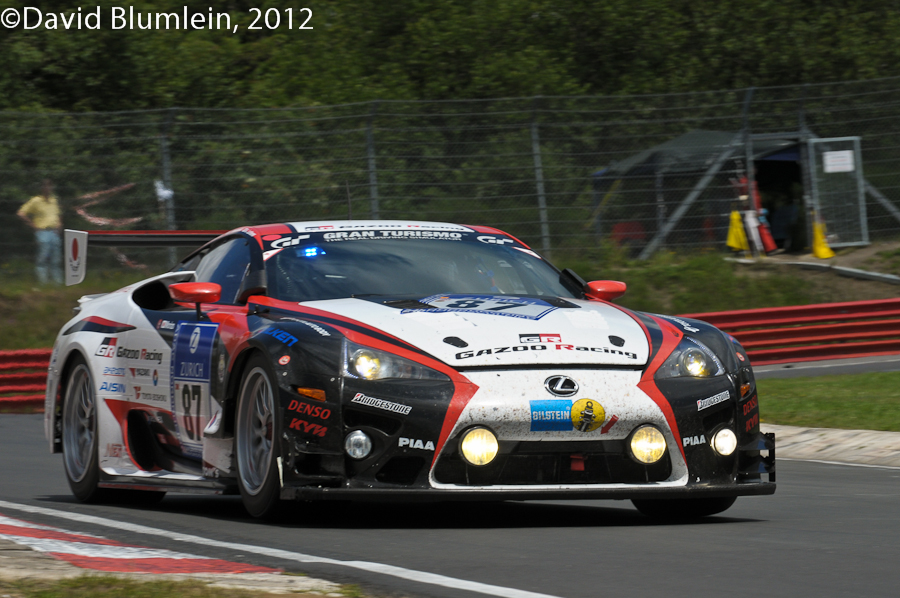
Lexus by their own admission treat the race as the “best possible test session” for their LF-A. In 2010 the test session yielded a class win – no such luck in 2011!

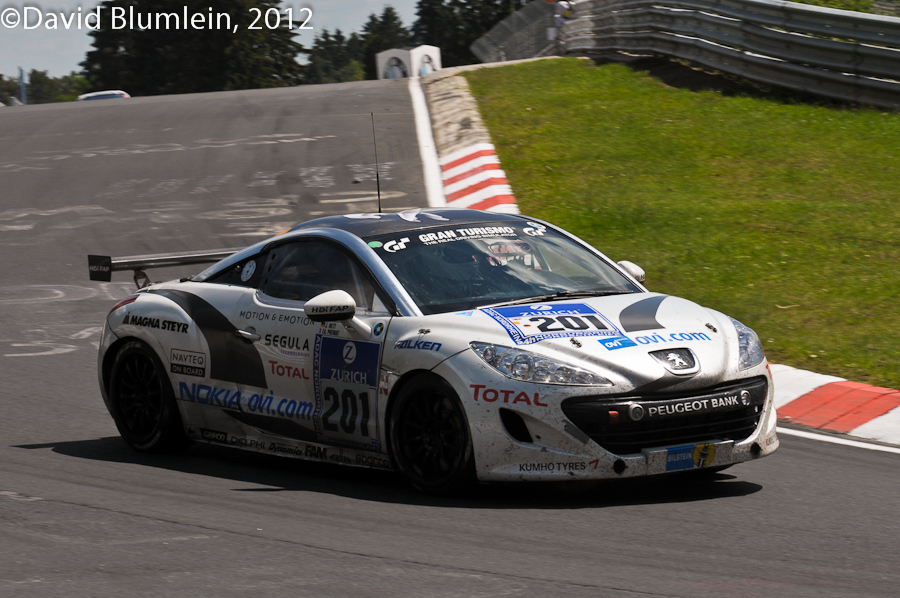
Peugeot RCZ HDI


This is the only surviving Peugeot RCZ HDI but it did win its class.

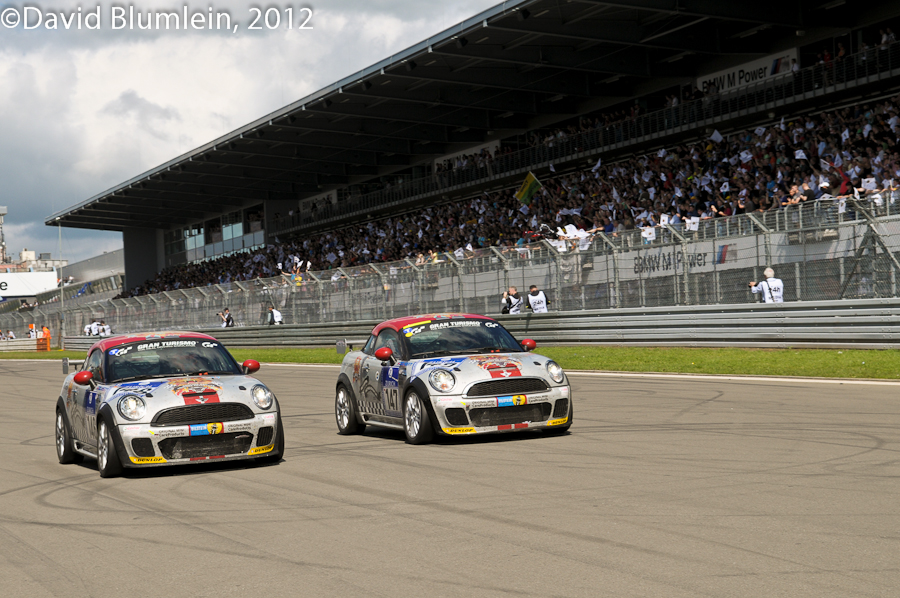
Mini Coupes


There seemed to have been very little notice taken by the media outlets of the new Mini Coupé which was after all making its first public appearance prior to its formal launch two months later. Here are both cars finishing.

TAILPIECE

Intervention

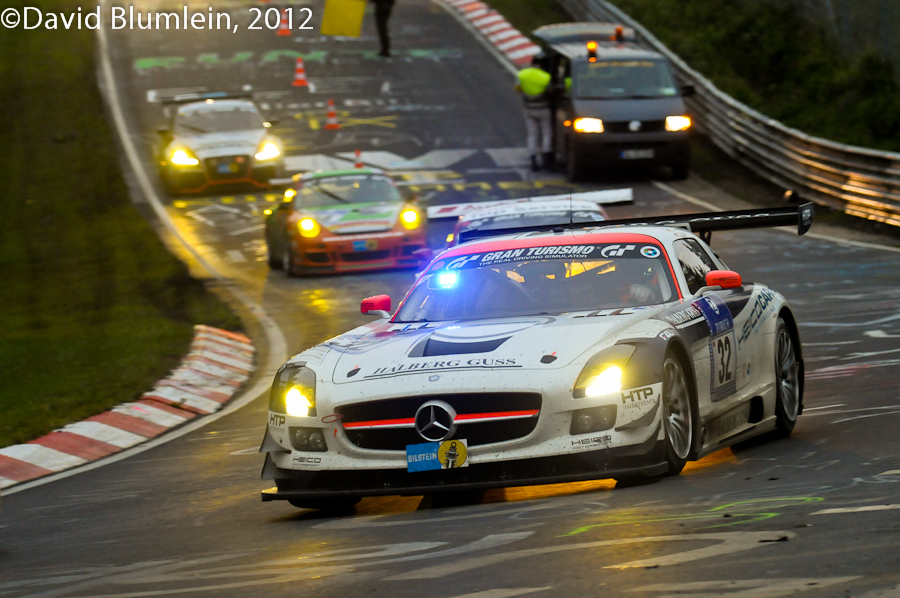
The Nϋrburgring has a very sensible way of coping when a car strikes the barrier – they simply cone off half of the track where the trouble is, carry out the rescue and repair work, all without the need for safety cars. Meanwhile marshals ensure that the cars on the track simply slow down sufficiently as they pass through the restriction and then resume racing straight after.

Here the Heico Motorsport Mercédès-Benz leads a group of cars out of the restricted section on its way to 7th overall.

Perhaps others could learn from this.

David Blumlein March 2012


Showroom Soliloquy

As money is losing value almost as fast as the politicians and bureaucrats can waste it, many are turning to assets to hedge against the silent theft of their wealth by the State. So art dealers’ businesses are  flourishing, as are those in the buoyant classic car market. Our Special Correspondent paid a visit to the hallowed ground at Brooklands, to see for himself what was on offer in the first big sale of the year in this locality.

Auctions invariably turn up some interesting cars and that of Historics at the Mercédès-Benz World at Brooklands was no exception, and a quick excursion into the museum at the old track also revealed one or two new exhibits as well.

1934 Hillman Aero Minx Streamline

Conceived by Capt. J.S.Irving – designer of the “Golden Arrow” Land Speed Record car – and A.H. Wilde, the Hillman Minx was launched in 1931 and went on sale in 1932. Some six months later the Aero Minx was introduced.

1934 Hillman Aero Minx Streamline

Mechanically similar with the same 1185 c.c. 4-cylinder side-valve engine, it was given a new under-slung frame, a high compression cylinder head and a remote control gear-change. To give a more sporting appearance the radiator grille was swept forward at its base. The standard bodywork style was a 2+1 fastback coupé with the rear seat set crosswise. From late 1934 an all- synchromesh gearbox was fitted and the Streamline open two-seater body was available.

1934 Hillman Aero Minx Streamline

By 1936 Rootes badge-engineering had taken over and the car evolved into the new Talbot 10.

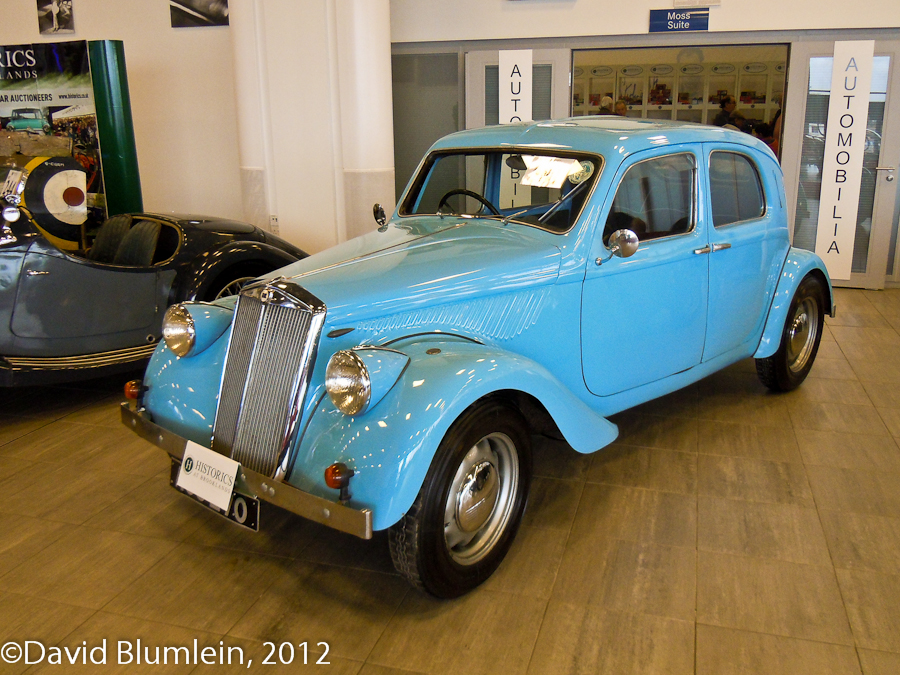
1938 Lancia Aprilia

Irresistible was this beautiful blue Lancia Aprilia, Vincenzo Lancia’s last masterpiece. Of monocoque pillarless construction it boasted all independent suspension

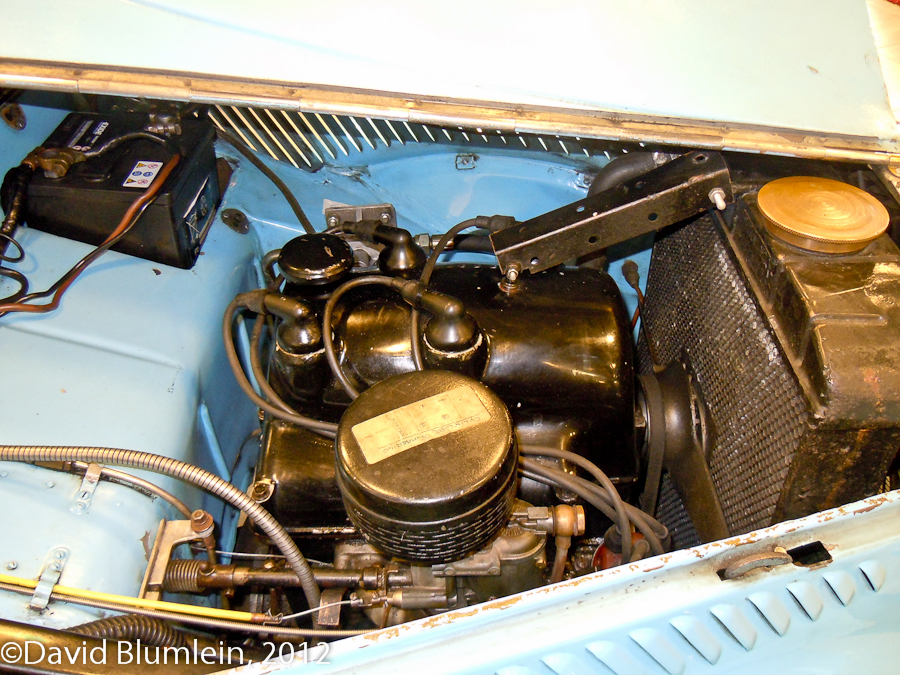
1938 Lancia Aprilia

and a little gem of an engine, the 1352 c.c. V4 .

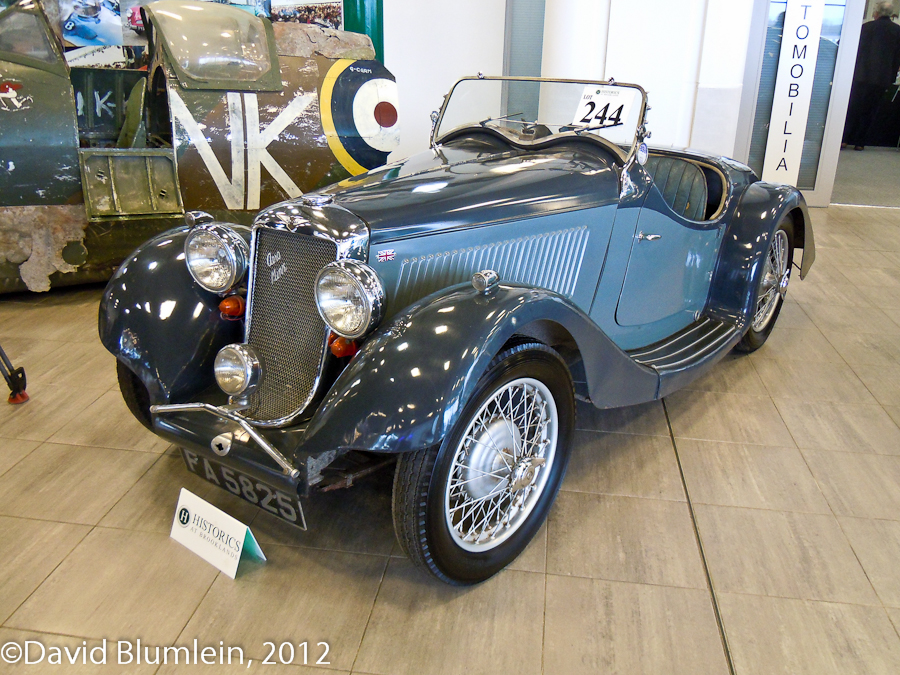
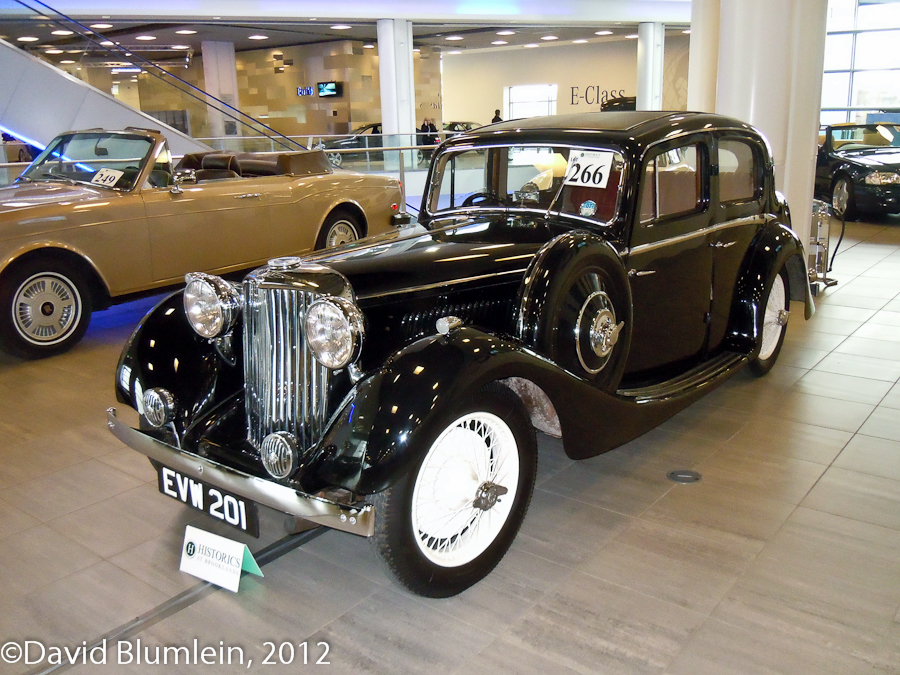
1937 SS Jaguar 1.5-litre

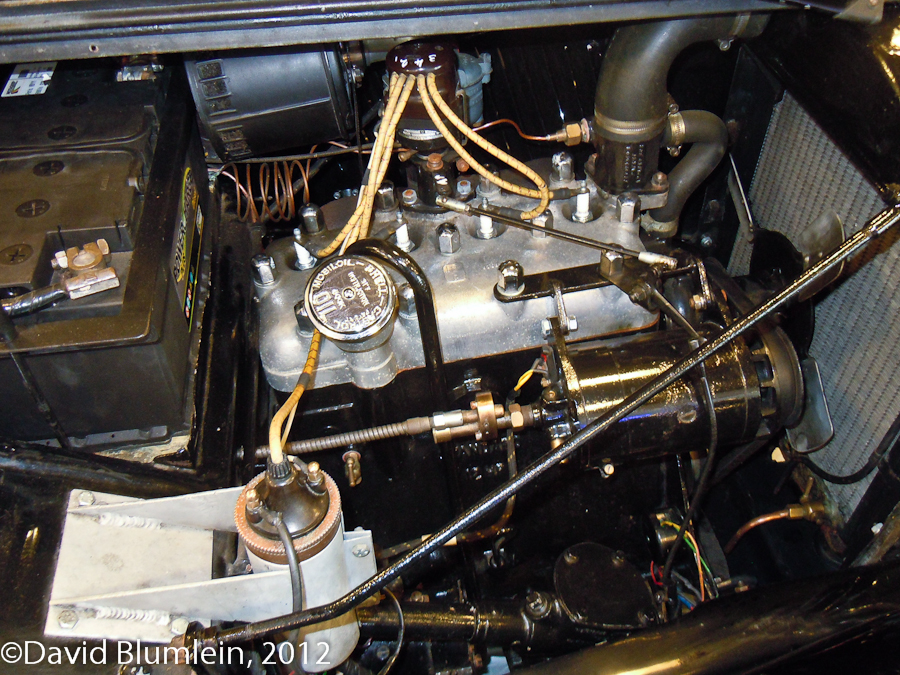
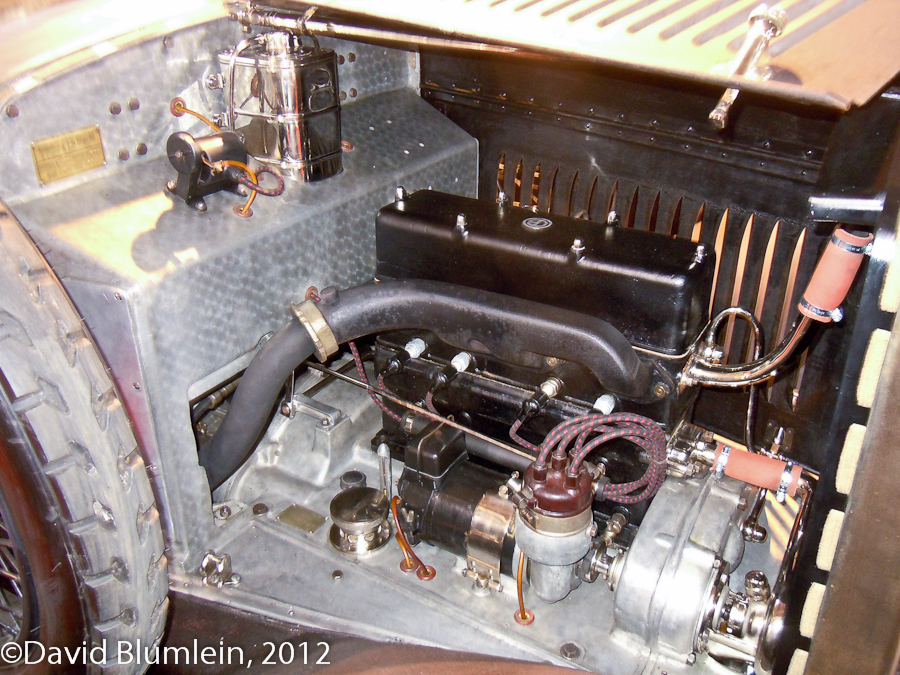
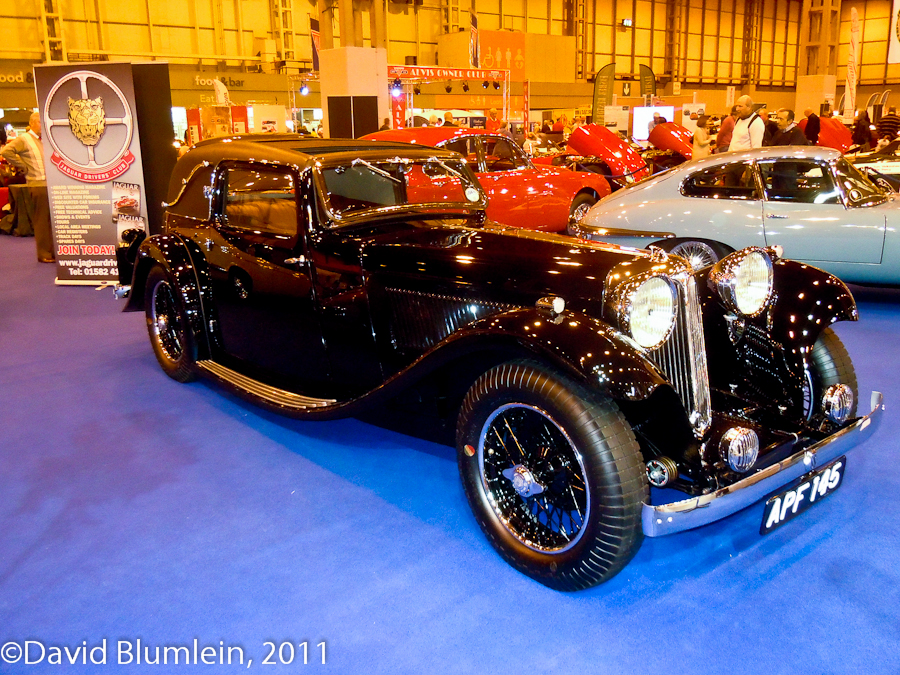
This was the smallest car Jaguar ever produced. Like all the stunning SS Jaguars introduced in 1935, it relied on Standard mechanicals, in this case the 4-cylinder Standard Twelve 1608 c.c. side valve engine. In the picture below you can see the name Standard stamped on the cylinder block.

1937 SS Jaguar 1.5-litre

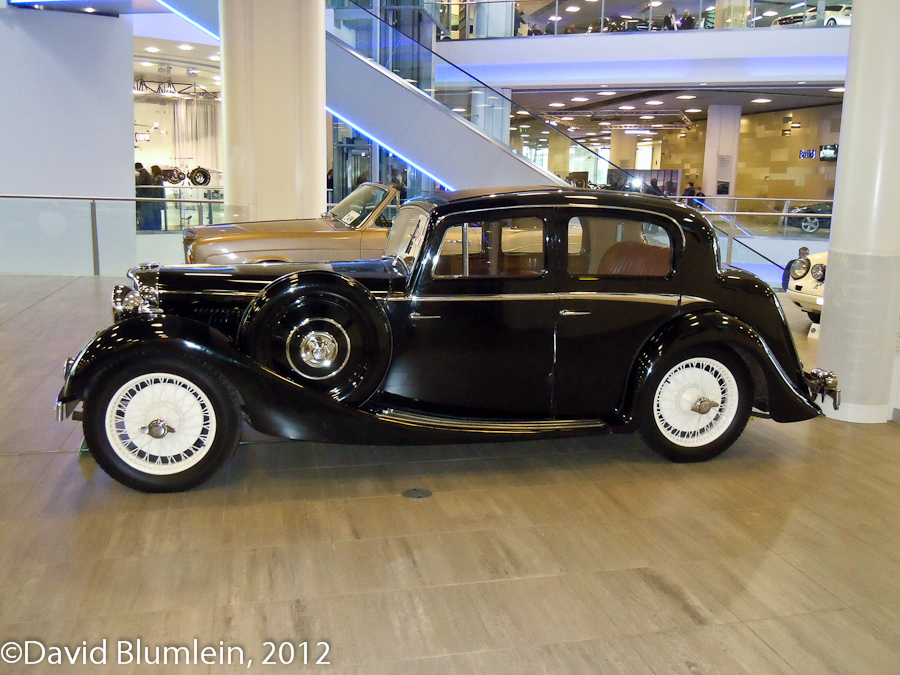
While by 1938 the bigger 2.5-litre and 3.5-litre models were using special Weslake-developed overhead valve heads, the 1.5-litre used the Standard Fourteen 1776 c.c. engine with Standard-produced o.h.v. – this engine went on to power the post-war Triumph Roadster and Renown models as well as the what-was-now the Jaguar 1.5-litre. The early small SS Jaguar can be recognised by the spare-wheel cover whose top is higher than the level of the bonnet.

1937 SS Jaguar 1.5-litre

This “baby” Jaguar easily outsold all the other models in the pre-war range.

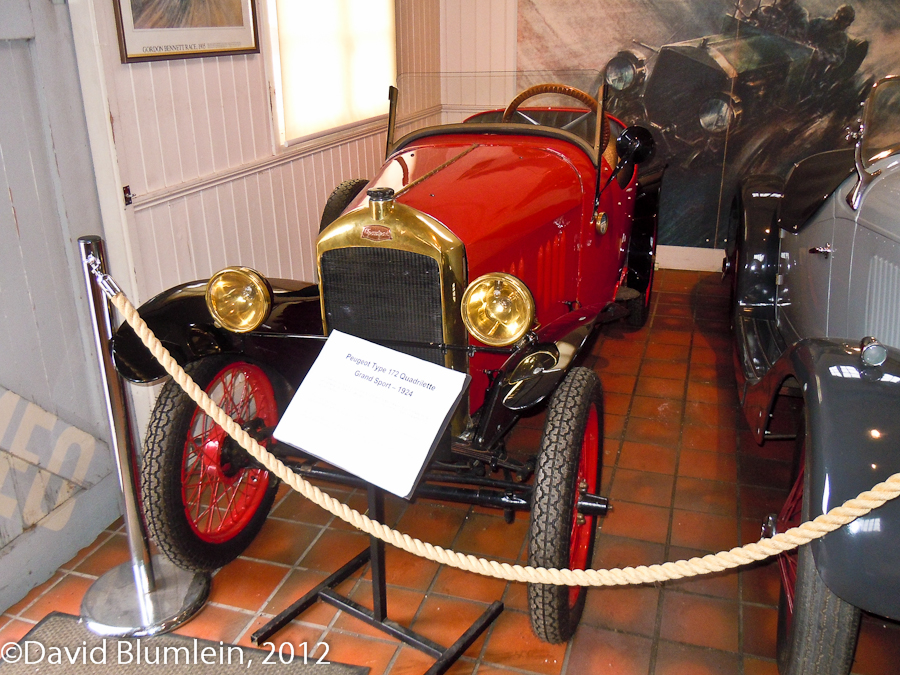
1924 Peugeot Quadrilette Type 172 Grand Sport

In the last days of 1919 Peugeot revealed their successor to the Bugatti-designed Bébé: the Type 161 Quadrilette which had a 4-cylinder 667 c.c. engine and the two seats mounted in tandem; this successful little car was made in the factory at Beaulieu in eastern France. In 1922 it was re-designed as the Type 172 and it acquired staggered seats. By 1924 production was moved to Peugeot’s main plant at Sochaux and later the engine size was increased to 720 c.c.

It was joined in 1924 by the Grand Sport, a 5CV model of which only 100 were made. It was clearly a tough little car as one of them won its class in 1926 in the car-destroying Circuit des Routes Pavées, a demanding race around cobbled roads in the southern outskirts of Lille. The standard model evolved into the 5CV Type 172 which appeared at the 1924 Tour de France and examples of the car took the first three places in its class in the first Mille Miglia in 1927. Certainly a rugged little car!

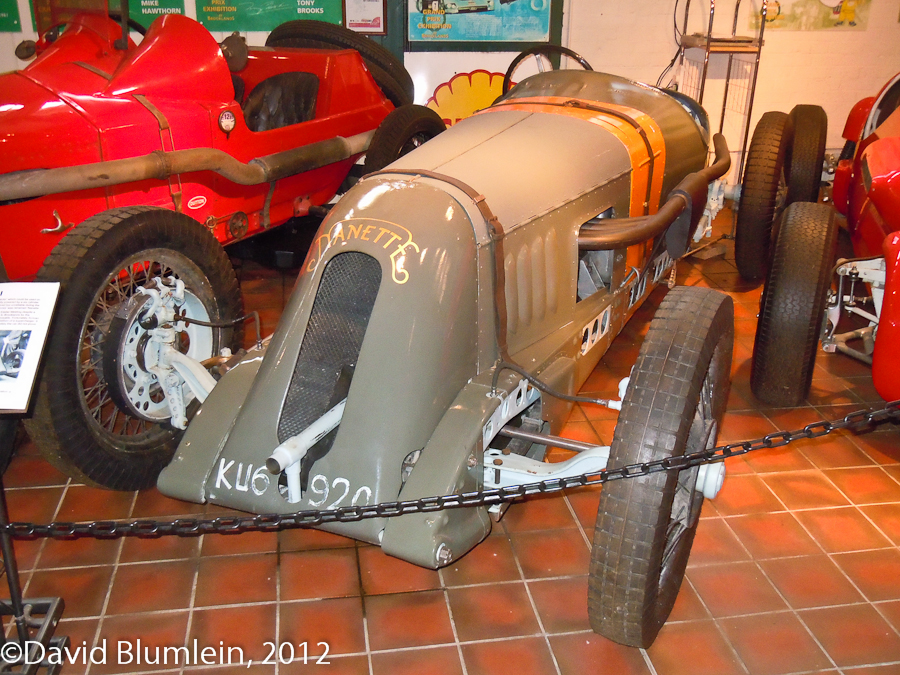
Nanette – a Brooklands Special

Felix Scriven was well-known as a driver at Brooklands in the 1920s where he campaigned an unlikely Austin Twenty which he painted in a variety of colours according to his whims. Later he commissioned F.W.Bond to design a 2-seater special for road and track use. Bond is chiefly remembered for his low-slung 2-seater sports cars  which he built in 1926/28.

The car for Scriven had a low under-slung chassis built by Rubery Owen and the engine was initially a 6-cylinder Sage unit but as this soon proved very unreliable Scriven was able to persuade the great Parry Thomas to provide him with a 4-cylinder 1847 c.c. Hooker-Thomas engine. Named “Nanette”, the car brought Scriven a convincing win in the “90 Short” race at the Summer B.A.R.C. meeting held at Brooklands in 1926.

TAILPIECE

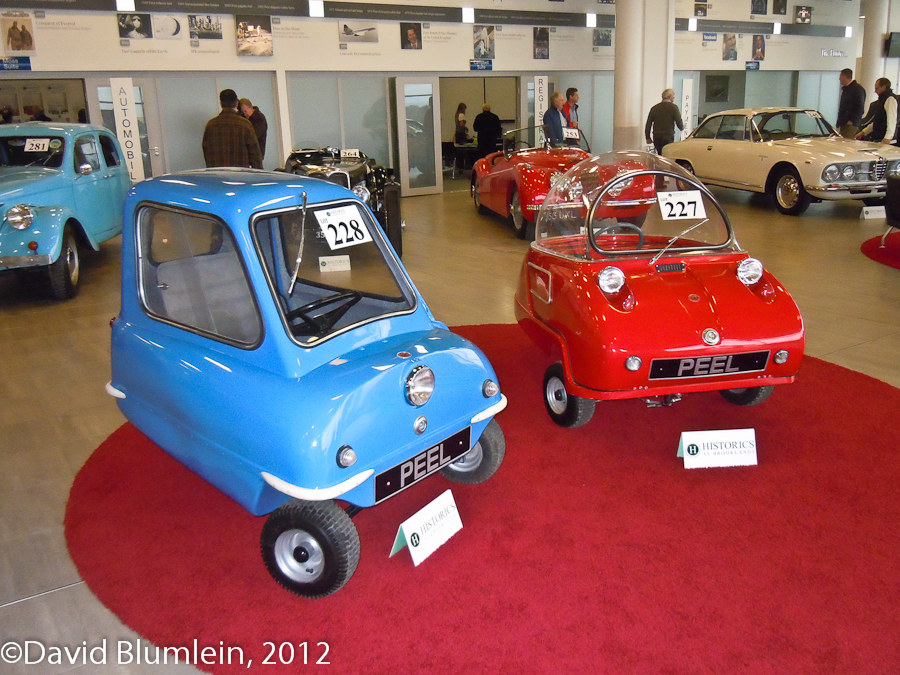
A Pair of Peels

As examples of the modern production of electric-powered Peels, they provide an excuse to say something briefly about the original little Peel cars which qualified as almost certainly the world’s smallest passenger cars.

Mention the Isle of  Man to a car enthusiast and you will probably conjure up thoughts about the early Tourist Trophy races run around the island up to 1922 or the British Empire Trophy sports car races held at Douglas from 1951-53. But the Isle of Man had its own little car “industry” when the Peel Engineering Company of the town of Peel on the west coast, as fibreglass pioneers, decided to manufacture these extraordinary tiny cars.

The first model, the P50 similar to the blue car in the above picture, had a D.K.W. 49 c.c. fan-cooled 2-stroke single –cylinder engine mounted under the single seat and drove the single rear wheel by chain via a 3-speed gearbox. The little fibreglass-bodied car was only 53 inches long and 39 inches wide! The P50, which appeared in 1962, was joined by the 2-seater Trident in 1965 and this was all of 72 inches long!

Of special interest is the fact that British Leyland commissioned the Peel company to produce some fibreglass-bodied examples of the original Mini. Apparently these prototypes stood up very well to the rigorous testing schedule to which they were subjected but the project seemed to fizzle out.

David Blumlein, February 2012
Boulevard Périphérique

The Parc des Expositions located at Porte de Versailles, Paris is the venue each year for the Retromobile, a top notch celebration of automobiles, old and new. Now just a few hours by Eurostar from the centre of London, the show has attracted much attention from enthusiasts living on this side of the English Channel. With typical Gallic flair there is always something rare and interesting to enjoy. Who else but our Special Correspondent should be our guide to the treasures? Enjoy.

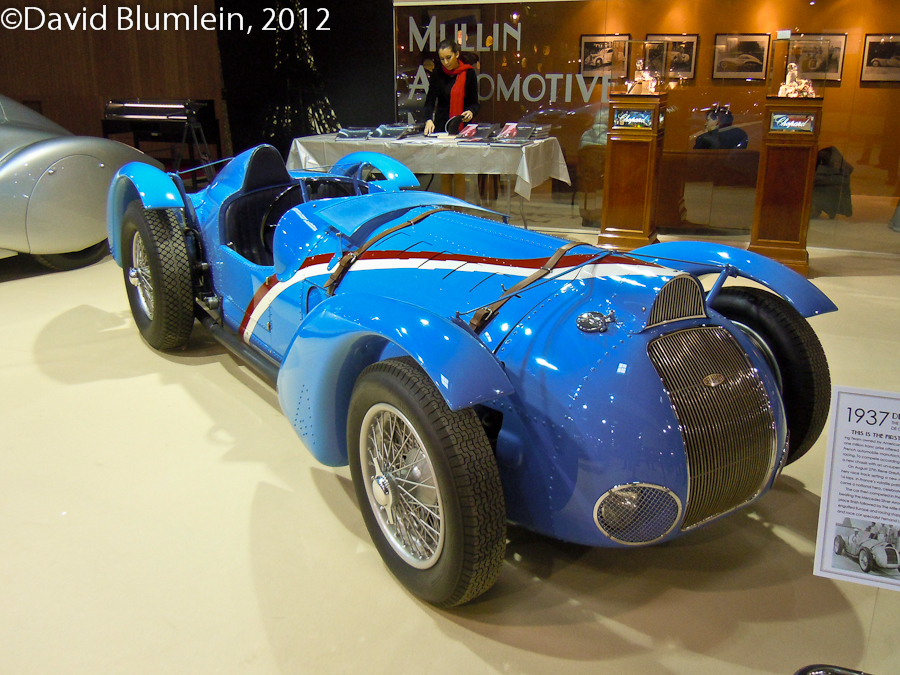
Delahaye Type 145

Delahaye Type 145

The mainstay of Delahaye’s competition activities in the late Thirties was the Type 135 sports car, particularly the Compétition Spéciale versions. Their motor was based on the tough old Type 103 lorry engine and among the Type 135’s many successes was its outright win in the 1938 Le Mans 24 Hour race. For the impending 3-litre supercharged/4.5-litre unsupercharged Grand Prix formula which was finally implemented in 1938, Jean Franςois designed a full V-12 racing engine which was used in the 145 chassis. Its greatest success was in the 1938 Pau Grand Prix when René Dreyfus drove a stripped version to defeat the official Mercédès-Benz Grand Prix team.Two two-seater cars were constructed and entered for the 1938 Le Mans race, the first V-12 –engined cars to take part in this famous event. They failed miserably, one through gearbox trouble after just seven laps, the other succumbing to overheating problems.

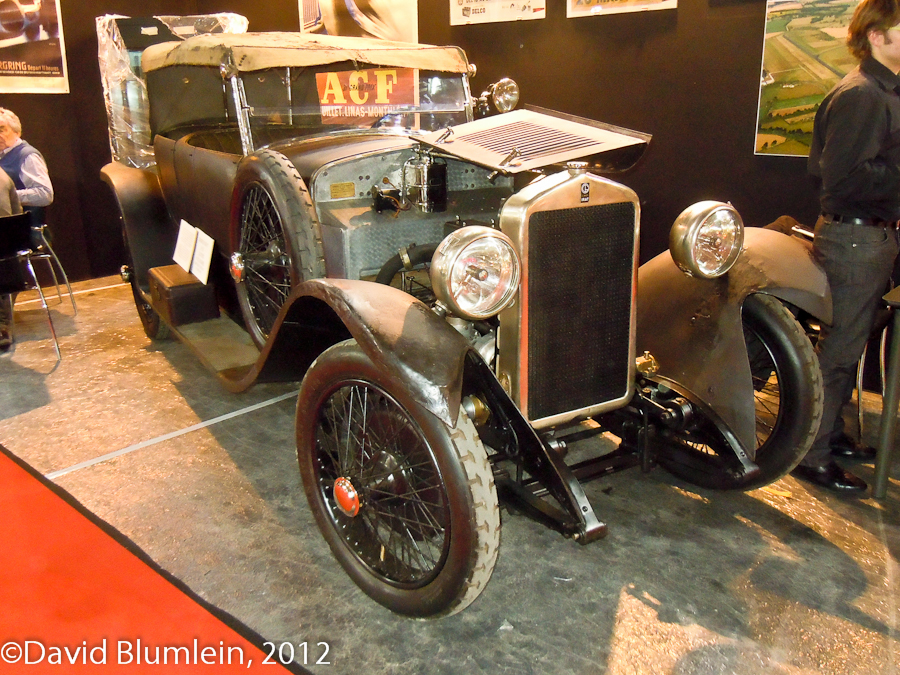
1923 Georges Irat 2-litre

1923 Georges Irat 2-litre

Georges Irat made fast touring cars in Chatou from 1921 with 4-cylinder o.h.v. 2-litre engines designed by Maurice Gaultier who had come from Delage. All but the body was made in-house and this example has coachwork by Carrosserie Morlaix of Courbevoie. Georges Irat had considerable racing success, usually thanks to Maurice Rost – he won the demanding Circuit des Routes Pavées, in the suburbs of Lille, in 1923 and 1925. He also won the Spanish Touring Grand Prix at San Sebastian in 1927 and the 2-litre class in the 1926 and 1928 editions of the Spa 24 Hour race. However, the cars ran without success at Le Mans in 1923-24-26.

1923 Georges Irat 2-litre

Georges Irat made a 6-cylinder in 1927, based very much on Gaultier’s engine, and in 1935 a small two-seater Ruby-engined car with front wheel drive; a Citroën 11CV unit became available in 1938, but these cars were not seen in serious competition.

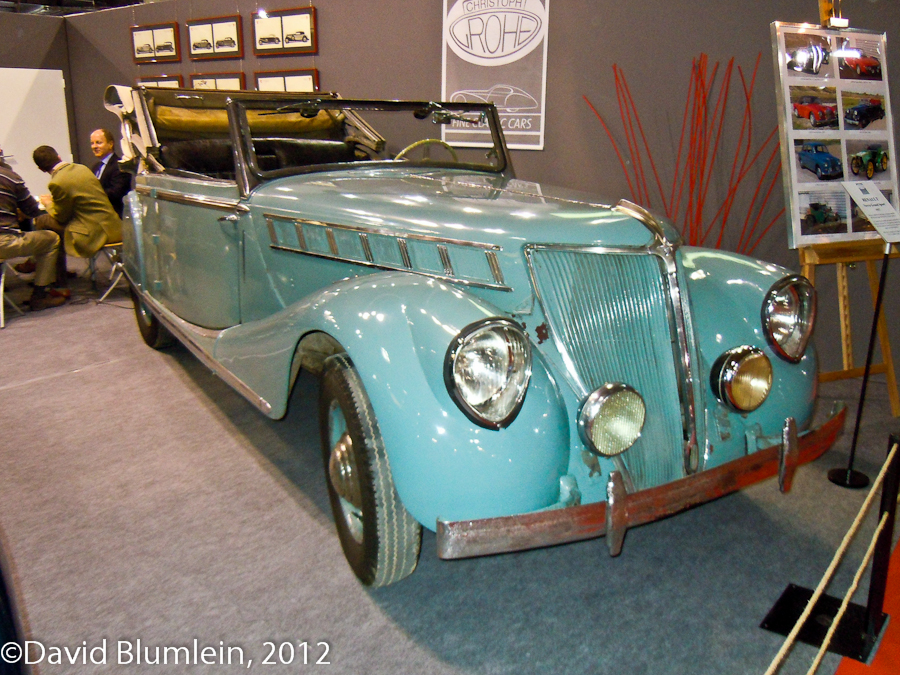
1937 Renault Nerva Grand Sport

1937 Renault Nerva Grand Sport

Renault traditionally had large-engined top-of-the-range cars in their catalogues – the 6-cylinder 9-litre 40CV springs to mind, a car that set many records at Montlhéry in 1925-26, while the 1935 Monte Carlo Rally was won by an 8-cylinder Nerva Sport model.

At the 1934 Paris Salon the Grand Sport series was added to the range, having more aerodynamic lines inspired by the Caudron-Renault Rafale record-breaking aircraft. The Nerva Grand Sport was the first Renault to be fitted with the bigger 5.4-litre 8-cylinder engine. For 1937 the cars were face-lifted with V-shaped radiator grilles, headlights fully merged into the wings, spats on the rear wheels and a proper luggage compartment. Outwardly impressive with their long bonnets, the cars were still based on a vintage-style chassis with rigid axles and semi-elliptic springs all round and all up they weighed some 2.5 tons.

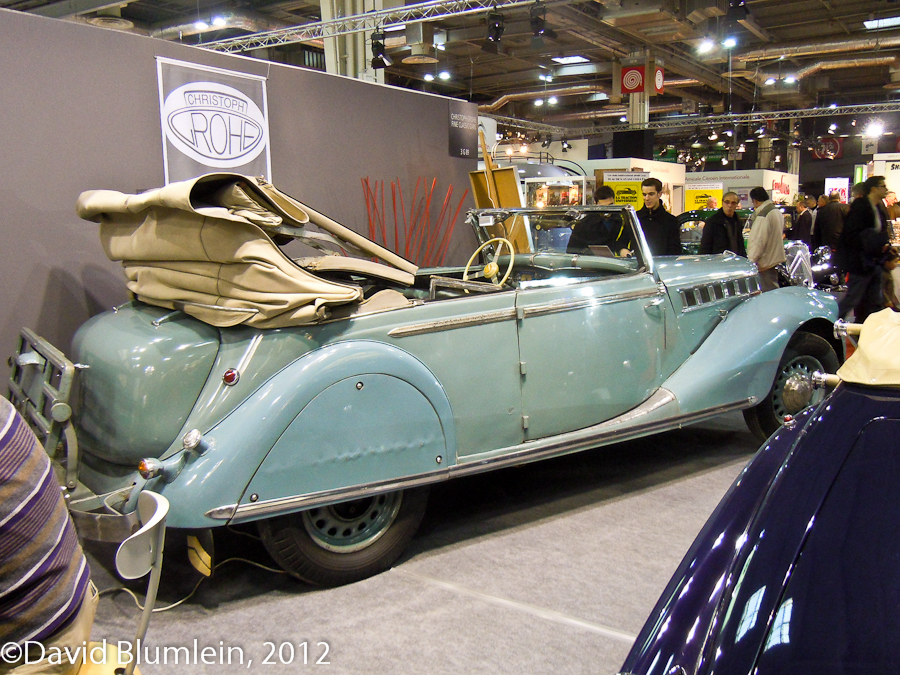
1937 Renault Nerva Grand Sport

Only 22 of these dropheads were made before the model was superceded at the 1938 Paris Salon by the Suprastella which used the same basic chassis.

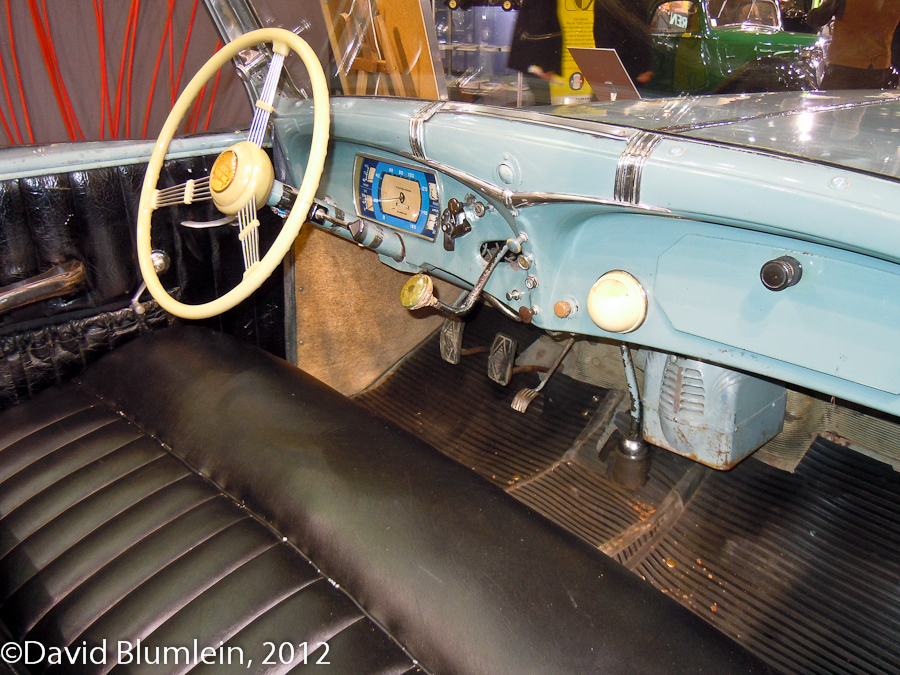
1937 Renault Nerva Grand Sport

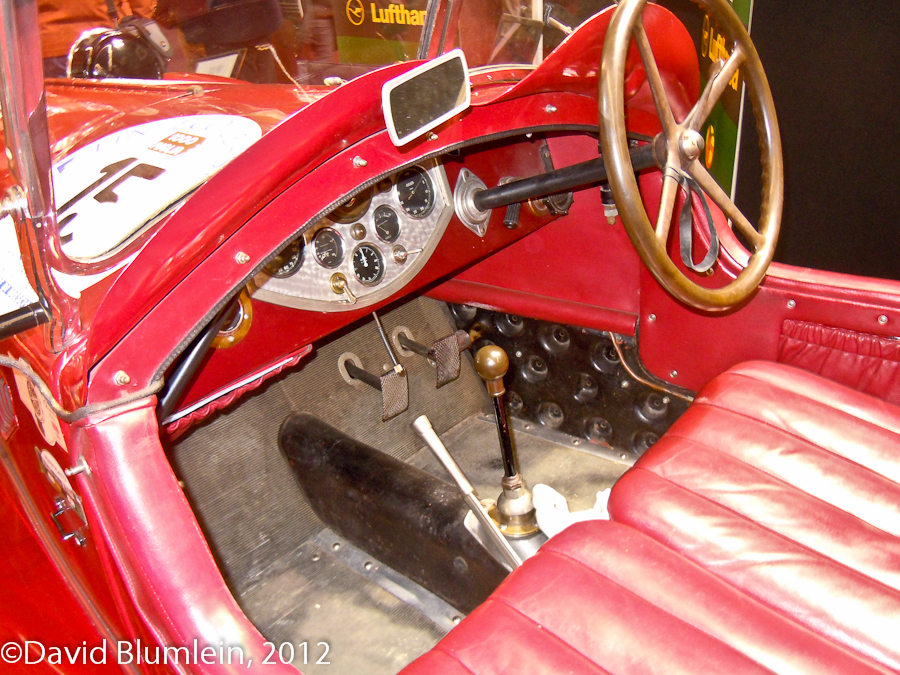
Notice how the lanky gear-lever for the central change is controlled through a slot in the dashboard – very unusual.

Skoda Hispano Suiza 25/100

Skoda Hispano Suiza 25/100

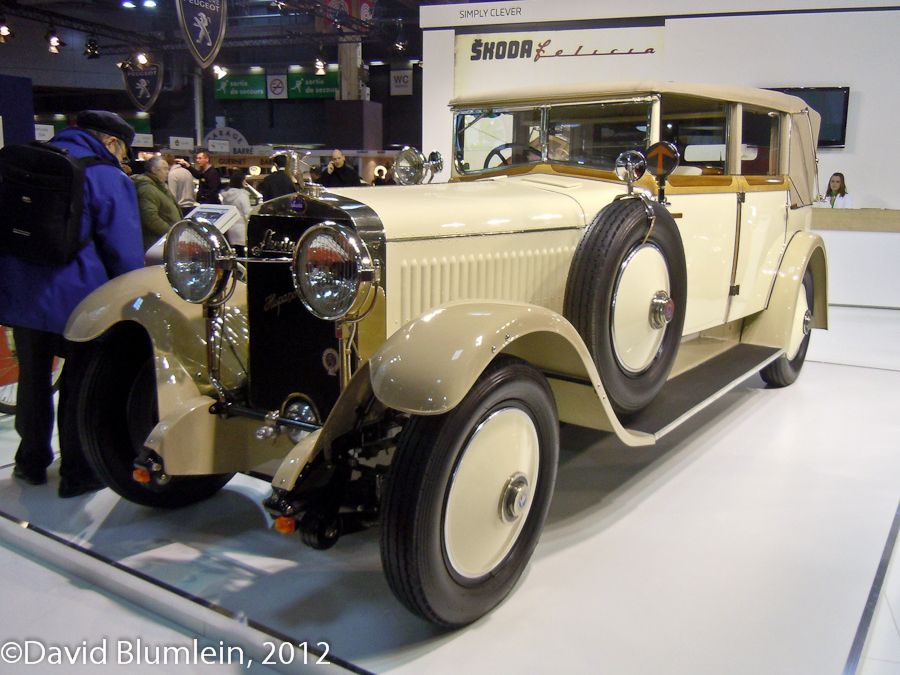
Skoda acquired a licence with the French-based Hispano Suiza company to manufacture the luxury H6B cars. The first car came off the production line at Plzeň in 1925. The first fifteen chassis were built from original parts supplied by the factory at Bois-Colombes in France; from the sixteenth car onwards all were truly Skoda Hispano Suizas built entirely in Bohemia – Skoda made the chassis and the bodies were by various Czech coachbuilders.

The first car was delivered to the country’s President, T.G. Masaryk – a black six-seater limousine with body by Vaclav Brozik & Sons. Production stopped in 1929 owing to the economic climate.

1936 Chenard et Walcker Super Aigle 24

1936 Chenard et Walcker Super Aigle 24

The French marque Chenard et Walcker is chiefly remembered for the fact that one of their 4-cylinder 3-litre cars won the first Le Mans 24-Hour race in 1923. One recalls also the superb little 1100 c.c. “tanks” of 1925 which did so well in sports car racing. By the mid-Thirties the Gennevilliers company was producing a very complex range of cars with too small an output. This Super Aigle 24 is one of a family of cars with an advanced specification: front wheel drive, independent front suspension by torsion bars and the option of a Cotal gearbox even if the 4-cylinder 2.5-litre engine still had side-valves. It did little to help save the company!

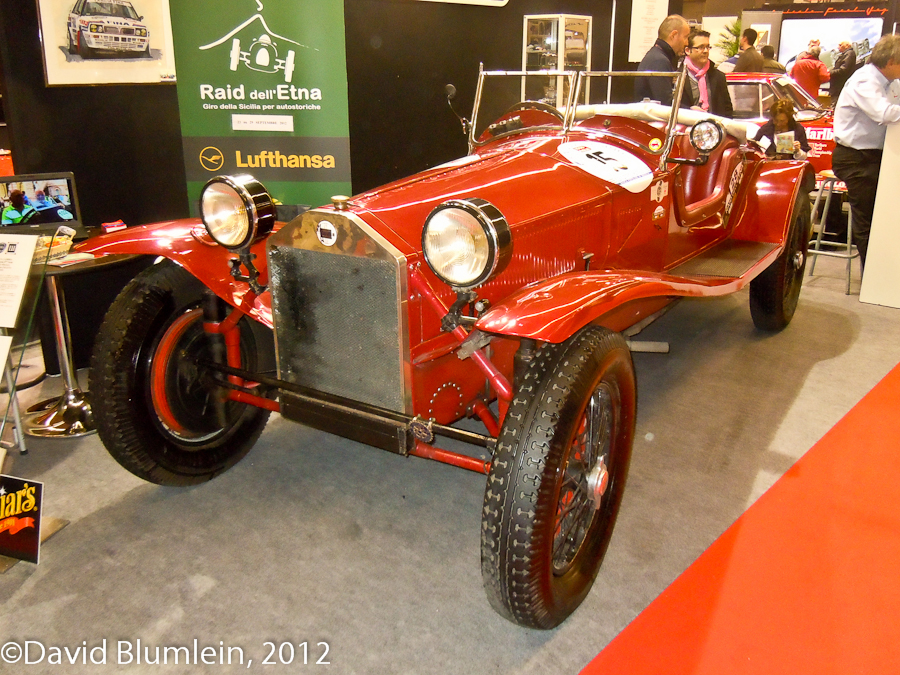
Lancia Lambda Spider Mille Miglia

Lancia Lambda Spider Mille Miglia

The Lancia Lambda, introduced at the 1922 Paris Salon, must go down in history as one of the landmark designs with its monocoque chassis, narrow V-4 engine and sliding pillar independent front suspension. Vincenzo Lancia did not see this innovative design as a candidate for competitions but made an exception for the Mille Miglia.

Lancia Lambda Spider Mille Miglia

From 1927 Lancia made a series of “Da Corsa” versions destined for the Italian 1,000 mile race. Crewed by Strazza/Varallo this car finished 4th overall and first in the 3-litre class in the 1929 Mille Miglia. It also helped Lancia to win the Coupe du Roi in that year’s Spa 24 Hour race.

Fiat 1500

Fiat 1500

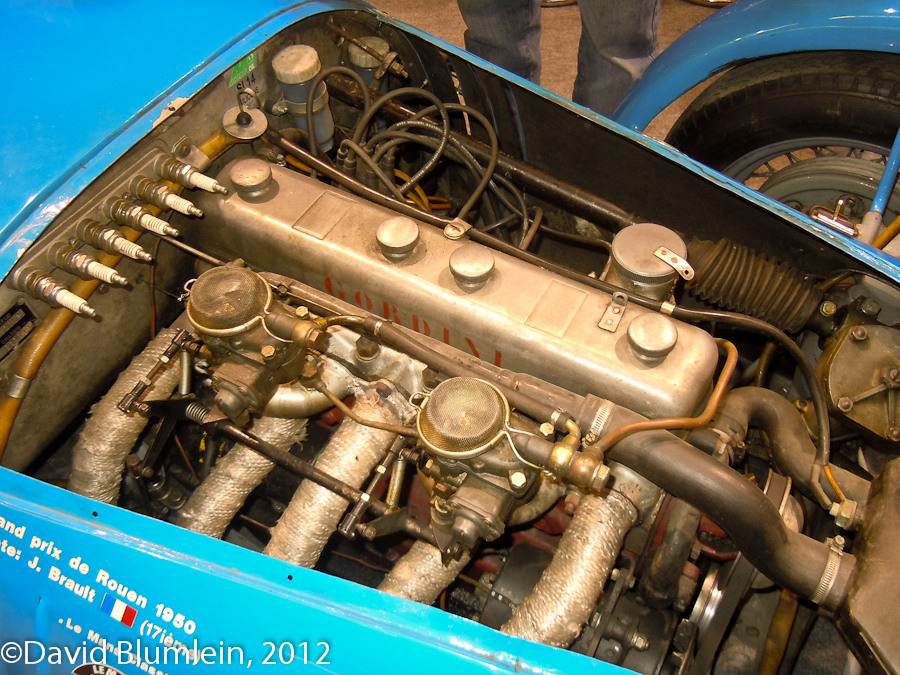
Entered by Jean Brault at Le Mans in 1950 for himself and Louis Paimpol, this Fiat 1500 with special roadster bodywork was forced to retire in the 11th hour with gearbox problems. Jean Brault then ran the car in the Sports Car race that constituted the main event at the inaugural meeting of the Rouen-les Essarts circuit on 30th July  1950. Out of  twenty starters the car finished 17th.

Fiat 1500

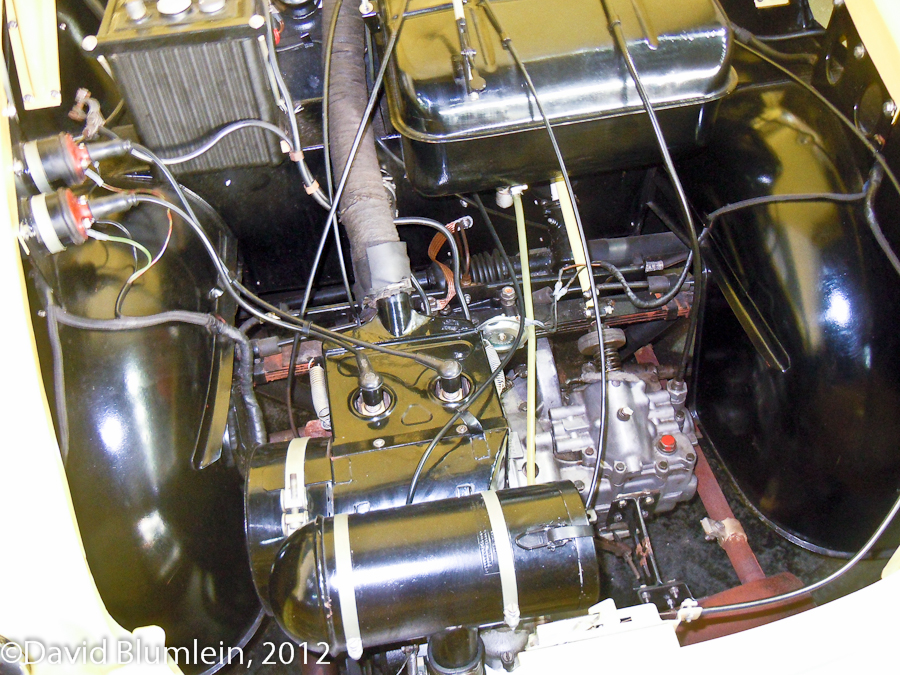
This Fiat has sometimes been credited with having a V- engine but in fact it used the normal Fiat 1500 6-cylinder unit. Here’s the proof, thanks to the helpful folks on the stand.

TAILPIECE

What, pray, is this?

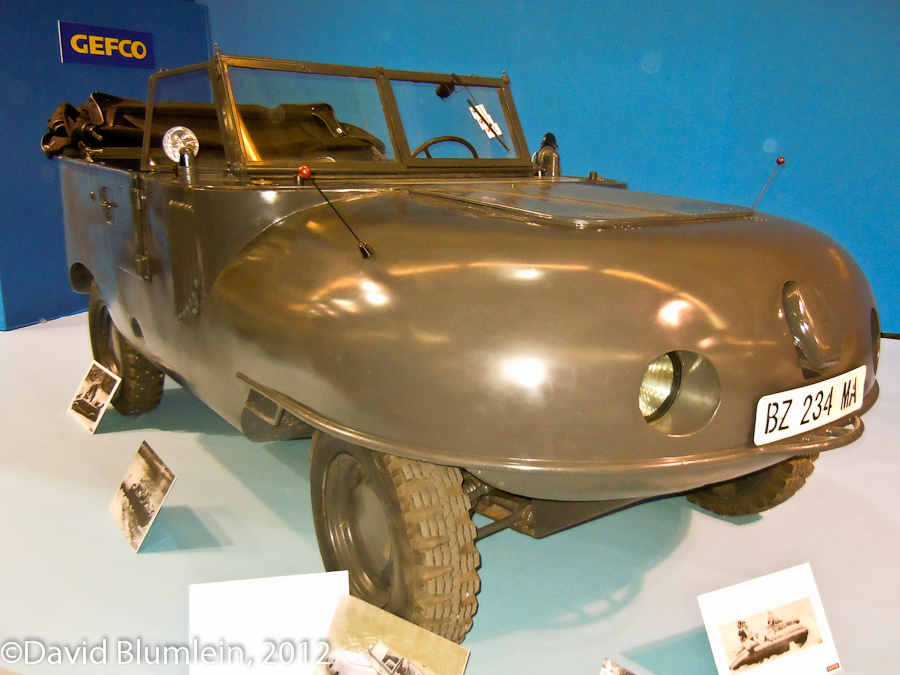
Trippel Type SG6/38

It is a Trippel Type SG6/38 built in 1941 with a 6-cylinder Opel engine, one of Hans Trippel’s amphibious creations. I have only included it because it was made in the German-occupied Bugatti works at Molsheim – triste dictu.

David Blumlein February 2012.

Our Friends in the North

The 2012 season stutters into life, while racing is almost impossible in the prevailing inclement conditions, there are always The Shows to visit. So the end of January and the arrival of February heralds two of the best, Retromobile and the Bremen Classic. More from Paris in due course, but in a recent visit to the Hanseatic City of Bremen our Special Correspondent has once more unearthed some ‘Rare and Interesting’ cars for our edification.
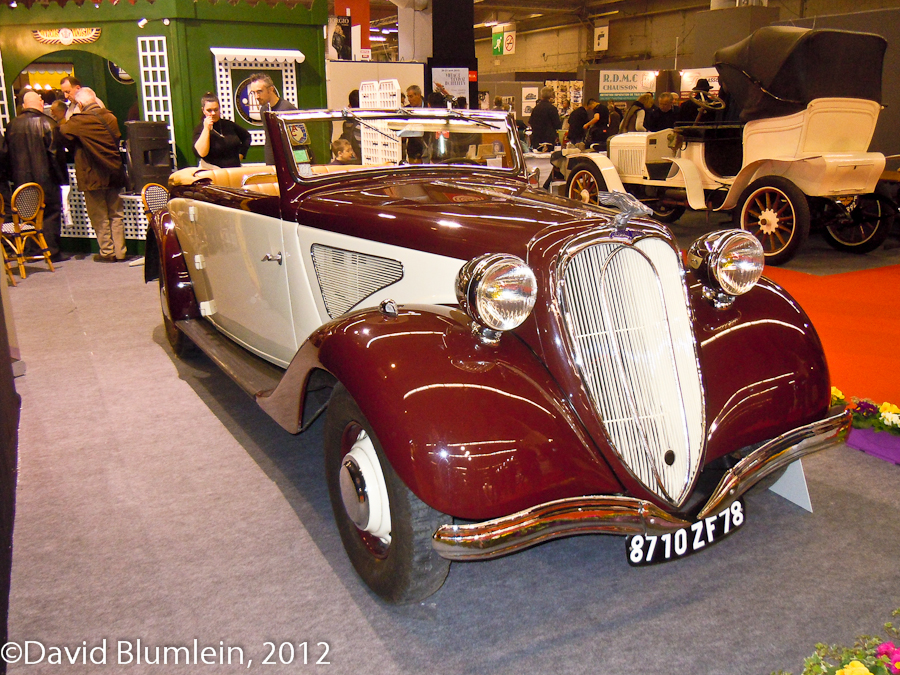
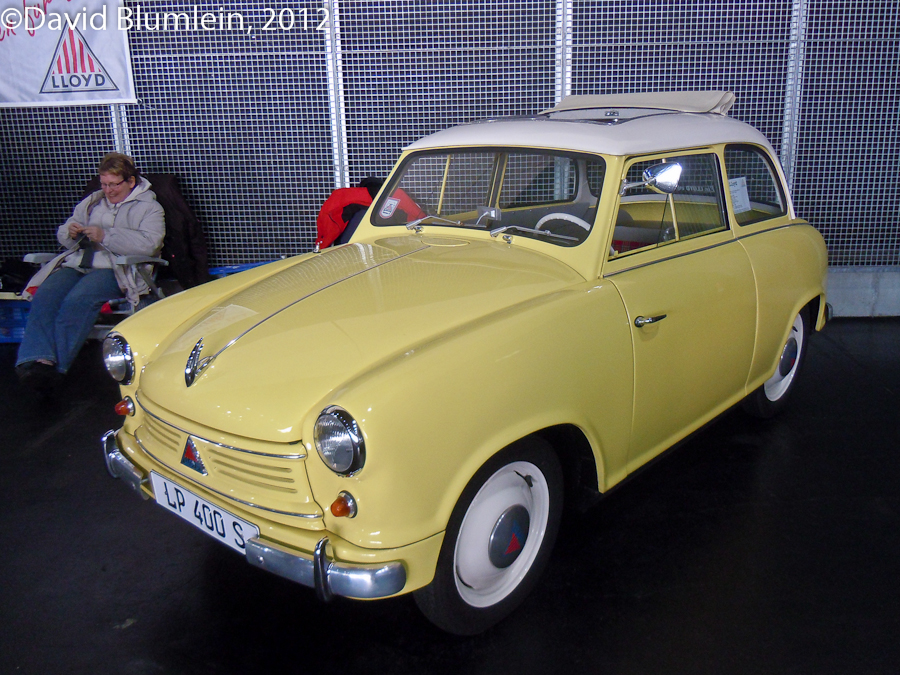
1955 Lloyd LP 400S

Appropriately, the Bremen Classic Car Show reflected something of the history of the north German car industry. Bremen itself was the centre of the Borgward empire but it was also the home of the Focke-Wulf aircraft factories, whose potent FW 190 fighter caused all manner of problems to the Allied air forces. Thus did Bremen invite much attention in World War Two from the Royal Air Force and Eighth Air Force bombers and by the end of the conflict the Borgward factories, which had been producing military vehicles, were about 80% destroyed. Yet the energetic Carl F.W. Borgward was to turn out Germany’s first all-new post-war production car, the Hansa 1500, and he was to achieve much success in the Fifties with his Lloyd, Goliath and Borgward vehicles. But , like so many of his ilk, the dynamic leader was not so good at the accounting and his world collapsed in 1961, partly because he was not making enough cars to be competitive and therefore profitable and because his ambitious plans for the Borgward Kolibri helicopter, designed by Professor Heinrich Focke, somewhat drained the funds!

The Borgward works were eventually sold to Hanomag who, by this time, were producing light commercials rather than cars and when Hanomag itself was swallowed by Daimler-Benz in 1971 we find the Sebaldsbrϋck factory, greatly extended, turning out Mercédès cars still today.

Bremen, in conjunction with Bremerhaven, possesses after Hamburg the largest harbour in Germany, and its most important activity is handling containers and motor vehicles. Each year more than a million containers pass through the terminal and the harbour is Europe’s leading port for the turnaround of cars – more than a million pass through the docks annually. Huge freight trains of container wagons and car transporter wagons can be seen plying incessantly night and day through Bremen’s Hauptbahnhof – Bremen is still very much involved with the motor car!

1955 Lloyd LP 400S

The Lloyd was a small car built to cater for the bubble car boom, the Lloyd Motoren Werke Gmbh of Bremen being part of the Borgward Group. Initially it had a 293 c.c. 2-cylinder 2-stroke 10 b.h.p. motor and the car had a wooden frame covered in leatherette. In 1953 the engine was enlarged to 386 c.c. and in 1954 steel bodies were used. They were very successful, 45,000 being sold in 1955.

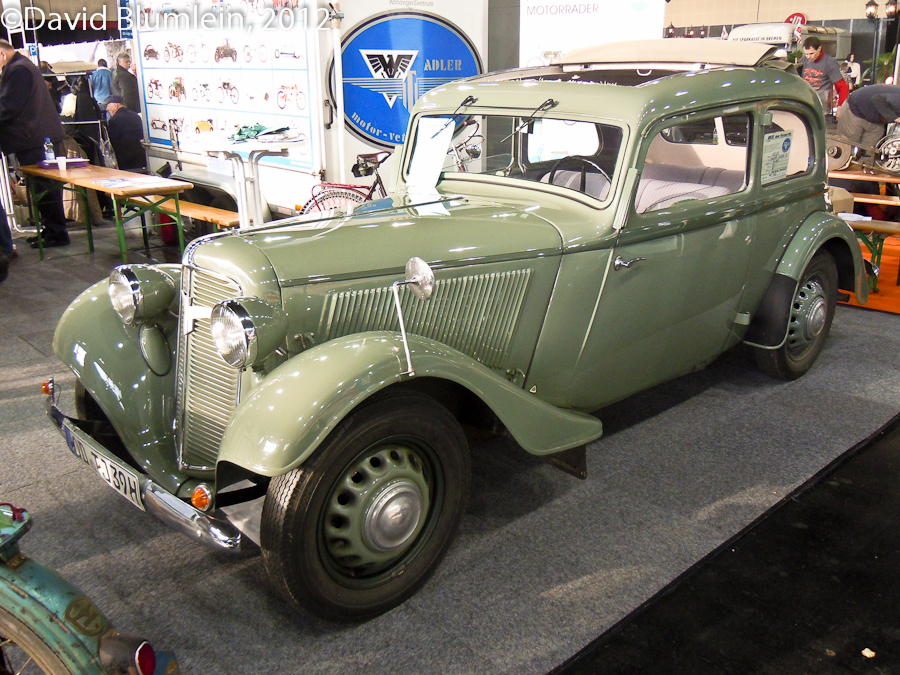
1939 Adler Trumpf Junior

Adler (German for “Eagle”) hailed from Frankfurt am Main and by 1930 they were Germany’s third best selling car behind Opel and BMW. In 1930 the directors decided to move towards a more popular market and appointed Hans Gustav Röhr, who had just left his eponymous company, as designer. He came up with the most famous Adler of all, the 1.5-litre Trumpf which appeared at the 1932 Geneva Show. It had front-wheel drive , a 4-cylinder side-valve engine, all independent suspension and an all-steel body by Ambi-Budd of Berlin. It was, along with the 995 c.c. Trumpf Junior, a great success, 128,443 being made by 1939. It had much success in competitions (including Le Mans) and was built under licence by the Belgian firm Imperia of Nessonvaux and in France by Rosengart.

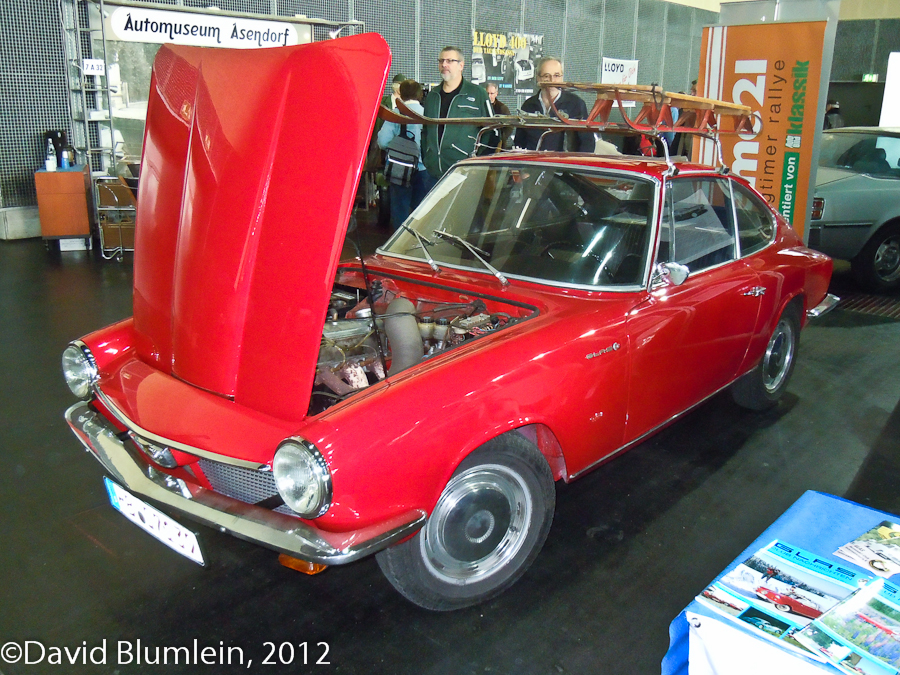
1966 Glas 1700GT

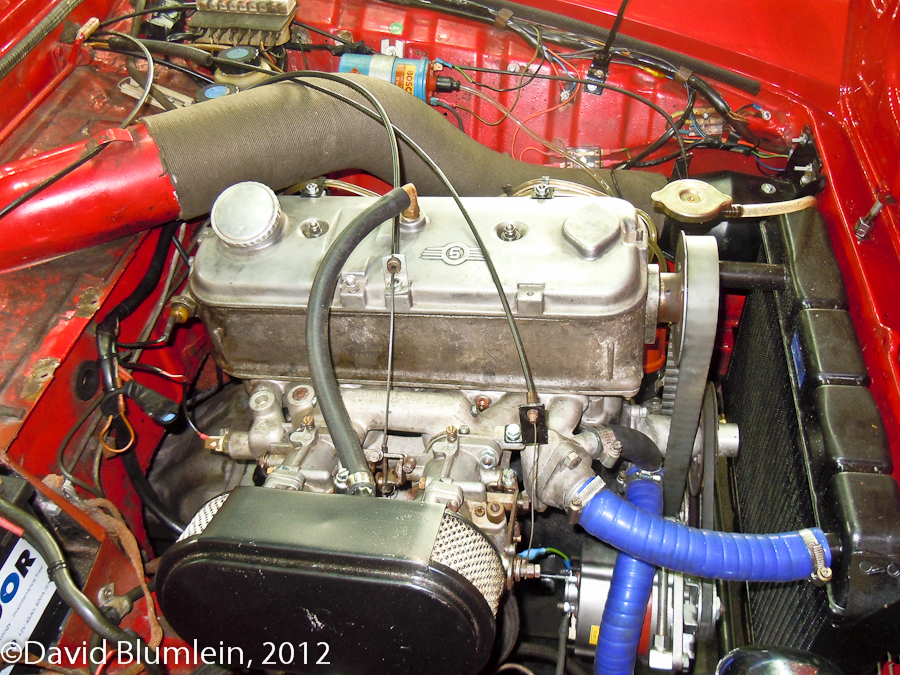
The Glas company started out by making farm machinery but in 1951 they produced a motor scooter, the Goggo. The firm is remembered best for the little 2-stroke economy car, the Goggomobil, which appeared in 1955 and which lasted until 1965. More conventional cars with 4-stroke engines gradually took over and the 1962 Glas 1004 was the first car ever to use a belt-driven camshaft. The 1300GT and 1700GT were styled by Pietro Frua  and were made from 1963-67.

1966 Glas 1700GT

Glas cars were good but had to compete with BMW and Porsche; they also made too many different models to be commercially successful – only the Goggomobil made a profit. BMW bought Glas in 1966 and adapted some models for a while – the GTs became the 1600GT with a BMW engine before being phased out in 1968. The Dingolfing factory was given entirely new production facilities and produces 5, 6, 7 series BMWs and bodies for Rolls-Royce. Glas cars did well in competitions, the 1204TS winning the Coupe du Roi at the 1964 Spa 24 Hour race.

1935 D.K.W.-Jawa


This is one of only 200 or so D.K.W.s with special bodywork by the Czechoslovakian manufacturer Jawa in Prague.

1935 D.K.W.-Jawa

It is an appropriate collaboration because Jawa turned to the impressive D.K.W. 2-stroke mechanicals as inspiration for their own designs (as did Saab).

1949 Tempo Hanseat

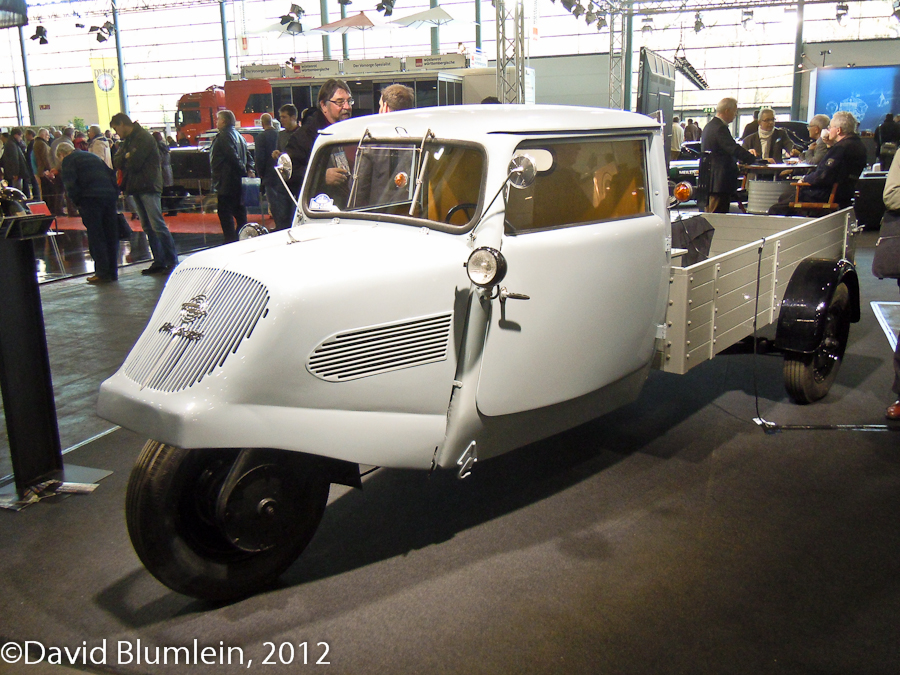
In the austere years after the war, Tempo 3-wheeled light commercials were to be seen everywhere in Germany, rugged single or 2-cylinder front-drive workhorses, usually with ILO 2-stroke engines. Car versions were made in small quantities but this 396 c.c. example is typical of the Hamburg company’s products.
Eventually Hanomag took over and then Daimler-Benz. Tempo made an interesting twin-engined military car, the G 1200, which was used by the Wehrmacht and armies of several other countries.

1935 Opel 1.2-litre

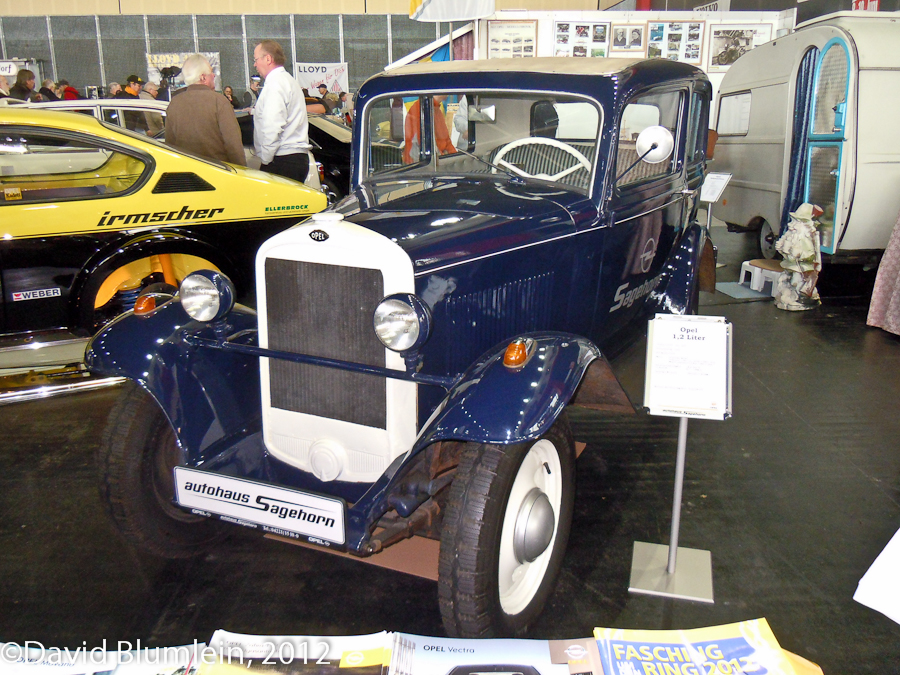
In 1931 the Opel 1.2-litre, styled like a Fiat, replaced their 4/20 model and it became Opel’s biggest seller by far between 1931-35. It was in turn replaced by the P4 briefly and then by the more familiar unit-construction Olympia and Kadett models.

David Blumlein, February 2012
A Very Classic Car Show

A trip up to the NEC with our Special Correspondent to the Footman James Classic Car Show is an educational experience, one that I would not miss for the world. Here is his look at some of the Rare and Interesting cars that were on show.

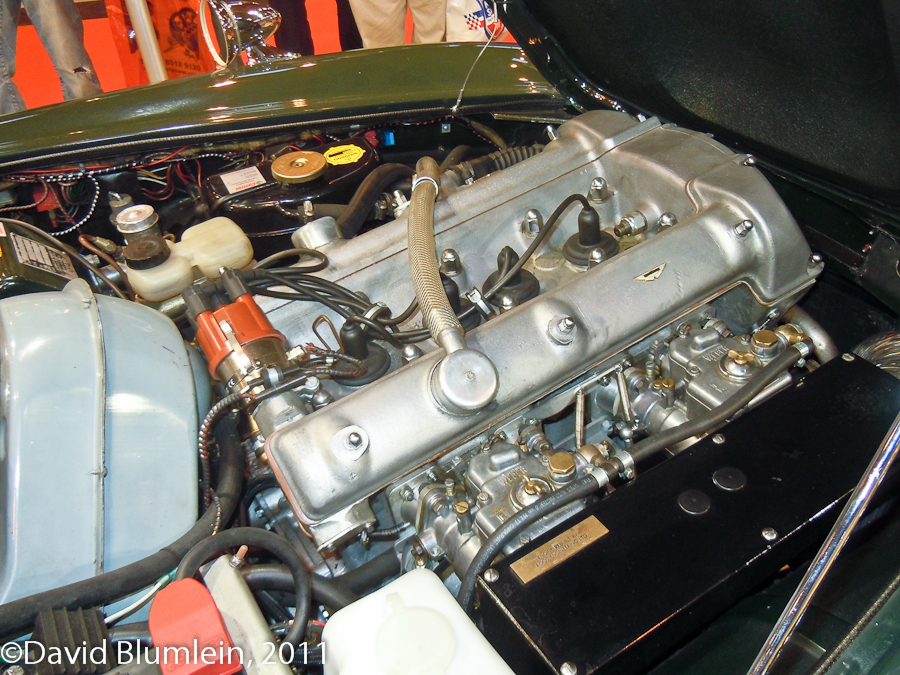
Volvo P1800 Aston Martin

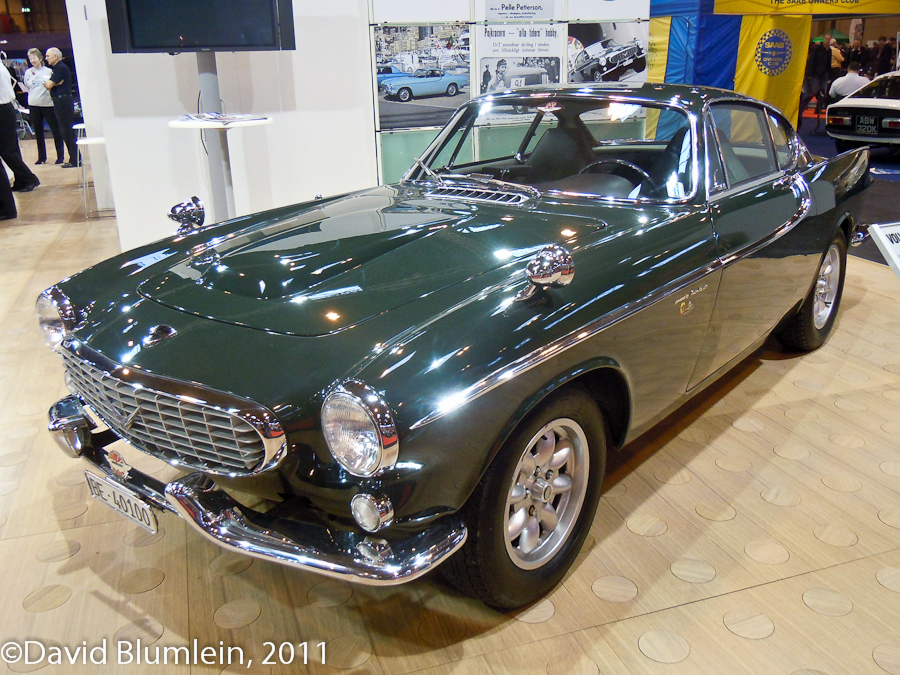
In the early 1960s Aston Martin commissioned Tadek Marek to design a smaller version of his 3.7-litre DB4 engine. Rather than create the same engine minus two cylinders, Marek opted to develop a completely new 4-cylinder engine. Three prototypes were built and it was decided to fit one into a  Volvo P1800 as a test bed.


Four Pot Aston

It worked quite well although 30 kgs heavier over the front axle but Aston Martin realised that the engine would be too expensive to produce and the project was abandoned. The Volvo P1800s were assembled initially (1961-1963) by Jensen Motors of West Bromwich as there was insufficient space at that time in Volvo’s Swedish factory.


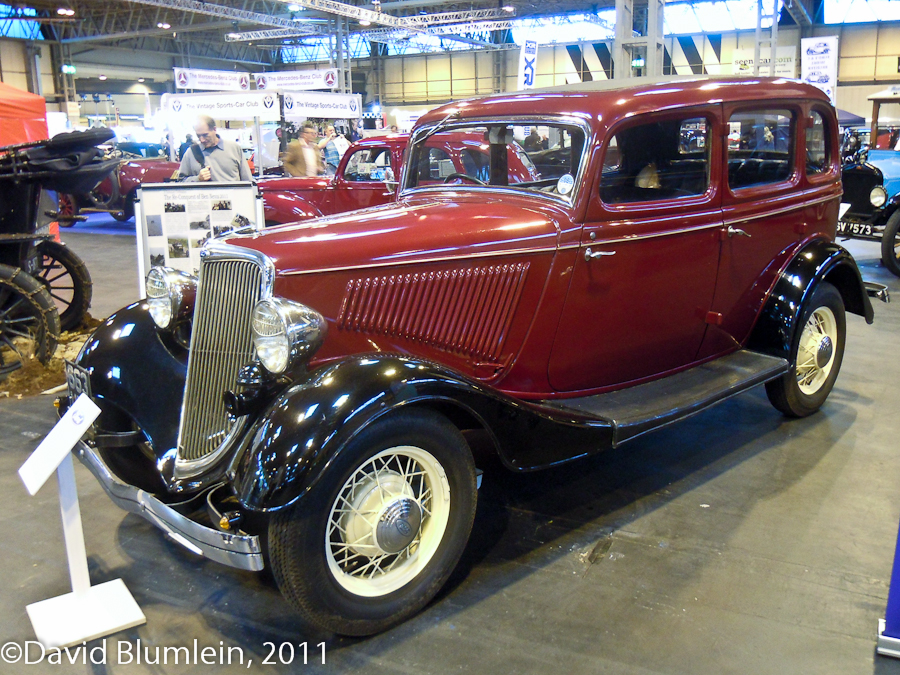
A to B


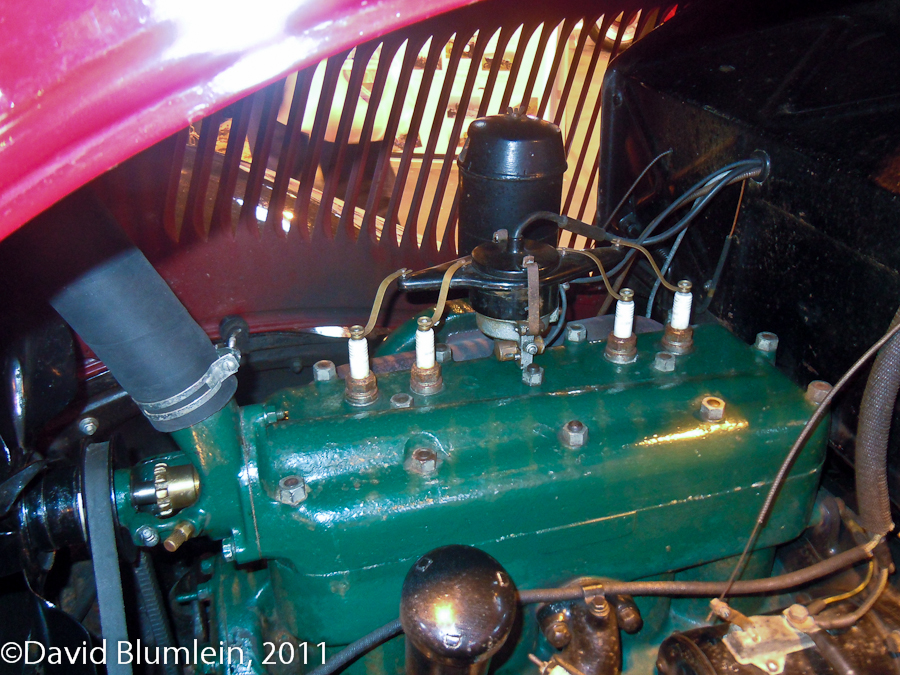
We’ve all heard of the Ford Model T, the Tin Lizzie, of which 15 million were made. In 1927 Henry Ford introduced his Model A as a replacement and then in March 1932 he announced his famous flat-head V8 which went on to be produced for the next 21 years.
 

Four For Ford


So what is a Model B? Basically it is a V8 chassis and body with the Model A 4-cylinder side-valve engine. It had a short production run in its home country, March to September 1932, although the 4-cylinder option remained available for cars and commercials up to 1934 and longer at Dagenham. Ford alone has since made over 100 million V8 engines!


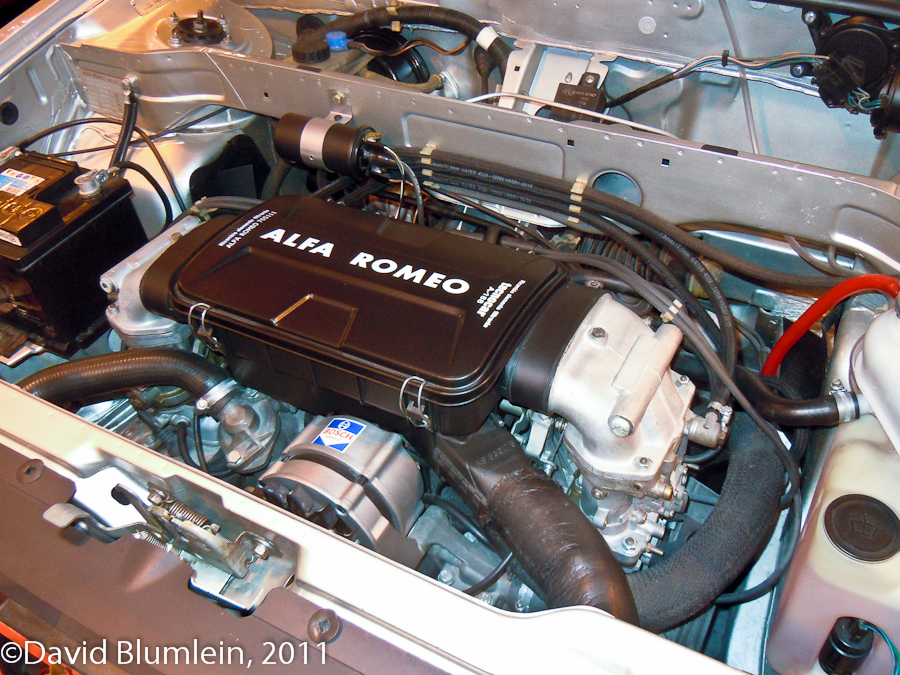
Sud Power


Alfa Romeo was state-owned after 1933 and depended on Government investment to keep going. In the 1930s there was plenty of military work to satisfy Mussolini’s imperialist ambitions and the company’s chief output was lorries and aero engines. After the war Alfa was able to turn to the mass-production of cars for the first time with the excellent 1900 but by the 1980s more investment was needed to replace the marvellous Alfa Sud which had been built in the factory near Naples.


Cherry Picking


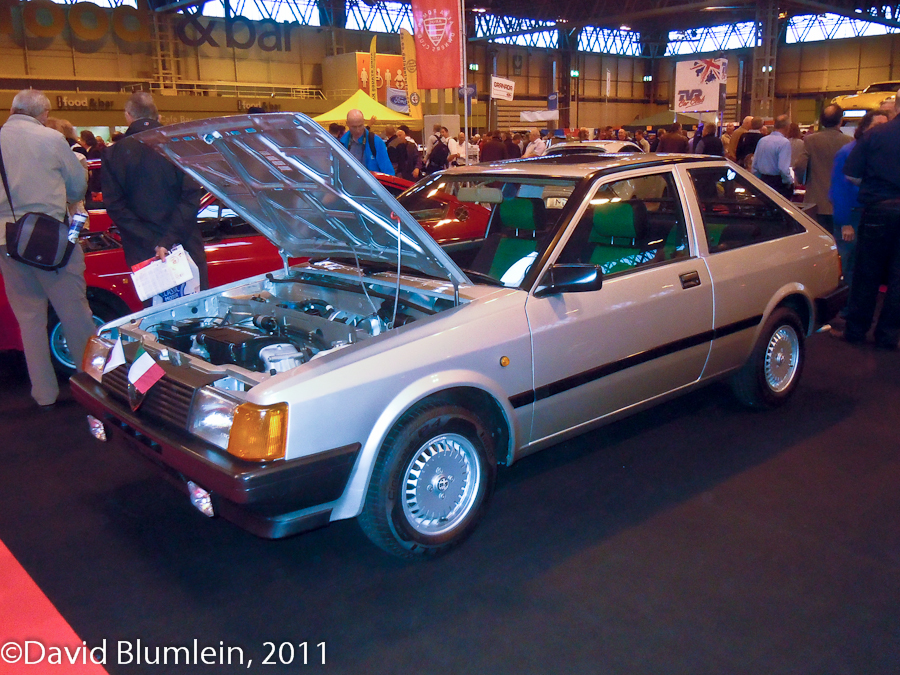
In 1984 a stand-by was hurriedly concocted, the Arna. It was a Nissan Cherry body with the front suspension, engine and gearbox of the Alfa Sud transplanted into it. It was assembled in the Naples plant and you could buy either an Alfa Romeo Arna or a Nissan Cherry Europe – apart from the badges they were identical.


Lanchester 14


Frederick Lanchester was one of the world’s outstanding car designers who pioneered so many of the features we take for granted in our cars today. I like to single out his brilliant concept of the “ counter-balance shaft” that designers resort to when they want to smooth out the inbalances inherent in larger capacity four-cylinder engines.

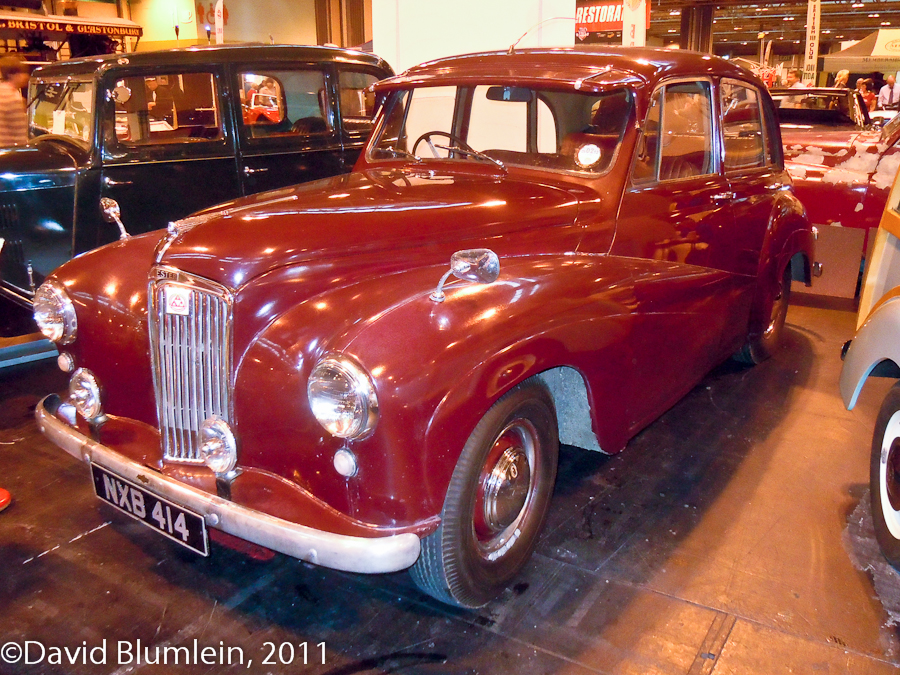
His eponymous firm was taken over by the BSA-Daimler group in 1931 and then some of the cars were little more than badge-engineered Daimlers. However, this process was reversed when the company put the Lanchester 14 on the market in 1951. It was a 2-litre OHV four-cylinder car with, interestingly, independent front suspension by laminated torsion bars. The car spawned in 1953 the six-cylinder 2.5-litre Daimler Conquest and a year later its twin-carburettor version, the Conquest Century.

Quite out of character the Daimler company entered three of the latter for the Touring Car Race at the 1954 Silverstone International Trophy meeting and, thanks to Reg Parnell and George Abecassis, they took the first two places in the 3-litre class; Ken Wharton’s car was unable to avoid a spinning competitor.


Mangusta

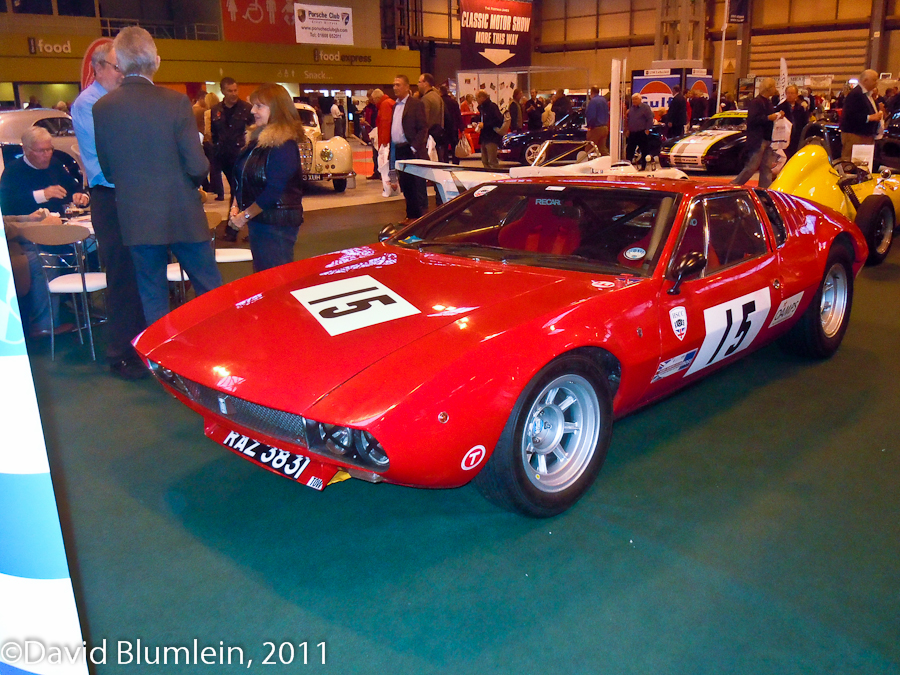
Alejandro de Tomaso was an Argentinian racing driver who drove in the 1950s in sports car races with a Maserati and OSCA. Having expressed strong opposition to the Peron régime , he found it expedient to abandon his native country and to settle in Italy whence had come previous generations of his family.

In Modena in 1959 he started up his own company. At first he made some prototypes and single-seater racing cars, the latter mainly for the recently introduced Formula Junior category, and even some cars for the new 1961 1.5-litre Formula One although these generally failed miserably, only achieving finishes in national events such as the 1961 Naples Grand Prix (5th) and the 1963 Rome Grand Prix (4th).

In the meantime he was developing road-going production cars, the first being the Vallelunga in 1963, a mid-engined GT coupé with an aluminium backbone chassis and a Ford Cortina engine, some fifty or so being completed. With an eye on the Shelby Cobra market in the U.S.A. he developed this backbone theme for a bigger car which appeared at the 1966 Turin Motor Show. This was the Mangusta – Italian for mongoose, the only animal that kills cobras! The car had a 4.7-litre Ford V8 with bodies coming from Ghia, styled by Giugiaro. It was rather heavy with 66 per cent of its weight over the rear wheels yet 400 cars were made up to 1971. It was  succeeded by the more successful Pantera, a steel monocoque design which had the benefit of much Ford investment.


Sole Survivor

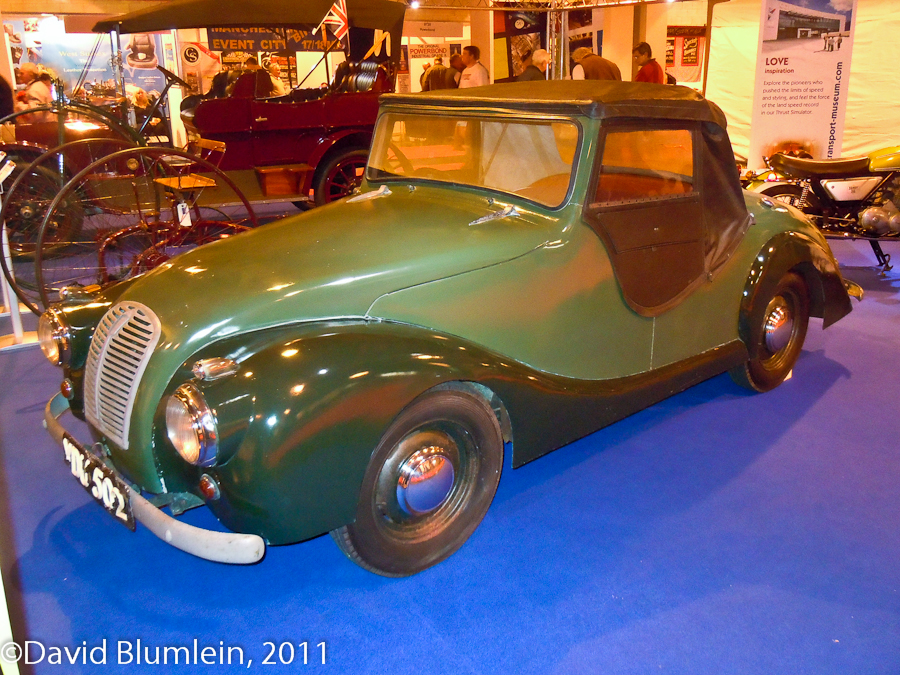
Coventry-Victor was an engineering firm that specialised in supplying small capacity flat-twin side-valve engines to other manufacturers. In 1926 it produced its own three-wheeled car with a chain-driven rear wheel and in 1932 this was up-graded using more luxurious bodywork designed by C.F.Beauvais who was responsible for styling the Avon-bodied Standards, Singers and Crossleys of the Thirties.

In 1949 Coventry-Victor decided to build a four-wheeler and constructed six prototypes, four saloons and two open-bodied, which were code-named Venus. These had 747 c.c. flat-four engines mounted forward but driving the rear wheels.The car on show appears to be the sole survivor of this abandoned project as all were ordered to be cut up. It has been residing in the Coventry Transport Museum’s reserve collection and it is a pleasant surprise for it to be seen on public display at last!


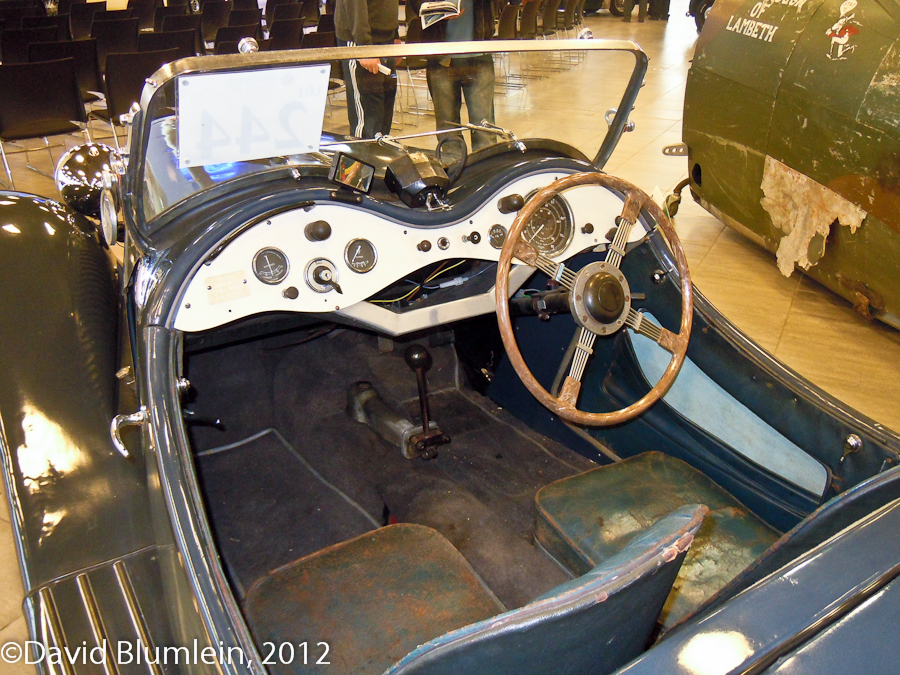
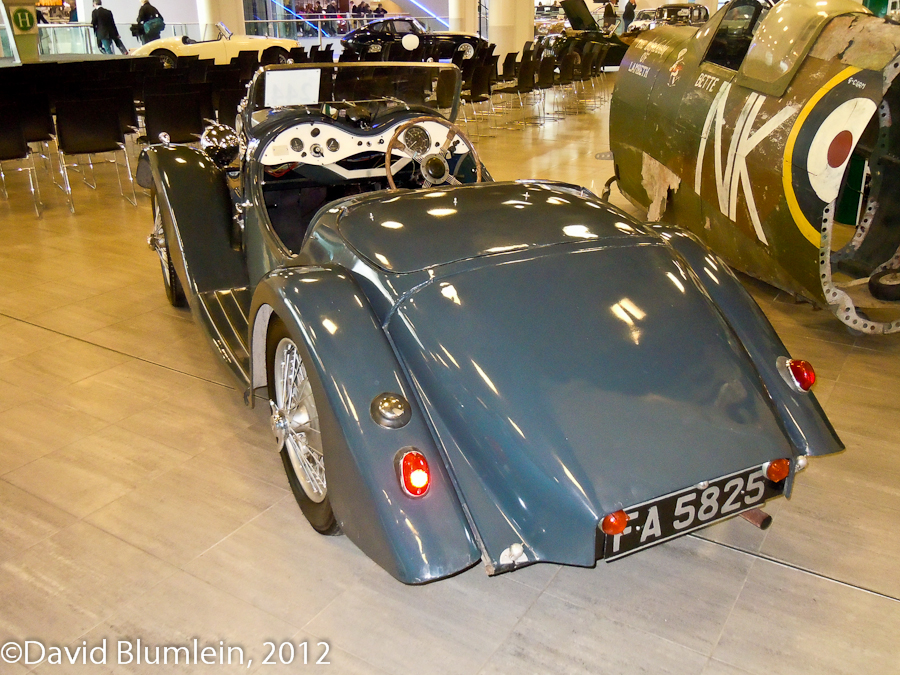
Masterpiece

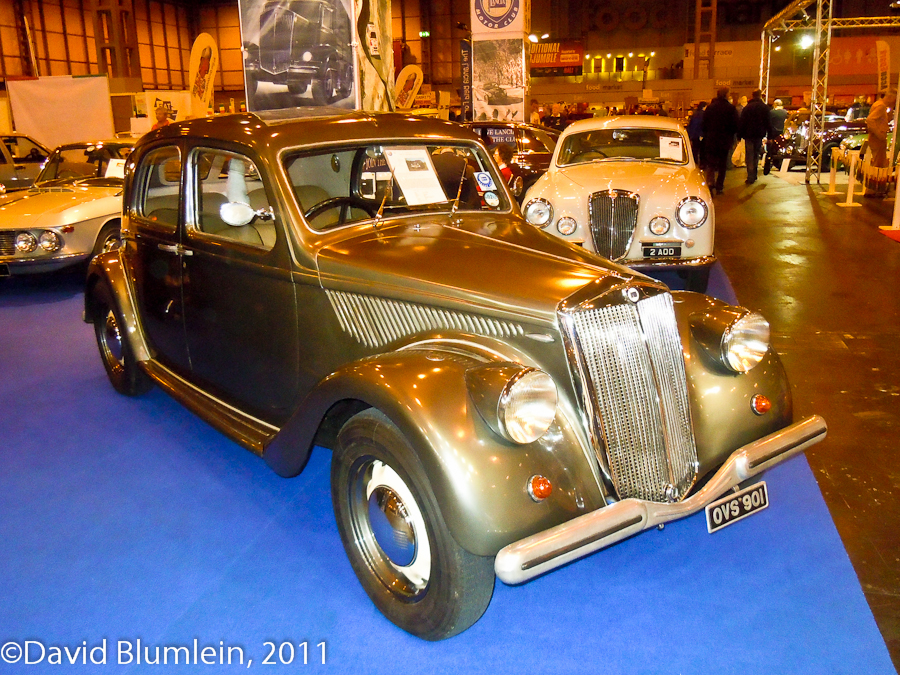
This is the last of Vincenzo Lancia’s masterpieces and it went into production in February 1937, sadly the month of the company founder’s premature death. Lancia had a deserved reputation for producing well-engineered and technically innovative cars and the Aprilia carries on Lancia’s enviable tradition.

At the start of the Thirties Lancia realised the need to produce smaller-engined cars to appeal to a much wider segment of Italian society and the 2-litre Artena and the 1.2-litre Augusta were launched, two excellent cars. The Aprilia was conceived to take over from them. It possessed a pillarless monocoque saloon body with “fast-back” styling at the rear, the whole yielding an admirable (for the time) co-efficient of drag of just .047. It was powered by a typically Lancia V4 engine but this time it was a fresh design with hemispherical combustion chambers and had a capacity of 1.3-litres at first growing two years later to 1.49. Front suspension was Lancia’s independent sliding pillar arrangement from the Lambda but at the rear was a completely new independent design utilising a transverse leaf spring and torsion bars while the rear brakes were mounted inboard.

Such an exciting specification lent itself to sporting achievements – for example, Luigi Villoresi used a special Zagato-bodied Spyder version to win its class in the 1938 Mille Miglia and normal production saloons were still winning their class in the Mille Miglia as late as 1951 and 1952 .The Aprilia’s eventual successor, the Vittorio Jano-designed Aurelia, can be seen in the background – this was another masterpiece!

What do these following two cars have in common?


SS1


Standard Issue

Answer: they both use chassis and mechanicals supplied by the Standard Motor Company.

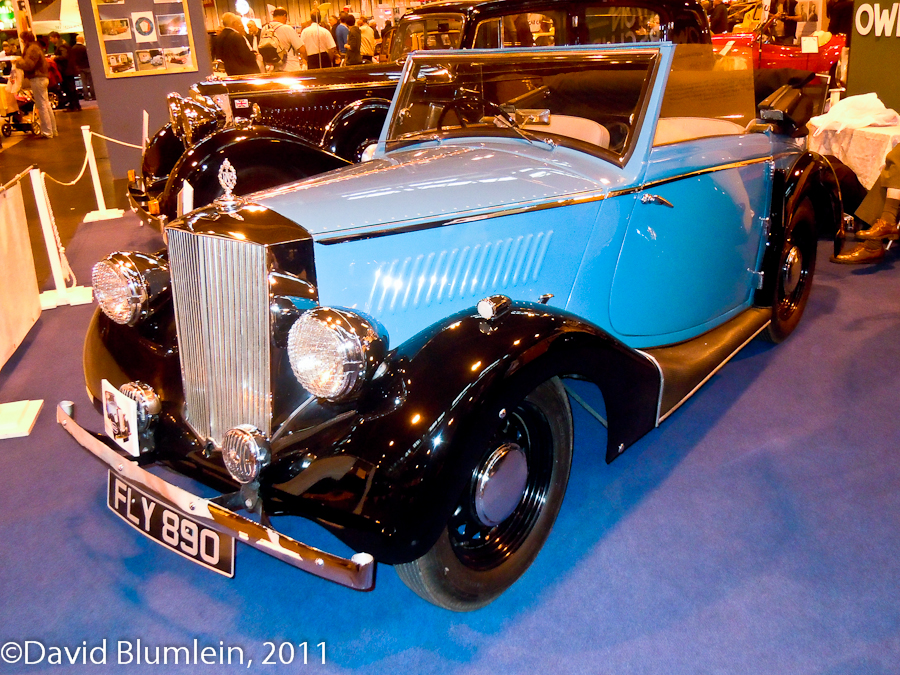
The SS1, the forerunner of the line of Jaguars, used the Standard 16 side-valve engine and chassis; the Railton Ten had an unmodified 1938 Standard 10 chassis!

David Blumlein, November 2011

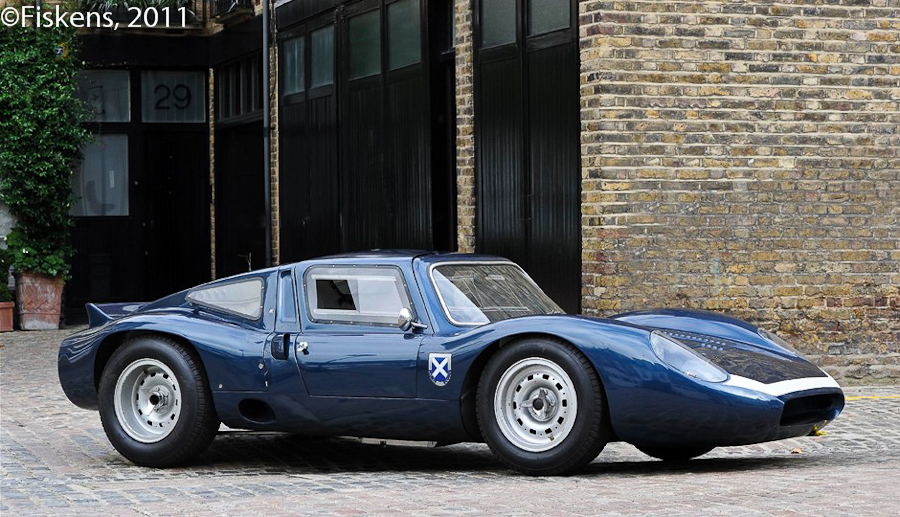
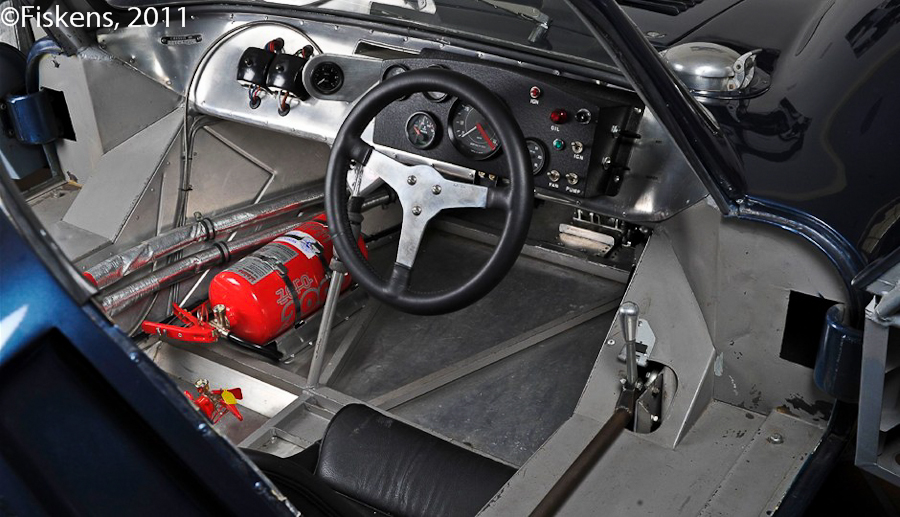
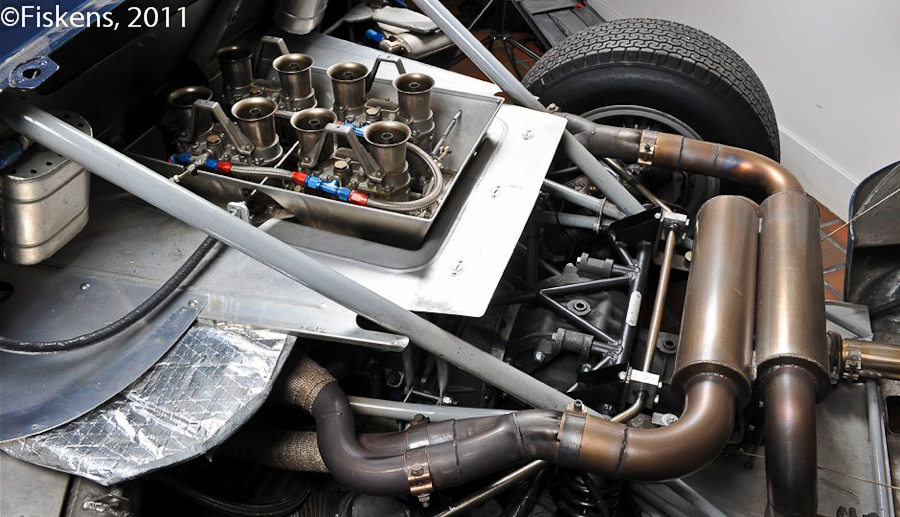
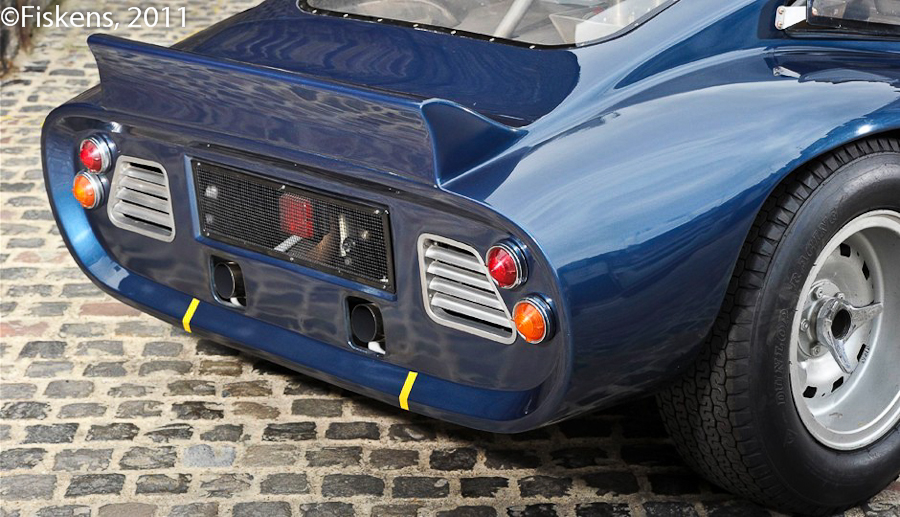
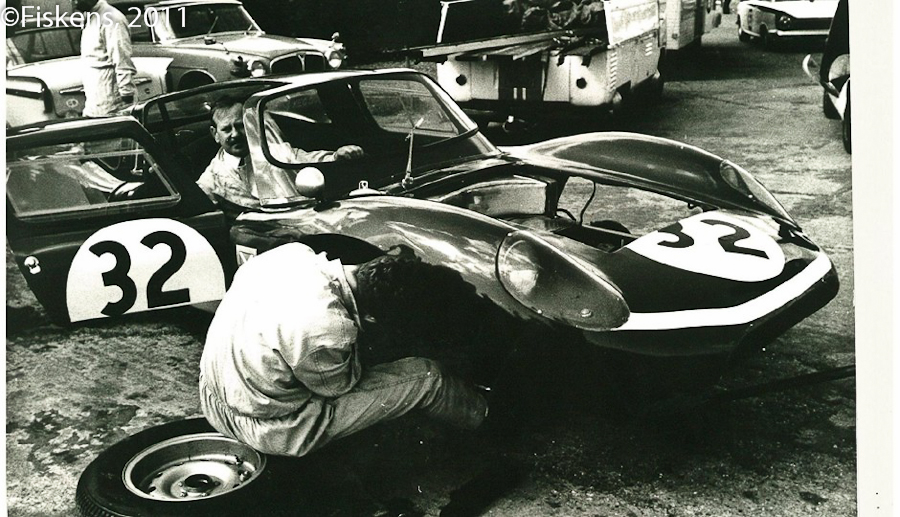
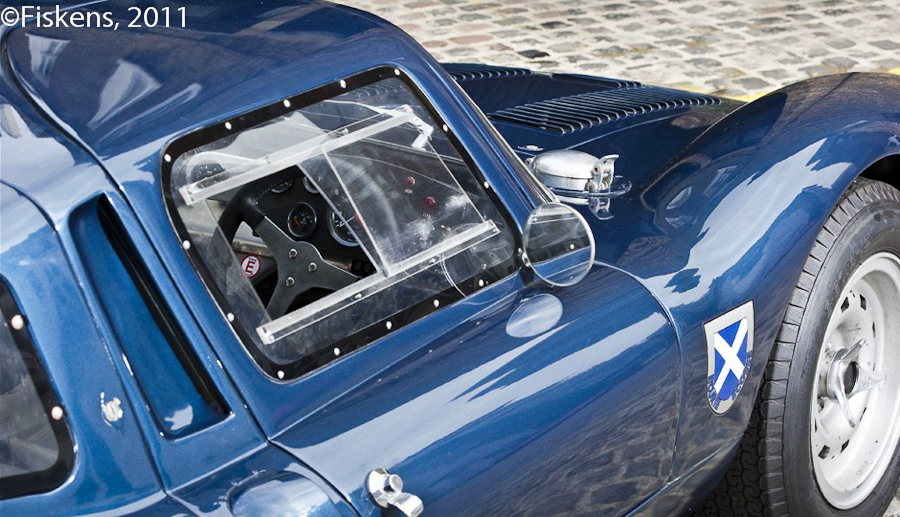
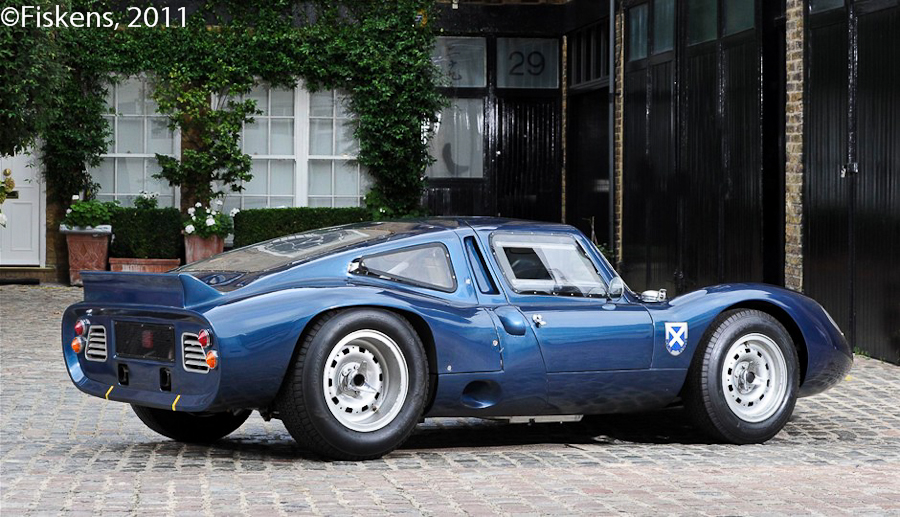
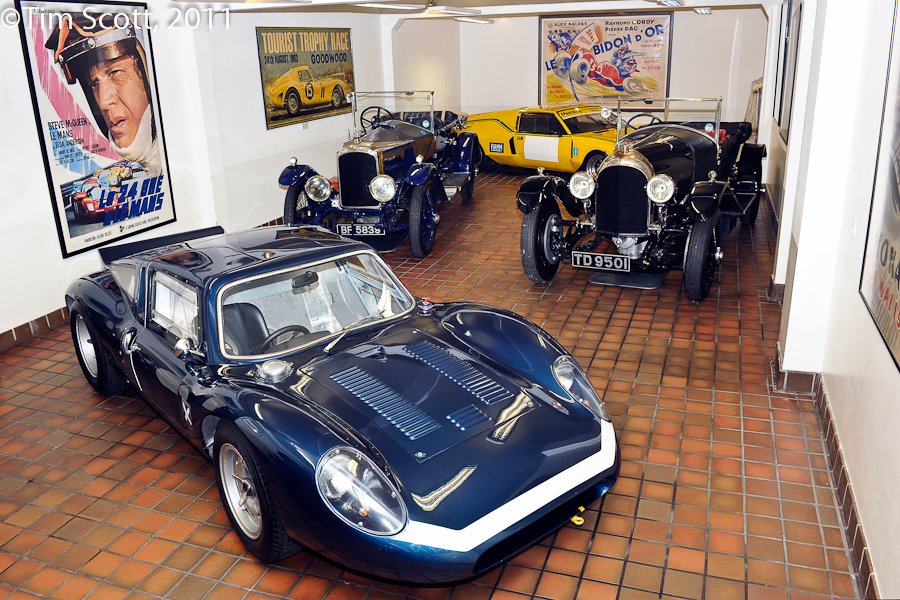
1962 Tojeiro-Ecosse Coupé


In 1962 Ecurie Ecosse commissioned John Tojeiro to design and construct two Prototype GT cars for the team to race at that year’s Le Mans. The cars had multi-tubular space frames, independent coil suspension and bodies designed by the artist Cavendish Morton who had already done some work for Tojeiro, particularly the special A.C. Tojeiro for Le Mans in 1958.
These Ecosse cars became the first British mid-engined GT coupés, pre-dating the Lola GT. The first car just made it to the start of the Le Mans race with a 2.5-litre Coventry Climax engine but it retired after eight hours with the Cooper-Knight gearbox locked in two gears at once.

This is the second car, chassis TAD-5-62, which went to Le Mans purely as a source of spares and for the 1963 season was equipped with one of the lightweight aluminium Buick V8 3.5-litre engines that were just ceasing production for the Buick Special; this was coupled to a Chevrolet Corvair gearbox.
It had a “Kamm” tail and smoother roof-line and was re-numbered TAD-1-63. Its first appearance was at Silverstone in May where Douglas Graham practised but non-started owing to an oil-pipe breaking on the grid. However it took its first win at the end of June in Jackie Stewart’s hands at Charterhall. In the meantime the first car also acquired a Buick engine.
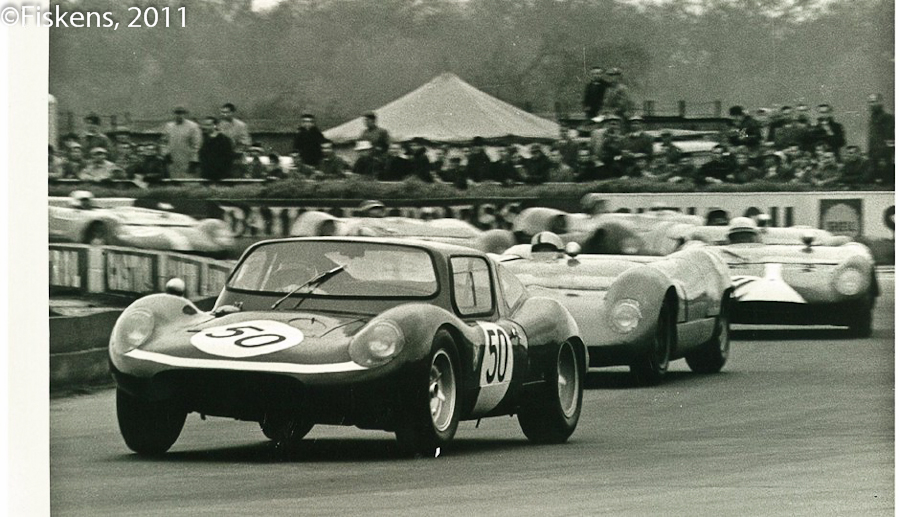
In 1964 the second car was re-engined, this time with a Shelby Cobra Ford V8 and was now numbered TAD-1-64. It was ready for Silverstone in May and Stewart finished sixth in the sports car race (race no. 50). He also finished eighth in the sports car race supporting the Grand Prix meeting at Brands Hatch and John Coundley had a win with it at the end of September at the Kentish circuit. However, the cars were not fast enough to compete in the sprint races and not reliable enough for endurance races.

In 1965 they continued to run in suitable national events – for example ,rally driver Andrew Cowan had a win with the Ford-engined second car at the B.A.R.C. Silverstone GT race at the end of June.

In 1966 the first car was sold off to Canada and the spare Buick race engine went to Rover as that company was developing its own production version which became the famous Rover V8. The second car was retained and converted into an open sports car although the roof section was preserved. Unfortunately Bill Stein had a most horrific accident at the Grand Prix meeting at Brands Hatch – he came off at high speed at Paddock Bend and hit the earth bank whereupon the car jack-knifed itself into total destruction; Stein was very lucky to survive despite multiple injuries.
Eventually this second car was re-built by Jim Tester using a new chassis which was fitted with the original roof; it later became the property of Tom McWhirter.


David Blumlein, November 2011

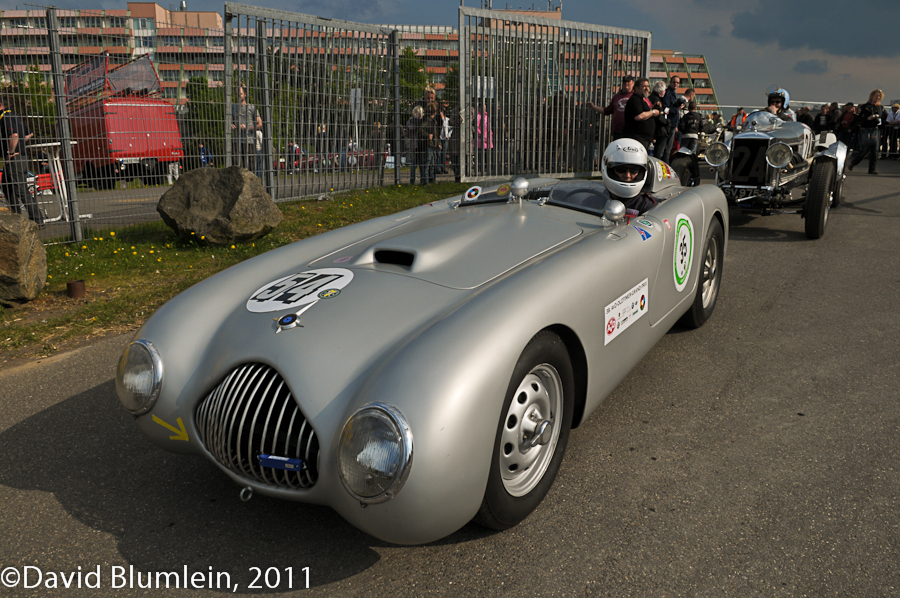
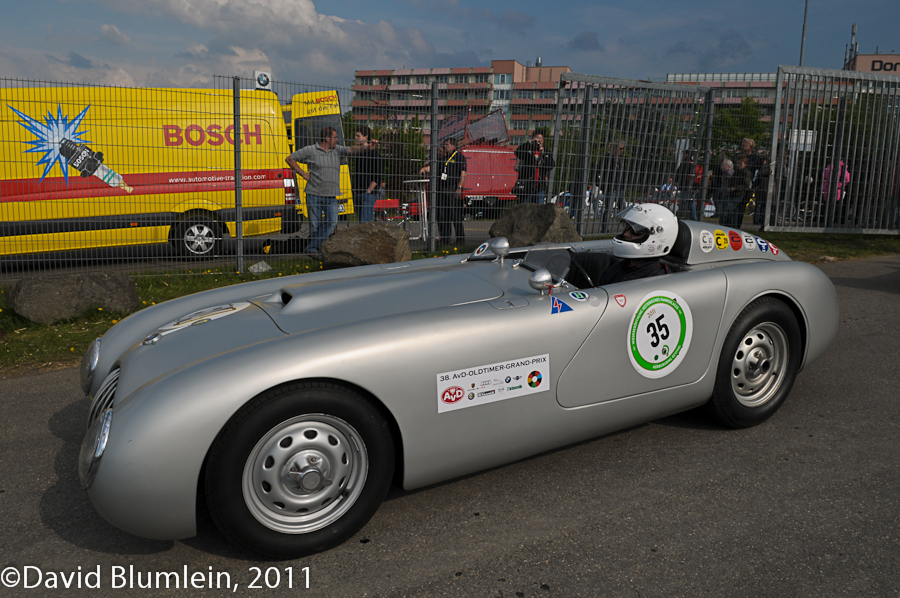
The Veritas – A Noble Effort


At a VLN race in April this beautiful Veritas RS was seen in the paddock at the Nϋrburgring.

At the end of the Second World War Germany’s industries lay in ruins. There was very little to support an immediate revival in motor sport except for some pre-war surviving racers, such as Bugattis, and mostly BMW 328 sports cars. But by August 1946 enthusiasts had made a re-start with a five mile hillclimb at Ruhestein in the Black Forest – it was won by the pre-war Mercédès Grand Prix star Herrman Lang in the 1940 Mille Miglia BMW Coupé.

Then in March 1947 three former BMW employees, Ernst Loof, Georg Meier (racing motorcyclist and ex- Auto-Union driver) and Lorenz Dietrich formed a company to build sports racers using the familiar BMW 328 mechanicals. They called the car a Veritas (Latin for “truth”) and basically customers would have to supply their 328s which would be stripped and re-built using a space –frame chassis based on two oval tubes, all clothed in a streamlined body; the finished product became known as the Veritas RS (Rennsport). Rising star Karl  Kling had already won the 1947 Hockenheim race in the Mille Miglia BMW Coupé when he gave the Veritas its competition début in the Eggberg hill climb – he retired with oil pump failure. But he went on to win the 2-litre German championships with Veritas, scoring five victories in national events in 1948 and seven in 1949.

It is interesting to note that German drivers were not allowed to race abroad before 1950, Germany having only joined the FIA in October 1949. So some Veritas cars found foreign owners, two for example coming to Britain for Dennis Poore and Ken Hutchison; 1938 Le Mans winner Eugène Chaboud drove one to finish a very creditable third in the Coupe des Petites Cylindrées behind two Ferraris at Reims in 1948 and Emile Cornet scored a win at the Grand Prix des Frontières at Chimay in Belgium in 1949.

There were of course only so many BMW 328 cars still  available (just 462 made at Eisenach originally) and these were now being gradually outpaced as the opposition grew. Loof therefore decided to make his own engine, a straight-six with single overhead camshaft which was designed by Erich Zipprich and manufactured by the aircraft firm Heinkel. Lack of development and consequent unreliability meant that Veritas, with limited resources anyway, struggled to survive. The company had also constructed some single-seaters to compete in the Formula 2 category and were making a series of road cars, the Komet coupé, Scorpion 2-seater cabriolet and the Saturn luxury 3-seater coupé; there was even the Dyna-Veritas with the famous Panhard flat-twin but when the company started to fall back on Ford and Opel engines the marque began to fade. Sadly Ernst Loof himself died of a brain tumour in 1956.


Veritas

David Blumlein, October 2011

Reflections on Spa 24 Hours 2011

The Spa 24 Hour race is only a year younger than the more famous Le Mans 24 Hours. Yet this splendid Belgian event, first run in 1924, has built up a wonderful tradition with its entry lists including a variety of interesting marques that have never graced its French counterpart.

It has not been run quite so consistently over the years, the Belgian club, the R.A.C.B., lacking the mighty resources of the A.C.O. ; there was a notable gap from 1949 until (1953 excepted) its resumption fifteen years later and that thanks to the initiative of that worthy journalist-cum-driver Paul Frère.

In 1964 it became a Touring Car event, and no less hotly contested for that, and has embraced the GT category since 2001 ; this year the entry was more straightforward : GT3 and GT4. For many years the race included the award of the Coupe du Roi, effectively a team prize donated originally to the Club by King Albert in 1912. Manufacturers were naturally very keen to win this prestigious trophy, sometimes entering teams for this sole purpose such as Delage in 1931 who, when one of their cars hit a tree, withdrew the other two and went home!

Sadly in more recent times this trophy has been cast aside – the Spa 24 Hours has lost something of its prestige as a result Nevertheless it remains a big event – 62 starters this year – and generates an atmosphere all of its own, especially by night with headlights winding their way through the dark forested valley lit up only by the spectacular fireworks at around 11 p.m. And the circuit allows little chance for the drivers to relax particularly with the frequent risk of rain for which the Ardennes, like its extension in the Eifel region of Germany, is so well-known.

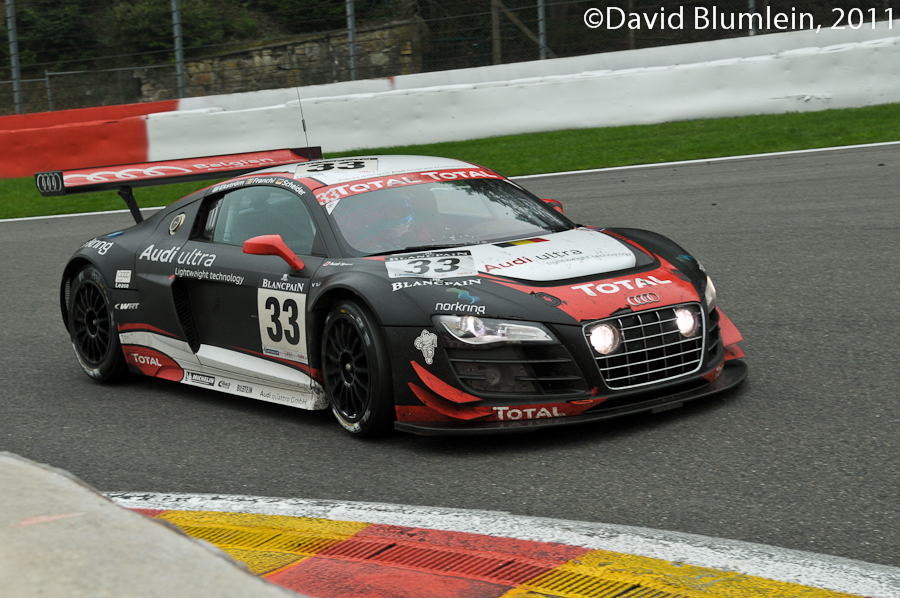
This year’s race is memorable for Audi winning at last and for this being the first 24 hour success for the R8 LMS. Like Porsche the company has been content to leave the car in the hands of good professional private teams but until now the model never quite made it in the big 24 hour races. The factory gave greater backing this year, hence the presence of Audi Sport chief, Dr Ulrich. Let us not forget that the R8 LMS had its first ever race win here at Spa in the first of two Belgian GT events during the weekend of the Spa 1,000 km race in May 2009. Such “firsts” prompt the memory to recall that Peugeot achieved the French marque’s first success in a 24 hour race when it won the 1926 Spa event with its sleeve-valve 18cv Sport model.

Top Dog


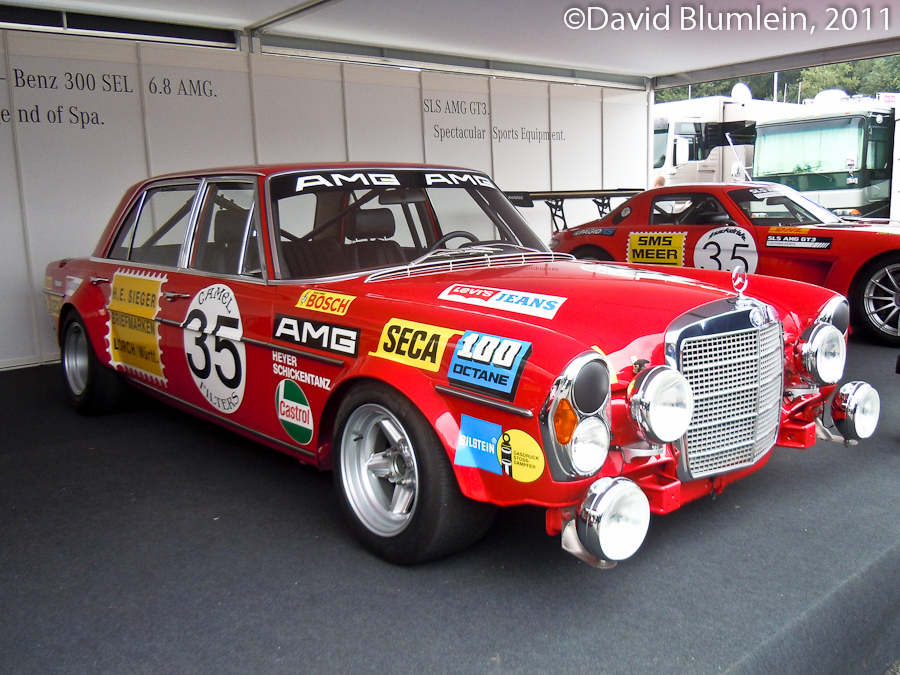
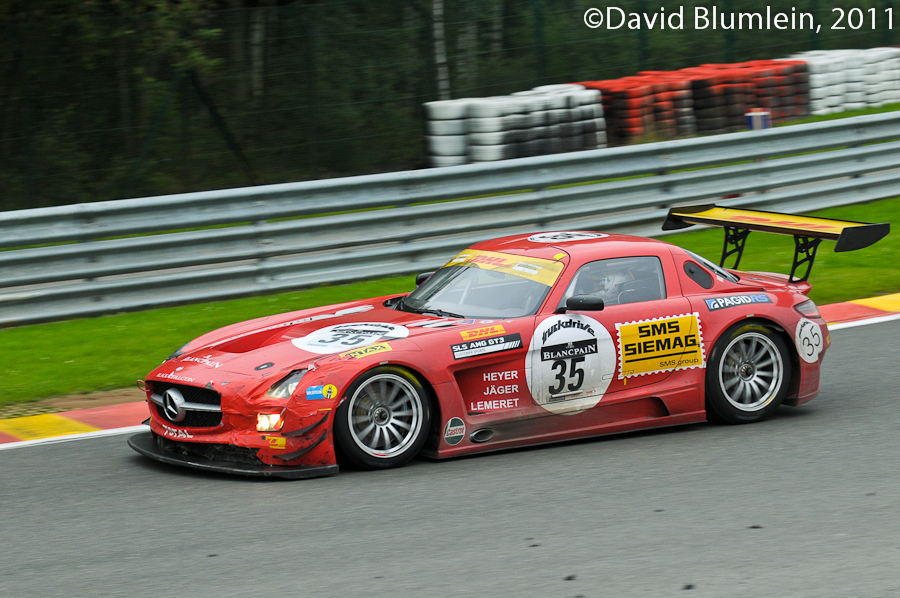
No less than seven of the new Mercédès SLS  AMG GT3 s started the race and of special interest was the car no. 35 which eventually finished in third position overall. Although run by the Black Falcon team it was painted red as a tribute to the 40th anniversary of AMG’s first entry in this race in 1971. They used the car that came to be known as the “Röte Sau” (red pig) and was a 300 SEL saloon with a 6.8-litre version of the V-8 to be found in the big Mercédès 600 Saloon. Carrying the number 35 it finished 2nd overall just 3 laps behind the winning Ford Capri driven by Hans Heyer (father of Kenneth Heyer, one of the drivers of the red SLS) and Clemens Schickentanz.

This over-weight saloon was on show in the race paddock for all to admire – it turned out 420 b.h.p., it had a 4-speed automatic gearbox, disc brakes all round and air suspension! Not surprisingly the heavy machine was somewhat handicapped by having to refuel frequently and by its tyres which wore out rather too rapidly, but it represents history for Aufrecht Melcher Grossaspach (AMG) which grew to become the in-house sporting arm of Mercédès Benz. Interestingly, Mercédès themselves also had their first 24 hour race success when one of the two SSK cars entered won the 1931 Spa 24 Hours.

Klassic


AMG

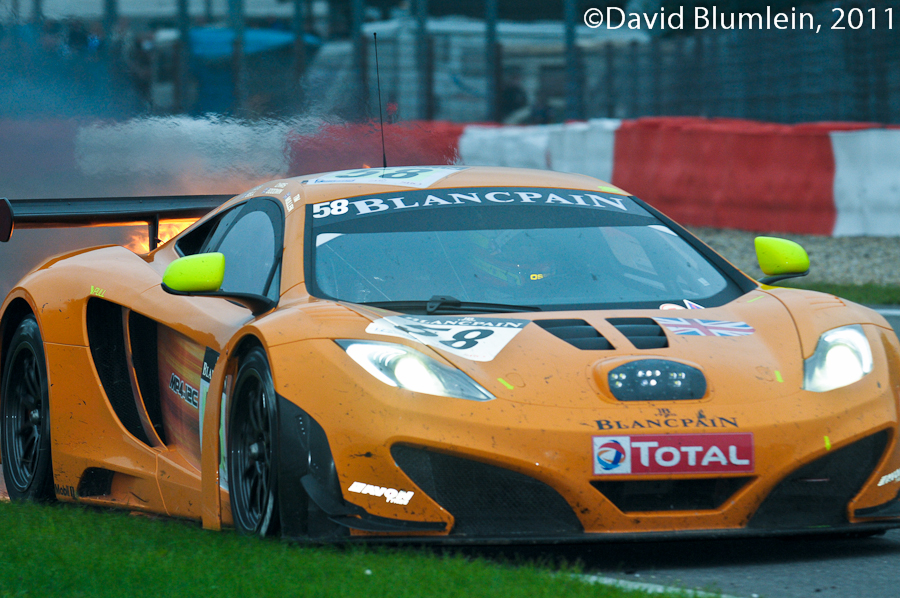
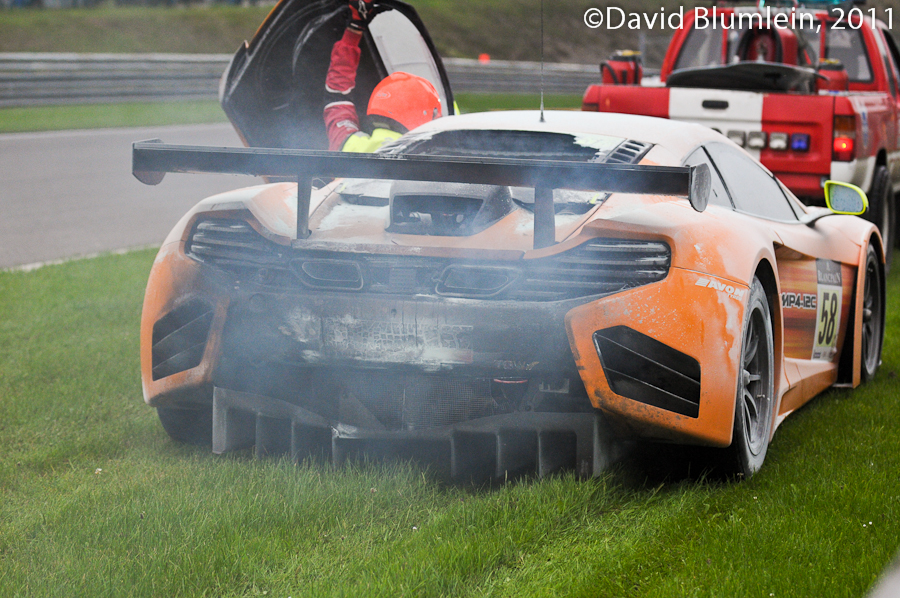
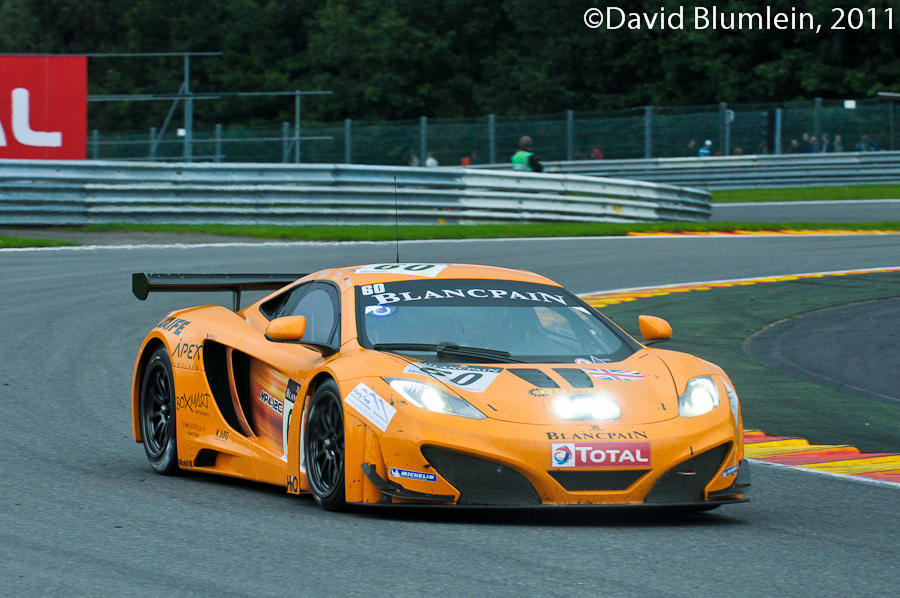
The McLaren MP4-12C  had of course made its race début three weeks earlier at Spa when the British GT cars had two rounds of their Championship at the Belgian circuit but it was exciting to find three of the very new cars on the grid for the 24 Hour race. Fate was not exactly kind to them: the no.59 slammed violently into the barriers just below La Source after a coming-together with the GT4 BMW M3 in the early laps and the no.58 decided to catch fire coming away from the Les Combes corners on the highest part of the circuit later on the Saturday evening.

Fire Drill


Smoke Gets In Your Eyes

The remaining car no.60 did reach the finish albeit in a lowly 25th position but don’t forget that these are completely new cars with their own completely new engines.

Soul Survivor


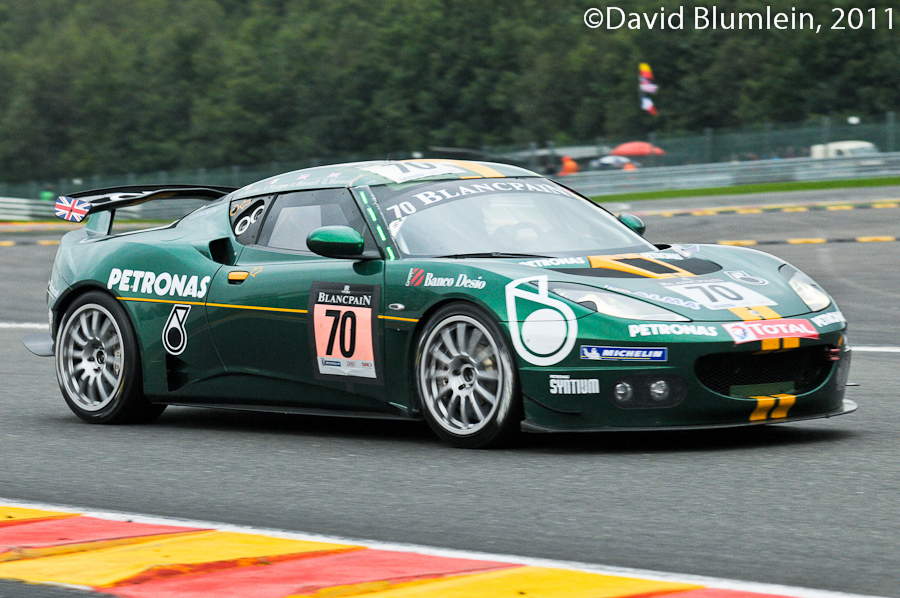
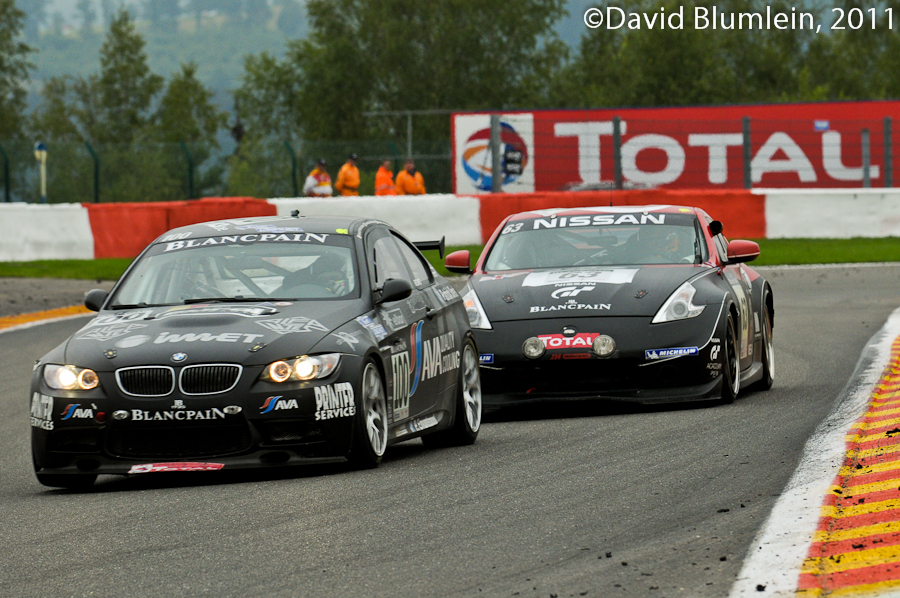
The GT4 class had just four runners after a Porsche had been withdrawn. The little Lotus Evora had things its own way for a long time until its engine sadly cried enough creating an internal fire and when the Aston Martin Vantage retired the BMW M3 had to play second fiddle to the Nissan 350Z which eventually scooped the category.

Class Leader


GT4

David Blumlein, August 2011